Home Blog Page 302

Sport: Gauteng Call-ups For Rand Park High School Learners

RAND Park High School has celebrated the recent achievements of their learner athletes following their call-up and performances at sports events outside of the school.

Three of the school’s learners recently featured in the South African National Equestrian Schools Associations Regional Finals (Sanesa) hosted at Kyalami Park Club. Erin Wainright, Tehya Kirtley Sayer and Kaitlyn Koevort faced off with the best riders as they represented Gauteng West. According to the school, many at the event were nervous as it was the first competition of its kind since the beginning of the Covid-19 lockdown, but their riders were able to put on an exceptional performance.

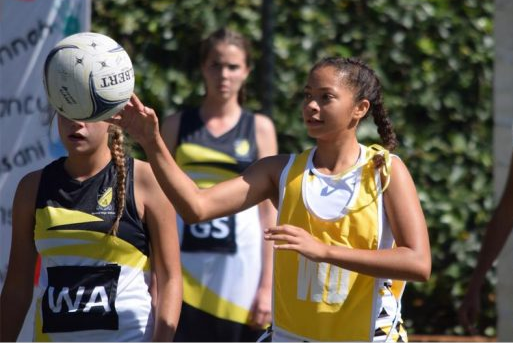
They were able to bring home six top-eight placings, with Kaitlyn winning the 70cm Equitation Class. Kaitlyn and Erin have been selected to represent the Gauteng Team at Sanesa Nationals to be held in early October. The school will also be represented at the upcoming South African inter-provincial netball championships which will be held in October. U18 wing defence Hannah Corry and U17 goalkeeper Tisani Mohajane will play for the Gauteng side.

The school wished the two well at the championships and said that their skills, commitment, agility, versatility and competitive spirit gave them the opportunity and that they have the potential to achieve much more at the tournament.

The school wished all those competing in October all the best and that they continue to fly the flag of the school high.

  • * Randburg Sun

It’s All Systems Go For 2021 National Senior Certificate Examinations – Umalusi

THE quality assurance examination board, Umalusi, says plans are in place and the system is ready to administer the November 2021 final National Senior Certificate (NSC) examinations.

Umalusi said strict measures are in place ahead of the examinations, which will commence officially on Wednesday, 27 October 2021 and conclude on Tuesday, 7 December 2021.

The examinations will be written at approximately 11 308 examination centres across the country and marking will be conducted at about 193 marking centres.

Addressing a media briefing on Friday, Umalusi CEO Mafu Rakometsi said the council has granted approval to private and public assessment bodies to administer the 2021 end-of-year national examinations.

“Umalusi conducts quality assurance of assessment to ensure that assessment leading to the award of certificates in schools, adult education centres and technical and vocational education and training colleges is of the required standard. This is in order to ensure that the certificates issued by Umalusi are credible.

“The quality assurance process includes the following, extra moderation of question papers, moderation of school based assessment, monitoring of the state of readiness…education of marking and standardisation of examination results,” Rakometsi said.

The CEO said that despite identified shortcomings, the Council is generally satisfied that all assessment bodies are ready to undertake this massive task despite COVID-19.

He said in the past few months, public and independent assessment bodies have worked hard to ensure their examination systems comply with Umalusi’s policy and directives regarding the administration, management and conduct of NSC examinations.

“As a Quality Council, Umalusi has fulfilled its role in monitoring and verifying the work of the following assessment bodies – Department of Basic Education (DBE), Independent Examinations Board (IEB), and the South African Comprehensive Assessment Institute (SACAI),” he said.

This year, Umalusi said it has continued to implement a Risk Management Based (RMB) approach as its strategy to evaluate the level of preparedness of assessment bodies to conduct the National Senior Certificate (NSC) examinations.

The CEO said the rationale behind the use of the strategy was to enable Umalusi to identify risks that may compromise the delivery of credible examinations on time and advise the affected assessment bodies accordingly.

Umalusi has appreciated the effort made by all assessment bodies in putting systems in place to ensure that the integrity of national examinations is not compromised despite limitations imposed by COVID-19.

Umalusi has issued a stern warning to all stakeholders regarding incidents of cheating that were reported last year.

“Once again, as we have done in the past, and in light of what transpired in 2020, Umalusi wishes to issue a stern warning to all learners and teachers to refrain from all forms of cheating, including paper leakages.

“We berate and condemn this criminal practice with the contempt it deserves. Cheating compromises the integrity of our national examination system, which we are mandated to jealously protect as a Quality Council,” the CEO said. – SAnews.gov.za

Department of Basic Education Set To Launch National Schools Hygiene Programme

THE Department of Basic Education (DBE) will tomorrow launch the National Schools Hygiene Programme (NSHP) and kick-start the extended Hand Hygiene Programme at Zimasa Primary School in Langa, Cape Town.

The department’s implementation of the National School Hygiene Programme is an initiative supported by Unilever through its brands Lifebuoy, Mentadent P and Domestos.

“This programme involves a 21-day behaviour change intervention in class regarding the washing of hands with soap, brushing of teeth with a toothbrush and toothpaste, and proper cleaning of school toilets,” the department said in a statement.

The Deputy Director-General of Care and Support in Schools, Dr Granville Whittle, will deliver the keynote address at the launch.

Global Handwashing Day is globally celebrated on October 15 each year. It is a campaign to motivate and mobilise millions around the world to wash their hands with soap at critical times.

The 2021 Global Handwashing Day is commemorated under the theme, ‘Our Future is at Hand – Let’s Move Forward Together’.

The department said that the Western Cape province will pioneer the implementation of the Extended Hand Hygiene Programme.

“Grade 1 educators and peer educators have received training on NSHP and Extended Hand Hygiene Programme in preparation for the implementation after its launch, which is on Global Hand washing Day,” the department said.

Motshekga Says Government Still Working On Full Return Of Students To Schools

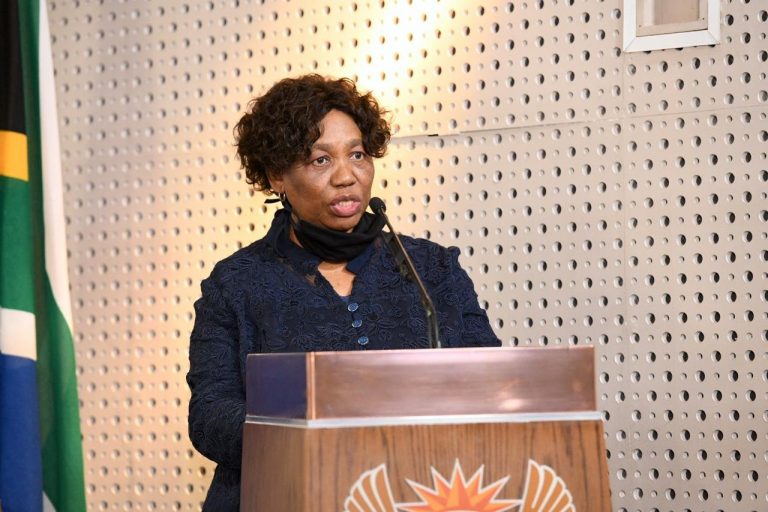
BASIC Education minister Angie Motshekga says her department is working on the full return of students to schools, but has continued to face problems around space and social distancing.

Motshekga said that her department has informed all teachers that they will need to return to schools to help ‘reboot the system’.

However, she noted that her department did not ‘succeed fully’ with the return of primary schools. While around 60% of schools could accommodate the return of learners, Motshekga said that there are space issues in some of the country’s township schools.

She added that preference would initially be given to Grade 10 and Grade 11 students to complete the curriculum and are fully prepared to sit their matric exams in 2022.

The minister noted that the 2021 matric cohort lost a significant amount of teaching time due to the country’s various lockdowns, resulting in little holiday time for students or teachers.

South Africa’s primary schools (Grades R – 7) returned to full-time teaching at the end of July as part of the country’s move to an adjusted level 3 lockdown.

However, high school students have continued to work rotationally, leading to concerns around a loss in learning time.

Under the current rotational system, high schools operate under one of three systems. Students are either expected to attend school physically every second day, every second week or once a day in a morning or afternoon slot.

During downtime, students are expected to complete assigned work to make sure they don’t fall behind the curriculum. A number of schools have also incorporated online and digital learning platforms for students.

Matric exams 

South Africa’s 2021 matric cohort is set to begin their final exams from 1 November, through to 7 December, with a record 735,677 full-time candidates set to write – an increase of 128,451 students, compared to last year, the minister said.

“This is the Grade 11 Class of 2020, that did not complete their curriculum; but through the sheer hard work and dedication of our teachers, they have been able to cover the entire curriculum of 2021, and that they even had enough time to do revisions.”

Motshekga said that the introduction of remote learning interventions, together with learning camps, has assisted in ensuring the entire curriculum was covered.

“We have consulted with provinces to check on their state of readiness, and provinces have confirmed that it is all system go. In terms of learner support, the Woza Matrics Campaign is available and offers tuition support to Grade 12 learners in ten subjects.

“We urge all our learners to take advantage of the learning and teaching support materials as well as the support availed through the campaign. We also have hundreds of zero-rated platforms on our website.”

New History Curriculum, Big Subject Changes Planned For Schools From 2024

The Department of Basic Education is developing a new history curriculum for schools in South Africa, to be introduced in 2024.

This comes after a department-assigned task team recommended that history be made compulsory in grades 10-12.

Basic Education minister Angie Motshekga said that a draft curriculum is expected to be ready by the end of the year and a revised final curriculum by mid-year in 2022.

She added that the task team has been consulting historians, archaeologists, linguists, researchers, and academics to get input on the new curriculum.

“The major challenge now, which is a massive exercise, is around the rewriting of history. Even the task team said, ‘you can’t present the current history as it is,’ so it has to be rewritten,” the minister said.

Motshekga said the department will also have to find the money for new textbooks, and teachers will need to be retrained.

The Department of Basic Education is also moving forward with plans for ‘mother tongue teaching’, enabling students to study and write exams in their home languages.

Provinces are expected to continue to support and extend the use of mother tongue education, Motshekga said.

“The Eastern Cape, for example, initiated mother tongue-based bilingual education, wherein 2,024 schools are using IsiXhosa and Sesotho for learning and teaching beyond the foundation phase.

“Learners in these schools are taught mathematics, natural science and technology in their home languages of IsiXhosa and Sesotho.”

The department of education has also indicated that it will trial new subjects this year, including entrepreneurship, coding, and robotics.

Nationally, 540 schools will be monitored for implementing compulsory entrepreneurship education, with the subject expected to officially form part of the curriculum by 2024.

54 schools are also piloting and implementing a coding and robotics curriculum. These subjects would form part of the curriculum at different levels from Grade R to Grade 9.

The department said that the coding and robotics subjects are aimed at guiding and preparing learners to solve problems, think critically, work collaboratively and creatively, and function in a digital and information-driven world.

Premier 15s set to welcome first South African as Zintle Mpupha joins Exeter squad to take on Saracens

0

WOMEN do not get into professional rugby for the money or glamour. There’s not a great deal of either.

In the men’s game if a club brings one of South Africa’s top talents into England’s top league he can expect hundreds of thousands in salary, and look forward to a retirement spent taking in the views across his estate and sipping a glass of wine produced from his own vineyard.

Zintle Mpupha arrived in Devon less than two weeks ago from South Africa’s Premier Division side DHL Western Province. She is now sharing a house with three other Exeter Chiefs.

“I’m sharing with three other girls, Olivia Jones, Kanako [Kobayashi] and Grace [Eckford] in a house in Exeter, just a walk away from Sandy Park,” says the 27-year-old who can play fly half or in either spot in the centres.

Her salary as one of the full-time players on the Exeter squad will not be anything special either, but what is special is her sporting talent. Having given up an international cricket career to sign up for South Africa sevens team, Mpupha has become a regular fixture in her nation’s 15s side, and in August she broke the try-scoring record when she touched down four times against Kenya.

Mpupha – who’s first name is pronounced ‘Zintlay’ – is also special for another reason. This weekend she’s set to become the first South African to play in the Premier 15s. 

Starting on the bench against multi-title winners Saracens, she’s fully aware of the intense rivalry between the two clubs. While Exeter’s men have lost out in three finals to Saracens – let’s not go into why that may have been here – the niggle between the women’s side may not be for the same reasons, but it’s no less intense.

“Oh yes, everyone is talking about it, especially as we get closer to the weekend. I’m getting so excited about it.”

As for being the first South African woman to play in the Premier 15s, Mpupha is hoping she will inspire many more to follow her lead. 

Mpupha says: “I am honoured that Exeter think I will fit into their style of rugby very well, but ultimately, getting an opportunity to play overseas has always been one of the dreams in my rugby career.

“I’m super excited to be the first South African to come over here and play, but I hope this is also the opening for others to come over in the future.” 

However, she admits the cold will take a little getting used to.

“I know I will be tested in different conditions, one of them being the weather.”

For Exeter’s coach Susie Appleby Mpupha not only bolsters her back line, she will bring some of that traditional South African power with her too. 

“She can play 10, 12 or 13, has a brilliant kicking game and brings immense physicality,” says Appleby, who has clearly seen enough in less than two weeks of training with the squad to throw her straight into one of the toughest games in the league. “On top of that, though, she’s also a smart player and she will really compliment what we have going on in our backline right now.”

Mpupha arrival in England will not be lost to the Springbok Women’s team, as her contract enables her to fulfill her national commitments, including the forthcoming November tour to Europe, and she will be available for selection to next year’s Rugby World Cup in New Zealand.

She is also handily located to get into South Africa’s sevens squad for next summer’s Commonwealth Games in Birmingham.

“Obviously everything depends on South Africa Women’s Rugby. Given any chance I definitely want to be part of the team that goes to the Commonwealth Games.”

There may not be riches and luxury homes, but there may be glory for Mpupha and her fellow Exeter players this season. In the past two weeks they have beaten current champions Harlequins as well as title contenders Wasps to sit fourth in the table. Despite this being only their second season in existence, she knows what the goals are.

“Looking at the previous season, they made it to the top six,” she says. “So, a short-term goal will be making it to the top four and taking it from there.

Multi-million rand science and technology centre launched in Eastern Cape

A multi-million rand centre to promote science, technology, and innovation has been launched in the Eastern Cape. The centre also offers courses in the study of space, science, and astronomy as well as teacher development programmes.

Higher Education, Science, and Innovation Minister Dr Blade Nzimande opened the centre on Thursday.

It is the first of its kind in the Eastern Cape. Apart from promoting science, the centre in Cofimvaba is also expected to provide job opportunities for the youth and promote indigenous knowledge through science.

Dr Nzimande says the centre is going to support and benefit many rural schools in the area.

“Part of the aim is also to excite young people to experience and to feel what science is, that’s another important aspect of it but also one of the most crucial dimensions is that this is going to act as a science centre to support many schools in the locality with the connectivity that is there. Some of the subjects and lectures and periods being offered centrally.”

Eastern Cape Premier Oscar Mabuyane says this is going to help bridge the digital gap for rural learners.

“It’s also going to help us to really optimise the usage of it with getting universities to stop being ivory towers as you see that we already have a couple of universities inside here showcasing. So, we are quite happy that in these deep rural areas we have a centre like this that is able to help us to really bridge this digital divide that we have been talking about.”

Learners say they are happy because they will have access to technology, and the centre will broaden their knowledge on career choices in the science field. “This will help us more because it will cost us less, we won’t need to go to other provinces for science. We only have to come here do our experiments at a cheaper cost,” says one of the learners. ”

Another learner says; “Everything here is practical and there might be a festival competition that will inspire more learners to pursue their learning in science.”‘

The Director of the Teacher Development Programme Daan Jonker says nearby rural schools will be able to borrow equipment from the centre.

“We are going to have a scheme where teachers from science projects will be able to come and borrow some equipment from the centre, take it to the school, do the experiment that is needed for the curriculum, bring it back so that other schools can also benefit from that.”

Premier Oscar Mabuyane says more projects like this are in the pipeline for other areas in the Eastern Cape.

Building Relationships Key Factor In Classroom Management

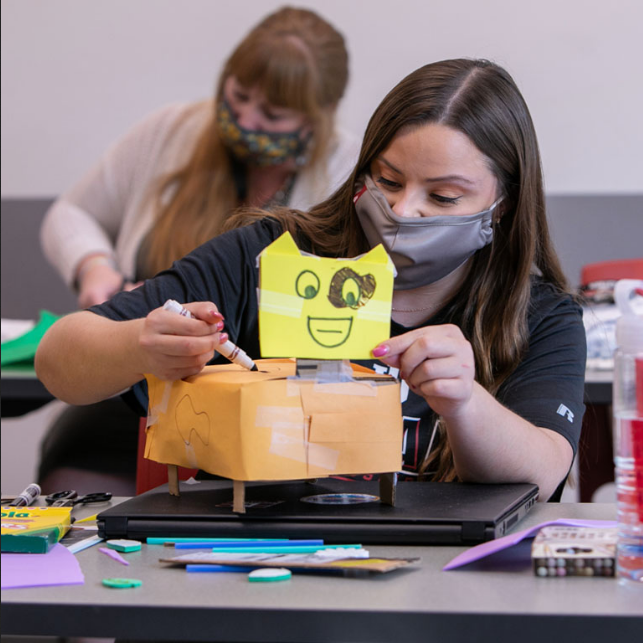
HOW does a teacher decide where the desks go in the classroom? And how does he or she determine what the class rules and expectations will be?

These decisions are all part of building relationships that will impact what happens in that room, according to Sarrah Grubb, assistant professor of education at Indiana University Kokomo. Grubb teaches a new class this semester, “Creating Classroom Culture,” to examine the research behind classroom management and how building community has a positive impact.

“As teachers, we have a lot of power in the classroom climate,” she said. “By sharing with the students and developing relationships and partnerships, we can create an environment where students feel not only included, but they are actually a part of what goes on every day.”

That feeling of being included motivates children to be positive participants in learning, she said. Building community also allows for cultural differences to be considered and appreciated.

Noting that most students in her class will student teach in the next year, Grubb said they are examining their own beliefs about what teachers should do, and considering research and case studies to determine what they want to do in their own classrooms.

“We’re looking at how we build a classroom culture with students, so we are all in it together, and all students can come as they are, and it is a safe place to learn,” she said. “We start from the idea that students are an asset, and they have strengths. The idea isn’t necessarily authoritarian, that ‘I’m the one in charge, and everyone needs to hop in line.’ It’s thinking about ‘We’re all in this together to move forward.’”

Senior Ashlyn Drake, from Lafayette,  said Grubb modeled that philosophy by having the class help create the classroom rules for the semester, and then talk about what their own rules might be — and why those are important to them. One of her personal rules is not to talk when someone else is talking.

“I want my students to feel respected when they are sharing, and I want people to listen to one another in my classroom,” said Drake, who plans to be an elementary teacher. “It’s important that their voices are heard. I want to set a positive culture so my students feels they can talk to me and to each other. I want them to feel like I respect them, and I know that trust and respect is earned and not just given. Positive relationships will build the foundation for the year.”

Mariah Misson, a future secondary English teacher, said they’ve learned to pick up on subtle signals they may be sending out with actions such as separating a child from the rest of the children, or constantly saying the child’s name.

“You think saying their name is going to get them on track, but you have to think about how deep that goes, and what it says about your classroom culture and how welcome kids may or may not feel in your classroom,” said Misson, from Marion. “There are things we can do help teach them to control themselves in the classroom, so they aren’t losing out on learning. We want to have a classroom where kids not only feel welcome, but where they are welcome.”

Students are participating in field experiences in area schools for other classes, and will talk about what they see there, what works, and what they could change. Grubb said for their final project, each student will explain his or her philosophy for classroom management, and about the ideal space they would have.

“It’s not just about ‘this is where I’m going to put the desks, and why,’” she said. “It’s knowing we are communicating at all times through our actions, our room layout, and our procedures and expectations. We’re trying to think about why we believe what we believe, and are those the best things for students in this moment, or is there something else to consider?”

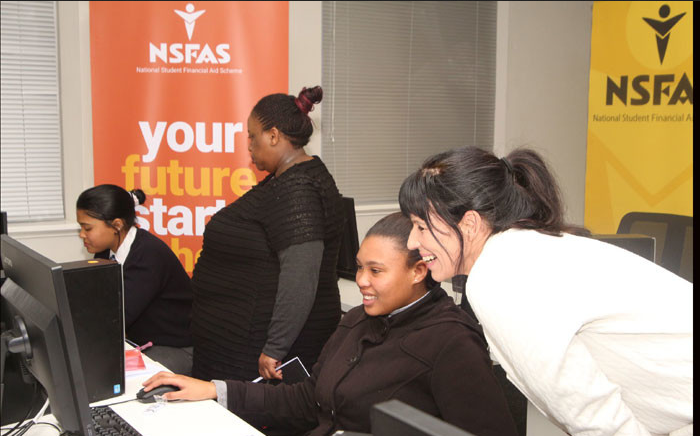
NSFAS To Re-open Walk-in Centre In Cape Town, Western Cape

0

WITH South Africa bumped back down to level 1 lockdown after another “family meeting” in September, the National Student Financial Aid Scheme (NSFAS) has made the decision to re-open its Cape Town walk-in centre this week.

“With the country being placed on lockdown Level 1 by the President, NSFAS will open its Walk-in Centre at the Cape Town Offices on Monday 11 October 2021. The working hours are between 09H00 -16H30. Find us at House Cloete, Brodie Road, Wynberg, Cape Town,” NSFAS explained on Twitter.

For those who would like to call the offices for any reasons – such as to see if space is available to allow for social distancing – this official governmental website lists the two contact numbers at the location as 080 006 7327 and 021 763 3200.

While the country is now in level 1 lockdown and the vaccine rollout is cause for mild optimism, some may question why a physical location for NSFAS is required when the organisation can be contacted in a number of different ways remotely.

SA’s educational institutions have a poor record when it comes to responding to student questions in a timeous manner.

In a twitter feed, NSFAS said sometimes when students have a problem that is urgent or has been outstanding for a long time with no resolution through remote communication, a physical visit to something like a walk-in centre is one of the few ways to get proper help.

There’s also the issue of scammers having easier access to students online, a persistent problem that NSFAS itself has to deal with constantly with warnings.

For those who would like to visit a physical location but are not based in Cape Town, NSFAS provides a number of application centres outlined here.

The National Youth Development Agency (NYDA) works with NSFAS and its list of location is available on the website.

  • * Inside Education

Over 890 000 Candidates To Sit For The 2021 National Senior Certificate Exams

WITH only weeks to go until the 2021 National Senior Certificate (NSC) examinations, the Department of Basic Education (DBE) is expecting more than 890 000 candidates to sit for the exams.

The November 2021 National Senior Certificate (NSC) examination will commence officially on Wednesday, 27 October 2021 and conclude on Tuesday, 7 December 2021.

Director of National Examinations, Priscilla Ogunbanjo, said that this is the largest number of candidates who will sit for the exams in terms of fulltime candidates since the inception of the NSC examinations.

Ogunbanjo said this at a media briefing on Friday hosted by the department on the state of readiness to present credible examinations for the 2021 curriculum year.

“We have 735 677 fulltime candidates that have enrolled to write the exam, this is the largest number since the inception of the NSC exam in terms of fulltime enrolment. This is an increase of 128 451 candidates than we had enrolled last year,” she said.

Ogunbanjo said that part-time enrolment has also picked up again compared to 2020, with 162 109 candidates that will sit for the exam this year. The department has also noted an increase in key subjects in terms of the number of candidates.

Minister Angie Motshekga said that the department is ready to present a credible examination for 2021. The DBE has consulted with the provinces to check on their state of readiness. In their response, the provinces have confirmed that it is all system go. 

“This is the third matric exam to happen under the COVID-19 environment; and the DBE had to make changes, to mitigate the negative impact of COVID-19 pandemic on teaching and learning,” she said.

Adding on to the readiness and monitoring, Ogunbanjo said that the department and Provincial Education Departments (PEDs) will monitor both the writing and the marking of the November 2021 NSC examinations.

She said that PED monitors will include provincial, district and circuit officials and monitoring is aligned to the risk profiles of centres.

“Resident monitors will be deployed to all high risk centres, including takeover by head office/districts. Each PED [is] to have a monitoring coverage of not less than 70%. On-line monitoring tools will also be used in certain PEDs. Additionally, a total of 95 DBE monitors will be deployed across the provinces to verify the monitoring conducted by PEDs,” Ogunbanjo said.

Marking and the release of results

Marking is scheduled to commence on 8 December and end 22 December 2021, meanwhile the provisional release of results is scheduled for 21 January 2022.

The department has appealed to the public to assist  it in stamping out the evil of examination breaches.

“The DBE and the PEDs are leaving no stone unturned in strengthening their security measures across the value chain. We need the support of parents, teachers, principals and all members of the public to alert the Department of any irregular practice that may surface on the social media or on any other platform,” Ogunbanjo said.

Learner support

In terms of learner support, the department said that the Woza Matrics Campaign is available and offers tuition support to Grade 12 learners in ten subjects. 

The campaign is a free-to-air television initiative, launched following the academic disruptions caused by COVID-19.

The Woza Matrics 2021 Catch-Up Campaign, is led through a partnership between the DBE, National Education Collaboration Trust (NECT) and the Education, Development and Training Practices (ETDP) Sector Education and Training Authority (SETA).

“We urge all our learners to take advantage of the learning and teaching support materials as well as the support availed through the Campaign. We also have hundreds of zero-rated platforms on our website,” Motshekga said.

Basic Education Employment Initiative

Since the opening of the sayouth.mobi site on 27 September 2021, the department has received more than 5.5 million applications from more than 3.9 million unique applications.

Through its Basic Education Employment Initiative, the department seeks to provide 287 000 unemployed young people employment and training opportunities in the basic education sector.

“As government, we are seeking to mitigate the devastating economic challenges brought about by the COVID-19 pandemic.  Our young people will have an opportunity to receive training on a variety of skills, that will equip them for future employment opportunities and job creation,” the Minister said.  

Motshekga has urged more people to apply before the application period ends on Sunday, 10 October 2021.