Home Blog Page 304

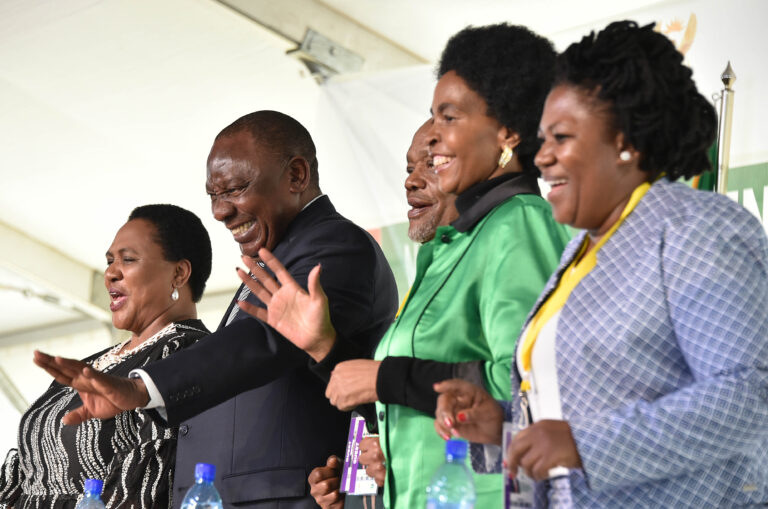
Ramaphosa Announces Women’s Economic Assembly To Ensure Women’s Participation In Economy

CYRIL RAMAPHOSA|

IF we are to achieve meaningful equality between men and women, which is one of the principal aims of our Constitution, we need to ensure the full and equal participation of women in the economy.

As a country, we have made progress in promoting equality for women in areas like government, civil society, the administration of justice, sport and culture. Unfortunately, we haven’t made the same progress in the economy.

There are more men in employment than women. Men are more likely than women to be in paid employment, and women are more likely to be doing unpaid work.

The most recent employment numbers show the unemployment rate of black African women is the highest at 41% per cent, more than 4 percentage points higher than the national average.

The inaugural Women’s Economic Assembly, which will convene in Gauteng later this week, is part of our national effort to change this.

The assembly will bring together delegates from government, civil society and the private sector to develop a common plan of action for advancing women’s economic empowerment.

Last year, government announced that at least 40 per cent of public sector procurement will go to women-owned businesses. As we work towards this target, we are calling on the private sector to make a similar commitment.

The Women’s Economic Assembly will consider how supply chains can be used to benefit women-owned businesses, address the policy impediments to women’s economic empowerment, and improve access to financing for women-owned businesses, especially rural enterprises.

A number of economic sectors, such as automotive, agriculture, mining and energy, will present commitments and action plans to enhance the participation of women-owned businesses. Some government departments and state-owned enterprises will also present their commitments.

Over the past year, government has been erecting the scaffolding for women’s participation in procurement, establishing an institutional framework for operationalisation, holding capacity building and training workshops for women-owned businesses, and linking up women-owned businesses with public sector opportunities.

Although some departments have increased their procurement spend on women-owned businesses, effective monitoring is needed to ensure this translates to tangible growth and sustainability.

For us to realise our ambitious goals, business needs to be on board. The financial services sector must work to broaden access to credit and digital financial services like e-commerce and online banking. Lack of financing impedes the expansion and sustainability of many women-owned businesses, especially SMMEs.

Supporting women-owned businesses through procurement is not the only area where this administration is actively working to empower women.

Women continue to be prioritised for work opportunities through a number of public employment programmes. In the first phase of the President Employment Stimulus, for example, 66% of participants were women.

Of the 206,000 hectares of state land released in the last year, 54,000 hectares – comprising 78 farms – were made available to women beneficiaries. However, we need to do more to improve women’s access to productive land for farming, and the Department of Agriculture, Land Reform and Rural Development aims to allocate at least 50% of alloted state land to women.

We also need to address the inadequate representation of women in managerial positions in the private sector. Some 67% of managerial positions are held by men compared to 33% by women.

Even though we have solid policies that outlaw gender discrimination in the workplace, wage differences between men and women persist. According to a report by the National Business Institute, women earn R72 for every R100 earned by a man.

We need to ensure greater social and other protection for women employed in the informal sector and in elementary and domestic work occupations.

The first-ever Women’s Economic Assembly is a milestone to be celebrated by us all. It brings us all the closer to meeting our Constitutional aspiration of equality and will be a vital tool through which we can accelerate the transformation of our economy to benefit all.

In the final decade towards meeting the 2030 vision of the National Development Plan, let us work together as the public and private sectors and all of society.

Let us act with renewed urgency to realise the full economic empowerment of our country’s women, of the women of Africa and of women everywhere.

  • * From the desk of the President
MEC Polly Boshielo Must Urgently Address Issues At Mpotla Senior Secondary School – DA

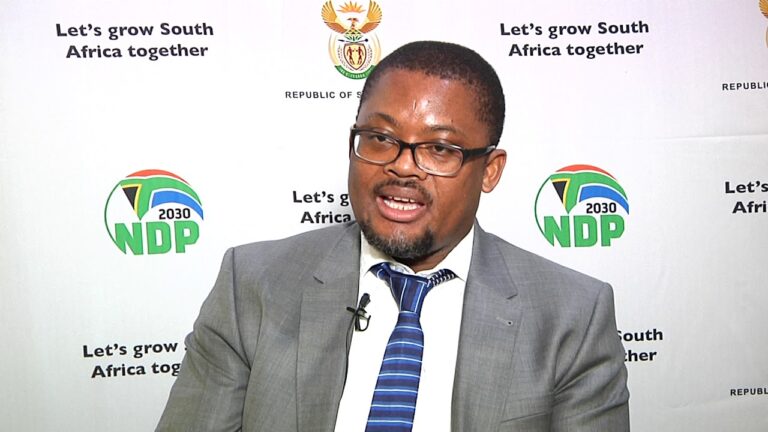
THE DA in Limpopo says for over two months, a school in Makgopong Villiage in Zebediela have not had educators due to a proposed merger with another school, but the Limpopo Department of Education has been ‘twiddling thumbs’ to solve the situation or provide clarity on the way forward.

The parents of learners at the school claim that the learners at the school have not had any educators for over two months.

The crisis stems from learner’s objections to their school being merged with Makgwading High School.

The DA said after extensive correspondence to the MEC of Education, Polly Boshielo, that fell on deaf ears, the party is now calling on her to finally meet with parents, learners and the school governing body of Mpotla Senior Seconday School to urgently find solutions.

“The major concerns and reluctance for the merger are centred around a lack of the provision of scholar transport, safety fears due to the long walk in the bushes and crossing a river on their way to Makgwading High School and the fact that their school has a good pass rate while the other school has underperformed in previous years,” said Risham Maharaj, acting DA provincial spokesperson for Education.

Maharaj said district officials of the Limpopo Department of Education met with the learners as well as the SGB and after discussions they allegedly withdrew the issue of the merger and promised six educators.

“It is also further claimed that another official came to the school months later and threatened the learners with not writing their exams unless they move to Makgwading High School,” said Maharaj.

“While we acknowledge the need for school mergers in certain circumstances, it is important to have the support of the parents, SGB and most importantly the learners to ensure a workable long-term solution.”

He added: “We call on MEC Boshielo and her department to engage the community and settle on a long-term solution for these learners. It is extremely concerning that these learners, especially grade 12s, have no educators at the school at present as we approach exams.”

“We believe the provincial government has a responsibility to ensure that every learner’s right to basic education is ensured.” 

  • * Inside Education

Science & Technology: Changes Planned For TVET Colleges And Universities In South Africa To Improve Job Opportunities For Students

THE Department of Higher Education, Science and Innovation is currently working on an overhaul of South Africa’s TVET colleges and universities to improve job opportunities for students and reindustrialise the economy.

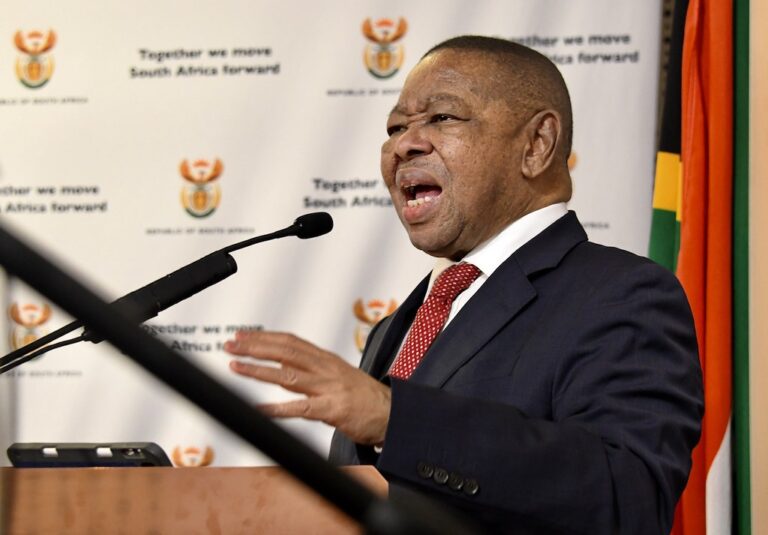
Addressing a national skills conference last week, Higher Education minister Blade Nzimande said this would include an increased focus on apprenticeships and work-based learning as part of college training.

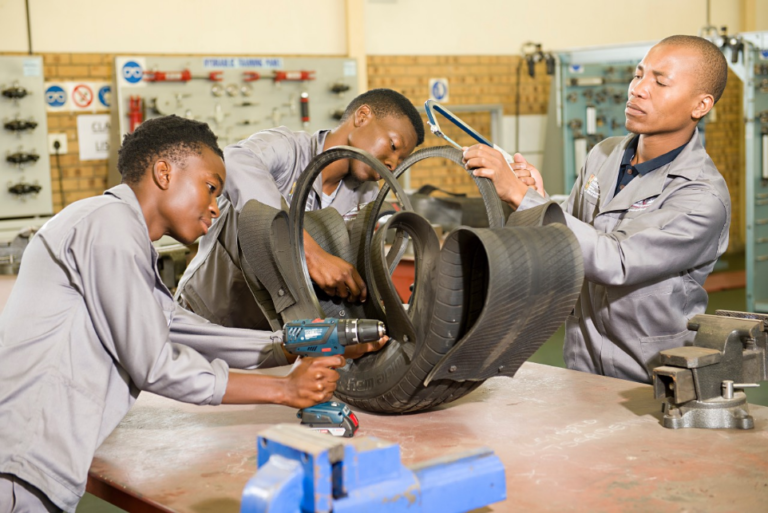
“It is my intention and plan as the Minister to build and refashion our technical and vocational education system to be apprenticeship based,” he said. “Ideally, every TVET college student should be apprenticed in industry or in a workplace, rather than the current system of a theoretically biased TVET system.”

Nzimande said that the country’s higher-learning institutions would also be ‘restructured’ to promote innovation and digitalisation in the skills development ecosystem.

This will include introducing new programmes and subjects in emerging interdisciplinary fields to more efficiently provide trained workers in areas such as biotechnology, nanotechnology materials, and artificial intelligence.

“Substantial and constant changes to the curricula of our institutions remain critical to allow for students to develop capacities to deal with emergent and unknown challenges of the future brought by the 4IR.

“Clearly, Science, Technology, Engineering and Mathematical (STEM) subjects have a crucial role to play in equipping students in rapidly developing fields such as genomics, data science, Artificial Intelligence (AI), robotics and nanomaterials, which are all 4IR concepts.”

Nzimande said that these new subjects would not be limited to a focus on technology but would also include changes in the outcomes of what students are taught, with new entrepreneurship programmes also being introduced at universities to promote new local businesses.

“The innovation and digitalisation put a premium on adaptability and in self-directed learning and thinking,” he said. “Therefore, lifelong learning will be key as the shelf life of any skills development ecosystem has limitations in the present-day environment.”

  • Business Tech

Entries Open For PUMA School Of Speed Series

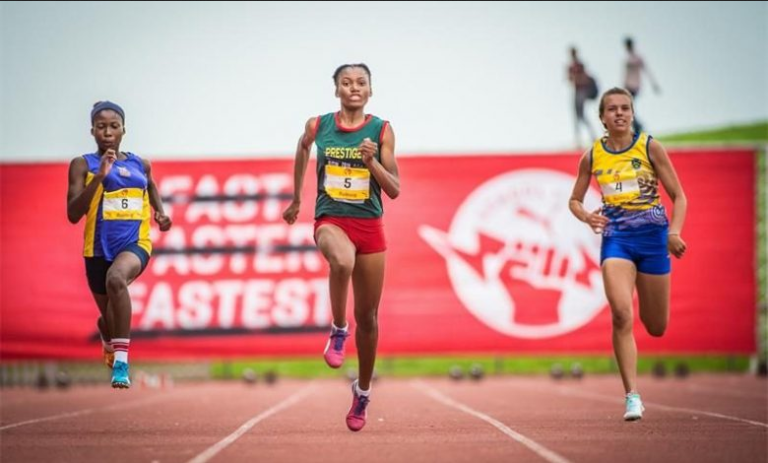
SOUTH Africa’s most exhilarating schools’ athletics meet, the PUMA School of Speed Series will boast three events in 2021 and entries are now open.

Launched in 2016 with a clear goal to identify South Africa’s exceptional talent, the PUMA School of Speed Series is said to deliver on all promises.Michael Meyer, MD of Stillwater Sports, said they are excited to open entries for the 2021 PUMA School of Speed Series. “The pandemic has impacted all our lives and our children have not been spared with school sports being postponed on numerous occasions. After a very exciting 2020 Olympic Games in Tokyo, SA’s junior track and field stars are hungry to compete. The PUMA School of Speed Series is the perfect event to curb that hunger,” he said.

He also said they were pleased to offer this opportunity.

“We are proud to give our junior track and field stars the opportunity to compete against top competitors at a world-class event. With PUMA, we look forward to continuing growing this sensational sport in South Africa while paving the way for ‘future stars’,” said Meyer.

PUMA marketing director Brett Bellinger reiterated they are excited to continue supporting the exhilarating sport of track and field.

“Launched in 2016 and headed by the World’s Fastest Man, Usain Bolt, the goal of the PUMA School of Speed is to identify exceptional young South African athletes. The energy experienced at the PUMA School of Speed meets is unsurpassed and we can’t wait to see SA’s junior track and field stars in action ready to prove that their future is #ForeverFaster,” said Bellinger.

The PUMA School of Speed Meets are endorsed by athletics federations, finishing times will count as official qualification for provincial and national championships.

The PUMA School of Speed Series welcomes individual athletes or schools who believe their future is #ForeverFaster.

Junior track and field stars between the ages of 14 to 19 can follow in the footsteps of Usain Bolt.

All entrants will stand a chance to be scouted and contracted to the PUMA #ForeverFaster Squad. The top identified talent will be awarded PUMA contracts after the series.

For further information, contact Stillwater Sports on 082 991 0045, alternatively, via email on info@schoolofspeed.com or visit www.schoolofspeed.com

Africa’s Rural Universities Aren’t Delivering For The 21st Century

0

EDUCATION has been described as a tool for development. In certain instances, a good, stable and quality educational system is synonymous to development. But to play this role, education systems need to stay relevant. Institutions of learning and training centres must adjust their educational systems as well as their curricula to suit the demands of current times.

This has happened through the centuries. As major changes have occurred in society – or put another way as industrial revolutions have taken root – higher education institutions have adjusted their systems accordingly.

I did a literature review to understand this process, with a view to gaining insights into what it means for rural education institutions in African countries. The research was aimed at understanding how institutions were adjusting the type of education they provide.

Rural institutions are usually established in rural areas to aid development and proffer solutions to challenges faced by the community. The focus is often on addressing illiteracy. I selected rural institutions for my study because they are likely the most vulnerable in terms of preparedness for the current social and economic shifts.

I also wanted to find out the factors hindering rural institutions of learning from preparing for current conditions. And what rural African institutions should be doing. Lastly, I wanted to know what they should focus on.

I concluded that public education has to be overhauled to prepare people for the jobs of the future. This is to ensure that the educational systems fit into the demands of the current age, or what has become known as the Fourth Industrial Revolution.

This digital revolution is a blend of technology fields like artificial intelligence, robotics, the Internet of Things, 3-D printing, nanotechnology, biotechnology, materials science, energy storage, and quantum computing with biological and physical worlds. This digital age is capable of transforming the world’s industries through automation.

An overhaul of the education system in preparation for the Fourth Industrial Revolution implies revisiting the curricula as well as study programmes to ensure they fit the demands of future world of work. If this is done, students will be able to contribute to the development of the communities they live in.

How education progressed

My literature review shows how formal education adjusted during the first, second and third industrial revolutions. A major effect of the first three industrial revolutions on formal education is that they caused a continuous educational shifts.

The first industrial revolution spanned from around the end of the eighteenth century to the beginning of the nineteenth century. The focus of the economy shifted from agriculture to industry.

The second industrial revolution, otherwise called the “Technological Revolution”, took place between 1870 and 1914, shortly before WWI. It was characterised by the growth of pre-existing industries and expansion of new ones – such as oil, electricity, steel and mass production through the use of electric power.

New technologies, especially in the refining of internal combustion engine and petroleum, alloys and chemicals, electricity and communication technologies, were also improved.

The third industrial revolution took place in the twentieth century. The period saw Henry Ford master the moving assembly line and introduced the age of mass production. It was also characterised by digital technology.

In a bid to ensure that institutions of learning were relevant in all three revolutions, curricula were revisited.

Earlier studies show that African higher education struggled to cope due to lack of infrastructure. For instance, several institutions of learning are still struggling to adjust to the use of power point during teaching and learning with the use of overhead projectors. This influences the level, type and quality of education provided to students.

Recommendations

Public education has to be overhauled to prepare people for the jobs of the future.

The gap between what’s in place and what’s needed is vast. Some countries, such as South Africa, have done some work. The country has done this mainly through the support of local innovations.

But most countries are way behind the curve which means they will continue to struggle to remain relevant. Steps governments need to take urgently can include:

  • Redesigning education systems to ensure that there’s lifelong learning. This can be done through curricula redesign to enable learning and relearning at various levels.
  • Revise Science Technology Engineering and Math courses to bring them in line with developments.
  • Revamp Technical and Vocational Education and Training with the involvement of the private sector. This can be done through internships and mentorships. Private organisations can be encouraged to partner with selected rural universities to practically train young people in relevant Science Technology Engineering and Math areas. A good example is the Ford Motor internship in the US.
  • Education policies for rural based institutions of learning should be revisited.
  • Establishing more institutions that specialise in Science Technology Engineering and Math, business, social sciences related areas that would be relevant for the Fourth Industrial Revolution.
  • * The Conversation

DA Launches Petition To Recognise Afrikaans Following Minister Nzimande’s Claims That ‘Afrikaans Is A Foreign Language’

THE DA today launched a petition for government to officially recognise Afrikaans as an indigenous language.

The petition is addressed to the Minister of Higher Education and Training, Blade Nzimande, in response to his classification of Afrikaans as “foreign” in his Department’s Policy Framework for Higher Education Institutions.

The petition demands that Minister Nzimande immediately adapt the definition of indigenous languages to include Afrikaans, that he publicly and unconditionally apologise to the Afrikaans-speaking community for his actions, and that he requests public universities to adapt their language policies to accommodate Afrikaans’ status as an indigenous language.

“Minister Nzimande persists with the hateful, hurtful and unscientific classification of Afrikaans as “foreign” despite the Constitutional Court’s unanimous ruling in the recent Unisa court case, during which Judge Steven Majiedt explicitly pointed out that the concept “indigenous languages” also includes Afrikaans,” said the DA’s Dr Leon Schreiber.

“Judge Majiedt and a full bench of judges further warned that the “misconception that [Afrikaans] is ‘the language of whites’ and ‘the language of the oppressor’” is a blatant misrepresentation of the language and its true origin. In fact, Afrikaans is currently predominantly the language of black people. And it is used by black people, not only in so-called “coloured” townships, but also in many black townships in various regions of our country.”

The DA has also lodged a complaint with the Human Rights Commission about Nzimande’s definition of Afrikaans as “foreign” because the party believes that the classification infringes on the rights of the diverse Afrikaans-speaking community to mother tongue education, equality and dignity.

“The definition also creates the impression that the ANC government regards the speakers of Afrikaans as “foreign” or in some way “alien” to South Africa,” said Schrieber.

“In his response, Nzimande makes himself guilty of exactly the kind of “iniquitous portrayal” that Judge Majiedt warned against, by dismissing the objections to this classification of Afrikaans as “racist” and “nationalist”.”

“The DA encourages all South Africans to sign this petition, after which the DA will hand it over to Minister Nzimande with the demand that Afrikaans be given its rightful place as a full-fledged, indigenous South African language.”

  • * Inside Education

National Skills Conference: STEM Subjects Key In Preparing Students For Employment In 4IR Careers, Says Nzimande

SCIENCE, Technology, Engineering and Mathematical (STEM) subjects have a crucial role to play in equipping students in rapidly developing fields such as genomics, data science, Artificial Intelligence (AI), robotics and nanomaterials, which are all Fourth Industrial Revolution concepts.

This is according to Higher Education Minister Dr Blade Nzimande during his opening address of the national skills conference on Tuesday.  

Nzimande said that these new subjects would not be limited to a focus on technology but would also include changes in the outcomes of what students are taught, with new entrepreneurship programmes also being introduced at universities to promote new local businesses.

“The innovation and digitalisation put a premium on adaptability and in self-directed learning and thinking,” he said.

“Therefore, lifelong learning will be key as the shelf life of any skills development ecosystem has limitations in the present-day environment.”

He said an evolving 4IR STEM curriculum would have to reconsider the rigid disciplinary boundary framing of traditional subjects such as biology, chemistry and physics— given the integrative role of digital technologies in relation to each and their intersections in the real world.

“It is also inevitable that any effective 4IR strategy should foreground the human condition: the ways in which new technologies and shifting economic power impact on people with regards to equality, human freedom and social solidarity,” said Nzimande.

“It is therefore crucial that the Humanities and Social Sciences must be reinvented and strengthened to play a crucial role in shaping the discourses of science and technology to speak to the cultural, social, political and economic issues. Both the Human Research Council (HSRC) and the National Institute of Humanities and Social Science (NIHSS) must play a leading role in this regard. How do we combat social alienation in a world dominated by machines? How do we ensure algorithms do not engender new forms of racism and class prejudice? How do we harness the powers of the new technologies to overcome the historical questions of oppression and exploitation?”

He added: “The innovation and digitalization puts a premium on adaptability and in self-directed learning and thinking. Therefore lifelong learning will be key as the shelf life of any skills development ecosystem has limitations in the present-day environment. Placing innovation and digitalisation at the centre of the Economic Reconstruction and Recovery Programme (ERRP).”

“This Government, together with the social partners at NEDLAC, has adopted the ERRP as our emergency economic programme to deal with the impact of Covid 19 on our economy. However the major premise of the ERRP is that we simply do not want to return our country to the economic crisis before COVID-19, but to use this opportunity to build a new and more inclusive economy.”

  • * Inside Education

University of Pretoria: Enterprises UP partners with National School of Government to create a future-ready state

THE University of Pretoria (UP) recently partnered with the National School of Government (NSG) through Enterprises University of Pretoria (Enterprises UP) to accelerate efforts to build an ethical, capable and developmental state.

To preserve value, the public sector requires entities to build an ethical, professional, and capable public sector in order to improve their operations and service delivery, and this can be done with ready access to experienced professionals and specialists who can provide specialised advisory services and training to boost skills and professional development for a future-proof workforce.

The partnership between UP and the NSG is in response to a call from the NSG for partnerships with higher education institutions (HEIs) to provide various education, training, and development functions with the NSG. UP was successful in its bid submission and has been named as a preferred training partner on a list of pre-approved HEIs to perform these functions.

Busani Ngcaweni, Principal of the NSG, stated during the signing ceremony of the National School of Government’s Partnership Agreement with the appointed HEIs hosted by NSG on Thursday, 3 June 2021: “As the National School of Government we are going through a very delicate imagination process that seeks to place us as the National School of Government at the centre of efforts to rebuild state capacity by not only giving hard technical skills but also by dealing with issues of values in the public sector as a whole.”

He stated further: “The task we have together is to lead a skills revolution that will change the performance of the public sector as a whole. We are imagining ourselves as the National School of Government as an assimilator, given the weight and size of the work that we have to do. We must enter into partnerships with yourselves so that we decentralise this idea of an assimilation.

“Our scope of work has expanded, we must train the public sector. However, our strength on our own is very much limited; by entering into this relationship we are building our strength so that we’re able to meet the demands of expectations.”

Speaking on behalf of UP, Professor Norman Duncan, Vice-Principal: Academic of UP, expressed gratitude for the opportunity to collaborate with the NSG. “We are extremely grateful for this opportunity to be in service of the country and that UP can contribute to the capacitation in the public service.”

“We are excited to be part of this partnership with the NSG,” said Professor Margaret Chitiga-Mabugu, Director and Head of the School of Public Management and Administration of UP.

“UP and the School of Management and Public Administration, through Enterprises UP, have been in partnership with the NSG for many years, so this is just further endorsement of how well this partnership is working. We look forward to making contributions to our country.”

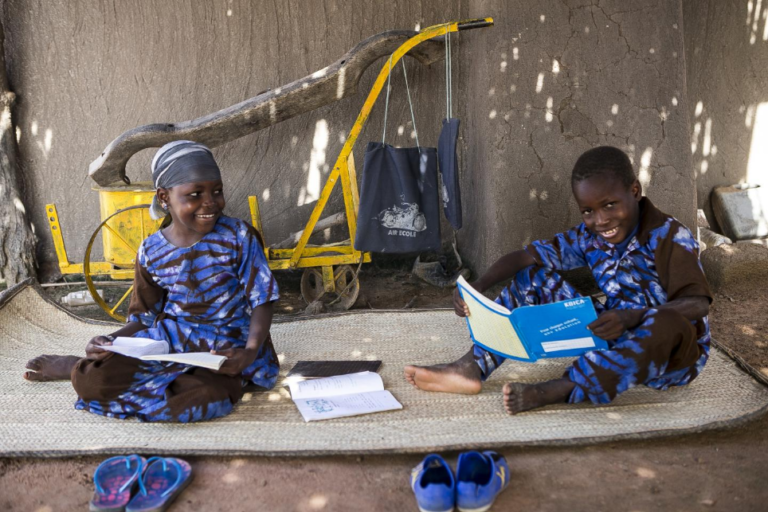
Mali: The joy of preparing a return to the classroom and to school.

0

“I WANT to be a Doctor when I grow-up”- Assana.”As for me, I want to become a Minister”, chimes her twin brother Soumaila.

The twins Assana and Soumaila, probably don’t share the same ambitions, but they express the same joy in preparing their entry into second grade.

At age 9, they will start their second grade, while they should normally have been in the fourth grade.

“Until very recently I was convinced that once a child passed a certain age, he had no chance to be enrolled in school,” says their father Alassane Coulibaly.

Assana and Soumaila live in a modest home in Nankorola a village located in the circle of Koutiala in Sikasso region. Dad is a farmer, and mom a housewife. The youngest children are the twins and they have four brothers and two sisters, none of whom unfortunately ever went to school. This was also their case two years ago.

In Mali, more than two million children aged between 5 to 17 still do not go to school, and over half of young people between ages 15 to 24 are not literate.

Household poverty, child labour, child marriage, insecurity and the distance between schools and children’s homes are all factors driving the high drop out and out-of-school rates in Mali.


UNICEF’s education programme is in line with national priorities and it puts emphasis on the most vulnerable children: those who are currently outside the school system, girls, children on the move, children with disabilities and those affected by conflict or other emergencies.

UNICEF works with partners like KOICA to provide the children out-of-school with non-formal and informal education in order to facilitate their reintegration into school. The children receive accelerated remedial lessons, and then they are directly reintegrated into formal school.

In the case of conflict-affected children whose schools are closed, the project makes community-based education arrangements.

“Thanks to the support of the Korea International Cooperation Agency (KOICA), our NGO partner RAC has set up a project to identify children outside the school system and enroll them in school with School Management Committees support. For some, it’s the first time, for others, it is a return to school. These children receive school kits, attend remedial courses and benefit from home monitoring,” explains Souleymane Traoré, UNICEF Education Officer in Sikasso.

The project aims to support the improvement of the quality of education through:

  • Capacity building for School Management Committees;
  • Continuous training of teachers;
  • Providing pupils and teachers with school and teacher kits;
  • Remedial courses for pupils with learning difficulties.

Since its launch in 2017, 124,210 children have been integrated or reintegrated into school. Assana and Soumaila, are among those attending school today thanks to this project. In addition, 1,481 teachers and 715 CGS have benefited from training and increased access to teaching and learning materials.

For Assana and Soumaila, the 2019-2020 school year marked a new start. “At first, I was sad when I saw other children going to school,” Soumaila explains, “Today, we are happy to join them, » adds his sister Assana. The village School Management Committee is composed of school authorities and committed parents, who have come to realize the importance of education. Assana and Soumaila hope to realize their dreams and never drop out of school ever.

“In 2012, our school had 300 children, today we have 396 and our enrollment rate for girls has increased from 30% to 42%,” says the head of girls’ education, Maimouna Diarra with pride. “When a girl goes to school her whole family benefits from the knowledge,” she continues.

The 2020-2021 school year is proving to be full of challenges with COVID-19, both for teachers and pupils. However, the School Management Committee is already preparing to kick start this new academic year. “Thanks to UNICEF support, the school has received 9 handwashing sets, soap, sanitizing gel and masks. In addition, we have integrated a special COVID-19 module on the importance of handwashing with soap, social distancing and wearing a mask, into our monthly trainings “explains Salif Bouare, Coordinator of the NGO RAC in Koutiala.

At 9, Assana and Soumaila do not yet fully understand all the stakes in being enrolled in school. But their parents are already convinced of the success their children will have. “They are our hope and I am sure they will go far, and one day they will be part of the people who are making the big decisions in the country,” says their Mum.

  • * UNICEF News

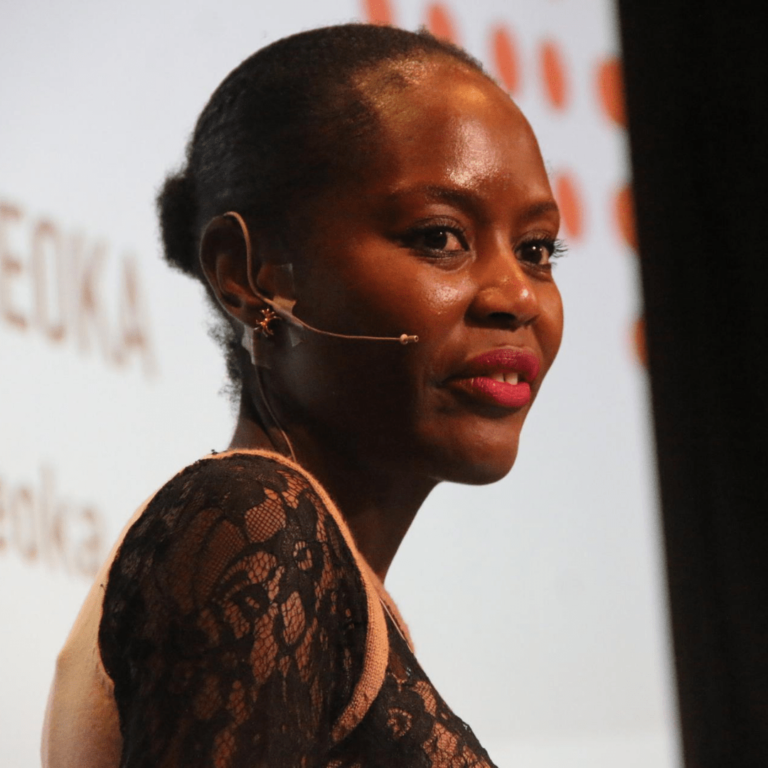
South Africa’s Matric Certificate Is Not Worth The Paper It’s Printed On, Says Economist Dr Thabi Leoka

SOUTH AFRICA needs to significantly overhaul its education system, with the matric certificate ‘not worth the paper it is printed on’, says Dr Thabi Leoka, founder of economic consulting and advisory company Naha Investments.

Speaking at the recent Allan Gray Investment Summit, Leoka pointed to the high number of graduates that currently cannot find jobs in the country.

“We need the education system to deliver matriculants who understand business so that they can start their own ventures, and create employment,” she said.

“We also need more flexibility of the degree requirements and subject choices at university, so that we can get more people employed.”

Leoka said that South Africa needs to move away from “throwing money at the poor to solve problems”, as this creates reliance on government grants.

“The poor have been increasing as a direct result of policy implementation,” said Leoka. In 2000, there were seven million grant recipients, in 2010 there were 14 million, and in 2021 there are 18.4 million people who rely on social grants, she said.

“We can’t spend our way through our problems. We are allocating a lot of money to consumption, but we need to allocate more to investment to grow the economy. We are also spending more money servicing our debt (11.8%) than we are on health (11.55%); it doesn’t make sense. We need growth to be suitable for our economy, but it is not.”

Not fit for purpose 

Professional services firm PwC has also called for a significant shake-up of the country’s school system.

“Clearly, the current education system is not fit for purpose to provide school leavers the necessary skills – and requires an overhaul,” it said.

“This is also a value-for-money issue: South Africa’s expenditure on education is amongst the highest in the world when expressed as a percentage of GDP.”

However, while the country’s expenditure on education is high on paper, in reality, much of the government’s education funding is lost due to mismanagement and malfeasance in public procurement processes.

As such, despite the large expenditure, the country has not seen the envisaged economic returns, the group said.

“According to the World Bank’s Human Capital Index (HCI), an average child born in South Africa today will not even reach half their productive potential which they could have if they had full health and education.

“Comparable middle-income countries spend less as a percentage of GDP, but consistently achieve much higher HCI outcomes,” PwC said.

Upskilling will be vital to ensuring that local industries are staffed with people who have the know-how to help drive economic growth.  This is the only way that South African children will reach their productive potential and contribute to growing the economy, the firm said.

“Our analysis shows that, when considering growth enablers like foreign direct investment (FDI), the ease of starting a business, electricity availability/supply, digitalisation, private sector investment, local content and knowledge capital, the gains to job creation from upskilling and improving knowledge capital would be the second most impactful after improving electricity reliability.”

Education needs to be better 

However, PwC warned that upskilling initiatives for young South Africans will not move to the next level if education fundamentals are not strengthened.

Despite great progress in Science, Technology, Engineering and Maths (STEM) education, literacy tests show that 78% of South African learners ages 9 to 10 are not able to read for meaning.

“Poor academic achievement is, in part, the result of underfunding and poor quality of the education system. In 2018, one in five public schools did not have proper toilet facilities; while 86% had no laboratory, 77% had no library, and 72% had no internet.

“A 2014 study of teachers showed that 79% of Grade 6 mathematics teachers have a subject knowledge below the level they are currently teaching.”

Immediate changes to South Africa’s skills and education systems should include a shift to lifelong learning pathways, the growth in digital education, and new funding models for higher education, PwC said.