Home Blog Page 310

2021 Matric Exams Start This Week – With Strict New Rules Around WhatsApp and Messaging

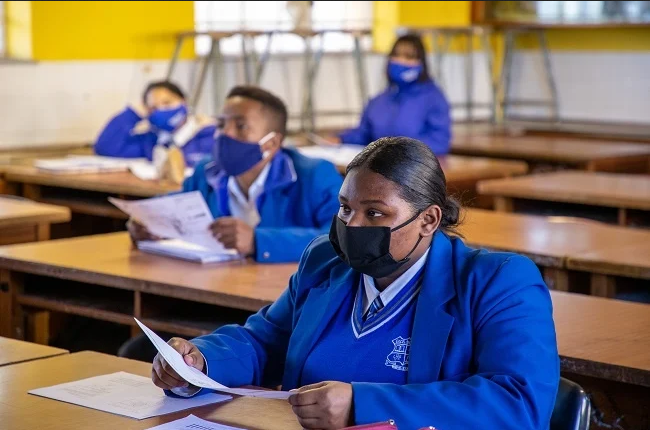
South Africa’s government schools will commence with the National Senior Certificate examinations on Wednesday, with the Department of Basic Education introducing strict rules to ensure that the matric examinations are fair.

This comes after the 2020 examinations were marred by allegations of cheating when it emerged that the Mathematics Paper 2 and Physical Sciences Paper 2 exams had leaked and begun circulating on instant messaging platforms such as WhatsApp.

The department has indicated that it will be taking a zero-tolerance stance on cheating and sharing exam materials to combat this.

“In cases where a question paper, or part of a question paper, is forwarded by a candidate via email, SMS, WhatsApp or through any other electronic means, and the candidate fails to report such an incident to the school principal or the WhatsApp hotline, he or she will be deemed complicit,” it said.

“All candidates will be required to complete the Electronic Devices’ Register, which will be managed by the school. The register will require all candidates to record all details of the cellphone or any other electronic device that they will be using during the examination period.”

Any student who is alleged to have had access to a question paper before an examination will also be required to submit their device to the Department of Education for further investigation, it said.

A total of 897,786 candidates will sit for the November 2021 matric examinations, with English set to be the first examination held on Wednesday (27 October). The last examination is set to be held on 7 December.

While the examinations were initially scheduled for the start of November, the department decided to move them up by four days to accommodate the local government elections on 1 November.

The department said that the matric exams include 207 question papers written over 25 days, with no vacant spaces available in the five-week period to accommodate the new date of the elections.

Exam Preparation Tips For The Matric Class Of 2021

Dr. VERONIQUE GENNIKER|

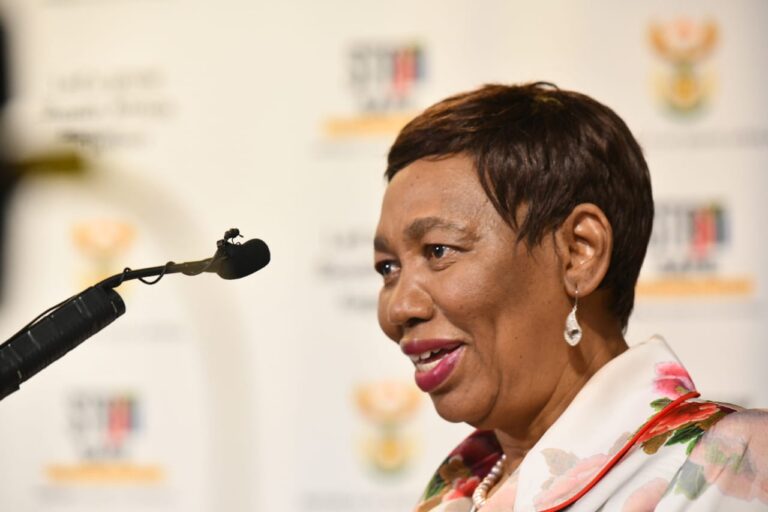
SOUTH Africa’s National Senior Certificate exams are due to commence on Friday 22 October 2021, with the Minister of Basic Education, Angie Motshekga expressing positive sentiments in a media briefing, calling the matric class of 2021, a “resilient group,” that “would be able to surprise us with better results than last year.” Undoubtedly, the matric class of 2021 has faced unprecedented difficulties brought on by the COVID-19 pandemic and have much to do in the way of preparations for the upcoming final exams, which will set a benchmark for those continuing into tertiary education.

“We wish all South African matriculants well as they head into exam season. This year has not been easy for learners, who have needed to overcome several challenges that no one could have predicted. Despite this, we remain optimistic that they will pull through and put their best foot forward as they take a step towards the next part of their varied life journeys as tertiary students, entering the workplace, partaking in the president’s youth employment programs, or even taking up an apprenticeship. We’ve put together a list of helpful tips to help learners through this demanding time,” said Dr Veronique Genniker, Marang Education Trust Director at Pearson South Africa.

5 exam preparation tips for the matric class of 2021:

1.   Create an enabling physical environment to study

The layout, design, and lighting of the space you study in can have a profound effect on how you will think and feel about the preparations for your final exams. Some students can concentrate optimally when they are in uncluttered rooms while others can focus better when they are surrounded by familiar items they associate with feelings of comfort and safety. Some students find background music distracting, while others find that listening to music while studying allows them to concentrate better. Many students do not have the luxury of studying in their own space, so should try to study with a friend or family who can accommodate them. It is heartwarming how many teachers and community members open their homes to make sure that learners have a safe and secure place to study. If you do have the luxury of space, make sure to tap into your spatial awareness and take some time to optimize your study environment by considering aspects like how much natural light filters into the space, how comfortable your chair is, whether you prefer to see a clock while you study and even which pen colours are more stimulating when making notes and mind maps.

2.   Make sure you get enough sleep, eat healthy and focus on what makes you feel calm

Getting 6-8 hours of sleep is important to refresh and energize your body and mind. Breathing is something we all do naturally and without any real effort. However, focusing on the inhalation and exhalation of breath can help to ease the mind and promote a state of relaxation, especially when under pressure. Conscious breathing exercises do not have to take up a lot of time and can be done anywhere. Google “breathing techniques for stress relief,” and try a few of the exercises. You can tailor your exercise to how much time you have. It is recommended that you take a break to breathe consciously for 3-5 minutes at least once every hour, just to oxygenate the body and calm the mind. Eating balanced meals and snacking on fruit with water daily is important to maintain your energy levels.

3.   Set goals for your individual and study buddy sessions

The sheer amount of reading that needs to be done and concepts that need to be grasped ahead of the exam period can be quite overwhelming. Having a timetable for each subject as well as measurable goals for each study session can help to lower stress levels and divide your study sessions into manageable parts. To create a timetable, make a list of all the content that needs to be studied for each subject, then work backwards from the exam date and make sure that during each study session, a piece of that content is covered. Then, dedicate your study sessions to only the parts you have identified for that day and take a break or reward yourself when you achieve those goals. It is important to have individual and study buddy sessions to enable you to discuss content you are struggling with. Find a study buddy who is great with content you are struggling with and who can explain it to you, so that you better understand it.

4.   Use visualisation techniques

Often, the very thought of sitting in an examination hall with other learners in complete silence to sit for a final exam can be very overwhelming and can cause stress and panic. You can reduce some of this stress before you sit the exam, by using visualization (imagining) as a preparation tool. To do this, close your eyes and picture yourself sitting in the exam hall, try to imagine what you will be experiencing on a sensory level – what you see, what you hear, what you smell, etc. Then, wherever you are sitting, do some hand and leg stretches and take a few deep breaths. Picture yourself being calm, feeling confident and accepting that your best is always good enough. Do this at least once a day while you are preparing so that your mind and body are ready for the big day. If possible, ask for permission to go and sit in the examination hall/room before the examination.

5.   Find your ideal learning technique

One school of thought proposes that people learn best through varying stimuli – some people are visual learners, while others are auditory or kinesthetic learners. To find out what your best learning technique is, try a few methods and test what works best for you. If you learn by hearing, then record yourself reading your study notes and play them back to yourself. If you are a visual learner, create colorful mind maps, flowcharts, bullet-point lists and put them up in the room where you study. And if you are a kinesthetic learner, try taking a walk or doing gentle movements while you talk yourself through your content. You know yourself best, so study where, when, and how it works best for you. This is your exam so do whatever works best for you and know that your best will always be good enough.

  • Dr. Veronique Genniker is the Director of Pearson Marang Education Trust (PMET). She holds a PhD. in Education Psychology, Master’s in Science Education, Postgraduate in Leadership, and a Higher Teaching Diploma. PMET is the flagship Social Impact Programme of Pearson South Africa.

Sports Corner| Spectators Are Now Allowed To Attend School Sports Events

0

NEW government regulations have been gazetted to allow spectators to attend school sports events.

From Friday this week, spectators were allowed to attend all school and interschool sports matches, training sessions and events. 

School sports events – without spectators – were allowed since August after they were suspended in May amid the third Covid-19 wave.

In addition, all arts and culture intra-school and interschool activities can now allow audiences, including choir rehearsals and competitions, spelling bees, speech contests and debates.

However, stringent rules apply.

Face masks must be worn, including in change rooms and training areas, except by those doing vigorous exercise.

The sharing of drinks is not allowed, a Covid-19 compliance officer must be appointed for each venue and a register of all officials, pupils and spectators must be kept by a hosting school for at least 21 days.

Up to 2 000 people are allowed at outdoor venues and 750 or fewer at indoor venues.

But if the venue is too small to hold the prescribed number of people while ensuring distances of at least one and a half metres between people, then not more than 50% of the capacity of the venue may be used.

The regulations state that the principal of a school or an organiser of a venue who fails to comply with the regulations commits an offence and may face a fine or imprisonment.

NSFAS Warns Prospective Applicants Against ‘Funding’ Fake News

THE National Student Financial Aid Scheme (NSFAS) has advised prospective applicants to be aware of fake websites and social media platforms advising them to apply for funding, share their personal information and/or unlock their NSFAS wallet accounts.  

The warning follows a fake Circular Notice 22 circulating on social media platforms regarding the NSFAS allowance increase for the 2022 academic year.

“NSFAS can confirm that the circular is fake and consists of false information,” NSFAS said in a statement on Friday.

NSFAS said it is disturbed by the increasing disinformation in recent weeks, where false information that is spread deliberately to deceive.

“We encourage our students to be vigilant. We identified all the bogus platforms that masquerade as NSFAS, and we have reported them to the relevant authorities for further investigation,” NSFAS said.

Students, prospective applicants and the public are urged to report suspicious messages or calls from fraudsters posing as NSFAS officials or any fraudulent activities to the Vuvuzela Hotline on 0860 247 653.

Should students require assistance regarding their NSFAS funding, the NSFAS contact centre is fully functional and can be accessible on the details provided.

Applications for 2022 academic year funding not open 

Meanwhile, NSFAS announced that the applications for the 2022 academic year funding are not open yet, and the opening date would be communicated soon.

“Students are encouraged to constantly monitor our social media platforms for updates. Any circular or information that is released to the public through unofficial communication should be regarded as disinformation. 

“NSFAS circulars are released following a vigorous process on stakeholder engagement and can only be released through approved channels,” NSFAS said.

MTN Launches Ground-breaking Online School For South Africa From Grades R-12

TELECOMMUNICATIONS group MTN has launched its MTN Online School, a free online portal that will offer a digital curriculum for school children from grades R-12.

The online school, which the Department of Basic Education has endorsed, offers additional features like video lessons, assessments and extra-tuition lessons for Grade 10 to 12 learners.

The school will also focus on areas such as financial skills, entrepreneurship, arts and culture, and career guidance content, focusing on critical careers where there are skills shortages in South Africa.

Among the key innovations are video lessons that will be provided with a sign language interpreter to accommodate deaf learners.

The portal includes an introduction to the early childhood development curriculum and African storytelling, with over 2,000 stories, to equip children with good reading skills and improve confidence, enabling them to learn and read independently.

The Thursday launch of the online school in Sandton was attended by the Minister of Basic Education Angie Motshekga, MTN SA CEO Godfrey Motsa, O’Sullivan, MTN SA’s Executive for Corporate Affairs and MTN Foundation SA’s General Manager, Kusile Mtunzi-Hairwadzi.

Motshekga said it was imperative to eliminate digital divide by ensuring that all schools and education offices have access to internet and data within 6 years.

“During this period, all learners must access digital workbooks & textbooks on a digital device,” said Motshekga.

“Together with the innovation and commitment to societal change by MTN, today’s launch of the MTN Online School is a significant leap forward for education and ushers in positive change for communities across South Africa,” she said.

The integrated online educational portal is supported and housed on the MTN network and is zero data rated for MTN customers, which means it can be used without any data, said Motsa.

“We believe in the future of SA and the education of the future generation, which needs to accelerate its recovery from the economic and personal devastation of COVID-19 to embrace future opportunities made available through quality education and learning.  The MTN Online School has been developed hand-in-glove with the Department of Basic Education and we are so proud to deliver this portal that will immediately start creating value, for South Africans.”

Mtunzi-Hairwadzi said the company planned to establish other similar online schools across the African continent.

“We would like to establish the online schools beyond South African borders to the rest of the African continent,” said Mtunzi-Hairwadzi.

“We want to build a world class platform. We are going to invest R12 million to upgrade and invest in teacher support and curriculum digitisation.”

O’Sullivan said: “MTN is investing in technology, digital innovation and financial solutions aimed at enhancing lives and creating better outcomes for all.”  

“We are extremely excited to welcome SA’s youth to our new e-learning portal today. We intend to ensure it is underpinned by continuous innovation to stay at the forefront of world-class education. It also exemplifies our ambition to accelerate digital transformation through building exciting, innovative and solution-oriented platform businesses in South Africa,” says O’Sullivan.

Additional features for FET Phase (Grade 10 -12) include: 

  • Support to learners after-school, on weekends, during school holidays and dedicated lessons leading up to exams 
  • A timetable to drive transparency and structure  
  • Learners can work at their own pace as lessons will be available on-demand 
  • Online tutoring service will be provided to learners via a help function interface 
  • Pre-assessments (test existing knowledge) 
  • Pre-recorded lessons to watch 
  • Tutoring sessions  
  • Feedback questions to work through 
  • Live sessions presented by a teacher, recap of key concepts, focus on weak areas identified by assessments 
  • Post assessments 
  • Learner analysis reports 
  • Learners can also request help at any time, or submit questions via the platform or WhatsApp chat line.
  • Inside Education

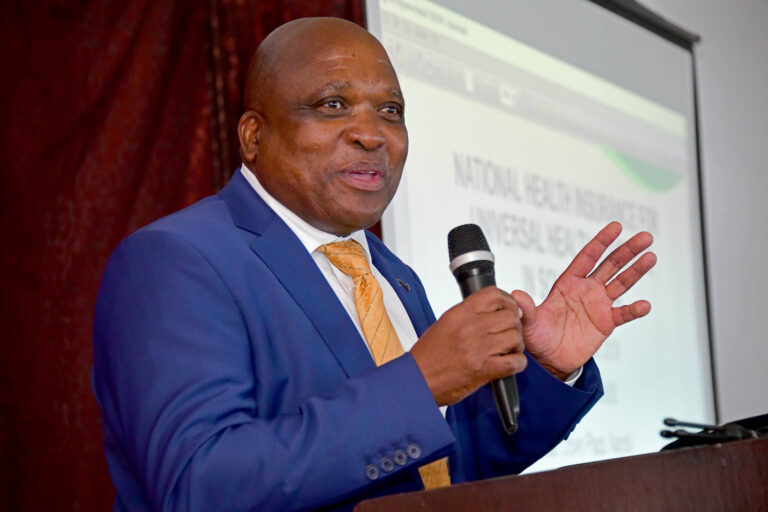
Children Between 12 and 17 To Get Their Jab Today, Says Health Minister Joe Phaahla

THE registration and the vaccination of children aged 12 and older is officially open from today, the Department of Health said. 

This comes after the Health Minister, Dr Joe Phaahla, announced that all teenagers would be eligible to receive one dose of the Pfizer vaccine for now.

The decision is in line with the recommendations from the Ministerial Advisory Committee (MAC) on Vaccines. 

“We believe that this will come in handy as schools start their examinations, while some of them already advanced towards concluding the academic year and studying to prepare for the next academic year of 2022,” Phaahla said last Friday.   

There are about six million youngsters in the secondary school cohort and the department aims to reach at least half before the schools close. 

Due to preparations for final year examinations, the department said there will be no special vaccination sites at schools for this age group for now.

The department has encouraged parents, caregivers and legal guardians to assist eligible young people to register and inoculate at their public or private nearest vaccination site. 

While the Children’s Act 38 of 2005 provides that children over the age of 12 can consent to their medical treatment, the department is recommending that parents have an open discussion with teenagers about the benefits of COVID-19.

The department believes that this will help adolescents to make an informed health choice and possibly accompany them when they present themselves at vaccination sites.  

“Vaccination of young people from the age of 12 is a global phenomenon of which the parents should not be too concerned about.”

All eligible children are reminded to bring along South African ID cards, birth certificates with a registration number, foreign passport or any verifiable asylum or refugee proof of identity bearing the name of the child for purposes of registering on the Electronic Vaccination Data System (EVDS).

“Meanwhile, women and young girls aged 12 and older should be encouraged to vaccinate during any stage of their pregnancy and breastfeeding.”

In addition, the department recommended that healthcare workers share with vaccinees about the benefits and possible risks of COVID-19 vaccination with their clients.  

Student Who Received NSFAS Millions Back In Court, Maintains Her Innocence

THE theft case against former Walter Sisulu University student Sibongile Mani resumed at East London Regional Court on Tuesday.

Sibongile Mani maintained her innocence, despite admitting she spent a portion of the R14 million credited into her account.

Mani stands accused of theft for spending a portion of the millions credited into her student account on 1 June 2017.

Mani’s lawyer argues that she never intentionally tried to deprive the NSFAS of money. 

The State says she knew she was not entitled to the money – but chose to blow R820 000 in 73 days.

The State charges that Mani failed to report the error and embarked on a spending spree.   

According to the State, between 1 June, when the money landed in her account, until 13 August, when NSFAS uncovered the error, she had spent an average of R11 000 per day.

The money was transferred by Cape Town-based company Intellimali, which was contracted by WSU to disburse funds to its students.

The then accounting student was due to receive her monthly R1 400 food allowance, but because of what was described in court as a “ridiculous and absurd technical glitch”, R14 million was credited to her account. 

On Tuesday, the State prosecutor in the four-year trial, advocate Luthando Makoyi, said Mani had admitted to many aspects of the indictment.

During closing arguments, Makoyi told the magistrate, Twanet Olivier, that Mani admitted she spent the money at 48 merchants in the Eastern Cape, Johannesburg and Pretoria.

Makoyi added that Mani should be convicted of theft, saying she knew the money was not hers, but spent it.

Gender-based Violence: SA’s Living Nightmare, Especially For Girl Learners – Motshekga

BASIC Education Minister Angie Motshekga has called on men and women to never cease to fight for a non-sexist society with a deep respect for its women and girl children.

“If we fail, the struggle for women’s total emancipation will regress to the detriment of the national cause to free the potential of each one of us,” Motshekga said.

Motshekga made the call when she was delivering a memorial lecture on the life and times of Mama Charlotte Maxeke held at The Glen High School in Pretoria.

The lecture was presented in the context of the United Nations inspired International Day of the Girl Child commemorated last week. 

Government has declared 2021 the Year of Charlotte Maxeke, and is being commemorated under the theme, ‘The Year of Charlotte Maxeke: In celebration of the 150th birthday anniversary of Mme Charlotte Mannya Maxeke’.

Motshekga said the best way to honour the struggle stalwart is to free the potential of each girl child, each woman and liberate men from their unearned vantage point of male privilege.

“If we did not aim to smash the engrained system of patriarchy, male chauvinism and win the war against gender-based violence and femicide (GBVF), Mama Charlotte Maxeke’s fervent contribution to the national cause of national liberation would have been in vain,” Motshekga said.

To keep Maxeke’s memory alive and continue the fight for the liberation of the girl child, Motshekga said the department has registered some notable successes, however, the work is not complete.

“I still call upon more collaboration and scaling of some of our excellent policy-driven initiatives. We will not tire until our mission of gender empowerment for the girl child is achieved.

“Our operational framework on Care and Support for Teaching and Learning places the child at the centre, with a deliberate bias towards vulnerable girl children,” Motshekga said.

Liberating children 

The Minister highlighted government’s initiatives and policy positions, through the Department of Basic Education, that seek to liberate children, honour women and smash the system of patriarchy.

These include, among others, the Adolescent Girls and Young Women (AGYW) formation, which focuses on providing Comprehensive Sexuality Education (CSE), linkages to health and social services, homework assistance, and career guidance.

The programmes are implemented in 14 districts with high HIV prevalence. 

The Minister said over 500 000 learners have received Comprehensive Sexuality Education.

“We have placed over 4 000 Learner Support Agents (LSAs) in schools to scale up sexuality education and act as partners to link learners to services.  The Adolescent Girls and Young Women coverage will extend to 60% of education districts by 2022.

“In 2019, we developed standard operating procedures for the provision of sexual reproductive health services in secondary schools. The SOPs are aligned to the Integrated School Health Policy, which provides guidance on on-site services at schools,” Motshekga said.

Learner pregnancy

The DBE has also developed the Policy on the Prevention and Management of Learner Pregnancy in Schools, which aims to support the rights of learners to education, in case they fall pregnant.

The policy guides schools on supporting and managing pregnancy cases to eliminate discrimination and exclusion of pregnant learners from their studies.

Motshekga reported that Cabinet has adopted the revised Basic Education Policy on the Prevention and Management of Learner Pregnancy in Schools as a “pushback against men in fancy suits who impregnate girls as young as 10 years”.

“This revised policy seeks to ensure the accessible provision of information on pregnancy prevention, care for the pregnant, counselling and choice of termination of pregnancy, amongst others. Furthermore, it provides for the upscaling of the Comprehensive Sexuality Education as a crucial part of school curricula to safeguard learners’ sexual and reproductive health rights.

National Strategic Plan on GBVF 

In 2020, President Cyril Ramaphosa launched the National Strategic Plan on Gender-based Violence and Femicide.

Motshekga said the department already had in place various policies to address the safety of girl learners.

These include the Protocol for the Management and Reporting of Sexual Abuse and Harassment in Schools, the National School Safety Framework, and the Protocol to Deal with Incidences of Corporal Punishment in Schools.

“The strategic plan on GBV came when the country experienced a sudden spike in GBV cases in the earlier parts of the hard COVID-19 lockdown.  We bemoaned the rise in GBV cases, and our girl children were caught in the quagmire; it reinforced our contention that girls are safer in schools than at home.

“Currently, we are finalising the Guidelines for the social inclusion of the LGBTQ+ schooling community.  This initiative is a collective effort with civil society organisations so that all children, irrespective of gender identity and sexual orientation, can realise their constitutional right to education,” the Minister said.

Principal Nkasana Matlapu Honoured For Academic Excellence During Covid-19 At Teaching Awards

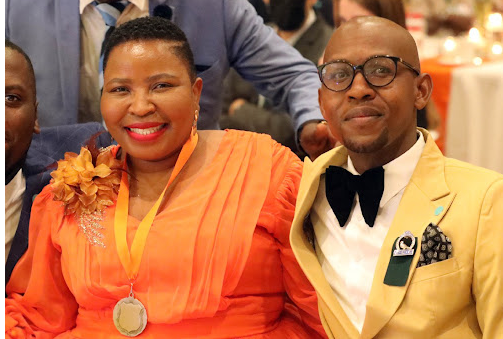
SCHOOL Principal Nkasana Matlapu, from the S.J van der Merwe Technical School in Limpopo has made it against all odds – going out of her way to make sure learners without cell phones and data were able to resume classes online despite daunting connectivity challenges.

Matlapu won the Woolworth & MySchool Shero award at the Annual National Teaching Awards event in Kempton Park, attended by Basic Education Minister Angie Motshekga and President Cyril Ramaphosa, where teachers were praised for helping children despite facing their own challenges amid the COVID-19 pandemic.

Matlapu was rewarded for her initiatives with the hero award.

The award-winning principal and her school received R75,000 as well as other donations from various corporate sponsors.

She looked for funders who could “adopt” children to look after their financial shortfalls and ensure they stayed in the system.

Her school, SJ Van der Merwe Technical School in Lebowakgomo, Limpopo,  said: “It is with great pleasure to announce to you former learners that that our energetic, young and visionary Principal, Nkasana Matlapu, was awarded, by the Limpopo MEC of Education, Position 1 in the Limpopo National Teachers Awards for Excellence in Secondary School Leadership. Nationals here we come! The Trust is proud of you mma and we are behind you.”

The Top National Teacher Award went to Mariette Wheeler from the Protea Heights Academy in the Western Cape for ensuring teachers stay engaged during online classes.

Thirty-eight teachers across the country in total have received awards, being recognised for their excellence during the trying COVID-19 pandemic.

  • * Inside Education

Anger As South African Court Restores “Language Of The Oppressor” At Largest University in SA, UNISA

CYRIL ZANDA|

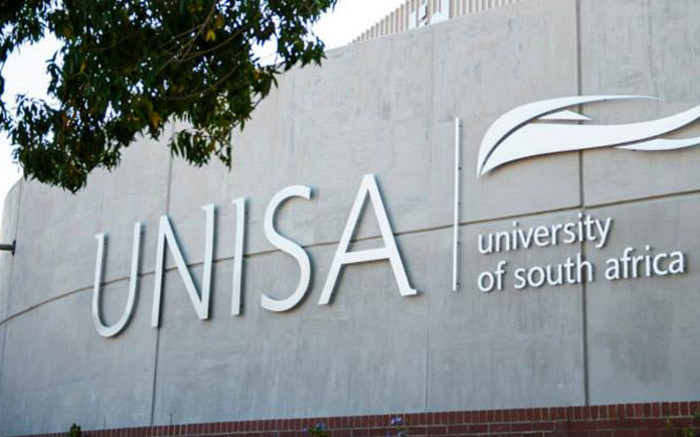
A RECENT court ruling ordering the South Africa’s largest university to restore a language associated with Apartheid as one of the languages of instruction has infuriated some black hardliners who view the move as an entrenchment of the “language of the oppressor” in the country.

On 22 September, South Africa’s Constitutional Court (ConCourt), the country’s top-most court ruled that the 2016 decision by the University of South Africa (Unisa) to drop Afrikaans as one of its languages of instruction was discriminatory and unconstitutional and, therefore, should be reversed.

The ruling brought both jubilation and anger to citizens of the “Rainbow Nation”, which is still trying to heal the deep scars of racial divisions entrenched by nearly half-a-century of Apartheid – a white supremacist rule.

Afrikaans, one of South Africa’s 11 official languages, is a creole language of Dutch origin which was developed by the colonialist Afrikaner white community – the same community that later introduced Apartheid in South Africa.

This is why the language still carries connotations of this hated rule, which was based on racial segregation. 

Following the end of Apartheid with the coming in of majority rule in 1994, some South African universities have buckled to pressure to drop the use of Afrikaans as the main language of instruction in favour of the more neutral English language. This move also aligned with the country’s Language Policy Framework for Public Higher Education Institutions.

However, AfriForum, an Afrikaner group that fights to protect the interests of the ethnic group as well as stop reverse discrimination in South Africa, has over the years taken some of the country’s universities to court over their decisions to drop the use of Afrikaans.

With each side appealing rulings against it, the cases have reached the apex court, which, in this particular case, ruled that the language be restored because, according to the court’s assessment, its removal was discriminatory and therefore unconstitutional.

In its decision, the court stated that Unisa had failed to demonstrate that it was not reasonably practicable to continue with Afrikaans as one of the languages of instruction.

The ConCourt concluded that it was a misconception that Afrikaans was only “the language of whites” and “the language of the oppressor,” as more black South Africans now speak Afrikaans as their first language.

The court held that it was open to Unisa bringing forth evidence to justify the phasing out of Afrikaans in the future, but it could not justify the limitation of the right to receive education in the language without clear and convincing proof.

AfriForum welcomed the judgment and said it was a huge victory for Afrikaans, Afrikaans-speaking students and language rights in South Africa in general.

“This marks the beginning of a new chapter in the empowerment of all who are not first-language speakers of English in tertiary education,” said Alana Baileyn, AfriForum’s head of cultural affairs.

But some black hardliners in South Africa, who are bent on erasing all traces of Apartheid, protested this court ruling, which they see as having the effect of perpetuating Apartheid by entrenching the “language of the oppressor” in South Africa.

The country’s belligerent opposition, the Economic Freedom Fighters (EFF) party, rejected the ConCourt’s decision to reinstate Afrikaans language as a learning and teaching medium at Unisa, arguing that the court ignored the linkage between race and language in the context of South Africa’s history.

“The selective choice of Afrikaans as a superior language perpetuates superiority over indigenous languages, and is an insult to the standing of Africans and their heritage of rich languages,” the party said in a statement.

“In the grace period to 2023 determined by the court, we call on Unisa to retrace its steps correctly and with lawful and procedural precision, do away with the 1976 language of national oppression, racial segregation, exclusion and supremacy,” the party added.

In 2018 and 2019 the ConCourt ruled against AfriForum and another lobby group in separate cases – against the University of Free State and Stellenbosch University respectively. In both cases, litigants sought to have Afrikaans restored as the primary language of instruction at these universities, and in both the court ruled that it was not “reasonably practicable” to maintain Afrikaans as a language of instruction.

These court rulings drew varied opinions from different people, some of whom pointed out that they were faulty.

In her opinion on the 2018 ruling in favour of the University of Free State, Rosemary Salomone, the Kenneth Wang Professor of Law at St John’s University School of Law in the United States, argued that the court had not done justice to “the competing interests that goes beyond a black/white racial binary.”

“Language has been a flashpoint in South African politics since the Afrikaner descendants of the early Dutch settlers forged a language-based national identity in opposition to British rule,” Professor Salomone wrote. “

The black population in turn embraced English as the language of resistance and redress against the horrors of Afrikaner apartheid.”

Professor Salomone went on to say that she hoped the public discussion surrounding the decision would give the court a broader understanding of the competing interests involved. 

“And hopefully it has given university officials pause to consider alternative programmatic and community building strategies that promote racial integration and relieve racial tension while remaining true to the country’s multilingual character and protecting the rights of all students to learn in the language of their choice.”

Asked if the latest ConCourt ruling was – in light of her previous views – the correct one, Professor Salomone told FairPlanet in an e-mail response that she agreed with the court’s ruling.

“Yes, I do believe the Court rightly decided the case,” said Professor Salomone, who has researched the three court cases over the past five years, the first two of which are covered at length in her upcoming book titled The Rise of English: Global Politics and the Power of Language (Oxford University Press, 2021). 

“The ruling is consistent with the Court’s decisions in Free State, where the parallel program had created racial tensions and segregation, and Stellenbosch, where instruction predominantly in Afrikaans had marginalised Black students,” Salomone said. “The Stellenbosch revised policy removed that dominance while maintaining some instruction in Afrikaans.” 

“UNISA, on the other hand, presented a unique set of facts in that it is a distance-learning institution where problems of racial segregation and marginalisation did not arise,” she added.

“Here the university failed to prove that maintaining both English and Afrikaans courses was not ‘reasonably practicable’ as required under Section 29(2) of the Constitution’s right to be educated in the official language of one’s choice. The Court also noted procedural problems within the University’s decision-making.”

In its reaction to the ruling, the South African Human Rights Commission (SAHRC) said that it viewed this judgment as one that empowers the poor and marginalised Afrikaans speakers seeking access to higher education.

The commission pointed out that it was also cognisant of the fact that Afrikaans had been used in the past, by a minority, to subjugate and marginalise other South Africans. Accordingly, the language is still viewed with mixed feelings by many people within the country.

“However, in this democratic era we should reflect on our past with a deep lens and should seek to celebrate our diversity,” the SAHRC said. “Our Constitution makes provision for Afrikaans as an official language and enjoins the state to take reasonable measures to ensure that everyone receives education in a language of their choice.”

The imposition of Afrikaans on local African learners resulted in the 1976 Soweto Uprising, when over 20,000 South African black students took to the streets. 176 protesters were killed and over 4,000 were injured when the police opened fire on the protesting students.


  • Fairplanet.org