Home Blog Page 311

Universities Must Rethink How They Do Research To Imagine A Better Trajectory For The Future – Professor Laura Pereira

PROFESSOR Laura Pereira did not exaggerate when she said she would be a giving a presentation from “a slightly different angle”. Billed as one of the international plenary speakers at Universities South Africa (USAf’s) recent conference, The Engaged University, Pereira’s background is not in higher education.

A researcher at the Stockholm Resilience Centre at Stockholm University, the Exxaro Research Chair at the Global Change Institute at Wits University, and a lecturer and researcher at the Centre for Complex Systems in Transition at Stellenbosch University, Pereira (left) is described as “an interdisciplinary sustainability scientist”, having been trained in ecology, law, zoology and human geography.

Titled The role of academia in imagining better futures for people and planet, her presentation was peppered with quotes, from the ancient Chinese philosopher, Lao Tzu, to the contemporary Nigerian poet and author Ben Okri, to futurist Riel Miller, Head of Futures Literacy at UNESCO.

This is our context

She said her talk was contextualised within the geological age of the Anthropocene, where humans have become the most dominant force of change on the planet.

We are in a time where climate change is getting a lot of attention, especially with the 2021 United Nations Climate Change Conference, known as COP26, taking place in Glasgow from the end of October. And the CoViD-19 pandemic epitomises the disruption in human nature relationships we’re needing to deal with.

“The role of the university is particularly important in this, but it probably needs to adapt and shift to be able to have the kind of impact that the previous speaker Professor McCowan (of University College London) was talking about,” she said.

She quoted Lao Tzu to illustrate the “very poignant argument when we talk about the sustainability crises we’re facing as a planet: ‘If you don’t change direction, you may end up where you are heading’”.

Thinking about the future and the way to envisage it differently

It can be quite difficult to conceptualise the future, as it is a very dystopian world to think about, she said. This is particularly true if one looks at projections of what’s gone before, such as carbon dioxide and greenhouse gas emissions, and their impacts. “What are the tools, the mechanisms we can use to envisage something different?” she asked.

She quoted Riel Miller to support this view: “When the future is predicted from the probable unknowable, it’s often derived from outdated assumptions”. Pereira said this is indicative of massive transformations seen in the past, where 50 to 60 years ago the ideal of the mobile technology revolution and smartwatches telling us we need to stand up every hour would have been science fiction but are the reality we’re living now.

“So how can we train ourselves, and how can we provide curricula and courses to build some capacities to help us navigate these different futures we’re going to be facing?” she said.

The projected, probable, or plausible future vs the preposterous one

Academics, especially in the natural sciences, are used to talking about the projected future and current trends. They are even comfortable predicting probable trends based on what has happened before. This can be extended to thinking about the plausible future, which can be seen in assessments such as the UN’s Intergovernmental Panel on Climate Change (IPCC) report released in August, even if everyone’s idea of what is plausible is subjective.

Now, however, we need to start opening to the idea of the preposterous future, “if we’re going to be able to navigate into the 21st century and beyond, both as academics but also just as citizens,” she said.

The preposterous future can become reality: 60 years ago, the idea of the internet would have seemed preposterous, so too would the idea of being able to get onto the moon seemed preposterous 100 years ago.

Research in participatory futures and multiple knowledges

Pereira said the university sector needs to invest quite a lot more in what is known as participatory futures research that is transdisciplinary, not only between different disciplines, but also with actors beyond academia.

This idea of participatory futures is what sociologist Ruha Benjamin, Associate Professor of African American Studies at Princeton University, refers to in the quote: “Remember to imagine and craft the worlds you cannot live without, just as you dismantle the ones you cannot live within”.

She said it was important to get out of our ivory towers and recognise there are
multiple knowledges out there, and “not only a Western positivist scientific idea of knowledge”. This idea of knowledge co-production is important, not in the sense of integrating all this knowledge, but weaving them together, without consensus, “without losing what makes each of them quite particular,” she said.

Research in decolonial futures

Quoting Wits academics Achille Mbembe and Sarah Nuttall: “Africa is absent from the future. In almost every future, dystopian utopian, there is a continent-sized hole in the story. In fact, Africa often ends up epitomising the intractable, the mute”, Pereira said we need to start decoding colonial futures. That is, we need to start “to tell narratives from different parts of the world with different peoples, and backgrounds, and ways of being and experiences being brought to the fore.

“How can we build these alternatives? How can we put African futurism and where we want to go as a continent or as a country or even just as city, like Johannesburg, onto the international stage, so that the global community is engaged with them in a way we have to be engaged with a lot of the dominant stories told to us?”

Why universities need to cultivate imagination

She described the university as “a home to hold these conversations, and to create a space for bringing different perspectives together, and focusing on the imagination, which is a capacity that I think we don’t really use all that much, particularly in the biophysical sciences”.

She quoted Ben Okri to support her idea: “Knowledge is empty without imagination, without spirit, without the heart … no civilization ever became great on knowledge alone.”

She said “imagination helps us transcend conventional thinking, to envision the kinds of new possibilities we know we require, if we’re going to navigate onto a better, more sustainable and just trajectory for people and the planet”.

Imagination also helps us think in a novel way, she said.

If we continue to do things in the same way, we are going to be perpetuating inequalities and injustices both to people, and to nature.

“We really need to be seeing the university as a space for cultivating imagination so that we can start telling ourselves different stories across all of the different disciplines,” she said. And this should not be confined to literature or the humanities. “We all need to start working in this space,“ she said.

In making her final point, she quoted from The Economist in 2011: “Humans have changed the way the world works. And now we have to change the way they think about it too”.

Q&A

The chair of the session, Chris Nhlapo, Vice-Chancellor of the Cape Peninsula University of Technology, asked a question about plausible futures.

Question: “I’ve seen some of your work as well, talking about traditional knowledge as a source of innovation, and perhaps you can critically reflect on the role of traditional knowledge in social innovation, and how we can actually explore that as a system.”

The response: “The first thing that needs to be done is to recognise that it’s not just work that comes out of the university that can be seen as innovative. There are a lot of practices from the past that are very innovative for us to be able to move into the future.

“The second step is to give a value to these traditional knowledge systems. I’ve been working quite a lot with traditional ecological knowledge, particularly in the food system, and there’s been a big movement towards recognising the important role that indigenous crops such as sorghum play within South Africa, in terms of its adaptive capacity to drought and environmental change, but also as being a highly nutritious grain. So much knowledge embedded in how people from the region had previously grown and used sorghum has been lost, that we need to bring it back.

“A really important caveat to this process is about recognising the kind of historical erosion that the colonial system, but also neoliberalism, has had on these knowledge systems; and that we can’t be extractivist again, we can’t just be taking, taking more and more and more from these systems that have been highly traumatised,” she said.

“Making sure that the people who hold the knowledge are recognized for what might not necessarily be in terms of intellectual property. But we need to think through, in much more careful ways, how we can make sure these knowledge systems are resilient and recognized as innovative interventions towards better futures.”

  • * USAF

Close To 1 Million Job-seekers Apply To Work For Department Of Basic Education – Ramaphosa

CYRIL RAMAPHOSA|

THE launch of the second phase of the Presidential Employment Stimulus this past week represents great progress in our quest to create job opportunities for hundreds of thousands of currently unemployed South Africans.

We established the employment stimulus last year to create as many opportunities as possible in the shortest possible time. This required new and innovative ways of working to implement programmes at an unprecedented speed and scale.

The recruitment process of the many people who were unemployed made use of digital platforms to reach as many eligible participants as possible. For example, small-scale farmers were able to apply for support via USSD and receive input vouchers to their cellphones.

Since the Department of Basic Education opened applications for the next cohort of school assistants just two weeks ago, over 940,000 young people have applied via the zero-rated recruitment platform called SAYouth.mobi, which forms part of the national Pathway Management Network.

The use of new technologies in offering employment opportunities has made recruitment much easier, quicker and more transparent.

The Presidential Employment Stimulus has enabled and facilitated cooperation in the public sector. Programmes in phase one were implemented by 11 national departments. Their activities were aligned to avoid duplication and wastage and enhance learning from the experience of others.

The employment stimulus has also shown the importance of social partnership. Government, business, labour and civil society have come together to bring those who are unemployed into the economy.

More than half a million South Africans have already benefitted from the first phase, with several programmes still underway. Participants were given the opportunity to earn a livelihood, to learn new skills and upgrade existing ones, and to use their experience as a springboard to get another job or to self-employment.

For example, a number of participants appointed by the Department of Public Works and Infrastructure in its phase one programmes were able to secure private sector employment by the end of March 2021. Many of those in the first cohort of school assistants, similarly, have found their way into employment, armed with experience, training and references.

The programmes implemented through the Presidential Employment Stimulus have also benefited communities more broadly. The focus has been on job creation in sectors with direct social impact such as education, food security, public infrastructure maintenance and environmental protection.

Through this Presidential Employment Stimulus young people were employed to support and assist teachers in our schools. Others were employed to build bridges in rural communities. Many Early Childhood Development Centres were helped to survive and reopen. Subsistence farmers were supported to expand production, and environmental assets such as rivers and wetlands were restored and maintained.

As part of phase two, we are establishing a Social Employment Fund that will support work for the common good led by community organisations in areas as diverse as urban agriculture, public art, informal settlement upgrading and community safety.

In the midst of the severe economic setback caused by the coronavirus pandemic, public and social employment has provided an important stimulus to job creation. This is the implementation of our commitment that the state should actively support employment while the labour market recovers.

Through the Presidential Employment Stimulus we have brought young people into the labour force in far greater numbers in an unprecedented manner in a short space of time. Some 84 per cent of the participants in phase one were young people under the age of 35, and two-thirds were women.

In phase two we expect this number to be even higher, as the stimulus will provide almost R1 billion in funding for the Presidential Youth Employment Intervention. As part of the intervention, several young people will be recruited into a revitalised National Youth Service. Young people will receive training in digital skills and youth-owned enterprises will receive support to expand and hire.

Unemployment in our country is a crisis. We cannot afford endless delays in addressing this problem because of bureaucratic red-tape, outdated recruitment processes, lack of capacity and planning, or programmes that are short-lived or unsustainable.

The success of the Presidential Employment Stimulus has shown that when we work together, move with speed, think creatively and manage our resources well, we can make a huge impact.

The Presidential Employment Stimulus has demonstrated that we can create jobs if we work together as the public sector, labour, community and government.

I have no doubt that the next phase of the Presidential Employment Stimulus will bring us even closer to meeting our collective goal of decent work and opportunity for all.

  • * From the desk of the President

The 10 Fastest-growing Science And Technology Jobs Of The Next Decade

WHILE the coronavirus pandemic has battered some industries, others have thrived despite the ongoing crisis, including technology and science.

In fact, according to new data from the Bureau of Labor Statistics, demand for jobs in math, science and technology will continue to surge over the next decade. 

Hiring in the computer and information technology fields has faster projected growth between 2020 and 2030 than all other fields.

The Bureau of Labor Statistics notes that demand for these workers stems from companies’ “greater emphasis on cloud computing, the collection and storage of big data, and information security.” 

The coronavirus pandemic has expedited demand for other science and technology roles as well, including epidemiologists and information security analysts.

“The prevalence of remote work has created additional need for network security and operations support,” Megan Slabinski, the district president for global talent solutions at recruitment firm Robert Half, tells CNBC Make It.

Slabinski specializes in recruiting for technology positions. 

While demand for technology talent is high across all industries, Slabinski notes that health care, e-commerce, government and education have the most need.

“We’ve seen an enhanced amount of hiring for technology roles within these three industries as a result of the pandemic,” she notes.

“We’ve seen the emergence of telehealth and remote patient monitoring in health care, and with traditional retail stores closed or limiting their hours during the pandemic, companies had to think about selling their goods online and enhancing their web presence to capture revenue from people shopping online.”

Government and education entities, too, have been forced to update their technology infrastructure as employees and students had to work online. 

Even before the pandemic there was a growing interest among companies to incorporate artificial intelligence, machine learning, automation and other technologies into their business practices.

“Companies have realized that there’s so much power in data and technology to either attract new customers or understand customer behavior,” Slabinski says.

“New technologies help keep companies relevant and generate more revenue.”

Though some jobs like information security analysts and data scientists typically require a bachelor’s degree, not all of the in-demand jobs require formal post-secondary education.

Slabinski suggests job seekers interested in breaking into the technology field sign up for a coding boot camp, reading books about the industry or volunteering at a non-profit organization to gain real-world experience.

Most importantly, have a clear understanding of what it is you bring to the table,” she shares.

“Are you creating any programs or products you can share with a potential employer? What are tangible results you can share with them, from your work?”

People also tend to underestimate the power of online networking in securing a technology job, Slabinski adds.

“You should look within your professional and personal network and tell people, ‘This is the kind of work I’m looking for, who do you know in this industry? How do I go about securing a job?’ she explains.

“Just be resilient and aggressive in terms of your communication and follow up until you land your dream role.” 

JobProjected Growth RateMedian Pay
Statisticians35.40%$92,270
Information security analysts33.30%$103,590
Data scientists and mathematical science occupations31.40%$98,230
Epidemiologists29.60%$74,560
Operations research analysts24.60%$86,200
Actuaries24.50%$111,030
Software developers and software quality assurance analysts, testers22.20%$110,140
Computer and information research scientists21.90%$126,830
Medical scientists (except epidemiologists)16.90%$91,510
Forensic science technicians15.60%$60,590

Sport: Gauteng Call-ups For Rand Park High School Learners

RAND Park High School has celebrated the recent achievements of their learner athletes following their call-up and performances at sports events outside of the school.

Three of the school’s learners recently featured in the South African National Equestrian Schools Associations Regional Finals (Sanesa) hosted at Kyalami Park Club. Erin Wainright, Tehya Kirtley Sayer and Kaitlyn Koevort faced off with the best riders as they represented Gauteng West. According to the school, many at the event were nervous as it was the first competition of its kind since the beginning of the Covid-19 lockdown, but their riders were able to put on an exceptional performance.

They were able to bring home six top-eight placings, with Kaitlyn winning the 70cm Equitation Class. Kaitlyn and Erin have been selected to represent the Gauteng Team at Sanesa Nationals to be held in early October. The school will also be represented at the upcoming South African inter-provincial netball championships which will be held in October. U18 wing defence Hannah Corry and U17 goalkeeper Tisani Mohajane will play for the Gauteng side.

The school wished the two well at the championships and said that their skills, commitment, agility, versatility and competitive spirit gave them the opportunity and that they have the potential to achieve much more at the tournament.

The school wished all those competing in October all the best and that they continue to fly the flag of the school high.

  • * Randburg Sun

It’s All Systems Go For 2021 National Senior Certificate Examinations – Umalusi

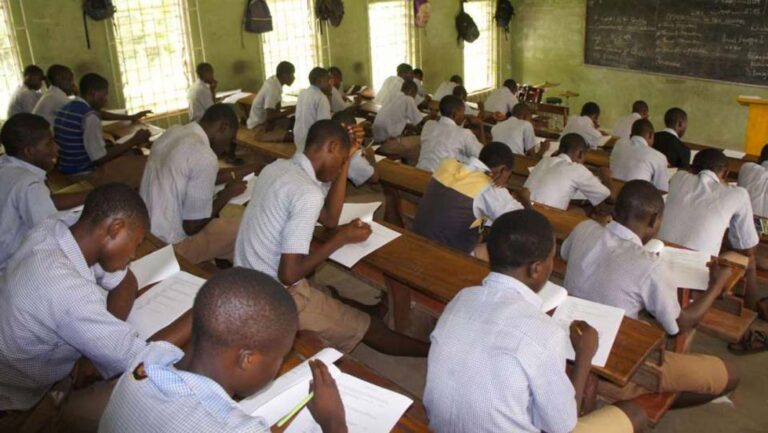
THE quality assurance examination board, Umalusi, says plans are in place and the system is ready to administer the November 2021 final National Senior Certificate (NSC) examinations.

Umalusi said strict measures are in place ahead of the examinations, which will commence officially on Wednesday, 27 October 2021 and conclude on Tuesday, 7 December 2021.

The examinations will be written at approximately 11 308 examination centres across the country and marking will be conducted at about 193 marking centres.

Addressing a media briefing on Friday, Umalusi CEO Mafu Rakometsi said the council has granted approval to private and public assessment bodies to administer the 2021 end-of-year national examinations.

“Umalusi conducts quality assurance of assessment to ensure that assessment leading to the award of certificates in schools, adult education centres and technical and vocational education and training colleges is of the required standard. This is in order to ensure that the certificates issued by Umalusi are credible.

“The quality assurance process includes the following, extra moderation of question papers, moderation of school based assessment, monitoring of the state of readiness…education of marking and standardisation of examination results,” Rakometsi said.

The CEO said that despite identified shortcomings, the Council is generally satisfied that all assessment bodies are ready to undertake this massive task despite COVID-19.

He said in the past few months, public and independent assessment bodies have worked hard to ensure their examination systems comply with Umalusi’s policy and directives regarding the administration, management and conduct of NSC examinations.

“As a Quality Council, Umalusi has fulfilled its role in monitoring and verifying the work of the following assessment bodies – Department of Basic Education (DBE), Independent Examinations Board (IEB), and the South African Comprehensive Assessment Institute (SACAI),” he said.

This year, Umalusi said it has continued to implement a Risk Management Based (RMB) approach as its strategy to evaluate the level of preparedness of assessment bodies to conduct the National Senior Certificate (NSC) examinations.

The CEO said the rationale behind the use of the strategy was to enable Umalusi to identify risks that may compromise the delivery of credible examinations on time and advise the affected assessment bodies accordingly.

Umalusi has appreciated the effort made by all assessment bodies in putting systems in place to ensure that the integrity of national examinations is not compromised despite limitations imposed by COVID-19.

Umalusi has issued a stern warning to all stakeholders regarding incidents of cheating that were reported last year.

“Once again, as we have done in the past, and in light of what transpired in 2020, Umalusi wishes to issue a stern warning to all learners and teachers to refrain from all forms of cheating, including paper leakages.

“We berate and condemn this criminal practice with the contempt it deserves. Cheating compromises the integrity of our national examination system, which we are mandated to jealously protect as a Quality Council,” the CEO said. – SAnews.gov.za

Department of Basic Education Set To Launch National Schools Hygiene Programme

THE Department of Basic Education (DBE) will tomorrow launch the National Schools Hygiene Programme (NSHP) and kick-start the extended Hand Hygiene Programme at Zimasa Primary School in Langa, Cape Town.

The department’s implementation of the National School Hygiene Programme is an initiative supported by Unilever through its brands Lifebuoy, Mentadent P and Domestos.

“This programme involves a 21-day behaviour change intervention in class regarding the washing of hands with soap, brushing of teeth with a toothbrush and toothpaste, and proper cleaning of school toilets,” the department said in a statement.

The Deputy Director-General of Care and Support in Schools, Dr Granville Whittle, will deliver the keynote address at the launch.

Global Handwashing Day is globally celebrated on October 15 each year. It is a campaign to motivate and mobilise millions around the world to wash their hands with soap at critical times.

The 2021 Global Handwashing Day is commemorated under the theme, ‘Our Future is at Hand – Let’s Move Forward Together’.

The department said that the Western Cape province will pioneer the implementation of the Extended Hand Hygiene Programme.

“Grade 1 educators and peer educators have received training on NSHP and Extended Hand Hygiene Programme in preparation for the implementation after its launch, which is on Global Hand washing Day,” the department said.

Motshekga Says Government Still Working On Full Return Of Students To Schools

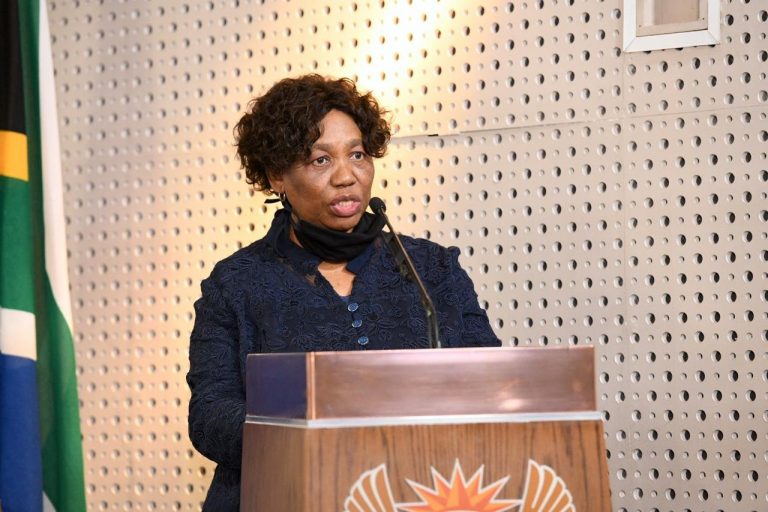
BASIC Education minister Angie Motshekga says her department is working on the full return of students to schools, but has continued to face problems around space and social distancing.

Motshekga said that her department has informed all teachers that they will need to return to schools to help ‘reboot the system’.

However, she noted that her department did not ‘succeed fully’ with the return of primary schools. While around 60% of schools could accommodate the return of learners, Motshekga said that there are space issues in some of the country’s township schools.

She added that preference would initially be given to Grade 10 and Grade 11 students to complete the curriculum and are fully prepared to sit their matric exams in 2022.

The minister noted that the 2021 matric cohort lost a significant amount of teaching time due to the country’s various lockdowns, resulting in little holiday time for students or teachers.

South Africa’s primary schools (Grades R – 7) returned to full-time teaching at the end of July as part of the country’s move to an adjusted level 3 lockdown.

However, high school students have continued to work rotationally, leading to concerns around a loss in learning time.

Under the current rotational system, high schools operate under one of three systems. Students are either expected to attend school physically every second day, every second week or once a day in a morning or afternoon slot.

During downtime, students are expected to complete assigned work to make sure they don’t fall behind the curriculum. A number of schools have also incorporated online and digital learning platforms for students.

Matric exams 

South Africa’s 2021 matric cohort is set to begin their final exams from 1 November, through to 7 December, with a record 735,677 full-time candidates set to write – an increase of 128,451 students, compared to last year, the minister said.

“This is the Grade 11 Class of 2020, that did not complete their curriculum; but through the sheer hard work and dedication of our teachers, they have been able to cover the entire curriculum of 2021, and that they even had enough time to do revisions.”

Motshekga said that the introduction of remote learning interventions, together with learning camps, has assisted in ensuring the entire curriculum was covered.

“We have consulted with provinces to check on their state of readiness, and provinces have confirmed that it is all system go. In terms of learner support, the Woza Matrics Campaign is available and offers tuition support to Grade 12 learners in ten subjects.

“We urge all our learners to take advantage of the learning and teaching support materials as well as the support availed through the campaign. We also have hundreds of zero-rated platforms on our website.”

New History Curriculum, Big Subject Changes Planned For Schools From 2024

The Department of Basic Education is developing a new history curriculum for schools in South Africa, to be introduced in 2024.

This comes after a department-assigned task team recommended that history be made compulsory in grades 10-12.

Basic Education minister Angie Motshekga said that a draft curriculum is expected to be ready by the end of the year and a revised final curriculum by mid-year in 2022.

She added that the task team has been consulting historians, archaeologists, linguists, researchers, and academics to get input on the new curriculum.

“The major challenge now, which is a massive exercise, is around the rewriting of history. Even the task team said, ‘you can’t present the current history as it is,’ so it has to be rewritten,” the minister said.

Motshekga said the department will also have to find the money for new textbooks, and teachers will need to be retrained.

The Department of Basic Education is also moving forward with plans for ‘mother tongue teaching’, enabling students to study and write exams in their home languages.

Provinces are expected to continue to support and extend the use of mother tongue education, Motshekga said.

“The Eastern Cape, for example, initiated mother tongue-based bilingual education, wherein 2,024 schools are using IsiXhosa and Sesotho for learning and teaching beyond the foundation phase.

“Learners in these schools are taught mathematics, natural science and technology in their home languages of IsiXhosa and Sesotho.”

The department of education has also indicated that it will trial new subjects this year, including entrepreneurship, coding, and robotics.

Nationally, 540 schools will be monitored for implementing compulsory entrepreneurship education, with the subject expected to officially form part of the curriculum by 2024.

54 schools are also piloting and implementing a coding and robotics curriculum. These subjects would form part of the curriculum at different levels from Grade R to Grade 9.

The department said that the coding and robotics subjects are aimed at guiding and preparing learners to solve problems, think critically, work collaboratively and creatively, and function in a digital and information-driven world.

Premier 15s set to welcome first South African as Zintle Mpupha joins Exeter squad to take on Saracens

0

WOMEN do not get into professional rugby for the money or glamour. There’s not a great deal of either.

In the men’s game if a club brings one of South Africa’s top talents into England’s top league he can expect hundreds of thousands in salary, and look forward to a retirement spent taking in the views across his estate and sipping a glass of wine produced from his own vineyard.

Zintle Mpupha arrived in Devon less than two weeks ago from South Africa’s Premier Division side DHL Western Province. She is now sharing a house with three other Exeter Chiefs.

“I’m sharing with three other girls, Olivia Jones, Kanako [Kobayashi] and Grace [Eckford] in a house in Exeter, just a walk away from Sandy Park,” says the 27-year-old who can play fly half or in either spot in the centres.

Her salary as one of the full-time players on the Exeter squad will not be anything special either, but what is special is her sporting talent. Having given up an international cricket career to sign up for South Africa sevens team, Mpupha has become a regular fixture in her nation’s 15s side, and in August she broke the try-scoring record when she touched down four times against Kenya.

Mpupha – who’s first name is pronounced ‘Zintlay’ – is also special for another reason. This weekend she’s set to become the first South African to play in the Premier 15s. 

Starting on the bench against multi-title winners Saracens, she’s fully aware of the intense rivalry between the two clubs. While Exeter’s men have lost out in three finals to Saracens – let’s not go into why that may have been here – the niggle between the women’s side may not be for the same reasons, but it’s no less intense.

“Oh yes, everyone is talking about it, especially as we get closer to the weekend. I’m getting so excited about it.”

As for being the first South African woman to play in the Premier 15s, Mpupha is hoping she will inspire many more to follow her lead. 

Mpupha says: “I am honoured that Exeter think I will fit into their style of rugby very well, but ultimately, getting an opportunity to play overseas has always been one of the dreams in my rugby career.

“I’m super excited to be the first South African to come over here and play, but I hope this is also the opening for others to come over in the future.” 

However, she admits the cold will take a little getting used to.

“I know I will be tested in different conditions, one of them being the weather.”

For Exeter’s coach Susie Appleby Mpupha not only bolsters her back line, she will bring some of that traditional South African power with her too. 

“She can play 10, 12 or 13, has a brilliant kicking game and brings immense physicality,” says Appleby, who has clearly seen enough in less than two weeks of training with the squad to throw her straight into one of the toughest games in the league. “On top of that, though, she’s also a smart player and she will really compliment what we have going on in our backline right now.”

Mpupha arrival in England will not be lost to the Springbok Women’s team, as her contract enables her to fulfill her national commitments, including the forthcoming November tour to Europe, and she will be available for selection to next year’s Rugby World Cup in New Zealand.

She is also handily located to get into South Africa’s sevens squad for next summer’s Commonwealth Games in Birmingham.

“Obviously everything depends on South Africa Women’s Rugby. Given any chance I definitely want to be part of the team that goes to the Commonwealth Games.”

There may not be riches and luxury homes, but there may be glory for Mpupha and her fellow Exeter players this season. In the past two weeks they have beaten current champions Harlequins as well as title contenders Wasps to sit fourth in the table. Despite this being only their second season in existence, she knows what the goals are.

“Looking at the previous season, they made it to the top six,” she says. “So, a short-term goal will be making it to the top four and taking it from there.

Multi-million rand science and technology centre launched in Eastern Cape

A multi-million rand centre to promote science, technology, and innovation has been launched in the Eastern Cape. The centre also offers courses in the study of space, science, and astronomy as well as teacher development programmes.

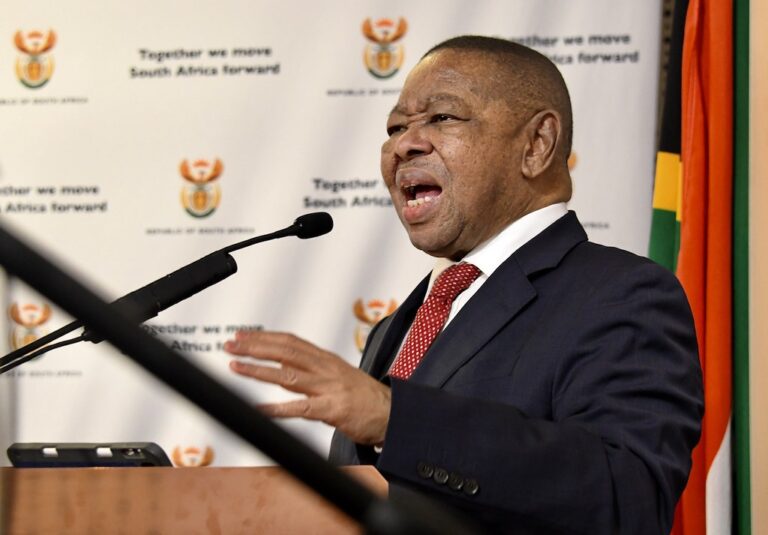
Higher Education, Science, and Innovation Minister Dr Blade Nzimande opened the centre on Thursday.

It is the first of its kind in the Eastern Cape. Apart from promoting science, the centre in Cofimvaba is also expected to provide job opportunities for the youth and promote indigenous knowledge through science.

Dr Nzimande says the centre is going to support and benefit many rural schools in the area.

“Part of the aim is also to excite young people to experience and to feel what science is, that’s another important aspect of it but also one of the most crucial dimensions is that this is going to act as a science centre to support many schools in the locality with the connectivity that is there. Some of the subjects and lectures and periods being offered centrally.”

Eastern Cape Premier Oscar Mabuyane says this is going to help bridge the digital gap for rural learners.

“It’s also going to help us to really optimise the usage of it with getting universities to stop being ivory towers as you see that we already have a couple of universities inside here showcasing. So, we are quite happy that in these deep rural areas we have a centre like this that is able to help us to really bridge this digital divide that we have been talking about.”

Learners say they are happy because they will have access to technology, and the centre will broaden their knowledge on career choices in the science field. “This will help us more because it will cost us less, we won’t need to go to other provinces for science. We only have to come here do our experiments at a cheaper cost,” says one of the learners. ”

Another learner says; “Everything here is practical and there might be a festival competition that will inspire more learners to pursue their learning in science.”‘

The Director of the Teacher Development Programme Daan Jonker says nearby rural schools will be able to borrow equipment from the centre.

“We are going to have a scheme where teachers from science projects will be able to come and borrow some equipment from the centre, take it to the school, do the experiment that is needed for the curriculum, bring it back so that other schools can also benefit from that.”

Premier Oscar Mabuyane says more projects like this are in the pipeline for other areas in the Eastern Cape.