Home Blog Page 314

STEM| Women In Tech On The Rise, But Barriers Persist

DESPITE concerted efforts to narrow the gender gap in Science, Technology, Engineering and Mathematics (STEM) education, major inequalities persist. 

According to UNESCO, women account for a mere 28% of those pursuing STEM careers in Sub-Saharan Africa, below the global average of 30%.

On a positive note, South Africa is bucking the trend by producing more female ICT graduates. The country has the highest share of female graduates in Sub-Saharan African at 32%, and even more female ICT graduates, at 38%, according to a recent report. Supporting this positive trajectory are statistics from HyperionDev, South Africa’s leading tech education provider, which recorded a 60% increase in female students since the beginning of 2021.

HyperionDev CEO Riaz Moola says that although the number of women in tech is improving in South Africa, there is still much to be done to minimise barriers to entry, inspire girls to take STEM subjects and help young women take advantage of the opportunities that the tech industry offers them.

Giving women a competitive edge is vital, as they were the hardest hit during the first COVID-19 hard lockdown last year. Out of the 2,8 million jobs lost, two-thirds were women, according to the National Income Dynamics Coronavirus Rapid Mobile Survey (NIDS-CRAM). In the latest survey released earlier this year, although many have recovered their jobs, re-employment rates for men were greater than those for women.

“Considering that the job landscape is constantly evolving in line with the digital economy, it is essential for girls and women to ensure they are educated and upskilled to ensure their jobs are future-proofed, especially in the face of disruptions such as COVID-19,” comments Moola.

Female representation is critical

Despite the progress made towards gender parity, women still remain critically underrepresented in most STEM fields, both in tertiary education institutions and the workforce.

“It becomes apparent in more informal social settings that there are still fundamentally prejudiced nuances embedded in conversations around women in tech. The underrepresentation of women then equates to a lack of female ICT role models to inspire girls at an age where parental control, peer pressure and self-esteem can heavily influence their career decisions,” says Marianne de Vos, Lead Digital Designer at HyperionDev.

Others concur that gender representation makes a big difference. Onalerona Mosimege, Software Engineer at HyperionDev, recalls how large and diverse her first-year computer science class was at university. But it didn’t stay that way for long. “By my final exam in third year, there were only four girls left,” she says. “A lot of my female friends left computer science mostly because they felt as if they were struggling alone.”

Breaking down barriers to shatter glass ceilings

“While the issues women face in joining the tech industry are numerous and powerful, they’re not impossible to overcome,” says Moola. As such, he believes there are a number of strategies that schools, businesses, and parents can take to support girls and women as they pursue their passion and interest in technology. These include improving female representation in companies, celebrating female role models in tech, such as South African powerhouse Aisha Pandor, co-founder of Sweep South and American Whitney Wolfe Herd, 31-year-old founder of the global dating app Bumble, who was named the world’s youngest female self-made billionaire on Forbes’s Billionaires List 2021. Subsequently, it is crucial to ensure that the tech industry listens to women’s challenges and addresses gender inequality.

Tech education is the perfect starting point 

“Accessible tech education is the future of social upliftment and mobility,” asserts Moola. “As coding is an essential language for many 21st century jobs, it is the perfect starting point for women and girls to grow their careers in tech.

“Our coding boot camps give young women a fighting chance to become confident, job-ready developers in mere months rather than years. We have hundreds of proven success stories of students who became professional developers and engineers shortly after graduating,” he says. “Our focus on practical work skills and the human touch makes all the difference in helping young women achieve their tech dream and excel in their new career,” Moola concludes.  

  • Africa.com

Sports Corner: Kenya, Jamaica – Models for development of sports industry in Africa

SEGUN ODEGBAMI|

SPORTS development in Africa is on my mind. I am asking myself probing questions. Uganda produced a John Akii-Bua in the early 1970s. He was the greatest hurdler in the world at the 1972 Olympics.

Tanzania produced Filbert Bayi in the mid- 1970s.  He was the greatest middle distance runner in the world in the early 1970s.

Zambia produced Samuel Matete in the 1980s into the 1990s. He was a World 400 metres hurdling champion for a spell. Of course, Kenya had its own long list of world and Olympic champions since the early 1970s.

These are all East African countries populated by blacks in a region with similar environmental features and conditions that influenced their athletes’ performances.

In the group, why is it that it is only Kenya that has had a record of consistent successes through the decades and, today, have become the foremost achiever on the African continent in global sports?

The Ethiopians, and occasionally the Moroccans and Algerians, have produced some of the best middle and London distance runners also. But not like the Kenyans.

What is common to all these countries that is helping them breed quality runners in this corner of the world?
I don’t intend to provide any of these answers here. What is of interest to me is what Kenya is doing right that the others are not doing, that made the country to have a name considered bigger as a global brand than Nike or Adidas.  ‘Kenya’ is a massive global brand.

The country’s athletes are achieving global success and visibility. They are in almost all middle and long distance races, including the marathons, cross country and grand prix all over the world. Thousands of Kenyan runners win most of the races and take home the trophies and the prize monies.

Many countries that intend to train their athletes to complete favourably in any of the middle to marathon races look towards Kenya for guidance. They go and train in the high altitude areas of the country for long periods of time.

In order to accommodate them, the Kenyans have built camps in the training areas of simple and unsophisticated sports infrastructure. The environment is their perfect training grounds. This has influenced the establishment of an authentic sports tourism business to compliment the well-established Safari-tourism that has been the mainstay of the Kenyan economy for decades.

These days, as the results from Tokyo confirm, Kenyans have become valued raw materials for countries that are offering them citizenship and using them for international competitions. Many Kenyans ran for many foreign countries. There are big opportunities for Kenyan runners to migrate abroad for studies and for running career in countries willing to adopt them.

Seeing how profitable the business of running is in the world, the Kenyan government commissioned studies and research into how to institutionalise the process and make it sustainable and a win-win for all Kenyans. 

Without going into the details of ‘how’, the whole of Kenya has gradually become the ‘running capital’ of the world, everybody runs (or walks).

I sat with a group of consultants many years ago at the Jomo Kenyatta University, working on the urban renewal project of the City of Mombasa on the Indian Ocean coastline of Kenya. I watched them discuss their project – to make the city an environment where everyone is moving and exercising for general wellbeing and health purposes. The towns and cities now have special lanes on the roads, in the parks and gardens for runners, cyclists and even those that want to walk.

The motto of the project was unofficially tagged “Move or Die.”
With all these as deliverables, all Kenyans saw and embraced the opportunities that running creates for the young, the fit and the healthy, opportunities to be rich, famous and a celebrity, and started an endless production line of runners, honed by the environment in the high altitude areas of the country, and motivated by immeasurable opportunities in a business that is global and can take all comers.

So, when you look at the medals table of the most successful countries at the Olympic Games, Kenya would never be in the single digits, yet the whole world considers them a global force in the area of their specialisation.

It is interesting. It presents a model for other African countries to emulate, but are not. Why not?
In looking at the case of Kenya, another country, whose name is also bigger than most global brands these days, one sees a similarity with Jamaica.

Jamaica is the most successful country of Black persons of African descent in the world of the sprints event. The country is doing with sprinting what Kenya has been doing for decades with the middle and long distance racing, but navigating through a different route to a similar destination.

Jamaicans are loaded with the genes of the fittest and healthiest of the Black human specie from the West African sub-region.

From what we know of young persons from that part of Africa (Nigeria’s performances in the 70s to the 1990s are a shining example of the possibilities) they are born to sprint and to jump. They use their natural power, speed and strength to do well in some particular sports particularly sprinting and the jumps, in Track and Field.

Unlike what obtains in East Africa where open fields in high altitude areas are the only requirements to hone natural talents, for the sprints events, the requirements are more technical and sophisticated. Tracks are needed.

That’s a major difference
Jamaicans initially were like Nigerians, sending their best young sprinters to the American Collegiate system for better grooming and training. Like Nigerians, ultimate control of the athletes was not in their hands. Like Nigeria, the sports industry at home did not grow. Like Nigeria, sprinting did not grow astronomically, locally, suffering from the vagaries of the external interest of external forces feeding. Like Nigeria, they fed the American sports eco-system of development through Collegiate and professional systems with endless talent, the best of whom eventually competed in America and in Europe, driving one of the biggest industries in the world in the United States Industrial Sports and Leisure complex.

A few Jamaican coaches, working in conjunction with some African American coaches went to the US and received the required training in the San Jose University established tradition of training sprinters. They returned to Jamaica and, for close to to decade, struggled to convince the government to domesticate the process of developing this throng of natural sprinters within Jamaica by copying the Collegiate system that worked so well in America.

That story is not my interest here.
What followed, in a nutshell, is that Jamaica redesigned its discovery-of- talents and grassroots sports development strategy along the American Collegiate system, embraced the training methodology of the most successful American coaches out of San Jose University ‘school of sprinting’, imported some Black American coaches, did a train-the- trainers program, introduced measures that made sprinting in athletics a spectacle, and introduced measures that promoted sports as a culture for schools in Jamaica. They built simple inexpensive infrastructure for training and competitions and within a decade they succeeded in turning Jamaica into the sprinting capital of the World.

The result is what the world has had to confront since Usain Bolt.
Like Kenya, the sprinting tradition is now well established all over Jamaica in all schools, etched into the environment in parks and gardens, for health, recreational, educational and business purposes. Sprinting has become an integral part of life in Jamaica. Today there is an endless production line of sprinters being churned out of Jamaica’s sports complex now produces athletes that fill the Athletics tracks in nooks and crannies all over the world. Jamaicans have become exportable products raking in good revenue into the country, the country has developed a sports tourism industry, its camps have become training base for sprinters from other parts of the world desirous to learn from Jamaica, and the name of the country has become, like Kenya, a massive global brand.

The finals of the women’s 100 metres event had three Jamaicans. They won gold, silver and bronze medals, in one of the greatest sprints races ever held.

The thought of Africa, her present place in the world of sports, her potential and the possibilities of what sports could do for the continent in a world deliberately and unfavourably re-constructed by the West so that Africans never succeed, often deposits a heavy burden on my heart.

The tragedy is that the evidences are all around us of the possibilities of what could be achieved by these most-gifted of homo sapiens, if only their political leaders, those that control the levers of power, can see and appreciate these evidences, and chart a course that will move the continent, her people and the rest of the Black race, away from a ‘slavery mentality’ in a new direction of commanding heights in economic, social and political development, using the innocuous instrumentality of sports as a vehicle.

It will not take reinventing the wheel for the rest of African countries to take useful lessons from the examples of Kenya and Jamaica, focus their attention on some specific sports that they are gifted in and that would not require sophisticated infrastructure that they cannot afford, and can impact the whole country when successfully deployed.

Between Kenya and Jamaica, they have found the antidote to the exploitation of The Black man’s natural gift and talent.
Their focus is not on quantity, an expensive ‘competition’ that any Third World country cannot win, but on quality and maximum use of the natural gifts in physiology and the environment, deployed strategically, domestically, and without breaking bank vaults to fund infrastructure for maximum impact and socio-economic and political effects.

Nigeria, with a population of over 200 million Black persons that are designed by nature to run and jump at no cost, within an environment that spans through low and high altitudes, and with rich human capacity in knowledge, and history of successes and potential, with the resources to domesticate the processes, won only one medal at the 2016 Olympics, almost 20 places below a neighbouring poor country, Niger, that won 2 medals.

At Tokyo 2020, Nigeria won two medals. That is seen by some as growth. For a country that has become one of the richest sources of raw athlete-materials to the rest of the world (Nigerian athletes are representing several Western and even South-East Asian countries), it is a big shame to the Black race.

It does not require a degree in rocket science to see that what is missing and needed is the right kind of leadership, plus a clear direction.


  • The Guardian Nigeria

Rhodes University: The stories that never got told: reflecting on women and the armed struggle

0

In a two-day virtual colloquium, the Rhodes University Political and International Studies Department collaborated with Nelson Mandela University Centre for Women and Gender Studies and the University of Cape Town’s Historical Studies Department to bring together the voices and stories of women who participated in the armed struggle in South Africa.

Called “S’obashaya ngamatye”: Women and 60 Years of the Armed Struggle in South Africa, the event started on national Women’s Day 9 August 2021 and commenced on 10 August 2021.

Rhodes University student and programme chairperson Zikho Dana began the session by giving a brief introduction on the purpose of the day. Rhodes University Vice-Chancellor, Dr Sizwe Mabizela, issued an official opening and welcoming address. In his speech, Dr Mabizela said the colloquium provided everyone with the rare and valuable opportunity to spend time with and learn from some of the most remarkable women who made an immense contribution and selfless sacrifices in the liberation struggle. He acknowledged the significant role some of the guests played in the armed political struggle, honouring those who laid down their lives and gave their all to the cause. He added that it was an opportunity to document the history of the speakers’ contribution to a just society.

Dr Mabizela noted that by interacting with the veterans of our struggle, the youth could learn about the histories and gendered histories that will inspire and shape their future roles as researchers, practitioners, and future leaders of our society. “This platform allows us to learn from our elders, as they share their memories and the values that guided them as they prosecuted our liberation struggle,” he said.

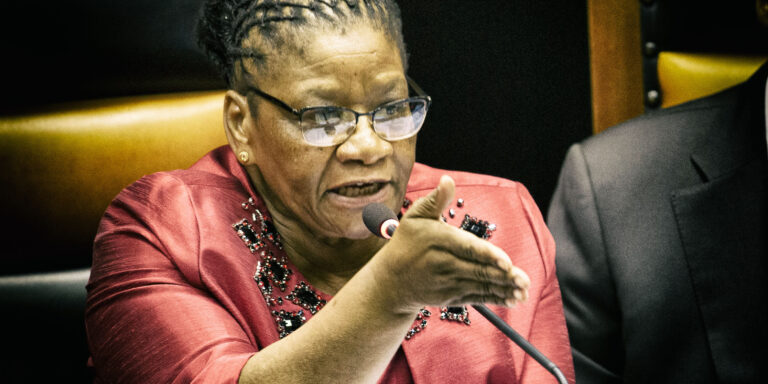
Rhodes University senior lecturer and organiser, Dr Siphokazi Magadla, briefly introduced the keynote speaker, Honourable Thandi Modise. Honourable Thandi Modise left South Africa for Botswana as a teenager in 1976 to join the African National Congress (ANC). Modise was transferred to Angola, where she received her military training. Magadla noted that Modise was the first to return to South Africa to organise the women in the townships after receiving military training with uMkhonto we Sizwe. She was arrested in 1976 and received an eight-year jail sentence which she served at Kroonstad prison. “By the end of this colloquium, we hope to generate a systematic and connected archive of women’s lives, roles and techniques of leadership in the armed struggle in Southern Africa,” said Dr Magadla.

Minister of Defence and Military Veterans Thandi Modise began her keynote address by expressing her gratitude to the organising committee for their incredible work to give women a platform to tell their stories and shine a light on this crucial issue.

Modise applauded the organising committee for the initiative, expressing her disappointment with the deliberate efforts to blot out the contribution of women to the liberation of the nation in the past. She also honoured her “mother”, Ruth Mompati, who had paved the way for women in the struggle.

Modise then went on to give personal accounts and descriptions of her experiences in the armed struggle. She told stories of journeys to foreign lands and the struggles women like her had to endure in an organisation where they were the minority. She highlighted the many significant roles played by women in the history of South Africa.

Modise put great emphasis on the importance of giving credit to all those who played a role in the struggle, no matter how trivial it may have seemed.

“We must also thank those whose job during the armed struggle was just to ferry messages,” she said. So often, the stories that never get told are those of women.”

“We must also remember that in every armed struggle, the women were not just on the curbside; they were involved. Sometimes they were involved on both sides of the struggle,” she added.

Modise thanked the women who had come before her, saying: “We thank them for their courage to stand.”

She honoured the likes of mam’ Charlotte Maxeke for being at the forefront of educating women and leading from the front.

After the keynote address, attendants were allowed to ask questions. Modise responded and engaged with the questions posed, giving much insight into how platforms like this celebration and commemoration could help educate the youth about their history and hopefully pave the way to a much better future.

1,000 Kids in Mississippi Test Positive for COVID-19 After School Reopens

0

NEARLY 5,000 children, educators and school staff are quarantined in Mississippi after returning to classrooms at the start of the new school year, some under mask-optional policies.

The 69 outbreaks reported between Aug. 2 to Aug. 6, which was the second week of school for some districts, resulted in nearly 1,000 children and 300 teachers and staff testing positive for COVID-19, according to a weekly report from Mississippi’s Department of Health.

While many school districts adopted a mask mandate for the beginning of the school year, it was not universal throughout the state, despite pleading from the Mississippi State Medical Association last week for all districts to require students and staff to wear masks, regardless of vaccination status.

The highly contagious delta variant is ripping through Mississippi, which also has one of the lowest vaccination rates in the country, more than quadrupling case numbers since June and causing a deficit of ICU beds.

The state’s early start to the new school year is providing a grim bellwether for school districts set to return more than 50 million students to classrooms over the next few weeks, many under mask-optional policies.

In southern Mississippi, Lamar County School District shuttered two of its schools during the last week in July and returned students to virtual learning until Aug. 16 after a week-long staggered reopening resulted in one high school identifying six cases among staff and 41 cases among students, forcing the quarantine of roughly 100 people. Highlighting just how contagious the delta variant is, after one week of in-person learning last year, the school district recorded only five cases among staff and five among students.

Despite the early warning signs from states like Mississippi and Arkansas, where than 800 students, educators and staff from one school district were quarantined just days after they began the new school year under a mask-optional policy, a handful of Republican governors are refusing to reconsider executive orders and state laws barring school districts from requiring masks.

Texas Gov. Greg Abbott, Florida Gov. Ron DeSantis and other Republican governors are under increasing pressure this week as school districts defy their executive orders, some in the face of increased threats of financial penalties, and cities and counties take them to court over the matter. In Texas, school leaders in Austin, Dallas, Houston and San Antonio plan to require masks for students and school staff, as do Miami-Dade and Broward Counties in Florida.

White House Press Secretary Jen Psaki addressed the Republican governors blocking school districts from enforcing masks, saying the Biden administration is actively looking for ways to safeguard districts who challenge state laws and executive orders.

“We are continuing to look for ways,” she said, “for the U.S. government to support districts and schools as they try to follow the science, do the right thing, and save lives.”

“If you’re not interested in following the public health guidelines to protect the lives of people in your state, to give parents some comfort as they’re sending their kids to school,” she said, “then get out of the way and let public officials, let local officials do their job to keep students safe. This is serious, and we’re talking about people’s lives

  • USNEWS

‘Skills Required For The 21st Century’: Inequality a Threat To Social Cohesion, Says Deputy President David Mabuza

0

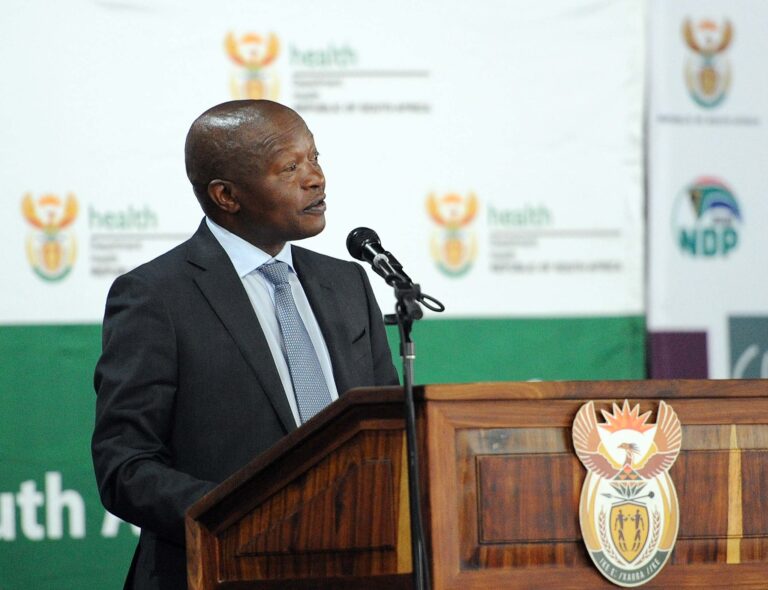
Deputy President David Mabuza says without urgently resolving inequalities in society, South Africa cannot successfully build and grow as a nation.

“Without urgently and tangibly addressing inequalities in society, nation-formation becomes a statement of intention rather than a statement of fact,” the Deputy President said on Wednesday.

Mabuza was addressing the 4th Human Resource Development Council (HRDC) Summit underway at Gallagher Convention Centre in Midrand.

The Deputy President addressed the summit in his capacity as Chairperson of the HRDC, a national multi-stakeholder advisory body established with the objective of improving the foundation of human resources in South Africa.

Held under the theme ‘Skills required for the 21st century’, the three-day summit aims to facilitate building the foundational knowledge to respond to the dictates of the changing world of work shaped by the realities of technological advancements.

Mabuza said the theme of the summit is relevant in the South African context to ensure that no one is left behind, as “we implement measures to rebuild and grow the economy”.

The Economic Reconstruction and Recovery Plan, Mabuza said, is premised on reviving the economy devastated by the COVID-19 pandemic, through investment in employment creation initiatives, building the relevant skills and training for the economy, industries and jobs for the future.

“It is encouraging that the objectives of this 4th HRDC Summit focus mainly on building the foundation and skills for a transformed economy and society, and building a capable and ethical developmental state.

“These objectives are significant since the HRDC, as a multi-stakeholder advisory body, is uniquely positioned to ensure that we capacitate the unemployed, those in workplaces and those still in our schooling system, with requisite skills that can respond to new world realities and to make South Africa globally competitive,” Mabuza said.

The Deputy President said the HRDC should use the Revised HRD Strategy to address the four broad challenges of poverty and inequality, quality of education, absorptive capacity of the economy, and social cohesion that will cumulatively contribute towards the attainment of the National Development Plan’s outcomes.

“Before deliberating further on this 4th summit, let us reflect briefly on what was agreed to in 2018 at the 3rd HRDC Summit, to ensure that we underline policy and programmatic continuity, and avoid reinventing the wheel.  As social partners, we have to ask ourselves the question whether between the period of the last summit and this one, have we sizeably delivered on equipping and capacitating our young people with practical solutions.   

“If we are to recalibrate our human resources development efforts to be skills-based, innovation-led and entrepreneurial-focused, we must be deliberate in implementing resolutions that we take at each summit. That is why at the end of this summit, we need to emerge with a concrete plan of action that will demonstrate measurable progress by the time we meet for the next summit,” he said.

Mabuza welcomed the summit’s focus on building the foundation for a transformed economy.

“We presume there will also be strategic and thematic continuity between this 4th summit and previous summits in areas of implementing pathways and partnerships between training institutions, labour and industry.”

 – SAnews.gov.za

UJ Clarifies Allegations Of Corruption Against Senior Officials Involved In ‘Attempted’ Embezzlement

0

THE University of Johannesburg (UJ) has clarified allegations contained in an article that appeared in digital platform, News24, on Tuesday, under the headline “Senior UJ officials involved in attempted embezzlement of hundreds of millions in government funding”.

The article reported that hundreds of millions of rands in taxpayers’ money from the Department of Science and Technology, the Industrial Development Corporation of SA (IDC) as well as funding from the University of Johannesburg (UJ) went down the drain as senior UJ executives colluded to embezzle the intellectual property and main assets of Photovoltaic Technology Intellectual Property (PTiP).

PTiP is a once celebrated local technology development and intellectual holding company.

UJ, in a statement, said the article referred to a series of events preceding 2017 and that none of the people or entities mentioned in the article were currently UJ employees or have any association with the University.

“As for the matter regarding two former executives – Dr Roy Marcus (former chairperson of the University’s Council) (“Marcus”) and Jaco van Schoor (the former Deputy Vice-Chancellor of Finance) (“Van Schoor”) – this is a matter dating back five years ago,” the university said in a statement.   

“The University wishes to remind the public that the matter was vigorously investigated and in this regard the Council of UJ was quick to commission an investigation by SNG Grant (SizweNtsalubaGobodo) an independent audit, advisory and forensic services firm.  Also, the University then duly laid criminal charges.”   

The university said the Criminal case is currently being handled by the Hawks. 

Civil actions were instituted in the South Gauteng High Court against Marcus, Van Schoor and 9 others to repay the monies that they defrauded the University with. 

The matter is ongoing and being actively pursued by UJ.  

UJ said it takes claims of fraud and corruption seriously and that it does not tolerate these in any form. 

“When such claims are made or emerge, the University has internal processes to investigate and act accordingly, as it did with Marcus and Van Schoor,” the university said. 

“This is an ethical and moral obligation, and the University will not hesitate to act against any of its employees found to have been involved in any acts of fraud and corruption or any other transgression.”  

  • Inside Education

Section 27, Equal Education Say DBE Has No ‘Coherent’ Plan To Eradicate Pit Toilets in Schools

SECTION 27 and Equal Education says the Department of Basic Education has not presented a coherent plan before the court for the eradication of pit toilets and inadequate sanitation in Limpopo and other rural provinces.

This is contained in the organisations’ heads of arguments presented before the high court in Limpopo on Friday.

“Instead of providing a sanitation plan to the Court, the defendants have described several infrastructure programmes, with no indication as to how these programmes relate to one another, how these programmes will advance the right of learners to safe and adequate sanitation and how compliance with these plans may be monitored,” the organisations said in court papers.

“The undisputed evidence before this Court is that there have been at least three other learners nationally who have lost their lives as a direct consequence of the dilapidated toilets at their schools.

Another child has been severely injured and traumatised after a similar fall into a pit toilet. The plaintiffs rely on this evidence
to illustrate that the tragedy that befell Michael Komape and his family, as well as these four other learners and their families, may well recur in the near future. The defendants have simply ignored these concerns.”

Section 27 and EE are petitioning for the Limpopo Department of Education to draft a new plan to fix school toilets, one that is “reasonable” and meets the requirements of the structural order.

The plan should also outline how the department will address the urgent school sanitation problems in the province.

They are also asking the court appoint a special master – an independent person who is normally appointed by a judge to assist the court in making sure the court order is implemented.

“In this case, we want a Special Master to oversee the implementation of the new plan that we want the DBE and the LDoE to produce. A Special Master enhances the court’s supervision by bringing additional resources and specialised skills to the case,” the organisations said.

“We are proposing that the court consider appointing a Special Master – an independent person who is appointed by and reports to the court, who is normally appointed by a judge to assist the court by making sure that what the court orders is actually implemented.”

“We want a Special Master to oversee the implementation of the new plan that we want the DBE and the LDoE to produce. A Special Master enhances the court’s supervision by bringing additional resources and specialised skills to the case.”

Basic Education Minister Angie Motshekga says she is confident that her department will eradicate the remaining 3 898 pit latrines in the country’s schools “within the next four years”.

She said together with Provincial Education Departments, DBE has made great strides in efforts to replace pit latrines with appropriate sanitation
facilities for schools in the country through the Sanitation Appropriate for Education (SAFE) Initiative launched in August 2018 to accelerate the provision of sanitation facilities in the identified schools.

“I would like to thank all of those businesses and individuals who have agreed to partner with the Department of Basic Education to eradicate pit latrines in our schools and restore the dignity of our children, the support has been truly incredible,” said Motshekga

Mathanzima Mweli, the Director-General of the Department of Basic Education, has visited more than 500 construction sites since March 2021 to accelerate the delivery of the much-needed infrastructure.

Mweli was in Limpopo last week where he has visited sites in the Vhembe and Sekhukhune areas.

The monitoring function has assisted the Department to unblock challenges and resolve issues that delayed the building process.

“The SAFE Initiative is a flagship programme and I have resolved that I will carry out the monitoring function until the last school has a proper toilet. The monitoring has pushed our performance up and we are sure to hit our target even before the end of the current financial year,” he said.

 
The Director-General holds weekly update meetings with the chief executive officers of the implementing agents.

The department reports regularly to the Presidency on the work done to replace pit toilets with proper facilities and will continue to do so until the pit latrines have been eradicated in all the schools.

“We have improved the standard of reporting and the progress is satisfactory. Under-performing implementing agents have been warned that there will be consequences for poor delivery,” said Mweli.

Inside Education

Teacher Unions Up In Arms Over DBE’s Plan To Reduce Social Distancing To Half-a-metre In Schools

0

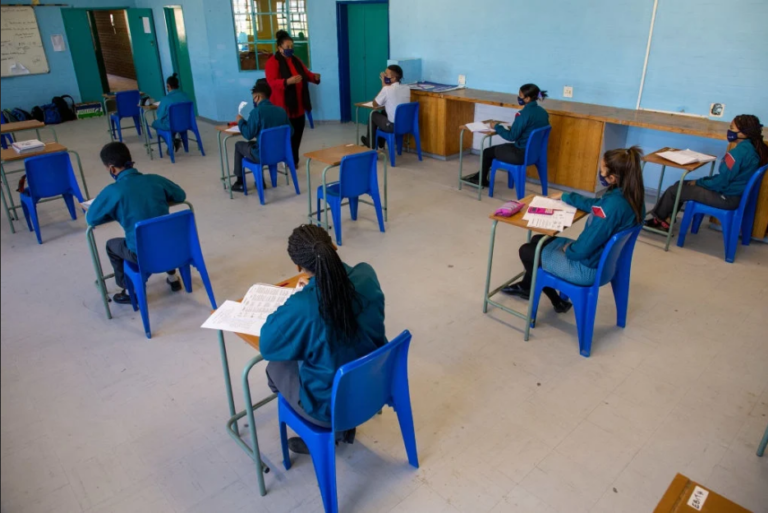
THE country’s biggest teacher unions have formally requested an urgent meeting with Basic Education Minister Angie Motshekga and senior officials of her department to discuss the proposed narrowing of social distancing at schools from the gazetted 1 meter to half a meter.

The teacher unions – I.E, NAPTOSA, NATU, PEU, SADTU AND SAOU – claim that they were not consulted in regard to the new proposed reduced social distance of 0,5m in primary schools.

This comes after Motshekga said last week that the department had requested a meeting Cabinet and the National Coronavirus Command Council (NCCC) for the social distancing regulations to be amended so that schools can go back to teaching normally.   

The unions have questioned the rationale behind Motshekga’s proposed narrowing of social distancing at schools. 

The unions have also warned that should the NCC approve the proposal, they could turn to the courts to oppose the move. 

“It is our contention that this matter must be the subject of genuine consultations with the organised teaching profession and that it must be supported by scientific evidence that the planned reduction will not lead to further infections among learners, educators and members of the broader community,” said the teacher unions in a statement.

“No scientific evidence thus far has been provided to the unions in connection with the acceptability of such a reduction.”

The unions said this new development takes place after the publication of the new Department of Basic Education (DBE) COVID-19 Directions on July 31 2021 that determine social distance as 1m.

“But, despite warnings from the teacher unions that 1m social distancing is not possible when all primary school learners return to school, it is clear after two school days that compliance with the 1m social distancing is virtually impossible when the traditional time table is followed,” said the unions.

“Our advice to schools in the interim is that where the 1m cannot be complied with, the schools should follow the deviation provisions as contained in the Gazette and to continue with rotational timetabling. This is done in the best interest of the child, educators and the community and to ensure that schools do not become super-spreaders but rather the barriers against the transmission.”

Despite fierce criticism from the teachers unions, Motshekga insists that her department would table a proposal at the National Coronavirus Command Council to lower the COVID-19 social distancing between primary school kids from the gazetted 1 meter to half a meter.

She argued that the scientific data shows this is still safe for kids and is also practiced overseas.

In June, the department published a set of coronavirus guidelines saying that “schools are potential risk areas for the spread of the virus” and that the guidelines have been developed to mitigate the risk of the virus spreading at schools.

The department further emphasised that hygiene and physical distancing at schools need to be strictly adhered to, to prevent the spread of COVID-19.

More than 1 650 teachers died due to COVID-19 related complications between March 2020 and February this year.

Motshekga said as far as vaccination plans were concerned, the education sector had targeted 582 000 personnel in the Basic Education Sector; and that when the vaccination programme was closed, formally, they had 517 000 people, who have received the vaccines – an 89% vaccination success rate – on their books.

Motshekga said she has received information that the teachers’ unions were concerned that they weren’t consulted about the move, but added that the department still needed to engage with the Department of Health and the National Coronavirus Command Council.

“We are going to look at different measures, whether we use school halls or platooning systems or outside places,” said Motshekga.

She said the department has agreed to meet the unions and provide them with a report.

Before the department goes to Cabinet about the proposal, it needed the opinions of the Ministerial Advisory Committee and it would table the matter with the National Joint Operational and Intelligence Structure.

However, Sadtu’s general-secretary Mugwena Maluleke believes there is still a lack of scientific evidence.

“We do not agree because we have not been presented with any scientific evidence. While we had a meeting on Saturday, Cogta (Department of Cooperative Governance and Traditional Affairs) published 1 meter, the Department of Basic Education also published 1 meter. So we do not know where the half a meter comes from,” he said.

  • Inside Education

#WomensMonth2021: Women Have Sharp Minds, Brilliant Leadership Qualities

ANDRE DAMONS|

IT IS time that women realise their brilliant leadership qualities. Women are more sensitive and intuitive and bring a different dimension of leadership to the workplace.

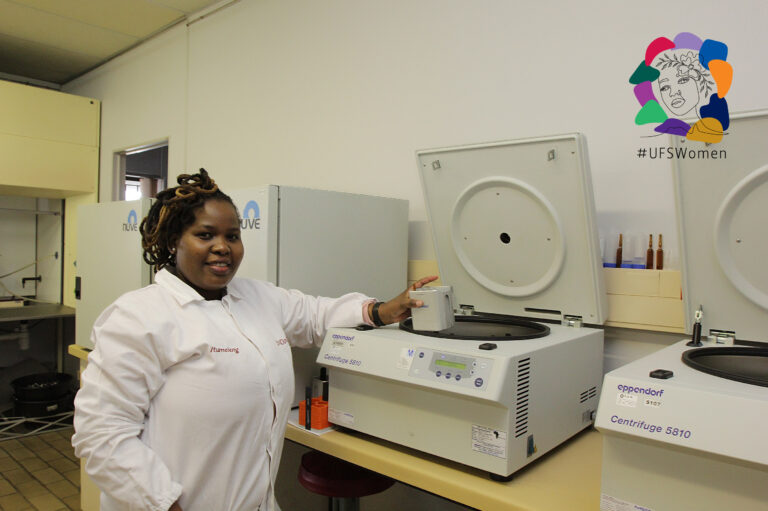
For Itumeleng Mabusa, analyst at the South African Doping Control Laboratory (SADoCoL) hosted by the University of the Free State (UFS), this is one of the ways to address the challenges that women still face. Mabusa believes the opportunities for women are not as prominent as it should be and believe that gender discrimination in the workplace still exists and should be addressed.

Mabusa, who has been a member of SADoCoL since April 2015, analyses urine samples from athletes to test for prohibited drugs in sports. Her day-to-day work involves sample extractions, running the extracts on analytical instruments such as the high-performance liquid chromatography (HPLC) or gas chromatography (GC) machines, and analysing the data to see if there are any performance-enhancing drugs that are prohibited by the World Anti-Doping Agency (WADA).

Women still face the most discrimination in the workplace

According to her, women in South Africa and the world at large are still facing the most discrimination in the workplace. Women still have to fight to get their views across, and they are still not taken seriously because of patriarchal stereotypes. 

“In some corporate settings, women are still remunerated as well as men, regardless of both being in the same position and equally talented. It is hard enough to be equally recognised as a professional in your own field of expertise as a woman, which is exacerbated if you are a woman of colour. The other most pressing issue is the high prevalence of gender-based violence, with women holding the record for high incidents of violence against them,” says Mabusa.

Addressing the challenges

These challenges, says Mabusa, can be addressed by allowing women to do any job that a man can do. Women in leadership are often disregarded and their judgments are always questioned, she says. 

“There has to be more outreach programmes to teach young girls at a very young age that they can be leaders in absolutely any career they desire, from science, engineering, and aviation – to name but a few. Most importantly, leaders should groom the women in their organisations to one day take over the higher positions, and not always leave them for men.” 

“My opinion regarding issues of gender-based violence is that it must be addressed from an early age, in addition to teaching and preparing the girl-child to fend off danger. I think the boy child should also be empowered and taught to be self-sufficient, and not be egotistical, but respectful towards women of any age. Boys and girls should be groomed to be able to co-exist cohesively in a society where they both have equal chances of achieving greatness.” 

What is the most interesting thing to you in the field of anti-doping science?

As a WADA-certified scientist, Mabusa says the best and the worst part of her field is when she has to take part in external quality assessment scheme (EQAS). All the WADA-accredited laboratories in the world must take part in the analyses of the same samples three times a year at the same time. 

“These are both nerve-wracking and exciting all at the same time; it always reminds me of the feeling I used to get when I had to write final exams. I like comparing my statistical results with the rest of the world, for example finding out what quantitative concentration values and Z-scores the rest of the world obtained for their analysis compared to mine.” 

“It is also very interesting to find the scientific evidence and analysis you completed, led to the prosecution of an athlete due to an anti-doping rule violation. I also love doing scientific research and being able to share it with the rest of the world. Working with different analytical equipment and different software – from GC-MS and LC-MS to LC-UV – is exciting,” says Mabusa.  

Community value impacts life as a scientist and woman

Mabusa says as a woman, especially a black woman being given the chance to use her scientific skills as a WADA-certified scientist, it is an honour, as it gives everyone competing in sports in Africa a fair chance to compete. By testing these athletes, she explains, she is making sure that everyone plays fairly without their performances being influenced by any prohibited drugs. 

“Among the prohibited drugs are also drugs of abuse, including for example, cocaine and MDMA (ecstasy). By testing athletes for these drugs, I am helping the athletic community to try to stay off illegal recreational drugs.” 

Playing her part in the Olympics and coping with challenges

With the Olympic Games taking place between July and August, Mabusa says it is a great feeling to know that she is part of a team of scientists who are producing test reports that will ultimately determine whether tested athletes will be eligible or banned from representing their African countries at the Games.

According to her, they have a high volume of samples to analyse on a daily basis, because of all the sports competitions in South Africa and the continent in preparation for the Tokyo Olympics. 

Mabusa says the challenges associated with this work include the extremely strict rules of analysis, called the International Standard of Laboratories (ISL), set for all accredited laboratories to follow. The strict timelines that they all have to stick to in order to report the results to clients on time – no matter how many samples there are – is also a challenge. 

“This means analysing a large amount of data as accurately as possible in the shortest time I can. A skill I had to harness and embrace and learned to perfect over time, is the ability to pay very close attention to detail; this comes in handy when dealing with analytical work.” 

“There is also countless paperwork to fill in in order to follow a chain of custody for a sample. Each and every step gets recorded, from sample reception all the way to reporting; paying attention to detail comes in quite handy through all this,” says Mabusa.

  • UFS NEWS

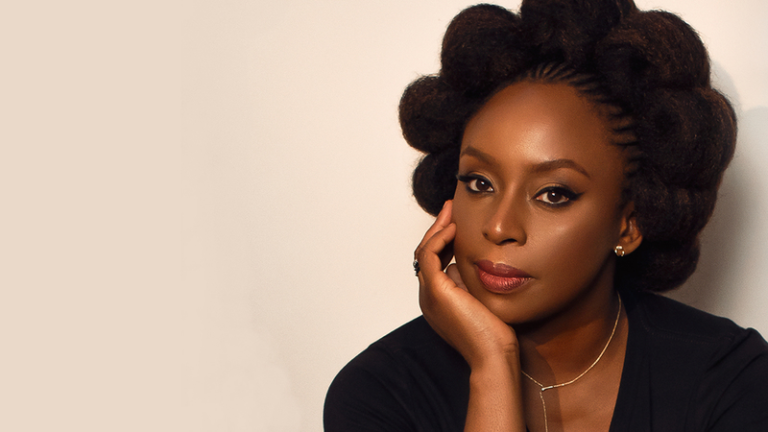
Chimamanda Ngozi Adichie: ‘Theory, a Kind of Idolatry’

0

NIEMAH DAVIDS|

A discussion that explored the “idolatry of theory: a defence of storytelling”, took centre stage during the second University of Cape Town (UCT) Vice-Chancellor’s (VC) Open Lecture for the year on Wednesday, 28 July.

The keynote speaker was internationally acclaimed author and renowned feminist Chimamanda Ngozi Adichie. She presented her lecture to a virtual audience, with roughly 5 000 guests in attendance. The lecture series is hosted by UCT VC Professor Mamokgethi Phakeng.

During the lecture Adichie argued why, in her view, theory is considered a kind of idolatry. She explained how during a conversation on sexism several a years ago, a woman shared a theory based on her own lived experience. The woman said: “Sometimes, some women are their own worst enemies.” But instead of engaging her on the topic and discussing it in detail, Adichie said the rest of the group simply silenced her.

“Theory gives us a framework to think about the world. But we should not give it primacy because when we do, we start to walk backwards.”

Adichie noted that while theory is important, especially when it relates to discussions and debates on global challenges like gender inequality and sexual and gender-based violence, society is afraid to run foul of theory.  

“I suspected even then that we silenced her [the woman] because her experience and her conclusion complicated our accepted theory. Theory gives us a framework to think about the world. But we should not give it primacy because when we do, we start to walk backwards,” Adichie said.

“We go from theory to life; we start with theory and we try to make life fit our theory. We try to make the messy complicatedness of life fit into the neat and tidy confines of theory, and when life doesn’t fit perfectly, we silence those bits that stick out. We pretend they’re not there [and] we look away. Because we must preserve the sanctity of theory.”

‘A kind of idolatry’

She told the audience that society often gives theory an exaggerated and critical reference, and this is the reason why she considers theory as a “kind of idolatry”.

“If we allow ourselves to be guided too closely by theory, we will end up being blinded by it. My response to the tyranny of theory is to go to the story; go to the human story,” she said.

“It is storytelling that enables us to deal with the world in all of its glorious and complicated messiness, because life is messy.”

But what’s the point? What does it matter if society chooses to focus on theory or on storytelling, Adichie asked the audience. The point, she said, is to change the world (using storytelling) and to achieve maximum joy by creating opportunities to thrive.

“With maximum joy, we must deal with the world as it is, rather than the way we want [it to be]. That’s the only way to make real change. And it is storytelling that enables us to deal with the world in all of its glorious and complicated messiness, because life is messy,” she said. 

“It’s not so much that we should discard theory, but more that we should acknowledge its limitations.”

The power of storytelling

As a fiction writer and a storyteller, Adichie described literature as her one true love, her religion and the one thing that shapes the lenses with which she looks at the world. Therefore, she said, she “believes deeply” in the power of storytelling, because it enables real human empathy and human connection. 

That’s not all: Storytelling also creates, enables and fosters truth and beauty.

“Storytelling reminds us that we are not a collection of logical bones and flesh, and because we are emotional beings, dignity and love matter as much as bread and water,” she said.

Storytelling and history

Adichie said she first visited South Africa 10 years after the fall of apartheid, and back then, she said, she felt like “the past was not yet the past” for South Africans. Yet, South Africans displayed a “conservative and collective resolve to turn away from this truth”.

She said everyone spoke to her about the “Rainbow Nation”. But she did not entirely trust this optimism, “as well choreographed as it was. It felt to me a little too easy.”

 “An inflexible adherence to theory can make us tell incomplete stories.”

She said she began to wonder about the story the country was telling itself. After all, she added, storytelling is an integral part of how society recreates and remembers history. But it’s also considered an antidote to forgetting.

“On that visit, I wondered: If the theory is that of a Rainbow Nation, what happens to the stories that do not fit the theory? An inflexible adherence to theory can make us tell incomplete stories. It can [also] limit the options that we are willing to consider for real‑life solutions,” she said.

Imperfect stories

But not a single story has been weaved together perfectly. Stories, regardless of the subject, are always imperfect.

“As a storyteller, I do not trade in perfection. I do not trust perfection. I do not believe in perfection. If humans were perfect, stories would not exist. It’s our flaws and imperfections that lend [texture] to the stories we tell,” Adichie said.

She said many global injustices like slavery, colonialism and the Holocaust have their roots in the dehumanisation of different groups, and sadly, all of them are imperfect stories.

 “It’s impossible to have a true story that has no texture. So, in other words, it’s our imperfection that makes truth possible.”

“Slavery was possible because people who traded in enslaved people dehumanised them. Colonialism was possible because the groups of people who were colonised were dehumanised by their colonisers. The Holocaust was possible because of Hitler’s horrible dehumanising exercise of Jewish people,” she said.

“It’s impossible to have a true story that is flat and has no texture. So, in other words, it’s our imperfection that makes truth possible.”

  • UCT NEWS