Home Blog Page 315

South African School Sports Get Green Light To Resume Without Any Spectators

0

THE basic education department has gazetted new regulations ahead of the return of full-time classes on Monday.

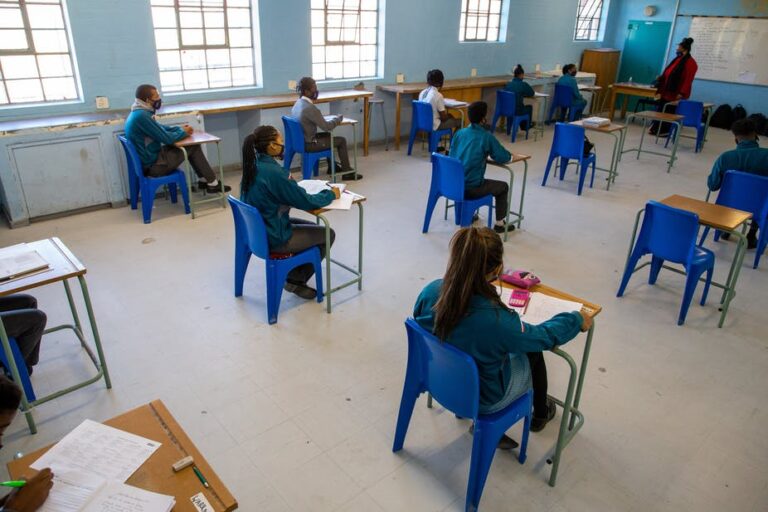
While all government schools reopened on 26 July as part of the country’s move to an adjusted level 3 lockdown, the basic education department also instructed primary schools (Grades R – 7) to prepare for the return of full-time teaching.

The gazette states that primary schools must return to the traditional and daily attendance timetabling model from 2 August 2021, provided that a ‘risk-adjusted differentiated strategy’ is followed.

“A risk-adjusted differentiated strategy means an approach to school attendance that is determined by the level of reported Covid-19 infections in the school, and Covid-19 infections in the district, municipality, and country,” it said.

The department has also reduced the social distancing measure in primary schools from 1.5 metres to one metre, to accommodate schools with more students and less space.

All returning students must also ensure strict compliance with social distancing measures and minimum health protocols, which include the wearing of face masks, the washing of hands and the use of hand sanitisers.

Schools that are unable to comply with the directions and cannot resume full-time teaching can apply for an exemption with the department.

Sports

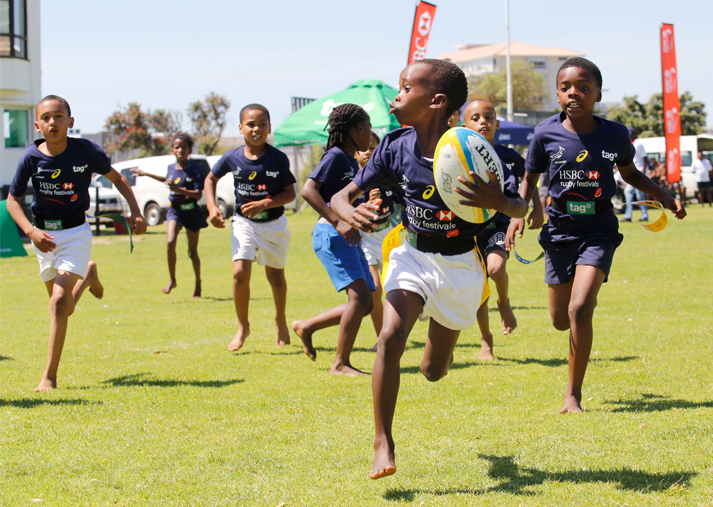
Subject to existing Covid-19 regulations, contact sport, non-contact sport, training, matches, and all arts and cultural activities may resume without any spectators at all schools.

The department clarified that includes both inter and intra-school activities.

National, provincial, district championships and tournaments that require learners to travel to other schools or provinces may also resume with strict adherence to prescribed transport regulations and directions.

The following safety measures must be adhered to when resuming the activities:

  • The number of persons in venues where the activities take place, change rooms or training areas, at any given time, must not be more than 50% of the capacity of the venue with persons observing the social distancing requirements;
  • For outdoor activities, the total number of persons, including participants, officials and other personnel must not exceed 100 and for indoor activities, the number of persons must not exceed 50;
  • Face masks must be worn by all persons entering the venues where the activities take place, change rooms or training areas, except when participating in training or matches;
  • There must be sufficient quantities of hand sanitisers, with at least 70% alcohol content, available for use by all officials, coaches, assistants, learners and participants;
  • There must be facilities for washing of hands with soap and water;
  • All windows and doors must remain open, where feasible, to ensure adequate ventilation;
  • Social distancing must be maintained at all times;
  • The sharing of drinks and drink containers is not allowed;
  • The school or venue hosting the events or activities must ensure that venues, tools and equipment are cleaned and sanitized before and after any activities.
  • Business Tech

Why STEM Education Is So Important Right Now

WITH the rise of new technology, STEM education has become more and more important across the world.

From health care to food production, it has become clear that our children need to learn more about these subjects to be able to tackle tomorrow’s issues.

But what is STEM education and why is it so important in 2021? We’ll take a look at this article.

What is STEM?

STEM stands for science, technology, engineering, and mathematics, four subjects that we encounter pretty much every day. From the roads, we drive on or the tablet we watch our favorite shows on, we are surrounded by technology and STEM education gives us the tools to understand how things behave and work.

Why is it important?

– STEM jobs are the future.

According to a study from the US Bureau of Labor, employment in STEM occupations is projected to grow 8.8% by 2028. But to be able to fulfill these new jobs, it has become urgent to educate children about STEM subjects across the globe. In fact, according to the United Nations World Population Prospects, over 60% of Africa’s population is currently under 25, the continent definitely has a great potential to improve its economy by producing a generation of young mathematicians and engineers.

Many big companies and corporations have been helping this growth by offering resources and donations, for example, the tech company OKdo has donated 5,000 micro:bit mini computers to young people in Ghana and Kenya.

– It closes the gender gap

According to different studies from UNESCO, just 28% of the tech workforce are women in this sector worldwide and just 30% in Sub-Saharan Africa and it all comes down to a lack of opportunities and education. We need to make STEM subjects more available and approachable to girls. However, it looks like the gap is slowly starting to improve as more STEM opportunities are opening up for girls across the globe.

– It teaches children critical thinking

STEM subjects are not only great for children wanting to go into a STEM job but it’s also a great tool that will help them succeed in any job. In fact, STEM subjects have been proven to improve critical thinking, problem-solving skills, and logical thought process. These qualities matter in any job and career that one wishes to pursue. Overall, STEM education provides a foundation of skills to help children understand the world around them.

  • African Exponent

COVID-19: Ramaphosa Urges South Africans To Get Vaccinated

CYRIL RAMAPHOSA|

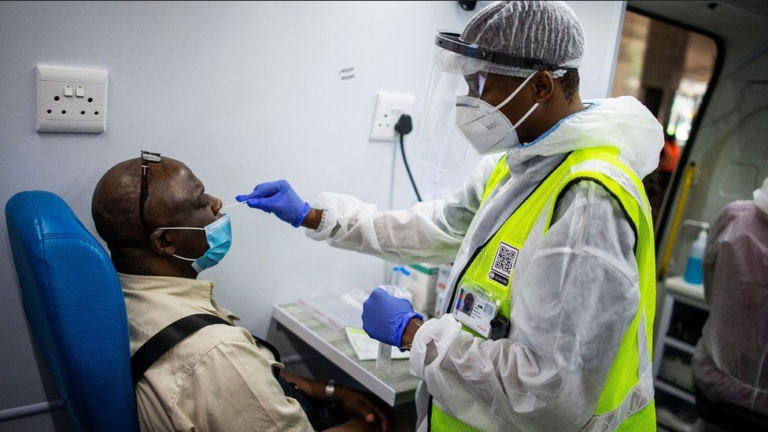
LAST week, I had a chance to meet some of the heroes on the frontline of our fight against COVID-19 when I visited two vaccination sites in Tembisa and Midrand.

These heroes include the health workers administering the vaccines and the many South Africans who are coming forward to be vaccinated and thereby safeguard the health of the nation.
 
The number of vaccinations administered in South Africa has now passed the 7.5 million mark. Around three million people are fully vaccinated. At the present rate, we are vaccinating on average 220,000 people a day. In the coming weeks, this rate will increase significantly due to the arrival of more vaccine doses.
 
Nearly 1.5 million single dose Johnson & Johnson vaccines have been handed to the Department of Health in the last couple of days. Over the past weekend, a donation of 5.66 million Pfizer vaccines from the USA government began arriving in the country. This is part of a donation of vaccines from the United States to African countries and low- and middle-income countries in other parts of the world.
 
Our country is also making history. The first COVID-19 vaccines produced in Africa, for Africa, were released by Aspen Pharmacare from its flagship manufacturing plant in Gqeberha last week. These vaccines will be made available to the rest of the continent through the African Vaccine Acquisition Task Team, which we set up during our tenure as African Union chair.
 
Thanks to the efforts of all involved in the multisectoral vaccine acquisition response, we now have a comfortable supply of stocks to vaccinate our population.
 
The two vaccination sites I visited are among an estimated 3,000 vaccination sites we have set up in the country. These sites are currently providing vaccines to any person above the age of 35, healthcare workers, and employees in participating workplaces.
 
To meet demand, several sites around the country are now operating on weekends, and many innovations – like vaccination drive-throughs and mobile vaccination units – are in operation.
 
One of the two vaccination sites I visited is run by the private sector in partnership with government and the other is run by the government, yet both facilities had similar levels of excellent service and professionalism.
 
Our private sector, including medical schemes, has worked alongside government from the onset of the pandemic, helping to mobilise resources and, most recently, helping us meet our national vaccination targets.
 
At the Rabasotho Community Centre in Tembisa, I saw government’s Batho Pele principles in action.
 
The process was efficient and streamlined: from the COVID-19 Vaccination Card people are issued with to help them keep track of their doses, to data-capturing stations, to observation stations with doctors on standby for those who have just received their jab. Importantly, the site has an information area where those presenting for vaccination are given clear information in their own language on the different vaccine options available.
 
We spoke with Mama Rosemary Mabaso, 67, who had come for her second dose. She said that the staff at the centre had treated her with the utmost care and courtesy and helped allay her initial fears of getting vaccinated.
 
I am encouraged that so many South Africans accept the need to be vaccinated. The latest National Income Dynamics Study (NIDS) Coronavirus Rapid Mobile Survey (CRAM) found that there is increased public openness to accepting a COVID-19 vaccine. Only 1 in 10 South Africans believe that COVID-19 vaccines are unsafe.
 
The Mathebulas, a couple from Tembisa who had come to the centre together to get vaccinated, told us that they were initially hesitant ‘because of negative stories going around,’ but had decided to follow government’s advice to get vaccinated.
 
Such expressions of confidence are greatly encouraging, as are the words of Mama Mabasa, who said: “I want to tell everyone out there is no need to be scared; this vaccine is safe, and it is helping us.”
 
Indeed, vaccines are safe. They are our best protection against this disease and the national vaccination programme is our surest guarantee of a swift health and economic recovery.
 
I want to encourage South Africans to continue to follow the guidance of the World Health Organisation and our Department of Health around COVID-19 vaccines. We need to avoid spreading misleading and false information that can cause confusion.
 
As we work to vaccinate as many people as possible by end of the year, we salute the officials, healthcare workers and staff of the vaccination centres who are working tirelessly to support the national effort.
 
But by far, the greatest heroes are the South African people, of whose resilience and steadfastness I remain in awe.
 
Over a year and a half, we have experienced a deadly pandemic, severe economic and social hardship, and recently, serious unrest wrought by those who want to see our country fail.
 
By going out and getting vaccinated, we aren’t just protecting ourselves. We are performing a patriotic duty to our country and our fellow citizens.
 
In this great race to preserve human life, let us continue to work together in the interests of the health and welfare of our nation. In this way, we will ensure that recovery is certain.

  • From the desk of the President

Taxi violence disrupts MEC visit to schools

Western Cape MEC for Education Debbie Schäfer’s visit to three schools in Khayelitsha to assess readiness for the third term as well as engage teaching staff on challenges they experience was disrupted by taxi violence.

Her visit also come after some some learners and teachers were not able to attend on the first day of the term as a result of the violence.

Schäfer said there were some schools that had been affected by the taxi disruptions, which was highly regrettable given the amount of time that has been lost by schools.

She said for principals and teachers have shown dedication to their learners for choosing to work in such a challenging environment.

The MEC visited Joe Slovo High School in Khayalitsha, Injongo Primary School in C Section, and Intshayelelo Primary School in Ilitha Park.

Vanessa le Roux, founder of a group called Parents for Equal Education SA said Schäfer needs to become a more active player in negotiations on the taxi violence discussions.

Le Roux said this must be done for the sake of learners and educators in her province.

“We need to know from the department what their plan is to accommodate learners affected by this taxi violence and that they [those who missed work and tests] will be given another chance to rewrite,” said le Roux.

Adding that the MEC should realise her sector is heavily impacted by the ongoing taxi violence and that she must enter the table of negotiations with the appropriate stakeholders.

ANC provincial spokesperson on education Khalid Sayed said they would join the transport committee meeting on Thursday and demand that all stakeholders find a solution for the sake of learners and teaching staff.

He said it was unacceptable that teaching and learning was taking place in such circumstances.

Sayed said the other challenge faced by schools was that Covid-19 devastation which is very much still present.

“The Western Cape Education Department needs to give parents a greater sense of confidence that schools are ready.

Four things that count when a South African graduate looks for work

FENELLA SOMERVILLE|

For many young South Africans, a qualification is perceived to be the passport to a good job and decent salary, opening the way to a better life for them and their families.

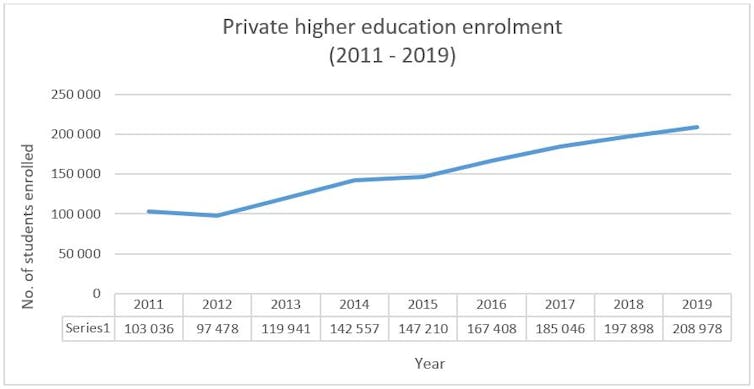
South Africa’s private higher education sector has grown rapidly since 1994, when the education system began to expand under democracy. The number and types of private institutions have increased and student enrolment more than doubled between 2011 and 2019.

There are currently 130 registered private higher education providers. These institutions enrol about 210,000 students, and produced more than 42,000 graduates in 2019.

The sector is diverse in terms of institutional reputation, size, ownership, fee structure and student demographic.

A line graph showing the growing number of students enrolled in private higher education institutions in South Africa.
The number of private institutions have increased and student enrolment more than doubled between 2011 and 2019. Statistics on Post-School Education and Training in South Africa: 2019

In South Africa, the term “university” is reserved for public higher education institutions according to the Higher Education Act. Consequently, private higher education may be perceived as not on par with university education. But there’s little difference between the sectors as far as qualification standards are concerned. All private institutions must be registered with the Department of Higher Education and Training, and need to comply with the same programme accreditation and quality assurance requirements as public universities.

One advantage that private institutions may have – because they are smaller – is the flexibility to adapt their offering relatively quickly to meet the needs of the market. Many deliver niche vocational programmes, using industry experts as educators, with the specific intention of producing more employable graduates.

But do they? Between 2018 and 2020 I conducted research into whether this goal was being achieved. I evaluated the opportunities provided by private higher education institutions in South Africa and the employability of their media graduates, specifically.

I found that the percentage of graduates who found employment was relatively high. But the employment outcomes varied between graduates, strongly shaped by personal biographies as well as enrolment choices and options, and mediated by type of institution.

These findings may be of use to higher education managers, educators, researchers and policy makers. Attention needs to be given not only to the knowledge and skills graduates require for employment but also the other factors that give graduates a better chance of earning a decent livelihood and participating in society.

Employability of graduates

The research focused on graduates who studied to work in journalism, public relations, graphic design, creative and visual communication, including radio and television production and broadcasting. These fields are rapidly changing and increasingly digitalised. Participants came from three private institutions – elite and non-elite – and had been in the workplace for between one and five years.

I found that four things counted for employability: the reputation of the institution; networks and connections; experience; and type of work.

A qualification doesn’t equate to a job. Within five years of graduating, 84% of the graduates were working. Yet some – mostly from disadvantaged backgrounds – remained unemployed. And it seemed their opportunities were diminishing.

Having a job doesn’t equate to earning a decent livelihood. Many graduates were underemployed. Some had taken jobs in factories, retail or administration, merely to earn some income.

One-third of the employed graduates earned less than R10,000 ($700) a month, and 11% of those earned below R5,000 a month. That isn’t far off the minimum wage. There was a pattern: most of the low wage earners were black graduates from non-elite institutions.

Experience is essential. Employers recruit from their industry network. Eighty percent of the study participants had participated in some form of internship to build a base of working experience. But the monthly stipend ranged from R2,000 to R4,000 (between $130 and $270), which barely covered transport costs. This means that graduates who can be financially supported by family take on internships. Those from poor families are less likely to be able to afford the benefit of these employment-enhancing opportunities and go in search of any job. Hence their disadvantage persists.

An institution’s reputation counts. Employers partner with higher education institutions. They contribute industry-relevant input to the curriculum and teaching, and then recruit directly from the institution’s pool of graduates. Employers admitted that they favour graduates from particular institutions while those from other institutions are overlooked.

Equipped for the real world

Deeper analysis of graduates’ employment status showed patterns of employment were divided along lines of race, socio-economic status, educational background and institution. These findings are similar to those of studies on the employability of graduates from public universities. They call into question the value of investing in private higher education, and whether private institutions provide equitable opportunities for all graduates.

The findings confirm that skills, knowledge and a qualification don’t ensure successful employment outcomes for graduates. Higher education cannot overcome structural constraints such as a saturated labour market, weak economy and entrenched social inequality. More of the same from institutions, irrespective of the quality of the education, will likely continue to reproduce unequal outcomes.

The need for private institutions in South Africa to take note of this reality is even more important in the context of COVID-19 and the recent social unrest, and the implications of these macro issues on graduates’ livelihoods and lives.

Policies should recognise that some individuals require different strategies, resources and ways of teaching to achieve the same outcomes as others. Students need to be guided and supported in their choices from the outset, learning how to build networks, gaining real work experience, and preparing for various types of work in a range of contexts.

Graduate preparation must move beyond employers and employment. Institutions ought to focus on enhancing graduates’ abilities to navigate their way in society, to respond to opportunities to work and earn, and to be adaptable so they can thrive in an uncertain world.

Few hiccups as Cape learners return to school

SISONKE MLAMLA|

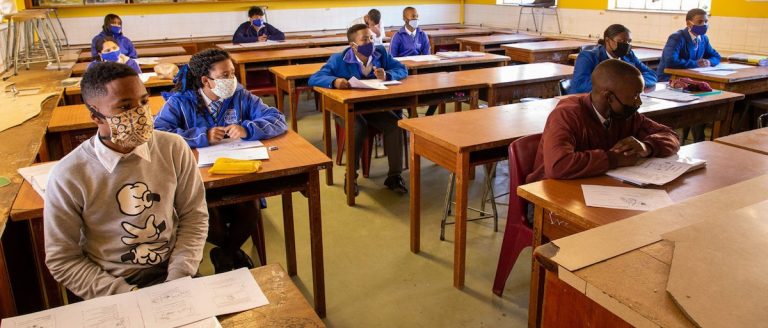
The Western Cape Education Department (WCED) said it was pleased with the start of the third school term on Monday, with schools operating as per their temporary revised education plans.

WCED spokesperson Bronagh Hammond said all primary school learners (Grades R to 7) and special school learners (Grades R to 12) would return to the daily attendance and traditional timetabling model next Monday.

School management teams and support staff returned last Thursday to prepare for the return of learners and teachers.

Hammond said the WCED was also collating the reports from schools which experienced burglary and vandalism during the school holidays.

READ: Anxiety and fear as learners return to school in Phoenix

“Unfortunately, a number of reports have been received thus far. Further information will be released later this week,” she said.

She said the department was deeply saddened by the report of a death of a security guard allegedly attacked at a metro central school after confronting alleged vandals on Sunday night.

Hammond said the matter was reported to the police and an investigation was under way.

She said schools that were unable to safely return to a traditional timetabling model had to inform the head of department in writing by July 23, of the reasons why.

“Schools that have applied will be notified of the outcome of their application during the course of this week, and that one-metre rule, as contained in the Department of Basic Education Standard Operating Procedures, still remains the main reason for the inability to return safely at full capacity.”

SA Democratic Teachers Union spokesperson Nomusa Cembi said the union was still waiting for reports from the provinces on how the first day of school in the new term was.

Congress of SA Students acting provincial chairperson Zandile Matyeni said they were aware that many learners did not go to school yesterday because of a fear of what might happen to them on the roads or not having transport at all, as many were depending on minibus taxis and scholar transport and non of those were available in some townships.

READ: School dropout rate increased drastically during lockdown

Zero Dropout Campaign programme director Merle Mansfield said it was imperative that schools ramp up their reintegration programmes by tracking absent learners to ascertain why they have not returned to school, and to ensure disengaged learners get the right type of support.

“To get our learners back to class, we need schools and households to work together, each recognising their joint responsibility in supporting learners to stay in school,” said Mansfield.

IOL

Teenagers are acquiring Covid-19 at rates similar to adults

A report by the National Institute for Communicable Diseases has shown that unlike the earlier strains of Covid – the SARS Covid-2 and the earlier strain of Covid from 2019, the delta variant, which is more pronounced in the third wave, is affecting children as much as it does adults.

The report found that some groups among children experience higher rates of illness and that among all deaths in individuals aged younger than 19 years, 38.4% were among adolescents aged 15-19 years and 31.8% were aged under one year.

“Children with underlying conditions made up 19.3% of children admitted with Covid-19 but 56% of those who died. The most commonly reported underlying conditions among those admitted were chronic respiratory diseases, diabetes, HIV and tuberculosis (active and previous). HIV, diabetes and tuberculosis were common among those who died,” reads the study.

Tendesayi Kufa-Chakezha, a medical doctor by training and PhD Epidemiology from the University of Amsterdam, said since the onset of the third wave to the peak, the fraction of all Covid-19 cases aged 19 years or younger was averaging 14.6% as opposed to around 9% in the first and second waves.

Kufa-Chakezha said half of the cases in South Africa were occurring in older teens and adolescents of ages 15-19, bringing the case rate in this group on par with adults older than 19 years.

READ: Teacher union questions return to school amid strong third wave Covid-19 infections

Cheryl Cohen, co-author of the study and co-head of the Centre for Respiratory Disease and Meningitis, National Institute for Communicable Diseases said the Delta variant could have a greater predilection for children, although there is not yet any conclusive data to support this.

Cohen said South African children are not yet eligible for Covid-19 vaccination and may not be for a while.

According to research, some countries in Europe and North America have opened up vaccination to children between 12 and 16 years even though coverage in this age group is still low.

Cohen said as more children are vaccinated in these countries, more data on side effects and effectiveness will be collected and many lessons will be pulled to inform rollout for children in the country.

“Lessons will be learnt and used in the South African setting,” she said.

Adding that there is a case for the expedited vaccination of children with underlying conditions and older teens and adolescents based on burden of cases and hospitalisations in these two groups respectively.

Cohen said reasons children have not being prioritised at the moment in South Africa could include the lower risk of disease as well as the need to prioritise the elderly.

READ: Schools remain shut in 19 countries including South Africa

“Also, the country still has limited information on the efficacy and safety of the vaccines in children. This, as well as the limited number of vaccines which are licensed for use in children may be other reasons,” she said.

Sibongile Walaza, Medical Epidemiologist at the National Institute of Communicable Diseases and Lecturer at the School of Public Health at Wits University said some groups among children experience higher rates of illness and these reasons bear for more discussion.

“The increased case rates in older teens and adolescents, at rates similar to adults older than 19 years in the third wave, requires monitoring,” said Walaza.

Adding that the higher rates among children could be due to generally increased testing in children in the third wave, “more testing would pick up more cases, including mild or asymptomatic ones,” she said.

“Or increasing vaccination rates among adults, leaving younger individuals contributing more cases,” said Walaza.

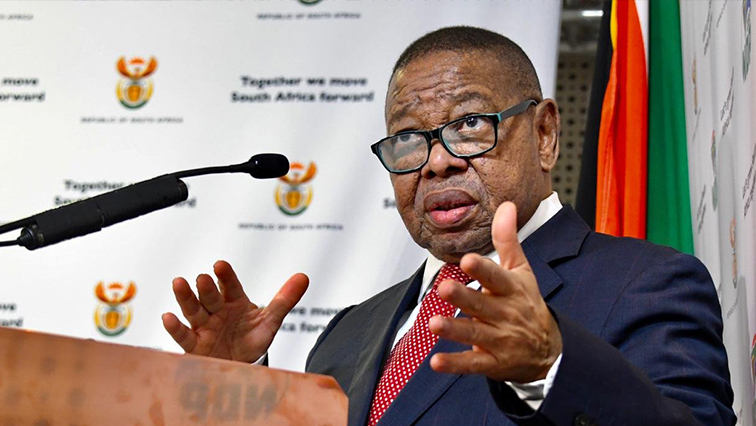
Nzimande places higher education DG under precautionary suspension following forensic investigation into the National Skills Fund

The Director-General (DG) of the Department of Higher Education and Training, Gwebinkundla Qonde has been placed under precautionary suspension by the Minister of Higher Education, Science and Innovation, Dr Blade Nzimande following a disclaimer audit opinion by the Auditor-General of South Africa (AGSA).

Nzimande said precautionary suspension is placed following forensic investigations into the National Skills fund.

In May, Brigade Mkhuleko Hlengwa who is Chairperson of the Standing Committee on Public Accounts (SCOPA) and the National Chairperson of the IFP Youth Brigade Mkhuleko Hlengwa held a meeting in the form of hearing to learn about the state of affairs of the National Skills Fund (NSF).

According to the minutes of the meeting, the committee was concerned that in the most recent audit by the AG, the AG the said she was “unable to express an opinion as to the financial state of the NSF given that many of its invoices were not deemed to be sufficient proof of the expenditure of public funds”.

The Public Finance Management Act states that when an auditor issues a disclaimer of opinion report, it means that they are distancing themselves from providing any opinion at all related to the financial statements.

In attendance of the SCOPA meeting was the NSF CEO Mvuyisi Macikama, Nzimande and Qonde.

The point of the meeting was to discuss the deteriorating audit outcomes over the past three years and, according to the minutes, the committee said it “did not find the responses [from the higher education department] to be satisfactory” and wanted to know who the minister would hold to account and what he (the minister) would do and the committee called for a forensic investigation into the NSF.

Nzimande said he has been concerned about the deteriorating state of affairs at the NSF for some time now, as evidenced by the progressively worse audit outcomes over the last few years.

“If one only looks at the AG findings in its 2019/20 audit opinion, it is significantly different to the qualified audit opinion of the previous year. The AG is saying that the NSF has failed in its duty to keep records evidencing its skills development expenditure,” said Nzimande.

Adding that, “AGSA is saying is that the NSF has failed in its duty to keep records evidencing its skills development expenditure”.

Without this evidence, “… AGSA is saying that it cannot express an opinion on the financial statements of the NSF, and is thus unable to give an audit assurance that the NSF skills development expenditure was regular.

“More seriously, AGSA is saying that it cannot say that the money was spent for what it was allocated. This is a very serious finding which he takes seriously,” said the minister.

Following this May meeting, Nzimande released a statement last Friday that Qonde has been suspended with immediate effect.

Qonde is one of the longest-serving DGs in government as he has been in charge of the department after the split of the department of education into two; basic education and higher education, more than 10 years ago.

In his defense, Qonde told the committee that he was unable to present some of the evidence required by AGSA “only because this information had never before been collected by NSF”.

He said a lack of capacity was a major issue the AG raised the previous year.

The NSF has human resource capacity issues in various areas. He said the AG report also raised the lack of capacity regarding NSF operations as an issue.

“The management of the NSF as constituted under the accounting officer has a few executive positions, one of which is the CFO.

“The previous CFO resigned at the end of December. The new CFO has just come into the office and has been there for about a month or so,” said Qonde.

The DG also added that the NSF also finds it difficult to monitor third party service providers hired by NSF-funded are Technical Vocational Education and Training (TVET) colleges.

“The third parties are appointed by the TVET colleges and not the NSF.

“This is what the AG is picking up on. This is why, amongst other things, a complete review of the NSF’s standard operating procedures [is necessary], so that the gaps that exist in monitoring and accountability are tightened up,” said Qonde.

Adding that going forward, the AG also indicated that there would now be the requirement not only to have the School Development Plans (SDP) invoices it receives as proof for payment but also the underlying third-party source documents.

“These would now be required to be held on the premises of NSF. We now need these underlying documents in order to obtain an unqualified audit,” he added.

Qonde said it was important to note that he is not the accounting officer of NSF but that he is the accounting officer of the the department of higher education and training.

According to some media reports, Qonde has alleged that Nzimande has mistreated him and frustrated his efforts to do his job and said he must not be suspended. Adding that his efforts to address the audit outcomes had been thwarted by Nzimande.

Nzimande said the DG’s suspension is in terms of the Public Service Act and the SMS handbook, in the wake of a disclaimer audit opinion by the Auditor-General of South Africa (AGSA).

He said Dr Phil Mjwara was appointed following Qonde’s precautionary suspension and will serve as acting DG until the conclusion of the investigations and any process that may ensue thereafter.


Court orders government to ensure all learners get school meals during the Covid-19 pandemic

The Gauteng High Court Division of South Africa has ordered the Department of Basic Education (DBE) and provincial education departments to develop new plans to feed the over nine million learners that depend on the National School Nutrition Programme (NSNP).

The order states the plans should be put in place even when schools are closed because of Covid-19 or learners are at home because of rotating timetables. 

This court order was confirmed last week.

Equal Education Communications Officer said this is a victory for learners’ rights to basic nutrition, basic education, equality and dignity.

“We are hopeful that the new plans that the DBE and provincial education departments have been ordered to develop to improve the rollout of the NSNP, can guarantee that it reaches every single learner who qualifies for it,” said Cyster.

This new court order comes after Equal Education (EE) and two Limpopo school governing bodies, represented by SECTION27 and the Equal Education Law Centre (EELC), went back to court on 29 June.

READ: Over 2 Million Learners Still Not Receiving Food From Basic Education Department, Says Equal Education

The NGOs said the court order was set against the DBE and the MECs of eight provincial education departments for failing to ensure that the NSNP reaches every qualifying learner, despite a judgment handed down last year that demanded that they fulfil this responsibility.

EELC Media and Communications Coordinator Tad Khosa said the they went back to the court to get the education departments to submit progress reports on the rollout of the NSNP.

“This is what like the 2020 court order told them to do but they have failed to do since March 2021.

“We also asked the court  to tell education officials to develop and implement practical and realistic plans for the NSNP which respond to the new realities of schooling during Covid-19, and for monthly reports to be submitted  on the implementation of these plans,” said Khosa. 

He added that the situation had became more and more urgent, with qualifying learners not being able to get meals  because of barriers such as not having scholar transport and poor communication from education officials with school communities.

“The mental, physical and financial impact that food insecurity has on learners and their families is tragic, and unacceptable,” he said. 

READ: 1.5 million learners have not yet received their food from the school mandated programmes

Khosa said in response to their return to court, the legal representatives of the national and provincial education departments proposed that the organisations negotiate a legal settlement. 

“On 20 July, the settlement agreement was made an order of court. This agreement contains clear commitments for the existing systems for the delivery of the NSNP to be revised, and for reasonable timeframes for implementation,” he said.

According to the court order, Basic Education Minister Angie Motshekga and the provincial education departments will formulate and implement revised rollout plans within one month of signing the settlement agreement. They are to ensure that all qualifying learners receive a daily meal under the NSNP, whether at school or at home.

Julia Chaskalson, SECTION27 Communications Officer said the need to feed every qualifying learner during the school calendar year, regardless of whether schools are closed due to Covid-19 or whether learners are at home because of a rotational timetable is critical.

Chaskalson said the DBE and the provincial education departments need to communication plans that ensure learners and schooling stakeholders are aware that meals are being provided.

These plans should also include the manner in which meals will be provided and the availability of scholar transport where applicable.

“These revised plans must be filed with us and with the court within one month.

“After this,  monthly reports must be filed with us and the court describing the implementation of the revised plans explaining if the steps taken have succeeded, as well as what further steps will be taken to ensure that the plans succeed,” said Chaskalson.

The organisations said they welcome the court order and celebrate this victory for over nine million learners and the millions of households whose food security has been compromised during the Covid-19 lockdown and the current unrest within South Africa. 

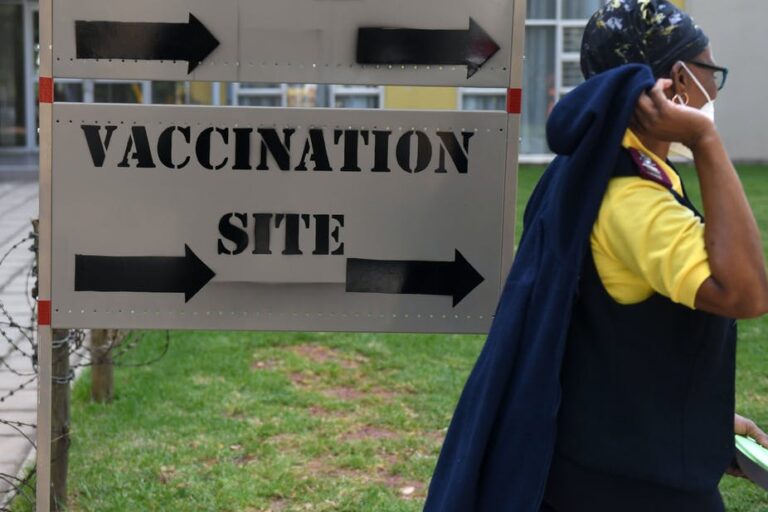
Rhodes University launches a Covid-19 vaccination site

Rhodes University has joined other universities in the fight against Covid-19 by establishing an on-campus vaccination site situated at its Gavin Relly Postgraduate Village.

At the launch of the vaccination site, Rhodes University Vice-Chancellor, Dr Sizwe Mabizela said the event marked an important milestone for at the university.

Mabizela said Rhodes University has assisted in the fight against Covid-19 in various ways since the start of the pandemic through various task teams, departments and faculties.

“The vaccination site marks the latest development and aims to increase the availability of the number of sites to vaccinate the adult population by March 2022,” said the vice-chancellor.

The Rhodes University Deputy Vice-Chancellor of Academic and Student Affairs and Chairperson of the Coronavirus Task Team (CVRTT), Dr Mabokang Monnapula-Mapesela, said the vaccination site fits in with the goal of CVRTT.

The task team aims to develop and implement a strategy that mitigates the impact of Covid-19 on our staff and students and to ensure continuity of our academic programme, she said.

According to the framework set out by Higher Health, once all the Rhodes University staff and students eligible for vaccination under the current national rollout plan have been vaccinated, family members and the greater Makhanda community will be vaccinated at the site.

“Our partnering with Sarah Baartman Department of Health in becoming an outreach vaccination site means that we will be able to contribute meaningfully to the vaccination drive of the wider Makhanda community and the Province of the Eastern Cape,” said Mabizela

Adding that due to limited resources, the university aims to vaccinate 80 to 100 people per day in the beginning and hopes to increase this number to 200 per day.

Rhodes University academic and virology specialist Professor Rosie Dorrington was at the site launch to encourage those who may be hesitant about receiving their vaccine.

Dorrington said the vaccine is the only way that people will avoid serious illness and possible hospitalisation from this virus.

“In my opinion, this is the most serious health threat humankind has faced in the last 100 years, and this is the most serious virus that we will face in our lifetime,” said Dorrington.

She said within ten days of the first jab, there is a 90% chance of not ending up in the hospital and being seriously ill from Covid-19. And added that the second dose reminds your body to fight off the virus and gives long-term immunity.

“We are not helpless, nor are we without agency in confronting this menacing coronavirus. There are actions we can take to protect ourselves and those around us,” said Mabizela.

Mabizela said this was a significant contribution in the implementation of the National Strategy of the Department of Health, Department Higher Education, Science and Innovation and Higher Health.