Home Blog Page 318

Education sector vaccination drive falls short

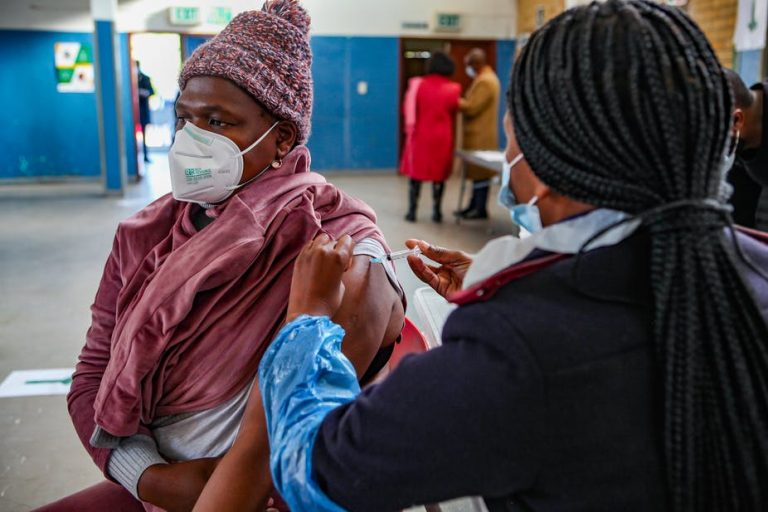
The Department of Basic Education (DBE) on Wednesday announced that it has officially vaccinated over 500 000 people in the education sector across the country.

This is only 80% of teachers the national department planned to initially inoculate and does not include the extra 200 000 more people for whom the department requested an extension in order to add them to its vaccination programme.

Basic Education Minister Angie Motshekga said last week that the extension became necessary when additional doses for basic education personnel became available.

“The extension will enable the sector to vaccinate more people but also to mop up where some sites experienced some technical challenges resulting in delays,” said Motshekga at the time.

READ: Teacher vaccination programme extended

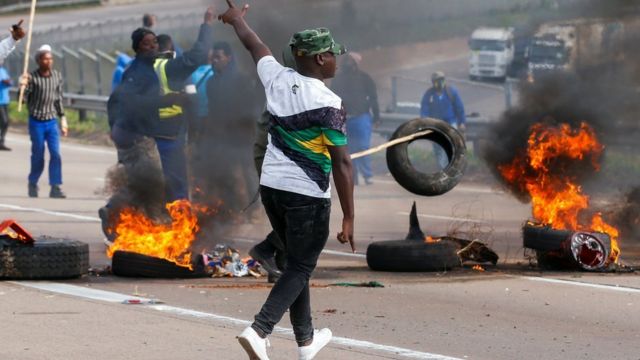
Things became even worse for those in the education sector wishing to get their jabs when some in the KwaZulu-Natal and Gauteng province vaccination sites became affected by ongoing riots.

However, the department of health assuaged concerns of those in the education sector and said their appointments will be automatically rescheduled for those unable to be inoculated.

““Anyone who had been scheduled to be vaccinated at sites in districts or areas that are affected by the unrest are advised to defer their vaccination,” said National Health Department Spokesperson, Popo Maja.

Some teacher unions have expressed doubts at the statistics provided by the department while others said they hope more than 80% of the 582 000 teachers were vaccinated.

National Professional Teachers’ Organization of South Africa (Naptosa)’s Basil Manuel said Naptosa sincerely hope that is more than 80% of education staff were vaccinated. “We know there was a bit of a rush on centres but we are very happy with the outcome,” he said.

The Education Union of South Africa (EUSA) said it is dissatisfied with how the department of health and the department of basic education handled the entire pandemic.

EUSA’s Spokesperson Kabelo Mahlobongwane said South Africa needs to hop onto getting learners to be educated from home because the pandemic is here to stay.

“We have come to a point where we accept the pandemic to be an endemic, the department should have already rolled out how education can happen without having to go to school,” said Mahlobongwane.

READ: DBE minister addresses vaccine hesitancy

He added that the union was still concerned that the vaccines were still not safe.

Mahlobongwane said some teachers who have been receiving the vaccine have “mysteriously passed away”.

“I have seen reports of teachers who were healthy and young passing away after taking the vaccine. At this stage we don’t know if it is the vaccine but it is shocking to us that this is happening,” said Mahlobongwane.

Motshekga said those who were not able to get vaccinated during the drive should try and get vaccinated before schools open on 26 July.

Extra reporting by Nyakallo Tefu.

South Africa, a place weeping

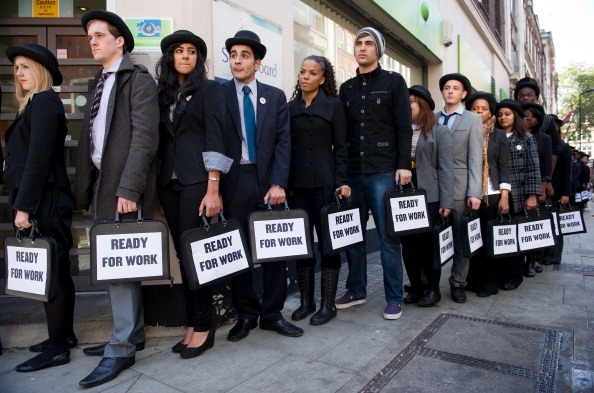
The social devastation of mass unemployment renders South Africa a non-viable society for millions. Something must give.

Unemployment in the United States peaked at 24.9% during the Great Depression. On the eve of Adolf Hitler’s ascension to power in 1933, unemployment in Germany was at 24%. The protests that launched the Arab Spring in 2011 were ascribed, in part, to what the International Labour Organization called an “extremely high youth unemployment rate of 23.4%”.

In Gaza, the unemployment rate was 43.1% at the end of last year. We know what Gaza is. It is a ghetto formed by violent dispossession and sustained with violent repression. It is walled and surveilled. Its residents are subject to routine organised humiliation. There are organised ideological attempts to expel them from the count of the human race. Their protests are met with ruthless and spectacular violence.

In a 2009 essay on Gaza, John Berger, a writer for the ages, borrowed two lines from Kurdish poet Bejan Matur: “A place weeping enters our sleep / a place weeping enters our sleep and never leaves.”

In South Africa, unemployment is at 42.3%. The rate for young people is 74.7%. The scale of this social devastation is extraordinary in global terms. A 2019 survey placed the youth unemployment rate in the country, then calculated at 57.47%, as the worst in the world – a position it has held since 2017.

Millions of young people find that the world does not extend them any kind of welcome. They are, in the words of poet Lesego Rampolokeng, “frustrated hoisted then dropped against the rocks of promise”.

READ: Ramaphosa has no plausible strategy for reducing youth unemployment

Millions of people endure blocked lives, passing time in a stasis marked by tightening circles of shame, failure, fear and despair. Some start to sleep most of the day. Some turn to transactional forms of religion, offering submission in the hope of reward. Some succumb to the temptation to dull their pain with cheap heroin. Some take what they can from who they can, how they can. Some, often supported by the grace of family, friends and community, manage to find a way to hold on to enough hope to keep going.

People rendered as waste

The weight of what all this means for these people and their families, the colossal squandering of their gifts and possibilities, are not taken as a crisis for our state, the people that govern it or most of our elite public sphere.

Lives are rendered as waste, voices as noise rather than speech, protests as traffic issues or crime. People are told that their suffering is a matter of personal failure, their attempts to cope with their situation consequent to moral dissolution. They can be murdered by the state during a protest or an eviction without consequence.

It is unsurprising that the demand to be recognised as human is often central to the language of popular protest. It is telling that the phrase “service delivery protests” is relentlessly imposed on much more complex phenomena by those whose unconscious investment in organised dehumanisation is such that they simply cannot recognise that the plainly expressed yearnings of the oppressed often extend far beyond aspirations for the basic means to sustain bare life.

It is not uncommon for thousands of people to apply for jobs that offer drudgery, exploitation and exhaustion for meagre rewards. People have died in stampedes for these kinds of jobs.

New forms of work are often precarious, and often organised with the aim of ensuring that employers can avoid the obligations imposed by generations of trade union organisation and struggle. The unions operate on the terrain of constant crisis, gearing up to oppose austerity in the state and fighting a long, losing battle to retain jobs as deindustrialisation escalates.

Exclusion from the count of the human

Neither democracy nor the NGOs calling themselves ‘civil society’ or the public sphere are really taken to include the people as a whole. Millions of people just don’t count as people. Weeping enters their sleep. It comes to sit in their bones. It comes to structure their sense of themselves, their place in their families and their understanding of the world.

We know what Gaza is. But do we understand what South Africa is?

READ: Youth unemployment: Is the solution a change in mindset?

South Africa is a chunk of territory, its borders drawn by an invading force, its people violently conquered, enslaved, dispossessed of their land, wealth and autonomy, contained in ghettos and forced into forms of labour – domestic, agricultural and industrial – structured as racial servitude. Violence built a system of racial appropriation, exploitation and exclusion, and violence sustained it.

The sequence of popular organisation and struggle that began in Durban in the early 1970s moved into the Soweto revolt and then the growing power of the trade union movement. The urban insurrection that followed in the 1980s, often organised by or in the name of the United Democratic Front, raised the possibility of radical democracy, popular power and deep structural transformation.

But an alliance between contending elites, backed by imperialism, was able to take the initiative in the early 1990s and follow the broad outlines of the standard path towards liberal democracy developed at the end of the Cold War. The people were thanked for their service, given rights on paper and sent home.

The ANC in power moved swiftly to co-opt or dissolve grassroots organisations, while union leaders were brought into the new circuits of state, corporate and party power. It was able to begin to make progress towards the deracialisation of the middle class and elites through enabling legislation and other forms of regulation. Later on, a new class of politically connected elites became wealthy – sometimes massively wealthy – by appropriating public funds. Impoverishment and inequality worsened. 

Repression

When new social movements like the Western Cape Anti-Eviction Campaign and the Landless People’s Movement emerged at the turn of the century, they were met with paranoia and repression. When popular protest, usually organised through road blockades marked out with burning tyres, began to become a ubiquitous backdrop to everyday life from 2004, protesters were murdered by the police at a steady clip. 

When a movement, Abahlali baseMjondolo, emerged from these protests, it was met with slander, assault, arrest, torture and murder. When workers on the platinum mines struck outside of the authority of a co-opted union in 2012, they were massacred.

The ANC was committed to opening access to elite spaces, but it showed no commitment to fundamentally transforming society in the interests of the majority. The question of who has access to the fortified nodes of wealth was, and remains, intensely contested. The question of what happens to the people locked out remains largely ignored, apart from empty and often cynical rhetorical gestures.

READ: South Africa’s youth unemployment crisis – a ticking time bomb

Where there have been advances, such as the expansion of the grants system or the antiretroviral rollout, they were not aimed at achieving anything beyond sustaining bare life. RDP houses were smaller and more poorly constructed than the township houses built under apartheid, and often extended rather than contested the logic of colonial spatial planning.

A non-viable society

There is no commitment to the flourishing of the majority, let alone to a fundamental shift in political and economic power. 

As grants come in, the money is taken to the supermarkets, to white capital. The state has not even bothered to undertake a project as basic as serious urban land reform and support for small-scale farming cooperatives and markets that would allow impoverished people to grow their own food and sell it to each other.

Across space and time, very high rates of unemployment, especially among young people, have led to major social upheaval, sometimes taking progressive forms and sometimes marked by an attraction to authoritarianism and a will to scapegoat vulnerable minorities. South Africa is not a viable society for a large proportion of the people who live here, and if history is a reliable guide to the future, something will have to give.

The question is what gives – and what comes next? Will an authoritarian figure bent on displacing the crisis onto migrants step into the breach? Will our politics throw up more of the sort of crude chauvinists who took the recent by-elections in Eldorado Park? Will we have to endure our own Trump or Bolsonaro? 

Will there be a long stasis in which the impoverished majority is governed with escalating violence as the better-off take what they can before getting out? Or will there be new forms of democratic popular power able to make some progress towards bending the state to their will, disciplining capital and insisting that every life be counted as a life?

None of these possibilities are foreclosed, and there are many more. But what is certain is that most of our people are young and urban, and most of them are without work. No social force will be able to decisively shape our future without the participation or sanction of these people.

This article was first published by New Frame.

Re-imagine the employed African youth

ONYINYE NWANERI| 

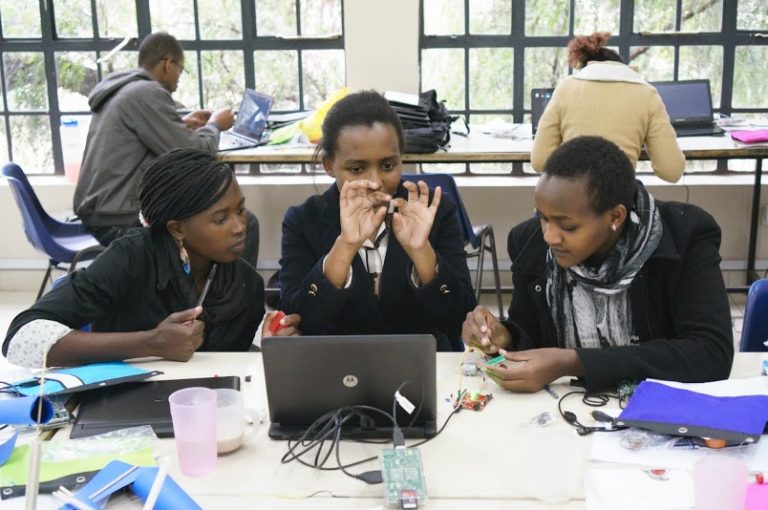
This World Youth Skills Day, let us commit to galvanising a skills revolution that creates a more independent, agile and empowered workforce which can adapt to the rapidly changing landscape of the workplace. Let us reimagine the working environment and what it means to be employed and economically active. The days of the traditional school-to-industry pipeline are behind us, and learning is no longer a finite journey that ends with employment. It is rather an odyssey that has to continue throughout one’s career.

Improving the quality of African graduates entering the workforce is as important as keeping existing workforces up-to-date with the skills requirements of organisations. Innovative practices such as reverse mentorship programs in which junior and senior workers exchange their skills, knowledge and understanding are already challenging old ideas about skills acquisition and work experience.

Work experience requirements in traditional organisations remain a major gatekeeper for graduates wanting to use their skills to participate in the economy. Cultivating work experience should also form part of the higher education and training experience, skills training should be an integral part of any organisation’s daily operations.

In the post-pandemic ethos of the 21st century, we are no-longer required to only focus on traditional forms of employment and economic activity. Current students and those of the future have a myriad of options available to them, outside of traditional employment, especially as Covid-19 has normalised the idea of remote working and fully virtual workspaces.

This is the era where Africa should be producing more consultants, freelancers and entrepreneurs rather than focusing on providing existing organisations with employees. So as we move to optimise the skills for the digital age, we should also be empowering young people to get the most of those skills within and outside the confines of traditional employment.

This is a charge that needs to be taken up in higher education programs. Universities, colleges, TVET colleges and training/skills development organisations need to create well-rounded and independent graduates who are not dependent on the traditional school-to-industry pipeline. This could also open up young African graduates to a whole world of employment and work opportunities outside of Africa as well, making young African graduates better positioned to take part in the global economy.

According to a November 2020 report: Mapping of Digital and ICT roles demand in South Africa commissioned by Harambee, many South African organisations do not have a clear understanding of their current and future digital skills requirements. This is further exacerbated by archaic and disparate viewpoints of the functions and roles of human resources (HR), IT and operations executives in highly digitised and technology-enabled work environments.

One of the key challenges for South African employers highlighted in the report is the dire shortage of digital and ICT skills and a lack of available digital talent pipelines.

Post-Pandemic skills demand

According to Linkedin’s Top Trending Jobs data analysis in the first six months of 2021, ICT related skills are still the most sought after by employers, followed by skills in finance, sales and education. The high unemployment rate in the country is not just a product of an ailing economy, but also a higher education and skills development system that is not producing graduates which match the particular skills supply and demand situation in the country. But this alone, won’t solve the discrepancy between the needs of organisations and the growing unemployment rate in the country.

A recent report by the International Labour Organisation highlights the growing role of informal employment among highly skilled individuals in challenging and redefining the role of skilled labour in developing economies. This highlights the need for creating highly skilled African graduates who can compete in this space as part of combating unemployment and inequality.

According to the ILO report which focused on Brics countries, the informal economy is seeing an influx of high –skilled qualified youths, mostly women, engaged as workers in the rapidly growing platform economy, but without proper labour contracts and social protection coverage. Collaborative efforts to regulate this growing sect of informal employment could greatly improve its potential as an economic game changer in Africa.

As the report’s recommendations suggest, there is a case to be made for countries to undertake a systematic review of how each country supports informal work and enterprises using methods best suited for that country’s economic landscape. We believe this should begin at the level of higher education and skills training, where syllabi can be adapted to include exposure to industry in more meaningful and innovative ways.

World Youth Skills Day 2021 is themed around adapting technical and vocational skills providers for the digitalised post-pandemic era. This year, we are also celebrating the creativity and resilience of youth in times of rapid change and strife.

Afrika Tikkun Services calls upon all organisations and institutions concerned with the development of young people to collaborate in these efforts and bring together the unwavering resilience and creativity of young people with the unlimited resource pool which can be created by a collective effort to invest in the potential of young skilled African graduates.

One cannot overstate the importance and power of a skilled young person in disadvantaged communities the world over. These are the future employers, leaders and planners who will eventually transform developing countries into thriving economies.

Onyinye Nwaneri is CEO Afrika Tikkun Services, reimagines the future with an employed African youth.

Current country-wide riots impact education sector vaccination drive

NYAKALLO TEFU|

The Department of Health said on Tuesday that anyone who cannot get their vaccination due to the ongoing protests in Gauteng and KwaZulu-Natal can schedule it for another day.

This is because of violent protests in both provinces where citizens are looting shops, damaging public property and closing roads.

The Department of Basic Education last week announced that the vaccination drive for educators across the country would be extended to Wednesday, 14 July.

“The extension will enable the sector to vaccinate more people but also to mop up where some sites experienced some technical challenges resulting in delays,” said Minister Angie Motshekga.

The vaccination drive for educators started on 23 June 2021.

READ: Teacher vaccination programme extended

The minister said in the past few days, they have seen an increase in the number of educators wanting to be vaccinated.

The Department of Health said the vaccination drive of educators will not be affected currently due to the protests happening.

“Anyone who had been scheduled to be vaccinated at sites in districts or areas that are affected by the unrest are advised to defer their vaccination,” said National Health Department Spokesperson, Popo Maja.

Maja said if it is not clear whether an area has been affected, the public is advised to contact the vaccination site to which they have been scheduled before proceeding to the site for the administration of vaccines.

“The Department will publicise a list of affected areas and sites as soon as it is available,” said Maja.

Adding that the Electronic Vaccine Data System will automatically reschedule appointments for those unable to attend. Maja said the system is programmed to rescheduled up to two missed appointments.

Minister Motshekga said they have been monitoring vaccination sites across the country.

“We did so because we appreciate the fact that we were prioritised and we really wanted everybody who qualifies to be vaccinated,” said Motshekga.

READ: DBE minister addresses vaccine hesitancy

The department of health said some pharmacies and medical centres have been looted and stock has been stolen.

“The public is warned not to buy any medicines offered for sale by anyone other than registered medical practitioners, pharmacies or hospitals,” said Maja.

Wednesday 14 July is the last day for teachers across the country to receive their vaccine.

“The extension of the programme will also allow those who had missed the opportunity to get jabs initially to be vaccinated,” said Motshekga.

So far, the number of teachers vaccinated stands at 437388, out of 582 564 educators and staff who are yet to be vaccinated.

When the vaccination drive commenced for educators, 300 000 doses were allocated to be administered over a period of 10-days.

More vaccines were then delivered to the country as 582 000 educators were to be vaccinated.

Teachers encouraged to participate in the National Teaching Awards

The Department of Basic Education (DBE) has called on all teachers in the sector to participate in the National Teaching Awards happening later this year.

The awards were established in 2000 to recognise, celebrate and acknowledge the strides made by teachers to ensure that learners are supported in order to progress from grade to grade.

The competition is open to all teachers in the public schooling sector registered in terms of the South African Schools Act.

The awards are aimed at motivating teachers to continue the selfless endeavours they make for the benefit of the country.

“The work of teachers have now been further complicated by the emergence of the Coronavirus which has disrupted the schooling sector in a manner never seen before,” said DBE Spokesperson Elijah Mhlanga.

Mhlanga said as a result of the extra-ordinary efforts made by teachers under extreme conditions the department has introduced new awards to pay homage to individuals who have demonstrated commitment, dedication, and sacrifice during crisis situations.

To this end new categories have been added and they are the National Best Teacher Award, S/Hero Award and Learner Award.

He said other categories are Lifetime Achievement Award, National Learner Award, Excellence in Maths teaching, Grade R teaching, Special Needs, Primary school teaching and Secondary School teaching etc.

The closing date for entries is 31 July 2021.

Adding that because the awards will be conducted during a period when the country is confronted with the Covid-19 pandemic, the department will have to conduct activities in adherence to the Covid-19 protocols.

Teacher vaccination programme extended

The Basic Education Sector vaccination programme deadline has been extended to Wednesday, 14 July.

Basic Education Minister Angie Motshekga said the extension became necessary when additional doses for basic education personnel became available.

“The extension will enable the sector to vaccinate more people but also to mop up where some sites experienced some technical challenges resulting in delays,” said Motshekga.

Adding that the sector has also seen a strong demand for the vaccines in recent days.

“Provinces reported that more and more people were coming forward wanting to be vaccinated. More than 200 000 more people have been added to the list of staff to get vaccinated,” she said.

On Thursday Inside Education reported that the national basic education department requested an extension to its vaccination programme.

READ: DBE requests extension for education sector vaccination programme

According to the Department of Health, 437388 out of 582 564 educators and staff have now been vaccinated in the sector since rollout began.

“But we have now loaded 789,554 including food handlers, janitors, and support staff from independent schools and ECD centres located within school premises on the on the Electronic Vaccination Data System,” said the minister.

The department started its national vaccination programme on 23 June.

At the time, Motshekga said those who had tested positive for Covid-19 and people who took the flu jab, would not get vaccinated.

According to the department, the education sector was initially allocated 300 000 doses to be administered over a period of 10-days.

“In the past two weeks we have visited different provinces, where we monitored the progress of the vaccination programme.

“We did so because we appreciate the fact that we were prioritised and we really wanted everybody who qualifies to be vaccinated,” said Motshekga.

She said getting the vaccine will protect those in the education sector from severe illness, hospitalization and death from Covid-19.

READ: DBE minister addresses vaccine hesitancy

“When you are vaccinated, your immune system will recognize the virus quickly when you get infected with Covid-19 and prevents you from being severely ill or dying,” she said.

The minister said there continues to be discrepancies between people who are submitted and those who appear on the Electronic Vaccination Data System.

“Nationally, names appear on the database but there is a problem at the sites when people get there to get their vaccinated,” said Motshekga.

She added that her department has received reports of people having been turned away and some do not return as a result because they travel long distances to reach the sites.

She said another issue that has come to the department’s attention is that provinces have informed educators in independent schools and School-Governing-Body-appointed personnel not to go to sites until they are sure that they appear on the Electronic Vaccination Data System.

“This has slowed down the number of people turning up at the sites in this category,” she said.

According to reports, around 20 000 teachers were not able to get the Covid-19 vaccine during the two week vaccination programme because they did not meet the criteria. 

This could have meant that they currently had Covid-19, they had had Covid-19 within the last 30 days, they had had the seasonal flu vaccine within the last 14 days, or they were pregnant.

Motshekga said the extension of the programme would allow those who had missed the opportunity to get jabs initially to be vaccinated.

School dropout rate increased drastically during lockdown

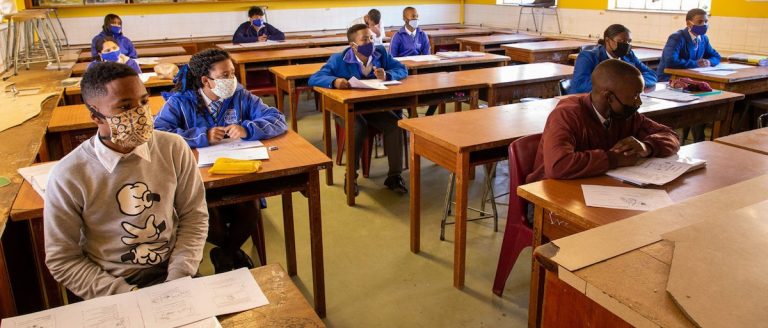
About 650 000 to 750 000 children aged seven to 17 years old were not attending school by May this year, compared to the average 400,000 – 500,000 number before the Covid-19 pandemic.

This is according to the National Income Dynamics Study — Coronavirus Rapid Mobile Survey (NIDS-CRAM) released on Thursday.

Nompumelelo Mohohlwane, co-author of the study and researcher at the Department of Basic Education (DBE) said since the onset of the Covid-19 pandemic, children have been put at greater risk of dropping out of school.

Moholwane said as a result of the pandemic, children are lagging behind at school and have lost many learning hours.

Adding that the pandemic has also led to increased food insecurity and emotional health deterioration.

READ: DBE to be taken to court for failing to provide meals to learners

Debra Shepherd, co-author of the study and senior lecturer at Stellenbosch University said the study estimates that between March 2020 and June 2021 most primary school learners in South Africa lost 70% to a full year of learning.

“Between February 15 and 30 June 2021, schools were open for a total of 93 days.

“Assuming that learners would have received in-person instruction for half of these days and taking our previous estimate of 50-75% of a year of learning lost for each 120 days of schooling lost, we estimate that as much as a full year of learning has been potentially lost by the majority of learners since March 2020,” said Shepherd.

Mohohlwane added that the disruptions to the school year caused by the pandemic have played a major role in children not returning to school. She said this is because children have had to learn from home for certain periods of time due to national Covid-19 precautionary measures. 

Mohohlwane said the lowest return to schools was observed in the Free State (87%) and Eastern Cape (92%).

She said the highest number of dropouts are Grade 8 and 9 learners, followed by the Further Education and Training (FET) phase (Grade 10-12), and then the foundation phase.

Prior to the Covid-19 school closures, South Africa, like most developing countries, had achieved near universal school enrolment.

The Covid-19 pandemic led governments to enforce various restrictions to economic and social activities. One of the sectors that has been the most affected since the onset of the health emergency has been pre-primary, primary, and secondary education.

Research shows that more than a year after the World Health Organisation (WHO) proclaimed the outbreak of Covid-19 a pandemic, many learners continue to experience either partial or complete school closures.

READ: DBE Portfolio Committee supports return to class full-time for primary and special education learners

In November 2020, when asked about the attendance of young people living in their household, approximately 95% of adults reported that all learners in their household had recently attended school.

Research shows that this number has declined to 90% in April 2021.

“That is, as many as 750,000 children may now not be attending school.

“We can therefore conclude that disruptions in schooling have contributed to significant reductions in school enrolment,” said Mohohlwane.

She added that a decline in the attendance rate amongst this age group (7 to 17) fell from 98% to 94.2%.

Most households also reported that at least one learner had not returned to school in 2021.

Merle Mansfield, programme director of the Zero Dropout Campaign said despite South Africa’s large investment in basic education, around 40% of Grade one learners will exit the schooling system before finishing matric. Many will remain stuck in poverty and unemployment for life, she said. 

In response to the increasing number of learner dropout rates during the pandemic, the Zero Dropout Campaign said the government needs to implement an effective catch-up plan for learners.

Mansfield said before the pandemic, schooling was already characterised by too little learning, high levels of inequality, and regular disruption.

“Now, more than ever, we need a national, comprehensive response to school dropout that includes a national catch-up strategy attuned to the diverse needs of learners.

“We need to meet learners at their level and respond to their needs. Where possible, plans to recover lost learning, through accelerated catch-up programmes, should be tailored to learners’ needs, rather than their age or grade,” said Mansfield.

SA universities best for international students

Aune Angobe was born in Ongongo village in the Omusati region in Namibia. She was raised by her grandparents who have now both passed away.

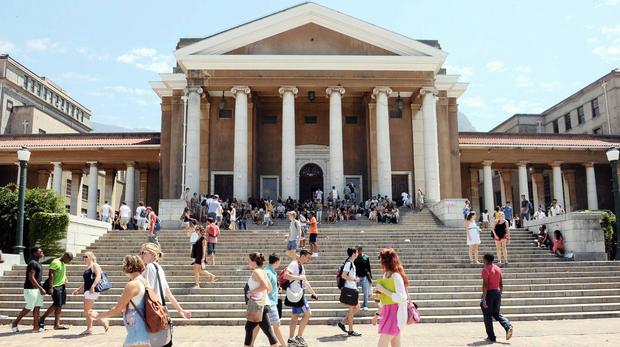
Angobe studied at the University of Cape Town (UCT) and will graduate with her Master of Science in Molecular and Cell Biology cum laude on 19 July – achieving over 95% for her course. 

I was privileged to have grandparents who knew the value of education. I attended primary and secondary school in the northern part of the country under their tender care.

“Throughout my schooling journey I’d always enjoyed science subjects, and I have no doubt that I was a scientist from birth,” said Angobe.

Adding that despite her poor family background, she studied hard and matriculated with good grades.

In 2013, Angobe was granted admission to the University of Namibia for an honour’s degree programme in microbiology. She was funded by a government loan.

Growing up in rural Namibia, Angobe had never used a computer before she enrolled at university.

Even prior to her master’s studies at UCT, she said she had never travelled south of Windhoek.

READ: UCT’s Executive MBA programme is still number one in Africa

Excitingly, I got news of admission to UCT from Associate Professor Inga Hitzeroth, a potential project supervisor for my MSc in Molecular and Cell Biology.

“My MSc research focused on developing a plant‑made diagnostic reagent for the detection of Porcine circovirus (PCV) antibodies in South African swine herds,” she said.

Angobe said she chose this focus specifically because pigs are a main contributor to the economy, especially in Southern Africa.

She said for years, pork production has been facing significant losses because of PCV.

Angobe added that her study aimed at producing a cheaper diagnostic reagent for use in a rapid diagnostic kit, which will potentially help local farmers to diagnose their pigs earlier.

South African institutions consistently make up the majority of all those “best universities in Africa” lists. South Africa is the economic hub of the African continent. International students choosing to study in South Africa will have a number of social and academic opportunities wherever they study in the country and most local universities have active international academic offices.

But there were challenges.

READ: Nzimande on student debt, financial exclusions and infrastructure backlogs

Angobe said one of her biggest challenges was funding.

She said she remembered clearly that when she arrived in Cape Town,  she did not have funds to cater for her accommodation and living expenses.

She only had R500.

“I was accommodated by a friend in a residence where I stayed for about two weeks. During this period, my supervisor, my friend and I were constantly worried about how I was going to survive.

“We then decided to approach Student Housing.

“I went there and cried my lungs out to them. I clearly remember the officer asking me how I had left Namibia without knowing where I was going to stay,” she said.

“My response was, ‘I don’t know, but I just want to study’,” she said.

Adding that Student Housing eventually granted her accommodation.

Angobe said soon after this, her supervisor introduced her to the Aunt Vivien of the Cohen Scholarship Trust.

She said another challenge in addition to funding was being in a foreign country.

“It was not an easy transition. I always felt like an outsider, and I struggled to overcome the language barrier.

“Also being far from my support system, especially my family and friends, I really felt the gap,” she said.

However, she said she also found a way to create a support system away from home and that the Biopharming Research Unit became her family.

“They all played an important role in my achievement, and I am thankful to all of them.

“I would like to thank the Biopharming Research Unit, the Poliomyelitis Research Foundation, the Sam Cohen Scholarship Trust, and the MCB department for financial assistance towards my studies,” she said.

BREAKING: Schools to remain closed until 26 July

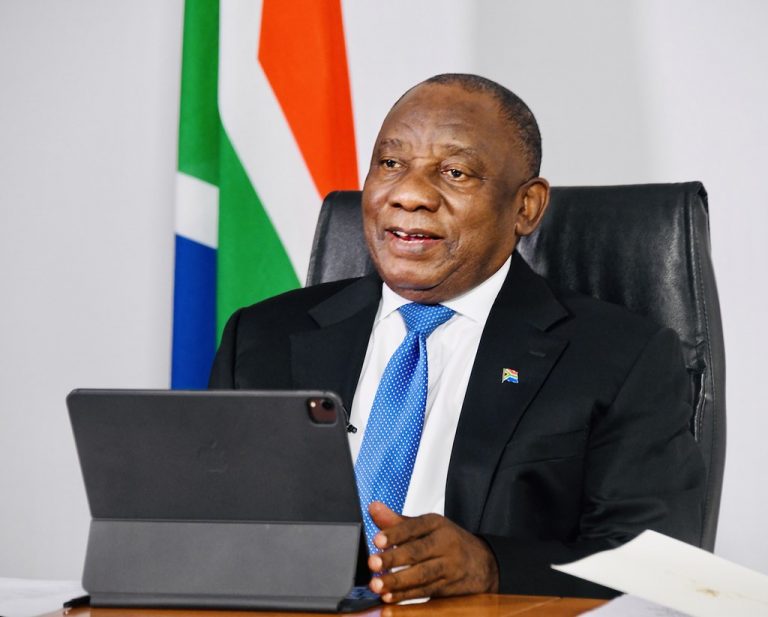
President Cyril Ramaphosa on Sunday announced that schools will remain closed until 26 July.

During his statement on the progress in the national effort to contain the Covid-19 pandemic, Ramaphosa said cabinet followed scientific advice provided by the Ministerial Advisory Committee on Covid-19 and deliberations of the National Coronavirus Command Council.

“After consultation with the provinces, we decided to maintain the country at Adjusted Alert Level 4 for another 14 days.

“These measures were urgent, and they were absolutely necessary to contain the third wave, which is being fuelled by the new Delta variant. 

“It remains our priority to break the chain of transmission by limiting social contact,” said Ramaphosa.

In response, the Department of Basic Education (DBE) Spokesperson, Elijah Mhlanga, said “President Cyril Ramaphosa in his own words”.

Earlier in the week, Mhlanga said schools were still set to open as initially planned.

READ: Schools on track to open even with rising Covid-19 infections

The spokesperson added that the department had received advice from the Ministerial Advisory Committee that schools can still open on 19 July.

Basic Education Minister Angie Motshekga said it will be devastating if the country’s schools are not allowed to reopen on 19 July as planned.

Motshekga said the education sector has already lost significant time due to the Covid-19 pandemic, which will have long-term ramifications.

She said her department plans to open on 19 July as gazetted but, “we will not be irresponsible if there are still difficulties by the time we want to open and bring more learners”.

Mhlanga said the call for schools not to open is an irresponsible call and that the education sector cannot afford to lose another school year.

READ: It will be “devastating” if schools don’t open on 19 July – says Motshekga

But on Sunday, Ramaphosa told the nation that when he last addressed citizens [on 27 June], he indicated that government would assess the situation after 14 days and determine what further adjustments may be required. 

“As things stand now, infections remain extremely high. 

“With the fast-spreading Delta variant, we are experiencing a third wave that is more severe than the first and second waves. 

“For the last two weeks, the country has consistently recorded an average of nearly 20,000 daily new cases. At present, the country has over 200,000 active Covid-19 cases,” said Ramaphosa.

Adding that in the last two weeks over 4,200 South Africans have lost their lives to Covid-19.

Some teacher unions have consistently said schools should not open before July 26.

Ben Machipi, secretary of the Professional Educators’ Union (PEU) previously said that PEU is not in support of schools opening on 19.

“We should first observe the impact of the 14-day alert level 4 lockdown on infections before determining when must school reopen,” Machipi said.

Inside Education previously reported that Basil Manuel, executive director of the National Professional Teachers’ Organisation of SA, said the date for the reopening of schools left them a bit uncomfortable.

“We believe that we should keep the reopening of the schools on the 26 of July because we don’t know if the whole country will have passed the third wave. There are provinces that are far behind in the peak, and we don’t want to see continuous changes on the school calendar.

READ: Unions welcome the closure of schools

“The president closed schools, but we should keep the holidays as they are,” he said.

Kabelo Mahlobogwane, Educators Union of SA spokesperson, also said the reopening of schools must be guided by the third wave. 

“Right now, the focus is to save lives and that is what we will entertain,” he said.

Schools on track to open even with rising Covid-19 infections

While the lockdown rules are likely to be extended, schools are still set to open as initially planned.

This is according to the Department of Basic Education Spokesman Elijah Mhlanga who said the department has received advice from the Ministerial Advisory Committee that schools should still open on 19 July.

With the increase in Covid-19 infections across the country, there have been calls for the department not to open schools on 19 July.

The National Institute for Communicable Diseases (NICD) said on Sunday that a total of 22 117 tests were conducted over the last 24 hours with 21 610 new cases. According to the institute, this represents a 28% positivity rate. The institute also added that a further 265 people have died from Covid-19 related deaths brining the total fatalities in the country to 64 138.

It is because of this trajectory that President Cyril Ramaphosa on 27 June moved South Africa to an adjusted alert level 4 lock down in an effort to curb the spread of the third wave of Covid-19 and reduce the burden on healthcare facilities. According to the president, evidence indicates that the Delta variant is driving a severe third wave in South Africa and the country continues to have the highest Covid-19 burden in Africa.

READ: BREAKING: Schools to shut down from Wednesday

Ramaphosa said the regulations also meant that schools were once again forced to shut down from 30 June. He said the winter holidays will be moved forward in an attempt to reduce the impact of this lockdown on the studies of young South Africans.

Ramaphosa said he would address the nation again after the two weeks to formulate a way forward.

According to experts, the president is unlikely to move South Africa away from level 4 lockdown even as the number of Covid-19 cases in the country remain high.

The National Coronavirus Command Council (NCCC) will meet today, on Sunday, to assess developments in the Covid-19 pandemic and the national response to this challenge.

The NCCC meeting will be followed by meetings of the President’s Coordinating Council and Cabinet.

These meetings come two weeks after Ramaphosa moved the country to Alert Level 4 to curb the spread of the virus.

The new level 4 lockdown regulations include a curfew between 21:00 to 04:00, a ban on alcohol sales, restrictions on gatherings, and closing schools by bringing holidays forward.

Schools are currently expected to reopen on 19 July in accordance with an announcement by Basic Education Minister Angie Motshekga.

READ: It will be “devastating” if schools don’t open on 19 July – says Motshekga

However, it is unclear how schools will be affected by a possible extension of the current adjusted level 4 national lockdown.

Chief Economist at the Bureau for Economic Research at Stellenbosch University Hugo Pienaar said the current lockdown will be extended.

Pienaar said the seven-day rolling average has risen since Ramaphosa first moved the country to an adjusted level 4 lockdown, meaning it would be difficult to justify a reduction in the lockdown level.

 But the department says it cannot afford to lose another school year.

Basic Education Minister Angie Motshekga said it will be devastating if the country’s schools are not allowed to reopen on 19 July as planned.

Motshekga said the education sector has already lost significant time due to the Covid-19 pandemic, which will have long-term ramifications.

She said her department plans to open on 19 July as gazetted but, “we will not be irresponsible if there are still difficulties by the time we want to open and bring more learners”.

Mhlanga said the call for schools not to open is an irresponsible call.

READ: Unions welcome the closure of schools

“Even last year they said close schools but when we opened schools, parents took their children to schools.

“This is a call by few people, and it is funny that it is always the minority group that makes such calls that schools must be closed down,” said Mhlanga.

Adding that, “when we prepare to open schools, those people are not there to offer their ideas.

“They are all about saying ‘close’, but they do not tell you how to open; they don’t even contribute in that regard,” said Mhlanga.