Home Blog Page 319

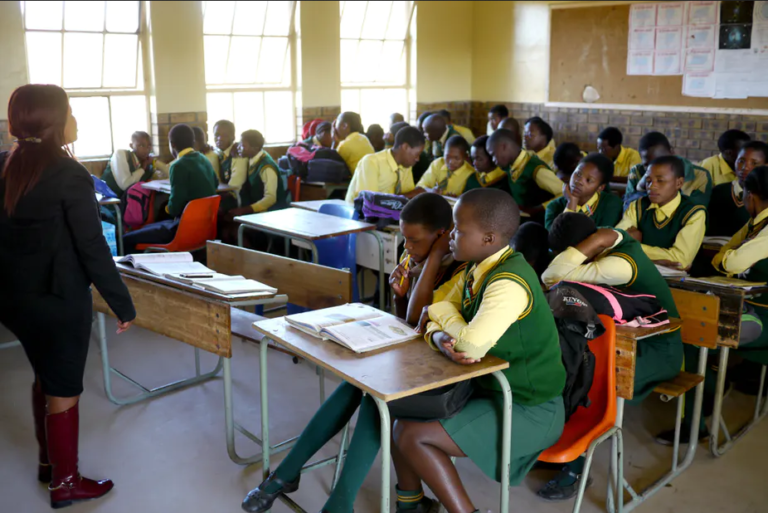
Children learn in class, and outside. But, over time, they learn more at school

SYMEN A. BROUWERS|

SCHOOL is a key component of our societies. In school, children learn to read and write. And being able to read is meant to help people of all ages to think at a higher level and make their lives better.

It is not surprising that literacy is thus an important goal for global development agencies. The “multiplier effect” of literacy is believed to empower people, enabling them to participate in society and improve their livelihoods.

The truth is, learning basic skills such as solving arithmetic problems at school doesn’t necessarily make you good at solving such problems in everyday life. A classic study in Nigeria, for example, looked at what children learn from running errands. Another study in Côte d’Ivoire examined how well children from farming (Baoule) or merchant (Dioula) communities solved mathematical problems. And a Brazilian study investigated how young candy sellers on the streets solved arithmetical and ratio problems. If children can learn useful skills outside school, which are useful for having a job and making a living, what is the value of going to school and learning to read and write?

Some scholars say literacy goes further than the skills you learn through everyday experiences and contexts. It allows you to think across contexts – to build cognitive skills. But others say school itself is just a context, too, and it doesn’t take your thinking any further.

My study in India was able to cast some light on this apparent dichotomy. I found that the effect of school learning builds up over time – starting slowly with small skills related to technical features of reading and writing, but gradually having more and more other skills build on it.

The effect of everyday experiences on skills doesn’t build up in the same way – children may learn broad operations such as object permanence and the conservation of fluid early on, but once they mastered those, their learning levelled off gradually – the complete opposite pattern.

The research

In my study, I was able to conduct a kind of experiment to test how schooling affects cognitive performance. In northeast India, where I did the study, years of schooling and years of life experience aren’t as closely related, and could thus be studied separately, but at the same time.

In affluent countries this is not possible because once children have enrolled, an increase in years of schooling is always the same as the years you got older. In many developing countries, it is only children of richer families that go to school. In the specific rural region in India where I conducted the study, two children of the same age might have had different levels of schooling. And in one grade, there might be children of different ages. This situation made it possible to see what effect schooling had.

Thus, what I did was study the same children before and after three years of schooling, 181 of them. They were enrolled in school at any age between 6 and 9 years (on the first point of assessment) and came from similar socioeconomic environments. The skills I tested were in reasoning, vocabulary, shapes, memory, and arithmetic.

One finding that immediately stood out was that the children performed much better on tests done in a story-based format, even though the mathematical operations themselves were the same as tasks central to schooling (like, what is 3 + 4?).

The main finding was that the effects of schooling started slowly but accelerated, while effects of chronological age started fast but died down over time. These two distinct patterns show that learning in school and through everyday life must be very different. The effect of schooling became bigger with more years of education and only starts to make a real difference with more years in school.

Literacy is essential for the cognitive development of children, but to really bring out its effect it is important to persist in teaching over time. At school, children learn small cognitive skills, each with a limited range, one at a time. They provide scaffolds on which children in school can gradually build with more and more ease, a larger repertoire of small skills that are relevant across a range of problems and tasks.

Key to successful schooling and proficient reading and writing skills is being able to build on early achievement. Teachers should offer enough tasks and challenges and make them gradually more difficult and complex. In this way, communities benefit from keeping children in school longer.

A minimal amount of schooling will not bring the effects development agents look for. Instead, persistence in learning to read and write is essential to achieve the desired impact: branching out across contexts and being able to take charge and create solutions.


–  The Conversation

Young Scientist Uses COVID-19 As Inspiration

FOR most people, the COVID-19 pandemic has caused stress and worry. But it made Suhaan Singh think and won him a medal at the provincial KwaZulu-Natal Eskom Expo for Young Scientists and a visit to the Regeneron ISEF, the largest international science fair, held in the USA in May 2021.

Suhaan was a pupil at St Dominic’s Academy in Newcastle when he entered his research project for the Eskom Expo in 2020. He used a Lego kit to modify a robot to automate screening and sanitising for COVID-19.

This year’s provincial KwaZulu-Natal Eskom Expo awards ceremony was held over the weekend.

The pandemic did not stop last year’s entries from school pupils for the country’s oldest and most prestigious science fair from producing excellent work. Indications are that the same will be true this year as 131 entries have been received, covering a wide spectrum of interests, ranging from engineering and energy to social sciences. 

The majority of entries were from female pupils. Young scientists can enter their investigations into one of thirteen categories.

The KZN provincial co-ordinator of Eskom Expo, Nalini Dookie, explained, “A love for science, engineering and mathematics can be cultivated. Children are naturally competitive and the Eskom Expo leverages this to inspire them.”

The Eskom Expo is part of a broader Eskom strategy of skills development, investing in science, technology, engineering, mathematics and innovation (STEMI). Eskom is committed to driving skills development in these fields, and relishes the opportunity of unearthing promising learners and putting them on a path to academic success and careers that contribute to South Africa’s developmental needs.

The KZN awards ceremony is one of nine such provincial events leading into the final Eskom Expo for Young Scientists International Science Fair (ISF), which will be held on October 8. The ISF will include participants from 35 regions in South Africa as well as from several other African countries.

Despite the challenges experienced due to the pandemic and the consequent interruptions to regular schooling, Eskom has managed to continue supporting the STEMI programme through the Eskom Expo for Young Scientists. It had to do this through innovative ways, such as virtual science clubs, virtual workshops for learners and teachers, science day camps, and more.

Participation in the Eskom Expo science fair not only boosts skills development but for winners has direct benefits too- prestigious awards, bursaries, participation in international science fairs, self-development and career-pathing.

Certainly, Suhaan’s use of the pandemic as a starting point for a research project put him on an international stage.

  • * North Coast Sun

School Sports Corner: Mpumalanga Coach Aims for Big Hits

0

TIM DALE LACE|

GORDON Matheson may not be a big name in South African cricket coaching circles, but he has a massive job on his hands. The 39-year-old has to turn Mpumalanga into a competitive unit in the new structure of South African domestic cricket.

“I know the challenges at hand as a smaller union,” he said. Matheson has faced tougher obstacles in his coaching career, which is why he is embracing the job at hand: to build a formidable side with fewer resources and talent than other provinces.

“I tried to play the game but my body broke down when I was around 21, with several injuries including a serious ACL [anterior cruciate ligament] injury. I took up coaching straight after school and when the injuries happened, it was a real chance for me to get serious about it as a proper job. I never wanted a 9 to 5 job, so throwing balls and being outside was a lot more of what I wanted.”

Matheson coached for more than 10 years at the grassroot level with a focus on schools cricket. He also spent time at the Jimmy Cook Cricket Academy at King Edward (KES VII) high school in Houghton, Johannesburg. But he still felt something was missing from his coaching arsenal, something he refers to as “getting into the player upstairs”.

“My philosophy as coach has always been about building a relationship before the cover drive, so this was an area I needed to improve on. I knew I had to add another string to my bow, so to speak. So, 10 years after everyone else had gone to university, I went and got my degree in sports psychology, something I knew I needed if I was going to take this coaching job seriously,” said Matheson.

“I went back to work, as head coach of KES VII, where among others, I coached Bryce Parsons and Tony de Zorzi. Tony was probably the best school cricket captain that I have ever seen. He understood the game better than anyone else I came across.”

De Zorzi captained South Africa’s Under-19 team in 2016. In February, he was announced as the Cobras’ captain for the CSA T20 Challenge. Matheson clearly has an eye for talent.

He had become restless in Johannesburg, tired of the rat race and unable to see how he was going to get a coaching job at a higher level. “I had been trying to get into Gauteng structures for quite a long time and worked at various schools and regional sides, but my career was not progressing. It was stagnating, in fact, and I wasn’t getting chances to better challenge myself. I started to look for avenues where I could coach at a higher level and once the restructuring happened, that created a space for me. Mpumalanga and Limpopo were to get a team, so maybe I could get a crack there.

“One year, when I was at Uplands School with the Jimmy Cook Academy, an individual with the school called Hendrik Joubert asked me to start up an academy there, and with my situation at Gauteng it seemed the perfect opportunity. And so from 2018, I started what is now Moose Academy at Uplands, which I hope will be here long after I am gone.”

Uplands is a private school in White River, Mpumalanga, that operates under the auspices of the Anglican Church. The school offers education to boys and girls from grades 0 to 12, with boarding from grade 4 upwards.

“This was a perfect base for me as I started working with many of the Mpumalanga players on a consultancy basis, which was a great help for when I got the full-time head coach job earlier this year,” Matheson said.

“Getting the job, as you will know, has meant we [the new coaches] have had many challenges, none more so than that the squads were decided before the coaches. Therefore we have, to a certain degree, had to make do with what we have. I am not complaining, as I am happy with this squad, but just pointing out it’s not ideal.”

Cricket South Africa’s (CSA) new domestic structure saw the organisation move from the six-franchise setup to two divisions made up of 15 first-class teams. Division one has Boland, Eastern Province, Free State, Gauteng, KwaZulu-Natal Coastal, North West, Northerns and Western Province. Matheson’s Mpumalanga is in division two with South Western Districts, Easterns, KwaZulu-Natal Inland, Border, Limpopo and Northern Cape.

“Going back to provinces is a good thing, especially for teams like ourselves and Limpopo with the pathways from school, club, academy to province, which are crucial for us. Previously, the smaller provinces would lose whatever talent they had to the bigger union, primarily because they were playing franchise cricket. I also like the promotion-relegation setup, as we believe we can compete. It is also why the county cricket competition is so strong,” said Matheson.

“We as a team know we need to be competitive rather than being seen as an outing for opposition batters to fill their boots. That is undoubtedly our focus for this coming season and beyond. The talent is definitely there.”

But does Mpumalanga have enough of a talent pool to fall back on should injuries happen? “At the moment, very truthfully, we don’t have the talent needed to compete and that is a problem, no doubt about it. But we do have a nice mix of youngsters who are home-grown and maybe a year or two down the line they will be ready.”

This is partly why CSA is only bringing in the promotion-relegation component in the third season. “We need to work much harder and smarter with the schools and academies to make it work. CSA is not using CricViz, Opta, or any of the main stats-based companies, so we as a country are miles behind. It is frustrating, especially as a smaller union, to not have access to the best stats. Cricket Clinic [which we use is] untested. We now have head coaches who should be out on the field but are having to spend hours trying to assemble stats on this archaic application.”

In assembling their squads, fellow division-two sides South Western Districts and KwaZulu-Natal Inland have roped in Kolpak players Leus du Plooy and Cameron Delport respectively. Matheson took a different approach.

“I am not anti-Kolpak, but I just see things a different way and my players see it the same. Why not reward those players who have stayed the course over the last few years and in some quarters have been forgotten by the rest of the country? I think we have enough talent in the country, especially when it comes to transformation, with the likes of Wandile Makwetu and Keegan Petersen playing at a high level.”

The Social Justice and Nation Building hearings have highlighted the extent of the racism and belittling Black players have experienced in the national team setup. With some quarters viewing the need to transform the Proteas in line with the country’s demographics, Matheson views it as a duty of every coach in the country.

“Transformation is something I believe in, and when you coach in SA you [have to] understand what CSA is trying to do on this front, it is part of our cricket,” he said.

“I have been into townships as a young coach and I have seen the challenges first-hand for those players of colour. I knew the risks I was taking with my own car at the time, but we need to get to the players. Having to use three taxis to get to the ground is just not on. He hasn’t eaten, or showered. He has had a massive undertaking to get to the ground, exhausted physically and mentally, and we expect him to perform? No parents or support staff to watch him and we are surprised when he fails. We are putting too much pressure on the player.

“In Mpumalanga, our townships are extremely rural when compared to Joburg and Cape Town, a bowling machine is as foreign to them as the sport. The language barrier is a real challenge. Having someone come with us [usually a player] who can translate is so important.”

Matheson has worked hard to address these challenges, and if Mpumalanga can be competitive, it could well be a shining light for South African cricket as it moves into a new and hopefully bright venture.

Source: New Frame

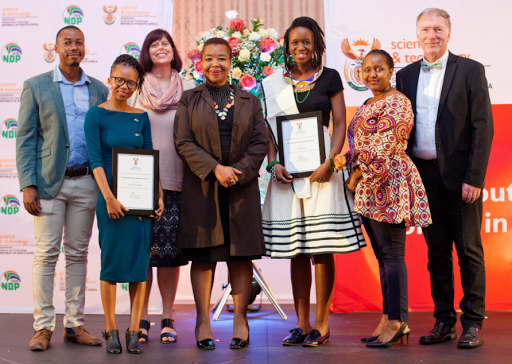
Award-winning Teachers Invited To Share In The Annual National Teaching Awards

THE Department of Basic Education has called on previous National Teaching Awards (NTA) recipients to share in celebrating the 21st edition of the awards since inception in the year 2000. 

In celebrating this major milestone, the DBE seeks to connect with winners of the NTA from the first ceremony in the year 2000 to 2010.

“The Department of Basic Education calls on all previous winners of the National Teaching Awards in the period listed above to come forward to share in the celebrations.

“The 21st edition of the NTA will be conducted in a period where the country is confronted with a major pandemic of COVID-19, which has paralysed the schooling system in many different ways,” the department said.

The department said it is for this reason that it is honouring all educators who have represented the sector with outstanding excellence throughout the years.

The NTAs were established to recognise, celebrate and acknowledge the strides made by teachers to ensure that learners are supported in order to progress from grade to grade. They aim to motivate teachers to continue the selfless endeavours they make for the benefit of the country.

Previous winners can send a photo of themselves, along with their certificate and share their journey in education since winning the award via email on: awardsnta@dbe.gov.za by 20 September 2021. – SAnews.gov.za 

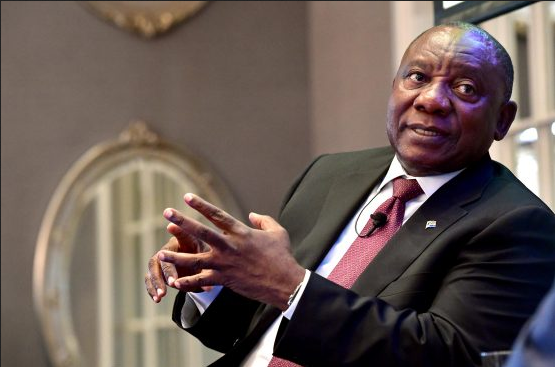
Ramaphosa Pays Tribute To Hardworking, Ethical Public Servants Who Carry Out Their Duties Capably And With Commitment

0

CYRIL RAMAPHOSA|

OVER the course of time, public servants in our country have come to be in the spotlight for the wrong reasons. We have become too used to stories of civil servants involved in maladministration, embezzlement, corruption and other forms of conduct that betray the values of the public service.
 
While much is made of those that are errant and unprincipled, the vast majority of public servants understand the weight of responsibility their positions entail, and discharge their duties faithfully.
 
We have set ourselves the challenge of building a capable, ethical state. We remain firmly on course towards professionalising the public service and transforming it into a group of men and women who are able and committed to serving our people and their interests.
 
During this Public Service Month, we pay tribute to the many public servants who continue to make a positive difference in our country every day, and whose actions and performance embodies the principle of Batho Pele, of ‘putting people first’.
 
Our fight against the COVID-19 pandemic has demonstrated that we do have capable and committed public servants who diligently serve the people of South Africa.
 
Since the outbreak of the pandemic, civil servants have displayed courage and resilience in discharging their duties, often under the most difficult of circumstances. Despite the disruptions caused by the pandemic, they have kept the wheels of our country turning and have ensured that service delivery continued.
 
Frontline health personnel have made sure that the ill are attended to. Members of the SAPS have continued to serve and protect our communities. Teachers have continued to care for and educate our learners. Officials in government offices have ensured that our people continue to receive services.
 
We have learned many lessons from the pandemic. COVID-19 has exposed the chasms between the planning and execution of public service delivery; and the reality of government departments still working in silos when they should be working together in a seamless, development-orientated manner. At the same time, COVID-19 has shown us what is possible if we work in a coordinated manner and manage resources effectively and efficiently.
 
At the launch of last year’s Public Service Month, I made specific reference to the need for a new integrated model for service delivery that is responsive, adaptive and brings development to where it is needed most.
 
This adaptive service delivery model, or District Development Model, is exactly what the Batho Pele White Paper compels us to do: establish a citizen centred Public Service that is seamless, adaptive and responsive.
 
We call on public servants to be part of this process by identifying ways in which we can realise a public service focused on meeting the needs and advancing the interests of citizens.
 
Our commitment to building a state that is ethical, capable and above all developmental necessitates that civil servants see themselves not merely as state functionaries but as development workers.
 
Though we must continue in earnest with our task of rooting out those whose conduct makes them ill-suited for public service, we must at the same time acknowledge the vast majority are exemplary civil servants. They have kept us going.
 
One speaks here of the grandmother who is assisted when she receives her grant every month; the critically-ill patient in the public hospital who is nursed back to health by caring staff; the social worker who helps to keep families together; the vulnerable woman who is treated with dignity by a member of the South African Police Service; and the businessperson who receives their documentation at the Home Affairs office on time to travel to expand their business.
 
The professionalism of these hardworking, ethical and principled public servants keeps our country afloat, and their good work brings hope to our people.
 
At a time when shortcomings in the public service are amplified and bad news falls like an avalanche, we acknowledge our public servants of South Africa and their service.
 
It may be said that they are just doing what they are paid to do. But public service is a calling – one to which they have ably responded in order that the rights of all people in this country are fulfilled.
 
We are grateful to all our public servants and for all that they do.

  • From the desk of the President

Rape culture in South African schools: where it comes from and how to change it

0

IN August 2021, a six-year-old grade one learner in South Africa was raped, allegedly by a general worker in her school’s toilet. Public shock and outrage at the ongoing onslaught against children has brought renewed attention to young girls’ particular vulnerability to sexual violence.

One in five children are victims of sexual abuse in South Africa, representing 19.8% compared to a global average of 18% for girls and 8% for boys.

In the 2019/2020 Annual Crime Statistics report, more than 24,000 children were sexually assaulted in South Africa. Statistics are not readily available for schools and there is a great deal of under-reporting but it’s estimated that 22.2% of school children have been victims of violence.

Rape and other forms of violence in and around schools reflect a broader problem in the country.

At a joint sitting of parliament on gender-based violence in 2019, President Cyril Ramaphosa described the crisis of sexual violence as brutal war against women and girls.

But despite political and financial will to end the crisis, the problem remains widespread.

What’s behind this epidemic of sexual violence against children and what can be done about it?

In South Africa, the majority of rapes are committed by men.

This points to gender dynamics and the masculine norms that are allowed to flourish within families, communities and the broader social and cultural context of the country.

Men may be the problem, but they are part of the solution too.

What’s needed is to start early to invest in boys’ and girls’ capacities to transform the norms which give rise to sexual entitlement and rape.

This must happen in families, communities, through the media and online technologies and in schools. We have to alter the strong ideological grip that shapes male power based on subordination of others. Not all men rape and not all men are violent. The key is to address gender inequalities across institutions offering new ideals based on the potential to be different and peaceable.

Gender inequalities at school

By the time boys and girls start school, they have already learnt that men and women do not enjoy equal status in society. Prevalent cultural practices combine with patriarchy to produce a version of male power based on sexual entitlement, misogyny and violence which limits girls’ agency.

A recently published book that I co-edited, Gender, Sexuality and Violence in South African Educational Spaces, highlights evidence of the everyday struggles of boys and girls. It examines the ways in which gender and sexuality give rise to difference, inequalities and violence.

Boys and girls learn that men are often the heads of households or provide financial support.

Even in the absence of men from families, male power remains a cultural ideal.

In this gendered system of power, girls and “weaker” boys are often targeted through emotional, physical, sexual, and verbal forms of violence.

While boys and girls are both perpetrators and victims of violence, we found that there are huge gender disparities in the experience of violence, making schools very unsafe for girls.

This is not to say all boys and girls passively accept their circumstances. They often fight back and resist. But they need support from a young age to stop the violence. And schools play a role in this intervention.

Schools also reinforce these inequalities.

The violence comes in many forms in a culture that values girls less than boys. In previous research, girls told me they experienced everyday sexual harassment in the classroom, in the playground and in the school corridors and toilets.

Groping, fondling, touching body parts in sexualised ways, cat-calling, slut-shaming and coercive sexual practices are part of the rape culture at school. Girls experience violence from boys and are vulnerable to the sexual advances of male teachers.

Reporting sexual violence in schools

Between April 2020 and July 2021, more than 160 cases of sexual misconduct perpetrated by male teachers were reported to the South African Council for Educators.

When sexual violence is reported in schools, evidence suggests that teachers themselves are afraid to pursue the matter. Their fears stem from threats of violence from members of the community.

The mandatory requirement that adults must report sexual violence to the police remains problematic as a direct consequence of intimidation and fear of reprisals. Sexual violence remains under-reported and under-studied.

Facing the issue

Schools are in a contradictory position. On the one hand cases highlight how unsafe schools are and how detached the schooling experience is from the quest for gender equality.

But schools are also spaces to allow for the development of critical capacities where people should learn new ways of doing things.

What if schools and teachers were able to address sexual violence from the time children started school, instead of regarding these issues as not part of teachers’ work?

At the heart of the issue for boys, girls and teachers is to confront, from a very young age, the question of sex, sexuality and gender.

Reflecting on dominant patterns could begin to change them at school and in life generally. To see children as victims without the capacity to act on their circumstances is to fail them.

If teachers can talk about sex to young children in ways that bring attention to its ties to gender and violence, it might give children confidence to report instances of sexual violence and rape.

Approaching the problem requires an understanding of the complex entanglements between the personal, the social and the political context.

A quest for gender equality and an end to sexual violence takes determined collaborative effort to bring different institutions together.

  • The Conversation

School Stabbing: 15-Year-Old Boy On Murder Rap

0

THE 15-year-old schoolboy, who fatally stabbed a Grade 8 student from Pholosho Junior Secondary School in Alexandra, has been remanded in custody at a Child and Youth Centre.

On Monday, Qhayiye Mgaye was stabbed to death at the school. 
The accused who has been charged with murder, appeared for a preliminary inquiry at the Alexandra Magistrate’s Court on Wednesday..

The matter was postponed to 8 September, when the accused will appear before the Child Justice Court.

Phindi Mjonondwane, a spokesperson for the NPA in Gauteng, said the pupil was charged with murder, and a preliminary inquiry was held.

“The state alleges that the death of the fellow learner ensued from a fight between the accused and some learners within the school premises during lunchtime, wherein the accused fetched a sharp object and stabbed the fellow learner.

“The learner was remanded in custody at a Child and Youth Centre until 8 September 2021, when the matter will be heard in the Child Justice Court,” said Mjonondwane

A spokesperson for the victim’s family told Power FM that they wanted to meet with the family of the murder accused, and they also believed that the teachers could have done more to prevent the incident.

He said the family was demanding answers from the school, and they also said violence would not solve a trying.

The deceased pupil will be buried next week in the Eastern Cape.

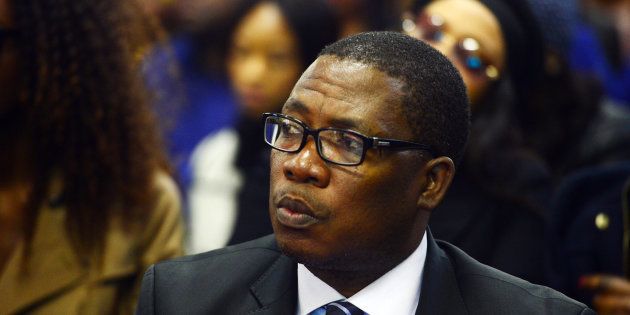
Meanwhile, Gauteng Education MEC Panyaza Lesufi, earlier in the week, condemned the fatal stabbing of the Grade 8 pupil and conveyed his condolences to the family of the deceased Grade 8 pupil.

“We vehemently condemn the violent behaviour which led to the death of a learner allegedly, at the hands of his peer on school grounds. It is absolutely unacceptable. The SGB must investigate this incident and take necessary disciplinary action against the perpetrator,” said Lesufi.

He has met with the school and the family of the deceased.

South African schools are falling behind in maths and science – but there’s a plan to get things back on track

0

The Department of Basic Education plans to boost its maths and science capabilities after schools fell further behind in these subjects due to the Covid-19 pandemic.

Presenting to parliament this week, the department said that matric performance in these two subjects has been low for several years, with 12 districts specifically targeted because they were under-performing.

The department said it has now developed a new training programme to help assist these districts, including a collaboration with Cuban specialists to design new course materials for maths and science at schools.

An online training course has also been developed for subject advisors in Grade 8 and Grade 9.

Data published by the Telkom Foundation in August shows the Covid-19 pandemic has also hurt school learners in the critical areas of mathematics and science.

The data reveals that the lack of face-to-face learning under lockdown has seen high-school learners regressing.

“The Telkom Foundation has been monitoring data from schools we support across the country since 2018,” said Sarah Mthintso, chief executive of the Telkom Foundation.

“Regrettably, we have seen the negative impact of the pandemic – and the unavoidable closure of schools – has had on learning.”

Globally, the World Bank estimates that the closure of schools affected 1.6 billion learners. South Africa was among those countries forced to impose strict lockdown conditions, which halted classroom learning.

The Telkom Foundations initial diagnostic assessments conducted with grade 9 found that several learners had deficiencies in math and science, many of which were carried from the intermediate phase at primary school, impacting their ability to excel in these subjects.

This meant that the Foundation had to focus on both grade-level and remedial approaches to close the gaps. The grade 9 learners surveyed showed an improvement from a Grade 3 level understanding to a grade 5 level before the impact of the Covid pandemic.

“Over the years, we have seen learner improvement as a result of this targeted hybrid approach, however with Covid-19 restrictions and learners missing contact learning time, some have regressed in key areas, particularly problem solving, algebra and measurement,” said Mthintso.

Dropouts 

In addition to subject performance issues, the department also raised concerns around the number of learner dropouts and lost teaching time.

About 80% of learning was lost in 2020, while 50% of the 2021 school has been lost for many learners, it said.

Civil society organisations and education experts have now published an open letter to the Department of Basic Education warning about the high drop-out rate in South Africa’s schools.

The letter, which was published in the Daily Maverick, argues that Covid-19 school closures, coupled with the economic shocks of the pandemic, have exacerbated a dropout crisis “long in the making”.

The group called for a coordinated national dropout prevention plan to help address these losses.

“Even before the pandemic, available figures suggested that four out of 10 learners who started school in Grade 1 would drop out before completing matric,” the group said. “The number of learners who have not re-enrolled due to Covid-19 exacerbates this worrying trend.”

The group added that the number of South Africa’s dropouts is still not clear – varying widely from the government’s official figure of 300,000 learners to upwards of 750,000 learners in the latest NIDS-CRAM survey.

To address these and other issues, the group recommended the following interventions:

  • Encourage community involvement in getting learners back to class by leveraging structures like street committees and churches to help trace learners who are unaccounted for;
  • Develop uniform attendance monitoring systems (until Grade 12), from the national level all the way to schools, to get a real sense of the scope of learner disengagement and dropout;
  • Revise the curriculum to promote learning recovery, in consultation with the latest data from the DBE’s curriculum audit – as well as subject specialists, teachers, curriculum developers and other stakeholders;
  • Initiate a sustained and comprehensive, data-driven, Back-to-School plan (until Grade 12) to reach learners who have dropped out and to assist them with re-enrolment. This must include the development of a national psychosocial support strategy that is linked to an early warning system;
  • Hold regular discussions about “Care and Support in Schools” at national and provincial levels;
  • Establish a learnership on how to use data to inform interventions. Capacitate school staff to use data, with the necessary infrastructure and human resources for data collection and management in place;
  • Make dropout prevention an explicit goal of the education system. Dropout should be a key performance indicator for provincial education departments, and the national department must set reduction targets to hold officials accountable.

Curriculum recovery plan 

The opposition Democratic Alliance called for a curriculum recovery plan to help make up for lost teaching time.

The party said schools lost 50-75% of learning time in 2020, and the 2021 educational year is following the same track. It warned that foundation education learners are expected to suffer the most in their following school years if this is not addressed.

“The Department of Basic Education must ensure that the provinces and various district circuits engage with teaching staff to truly understand the various schools in every district’s specific needs and concerns in completing the curriculum and to find solutions in bridging those shortfalls.

“The provincial departments must also ensure that the districts engage with their local municipalities to find safe public spaces where extra measures to increase learning time could be implemented.”

The Covid-19 pandemic has exposed the growing chasms in South Africa’s schooling system, and nearly two years of broken learning time has exacerbated the challenges learners face in getting a quality education, it said.

“The minister and her department need to ensure that their time is well-spent in finding innovative solutions to the crisis.

“World-wide innovative solutions have been found, and there are many schools in South Africa that have also risen to the challenge. The minister must take inspiration from these innovations and ensure that no child would be left behind.”

Government Departments Finalise Skills, Innovation Strategies To Support Economic Recovery – Nzimande

0

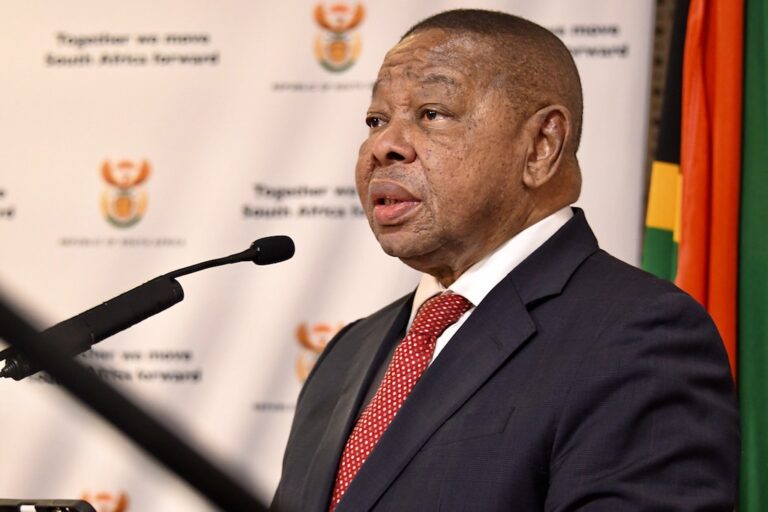
HIGHER Education, Science and Innovation Minister Blade Nzimande says different departments are finalising their skills and innovation strategies to support government’s Economic Reconstruction and Recovery Plan (ERRP).

“The Department of Higher Education and Training is finalising the Skills Strategy, whilst the Department of Science and Innovation is finalising the Innovation Strategy,” Nzimande said.

Nzimande said the Department of Higher Education and Training has generated the scarce, critical skills, and occupations in high demand lists to guide programme offerings and student enrolments in the Post School Education and Training (PSET) institutions.

While this work is underway, the Minister said targets are set for the placement of graduates in work places so that they are work-ready for easy absorption into the world of work, given that “the lack of work experience is often the barrier to securing gainful and permanent employment among young people”.

He said that entrepreneurship hubs are being established at Technical Vocational Education and Training (TVET) Colleges to support students to move into self-employment after completing their programmes.

The Minister said both the universities and TVET Colleges curricula are strengthened to be relevant to skills required by the national economy and that of the world.

“This is to ensure that the PSET sector produces world class graduates who, more importantly, are able to participate and grow the South African local economy and help in the local job creation drive and the implementation of the ERRP.

“At various intervals our universities align their study programmes to these national priorities, whilst our TVET colleges are gradually aligning their programme offerings to the needs of local employers and communities,” Nzimande said.

The Minister noted that some of these changes are happening within current programme offerings, whilst many colleges are introducing new occupational offerings that are in demand within their specific local economic context.

“In addition, there has been an extensive review of much of the TVET curricula to make them relevant and keep them current, and this will continue for the next several years. The focus at the moment is on digital and related skills to meet job demands driven by the 4th Industrial Revolution,” Nzimande said.

He added that the Department of Higher Education and Training also initiated different programmes aimed at encouraging young people to become artisans.

“In 2014 we launched the Decade of the Artisan at Ekurhuleni East TVET college which is a campaign that seeks to promote artisanship as a career of choice for South Africa’s youth as well as highlight skills development opportunities for artisans.

“This was aimed at developing qualified artisans to support the South African economy, particularly in light of the successful implementation of the Strategic Infrastructure Projects (SPIs). The theme of this campaign was “It’s cool to be a 21st century artisan,” Nzimande highlighted.

In 2017, the department started with the establishment of Centres of Specialisation in more than 20 colleges focusing on 13 designated trades.

Centres of Specialisation in the TVET College sector is a programme which aims to inform college differentiation, promote quality teaching and learning, facilitate responsiveness and provide a model for the implementation of Quality Council for Trades and Occupations (QCTOs) trade qualifications at the same time, as it develops artisanal skills.

In relation to artisan training, Nzimande said in the 2018/2019 financial year, the number of registrations was at 29 982. However, due to economic slowdown and COVID-19, the number dropped to 16 218 in 2019/2020 year and is expected to further drop in 2020/2021 year, due to the current pandemic. – SAnews.gov.za

COVID-19 Cost of School Closures: Blow For Schools As Gains Made In The Past 20 Years Lost – Motshekga

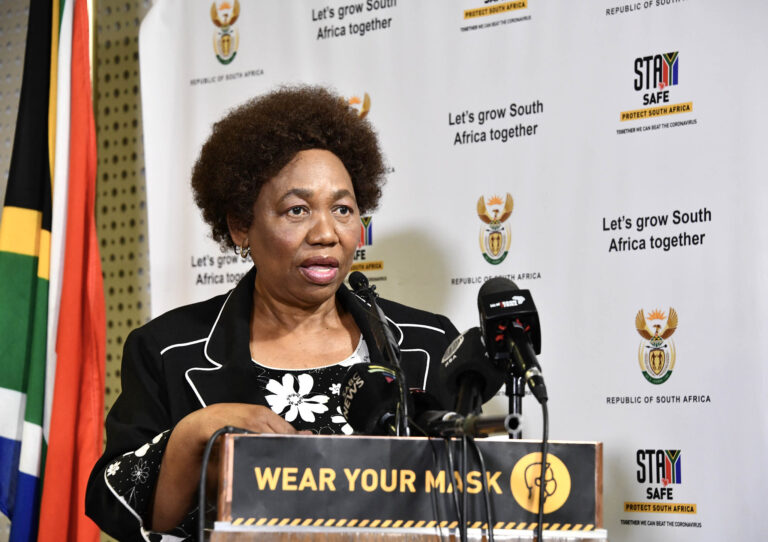
THE basic education sector has been hit so incredibly hard by COVID-19 that it has reversed the gains in education made over the past 20 years, casting a critical light on everything from equity issues to ed tech to school financing, according to Basic Education Minister Angie Motshekga.

Motshekga held a media briefing to spell out the basic education sector’s response to the impact of COVID-19 on schooling.

“The unpredicted closures of our schools, and the unplanned disruptions to teaching and learning, have resulted in the reversal of gains made in the last 20 years,” said Motshekga.

“Research indicates that lost school days, lead to foregone learning losses. International experience confirms learning losses experienced during pandemics, lead to long-term adverse effects,
including learners obtaining lower overall educational value, and ultimately lower lifetime earnings.”

According to the recent World Bank study, school closures due to COVID-19 have brought significant disruptions to education across Europe and other western countries.

Emerging evidence from some of the region’s highest-income countries indicate that the pandemic is giving rise to learning losses and increases in inequality.

To reduce and reverse the long-term negative effects, the Ukraine and other less-affluent lower-middle-income countries, which are likely to be even harder hit, needed to implement learning recovery programs, protect educational budgets, and prepare for future shocks by “building back better.”

Motshekga said in South Africa, government must also indicate that social distancing requirements, remain a challenge in some schools, but we continue to work with the Department of Health and other stakeholders to explore solutions in this regard.

“No one can deny the resurgence of COVID cases in
isolated parts of the country, which affect our schools. For instance, the Phoenix area in the Umlazi District in KwaZulu-Natal, and the Motheo District in the Free State, are cause for concern,” said Motshekga.

“The Western Cape and KwaZulu-Natal, continue to record high community infections, resulting in the temporary closures of schools. Other than this, the system has remained stable and functional, despite persisting learning losses attributable to the COVID-19
pandemic.”

She said the Council of Education Ministers (CEM) met on Friday to consider inputs from stakeholders, following rounds of  consultations, regarding the already amended School Calendar for the 2021 academic year.

“We wish to remind South Africans that the determination of School Calendars, is a statutory process, which involves extensive consultations with the Sector’s critical stakeholders,” she said.

“Three options emerged from the consultations; and these were presented to the CEM for consideration. In the end CEM agreed that the amended 2021 School Calendar MUST be retained as it was from its very last amendment – that the October vacation, will not be interfered with.”

CEM further recommended that the lost number of
school days, should be recovered at District and school-level, but with reasonableness, said Motshekga.

Motshekga said there was new evidence from the National Income Dynamics Study – Coronavirus Rapid Mobile Survey (NIDS-CRAM), which is a broadly
representative study or survey on the impact of the COVID-19 pandemic on South Africa, that more school-aged children are not attending school than usual.

“It is not yet clear whether this is temporary non-attendance, or may become permanent (dropout)
from schooling. In the long run, the learning losses in primary school, may lead to an increase in dropout, when these children reach the Further Education and Training (FET) Band at Grades 10, 11 and 12,” she said.

“What we know at this point, is that learners with weak learning foundations, begin to drop-out in more significant numbers, as they progress through the Grades. This creates an urgent need to recover learning that has been lost.”

The minister said the first step towards addressing the crisis of lost learning, is to prevent further disruptions to school time, and prevent other learning losses.

“Experts keep on reminding us that children are less
susceptible to COVID-19 infections. Our efforts to introduce comprehensive safety protocols in schools, and the vaccination of teachers and support staff, have created the possibility to keep schools open, and a sustained return to regular attendance,” said Motshekga.

“The second step is to introduce measures to catch-up on the time as well as the teaching and learning that was lost through the COVID-19 pandemic, in particular. We urge parents and all of our stakeholders in the sector, to support our efforts to ensure that education continues without any further delays and/or disruptions.”

  • * Inside Education