Home Blog Page 326

Announcement on teacher vaccination to be made this week

NALEDI SHOTA|

The Department of Basic Education is this week expected to announce a date on when teachers will be vaccinated. 

Spokesperson for the department, Elijah Mhlanga, told Inside Education on Monday that the department has been in meetings with the Department of Health and talks are at an advanced stage regarding the vaccination of teachers.

“There is progress. We met with health today and an announcement is going to be made this week,” said Mhlanga.

In a statement on Monday pharmaceutical company Aspen, said it was disappointed that specific batches of the Johnson&Johnson vaccine manufactured at its plant in Gqeberha had to be destroyed. 

This comes after the United States Food and Drug Administration (FDA) announced on Friday that some batches of the Johnson and Johnson vaccines produced at the Emergent BioSolutions Plant in Baltimore in America were contaminated.

“[This is] due to the ‘Good Manufacturing Practice’ risk of isolated material in the drug substance supplied to Aspen by Johnson & Johnson from their contract manufacturing partner in the USA, Emergent. The batches manufactured had been retained in storage awaiting the outcome of the US FDA [Food and Drug Administration] assessment of Emergent.

“This is not only a setback to both the Aspen and Johnson & Johnson teams who have worked tirelessly to ensure the manufacture of these batches, but more importantly, has the potential to negatively impact the vaccine rollout across South Africa and Africa,” reads the statement. 

However, the company further said that within days Aspen would provide 300 000 doses of the vaccine for South African teachers. These are not impacted by the contamination. 

Mhlanga also told Inside Education that the sector “will more likely benefit from the 300 000 vaccines cleared for use in South Africa”.

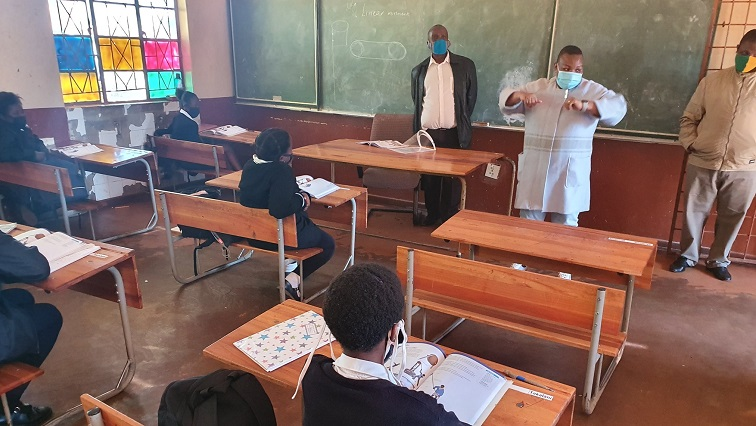
The vaccination will happen as primary schools and special education needs schools are expected to receive back all learners on 26 July. There is currently a rotation system in place. 

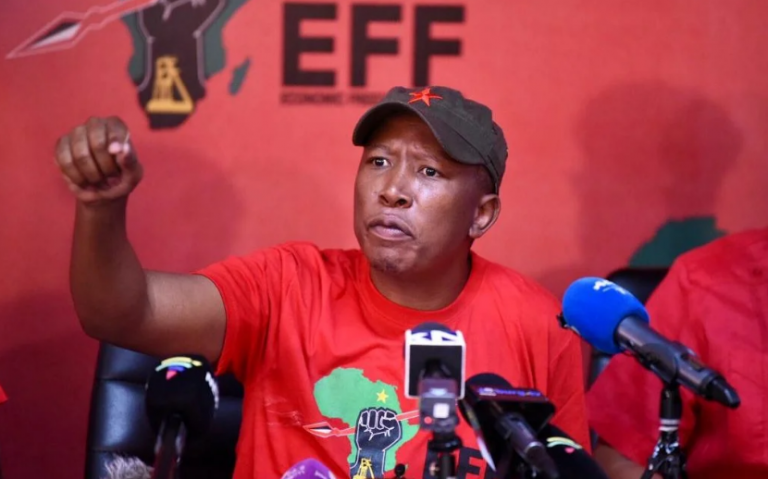
However, on Thursday Julius Malema, Economic Freedom Fighters (EFF) president called for schools to be closed with “immediate effect”. Malema said this needed to happen because more and more learners are testing positive for the virus. He said the party would give Basic Education Minister, Angie Motshekga, seven days to respond to their call or the party would shut down schools. 

READ: Malema gives Motshekga seven days to shut down schools as Covid-19 cases rise in children

Mhlanga said the EFF had written to Motshekga calling for schools to be closed and had asked her to respond to the party by Thursday. He said the department would respond to the party by its deadline. 

In the past week, the Northern Cape department of education said it had recorded 103 positive cases and 69 of these were from learners, while the Gauteng department said in the past week 1977 learners tested positive in the last week.

Two weeks ago, Inside Education reported on a letter that had been written by the Head of Health in KwaZulu-Natal, Dr Sandile Tshabalala, addressed to the Head of Education Enock Nzama about the vaccination of educators. Tshabalala said the national department of education has confirmed that the Johnson & Johnson (J&J) vaccines would be made available in the next week and that “most of which should be used for educators”.

“The target group is basic education (all staff members of primary and secondary schools). It is expected that the dedicated vaccination sites for educators will be ready by Wednesday, 9th June 2021, and the vaccination period will be for two weeks,” read the letter.

READ: Teachers set to be vaccinated in the next week

Teacher unions also told Inside Education, two weeks ago, that they had written to the national departments of health and education asking that teachers be prioritised for vaccination this month. 

There are about 400 000 teachers in the system. 

READ: Teachers over 40 to be vaccinated from Wednesday

UCT remains top in Africa, with UJ and Wits close at its heels

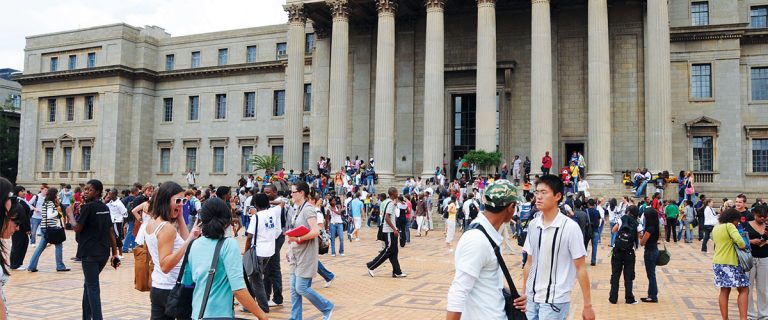
The University of Cape Town (UCT), the University of Witwatersrand (Wits) and the University of Johannesburg (UJ) have been ranked the three top universities in the continent with Stellenbosch University, University of Pretoria and Rhodes University holding the fifth, seventh and 10th places respectively.

This is according to the Quacquarelli Symonds (QS) World University Rankings 2022 released his month. For the 2022 academic year, the company ranked 1 300 institutions around the world, including nine from South Africa.

The 2022 QS rankings show that UCT dropped six places globally to 226th compared with the previous year’s rankings, while UJ climbed five places from last year’s global ranking position. The QS rankings show that Wits fell 21 places from the previous year rankings.

UJ Vice-Chancellor Professor Tshilidzi Marwala said not only has UJ climbed five places from last year’s global ranking position, but his university is the only university in South Africa that moved up in these rankings.

“UJ is now ranked at third position in South Africa and climbed from fourth to third place in Africa, the university has also retained its position among the Top 500 [ranked 434] universities in the world,” said Marwala.

UCT Vice-Chancellor Professor Mamokgethi Phakeng said despite UCT dropping six places compared to last year, the university remains the best university in Africa.

“This position puts UCT among the top 18% of universities worldwide and is tied with Rheinische Friedrich-Wilhelms-Universität Bonn in Germany, the University of Sussex in the United Kingdom and the University of Virginia in the United States,” said Phakeng.

Adding that the academic reputation indicator remains UCT’s strongest performer.

“This is the indicator that contributes the most (40%) to an institution’s overall score,” she said.

READ: SA universities fall in global rankings

The QS World University Rankings are based on six performance indicators, ranging from global academic and employer reputation, research output and quality, internationalisation, as well as teaching and learning.

The organisation said academic reputation remains the highest weighting of any metric. It collates the expert opinions of over 130 000 individuals in the higher education space regarding teaching and research quality at the world’s institutions, said the organisation.

Marwala said UJ’s high overall score was achieved by its increased cohort of international staff and students, which is well above the global average and leading nationally.

He added that the university also achieved improvements in the scores for the research and academic reputation indicators, climbing 34 places from 623 to 589 in the world for the “Citations per Faculty” category.

“The latest global rankings reaffirm the fact that our academic programmes remain strong and relevant, especially when one considers that the pool of competing universities in this global ranking system has increased, ranking 1300 universities instead of the usual 1000 universities as in previous editions,” said Marwala.

He added that these latest rankings demonstrate UJ’s resilience as the Fourth Industrial Revolution (4IR) thought leader in Africa, and how the university has had to be agile in adapting to the ever-changing landscape.

“This was also because in embracing technological advancements, our students have been at the centre of this innovative learning approach,” said Marwala.

READ: Prof Tshilidzi Marwala on jobs of the future, being number one and the Auckland Park education precinct

Youth unemployment: A catastrophe

Ann Bernstein

“If you can’t solve the problem of getting young people into work, it may not matter what other problems you do solve.”

Paul Romer, Nobel economics laureate

The latest Quarterly Labour Force Survey (QLFS) statistics confirm a shocking reality: three out of every four South Africans (74.7%) between the ages of 15 and 24 who want a job cannot find one. For those between the ages of 25 and 34, things are somewhat better, yet still the worst they have ever been: more than half (51.4%) of them are unemployed.

Tackling this crisis by accelerating labour-intensive growth has to be the country’s top priority.

Unless young people become part of the employed workforce in much larger numbers soon, political leaders will become increasingly dysfunctional, human potential will be wasted and hopes of creating a stabler, more inclusive and prosperous country will remain mere pipe dreams.

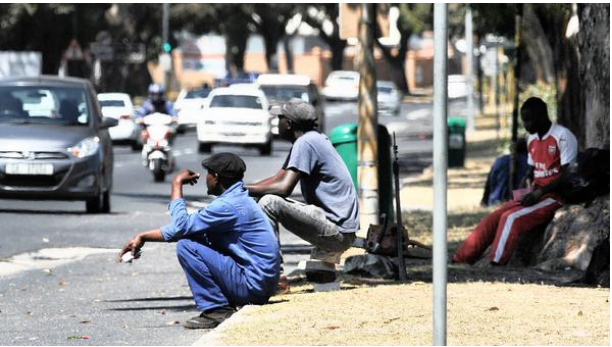
South Africa’s expanded unemployment rate is 43.2%, the highest it has been since the start of the QLFS in 2008. The data unequivocally reveal that the labour market remains especially inaccessible to young workers. The overall youth unemployment rate sits at 57.5%. The 6.8 million young people unable to find jobs constitute the majority (59.2%) of the unemployed.

READ: South Africa’s youth unemployment crisis – a ticking time bomb

The Covid-19 pandemic has turned what was already a crisis into a catastrophe. The severe 7% GDP contraction suffered last year prompted a huge increase in the number of jobless young people. The youth unemployment rate rose by more than five percentage points as a result of the pandemic, while nearly 1 million fewer young people are in employment now. On average, 444 young people have joined the unemployment queues every day since the start of the pandemic.

Too many young people are disconnected from economic opportunities – and they feel this exclusion in deeply personal and damaging ways.

As one young person put it: “You feel as if you’re useless. You don’t belong to earth; you aren’t even a human being.”Better learning outcomes are often seen as the best way of improving young people’s employment prospects. It is true that upward social mobility is strongly correlated with education levels in South Africa

Being jobless also affects a person’s future employability. Employment is a form of education and training, providing workers with knowledge, skills, discipline, networks and other capabilities that cannot be gained through formal educational instruction. This is what US economist Paul Romer means when he refers to “work as school”, and it is the reason employers often prefer people with work experience over those who have none.

The long-term unemployed, by contrast, become increasingly ill-suited to the needs of the economy – their training becomes less relevant, their skills deteriorate and their ability to signal their workplace readiness lessens. They are therefore doubly disadvantaged in a country where too few jobs are being created.

Better learning outcomes are often seen as the best way of improving young people’s employment prospects. It is true that upward social mobility is strongly correlated with education levels in South Africa. However, the country’s educational attainments remain extremely low: only 37% of pupils who start Grade 1 together will pass matric; 14% will obtain university-entrance exemption; and only 4% of the original group will receive a tertiary qualification within six years of leaving school. This is a devastating underperformance for an education system.

The situation is worst for those who are not in employment, education or training (NEET). Altogether, 9 million (43.6%) young South Africans are classified as NEETs. These are people who are excluded from the economy and are struggling to access it.

Even among the working youth, more than a quarter (27.6%, or 1.4 million) are informally employed. This points to further disadvantages experienced by the youngest segments of the workforce. A formal job is much more likely to be a sustained route out of poverty than an informal job, given the importance of on-the-job training for future employability.

Taken together, these numbers reflect a disturbing truth: this is no country for young people.

As politicians commemorate Youth Day on Wednesday, it is important to note the policy choices they have made that have created a catastrophic situation facing the vast majority of young South Africans. Our current approach to economic growth and jobs, as well as education, is failing young people. As a matter of urgency, we need to rethink our approach to the labour market, especially in regard to absorbing unskilled young jobseekers into formal positions.

Towards a bigger, bolder reform approach

Policy reform is urgently required. If we are to make a significant dent in these catastrophic youth unemployment levels, we have to change the rules and regulations that shape the way our economy functions so that it grows much faster and creates jobs far more rapidly than was the case long before Covid-19 struck.

Given the depth of the youth unemployment crisis, there is no plausible strategy for rapidly reducing unemployment in the short term. A job creation drive launched by President Cyril Ramaphosa is under way, but is still in its infancy.

The biggest component of this state-driven initiative consists of placing young people in schools for a few months. Despite the president’s seal of approval, the jury is still out on the likely success of this expensive exercise.We need more bold signals that will encourage the investment and expansion of existing firms if we are to create enough jobs in the future

However, what must be grasped is that the scale of any public employment drive will be too small to make more than a shallow dent in the massive challenge we confront. Unless these education opportunities provide useful work experiences and on-the-job training, they will fail to make much difference to the long-term prospects of the young people who participate in them.

There is, however, considerable scope for reforms that would improve the performance of the economy and deepen the inclusiveness of growth by increasing employment.

We need more bold signals that will encourage the investment and expansion of existing firms if we are to create enough jobs in the future. The bottom line is that firms need to be incentivised to hire young, unskilled workers instead of being encouraged to switch to mechanisation and automation.

We need reforms that will create space for new, more labour-intensive activities to emerge and grow, including legal exemptions for small and new firms from collective bargaining agreements to which they are not party, as well as rebalanced collective bargaining structures to provide greater representation of smaller firms’ concerns.

We should expand and extend the employment tax incentive to a wider range of workers and for a longer period, and introduce modest reforms to hiring and firing. Making it easier and less risky for firms to terminate new employees during their probationary periods, for example, would help remove risk from the employment decision, especially with regard to new, inexperienced young workers.

Given that these changes represent a significant policy shift and will most likely face considerable antagonism in the governing party alliance, the Centre for Development and Enterprise has proposed an experimental special economic zone designed for labour-intensive manufacturing in which labour market rules would be somewhat liberalised to test the proposition that jobs would be created under those conditions.

We also need to start tackling youth unemployment on as many fronts as possible by reforming the education system, improving the way young people are trained for potential jobs, bringing in skills from all over the world to help train South Africans and grow the economy, and removing all structural constraints on growth. We need to do whatever is possible to get as many young people as we can into formal jobs.

South Africa has a growing youth population. This should be a resource we can tap to generate growth and contribute to development – what economists call a “demographic dividend”.

If we do not alter the course of our economy, however, we will reap a demographic disaster instead.

Ann Bernstein is the executive director of the Centre for Development and Enterprise

3 ways schools can improve STEM learning for Black students

JAMES HOLLY JR.

Black people make up just 9% of the STEM workforce. As a scholar who studies how STEM educators can more effectively reach Black students, I want to help all people develop an understanding of how anti-Black racism is a significant barrier for Black students learning STEM.

Many scholars have argued that our current ways of teaching STEM are bad for everyone because only the experiences and contributions of white people are discussed, but the negative effects are greater for Black people. Teachers frequently question the intellectual ability of Black students and prevent them from using their cultural worldviewsspirituality and language in the STEM learning setting.

Still, Black people continue to boost STEM knowledge across the world. It is time to generate new teaching practices in STEM that affirm Black students in a way that connects with their lives.

1. Talk about Black excellence

The projection of ideas about who can who can pick up STEM concepts is important. Research has shown that many people think of engineers as white men; therefore, seeing Black STEM professionals in person or via media representation can build inspiration among Black youths.

Although Black representation is essential, it alone won’t address the barriers Black students face. These barriers include racial stereotypingstressful academic culture and other social and cultural factors. Some of these issues are not unique to Black people, but together they can create a particularly harmful experience for Black students. When teachers celebrate the successes of Black people in STEM, they can also discuss the resources and opportunities these individuals had or did not have while navigating racism.

Many Black people throughout history have achieved advanced STEM knowledge. Dr. Patricia Bath, an ophthalmologist who developed laser technology used in treating cataracts, and Steven Townsend, who has advanced awareness of the benefits of breastfeeding, are just two examples. But Black contributions to STEM predate American enslavement. Recalling this history normalizes Black success across STEM disciplines.

Educators must be mindful of how they tell Black success stories in STEM. When educators reduce examples of Black excellence to just a few people, it perpetuates the myth of Black exceptionalism, the idea that Black people who are capable of success are rare. Individual success stories can also portray these people as being successful without assistance or serve as limited representations. Instead, teachers can share varied examples of successful Black scientists, technologists, engineers and mathematicians, including local residents and family members of their students.

2. Emphasize social skills

Although STEM professions require both social and technical knowledge, technical skills are typically valued more than social skills.

Math and science instruction often encourage competition and rigor, which constrains students’ ability to value differences in experience, style and problem-solving approaches. This also limits students’ ability to see how math and science knowledge can solve social problems. Furthermore, traditional math and science teaching has punished Black students for how they speak and live. This happens when teachers focus more on using scientific language than on displaying scientific understanding. Therefore, many Black students become disengaged and lose interest.

STEM education in its current form pushes Black students away instead of addressing the racial and socioeconomic problems within STEM classrooms and broader society.

Black youths tend to have a strong sense of social realities and a “soulfulness” that causes them to focus more on people than objects. STEM educators can train Black youths to utilize their emotional strengths in designing problem-solving technologies that are both effective and humane. For example, Black-centered design, a race-conscious application of human-centered design, allows Black people to use their cultural knowledge to provide scientific solutions to problems in their community. However teachers choose to do it, Black identity and culture should be seen as an asset to STEM education and careers.

3. Teach with sociopolitical awareness

An abundance of resources can help teachers develop curriculum that highlights the ways culture influences how we learn and practice STEM. One example is The Woke STEM Teacher, a website where educators can get tools to include social justice topics in their STEM curriculum.

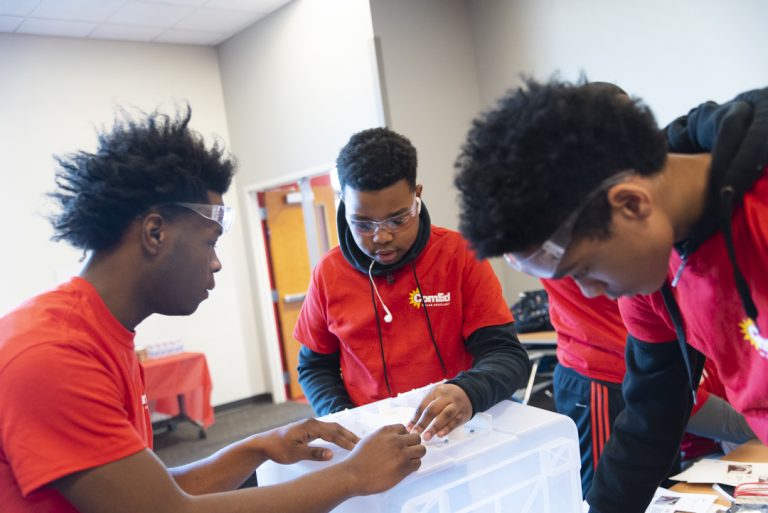
Teachers can design or use enjoyable exercises that prompt students to use STEM knowledge to solve problems relevant to their lives outside of the classroom. This allows opportunities for students’ communities to be used as spaces for STEM learning.

Also, the creativity of Black students may look different from that of other students, so it is important to develop a supportive approach. Educators have used hip-hopcosmetology, and double-Dutch to demonstrate Black intelligence in STEM.

I believe these simple steps are powerful ways to shift STEM education toward better appreciating and elevating the knowledge and contributions of Black people in STEM.

Student athletes vaccinated ahead of the Tokyo Olympics

Athletes in preparation for the 2021 Tokyo Olympics Games in Japan are already receiving their Covid-19 jabs.

The University of Johannesburg (UJ) shotput champion, Jason van Rooyen, recently received his jab in preparation of the 2021 Tokyo Olympic Games.

Van Rooyen is one of the UJ athletes selected to represent South Africa in shotput.

READ: ‘Siyaya eJapan, Tokyo here we come,’ say UJ sportsmen, women in SA squad

The shotput star said he was vaccinated at the Chris Hani Baragwanath Hospital in Soweto.

“I received the booking via South African Sports Confederation and Olympic Committee (SASCOC) because they are arranging vaccinations for all the athletes heading to Japan.

“These days, a vaccine is just like a passport. It is important that we keep ourselves and the rest of the world safe by vaccinating,” said van Rooyen.

Van Rooyen said some of the side effects he has felt since getting the jab include headaches.

The young athlete said he has experienced really bad headaches and that he has been feeling very tired.

“But I think that is the normal thing that happens when a vaccine is injected into the body,” he said.

Athletes around the world are getting vaccinated to prevent the spread of the coronavirus.

Other countries such as Australia, have been inoculating athletes heading to the big games since April this year.

In South Africa, the vaccination of athletes only started late May at various vaccination sites throughout the country.

According to the Department of Health, its medical team has worked very close with SASCOC staff to contact the athletes and arrange vaccination dates and times to ensure an efficient and smooth vaccination process before July 2021.

Van Rooyen said he is eyeing a top 10 ranking in the world.

The start athlete gave an impressive performance in the 2021 USSA Championships in mid-May when UJ held the competition at the Athletics Stadium.

In the competition, van Rooyen equalled the South African record of 20.40m throw in shotput.

He said he has set his sights on the podium and hopes to bring home a medal.

“I want to be in the final at the Olympic Games. It would be really great to stand on the Olympics podium as evidence of my hard work here at home,” he said.

READ: PROFILE: Africa’s current discus champion to compete in Tokyo Paralympic Games

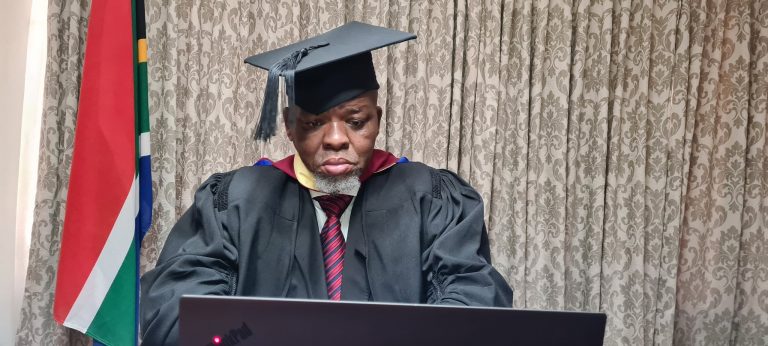
Gwede Mantashe obtains MBA at 65

NYAKALLO TEFU|

President Cyril Ramaphosa has congratulated National Chairperson of the African National Congress (ANC) Gwede Mantashe after he obtained a Master of Business Administration (MBA) degree.

The Minister of Mineral Resources and Energy obtained his MBA from the private higher education institution Mancosa (Management College of Southern Africa) on Saturday.

“Studying for an MBA requires a lot of discipline, hard work and the ability to stick to time. However, when you achieve your MBA, you do not feel the length of the journey,” said Mantashe.

President Ramaphosa took to Twitter to congratulate Minister Mantashe.

“This demonstrates to us that education remains the most powerful weapon for transforming our future,” said Ramaphosa.

The 65-year-old holds a master’s degree from the University of the Witwatersrand, a Bachelor of Commerce (Bcom) Degree from the University of South Africa, where he also completed a Bcom Honors.

Ramaphosa said as the ANC national chair, co-chair of the Economic Cluster in Cabinet and Minister, he managed to dedicate time to complete his studies.

“We are proud of you Mqwathi for this academic achievement and we remain inspired by your unwavering commitment to lifelong living,” added Ramaphosa.

It takes courage and it is an important qualification. I encourage young people to study,” added Mantashe.

Malema gives Motshekga seven days to shut down schools as Covid-19 cases rise in children

NALEDI SHOTA| 

Julius Malema, Economic Freedom Fighters (EFF) president has called for the shut down of schools and crèches as the country inches closer to the third wave of the coronavirus. 

Speaking at a press briefing on Thursday Malema said schools needed to close “immediately” before children die in numbers. 

According to the National Institute for Communicable Diseases, the country “ technically entered the 3rd wave today [Thursday] as the national 7-day moving average incidence (5959 cases) now exceeds the new wave threshold as defined by the Ministerial Advisory Committee”.

Malema said it was so painful to lose elderly people in the first and second wave.

Imagine now when we are going to have to bury kids, he said.

READ: GDE concerned about the rising number of Covid-19 cases at schools in the province

“Our children are going to die. We give the minister seven days to close schools. Failure to do so we will have to close schools ourselves as the EFF because we are not going to allow our children to die. We are not going to allow that.

“Can you imagine now when we are going to have to go and bury kids the way we were burying old people,” said Malema.

Malema said it was becoming clearer now that children are affected by the virus as more and more were testing positive for the virus. 

“Let our children be safe, we will rework the programme the same way we did in the past to get them to cope with this crisis we are confronted with. It is going to be more dangerous, children are sick and children are testing positive,” he said. 

In March last year, when Covid-19 cases were increasing, President Cyril Ramaphosa announced the closure of schools.

The first group of learners ended up getting back in class in June while the last group went back in August.

The department of basic education trimmed the curriculum for grades 1 to 11 in order to make up for the time they had lost in class. 

In recent weeks, provinces such as Northern Cape, Free State, the North West and Gauteng announced that more learners are testing positive for the virus in schools compared to teachers.

In the Free State a learner succumbed to the virus. 

READ: “We are at risk. They do not care about us” – Free State Teacher

As Malema made the call, Basic Education Minister Angie Motshekga was in Limpopo monitoring schools ahead of primary school learners going back to school daily on 26 July as well as all learners in special education needs schools. 

At the press briefing Malema said it must be private schools that must lead the campaign to close schools because they had “power and sometimes even tell the government what to do”. 

Nelson Mandela University suspends contact classes following a spike in Covid cases

NALEDI SHOTA|

The Nelson Mandela University has become the second institution this week to suspend contact classes after there was a spike of positive Covid-19 cases at its Gqeberha campuses. 

In a communique to staff and students this week, the university said the call to temporarily halt face-to-face classes was after ten positive cases were recorded in one day and a further six overnight.

The university said all the positive cases are students. 

“All these students are in quarantine, and since two are also from the same class, which had held mask-to-mask activities, their entire class has also been placed under quarantine.

“For the students’ own safety and that of others, they will isolate themselves in their rooms for ten days, monitoring themselves for symptoms. Such is the complicated nature of the virus, however, some of the students who recently tested positive for Covid-19 were, and are, asymptomatic. In other words, they have none of the usual Covid-19 symptoms,” reads the communique. 

The university said following the spike it would reduce large gatherings on campus, would improve entrance screening and other measures in an effort to minimise the spread of the virus at the institution. 

“Various buildings may also be temporarily closed to counter the possibility of large gatherings of people,”  reads the communique. 

The university further said that all planned face-to-face assessments for this week will move online or will be deferred until it is safe to return to contact classes. 

On Tuesday Inside Education also reported that the Tshwane University of Technology (TUT) had suspended contact classes after a student died from Covid-19 related illnesses last week. 

READ: TUT suspends all contact classes

The university’s spokesperson, Phaphama Tshisikhawe, said TUT did not know when it would resume contact classes. 

“This will be determined by the cases of the coronavirus in the country. It is not only because of the Covid-19 related death that we are experiencing in the university, it is mostly because the infections that are increasing,” said Tshisikhawe at the time. 

Debbie Derry, NMU Deputy Director said the university not only faces the third wave of infections but also faces the “worst water crisis in living history” and the constant threat of load shedding.

GDE concerned about the rising number of Covid-19 cases at schools in the province

NYAKALLO TEFU|

The Gauteng Department of education has raised concerns about the number of Covid-19 cases at schools in the province.

In the past week, the provincial department reported that over 1 000 school children tested positive for the coronavirus.

“1227 learners and 802 teachers have tested positive for Covid-19, bringing the number of schools with positive cases to 1637,” said the provincial department’s spokesperson Steve Mabona.

Reports show that the rise in cases at schools come as the country enters the third wave of Covid-19 infections with the number of cases recorded in the past 24 hours sitting at 8881.

“We are concerned by the number of cases at schools. We are working closely with the Department of Health and every time there is a case the department will visit the school to see how to deal with the issue,” said Mabona.

READ: ‘Schools cannot open if all health protocols are not in place’ say teachers and parents

Reports show that Krugersdorp High School was shut down on Thursday to reopen on Monday, 14 June. The decision came after 9 learners tested positive for the Covid-19 virus..

Ivan Bailey, the school principal, said all those learners who tested positive immediately went into isolation.

“We will continue to manage all cases following the required protocols and procedures,” said the school principal.

He added that four staff members also tested positive for the virus and that they were already in isolation.

“The staff are also apprehensive as many of them have elderly or co-morbid family members who live with them,” said Bailey.

Learners are set to return to school on 14 June 2021.

READ: The Northern Cape sees sharp increases in Covid-19 infections in schools

DBE budget cuts increase inequalities between poor and privileged schools

Minister of Basic Education Angie Motshekga said her department has been resilient and done its best to salvage what was left of the 2020 education calendar despite the devastating effects of the coronavirus pandemic.

Motshekga said despite budget cuts, the department is determined to bring about a just, equitable and inclusive quality education.

The minister was speaking at the Department of Basic Education’s budget vote debate in the National Council of Provinces (NCOP) this week.

Elleck Nchabeleng, Chairperson of the Select Committee on Education said the department has a critical mandate to bring to fruition the developmental state by ensuring that it provides quality education to learners.

Nchabeleng said the department is to this day battling the gap created by the two education systems between the privileged and unprivileged.

He said to address this gap, the department needs to reduce the teacher-learner ratio in schools.

“This has a direct impact on the quality of education, especially in overcrowded township schools,” he said.

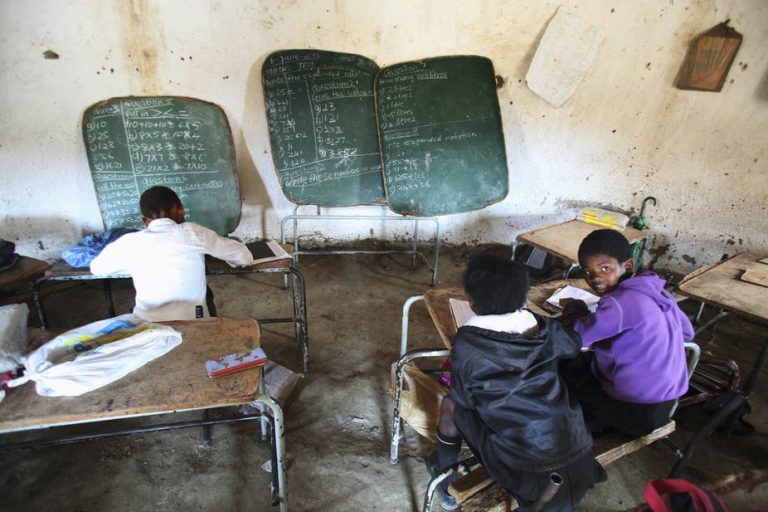
Nchabeleng added that the country still has mud schools and schools that lack basic necessary water and sanitation.

“The department must address this as a matter of urgency,” he said.

READ: No New Money For Schools, But SAA’s Rescue Plan Equals Almost A Year’s Worth Of School infrastructure Funding

Economic Freedom Fighters’ Seneanye Lehihi said the divided nature of South Africa’s education system is still cut across racial lines – the white and privileged versus black and under-resourced.

She said the under-resourced schools also suffer from poorly skilled teachers who lack skills in subjects such as maths and science, further disadvantaging black students.

Lehihi added that despite the national department’s efforts, many pupils do not complete their schooling.

“It is estimated that between 500 000 to 1 million school children who start grade R do not make it to matric and are unaccounted for by the department.

“Sadly, they will remain unskilled, unemployed and unemployable, and most of them are black,” she said.

The Democratic Alliance’s Delmaine Christians said children’s rights to safe, clean school facilities have been violated by the decrease in the DBE’s budget.

Christians said this has and will significantly continue to impact the department’s ability to build infrastructure and redress unequal resource allocation between wealthy and poor schools.

She said the budget cuts is inhumane.

“How can a R400 million budget cut on necessary school infrastructure be deemed humane?

“A budget that does not safe guard the lives of the children cannot be deemed humane,” she said.

Inkatha Freedom Party’s Xolani Ngwezi said he did not understand why schools are open when South Africa is fighting the third wave of Covid-19.

“I understand the need for children to get educated and regain the lost time during lock down, but we should not put education before lives,” he said.