Home Blog Page 33

IEB Class of 2025 achieves 98.31% pass rate

Staff Reporter

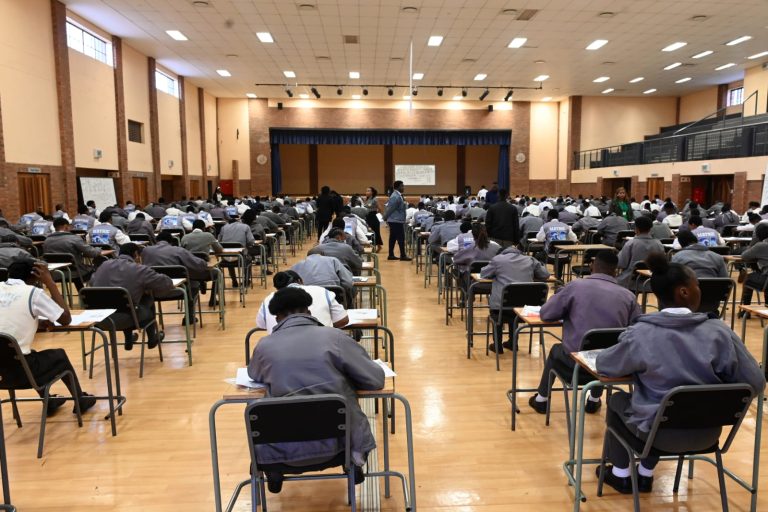
The Independent Examinations Board (IEB) said that its Class of 2025 achieved an overall pass rate of 98.31% in the National Senior Certificate (NSC) examinations, slightly lower than the 98.47% recorded in 2024.

The mainly private-school cohort’s bachelor’s pass rate — indicating eligibility for degree study — was 89.12%, compared with 89.37% a year earlier.

IEB chief executive Confidence Dikgole said small shifts in aggregate outcomes were expected as the system expands.

“What is important is that performance levels remain consistently high, standards are maintained, and access to degree study remains strong.”

The IEB administered the NSC exams to 17,414 candidates (16,063 full-time and 1,351 part-time).

Out of the nine provinces in the country, the highest number of pupils were concentrated in three provinces.

Gauteng had 10 421 pupils sit for the exams, compared to 9567 in 2024, by far the largest number. In KwaZulu-Natal, 2 448 pupils sat the exam, and in the Western Cape, 2 108 pupils sat the exam.

The IEB said it recognised 161 pupils in its outstanding achievement category and 125 in its commendable achievement category.

INSIDE EDUCATION

All eyes on Class of 2025 as Gwarube set to announce matric results on Monday night

Johnathan Paoli

Basic Education Minister Siviwe Gwarube will on Monday night officially unveil the results of the 2025 National Senior Certificate (NSC) exams, marking a decisive moment for nearly 900,000 matriculants across the country who have been anxiously awaiting their results.

The results will be announced at 6pm, with candidates able to access their results from Tuesday morning.

There will be a ministerial breakfast at the MTN Innovation Centre in Johannesburg from 8.30 am to 11am, where, among other items, the country’s top achievers will be honoured.

In a message ahead of the release, Gwarube commended matriculants for completing what she described as a demanding and often testing journey.

“To the matric class of 2025, as we anticipate the release of the 2025 matric examination results on Monday, I want to say to you congratulations for coming this far, for your discipline, for your effort, for your resilience. You ought to be so proud of yourself, and I want to remind you that South Africa is proud of you,” she said.

Her remarks come amid heightened anticipation nationwide, as families, schools and education officials prepare for one of the most closely watched moments on the annual education calendar.

The matric results are widely regarded as a key indicator of the health of the basic education system and a gateway to further study, training and employment opportunities for young South Africans.

Gwarube also struck a reassuring tone for learners who may not achieve the results they were aiming for.

“To those who may not have achieved the results that they are hoping for, I want to remind you this is not the end of the road or the journey for you. You can try again and there are multiple opportunities for you to be able to do that,” she said.

The minister said she looked forward to sharing “the good news of resilience, of strength of the class of 2025” when the results are released.

Learners are encouraged to collect their official statements of results from their schools or examination centres, which remains the most reliable method of access.

Results will also be available online via the department’s website, as well as through SMS and USSD services.

The department has cautioned that some results may not be immediately available on digital platforms due to technical issues, a situation it says is not uncommon during the initial release period.

Candidates are advised not to panic if their results do not appear straight away and to follow up with their schools or district offices if necessary.

As in previous years, the NSC results will also be published in accredited newspapers on Tuesday in a pseudonymised format, showing examination numbers and subject results without revealing candidates’ names or identity numbers.

The department says this approach balances public access to information with the legal requirement to protect learners’ personal data, in line with an existing court order.

For candidates who are dissatisfied with their results, the department has confirmed that applications for re-marks and re-checks will open shortly after the release of results.

Re-mark outcomes are expected to be available from 13 March.

Learners are also reminded to verify that their personal details on their statements of results are correct and to submit any corrections or result queries within the stipulated timeframes.

INSIDE EDUCATION

50 South African TVET graduates to depart for E-Commerce training in China

By Johnathan Paoli

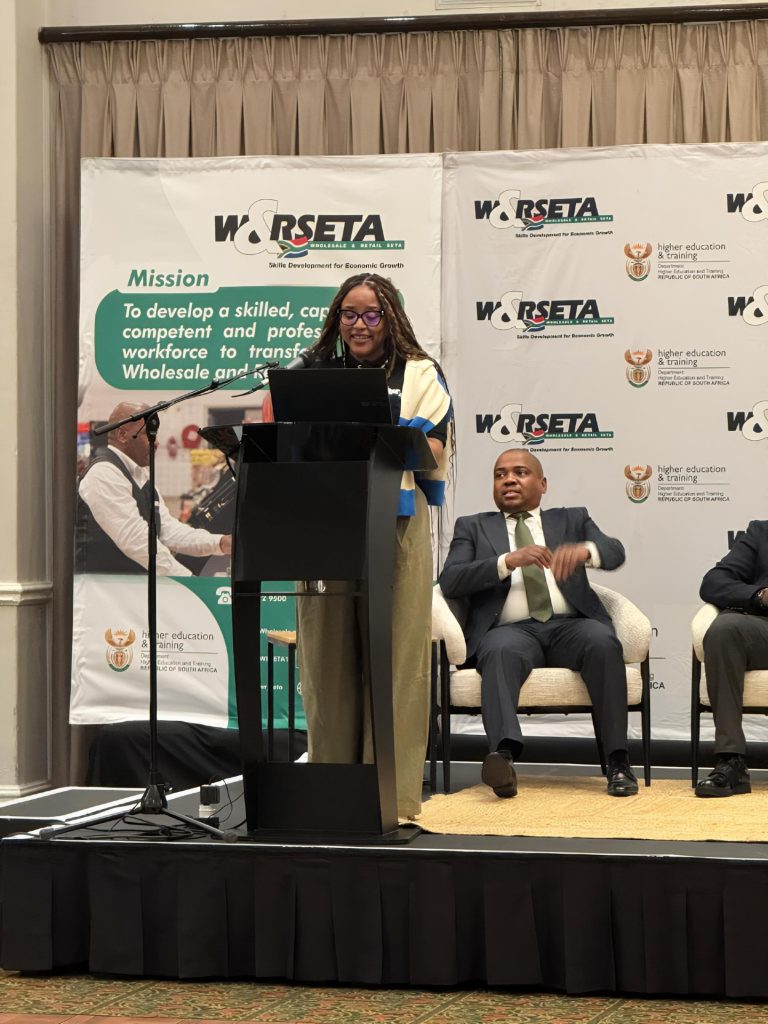
Fifty South African graduates from 21 Technical and Vocational Education and Training (TVET) colleges are set to depart for China next week to undertake a fully funded, one-year e-commerce training programme aimed at strengthening digital commerce skills and promoting entrepreneurship among young people.

The group will depart from OR Tambo International Airport on Monday, as part of an international skills development initiative led by the Wholesale and Retail Sector Education and Training Authority (W&RSETA), in partnership with the Chinese Culture and International Education Exchange Centre (CCIEEC).

According to W&RSETA, the programme is designed to equip young South Africans with practical skills in digital commerce, international retail standards and global trade trends, while exposing them to one of the world’s most advanced and competitive e-commerce environments.

“The programme is mainly aimed at equipping South African youth in digital commerce towards a drive to maximise a culture of entrepreneurship largely within the retail sector,” W&RSETA said in a statement.

The selected graduates were drawn from 21 TVET colleges across the country following a competitive process.

Their participation forms part of W&RSETA’s broader international programme, which identifies students annually and facilitates their training at foreign higher education institutions, while also ensuring exposure to global retail companies.

The China-based training goes beyond theoretical learning and is expected to include hands-on exposure to e-commerce platforms, online retail operations, digital marketing, logistics and supply-chain management, as well as international consumer trends.

Participants will also gain insight into cross-border trade practices and business management in a rapidly digitising global economy.

W&RSETA has positioned the initiative as a response to the growing importance of e-commerce within South Africa’s wholesale and retail sector.

As online shopping continues to expand locally, the authority has emphasised the need for specialised skills to support innovation, competitiveness and job creation in the industry.

The programme builds on a previous cohort of 82 TVET graduates who participated in the pilot phase launched in 2023.

That group completed the one-year training in China and returned to South Africa in May 2025. W&RSETA has described the pilot as a key milestone that helped refine the structure of the programme and strengthen collaboration with Chinese partners.

The initiative forms part of the authority’s long-term strategy to develop globally competitive skills within the wholesale and retail sector.

Youth unemployment remains one of South Africa’s most pressing socio-economic challenges, with young people continuing to face limited access to work opportunities, particularly in high-growth sectors linked to technology and digital services.

Skills development programmes that combine vocational training, international exposure and entrepreneurship support are increasingly viewed as critical interventions to address this challenge.

The focus on TVET graduates is also aligned with national priorities to strengthen vocational education and ensure that training is closely linked to industry needs.

By providing international exposure, W&RSETA aims to enhance the employability of graduates while encouraging them to apply their skills in local businesses or establish their own enterprises upon returning home.

The departure will take place at the International Departures terminal on Monday morning.

Upon completion of the programme, the graduates are expected to return to South Africa with enhanced technical skills, global perspectives and entrepreneurial insight.

W&RSETA has indicated that it will continue to support and engage with programme alumni to promote knowledge transfer and contribute to the growth of South Africa’s digital and retail economy.

INSIDE EDUCATION

UKZN gears up to admit over 9 000 new students

By Levy Masiteng

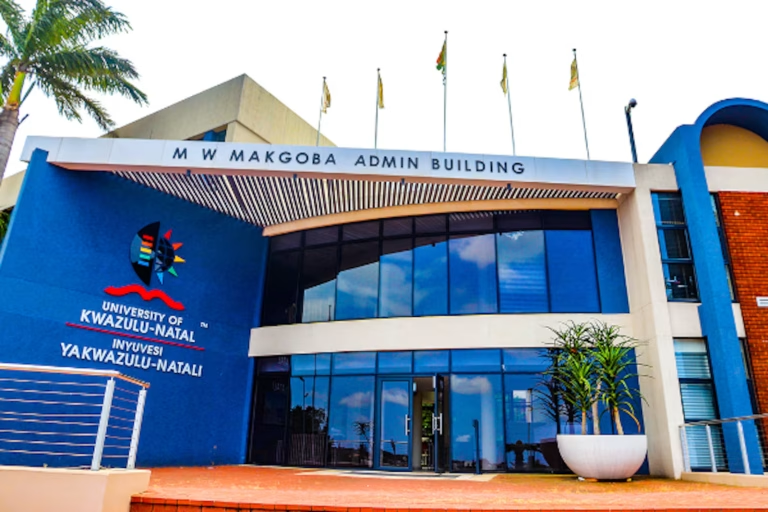
The University of KwaZulu-Natal (UKZN) is preparing to admit more than 9 000 first-time entering students (FTENs) for the 2026 academic year, with firm offers set to be issued to successful applicants from next week.

This follows the official release of the National Senior Certificate (NSC) results scheduled for next Tuesday.

UKZN said it received an exceptionally high volume of applications, underscoring intense competition for limited study places.

“A significant number of provisional offers were issued last year, with the University receiving more than 326 546 applications. This figure reflects multiple programme choices per applicant for the 9 124 first-year places available in 2026,” the university said.

In the previous admissions cycle, UKZN received more than 290 000 individual applications for approximately 8 600 first-year places, illustrating demand that continues to far outstrip capacity.

The most sought-after programmes for 2026 are the Bachelor of Nursing, which received 27 763 applications; the Bachelor of Education, with 25 826 applications; and the Bachelor of Laws, which attracted 25 231 applicants.

UKZN’s Executive Director for Corporate Relations, Normah Zondo, said firm offers would be issued in batches once matric results are verified, provided applicants meet the conditions of their provisional offers.

Successful FTENs are urged to register within the official registration period, scheduled from 2 to 7 February.

Meanwhile, remote online registration for returning students opened on Tuesday and will close on 13 February.

Zondo said the university was well prepared for a smooth and orderly registration process.

“UKZN continues its annual practice of a strictly online registration process and urges prospective students to remain vigilant against registration scams,” she said.

She reiterated the university’s commitment to safeguarding the integrity of its admissions system.

“Legal action will be taken against any individuals who misappropriate the University’s name, logo or symbols to defraud prospective students. Places at UKZN are not for sale.”

Applicants and members of the public were advised to rely only on information published on the official UKZN website and verified social media platforms to avoid misinformation and fraudulent offers.

According to UKZN’s 2024 Annual Report, the institution registered approximately 9 230 FTENs that year, reaffirming its position as a leading destination for South Africa’s school leavers.

Zondo added that all registered students will be required to present official proof of registration to access campus facilities.

The academic year is scheduled to begin with first-semester lectures on 9 February 2026.

INSIDE EDUCATION

Results of 40 matric pupils frozen as exam leak probe tightens

By Thapelo Molefe

The Department of Basic Education has withheld the 2025 matric results of 40 learners implicated in a national exam leak investigation, as it moves to contain the fallout from one of the most serious breaches of the National Senior Certificate (NSC) system in recent years.

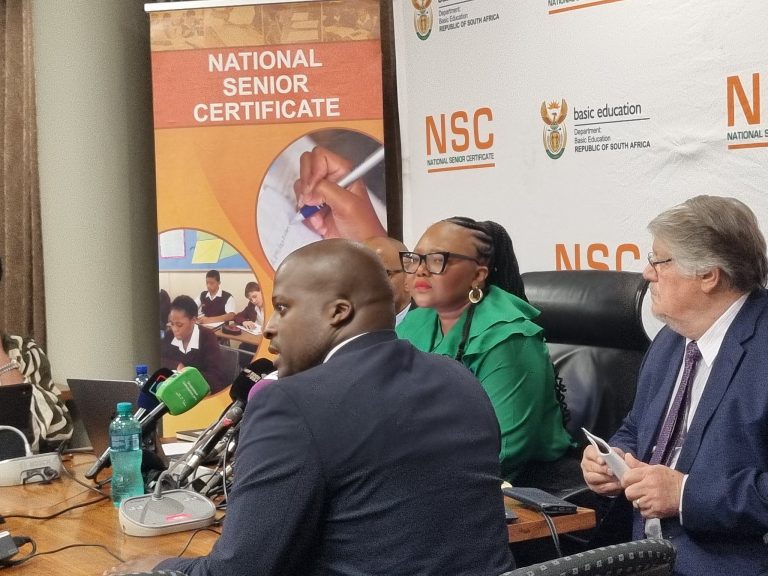
Basic Education Minister Siviwe Gwarube on Friday released the interim findings and recommendations of the National Investigation Task Team (NITT), established after reports emerged of leaked question papers and irregular conduct during the 2025 matric examinations.

Gwarube confirmed that the affected candidates will be subjected to independent disciplinary hearings after interim findings by the National Investigation Task Team (NITT) established that they had accessed leaked examination material.

“As part of these processes, each of the 40 candidates will be subjected to an independent hearing,” Gwarube said. 

“Where a candidate is found guilty by an independent presiding officer, this finding together with the recommendations will go through the provincial and national examination irregularity committees, and ultimately Umalusi will be the final arbiter.”

The hearings follow evidence that seven NSC papers were unlawfully accessed and circulated ahead of the 2025 examinations. These include English Home Language Papers 1 and 2, Mathematics Papers 1 and 2, and Physical Sciences Papers 1 and 2. 

The breach was detected after markers identified unusual similarities between learner scripts and official marking guidelines.

According to the NITT’s interim report, the leak originated from within the Department of Basic Education’s secure examination environment, where question papers are set and stored. One departmental official whose child wrote the 2025 NSC is alleged to have been involved, with evidence suggesting the learner further distributed the material.

“Candidate one received the USB with the question papers and the marking guidelines from their mother, an employee at the Department of Basic Education in Pretoria,” the report states.

Investigators interviewed 21 learners and analysed 17 written statements, ultimately identifying 40 candidates in the Tshwane area who had accessed the leaked papers. The materials were shared through USB drives, WhatsApp messages, screenshots and printed copies, with some candidates using artificial intelligence tools to structure and reformulate their answers.

Despite the breach, Gwarube stressed that the matter was localised and did not undermine the credibility of the overall examination process.

“Forty is a very small number compared to the almost 900,000 candidates who wrote the 2025 examinations,” she said. 

“Because the number of implicated candidates is so small, the NSC remains credible.”

Umalusi has since certified the integrity of the 2025 NSC examinations, allowing results to be released to non-implicated learners. However, the 40 identified candidates will not receive their results until the disciplinary process is finalised.

Department of Basic Education Director-General Mathanzima Mweli said criminal charges may also follow, particularly for learners who are legally adults.

“The new development from the NITT is that there are learners who are 18 years and above, and those learners can be pursued in terms of criminal charges,” Mweli said.

“We have done it before and we are going to do it with those learners who are 18 years and above.”

Possible sanctions include the nullification of results in affected subjects and a ban from rewriting those subjects for up to three examination sessions.

“We will not compromise the future of thousands of honest learners because of the actions of a few,” Gwarube said. 

“Those who compromise the NSC don’t only break rules, they attempt to steal opportunities from honest learners.”

The NITT’s investigation continues, with forensic examinations of electronic devices and financial records under way as the department moves to tighten exam security and prevent future breaches.

INSIDE EDUCATION

eThekwini opens applications for 2026 student relief fund, deadline 16 January

0

By Lebone Rodah Mosima 

eThekwini Municipality has opened applications for its 2026 Student Relief Fund for first-time undergraduate students who have been accepted at public universities or TVET colleges but lack financial assistance, it said on Friday.

Applications close on January 16, 2026.

The fund covers registration fees and may provide limited support towards tuition, but excludes accommodation, meals, books, transport and other related costs.

Applicants must be South African citizens permanently residing within eThekwini (proof of residence is required) and have a household income below R200,000 per year, of which proof is also required.

Applicants must meet the academic requirements for their chosen programme. Students enrolled at UNISA may be considered if they are not currently employed, the municipality said.

How to apply

Application forms can be collected from Sizakala Centres with Human Resources Centre of Excellence offices, or from the EMA offices on the 4th Floor, Standard Bank Building, 26 Matthews Meyiwa Street.

Completed forms must be submitted with proof of admission or study from a public university or TVET college, academic results, student and parent/guardian ID documents, proof of income or an affidavit, and proof of residence.

Incomplete applications will not be considered, the municipality said.

Applications must be submitted to the Human Resources Centre of Excellence, 21 Archie Gumede Street, Durban, 4001, or to Sizakala Centres with HR Centre of Excellence offices, it said.

The municipality said priority would be given to applicants who are underrepresented in terms of race, gender and disability, and encouraged students with disabilities to apply.

Applicants who are not contacted within 10 weeks of the closing date should consider their applications unsuccessful, it said.

For more information, the municipality said applicants can call 031 311 3924 or 031 322 0413.

INSIDE EDUCATION

Umalusi approves release of 2025 national examination results

0

By Johnathan Paoli

Education Quality Council Umalusi has approved the release of the 2025 end-of-year national examination results after a review of the conduct, administration, and standardisation of exams across the country, it said on Friday.

The approval covers four main qualifications: the National Senior Certificate (NSC), the National Certificate (Vocational) Level 4, the NATED Engineering Studies (N3), and the Adult Basic Education and Training certificate (ABET).

The exams were administered by the Department of Basic Education, the Department of Higher Education and Training, the Independent Examinations Board, and the South African Comprehensive Assessment Institute.

Umalusi Chairperson Yunus Ballim said at a press briefing that the Council’s Executive Committee reviewed reports from all assessment bodies and confirmed that the examinations met national standards and were conducted without any major irregularities that could affect the credibility of results.

Around 1.03 million candidates sat for exams at about 9 400 centres nationwide.

The NSC had the largest group, with more than 927 000 learners, with a total of 307 subjects examined across the four qualifications.

Standardisation of marks, a key part of Umalusi’s quality checks, ensures fairness by adjusting overall mark distributions rather than individual scores.

All assessment bodies received approval to release their results.

In certain subjects, some minor adjustments slightly upward or downward to reflect the standardisation process were made, and any candidates implicated in irregularities or dishonest acts will have their results withheld pending investigation, according to the organisation.  

The boards are required to submit improvement plans by 13 March.

While Umalusi acknowledged improvements in technical and vocational colleges, recurring issues with internal assessments remained a concern, including non-compliance with internal assessment requirements and some irregularities during examinations.

Ballim congratulated the Class of 2025 and expressed gratitude to teachers, parents, guardians, support staff, and communities who helped learners reach this milestone.

He encouraged students who did not succeed to persevere and emphasised the importance of maintaining the integrity of South Africa’s national examinations.

The NSC results will be released by Basic Education Minister Siviwe Gwarube on Monday, and published in accredited newspapers on Tuesday.

INSIDE EDUCATION

EFF takes aim at Gauteng Education over R594m mobile classroom irregularities

0

By Johnathan Paoli

The Economic Freedom Fighters (EFF) in Gauteng on Friday criticised the provincial education department over “reckless and unjustifiable” irregular expenditure of R594 million linked to the procurement of mobile classrooms in the 2024/25 financial year.

In a statement, the party said the spending was flagged by the Auditor-General, which found the Gauteng Department of Education (GDE) failed to comply with Construction Industry Development Board (CIDB) requirements when appointing contractors for the projects.

The EFF said the expenditure was an indication of wider governance failures, and came as public schools in the province faced severe overcrowding.

“The EFF asserts that Gauteng’s education crisis is not only the result of a lack of planning, but also of lack of political will and foresight from the ANC-led government. While hundreds of millions of rands are squandered on irregularly procured and grossly overpriced mobile classrooms, learners remain overcrowded, unplaced, and denied their constitutional right to basic education.”

According to the EFF, the department procured 905 mobile classrooms.

The party said a breakdown of the costs showed that each unit amounted to nearly R660,000 to procure and install.

It said that figure exceeded the cost of constructing a permanent brick-and-mortar classroom, and was more than three times the prevailing market rate, which it estimated to be around R100,000 per mobile unit.

“This level of overpricing raises serious concerns of maladministration, profiteering and unrepentant corruption,” the party said, adding that the funds could have been better spent on durable infrastructure that addresses long-term capacity challenges.

It said the department’s own 2024/25 annual report acknowledged a backlog of more than 2,500 classrooms across the province.

The party said that instead of addressing this structural deficit through sustainable investments, the department continued to channel “hundreds of millions of rands into temporary and inflated measures” that failed to resolve overcrowding.

The party also accused the provincial government of failing to honour political commitments.

It said that in Premier Panyaza Lesufi’s maiden State of the Province Address in 2023, he pledged that 18 new schools would be built in Gauteng.

In 2025, Lesufi conceded that only three of those schools had been completed and were fully functional, an admission the EFF said confirmed that the crisis was the result of stalled delivery rather than unforeseen circumstances.

Citing departmental figures, the EFF said that at the start of the 2025 application season, 41% of Gauteng schools were either full or oversubscribed.

Of the 857 oversubscribed schools, 579 were primary schools, meaning that the pressure on infrastructure was already entrenched at foundational learning levels.

The party said these multiple failures had fed directly into the 2026 admissions crisis, which had left 4,858 learners unplaced, mainly in densely populated urban areas.

Tshwane and Ekurhuleni were highlighted as particularly affected, with a high proportion of schools already oversubscribed during the 2025 application cycle.

The party also criticised the department’s learner placement policies, saying proposals to place learners from overcrowded no-fee schools into fee-paying public schools were ignored. Strict enforcement of feeder zone policies entrenched inequality and exacerbated overcrowding, it said.

It called for an immediate end to inflated temporary infrastructure contracts, alongside an accelerated programme to build permanent schools.

The department had not responded to the EFF’s allegations at the time of publication.

INSIDE EDUCATION

Naledi Pandor appointed Nelson Mandela University Chancellor

0

By Levy Masiteng 

Dr Naledi Pandor has been appointed as the next Chancellor of Nelson Mandela University, the institution’s council said, with the former cabinet minister due to take up the role on 1 April for a four-year term.

“She is a distinguished activist, academic, former Cabinet Minister and an internationalist, whose lifelong commitment to education, social justice and public service aligns deeply with the values and mission of the University,” said chairperson of the university council, Judge Nambitha Dambuza.

Pandor will succeed Dr Geraldine Fraser-Moleketi, whose term ends on 31 March.

Fraser-Moleketi served two terms as Chancellor.

Dambuza credited Fraser-Moleketi’s tenure with advancing the university’s values and growth, citing her “dedication, hard work and commitment to advancing Nelson Mandela University, its values and ethos that characterised her term of office”.  

Nelson Mandela University is a public university based in Gqeberha, Eastern Cape.

It was formed in 2005 through the merger of three institutions and operates across seven campuses, including one in George. It has a student population of about 27 000.

The university was renamed in 2017 to Nelson Mandela University after previously being known as Nelson Mandela Metropolitan University. The Nelson Mandela Foundation said at the time the institution was the only university in the world to carry the former president’s name and that it was among a limited number of institutions globally given formal approval to use it.

Pandor, who holds a PhD and has served in several senior cabinet portfolios, was appointed Minister of International Relations and Cooperation in2019, after prior positions that included minister in the education and higher education departments.  

INSIDE EDUCATION

KZN Health opens applications for pharmacy, psychology internships

0

By Lebone Rodah Mosima 

Applications for pharmacy and psychology internship posts opened online on Thursday after the province reprioritised funding to support training programmes that had come under pressure because of budget constraints.

KwaZulu-Natal Health MEC Nomagugu Simelane said prospective interns could apply through the department’s website.

“This recruitment is a crucial step in strengthening our health system and securing the skills our province needs,” Simelane said.

The provincial department had faced criticism after saying it would freeze some non-medical internship placements because of financial constraints, prompting concern from unions and parts of the pharmacy sector about the impact on newly qualified graduates and service delivery.

Simelane said the province had “successfully reprioritise(d) national funding” to address staffing pressure in training and internship programmes, with the aim of stabilising pipelines and improving pharmaceutical and psychological services in public facilities.

Addressing concerns from some facilities about whether pharmacy interns would be placed in the current financial year, she said placements would go ahead.

“So as we were having an engagement with the facility, one of the challenges that they reported to myself and the head of department was the fact that this year, according to them, they have not received any pharmacy interns,” she said.

“We have dealt with that matter. We are taking in pharmacy interns this year”.

She said management discussions had already taken place and interns would soon be deployed.

“[W]e are making sure that those interns are actually at the facilities and they are where they are supposed to be by Monday”.

Pharmacy graduates must complete a one-year internship under a registered tutor before moving on in the professional pathway, according to the South African Pharmacy Council.

The National Department of Health administers an online system for medical internship and community service placements, and lists pharmacists and clinical psychologists among the professions that must complete a year of remunerated community service to register for independent practice.

The KwaZulu-Natal Department of Health said it was committed to a recruitment process that was “transparent, fair and efficient”, and that it would work with relevant stakeholders to ensure such.

INSIDE EDUCATION