Home Blog Page 330

NSFAS distances itself from death of eThekwini TVET College student

NYAKALLO TEFU| 

The National Student Financial Aid Scheme (NFSAS) has broken its silence on the death of eThekwini TVET College student, Yonwabo Manyanya.

According to media reports Manyanya died of hunger and fatigue at the age of 26 after NSFAS failed to pay her allowance and tuition fees and she was evicted from her college residence.

She allegedly died of hunger and fatigue after spending three days sleeping outside campus.

NSFAS has denied allegations that it delayed the eThekwini student’s payment.

“There are allegations in the public domain that NSFAS has delayed paying allowances to cover the cost of accommodation time and that Manyanya subsequently suffered from fatigue and hunger as a consequence of this delay. These allegations are factually incorrect, based on information we have, and that the college has,” said NSFAS.

NSFAS said for funding to continue, a student is required to meet the NSFAS progression requirements.

Sibongile Mncwabe, Chief Corporate Services Officer said while Manyanya was a NSFAS funded student in 2020, for the 2021 academic year her funding had not been confirmed.

“The information on NSFAS record is that Ms Manyanya had not met the progression criteria at the time of her passing. She is part of a group of students whose progression status was continuously being queried with the college.  

“The facts of the communication clear NSFAS of any connection to this tragic incident. It is unfortunate that this tragic incident is being used inaccurately and unfairly in an insensitive manner to the family and to defame NSFAS. This misleading, unfortunate and opportunistic approach is viewed in contempt by NSFAS and individuals spreading this inaccurate communication should be ashamed,” said Mncwabe.

The delays in NSFAS funding have caused much outrage across institutions of higher education.

“The facts of the communication clear NSFAS of any connection to this tragic incident. It is unfortunate that this tragic incident is being used inaccurately and unfairly in an insensitive manner to the family and to defame NSFAS. This misleading, unfortunate and opportunistic approach is viewed in contempt by NSFAS and individuals spreading this inaccurate communication should be ashamed,” said Mncwabe.

Mncwabe said the financial aid, together with eThekwini TVET College, shared communication with the Department of Higher Education and Training explaining Manyanya’s funding status.

“The facts of the communication clear NSFAS of any connection to this tragic incident. It is unfortunate that this tragic incident is being used inaccurately and unfairly in an insensitive manner to the family to defame NSFAS,” added Mncwabe.

Manyanya was studying towards a diploma in electrical and infrastructure construction at eThekwini TVET College.
Wits Archaeologist named 2021 National Geographic Explorer

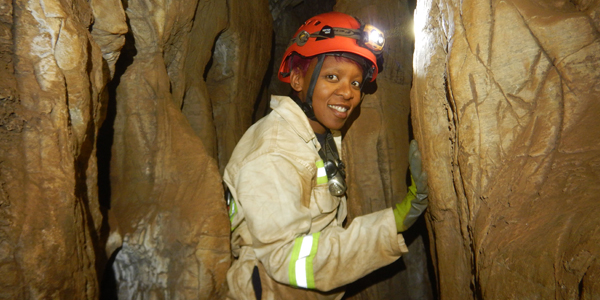
Archaeologist and biological anthropologist, Keneiloe Molopyane, has been recognised as a trailblazer by the prestigious National Geographic Society.

Molopyane has been announced as part of the National Geographic Society’s 2021 Emerging Explorer cohort.

“It’s been overwhelming. Since I found out, I’ve had little time to sit back and realise what it all means. I think it’s still sinking in,” said Molopyane.

According to the National Geographic Society, the Emerging Explorer cohort includes individuals breaking through in their respective fields with big ideas. These individuals are then nominated by the National Geographic Society to become a part of the global National Geographic Explorer community of changemakers.

Alex Moen, Chief Explorer Engagement Officer at the National Geographic Society said Molopyane was selected as a member of this cohort because she exemplifies what it means to be a National Geographic Explorer.

“Through her work as an archaeologist and biological anthropologist, and her focus on inspiring the next generation, Keneiloe is advancing our understanding of the world and all that’s in it,” said Moen.

What this means for Molopyane is she will have the opportunity to work with National Geographic to pursue new projects, collaborate with other Explorers, amplify her work to National Geographic audiences, and do educational outreach through the Society.

She will also participate in public speaking and media training, and will attend this year’s Explorers Festival virtually in June.

Molopyane joined the Rising Star Cave research team in 2018 as a junior underground astronaut.

She completed her PhD in biological anthropology at Wits in 2020, and then became involved in the UW105 Cave excavations, where she took on a leadership role in the expedition.

Molopyane has since become the first postdoctoral research fellow at the Wits Centre for Exploration of the Deep Human Journey.

The centre is headed up by fellow Wits graduate and National Geographic Explorer at Large, Professor Lee Berger.

Molopyane joins a group of 14 other scientists, educators, and storytellers in the 2021 Emerging Explorer cohort – a group of people whose fields of expertise are as diverse as culinary history and marine biogeochemistry.

“They’re amazing people, phenomenal. I feel proud to represent Africa, and hope to see more Africans receiving the same recognition in the coming years,” said Molopyan.

She added that she has met her cohort via Zoom but hopes for the opportunity to soon be together in the same room with them.

Molopyane’s postdoctoral research will entail deep exploration of the famous Gladysvale Cave system which is located in the Cradle of Humankind World Heritage Site.

Molopyane will graduate with her PhD at Wits in the July graduations this year. She joins the ranks of more than five other Wits graduates that hold the title of National Geographic Explorer.

“I’ve been telling people for a long time that I am an explorer, but now the title is official,” she said.

SIU freezes accounts of decontamination companies contracted by GDE

South Africa’s Special Investigating Unit (SIU) said it found the Covid-19 schools decontamination procurement contracted by the Gauteng Department of Education (GDE) to be “unlawful, haphazard and unfair”.

SIU said it has been granted a preservation order to the value of R40.7 million by the Special Tribunal to freeze bank accounts and assets belonging to 14 service providers that were contracted by Gauteng Education to decontaminate schools to the tune of R431 million.

SIU Spokesperson Kaizer Kganyago said the investigation by SIU revealed that the Gauteng Education Department did not follow due process in the procurement of services to decontaminate schools during the Covid-19 pandemic.

“The SIU approached the Special Tribunal for preservation order to freeze accounts with the sum of R6 million and assets with an estimated value of over R4.7 million belonging to seven companies, five individuals and two family trusts.

“Some of the names of companies who were appointed to decontaminate schools were supplied to the provincial education department via WhatsApp by the department’s own officials,” said Kganyago.

Adding that the majority of the companies whose assets have now been frozen were not only unaccredited but were not even based in the province.

Kganyago said the order includes assets such as two Mercedes Benz V Class, Landrover, Range Rover Sport, Haval H6 and Toyota Avanza.

He added that the collaboration with the Financial Intelligence Centre (FIC) was very effective.

“The FIC assisted – and based on the information presented by the investigating team, issued intervention directions to place a hold on R30 million of the funds received from the Education Department,” said Kganyago.

He added that the action was pursued after seven service providers started withdrawing the funds received from the department.

“A portion of the funds were transferred to multiple beneficiaries who have, in turn, disposed of them,” he said.

Between June and August 2020, the Gauteng Department of Education spent more than R431-million on sanitising schools.

The money was paid to hundreds of companies, many of which appeared to have no expertise or prior involvement in the cleaning industry.

At the time, departmental spokesperson Steve Mabona said the large expense could be justified in that it was necessary to allay fears of teachers, unions, SGBs and parents.

Kganyago said the procurement process followed by GDE was “haphazard, unfair and littered with procurement irregularities”.

He said the department obtained a deviation under Treasury regulations to conduct the procurement process without inviting competitive bids.

“The department did so on the basis that emergency procurement was warranted, given the urgent and pressing need to appoint service providers to decontaminate schools exposed to Covid-19,” said Kganyago.

Adding that the Treasury expressly stated that the request for the deviation appoint accredited service providers from the Central Supplier Database.

However, this was not done. The SIU investigation revealed that the department failed to comply with the express requirement of the deviation.

Kganyago said the vast majority of service providers that were appointed,173 out of 280, were not accredited and were not on the CSD.

“On this basis alone, the SIU will argue before the Special Tribunal that the procurement process was unlawful and falls to be reviewed and set aside,” he said.

Adding that the investigation also revealed that the procurement process was not cost-effective.

“The service providers were not paid per square meter of the area cleaned. Rather, a senior official in the department appears to have arbitrarily decided to offer a fee of R250 000 to R270 000 for the decontamination of primary schools; R250 000 to R290 000 for secondary schools; and R250 000 to R300 000 for district offices.

“The fees bear no relation to the work done by service providers or the cost of material used. The selection and appointment of suppliers was done in a haphazard, unfair and inequitable manner,” said Kganyago.

The order prohibits Fikile Mpofana Pty Ltd, Insimu Projects Pty Ltd, Insimu Consulting Pty Ltd, Insimu Medical Group, Mangaliso Pty Ltd, Lisondalo Pty Ltd, Zenaldo Consulting Pty Ltd, Sigwile Bright Mhlongo, Fikile Eugenia Mpofana, Lindokuhle Bridget Mkhize, Njabulo Mabaso, Richard Mweli, Shuphula Family Trust, and Madangu Family Trust from dealing with the funds held in the bank accounts and assets.

Kganyago said the SIU would in the next month launch review proceedings in the Special Tribunal, and also seek an order against the service providers to pay back all profits as consequence of their appointment.

He added that evidence pointing to criminal conduct will be referred to the National Prosecuting Authority, as well as the Hawks in the South African Police Service for further action.

“We are at risk. They do not care about us” – Free State Teacher

A teacher in the Free State had told Inside Education that the education authorities in the province and the Department of Education (DBE) “does not really care” about their health and safety.

This comes after one of the screeners at the educator’s school tested positive for Covid-19.

The teacher said they were told to come back to school only two days after the incident even though the screener had been in contact with everyone at the school.

“On Monday the school had to close down because one of the screeners tested positive. The shocking part is that they only gave the schools two days to fumigate and do everything.

“My main concern is how are they allowing us to come back after two days when that lady was in contact with everyone at school,” said the teacher who cannot be named for fear of victimisation.

Just yesterday, Free State Education MEC Tate Makgoe reported that a learner from Lephola Secondary School in Thabong, Welkom has died from Covid-19 complications.

Makgoe said the school was closed on Wednesday following the incident and will re-open on Monday.

The MEC said eight learners have also tested positive for the virus and eight more are awaiting the results.

One learner succumbed to the Covid 19 related complications, said Makgoe.

The Free State province has been hard hit by the pandemic.

Covid-19 numbers have in recent weeks been rising in the Free State, leading some to fear that the province might be at the beginning of a third wave of infections.

Questions are also being asked about the ability of the healthcare system to cope with a potential third wave and its ability to rapidly roll out vaccines.

According to the National Institute for Communicable Diseases (NICD), at a provincial level, the Free State province is currently experiencing a third wave. As of Thursday, 102 COVID-19 related deaths have been reported with four deaths Eastern Cape, six in the Free State, 24 in Gauteng, four KwaZulu-Natal, Limpopo five, Mpumalanga four, North West 45, Northern Cape 0 and Western Cape nine which brings the total deaths in the country to 56 077.

NICD said in the past week, the Northern Cape Province reported the highest weekly incidence risk at 170.3 cases per 100 000 persons. This is followed by the Free State Province with 83.2 cases per 100 000 persons and the North West Province at 41.4 cases per 100 000 persons.

The Free State teacher said, “We are at risk but we were told we are going to have to come back with a stringent plan in terms of how we are going to have to make up for the time lost.”

“This is when we realised that these people are saying no to our request to stay for a week at home and self isolate. We may as well go back to school after those two days,” said the educator.

The educator added: “Sometimes the sad reality is that as much as Covid-19 is killing people, we are being requested to be at school and apply all these rules. In the end, they don’t really care.”

Student dies of hunger and fatigue while waiting for NSFAS allowance

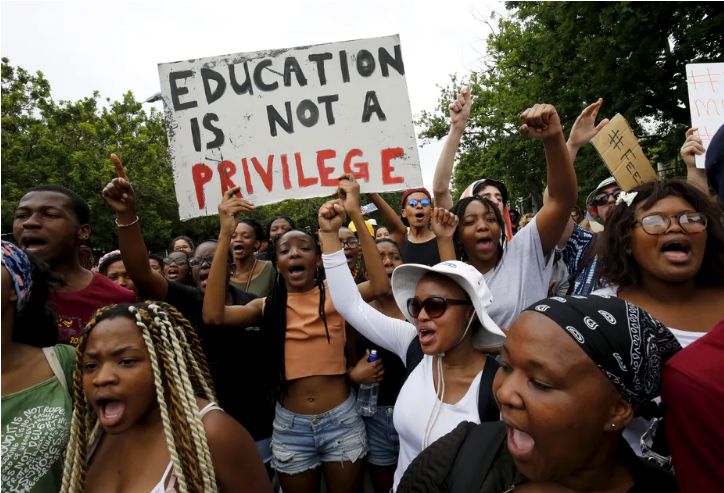
A student has died homeless and hungry while waiting for her allowance from the National Student Financial Aid Scheme (NSFAS).

Yonwabo Manyanya died of hunger and fatigue at the age of 26.

It is alleged that after NSFAS failed to pay her allowance and tuition fees, Manyanya was evicted from her college residence. She allegedly died of hunger and fatigue after spending three days sleeping outside campus.

Manyanya was studying towards a diploma in electrical and infrastructure construction at eThekwini TVET College

The delays in NSFAS funding have caused much outrage across institutions of higher education.

Earlier this month students from the University of South Africa (Unisa) took to twitter this weekend stating that they have not received their NSFAS allowances.

One student said he has been surviving just on water alone. Another said they cannot afford to pay for transport and are forced to walk about 30 minutes to an hour to reach university campus ground. Another said they do not have money to buy data to access coursework material placed online.

In an interview, Unisa Vice-Chancellor Puleng LenkaBula said I truly regretted the situation currently faced by her students saying that NSFAS payments were a structural issue out of the university’s hands.

“Our challenges and complexities derive from the centralisation of NSFAS.

“We depend on NSFAS sending information and also transferring funding  to students that are registered with Unisa.  So even to confirm whether a student is registered or not, we have to engage with NSFAS,” said LenkaBula.

On Monday, Inside Education reported that NSFAS board chairperson, Ernest Khosa, said the funding scheme’s student-centred model is one of the reasons for delays in funding decisions including appeals processing and disbursements.

Khosa said because of the student-centred model, the time it takes for appeals processing, disbursements, weak queries resolution mechanism, policy issues such as the N+ 2 rule, absentee parents, postgraduate funding, and student accommodation takes longer than it should.

The NSFAS board chairperson said the funding scheme’s organisational structure is not aligned to the student-centred model.

NSFAS CEO Andile Nongogo said NSFAS is continuing to receive registration data from institutions to process which will allow the funding scheme to be able to make more payments for students.

“The processing and disbursement of allowances to institutions to ensure that students do not sleep hungry has already commenced.

“However, we are aware of some delays in payments as a result of system integration challenges and delayed registration data that needs to be submitted by institutions,” said Nongogo.

Some students have taken to social media to demand answers and voice their concerns.

One student said they think NSFAS is overwhelmed and need better administration of student funding. “For started we need to get SETAs that administer student bursaries out of NSFAS otherwise the problem will persist.”

“The one thing we do not speak of is the poor administration and communication between NSFAS and institutions of higher learning. It is all just messy. We deserve better,” said the student.

Student leader Mthobisi Magudulela said there were many students at the TVET college who had been evicted from their dwellings and had resorted to camping outside the campus hoping for assistance.

Magudulela said the student leadership at the college has received reports of students committing suicide because of the anxiety arising from financial exclusion.

“The tragic death of Yonwabo highlights the neglect and harsh realities faced by poor students at eThekwini college. Her death should not go unpunished. NSFAS, together with the management of the college, must be held to account,” said Magudulela.

He added that for weeks now students have been sleeping outside the campus and some are squatting with friends because landlords have evicted them for non-payment.

Fake poster on social media stating closure of public schools

The Department of Basic Education (DBE) has condemned the circulation of fake news on different social media platforms, stating that public schools will shut down between 26 May and 28 June.

The fake news poster comes after calls made by unions in the country to shut down schools following the acceleration of Covid-19 infection rates across schools in South Africa.

This also follows the department’s decision to immediately suspend all contact sport at schools last week.

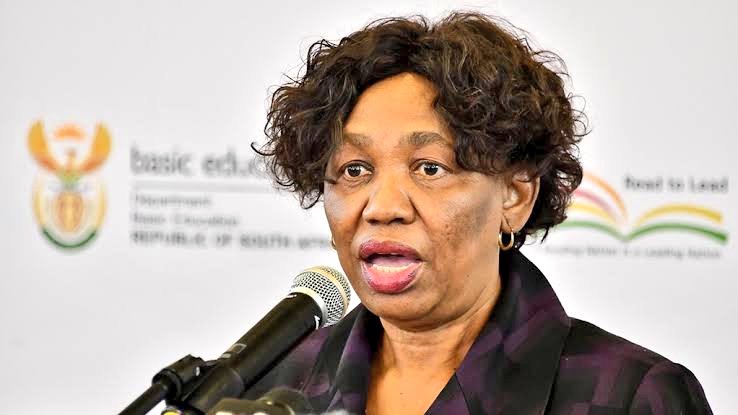
DBE Spokesperson Elijah Mhlanga said the national department was aware of a manipulated image doing rounds purporting to be an announcement from DBE Minister Angie Motshekga.

Mhlanga said the department wished to dismiss the poster and image as fake news.

“We continue to urge members of the public to be vigilant and verify sources of information they read before sharing it on social media.

“This kind of malicious content is created with the express intent to cause confusion and mislead the public,” said Mhlanga.

Mhlanga added that the department will use credible media platforms to communicate should there be developments in the sector.

The Educators’ Union of South Africa (EUSA) last week called for the immediate shutdown of all South African schools.

EUSA said this is because some provinces are experiencing the beginnings of the third wave coronavirus outbreak. The union said public schools still lacked PPEs and this was the cause of the increased cases of infected learners and teachers.

Scelo Bhengu, EUSA President, said with Gauteng, Free State and the Eastern Cape having declared that they have reached a third wave, it is inevitable the whole country will be in third wave soon.

Bhengu said Kwazulu-Natal, Mpumalanga, the North West and the Western Cape have been reported to also be experiencing sustained increases over the last few weeks.

“Schools are central to the contribution of the resurgence as safety protocols are being ignored mostly by principals,” said Bhengu.

South Africa is seeing a resurgence in Covid-19 cases.

Last week the Council of Education Ministers took a decision to suspend all contact sports in schools with immediate effect. DBE spokesperson Elijah Mhlanga said the cancellation of contact sports comes after provinces such as Gauteng, North West and the Free State saw a rise in Covid-19 cases among learners. 

“It is evident that despite following the protocols as guided by the directions on extramural activities and standard operating procedure on the prevention, containment and management of Covid-19 in schools, contact sports events still contribute to the spread of Covid-19,” said Mhlanga.

Cabinet is set to meet on Wednesday to discuss recommendations from the national coronavirus command centre on how to address the virus threat.

DBE launches nationwide anti-bullying drive

NYAKALLO TEFU| 

The Department of Basic Education (DBE) is embarking on a nationwide anti-bullying intervention drive in schools.

The drive is being launched as bullying in schools has been an issue across the country.

Inside Education reported Lufuno Mavhunga, a learner from Mbilwi Secondary School in Limpopo,  took her own life following a bullying incident. 

A video went viral showing another learner at the school slapping Lufuno across the face several times. 

The girl then took pills and left a letter where she said she could not stand the embarrassment. 

DBE Spokesperson Elijah Mhlanga said the department is pleased to partner with sister departments, social partners and key stakeholders for this anti-bullying intervention initiative in an effort to curb bullying often involving learners, teachers and sometimes community members.

Mhlanga said thousands of people called on the national department to take action against bullying at schools especially with the increased spotlight as a result of the proliferation of social media.

Mhlanga said the campaign is set to begin 28 May under the theme ‘School Safety – Violence and Bullying Prevention Initiatives’.

He said the initiative aims to mobilise learners, parents, teachers and key stakeholders in promoting a safe learning environment for quality education and galvanise constructive community involvement in schools to curb incidents of bullying and violence.

Adding that two-hundred and fifty learners and their parents from neighbouring schools benefit from the programme, while School Management Teams (SMT)of schools within the vicinity will form part of the programme. 

The DBE has partnered with sister departments, social partners and key stakeholders for the anti-bullying intervention initiative. 

UFS starts a mentoring programme

NYAKALLO TEFU| 

The University of the Free State (UFS) will provide critical mentoring and coaching for young academics in support of their career progression to senior academic levels.

The programme, called the Transformation of the Professoriate Mentoring Programme, was first launched in the second semester of 2019 where two groups were chosen to participate. 

The university said the programme will focus on the holistic development of the skills and attributes of emerging scholars in the core functions of teaching and learning, research, community engagement, and academic leadership in preparation for their roles as future professors and academic leaders.

“I am most excited about the opportunity to be part of the transformation of the Professoriate and will be part of it for at least three years,” said Public Law lecturer, Dr Clive Vinti.

Vinti said he thinks the programme is fundamental to the progression to the post of professor for young academics since it seeks to eliminate barriers to this promotion.

“The programme provides a diverse range of support activities to prepare young academics for the complexity of academic careers,” said manager of the mentoring programme, Dr Henriëtte Van den Berg.

Van den Berg said this programme was especially important during 2020, amidst the constraints of COVID restrictions, virtual teaching and learning and remote learning.

UFS said the programme currently has 75 participants, representing all faculties. 

“I am optimistic about the future of the institution when I look at the quality of young academics that were selected for the programme,” said Dr Van den Berg. 

SGBs condemned for disruptive behaviour at schools

NYAKALLO TEFU| 

The Democratic Alliance (DA) has condemned the behaviour of the School Governing Bodies (SGB) at Moses Kotane and Julius Sebolai Primary Schools in Braamfischer, Soweto for disrupting learning this week. 

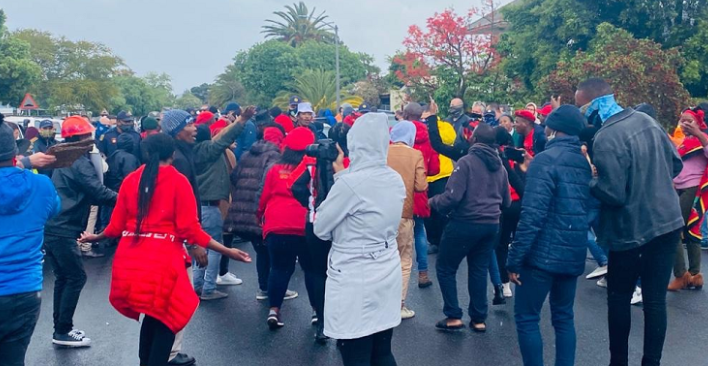
On Monday, there were reports that the two schools governing bodies were picketing outside the schools and prohibiting learners from entering the schools’ premises.

Khume Ramulifho, DA Gauteng Shadow MEC for Education said the newly elected SGB wants power to control the school finances and so, they decided to picket and disrupt learning and teaching at the school. 

The school governing bodies were recently appointed in schools across the country, in what was deemed the largest public elections after national, provincial, and local elections. This is because more than five million people usually cast their votes for the SGBs.

Basil Manuel, executive manager the National Professional Teachers Organisation of South Africa said schools SBGs should not think they are school managers.

“The SGB is in charge of governance and we must make it very clear that there is a clear distinction between the governance of the school and the management of the school,” said Manuel. 

“The governing body cannot disrupt schooling. They in fact have the exact opposite mandate and their mandate must be to ensure that schooling happens,” he added.

The DA called on the Gauteng Education Department to intervene on the issue with both schools. 

Ramulufho said the DA spoke to the head of department at Gauteng education who said they would send their district team to intervene. Adding that the SGB needs to find better ways to solve issues and not disrupt teaching and learning at school. 

“The SGB is the voice of the parents, if they are unhappy with things, they need to draw the attention of management to the issue but can’t act without having involved the education department and principal,” said Manuel. 

Ramulifho said learners cannot afford to lose days as they are on a rotational basis which means they do not attend class every day. 

“We need to ensure that we protect the time afforded to learners at school, parents can contact the department for other issues,” said Ramulifho. 

Handball chairperson ready to restore the sport in Gauteng

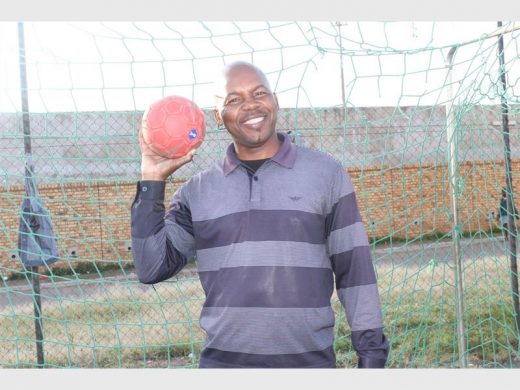
Daveyton resident Nsizwa Reginald Mahlangu has been elected as the new chairperson of the Gauteng Handball Association recently.

The 44-year-old has been passionate about handball since he discovered the sport in Mpumalanga when he was still in high school.

He has played handball since the ’90s and has been a coach for over 10 years.

Mahlangu said he loved the sport because it was different and unique. It also involves five sporting codes: soccer, basketball, swimming, volleyball and cricket.

With his new role, he is responsible for planning tournaments, prepare the team, fund-raisers, ensuring the teams have all the needed equipment and developing up-and-coming coaches.

The sports fanatic is also a member of the Gauteng Sports Confederation and the South African Handball Federation (SAHF).

In 1997, when he moved to Daveyton, he founded a handball club at a local primary school.

“I saw the need to start the club because soccer, athletics and netball were the only popular sporting codes played in the township schools at the time,” said Mahlangu.

“I wanted to bring in something different and take the children off the streets.

“Handball quickly gained momentum and grew to other parts of Ekurhuleni, and some of the players were able to travel the world and represent the country through handball.”

Mahlangu said handball is an Olympic sport; however, it is not recognised in South Africa like in other countries.

“There has been a lack of support for the sport but now government is starting to support us. We believe their involvement will also give us an opportunity to participate in the Olympics in four years time,” he said.

“We need the department of arts and culture to support sport, especially in townships schools and universities because most of these learners have potential and there is a bright future ahead.”

The chairperson said he plans to revive the handball sport in Gauteng so it can be recognised again.

“I would like us to have our very own regional and national tournament. Coaches should get a stipend so they can be motivated to continue the work they do in townships, and I want to see the players playing in other African teams.

“That will give others hope when they see success stories. We also need more media coverage, but slowly but surely we are getting there,” said Mahlangu.

When he is not busy with sporting activities, he lends a helping hand to those in need through his soup kitchen in the area.

From July 9 to 12, the Gauteng handball team will take part in the National Junior Championships in Polokwane.

The team needs transportation money, food, uniform and equipment such as balls, bags, nets, gloves, water bottles.

Benoni City Times