Home Blog Page 331

50-year-old Limpopo teacher accused of rape has resigned

NYAKALLO TEFU| 

The Department of education in Limpopo has welcomed the resignation of the 50-year-old teacher accused of raping an 18-year-old from Mbilwi Secondary school. 

The 50-year-old was arrested after a case was opened against him, accusing him of raping the learner back in 2018.

He allegedly raped her at a lodge in Louis Trichardt and at his home at Ha-Makhuvha village outside Thohoyandou. 

“The resignation was accepted and processed accordingly, he has since been removed from our system,” said Limpopo education department spokesperson, Tidimalo Chuene. 

 The accused is still in custody for the alleged offence and it is being reported that he raped the learner repeatedly. 

“As indicated earlier, we deem accusations against him serious and worrying. As parents we leave our children in the care of educators to build and nurture them into responsible adults,” said Chuene.

The accused is expected to apply for bail in the Thohoyandou Magistrate’s Court on Thursday. 

“The idea of one taking advantage of children in this alleged manner is disturbing, we hope justice prevails in this case,” said Chuene.

School pit toilet case in Limpopo postponed

NYAKALLO TEFU| 

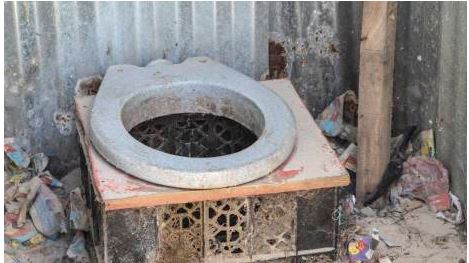
The court case to fight the eradication of pit toilets in Limpopo schools, originally set to be heard by the High Court of South Africa Limpopo Division on Monday has been postponed.

Dr Faranaaz Veriava, head of education rights programme at Section27 said the organisation is “extremely disappointed” that this matter is not heard in court as planned.

Veriava said the case was set to be heard before Judge Muller by the Registrar, however, the judge was not available on that date.

She said Section27 will be asking for a date at the soonest possible opportunity for this matter to be heard.

She added that the organisation is waiting to receive an alternative court hearing date from the High Court in Polokwane.

“Given the seriousness of the matter, and because learners’ rights and lives are at stake, we are requesting a preferential date. We will communicate the new dates and details with media in due course,” said Veriava.

In 2018 the court ordered the Department of Basic Education and the Limpopo Department of Education to file plans to eradicate pit toilets and provide the court with an updated audit of sanitation needs at schools in the province.

“We are saying that ‘plans’ made to eradicate pit toilets at schools in the province are not good enough. These plans are not reasonable in terms of the law and claim that pit toilets can only be eradicated from all Limpopo schools by the end of 2030. This is unconstitutional,” said Veriava.

 Adding that the organisation is requesting that the court order education authorities file a new, consolidated plan about how they will urgently replace all pit toilets at schools in the province and replace them with appropriate sanitation.

We are also calling for better oversight and monitoring of delivery, she added.

“Unless a more comprehensive, urgent and coherent plan is implemented, thousands of learners will be at risk of dying or being injured at schools with unsafe toilets for the next decade,” she said.

The order to eradicate pit toilets in the province was handed down after Michael Komape died after he fell into a pit toilet.

Veriava said it has been seven years since Michael died and three years since the structural interdict was handed down requiring that the department of basic education develop a plan for the eradication of pit toilets in Limpopo.

“The ongoing violation of the rights of poor learners because of unsafe and undignified toilets must be remedied,” she said.

Teacher dismissed for beating 5-year-old

The Gauteng Department of Education (GDE) has welcomed the dismissal of a Pretoria teacher who was caught on video slapping a grade R pupil (5) several times.

Reports say it took a protest by parents to get the department of education in Gauteng to suspend the educator who was filmed while allegedly meting out corporal punishment to a grade R pupil.

The teacher from Nchuncheko Primary School in Soshanguve trended on social media after a video of her emerged beating a grade R learner.

The little boy in the video can be heard crying in the clip while the woman hit him several times on his head.

The provincial department said the teacher was immediately removed from the school and was reported to the district office pending a disciplinary hearing on Monday.

Mabona said a disciplinary hearing held on Monday found the teacher guilty and recommended her immediate dismissal.

Mabona said the teacher was on Tuesday served with the outcome of the disciplinary hearing.

“We can confirm that the disciplinary process, which was instituted upon finding out about the video, took place on Monday. The process was concluded with the immediate dismissal verdict of the grade R practitioner,” said Mabona.

“As the GDE, we are fully behind the school’s decision to dismiss the practitioner as it sends out a strong message to everyone working with learners at our schools never to use violence as a form of disciplinary measure,” said Mabona. 

He added that the department’s psycho-social unit has been dispatched to the school to offer counselling to the affected learner.

May/June 2021 National Senior Certificate exams to start on Wednesday

NYAKALLO TEFU| 

The Department of Basic Education (DBE) has said it is all systems go for the May/June National Senior Certificate examinations (NSC) for the 2021 academic year. 

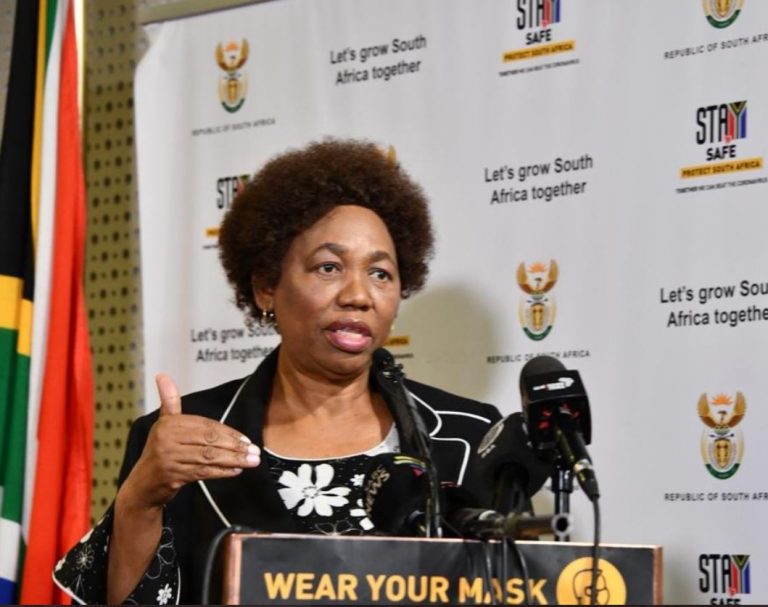
Learners across the country will start their exams on Wednesday and finish on 7 July, said Minister Angie Motshekga. Motshekga added that the exams will take place over a 6 week period.

The May/June National Senior Certificate examinations were initially set to start on May 5 but were postponed to May 26.

Motshekga said this was recorded as the largest examination to ever be administered in the country’s history.

“Its all systems go and everything is in place,” said DBE spokesperson, Elijah Mhlanga. 

In 2020, learners across the country were not able to sit down for their May/June examinations due to the country being under a hard lockdown owing to the coronavirus pandemic. 

Instead, the DBE combined the May/June exams with the November/December ones which saw a total number of 1,058,699 learners sitting to write between 5 November until 15 December. 

The department said accountancy learners will sit for paper one of the subject.

“The measures that the DBE used in 2020 for the November examinations will be used again this year for the May/June exams,” said Mhlanga. 

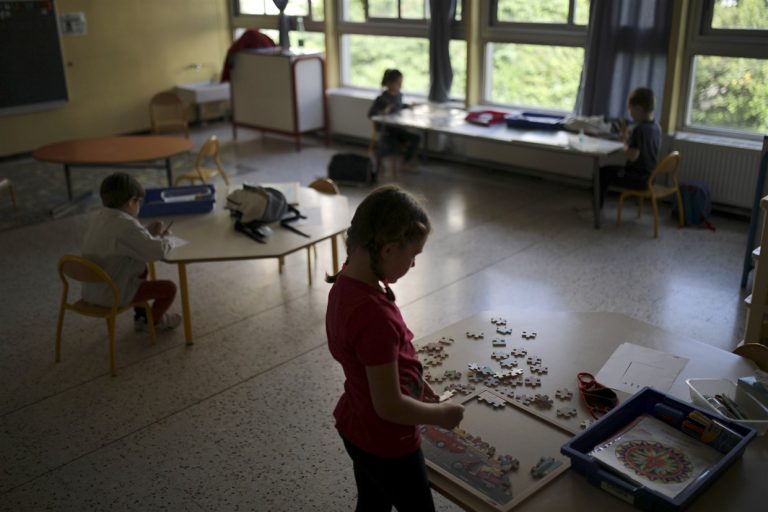
Social distancing is one of the basic requirements and learners including staff following the Covid-19 regulations.

“We are confident that the exams will proceed as planned,” added Mhlanga.

SADTU calls for vaccination of teachers

The South African Democratic Teachers’ Union (SADTU) has urged all its eligible members to get vaccinated. This is because there is still no information on when wall teachers will become eligible for the jab.

Research shows that over 3500 teachers have died from coronavirus related complications country wide.

Mugwena Maluleke, SADTU general secretary said the union is very clear about their position that all teachers have to be vaccinated. We are also encouraging all those teachers who are eligible for vaccination to register.

“We have said please allow yourself and take that particular decision as an individual to be vaccinated because we need to save lives,” said Maluleke.

Maluleke added that there has been constant communication with teachers from the union to get vaccinated.

He added: “We have communication with the department of [basic] education. The Department of Education is not responsible for vaccinations and therefore, we need to be able to send a very clear message to the National Command Council that is responsible for this as well as those responsible for the vaccine.

“We are working day and night to make sure that the message is sent through to say enough is enough, we cannot have our children not being taught because the teachers are not well,” said Maluleke.

Maluleke added that the union believed that teachers would be the next group vaccinated after healthcare workers and that the vaccine rollout has been confusing.

“We are demanding for a date for teacher vaccinations to take place and we encourage teachers to register,” he said.

The call to prioritize teachers in Covid-19 education responses is not new.

The United Nations Educational, Scientific and Cultural Organization (UNESCO) has also urged all countries to prioritize teachers in national COVID-19 vaccine rollout plans to ensure education can continue safely and schools remain open.  

As early as March 2020, the International Taskforce on Teachers for Education 2030 launched an international Call for Action on Teachers to highlight critical measures that countries should take to support teachers in the global pandemic, including the “protection of teachers’ and students’ health, safety and well-being”.

This was reaffirmed during the Extraordinary session of the Global Education Meeting, convened by UNESCO in October 2020, where Heads of State and Ministers committed to support all teachers and education personnel as frontline workers, and to prioritize their health and safety.

On 14 December 2020, UNESCO and Education International urged countries to include teachers as a priority group in national vaccination rollout plans to curb the spread of Covid-19 and protect teachers and students in an effort to ensure the continuation of learning and a safe return to in-person teaching.

However, this has still not been done in South Africa.

Maluleke said SADTU has been patient given that healthcare workers needed to be first prioritised, “but now government needs to provide clearer communication on what’s next”.

The general secretary said teachers are also front-line workers.

Professor Mary Metcalfe said anyone can register “now” for the vaccination.

“We need to push for a special registration category for teachers and to prioritize their vaccination.

“We will soon know when teachers are able get the vaccine as a group and as front-line critical workers serving the national interest,” she said.

Sexual assaults and violence at South Africa’s schools

The 38-year-old teacher accused of raping a grade 10 pupil from Umqele Secondary School’s case has been remanded for 27 May for the bail application process.

Gauteng Department of Education (GDE) MEC Panyaza Lesufi said any educator or official who preys on learners has no place in the education system.

Lesufi said all educators and officials have a sacrosanct duty of ensuring learners placed in their care are safe and protected.

Lesufi said this at the Tembisa Magistrate court last Thursday where the teacher suspected of rape made his first court appearance.

“We will continue to support the victim and all affected by this alleged incident.

“We can only imagine the anger and disappointment the family of the learner is going through following the betrayal of their trust by a person they trusted,” said Lesufi.

Inside Education reported last week that the teacher went on the run for several days since the alleged incident occurred on the school property. The man only handed himself over to the police on Wednesday last week.

GDE Spokesperson Steve Mabona said the department can confirm the suspect tendered a letter of resignation which will undergo all the necessary departmental processes.

At the time, GDE said the man will also be charged with absconding as he had left work without permission.

Meanwhile the South African Human Rights Commission in Limpopo conducted a three-day provincial hearing into bullying, corporal punishment and sexual assault by educators in the province.

The hearings were held following the passing of teenage Lufuno Mavhunga who committed suicide after being bullied by another pupil.

During its three-day hearing in the province this week, the commission heard how incidents of bullying, sexual assault and heavy-handed educators were often swept under the carpet by teachers or other authorities.

According to the South African Council of Educators (SACE) representative, George Moroasui, South Africa recorded 209 cases of corporal punishment and 122 cases of sexual abuse of learners by teachers in 2019.

Moroasui said SACE still finds it difficult to get information from the Department of Education of teachers practicing corporal punishment and those who have previous cases of sexual relationships with learners against them.

Adding that at times school management and school governing bodies hide such cases instead of reporting them to the police.

South Africa Principals Association’s Mashudu Ramulumo reported at the hearings that many pupil-teacher sex cases not reported by principals.

Ramulumo said only those principals who were bold enough to implement policy are the ones who come forward and report.

“Yes, it is true. So many cases are not reported. Some principals do not have the right skills to compile a case to report to the department,” he said.

Mamahloli Masipa, the child protection manager at Save the Children SA added that corporal punishment continues to be used at these schools.

Masipa said her organisation works with a number of schools around Limpopo and they have discovered that principals choose to hide incidents of violence at their schools.

Wits announces team to advance AI research in Africa

Wits University announced its team that will advance Africa’s AI initiative, Cirrus, a private sector led initiative bringing together academia and industry for the establishment of a world class artificial intelligence (AI) research and application capability for Africa.

The university team will be led by Professor Zeblon Vilakazi, Wits Vice-Chancellor and Principal, with Professor Emeritus Barry Dwolatzky (project lead), Professor Nithaya Chetty, Dean of the Faculty of Science, as the champion for scientific engagement, and Dr Roy Forbes as the engagement coordinator.

The team will lead Africa’s effort to advance artificial intelligence research and its application across the continent, said Vilakazi.

He added that the university team will work closely with the Cirrus team that was announced at AI Expo Africa in 2020.

Wits team to lead AI research in Africa together with Cirrus AI

Priorities and challenges

Wits University said it focused on two priorities – academic and government.

“The academic aspect will support the establishment of the AI Africa (AIA) Consortium which provides the mechanism for bringing together academic and research institutions with a vested interested in the success and sustainability of Cirrus as Africa’s artificial intelligence effort. While the government focus will be on the adoption of Cirrus and the support for local academic and research institutions to invigorate AI research and to further the application of AI across various academic and industrial domains,” said Vilakazi.

Vilakazi said Cirrus is the largest and most complex undertaking of its kind in Africa’s history. However, the major challenges are neither financial nor technological.

“Rather, it is rallying the academic and research institutions in Africa for there to be a critical mass of research and applications that can fully leverage the capabilities that will be established with Cirrus,” said the vice-chancellor.

Most of the institutions participating in the AIA Consortium will be publicly funded academic institutions from across the continent.

With Wits University, Cirrus now has a leading university on the continent and a competent team to spearhead this important work.

South African and numerous other African universities currently host various academic and industrial research groups.

Gregg Barrett, Founder of Cirrus said these groups are involved in activities ranging from environmental and climate change research, medical research to materials research and energy storage development and design.

“Most if not all these existing research thrusts could benefit significantly from incorporating AI methodologies in their research activities. Furthermore, in working together as opposed to working in isolated groups the impact of the research will also be improved,” said Barrett.

He added that the establishment of Cirrus is a rallying call to the academic and research institutions in Africa for there to be a critical mass of research and applications that can fully leverage the capabilities that will be established with Cirrus.

“We at Wits have been on a long journey with Cirrus to bring all of the elements of this ambitious partnership into place. We are hoping to soon begin to sign up members of the AI Africa (AIA) Consortium and to see tangible benefits flowing from our engagement with Cirrus,” said Wits project lead Dwolatzky.

Dwolatzky said Wits University’s looks extend beyond the AIA Consortium and includes catalysing necessary strategic policy engagements with government to ensure impact on important research and societal objectives.

“The critical strategic steps that need to be taken in Africa have long been spoken about and now is the time for action. As Marc Andreessen recently pointed out, a takeaway from the COVID-19 pandemic is that people need to think about their occupation and contribution to society. If you are not helping people directly, and your occupation does not lead to something being built and contributes little to society, you are failing yourself. Cirrus represents Africa’s collective opportunity to move past the talk and get building on solving real problems with significant societal impacts,” says Barrett.

NSFAS Chair: NSFAS student-centred model causes delays in funding decisions

The National Student Financial Aid Scheme (NSFAS) board chairperson, Ernest Khosa, said the funding scheme’s student-centred model is one of the reasons for delays in funding decisions including appeals processing and disbursements.

This comes after many students from different higher education institutions across the country took to social media to say they cannot afford food, pay for reading materials or attend classes because of delays in NSFAS payments.

NSFAS CEO Andile Nongogo said NSFAS is continuing to receive registration data from institutions to process which will allow the funding scheme to be able to make more payments for students.

“The processing and disbursement of allowances to institutions to ensure that students do not sleep hungry has already commenced.

“However, we are aware of some delays in payments as a result of system integration challenges and delayed registration data that needs to be submitted by institutions,” said Nongogo.

Khosa said because of the student-centred model, the time it takes for appeals processing, disbursements, weak queries resolution mechanism, policy issues such as the N+ 2 rule, absentee parents, postgraduate funding, and student accommodation takes longer than it should.

The NSFAS board chairperson said the funding scheme’s organisational structure is not aligned to the student-centred model.

Khosa was speaking at a media briefing following the NSFAS Board address to the Portfolio Committee on Higher Education, Science and Technology last week.

According to NSFAS, the briefing was on the important role the financial aid scheme has played in the country, as well as some of the problems encountered by the scheme.

 “We met with the portfolio committee today to discuss these issues,” said Khosa.

Khosa said it is public knowledge that in 2018, the scheme was converted into a fully bursary fund from being a provider of student loans.

He said given that there was a short time to execute this new mandate, the scheme was not appropriately designed and prepared to handle this change.

“Consequently, this led to operational challenges that are widely known, which ultimately contributed to the organisation being placed under administration,” said Khosa.

He said the lack of consequence management and the lack institutional performance management continue to mar the organisation.

He added that other challenges include negative audit outcomes as well as systems that are not fully responsive to the core business of the organisation.

“In today’s engagement with the portfolio committee, the board shared its strategies to address amongst other issues, the issues listed.

“On the student funding, we will support the work of the department of higher education and training in assessing funding mechanisms. Furthermore, the board is developing a fund-raising strategy.

“On the student-centred model, we have commissioned an application system and process that will make real time funding eligibility decisions,” said Khosa.

He added that appeals will be immediate for new students and for continuing students a new appeal portal will be introduced in the second semester which will assist in timely decision making.

However, despite these challenges, we have offered some strategies to resolve them to the portfolio committee. Adding that the scheme has also continued to grow in spite of these challenges.

He said 1 263 671 students have been assessed as eligible for funding in the current academic year.

He added that 712 428 of these students were first time higher education entry students and 551 243 were continuing students.

Of these figures, 940 226 students are at the country’s universities while 323 445 are registered with Technical and vocational education and training (TVETs).

“There were 254 826 students funded, and 40 564 graduates were produced in 2017. In 2018 these number grew by 41,84% leading to 361 449 students funded, and 59 249 graduates were produced. In the current tenure of the new board, we have higher achievements – 1 263 671 students have been assessed as eligible for funding,” said Khosa.

Khosa said the board was working with the department of higher education and training to explore some funding policy issues.

He said the board has also established the Human Resources, Ethics and Remuneration Committee, Operations Committee, ICT Steering Committee to dedicate attention to some of the challenges faced by the organisation.

Khosa said the NSFAS board has also dedicated attention to addressing negative audit outcomes.

“While there is still a need to improve the control environment, we will be in a position to submit our financial statements within the statutory deadlines,” said Khosa.

“However,” he warned, “it should be noted that some issues can only be fully resolved over a longer period,” he said.


2021-22 DBE Budget Vote: Minister announces additions to the curriculum

NYAKALLO TEFU| 

Minister of Basic Education Angie Motshekga told parliament on Thursday that her department has prioritised the strategic implementation of a curriculum that will include fourth industrial revolution (4IR) material in all public schools.

The new curriculum will include skills material on Coding and Robotics for Grades R-3 and 7. Motshekga said the curriculum will also include a new level subject, Marine Sciences.

Motshekga was addressing the National Assembly where she presented her department’s 2021/22 budget vote.

The minister told the assembly that adjustments that were effected to the 2020 MTEF budget allocations, which changed the baseline allocations for the ensuing three to five year period, have a direct bearing on the 2021/22 budget allocation she was presenting.

“Firstly, the overall 2021/22 MTEF budget allocation R27 billion, an increase of 15.5% from the 2020/21 revised overall baseline budget allocation. Secondly, the overall allocation for Condition Grants is R20.7 billion, an increase of 20.2% from last year’s revised baseline,” said Motshekga.

Motshekga added R16.2 million was allocated as the general budget support for the department’s systematic improvement of language and numeracy in foundation phase as well as another R19.9 million allocated for technology for Grade 7-9.

“These new allocations will go a long way to ensuring the roll-out of these two strategic programmes,” she said.

Other allocations include R3.7 billion allocation for earmarked funding and transfer payments of R1.6 billion.

The Minister said a state-of-the-art digital platform had been developed for training of teachers for Coding and Robotics. 

“Orientation materials, lesson plans and coding programmes, have been uploaded onto this digital platform,” said Motshekga.

Coding is essentially written instructions that a robot or computer program can read and then execute. 

Robotics allows students to see their thinking in a real way as they go through trial and error until the task is accomplished and the robot’s motions are performed as originally intended.

She said the draft Curriculum Assessment Policy Statement (CAPS) documents for Grades R-9 for Coding and Robotics has been submitted to Umalusi for appraisal and quality assurance.

“Preparation for training of officials, the appointment of service providers by ETDP-SETA has been concluded, and Service Level Agreements have been signed,” said the minister. 

In March, DBE gazetted the draft Coding and Robotics curriculum for public comments. Motshekga said the Sasol Foundation funded the orientation of the Coding and Robotics National Training team held the same month.

In response to the announcement of Coding and Robotics, the Democratic Alliance’s Shadow Minister of Basic Education Baxolile Nodada said the party welcomes this announcement by the Minister. 

“The DA has been calling for a lot of advancement in basic education, we are pleased that the principle of taking innovation forward is going ahead in basic education,” said Nodada. 

Nodada said the party’s only concern is that the minister only prioritised 18 schools which means other learners will not get this opportunity. 

“This means only 2 schools per province can be piloted for this particular curriculum on Coding and Robotics,” said Nodada.

The Minister also announced the introduction of a new Further Education and Training (FET) -level subject, Marine Sciences. 

“This is a very welcome addition to the bouquet of subjects we already offer; and it is particularly relevant to our National Development Programme (NDP) goals, since the Ocean Economy contributes over $6 billion toward our country’s Gross Domestic Product,” added Motshekga. 

This year, the first cohort of 13 grade 12 learners from South Peninsula High School, will be writing Marine Sciences as part of their 2021 National Senior Certificate (NSC) examination. 

“Since the 2019 pilot, we are happy to report that the intake in Marine Sciences has since increased to more than three hundred (300) Grades 10 and 11 learners,” said Motshekga. Motshekga said South Africa can be proud that the offering of Marine Sciences is a world first as other countries only provide for Marine Biology and Oceanography to tertiary level students.

Not enough teachers at North West schools

NYAKALLO TEFU| 

The South African Democratic Teachers Union (SADTU) said the North West Department of Education has failed to provide schools with educators two weeks into the new term.

George Themba, SADTU’s Provincial Secretary said what concerns the union most is that schools that have submitted their snap surveys within the 10-day deadline period given, have still not been provided with educators.

“The conduct by the [North West] officials responsible for finalising the Post Provisioning Norms [PPN] is unbecoming and highly unacceptable.

“It denies the learners the opportunity to be taught and surely that is against the spirit of Quality Learning and Teaching Campaign,” said Themba.

Snap surveys are surveys conducted by schools in the province which they then submit to the national department. The Department of Basic Education (DBE) is then supposed to use these surveys to assess school needs and Post Provisioning Norms information – these are requirements used by the national department to determine the number of teachers needed at a school.

According to the Department of Basic Education Rights Handbook PPNs are a name given to the process of assigning teachers to schools across South Africa.

The department explains this process as a mechanism that aims to ensure that each school is allocated the correct number of teachers.

“Once the whole teacher-post establishment is determined for the province, posts are then allocated to schools,” reads the handbook.

But according to Themba, the North West Department of Education continues to have large numbers of learners and not enough teachers to teach them.

Themba said with the magnitude of work and tasks schools are faced with, it is not feasible for  teachers to provide learners with quality education if they are short staffed. 

This is not a problem the national department is unaware of.

In February, DBE Minister Angie Motshekga announced that there was a shortage of 24 000 teachers in schools across the country. 

Motshekga said the North West province had an allocation of 26 556 posts for the current academic year of which 433 posts were vacant. 

At the time the minister said her department together with the provincial education departments would work on redeploying teachers to schools before the end of the first term. 

Inside Education spoke to North West Education spokesperson Elias Malindi who confirmed that there was indeed a delay in terms of allocation of the teachers for schools in the province.

Malindi said there would normally be a submission of a snap survey from the schools to determine the number of teachers needed in a school.

“I can confirm that the DBE has approved the snap surveys and provided the provincial department with PPN’s. We are in the process of providing teachers to all those schools where teachers have more than the proper ratio of learners to teach,” said Malindi. 

 Malindi said a problem experienced by the provincial department is that they do not have the exact statistics on how many teachers are needed. This is despite DBE having received snap surveys from schools, said Malindi.

Malindi told Inside Education he cannot confirm the number of teachers approved by the national department to be allocated at schools in his province.