The University of the Free State (UFS) will provide critical mentoring and coaching for young academics in support of their career progression to senior academic levels.
The programme, called the Transformation of the Professoriate Mentoring Programme, was first launched in the second semester of 2019 where two groups were chosen to participate.
The university said the programme will focus on the holistic development of the skills and attributes of emerging scholars in the core functions of teaching and learning, research, community engagement, and academic leadership in preparation for their roles as future professors and academic leaders.
“I am most excited about the opportunity to be part of the transformation of the Professoriate and will be part of it for at least three years,” said Public Law lecturer, Dr Clive Vinti.
Vinti said he thinks the programme is fundamental to the progression to the post of professor for young academics since it seeks to eliminate barriers to this promotion.
“The programme provides a diverse range of support activities to prepare young academics for the complexity of academic careers,” said manager of the mentoring programme, Dr Henriëtte Van den Berg.
Van den Berg said this programme was especially important during 2020, amidst the constraints of COVID restrictions, virtual teaching and learning and remote learning.
UFS said the programme currently has 75 participants, representing all faculties.
“I am optimistic about the future of the institution when I look at the quality of young academics that were selected for the programme,” said Dr Van den Berg.
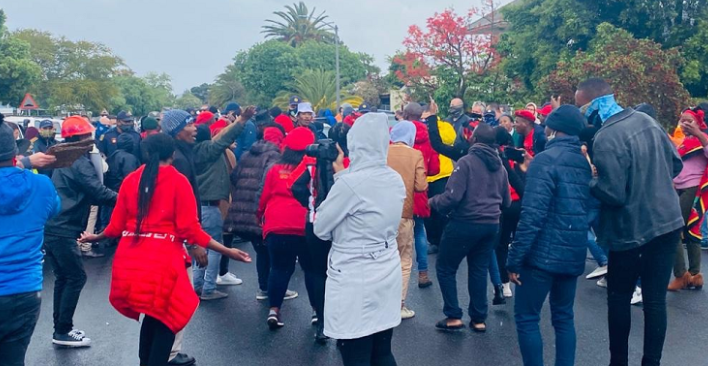
The Democratic Alliance (DA) has condemned the behaviour of the School Governing Bodies (SGB) at Moses Kotane and Julius Sebolai Primary Schools in Braamfischer, Soweto for disrupting learning this week.
On Monday, there were reports that the two schools governing bodies were picketing outside the schools and prohibiting learners from entering the schools’ premises.
Khume Ramulifho, DA Gauteng Shadow MEC for Education said the newly elected SGB wants power to control the school finances and so, they decided to picket and disrupt learning and teaching at the school.
The school governing bodies were recently appointed in schools across the country, in what was deemed the largest public elections after national, provincial, and local elections. This is because more than five million people usually cast their votes for the SGBs.
Basil Manuel, executive manager the National Professional Teachers Organisation of South Africa said schools SBGs should not think they are school managers.
“The SGB is in charge of governance and we must make it very clear that there is a clear distinction between the governance of the school and the management of the school,” said Manuel.
“The governing body cannot disrupt schooling. They in fact have the exact opposite mandate and their mandate must be to ensure that schooling happens,” he added.
The DA called on the Gauteng Education Department to intervene on the issue with both schools.
Ramulufho said the DA spoke to the head of department at Gauteng education who said they would send their district team to intervene. Adding that the SGB needs to find better ways to solve issues and not disrupt teaching and learning at school.
“The SGB is the voice of the parents, if they are unhappy with things, they need to draw the attention of management to the issue but can’t act without having involved the education department and principal,” said Manuel.
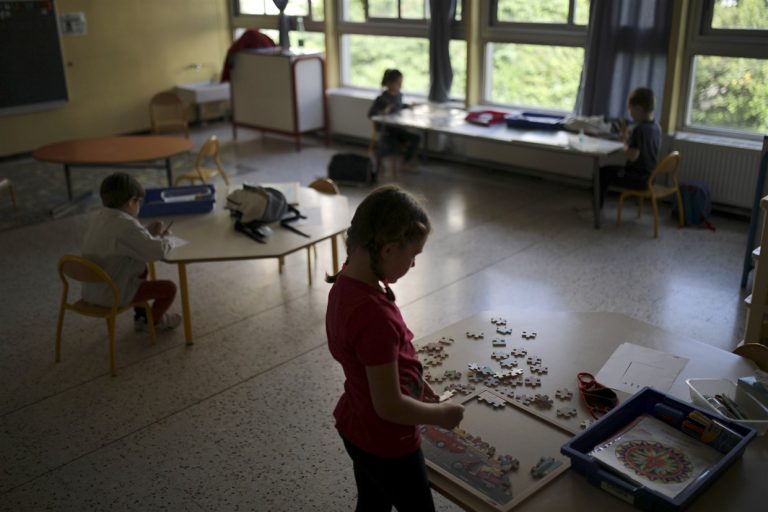
Ramulifho said learners cannot afford to lose days as they are on a rotational basis which means they do not attend class every day.
“We need to ensure that we protect the time afforded to learners at school, parents can contact the department for other issues,” said Ramulifho.
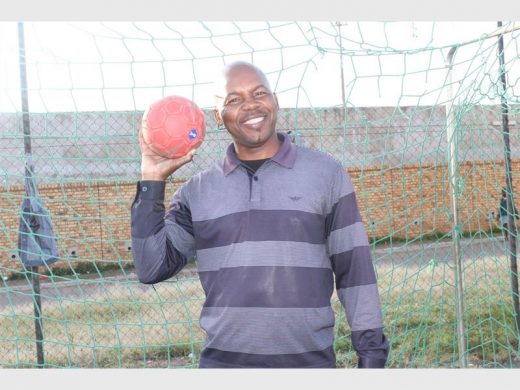
Daveyton resident Nsizwa Reginald Mahlangu has been elected as the new chairperson of the Gauteng Handball Association recently.
The 44-year-old has been passionate about handball since he discovered the sport in Mpumalanga when he was still in high school.
He has played handball since the ’90s and has been a coach for over 10 years.
Mahlangu said he loved the sport because it was different and unique. It also involves five sporting codes: soccer, basketball, swimming, volleyball and cricket.
With his new role, he is responsible for planning tournaments, prepare the team, fund-raisers, ensuring the teams have all the needed equipment and developing up-and-coming coaches.
The sports fanatic is also a member of the Gauteng Sports Confederation and the South African Handball Federation (SAHF).
In 1997, when he moved to Daveyton, he founded a handball club at a local primary school.
“I saw the need to start the club because soccer, athletics and netball were the only popular sporting codes played in the township schools at the time,” said Mahlangu.
“I wanted to bring in something different and take the children off the streets.
“Handball quickly gained momentum and grew to other parts of Ekurhuleni, and some of the players were able to travel the world and represent the country through handball.”
Mahlangu said handball is an Olympic sport; however, it is not recognised in South Africa like in other countries.
“There has been a lack of support for the sport but now government is starting to support us. We believe their involvement will also give us an opportunity to participate in the Olympics in four years time,” he said.
“We need the department of arts and culture to support sport, especially in townships schools and universities because most of these learners have potential and there is a bright future ahead.”
The chairperson said he plans to revive the handball sport in Gauteng so it can be recognised again.
“I would like us to have our very own regional and national tournament. Coaches should get a stipend so they can be motivated to continue the work they do in townships, and I want to see the players playing in other African teams.
“That will give others hope when they see success stories. We also need more media coverage, but slowly but surely we are getting there,” said Mahlangu.
When he is not busy with sporting activities, he lends a helping hand to those in need through his soup kitchen in the area.
From July 9 to 12, the Gauteng handball team will take part in the National Junior Championships in Polokwane.
The team needs transportation money, food, uniform and equipment such as balls, bags, nets, gloves, water bottles.
The Department of education in Limpopo has welcomed the resignation of the 50-year-old teacher accused of raping an 18-year-old from Mbilwi Secondary school.
The 50-year-old was arrested after a case was opened against him, accusing him of raping the learner back in 2018.
He allegedly raped her at a lodge in Louis Trichardt and at his home at Ha-Makhuvha village outside Thohoyandou.
“The resignation was accepted and processed accordingly, he has since been removed from our system,” said Limpopo education department spokesperson, Tidimalo Chuene.
The accused is still in custody for the alleged offence and it is being reported that he raped the learner repeatedly.
“As indicated earlier, we deem accusations against him serious and worrying. As parents we leave our children in the care of educators to build and nurture them into responsible adults,” said Chuene.
The accused is expected to apply for bail in the Thohoyandou Magistrate’s Court on Thursday.
“The idea of one taking advantage of children in this alleged manner is disturbing, we hope justice prevails in this case,” said Chuene.
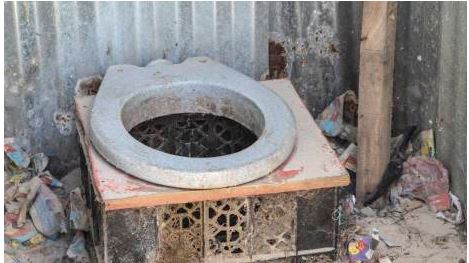
The court case to fight the eradication of pit toilets in Limpopo schools, originally set to be heard by the High Court of South Africa Limpopo Division on Monday has been postponed.
Dr Faranaaz Veriava, head of education rights programme at Section27 said the organisation is “extremely disappointed” that this matter is not heard in court as planned.
Veriava said the case was set to be heard before Judge Muller by the Registrar, however, the judge was not available on that date.
She said Section27 will be asking for a date at the soonest possible opportunity for this matter to be heard.
She added that the organisation is waiting to receive an alternative court hearing date from the High Court in Polokwane.
“Given the seriousness of the matter, and because learners’ rights and lives are at stake, we are requesting a preferential date. We will communicate the new dates and details with media in due course,” said Veriava.
In 2018 the court ordered the Department of Basic Education and the Limpopo Department of Education to file plans to eradicate pit toilets and provide the court with an updated audit of sanitation needs at schools in the province.
“We are saying that ‘plans’ made to eradicate pit toilets at schools in the province are not good enough. These plans are not reasonable in terms of the law and claim that pit toilets can only be eradicated from all Limpopo schools by the end of 2030. This is unconstitutional,” said Veriava.
Adding that the organisation is requesting that the court order education authorities file a new, consolidated plan about how they will urgently replace all pit toilets at schools in the province and replace them with appropriate sanitation.
We are also calling for better oversight and monitoring of delivery, she added.
“Unless a more comprehensive, urgent and coherent plan is implemented, thousands of learners will be at risk of dying or being injured at schools with unsafe toilets for the next decade,” she said.
The order to eradicate pit toilets in the province was handed down after Michael Komape died after he fell into a pit toilet.
Veriava said it has been seven years since Michael died and three years since the structural interdict was handed down requiring that the department of basic education develop a plan for the eradication of pit toilets in Limpopo.
“The ongoing violation of the rights of poor learners because of unsafe and undignified toilets must be remedied,” she said.
The Gauteng Department of Education (GDE) has welcomed the dismissal of a Pretoria teacher who was caught on video slapping a grade R pupil (5) several times.
Reports say it took a protest by parents to get the department of education in Gauteng to suspend the educator who was filmed while allegedly meting out corporal punishment to a grade R pupil.
The teacher from Nchuncheko Primary School in Soshanguve trended on social media after a video of her emerged beating a grade R learner.
The little boy in the video can be heard crying in the clip while the woman hit him several times on his head.
The provincial department said the teacher was immediately removed from the school and was reported to the district office pending a disciplinary hearing on Monday.
Mabona said a disciplinary hearing held on Monday found the teacher guilty and recommended her immediate dismissal.
Mabona said the teacher was on Tuesday served with the outcome of the disciplinary hearing.
“We can confirm that the disciplinary process, which was instituted upon finding out about the video, took place on Monday. The process was concluded with the immediate dismissal verdict of the grade R practitioner,” said Mabona.
“As the GDE, we are fully behind the school’s decision to dismiss the practitioner as it sends out a strong message to everyone working with learners at our schools never to use violence as a form of disciplinary measure,” said Mabona.
He added that the department’s psycho-social unit has been dispatched to the school to offer counselling to the affected learner.
The Department of Basic Education (DBE) has said it is all systems go for the May/June National Senior Certificate examinations (NSC) for the 2021 academic year.
Learners across the country will start their exams on Wednesday and finish on 7 July, said Minister Angie Motshekga. Motshekga added that the exams will take place over a 6 week period.
The May/June National Senior Certificate examinations were initially set to start on May 5 but were postponed to May 26.
Motshekga said this was recorded as the largest examination to ever be administered in the country’s history.
“Its all systems go and everything is in place,” said DBE spokesperson, Elijah Mhlanga.
In 2020, learners across the country were not able to sit down for their May/June examinations due to the country being under a hard lockdown owing to the coronavirus pandemic.
Instead, the DBE combined the May/June exams with the November/December ones which saw a total number of 1,058,699 learners sitting to write between 5 November until 15 December.
The department said accountancy learners will sit for paper one of the subject.
“The measures that the DBE used in 2020 for the November examinations will be used again this year for the May/June exams,” said Mhlanga.
Social distancing is one of the basic requirements and learners including staff following the Covid-19 regulations.
“We are confident that the exams will proceed as planned,” added Mhlanga.
The South African Democratic Teachers’ Union (SADTU) has urged all its eligible members to get vaccinated. This is because there is still no information on when wall teachers will become eligible for the jab.
Research shows that over 3500 teachers have died from coronavirus related complications country wide.
Mugwena Maluleke, SADTU general secretary said the union is very clear about their position that all teachers have to be vaccinated. We are also encouraging all those teachers who are eligible for vaccination to register.
“We have said please allow yourself and take that particular decision as an individual to be vaccinated because we need to save lives,” said Maluleke.
Maluleke added that there has been constant communication with teachers from the union to get vaccinated.
He added: “We have communication with the department of [basic] education.The Department of Education is not responsible for vaccinations and therefore, we need to be able to send a very clear message to the National Command Council that is responsible for this as well as those responsible for the vaccine.
“We are working day and night to make sure that the message is sent through to say enough is enough, we cannot have our children not being taught because the teachers are not well,” said Maluleke.
Maluleke added that the union believed that teachers would be the next group vaccinated after healthcare workers and that the vaccine rollout has been confusing.
“We are demanding for a date for teacher vaccinations to take place and we encourage teachers to register,” he said.
The call to prioritize teachers in Covid-19 education responses is not new.
TheUnited Nations Educational, Scientific and Cultural Organization (UNESCO) has also urged all countries to prioritize teachers in national COVID-19 vaccine rollout plans to ensure education can continue safely and schools remain open.
As early as March 2020, the International Taskforce on Teachers for Education 2030 launched an international Call for Action on Teachers to highlight critical measures that countries should take to support teachers in the global pandemic, including the “protection of teachers’ and students’ health, safety and well-being”.
This was reaffirmed during the Extraordinary session of the Global Education Meeting, convened by UNESCO in October 2020, where Heads of State and Ministers committed to support all teachers and education personnel as frontline workers, and to prioritize their health and safety.
On 14 December 2020, UNESCO and Education International urged countries to include teachers as a priority group in national vaccination rollout plans to curb the spread of Covid-19 and protect teachers and students in an effort to ensure the continuation of learning and a safe return to in-person teaching.
However, this has still not been done in South Africa.
Maluleke said SADTU has been patient given that healthcare workers needed to be first prioritised, “but now government needs to provide clearer communication on what’s next”.
The general secretary said teachers are also front-line workers.
Professor Mary Metcalfe said anyone can register “now” for the vaccination.
“We need to push for a special registration category for teachers and to prioritize their vaccination.
“We will soon know when teachers are able get the vaccine as a group and as front-line critical workers serving the national interest,” she said.
The 38-year-old teacher accused of raping a grade 10 pupil from Umqele Secondary School’s case has been remanded for 27 May for the bail application process.
Gauteng Department of Education (GDE) MEC Panyaza Lesufi said any educator or official who preys on learners has no place in the education system.
Lesufi said all educators and officials have a sacrosanct duty of ensuring learners placed in their care are safe and protected.
Lesufi said this at the Tembisa Magistrate court last Thursday where the teacher suspected of rape made his first court appearance.
“We will continue to support the victim and all affected by this alleged incident.
“We can only imagine the anger and disappointment the family of the learner is going through following the betrayal of their trust by a person they trusted,” said Lesufi.
Inside Education reported last week that the teacher went on the run for several days since the alleged incident occurred on the school property. The man only handed himself over to the police on Wednesday last week.
GDE Spokesperson Steve Mabona said the department can confirm the suspect tendered a letter of resignation which will undergo all the necessary departmental processes.
At the time, GDE said the man will also be charged with absconding as he had left work without permission.
Meanwhile the South African Human Rights Commission in Limpopo conducted a three-day provincial hearing into bullying, corporal punishment and sexual assault by educators in the province.
The hearings were held following the passing of teenage Lufuno Mavhunga who committed suicide after being bullied by another pupil.
During its three-day hearing in the province this week, the commission heard how incidents of bullying, sexual assault and heavy-handed educators were often swept under the carpet by teachers or other authorities.
According to the South African Council of Educators (SACE) representative, George Moroasui, South Africa recorded 209 cases of corporal punishment and 122 cases of sexual abuse of learners by teachers in 2019.
Moroasui said SACE still finds it difficult to get information from the Department of Education of teachers practicing corporal punishment and those who have previous cases of sexual relationships with learners against them.
Adding that at times school management and school governing bodies hide such cases instead of reporting them to the police.
South Africa Principals Association’s Mashudu Ramulumo reported at the hearings that many pupil-teacher sex cases not reported by principals.
Ramulumo said only those principals who were bold enough to implement policy are the ones who come forward and report.
“Yes, it is true. So many cases are not reported. Some principals do not have the right skills to compile a case to report to the department,” he said.
Mamahloli Masipa, the child protection manager at Save the Children SA added that corporal punishment continues to be used at these schools.
Masipa said her organisation works with a number of schools around Limpopo and they have discovered that principals choose to hide incidents of violence at their schools.
Wits University announced its team that will advance Africa’s AI initiative, Cirrus, a private sector led initiative bringing together academia and industry for the establishment of a world class artificial intelligence (AI) research and application capability for Africa.
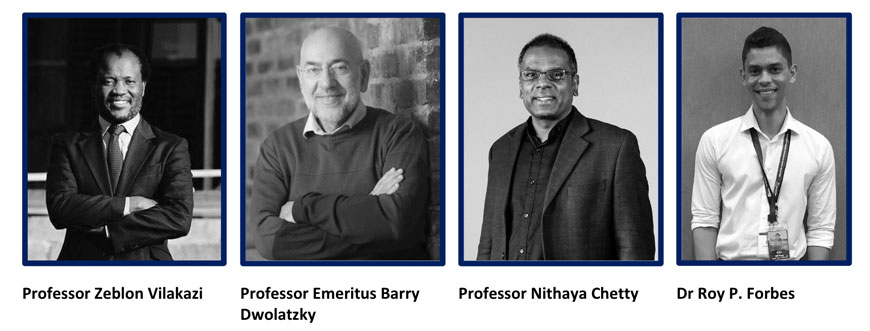
The university team will be led by Professor Zeblon Vilakazi, Wits Vice-Chancellor and Principal, with Professor Emeritus Barry Dwolatzky (project lead), Professor Nithaya Chetty, Dean of the Faculty of Science, as the champion for scientific engagement, and Dr Roy Forbes as the engagement coordinator.
The team will lead Africa’s effort to advance artificial intelligence research and its application across the continent, said Vilakazi.
He added that the university team will work closely with the Cirrus team that was announced at AI Expo Africa in 2020.
Priorities and challenges
Wits University said it focused on two priorities – academic and government.
“The academic aspect willsupport the establishment of the AI Africa (AIA) Consortium which provides the mechanism for bringing together academic and research institutions with a vested interested in the success and sustainability of Cirrus as Africa’s artificial intelligence effort. While the government focus will be on the adoption of Cirrus and the support for local academic and research institutions to invigorate AI research and to further the application of AI across various academic and industrial domains,” said Vilakazi.
Vilakazi said Cirrus is the largest and most complex undertaking of its kind in Africa’s history. However, the major challenges are neither financial nor technological.
“Rather, it is rallying the academic and research institutions in Africa for there to be a critical mass of research and applications that can fully leverage the capabilities that will be established with Cirrus,” said the vice-chancellor.
Most of the institutions participating in the AIA Consortium will be publicly funded academic institutions from across the continent.
With Wits University, Cirrus now has a leading university on the continent and a competent team to spearhead this important work.
South African and numerous other African universities currently host various academic and industrial research groups.
Gregg Barrett, Founder of Cirrus said these groups are involved in activities ranging from environmental and climate change research, medical research to materials research and energy storage development and design.
“Most if not all these existing research thrusts could benefit significantly from incorporating AI methodologies in their research activities. Furthermore, in working together as opposed to working in isolated groups the impact of the research will also be improved,” said Barrett.
He added that the establishment of Cirrus is a rallying call to the academic and research institutions in Africa for there to be a critical mass of research and applications that can fully leverage the capabilities that will be established with Cirrus.
“We at Wits have been on a long journey with Cirrus to bring all of the elements of this ambitious partnership into place. We are hoping to soon begin to sign up members of the AI Africa (AIA) Consortium and to see tangible benefits flowing from our engagement with Cirrus,” said Wits project lead Dwolatzky.
Dwolatzky said Wits University’s looks extend beyond the AIA Consortium and includes catalysing necessary strategic policy engagements with government to ensure impact on important research and societal objectives.
“The critical strategic steps that need to be taken in Africa have long been spoken about and now is the time for action. As Marc Andreessen recently pointed out, a takeaway from the COVID-19 pandemic is that people need to think about their occupation and contribution to society. If you are not helping people directly, and your occupation does not lead to something being built and contributes little to society, you are failing yourself. Cirrus represents Africa’s collective opportunity to move past the talk and get building on solving real problems with significant societal impacts,” says Barrett.