Home Blog Page 333

NSFAS Chair: NSFAS student-centred model causes delays in funding decisions

The National Student Financial Aid Scheme (NSFAS) board chairperson, Ernest Khosa, said the funding scheme’s student-centred model is one of the reasons for delays in funding decisions including appeals processing and disbursements.

This comes after many students from different higher education institutions across the country took to social media to say they cannot afford food, pay for reading materials or attend classes because of delays in NSFAS payments.

NSFAS CEO Andile Nongogo said NSFAS is continuing to receive registration data from institutions to process which will allow the funding scheme to be able to make more payments for students.

“The processing and disbursement of allowances to institutions to ensure that students do not sleep hungry has already commenced.

“However, we are aware of some delays in payments as a result of system integration challenges and delayed registration data that needs to be submitted by institutions,” said Nongogo.

Khosa said because of the student-centred model, the time it takes for appeals processing, disbursements, weak queries resolution mechanism, policy issues such as the N+ 2 rule, absentee parents, postgraduate funding, and student accommodation takes longer than it should.

The NSFAS board chairperson said the funding scheme’s organisational structure is not aligned to the student-centred model.

Khosa was speaking at a media briefing following the NSFAS Board address to the Portfolio Committee on Higher Education, Science and Technology last week.

According to NSFAS, the briefing was on the important role the financial aid scheme has played in the country, as well as some of the problems encountered by the scheme.

 “We met with the portfolio committee today to discuss these issues,” said Khosa.

Khosa said it is public knowledge that in 2018, the scheme was converted into a fully bursary fund from being a provider of student loans.

He said given that there was a short time to execute this new mandate, the scheme was not appropriately designed and prepared to handle this change.

“Consequently, this led to operational challenges that are widely known, which ultimately contributed to the organisation being placed under administration,” said Khosa.

He said the lack of consequence management and the lack institutional performance management continue to mar the organisation.

He added that other challenges include negative audit outcomes as well as systems that are not fully responsive to the core business of the organisation.

“In today’s engagement with the portfolio committee, the board shared its strategies to address amongst other issues, the issues listed.

“On the student funding, we will support the work of the department of higher education and training in assessing funding mechanisms. Furthermore, the board is developing a fund-raising strategy.

“On the student-centred model, we have commissioned an application system and process that will make real time funding eligibility decisions,” said Khosa.

He added that appeals will be immediate for new students and for continuing students a new appeal portal will be introduced in the second semester which will assist in timely decision making.

However, despite these challenges, we have offered some strategies to resolve them to the portfolio committee. Adding that the scheme has also continued to grow in spite of these challenges.

He said 1 263 671 students have been assessed as eligible for funding in the current academic year.

He added that 712 428 of these students were first time higher education entry students and 551 243 were continuing students.

Of these figures, 940 226 students are at the country’s universities while 323 445 are registered with Technical and vocational education and training (TVETs).

“There were 254 826 students funded, and 40 564 graduates were produced in 2017. In 2018 these number grew by 41,84% leading to 361 449 students funded, and 59 249 graduates were produced. In the current tenure of the new board, we have higher achievements – 1 263 671 students have been assessed as eligible for funding,” said Khosa.

Khosa said the board was working with the department of higher education and training to explore some funding policy issues.

He said the board has also established the Human Resources, Ethics and Remuneration Committee, Operations Committee, ICT Steering Committee to dedicate attention to some of the challenges faced by the organisation.

Khosa said the NSFAS board has also dedicated attention to addressing negative audit outcomes.

“While there is still a need to improve the control environment, we will be in a position to submit our financial statements within the statutory deadlines,” said Khosa.

“However,” he warned, “it should be noted that some issues can only be fully resolved over a longer period,” he said.
2021-22 DBE Budget Vote: Minister announces additions to the curriculum

NYAKALLO TEFU| 

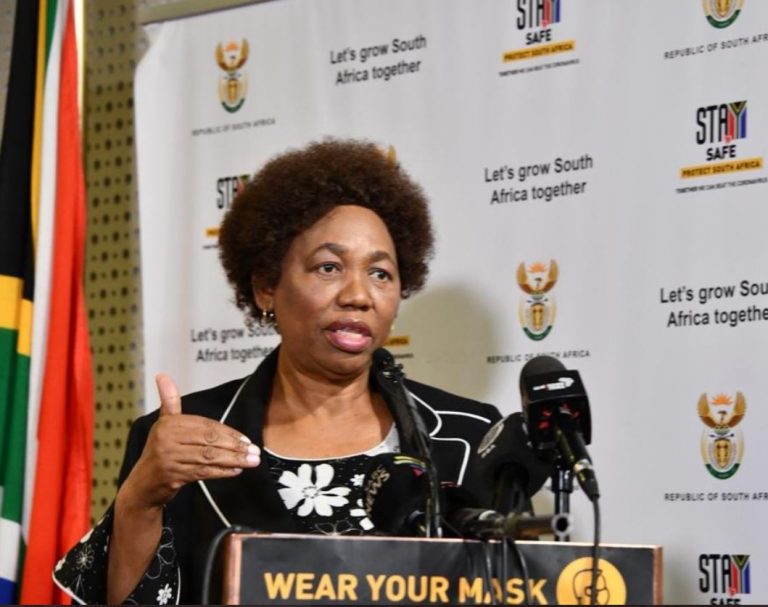
Minister of Basic Education Angie Motshekga told parliament on Thursday that her department has prioritised the strategic implementation of a curriculum that will include fourth industrial revolution (4IR) material in all public schools.

The new curriculum will include skills material on Coding and Robotics for Grades R-3 and 7. Motshekga said the curriculum will also include a new level subject, Marine Sciences.

Motshekga was addressing the National Assembly where she presented her department’s 2021/22 budget vote.

The minister told the assembly that adjustments that were effected to the 2020 MTEF budget allocations, which changed the baseline allocations for the ensuing three to five year period, have a direct bearing on the 2021/22 budget allocation she was presenting.

“Firstly, the overall 2021/22 MTEF budget allocation R27 billion, an increase of 15.5% from the 2020/21 revised overall baseline budget allocation. Secondly, the overall allocation for Condition Grants is R20.7 billion, an increase of 20.2% from last year’s revised baseline,” said Motshekga.

Motshekga added R16.2 million was allocated as the general budget support for the department’s systematic improvement of language and numeracy in foundation phase as well as another R19.9 million allocated for technology for Grade 7-9.

“These new allocations will go a long way to ensuring the roll-out of these two strategic programmes,” she said.

Other allocations include R3.7 billion allocation for earmarked funding and transfer payments of R1.6 billion.

The Minister said a state-of-the-art digital platform had been developed for training of teachers for Coding and Robotics. 

“Orientation materials, lesson plans and coding programmes, have been uploaded onto this digital platform,” said Motshekga.

Coding is essentially written instructions that a robot or computer program can read and then execute. 

Robotics allows students to see their thinking in a real way as they go through trial and error until the task is accomplished and the robot’s motions are performed as originally intended.

She said the draft Curriculum Assessment Policy Statement (CAPS) documents for Grades R-9 for Coding and Robotics has been submitted to Umalusi for appraisal and quality assurance.

“Preparation for training of officials, the appointment of service providers by ETDP-SETA has been concluded, and Service Level Agreements have been signed,” said the minister. 

In March, DBE gazetted the draft Coding and Robotics curriculum for public comments. Motshekga said the Sasol Foundation funded the orientation of the Coding and Robotics National Training team held the same month.

In response to the announcement of Coding and Robotics, the Democratic Alliance’s Shadow Minister of Basic Education Baxolile Nodada said the party welcomes this announcement by the Minister. 

“The DA has been calling for a lot of advancement in basic education, we are pleased that the principle of taking innovation forward is going ahead in basic education,” said Nodada. 

Nodada said the party’s only concern is that the minister only prioritised 18 schools which means other learners will not get this opportunity. 

“This means only 2 schools per province can be piloted for this particular curriculum on Coding and Robotics,” said Nodada.

The Minister also announced the introduction of a new Further Education and Training (FET) -level subject, Marine Sciences. 

“This is a very welcome addition to the bouquet of subjects we already offer; and it is particularly relevant to our National Development Programme (NDP) goals, since the Ocean Economy contributes over $6 billion toward our country’s Gross Domestic Product,” added Motshekga. 

This year, the first cohort of 13 grade 12 learners from South Peninsula High School, will be writing Marine Sciences as part of their 2021 National Senior Certificate (NSC) examination. 

“Since the 2019 pilot, we are happy to report that the intake in Marine Sciences has since increased to more than three hundred (300) Grades 10 and 11 learners,” said Motshekga. Motshekga said South Africa can be proud that the offering of Marine Sciences is a world first as other countries only provide for Marine Biology and Oceanography to tertiary level students.

Not enough teachers at North West schools

NYAKALLO TEFU| 

The South African Democratic Teachers Union (SADTU) said the North West Department of Education has failed to provide schools with educators two weeks into the new term.

George Themba, SADTU’s Provincial Secretary said what concerns the union most is that schools that have submitted their snap surveys within the 10-day deadline period given, have still not been provided with educators.

“The conduct by the [North West] officials responsible for finalising the Post Provisioning Norms [PPN] is unbecoming and highly unacceptable.

“It denies the learners the opportunity to be taught and surely that is against the spirit of Quality Learning and Teaching Campaign,” said Themba.

Snap surveys are surveys conducted by schools in the province which they then submit to the national department. The Department of Basic Education (DBE) is then supposed to use these surveys to assess school needs and Post Provisioning Norms information – these are requirements used by the national department to determine the number of teachers needed at a school.

According to the Department of Basic Education Rights Handbook PPNs are a name given to the process of assigning teachers to schools across South Africa.

The department explains this process as a mechanism that aims to ensure that each school is allocated the correct number of teachers.

“Once the whole teacher-post establishment is determined for the province, posts are then allocated to schools,” reads the handbook.

But according to Themba, the North West Department of Education continues to have large numbers of learners and not enough teachers to teach them.

Themba said with the magnitude of work and tasks schools are faced with, it is not feasible for  teachers to provide learners with quality education if they are short staffed. 

This is not a problem the national department is unaware of.

In February, DBE Minister Angie Motshekga announced that there was a shortage of 24 000 teachers in schools across the country. 

Motshekga said the North West province had an allocation of 26 556 posts for the current academic year of which 433 posts were vacant. 

At the time the minister said her department together with the provincial education departments would work on redeploying teachers to schools before the end of the first term. 

Inside Education spoke to North West Education spokesperson Elias Malindi who confirmed that there was indeed a delay in terms of allocation of the teachers for schools in the province.

Malindi said there would normally be a submission of a snap survey from the schools to determine the number of teachers needed in a school.

“I can confirm that the DBE has approved the snap surveys and provided the provincial department with PPN’s. We are in the process of providing teachers to all those schools where teachers have more than the proper ratio of learners to teach,” said Malindi. 

 Malindi said a problem experienced by the provincial department is that they do not have the exact statistics on how many teachers are needed. This is despite DBE having received snap surveys from schools, said Malindi.

Malindi told Inside Education he cannot confirm the number of teachers approved by the national department to be allocated at schools in his province. 

Union calls for schools in South Africa to close as Covid-19 third wave hits

The Educators’ Union of South Africa (EUSA) has called for the immediate shutdown of all South African schools.

The union said this is because some provinces are experiencing the beginnings of the third wave coronavirus outbreak.

According to EUSA the lack of PPEs at public schools are the cause of the increased cases of infected learners and teachers.

Scelo Bhengu, EUSA President, said with Gauteng, Free State and the Eastern Cape having declared that they have reached a third wave, it is inevitable the whole country will be in third wave soon.

Bhengu said Kwazulu-Natal, Mpumalanga, the North West and the Western Cape have been reported to also be experiencing sustained increases over the last few weeks.

“Schools are central to the contribution of the resurgence as safety protocols are being ignored mostly by principals,” said Bhengu.

He added that it is a known fact that almost all public schools do not have PPEs while cases of infected learners are growing tremendously.

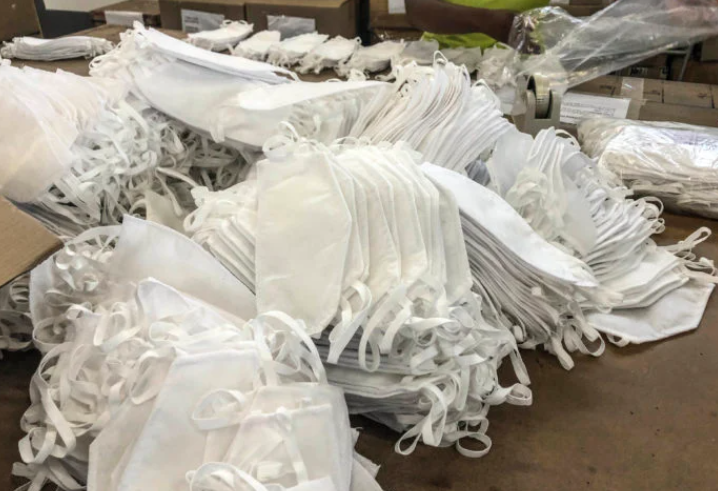
Bhengu said public schools last received their set of PPEs, only one mask per teacher, in June 2020.

Andre De Bruyn, EUSA Spokesperson said more than 70% of schools in the Eastern Cape and Limpopo still do not have running water, “which puts the lives of our teachers and learners at risk as they cannot wash their hands after using pit toilets”.

De Bruyn said the union has received worrying reports of principals who hide new reported cases from their colleagues and the learner community.

“This means that contacts are not traced and advised to quarantine or get tested,” said De Bruyn.

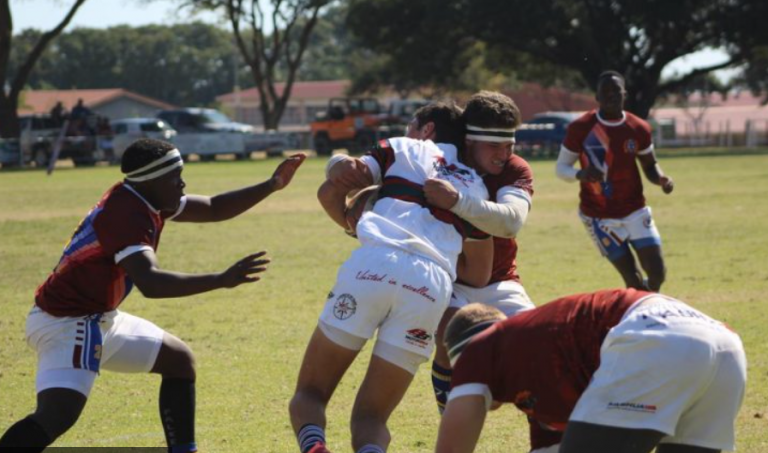
The push to close schools comes after the department of basic education announced this week that it would be postponing all contact sports over fears of a resurgence in cases.

Department of Basic Education Spokesperson Elijah Mhlanga said it became evident that despite following protocols as guided by the directions on extramural activities and the Standard Operating Procedure on the prevention, containment and management of Covid-19 in schools, contact sport still contribute to the spread of the virus.

“In this regard, all sporting activities have been suspended with immediate effect until the clusters outbreak is subsequently over with no further cases reported including the preparatory school sport,” said Mhlanga.

But De Bruyn said the issues go far beyond contact that happens during contact sport.

He said while EUSA welcomes DBE’s decision to suspend contact sport in schools, many learners keep in close contact in the mornings when learners go to school, after school when they go home and “even more critically in the classrooms and during lunch breaks”.

He said in some school learners are only screened when they get inside the classroom.

He added that schools have teacher and general assistants at the schools “but these people are largely used to wash cars belonging to principals”

“We have long warned the department to stop its obsession of going back to what it calls pre-covid levels and instead focus on building a new system that will be in line with the fourth industrial revolution and the new normal.

“But as it stands, the last time nurses went to public schools was once in 2020,” said De Bruyn.

Teacher accused of raping Grade 10 pupil hands himself over to the police

The 38-year-old teacher accused of allegedly raping a Grade 10 pupil from Umqele Secondary School last week has handed himself over to the police on Wednesday.

The alleged rapist went on the run following the reporting of the incident to the District.

Gauteng police spokesperson Captain Mavela Masondo confirmed that the suspect handed himself in at Tembisa Police Station on Wednesday.

Masondo said the teacher has been charged with rape and is expected to appear at the Tembisa Magistrate Court on Thursday.

Inside Education reported on Wednesday that the alleged rapist was caught in the act by another teacher.

The learner was taken to the doctor for medical examinations by the school principal Friday last week.

The learner’s parents opened a case against the teacher at the Ivory Park Police Station.

Gauteng Education MEC Panyaza Lesufi said he welcomed the arrest.

Gauteng Education spokesperson Steve Mabona said disciplinary proceedings against the alleged rapist are already underway.

Mabona said the MEC is a firm opponent of any violence, particularly gender-based assaults on learners.“We are not going to tolerating such incidents in and around our schools,” said Mabona. 

Mabona said the man will also face a charge of absconding as he had left work without permission.

“We always had faith and trust in the police to ensure that the suspect ends up behind bars. We leave all the matters in the capable and trustworthy hands of our judicial system and trust that justice will prevail,” he said.

The South African Democratic Teachers Union (Sadtu) also called for swift action to be taken against a the teacher.

The union is deeply concerned about this incident as it dents the image of our noble profession.

Tseliso Ledimo, SADTU Provincial Secretary said this situation also instils fear and anxiety in schools which are supposed to be safe havens where quality teaching and learning should take place.

“We expect the due disciplinary process to be completed as soon as possible.

“We also call on law enforcement institutions to deploy the necessary resources to subject the alleged perpetrator to the due process of the law,” said Ledimo.

South Africa to examine new mechanisms to support the “missing middle”

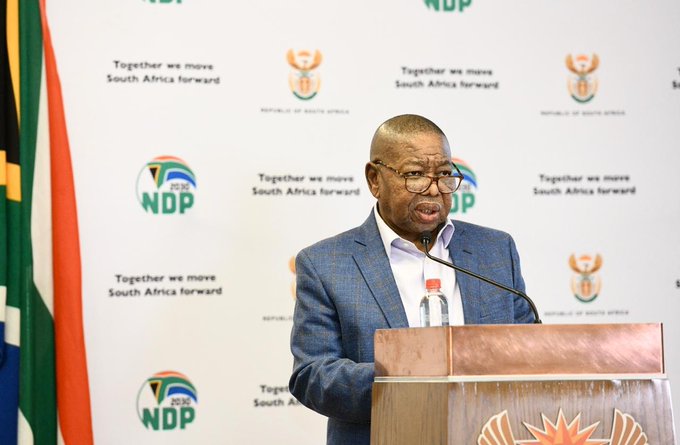
The Minister of Higher Education, Science and Innovation, Dr Blade Nzimande, said his department will in the coming weeks submit to Cabinet a proposal looking at funding options for the “missing middle”.

Nzimande made this announcement when he tabled the department’s Budget Vote during a mini plenary of Parliament this week.

Nzimande said his department and stakeholders are examining new mechanisms, possibly backed by both public and private sectors, to support students in the so-called “missing middle” income bracket.

He said revised options for student funding will be considered.

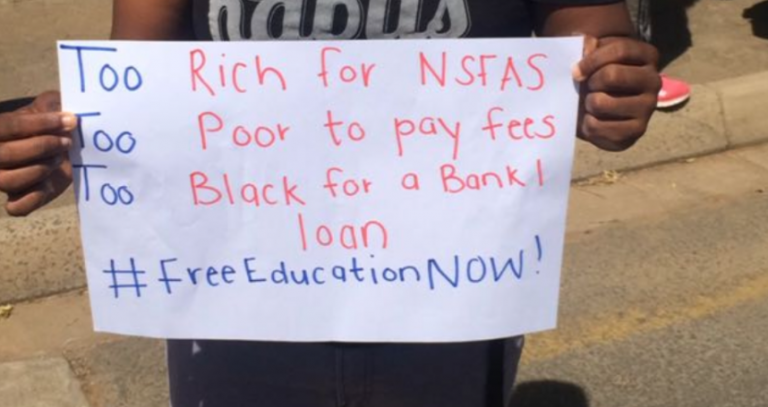
The term “missing middle” has gained currency in the higher education sector and refers to those students who come from working class households that do not qualify for the National Student Finance Aid Scheme (NSFAS) while at the same time, they cannot afford higher education.

In an interview with Inside Education, University of Johannesburg Vice-Chancellor Professor Tshilidzi Marwala said students who fall under this category are not necessarily from poor families.

“These are people who are not poor enough to qualify for NSFAS, but they are not rich enough to afford higher education. Say for example, the father is a teacher, the mother unemployed with four children, three of whom are at university. This family cannot afford higher education for their childen,” said Marwala.

Adding that, “For some reason, NSFAS does not take into consideration the number of children within one family”.

“They look at how much money the family actually earns. And teachers probably earn around R350,000 per annum. There is no way this family is going to qualify for NSFAS. This is why they are the missing middle,” he said.

Adding that most in society do not seem to realise that these children sit at home after finishing matric because of lack of access to finance. They do not qualify for bank loans and other sources of funding, he said.

Marwala said to help with the issue, UJ launched a fundraising campaign in support the missing middle students.

He told Inside Education that about 5 000 academically deserving students at UJ are currently classified as part of the missing middle.

“The University has assisted almost all of them by paying their registration fees for the academic year. And yet, they still need more support because they need basics like devices and the ability to pay for transport,” he said.

Last month, Nzimande made a presentation to the ANC National Executive Committee (NEC) where he spoke about the crisis of the missing middle at institutions of higher learning.

Nzimande said the South African government still does not have a clear way to deal with those students who do not meet NSFAS’ financial eligibility criteria, but still struggle to afford higher education.

According to the minister, in 2016, a ministerial task team was appointed to develop a funding and support model for poor and the missing middle students.

In his presentation made to the NEC, Nzimande said in an attempt to solve this crisis, the ministerial task team developed the Ikusasa Student Financial Aid Programme (ISFAP) which assumed that government would cover full or part of the equity required to cover bad debt incurred by students.

“But this assumption was not supported by the National Treasury,” said Nzimande.

He said his department’s engagement with the National Treasury concluded that a loan-based system would be very difficult without government support.

This is because in all the modelling done, the bad debt, capital repayment, and capital interest was always bigger than the repayments and interest paid by the student, said Nzimande.

In his budget vote presentation this week, Nzimande said there is now added pressure to find a solution this problem. He said this pressure was accentuated by thousands of students who submitted appeals after their NSFAS applications were rejected.

DBE suspends contact sport with immediate effect

NYAKALLO TEFU| 

The Department of Basic Education (DBE) has taken an about turn on its decision for schools across the country to commence with contact sports. 

On Wednesday, the DBE announced that all contact sports at schools across the country are cancelled with immediate effect. 

“The Council of Education Ministers has taken a decision to suspend all contact sports in schools with immediate effect,” said DBE spokesperson Elijah Mhlanga. 

Mhlanga said the cancellation of contact sports comes after provinces such as Gauteng, North West and the Free State saw a rise in Covid-19 cases among learners. 

“It is evident that despite following the protocols as guided by the directions on extramural activities and standard operating procedure on the prevention, containment and management of Covid-19 in schools, contact sports events still contribute to the spread of Covid-19,” said Mhlanga.

Earlier this month, after learners returned to school for the second term, the DBE announced that following talks with stakeholders, an agreement was reached for contact sports to resume. 

At the time, DBE Minister Angie Motshekga said non-contact sport training in schools can continue provided that all social distancing, hygiene and safety measures are observed and that there is no physical contact between participants during training.

Motshekga said: “In 2021, after the reopening of schools and consultations with education stakeholders, the DBE gazetted directions allowing non-contact sport, sport-related activities and school-based art and cultural activities to resume without spectators, subject to adherence of safety measure.

Adding that the gazette included directions on school sports and extra mural activities, non-contact sport, sport-related activities and school-based art and cultural activities to resume subject to health and safety protocols. 

As a result of these school sports activities, related Covid-19 outbreaks in Gauteng, Free State and the North West saw a rise of cases in communities across the country.

Motshekga said the Outbreak Response Team told the council that the risk was high when engaged in close-contact sports, especially with people who do not live together.

Following this, DBE this week scheduled two meetings to discuss the impact of allowing contact sport activities to continue at schools.

The National Professional Teachers’ Organization of South Africa’s Basil Manuel said this decision is both positive and negative. 

“There are provinces that are experiencing an increase in infections, I think with those schools in mind, the decision taken makes sense, but I don’t think the decision should have been one-sided,” said Manuel.

Manuel said there are provinces that haven’t had a single outbreak, where infection rates are very low. 

“Yes, we want to protect, but we need to remember that sports have its own purposes, which is for the children to release all this testosterone,” said Manuel. 

“I understand the decision made by the DBE, but I do believe there could have been better ways to deal with this,” said Manuel. 

Mhlanga said the department will continue to monitor the situation at schools and until it indicates otherwise, there will be no contact sports until further notice. 

Teacher on the run after allegedly raping a pupil

Gauteng Education MEC Panyaza Lesufi has made a plea to law enforcement agencies to up the efforts in hunting a teacher who allegedly raped a learner at Umqhele Secondary School in Ivory Park.

The alleged rapist has since been on the run since the incident was reported to the District.

Lesufi said Gauteng Education became aware of the alleged rape of a Grade 10 learner when the matter was last Friday.

“We will immediately report him [the teacher] to all regulatory bodies and add the charge of absconding as well. And, as a precaution, that teacher will not report at school but at the District,” said Lesufi.

The MEC said The Gauteng Department of Education (GDE) will not tolerate nor condone any sexual relations or harassment of learners by educators and any of our officials.

“We will never allow officials or educators to abuse the privilege given to us by millions of parents across the province of providing care to all young people in our education system,” said Lesufi.

It is alleged that the suspect was caught in the act by another teacher.

The learner was taken by the school principal to the doctor for medical examination on Friday.

Reports state that the learner’s parents have opened a case at the Ivory Park Police Station. The suspect has not reported for duty since the day of the incident and police are looking for him.

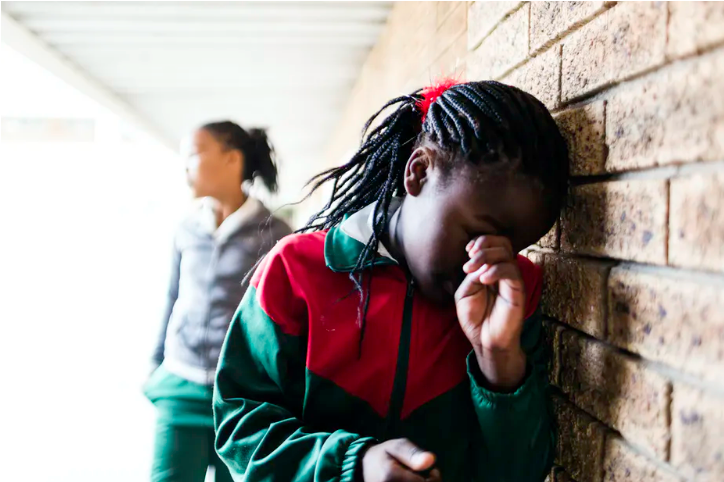
According to the Human Rights Watch, research done on schools across South Africa show how thousands of girls of every race and economic group are encountering sexual violence and harassment that impede their access to education .

Girls are learning that sexual violence and abuse are an inescapable part of going to school every day — so they don’t go,” said Erika George, counsel to the Academic Freedom Program at Human Rights Watch and the author of the report. “South African officials say they’re committed to educational equality. If they mean it, they must address the problem of sexual violence in schools, without delay.”

The 138-page report, “Scared at School: Sexual Violence Against Girls in South African Schools,” is based on extensive interviews with victims, their parents, teachers, and school administrators in KwaZulu-Natal, Gauteng, and the Western Cape. It documents how girls are raped, sexually abused, sexually harassed, and assaulted at school by their male classmates and even by their teachers.

According to the report, girls have been attacked in school toilet facilities, in empty classrooms and corridors, hostel rooms and dormitories. Teachers can misuse their authority to sexually abuse girls, sometimes reinforcing sexual demands with threats of corporal punishment or promises of better grades, or even money.

School authorities rarely challenge the perpetrators, and many girls interrupt their education or leave school altogether because they feel vulnerable to sexual assault, Human Rights Watch said.

According to media reports, learners at Umqhele Secondary School did not attend classes on Friday.

They held a protest with members of the community, COSAS, EFF, ANC and members from Break the Chain of Pain Against Women and Childern.

Members of COSAS also went to neighbouring schools asking that classes stop and the schools join in protest.

Lesufi said while he and his department appreciates the anger of young people in and around Ivory Park, “We call on the learners to put their faith in the justice system and desist from further disrupting schooling as the matter is being investigated”.

GDE spokesperson Steve Mabona said the department has availed their Psycho-Social Unit to provide support to the affected learner and those at the school.

Higher Education budget vote: NSFAS gets more funds but shortage persist

Minister of Higher Education, Science, and Innovation Blade Nzimande presented the Department of Higher Education and Training Budget Vote 2021 to the National Assembly this week.

Nzimande said irrespective of the challenges the department had earlier this year, the National Student Financial Aid Scheme (NSFAS) funding has increased more than five-fold over the last six years.

He said in 2014 NSFAS funding sat at R5.9 billion and in 2020 is was at R34.7 billion.

“Irrespective of funding challenges, NSFAS funds have increased more than fivefold just in 6 years.

“In the current financial year, the 2021/2022 financial year, NSFAS funding is expected to reach more than R43 billion – a further increase of nearly R10 billion in just two years,” he said.

Nzimande said following the shortfall experienced by NSFAS earlier this year, his department reprioritised its budget to ensure that all deserving, NSFAS-qualifying students are able to receive funding for the 2021 academic year.

He said the budget for the post-school and training sector was just over R115 billion and that the budget allocated for the Technical and Vocational Education and Training (TVET) college sector is at R13 billion.

Nzimande said in support of the expansion of access to the post-school education and training (PSET) system, his department will award bursaries to PhD students, and will create a pipeline of postgraduate students.

He said his department will also place graduates and students in department-funded work preparation programmes in science, engineering, technology and innovation institutions in support of the initiatives towards ensuring the responsiveness of the PSET system.

“As a department, we remain committed to strengthening and developing the PSET sector by investing in infrastructure to provide quality teaching, learning and research and innovation spaces,” said Nzimande.

The Higher Education, Science and Innovation budget shows that R R115.596 868 billion has been allocated for the 2021/2022 financial year. Nzimande said this shows an annual average increase of 1,4% over the 2021 Medium Term Expenditure Framework (MTEF) presented earlier this year by Finance Minister Tito Mboweni.

Nzimande said R230.7 million has been allocated for career development systems, community education and training has been allocated R2.422 billion. Adding that R504 million would go for towards administrative responsibilities, as well as goods and services,” said the minister.

He said R324 million was redirected to Covid-19-related responses. Nzimande said the national system of education and innovation has also been affected by Covid-19 pandemic.

“The pandemic has changed life as we know it but has also taught us vital lessons. One of the lessons is that investing in Science is vital for South Africa’s future and development,” he said.

He said R9.546 billion has been set aside for investment in infrastructure projects across the 26 universities during the 2021/22 to 2023/24 MTEF period.

Adding that his department will use the R9.546 billion amount to invest in infrastructure projects so that digital transformation take place at universities, refurbishment of university buildings, student housing and investing in facilities for strategic study fields required to be responsive to the strategic priorities of South Africa.

“We will continue to prioritise infrastructure development at historically disadvantaged universities to ensure that maintenance backlogs are addressed and the quality of infrastructure delivery management is improved at these institutions,” said Nzimande.

The minister said hid department’s budget was still not adequate at all and that budget cut was unfortunate.

“For instance, I would like to put more money into genomics surveillance on order to monitor the epidemiology of behaviour of the virus, including increasing bursaries and scholarships for masters and PhD students,” he said.

The budget cuts will also have implications for NSFAS. This year NSFAS received approximately 799 017 applications, with 67% of the new applicants being South African Social Security Agency (SASSA) beneficiaries.

“There are 11 329 appeals received from rejected new applicants. A great improvement for 2021 is that students who are rejected are able to appeal immediately,” said Nzimande.

Buhari Congratulates Professor Ibrahim Abubakar On His Appointment As Dean, University College of London

0

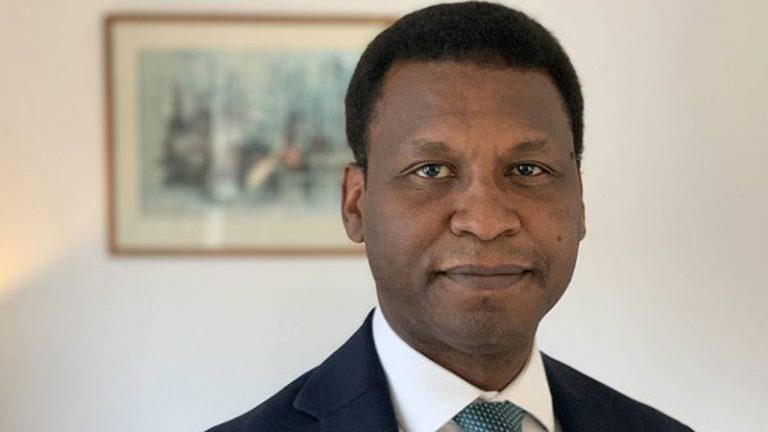
PRESIDENT Muhammadu Buhari has congratulated Professor Ibrahim Abubakar, on his appointment as the new Dean of the University College, London (UCL) Faculty of Population Health Sciences.

Abubakar is a world-leading scholar in the field of infectious disease epidemiology.

Buhari, in a statement by his spokesman, Malam Garba Shehu, in Abuja on Monday, expressed delight for the unflinching support Abubakar had provided to public health institutions in Nigeria.

He noted that Abubakar’s contributions had helped in achieving tangible results in the area of control and prevention of communicable diseases in the country.

Abubakar holds a Master of Science degree from the London School of Hygiene and Tropical Medicine, a DPH from the University of Cambridge and a PhD from the University of East Anglia.

According to the president, the Ahmadu Bello University (ABU) trained medical doctor, will bring his extensive wealth of experience and skills in public health to his new role.

Abubakar’s professional records span from his outstanding leadership at the Institute for Global Health in the last five years to extensive research in infectious disease epidemiology, migration and health.

This led to his election to the Fellowship of the Academy of Medical Sciences in 2020.

President Buhari extended his best wishes to the ”unassuming achiever, widely admired by his peers, as he settles down to his new role from Aug. 1.”

  • The Guardian