Home Blog Page 334

South Africa to examine new mechanisms to support the “missing middle”

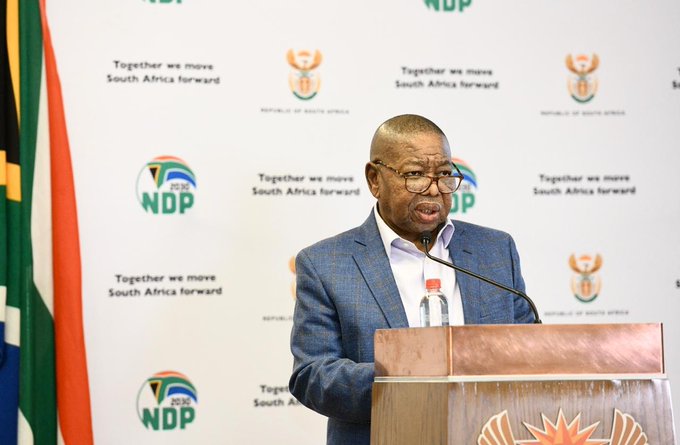
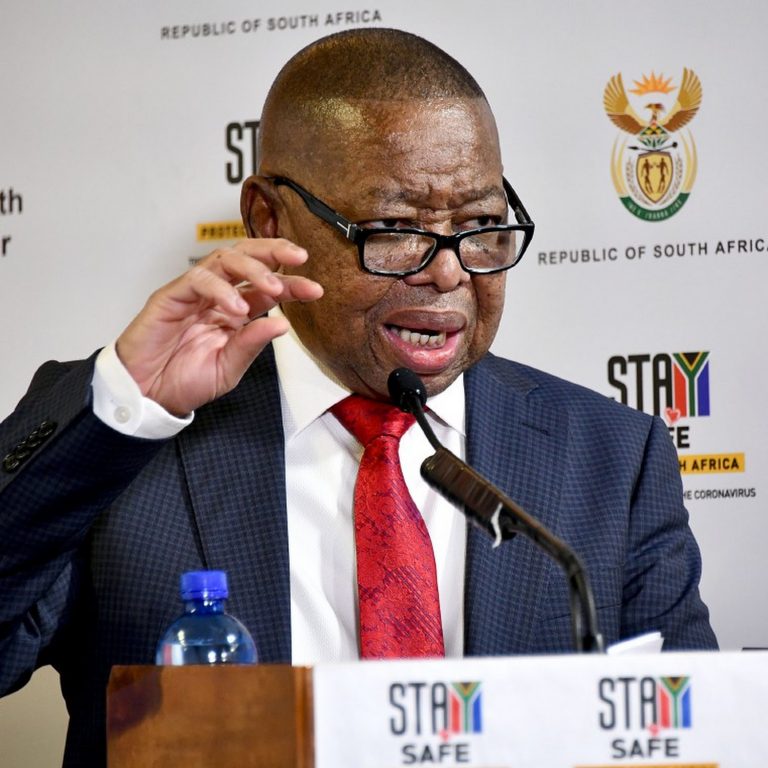
The Minister of Higher Education, Science and Innovation, Dr Blade Nzimande, said his department will in the coming weeks submit to Cabinet a proposal looking at funding options for the “missing middle”.

Nzimande made this announcement when he tabled the department’s Budget Vote during a mini plenary of Parliament this week.

Nzimande said his department and stakeholders are examining new mechanisms, possibly backed by both public and private sectors, to support students in the so-called “missing middle” income bracket.

He said revised options for student funding will be considered.

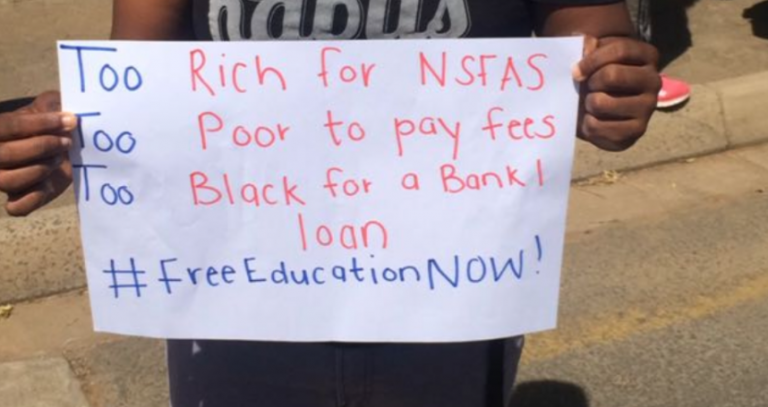
The term “missing middle” has gained currency in the higher education sector and refers to those students who come from working class households that do not qualify for the National Student Finance Aid Scheme (NSFAS) while at the same time, they cannot afford higher education.

In an interview with Inside Education, University of Johannesburg Vice-Chancellor Professor Tshilidzi Marwala said students who fall under this category are not necessarily from poor families.

“These are people who are not poor enough to qualify for NSFAS, but they are not rich enough to afford higher education. Say for example, the father is a teacher, the mother unemployed with four children, three of whom are at university. This family cannot afford higher education for their childen,” said Marwala.

Adding that, “For some reason, NSFAS does not take into consideration the number of children within one family”.

“They look at how much money the family actually earns. And teachers probably earn around R350,000 per annum. There is no way this family is going to qualify for NSFAS. This is why they are the missing middle,” he said.

Adding that most in society do not seem to realise that these children sit at home after finishing matric because of lack of access to finance. They do not qualify for bank loans and other sources of funding, he said.

Marwala said to help with the issue, UJ launched a fundraising campaign in support the missing middle students.

He told Inside Education that about 5 000 academically deserving students at UJ are currently classified as part of the missing middle.

“The University has assisted almost all of them by paying their registration fees for the academic year. And yet, they still need more support because they need basics like devices and the ability to pay for transport,” he said.

Last month, Nzimande made a presentation to the ANC National Executive Committee (NEC) where he spoke about the crisis of the missing middle at institutions of higher learning.

Nzimande said the South African government still does not have a clear way to deal with those students who do not meet NSFAS’ financial eligibility criteria, but still struggle to afford higher education.

According to the minister, in 2016, a ministerial task team was appointed to develop a funding and support model for poor and the missing middle students.

In his presentation made to the NEC, Nzimande said in an attempt to solve this crisis, the ministerial task team developed the Ikusasa Student Financial Aid Programme (ISFAP) which assumed that government would cover full or part of the equity required to cover bad debt incurred by students.

“But this assumption was not supported by the National Treasury,” said Nzimande.

He said his department’s engagement with the National Treasury concluded that a loan-based system would be very difficult without government support.

This is because in all the modelling done, the bad debt, capital repayment, and capital interest was always bigger than the repayments and interest paid by the student, said Nzimande.

In his budget vote presentation this week, Nzimande said there is now added pressure to find a solution this problem. He said this pressure was accentuated by thousands of students who submitted appeals after their NSFAS applications were rejected.

DBE suspends contact sport with immediate effect

NYAKALLO TEFU| 

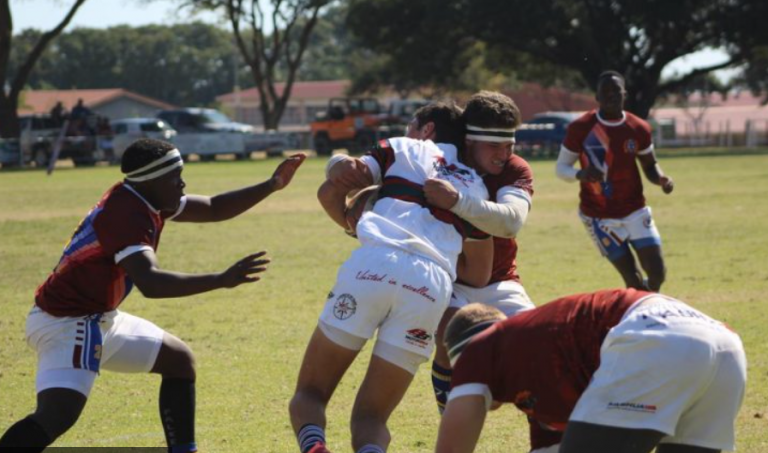
The Department of Basic Education (DBE) has taken an about turn on its decision for schools across the country to commence with contact sports. 

On Wednesday, the DBE announced that all contact sports at schools across the country are cancelled with immediate effect. 

“The Council of Education Ministers has taken a decision to suspend all contact sports in schools with immediate effect,” said DBE spokesperson Elijah Mhlanga. 

Mhlanga said the cancellation of contact sports comes after provinces such as Gauteng, North West and the Free State saw a rise in Covid-19 cases among learners. 

“It is evident that despite following the protocols as guided by the directions on extramural activities and standard operating procedure on the prevention, containment and management of Covid-19 in schools, contact sports events still contribute to the spread of Covid-19,” said Mhlanga.

Earlier this month, after learners returned to school for the second term, the DBE announced that following talks with stakeholders, an agreement was reached for contact sports to resume. 

At the time, DBE Minister Angie Motshekga said non-contact sport training in schools can continue provided that all social distancing, hygiene and safety measures are observed and that there is no physical contact between participants during training.

Motshekga said: “In 2021, after the reopening of schools and consultations with education stakeholders, the DBE gazetted directions allowing non-contact sport, sport-related activities and school-based art and cultural activities to resume without spectators, subject to adherence of safety measure.

Adding that the gazette included directions on school sports and extra mural activities, non-contact sport, sport-related activities and school-based art and cultural activities to resume subject to health and safety protocols. 

As a result of these school sports activities, related Covid-19 outbreaks in Gauteng, Free State and the North West saw a rise of cases in communities across the country.

Motshekga said the Outbreak Response Team told the council that the risk was high when engaged in close-contact sports, especially with people who do not live together.

Following this, DBE this week scheduled two meetings to discuss the impact of allowing contact sport activities to continue at schools.

The National Professional Teachers’ Organization of South Africa’s Basil Manuel said this decision is both positive and negative. 

“There are provinces that are experiencing an increase in infections, I think with those schools in mind, the decision taken makes sense, but I don’t think the decision should have been one-sided,” said Manuel.

Manuel said there are provinces that haven’t had a single outbreak, where infection rates are very low. 

“Yes, we want to protect, but we need to remember that sports have its own purposes, which is for the children to release all this testosterone,” said Manuel. 

“I understand the decision made by the DBE, but I do believe there could have been better ways to deal with this,” said Manuel. 

Mhlanga said the department will continue to monitor the situation at schools and until it indicates otherwise, there will be no contact sports until further notice. 

Teacher on the run after allegedly raping a pupil

Gauteng Education MEC Panyaza Lesufi has made a plea to law enforcement agencies to up the efforts in hunting a teacher who allegedly raped a learner at Umqhele Secondary School in Ivory Park.

The alleged rapist has since been on the run since the incident was reported to the District.

Lesufi said Gauteng Education became aware of the alleged rape of a Grade 10 learner when the matter was last Friday.

“We will immediately report him [the teacher] to all regulatory bodies and add the charge of absconding as well. And, as a precaution, that teacher will not report at school but at the District,” said Lesufi.

The MEC said The Gauteng Department of Education (GDE) will not tolerate nor condone any sexual relations or harassment of learners by educators and any of our officials.

“We will never allow officials or educators to abuse the privilege given to us by millions of parents across the province of providing care to all young people in our education system,” said Lesufi.

It is alleged that the suspect was caught in the act by another teacher.

The learner was taken by the school principal to the doctor for medical examination on Friday.

Reports state that the learner’s parents have opened a case at the Ivory Park Police Station. The suspect has not reported for duty since the day of the incident and police are looking for him.

According to the Human Rights Watch, research done on schools across South Africa show how thousands of girls of every race and economic group are encountering sexual violence and harassment that impede their access to education .

Girls are learning that sexual violence and abuse are an inescapable part of going to school every day — so they don’t go,” said Erika George, counsel to the Academic Freedom Program at Human Rights Watch and the author of the report. “South African officials say they’re committed to educational equality. If they mean it, they must address the problem of sexual violence in schools, without delay.”

The 138-page report, “Scared at School: Sexual Violence Against Girls in South African Schools,” is based on extensive interviews with victims, their parents, teachers, and school administrators in KwaZulu-Natal, Gauteng, and the Western Cape. It documents how girls are raped, sexually abused, sexually harassed, and assaulted at school by their male classmates and even by their teachers.

According to the report, girls have been attacked in school toilet facilities, in empty classrooms and corridors, hostel rooms and dormitories. Teachers can misuse their authority to sexually abuse girls, sometimes reinforcing sexual demands with threats of corporal punishment or promises of better grades, or even money.

School authorities rarely challenge the perpetrators, and many girls interrupt their education or leave school altogether because they feel vulnerable to sexual assault, Human Rights Watch said.

According to media reports, learners at Umqhele Secondary School did not attend classes on Friday.

They held a protest with members of the community, COSAS, EFF, ANC and members from Break the Chain of Pain Against Women and Childern.

Members of COSAS also went to neighbouring schools asking that classes stop and the schools join in protest.

Lesufi said while he and his department appreciates the anger of young people in and around Ivory Park, “We call on the learners to put their faith in the justice system and desist from further disrupting schooling as the matter is being investigated”.

GDE spokesperson Steve Mabona said the department has availed their Psycho-Social Unit to provide support to the affected learner and those at the school.

Higher Education budget vote: NSFAS gets more funds but shortage persist

Minister of Higher Education, Science, and Innovation Blade Nzimande presented the Department of Higher Education and Training Budget Vote 2021 to the National Assembly this week.

Nzimande said irrespective of the challenges the department had earlier this year, the National Student Financial Aid Scheme (NSFAS) funding has increased more than five-fold over the last six years.

He said in 2014 NSFAS funding sat at R5.9 billion and in 2020 is was at R34.7 billion.

“Irrespective of funding challenges, NSFAS funds have increased more than fivefold just in 6 years.

“In the current financial year, the 2021/2022 financial year, NSFAS funding is expected to reach more than R43 billion – a further increase of nearly R10 billion in just two years,” he said.

Nzimande said following the shortfall experienced by NSFAS earlier this year, his department reprioritised its budget to ensure that all deserving, NSFAS-qualifying students are able to receive funding for the 2021 academic year.

He said the budget for the post-school and training sector was just over R115 billion and that the budget allocated for the Technical and Vocational Education and Training (TVET) college sector is at R13 billion.

Nzimande said in support of the expansion of access to the post-school education and training (PSET) system, his department will award bursaries to PhD students, and will create a pipeline of postgraduate students.

He said his department will also place graduates and students in department-funded work preparation programmes in science, engineering, technology and innovation institutions in support of the initiatives towards ensuring the responsiveness of the PSET system.

“As a department, we remain committed to strengthening and developing the PSET sector by investing in infrastructure to provide quality teaching, learning and research and innovation spaces,” said Nzimande.

The Higher Education, Science and Innovation budget shows that R R115.596 868 billion has been allocated for the 2021/2022 financial year. Nzimande said this shows an annual average increase of 1,4% over the 2021 Medium Term Expenditure Framework (MTEF) presented earlier this year by Finance Minister Tito Mboweni.

Nzimande said R230.7 million has been allocated for career development systems, community education and training has been allocated R2.422 billion. Adding that R504 million would go for towards administrative responsibilities, as well as goods and services,” said the minister.

He said R324 million was redirected to Covid-19-related responses. Nzimande said the national system of education and innovation has also been affected by Covid-19 pandemic.

“The pandemic has changed life as we know it but has also taught us vital lessons. One of the lessons is that investing in Science is vital for South Africa’s future and development,” he said.

He said R9.546 billion has been set aside for investment in infrastructure projects across the 26 universities during the 2021/22 to 2023/24 MTEF period.

Adding that his department will use the R9.546 billion amount to invest in infrastructure projects so that digital transformation take place at universities, refurbishment of university buildings, student housing and investing in facilities for strategic study fields required to be responsive to the strategic priorities of South Africa.

“We will continue to prioritise infrastructure development at historically disadvantaged universities to ensure that maintenance backlogs are addressed and the quality of infrastructure delivery management is improved at these institutions,” said Nzimande.

The minister said hid department’s budget was still not adequate at all and that budget cut was unfortunate.

“For instance, I would like to put more money into genomics surveillance on order to monitor the epidemiology of behaviour of the virus, including increasing bursaries and scholarships for masters and PhD students,” he said.

The budget cuts will also have implications for NSFAS. This year NSFAS received approximately 799 017 applications, with 67% of the new applicants being South African Social Security Agency (SASSA) beneficiaries.

“There are 11 329 appeals received from rejected new applicants. A great improvement for 2021 is that students who are rejected are able to appeal immediately,” said Nzimande.

Buhari Congratulates Professor Ibrahim Abubakar On His Appointment As Dean, University College of London

0

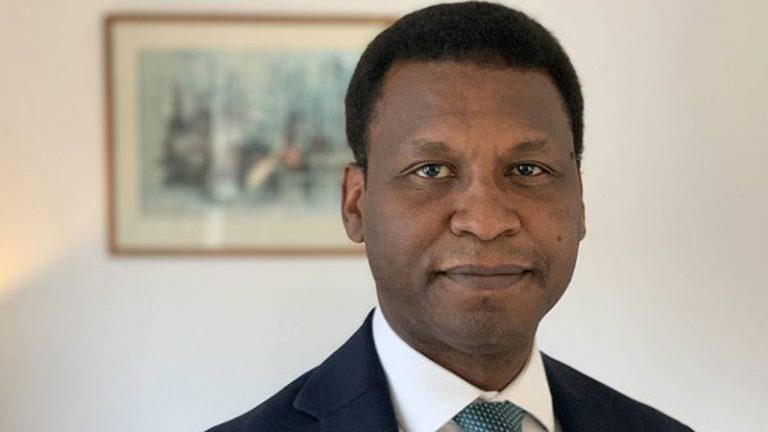
PRESIDENT Muhammadu Buhari has congratulated Professor Ibrahim Abubakar, on his appointment as the new Dean of the University College, London (UCL) Faculty of Population Health Sciences.

Abubakar is a world-leading scholar in the field of infectious disease epidemiology.

Buhari, in a statement by his spokesman, Malam Garba Shehu, in Abuja on Monday, expressed delight for the unflinching support Abubakar had provided to public health institutions in Nigeria.

He noted that Abubakar’s contributions had helped in achieving tangible results in the area of control and prevention of communicable diseases in the country.

Abubakar holds a Master of Science degree from the London School of Hygiene and Tropical Medicine, a DPH from the University of Cambridge and a PhD from the University of East Anglia.

According to the president, the Ahmadu Bello University (ABU) trained medical doctor, will bring his extensive wealth of experience and skills in public health to his new role.

Abubakar’s professional records span from his outstanding leadership at the Institute for Global Health in the last five years to extensive research in infectious disease epidemiology, migration and health.

This led to his election to the Fellowship of the Academy of Medical Sciences in 2020.

President Buhari extended his best wishes to the ”unassuming achiever, widely admired by his peers, as he settles down to his new role from Aug. 1.”

  • The Guardian

Prof Tshilidzi Marwala on jobs of the future, being number one and the Auckland Park education precinct

South Africa’s higher education institutions are marred with multiple challenges including soaring student debt, budget cuts, the issue of colonial education and graduate unemployment but for one man, these issues are not insurmountable.

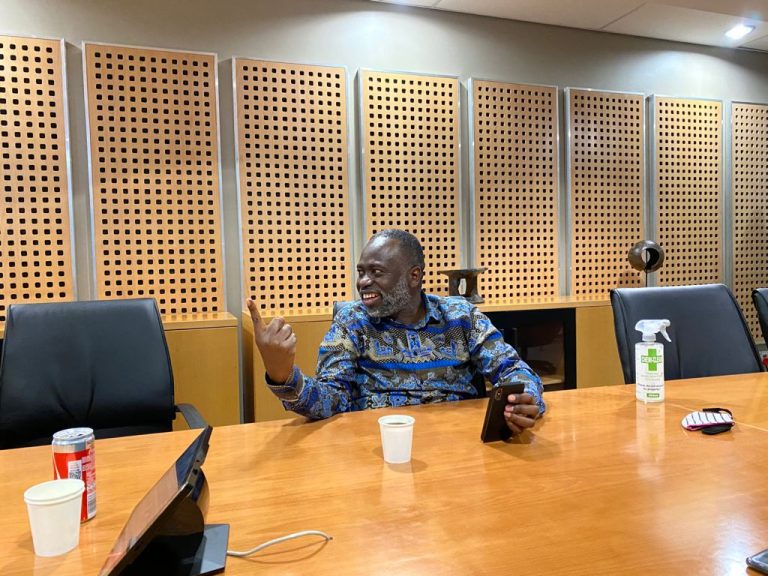
Inside Education interviewed Vice-Chancellor and Principal for the University of Johannesburg (UJ) Professor Tshilidzi Marwala in his boardroom at UJ main campus this week.

“I think the Chinese are very important,” said Marwala and places two books on the table, China’s President Xi Jinping’s book, The Governance of China III and Professor Adekeye Adebajo’s book, The Trial of Cecil John Rhodes.

“Technologically, the Chinese are very important. They are basically the factory floor for the entire world with all sorts of implications for our own country where we do not make anything. We make very few things. This shirt is made in South Africa,” he he said.

“But nothing else so we need to understand what the Chinese are thinking if we are going to craft our own strategies that will counter what they are doing because what they are doing has a huge impact on our economy,” said Marwala.

In 2019, President Cyril Ramaphosa appointed members of the Presidential Commission on the Fourth Industrial Revolution (4IR). The commission was meant to assist South Africa’s government in taking advantage of the opportunities presented by the digital industrial revolution. Ramaphosa chaired the commission with Marwala as the deputy Chair. The aim of the commission was to identify relevant policies, strategies and action plans that will position South Africa as a competitive global player. It included 30 members of eminent persons from different sectors of society and reflects a balance in gender, youth, labour and business, including digital start-ups as well as digital entrepreneurships.

We finished the work and made recommendations, said Marwala. Adding that one of the core recommendations included investing in human capacity development in areas of the 4IR.

He said these are areas of artificial intelligence, blockchain, engineering, computer science, finance, social science and medicine.

“As a result of this, here at UJ, we offer everybody – across different fields of study – an introductory course in artificial intelligence,” said Marwala

“And in the next few weeks we will be announcing that UJ will offer the course,  Introduction to Artificial Intelligence, for free to anybody who wants to study AI,” said Marwala.

Marwala was born in 1971 at Duthuni Village in the Tshivhase region of the Limpopo. He matriculated from the Mbilwi Secondary School, a school known for producing 100% pass rates for its matric students since 1994 and over 90% of matric exemptions since 1997. The secondary school is known for its excellent results in mathematics and science. Marwala was awarded a scholarship to study mechanical engineering at the University of Cape Town and would be transferred to study in the United States after six months.

“In the US, while studying mechanical engineering, I was expected to take 12 semesters of human and social sciences. So, I took acting classes, psychology classes, the history of South Africa and economics classes.

“And that is quite important, because many of the concepts now in artificial intelligence, such as the reinforcement learning algorithm, I learned in one of my psychology modules. So, this speaks to the importance of multidisciplinary learning,” said Marwala.

He said the importance of multidisciplinary learning is why UJ has made Artificial Intelligence and the Africa Insights Module – where students learn about African Politics, African economy and African languages – critical coursework study for all students.

Adding that it is very important for students to understand the African continent and its problems so that they can think start to think about the solutions while at universities. He added: “If we do not prepare ourselves through multidisciplinary learning, these new jobs are just going to be out of reach for many of our people and we are going to have a problem,” he said.

Marwala said the Africa by Bus project is one of the many ways students have seen and experienced the challenges facing the continent while using their new acquired knowledge to start and formulate new solutions.

“These buses have been to Botswana, Zambia, Zimbabwe, Mozambique and Namibia. This is because Africa’s problems are on the roads, not in the air”, said Marwala. He added that before the coronavirus pandemic hit and lockdowns were enforced across African countries, they had hoped to go to Ghana by bus.

“For me, decolonization just means we have to claim our identity,” said Marwala.

Being number one and the education precinct

Prof Marwala was inaugurated as UJ vice-chancellor in 2018. At the time Marwala said he was going to take UJ into the fourth industrial revolution.

In his interview, Marwala said his priority now is to make UJ number one in university rankings in South Africa and in Africa.

He said South African universities must be at the forefront of driving the implementation of 4IR.

When I came to this job, the University of Johannesburg was number six in terms of research output. Today we are number two, number two, I almost said number one, I am in a hurry,” said Marwala.

He quipped about how, when the results came out, a prominent Vice Chancellor, “even wrote an opinion piece saying, ‘it is not about quantity, it is about quality’. I was disturbed,” he said with slight laughter in his voice. “We think we are doing high quality work. The VC said, ‘Yes, you are number two, but I think you guys are concentrating on quantity not quality’. A week later, they research impact rankings By the Times Higher Education came out and said we were ranked number one, not only in South Africa, but in Africa,” said Marwala.

Marwala was speaking specifically to the World University Rankings created by Times Higher Education. These take into account the reputation of research done by universities and include into consideration how often papers produced by universities were quoted around the world.

“Here we are absolutely leading,” said Marwala.

The vice-chancellor also spoke of some big ideas. Marwala told Inside Education that UJ has bought the Media24 building in Auckland Park. He said his university, together with the University of Witwatersrand (Wits) are working in collaboration to turn Auckland Park into an education precinct.

He said the two institutions would speak to the City of Johannesburg and request an increase of police visibility and also request a special dispensation so that UJ and Wits security can be on the road so that our students can be able to walk from their residencies whether on campus or off campus. They should be able to walk to the local shops and to 44 A Stanley. We might even have a nightclub – a controlled nightclub because, this is part of education, said Marwala.

“I mean, when I was a student, you know, I went to nightclubs. In those nightclubs, it was all students, and it was also very educational. Strange, we used to go to night clubs and discuss fuel mechanics, he said.

Marwala said, even though the Covid-19 pandemic has had a devastating impact on the economy and subsequently the National Budget, UJ has done well.

Research shows that universities have been experiencing declines in government subsidy on a per capita basis over the last few years. This, together with government’s proposal for the regulation of tuition fee increases, the cuts in funding for research and innovation and the challenges related to student funding have driven growing concerns over the sustainability of the institutions and the sector.

Earlier this year, Minister of Higher Education Blade Nzimande announced that because of Covid-related challenges, the National Student Financial Aid Scheme  had a shortfall of R5.7 billion. Nzimande said the NSFAS shortage will be paid by R3.09 billion in voted funds previously allocated towards university subsidies and the infrastructure money.

But UJ managed to weather the storm.

“I must confess we have thrived even before Covid (sic). Our pass rates have improved. Our finances are very, very good. When I came here, the council-controlled endowment was R1.1 billion. Now it is close to R2 billion.

At the same time, we have bought the Media24 building [in Auckland Park] and we have built two residences in Soweto. We are now on the third and these. This is this is like R200 million type of residency,” said Marwala.

Marwala said the endowment fund is money stored for rainy days, in case government say, ‘hey, we do not have money,’ he said.

“But at the same time we are investing in  solar infrastructure. These are actually classic examples of what leadership in the 21st century should look like,” said Marwala.

“This is how we become number one,” he said.

Infrastructure and Solar

The South African Energy Crisis is an ongoing period when South Africa experiences widespread rolling blackouts as supply falls behind demand, threatening to destabilize the national grid. The rolling blackouts, referred to as load shedding, began in the later months of 2007 and continues to this day.  Eskom has attributed these rolling-blackouts to insufficient generation capacity.

Marwala said people do not realize the very close link between 4IR infrastructure and energy.

He said South Africa needs to invest in 4IR infrastructure. Adding that UJ needs a 5g virtual network there so that the institution can have fast connectivity.

“I think universities must have their own spectrum. I think health organizations must have their own spectrum.

“The University of Johannesburg generates 13% of its electricity from solar. This is going to be 21% at the end year. This will allow us to introduce a very, very interesting project – the electric bus,” said Marwala.

Marwala, the grandson of a scientist

Marwala starts his day at 06:00am with a 14-kilometre walk at UJ’s Bunting Road campus in Johannesburg. He said sometimes, his students join him on these walks. After his one-hour walk he drives his son to school

“He reads for me a book on the way because I believe that reading is very, very important,” said Marwala who himself has authored 23 books, two of which, he says, he wrote while in South Africa.

“I am proud of my books, they are fantastic books. Leading in the 21st Century and Closing the Gap are absolutely good books.

“In Closing the Gap – my very beautiful book, I talk about how I learned engineering from my grandmother who could not read and write. She was a scientist. My grandmother was a scientist. The saying, ‘You cannot gather water that has spilled and put it back into a container,’. This is what they tell us in Science. This is the second law of thermodynamics,” said Marwala.

Adding that this is a powerful concept that also speaks to decolonising our education system and decolonising the mind.

Marwala has also written another book due to come out this year July.

“The book is called Leadership Lessons from the 50 Books I read. Former President Thabo Mbeki  wrote the foreword of the book. I believe decolonization means you have to get people more informed. That is what decolonization also means. That is one aspect of it,” said the UJ vice chancellor.

50-year-old teacher from Mbilwi Secondary School accused of rape

NYAKALLO TEFU| 

Mbilwi Secondary School in Thohoyandou, Limpopo has again made it in the news. This time a 50-year-old teacher appeared in court for the alleged rape of at 17-year old pupil. 

 The man appeared in the Thohoyandou magistrates court on Monday facing three counts of rape. 

Mbilwi Secondary School has been in the press for bad news. In previous years, the school was known for its stellar academic performance. Mbilwi maintained a 100% Matric pass rate since 1994 and a 90% university bachelor degree pass since 1997.

However, last month, the school made headlined after a learner, Lufuno Mavhunga was bullied by another learner. Lufuno overdosed committed suicide and the other learner appeared in court for assault. The learner is now in the care of her parents after she was given bail following the events.

And now, 20-year-old former student at the school opened a case against the 50-year-old man for raping her multiple times when she was 17 in 2018. 

Limpopo Community Safety MEC Mavhungu Lerule-Ramakhanya said she welcomed the arrest of the teacher accused of raping a pupil at Mbilwi Secondary School.

“Lerule-Ramakhanya is lobbying for the perpetrator to remain locked up until the end of the trial,” said the MEC’s spokesperson Mike Maringa. 

“Harsh penalties must be imposed on perpetrators of gender-based violence and femicide, the MEC has condemned the sexual abuse of a learner by someone who was supposed to guide and protect her,” said Maringa. 

The Department of Education in Limpopo said they are aware of the arrest of the 50-year-old male educator. 

“We are aware of the arrest of a male educator in the Vhembe East District on allegations of rape on Friday 14 May. These are serious and very disturbing allegations and cannot be taken lightly,” said MEC Polly Boshielo. 

Boshielo said they will give comment on the matter in due course. 

Police spokesperson, Brigadier Motlafela Mojapelo said the case against the 50-year-old teacher has been postponed to 24 May 2021. 

“The case was postponed to 24 May for the man to get legal representation and file a formal bail application,” said Mojapelo.  

Nzimande visits UCT after April fires

NYAKALLO TEFU|  

Minister of Higher Education Blade Nzimande said the fire that broke out at the University of Cape Town (UCT) has exposed the vulnerabilities of the humanities and social sciences. 

Nzimande visited UCT last week to assess the damages on some of the buildings, caused by a fire that broke out on 18 April. 

During his visit, University Council Chairperson Dr Precious Moloi-Motsepe and the Vice Chancellor Professor Mamokgethi Phakeng briefed the minister on how the institution is recovering. 

“The rescue process began on 19 April 2021, the day after the fire, when UCT Libraries Executive Director Ujala Satgoor appointed team leaders for the salvage and recovery project, said Phakeng. 

Students at the institution’s residences were evacuated after the fire broke as fears of their safety arose, however, great damage was caused to historical parts and belongings of the university. 

Students have since returned to their residences and learning is in full swing. 

Nzimande said there have been brave efforts to salvage precious records and archives, especially from among the ruins of the Jagger Library’s African Studies collection.

“The include maps, rare antiquarian books, film, video collections, newspapers, journals, magazines, pamphlets, manuscripts, government records, photographs and paintings,” said Nzimande. 

Phakeng said salvaging the archive material is only the first phase of the recovery plan. 

“The second phase is the conservation process. This delicate work is being assisted by a team of capable conservationists who are working in the triage tent that was set up outside the library on 21 April 2021,” said Phakeng.

The department of higher education has committed to supporting the rebuilding of the library by the National Institute for the Humanities and Social Sciences, and the National Research Foundation. 

“This will include supporting UCT’s Archive and Public Culture Research Initiative in their ongoing efforts and encourage people to volunteer their support to the Jagger Salvage Operation, which began on 13 May,” said Nzimande. 

Nzimande said rebuilding the library to go beyond digitising archives so that while these physical archives are preserved and protected against all future vulnerabilities, the library provides space to view such archives electronically, globally and within the library too. 

People across the country have been hands on with assisting the university to make sure that students and staff are safe and fed. 

Nzimande thanked all the emergency services and the South African National Parks who assisted in containing the fire. 

“I commend the leadership demonstrated by the University Council and Management in managing this unfortunate incident,” added Nzimande. 

Senior Eastern Cape Department of Education officials in court for R59 million IT fraud

NYAKALLO TEFU| 

Five officials of the Eastern Cape Department of Education have been granted R5000 bail each after they appeared in court for allegedly committing IT fraud.

The five suspects are: former chief education specialist Noxolo Gwarube, former superintendent general Mthunywa Ngonzo, former education deputy director-general Monwabisi Tywakadi, deputy director for IT Tyrone Fourie, and Hermanus Smith, 47, who is the director of Siegesmund Trust appeared in the East London Magistrates court in connection with IT fraud amounting to R59 million.

They were arrested on Monday by members of the Hawks East London Serious Corruption Investigation Team. The complete list of charges include corruption, fraud, attempted fraud, theft and contravention of the Public Finance Management Act (PFMA). 

The charges against them came after the department centralised the supply of supplementary resource material.

The centralisation of the supplementary resource material meant that schools no longer procured these services themselves, but through the Department.  

The National Prosecuting Authority (NPA) said Gwarube, Ngonzo and Fourie decided that the unit at the Eastern Cape education department would procure these services during the 2014-2015 financial year despite the fact that the specific unit within the department had not budgeted for such procurement. 

“Any shift of funds within the budget of the Eastern Cape education department would have required a report to seek approval from National Treasury,” said NPA spokesperson, Sipho Ngwema. 

Ngwema said the accused, in truth and in fact, never intended to formalise the shift of funds in terms of the National Treasury process.

The state contents that the five suspect’s intention was from the outset to ignore the legislated imperative that such goods had to be procured through SITA and/or relevant specified contracts. 

The state also states that the five suspects disregarded their duty to comply with the provisions of the PFMA and to ensure that the procurement of said goods had to be fair, equitable, transparent, competitive and cost effective, and Gwarube was in charge of the Learning and Teaching Support materials (LTSM) project.  

The state said Gwarube never applied for the budget to be shifted and that Ngonzo, the superintendent general at the time was aware of the budget split but failed to ratify the intended budget split and nothing was reported to Treasury.

“Siegesmund supplied R59 million worth of IT equipment and Fourie signed off the request as if it was for books in order to access the books budget. None of the procurement protocols were followed to appoint Siegesmund as a supplier.

It is alleged a generally corrupt relationship came into existence resulting in Gwarube accepted “gifts” like 26 laptop computers of which two were for personal benefit; a cell phone, Samsung Galaxy mini S4, for the personal benefit; an agreement to accept payment of the amount of R 120 486 from Border Conference Centre into an account under the control of Spectra, an account owned by Siegesmund. 

The case against the five was postponed to 8 July 2021 as one of the accused is set to hand over dockets to the court. 

Unisa NSFAS students go hungry – allowances not paid

Students from the University of South Africa (Unisa) took to twitter this weekend stating that they have not received their National Student Financial Aid Scheme (NSFAS) allowances.

One student said he has been surviving just on water alone. Another said they cannot afford to pay for transport and are forced to walk about 30 minutes to an hour to reach university campus ground. Another said they do not have money to buy data to access coursework material placed online.

In an interview, Unisa Vice-Chancellor Puleng LenkaBula said I truly regretted the situation currently faced by her students.

“I want to state that Unisa is the largest university with the largest number of students who live below the poverty line. We have about 160 000 students who are supported by NSFAS.

“These students either come from families where the combined income is less than R325 000 per annum,” said LenkaBula.

Adding that her students have blamed her and the institution for the late allowance payments but this was a structural issue out of the university’s hands.

“Some of the complaints came against me and against the university. Regrettably, our challenges and complexities derive from the centralisation of NSFAS.

“We depend on NSFAS sending information and also transferring funding  to students that are registered with Unisa.  So even to confirm whether a student is registered or not, we have to engage with NSFAS. And our CFO has been engaging NSFAS so that we accelerate student access,” she said.

Adding that often when students complain, they do not make this important point.

LenkaBula said even though the institution does not have the means to control this situation, Unisa has taken the decision to make course material available online for all students.

She said the university has “extended access”.

“There is an understanding that some students do not have money yet to register or to finalise their payment for registration but we recognise that the academic programme is in progress.

“And in order that we do not disadvantage the already disadvantaged, we have made the decision that is nor made in many institutions, and that students have access to material despite not paying for the registration because we recognise the complexity that most students come from,” she said.

We do not just sit, fold our arms and do nothing, she said.

On Saturday Unisa’s Student Funding Division said it was attending to enquiries as quickly as possible, “but there are some activities that are being affected by the lockdown, such as the processing of allowances, refunds, stipends and allocations”.

“This will affect both NSFAS and other bursary students, including postgraduate students. Allowances will be paid out as soon as the process is finalised by NSFAS,” said Unisa’s Student Funding Division.

The funding division added that NSFAS returning students will started receiving their allowances on 12 May and that subsequent allowances will be disbursed in batches of 15 000 per day) until Wednesday, 19 May.

The university said NSFAS returning students who have not received their allowances by Thursday 20 May 2021 should contact the university’s funding division.

Unisa students signed a petition that reads, “Unisa is not dispersing students allowances to their accounts of INTELIMALI in time.

“This has resulted in students failing to complete assignments in time and failing final exams because of not having text books. The university should adopt new system of paying allowances directly to students account and remove the INTELIMALI company because it has caused delays.

LenkaBula said the issue of late allowances was not just a Unisa problem.

She said students at other higher education institutions face the same problem.

“This is a structural issue that needs to be solved by society,” she said.