Home Blog Page 335

GDE and Mpianzi family reach agreement out of court

NYAKALLO TEFU| 

The Gauteng Department of Education (GDE) has reached an out-of-court settlement with Enock Mpianzi’s family.

Enock went missing on Wednesday 15 January during a ‘water activity’ at the school’s annual Grade 8 camp. The excursion was planned by Parktown Boys High School but had not been authorised by the provincial department. 

Reports said a makeshift raft Enock and fellow pupils had built in an exercise capsized in the Crocodile River.

Following the incident, the school’s principal Malcolm Williams was dismissed after he was found guilty of going ahead with the excursion without informing the GDE. 

At the time Gauteng Education MEC Panyaza Lesufi said there was serious “recklessness and negligence” on the part of the school and the Nyati Bush and Riverbreak lodge where Enock passed.

In November 2020, the Mpianzi family requested the GDE to pay them R20 million in compensation for the death of their son.

It is not clear what the family settled for out of court which will not be made public after the family signed a confidentiality clause. 

“A settlement on undisclosed terms has been reached with the boy’s family with all parties involved, however I cannot disclose the amount,” said family lawyer Wikus Steyl.

Steyl said the civil claim was withdrawn since an agreement was reached. 

“While conscious to the fact that a young life was lost and will never return; we are hopeful that the out-of-court settlement will bring some comfort and closure to the Mpianzi family, who, undoubtedly, have been going through a challenging time since the unfortunate passing of Enoch” said Lesfui. 

This settlement was in a civil matter, but Mpianzi’s family is still pursuing a criminal case.

Great concern over unplaced learners in schools in the Western Cape

The Legal Resources Centre (LRC) has asked parents whose children have not yet been placed in a school in the Western Cape for the 2021 school year to contact them.

The LRC said it is “gravely concerned” about the increasingly high number of unplaced learners in schools in the Western Cape.

“On 13 April 2021, the Western Cape Education Department (WCED) released a statement indicating that the current number of unplaced learners in the province is at a shocking 4 188. On 14 April 2021, the WCED informed us that 3 786 learners remain unplaced.

“The WCED statement indicates that all the learners that gathered under the trees in Forest Village for learning have now been placed in schools, however, it fails to mention why it has taken this long to place these learners and what concrete plans have been made to place the remaining 3 786 learners in schools,” said the LRC.

The organisation has threatened legal action against the education provincial department.

On Tuesday chairperson of the Portfolio Committee on Basic Education Bongiwe Mbinqo-Gigaba raised concerns that it took several months for WCED to place children at schools.

Mbinqo-Gigaba questioned why learners could not be placed at the beginning of the academic year.

In response, WCED MEC Debbie Schäfer said the delays were due to a lack of funding for additional learners. Schäfer said it was only after more funds were made available by the provincial treasury following the intervention by the Premier, that all learners could be placed.

The WCED had over 5 000 learners not placed in schools by March 2021.

On 24 April, the provincial department had 1228 unplaced learners.

Updated information received by the Portfolio Committee on Basic Education on 10 May 2021 showed that 109 learners were still unplaced.

Schäfer said all 109 learners have now been accommodated but parents have not confirmed with the schools where space had been allocated.

She said the WCED released more than 400 additional posts in March and an additional 179 posts were added in April to relieve pressure and place learners.

She added that a further 43 classrooms were opened after the appointment of additional teachers and 129 mobile classrooms were procured and delivery has commenced.

Schäfer made a presentation to the committee meeting showing that an internal task team has been asked to plan for the 2022 needs of learners now in May. According to the presentation, expert in knowledge management, infrastructure and institutional resource support are to form part of the task team.

“Management plan for 2022 placement must be finalised by 30 June 2021 and submissions for 2022 needs must be on route by 1 July 2021,” said Schäfer.

Schäfer said there were 21 021 learners and 19 452 learners for 2020 and 2021 respectively for Grades R to 12 first time registrations from other provinces and countries.

She said annual learner growth has implications for teachers, classrooms, resources, transport and feeding.

The LRC said it concerned about the fact that these learners have missed a term of learning.

The organisation said the WCED should put in place measures to ensure that these learners are placed in schools as a matter of urgency, and are given the opportunity to catch up with the work they have missed out on.

The LRC said the WCED should not blame the high numbers of unplaced learners on the lack of necessary funding. The organisation said it welcomes the Public Service Commission investigation into the issue of placement and funding constraints in all education departments nationwide.

“Lastly, we call on the WCED to stop blaming migration from the Eastern Cape to the Western Cape for the increase in unplaced learners.

“The reasons why these learners apply for school admission in the Western Cape are irrelevant to the constitutional mandate of the WCED to provide access to education for all persons within its jurisdiction,” said the LRC.

Artificial Intelligence students in the field of machine learning to get scholarships

NYAKALLO TEFU| 

Four students reading for a master’s degree at the University of Witwatersrand (Wits) in the field of artificial intelligence (AI) will be awarded scholarships between 2022 and 2024.

The scholarships are awarded to students in the fields of computer science, machine learning and robotics.

Research shows that Machine Learning is a branch of artificial intelligence based on the idea that systems can learn from data, identify patterns and make decisions with minimal human intervention.

According to Wits Vice-Chancellor Professor Zeblon Vilakazi, the evolving nature of innovations powered by AI means that those involved in the field will be able to drive change at every level of society.

Vilakazi said researchers in this area will help solve problems facing society locally and internationally, and drive innovations that will impact how future generations use technology.

“We need to train scholars to deal with the challenges of the 21st Century, some which we may not yet have encountered.

“The new world order, including the use of quantum computing, biotech, big data, internet of things, robotics and artificial intelligence, has the potential to vanquish routine jobs that we take for granted today – and create new ones that we cannot yet envision,” said Vilakazi.

He added that the fields of AI, data science, robotics, machine learning, and other related fields offer great opportunities for South Africa and Africa to play a part in developing and innovating solutions and shaping them to deal with our realities.

Obum Ekeke, Global Lead for University Relations & Education Partnerships at DeepMind said the spirit of the donation and the DeepMind Scholarships is to increase diversity in the fields of artificial intelligence and machine learning, and to increase the representation of the groups currently most underrepresented in these fields. 

Ekeke said they are proud to help support the next generation of AI researchers and engineers in Africa.

He said preference would be afforded to South African citizens from underrepresented groups, including black students and women. 

“It will also be open to international students, with a preference to residents of sub-Saharan African states,” said Ekeke. 

Wits is one of only three African universities selected to host DeepMind Scholarships, alongside Stellenbosch University and Makerere University in Uganda.      

Vilakazi added that AI is an important building block and key driver in the Wits digital transformation suite of centenary projects, of which artificial intelligence and machine learning is a key driver.

Associate professor in the School of Computer Science and Applied Mathematics at Wits, Benjamin Rosman said this is an exciting recognition of Wits’ role as a leader in Machine Learning and AI in Africa. 

“Enabled by this support from DeepMind, Wits will bring an even broader range of African talent to the global conversation in cutting-edge AI research,” said Rosman.

Ekeke said the scholarships will provide tuition fees, a stipend, plus conference and equipment funding for two Masters students who aim to complete their degree through dissertation over two years, as well as for two students who enrol in a Master’s programme through coursework and dissertation over two years.

DBE and Multichoice launch DSTV Schools Netball Challenge

NYAKALLO TEFU| 

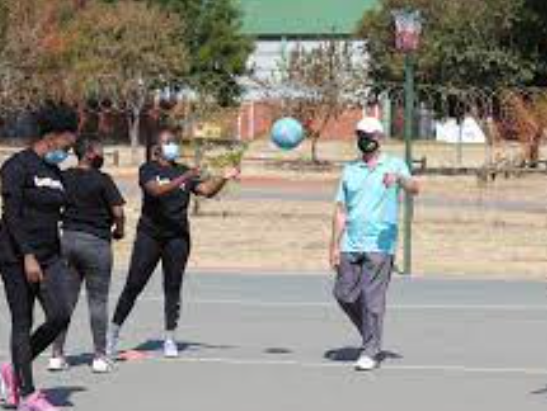
The Department of Basic Education (DBE) and Multichoice have launched the DStv Schools Netball Challenge.

This is set to focus on young female athletes aged between 16 and 19 who play netball at high schools across South Africa. 

On Tuesday, the Deputy Minister of the DBE, Reginah Mhlaule along with Deputy Minister of Sport, Arts and Culture, Nocawe Noncedo Mafu attended the launch at Hoërskool Florida in Johannesburg.

“This extensive partnership will contribute immensely to the growth and development of girl learners while forming a critical component in the overall implementation of school sports programmes, particularly netball for young girl learners,” said Mhlaule. 

The tournament will be contested across all nine provinces, involving secondary schools in rural and urban areas. 

It aims to elevate South African Schools Netball (SASN) through increased exposure and greater support, which will be crucial in the lead-up to the 2023 Netball World Cup, hosted in Cape Town.

“We are excited about this initiative taken by MultiChoice and Netball SA of ensuring that ahead of the 2023 Netball World Cup, we are indeed able to take South African Schools Netball to a whole new level, by creating a “Big-Event National Championship” which will assist in identifying the netball talent of tomorrow,” said Mafu.

Mafu said when SA won the rights to host the Netball World Cup back in 2019, as the Government they looked forward to living a legacy that will benefit a girl child and take netball as a sport to another level. 

The DStv Schools Netball Challenge kicks off this month  with local inter-school leagues that will progress to district playoffs and then to regional, where teams will play in two separate streams to allow all teams an equal chance of reaching the finals.

“MultiChoice is extending its support of schools sport, following the launch of SuperSport Schools last month. Our focus is to develop raw talent through real action and contribute to the building of long-lasting sports careers,” said MultiChoice Group Executive for Corporate Affairs, Joe Heshu.

Heshu said they are proud of the impact sports development programmes have had on the country’s future soccer and rugby sports stars, and they look forward to uplifting local netball stars.

South Africa must close the digital divide prevalent in public schools

The effect of the Covid-19 pandemic has been particularly acute on the public education sector. However, some say the pandemic also provides an opportunity for meaningful engagement around innovative options to bring about much-needed, broader societal transformation. 

Setlogane Manchidi, Head of Corporate Social Investment (CSI) at Investec said the pandemic has made it even more vital for educators and pupils to equip themselves with digital skills.

He said digital skills should form part of the training curriculum for teachers. Adding that educators should be comfortable to embrace technology and take full advantage of it to facilitate teaching and learning.

“Teachers need to be afforded time on these new learning platforms to build and boost their own ability and confidence.

“It is essential that teachers are both proficient and comfortable in teaching via various technological devices that serve to enhance their teaching and the pupils’ experience,” said Manchidi.

Manchidi said this is not only for classroom teaching but digital skills should also form a part of teachers’ ongoing professional development.

However, there are some obstacles that stand in the way of the smooth transition from paper to digital. These include the lack of access to suitable devices, the high cost of data in South Africa, as well as serious connectivity issues further worsened by frequent spells of load-shedding.

Manchidi said as teaching and learning moved online, the level of inequality between the “haves” and the “have-nots” was exposed for all to see.

“The challenges faced by a digitally handicapped education system in 2020 should present the nation with an opportunity. Ignoring the dire need to bridge the digital divide will only compound the problems faced by our public education system,” said Manchidi.

He added that South Africa needs to explore new and innovative ways to not only bridge, but leapfrog, the digital divide.

Saying that it is unacceptable that so many years after the advent of democracy the cost of data, poor connectivity and other related challenges remain real barriers to widespread digital adoption.

The present reality in South Africa is that many young people may never achieve their full education and career potential. The uneven access to internet connectivity stands in the way of meaningful engagement among citizens, broad-based societal development, and global competitiveness. Experts and policy makers have said that South Africa needs a definitive shift in policy, strategy and programme implementation nationally to narrow the digital divide.

Saying that without it, the country and its people, as a whole, will continue to struggle.

Manchidi said the pandemic has introduced “a new normal” and as such, the government and private sector should feel compelled to find solutions to assist the public education sector to navigate across the digital divide.

“In March 2020, the country faced an unprecedented challenge as a result of the global Covid-19 pandemic.

“With the imposition of a nationwide lockdown, almost every human endeavour switched from being physical to virtual. For many the conversion was effortless. But for others, the switch to a predominantly digital was impossible. 

“Sadly, the most impoverished and disadvantaged among us had to withstand the worst of the Covid-induced educational challenges and disruptions,” he said.

Manchidi said South Africa cannot allow last years’ experience to be lost to the passing of time.

PROFILE: Africa’s current discus champion to compete in Tokyo Paralympic Games

MELISSA SIMA| 

BA sports development third-year student from the University of Johannesburg has qualified to compete for the 2021 Olympic and Paralympic Games in Tokyo.  

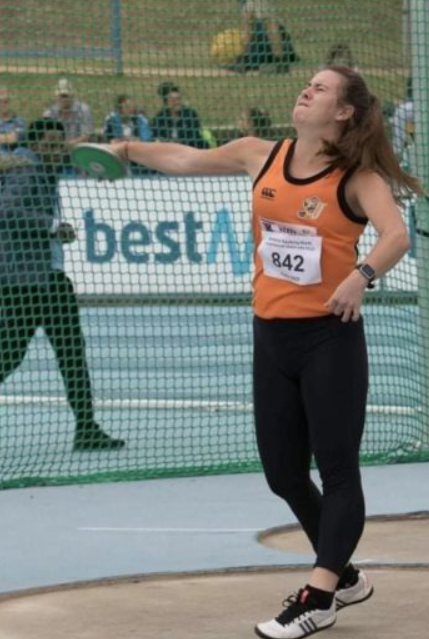
Yane van der Merwe (21) has qualified to compete for the Olympic and Paralympic Games and is keenly awaiting selection to the official South African team. 

Van der Merwe is currently placed 2nd in the Women’s Open Discus for F44 (the class she competes in). She told Wits Vuvuzela, “It is an amazing feeling, knowing that I am second in the world rankings for class F44 Discus.” 

Her personal best throw is 29,92m which she achieved in March 2021, and managed to maintain it at the National Championship in April 2021. She also won two gold medals for javelin and discus, setting a new African and South African record in the discus throw for women. Along with this, Van der Merwe came in 3rd place in the women’s shot put, setting another new South African record. 

Despite beating her personal best and setting new records in the country and continent, she is determined to reach even greater heights. “[I am] working hard each day to get that 30m at the next compete (sic),” said Van der Merwe.  

Lockdown assisted the para-athlete to work on her technique and strength while training at home or at her primary school. She saw the hard times as “a blessing in disguise”. She said, “It gave me an extra year to work on training and wanting that qualifying distance even more.” She currently trains at the UJ gymnasium and sports fields. 

Pierre Blignaut, Van der Merwe’s coach, has been training her since 2019 when she started with a discus throw of 22m. “[He has assisted me in] learning a new technique, motivating me every step of the way, and believing in me,” she said. 

She draws inspiration from Anrune Weyers, the South African sprinter who obtained a silver medal for running 400m at the 2019 World Seniors Championship. Van der Merwe added, “Where some see a para-athlete, I see the possibility of running without limits.” 

Teams chosen by the South African committee will be representing the nation in the games, which start on July 23, 2021. “It would be an honour to represent my country. Being able to show people that everything is possible if you set your mind to it. With determination nothing can stop you,” she said.

First published: Wits Vuvuzela

DBE and provincial education departments to be held liable for infrastructure backlogs

NYAKALLO TEFU| 

The Department of Basic Education (DBE) and all nine provincial education departments have agreed that accountability processes need be strengthened and standardised in order to hold infrastructure agents accountable for lack of timeous and quality delivery.

The conversation took place during a Portfolio Committee on Basic Education discussion on infrastructure backlogs at national schools last week.

DBE revealed that its failure to hold infrastructure agents accountable is the reason for the nation-wide infrastructure backlog.

The portfolio committee meeting was intended to find lasting solutions to challenges within the sector as well as ensure accountability from the department. 

Speaking at the portfolio committee meeting, Portfolio Committee Chairperson Bongiwe Mbinqo-Gigaba said the incessant delays have an unwarranted and unacceptable impact on the mandate to deliver on the constitutional promise of quality education for all.

Mbinqo-Gigaba said schools in the country have been having infrastructue issues for years.

In Gauteng, calls to eradicate asbestos schools have been made since 2019.

In Limpopo and the Eastern Cape, calls to eradicate pit latrines have been made by civil society and the country’s citizenry.

In Gauteng, DA Gauteng Shadow MEC for Education Khume Ramulifho said Gauteng ducation MEC Panyaza Lesufi has to speed up the eradication of asbestos classrooms.

Ramulifho said the DA will submit its proposal during budget debates to put pressure on Lesufi to fulfil his promise and to ensure that all asbestos schools and classrooms are demolished and rebuilt with brick-and-mortar structures before end of this term.

In response, the SADTU Provincial Secretary in Gauteng, Tseliso Ledimo, said they union is aware of the Gauteng Department of Education’s promise to eradicate schools built with asbestos. 

“However, we are not privy to the report about what has delayed the process. What we appreciate is that we have seen commitment from the GDE,” said Ledimo.

To ensure that infrastructure agents are kept accountable, Mbinqo-Gigaba said legally sound regulatory frameworks should be put in place.

Provincial departments agreed that their departments will build internal capacity to ensure that they are able to implement projects at an acceptable pace and rate. 

“We are calling for a strengthened monitoring and evaluation process by provincial departments, coupled with consistent enforcement of consequence management against implementing agents,” said Mbinqo-Gigaba.

Adding that there is a need for an increase in allocation to eradicate infrastructure backlogs, but this is difficult in the current environment.

Union say primary school learners should not return to school on a full-time basis

NYAKALLO TEFU| 

The Educators Union of South Africa (EUSA) has called for the  adoption of the “adjusted learner rotation system” at primary schools and have dismissed the department of basic education (DBE) ‘s call to have schools return at full capacity teaching. 

The union said this is because scientific evidence suggests full capacity learning will lead to wide-spread coronavirus infections.

EUSA also said the department has failed to research challenges faced by educators since the Covid-19 pandemic outbreak.

“There is no research that the department has conducted. They have not interviewed teachers to investigate this matter. They are just doing what they did in 2020 by consulting university professors who have never been to classrooms in this lockdown,” said EUSA spokesperson Kabelo Mahlobongwane. 

DBE Minister Angie Motshekga said last week that the department was  in talks with members of parliament and DBE stakeholders to see how primary schools across the country can return to full capacity teaching. 

Motshekga said a “return to normal approach” was critical because learners have lost out on a lot of time and lessons. 

She said the rotational basis system no longer workable.

However, there are challenges.

Motshekga said issues around infrastructure at public primary schools are still a risk and an impediment to the department’s plans and intentions to return to normal schooling. 

The minister said some schools have no capacity to allow learners to social distance or adhere to Covid-19 regulations.

But even with these challenges, Motshekga said it is not possible to say that schools must wait for all infrastructure backlogs to be dealt with before he department reconsiders the current rotational model.

She said the department must make plans to ensure that learners can return at a 100% capacity without worrying about infrastructure. 

EUSA spokesperson disagreed with the minister saying the current system in place– the rotational system – works. He said teachers are coping with the system so there is no need to change it yet. 

Mahlobongwane added that homeschooling is the future and that rotation arrangement has gotten a lot of parents used to being involved in the education of their children. 

He said: “Current statistics show that the danger of death and infections due to Covid-19 is still eminent. There are also new cases of  international  coronavirus strains being reported in South Africa. This, as well as the country being near winter, we believe that we should not rush into any decisions.”

Statistics from the department of health show that the country has seen a rise in the number of Covid-19 infections. They also show that new variants from India and the UK have been found in the country.

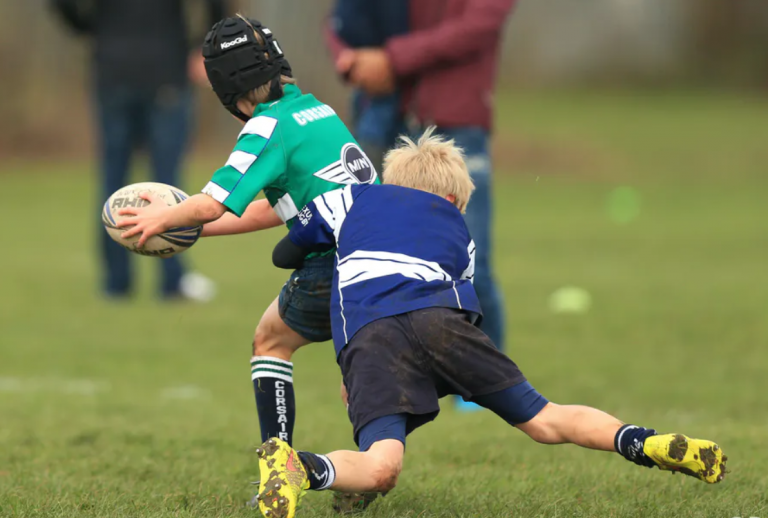
230 under quarantine following school rugby game

230 individuals, including parents, support staff and children, from a school in Gauteng are in isolation following exposure to the Covid-19 virus during a rugby game.

Health Minister Dr Zweli Mkhize said initially there were four people that tested positive.

“Then a whole crowd of over 200 people had to quarantined. And then in the process, the following day the number went up to 11 positive cases. Right now, there are about 32 people that tested positive for the coronavirus,” said Mkhize.

Mkhize added that the fact that this happened during a rugby game shows that schools, similarly, have loosened up conduct.

“When you break rules there are consequences,” said the minister.

There is growing concern that South Africa could experience a substantial third wave of coronavirus infections. According to the department of health, Covid-19 positive rates are on the increase. The department confirmed over the weekend that it has also detected the presence of coronavirus variants dominant in India and in the UK in South Africa.

The Council for Scientific and Industrial Research (CSIR) also raised concerns about the increase in the number of new coronavirus infections in provinces like Gauteng, the Free State, the North West  and the Northern Cape.

Mkhize confirmed that the Free State province has technically entered a third wave while Gauteng – the most densely populated province – the North West and the Northern Cape are seeing increases of Covid-19 positive tests.

Mkhize said the country has recorded 1 778 new COVID-19 cases and 11 new deaths in the last 24-hours.

The potential third wave is of great concern as it comes after a lot of loosened restrictions at schools, especially the allowance of contact sport and fixtures against other schools.

In April, the department of basic education (DBE) approved and gazetted some changes to Covid-19 regulations at schools. DBE spokesperson Elijah Mhlanga said both contact and non-contact sports will return. He added that physical education classes and extra-curriculum activities will be permitted to resume.

In the gazette, DBE Minister Angie Motshekga said there will be a set number of people allowed during sporting and other activities at South Africa’s primary and high schools. 

“The number of persons, including participants, referees, adjudicators, technical officials, volunteers, medical team, media or broadcasting team and stadium workers will be limited,” said Minister Motshekga. 

She added that a maximum of 250 persons will be allowed for indoor venues and a total of 500 persons for outdoors venues. 

“If the venue is too small to hold 250 persons indoors or 500 outdoors, those at the venue will be expected to observe a distance of at least one and a half meters from each other. Also, not more than 50% of the capacity of the venue may be used,” said Motshekga. 

At the time, Motsheka came under heavy criticism from some parents because the re-opening of extramural activities and the allowing of contact sport were seen as super spreader events.

It’s up to teachers to make an impact

BRIAN ISAACS| 

I have always believed that it is the principals and teachers who are responsible for the children of the poor receiving an excellent education (not only schooling ).

Yes, we pay our taxes which must pay for the education of our children. Government continues to say they do not have enough money to fund education properly.

Yes, we must fight for more resources in schools but I have mentioned that in numerous articles in my Cape Argus column that our teachers have to see that our children get an excellent education.

I was in a recent workshop at a high school in Cape Town where I ran a workshop on the role of the Student Representative Council (SRC) now neutrally called Representative Council of Learners in the new SA. From 1980- 1996, we had SRCs. Government, under pressure from its former oppressors, changed the name to RCLs.

So the political history of SRCs was lost to generations of new South Africans. At the workshop, I emphasised the point students must receive an excellent education including a progressive political education.

A teacher at the workshop made the point that the reason why private schools and model C schools do well is that they have the resources. I disputed this. I said this is all in the mind. Our students can do well if they apply themselves. I said it is how we have been wired to think.

Yes, the private schools and model C schools have more teachers and more resources but this must never be an excuse amongst teachers, students and parents for our students not to do well.

At parent-teacher-student meetings, I emphasised that there is no excuse for teachers not doing their work, for students not applying themselves and where teachers see that parents are not supervising their children at home for teachers to assist.

During the apartheid years, we fought gutter education. Teachers like Victor Ritchie, Attie de Villiers, MN Moerat, Rhoda Hendricks and RO Dudley produced excellent results with the meagre salaries they were paid and meagre resources at school.

This is our country and the oppressed fought tooth and nail to give the children of the poor an excellent education.

Why is it that the products of the education system before 1994 produced people of excellence? The reason – our teachers have us hope.

They made us politically aware of what needs to be done and encouraged us to do well academically so that we could build an excellent society after the fall of apartheid.

With many people being negative quite rightly about the present situation in SA our schools and especially the teachers just like the teachers pre-1994 give our students hope and direction.

I found in my career as a teacher it was my interest in outside organisations which were interested in changing society that gave me the fire power to stand my ground against reactionary education authorities. I was then energised to go into the classroom and motivate the students.

Teachers will not be able to do this if they just remain in the classroom and are not energised by outside organisations in their community.

Teachers make a difference in society.

* Brian Isaacs obtained a BSc (UWC) in 1975, a Secondary Teacher’s Diploma in 1976, BEd (UWC) in 1981, and MEd (UWC) in 1992. He is a former matriculant, teacher and principal at South Peninsula High School.

** First published in Cape Argus