Home Blog Page 335

Lefusi condemns violent behavior of parents at Laerskool Theresapark

Gauteng Department of Education (GDE) and the South African Democratic Teachers Union (SADTU) have condemned the behaviour of parents at Laerskool Theresapark for throwing out school principal Dorothy Mabaso out of her office on Thursday.

A video taken by one of the parents shows angry parents carrying the school principal with her office chair out of the administration office before she falls off the chair.

Gauteng SADTU said it is outraged by the violent criminal behaviour meted out against the principal of the Laerskool Theresapark school.

“This barbaric action has been widely shared through a video clip circulating on social media platforms.

“She sustained injuries during this unacceptable incident,” said Provincial Secretary of SADTU Tseliso Ledimo.

Ledimo said parents have made claims that the principal is running the school into financial ruin and has allegedly abused teachers who have resorted to leaving the school.

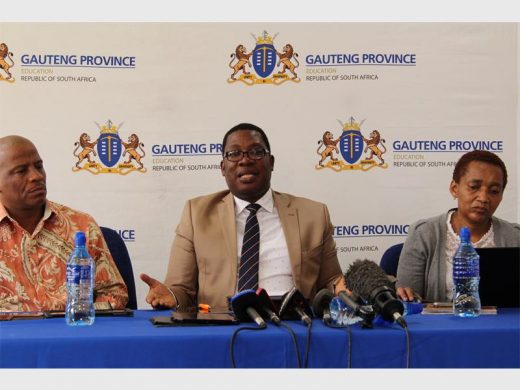
GDE MEC Panyaza Lesufi said the provincial department has launched an investigation into these allegations made by parents.

“The violent and disruptive behaviour of some parents is unacceptable, parents have a right to be aggrieved and raise concerns, however not in this manner,” said Lesufi.

Lesufi said some of the parents are part of the School Governing Body (SGB) and the behaviour is worrying.

“This is a new SGB and if this is how they deal with issues, then it is very worrisome,” added Lesufi.

The MEC said he will visit the principal who is at home after she was booked off for seven days by her doctor.

Lesufi will also meet with school management on Friday afternoon.

“Parents said they have been sending communication regarding issues at the school which I have not received because if I did, I would have attended the issue,” said Lesufi. 

Ledimo said whatever differences the parents have with the principal these do not justify violence to resolve them.

“Everyone has a fundamental right to dignity as enshrined in our Constitution, not such humiliation. All our schools must be safe havens protected against these criminal elements,” said Ledimo.

Ledimo called on the Gauteng department of education to provide the necessary support to the school principal and those who have been traumatized by this unfortunate situation.

The GDE must also investigate the matter and take appropriate action. Furthermore, we call on the law enforcement agencies to investigate the matter and subject those who are found to be responsible to the might of the law.

DBE to discuss continuing contact sport amid rising Covid-19 infection rates at schools

Two special meetings are scheduled for next week by the department of basic education (DBE) to discuss the impact of allowing contact activities to continue at schools.

This is in the wake of an increase in Covid-19 cases among pupils taking part in sporting activities across the country.

Inside Education reported that at least two schools in Gauteng have been closed after several Covid-19 cases were detected.

DBE spokesperson Elijah Mhlanga confirmed that high-level meetings are set to discuss how the department, together with its provincial departments, should handle Covid-19 protocols, particularly around contact sport, going forward.

Inside Education reported this week that executive at Aspen Pharmacare Stavros Nicolaou said a third wave of Covid-19 infections is inevitable.

“Every year in South Africa about 11 000 people die of flu,” he said.

Studies by the National Institute for Communicable Diseases show that Gauteng will have the worst third wave across all scenarios. This is due to the higher concentration of working-age adults and people with co-morbidities, and the lower estimates of previous infections in the province, said the study.

The report also states that there has been an increase of infections in the Free State and the North West.

On Monday, Health Minister Dr Zweli Mkhize said Covid-19 test positivity ratios have increased to 29% in the Northern Cape at the end of last week, 16.9% in the Free State and 12.3% in the North West.

This is the context against which the education department has decided to assess the impact of having allowed sport to happen at schools, and contact sport in particular.

Mhlanga said DBE will continue to monitor schools and the application of the health and safety protocols.

Union says rotten food was given to school children in KZN

The Educators Union of South Africa (EUSA) President Scelo Bhengu said maggots were found in learners’ food at Ziphembeleni Secondary School in Inanda, KwaZulu-Natal.

Bhengu shared a video on social media with a half-eaten plate of phutu and amasi showing maggots moving on the plate.

The rotten food served at the school is as part of the National Schools’ Nutrition Programme (NSNP).

In response to the incident, KwaZulu-Natal (KZN) Education MEC Kwazi Mshengu said a full probe is to be conducted following ongoing reports of maggot-infested food being distributed to learners at Inanda-based Eziphembeleni Secondary School, north of Durban.

DA KZN Spokesperson on Education Imran Keeka said while the problems that exist within the NSNP in KZN are well documented, the serving of rotten food has taken matters to a whole new level.

“It is now clear that investigations conducted by department of education officials following earlier incidents has not changed anything and we urge Mshengu to get to the bottom of what is happening at this school,” Keeka said.

Mshengu said his department sent out a team to investigate allegations made by EUSA president of school children being fed rotten food.

But EUSA president said he was not convinced.

“The KZN department of education officials will once again conduct their lacking dexterity investigation and issue a cooked report to protect their cdes (sic) at the expense of our kids,” said Bhengu.

The incident of rotten food served to children from poor backgrounds at government public schools is the fourth incident to take place this year at the same school.

Bhengu said Ziphembeleni Secondary School has had issues with spoiled food since the beginning of the year.  

“It happened on the last week of March, I took a video again of a bag of samp that had insects on it,” said Bhengu.

Spokesperson for the KZN Department of Education Kwazi Mthethwa said the department is committed to providing healthy meals to all learners across the province. 

“If the food was off or was not in a good state, we have to investigate and check with our officials and confirm those details,” he said.

According to the KZN education department website, the NSNP aims to enhance the learning capacity of learners through the provision of a healthy meal a day at schools.

“Where it is implemented, the programme has shown to improve punctuality, regular school attendance, concentration and the general wellbeing of participating learners,” said Mthethwa.

AfriForum says DBE must explain the vaccine programme registration at school

Lobby group AfriForum has called for the Department of Basic Education (DBE) to clarify its statement on parents and guardians of learners being required to register for a vaccine programme. 

The DBE released a statement before learners returned to school for the second term in May, saying it is in the process of preparing for a vaccination programme as part of the Department of Health’s planned vaccine programme.

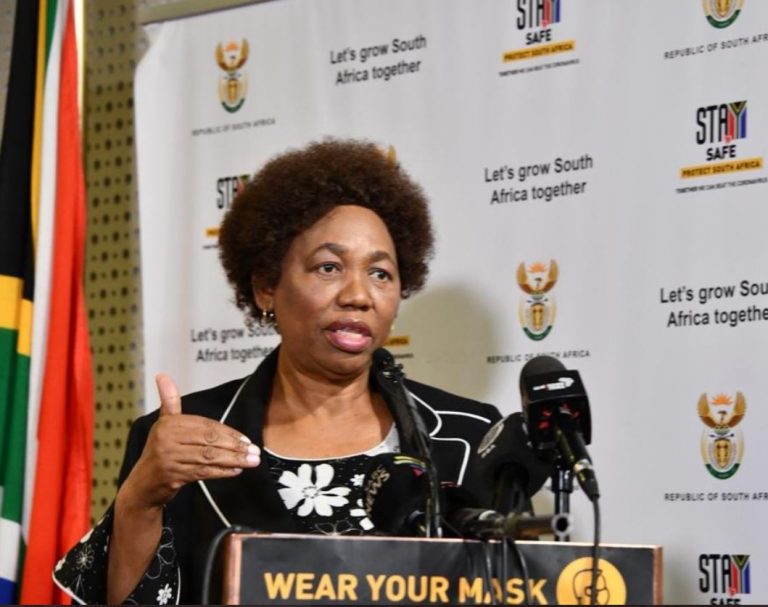
DBE Minister Angie Motshekga said according to the department of health, the first phase of the vaccination programme will target citizens that are over the age of 60-years and employees at risk who have been identified as social workers.

Spokesperson for DBE, Elijah Mhlanga, said parents and guardians of learners will be required to register as part of the preparation for the vaccine programme to be rolled out in a date to be announced by the health department.

Stavros Nicolaou, executive at Aspen Pharmacare said a third wave of Covid infections is inevitable. Every year in South Africa about 11 000 people die of flu.

Studies by the National Institute for Communicable Diseases show that Gauteng will have the worst third wave across all scenarios. This is due to the higher concentration of working-age adults and people with co-morbidities, and the lower estimates of previous infections in the province, said the study.

The report also states that there has been an increase of infections in the Free State and the North West.

Health Minister Dr Zweli Mkhize said Covid-19 test positivity ratios have increased to 29% in the Northern Cape at the end of last week, 16.9% in the Free State and 12.3% in the North West.

On Monday Inside Education reported that a school 230 people had to self isolate after a school rugby game

At the time Mkhize said initially there were four people that tested positive.

“Then a whole crowd of over 200 people had to quarantined. And then in the process, the following day the number went up to 11 positive cases. Right now, there are about 32 people that tested positive for the coronavirus,” said Mkhize.

Mkhize added that the fact that this happened during a rugby game shows that schools, similarly, have loosened up conduct.

On Wednesday, two Gauteng schools were shut down after Covid-19 cases were detected.

Gauteng education spokesperson Steve Mabona said the department can confirm that a decision has been made, in consultation with thedepartment oh health, district directors and Gauteng department of education management, to suspend academic activities at Krugersdorp High School and St John’s College as a means of managing the discovery of several Covid-19 cases in each school.

AfriForum’s Education Rights Manager Natasha Venter said as much as they understand the importance of vaccination, pupils, teachers and guardians cannot be forced in to programme.

“It should however be every person’s choice whether they, as well as their children, want to be vaccinated,” said Venter.

Venter added that President Cyril Ramaphosa repeatedly assured the country that no-one will be forced to receive the vaccine, something the statement released by DBE  Minister Angie Motshekga’s statement go against.

“DBE must clarify the statement about the required registration for the vaccine programme. We want to know the purpose of the registration and whether parents and guardians would be forced to register,” said Venter.

Adding that clarity is also required on who should register. “Is it the guardians and parents or is it the children.

“Also, should the government intend to make the vaccination of learners at public schools and the registration thereof compulsory, AfriForum will oppose it,” said Venter.

Habib not racist, says UK university board

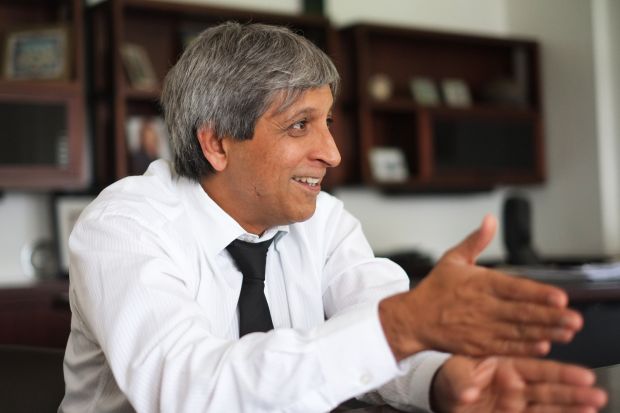
Professor Adam Habib resumed his duties as Director at the School of Oriental and African Studies (SOAS) University of London this week.

Marie Staunton, Chair of Board of Trustees at SOAS, said the SOAS Board of Trustees met on Tuesday last week and have accepted in full the recommendations of the independent external investigation into the meeting of 11 March and events arising from that. 

The recommendations state that once required actions are put in place, Habib can be reinstated as director at the school.

Habib was suspended for the use of the “n-word” during a Zoom meeting with students.

At the time SOAS Black Student Body said Habib is not fit to hold his position. They said SOAS must still deal with issues of black students’ wellbeing, university fees, student debt, surveillance as well as bordering and policing.

The student body added that Habib’s “history of reaction” in relation to questions of economic justice, including calling the militarised police on #FeesMustFall student protesters at Wits University when he was Vice Chancellor, shows he is not fit to be the university’s director.

On 23 March SOAS staff overwhelmingly backed a vote of no confidence against Habib with 98% of members present voting in favour of the motion, 0% against, and 2% abstaining.

South Africa’s political party, the Economic Freedom Fighters (EFF) also called on SOAS to fire Habib following the incident.

“We call for the immediate removal of Habib from his position as director of SOAS University as he has exhibited extreme bigoty and is unfit to lead a department that ought to intellectually lead social change,” said the EFF in a statement issues by its national spokesperson, Vuyani Pambo.

Staunton said the board acknowledged the pain and distress caused to many in their community. She said the board is taking this opportunity to apologise again to all those who have been so affected and distressed by these events.

She said the board has accepted all the recommendations from the investigation and that they are taking specific action on all of them.

“The actions being taken include putting in place a restorative justice approach for the meeting of 11 March and events arising, developing a clear policy for the SOAS community on the use of the n-word and continuing to take forward the process of dialogue between the SOAS community of staff & students and SOAS leadership,” said Staunton.

She added: “I want to be clear especially on the use of the n-word: the report notes that the director [Habib] spoke the word in full while trying to say that it should not be used within the SOAS community.

“Habib has since acknowledged that speaking the word in full was a mistake, for which he has apologised,” she said.

Adding that the report was nonetheless critical of his response to students at the meeting and in his subsequent tweets.

She said the report found that Habib’s mistake was of vocalising the n-word in full, while trying to say that using the word offensively is unacceptable, “did not in itself make him a racist,” said Staunton.

GDE and Mpianzi family reach agreement out of court

NYAKALLO TEFU| 

The Gauteng Department of Education (GDE) has reached an out-of-court settlement with Enock Mpianzi’s family.

Enock went missing on Wednesday 15 January during a ‘water activity’ at the school’s annual Grade 8 camp. The excursion was planned by Parktown Boys High School but had not been authorised by the provincial department. 

Reports said a makeshift raft Enock and fellow pupils had built in an exercise capsized in the Crocodile River.

Following the incident, the school’s principal Malcolm Williams was dismissed after he was found guilty of going ahead with the excursion without informing the GDE. 

At the time Gauteng Education MEC Panyaza Lesufi said there was serious “recklessness and negligence” on the part of the school and the Nyati Bush and Riverbreak lodge where Enock passed.

In November 2020, the Mpianzi family requested the GDE to pay them R20 million in compensation for the death of their son.

It is not clear what the family settled for out of court which will not be made public after the family signed a confidentiality clause. 

“A settlement on undisclosed terms has been reached with the boy’s family with all parties involved, however I cannot disclose the amount,” said family lawyer Wikus Steyl.

Steyl said the civil claim was withdrawn since an agreement was reached. 

“While conscious to the fact that a young life was lost and will never return; we are hopeful that the out-of-court settlement will bring some comfort and closure to the Mpianzi family, who, undoubtedly, have been going through a challenging time since the unfortunate passing of Enoch” said Lesfui. 

This settlement was in a civil matter, but Mpianzi’s family is still pursuing a criminal case.

Great concern over unplaced learners in schools in the Western Cape

The Legal Resources Centre (LRC) has asked parents whose children have not yet been placed in a school in the Western Cape for the 2021 school year to contact them.

The LRC said it is “gravely concerned” about the increasingly high number of unplaced learners in schools in the Western Cape.

“On 13 April 2021, the Western Cape Education Department (WCED) released a statement indicating that the current number of unplaced learners in the province is at a shocking 4 188. On 14 April 2021, the WCED informed us that 3 786 learners remain unplaced.

“The WCED statement indicates that all the learners that gathered under the trees in Forest Village for learning have now been placed in schools, however, it fails to mention why it has taken this long to place these learners and what concrete plans have been made to place the remaining 3 786 learners in schools,” said the LRC.

The organisation has threatened legal action against the education provincial department.

On Tuesday chairperson of the Portfolio Committee on Basic Education Bongiwe Mbinqo-Gigaba raised concerns that it took several months for WCED to place children at schools.

Mbinqo-Gigaba questioned why learners could not be placed at the beginning of the academic year.

In response, WCED MEC Debbie Schäfer said the delays were due to a lack of funding for additional learners. Schäfer said it was only after more funds were made available by the provincial treasury following the intervention by the Premier, that all learners could be placed.

The WCED had over 5 000 learners not placed in schools by March 2021.

On 24 April, the provincial department had 1228 unplaced learners.

Updated information received by the Portfolio Committee on Basic Education on 10 May 2021 showed that 109 learners were still unplaced.

Schäfer said all 109 learners have now been accommodated but parents have not confirmed with the schools where space had been allocated.

She said the WCED released more than 400 additional posts in March and an additional 179 posts were added in April to relieve pressure and place learners.

She added that a further 43 classrooms were opened after the appointment of additional teachers and 129 mobile classrooms were procured and delivery has commenced.

Schäfer made a presentation to the committee meeting showing that an internal task team has been asked to plan for the 2022 needs of learners now in May. According to the presentation, expert in knowledge management, infrastructure and institutional resource support are to form part of the task team.

“Management plan for 2022 placement must be finalised by 30 June 2021 and submissions for 2022 needs must be on route by 1 July 2021,” said Schäfer.

Schäfer said there were 21 021 learners and 19 452 learners for 2020 and 2021 respectively for Grades R to 12 first time registrations from other provinces and countries.

She said annual learner growth has implications for teachers, classrooms, resources, transport and feeding.

The LRC said it concerned about the fact that these learners have missed a term of learning.

The organisation said the WCED should put in place measures to ensure that these learners are placed in schools as a matter of urgency, and are given the opportunity to catch up with the work they have missed out on.

The LRC said the WCED should not blame the high numbers of unplaced learners on the lack of necessary funding. The organisation said it welcomes the Public Service Commission investigation into the issue of placement and funding constraints in all education departments nationwide.

“Lastly, we call on the WCED to stop blaming migration from the Eastern Cape to the Western Cape for the increase in unplaced learners.

“The reasons why these learners apply for school admission in the Western Cape are irrelevant to the constitutional mandate of the WCED to provide access to education for all persons within its jurisdiction,” said the LRC.

Artificial Intelligence students in the field of machine learning to get scholarships

NYAKALLO TEFU| 

Four students reading for a master’s degree at the University of Witwatersrand (Wits) in the field of artificial intelligence (AI) will be awarded scholarships between 2022 and 2024.

The scholarships are awarded to students in the fields of computer science, machine learning and robotics.

Research shows that Machine Learning is a branch of artificial intelligence based on the idea that systems can learn from data, identify patterns and make decisions with minimal human intervention.

According to Wits Vice-Chancellor Professor Zeblon Vilakazi, the evolving nature of innovations powered by AI means that those involved in the field will be able to drive change at every level of society.

Vilakazi said researchers in this area will help solve problems facing society locally and internationally, and drive innovations that will impact how future generations use technology.

“We need to train scholars to deal with the challenges of the 21st Century, some which we may not yet have encountered.

“The new world order, including the use of quantum computing, biotech, big data, internet of things, robotics and artificial intelligence, has the potential to vanquish routine jobs that we take for granted today – and create new ones that we cannot yet envision,” said Vilakazi.

He added that the fields of AI, data science, robotics, machine learning, and other related fields offer great opportunities for South Africa and Africa to play a part in developing and innovating solutions and shaping them to deal with our realities.

Obum Ekeke, Global Lead for University Relations & Education Partnerships at DeepMind said the spirit of the donation and the DeepMind Scholarships is to increase diversity in the fields of artificial intelligence and machine learning, and to increase the representation of the groups currently most underrepresented in these fields. 

Ekeke said they are proud to help support the next generation of AI researchers and engineers in Africa.

He said preference would be afforded to South African citizens from underrepresented groups, including black students and women. 

“It will also be open to international students, with a preference to residents of sub-Saharan African states,” said Ekeke. 

Wits is one of only three African universities selected to host DeepMind Scholarships, alongside Stellenbosch University and Makerere University in Uganda.      

Vilakazi added that AI is an important building block and key driver in the Wits digital transformation suite of centenary projects, of which artificial intelligence and machine learning is a key driver.

Associate professor in the School of Computer Science and Applied Mathematics at Wits, Benjamin Rosman said this is an exciting recognition of Wits’ role as a leader in Machine Learning and AI in Africa. 

“Enabled by this support from DeepMind, Wits will bring an even broader range of African talent to the global conversation in cutting-edge AI research,” said Rosman.

Ekeke said the scholarships will provide tuition fees, a stipend, plus conference and equipment funding for two Masters students who aim to complete their degree through dissertation over two years, as well as for two students who enrol in a Master’s programme through coursework and dissertation over two years.

DBE and Multichoice launch DSTV Schools Netball Challenge

NYAKALLO TEFU| 

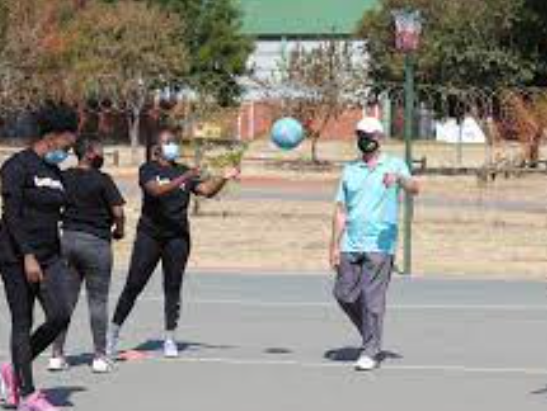
The Department of Basic Education (DBE) and Multichoice have launched the DStv Schools Netball Challenge.

This is set to focus on young female athletes aged between 16 and 19 who play netball at high schools across South Africa. 

On Tuesday, the Deputy Minister of the DBE, Reginah Mhlaule along with Deputy Minister of Sport, Arts and Culture, Nocawe Noncedo Mafu attended the launch at Hoërskool Florida in Johannesburg.

“This extensive partnership will contribute immensely to the growth and development of girl learners while forming a critical component in the overall implementation of school sports programmes, particularly netball for young girl learners,” said Mhlaule. 

The tournament will be contested across all nine provinces, involving secondary schools in rural and urban areas. 

It aims to elevate South African Schools Netball (SASN) through increased exposure and greater support, which will be crucial in the lead-up to the 2023 Netball World Cup, hosted in Cape Town.

“We are excited about this initiative taken by MultiChoice and Netball SA of ensuring that ahead of the 2023 Netball World Cup, we are indeed able to take South African Schools Netball to a whole new level, by creating a “Big-Event National Championship” which will assist in identifying the netball talent of tomorrow,” said Mafu.

Mafu said when SA won the rights to host the Netball World Cup back in 2019, as the Government they looked forward to living a legacy that will benefit a girl child and take netball as a sport to another level. 

The DStv Schools Netball Challenge kicks off this month  with local inter-school leagues that will progress to district playoffs and then to regional, where teams will play in two separate streams to allow all teams an equal chance of reaching the finals.

“MultiChoice is extending its support of schools sport, following the launch of SuperSport Schools last month. Our focus is to develop raw talent through real action and contribute to the building of long-lasting sports careers,” said MultiChoice Group Executive for Corporate Affairs, Joe Heshu.

Heshu said they are proud of the impact sports development programmes have had on the country’s future soccer and rugby sports stars, and they look forward to uplifting local netball stars.

South Africa must close the digital divide prevalent in public schools

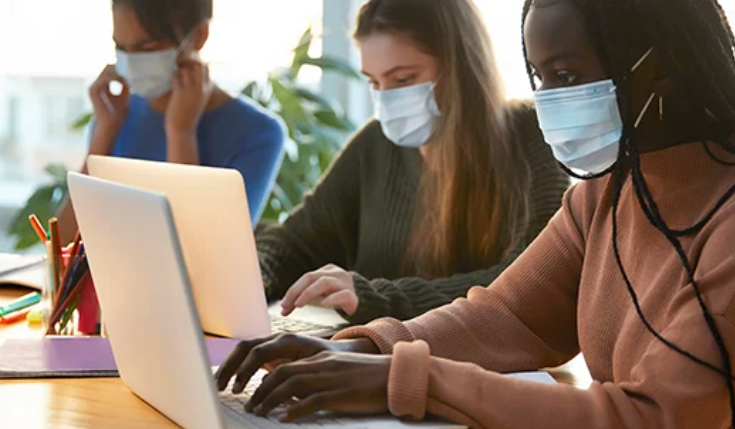
The effect of the Covid-19 pandemic has been particularly acute on the public education sector. However, some say the pandemic also provides an opportunity for meaningful engagement around innovative options to bring about much-needed, broader societal transformation. 

Setlogane Manchidi, Head of Corporate Social Investment (CSI) at Investec said the pandemic has made it even more vital for educators and pupils to equip themselves with digital skills.

He said digital skills should form part of the training curriculum for teachers. Adding that educators should be comfortable to embrace technology and take full advantage of it to facilitate teaching and learning.

“Teachers need to be afforded time on these new learning platforms to build and boost their own ability and confidence.

“It is essential that teachers are both proficient and comfortable in teaching via various technological devices that serve to enhance their teaching and the pupils’ experience,” said Manchidi.

Manchidi said this is not only for classroom teaching but digital skills should also form a part of teachers’ ongoing professional development.

However, there are some obstacles that stand in the way of the smooth transition from paper to digital. These include the lack of access to suitable devices, the high cost of data in South Africa, as well as serious connectivity issues further worsened by frequent spells of load-shedding.

Manchidi said as teaching and learning moved online, the level of inequality between the “haves” and the “have-nots” was exposed for all to see.

“The challenges faced by a digitally handicapped education system in 2020 should present the nation with an opportunity. Ignoring the dire need to bridge the digital divide will only compound the problems faced by our public education system,” said Manchidi.

He added that South Africa needs to explore new and innovative ways to not only bridge, but leapfrog, the digital divide.

Saying that it is unacceptable that so many years after the advent of democracy the cost of data, poor connectivity and other related challenges remain real barriers to widespread digital adoption.

The present reality in South Africa is that many young people may never achieve their full education and career potential. The uneven access to internet connectivity stands in the way of meaningful engagement among citizens, broad-based societal development, and global competitiveness. Experts and policy makers have said that South Africa needs a definitive shift in policy, strategy and programme implementation nationally to narrow the digital divide.

Saying that without it, the country and its people, as a whole, will continue to struggle.

Manchidi said the pandemic has introduced “a new normal” and as such, the government and private sector should feel compelled to find solutions to assist the public education sector to navigate across the digital divide.

“In March 2020, the country faced an unprecedented challenge as a result of the global Covid-19 pandemic.

“With the imposition of a nationwide lockdown, almost every human endeavour switched from being physical to virtual. For many the conversion was effortless. But for others, the switch to a predominantly digital was impossible. 

“Sadly, the most impoverished and disadvantaged among us had to withstand the worst of the Covid-induced educational challenges and disruptions,” he said.

Manchidi said South Africa cannot allow last years’ experience to be lost to the passing of time.