Home Blog Page 336

PROFILE: Africa’s current discus champion to compete in Tokyo Paralympic Games

MELISSA SIMA| 

BA sports development third-year student from the University of Johannesburg has qualified to compete for the 2021 Olympic and Paralympic Games in Tokyo.  

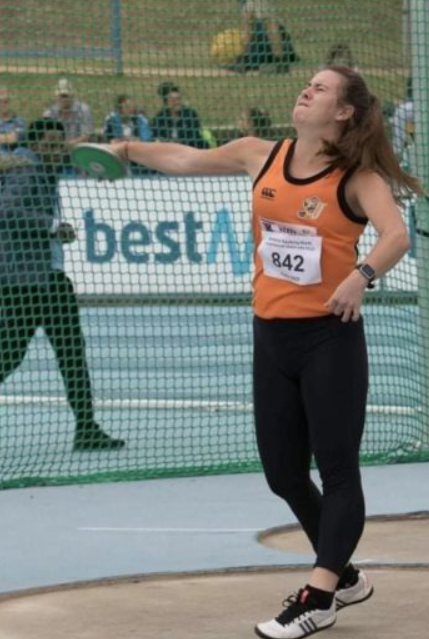
Yane van der Merwe (21) has qualified to compete for the Olympic and Paralympic Games and is keenly awaiting selection to the official South African team. 

Van der Merwe is currently placed 2nd in the Women’s Open Discus for F44 (the class she competes in). She told Wits Vuvuzela, “It is an amazing feeling, knowing that I am second in the world rankings for class F44 Discus.” 

Her personal best throw is 29,92m which she achieved in March 2021, and managed to maintain it at the National Championship in April 2021. She also won two gold medals for javelin and discus, setting a new African and South African record in the discus throw for women. Along with this, Van der Merwe came in 3rd place in the women’s shot put, setting another new South African record. 

Despite beating her personal best and setting new records in the country and continent, she is determined to reach even greater heights. “[I am] working hard each day to get that 30m at the next compete (sic),” said Van der Merwe.  

Lockdown assisted the para-athlete to work on her technique and strength while training at home or at her primary school. She saw the hard times as “a blessing in disguise”. She said, “It gave me an extra year to work on training and wanting that qualifying distance even more.” She currently trains at the UJ gymnasium and sports fields. 

Pierre Blignaut, Van der Merwe’s coach, has been training her since 2019 when she started with a discus throw of 22m. “[He has assisted me in] learning a new technique, motivating me every step of the way, and believing in me,” she said. 

She draws inspiration from Anrune Weyers, the South African sprinter who obtained a silver medal for running 400m at the 2019 World Seniors Championship. Van der Merwe added, “Where some see a para-athlete, I see the possibility of running without limits.” 

Teams chosen by the South African committee will be representing the nation in the games, which start on July 23, 2021. “It would be an honour to represent my country. Being able to show people that everything is possible if you set your mind to it. With determination nothing can stop you,” she said.

First published: Wits Vuvuzela
DBE and provincial education departments to be held liable for infrastructure backlogs

NYAKALLO TEFU| 

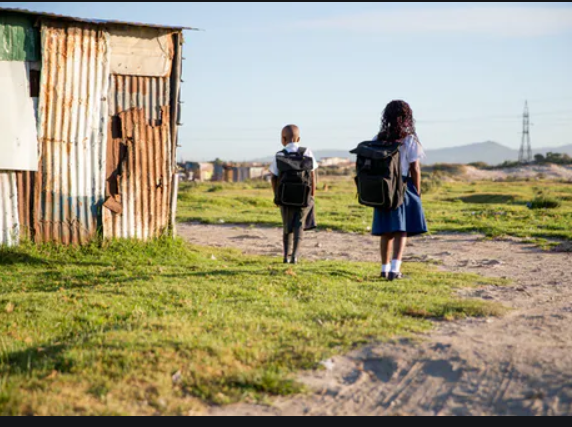
The Department of Basic Education (DBE) and all nine provincial education departments have agreed that accountability processes need be strengthened and standardised in order to hold infrastructure agents accountable for lack of timeous and quality delivery.

The conversation took place during a Portfolio Committee on Basic Education discussion on infrastructure backlogs at national schools last week.

DBE revealed that its failure to hold infrastructure agents accountable is the reason for the nation-wide infrastructure backlog.

The portfolio committee meeting was intended to find lasting solutions to challenges within the sector as well as ensure accountability from the department. 

Speaking at the portfolio committee meeting, Portfolio Committee Chairperson Bongiwe Mbinqo-Gigaba said the incessant delays have an unwarranted and unacceptable impact on the mandate to deliver on the constitutional promise of quality education for all.

Mbinqo-Gigaba said schools in the country have been having infrastructue issues for years.

In Gauteng, calls to eradicate asbestos schools have been made since 2019.

In Limpopo and the Eastern Cape, calls to eradicate pit latrines have been made by civil society and the country’s citizenry.

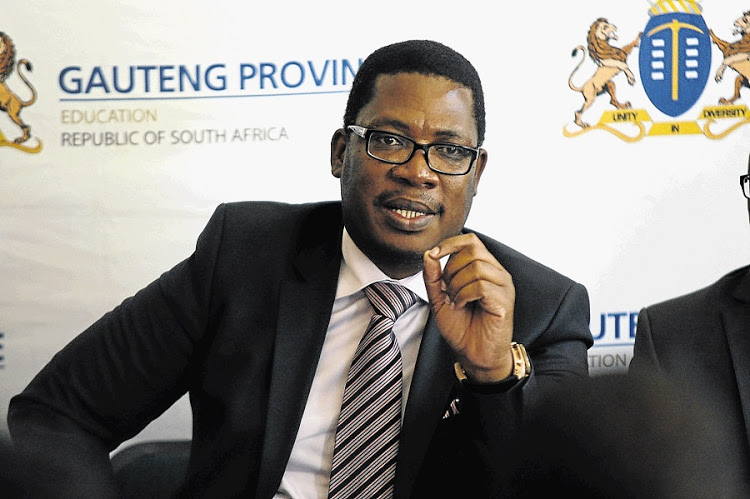
In Gauteng, DA Gauteng Shadow MEC for Education Khume Ramulifho said Gauteng ducation MEC Panyaza Lesufi has to speed up the eradication of asbestos classrooms.

Ramulifho said the DA will submit its proposal during budget debates to put pressure on Lesufi to fulfil his promise and to ensure that all asbestos schools and classrooms are demolished and rebuilt with brick-and-mortar structures before end of this term.

In response, the SADTU Provincial Secretary in Gauteng, Tseliso Ledimo, said they union is aware of the Gauteng Department of Education’s promise to eradicate schools built with asbestos. 

“However, we are not privy to the report about what has delayed the process. What we appreciate is that we have seen commitment from the GDE,” said Ledimo.

To ensure that infrastructure agents are kept accountable, Mbinqo-Gigaba said legally sound regulatory frameworks should be put in place.

Provincial departments agreed that their departments will build internal capacity to ensure that they are able to implement projects at an acceptable pace and rate. 

“We are calling for a strengthened monitoring and evaluation process by provincial departments, coupled with consistent enforcement of consequence management against implementing agents,” said Mbinqo-Gigaba.

Adding that there is a need for an increase in allocation to eradicate infrastructure backlogs, but this is difficult in the current environment.

Union say primary school learners should not return to school on a full-time basis

NYAKALLO TEFU| 

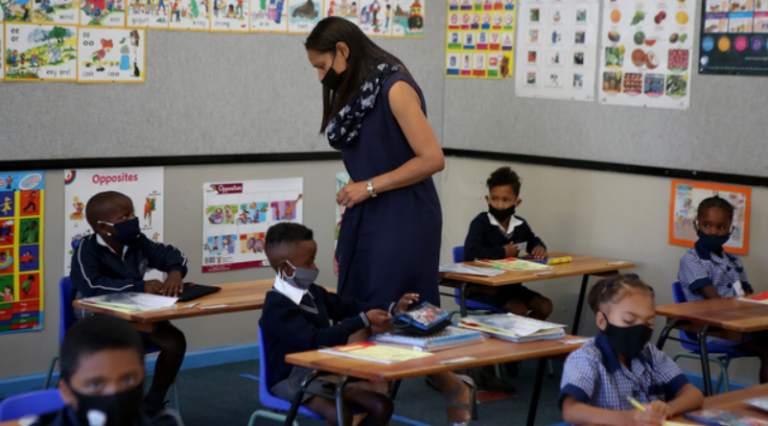
The Educators Union of South Africa (EUSA) has called for the  adoption of the “adjusted learner rotation system” at primary schools and have dismissed the department of basic education (DBE) ‘s call to have schools return at full capacity teaching. 

The union said this is because scientific evidence suggests full capacity learning will lead to wide-spread coronavirus infections.

EUSA also said the department has failed to research challenges faced by educators since the Covid-19 pandemic outbreak.

“There is no research that the department has conducted. They have not interviewed teachers to investigate this matter. They are just doing what they did in 2020 by consulting university professors who have never been to classrooms in this lockdown,” said EUSA spokesperson Kabelo Mahlobongwane. 

DBE Minister Angie Motshekga said last week that the department was  in talks with members of parliament and DBE stakeholders to see how primary schools across the country can return to full capacity teaching. 

Motshekga said a “return to normal approach” was critical because learners have lost out on a lot of time and lessons. 

She said the rotational basis system no longer workable.

However, there are challenges.

Motshekga said issues around infrastructure at public primary schools are still a risk and an impediment to the department’s plans and intentions to return to normal schooling. 

The minister said some schools have no capacity to allow learners to social distance or adhere to Covid-19 regulations.

But even with these challenges, Motshekga said it is not possible to say that schools must wait for all infrastructure backlogs to be dealt with before he department reconsiders the current rotational model.

She said the department must make plans to ensure that learners can return at a 100% capacity without worrying about infrastructure. 

EUSA spokesperson disagreed with the minister saying the current system in place– the rotational system – works. He said teachers are coping with the system so there is no need to change it yet. 

Mahlobongwane added that homeschooling is the future and that rotation arrangement has gotten a lot of parents used to being involved in the education of their children. 

He said: “Current statistics show that the danger of death and infections due to Covid-19 is still eminent. There are also new cases of  international  coronavirus strains being reported in South Africa. This, as well as the country being near winter, we believe that we should not rush into any decisions.”

Statistics from the department of health show that the country has seen a rise in the number of Covid-19 infections. They also show that new variants from India and the UK have been found in the country.

230 under quarantine following school rugby game

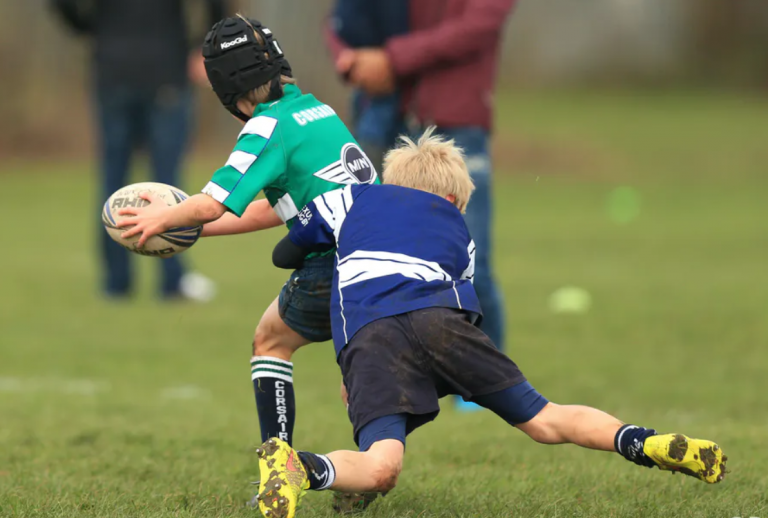
230 individuals, including parents, support staff and children, from a school in Gauteng are in isolation following exposure to the Covid-19 virus during a rugby game.

Health Minister Dr Zweli Mkhize said initially there were four people that tested positive.

“Then a whole crowd of over 200 people had to quarantined. And then in the process, the following day the number went up to 11 positive cases. Right now, there are about 32 people that tested positive for the coronavirus,” said Mkhize.

Mkhize added that the fact that this happened during a rugby game shows that schools, similarly, have loosened up conduct.

“When you break rules there are consequences,” said the minister.

There is growing concern that South Africa could experience a substantial third wave of coronavirus infections. According to the department of health, Covid-19 positive rates are on the increase. The department confirmed over the weekend that it has also detected the presence of coronavirus variants dominant in India and in the UK in South Africa.

The Council for Scientific and Industrial Research (CSIR) also raised concerns about the increase in the number of new coronavirus infections in provinces like Gauteng, the Free State, the North West  and the Northern Cape.

Mkhize confirmed that the Free State province has technically entered a third wave while Gauteng – the most densely populated province – the North West and the Northern Cape are seeing increases of Covid-19 positive tests.

Mkhize said the country has recorded 1 778 new COVID-19 cases and 11 new deaths in the last 24-hours.

The potential third wave is of great concern as it comes after a lot of loosened restrictions at schools, especially the allowance of contact sport and fixtures against other schools.

In April, the department of basic education (DBE) approved and gazetted some changes to Covid-19 regulations at schools. DBE spokesperson Elijah Mhlanga said both contact and non-contact sports will return. He added that physical education classes and extra-curriculum activities will be permitted to resume.

In the gazette, DBE Minister Angie Motshekga said there will be a set number of people allowed during sporting and other activities at South Africa’s primary and high schools. 

“The number of persons, including participants, referees, adjudicators, technical officials, volunteers, medical team, media or broadcasting team and stadium workers will be limited,” said Minister Motshekga. 

She added that a maximum of 250 persons will be allowed for indoor venues and a total of 500 persons for outdoors venues. 

“If the venue is too small to hold 250 persons indoors or 500 outdoors, those at the venue will be expected to observe a distance of at least one and a half meters from each other. Also, not more than 50% of the capacity of the venue may be used,” said Motshekga. 

At the time, Motsheka came under heavy criticism from some parents because the re-opening of extramural activities and the allowing of contact sport were seen as super spreader events.

It’s up to teachers to make an impact

BRIAN ISAACS| 

I have always believed that it is the principals and teachers who are responsible for the children of the poor receiving an excellent education (not only schooling ).

Yes, we pay our taxes which must pay for the education of our children. Government continues to say they do not have enough money to fund education properly.

Yes, we must fight for more resources in schools but I have mentioned that in numerous articles in my Cape Argus column that our teachers have to see that our children get an excellent education.

I was in a recent workshop at a high school in Cape Town where I ran a workshop on the role of the Student Representative Council (SRC) now neutrally called Representative Council of Learners in the new SA. From 1980- 1996, we had SRCs. Government, under pressure from its former oppressors, changed the name to RCLs.

So the political history of SRCs was lost to generations of new South Africans. At the workshop, I emphasised the point students must receive an excellent education including a progressive political education.

A teacher at the workshop made the point that the reason why private schools and model C schools do well is that they have the resources. I disputed this. I said this is all in the mind. Our students can do well if they apply themselves. I said it is how we have been wired to think.

Yes, the private schools and model C schools have more teachers and more resources but this must never be an excuse amongst teachers, students and parents for our students not to do well.

At parent-teacher-student meetings, I emphasised that there is no excuse for teachers not doing their work, for students not applying themselves and where teachers see that parents are not supervising their children at home for teachers to assist.

During the apartheid years, we fought gutter education. Teachers like Victor Ritchie, Attie de Villiers, MN Moerat, Rhoda Hendricks and RO Dudley produced excellent results with the meagre salaries they were paid and meagre resources at school.

This is our country and the oppressed fought tooth and nail to give the children of the poor an excellent education.

Why is it that the products of the education system before 1994 produced people of excellence? The reason – our teachers have us hope.

They made us politically aware of what needs to be done and encouraged us to do well academically so that we could build an excellent society after the fall of apartheid.

With many people being negative quite rightly about the present situation in SA our schools and especially the teachers just like the teachers pre-1994 give our students hope and direction.

I found in my career as a teacher it was my interest in outside organisations which were interested in changing society that gave me the fire power to stand my ground against reactionary education authorities. I was then energised to go into the classroom and motivate the students.

Teachers will not be able to do this if they just remain in the classroom and are not energised by outside organisations in their community.

Teachers make a difference in society.

* Brian Isaacs obtained a BSc (UWC) in 1975, a Secondary Teacher’s Diploma in 1976, BEd (UWC) in 1981, and MEd (UWC) in 1992. He is a former matriculant, teacher and principal at South Peninsula High School.

** First published in Cape Argus

Teacher suspended for using the k-word and referring to learners as baboons and drug dealers

NYAKALLO TEFU| 

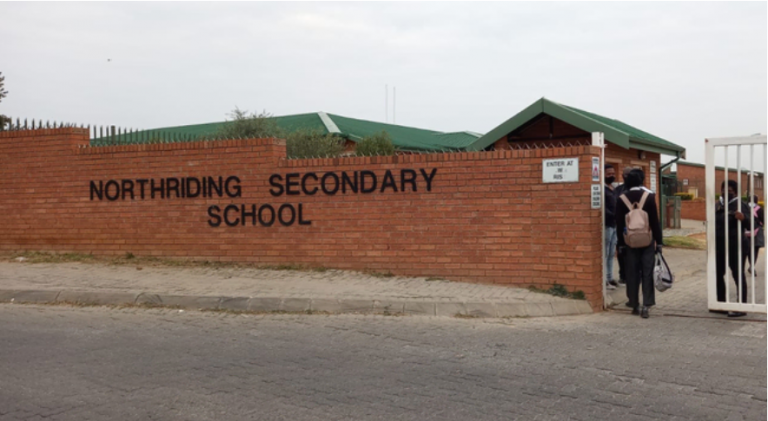
Gauteng MEC for Education Panyaza Lesufi has welcomed the immediate suspension of a Northriding High School teacher who on Thursday used the k-word to refer to her pupil.

The teacher also used “baboons and drug dealers” in reference to her pupils.

The incident was captured on video. It took place in a Grade 8 Afrikaans class on 6 May during an altercation between a female teacher and a learner.

Lesufi visited the school on Friday morning after reports that the teacher called one of the students a ‘kaff*r’. 

“As a Department, we are extremely disappointed about this incident, racism will never be tolerated in our schools,” said Lesufi.

He said educators must always teach and guide learners, not fight them. 

It is being reported that the altercation between a grade eight learner and the educator occurred on Thursday, where the learner was making a noise in the classroom. 

“From what we are told, during the altercation, the educator sprayed the learner with sanitizer and he left the classroom to inform one of the teachers in the other classroom,” said Lesufi.

Learners further said the accused educator had another altercation in a different class where she called the learners ‘baboons’, ‘kaff*r’ and drug dealers. 

“It is a traumatic experience for us and for the child and other kids that were in class. We are very angry about this,” said the learner’s father. 

The father expressed shock and said one would think that they would never experience such an incident in 2021.

“We may have experienced this when we were younger but in 2021 for a 14-year-old to go through such is not a good thing,” said the father. 

The father said they have engaged the school and they have given them an assurance that the matter will be handled. 

“We have had a long discussion with the parents who came to see me, I wouldn’t want to share information at this stage as the situation is sensitive,” said the school’s principal, Francios Oosthuizen.

After discussions, the department’s spokesperson Steve Mabona addressed the media outside the school.

“We received the information about the alleged racism via social media, and felt that we needed to visit the school to get a better understanding about what transpired,” said Mabona.

He said the department has welcomed the move for the accused educator to be suspended with immediate effect.

“We have instituted the suspension of the teacher on Thursday afternoon and have informed superiors accordingly and are awaiting the outcome of the process,” said Oosthuizen. 

Oosthuizen said the department has offered psychosocial services to the learners and staff who have been affected by this incident. 

“The District has also briefed the affected parents on decisions taken on this matter while also extending professional support,” said Lesufi.  

Universities South Africa fundraising for the higher education sector surpasses half of the R1 billion target

Universities South Africa (USAf) raised R 571 080 719 in 24 months in an attempt to contribute towards remedying the perennial financial challenges faced by South Africa’s university students and the higher education sector.

According to USAf communications consultant Nqobile Tembe the organisation undertook to raise R1 billion.

USAf CEO Professor Ahmed Bawa said that attempts to galvanise additional resources began in 2016.

Bawa said the fund raising was prompted by several factors, including the sudden shift to emergency remote teaching, students’ struggle to pay their tuition fees, and concerns over the rising student debt to universities, which now standing at more than R14 billion.

“We sought partnerships with a number of statutory and private sector institutions to address the challenges.

“The actions taken by the Sector Education and Training Authority (SETAs), especially the Education, Training and Development Practices Sector Education and Training Authority (ETDP-SETA), and the banks, demonstrate much commitment to our most talented young people and to higher education more generally,” said Bawa.

Adding that the development of these partnerships auger very well for the future of our nation.

The Covid-19 pandemic exacerbated the financial challenges faced by students and their families. The pandemic also placed universities at significant financial risk. In light of this, Bawa said USAf decided to accelerate the fundraising drive by seeking and streamlining new lines of investment in higher education.

Research shows that universities have been experiencing declines in government subsidies on a per capita basis over the last few years. This, together with government’s proposal for the regulation of tuition fee increases, the cuts in funding for research and innovation and the challenges related to student funding conspire to drive growing concerns over the sustainability of the institutions and the sector. It is also worth noting that student historic debt to universities has escalated to approximately R14 billion.

It is against this backdrop that USAf undertook the raising of funds.

“The various grants have been or will be channelled to universities for undergraduate and postgraduate student bursaries for 2020 and 2021, purchasing laptops for needy students in 2020, training insourced security personnel at various institutions and sponsoring technological capacity development at universities,” said Bawa.

Bawa said sourcing of funds was intensified with the arrival of Dr Linda Meyer, director for operations and sector support at USAf.

“Like in so many other areas, the pandemic opened the way for much energy and lateral thinking in the way that higher education addressed its challenges,” said Bawa.

Meyer said even though the targeted amount seems minuscule when viewed in the context of the current student debt owed to universities, the lifeline testimonies from student beneficiaries, and universities, makes USAf’s efforts worthwhile.

She said she will renew her commitment to realising the R1 billion target by 2022.

“The need in the sector remains mammoth. For this reason, we will keep knocking on new doors and engaging with prospective partners,” said Meyer.

She added that she applauds the USAf Office for its commitment and support in achieving and exceeding USAf’s contractual obligations to the donors and SETAs.

The Covid-19 pandemic is hurting university students’ mental health

Institutions of higher education locally and globally are undergoing unprecedented changes as a result of the Covid-19 pandemic.

A study on how the pandemic has impacted teaching and learning at South Africa’s higher education institutions was conducted by multiple researchers this month.

The research specifically looked at how the coronavirus pandemic has impacted teaching and learning.

Wits senior lecturer Emmanuel Ojo said universities and colleges have been forced to switch to online teaching and learning. Many were unprepared for this move to what is termed emergency remote teaching and learning, said Ojo.

He said many universities have adopted some form of hybrid learning approach.

“Higher education institutions are attempting to combine face-to-face and online instruction into a single, seamless experience.

“This situation is likely to remain the status quo for some time, especially in the global south,” he said.

Adding that this is because, although a variety of vaccines are available around the world, distribution and actual vaccination has been slow in poorer countries – and particularly on the African continent.

“The pandemic and slow vaccination programme in Africa and South Africa specifically has had serious implications for higher education.

“This is because, for many students, the university campus is not just where they go to learn, universities also provide a space for relationships that helps students form important networks and alliances that evolve and extend beyond their university education,” he said.

Ojo said the global pandemic has created more uncertainty about the future, including higher education and the world of work.

“This uncertainty emerged in our research as fundamentally affecting mental health.

“South African universities have to support students’ transition through this uncertainty,” said Ojo.

South Africa and countries across the world initiated Covid-19 lockdown restrictions just over a year ago. This study looks at how students have coped and are negotiating the current challenges.

The study included a total of 1,932 university students who completed an online questionnaire over a period of six weeks. It used a mix of undergraduate, postgraduate, and international students.

The methodology included questionnaires that yielded demographic data. It also examined students’ perceptions of readiness and motivation for online teaching, learning and assessment, student engagement, and their attitudes towards COVID-19 and its impact on higher education.

Ojo said open-ended items also were included such as students being asked to reflect on the disruption caused by the pandemic.

“Seven themes emerged from the data. These represented challenges that hindered students’ ability successfully to learn online during the COVID-19 era,” he said.

The seven themes include internet connection, mental health personal challenges or ability, time management, being easily distracted, family members making studying difficult and the interaction between lecturers and students.

Bryan Jason Bergsteedt, Senior Research Associate at the University of Cambridge said they found that undergraduate and full-time students were approximately twice and four times, respectively, more likely than were postgraduate and part-time students to indicate problems associated with mental health.

“Those aged between 18 and 24 were approximately 1.75 times more likely than students older than 24 to present problems associated with mental health.

“We also found that there is a gender dimension to mental health. Female students were 1.83 times more likely than male students to indicate problems associated with mental health. These problems included stress, anxiety and depression,” he said.

 Bergsteedt said a country like South Africa cannot afford to ignore the impact of the pandemic on higher education, especially on students’ health and well-being.

“South Africa’s comparative and competitive edge is locked in the youth, especially university students.

“They are a critical mass in building the capability of the state to play a developmental, transformative role,” he said. 

He added that South African universities, working with the Department of Higher Education and Training and other national government departments, must create and resource a long-term strategy to support the well-being of university students as they transition through this pandemic.

Lesufi must fix burnt down classrooms at Joburg school

The Democratic Alliance (DA) has made calls on the Gauteng MEC for Education, Panyaza Lesufi, to urgently fix the deteriorating and burnt down classrooms at Riverlea High School in Randburg.

DA Gauteng Shadow MEC for Education, Khume Ramulifho MPL and the DA Joburg PR Councillor, Cllr McKinnley Mitchell said they this week conducted an oversight inspection at Riverlea High School.

Ramulifho and Mitchell said they were appalled to discover the terrible state of the school infrastructure. 

“Eight classrooms were burnt down more than five years ago, and while the department has been aware of this for the entire time, they have failed to fix and restore them,” said Ramulifho.

Mitchell added that the school infrastructure is old and dilapidated and needs urgent attention.

“Failure by the Gauteng Department of Education to prioritise fixing school infrastructure is impacting negatively on learning and teaching. 

“The school matric pass rate and the learner enrolment continue to drop every year due to a lack of adequate infrastructure and proper maintenance of the school,” said Mitchell.

According to the DA shadow MEC for education in the province, the school environment is dirty and has litter all over, while the bathrooms have water leakages on the floor, even though there are general workers paid to keep the school clean.

“The environment is not conducive for learning and teaching which greatly concerns the DA,” said Ramulifho.

Adding that safety and security are also a challenge at the school.

Ramulifho said the school has experienced several break-ins and burglaries where valuables were stolen.

“There is a lack of sufficient patrollers to safeguard the school. We want Lesufi to fix the school infrastructure. We also call for an intervention from the district offices to assist in ensuring that the school environment is conducive for learning and teaching and improve the school performance,” said Ramulifho.

University of Pretoria wins multiple awards at the South African Academy for Science and the Arts

NYAKALLO TEFU| 

The University of Pretoria (UP) flew its flag high at the South African Academy for Science and the Arts annual awards bagging eight awards in total.

The awards, also known as the Suid-Afrikaanse Akademie vir Wetenskap en Kuns (SAAWK), are a multidisciplinary organisation dedicated to promoting science, technology and the arts in Afrikaans.

One of the awards received was the Havenga Prize for Life Sciences awarded to an individual for original research. 

“This year, it was awarded to Professor Marion Meyer of the Department of Plant and Soil Sciences.

“His research in the field of pharmacology and toxicology has led to numerous patents,” said UP vice-chancellor Professor Tawana Kupe.

Kupe said Meyer was the first South African to apply metabolomics – the large-scale study of small molecules (commonly known as metabolites) within cells, biofluids, tissues or organisms – and published the first peer-reviewed article on it.

“Our mission at UP is to pursue excellence in our core functions of research, teaching and learning, and utilising that research to constantly improve our society and communities,” said Kupe. 

Another award, the Toon van den Heever Prize for Legal Science was granted to Emeritus Professor Johan Scott of the Faculty of Law. 

“As an expert in the field of South African private law, Prof Scott has produced 120 peer-reviewed publications over the course of his career. He is one of a few South African lawyers who can decipher the original sources of common law in Latin and Old Dutch,” said Kupe.

Kupe said as an editor, Scott contributed extensively to, and constructed and expanded on, the encyclopaedic work The Law in South Africa, which is currently one of the most important legal publications in South Africa.