Home Blog Page 337

The militarisation of university campuses breeds a culture of intolerance and violence

TOKELO NHLAPO| 

The militarisation of public universities across South African campuses has bred a culture of violence, intolerance, repression of protest and use of force against poor students.

The brutal killing of 35-year-old Mthokozisi Ntumba in March this year must be understood in the context of government’s systematic defunding of public universities and the fascist culture cemented by former Wits University Vice-Chancellor and former chair of Universities South Africa, Adam Habib.

Overs the past few years, students have protested against fee exclusion, insourcing of cleaning and security workers, decolonisation of universities and gender equality.

For those of us who were student activists a decade ago, the university was a space for contestation of ideas. University management understood that even in our disagreements, the university was a sacred space to mould future intellectuals. Even at the height of apartheid’s repression and interference of universities, the sight of police on campus was frowned upon by both students and academics.

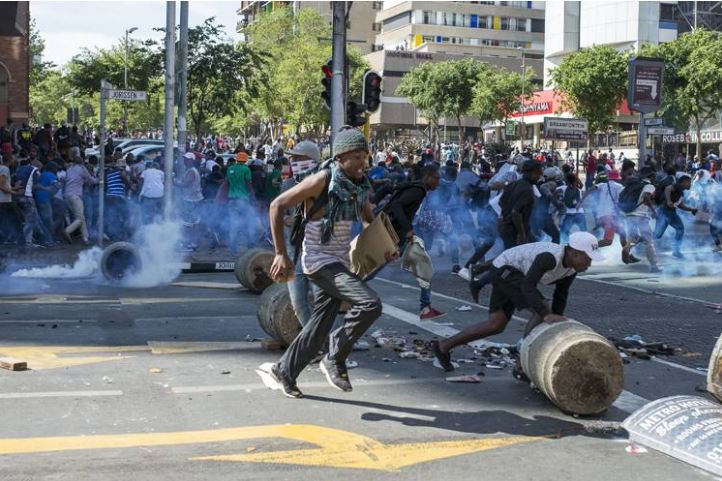
 Since the 2015/16 fees must fall protests, one thing that been permanent at many of the student protests has been the violent repression of students’ voices through the deployment of private security and the South African Police Service (SAPS), effectively criminalising protests at universities.

While many Professors have theorised how the neoliberal macroeconomic policy undertaken by the democratic government thereby systematically defunding universities, many have remained silent while enabling a culture of repression on university campuses.

Many have remained silent while student activists were intimidated with dubious charges by university management, arrested and those academics who dared questioned decisions of senior management were labelled “incompetent”, vilified as violent, and dismissed as “cheeky”, “insolent” or “Pol Pot Brigade” in the infamous gossip column by Adam Habib titled ‘Rebels and Rage’.

During the recent protests against student’s financial exclusion exacerbated by the effects of Covid-19 lockdown and the inherent exclusion of online learning, students called for transparency from university management and placed emphasis on negotiations in order to create equitable access to higher education.

However, university management responded with heavily armed private security at the slightest sign of students’ discontent. While presiding over Wits university over an eight-year tenure, Habib created a blueprint for many Vice-Chancellors to follow – the systematic exclusion of the poor from public universities while intrenching a culture of intolerance and violence.

The consequence has been the abandonment of democratic liberties through violence and repression in almost all public universities in South Africa.

While the violent repression in universities must be observed in the context of austerity budgets that have systematically defunded higher education over the years, no one has dared to asked what the cost is of contracting private security in public universities.

The cost of the militarisation of university campuses through private security and police is beyond monetary, it breeds a fascist culture of intolerance, repression and violence in institutions that are meant to mirror society for the better.

If the brutal killing of Mthokozisi Ntumba should mean anything, at the very least, it should serve as reminder of the urgent need to actively reclaim our right to access education to build a more just and equitable society.

Social Justice activist and researcher in the EFF Parliamentary caucus, Tokelo writes in his personal capacity as Former Deputy President of the Student Representative Council (SRC) at Wits University. BA in Politics and International Relations from Wits University (2011). BA with honors in Journalism and Media from Wits University (2012). Master of Arts in Political Sciences at Wits University. PhD Candidate at Wits University. Twitter: @tokelonhlapo
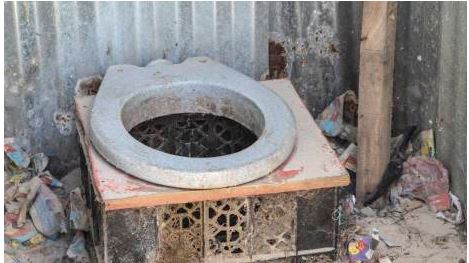

Civil organisation back in court this month fighting for proper sanitation in schools

NYAKALLO TEFU| 

Section27 will this month return to the Limpopo High Court to fight for safe, dignified and sanitary school toilets in the province. 

The fight for the eradication of pit toilets at schools in Limpopo continues following the loss of lives because of unsafe toilets. 

 “We filed heads of arguments with the court in October 2020 to continue our now six-year legal battle against the Limpopo Department of Education and the Department of Basic Education (DBE) to fight for the eradication of the pit toilets,” said Section27’s Nontsikelelo Mpulo.

Mpulo said the fight is for all the pit toilets responsible for the deaths of learners at school, including Michael Komape. 

Limpopo has been marred by pit toilets controversy since the death of five-year-old Michael Komape in January 2014.

Michael was a pupil at Mahlodumela Primary in Chebeng village. He died after his school’s pit toilet collapsed and he fell in while relieving himself.  

Michael’s lifeless body was discovered by his mother on January 20, 2014. His hand protruded from a pool of human excrement in one of the pit latrines at Mahlodumela Lower Primary School in Chebeng Village, Polokwane.

At the time, the school principal said he had written numerous letters to the Department of Education in Limpopo asking for new toilets to be built for safety reasons.

The letters went unanswered, he said.

In a question-and-answer session in parliament in 2020, Basic Education Minister, Angie Motshekga said her departments plans to get rid of pit toilets at schools across the country by 2022. 

She admitted that the country has over 4 000 public schools that still use pit latrines.

“The current plan is to eradicate the basic pit toilets by March 2022. This is however, dependent on the availability of funding for this purpose,” said Mothsekga. 

Mpulo said, “this is unconstitutional”. She said Section27 demands that the education authorities craft a plan for the eradication of pit latrines that is coherent and meets the obligation to realise the right to basic education immediately.

64-year-old male teacher stabs 47-year-old educator

NYAKALLO TEFU| 

A 64-year-old male teacher from Tolamo Primary School at Letlhakaneng Village near Brits stabbed a 47-year-old female teacher at Tshefoge Primary school in Vaalboschloot on Monday.

“It is reported that when he arrived at the hall, his face was covered with a balaclava.

“He called the victim and went outside whereby arguments ensued between them.” said the Departments Elias Malindi. 

Malindi said the teacher had multiple stab wounds from the her neck and on her back. 

He said the staff at school managed to rush in to apprehend the culprit and called the police.

The injured educator is still in a critical condition at the Intensive Care Unit of the local hospital, said Malindi. 

On Tuesday, North West MEC for Education Mmaphefo Matsemela visited Tshefoge Primary School.

Matsemela condemned the incident and said the department is very much disturbed and disappointed by the “heinous and barbaric incident”.

 She said gender based violence is not welcomed at schools. 

“Anyone who does that will be subjected to the full might of the law. This has also traumatised our learners since it happened in front of them. I wish to thank the staff members who braved themselves and apprehended the suspect,” said Matsemela.

The MEC said support would be offered to the educators and learners. 

South African National Civic Organisation (SANCO) in the North West has also condemned the incident.

“We wish to condemn in the strongest terms possible the ghastly crime committed on the school premises that has left learners and educators traumatised and the victim seriously injured,” said  SANCO Provincial Chairperson Paul Sebegoe.

Sebegoe said there is no place in society for such outrageous criminality and he wished the injured teacher a speedy recovery.

North West police spokesperson Captain Adele Myburgh said they are investigating a case of attempted murder.

“According to information available at this stage, the school teacher was accosted by her 63-year-old boyfriend, who then stabbed her multiple times with an unknown object,” said Myburgh.

“This clearly points to frustration of our communities with the level of violence they are experiencing which is pushing them to take the law into their own hands as they are not trained to affect citizens’ arrests,” said Sebegoe. 

DBE in talks to continue with the Presidential Youth Employment Initiative

NYAKALLO TEFU|

Talks are under way by the Department of Basic Education (DBE) to review and repackage the Presidential Youth Employment Initiative with a proposed second phase to start this year

The initiative started last year December and ended on 30 April.

DBE spokesperson Elijah Mhlanga said the initiative was a direct response to the coronavirus pandemic and was used to direct public investment in order to create employment opportunities as well as to provide support to workers who were negatively impacted by Covid-19.

“The Basic Education sector created employment opportunities for more than 320 000 Education and General Education Assistants who were placed in schools around the country,” he said. 

The spokesperson said the employment opportunities provided by the initiative helped schools with administration issues and the general upkeep of the school. 

The National Professional Teachers Organization’s (NAPTOSA) Basil Manuel said even though everyone knew this was a temporary measure, it is unfortunate that it has come to an end. 

“We knew that it was a very temporary intervention, the great tragedy about it ending is that many schools have never had the luxury of having teacher assistants and now they realize what they have been missing,” said Manuel. 

Mhlanga said the contracts will not be extended but instead, discussions are underway to review and repackage the initiative with a proposed second phase to commence later this year.

“An announcement will be made once all the details have been finalised,” said Mhlanga.

Adding that the department is aware that some provinces, including Limpopo, have published recruitment adverts for education assistants. 

“The provincial initiatives such as the ones in Gauteng and Limpopo are not linked to the national Presidential Youth Employment Initiative commonly known as the Basic Education Employment Initiative,” he said. 

Manuel said NAPTOSA has made enquiries about the return of the initiative.

“Even though it paid people a minimum wage, it made a difference in the lives of so many, not only that but schools also benefited from this,” said Manuel.  

“Of course, everyone is fighting, we hope that even if we have a revived version, we can look at those schools that need additional support.  from the category of support than just teachers,” added Manuel. 

Western Cape Education MEC Debbie Schäfer said the initiative offered temporary employment to young people during very difficult economic conditions, and also assisted schools with staff responsibilities during the pandemic.

“The assistants also helped implement Covid-19 safety protocols and sanitising surfaces,” she said.

Adding that education assistants were invaluable in that they supported teachers with administrative tasks, classroom management, sports coaching and cultural activities, while the general school assistants helped with maintenance, cleaning, vegetable gardens and general administration.

Back to school for learners across the country

NYAKALLO TEFU|

The Department of Basic Education (DBE) said learners will this week return to school for the second term of the academic year after a week-long break.

DBE spokesperson Elijah Mhlanga said learners will continue to go to school on a rotational basis as the department intensifies its implementation of the safety campaign aimed at saving lives and livelihoods.

The rotational approaches were introduced to ensure that the coronavirus does not spread rapidly at schools and is contained as much as it can be. 

But this is about to change.

Mhlanga said the department is currently investigating the possibility of returning all learners at primary school level due to the learning loses suffered as a direct result of the coronavirus pandemic.

He said the proposal is being considered at the National Joint Operational and Intelligence Structure (NATJOINTS) where the department has since delivered a presentation at the relevant work streams. 

“The Council of Education Ministers (CEM) will also consider the matter this week,” said Mhlanga.

The proposal comes at a time when some countries have reported spikes and new variants in the virus.

In South Africa, the vaccine rollout has come slower than expected bringing about worries that the country could experience a third wave of COVID-19 infections.

This is the greatest concern among parents. Some have questioned the proposal to re-open schools while there are fewer people to enforce Covid-19 restrictions in schools.

Mhlanga said the department will ensure the health and safety protocols remain in place with social distancing, washing of hands and sanitizing being the basic hygiene practices that must be adhered to at all times. 

He said the Council of Education Ministers will hold a two-day meeting on Thursday and Friday to deliberate on key issues affecting the basic education sector.

Gauteng MEC for Education Panyaza Lesufi said he supported the minister’s decision to bring back all primary school pupils.

Lesufi said he strongly believed that the current rotational system was disadvantaging pupils.

Adding that the successful conclusion of term one for the 2021 academic year has emboldened his resolve to deliver quality education to all pupils in our province, even during the Covid-19 pandemic.

Wits postgraduate students receive 13 bursaries for ICT studies

Bolekwa Mboniswa and Lerato Hlagala received post-graduate bursaries from Huawei to further their studies in information systems and computer science respectively at the University of Witwatersrand (Wits).

Mboniswa, who is from Cosmo City, said she was the only person to be admitted to Wits from her high school during her matric year.

She said she initially wanted to study mining engineering at the institution, but when she was rejected for the degree, she lost her scholarship.

Mboniswa said she took the rejection as a sign that she was in the wrong field and enrolled in Information Systems instead.

“My first year was hard since I was staying at home. However, I received the National Student Financial Aid Scheme (NSFAS) funding in my second year, which eventually led to me graduating in record time with a few distinctions,” she said.

Mboniswa completed her undergraduate in 2020 and was awarded one of the Huawei bursaries in order to pursue a postgraduate study in the same field.

Huawei South Africa has awarded bursaries to a select group of postgraduate ICT students as part of its efforts to bolster and support technology skills.

The bursaries, awarded to 48 students at five of South Africa’s universities, are worth R7-million.

The five universities are Wits, the University of Kwa-Zulu Natal, University of Pretoria, University of Cape Town and the University of Western Cape.

13 of the bursaries were awarded Wits students during a virtual ceremony on Thursday.

Mboniswa said the bursary will be a major help in her achieving her long-term goal of being a beacon of hope for young boys and girls in the country’s townships.

But for now she is concentrating on completing her honours and graduating cum laude so she can contribute as much value as possible to any team she later joins, she said.

In his opening address, Director of Postgraduate Affairs Professor Roberts Muponde said the ceremony is taking place in the context of a life-shifting global pandemic as well as a research-shifting strategy that Wits is working on, which underlines the value of innovation and research with impact.

“The event heightens my sense of the resilience of human giving and human hope. Where others are reducing their commitments to funding postgraduate students due to devastating pandemic, Huawei has actually increased support for Wits students this year,” said Muponde.

According to a press statement released by the institution, Wits’ relationship with Huawei began in 2019. Wits said the relationship has provided valuable work experience for graduates who have joined the tech giant. 

Daniel Jiang, Human Resources Development at Huawei said South Africa has no shortage of young, talented people capable of being groomed into world-class technology professionals.

“Too often, however, they simply aren’t given the necessary opportunities. At Huawei, we recognise that corporates can make important contributions in reversing that situation,” said Jiang.

Jiang said that while the company stands to benefit from the wider pool of candidates, its programme is far reaching and offers students from disadvantaged backgrounds an opportunity to flourish and accomplish their aspirations and academic goals.

He said it is vital that South Africa gets more students take up STEM courses (science, technology, engineering, and mathematics).

“We’re proud to be part of building those numbers and ensuring that those who do take those courses are as well equipped to enter the workplace,” said Jiang.  

Hlagala, one of the Huawei bursary recipients and an post-graduate student at Wits, said the bursary is a chance to fulfil a long-term ambition to get into the technology space.

“My goal is to become a professional software developer,” she said Hlagala.

She said she would love to be part of a software organisation where she can share the knowledge and talents that she has earned.

“I want to be part of a place where I would gain more skills and grow as an individual.

“The bursary will help me get where I want to be. I am already learning a lot, especially now that I have added an extra module from Huawei to my studies. It allows me to focus and fully pay attention to my books without getting distracted by unpaid expenses,” said Hlagala.

Grit matters when a child is learning to read, even in poor South African schools

HELEEN HOFMEYR| 

School quality is important in determining children’s success at school. But individual characteristics of the child also play a role. In particular, researchers and teachers are starting to pay more attention to the part that social and emotional skills play in academic success. These are also known as character skills or soft skills.

This interest in the “softer” side of learning stems from a movement in economics. It looks for statistical evidence of the importance of soft skills in a number of domains, including the labour market and even marriage.

One question this research hasn’t answered yet is whether social and emotional skills also matter in contexts where resources are severely lacking. It’s known from high-income countries that these skills are important for student achievement.

But are they important in schools that don’t have basic instructional materials, or when a child’s teacher lacks content knowledge and pedagogical skill? Is there a benefit to having these skills when there’s limited time and opportunity to learn in the school day?

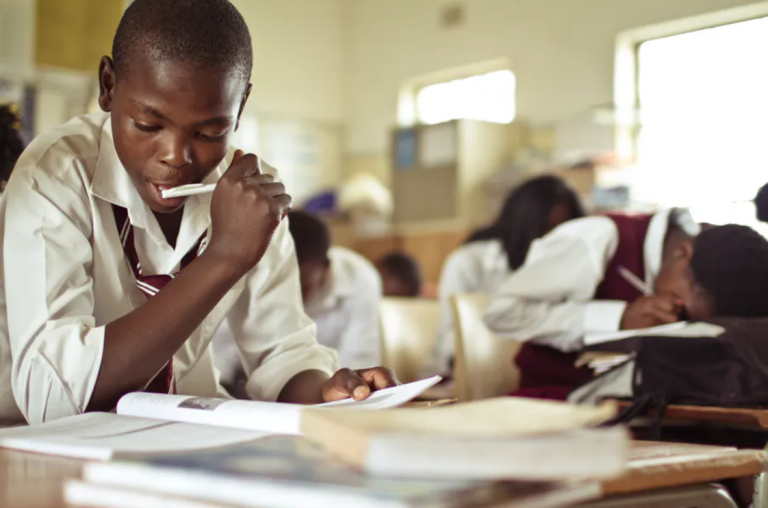
I set out to answer these questions, looking specifically at the skill of grit: perseverance and passion for long-term goals. I examined the association between grit and reading achievement among 2,300 pupils in poorly resourced South African schools.

South Africa’s reading achievement is notoriously poor. The 2016 round of the Progress in International Reading Literacy Study showed that 78% of Grade 4 children could not read. When children at this level can’t read, they can’t learn anything in the curriculum.

My study is the first to estimate the relationship between grit and reading among primary school learners in an African context. I found that grit was the strongest predictor of reading achievement, regardless of the influence of other factors at home and school. Grit is indeed associated with academic achievement, even in schools with very few resources.

I also found that school characteristics interact with grit to produce learning outcomes. These findings have important implications for education policy makers and practitioners.

They suggest that focusing on social and emotional skills such as grit may help more children to succeed in school. But also, the findings show that efforts to improve “soft” skills shouldn’t detract from efforts to reduce inequalities in education systems.

The grit debate

There has been much public debate around the idea that “keeping up the hard work” is useful where resources are scarce. Critics argue that systemic inequality, and not lack of effort by individual students, is the root of underachievement in schools.

Critics have also raised concerns about measuring grit. Identifying “gritty” individuals relies on questionnaire items where respondents have to rate themselves on items such as “I finish whatever I start” and “Problems and challenges don’t discourage me”.

My study aimed to add empirical evidence to this debate by investigating whether there was an association between grit and reading achievement among Grade 6 learners (aged 12 years) in 60 urban and rural schools in three South African provinces (Limpopo, Gauteng and KwaZulu-Natal).

These schools were overcrowded and severely deprived of resources. Half of the Grade 6 classrooms didn’t have enough chairs, desks or textbooks for all learners. Almost a quarter (23%) of the classrooms had more than 50 learners per class. According to the Department of Basic Education’s post provisioning policy, the learner-educator ratio should not exceed 40 learners to each educator in public ordinary primary schools .

The research

I also investigated whether the strength of the association between grit and achievement differed by school functionality. I wanted to establish whether grit mattered more (or less) in more functional schools.

To do this, I split the original sample into three groups of functionality: low, medium, and high. I estimated the association between grit and achievement separately for each group. Although all schools in the sample were no-fee schools, there was significant variation in how the schools managed the few resources they had.

Reading achievement was measured as silent reading comprehension test scores on items from the Progress in International Reading Literacy Study. Although almost all students in the sample spoke English as a second language, the test was administered in English. South African schools are required to teach in English or Afrikaans from Grade 4 onwards.

Given that students wrote the test in a second language, test items that were intended for Grade 4 learners were used to test the reading ability of this sample of Grade 6 students. Even so, overall reading achievement on the comprehension test was low. The majority of learners were not able to answer basic inferential questions from the text.

Grit was measured using responses to an adapted version of the short grit scale (Grit-S) where pupils had to rate themselves on eight items. Four of the items in the questionnaire are intended to measure perseverance (items such as “I work hard to do things well”) and four items are intended to measure maintained interest (items such as “I find it difficult to keep working on the same thing for a long time”).

We’d expect perseverance and maintained interest (grit) together to help children learn to read. Learners who consistently work hard to improve in reading should achieve better results than their peers who are less “gritty”.

The data analysed in my study supports this hypothesis. Grit was the strongest predictor of reading achievement among a number of factors at the home and school level. A higher grit score was associated with superior reading achievement, even in very dysfunctional schools.

But the results also showed that school functionality influenced the association between grit and reading achievement. Children who already had the benefit of attending more functional schools achieved more by being “gritty” than learners in less functional schools. The school system does have an impact.

Going forward

This evidence is preliminary, but it has important implications for education research and practice. The finding that grit is the strongest predictor of reading achievement suggests that social and emotional skills are important for student achievement, even in contexts of poverty.

Evidence from high-income countries indicates that these skills can be fostered through targeted interventions. My study adds that developing learners’ soft skills could be a powerful lever for raising learning outcomes in low-and middle-income countries. Teachers and parents can foster grit in children by modelling it, praising effort (rather than talent), and encouraging children to persevere at difficult tasks.

At the same time, the country needs to reduce inequalities in the education system.

South Africa chess champ eyes 2021 World Olympiad in Russia

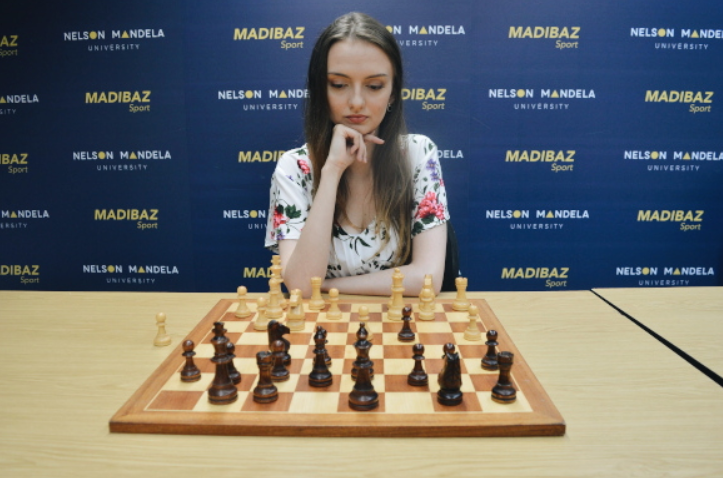
Nelson Mandela University student Charlize van Zyl, is gearing up for next year’s World Chess Olympiad and hopes to make her country proud by doing so. The 21-year-old speaks about her chess career and how she has kept her spirits up during the lockdown.

The tournament is scheduled to run from September 10 to September 23 at the renovated Hungexpo Exhibition and Conference Centre, with a total budget of 16,6 million euros. Political authorities, chess legends, and prominent members of the Hungarian Olympic movement and the sports administration have expressed their unconditional support to the event. 

FIDE postponed the 44th Chess Olympiad, including the competition for players with disabilities, and the FIDE Congress from 2020 to summer this year. 

See below a Q&A with van Zyl

What competitions have you attended in your career so far?

I have played in many many tournaments, ranging from local ones to international ones with both Junior and Senior South African colours. The most prestigious has been being part of the South African women’s team at the 2018 World Chess Olympiad in Georgia. Next year I will also be part of the Olympiad team where the tournament will be held in Russia.

I know you are looking forward to this year’s World Chess Olympiad, is it one of your goals to compete and win at such a prestigious event? Please elaborate.

The Olympiad is one of the most prestigious tournaments in the world, where hundreds of countries send their best players to participate so it will always be an honour to represent South Africa here. I think that South Africa really has a great chance to be one of the best African countries, so this is what we will be working towards.

Do you have a specific memory of participating in chess that you hold dear to your heart?

Through chess I have met so many wonderful people and have been to so many wonderful places, each giving me memories that will always be dear to me.

Who inspires you to do better and reach for your goals?

I am inspired by my father, who is the most passionate person about chess that I know. From a young age, I always tried to do my best to make him proud and I will continue to do so.

What is the highlight of your chess career so far?

When I was 13, I won the African Zonals event where I beat a few Woman Grandmasters and Woman International Masters, and attained the Woman International Master title setting a record for being the youngest South African to ever do so.

How have you kept up spirits during the lockdown?

Chess has had a massive boom during the lockdown period where many people have started to play, and many tournaments are taking place. This is all online of course, but it has really helped me during the lockdown as I have had a lot of time to work and improve, as well as introducing a lot of my students to the game.

How have you coped with not having any events and competition and how are you planning for the uncertainty that lies ahead?

As I mentioned, there have been many events online including the Online Olympiad and the South African Qualifier event for this tournament, where I won the ladies section and had the opportunity to represent South Africa once again. Nevertheless, I do miss over the board tournaments and there is a lot of uncertainty around them starting up again but the best we can do right now is train and play online, preparing for the next tournament.

How does it feel to represent your country? And what are you looking forward to most about being part of Team SA when you do end up competing again?

It will always be a great honour to represent South Africa, but in terms of our standings compared to the rest of the world, particularly Europe, we do still have a long way to go to reach that level. But I do think that we are growing, with a lot of up and coming talent so it is exciting to see where we will be in the next few years, and it is great to be part of that!

Also, even though I am competing as part of a team, at the end of the day chess is very much an individual sport where it is only you at the board, with your opponent, making every decision and subsequently only having yourself to blame if you play badly. So, there is an added pressure being part of a team as you are not just playing for yourself, but playing to make your team and country proud too and I look forward to doing this in Russia this year.

https://www.ussa.org.za/

E-voting for SGB elections ends today

NYAKALLO TEFU and MMADIFEDILE MOFOKENG|

This week marks the last week for the elections of School Governing Bodies (SGB) in the country.

This is why Gauteng Education MEC Panyaza Lesufi asked parents for their timely participation in the process of election.

“Parents, teachers and learners are an important part of the process of improving schools,” said Lesufi.

He added that parent participation gives SGBs an effective voice in decision-making in schools.

Elections started on 15 March 2021 and will end today, 30 April 2021.

SGBs represent all sectors of the school community, including parents, educators, non-teaching staff and, in Grades 8 to 12, learners too.

All parents and legal guardians with children registered at a school are eligible to vote, and 10% of a school’s parents must vote to achieve quorum.

According to the department of basic education (DBE), the South African Schools Act gives governing bodies considerable powers and responsibilities in governing schools, such as the school’s constitution, mission statement and code of conduct, budgeting and financial management, recommending staff appointments, and generally supporting the school and its staff.

SGBs also play an important role in developing policies relating to issues such as language, religious instruction, school fees and a code of conduct for learners. 

 Lesufi said: “We call on parents to select the best candidates among those who will be nominated. What we know is that schools perform better where parents participate in the affairs of the school and take charge of the education of their children.”

SGB elections this year will happen electronically because of theCovid-19 measures put in place and the current restrictions.

Lesufi said because we can no longer meet as we used to, parents are now compelled to use gadgets and connectivity.

“In using ICT, we may regress in terms of accessibility and we may regress because not all parents have access to ICT and the required resources for access,” said Lesufi. 

But some unions are not happy. Inside Education interviewed the Gauteng Secretary at the South African Democratic Teachers Union (Sadtu) on Thursday. The union said it is emphatically against this way of voting.

“We have discouraged electronic voting,” said Sadtu Gauteng Secretary Tseliso Ledimo. 

“It is not happening. This process did not follow due process and we anticipated that there will be a lot of difficulties,” said Ledimo.

Ledimo said this will be discussed for the future, where challenges can be identified, and they are able to deal with them accordingly.

Gauteng education said once elections are complete and they are deemed fair and free, the new members will then take over their positions. 

DBE said SGB elections only take place every three years. The MEC said it is important that parents participate in this year’s elections for real change to happen in schools post-Covid.

The learner accused of assaulting Lufuno Mavhunga released on bail

NYAKALLO TEFU|

The Thohoyandou Magistrates court has granted the 14-year-old learner accused of assaulting Lufuno Mavhunga R1500 bail. 

Lufuno committed suicide after a video of her being slapped across the face multiple times went viral on social media.

The teenage girl was found by her mother after overdosing on pills. 

Her death caused a stir on social media, with hundreds of people calling for justice for Lufuno. 

The victim and the accused  were learners at Mbilwi Secondary School. 

The 14-year-old appeared in the children’s court for a formal bail application.

The minor faces a charge of assault with intent to do grievous bodily harm.

“The court felt that bail must be fixed at R1,500 with conditions that she must not interfere with witnesses and not travel outside of Limpopo province without informing the investigating officer,” said the National Prosecuting Authority’s Mashudu Malabi-Dzhang.

Malabi-Dzhang said the case is remanded to 27 May for further investigations.