Home Blog Page 338

Why South Africa’s Girls Continue to Experience Violence at School

EMMANUEL MAYEZA and DEEVIA BHANA|

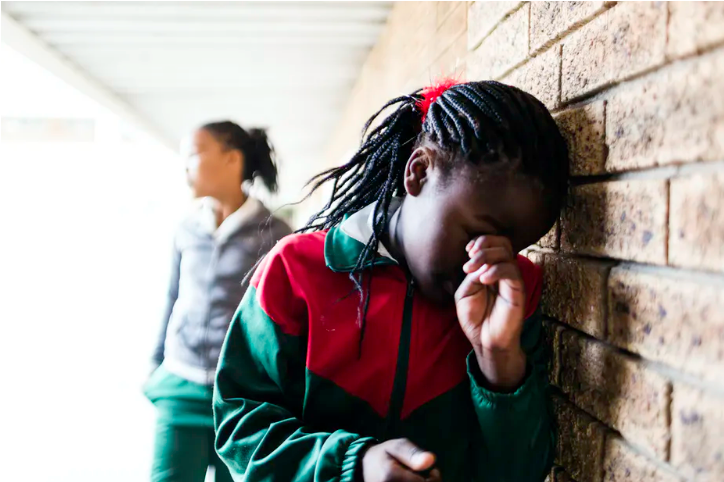
Despite the country’s political response to gender-based violence, school girls still face violence.

Girls experience gender and sexual violence in schools around the world, and South Africa is no exception. Research has shown how learners, and girls in particular, are vulnerable to violence.

Despite the country’s political response to violence against women and girls, school-going girls struggle with male violence in and out of school.

Learners who are victimised at school often show poor academic performance, regular school absenteeism, anxiety and depression, drug and alcohol use, psychological trauma, and dropping out of school.

We conducted a study to learn more about South African teenage girls’ experiences at school. Violence emerged as a key aspect of their school life.

We looked at the spaces where violence occurs, and how the violence is linked to drug use, social inequalities, and construction of gender identity. We found that certain behaviour is tolerated because it isn’t seen as violence. We also reflected on some of the ways the issue of gender violence at school — and beyond — could be addressed.

Sexual violence in school

Our study took place in an urban high school in South Africa. The location has high levels of unemployment and poverty. The school’s challenges include overcrowding, old and dilapidated buildings, drug use, and violent behaviour by some learners. We interviewed learners aged between 15 and 17. Most of them came from economically poor households, but some were better off than others. These differences played a part in violence.

Our findings are context specific. This implies that they’re applicable to other South African schools that have similar characteristics.

The violence that girls experienced took various forms, including sexual harassment. It occurred in various school spaces such as the corridors and in an abandoned building on the school premises. The pupils said community violence and theft had resulted in this building becoming dilapidated.

We heard that boys sexually gazed at girls in the corridors during lunch breaks and gossiped about girls’ physical appearance, their bodies, and their virginity status. Boys commented openly on their desires and demands to have sex with girls. Sexual harassment in the corridors also involved inappropriate touching.

All this occurred in the public space of the school’s corridors and was witnessed by other girls and boys. Girls were publicly humiliated and coerced to engage in sexual activity (kissing and inappropriate touching).

Both boys and girls used drugs such as dagga (marijuana) in the dilapidated building. The pupils said this building was dominated by boys who used drugs and abused girls there during lunch breaks.

Girls also expressed the fear of being coerced into sexual relationships by older boys at school. Girls were beaten up if they refused boys’ proposals for sexual relationships.

But girls also fought with each other over boys. This competition sometimes involved references to hair — those who could afford to have weaves in their hair or wigs were called “sluts” and accused of “stealing” boyfriends.

Girls speak out

Girls suggested it was up to the victim herself to report violence to teachers.

Some said the school was too lenient to the offending boys. They might be suspended for a few days or given a simple warning: “Don’t do it again”. The school wasn’t doing enough to address the violence.

We found that one of the reasons violence persists is that school responses often fail to understand its sexual and gendered aspects. Teachers and learners at this school generally understood violence as something that individuals do, related to some psychological problem. This understanding made gender and sexuality invisible. It failed to notice the experiences of girls and the power relations between girls and boys.

Often intervention strategies in South African schools rely on psychological interventions as if something is inherently wrong with the child. They don’t see violence as rooted in both individual and broader social and economic conditions in which children are located.

How to end violence

We have five recommendations for addressing school violence.

  • People need to understand that gender power imbalances are a form of violence. They need to know where and when it’s being experienced. Boys should understand that violence includes gossiping, coercion, and sexualised utterances.
  • Schools must take responsibility for the physical environment and identify and manage spaces that increase the risk of violence.
  • The school curriculum on issues of sexuality and relationships must relate more directly to the girls’ everyday experiences of violence at school. A comprehensive sexuality education programme should challenge violence by boys and by girls as it relates to youth sexuality and the dynamics of relationships.
  • Pupils’ use of drugs must be addressed in such educational programmes. In South Africa, personal and private use of dagga among adults is no longer a criminal offence. The availability of the drug in South African communities has implications for children’s access to it.
  • Fifth, schools need to support and act on girls’ reporting of violence. And some research has found that bystander programmes can reduce the normalisation of violence in schools. These programmes encourage passive bystanders to become active by learning to recognise potentially violent or dangerous situations. They empower young people to act more effectively against violence.

But schools can’t do it on their own. Government, parents, learners, non-governmental organisations, and the broader community should be part of discussions about the root causes of the violence and effective interventions.

Emmanuel Mayeza from the University of the Free State, and Deevia Bhana from the University of KwaZulu-Natal.
DA has called out Gauteng Education for failing to eradicate asbestos built schools

NYAKALLO TEFU|

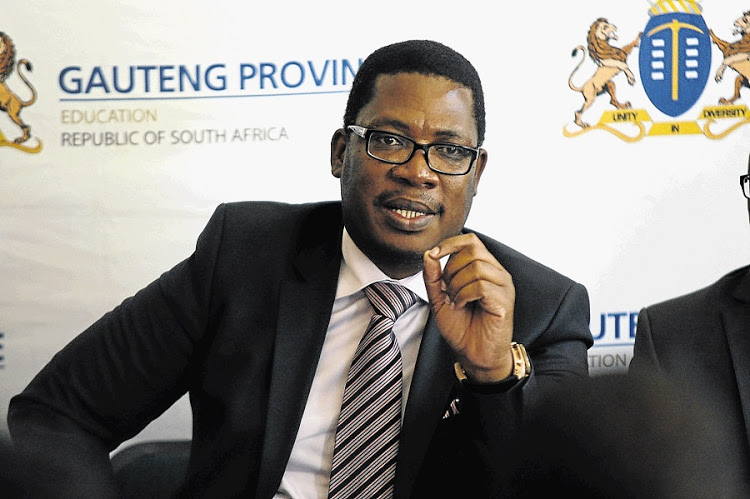
The Democratic Alliance (DA) has questioned Gauteng Education MEC Panyaza Lesufi’s lack of progress in eradicating asbestos schools in Gauteng. 

The DA Shadow MEC for Gauteng Education, Khume Ramulifho, said his party is going to submit proposal during budget debates to put pressure on Lesufi to fulfil promises he made.

Lesufi said he will ensure that all asbestos schools and classrooms in Gauteng are demolished and rebuilt with brick-and-mortar structures before end of this term. The MEC previously announced that his department will replace 25 asbestos schools within the next five years.

At the time, the MEC said there is a budget of  around R39 million that has been allocated in the 2021/2022 financial year to replace 25 schools built predominantly of asbestos.

“Of these 25 asbestos schools identified, only two are in the construction phase while ten are in the feasibility stage; six schools are in the inception stage,” said Ramulifho. 

Ramulifho said two schools are in the conceptual phase while three schools are in the design stage. One school is in the tender preparation stage and another one is in the retention stage.

In 2019, the South African Democratic Teachers Union (Sadtu) threatened to take Lesufi to court over the 250 schools in the province still built entirely, or partially, with asbestos.

Sadtu Provincial Secretary in Gauteng, Tseliso Ledimo, says they are aware of the mandate of the Gauteng Department of Education to eradicate schools built with asbestos. 

“We, however, are not privy to the report about what has delayed the process but what we do appreciate that we have seen commitment from the GDE,” said Ledimo. 

Ledimo said SADTU is happy with the new type of schools built in Gauteng. 

“These are fully fleshed proper schools with all the amenities, and we think the rest of the schools in the pipeline will be of the same nature,” added Ledimo.  

Ngubeni’s Plan To Revolutionise Gambling Industry In Gauteng

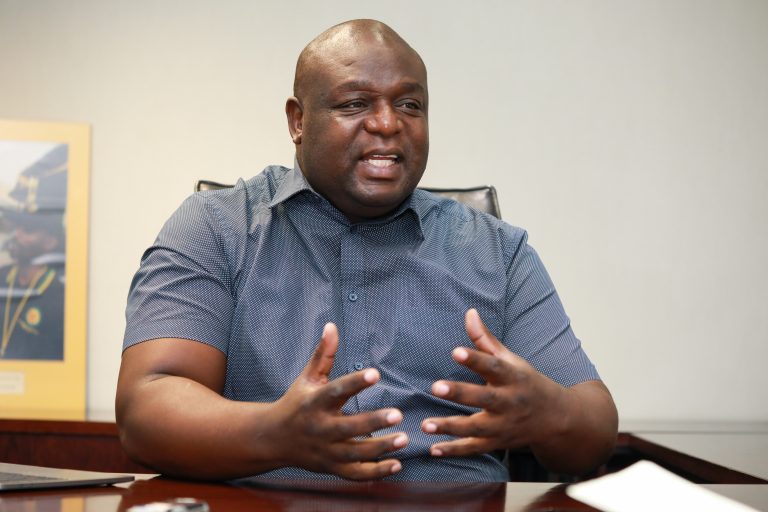
STEVEN Ngubeni, the chief executive of the Gauteng Gambling Board [GGB] is quietly planning a gambling revolution by asking government to legalise interactive gambling, move the industry towards full automation and continue to clamp down on illegal gambling by raiding and shutting down illegal sites.

All of this is aimed at increasing the gambling tax revenue that the board collects for the Gauteng province.

Gambling taxes form a critical part of the province’s own revenue collection, alongside motor vehicle licensing fees and other permits.

Since its inception, the Gambling Board has collected over R14 billion in tax revenues and contributed 17,5% to the Gauteng revenue fund in the year to March 2020.

The entity collected just under R1 billion in the year to March 2020, despite the challenges brought by the Covid19 pandemic. Before the pandemic, the revenue in the year to March 2019 stood at R1, 13 billion, which was an increase of 4,4% from the year before.

“Covid was a rude awakening” Ngubeni says “its impact was quite huge, and we felt it as the industry and the regulator”.

During the hard lockdown, gambling tax revenue shrunk by 90% as almost all the segments that the Gabling Board regulates were closed: Casinos, Bingos and Limited Pay out Machines, which are typically found in pubs and similar establishment were closed.

Sports betting, which is the fastest growing segment that the gambling board regulates, continues online albeit with limited sporting activity until major sports, like football resumed.

Ngubeni finds it remarkable that the license holders he has oversight of did not initially retrench, instead getting by with salary reductions, with retrenchments happening late in the lockdown and kept to a minimum.

He believes that with no further hard lockdown, the industry has survived the worst.

Ngubeni now wants government to legalise interactive gambling to minimise the impact of challenges similar to Covid19.

“In South Africa, to participate in a casino game, you have to go to a casino” he says in what sounds like an ancient way of doing things.

Ngubeni says what gets advertised as casino slot machines that can be played is, technically, illegal. He is urging that at the very least, the government can legalise online interactive gambling for exiting license holders.

“Casinos want a combination of foot traffic and online gambling” he says. His only concern with online gambling as a regulator is to curtail excessive and problem gambling, which the organisation conducts in partnership with license holders as well as the South African Responsible Gambling Foundation (SARGF) through public education campaigns and self-exclusion programmes for compulsive gamblers.

Ngubeni is keen to maintain the Gambling Board’s record of five consecutive clean audits under his watch, despite the recent resignation of board members, which prompted Gauteng Economic Development MEC Parks Tau to appoint an administrator to play the role of the board until a new one is appointed. Tau announced earlier this month that he has appointed senior Council Fana Nalane as administrator after the former board was unable to reach a quorum due to a number of resignations during the financial year.

The MEC decided to appoint an administrator as provided for in the Gambling Act to perform the function of the Board.  Tau praised the GGB for achieving its fifth consecutive clean audit- making it one of the few entities to have established such a track record.

Ngubeni second pillar of increasing revenue is to move the industry to full automation for which has been supported by the provincial government through an allocation of between R60 million and R70 million. Business automation will allow the regulator to monitor revenue in real time and invoice an establishment rather than wait for them to declare revenue, which presents the risk of under declaration.

Ngubeni notes his ongoing battle with illegal gambling operators which were also hit hard by the lockdown but have also since mushroomed again. Through specialised training of members of the South African Police Service (SAPS), the police working alongside the GGB’s law enforcement unit regularly raids and closes illegal gambling operations and pursues court challenge where required.

Gauteng has 7 licensed casinos, 11 Bingo operators while the gambling board is in the process of reinstating nine bingo licenses that were either revoked or surrendered by previous holders.

There are about 2000 limited payout machines dotted throughout the province. A reflection of the growth in sports betting is that there are currently 128 bookmakers, and Ngubeni is gearing up for the GGB to license a further 42 Bookmakers.

  • Inside Metros

Emergency online learning brings a new set of issues to South Africa’s higher education institutions

Upasana Singh, Cecile Gerwel Proches, Craig Blewett, Simon Taylor & Cristy Leask|

The Covid-19 pandemic has forced higher education institutions worldwide to adopt new forms of technology and creative methods of implementing these technology-based tools, to support remote teaching in an attempt to ensure continuity of their academic year.

Very loosely speaking, this ‘shift’ was referred to as the move to online learning.

Online learning was considered as the best way to support the academic program in most institutions of higher education. For developed countries, this transition was seamless and almost effortless. However, in developing countries, there were various constraints, some of which emerged through the crisis.

South Africa, which is plagued with economic issues, even prior to the pandemic, like unemployment, poverty, and inequalities, was no different.

Students faced the expected challenges of lack of Internet access, the high cost of data, limited/no access to electricity, as well as inadequate physical and social set-up, which was often not conducive to supporting the online learning environment.

 Similarly, academics were forced to embrace this new method of delivery, almost overnight. Similar challenges were faced by academics – high data costs, limited/no Internet access, poor connectivity, and the lack of a conducive space to work from home. Research conducted identified students’ perceptions of their transition to the online experience, and how their social support, economic worry, and technological competence related to their ease of transitioning to online learning.

Prominent factors that emerged from the student perspective were the requirements of social support, at all levels – Institutional, School, Administration and Lecturer; and Conducive Study Environment – especially amid the challenges on homeschooling, the general home environment and the sharing of devices.

The lack of social interaction with fellow learners seemed to impact their motivation to study, while the additional work and family pressure, in the ‘forced’ work-from-home environment, seemed to hamper their studies.

Having technological competence in the use of technology for learning, access to devices and data, as well as little economic worry, facilitated their ease of transition to the online learning environment.

While the study focused on student perceptions, there emerged clear areas that academics need to focus on how to support students in this transition to the online environment.

Measures of support include emotional intelligence – sympathy and understanding shown by academics were well appreciated; efficient and effective communication – students welcomed the adoption of multiple platforms of communication, including the more social platforms of WhatsApp; pedagogical training – the effective use of technology to deliver online classes was highlighted as students felt the sessions need to be designed differently to the traditional face-to-face sessions, to encourage student engagement and motivate learners.

The outcomes of the research highlighted the strengths and weaknesses of online learning to better inform future processes of planned online learning.

The global shut down has changed the learning landscape of the future.Thus, for an effective online education system to be adopted, an investment is required by higher education institutions into an ecosystem of learner and academic support, and not simply just online content delivery.

The rushed move to online learning without time for careful pedagogic planning requires us to rethink the definition of this shift.

According to Charles Hodges, professor of instructional technology as Georgia Southern University, higher education institutions should avoid the temptation to equate the rapid transition to online learning with planned online learning.

We define Emergency Online Learning as distance learning delivery in response to an unexpected crisis where all the necessary conditions for effective and sustained online learning may not be present. The concept of Emergency Online Learning has never formally been defined or tested, and more specifically, in the midst of a pandemic in a South African higher education institution environment.

We believe that what has emerged is Emergency Online Learning rather than Online Learning in its true form.

The authors encourage individual and institutional-wide reflection on two important questions.

The first is when does Emergency Online Learning end?

The failure to address this could leave an institution unsure of whether their online learning is still regarded as an emergency, with the associated issues raised in this article, or planned, with the expectations of greater social engagement, cognitive and teacher presence.

The second question is what happens when Emergency Online Learning ends?

Failure to clearly answer this question could result in an institution reverting to previous forms of face-to-face teaching with little regard for the impact the Emergency Online Learning has had on both lecturers and students and additionally not preparing for the future of education which has potentially been irrevocably changed. 

While South African higher education institutions have been impacted by national strikes, #feesmustfall, and now the Covid-19 pandemic, it is critical that they seize the learnings and engage in future-proofing to prepare for the next crisis, to remain relevant.

We made the following recommendations for facilitating the transition from Emergency Online Learning to both blended learning and planned online learning.

  • Learners and academics must receive relevant training in technologies and pedagogies to assist with transitioning to online learning.
  • The sudden move to embrace technology for academics has to be carefully considered by leadership in HEIs to analyse the effects and possible unintended consequences, especially in light of the diverse tasks (teaching, research, supervision, administration, etc.) that academics are ordinarily expected to do. HEI staff may need increased support and psychosocial services.
  • Support systems need to be in place to support academics to deploy effective online content, such as appropriately trained instructional designers and assistance in preparing “well-designed instructional material” which has been found to play a role in motivation levels of adult learners who were pursuing distance education.

Dr Upasana Singh is a lecturer in the Discipline of Information Systems and Technology at the University of KwaZulu Natal.

Professor Cecile Gerwel Proches is an Associate Professor in the Graduate School of Business and Leadership at the University of KwaZulu Natal

Professor Craig Blewett has a PhD in education technology and is the developer of the Activated Classroom Teaching (ACT) model, University of KwaZulu Natal

Dr Simon Taylor is a Project Manager at the University of KwaZulu Natal

 Dr Cristy Leask is an adjunct faculty at UKZN’s Graduate School of Business and Leadership; and a skilled organisational consultant at Symbiosis Consulting, and Capella University in the United States

DA has requested the Free State government to hire unemployed engineering graduates in the province

The Democratic Alliance (DA) has written a formal appeal to the Free State Premier, Sisi Ntombela, requesting that her government employ qualified unemployed civil engineering graduates in her province.

The DA said the Free State provincial government, especially under the reign of the former Premier, Ace Magashule, had a history of sending students to universities in China, Turkey and Cuba.

However, upon completing their studies, these graduates have been fighting since 2019 to get employed as per the terms in their contract with the Free State provincial government, said the DA.

The political party said the students have since approached them to interfere on their behalf.

The DA said the graduates received bursaries under the tenure of former Free State Premier Magashule to go and study abroad at universities in China owing to a skills deficit in the Free State province.

“According to the terms of these bursary agreements, the graduates upon the completion of the studies, would return to the Free State where they would be employed by the provincial government,” said the DA.

This has not happened.

In her presentation of the 2021 Medium Term Expenditure Framework (MTEF) budget speech for the Free State province, Finance MEC Gadija Brown said the Free State economy has recorded three consecutive declines in 2018, 2019 and 2020.

Brown said the total value of the Free State’s economy was estimated at R160.8 billion in 2019. In recent years, the provincial economy has had to contend with long-standing challenges emanating from low consumer and business confidence.

She said as a result of “the devastating impact of Covid 19, the Free State economy is projected to have contracted by a momentous 6.8 percent in 2020; decreasing the value of the economy to approximately R149.8 billion”.

She added that all sectors of the provincial economy contracted during the hard lockdown, except for agriculture, which benefitted from favourable weather conditions and large sections of the industry remaining open during the national lockdown.

The DA said the hiring of these unemployed graduates, who have the necessary skills in civil engineering and as artisans, will be able to assist in growing the Free State’s economy.

“As the Free State’s economy battles to get going again, owing to the pandemic which has brought local economies to its knees, the province cannot afford for skilled young artisans to be stuck at home unemployed.

“We need these skilled young artisans in the frontline of the Free State’s economy, in order to build and facilitate economic growth in the province,” said the DA.

The political party said it is unfortunate that many students and graduates from the Free State continue to have to struggle to find employment in the province, especially after having signed contracts with the provincial government.

“If graduates can uphold their obligations in terms of contracts entered into with the provincial government, then the provincial government ought to uphold their responsibilities in terms of these contracts,” said the DA.

DBE moves to digital

KEITH MICHAEL|

The department of basic education (DBE) has made efforts to improve efficiencies and harness the vast potential of new technologies in South African education.

The department has had a goal to make the e-marking process more efficient, without risking the quality of the marking itself.

The department said e-marking makes the job of examiners easier and more streamlined reducing time spent on manual administration tasks. The process also allows for optimisation of time in order for teachers examiners to focus on marking.

Its goal is to make the process more efficient, without risking the quality of the marking itself.

Since 2018, the Department engaged Lebone, a local print and scanning services company that works with Gauteng Department of Education (GDE) on printing for educational purposes, to deliver a scheme for the on-screen marking of the matriculation examination. 

E-marking, has been implemented in various schools and the DBE is looking at implementing it throughout the country.

Quite pertinent for its implementation is that there were some cases of Covid-19 being reported at the centres, which caused withdrawals by some of the markers.

An estimated 2676 markers withdrew from marking due to anxiety and fear around the pandemic.

2020 was a tough year for matriculants in South Africa and we are happy it is behind us. This is despite our students prospering against the odds.

It is also commendable to note the amount of preparation the department put into ensuring that students adjust to the new situation. The final matric examinations papers were written on 15 December 2020. The Department of Basic Education reported that a total of 578,468 students sat and wrote the exams. 

This involved 45,000 matric exam markers, 216 question papers, and over 10 million scripts.

The DBE put health and safety at the forefront and continues to work steadily and consistently to improve the key performance areas of the basic education system. Since 2018, the Department engaged Lebone, a local print and scanning services company that works with GDE on printing for educational purposes, to deliver a scheme for the on-screen marking of the matriculation examination. This is driven by the department’s ongoing efforts to improve efficiencies and harness the vast potential of new technologies in South African education.

E-marking, which is the marking of any type of assessment, anywhere and on a wide range of devices, has been implemented in various schools and the DBE is looking at implementing it throughout the country. Quite pertinent for its implementation as, although the marking of the question papers was successful, there were some cases of Covid-19 being reported at the centres and withdrawals by some of the markers. An estimated 2676 markers withdrew from marking due to anxiety and fear around the pandemic.

A series of non-live pilots to test the systems and processes, with scripts being dual marked with both the traditional and on-screen marking method was implemented by GDE during 2019. Following this success and despite the impact of COVID-19, live e-marking of 60,000 exam scripts was successfully undertaken in 2020. This included scripts for both the Senior Certificate and National Senior Certificate exam papers. The project was closely scrutinized by both DBE and Umalusi, to ensure that no student was disadvantaged during the pilot and live marking stages of the exam.

E-marking not only allows markers to do work in the comfort of their homes- safely, it instantly cuts substantial chunks of the workload, allowing the markers to manage, rather than administrate the process. It has been shown to halve the time it takes to complete the assessment of exams, in some cases enabling faster results issuing.

With e-marking, it’s easy to spot trends in questions and subjects that are proving difficult for students, providing the opportunity to intervene and make continuous improvements for the future.

The markers are vetted in terms of experience, qualification and the number of years they have been a marker. Pay marker, which is related to the appointment of markers.  These two products are part of a project that has been in the making for the past two years and is 80% automated.

The markers then receive online training which takes approximately a day to complete. The system categorizes the markers based on experience. There are three different types of markers: chief marker, senior marker, and junior-mid marker. The training takes a day and very easy to understand.

The system has three firewalls built around it and it operates on the cloud. The teachers use a security protected log-in details and if the details are leaked, the system can ascertain where exactly the security leak comes from. In e-marking, once students have written the script these are sent to a central location where they are scanned and the digital images are uploaded into the marking system. The scripts are anonymised and the examiners are able to t securely mark the exam scripts on a computer screen.

The DBE had a goal of making the process more efficient, without risking the quality of the marking itself. The benefits have been to make the job of examiners easier and more streamlined; reducing time spent on manual administration tasks and allows them to optimise their time to focus on marking.

Your examiners can work anywhere in the world, at any time. They’re not restricted by travel or opening and closing times of assessment centres. This flexibility and ease of access to exam papers speeds up your processes and improves efficiency. A short training course delivered by the Lebone team was simple enough to enable all examiners to embark upon their task. The on-screen marking software is usable on various devices including computers and tablets, so examiners were able to use whichever device they felt most comfortable with.

Examiner satisfaction was consistently high, all examiners agreed that the on-screen marking system was easy to use, made it easier to track their workload, and enabled them to complete their tasks faster. Examiners regularly mentioned that one benefit is the automatic tally of total marks, eliminating the need for manual adding and checking on each paper.

E-marking increases the quality of your results, providing essential reassurance, and delivers rich data sets for education policy makers to inform the future of education around the world. Lebone engaged an international service provider to use their on-screen marking platform, to meet the requirements of the project. Lebone and GDE facilitated the successful introduction of on-screen marking in the Gauteng province, paving the way for this technology to be adopted more widely in South Africa and creating a more efficient and inclusive high quality marking process for one of the most important examinations in the country.

On-screen marking has real potential for the South African education system. It is universally popular with examiners and proven to deliver no bias to results, e-marking has the scope to revolutionise the way exams are marked across the country, delivering fair and accurate results by using innovations in technology.

Keith Michael is CEO Lebone Litho Printers

Kuseni Dlamini takes over as chair of UP’s council

Nyakallo Tefu|

The University of Pretoria (UP) has appointed Kuseni Dlamini as the chairperson of the University Council. 

The council is responsible for governance, policymaking and monitoring. 

Dlamini is currently the chairman of Massmart Holdings and Aspen Pharmacare Holdings. He previously served as CEO of Old Mutual SA and as a member of the executive committee of Anglo-American plc in London and executive chairman of Richards Bay Coal Terminal (RBCT).

“As the council, we are committed to working with all relevant stakeholders to collectively make headway in finding lasting solutions to some of these issues,” said Dlamini. 

The council will be setting down guidelines relating to strategic and financial governance and disciplinary matters, fostering a positive academic atmosphere, and formulating the university’s admission and language policies.

Dlamini is taking over from Ntombifuthi “Futhi” Mtoba, who is stepping down after serving four consecutive terms as a member.

Mtoba is a chartered accountant who has received several distinguished awards (including the 2008 Tuks Alumni Laureate Award) for her impactful work in the field and for her outstanding leadership as a businesswoman. 

She became a UP Council member in 2005, before being elected as Chairperson three years later, in 2008. As Chairperson, she was an ex-officio member of the Council’s Human Resources Committee, Standing Committee and Investment Committee. Her term ends on 31 March 2021.

As of 1 April 2021, Dlamini took over his position. 

“South Africa needs financially strong and resilient world-class institutions of higher learning that contribute meaningfully to the economy and society at large, through socially impactful research, producing graduates that will focus on issues that move South Africa and the world forward,” said Dlamini.

The University said Dlamini is passionate about the role and impact of institutions of higher learning on economic growth and development. 

“Dlamini has taken up the position of UP Council Chairperson, while Ben Kruger, former Standard Bank CEO, has been appointed Deputy Chairperson,” added the University. 

SA universities fall in global rankings

South Africa is finding it difficult to compete against its global counterparts, this is according to the 2021–22 edition of the Global 2000 List by the Center for World University Rankings (CWUR).

In a press statement, CWUR president Dr Nadim Mahassen said to compete globally, government needs to invest more in public universities.

Mahassen said this will enable to improve both research productivity and research quality.

High quality research, publishing in globally respected journals and being cited widely are factors that are crucial to university rankings.

The CWUR grades universities on four factors: quality of education (25%), alumni employment (25%), quality of faculty (10%), and research performance (40%).

This year, 19 788 institutions were ranked, and only those placed at the top made the global 2 000 list.

In the global top 2000, three universities from South Africa improved from last year, with 10 falling down the rankings.

In the global rankings, the University of the Witwatersrand (Wits) dropped 17 places to 292nd, while Stellenbosch University falls six spots to 435th.

The University of KwaZulu-Natal (UKZN) ranked at number 483 and University of Pretoria (UP) is ranked 580th out of 2000 universities.

UCT is number one in the country, leading the pack in quality of education and research performance.

UCT said this university ranking places the institution among the top 1.4% of universities globally.

“These rankings represent an important step forward in the way we assess universities’ performance and, more importantly, their contribution to a better world for all,” said UCT Vice-Chancellor Professor Mamokgethi Phakeng.

“At UCT we want to be an excellent institution not simply for the sake of it but to advance society, engage with key challenges and make a difference – and our values recognise this,” she said.

The South African top 10 universities include Wits, ranked second in quality of education but first in alumni employment.

Stellenbosch University sits at number three, while UKZN, UP, University of Johannesburg, North-West University, the University of the Free State, University of Western Cape and Rhodes University are in the top ten respectively.

Regionally, South African universities occupy the top four positions on the continent, ahead of Cairo University. Among Africa’s top 10 institutions, seven are from South Africa, two from Egypt, and one from Uganda.

Local engineering graduates to benefit from Cuban engineers

The ANC women’s league (ANCWL) and the country’s department of water and sanitation have spoken out against the harsh criticism meted out by South African engineers over the procurement of 24 Cuban engineers brought in to resolve the country’s water infrastructure problems.

Some South Africans have said there are many qualified engineers in the country, as well as qualified graduates who are unemployed and are better suited for the positions.

In response, acting deputy director-general (DDG) for the department of water and sanitation Leonardo Manus said the 24 Cuban engineers were not here to replace or compete with local South African engineers but they are here to add value to the engineering profession and the country’s water infrastructure needs.

“South African universities have world-class engineering facilities and programmes.

“However, South African universities tend to focus on development, design and innovation while Cuba has historically focused on maintenance,” said the DDG.

Manus said unemployed engineering graduates are also welcomed to apply in the programme. Adding that they too will benefit from the expertise brought in by their Cuban seniors.

Manus said there may be South African engineers able to do the job but the posts were advertised over five time.

“The issue is that most of our local engineers who are qualified do not want to work in remote areas where most maintenance is required. Or those that do cost way more than what the department can afford,” said Manus.

He said the Cuban engineers hold expertise that engineers in the graduate programme will benefit from. Adding that this experience will help graduates become complete in all areas of the engineering spectrum.

The department of water and sanitation brought in 24 Cuban engineers to assist with the country’s infrastructure issues and to share expertise.

In a statement released this month, the department said that the engineers will be seconded to South Africa to enhance and improve government’s efforts on water delivery and related services.

“The highly qualified Cuban specialists will assist as advisors at provincial and local levels across the country, sharing their vast skills in the areas of mechanical, electrical and civil engineering, as well as project management,” read the statement.

The statement added that some of the engineers’ core responsibilities will include the practical exploration of sustainable use of water resources, maintenance and management of water supply and sanitation infrastructure, and the strategic planning of those resources, particularly in rural and other disadvantaged communities.

South Africa’s water infrastructure has been a major point of concern.

A study written by the Helen Suzman Foundation found that deteriorating infrastructure as a result of ageing and poor maintenance has been one of South Africa’s biggest challenges.

The foundation’s Michelle Toxopeüs said South Africa’s approach to water infrastructure maintenance is largely reactionary as opposed to preventive, “raising its costs of repair unnecessarily and reducing the functional life span of infrastructure”.

Water resource, water supply and sanitation infrastructure generally follow the national trend of being at risk. Bulk water resource infrastructure is not coping with the increased demand and is poorly maintained – making it at risk of failure, said Toxopeüs.

She added that while water supply infrastructure in major urban areas is satisfactory for now, supply infrastructure in rural and semi-urban settlements continue to be at risk.

“When looking at the state of sanitation infrastructure, including wastewater treatment, there is stark difference between infrastructure in major urban areas when compared to all other areas.

“Sanitation infrastructure in rural and semi-urban areas has already failed or is on the verge of failure, potentially exposing the public to serious health and safety hazards,” said Toxopeüs.

She added that sanitation infrastructure in these areas requires immediate action.

Meokgo Matuba, ANCWL Secretary General said it is deeply shocked and disappointed with the negative reaction against the Cuban engineers who were brought in to assist in the Water Sector, especially the rural areas.

The women’s’ league said department of  water and sanitation has faced some challenges in hiring local engineers because “very few of our own engineers would possibly opt to go and work in the rural areas because they have families, they have preferences of where to work.”

“As the ANCWL, we are grateful for the contribution that the Cuban cohort is going to play, especially in dealing with the persistent water issue, affecting mostly women,” said Matuba.

Resettlement Agencies Struggle with Education Needs of Refugee Children

0

NAHLA BENDEFAA

AS the Biden Administration tries to figure out how many refugees it will allow in the U.S. over the next five months, agencies across Ohio are preparing to meet the tight deadlines to help refugees adapt to life in America.

Resettlement agencies support refugees in the first 90-days after their arrival with services such as registering for Social Security, finding jobs, and enrolling children in school. For WKSU’s Learning Curve, we report on how all of that got more complicated during the pandemic and during all four years of the Trump administration.

As the education coordinator at US Together, a resettlement agency in Columbus, Amanda Pritt looks at the future of refugee resettlement under the Biden administration with a mix of optimism and apprehension.

Agencies like hers are rebuilding after the disruption of the Trump years at the same time one of their most important partners — schools — have been upended by the pandemic.

“It is mandated that a student be enrolled in public education within 30 days of arrival.”

However, the 30-day deadline is often hard to meet because of complications with other processes, such as longer wait times for the health screenings refugees must go through.

Most of the students enroll in traditional public schools. In rare cases, parents can opt for charter schools instead.

Kevin Walter serves as the Advocacy & Community Outreach Coordinator for the International Institute of Akron.

“Our education team, as well as our resettlement case managers, work with the public schools to ensure the kids are enrolled in time in the appropriate grade level.”

But until six weeks ago, many of those schools were virtual-only, making everything from evaluation to placement more difficult. That makes the partnerships organizations such as US Together and the International Institute have built with the local school districts crucial, not only for the children but for entire families.

Corine Dehabey, the director of programs at US Together in Toledo, says the agency works with all public schools in the area to serve immigrant children.

“We’re providing interpreters because we have an interpreting program. So we provide interpreters to schools that request them not just for our kids but for any other immigrant children who are enrolled.”

The resettlement agencies assist the refugee families in filling out online forms, gathering documentation, and setting up appointments. Additionally, some agencies ensure schools offer interpretation services as well as bus routes for the students who qualify.

While government funding only covers the initial enrollment process, resettlement agencies often seek grants or the assistance of other non-governmental organizations to provide additional services such as parent education. Amanda Pritt says such programs …

“Focus on making sure parents are taking an active role in their child’s education. They can’t do that if they don’t know the education system.”

The governmental funding was limited under the Trump administration as the number of refugees allowed in the country was cut to the smallest in decades. That decimated the infrastructure that built up over those decades in communities like Akron, which thousands of Bhutanese and Nepali people now call home.

The Biden administration had promised to increase the numbers but delayed finalizing them last week. The International Institute’s Kevin Walter sees higher caps as goals that won’t be achieved for another two years.

“Throughout the Trump years, there were a lot of layoffs, a lot of downsizing. So as far as just the infrastructure of resettlement, it’s going to take a little bit of time to build back up to have the capacity to handle the kind of numbers that President Biden has proposed.”

Beyond language and funding barriers, some older refugee and asylum-seeking children face an additional hurdle: education interrupted — or never even begun — during the years they were fleeing persecution or in camps. US Together’s Amanda Pritt says that despite the partnerships between schools and resettlement agencies, few focus on helping children older than 13 catch up on years of no education.

“I have yet to see a school that is honestly equipped to handle a 16-year-old student that is completely illiterate. It’s a curve that breaks the system.”

The refugee resettlement programs are hoping that the pandemic and federal policies over the last four years have not broken the system on a larger scale, and that key partners such as schools are able to recover and move forward as well.

  • WKSU