Home Blog Page 339

Local engineering graduates to benefit from Cuban engineers

The ANC women’s league (ANCWL) and the country’s department of water and sanitation have spoken out against the harsh criticism meted out by South African engineers over the procurement of 24 Cuban engineers brought in to resolve the country’s water infrastructure problems.

Some South Africans have said there are many qualified engineers in the country, as well as qualified graduates who are unemployed and are better suited for the positions.

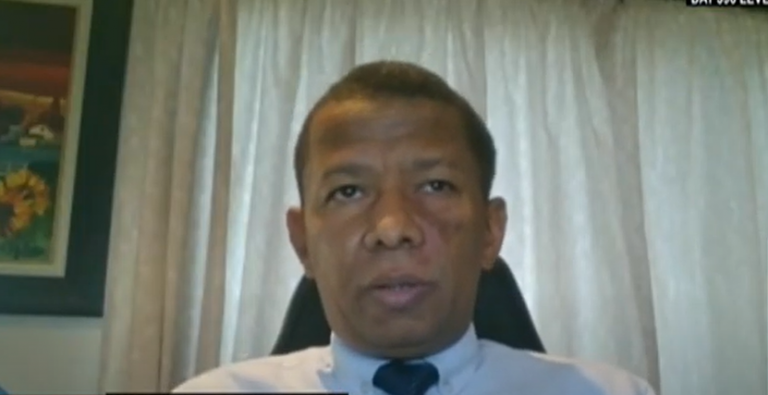
In response, acting deputy director-general (DDG) for the department of water and sanitation Leonardo Manus said the 24 Cuban engineers were not here to replace or compete with local South African engineers but they are here to add value to the engineering profession and the country’s water infrastructure needs.

“South African universities have world-class engineering facilities and programmes.

“However, South African universities tend to focus on development, design and innovation while Cuba has historically focused on maintenance,” said the DDG.

Manus said unemployed engineering graduates are also welcomed to apply in the programme. Adding that they too will benefit from the expertise brought in by their Cuban seniors.

Manus said there may be South African engineers able to do the job but the posts were advertised over five time.

“The issue is that most of our local engineers who are qualified do not want to work in remote areas where most maintenance is required. Or those that do cost way more than what the department can afford,” said Manus.

He said the Cuban engineers hold expertise that engineers in the graduate programme will benefit from. Adding that this experience will help graduates become complete in all areas of the engineering spectrum.

The department of water and sanitation brought in 24 Cuban engineers to assist with the country’s infrastructure issues and to share expertise.

In a statement released this month, the department said that the engineers will be seconded to South Africa to enhance and improve government’s efforts on water delivery and related services.

“The highly qualified Cuban specialists will assist as advisors at provincial and local levels across the country, sharing their vast skills in the areas of mechanical, electrical and civil engineering, as well as project management,” read the statement.

The statement added that some of the engineers’ core responsibilities will include the practical exploration of sustainable use of water resources, maintenance and management of water supply and sanitation infrastructure, and the strategic planning of those resources, particularly in rural and other disadvantaged communities.

South Africa’s water infrastructure has been a major point of concern.

A study written by the Helen Suzman Foundation found that deteriorating infrastructure as a result of ageing and poor maintenance has been one of South Africa’s biggest challenges.

The foundation’s Michelle Toxopeüs said South Africa’s approach to water infrastructure maintenance is largely reactionary as opposed to preventive, “raising its costs of repair unnecessarily and reducing the functional life span of infrastructure”.

Water resource, water supply and sanitation infrastructure generally follow the national trend of being at risk. Bulk water resource infrastructure is not coping with the increased demand and is poorly maintained – making it at risk of failure, said Toxopeüs.

She added that while water supply infrastructure in major urban areas is satisfactory for now, supply infrastructure in rural and semi-urban settlements continue to be at risk.

“When looking at the state of sanitation infrastructure, including wastewater treatment, there is stark difference between infrastructure in major urban areas when compared to all other areas.

“Sanitation infrastructure in rural and semi-urban areas has already failed or is on the verge of failure, potentially exposing the public to serious health and safety hazards,” said Toxopeüs.

She added that sanitation infrastructure in these areas requires immediate action.

Meokgo Matuba, ANCWL Secretary General said it is deeply shocked and disappointed with the negative reaction against the Cuban engineers who were brought in to assist in the Water Sector, especially the rural areas.

The women’s’ league said department of  water and sanitation has faced some challenges in hiring local engineers because “very few of our own engineers would possibly opt to go and work in the rural areas because they have families, they have preferences of where to work.”

“As the ANCWL, we are grateful for the contribution that the Cuban cohort is going to play, especially in dealing with the persistent water issue, affecting mostly women,” said Matuba.
Resettlement Agencies Struggle with Education Needs of Refugee Children

0

NAHLA BENDEFAA

AS the Biden Administration tries to figure out how many refugees it will allow in the U.S. over the next five months, agencies across Ohio are preparing to meet the tight deadlines to help refugees adapt to life in America.

Resettlement agencies support refugees in the first 90-days after their arrival with services such as registering for Social Security, finding jobs, and enrolling children in school. For WKSU’s Learning Curve, we report on how all of that got more complicated during the pandemic and during all four years of the Trump administration.

As the education coordinator at US Together, a resettlement agency in Columbus, Amanda Pritt looks at the future of refugee resettlement under the Biden administration with a mix of optimism and apprehension.

Agencies like hers are rebuilding after the disruption of the Trump years at the same time one of their most important partners — schools — have been upended by the pandemic.

“It is mandated that a student be enrolled in public education within 30 days of arrival.”

However, the 30-day deadline is often hard to meet because of complications with other processes, such as longer wait times for the health screenings refugees must go through.

Most of the students enroll in traditional public schools. In rare cases, parents can opt for charter schools instead.

Kevin Walter serves as the Advocacy & Community Outreach Coordinator for the International Institute of Akron.

“Our education team, as well as our resettlement case managers, work with the public schools to ensure the kids are enrolled in time in the appropriate grade level.”

But until six weeks ago, many of those schools were virtual-only, making everything from evaluation to placement more difficult. That makes the partnerships organizations such as US Together and the International Institute have built with the local school districts crucial, not only for the children but for entire families.

Corine Dehabey, the director of programs at US Together in Toledo, says the agency works with all public schools in the area to serve immigrant children.

“We’re providing interpreters because we have an interpreting program. So we provide interpreters to schools that request them not just for our kids but for any other immigrant children who are enrolled.”

The resettlement agencies assist the refugee families in filling out online forms, gathering documentation, and setting up appointments. Additionally, some agencies ensure schools offer interpretation services as well as bus routes for the students who qualify.

While government funding only covers the initial enrollment process, resettlement agencies often seek grants or the assistance of other non-governmental organizations to provide additional services such as parent education. Amanda Pritt says such programs …

“Focus on making sure parents are taking an active role in their child’s education. They can’t do that if they don’t know the education system.”

The governmental funding was limited under the Trump administration as the number of refugees allowed in the country was cut to the smallest in decades. That decimated the infrastructure that built up over those decades in communities like Akron, which thousands of Bhutanese and Nepali people now call home.

The Biden administration had promised to increase the numbers but delayed finalizing them last week. The International Institute’s Kevin Walter sees higher caps as goals that won’t be achieved for another two years.

“Throughout the Trump years, there were a lot of layoffs, a lot of downsizing. So as far as just the infrastructure of resettlement, it’s going to take a little bit of time to build back up to have the capacity to handle the kind of numbers that President Biden has proposed.”

Beyond language and funding barriers, some older refugee and asylum-seeking children face an additional hurdle: education interrupted — or never even begun — during the years they were fleeing persecution or in camps. US Together’s Amanda Pritt says that despite the partnerships between schools and resettlement agencies, few focus on helping children older than 13 catch up on years of no education.

“I have yet to see a school that is honestly equipped to handle a 16-year-old student that is completely illiterate. It’s a curve that breaks the system.”

The refugee resettlement programs are hoping that the pandemic and federal policies over the last four years have not broken the system on a larger scale, and that key partners such as schools are able to recover and move forward as well.

  • WKSU

Fears that contact sport and extra-mural activities at school are super-spreader events

NYAKALLO TEFU and MMADIFEDILE MOFOKENG|

The department of basic education (DBE) has come under some criticism after it published new regulations that permit the resumption of extracurricular activities, physical education, inter-school, as well as national and provincial tournaments for school learners.

The decision comes after all extracurricular activities were stopped in March 2020 when the country went under covid-19 lockdown level 5.

Schools opened after being closed for three months under strict regulations to ensure the health and safety of learners and staff returning to school. 

In the gazette, DBE Minister Angie Motshekga said there will be a set number of people allowed during sporting and other activities at South Africa’s primary and high schools. 

“The number of persons, including participants, referees, adjudicators, technical officials, volunteers, medical team, media or broadcasting team and stadium workers will be limited,” said Minister Motshekga. 

She added that a maximum of 250 persons will be allowed for indoor venues and a total of 500 persons for outdoors venues. 

“If the venue is too small to hold 250 persons indoors or 500 outdoors, those at the venue will be expected to observe a distance of at least one and a half meters from each other. Also, not more than 50% of the capacity of the venue may be used,” said Motshekga. 

The Bureau for Economic Research (BER) on Monday said globally, the number of Covid-19 cases rose by the most since the third wave began.

“This is despite millions of people [globally] getting vaccinated on a daily basis,” said BER economist Lisette IJssel de Schepper.

“Fortunately, South Africa’s infection rate remains low, albeit that new cases continue to trend up in three provinces in particular including the Northern Cape, the Free State and the North West),” said de Schepper.

De Schepper said the estimation of the number of people infected by a single infected person is also rising, which suggests cases may continue to tick up in coming weeks.

She said this prognosis is of particular concern as the start of phase two of SA’s mass vaccination drive is still three weeks away.

In an interview with Inside Education, general-secretary for the South African Democratic Teachers’ Union (Sadtu) Mugwena Maluleke said the government does not want education to be divorced from extra mural activity.

Maluleke said government was taking a holistic approach to education and that it has stated that no spectators will be present.

“This means there will be extreme compliance to the regulations given because schools cannot afford not to comply,” said Maluleke.

Maluleke added that Sadtu is not happy that the re-opening of extramural activities and the allowing of contact sport has been dubbed a super spreader event because, “private schools have for a while now been having sports and we haven’t heard of it being a super spreader”.

Classes resume at the University of Cape Town

NYAKALLO TEFU|

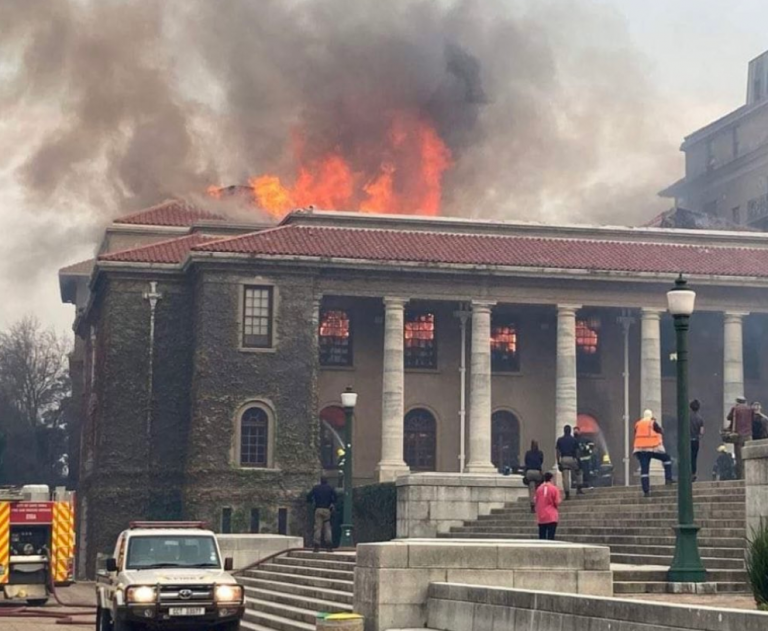
Classes at the University of Cape Town (UCT) are expected to resume today after academic activity was cancelled last week following a fire that broke out at the Rondebosch campus. 

The fire ravaged historical university buildings, including the Jagger Library and Fuller House student residence.

UCT vice-chancellor Professor Mamokgethi Phakeng said students have since returned to campus after management deemed it safe for them to return to campus this week and that classes were ready to resume.

“Thank you for your patience as we seek ways to return to full academic activity at the University of Cape Town (UCT) under COVID-19 regulations,” said Phakeng.

Last week, students at UCT were evacuated from the university’s building as the fire ravaged through parts of the campus. 

Classes were cancelled for the week as management at the university attempted to fix and ensure that it was safe for staff and students to return.

“We brought an independent external technical team onto campus to work with UCT’s internal Operational Health & Safety (OHS) team, to assess the air quality in selected buildings that were not damaged by fire,” said Phakeng. 

Phakeng said the teams established a programme to ensure the air quality of campus buildings through appropriate ventilation and aeration before students and staff members return.

“Obviously, where there is significant damage, this process will take longer. The special collections, the Biological Sciences facilities housed in the Pearson Building and the upper campus residences are particular areas of concern. But we are looking for ways to mitigate the impact of these losses on the academic project,” said Phakeng. 

The university management has thanked the community for assisting it in times of need and has sent its well wishes to the students and staff returning to campus.

“Of course, as a campus community we will continue to adhere to COVID-19 protocols. Please remember to wear your masks, wash or sanitise your hands regularly and maintain a social distance of 1.5 m even while you are in evacuation accommodation. The fire has passed and that is a relief, but the pandemic remains a threat,” added Phakeng.  

Prince Gulukhulu Mathebula (75) attains PHD

BENSON NTLEMO|

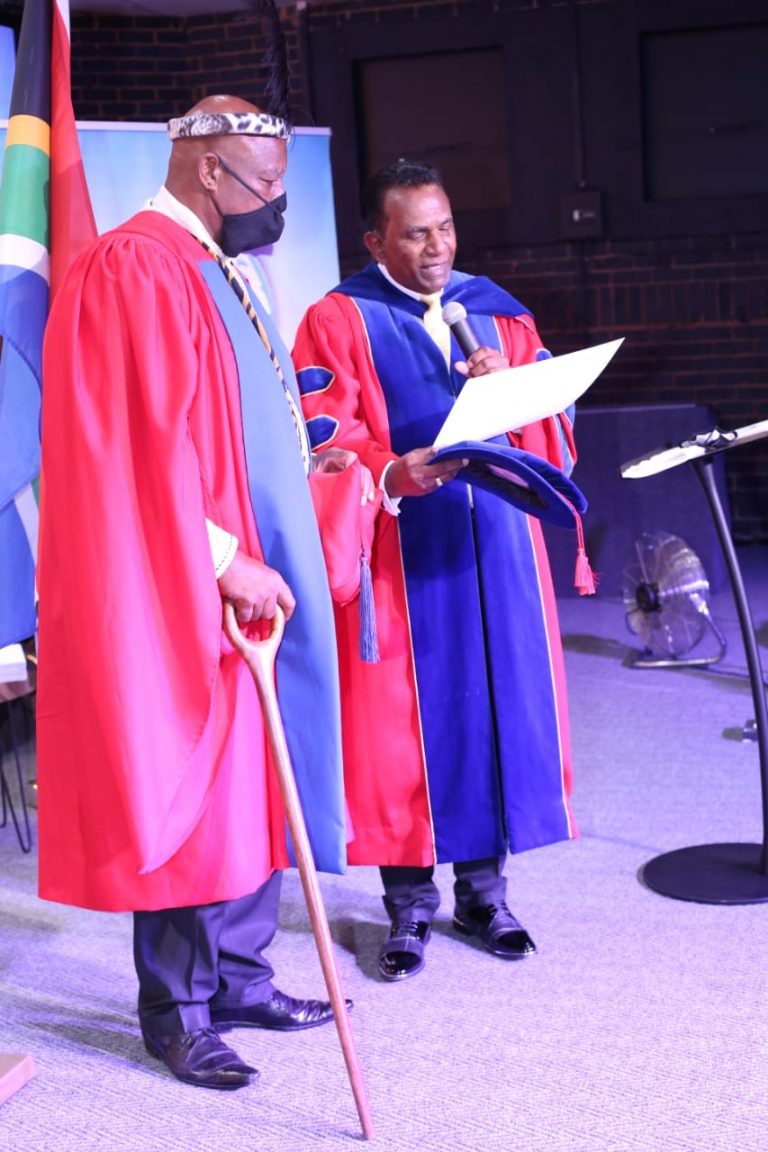
Prince Gulukhulu Mathebula, from Jilongo Village in Malamulele, Limpopo Province, attained a Doctor of Philosophy (PhD) degree at the age of 73.

Mathebula is the chairperson of the Congress of Traditional Leaders of South Africa in the Vhembe region in Limpopo.

He is also the chairperson of the Malamulele Hospital Board as well as the chairperson of the Huvo ya ka Valoyi, an association of his Vakhalanga clan.

However, even with these prestigious positions, Mathebula said attaining his PhD degree was the most important.

Mathebula acquired his PhD degree from Lighthouse Christian College and Academy which is based in Beebe, Arkansas in the United States.

There was no fanfare when he graduated at the college’s branch in Lenasia, Johannesburg because of the Convid -19 imposed restrictions.  But this did not diminish his excitement at acquiring the degree.

“It has been a long road for me to get where I have arrived, “he said.

He added: “The only class I attended full year was standard one. Otherwise I have been promoted with Sub A and B having been done in one year and Standard 2 and three being done in one year although I did not complete Standard 3 and I went to work at JCI Mine in Phalaborwa to drive the wolf away from the door.”

Years later, he would begin a correspondence course and complete his Junior Certificate and later matric.

“I did correspondence because I realised that I was lacking in education although people were taking me seriously,” he said.

Mathebula worked in the mines and would later leave to teach at Tinyiko Primary school at Lombard Village in Malamulele.

He taught for a very short time and would latter apply to be a policeman in Sibasa and was turned down.

After this, he enrolled to train as a priest and became a reverend of the Dutch Reformed Church.

Years later Mathebula would be recruited into homeland politics where he became a minister of parliament (MP).

It was at this time that he enrolled for a bachelor of art degree with the Giyani campus of the University of the North, called Unigaz.

“But after the death of Professor Hudson Ntsanwisi, his successor Hosi SDW Nxumalo appointed me a deputy minister. This is when I stopped studying.

“I had body guards who were going with me everywhere and it would not be fair to expect them to accompany me to the classroom to read books,” he said.

Now, more than twenty years later, Mathebula would enrol for a junior degree with the American institution in the year 2016 and passed.

The following year he did the Masters’ degree and succeeded.

He enrolled for the doctorate degree in 2018.

His thesis was titled, “The disruption of African royal leadership in Public administration and the provision of municipal services in South Africa.”

“I was looking at the way the colonialists and their fellow travellers, the missionaries, handled the institution of royal leadership and the way royal leaders were treated in South Africa,” he said.

Mathebula’s research looked at life from 1652 when Jan van Riebeeck arrived in South Africa and how it affected the institution of traditional leadership.

He said his research showed that the arrival of van Riebeeck and the Dutch missionaries had an adverse effect on the institution of traditional leadership.

 “Coming to colonialists like van Riebeeck, royal leaders were degraded and dehumanized.

Mathebula said after the arrival of the colonialists, royal leaders were targeted.

He said the Bantu Administration Act 38 of 1927 and the Bantu Administration Act number 38 of 1957 all combined destroyed the institution.

He said the colonialists started their mayhem by destroying the manner in which African kings were referred.

“The Dutch word koning means “king” but Africans are not referred to as kings but as chiefs or headmen,” said Mathebula.

Adding that instead of Africans being referred to as royal leaders, they were called traditional leaders.

“Missionaries played a part in dehumanizing Africans because when they ask for your name and you tell them an African name, the would demand Christian names. This means the missionaries regarded African names as heathen,” said Mathebula.

Mathebula said although traditional leaders were party to the destruction of the apartheid rule, their lot is not any better in a democratic South Africa.

“Royal leaders do not have powers. They are allowed to attend municipal council meetings or meetings of the provincial or national government but only as ex officio members. They are supposed to be just that, observers. They are only allowed to give credence to events by standing with politicians when ribbons are cut to signal the official handover of the project,” he said.

Mathebula said his research has opened his eyes and has better understanding of the way traditional leaders should be treated under normal circumstances.

Many people exp5essed admiration at the way Mathebula improved his education at an advanced age.

Hosi Bohani Shigamani of the Khatisa Chavalala Cultural Heritage Foundation said, “Looking at his advanced age he does not stop working for the community and he can also get into the cleanroom and study and this should be an inspiration to young people,’ said Shigamani.

He said Mathebula is also a priest but he does not shun things that are traditional and cultural.

“He has taught us that you must not stop working and learning as long as you can still breathe,” said Shigamani.

Mathebula said: “I know that I am not going to use my certificate to look for work but wanted better knowledge and understanding of the world I live in. My burning of the midnight oil was not in vain.”

Lusikisiki School Boasts New “Let’s Play” Sports Field

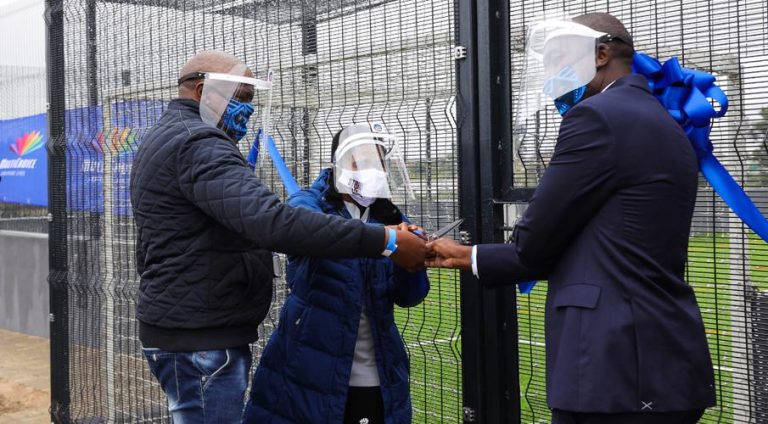
MORE than 1200 children from Mqikela High School in Lusikisiki in the Eastern Cape can now enjoy a variety of sports on their brand-new Let’s Play sports field.

The field, donated by MultiChoice, was officially accepted by the school and the Eastern Cape MEC for Sports, Recreation, Arts and Culture, Fezeka Nkomonye, at a ceremony last week.

“To us this is not just a court, but speaks directly to the strides we are making in bridging the gap between urban and rural schools. It speaks to social cohesion and creating a conducive environment for all our kids to compete in and be recognised not because of where they come from, but because of their talent,” said MEC for Sports, Recreation, Arts and Culture, Fezeka Nkomonye.

The multi-purpose playing field can be used for five different sporting codes: hockey, 5-a-side soccer, tennis, volleyball and netball. In addition to the field, the school also received Let’s Play Coach-in-a-Bag kit. The coach responsible for sport at the schools will undergo training in new physical education methodologies to ensure the sports fields are optimally utilised.

“A wise man once said – if you build it, they will come. This is what is at the heart of our Let’s Play fields initiatives. We create a space for children and teachers to foster a love of being active and discover new sports. Let’s Play builds fields and so much more. We also equip teachers to inspire the children to be more active and to enjoy playing a sport. Who knows, some of these kids might be our future stars on SuperSport!,” said MultiChoice SA CEO, Nyiko Shiburu.

“We are growing a healthier generation, in partnership with the Department of Basic Education. Being more active helps kids to be healthier, which helps them to concentrate better that leads to a better academic performance.”

MultiChoice has been partnering with the Eastern Cape’s Department of Sports, Recreation, Arts and Culture for two years, specifically to develop grassroots sport in the province. The focus is on football, rugby and netball. The company has hosted the DStv Diski Challenge and SuperSport Rugby Challenge festivals in the province for the past six years.

“Our partnerships with the private sector are crucial in assisting us as government in promoting this equal society we all want. We call on more businesses or organisations to come on board and work with us in dealing with not only infrastructure, but also systemic challenges our rural province faces,” MEC Fezeka Nkomonye added.

Let’s Play gives disadvantaged schools and communities across South Africa, and especially in rural areas, access to state-of-the-art sporting facilities.

Since 2015, Let’s Play has invested R20 million in these facilities and has trained 315 school teachers in new physical education methodologies.

With UNICEF as its partner, this initiative has reached more than 1.5 million children.

  • SuperSport

Experts: Use of Robots in Rwanda’s Schools Can Inspire Innovative Solutions

PLAYERS in the ICT sector have called for joint efforts to scale up the use of robots in schools across the country so as to expose children to technologies so that they can build their own inventions and innovations early in their lives. 

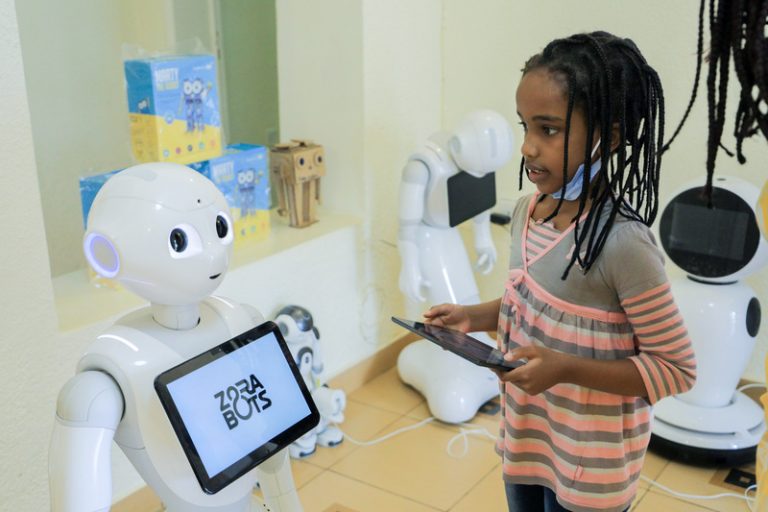
The call was made, on Saturday, April 24, during the awarding of children aged between 4 and 14 years, with medals after coaching in the use of robots to code and communicate through storytelling among other skills.

Benjamin Karenzi, the CEO of Zorabots Africa in Rwanda, which organised the exercise, said the aim was to engage young students from nursery, primary and lower secondary school and help them bring learning of sciencetechnology, engineering, and mathematics (STEM) subjects to their hands.

He said that the Holiday Robotics Week initiative will soon be scaled up in many schools across the country.

“Once scaled up, we will have achieved inspiring students to join STEM subjects through making STEM subjects fun to learn. We will be exposing geniuses among them to technologies and then they can make or build their own inventions, innovations, and solutions,” he said.

He said that the robots used in schools could help produce future roboticists, innovators and engineers with solutions that respond to community problems.

“We are focusing on different robotic solutions for healthcare, for industries like manufacturing, mining and firefighting and other sectors. However, we have decided also to go into education because we want to help youngsters see robots as something happening now and also something that they can do on their own,” he said.

He said they are in discussion with government, private sector and development partners to scale up this programme.

Alida Ngwije, the parent whose 7-year old child benefitted from the camp said: “We believe it is a good initiative because children need to start learning and practicing science when they are still young. We are very supportive and we hope that it is going to continue. Specifically speaking for girls in sciences, this is an added value.” 

ICT in education strategy

Esther Kunda, the Director of Innovation and Emerging Technologies at The Ministry of ICT and Innovation said that the government is promoting robots to incorporate and promote science and technology in the classroom.

“In some of the initial ways we have tried to do that is the government ICT in education strategy. That has given us a ground base to understand how we incorporate technology into the classrooms,” she said.

Technology like robots is the future. It means we will have interactivity in most of our appliances, in our daily life like robots helping in preventing Covid-19, industry and others as most of the things are going to be soft-ware driven. Robots are part of emerging technologies,” she noted.

“By introducing the concept of robotics and programming and coding at a very young age, we see that there is a big potential that future generations will be competitive at the global market and help achieve the country’s vision of becoming an ICT hub,” she noted.

She said that there is a need to start creating interest and market for the robots so that parents start thinking of buying them for children to learn.

“The next step is to see innovative entrepreneurs take advantage of that and see how they can manufacture robots locally. We have some that can manufacture prototypes around these materials.

“There are people trying to break into this industry so that ICT equipment is affordable,” she said.

Maxwell Gomera, the Resident Representative of UNDP in Rwanda said that this initiative should also extend to children from less privileged backgrounds across the country.

“We can have competition among schools, get the best schools to develop their ideas. We want to see kids coming up with brilliant ideas.

“We are behind this. When you have good ideas, funds follow. We are optimistic that working together with our partners, we can find the resources that are needed to expand this across the country,” he added.

  • The New Times

From Cleaner To Teacher: Natasha Dietrich Aims To Inspire Others

A cleaner from Belhar, a small town in the Western Cape, turned teacher at the age of 47.

Natasha Dietrich, who will receive her Bachelor of Education degree from the University of the Western Cape (UWC) on 5 May, is proof that learning is a lifelong journey and that it is never too late to start. 

After years of working as a cleaner, with only a matric qualification, the mother of two packed away her overalls and began teaching grade five and grade six mathematics and social science at the Dr Van der Ross Primary School since January this year.

It was her work as a cleaner at UWC that first sparked Dietrich’s desire to study further, she said.

Dietrich started at UWC as a casual worker with Bidvest Prestige in 2011 and was permanently employed in 2014.

“As I worked in ResLife, where the students spent time studying, I found myself surrounded by an environment of learning. I also witnessed the students’ commitment and their struggles. I thought to myself, ‘If they can do it, so can I,’” she said. 

In 2015, on the final day of student registration, Dietrich decided to submit her online application.

“I was honestly a bit scared when I was accepted. I thought, now I have to face the reality that I will have to study and work,” she said.

She attended classes at UWC during the day, before starting her eight-hour cleaning shift at 3pm. She said she completed most of her assignments at night.

Dietrich said her success would not have been possible without the support of her family. Her children, aged 18 and 30, and her husband, said they are proud of Dietrich’s dedication and hard work.

“I knew I had to do something and I had to make a difference. I come from a very poor community where there is a lot of unemployment and gangsterism,” said Dietrich.

She said when she was afforded the opportunity to study at UWC, the institution also paid her fees.


“A degree in education was the best direction I could have chosen. To be surrounded by children, and to have the opportunity to teach them has been the best experience,” she said. 

Abduraghman (Manie) Regal, executive director of Finance and Services at UWC, said Dietrich’s remarkable achievement is a testament to her determination.

“It takes commitment and grit to work and finish such a demanding degree,” said Regal.

Adding that what he found pleasing is how the opportunity has been successfully used in a life-changing way.

Dietrich’s story is one of many such successes at UWC where anyone – regardless of their circumstances – can receive a quality education, he said. 

Professor Rajendran Govender, Dean of UWC’s Faculty of Education, said Dietrich showed good character, industriousness and dedication to her undergraduate studies.

“She was always brimming with ideas that helped to resolve problems and promote collaboration among her peers,” he said.

Govender added: “We as the Faculty are extremely delighted in her outstanding achievement and her passion to be a proficient beginner teacher.”

As Regal said: “We are convinced that she will make a positive impact wherever she goes and we wish her every success on the journey ahead.”

Dietrich celebrated her success recently with her former colleagues at Bidvest Prestige. 

When asked if the study bug had bitten, Dietrich said: “Oh, yes, definitely. I am going back next year to do my honours, and I am not stopping until I have my doctorate.”

There is certainly no stopping this dedicated pedagogue from Belhar who lives by the mantra, “You’re never too old to learn”. 

Insourced security guards get opportunity to learn

Some South African universities have collaborated with the Safety and Security Sector Education and Training Authority (SASSETA) to train security personnel working at universities.

The security personnel is to be through the General Security Practice Learnership Programme.

According to Universities South Africa (USAf), the qualification is an entry-level qualification, equivalent to NQF Level 3. The qualification offers the key competencies required by security professionals to work in a variety of security contexts

USAf said SASSETA sponsored the training as a response to a request made by the organisation’s Human Resources Directors’ Forum (HRDF) and the Skills Development Facilitators (SDF) Forum to assist with the capacitation of insourced security officers.

Skills Development Facilitator at the University of Pretoria and a member of the Skills Development Forum, Basiami Disipi, said although not all staff enrolled on the learnership had completed the course, 81% of this first cohort stayed the course and went on to qualify, and this was pleasing.

“The workers who completed the training were now empowered to operate within a range of contexts. The security guards are now able to operate in the rural, urban, corporate, mass gatherings, homes and businesses spaces.

“They also equipped to safeguard premises, assets, information and personnel. They can interact with customers and other members of the public; operate security systems and conduct security duties within the ambit of the law,” said Disipi.

105 security personnel were enrolled in the programme in 2019 and 85 completed and satisfied the requirements of the learnership and obtained a National Certificate in General Security Practices, said Disipi.

The call to reintegrate outsourced workers into universities began in 2015/ 2016 when students took to the streets, protesting unaffordable university fees and the exploitation of outsourced labourers at higher education institutions.

The students’ protests demanded that security guards as well as maintenance and cleaning staff be brought back into universities’ mainstream payrolls.

Historically, many institutions had outsourced these services.

The students said that outsourcing was an exploitative and dehumanising practice that continued to perpetuate poverty amongst those affected.

“Outsourced workers have to deal with unfair wages, dismissals, victimisation and racism. They are also excluded from the benefits that mainstream employees enjoy.

Because they are outsourced, they don’t qualify for reduced fees for their children studying at the same institutions,” said student activists at the time.

The insourcing of these workers was seen as social justice that stood to restore the workers’ dignity, security of tenure and peace of mind.

According to USAf, some higher education institutions heeded the call and decided to insource some of these services and insofar as practicable, discontinued the contracts they had had with external service providers.

“With that came a need to integrate and upskill these workers – a move that demanded additional resources,” said USAf.

Disipi said phase one of the programme in 2019 to September 2020 and SASSETA invested R1,4 million. The universities involved included Central University of Technology, the University of the Free State, the University of Witwatersrand (Wits), The University of Pretoria (UP), the University of Kwazulu-Natal and the University of Venda.

Disipi said SASSETA is now funding Phase 2 of the programme.

This phase began in March 2021 and is expected to finish in December 2021.

“For the current cohort, SASSETA has invested R1, 650 million,” said Disipi.

Universities that enrolled their security guards in the second learnership programme are  Sefako Makgatho University of Health Sciences, University of South Africa, UP, University of Johannesburg, Wits, Walter Sisulu University and Rhodes University.

Disipi said Phase 3 of this programme will begin in 2022 will specifically target Western Cape-based institutions and others that have not yet benefited from this project.

1.5 million learners have not yet received their food from the school mandated programmes

Mmadifedile Mofokeng and Nyakallo Tefu|

Equal Education (EE), Equal Education Law Centre (EELC) and Section27 have said that 1.5 million school learners have not received meals from the National School Nutrition Programme (NSNP). 

This is despite a mandated court order for the department of basic education (DBE) to do so.

“We received the last round of monitoring reports from the (DBE) minister and director-general and from the Education MECs of KwaZulu-Natal, North West, Northern Cape and Mpumalanga, after the court deadline of 19 March 2021.

“However, the reports from the Eastern Cape, Free State, Gauteng and Limpopo were not submitted at all.

“Even worse is that the DBE and provincial education departments have not submitted the most recent round of monitoring reports, which were due on 14 April 2021,” said Equal Education.

Equal Education and Section27 said this “slacking” in the monitoring of whether learners are receiving meals, undermines the intentions of the court order from their 2020 case.

Reports say the issue of school learners not receiving meals started when the country was under lockdown level five.

President Cyril Ramaphosa announced lockdown level five in March 2020. The announcement was made in an attempt to contain the coronavirus pandemic.

Economic activity came to a stand still and schools were closed.

Learners who rely on school feeding schemes were left destitute and hungry, and thus, a deepened food crisis ensued.

Jeremy Seekings, professor and director of the Centre for Social Science Research at UCT, said national government comprehensively failed to feed poor people during the lockdown imposed on them.

“Parliament has done nothing to hold the government to account and it has been left to civil society – individuals and organisations, as donors and as volunteers – to fill the gap, with some assistance from provincial and local governments,” said Seekings.

Seekings added that, “government should be ashamed”.

South Africa was already experiencing a food crisis prior to the lockdown.

According to a study by Statistics South Africa (StatsSA), the extent of food security in the country is dire. Close to one million households had “severely inadequate access to food” and another 2.5 million households had “inadequate access” – giving a total of close to 14 million people, prior to the lockdown.

The study says that Limpopo (93,6%) and Gauteng (84,0%) had the highest proportion of households that reported adequate food access while the North West (64,0%) and Northern Cape (66,5%) provinces had the lowest proportions of households that had adequate food access and therefore can be seen as the least food secure provinces.

“Households headed by black Africans and coloureds were less likely to have adequate access to food compared to households headed by Indians/Asians and whites,” reads the study.

 In addition, households with larger household sizes were more likely to have inadequate or severe inadequate access to food compared to those with smaller household sizes. Almost two-thirds of the households that were vulnerable to hunger resided in urban areas, said StatsSA.

Equal Education and Section27 said after schools closed, learners would not receive their daily meals as per norm. 

The organisations said this is the reason they took the DBE to court, demanding that they ensure learners receive meals regardless of where they are. 

According to a joint press statement by the two organisations, court ruled against DBE.

The ruling means the department of education is required to give reports on the number of learners receiving meals in each province from then to date.

“DBE director-general Mathamzima Mweli said at least 1.5 million learners are still not receiving the meals.

“This shows that the NSNP has still not reached 100% of all learners that qualify for school meals – even though it has been over a year since the outbreak of Covid-19. Almost nine months have passed after the court ordered the DBE and provincial education departments to provide school meals regardless of whether learners are in classrooms or at home, said Equal Education and Section27.

Section27’s Julia Chaskalson added: “This is an unbelievable and a terrible neglect of responsibility, that allows children to go hungry. This is an ongoing violation of children’s rights, and barriers to learners’ getting the school meals they are entitled to must be fixed urgently. Many families have lost their income and slipped further below the food-poverty line. The impact that this has on children’s access to food can and should be addressed at school, through the NSNP.”

Equal Education’s Leanne Jansen-Thomas said DBE’s the director=general report showed that the number of learners getting meals in March increased from February, in the Eastern Cape, Free State, Gauteng, Limpopo, Mpumalanga, North West, and the Western Cape – but worryingly decreased in KwaZulu-Natal and the Northern Cape.

She said in Gauteng and Mpumalanga, learners are able to collect food parcels for when they are not attending school due to rotating school time tables.

The organisations said the delays and failures to provide reports on the NSNP rollout has limited the ability of Equal Education, Equal Education Law Centre and SECTION27 to monitor the delivery of meals, and ensure that all nine million learners are receiving the food they are entitled to through the NSNP. 

The two organisations said they have since sent a written letter to the DBE and the provincial education departments, to express that it is unacceptable and unjustifiable that NSNP monitoring reports are not submitted on time. 

Other calls have been made to DBE and education officials by the two organisations. These include the provision of scholar transport for all learners so that they can collect meals, the  sending of a circular by the DBE to all provinces communicating that learners can collect meals from the school they live nearest to, and the provision of food parcels for learners who are not in school every day.