Home Blog Page 340

Rhodes University says fiscal constraints, financial crises, and funding challenges will lead to social unrest

Rhodes University has made a call for a national debate on the fiscal, financial and funding crises that are confronting the higher education sector in the country.

The institution said the national debate should include all stakeholders and role-players.

“The national debate will bring oversight and accountability to ensure that the necessary planning and budgeting actually generates sustainable and resilient institutional, structural and systemic results,” said chairperson of the Rhodes University Council Gerald Bloem.

Bloem said they are extremely concerned about the persistence of the funding challenges confronting the post-school education and training sector at the institution specifically, and in the country.

He said Rhodes raised objections to the budgetary cuts announced by the National Treasury in February and believes that absorbing such funding reductions is not a trivial exercise.

“All postschool education and training institutions will be negatively affected, and our public universities cannot be expected to shoulder this burden.

“These decisions will erode the institution’s own capacities, capabilities and its competences to deliver high quality research and innovation-led teaching and learning that is consistent with public engagements for transformation, reconstruction and development,” he said.

Research shows that universities have been experiencing declines in government subsidy on a per capita basis over the last few years.

According to the Budget Review, the National Treasury cut the National Student Financial Aid Scheme (NSFAS) allocation by R24.6 billion over the medium-term.

The cuts will consist of R19.6 billion in transfers and subsidies R4.6 billion in compensation of employees and R290.2m.

These reductions include R6.8bn on the allocation to the NSFAS for loans and bursaries, R5bn on university subsidies and R947.1m on TVET infrastructure grants.

Higher education, science and innovation (DHSI) minister Blade Nzimande announced further cuts into university subsidies in March.

Nzimande said an amount of R 3.09 billion will be reprioritised from the department’s voted funds where R 2.49 billion will be cut from university subsidies, R 500 million from technical and vocational education and training (TVET) colleges’ infrastructure projects and R100 million from the department’s goods & services.

This, together with government’s proposal for the regulation of tuition fee increases, the cuts in funding for research and innovation and the challenges related to student funding have driven growing concerns over the sustainability of the institutions and the sector.

Rhodes University Council replied to these cuts in April stating that effect of persistent and pernicious underfunding of the sector as a whole as well as the inability to achieve a stated policy objective of a set percentage of GDP to be invested, and the wider array of austerity measure which will cumulatively further depress the economy, lower living standards and further escalate social unrest.

“It is disconcerting that 27 years since the democratic breakthrough of 1994, we continue to remain mired in funding challenges.

“Financial crises and fiscal barriers that serve to constrain and even frustrate the realisation of the right to education for all in South Africa,” said Bloem.

Multimillion Rand transformative donation to UJ creates a centre to advance 4IR in underprivileged communities

The University of Johannesburg (UJ) received a R110 million donation towards the advancement of the fourth industrial revolution (4IR) in underprivileged communities.

According to the university, the generous donation was made by Growing Up Africa (GUA), a non-profit organisation that drives research-based development and design to build and equip resilient education structures for needy communities.

Deborah Terhune, the founder and Chief Executive of GUA, who conceived the project said the donation is already bearing fruit, with the development of an Education Campus Project in Devland, Soweto.

Terhune said the donation will help the campus become a world class facility designed to support education and community development with a focus on 4IR learning that responds to a competitive and ever-evolving global environment.

According to UJ, the planned use of the campus includes the establishment of a centre to advance science, technology, engineering, arts and mathematics for the benefit of the youth and the community, and ultimately, for ecological, social, and economic sustainability.

UJ vice-Chancellor and Principal Professor Tshilidzi Marwala said the project is deeply rooted in the university’s strategic mission to address the country’s economic inequalities and to bridge the gap in digital technologies, as underpinned by its agility in the 4IR space.

“This project resonates with UJ’s mission to inspire and serve humanity through innovation and the collaborative pursuit of knowledge.

“As a University, we appeal to other companies to contribute towards similar projects aimed at nurturing community ‘netpreneurship’ (cyber-based entrepreneurship) by offering programmes aligned to the fourth industrial revolution,” said Marwala.

Marwala said UJ has collaborated with Accenture to train 130 students this year, and this number is expected to grow to 300 by 2024.

Upon completion of the relevant course with UJ and the Advanced Youth Centre, the graduates will have the opportunity for placement within Accenture’s partners or client networks, he said.

Adding that the campus will become a model for investment projects with a positive impact on previously disadvantaged communities.

The campus will also support related fields, such as adult education.

Marwala said the Devland Soweto Education Campus has a state-of-the-art building that consists of a series of multipurpose teaching spaces, including classrooms and a lecture hall. Other facilities include an open-plan work areas, a canteen, ablutions as well as storerooms and administrative offices anchored by an impressive auditorium.

Terhune said she initiated the project because of her passion to address unemployment, especially through digital skills.

“This is a viable way to contribute towards 4IR in South Africa and on the African continent.” she said.

She said she chose UJ because the University’s 4IR strategic objective resonated with her mission and vision.

She added that about 225 companies, suppliers, service providers, consultants, contractors and professionals donated in-kind, materials and services – “proving that CASH is just one of many resources that can be used purposefully to satisfy human needs,”” said Terhune.

Adding that stakeholders who support and promote STEM are welcome to participate in the project.

Why the fire on Cape Town’s iconic Table Mountain was particularly devastating

ALANNA REBELO, KAREN ESLER|

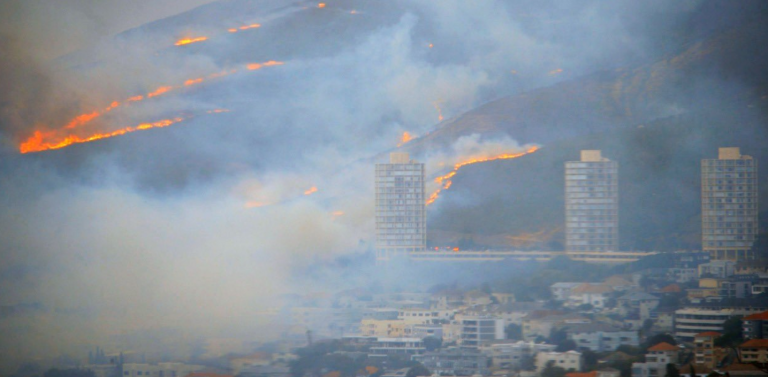
The devastating fire that ran its course across the side of Table Mountain in Cape Town this week has put the spotlight back on the management of an iconic range that’s home to some of the most biodiverse vegetation in the world. And what should – and could – have been done to reduce the risk of a catastrophe that destroyed priceless cultural heritage.

Table Mountain National Park is clothed in fynbos – a distinctive type of vegetation found only in South Africa – and is surrounded by the city of Cape Town.

Fynbos is a highly flammable shrubland, which has evolved over millennia to become dependent on fire for survival. It burns. Science tells us that we can expect most fynbos to burn on average every 12 to 15 years in natural conditions.

Therefore managing fynbos means managing fires.

Our mission is to share knowledge and inform decisions.

About us

Fire hazard is influenced by three factors: the weather, an ignition source and fuel loads.

The weather can affect fires by increasing spread through high wind speeds or resulting in dry vegetation after a period of warm weather. Ignition sources may be a result of lightning or arson.

Both weather and ignition sources are hard to control and prevent, and yet often receive the most media attention. But the one factor that is possible to manage, is fuel loads. Fuel loads in fynbos can be kept down through ecological burns and keeping the mountain clear of invasive alien trees.

The recent out-of-control wildfire on Table Mountain may be linked to several key issues: fire suppression, alien trees, constrained budgets and unsupportive policies, together creating a wicked problem. Climate change may also have played a role in the high temperatures and fierce winds around the time of the fire, though attribution studies will need to confirm this.

Fire suppression

Recent research has shown that urban expansion of Cape Town has created anthropogenic fire shadows which are changing the fire regime, often causing a decline in fire activity. For example, the fires that used to sweep the slopes of Newlands and Kirstenbosch from the flats below have been blocked by the suburbs of Newlands and Rondebosch, meaning that the fynbos on these slopes has not burnt in decades.

Scientists are calling this process a “hidden collapse”, that desperately requires management intervention. They also predicted two years ago that this would lead to extreme fires in ecosystems globally where there was no ecological restoration and where fuels were allowed to accumulate.

Further evidence of a decline in fire activity in Table Mountain Natonal Park is presented in a study on indigenous forests which showed that they had been expanding on Table Mountain due to fire suppression policies.

Invasion of alien trees

Invasion of alien trees also contributes to increased fuel loads, and therefore more dangerous fires. Fynbos is made up mainly of shrubs and therefore when alien trees invade or are planted in fynbos, they tower several meters above fynbos, carrying considerably more fuel. A change from fynbos to pines and gum trees can increase fuel loads from 4 to 20 tonnes per hectare.

One study found that the 2017 Knysna wildfire had a significantly higher severity in plantations of invasive alien trees and fynbos invaded by these trees, compared to areas with just fynbos.

Unfortunately, invasive alien plant species are proliferating faster than authorities can remove or manage them. This is also despite the efforts of Working for Water Teams working in the park, as well as over 20 volunteer groups working hard to clear invasive alien plants on the Cape Peninsula and beyond.

In an article in 2019, scientists warned of the areas of highest risk at the urban-fynbos fringe, and gave clear steps that could be taken to mitigate this risk. But these issues have been identified as early as 1995.

Could Cape Town have been better prepared to deal with this disaster?

Why is this a wicked problem?

Although we have the ecological knowledge to undertake prescribed burns and alien clearing, unsupportive policies, constrained budgets and a complex social setting make implementation challenging.

In the 1970s and 1980s, regular prescribed burns were practised in some parts of the park  with the dual goals of rejuvenating the fynbos, and reducing fuel loads (and hence risk). However this was halted at the end of the 1980s, and fire management shifted to fire suppression to protect plantations and residential developments.

The current National Veld and Forest Fire Act 101 of 1998 does not adequately cater for prescribed burning, as it only allows burning for the purposes of preparing firebreaks. This makes it extremely difficult to obtain permission to conduct fires that would maintain the fynbos, assist with the control of alien plants, and reduce fuel loads.

Another issue is the social resistance to prescribed ecological burns in Cape Town. The public have raised concerns around lack of communication, while the authorities past communications around prescribed and alien clearing has resulted in public efforts to block the planned management actions. This has resulted in a lack of trust between authorities and residents.

These challenges result in a management stalemate.

Recommendations

What should the priorities be in the short-term? Will funds for basic needs, such as recovering buildings and capacity, compete with disaster risk reduction needs, such as ecological restoration and clearing invasive alien trees?

Alien plant management needs to compete with all other budgetary pressures, which perpetuates a complex, wicked problem.

What can be done better going forward?

Firstly, the policy framework needs to be addressed. Although prescribed burns are dangerous and inconvenient, out-of-control wildfires are disastrous and could threaten many people’s lives.

Secondly, citizens of Cape Town need to be more supportive of prescribed ecological burns and alien clearing. The relationship with managing authorities also needs to be restored and trust rebuilt.

Thirdly, Cape Town needs to improve the management of its natural and cultural heritage. This should include both prescribed ecological burns, and keeping the mountain clear of alien trees.

Given the huge interest from the public in alien tree clearing, apparent from the many active volunteer hacking groups, there is a need to integrate efforts by the South African National Parks, the City of Cape Town, and landowners (such as the University of Cape Town) with those of the public to develop a more strategic, standardised approach to clearing invasive alien trees.

Southern Africa learning dialogues on how to achieve water and food security

The UN Food Systems Summit southern Africa region led dialogue discussions on how food and water security can be achieved in the region.

Research shows that southern Africa faces an uphill battle to achieve food and water security. Roughly 43% of the region is either arid or semiarid and 70% of people in southern Africa rely on rain-fed agriculture.

Speaking at the regional dialogues, the International Water Management Institute’s country representative for the southern Africa region Dr Inga Jacobs-Mata said the circumstances in the achievement of food and water security in the region have worsened by unusual times “bringing age-old questions back to the fore such as ‘can southern Africa feed itself and does the region have enough water to do so’,” said Jacobs-Mata.

She said while the interdependencies and trade-offs between water, energy and food are well-known and understood, the level of institutional, policy and sectoral coordination are often not.

“Water security is a priority for energy and food production. However, these two sectors may differ in the prioritisation of the ways in which they achieve and ensure water security,” said Jacobs-Mata.

The United Nations Food Systems (UNFSS) Independent Dialogues (Southern Africa) attempted to answer these questions and provide some solutions.

The dialogues took place this month and looked to unpack the way food systems can be localised and transformed in a water-constrained region in such a way that acknowledges the water, energy and food (WEF) nexus linkages and promotes regional trade as well as enhance equity and inclusion.

Jacobs-Mata said the success of the food systems summit dialogue depended primarily on the participants and the ways in which they interact with each other.

“Success is achieved through exchanges, which include diverse actors from across the entirety of food systems. These different actors must follow the summit’s principles of engagement and discuss long-term visions for sustainable food systems,” she said.

The dialogues highlighted six key thematic areas on which participants were required to engage. The engagement was in an interactive manner that allowed for small group discussion, collective brainstorming, and agenda-setting.

The conversation also included contributions from the World Bank, Global Water Partnership and the Water Research Commission.

Some key thematic areas covered during the discussions included the move towards low carbon energy for food production, climate change impacts on water and food security, as well as community approaches to operationalise the water, energy and food connection.

Other themes included policy coherence and the institutional coordination in water, food, energy; Advancing technical WEF models, tools and frameworks for decision making at multiple scales; And putting nature back in the WEF nexus to build towards resilient food landscapes.

SADC Senior Programme Officer for food security Duncan Samwika said through these exchanges, priorities for action within the context of current realities were identified.

“The priority identified was the need for more dialogues that promote integrated approaches linking water and energy with food.

“Other outcomes from the discussions included the need for data sharing across sectors and across countries as well as the need for financing models to enable the exchange,” said Samwika.

He added that the need for policy implementation that concretises these priorities was also emphasised.

The World Bank’s senior water resources specialist Anna Cestari said other outcomes that were emphasised included the need for institutional coordination, with a special focus on reconciling donor interests with nation state and regional institutional interests.

“Participants also agreed that there was a need for sizable projects to realise true systems transformation,” she said.

Cestari added that it was important that southern Africa voices and inputs be incorporated into the action tracks to help achieve major outcomes from the discussions.

The outcomes of this event will feed into the Global dialogues that will take place on 27 April under the heading “Water: the game changer for food systems”. This will be followed by the UN Food Systems Summit in September.

Classes at UCT suspended until Monday 26 April

NYAKALLO TEFU|

The University of Cape has suspended the academic programme until Friday.

UCT Vice-Chancellor Professor Mamokgethi Phakeng provided an after fire broke out at the Rondebosch campus on Sunday. 

“The assessment of the damages and the need to clean residences and academic buildings means that the academic programme at the University of Cape Town (UCT) will be suspended until Friday, 23 April,” said Phakeng. 

Students at the campus residence were evacuated on Sunday due to fears of safety, which resulted in the suspension of classes from Monday morning. 

“On Wednesday the Department of Student Affairs (DSA) will start managing the movement of students back to their residences from their emergency accommodation,” added Professor Phakeng. 

Phakeng says learning will resume on Monday 26 April 2021 when the university feels it is safe for students to be back on campus. 

“The faculties will each manage the lost week in terms of the curriculum and will communicate with their students about scheduled tests and assignments,” said Phakeng. 

Gift of the Givers have also jumped on board in assisting students at the university with food parcels. 

“We immediately swung into action on Sunday, 18 April, and finished feeding students at 01:40 on Monday morning. Operations resumed later on Monday morning at the Old Mutual West Campus in Pinelands,” said Gift of the Givers project manager, Ali Sablay. 

The organisation says the university made a request for the assistance of 4000 students. 

“Individuals have also been quick and eager to assist, as soon as the news broke that Gift of the Givers would be feeding students, our office was surrounded by cars and volunteers,” added Sablay. 

National Treasury and SARB respond to Sexwale allegations

The South African Reserve Bank (SARB) and the National Treasury jointly denied allegations made by ANC veteran and billionaire Tokyo Sexwale that money paid to a Heritage Fund towards free education has been looted.

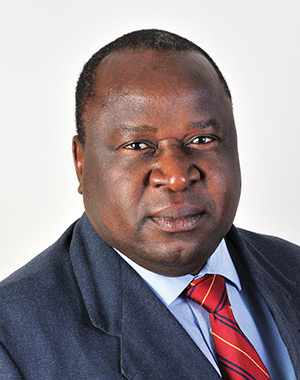
In response to allegations made, finance minister Tito Mboweni said the statement about stolen money is “untrue, sad and seems that he [Sexwale] was a victim of the many scams abound”.

“You cannot steal transmitted money from the central bank. How? His statement on television was unfortunate. Will reach out to him,” said Mboweni.

Inside Education on Monday reported that Sexwale said money from a Heritage Fund, donated by a “very wealthy family”, meant for the poor and to pay for free education, has been stolen.

In a television interview on Sunday, Sexwale said he is part of the two people that are mandated holders of the fund.

“It is a sensitive [issue] because we tried to resolve this. The Heritage Fund belongs to a very powerful family who donated the money towards health and free education.

“It [the money] comes through the South African Reserve Bank. But in the process that it is bought in the economy properly, we found some resistance. And when we checked the resistance, we found that some of this money has been stolen,” said Sexwale.

The ANC veteran went on to say a case was opened with the South African police and has been discussed with the current finance minister and the previous one.

In response to allegations made by Sexwale, both the National Treasury and the reserve bank said allegations made by Sexwale on alleged billions deposited at the SARB points to a common scam.

“Over the years, National Treasury and the SARB have received many such requests for, or promises, of billions (and now trillions) of rands or dollars, and from experience regard these as simply scams.

“Any claim that such funds are meant for deserving causes such as COVID19 relief, social grants or grants for free education are simply empty promises, to secure the interest of the potential victim,” said the National Treasury and the SARB.

The National Treasury said it had previously received correspondence from Sexwale and many others that allege that billions of rands have been stolen from a fund that has been referred to as the ‘White Spiritual Boy Trust’, a trust supposedly set up by a foreign donor.

According to the National Treasury, the scam alleges that there are trillions of dollars in the said fund and that, inter alia, a certain Goodwin Erin Webb is the fund’s mandated representative in South Africa.

“On investigation, the SARB can confirm that it had no record of the existence of the said fund and it had advised Sexwale in writing that, given the SARB’s experience and knowledge of this and other similar matters, it could only conclude that the alleged fund was a scam,” said the National Treasury.

UCT burns: Classes suspended for the next two days

NYAKALLO TEFU|

The University of Cape Town (UCT) has cancelled classes and tests on Monday and Tuesday following a fire that left students traumatised. 

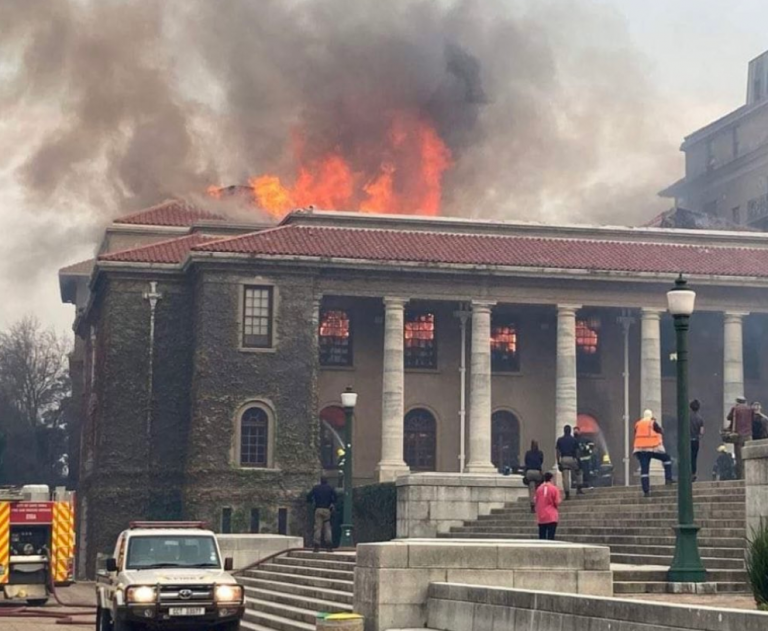
A fire broke out on Sunday morning where the historic Mostert’s Mill in Mowbray was destroyed and also spread to the University of Cape Town’s upper and middle campus.

The fire spread rapidly from Rhodes Memorial and gutted historical UCT buildings including Fuller House student residence and the Jagger Library

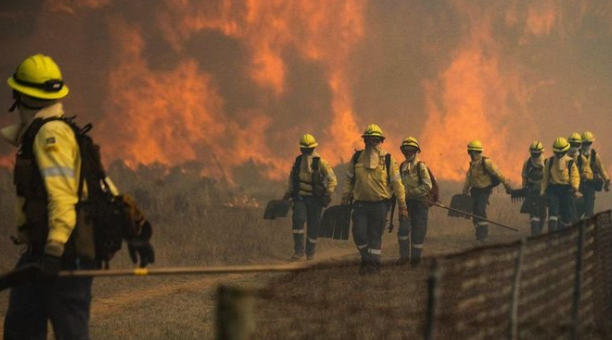
Over 100 firefighters and emergency personnel were deployed to campus and to Table Mountain National Park. 

UCT vice chancellor Professor Mamokgethi Phakeng said: “In light of the fire affecting the Rondebosch campus of the University of Cape Town (UCT) and the impact this is having on the university’s buildings as well as the evacuation of residences, all academic activities will be suspended tomorrow and on Tuesday.”

The fire prompted students to be evacuated from the University on Sunday morning with fears of their safety being compromised.

“For safety reasons, campus will be locked down and no one, other than emergency services, will be allowed access,” said Phakeng. 

Food and emergency accommodation has been arranged for the students.

UCT student representative council president Decian Dyer said students have been placed into nine hotels around the city.

In a statement released by the department of higher education, science and innovation, Minister Blade Nzimande said he was saddened that the fire destroyed the iconic African Studies Library houses and the ANC archives and records of underground publications.

Executive director of the UCT libraries Ujala Satgoor said an unexpected natural disaster struck at the heart of UCT Libraries today and I write this message with a deep sense of sorrow and loss at the havoc and devastation.

“Some of our valuable collections have been lost, however a full assessment can only be done once the building has been declared safe and we can enter the building. An official statement is forthcoming and until such time, I request that individuals refrain from speculation and conjecture,” said Satgoor.

Gift of the Givers said it will also assist by providing meals and the 4000 UCT students who have been left stranded.

The organisation’s founding director, Dr Imtiaz Sooliman, said his organisation will be providing the stranded students with three meals a day.

Adding that Vodacom has given students free airtime and data so that they can contact their families.

Sooliman said the situation at UCT is so dire that some students have been left with nothing but the clothes on their backs.

Phakeng said they are all anxious about the extent of the damage to the Rondebosch campus and will provide updates as soon as they are able to do so. 

Students who were evacuated have been provided with food and accommodation.

“The necessary arrangements have also been made to accommodate our Muslim students. Food will be prepared at Old Mutual’s offices in Pinelands, Cape Town and from there it will be distributed to the locations where we are accommodating our students,” said Phakeng. 

The University also called on the greater community to assist with any donations to assist students and the school. 

“The public have been asked to donate any essential items and food which they may wish to contribute,” said Phakeng. 

Phakeng said officials must still assess the extend of the damage and the risks of smoke inhalation before allowing students to return to the university’s residences.

Lufuno ‘s family want school management to account

NDIVHUWO MUSETHA|

Grief stricken brother says they are not satisfied with how teachers and principal handled bullying incident.

Every afternoon when Lufuno Mavhunga returned from school she would lock herself in her room to study.

She would wake up every morning and catch the 6:00 am bus to school. The bus would drive 35km from her home village to Mbilwi Secondary School in Sibasa, Limpopo. This been her life since 2019.

Lufuno did this because she wanted to become a medical doctor once she completed her schooling.

According to Lufuno’s family, the 15-year old would repeat this ritual, come back home and lock herself into her room. Her family would not suspect anything sinister. She would kill herself.

Lufuno passed away on Monday evening after she allegedly consumed a dosage of mixed pills. This happened a few hours after she was recorded being assaulted by other learners in a video that went viral on social media.

The assault – which happened in full view of other learners – has now raised questions about whether teachers and school management could have acted differently after learning of the incident.

Lufuno’s older brother Kenneth Mavhunga charged said the bullying continued “right in front of the educators who were trying to handle the matter after the two learners were taken to the principal’s offices immediately after the incident.”

He added: “Although we cannot blame anyone about the death of our younger sister Lufuno, who was also a last born in the family of 10 children, we still believe that the school management should have handled this matter differently.”

“If they handled this matter differently, we believe that maybe Lufuno would still be alive today. Our concern is that the management allowed the bullying to continue against Lufuno right in front of them,” said Mavhunga.

Limpopo education department spokesperson Tidimalo Chuene said in response to the comments by Mavhunga: “We have noted the concerns and they cannot be ignored.”

Chuene said action will be taken once the head of department receives a report from the district director into the bullying incident. She said the process which started last week has been delayed by the deaths in a road accident of six learners from the Jim Chavani Secondary school, Shikundu village in the Collins Chabane local municipality on Friday.

Provincial education officials visited the school and families of the deceased learners on Monday.

Lufuno’s parents said they have reported the bullying incident to the school a number of times.

In the video that went viral last Monday, Lufuno was seen standing against the wall, trying to protect her face from the bully girl, also 15. The girl repeatedly slapped her across the face while fellow learners cheered on.

The incident has raised calls for the authorities to take action against bullying in schools.

Last week, minister of basic education Angie Motshekga visited the school. Motshega said teachers would be taken through a disciplinary process but added that such action would be guided by the contents of the report into the incident.

Meanwhile, the family continues to deal with the grief.

“As a last-born, we all put our hope on Lufuno to see her achieving great things in life, especially educationally.  She always promised everyone on the family that she was going to carry the flag of the family very high and we believed her,” said Mavhunga.

He painted a picture of Lufuno as a dedicated learner who loved her books.

“Every day she comes back from school, she would get her meal and lock herself in the room and study. Even the day of the fateful incident, she came back and explained what happened to her parents.  They tried to speak to her and she went to her room as normal.  As elders, they did not see any bad sign until when they checked her later in the room where they found that she consumed a lot of pills,” said Mavhunga.

The Limpopo department of education said the untimely tragic death of Lufuno should send a strong message to all bullies and discourage them to stop their inhumane behavior.

In responde, Mavhunga said, “I hope that my younger sister’s death will serve as a wake-up call.  Although we never expected Lufuno to leave us so early, we believe that with time we will be able to heal. However, we hope that Lufuno’s death will serve as a lesson to us all, especially parents, that we must start to look into what our children our doing behind our back.”

“As a family, the school management did not call us to inform us about the incident.  We just suspect that if they warned us before she comes home, we have been better prepared by the time she arrived home,” he said.

Lufuno was born in February 2005. She attended a local crèche before she started her primary education at Tshikombani Primary. 

After passing grade five, she asked her parents, Joseph and Fulufhelo, to be transferred to Tshirenzheni Primary, “because she felt that the standard at her former school was too low for her ambitions of becoming a medical doctor when she grow up.”

It was also because of her aspirations and dreams that prompted her parents to seek her admission at Mbilwi, because of its good record of producing good matric results, including Maths and Science, which put them in the Club of 100 every year.

Mavhunga confirmed that the school informed them about the case they opened against the bully learner who appeared before the Thohoyandou Magistrate’s court on Friday.

The learner cannot be named as she is a minor. Limpopo police spokesperson, Brigadier Motlafela Mojapelo said Lufuno was found lying unconscious in her room by her mother, Fulufhelo.

She was taken to Siloam Hospital by an ambulance where she was later certified dead. Mojapelo confirmed that an inquest docket was opened following Lufuno’s death.

Limpopo regional spokesperson for the National Prosecuting Authority advocate Mashudu Malabi Dzhangi said the arrested learner will be dealt with according to the Child Justice Act prescripts. The matter was remanded to 20 April 2021 for a formal bail application in the Thohoyandou Magistrate Children’s Court. The case will be heard in camera.

The South African Human Rights Commission (SAHRC) said its investigations so far indicate that the principal of the school, Nyambeni Lidzhade, “failed to take appropriate action when the Mavhunga family informed him about the incident.”

The commission said they conducted a fact-finding visit to the school on Wednesday.

Chuene said Lidzhade planned to make a follow-up on the matter the following day, the Tuesday after the incident. The chairperson of the School Governing Body, FR Netshitavhe, says they are fully behind the school management and the way they handled the matter so far. – Mukurukuru Media

Tokyo Sexwale: Money for free education has been stolen

Businessman and ANC veteran Tokyo Sexwale says money from the Heritage Fund, that was meant to pay for free higher education, has been stolen.

Sexwale was speaking on a television interview on Sunday and said he is part of the two people that are mandated holders of the fund.

“It is a sensitive [issue] because we tried to resolve this. The Heritage Fund belongs to a very powerful family who donated the money towards health and free education.

“It [the money] comes through the South African Reserve Bank. But in the process that it is bought in the economy properly, we found some resistance. And when we checked the resistance, we found that some of this money has been stolen,” said Sexwale.

Sexwale said former president Jacob Zuma knew about this fund back in 2016 when he announced free higher education. He said the current president, Cyril Ramaphosa, is also aware of the fund.

“This is why Zuma spoke about free education – not government money. I believe that Zuma believed that right now we would have this fund. The fund can help with all these things the [former] president spoke about,” he said.

In 2017, Zuma announced free higher education for students from poor and working-class homes during ANC’s elective conference at Nasrec. At the time, he said the move will affect 90% of South African households.

He said the programme will start in 2018 and will be phased in over the next five years and  committed to increase subsidies to universities from 0.68% to 1% of the GDP over the next five years,

At the time, Zuma said the National Student Financial Aid Scheme (NSFAS) packages already allocated to existing NSFAS students in their further years of study will be converted from loans to 100% grants effective immediately.

Policy analysts at the time said this was not feasible and that the country could not afford this move.

Sexwale said through this fund, free education is possible.

“The owner of the money said this money must be used for education for health, for Covid- all these things. We have just offered a few billions to Covid-19. We have given the universities a few billions to clean up this debt of their students,” he said

Adding that the matter of the missing money is now with the police and that it has been discussed with the current finance minister and the previous one.

The Presidency denies Free State province school construction tender fraud

The Presidency has issued a statement denying allegations of corruption made against President Cyril Ramaphosa ’s involvement in a “dubious tender”.

Reports state that a school construction tender was awarded to Ramaphosa’s Shanduka Foundation by Free State ‘s department of education without following proper protocols.

According to The Star newspaper, the tender was never advertised and there were some discrepancies in the awarding of the tender.

“The Star has seen an affidavit from an official of the Free State Department of Education which says that there may have been discrepancies in the awarding of the tender,” said the newspaper.

Adding that the department of public works has confirmed to the newspaper that some important documents relating to the schools construction are missing and that Reserve Bank shareholder, Fanie Fondse, has laid criminal charges against Ramaphosa at the Sandton Police Station for corruption related to Shanduka’s tender bid to build schools in the Free State.

In response the president’s media team said the newspaper reports were not clear on the details of the complaint and that the original article contained glaring inaccuracies and a misrepresenting of facts.

“Shanduka Group never received a tender for the construction of any schools in the Free State,” said Ramaphosa ‘s media team in response.

“Neither President Ramaphosa nor any companies in which he held interests has ever received any benefit from school construction in the Free State or anywhere else in the country.

“On the contrary, both President Ramaphosa and Shanduka have made substantial financial contributions towards the construction and development of schools,” said Ramaphosa ‘s spokesperson Tyrone Seale in a statement.

The Star also reported that the Free State MEC for education, Tate Makgoe, was also a member of the Shanduka Trust board at the time, while Ramaphosa served as the chairperson.

To this, Seale responded that Ramaphosa was neither a director nor a shareholder in Shanduka Group in 2015, “at the time he was alleged to have ‘persuaded’ the provincial department to award the non-existent contract,” he said.

“He exited the business in November 2014,” added Seale.

Adding that neither President Ramaphosa, nor any companies in which he held interests, has ever received any benefit from school construction in the Free State or anywhere else in the country.

“On the contrary, both President Ramaphosa and Shanduka have made substantial financial contributions towards the construction and development of schools,” said Seale.