Home Blog Page 342

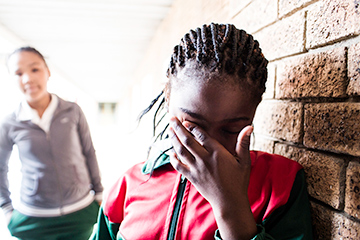
Grade 10 learner from Limpopo school dies after bullying video goes viral

NYAKALLO TEFU|

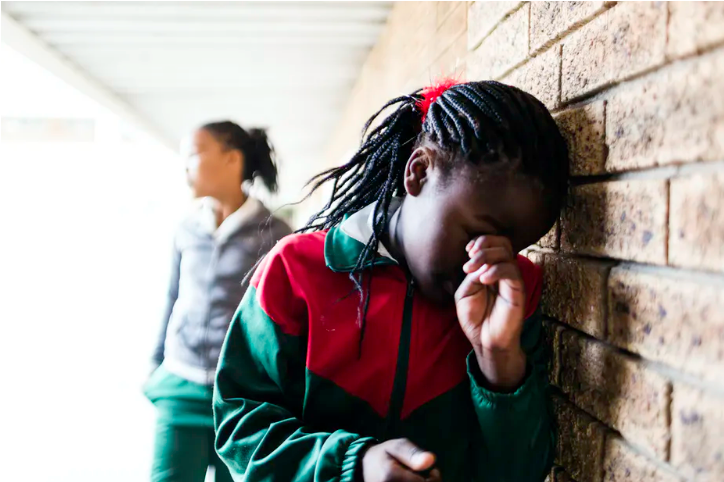
The Limpopo Department of Education is investigating the death of a grade 10 learner at Mbilwi Secondary School, in the Vhembe East education district, after a video of her being assaulted went viral. 

A video caused a stir on social media, where the girl is seen being slapped across her face multiple times     by a fellow learner. 

The incident took place on Monday. In the video, other learners can be heard in the background cheering the perpetrator, who is also a grade 10 female learner.

The department of education in Limpopo said it was alerted of the video on Tuesday morning. 

“It is quite disturbing to witness this level of violent behaviour among young people,” said Limpopo MEC for education Polly Boshielo.

The cause of death of the learner is not yet known and the department said it is investigating. 

“The victimized learner is reported to have since passed away, however the cause of the death is unknown,” said Boshielo. 

Boshielo said the department is waiting for a formal report on the cause of death from the relevant authorities. 

In order to aid learners who witnessed this and were affected, the department on Tuesday has sent support to the school. 

“The Limpopo department of education has appointed Learner Support Agents who are based in the 10 education districts across the province to offer emotional support to vulnerable learners,” said Boshielo. 

The MEC has strongly condemned such conduct at schools, adding that this behaviour will not be tolerated. 

“We strongly condemn such conduct that has turned our schools into horrendous havens of those who have no regards for their peers,” said Boshielo. 

Bullying is wrong and will never be tolerated in our schools, added Boshielo.

Historic debt: The crisis in student funding

Student historic debt to universities has escalated to approximately R14 billion.

Analysts say this has caused a sustainability crisis in our higher education institutions.

Universities South Africa (USAf) said this crisis has been ongoing for decades and that it is now time for a government-led policy process that produces a long-term, sustainable solution.

USAf’s Chief Executive Officer Professor Ahmed Bawa said universities, while being anxious to ensure that students do continue their studies and graduate, are also committed to being financially viable. He added that this is why higher education institutions seek to ensure that the debt levels are minimised.

“Student debt cannot possibly be resolved at the institutional level.

“USAf must signal now, as we did signal in December 2017, that the long-term sustainability of this bursary programme is of deep concern to us,” said Bawa.

He added that the perennial challenge of the further accumulation of student debt accrued by students who fall outside of the National Student Financial Aid Scheme (NSFAS) threshold in family income requires a government-led approach.

Research shows that universities have been experiencing declines in government subsidy on a per capita basis over the last few years. This, together with government’s proposal for the regulation of tuition fee increases, the cuts in funding for research and innovation and the challenges related to student funding conspire to drive growing concerns over the sustainability of the institutions and the sector.

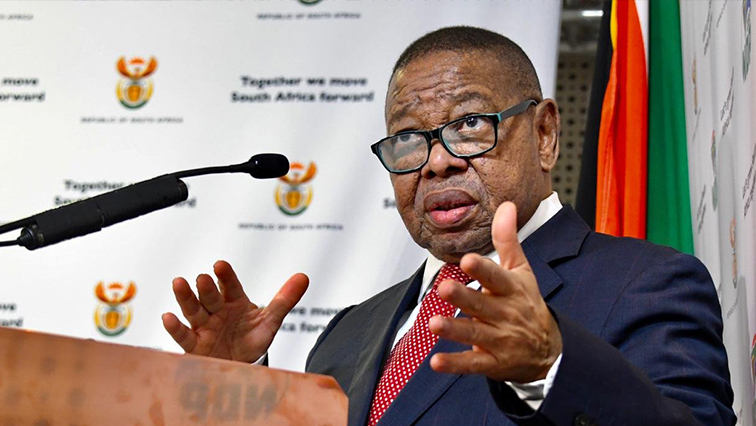
In his presentation to the ANC national executive committee (NEC), the department of higher education, science and innovation minister, Blade Nzimande, recommended even further cuts to university subsidies.

Nzimande was tasked by government to cover the R5.7 billion NSFAS shortfall that had earlier led to the department’s decision to cap first-time university entrants.

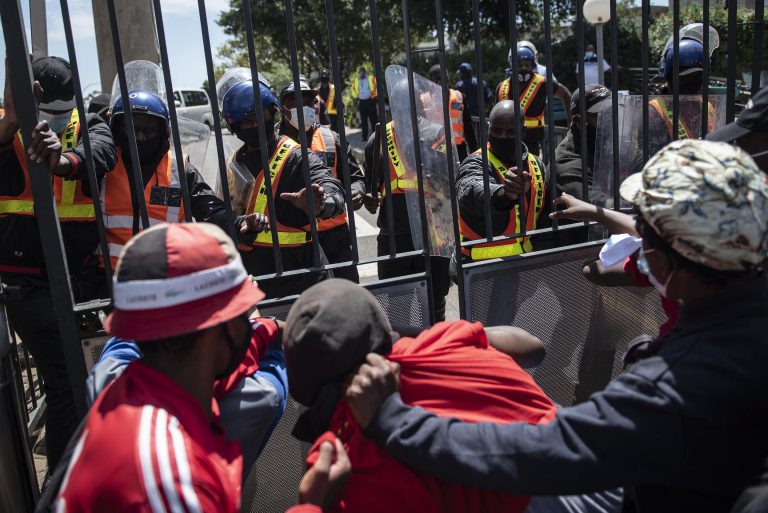
The decision led to a nation-wide strike that ended in the death of a bystander shot by police during their clashes with students. The student demands included the write-off of student debt by government and that universities should allow students owing them money to register for the current financial year.

Nzimande said the NSFAS shortage will be paid by R3.09 billion in voted funds previously allocated towards university subsidies and the infrastructure money that was set aside for Technical and Vocational Education and Training (TVET) colleges.

Bawa said: “Year-by-year, these budgetary constraints nibble away at the effectiveness of the higher education system undermining its status as the continent’s strongest one and as one that is globally recognised as being highly productive.”

Nzimande also admitted that his department did not have a plan to fund students referred to as the “missing middle”.

The “missing middle” refers to students who do not meet the NSFAS financial eligibility criteria but still struggle to afford higher education. These students are referred to as the missing middle as many are not able to access higher education due to the inability to source bank loans and other sources of funding.

In his presentation to the ANC NEC, Nzimande said much of the debt at higher education institutions is carried by missing middle students, both current and past students.

“There are different estimates of the numbers of students in this category, as the institutions do not have accurate socio-economic data. The Ministerial Task Team appointed by the Minister in 2016 estimated the figure to be approximately 20% of undergraduate students,” said Nzimande.

In 2016, an approved pilot project was established to test possible funding models, which became the Ikusasa Student Financial Aid Programme (ISFAP), to develop funding and support model for poor and missing middle students.

The original intent of the pilot was to address the feasibility of granting loans/bursaries with progressive reducing subsidies as household income increases for the “missing middle” students

Nzimande said the original modelling assumed that government would cover full or part of the equity required to cover bad debt, but this assumption was not supported by National Treasury.

“A loan -based system would be very difficult without government support. Amongst other reasons, because in all modelling done, the bad debt, capital repayment, and capital interest was always bigger than the repayments and interest paid by the student,” he said.

Adding that the original modelling, ISFAP assumed that government would cover full or part of the equity required to cover bad debt, but this assumption was not supported in interactions with National Treasury,” he said.

Nzimande said The ISFAP model does not provide a universal solution to issues of missing middle funding required.

The work also needs to take into account the substantial changes in the student funding environment since 2018, the student debt issues in the system, and the many other demands on State funding for higher education and training such as postgraduate funding support, as well as the fiscal context. This work will form part of the policy review process to be undertaken by the Department, said Nzimande.

In March, Deputy Higher Education Minister Buti Manamela said: “We cannot have this unsustainable debt situation because universities will basically collapse and so that’s the one thing that will be involving all the stakeholders in coming up with a sustainable solution.”

Former University of Free State vice-Chancellor Professor Jonathan Jansen said it was important that everyone paid back their student debt once they started getting an income so that others could also go to school.

Jansen said historic debt is not something that can “just be erased” and that it required a major re-thinking of the national budget

“What some institutions are doing – letting some register with outstanding debt or extending the registration dates is putting a patch on the sore, that is not solving the problem. We need a systemic resolution of this problem,” he said.

Jansen made the recommendation that government take half of the debt and divide it proportionally to the 26 public universities over the next five years.

“This will immediately assure vice chancellors and their team that they will get that money,” he said.

DUT extends dates for online registrations

NYAKALLO TEFU|

Online and remote learning at the Durban University of Technology (DUT) will commence on Monday 12 April 2021 for new students. 

The university also announced that it has extended the date for online registration for new and returning students to 16 April 2021. 

Remote and online learning at DUT continues after management shut down all its campuses following violent clashes between students and police. 

Students at DUT and surrounding campuses are fighting against financial exclusion and have said they will return to the streets again this week.

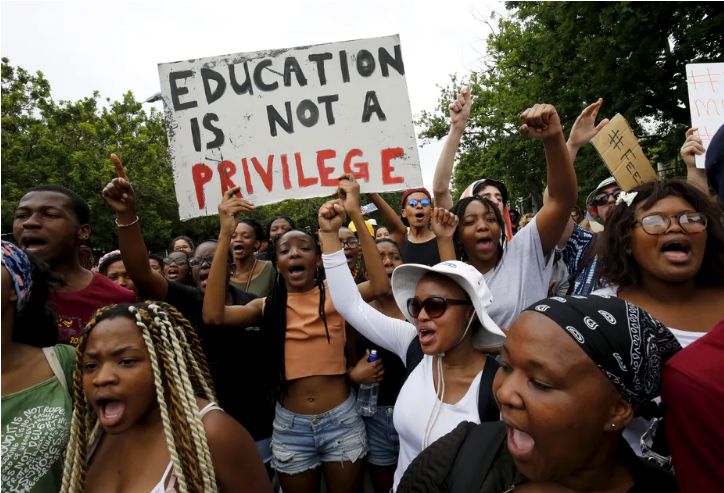
University students across the country have been protesting, calling for an end to financial exclusion. Another demand is that historical debt at higher learning institutions be scrapped. 

A bystander was killed during clashes between the police and Wits University students last month in Braamfontein

Students at DUT and surrounding campuses said they have been angered by the lack of response to their grievances from management since February 2021. 

Last week, prospective students flocked to the institution hoping to register for the current academic year. 

DUT said the walk-ins were a result of fake social media posts inviting walk-ins to register. 

However, student leaders said the walk-ins were not a problem but rather the university’s inability to implement Covid-19 regulations for in-person registrations.

DUT SRC president Zabelo Ntuli said management needs to allow students to register on campus and not only depend on online registrations because that has slowed down the process.

This, and the university’s refusal to allow students owing money to register for the current academic year, is was sparked the protests.

A statement released by DUT management read: “Five of our campuses will be closed until further notice to allow the university to assess conditions for re-opening and to allow students to return in a phased and restricted manner.”

DUT management added that all first-time applicants who may be experiencing challenges related to online registration should report to Student Admissions.

“The institution will not be allowing walk-in applications,” added management.  

Reports also show that workers at the Mangosuthu University of Technology are also on strike. They are protesting over salary increase demands. Workers said they will sustain their industrial action if their issues are not resolved together with calls by students.

In response to the protests in the province and especially the issue of historical debt, the MEC for education in Kwazulu-Natal, Kwazi Mshengu, called on provincial government employees owing student loans to pay up their debt in order for students to get learning opportunities. 

Call by SA prominent figures to have Adam Habib reinstated amid motion for dismissal from student bodies

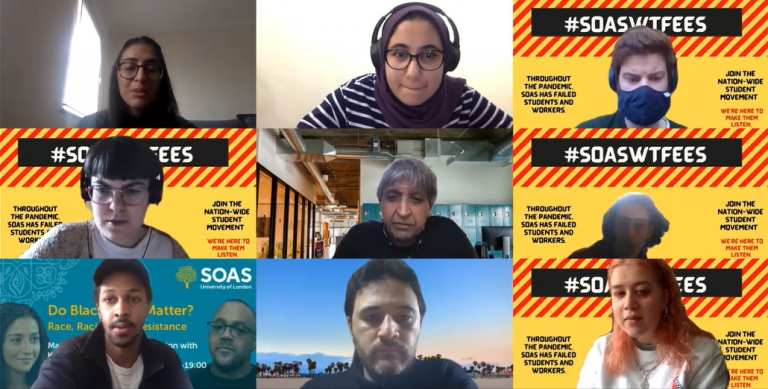
Some public figures have come in defense of Adam Habib, former vice-Chancellor at the University of Witwatersrand (Wits) and current director at the School of Oriental and African Studies (SOAS) in London, after he was suspended for the use of the “n-word” during a Zoom meeting with students.

Former chair of the South African Human Rights Commission Professor Barney Pityana and South Africa’s former Public Protector Thuli Madonsela have said Habib is not a racist and should be immediately reinstated while black student bodies at SOAS have called for Habib’s dismissal saying he is a “danger to learners” and “is not fit to hold his position”.

SOAS Black Student Body said the embattled professor is not fit to hold his position because the institution must still deal with issues of black students’ wellbeing, university fees, student debt, surveillance as well as bordering and policing.

“Adam Habib is a danger to learners, he has shown more than once that he will inflict violence on his students who all pay fees which guarantee his salary,” said the student body.

They said Habib’s “history of reaction” in relation to questions of economic justice, including calling the militarised police on #FeesMustFall student protesters at Wits University when he was Vice Chancellor, shows he is not fit to be the university’s director.

The student body added: “To pay such exorbitant fees and have one’s welfare compromised is a derision.

“The Board of Trustees headhunted Habib and spent £200,000 (just over R4 million) in their search. Habib’s position costs another £230,000 (R4.6 million) a year as salary, some of this money could have been used to fund the Africa Section which was dissolved earlier last year or to improve the efficiency of the library,” said the student body.

In a radio interview, Pityana said anyone in their right mind cannot call Habib a racist.

“In their ears and eyes, it was the fact that he used the word, as if the use of the word is that which defines the racism of the user in all circumstances,” he said.

Pityana said: ”In the context in which Adam [Habib] was engaging with the students, the opposite in true. He said if somebody actually used this expression, disciplinary processes would follow, which is exactly what the students needed.”

Inside Education found the 12-minute recording of the virtual meeting that was circulated on social media.

In the video, a participant read a question from another student asking how SOAS could make statements about Black Lives Matter while underfunding the Africa Department… and allowing lecturers to say the n-word in class.

Habib responded by using and verbalising the actual “n-word”.

Habib’s use of the word was noted as problematic because “he is not black”.

A black student in the same meeting is recorded saying: “You are not a black man, you cannot use the word, regardless of your lived experience,” he says. You have not faced the trauma and the oppression of black bodies, what we go through 24/7 for the last 500 years. You do not embody our history, therefore, you cannot use the word.”

In response, Habib said: “I am sorry I offended you. I come from a part of the world where when someone use it, context matters.”

Habib also questions the student’s “African-ness” in the video.

“So actually, you don’t speak for Africa. I come from the continent, I was born there. I worked all my life there. And I will put together an agenda that is an African programme in a cosmopolitan sense… I am sorry it doesn’t meet your needs but I can tell you in my conversations with people on the continent, it meets many of their needs,” he says in a raised voice.

Another participant, the chairperson of the meeting, asks Habib not to make assumptions about students’ ethnicities.

This video was posted on social media and with it came heavy criticism. In response, Habib typed a 17-tweet thread, re-using the n-word in its fullness. He said this was his attempt to explain himself and provide context to the virtual meeting.

Habib would later delete the tweet with the full n-word choosing instead to use the globally more acceptable shortened “n-word” version.

According to Art and African Minds, another student body at SOAS, instead of Habib apologising after the incident, “he has taken all the opportunities to re-emphasise and rationalise his use of the n-word”.

Adding that, “Currently, the black student of Somali descent, whose identity was re-classified, whose existence was erased by Habib, is deferring his BA in African Studies and losing a whole year of his studies”.

Habib has since been suspended from his post.

On 23 March SOAS staff overwhelmingly backed a vote of no confidence against Habib with 98% of members present voting in favour of the motion, 0% against, and 2% abstaining.

The EFF also called on SOAS to fire Habib.

The EFF said instead of withdrawing his remarks, Habib went on a “maniacal rage, raising his voice to defend the indefensible”.

“We call for the immediate removal of Habib from his position as director of SOAS University as he has exhibited extreme bigoty and is unfit to lead a department that ought to intellectually lead social change,” said the EFF in a statement issues by its national spokesperson, Vuyani Pambo.

This is the backdrop against which Pityana, Madonsela, journalist and commentator Justice Malala and writer Palesa Morudu have called for Habib’s re-instatement.

In a letter penned to SOAS, the four said the above-mentioned incident reflects a global trend in which much of the discourse on racism is reduced to identifying the pecking order of historic oppression.

According to the four, Habib exercised poor judgement in verbalising the n-word.

“He’s only been at the school for six weeks, and Habib and his students need time to get to know one another. But context is everything, and Habib is no racist. He should be reinstated at SOAS without delay,” they said.

Non-profit Stemnova Advances STEM Education

WHEN then-high school student Isha Sanghvi saw that her younger brother’s public elementary school did not offer a hands-on, engaging science curriculum, she became concerned about the future of his education. Due to the large age difference between her brother and her, she considers herself to be a third parent to him. When going over his assignments, she noticed that her brother’s science courses mainly centered around coloring worksheets and cardboard robot projects. 

Although Sanghvi lived in an affluent neighborhood in the Bay Area, there were few opportunities for students in the public school system to receive a quality science education.

In 2016, she began investigating what equitable science opportunities would be available to less advantaged communities and realized that most high-quality science programs were expensive, and students would miss out on learning opportunities. 

Additionally, Sanghvi said she came to understand that current science curriculums offered do not connect science to students’ lives and rather focus on reaching learning benchmarks and end-of-the-year goals. As a result, Sanghvi and her friends decided to create an afterschool program at her brother’s elementary school called Stemnova. 

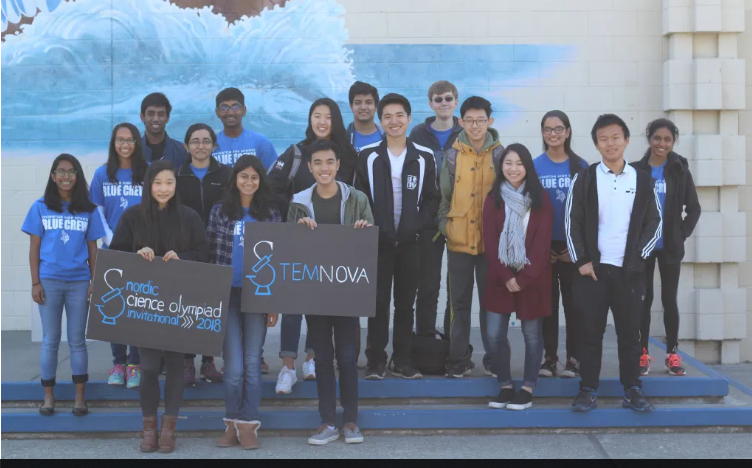
Stemnova, a grassroots STEM education nonprofit, quickly became sought after by many parents in her hometown, with the city of Fremont contacting her and asking if the program could be brought to more schools. Stemnova then expanded to assist family shelters and shelters for those experiencing homelessness and two years later hosted a 650 student hands-on learning STEM competition at the team’s local high school.

“[The event] was the culmination of being able to really see that we could become a nonprofit just because we have never really seen ourselves as anything bigger than like a local organization,” said Sanghvi, a sophomore studying neuroscience. “Seeing that need and seeing students from all over California attend something like this, made us realize that [Stemnova] could grow a lot bigger than what we originally envisioned it to be.”

While the Stemnova team began teaching in 2016, it was formally established in 2017 as a 501(C)3 organization. However, when Sanghvi’s team members went to college and began attending different universities such as University of Pennsylvania and UCLA, Stemnova halted operations in 2019. In March 2020, the team became more educated on educational inequalities accentuated due to the coronavirus pandemic, and Stemnova restarted in a virtual setting. 

“[My team members and I were] really just itching to do something when [the coronavirus] hit because we felt so helpless and so paralyzed by everything that was going on,” Sanghvi said. “We were like if there’s anything we can do to help we would want to do it.”

Sanghvi said that after doing a deeper dive into education inequity, her team spoke to community educators and other educational professionals and decided to focus on middle school students. 

“We’ve noticed that, for the most part, middle school is a turning point for most students where they’re at that age where they can really absorb and understand science but also at that age [when] bad experiences might turn them away from pursuing things in high school and higher education,” Sanghvi said. 

The team ran recruitment in August, and students from all around the country joined the team, including seven USC students. After recruiting a larger team, the Stemnova education team worked on creating a science curriculum that could be replicable throughout the country. To do this, Stemnova decided to pilot a virtual climate change and urban sustainability program at three middle schools, two in Los Angeles and one in Philadelphia. 

Stemnova has two components that make up its mission. One component is creating engaging science curriculums and afterschool STEM programs relevant to the community and intersectional to social justice.

“We’re really interested in finding ways to make the most engaging and equitable kind of curriculums and programs around STEM that are really afterschool and hands-on learning,” Sanghvi said. “Oftentimes, science curriculum or science programming is either not free or [has] high costs which is one of the biggest barriers to access, or it’s just not engaging and doesn’t really allow students to fully understand science from a hands-on way, which means that they’re just not very likely to pursue it in the long term.”

Various Stemnova team members noticed that many well-meaning STEM non-profit programs create a curriculum and enter communities without knowing the context, culture and background of the communities. In response to this need, the Stemnova team created the second component, the Chapter Leader Program. 

This program creates community involvement by training local leaders to teach students in their own communities. Stemnova meets with the Chapter Leaders every couple of weeks to teach them how to be effective educators, how to establish good leadership skills and how to teach young students in engaging ways. 

Sana Shah, a junior majoring in health promotion and disease prevention and an education director at Stemnova, said she joined the Stemnova team in August because she loves working with students but had never been able to tie her passion for STEM with the empowerment of other students, especially students of color.

Shah’s education team’s main role is ideating what the topic of the year will be. This semester, the pilot program focus is on virtual urban sustainability and climate change. 

Her team also develops every aspect of the curriculum by making powerpoint presentations and project based learning opportunities. Shah’s goal is to ensure that, in the future, people who are not part of the education team can also teach by looking at the curriculum guide and teaching the class.

“We’re not only teaching students about climate change and sustainability through our program, but we’re also exposing them to a future in the field,” Shah said. “We’re making sure that students have a long term interest and investment in the curriculum that might help them in high school and college and beyond.”

Laya Madulapally, a sophomore majoring in computer science, is a tech director at Stemnova whose team worked alongside the education team to develop a sustainable city model for climate change curriculum using SketchUp, a 3D modeling computer program.

Madulapally was in charge of creating a climate change tracker website, so students could enter the amount of energy items, waste management items and transportation items they could invest in to make their city greener. 

“I thought that was really interesting [to join the team] because their mission was really powerful to me,” Madulapally said. “The idea of providing some education to underserved communities, As someone in STEM myself from a minority, being a woman and being Asian, it’s really important for me that I’m able to spread the mission of STEM, being able to get students interested in engineering and science.”

Madulapally thinks the pilot program and curriculum is going well despite the challenges of shifting the curriculum online. Teaching the students and holding the lessons has been successful and the tech team is currently working on developing a soli tech curriculum and coding curriculum and are hoping to pilot it in the fall, she said. 

Outreach director Shivani Daftary and her team took on the role of contacting schools and determining the partnerships with the three selected middle schools for the pilot program in December. In February, the pilot program began and has been successful so far with two schools meeting once a week with Stemnova and one school meeting twice a week. 

“It started off with reaching out to different schools and organizations to pilot our educational curriculum,” said Daftary, a senior studying human biology. “That took a lot of sending out cold emails and scheduling calls, a lot of preliminary interviews to see what an organization was about, whether we could or couldn’t support them.” 

Sanghvi’s long term goal from Stemnova is to create more equitable learning opportunities within the public school education system, by creating a curriculum that can be integrated directly within classrooms. Currently, a lot of Stemnova’s programming is afterschool-based and not everyone can be a part of after school activities. Stemnova also strives to create as many community-based chapters as possible and believes there is an infinite model of growth in grassroots learning within program. 

“We always ask students to journal like, ‘Why does science even matter?’ ‘Do you consider yourself a scientist?’ — really asking them to engage with their own identity in science and really reconcile the fact that each and every one of us are scientists,” Sanghvi said. “I think that biggest click and that biggest change in the mentality in which students learn is the biggest thing that makes them convinced to follow science in higher education.”

  • Daily Trojan

CAF Set To Unveil Pan African Inter-School Showpiece

TONY MBALLA|

AFRICAN schools could soon flex muscles in a maiden continental showpiece if plans by the Confederation of African Football (CAF) to introduce the concept comes to fruition.

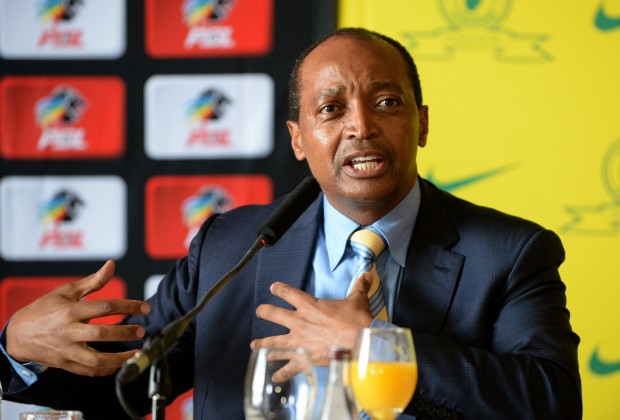
Caf president, Dr. Patrice Motsepe, revealed they were working on a comprehensive plan to include the inter-school games in the confederation’s calendar over the next few years.

“To make progress in Africa, we need to create partnerships that will accelerate growth and put in place structures at the youth level, with a particular focus on schools.

“Football is sport number one in Africa, and it can and must create opportunities in our continent that has many challenges,” said Dr. Motsepe.

Motsepe spoke in Kinshasa while signing a protocol for school championships which brought together Fifa, DR Congo Football Association (FECOFA) and the government of DR Congo.

The Caf boss pointed out the pilot project in Congo would set stage for a maiden continental showpiece “which will be extended to the six zones of Caf to the level of continental finals.”

He congratulated Fifa and DR Congo for coming up with the initiative, and assured them of Caf’s undying support going forward.

“Caf is committed to supporting the implementation of the brand-new Pan-African inter-school championship. The project, which is based on the organisation of football tournaments in schools, will be launched in DR Congo, before being extended to the six zones of CAF to the stage of continental finals.

“Inter-school competition should, through the power of football, help improve lives and instil positive values ​​in young people. It is also about promoting health and supporting social cohesion by integrating football practice into the school curriculum,” said Motsepe.

“The initiative will make it possible to provide schools with football facilities and set up young referees’ recruitment and training programs. Also, young schoolchildren without distinction of gender will be able to play football and forge links across the continent,” he added.

Fifa secretary general Fatma Samoura emphasised the need for leaders to innovate better opportunities for African youth.

“Fifa is committed with the African Union and CAF to improve the standards of African football, and to offer prospects to many young Africans. We are convinced that football is more than a sport, and that it also brings skills and values.

Kenya has been actively involved in inter-school tournaments over the years and such a platform will give the country a clear opportunity to gauge its mettle against other football giants on the continent.

Experts contend the platform will also give the East African nation an idea how effective its existing youth structures are vis a vis the rest of the world.

The school calendar was, however, halted following confirmation of the first case of the coronavirus in the country, with Kenya Secondary Schools Sports Association (KSSSA) chairman Peter Orero attributing the decision to a directive from the Ministry of Education.

“We are consulting with the Ministry of Education and they will advise us on the next step because all decisions regarding co-curricular activities are made by the Ministry.”

  • The Star

Why Girls Continue To Experience Violence At South African School

GIRLS experience gender and sexual violence in schools around the world, and South Africa is no exception. Research has shown how learners, and girls in particular, are vulnerable to violence.

Despite the country’s political response to violence against women and girls, school-going girls struggle with male violence in and out of school.

Learners who are victimised at school often show poor academic performance, regular school absenteeism, anxiety and depression, drug and alcohol use, psychological trauma, and dropping out of school.

We conducted a study to learn more about South African teenage girls’ experiences at school. Violence emerged as a key aspect of their school life.

We looked at the spaces where violence occurs, and how the violence is linked to drug use, social inequalities and construction of gender identity. We found that certain behaviour is tolerated because it isn’t seen as violence. We also reflected on some of the ways the issue of gender violence at school – and beyond – could be addressed.

Sexual violence in school

Our study took place in an urban high school in South Africa. The location has high levels of unemployment and poverty. The school’s challenges include overcrowding, old and dilapidated buildings, drug use and violent behaviour by some learners. We interviewed learners aged between 15 and 17. Most of them came from economically poor households, but some were better off than others. These differences played a part in violence.

Our findings are context specific. This implies that they’re applicable to other South African schools that have similar characteristics.

The violence that girls experienced took various forms, including sexual harassment. It occurred in various school spaces such as the corridors and in an abandoned building on the school premises. The pupils said community violence and theft had resulted in this building becoming dilapidated.

We heard that boys sexually gazed at girls in the corridors during lunch breaks and gossiped about girls’ physical appearance, their bodies, and their virginity status. Boys commented openly on their desires and demands to have sex with girls. Sexual harassment in the corridors also involved inappropriate touching. All this occurred in the public space of the school’s corridors and was witnessed by other girls and boys. Girls were publicly humiliated and coerced to engage in sexual activity (kissing and inappropriate touching).

Both boys and girls used drugs such as dagga (marijuana) in the dilapidated building. The pupils said this building was dominated by boys who used drugs and abused girls there during lunch breaks.

Girls also expressed the fear of being coerced into sexual relationships by older boys at school. Girls were beaten up if they refused boys’ proposals for sexual relationships.

But girls also fought with each other over boys. This competition sometimes involved references to hair – those who could afford to have weaves in their hair or wigs were called “sluts” and accused of “stealing” boyfriends.

Girls speak out

Girls suggested it was up to the victim herself to report violence to teachers.

Some said the school was too lenient to the offending boys. They might be suspended for a few days or given a simple warning: “don’t do it again”. The school wasn’t doing enough to address the violence.

We found that one of the reasons violence persists is that school responses often fail to understand its sexual and gendered aspects. Teachers and learners at this school generally understood violence as something that individuals do, related to some psychological problem. This understanding made gender and sexuality invisible. It failed to notice the experiences of girls and the power relations between girls and boys.

Often intervention strategies in South African schools rely on psychological interventions as if something is inherently wrong with the child. They don’t see violence as rooted in both individual and broader social and economic conditions in which children are located.

How to end violence

We have five recommendations for addressing school violence.

  • People need to understand that gender power imbalances are a form of violence. They need to know where and when it’s being experienced. Boys should understand that violence includes gossiping, coercion and sexualised utterances.
  • Schools must take responsibility for the physical environment and identify and manage spaces that increase the risk of violence.
  • The school curriculum on issues of sexuality and relationships must relate more directly to the girls’ everyday experiences of violence at school. A comprehensive sexuality education programme should challenge violence by boys and by girls as it relates to youth sexuality and the dynamics of relationships.
  • Pupils’ use of drugs must be addressed in such educational programmes. In South Africa, personal and private use of dagga among adults is no longer a criminal offence. The availability of the drug in South African communities has implications for children’s access to it.
  • Fifth, schools need to support and act on girls’ reporting of violence. And some research has found that bystander programmes can reduce the normalisation of violence in schools. These programmes encourage passive bystanders to become active by learning to recognise potentially violent or dangerous situations. They empower young people to act more effectively against violence.

But schools can’t do it on their own. Government, parents, learners, non-governmental organisations and the broader community should be part of discussions about the root causes of the violence and effective interventions.

  • The Conversation

South Africa Has A Shortage Of Over 24,000 Teachers

0

BASIC Education minister Angie Motshekga says that the national teacher vacancy rate as of the end of February 2021 stood at 5.8%.

Responding in a written parliamentary Q&A, Motshekga said that the vacancy rate reported is in terms of the actual vacancies at schools in relation to posts that each school was allocated for 2021.

“Provincial Education Departments are currently redeploying educators that are additional to the allocated post establishments at some schools to schools that have vacancies,” she said.

“Once this process has been finalised and the residual vacant posts have been filled through appointment of educators from outside the system the actual number of vacancies will be lower than the current rate.”

Data provided by Motshekga shows that the highest number of vacancies have been reported in Limpopo (9.2%), followed by Mpumalanga (6.1%).

National Treasury and teachers unions have both warned of teacher shortages and increasing class sizes in South Africa.

In a presentation submitted to parliament on 3 March, the South African Teachers’ Union (SAOU) said that the reduction in teachers will primarily be driven by lower than expected compensation and natural attrition.

The February national budget, published last week, provides that funding for education in the country will rise from R387.2 billion in 2020/21 to R416 billion in 2023/24.

“While it sounds impressive to announce that the budget will grow by R28.9 billion, this means that the budget only grows with an average of 1.88% per annum,” the SAOU said.

“In the basic education sector, compensation of employees in provincial education departments remains the largest spending category, representing 51.2% of total functional expenditure.

“It needs to be born in mind that education is a labour-intensive activity. Therefore, 51.2% is not excessive.”

Low compensation growth of 0.8% over the medium-term expenditure framework period, combined with early retirements, will reduce the number of available teachers, Treasury said in its budget review.

It warned that this, coupled with a rising number of learners, implies larger class sizes, especially in no-fee schools, which is expected to negatively affect learning outcomes.

  • BusinessTech

Nzimande: Money cut from universities, TVETs and the National Skills Fund to fund NSFAS

The Department of Higher Education, Science and Innovation (DHSI) will deduct R3.09 billion from money it allocated to universities and a further R3.3 billion from the National Skills Fund (NSF) in order to pay the massive National Student Financial Aid Scheme (NSFAS) shortfall of R5.7 billion.

Inside Education has seen a presentation made by the DHSI minister, Blade Nzimande, to the ANC National Executive Committee (NEC). The presentation was intended for NEC members only and is not for public distribution.

In the presentation, Nzimande said R 3.09 billion will be reprioritised from the department’s voted funds where R 2.49 billion will be cut from university subsidies, R 500 million from technical and vocational education and training (TVET) colleges’ infrastructure projects and R100 million from the department’s goods & services. He said another R3.3 billion will be taken from the National Skills Fund (NSF).

“Other key programmes aimed at supporting President Cyril Ramaphosa’s Economic Reconstruction and Recovery Plan will have to be halted. [And] the NSF will enter into an MOU [memorandum of understanding] with NSFAS,” said Nzimande.

On 8 March, Nzimande announced that NSFAS faced a shortfall on its funding for 2021. He said this meant that the department would be unable to confirm funding for first time university entrants.

Nzimande’s NEC presentation shows that there are 186 755 new university applicants in need offunding this year. Of this, 137 549 applicants are first-time university entrants and 49 205 are new post-graduate students. The total cost for these new applicants is just over R11 billion pushing the 2021 NSFAS shortfall to R5.7 billion.

The presentation shows that the shortfall is the reason the department decided to cap projections to higher education enrolment earlier this year.

“Universities were effectively restricted to enrolling FTENs [first-time entrants] to the 2020
proportion of NSFAS-funded students to the FTEN enrolment target. 10% has been added.

“UNISA is restricted to enrolling 37 000 FTEN students. And previously funded post graduate
qualifications are no longer funded for new entrants,” said Nzimande.

Inside Education interviewed Duma Gqubule, Founding Director at the Centre for Economic
Development and Transformation this week. Gqubule said the state is mandated by the constitution to make higher education progressively available and accessible.

“Education in South Africa has to be progressively realised. It is a constitutional and socio-economic right and cannot be denied because of a budget shortfall.

“A reduction in subsidies will lead to a decrease in first-year enrolments. Already Tito Mboweni [finance minister] cut higher education subsidies by R24 billion over the next three years. This is going to collapse the higher education system,” said Gqubule.

Gqubule said this is the first time we have clarity on where Nzimande will get the money to fund the NSFAS shortfall.

“We finally have the numbers, at least we know where the money is coming from. But the higher education sector has experienced cuts after cuts. The department has one of the highest budget cuts compared to other departments. And now they are going to raid the NSF. It is a disaster,” said Gqubule.

According to the 2021 Budget Review, the National Treasury cut NSFAS allocation by R24.6 billion over the medium-term.

The cuts consist of R19.6 billion in transfers and subsidies, R4.6 billion in compensation of employees and R290.2 million in goods and services.

“These reductions include R6.8 billion on the allocation to the NSFAS for loans and bursaries, R5 billion on university subsidies and R947.1 million on TVET infrastructure grants,” said the
department.

National Treasury also confirmed that the reductions to university subsidies would also lead to
further decreases in the number of first year enrolment at universities.

Another pressing issue is that of the “missing middle”. The South African government still does not have a clear way to deal with those students who do not meet NSFAS’ financial eligibility criteria, but still struggle to afford higher education. Nzimande said, these students are also not able to access higher education due to the inability to source bank loans and other sources of funding.

According to the minister, in 2016, a ministerial task team was appointed to develop a funding and support model for poor and missing middle students.

In his presentation made to the NEC, Nzimande said the ministerial task team developed the Ikusasa Student Financial Aid Programme (ISFAP) which assumed that government would cover full or part of the equity required to cover bad debt.

“But this assumption was not supported by National Treasury,” said Nzimande.

He said the engagement with the National Treasury concluded that a loan-based system would be very difficult without government support.

This is because in all the modelling done, the bad debt, capital repayment, and capital interest was always bigger than the repayments and interest paid by the student, said Nzimande.

Sexuality education in Ghana’s schools: some answers to ‘when’ and ‘what’

By Joshua Amo-Adjei

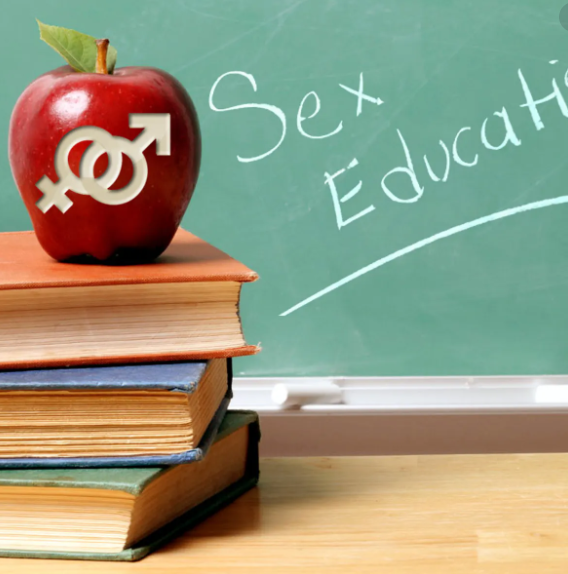
Sexuality education is not a new phenomenon in formal curricula. Sweden, a country credited as the fountain of modern sexuality education programmes, has provided this form of education for more than a century. Diverse forms of sexuality education have existed for several years in many African countries too, albeit informally.

Now prefixed with “comprehensive” , sexuality education is a curriculum-based process of teaching and learning about the cognitive, emotional, physical and social aspects of sexuality. It aims to equip children and young people with knowledge, skills, attitudes and values aimed at helping them in life.

The accepted path for doing this is by providing learners with information that is scientifically correct, appropriate to their age and development and sensitive to local cultures as well as legal provisions.

But how does this translate into the curriculum of schools? One or another element of sexuality education has been taught in Ghanaian schools since before independence in 1957. Taught under different nomenclature, sexuality education has, at all times, used an integrated approach at the pre-tertiary level.

See what others are saying about this article on twitter.

Go to twitter

We set out to study the relationship and the depth of coverage of topics in Ghana. Three regions – Greater Accra, Brong Ahafo and Northern – were sampled for the study. We looked at five themes: sexual and reproductive physiology; HIV and sexually transmitted infections prevention; contraception and pregnancy prevention; gender and sexual and reproductive health; and values and interpersonal skills. We also looked at the grades when students first started learning sexuality.

Our key findings were that disproportionate attention was being given to sexual and reproductive physiology with limited coverage of the other themes. Overall, the findings showed that pupils who studied sexuality education topics between Primary 6 (around 11 years) and Junior High School 1-3 (around 12 to 14 or 15 years) had better chances of being introduced to a wider range of the content.

We concluded that expansive coverage of sexuality education concepts depended considerably on the early introduction of students to these issues. This is particularly helpful because it underscores findings elsewhere that norms and values formed early in life tend to be more enduring than those learned in older adolescence.

Our main recommendation was that knowledge, and perhaps behavioural outcomes on sexual and reproductive health, could be better enhanced with the early introduction of sexuality education topics.

The background

Research has shown that sexuality education is linked to a number of positive outcomes. These include delays in the timing of first sexual debut, a higher use of contraceptives and safe sex among adolescents. These have a cascading effect. The most noticeable are reducing unintended pregnancies, unsafe abortions, sexually transmitted infections and HIV infections.

It also shapes gender norms in a positive way. This, in turn, minimises the likelihood of coercive and violent sexual practices.

Sexuality education has also been shown to improve decision-making skills, competencies, and respectful sexual practices and behaviours.

Many national governments, including Ghana, are embracing sexuality education in theory. But in practice it remains highly contentious, particularly on what is considered acceptable, and at what age or school level children and adolescents should learn the main concepts.

The subject continues to be a major cause of disagreement among parents, teachers, school administrators and religious leaders involved in education.

Opponents to sexuality education make a number of arguments against it. One is that it makes learners less likely to practise abstinence. Another is that it exposes them to “alien” and “Western” sexual norms and orientations (such as being gay and lesbian).

For their part, proponents point to the fact that there is no evidence that links learning of comprehensive sexuality education concepts to negative sexual practices.

Why Ghana?

Based on the positive outcomes of comprehensive sexuality education, there is a strong case to be made for its inclusion in school curricula in Ghana.

Here are some reasons why.

Approximately 14% of adolescents aged 15-19 years in Ghana have had a baby, or been pregnant. Around 43% of females and 27% of males aged 15-19 are sexually active.

Data on sexual activities of early adolescents (10-14 years) are scanty. Nevertheless, some micro studies estimate that about 10% of girls and boys have initiated sexual activities.

Prevalence and victimisation of sexual violence, especially against adolescent girls, is about 25%. For adolescent boys it is 7%.

Child marriage (measured as a proportion of women who married before 18 years) is approximately 21% in the country.

But, argue some, can’t this knowledge be passed on through other avenues?

Sexuality education provided in a school setting is considered the most appropriate because it is structured, regulated and monitored. In the absence of that, children and young people will seek information anyway – however questionable the sources.

Why early?

The age – and by extension, the school grade at which children should be introduced to sexuality education – is highly contentious.

Arguments against the early introduction in the curriculum include the need to preserve the “innocence” of children. Another assertion is that current models of sexuality education place too much responsibility on children in navigating the complex realm of sexuality.

However, an ethnographic study in British schools found that adults “imposing” innocence on children can lead to even greater ignorance.

Research shows that introducing elements of sexuality education to children before they are sexually active offers stronger impacts than if it’s delayed until they have initiated sexual activities – both penetrative and non-penetrative.

Our research underscores the fact that delaying the start of sexuality education may significantly expose children and adolescents to risks associated with sexual choices. Initiating sexual activities with little to no information is more perilous than doing so with adequate information.

Joshua Amo-Adjei is a Senior Lecturer at the Department of Population and Health, University of Cape Coast