Home Blog Page 343

Body Found In Epping Forest Identified As Missing 19-year-old Student, Richard Okorogheye

0

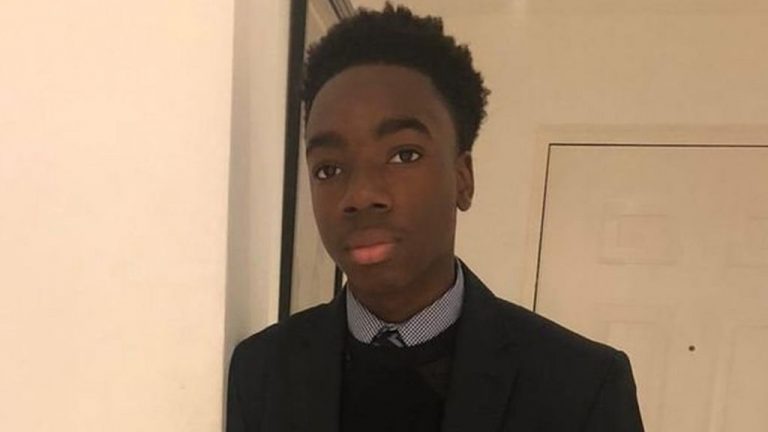
A BODY found in a lake in Epping Forest has been formally identified as missing 19-year-old Richard Okorogheye, the Metropolitan police has said.

Officers from Essex police made the discovery on Monday. The Met said the student’s death is being treated as unexplained and they do not believe at this stage there was any third-party involvement.

Okorogheye, who had been shielding during the pandemic because of his sickle cell disease, went missing from his home in Ladbroke Grove, west London, on 22 March. He was reported missing by his family two days later.

The cause of death is pending while further investigations are carried out, but a postmortem found no evidence of physical trauma or assault.

Det Supt Danny Gosling, head of the Met’s Central West Public Protection Unit, said: “My deepest sympathies go out to Richard’s family at this incredibly difficult time. This was not the outcome that any of us had hoped for and we will ensure that his grieving family are well supported by specially trained officers.

“I would like to extend my thanks to the many officers, staff and members of the public who have each played a part in the extensive effort to locate Richard.”

Richard’s next of kin have been informed and are being supported by specialist officers.

The force said Okorogheye, a business and IT undergraduate at Oxford Brookes university, took a taxi journey from west London to a residential street in Loughton, Essex.

He was captured on CCTV walking alone on Smarts Lane, Loughton, towards the area of Nursery Road and Epping Forest on 23 March, which was the last confirmed sighting.

Richard had been shielding throughout the pandemic and left home only to attend hospital appointments.

His mother, Evidence Joel, a community nurse, previously told the Guardian she had no idea why her son had travelled to Epping Forest, or if he knew anybody in that area.

He was a regular PlayStation 5 gamer, and she had appealed to his online friends to contact the police if they had any information.

Joel, 39, told the Evening Standard newspaper on Tuesday of her devastation after a body was found. She said: “We thought Richard would be found, or would just come home. But he’s not.

“My baby will never come home to his mummy again. He was taken away from me too early. The only child I have. It’s devastating and the last thing I thought I’d hear.”

  • The Guardian

Opinion: Adam Habib Is No Racist. He Should Be Reinstated Without Delay

By Thuli Madonsela, Justice Malala, Palesa Morudu, and Barney Pityana|

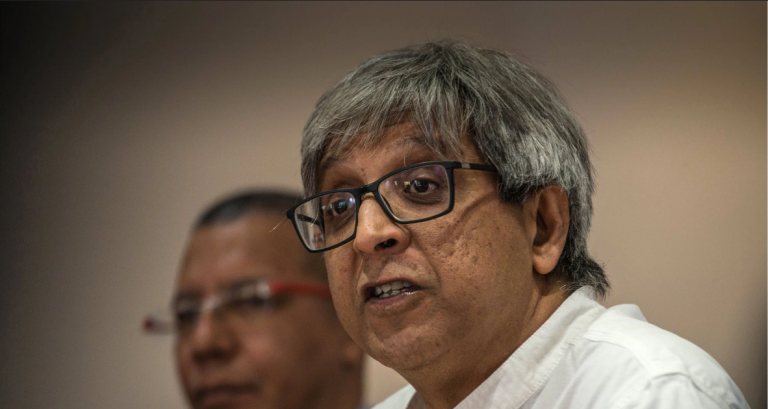
PROFESSOR Adam Habib, the new director of the School of Oriental and African Studies (SOAS) in London, was asked to step aside a few weeks ago. Habib, who is from South Africa, previously served as vice chancellor at the University of the Witwatersrand, one of that country’s leading academic institutions. He was asked to step aside after he used the “n-word” in a Zoom meeting with student leaders at SOAS.

Based on the original video clip circulating on social media, these are the facts. During the meeting, a participant read a question from another student asking how SOAS could make statements about Black Lives Matter “while underfunding the Africa Department… and allowing lecturers to say the n-word in class”. Habib responded by verbalizing the word, saying its use would be a disciplinary matter, and urging students to bring such incidents to his attention.

Several students were visibly upset with Habib for uttering the word. One student, who is black, said that Habib is not allowed to use that word because he is not black, and had not “suffered 500 years of oppression that black bodies go through every day.” Habib became defensive, and even clumsy, saying that the n-word does get used “where I come from…in context”. He also apologized for uttering the word.

All this was captured in a 1-minute video clip (edited down from the 12-minute original) that circulated on Twitter. The reaction was loud and swift. In South Africa, a vocal cohort of former Wits University students circulated the demand #HabibMustFall, recalling the acrimonious relationship they had with their former vice chancellor during #FeesMustFall campaign of 2016.

Meanwhile, across the Atlantic in the U.S. state of Oklahoma, sports announcer Matt Rowan was caught on a hot mic during a basketball game saying “I hope Norman gets their a — kicked, F — -n — -.” This after the Norman High School girls basketball team “took the knee” at the start of a game. Rowan apologized and blamed diabetes. Apparently, he becomes extremely racist when his sugar levels drop.

The two cases are instructive as America’s identity politics go viral. Rowan is evidently a straight-up racist. Habib is a black man who suffered racial oppression in his native land, was an activist against apartheid in his youth, became a professor of politics, and now heads an academic institution. Yet the lens of wokeness and identity politics filters out history and context to present both individuals in the same light.

In the United States, where the n-word has indelible connections to chattel slavery and Jim Crow, the racist announcer kept his job. Habib, on the other hand, has been forced to step aside after saying in context that the use of the n-word would result in disciplinary action. He faces an organized social media campaign that seeks his removal from SOAS, with one online petitioner likening him to a war criminal.

Sadly, this incident reflects a global trend in which much of the discourse on racism is reduced to identifying the pecking order of historic oppression.

Six years before he was murdered by the apartheid state, Steve Biko wrote in The Definition of Black Consciousness that “We have in our policy manifesto defined blacks as those who are by law or tradition politically, economically and socially discriminated against as a group in the South African society and identifying themselves as a unit in the struggle towards the realization of their aspirations. This definition illustrates to us a number of things: Being black is not a matter of pigmentation — being black is a reflection of a mental attitude….”

Biko’s world view formed part of the political tradition that united the oppressed to defeat apartheid and begin forging a non-racial future in the face of organized state violence. This tradition, which unfolded in the real world, has for many years informed Adam Habib’s world outlook. In what twisted logic is someone who was subject to racial oppression now accused of racism, told that he cannot claim his heritage, and forbidden to utter certain words because his skin is of a lighter hue?

The assertion that Habib has no lived experience of black suffering “that stretches over 500 years” would benefit from a broader reading of history. Habib’s lived experience is that of Indians in South Africa, most of whom are descendants of indentured laborers brought to the eastern province of Natal between 1860 and 1911. The legacies of indentured servitude, land dispossession, and apartheid racism have shaped South African history, and their effects continue in the present day.

Habib exercised poor judgement in verbalizing the n-word. He’s only been at the school for six weeks, and Habib and his students need time to get to know one another. But context is everything, and Habib is no racist. He should be reinstated at SOAS without delay.

Allowing the self-righteous to act as universal thought police can only lead to the silencing of all voices. If this trend is not reversed, books and films that have the n-word will have to be revised or banned. August Wilson’s Fences will have to be pulled from classrooms, along with the works of Mark Twain. Quentin Tarantino’s Django Unchained will be banned or heavily edited. Muhammed Ali’s famous quote about the Vietcong will have to be erased from history.

Universities that allow this to happen will contribute to the death of culture and knowledge production. They will no longer be places of learning, opting to become “safe spaces” where diversity of views is not tolerated — and only loud voices that claim to be the “authentic” voices of historic oppression. In a university there ought to be a level of intellectual rigor and debate about meanings, strategy and intended outcomes.

In the face of these worrisome trends, it is time for all democratic-minded people to speak up — from London to New York to Johannesburg.

Thuli Madonsela is the former Public Protector of South Africa and now Professor of Law at Stellenbosch University. Justice Malala and Palesa Morudu are South African writers based in the United States. Barney Pityana is former chairman of the South African Human Rights Commission and is a Professor of Law at University of South Africa.

SOURCE: The Medium

South Africa’s Higher Education Funding System Can Be More Realistic Without Betraying Ideals

GERALD WANGENGE-OUMA|

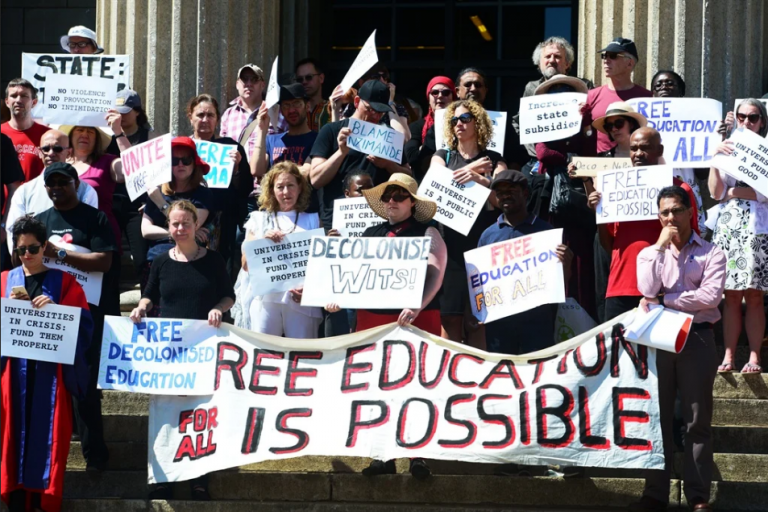
ONGOING student protests in South Africa have once again highlighted various problems with higher education funding. They boil down to challenges of affordability and sustainability.

State funding of universities is inadequate – it hasn’t kept pace with enrolment pressures and the increasing costs of providing higher education. Many students cannot afford to pay fees either.

Yet the student financial aid system isn’t a reliable source of support.

The result is tension among higher education’s three key actors – universities, the state and students (and society at large). They don’t seem to share an understanding of needs, resources, challenges and visions.

Historical context helps this understanding. As is well known, education funding systems during apartheid weren’t fair. They didn’t try to address social inequalities.

In contrast, the present funding framework is generally aligned with government’s policies of expanded access, equity and development. These worked to shift higher education from an elite system to one where the student population represents the whole society better.

Whenever a higher education system is expanding like this, many students will require financial support. Previously, students tended to come from privileged socio-economic backgrounds. So the number of students needing financial assistance has grown faster than the general rate of enrolment growth. And this will continue.

An expanding higher education system needs funding that’s aligned with the realities of the country. Instead, state funding of higher education in South Africa has been declining in real terms. Initially universities responded by looking for more tuition fees to fill the gaps.

The rising fees were increasingly funded by loans rather than bursaries. This aggravated the crisis of inequality in South Africa because it placed a burden on those least able to manage.

Fee-free higher education

In 2016 there was a presidential Commission of Inquiry into the feasibility of making higher education and training fee-free. It found that the state couldn’t afford to provide free higher education to all who were unable to finance their own education. But the government then decided anyway to provide free university education for poor and working class students beginning in 2018.

The National Student Financial Aid Scheme, which had provided bursaries and mortgage-type loans, became a bursary scheme for students from families with an annual income under R350,000 (about US$23,300). A 2019 estimate by the World Bank showed that about 90% of university students in South Africa were eligible for fee-free higher education.

Even before the COVID-19 pandemic, which has increased financial hardship for families, several analyses showed that fee-free higher education would put unsustainable pressure on the country’s public finances, especially as enrolments grew.

South Africa’s economic growth has been weak over the past decade and in 2020 the economy shrank by 7%. Tax revenue is under pressure, public debt is soaring and corruption is endemic.

Countries such as Denmark, France, Taiwan, Colombia and Indonesia have approved funding support for universities or students in response to COVID-19’s economic challenges. Unlike them, South Africa’s reprioritisation budget reduced planned expenditure for higher education, including the National Student Financial Aid Scheme. This decision is difficult to comprehend given government’s own projections of significant job losses, meaning more students would need support.

Unsurprisingly, 2021 National Student Financial Aid Scheme applications exceeded 750,000, surpassing 2020’s by more than 185,000 applications.

Addressing the affordability crisis

The economic challenges facing the country, the high levels of inequality and the high number of students from poor and working class families call for a funding model that doesn’t create an affordability crisis, both for students and the state. It’s possible to intervene in a way that acknowledges the policy goals of expanded access and equity, the country’s perilous economic circumstances and the diverse economic situations of students.

The country needs a funding system that guarantees access, affordability and sustainability. It must protect the poor through bursaries to foster inclusion and limit personal debt.

It’s a good time to revisit the recommendations of the Presidential Commission of Inquiry on fee-free higher education and training. One recommendation was to introduce an income-contingent loan system. This system aligns repayments with student earnings. Student debtors start paying only when they start earning a certain income. This protects graduates during financial difficulties.

The student protests have highlighted, again, the structural weaknesses of the student funding model and the multiple funding-related crises confronting South Africa’s higher education.

The immediate challenges need to be addressed to ensure students continue to learn and universities remain stable. But ultimately, South Africa needs to reshape the funding model for resilience and sustainability.

Gerald Wangenge-Ouma is the Director of Institutional Planning, University of Pretoria.

  • The Conversation

Western Cape Education Department Laments Huge Budget Cuts

NYAKALLO TEFU|

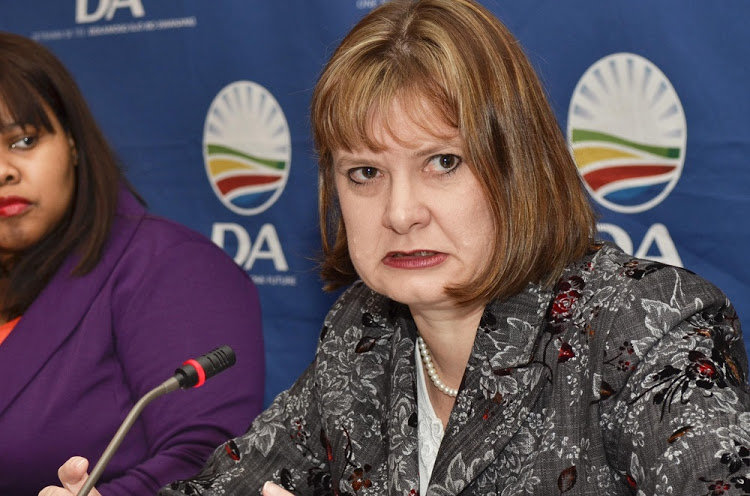
WESTERN Cape education MEC Debbie Schäfer has accused the national government of cutting provincial budgets and channelling more money to South Africa’s failing state-owned enterprises at the expense of education.

Schäfer was speaking during her education budget vote speech last week. 

She said more decreases in budget with more increases in learners will result in more difficulties placing learners and more overcrowded classrooms. 

“A prudent national government would have had reserves to deal with such emergencies. Because they didn’t, the money to keep our teachers and learners safe had to come from our funds that are already inadequate as it is. But there is always money for the litany of failing SOE’s,” said Schafer.

“Before that, we had the drought, for which we had to re-allocate R300 million, also from infrastructure, as there was nowhere else for it to come from. And of course, the above-inflation salary increases for staff decided by national government and driven by their alliance partners, has created a budget shortfall of over R2.2 billion over the past 5 years in the Western Cape. So national government negotiates what we cannot afford, we have to pay, and they do not refund us. And then we are accused of “blaming” national government when we cannot deliver as we need to and as we had planned. Yes, we do blame national government, because they ARE in very large part, to blame and we should not have to keep on explaining why we do not have sufficient resources when just about everything national government touches is a disaster.”

According to Schäfer, the Western Cape Education department has 19 000 more learners compared to the year 2020, adding that the Western Cape has 100 000 more learners than five years ago.  

“Our ongoing emphasis on retention of learners in the system adds to the problem. Retention is not just ‘desirable’, as Member Dugmore recently put it, casually implying that it is a nice-to-have that is not essential,” said Schäfer.

Schäfer, however, welcomed the R24.5 billion budget allocated to her department for the 2021/22 financial year. 

“This is a big number, but with 1.1 million learners in our schools, we have big needs! Unfortunately, this budget represents a reduction of 7.5% in our baseline allocation for 2021/22, 8.4% for 2022/23, and 8.0% in 2023/24,” said Schäfer. 

Schäfer said education was a vital determinant of the learners’ future well-being, and completing basic schooling significantly improves their future prospects. 

Schäfer added that her department’s HOD has approved more teaching posts for this year following the annual SNAP Survey to indicate the exact areas of growth and demand.

“Our Head of Department has recently approved 342 additional teaching posts in areas where the demand for places is growing quickly. This is in addition to the 429 posts added in 2020,” said Schäfer. 

The MEC for Education said the province is expected to see seven new and replacement schools due to be completed by the end of the year. 

“We have now secured the necessary land, and will begin planning for two schools – one primary and one high – in the town. The first, a mobile primary school, is expected to be up and running by next year,” added Schäfer.

Schäfer said planning has also commenced to provide a permanent high school that is expected to come into operation in 2025. 

“The high school will incorporate clean energy, green technologies and alternative construction material,” said Schäfer. 

Schäfer has also thanked her department and all staff at schools for ensuring schooling continues even during the coronavirus pandemic. 

“Despite the very difficult environment we are working in, all credit must go to our staff, led by SG Brian Schreuder, who continue to seek innovative ways to deal with the issues we face, and stretch every rand we get as far as possible,” added Schäfer.

  • Inside Education

National Shutdown Has Been Called Off – SA Union of Students

NYAKALLO TEFU|

THE South African Union of Students (SAUS) has called off the national university shutdown.

This follows a meeting with Higher Education Minister, Blade Nzimande. 

During the meeting which took place on 29 March, SAUS brought forward student demands to the minister.

The students’ union said following the meeting with the minister, there was a unanimous agreement from all university Student Representative Councils (SRCs) to call off the shutdown. 

The SAUS led a national shutdown of institutions of higher learning over three weeks ago

“The South African Union of Students (SAUS) has had a number of stakeholder engagements to advance the demands of students which were tabled to the Minister,” according to Lwandile Mtsolo, SAUS Secretary General. 

“After numerous failed attempts at resolving the issues at hand, SAUS sought other means of engagements to mediate with the challenges in the Higher Education sector,” added Mtsolo. 

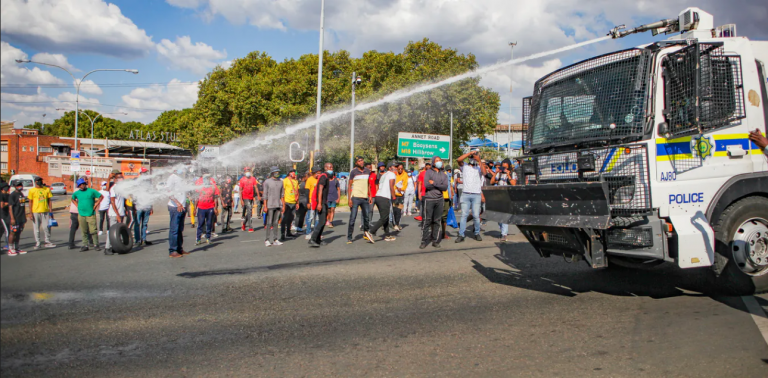
Before the shutdown, which started on 15 March, more than 500 000 students were at risk of not being allowed to register due to outstanding debt. 

Mtsolo said other student engagements included meetings with the Public Protector, the South African Human Rights Commission and the Parliamentary Portfolio Committee on Higher Education and Training to find alternative intervention mechanisms.

Following engagements, these are some of the resolutions and agreements between students and the Department of Higher Education and Training:

  • Subsequent to the call for a national shutdown, the Minister reallocated ±R7 billion back to NSFAS following earlier budget cuts. As a result, FTENs are now able to register;
  •  643 000 students who were on the verge of financial exclusion managed to register in the last two weeks through online registration;
  • SAUS was able to raise a R5 million donation from one CETA to fund needy students who are studying towards Built Environment and Critical Skills qualifications;
  • The problem of the R13 billion student debt has been successfully placed on the national agenda again, and a process has been established to categorise the debt properly so that proposals for a solution can now be tabled to parliament;
  •  A meeting between DHET, USAF, SAUS, NSFAS & NRF has been secured for the 9th of April 2021 to finalize & resolve outstanding funding challenges and registration matters.

“The South African Union of Students appreciates the support from university SRCs in responding to the SAUS call for a national shutdown,” said Mtsolo. 

Even though developments have been made, Mtsolo is aware that not all problems have been solved through consultations with the Minister.

Free education continues to remain a long term issue that the union is still addressing with government. 

“In the meantime we said let those discussions proceed while students are back in class so that we don’t lose more academic time.”

SAUS has committed to following up on these students, as universities have been allowing students to register despite students having outstanding debt. 

“Whilst the shutdown has ended, our mandate from our constituency is to continue pursuing outstanding matters through alternative mechanisms. We want to assure our students that within no time we will be visiting those institutions that are facing more problems to ensure that no student is left behind.”

“As mandated by university SRCs we will be utilizing the processes and mechanisms that have been put in place by the Minister to ensure that we adequately address all outstanding matters.”

  • Inside Education 

South African Principal Suspended After Lowering Student Into Pit Toilet to Find His Phone

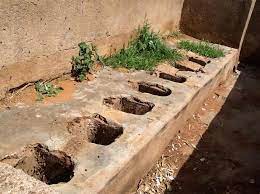
A SOUTH African school principal has been suspended after he made an 11-year-old pupil search for his missing phone at the bottom of a pit latrine. The child was allegedly lowered into the toilet using a rope and promised R200 to do so. 

According to TimesLive, the boy was teased by his peers because of this experience and is traumatised to the extent that his grandmother has said he fears returning to school. The incident gained national attention after a community member took a video describing what took place at Luthuthu Secondary School in the Eastern Cape, and posted it to social media.

In the now-viral video, the concerned community member explains in isiXhosa that the child did not volunteer to search for the phone, and further details his experience. 

“The child was given gloves, taken out of his uniform, and a rope was tied around his arms and he was lowered by other learners into the toilet,” he said. “He was knee-deep in the faeces and he used his own hands to search for the phone, with faeces going even above his hands and to his elbows.”

The principal allegedly gave the child R50 after the incident, while the phone was reportedly never found. 

Pit latrines are still common in the rural areas of South Africa, even though in 2018 the country’s government vowed to get rid of all of them following the tragic drowning of 5-year-old pupil Michael Komape in 2014. 

The eradication of pit latrines was also a key part of Global Citizen’s campaigning in the run up to Global Citizen Festival: Mandela 100, hosted in Johannesburg in December 2018, with Global Citizens taking thousands of actions calling on the private sector to help South Africa’s government in the effort.

One of the many commitments made at the festival was from the Vodacom Foundation, to help eradicate pit toilets by partnering with the government to fund its R8 billion sanitation campaign.

While a national plan was set in place to eventually ease out the use of pit latrines, non-governmental organisation, Section27, said that the country is falling behind on this plan. 

The organisation said that more needs to be done to eradicate these toilets and prioritise children’s sanitation rights. The COVID-19 pandemic has also interrupted progress towards demolishing pit latrines in the country.

In a statement from November 2020, the organisation’s spokesperson Nontsikelelo Mpulo said that the South African government’s response for safe sanitation in schools during the pandemic has not been sustainable. 

“They obtained mobile toilets for over 3,000 schools for three months. These are temporary solutions; we need sustainable solutions for safe sanitation in this country,” she said. 

According to the Daily Maverick, the money used for these temporary COVID-19 sanitation facilities was taken from national school infrastructure budgets that were already stretched, without consideration for infrastructure that had already been planned. 

Earlier this year it was reported that almost 1,600 schools in the Eastern Cape province did not have suitable infrastructure to provide children with safe and sustainable sanitation, 72 of these schools were deemed unsafe to open for the 2021 academic year. 

While no further plans have been made by the government to speed-up the eradication of pit latrines, the Eastern Cape department of education has since condemned the horrific incident that took place earlier this week and launched an official investigation. The principal, 49-year-old Lubeko Lennox Mgandela, was initially charged with attempted murder by the state, but on Wednesday this charge has changed to child abuse. 

The education department has also said that it arranged for counselling for the child and other pupils involved. 

  • Global Citizen

UAE Has Over 295,000 Higher Education Students, Says New Report

0

ABU DHABI: Administrative, Sharia and law specialists accounted for the largest percentage (42.1 per cent) of higher education students in the UAE, a new report said on Monday.

The insight is part of key figures released by the Federal Competitiveness and Statistics Centre (FCSC). Next most numerous specialists are from engineering, industry and construction, totalling 66,748 students or 22.6 per cent. This is followed by social sciences, journalism and information specialists, with 28,485 students (9.6 per cent).

Overall picture

FCSC said the number of higher education students in the country during the 2018-2019 academic year was 295,626, including 191,887 male students (64.9 per cent), and 103,739 female students (35.1 per cent).

Short vs long-term

The report also noted that the number of students enrolled in short-term higher education is 17,410 while those enrolled in bachelor’s degrees and equivalent programmes is 241,999.

Those enrolled in diploma programmes number 1,656; those enrolled in master’s degree programmes is 27,423; and those enrolled in PhD programmes is 7,138.

Women in the lead

The report showed that female students registered a higher presence than males in four academic specialities, which are education, with 6,291 female students compared to 1,670 male students; fine arts and humanities with 11,921 compared to 6,509; environmental sciences, agriculture and veterinary medicine with 612 compared to 292; and health and social services with 12,807 compared to 8,279.

According to the report, the number of academic personnel working in higher education institutions in the UAE amounted to 16,665 in the 2018-2019 academic year, including 10,709 men and 5,956 women.

  • Gulf News

Futhi Mtoba Steps Down As University of Pretoria Council Chairperson After Four-term Service

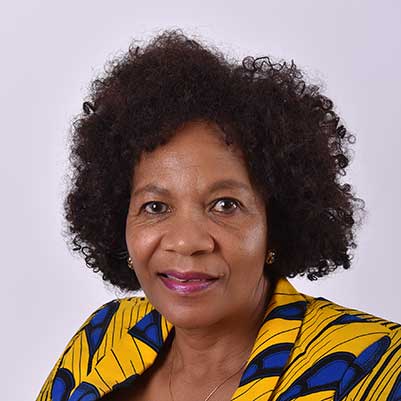
THE University of Pretoria (UP) has bid farewell to Chairperson of the UP Council Ntombifuthi “Futhi” Mtoba, who is stepping down after serving four consecutive terms as a member.

Kuseni Dlamini, Chair of Aspen Pharmacare Holdings Ltd, will take up the position of UP Council Chairperson, while Ben Kruger, former Standard Bank CEO, has been appointed Deputy Chairperson.

Mtoba is a chartered accountant who has received several distinguished awards (including the 2008 Tuks Alumni Laureate Award) for her impactful work in the field and for her outstanding leadership as a businesswoman.

She became a UP Council member in 2005, before being elected as Chairperson three years later, in 2008. As Chairperson, she was an ex-officio member of the Council’s Human Resources Committee, Standing Committee and Investment Committee.

Her term ended on 31 March 2021.

The 30-member Council is responsible for governance, policymaking and monitoring. This includes setting down guidelines relating to strategic and financial governance, and disciplinary matters; fostering a positive academic atmosphere; and formulating the University’s admission and language policies. It also focuses on three core activities – teaching, research and community engagement – and in doing so, furthers the pursuit of establishing UP as the premier university in South Africa.

“It has been a privilege to serve on the UP Council and to have been part of the University’s journey as it has flourished into a research-intensive university that has taken its place as one of the top higher education institutions in Africa,” says Mtoba, who was Chair when the University conceived, constructed and launched the Future Africa institute and campus, the Javett-UP Art Centre and UP’s Engineering 4.0 complex.

Along with the many high-ranking and influential positions she has held in both local and international organisations, Mtoba has continued to show an unwavering commitment to the academic advancement and skills development of society’s younger members. In fact, it is what initially prompted her to join the UP Council.

“Ms Mtoba’s commitment to academic excellence and to effecting significant change in the community at large through the many positions she has held exemplifies all the qualities that we value at UP,” says Vice-Chancellor and Principal Professor Tawana Kupe. “The input and insight that she has brought to the UP Council through the years cannot be overstated. I would like to thank Ms Mtoba for her years of dedicated service, and wish her every success in her continued efforts to play her part in the betterment of society.”

Influence beyond South Africa’s borders

Mtoba’s professional career started in Mthatha at WL Nkuhlu & Co in association with Hoek & Wiehelm. In 1988, she joined what was then known as Deloitte & Touche and rose up the ranks to become the firm’s first black female partner and, subsequently, Chairperson at Deloitte Southern Africa.

Her contribution to the field of chartered accounting was perhaps best expressed in her role as President of the Association for the Advancement of Black Accountants of Southern Africa, a body dedicated to nurturing emerging black accountants. During her term, she initiated the launch of the Nkuhlu Subvention Fund, which subsidised the salaries of black chartered accountants who committed to lecturing at historically disadvantaged universities, thereby encouraging them to pursue a profession in academia.

In 2009, not only was Mtoba appointed as a Trustee on the Board of the Nelson Mandela Foundation, she was also chosen as Chairperson of the National Anti-Corruption Forum. Additionally, she held the positions of Chairperson and Trustee of WDB Trust, a development programme that empowers women by giving them access to financial services, business skills, and information and communication technology training.

As a founding member of TEACH South Africa, which recruits young graduates to teach maths, science, technology and English, at schools in historically disadvantaged communities for at least two years, she focused her efforts on contributing to building a prosperous, equitable and competitive South Africa through education.

But Mtoba’s influence extends beyond South Africa’s borders. She served on Kofi Annan’s inaugural board of the United Nation’s Global Compact – a voluntary initiative that promotes responsible corporate citizenship, ensuring that business plays its part in achieving the UN’s vision of a more sustainable and inclusive global economy – and was a member of the International Monetary Fund Advisory Group of Sub-Saharan Africa, the World Economic Forum Global Advisory Council, the African Union Foundation and the B20 Financing Growth and Infrastructure Task Force, among others.

UP

OPINION | Stellenbosch University Remains Committed To Inclusive Multilingualism

WIM DE VILLIERS|

LANGUAGE – more particularly Afrikaans – at Stellenbosch University (SU) has again been hotly discussed in the media over the past while. Is there an actual problem, or are we dealing with opportunism for political gain? I believe it’s the latter, and I will be supporting this statement by relying on the facts about SU and language.

From the outset, I admit that things do go wrong sometimes. If students are being instructed not to use Afrikaans in a social context, it is wrong. It is equally wrong if students are being pressurised not to use Afrikaans in a course where Afrikaans is clearly accommodated in the course specifications. This is not our policy; it is not supposed to happen. I am sorry about it; we are investigating and rectifying the matter.

This, however, does not mean that the University is undermining Afrikaans. On the contrary, SU is doing more in and for Afrikaans than most other universities. That’s a fact.

Let’s look at more facts. Is SU an English university? No, even though we are inaccurately depicted as such. Is SU an isiXhosa university? Clearly not. We currently use fairly little isiXhosa, although we do try to develop it too as an academic language. Is SU an Afrikaans university? No, we haven’t been for a long time, and we cannot be one either, no matter how much some would like to cling to the past.

SU is a leading research-intensive university – ranked among the top 1% in the world – that pursues inclusive multilingualism. We are one of very few higher education institutions in our multilingual country doing so.

We use English as one of our mediums of instruction because we want to serve the entire population, and not only a certain portion. We are funded from taxpayers’ money to a significant extent, which means we need to be accessible to all.

At the same time, we have Afrikaans as our other medium of instruction to satisfy a particular need and demand, as far as we possibly can.

Yet this does not mean every module of every subject in every year of study is fully available in both English and Afrikaans. Multilingual learning and teaching is costly and complex. Nevertheless, when our current Language Policy was drafted in 2016, we consciously decided not to go down the route of unilingualism, but chose multilingualism instead. And that policy is being implemented.

At registration this year, 37,7% of undergraduates indicated Afrikaans as their home language, 49,2% of whom said they would prefer to be taught in English. Those with isiXhosa and other official South African languages other than English and Afrikaans as their home language account for 11,5% of the undergraduate student body this year.

These numbers reflect the diversity of our students, and the demand for tuition in Afrikaans remains significant, with 20% of all undergraduates expressing such a preference this year.

For the past five years, our academic offering in the three modes provided for in our Language Policy has remained more or less the same. In 2020, 17,8% of classes took place in parallel medium (separate English and Afrikaans streams), 63,2% in double medium (lectures in English, with a summary in Afrikaans) and 19% in single medium (English-only or Afrikaans-only lectures).

We are committed to multilingualism because it adds value and enriches students’ learning experience. As an educational institution, our approach to language is pedagogical. That means we are first and foremost concerned with unlocking and transferring knowledge, with language as the medium through which knowledge is accessed.

But language as such is not our main focus. After all, it is not the primary duty of a university, as an institution, to promote any particular language (although academic departments who offer a language as a subject do have a responsibility in this regard). We do have language promotion initiatives, such as the SU Woordfees, our support for the Woordeboek van die Afrikaanse Taal, and our co-sponsorship of the Jan H Marais prize for exceptional contributions to Afrikaans as an academic language. But our primary emphasis is on language as a medium of instruction.

Therefore, we make an effort to develop students’ academic language skills, such as through the course offering of the SU Language Centre, one of the best in the South African higher education sector. Our Language Centre also does a lot of translation, interpreting and editing work, and develops trilingual subject terminologies.

Then why did Senate, SU’s highest academic body, recently agree that lecturers could issue new learning material in English only, and not in Afrikaans as well, as provided for in our Language Policy? For a very specific reason, and only for a limited time. It only applies to the first semester of this year, and was approved because of the additional workload brought about by the shift to more online teaching due to COVID-19.

It is important to distinguish between the implementation of the current Language Policy (of 2016), and its review. The Senate decision relates to the former, not the latter. The review is taking place this year, as the policy itself requires this to happen every five years. It is a transparent, participatory process, and anyone can deliver input – both from within the University and from the broad public. (For more information, visit www.sun.ac.za/language.)

Our Department of Afrikaans and Dutch recently criticised the way in which language is being dealt with at SU, by way of an open letter in the media. It is a pity that existing communication channels at the University were not utilised for this, especially since the information requested is indeed available. Since the commencement of our current Language Policy in 2017, faculties have submitted Language Policy implementation plans twice a year, and three overall surveys have been conducted among students and staff. All this information is regularly shared and used to keep our policy implementation on track.

Still, we are a university – an institution where dialogue and debate are respected. I have invited the colleagues concerned for a discussion with management and look forward to constructive outcomes.

However, I am less positive about political parties and lobbies’ mobilisation around SU’s Language Policy. They pay no regard to the facts and are apparently oblivious to the complexities associated with implementing multilingualism at a large higher education institution. They incite, and sow discord. Are they doing this for political gain in an election year? Are they trying to canvass votes? Of particular concern to me is the polarisation this is causing. It is unacceptable for Maties, or any other university in South Africa, to be abused as a political football and punchbag.

What seems like another instance of politicking is the fact that Afrikaans is no longer regarded as an indigenous language in the new Language Policy Framework for Public Higher Education Institutions, which the Department of Higher Education and Training (DHET) promulgated in October 2020. To align with this move, the definition of official and indigenous languages from the DHET document has been incorporated into the first draft of our revised Language Policy. Yet back in 2018, in our feedback on the then draft DHET framework, we already pointed out that we strongly supported viewing Afrikaans as indigenous. All universities will also have to make allowance for the implications of the new framework. I have already brought the matter to the attention of Universities South Africa.

SU undoubtedly is an asset to the country and to all our people. This was proven yet again at our recent autumn graduation ceremonies, which marked the official end to our 2020 academic year. In extremely challenging circumstances last year, we managed to confer sought-after SU qualifications, including 270 doctorates, on 9 079 students – among the highest numbers in the country. We are proud of our contribution to human development and are keen to move forward in this manner, along with all our stakeholders.

* Professor Wim de Villiers is Rector and Vice-Chancellor of Stellenbosch University.

Women And Girls To The Front: Gender Equality In STEM For A Better Tomorrow

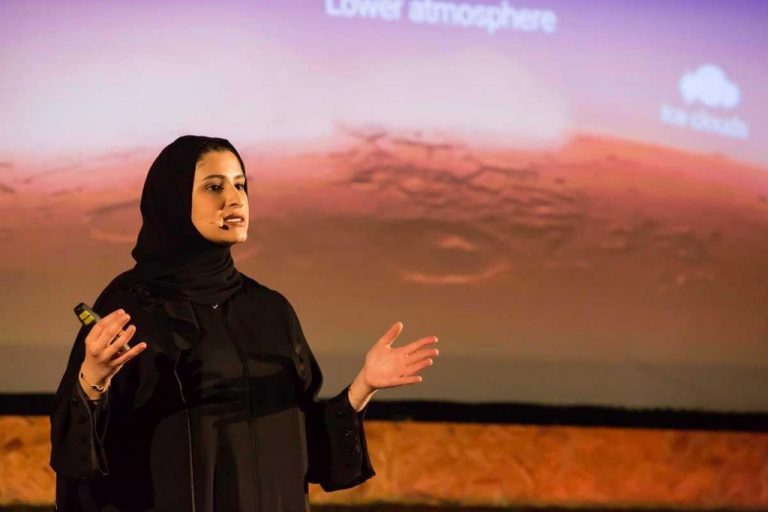
WOMEN hold up half the sky. Some years ago, Sarah al-Amiri, a young Emirati engineer, had a fixed gaze beyond the sky and towards our galaxy. “Space was a sector that we never dared to dream growing up,” she noted. 

Fast forward and al-Amiri is now the United Arab Emirates first Minister of State for Advanced Science, successfully leading an ambitious project which launched a spacecraft into orbit around Mars, the first-ever Arab interplanetary mission. This has only been achieved by four other nations, including China.

Al-Amiri contends that, “the mission is called Amal, which means ‘hope’ in Arabic, because we are contributing to global understanding of a planet. We are going above and beyond the turmoil that is now defining our region and becoming positive contributors to science”.

Throughout the COVID-19 pandemic, women in the UAE, China and elsewhere have also led ground-breaking efforts against the virus in the fields of public health, vaccines and treatments. The Hope Mission and COVID-19 pandemic highlight the potential gains to be achieved by ensuring full and equal access for women and girls in science, technology, engineering, and mathematics (STEM). As UN Secretary-General António Guterres emphatically stated, “women and girls belong in science and there is a dividend to be gained for countries that acknowledge this truth.”

Greater Participation Needed in STEM Fields

According to UNESCO, women account for only 28 percent of engineering graduates and 40 percent in computer science and informatics. This gender disparity is alarming, especially as STEM careers are often referred to as the jobs of the future, driving innovation, social wellbeing, inclusive growth and sustainable development.

Women account for only one-third scientific researchers globally, holding fewer senior positions than men at top universities. Furthermore, with the growth of artificial intelligence, automation and machine learning, there are risks for reinforcing inequalities, as the needs of women are more likely to be overlooked in the design of products and projects.

Increasing women’s participation in STEM accelerates sustainable development in low and middle-income countries, offering an opportunity to close gender pay gaps and boosting women’s earnings by USD 299 billion over the next decade. Studies indicate that girls perform as well as boys in science and mathematics, and in many parts countries outperforming them. Aptitude is not the issue. 

Gender equality in STEM acts as a powerful accelerator for the UN 2030 Agenda for Sustainable Development.  Norms and stereotypes that limit girls’ expectations need to be eliminated, while educators must motivate girls to become changemakers, entrepreneurs and innovators.

Thankfully, there are already encouraging signs of change, in both the UAE and China.


The co-authors Amb Ali Obaid Al Dhaheri (Right)and Siddharth Chatterjee(left). Photo-UAE Embassy China, 03 March 2021

Growing Equality and Empowerment in China

In China, the 14th Five-Year Plan provides new opportunities to prioritize gender equality. Central to the development agenda is a strengthening of science, technology and R&D sectors to address a transformation to a digital and innovative economy.  In China, women launch more than half of all new internet companies and make up more than half of inventors filing patent applications. The recently enacted Civil Code establishes new mechanisms for addressing sexual harassment and abuse in workplaces.

Success stories of women specializing in STEM fields should be heralded in order to empower others to follow.  As examples, Tu Youyou was China’s first Nobel laureate in Physiology or Medicine in 2015, with her discovery of a malaria therapy; whilst Hu Qiheng was a leader promoting Internet access in China, being inducted into the Internet Hall of Fame in 2013 as a global connector. 

In the private sector there are stellar mentors and roll-models such as billionaire Zhou Qunfei, who rose from a migrant worker to being the world’s richest self-made woman. As the CEO of Lens Technology, she built an empire manufacturing glass for tech giants such as Tesla, Apple and Samsung.

In Shenzhen, the private sector is now embracing its civic responsibilities, with companies such as Alibaba, Tencent and Huawei launching initiatives to recruit and promote women in STEM fields.

Rapid Progress by the UAE

The space industry is not the only sector in which Emirati women are exemplary.

According to the World Economic Forum 2021 Global Gender Gap Report, the UAE ranked first globally in four of the report’s indicators: women in parliament; sex ratio at birth; literacy rate; and enrolment in primary education.  Meanwhile, in the 2019 UNDP Human Development Report, the UAE ranks 35 of the 189 countries in the world in terms of women’s empowerment.

In terms of education, 77% of UAE women will continue to receive higher education after high school graduation, and 70% are graduates of higher education in the UAE. Female students now account for 46% of STEM subjects in UAE higher education.  Two thirds of the public sector positions are held by women, with 30 per cent of which are leadership positions.

On 30 March the UAE National Action Plan for Women, Peace and Security was launched by H.H. Sheikha Fatima bint Mubarak, Chairwoman of the General Women’s Union, President of the Supreme Council for Motherhood and Childhood, and Supreme Chairwoman of the Family Development Foundation. This Plan is not only a step in the right direction but also spearheads the vital role of women in the UAE.

For many years, Sheikha Fatima and the UAE have championed and presided over a group of specialised conferences in the Arab, international and Islamic worlds to empower women and enhance their stature.

As the UAE approaches its 50th Jubilee since foundation, it is a matter of pride that the country is making outstanding achievements and launching initiatives to empower women, surging ahead in promoting gender equality and ensuring that women play a key role in the nation’s growth.  This has earned the UAE a reputation as being among the most progressive countries in the world.

Global Gender Equality Initiatives

In March 2021, International Women’s Day was celebrated with the UN China Country Team coming together in recognizing tremendous contributions and leadership demonstrated by women and girls around the world.  Joint campaigns such as #HERstory saw the UNDP and UN Women shared inspiring stories on social media from women leaders in STEM around the world.  A workshop was launched to combat stereotypes and encourage women and girls across China to learn and excel in science and technology.

As part of the Generation Equality global initiative led by UN Women, governments, civil society, private sectors and change-makers from around the world are coming together to fuel a powerful and lasting coalition for gender equality.

It is 25 years since the UN Beijing Declaration and Platform for Action committed nations to the advancement of the rights of women. Now is the time to recommit to ensuring gender equality, especially for STEM in order to harness women’s full potential. Then women of China, the UAE and the world can hold up half of the sky, in principle and reality.

Authored by: Siddharth Chatterjee, UN Resident Coordinator in China & Ali Obaid Al Dhaheri, United Arab Emirates Ambassador to China

  • Forbes Africa