Home Blog Page 343

Science Corner: Top Pretoria Learner, Tsakane Koko, Shines At The Olympics Of Technology

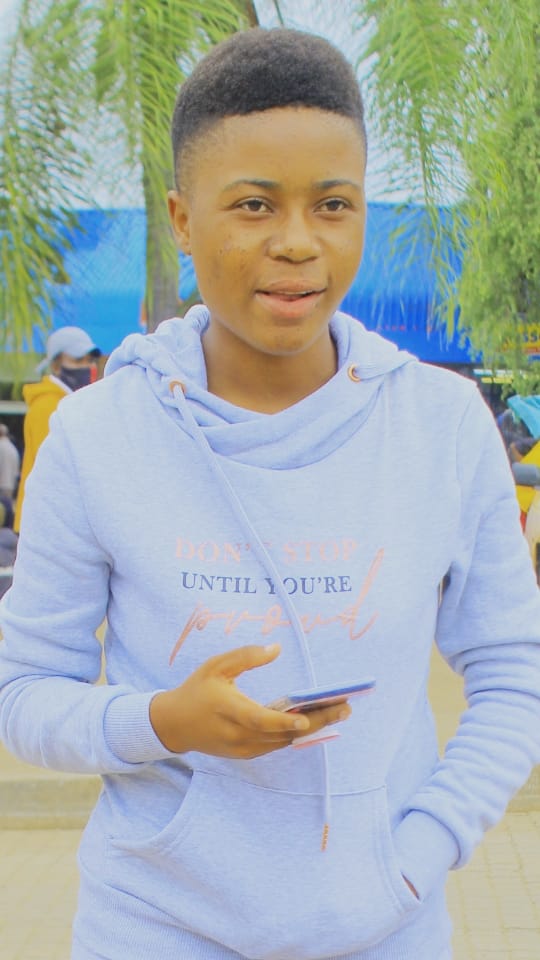
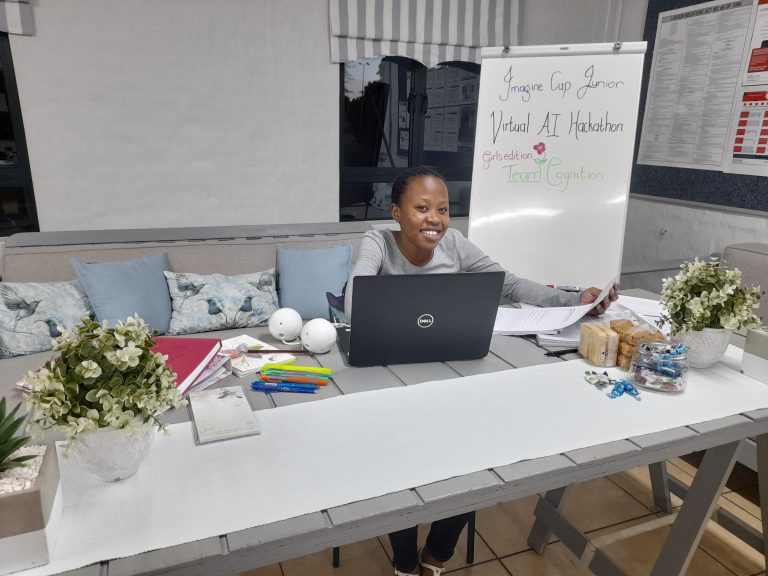
CURRO Academy Pretoria’s Grade 11 learner, Tsakane Koko and her team have excelled at the Imagine Cup Junior Virtual Artificial Intelligence Hackathon, Girls Edition, 2021.

Dubbed the “Olympics of Technology”, the Imagine Cup Junior 2021 provides students aged 13 to 18 the opportunity to learn about technology and how it can be used to positively change the world.

Sponsored by Microsoft and in partnership with UNESCO, the Hackathon challenge is a live international event where teams (of two to five individuals) compete by trying to solve real-world problems through the use of Artificial Intelligence (AI).

Koko’s team competed against 21 other countries, including Egypt, Canada, England and Croatia, among others.

This particular challenge is exclusively for high school girls between 14 to 18 years who excel at Mathematics and Computer Science and are interested in pursuing a career in AI.

During the challenge, which took place mid-March 2021, the girls were taken on a practical journey into the heart of AI, to help them develop widely applicable machine learning skills in the context of sustainability, biodiversity loss and climate change.

How the Hackathon works, is each team presents their big idea to a group of ‘investors’ in the first round.

A total of 22 teams competed and 11 were chosen to go through to round 2.

After the second presentation, Koko and her team came in at second place.

Charlotte Jooste, phase head at Curro Academy Pretoria, described Koko as a top learner, and assisted her in preparation of the challenge.

“The school was informed of the challenge, and decided to put Tsakane forward as a viable candidate – for which she was selected to take part,” said Jooste.

 Chosen just a few days before the challenge weekend, Tsakane had to quickly meet her new teammates from different Curro schools around the country. 

The team, called ‘Cognition’ consisted of Tsakane Koko, Hesme Cronje (Grade 12, Curro Heritage House), Humbulani Mudziwa (Grade 12, Curro Academy Soshanguve), Anamika Beethasi (Grade 11, Curro Waterfall) and Tahlia Bell (Grade 10, Curro Mossel Bay).

For the challenge, the team prepared a presentation with ideas to help trace and locate African Wild Dogs, using AI.

In the early stages of the Hackathon, the learners were given a tour on how the challenge will work as well as shown online demos to work with in order to get a feel for the capabilities of AI.

The next step was to take data and apply machine learning code to it. The end goal was for all the girls taking part in the challenge to design the outline of a web service that uses AI. 

Team Cognition then made use of AI to search social media posts containing any geo-tags or hashtags relating to African wild dogs or their known residents.

“Their presentation focussed on AI methods to pick up any indications in the wild dogs’ behaviour that could link to illness or other threats as well as interventions. This way the animals receive little human intervention and therefore live a more “natural” life. The team’s presentation also covered ensuring that wild dogs be protected from geological disasters or processes like droughts, floods, etc. as well as human activities,” Jooste said.

Jooste further added that the challenge gave Koko and her team mates a whole new perspective of ‘new’ jobs out there and careers that she might look into in the future.

 Koko’s father, Sello Koko, said the challenge helped learners to tackle some of the world’s toughest challenges by thinking outside the box.

“Tsakane did very well, and we thank the teachers for helping her prepare for the challenge. As a father, I am very proud of her, she is a top learner – she’s smart and works hard. This challenge was a great platform for her to challenge herself with the best learners around the globe,” he said.

  • Inside Education

Ramaphosa Sends COVID-19 Warning Ahead Of Easter Weekend

0

CYRIL RAMAPHOSA|

OVER the course of the next few days and weeks, many South Africans of faith will join others across the world in important religious observances. Members of the Jewish faith are celebrating Pesach, Christians will observe Easter and Muslims will soon start the holy month of Ramadan.
 
For the second year, they will mark these occasions in the midst of a devastating global pandemic that has cost the lives of more than 2.5 million people across the world.
 
At this moment, it is worth recalling the writings of the eminent reformer and clergyman Martin Luther nearly 500 years ago, when the bubonic plague was cutting a devastating swathe across much of Europe.
 
In a letter dated 1527, Luther writes about the responsibilities of members of the clergy and of all people of faith during a deadly plague.
 
Much of the letter is about religious duty towards the sick and the dying. But he also offers practical advice similar to the public health advice we have today on social distancing, sanitising and quarantining.
 
“All of us have the responsibility of warding off this poison to the best of our ability,” Luther writes.
 
“Use medicines, take potions which can help you; fumigate house, yard and street; shun persons and places wherever your neighbour does not need your presence or has recovered; and act like one who wants to help put out the burning city.”
 
While upholding the view that people of faith should not neglect their duty to care for the sick, he cautions against endangering the lives of others.
 
In many ways, the views expressed by Martin Luther five centuries ago echo the position of religious leaders in South Africa in the midst of the current epidemic. 
 
Faith-based organisations have been vital to our national response to the disease, not only providing spiritual comfort and guidance, but also by caring for those most vulnerable to the effects of the pandemic, including through the provision of food, shelter and other social services.
 
Religion plays an important role in the lives of millions of South Africans, and congregational worship forms a vital part of their religious practice.
 
Being able to gather for religious services is also a welcome respite from a period of great hardship for individuals, families and communities.
 
It is understandable that after more than a year of labouring under restrictions on religious gatherings that the faith community are keen for a return to a semblance of normality.
 
In recognition of the importance of congregational worship to the lives of our people, government has been engaging with the faith community.
 
I recently had an extremely constructive virtual meeting with leaders of the faith community. These leaders understand and appreciate the very real danger of a new wave of COVID-19 infections. Since the outbreak of the pandemic, religious organisations have taken proactive and positive measures to limit the spread of the disease among worshippers. 
 
In the light of these precautionary measures, a number of religious organisations have asked that some of the existing restrictions on the size of congregations be eased, especially as we prepare for Easter and Ramadan observances. Government is currently deliberating on these and other issues, and will make an announcement in the coming days.
 
Another important factor is that during the various alert levels, religious organisations have incurred substantial financial losses that threaten their sustainability. As government we remain committed to working with the faith community to find workable solutions.
 
At the same time, public health and safety must be our paramount consideration.
 
The religious community has shown innovation and initiative in the holding of worship at a time when there was a great deal of uncertainty over the trajectory of the pandemic.
 
Congregational services were held online and worshippers were encouraged to pray in their homes instead of attending services. This greatly aided the national effort to contain the spread of the disease.
 
Religious leaders played a pivotal role in encouraging public adherence to health measures around important customary and cultural rituals like burials.
 
By equal measure, our people have demonstrated their commitment to adhering to public health protocols and to social distancing. And they correctly appreciate that they must continue to avoid large gatherings .
 
We are now at a time where precaution is needed above all. The coronavirus pandemic has not been eliminated, either in our own country or around the world. The threat of a third wave is real and ever-present.
 
International experience has taught us that we should not tempt fate. Many countries have eased restrictions, only for there to be resurgences, necessitating the imposition of even harsher restrictions.
 
Faced with this reality, faith communities are encouraged to innovate in the holding of congregational worship over the upcoming Easter, Passover and Ramadan as they did last year.
 
Large gatherings, whether religious or otherwise, have the potential to spread the virus, despite the application of measures around social distancing and sanitising.
 
Over this coming weekend, millions of South Africans will be observing an important tenet of their faith. In a country that enshrines the right to religious freedom, all effort must be made to support our people in the exercise of this right. And in exercising this right, we need to make sure that we do not place the rights or the lives of others at risk. 
 
This is a principle that the religious leaders I met with fully support and appreciate. Like Martin Luther, they understand the responsibility of all people of faith – indeed of all South Africans – to observe the practical measures put in place to protect people’s health and save lives.
 
For more than a year, we have worked together as a society to contain this pandemic. Now as we work to overcome it, we need to reaffirm our shared determination to act responsibly and cautiously.
 
In doing so, we will be giving practical effect to the universal messages of hope, salvation, freedom and solidarity that will be spoken of in the churches, synagogues, mosques and homes of our land in the days and weeks ahead.

  • From the desk of the President

Why Misogyny Needs To Be Tackled In Education From Primary School

0

THE issue of violence by men against women in UK society has once again taken centre stage. Public figures are beginning to talk about the more active role that men need to play in tackling this issue. In response to recent protests around women’s safety, policing minister Kit Malthouse has called for boys to be given compulsory school lessons on respect for women and girls.

We’ve been arguing since 2018 that education is key to addressing the issue of male violence against women, based on our study of the impact of Nottinghamshire Police becoming the first force in the country to record misogyny hate crime. This is a policy that the government now plans to implement nationwide. People of all genders who we interviewed told us that education and the role of men were both key, and the younger education begins the better.

Global research on primary schools has shown that boys learn to behave in gendered ways that are reinforced by the adults around them. Teachers are a key part of this socialisation process. To change behaviour, we need to start with school.

Education needs to address a series of essential socio-cultural issues around gender, from power relationships and inappropriate language to touching and violence. The UK government, however, has been criticised for not having any clear strategy in place to do just that, which is why Malthouse’s statement is welcome.

In her book, Why Women Are Blamed for Everything, forensic psychologist and feminist author Jessica Taylor lays out some startling evidence presented to the UK Parliament’s Women and Equalities Select Committee. In secondary schools, only 3% of teachers felt confident to teach sex and relationships education.

A total of 40% of schools were found to have inadequate teaching provision in this area; 50% of children said they would not tell teachers if they were being harassed or sexually assaulted because they believed they would not be taken seriously.

Early primary school is the time where boys begin to distance themselves from girls and from behaviours stereotypically perceived as “feminine”, through put-downs and bullying. Current teaching guidelines, however, do not involve engaging younger children to think about their gender identities in any depth. They also do not facilitate detailed discussion among children on why they or their peers may engage in gender-based behaviours that are damaging to others.

Boys in the UK build their sense of masculinity in direct relation to the dominant “macho” heterosexual ideal of what it means to be man. As sociology researcher R W Connell establishes in her book Masculinities, this dominant form is imbued with the most power in society, and often translates into, among other things, language which demeans girls and their abilities, as well as violence and bullying. At school, this can mean boys controlling sports and playground areas, for example.

Later on in primary school, boys often define and display being a “real boy” through public projections of (hetero)sexual fantasies, and imagined (hetero)sexual futures as adults. This includes misogynistic objectification and sexualised forms of harassment towards girls and women. This can be a well-established part of their identities by ages 10-11, which then influences their behaviour as they move through adolescence into adulthood.

This age brings additional challenges, including increased peer pressure within a context of sexual development. The increased availability of pornography via the internet is particularly troubling, as research has shown greater porn use is associated with more sexist attitudes, behaviour and sexual violence.

What schools can do

Throughout primary and secondary school, teaching children about respecting girls and women, and about the different forms misogyny can take should be compulsory. Currently, it is not.

Teachers need to be given the space in the PSHE curriculum, and the budgetary means, to put to use the growing number of educational strategies available. The creative industries offer resources to help with that kind of conversation. Our own graphic comic, Changing Minds, is a prime example for secondary schools and universities. It brings to life everyday stories of street harassment, told to us by women in our research interviews.

Boys also need male role models. In primary schools, where there is a lack of men, male teachers have a critical role to play in calling out sexist behaviours, however subtle they may appear. They also need to draw attention to issues of gender equality with everyone they work with, so that boys can observe this in action.

The men in our research consistently reported they were either unaware that harassment was endemic, or that it had such an impact on the daily lives and freedoms of women and girls. If boys are enabled to recognise how damaging and pervasive gender stereotypes are to everyone in society, they can become allies, and call out similar behaviour among other boys – if they are backed up by adults.

Schools can also work directly with external groups, including charities run by men, whose overall purpose is to eradicate violence against women and girls. The organisation Beyond Equality provides a compelling example of hundreds of men] currently working as volunteers in UK schools to educate boys. Through honest and open discussion, boys are taught to recognise how their behaviour towards women and girls might be detrimental, the long-term damage it can cause and, crucially, how to resist it.

For behaviour to change, both education and men have essential roles to play. Our schools and teachers, as well as parents, youth groups, sports organisations, colleges and universities, need to be equipped with the tools and training needed to drive home the message that abuse of women and girls – under any guise – is completely unacceptable.

  • The Conversation

DA Calls On KwaZulu Natal Education Department To Release A List Of Suspended Educators Accused Of Wrongdoing

0

THE Democratic Alliance in KwaZulu Natal says it has submitted parliamentary questions to the provincial education MEC Kwazi Mshengu, calling for the number of educators currently suspended in the province and the reasons for this. 

This comes after the department of education in KZN finalized 12 current appeals processes relating to disciplinary cases involving educators and other staff employees in the province. 

“The misdemeanours have been described as serious and include sexual abuse or harassment of learners or co-workers, corporal punishment/assault of learners and assault/attempted assault of co-workers and other education stakeholders,” said DA’s provincial spokesperson on education, Dr Imran Keeka. 

The department found that 11 of 12 of the educators and staff were guilty of serious misconduct.  

The official opposition party said it was happy with the findings but reiterated that the staff educators must not receive a mere slap on the wrist. 

“There are, however, far too many matters that are allowed to drag on endlessly. In some instances, the perpetrators of serious offences continue to work in the same environment as the victims. This understandably causes significant anxiety and emotional turmoil,” added Keeka. 

The DA said it would continue to monitor the environment within provincial schools and it is waiting to get a response from the MEC of Education. 

“We expect the MEC to respond to these questions without delay and to provide absolute clarity in the interests of all stakeholders,” said Keeka.

  • Inside Education

Wits University SRC Raises R4m To Help Financially Excluded Students

0

NYAKALLO TEFU|
 

THE Student Representative Council at the University of Witwatersrand in Johannesburg has raised R4 million towards helping students in desperate need of financial assistance to register for the 2021 academic year

This comes amid student protests by universities across South Africa calling for free education and the cancellation of historic debt.

According to the SRC, 6 000 students at the University of Wits require urgent financial assistance. 

“The SRC will allocate money to those who are in need of assistance and those that have been financially excluded by the university,” said SRC president Mpendulo Mfeka. 

Mfeka has indicated that the fact that they have raised money does not mean that higher education institutions will see an end to protests.

The South African Union of students has indicated that students will be heading to the Union Buildings on Wednesday, 24 March 2021, to take the fight against financial exclusion to the executive. 

This after Minister of Higher Education and Training, Blade Nzimande allegedly failed to pitch for a meeting scheduled for the weekend. 

The Wits SRC said it has begun with the allocation of fees to students in need. 

“The aim is to raise R21 million and we hope the private and public sector will step in and assist students in need of financial help,” added Mfeka. 

  • Inside Education

More Than 120,000 SA Students Are Still Waiting For Degrees – Because Of Unpaid Fees

SINCE 2010, more than 120,000 South African students who have passed their courses, but couldn’t afford to settle their final fee payments, are yet to receive their degrees and transcripts.

This was revealed in an answer to a parliamentary question to minister of higher education, science and innovation Blade Nzimande.

At a single tertiary institution – Walter Sisulu University, which has some 27,000 students – more than 20,000 students have not yet received their degrees since 2010.

Together, they owe R526 million. 

University of KwaZulu-Natal: 17,840 students have not received degree certificates due to unpaid fees. Together, they owe R868 million in unpaid fees.

Central University of Technology: 12,985 students, owing R1.8 billion

University of Limpopo: 10,345 students, owing R343 million

University of Johannesburg: 7,722 students, owing R538 million

University of Fort Hare: 5,922 students, owing R286 million

University of Zululand: 5,450 students R83 milllion

Durban University of Technology: 5,155 students, owing R99 million.

University of the Free State: 4,023 students, owing R65 million

Mangosuthu University of Technology: 3,870 students, owing R75 million.

University of the Witwatersrand: 3,426 students, owing R224 million

Vaal University of Technology: 3,402 students, owing R119 million

University of Venda: 1,405 students, owing R43 million

University of Pretoria: 1,092 students, owing R35 million

Nelson Mandela University: 820 students, owing R63 million.

North-West University: 766 students, owing R19 million

Stellenbosch University: 568 students, owing R19 million

Rhodes University: 378 students, owing R15 million

University of Cape Town: 325 students, owing R14 million

Some of the biggest universities in the country – including the University of the Western Cape and Unisa – have not provided information about how many students have not received their degrees.

There are differences in the approach between universities when it comes to dealing with graduates with unpaid fee debt.

For example, the University of Pretoria will provide official transcripts to potential employers “so as not to prevent the gainful employment” of graduates who can’t afford to settle their fees. Also, almost 1,600 students with outstanding fees have entered into payment plans with the university. The University of the Free State and UCT will also send academic transcripts to employers, on request.

Stellenbosch University will also send transcripts to employers – provided students have entered into payment plans.

The University of Zululand will give students a letter confirming that they have graduated, but due to outstanding fees their certificates have not been issued.

Earlier this month, students at universities across South Africa protested after being unable to register for the 2021 academic year due to unpaid fees.

Due in part to these unpaid fees, universities now have a collective debt burden approaching R14 billion, according to the tertiary education body Universities SA.  Treasury refuses to provide money to fund this shortfall, while students are pushing to stop financial exclusion and to have their historical debt written off – leaving universities with a growing financial crisis.

  • Business Insider SA

Securing The Education Of Kenya’s Girls During COVID-19

0

THE COVID-19 pandemic has disrupted education in many countries. Similar to other epidemics – such as the Ebola crisis in West Africa which pushed about five million children out of school in 2013 – the COVID-19 pandemic resulted in the closure of schools in about 194 countries.

In Kenya there was a nationwide closure of schools between March 2020 and January 2021. This disrupted the education of about 18 million learners, with a total of about 15 million children in primary and secondary schools.

Evidence suggests that the disruptions to education by the pandemic have negative consequences on already vulnerable students, such as those living within poor households, and girls.

This threatens the great progress Kenya had made in its education sector.

For instance, overall, Kenya has achieved gender parity in primary and secondary school. This masks disparities that exist in certain regions, though – in 23 counties, more boys attend school than girls. In addition, the transition from primary to secondary by both sexes increased by 12 percentage points between 2018 and 2019.

I’m an education specialist and have done a lot of work on the education of girls and their transition to secondary school. I have concerns that the longer girls spend out of school, the more they are at risk of dropping out.

The main reasons why girls may drop out of school include poverty – which impairs the ability of the households to keep girls in school because they may need them to stay at home to work within the homes, and sometimes on farms – and opportunity costs, where households choose who to send to school. There’s also the risk – when girls are at home for long periods of time – that they’ll get pregnant as a result of gender based violence.

The impact of the COVID-19 pandemic on education may cut back on the gains that Kenya has made in gender equity and inclusion. The government needs to respond to these issues holistically, and address the well-being of girls.

Supporting girls

There are several strategies that the government must take.

For girls who fall pregnant, the Ministry of Education should encourage school reentry. It was encouraging to see that the government is working on school reentry policies not only to encourage learners to get back into the system, but to improve transition, retention and completion rates.

It’s also vital that parents are involved in strategies as they are key to supporting the education of their girls. For instance, the African Population and Health Research Center – through the Advancing Learning Outcomes and Transformational Change – is partnering with community-based organisations and local radio stations in urban informal settlements to deliver life-skills and parental counselling sessions to adolescents and their parents respectively.

This means community resources can be harnessed to respond to the pandemic and the programme has been able to engage parents in support of their children’s education.

Remote learning

The government must also encourage strategies that support remote learning, such as online technologies, even as schools reopen for face to face learning. Educators should design activities with a longer term goal in mind, rather than having short term measures.

In May 2020, the Ministry of Education put in place a three-pronged approach to remotely support learning:

  • Online learning and strengthening the Kenya Education Cloud – an online portal for the submission of content for evaluation;
  • Broadcasting of radio and television programmes for primary and secondary school levels; and
  • Access to textbooks and other teaching and learning materials in remote areas

Broadcasting through radio and television programmes seemed to be where most of the focus was as the Kenya Institute of Curriculum and Development rolled out digital learning.

These strategies can worsen existing inequalities. For instance, some students may not have access to the internet. In addition, just 42% of children report that they can access learning through TV and a further 19% through the radio. Some of the challenges that remain with digital learning include affordability of gadgets or internet; connectivity to and fluctuations of power; ability or availability of parents to supervise learning; and capacity of teachers in driving online learning.

To overcome these challenges, the government should consider partnering with the private sector to make gadgets – like smart-phones and the internet – affordable for learners. It should also actively build the capacity of teachers so that they can provide online teaching.

In addition, there should be awareness campaigns within the community that highlight the importance of supporting the education of girls, particularly during and immediately after the pandemic.

More accessible

The Kenya Institute of Curriculum Development has an education channel which provides learning through radio programmes. The government must use this to reach children who cannot make it to school. One way to overcome the challenge of access to radios would be to hold lessons communally – where several children from different households can listen in to a single radio.

The government can also learn from programmes that successfully run education projects for marginalised children. For instance, PACEMaker International develops material and shares it to schools via WhatsApp. Moreover, the PACE fellows – volunteers who act as teaching assistants – can offer learning support to under-resourced schools. PACEMaker can expand the use of fellows to reach and support girls out of school.

In conclusion, pandemics such as COVID-19 have the potential to reverse many years of progress for girls. Kenya must ensure that all girls and young people have the resources, tools and social support from the parents and communities to continue learning during this critical period school reopening and beyond.

–      The Conversation

National Shutdown: Student Protests Against Financial Exclusion Set To Continue

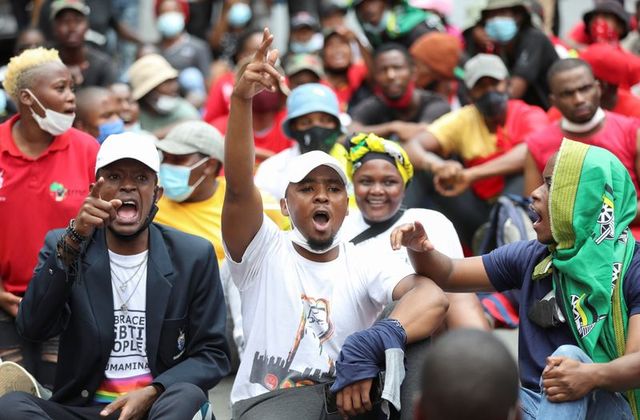
STUDENT protests are set to continue this week as students demands an end to financial exclusion and the scrapping of historic debt.

So far, students from 18 universities are participating in the national shutdown – with more expected to join the protests.

The South African Union of Students (SAUS) held a meeting this week and resolved to take the fight to the president with a march planned to head to the Union Buildings in Pretoria.

“In broader efforts to intensify the #NationalShutdown, the meeting resolved to prepare logistics to mobilize students across all institutions of higher learning, the National Education, Health and Allied Workers union (NEHAWU), the Taxi Industry through the South African National Taxi Council (SANTACO) and citizens across the country in preparation of a rolling mass action to various sites of governments including National Treasury, The Department of higher Education, NSFAS, Union Buildings and Parliament,” said SAUS Secretary General, Lwandile Mtsolo, in a statement on Monday.

“The meeting reaffirmed that the #NationalShutdown will continue from Tuesday the 23rdof March 2021 until our demands are met by government, and that institutions that are done writing examinations will soon be joining the #NationalShutdown throughout the course of the week. While the shutdown develops, the meeting mandated SAUS officials to lead a delegation to facilitate stakeholder engagementswith the Minister on the 15 demands and report back timeously.”

Mtsolo said that most institutions have joined and are in support of the national shutdown as an important program of action for the advancement of the interests of students; and that our students are protesting peacefully with no incidents of violence and arson on the side of students.

The meeting of SAUS said the few institutions that did not join earlier last week were writing examinations to finish the 2020 academic year.

Mtsolo said other institutions in KwaZulu-Natal had indicated that they were observing the planting of the Zulu King to be concluded.

Meanwhile, Mtsolo said the SAUS has met with the Public Protector and the South African Human Rights Commission on Friday and successfully presented the case for education as a human right and the right to protest.

“The meeting resolved to collectively set up a mechanism to identify and investigate violation of student rights including the abuse of power by vice chancellors through court interdicts and suspension/expulsion of students,” said Mtsolo.

  • Inside Education

SACP Calls On Government To Expand Funding Mechanisms Aimed At Providing Access To Higher Education For Previously Excluded Constituencies

THE SA Communist party (SACP) has called on government to prioritise resources to expand the number of public colleges and universities and ensure that they are adequately funded and resourced.

The SACP’s central committee meeting has also welcomed the measures taken by the Department of Higher Education, Science and Technology to reprioritise funds towards the National Student Financial Aid Scheme (NSFAS) to ensure that no deserving student is excluded.

This comes as student protests are set to continue this week as students from 18 universities participate in the national shutdown – with more expected to join.

The students are demanding an end to financial exclusion and the scrapping of historic debt.

“We welcome the Cabinet’s commitment to undertake a comprehensive review of student funding, including the issue of student debt” said the SACP in a statement.

“Over the years, including during the term of office of previous administrations, the fiscal framework followed by the government amounted to defunding public colleges and universities by cutting allocations to these institutions. The budget presented to Parliament last month is no different. The medium-term expenditure framework allocation to the National Student Financial Aid Scheme suppresses its growth, by limiting it to a mere and inadequate 1.7% for the period ending with the financial year 2023/2024.”

The central committee of the SACP said a key challenge faced in public schools, colleges and universities alike was the problem of austerity.

“Important baseline programmes in the basic education sector were also cut in terms of funding support. It is therefore disingenuous for the elements within our movement who either presided over cuts to college and university allocations to come out claiming the opposite,” said the SACP in a statement.

“Also, within the Alliance, the ANC is the only formation that welcomed the austere budget presented to Parliament last month. It is hypocritical for any leader of the ANC to parade themselves in the public as a stalwart of free education at a stroke.”

The SACP’s central committee meeting has also warned against ‘elements’ within the broader student movement not to use genuine education struggles to pursue factional conduct and political agendas.

“The ANC has a responsibility to publicly support its own policies and policy positions, instead of allowing some from within its leadership ranks to engage in opportunistic and populist postures that run against the ANC’s policies.”

–      Inside Education

Top Limpopo Student, Asnath Tinyiko Machebele, Snubbed By Universities Despite Passing Her Grade 12 Exams With Flying Colours

BENSON NTLEMO

A rural Limpopo village mother whose 19-year old girl passed Grade 12 examinations with flying colours is up in arms against the Department of Higher Education, Science and Technology, after her daughter’s application was rejected by all universities she applied to despite improving on her matric results.

Asnath Tinyiko Machebele, of Shihosana village in the Collins Chabane Local Municipality, Limpopo, who was a learner at the John Mbedle High School, sat for her Grade 12 examinations in 2019 and passed with flying colours.

She was not satisfied with her Maths symbol, and enrolled fulltime last year to improve her matric results.

But although she has passed, the Department of Basic Education has not captured her new results on the system.

Despite several appeals to fix the error, Department of Basic Education continues to feed her prospective universities with the 2019 matric results, leading to rejection of her applications.

In the 2020 results, Asnath attained A’s in Xitsonga and English, Bs in Life Orientation and Life Sciences, and Cs in Mathematics, Geography and Physical science.

She feels done badly in the 2019 results as she had B’s in Xitsonga and Life Orientation, C in English and D’s in Life Sciences, Geography and Physical science and E in Mathematics.

Asnath has applied almost in all universities and got rejected.

“Only two universities sent me letters of rejection, namely University of Johannesburg and North West University,” she said.

She said on Friday she made a late application to  Walter Sisulu university of Nursing.

She said several universities she wrote to did not respond to her application and that was because they get the 2019 results in the Department of Basic Education’s system, and not the 2020 matric results.

She lists those who never replied to her application to include University of Limpopo, University of Tshwane and Technology, and the Sefako Makgato University

Asnath, who said she intended to pursue different optional careers in different universities rather than staying at home, says that even her application for a bursary was not successful.

“NSFAS did not get my latest results and as such my bursary application was rejected,” she said.

Her mother Letty Machebele said her daughter is distraught.

“She has worked hard because she has high aims in life. Imagine after she works so hard and she gets a raw deal from the department,” she said.

Local community leader Freddy Shivambe said the community of was hoping Asnath get admitted at a university so she contributes to young people from the village who get professions.

“The more young people get educated, the better for our community,” said Shivambe.

Department of higher Education, Science and Technology spokesperson Ishmael Mnisi was sent a message on Friday detailing the girl’s plight as well as the statement of results and he promised to issue a statement but he had not done so by the time of going to press.

  • Inside Education