Home Blog Page 345

‘We Don’t Have Money To Clear All Student Debt,’ Says Dr Blade Nzimande

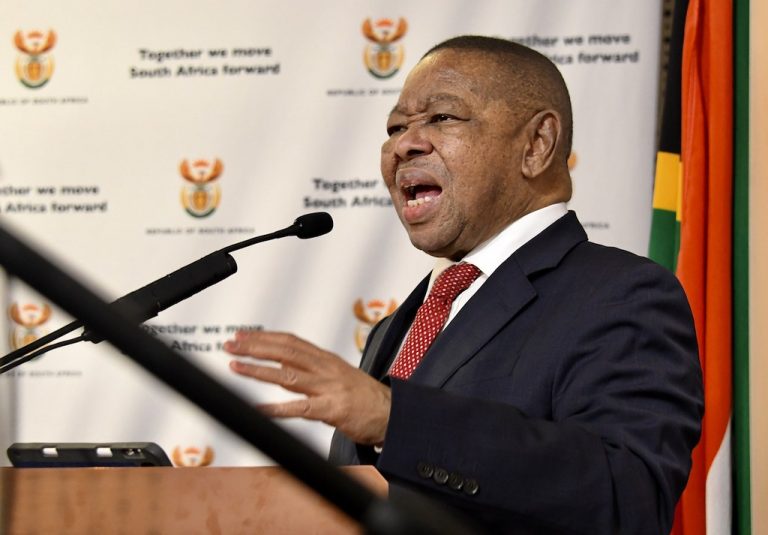
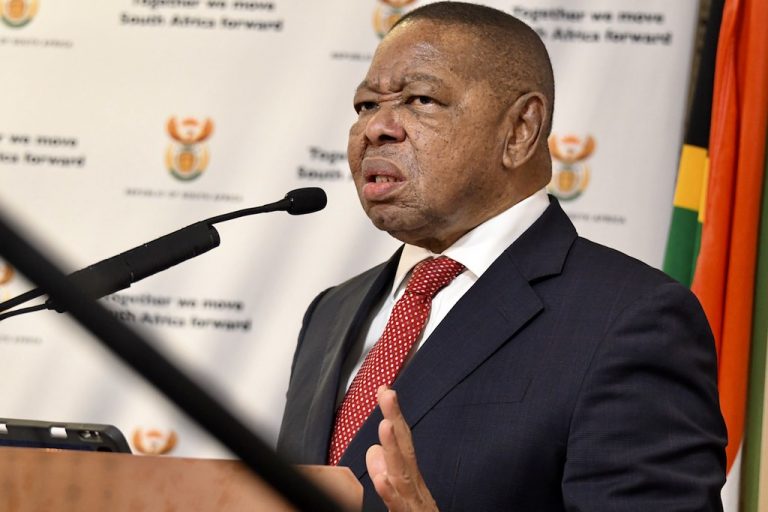
HIGHER Education and Training minister, Dr Blade Nzimande, says the department is not in a financial position to be able to support institutions to clear all the debt of fee-paying students.

Responding to the South African Union of Students (SAUS) letter of demands, Nzimande acknowledged that there are many students whose families struggle to keep up with fee payments, and many families who have also been negatively affected by the Covid-19 pandemic.

However, given the difficult fiscal situation, the minister said all government departments, including Higher Education and Training, have been subject to budget reductions in 2020 and 2021.

“I am aware that many institutions are doing what they can to assist students in need, and to allow them to make payment arrangements to be able to register, where this is possible.

“However, institutions also have to remain financially sustainable in order to continue to operate effectively, and financial decisions are made at the level of university councils.

“The historic debt of National Student Financial Aid Scheme (NSFAS) qualifying students is being addressed through a process between NSFAS and institutions.

“NSFAS-qualifying students with historic debt are able to register when they sign an Acknowledgement of Debt (AOD) form, while the process is underway,” Nzimande said.

Postgraduate funding to be addressed in policy review

Regarding the immediate provision of post-graduate funding, the minister said the department is advocating for advanced diploma qualifications to be included in the funding framework.

Nzimande acknowledged that postgraduate funding is an issue that requires attention, as there is limited funding available from the National Research Foundation (NRF).

However, he noted that in 2021, the new NRF policy considers funding of students who were NSFAS recipients.

“This is an important matter that needs to be addressed in the policy review process that will be undertaken in 2021 by the department, as outlined in my media statement on 11 March 2021,” Nzimande said.

The minister reiterated that all first-time entering students will be able to register following the commitment to reprioritise funding from the department to address the NSFAS shortfall for 2021.

First laptop deliveries to be made in April

On the provision of laptops for students, the minister said that NSFAS has placed a first order for laptops, and these will be made available to students, in line with the agreed processes, as soon as they are available.

NSFAS has indicated that the first deliveries will be made in April 2021.

Nzimande has also ordered that all student allowances be provided in March when the academic year starts, and landlords are already harassing students for payment.

“These processes are being managed by individual universities, in line with their registration dates. However, NSFAS funding to students is only released once students are registered and confirmed for funding.

“It is also important to note that NSFAS will receive its first tranche from the fiscus on 1 April 2021, in line with National Treasury’s processes.”

Institutions reminded to adhere to enrolment plan

The minister said the department works together with institutions to agree on an enrolment plan.

The current enrolment plan covers the period 2020 to 2025.

Nzimande reminded institutions to adhere as closely as possible to their enrolment plans, as they guide both the funding of the system, as well as ensure that they have the capacity to support quality education for their students.

“Should the system expand beyond the agreed enrolments it will be unable to provide effective teaching and learning. The matter relating to UNISA’s [University of South Africa] decision to reduce its enrolments based on over enrolments in 2020 is currently in the courts,” he said.

Academic records

Nzimande emphasised that students must be provided with their academic records and certificates, even those who owe the universities.

He said all institutions have confirmed that they have mechanisms in place to ensure that students with debt are able to receive academic records and certificates of completion for the purposes of further study and accessing employment opportunities.

“The department works directly with institutions, where necessary, to facilitate queries on these matters. I agree that no student should be prevented from accessing employment or other opportunities because they have outstanding fees,” the minister said.

  • BusinessTech SA

STEM: Extra Maths On A Mobile Device: A South African Study Shows It’s Not That Simple

INTERNATIONAL assessments have established that South Africa’s performance in maths and science among grade 5 and grade 9 learners has consistently been rated among the lowest worldwide. The South African Department of Basic Education and schools are therefore under pressure to improve mathematics results.

But besides the homework that schools set, it’s difficult for them to motivate learners to do any additional study of mathematics after school. Ideally, additional study would be the solution to improve the results.

In 2015, the department of basic education identified information communication and technology as a potential solution as one of the key pillars to improve the quality of teaching and learning.

This is because technology enables sharing of material, development of teachers, technical support, management of progress, and particularly learners outside school. But research argues that using mobile devices to enhance learning might easily distract learners unless there is some control and structure.

I did a case study to explore how secondary school learners could be encouraged to study mathematics after school using a mobile device and whether this would be an effective way to improve their performance in the subject.

The students had the LevelUp app installed on their mobile device. LevelUp is an educational app available for use on a mobile phone that offers free access to carriculum aligned learning material.

The app is aimed at encouraging pupils to regularly engage with educational content and subsequently create a learning habit in exchange for real world rewards such as airtime and data bundles.

My study focused on what learners thought of the app and the implications of their perceptions for the effectiveness of LevelUp. I found there were challenges in using educational apps such as LevelUp, particularly after school.

My research findings were consistent with earlier research that suggested that motivation (intrinsic and extrinsic) was crucial in encouraging learners to study mathematics.

The learners weren’t attracted to and persistent in using the application as an educational tool to study mathematics after school. This is because they were distracted by peers and by other competing applications, such as Twitter, Facebook, WhatsApp, YouTube and Instagram. Also, some learners preferred to study using books and papers, making it difficult to adapt to the online teaching method.

Learners seemed to enjoy using the electronic devices to chat and network with friends and family. Their motivation was high when using mobile devices for socialising. But it was low when it came to studying online, especially unsupervised.

Learning on mobile devices competed with other highly attractive activities associated with belonging in the group, playing games for fun or catch-up discussions with people.

The need to belong, to be close to, trusting of, caring for, and cared for by others played an important role in using social media.

LevelUp is not part of the school curriculum. This makes it difficult for learners to fit additional mathematics exercises, using the application, into their daily routine.

My research suggests that to encourage high school pupils to study online or outside school despite all the challenges and distractions, what’s needed is coordination and collaboration by school administration, teachers and parents.

Teachers’ responsibilities are to prepare lesson plans and educate the learners – they spend a great deal of time with the learners. They are therefore best placed to convey the rules and to encourage the learners to study online or outside school. Teachers should know each learner’s behaviour. Armed with this information, they can have one-on-one sessions with the learners to coach them and encourage them to concentrate.

A child’s motivation and school performance can be increased by parental involvement, especially when proper assistance is given. Children’s educational achievement has a strong relationship with parental aspirations or expectations. Children become more intrinsically motivated when parents are supportive or encourage their children to study independently.

There are potential problems in linking parental involvement to learning at home. Studying requires conceptual and creative processing. If learners are taught using a controlling approach, they are often found to lose initiative.

Parents should therefore not be excessively controlling. The school should provide guidelines on how learning should occur and it should be made clear that the teachers are still in control of the learning process.

The aim of my research was to empower school administration, teachers, parents and learners with insights that could help them to improve teaching and learning online outside school. The importance of coordination and collaboration between the school administration, teachers and parents cannot be over emphasised.

Designed and implemented correctly, information communication and technology has the potential to help resolve South Africa’s access to education and to provide quality education to many learners anytime and anywhere in the country simultaneously or on demand.

  • The Conversation

Classroom Management: School Reopening Conversation Shines A Light On Student Mental Health

WHEN teens in need call the YouthLine, a peer-to-peer crisis/help line, someone like 19-year-old Emma Cooper answers.

They could be calling about a number of things — from family or relationship issues, to mental health concerns, to contemplating suicide — but when they reach out to YouthLine, there’s someone they can relate to on the other end.

“There’s so many specifics about growing up, with everything that’s going on,” Cooper said.

“Even if we don’t know how to solve the problem better than the person reaching out, it’s still a mutual understanding.”

In the last year, Cooper, a lead volunteer for YouthLine, has heard a lot about COVID-19 and its impact. She’s heard from youth who tested positive for COVID-19, and were afraid to tell people they’d been in contact with. Some were dealing with anxiety about the virus and possible risks to family members.

She’s also heard from students struggling with school, or problems at home.

“Stressors of online school not being super accessible to people, or having a really hard time staying engaged,” Cooper said.

“A lot more contacts about people struggling being stuck in the house with their families, and that causing extra tension.”

Last year, YouthLine had more calls than ever before — 28,387 “contacts,” an increase of more than 8,900 from the year before. That number has been increasing for the last five years in general, but Cooper remembers an uptick when the pandemic started.

“There was definitely a change in what people are reaching out to us to talk about,” Cooper said.

With school still mostly remote in Oregon, students have been isolated and disconnected from their teachers and peers. In the ongoing, contentious conversation around reopening schools, advocates for returning in-person cite anecdotes about suicide or attempted suicide. At this point, there isn’t really data to show an increase is happening. Data published by the Oregon Health Authority shows there were fewer suicide deaths in 2020 compared to 2019, and fewer suicide-related visits to emergency departments and urgent cares for young people compared to 2019. But students are struggling. What’s unclear is whether reopening schools is the answer.

Gov. Kate Brown has often pointed to student mental health as a reason to reopen schools. In a statement to OPB, Brown’s deputy communications director Charles Boyle said the governor’s office has heard “compelling feedback” about challenges students have faced during the pandemic.

“[T]eachers and educators in schools are often some of the first people to notice and identify child abuse, neglect, and when a student needs help from behavioral health professionals — something that’s much more difficult when teachers and students are not in schools,” Boyle said in a statement, pointing to the importance of counselors and other specialists.

“The educational, social, emotional, mental and physical health of so many students is tied to their schools and to the personalized attention and support that educators provide.”

With Brown’s March 5 announcement to reopen schools, that help may be more accessible for some.

Emily, a 16-year old student at Lakeridge High School, says she and her friends check in on each other constantly. A recent classmate’s death by suicide has led to increased conversations around mental health and depression.

“Social isolation has been the cause of many of my mental health issues in the past year, as well as being in a whole new routine,” Emily said.

“I finally realized that I have anxiety,” said Alyssia, a 16-year-old student at Lincoln High School in Portland. “At one point in the year I had multiple breakdowns within a single week.”

Alyssia said she has joined a mental health class at school, and started an organization to teach elementary and middle school students about mental health.

Parker Sczepanik, assistant director of YouthLine Outreach and Education, says she sees the pandemic impacting youth who were struggling even before the pandemic.

“I think there’s a really large misconception that COVID equals mental illness, or COVID equals suicide,” Sczepanik said.

“What we’re seeing with our contacts on YouthLine is that COVID is intensifying those feelings, and intensifying the mental health challenges we’ve already been dealing with.”

Many youth are struggling because schools are closed. Others are thriving in distance learning.

For Sczepanik, one thing is clear from her classroom visits and outreach to youth: Students don’t have the direct support they used to have available every day, including trusted adults or close friends.

“Being out of school is definitely hindering their ability to access the supports that have maybe been really present for them in their lives,” Sczepanik said.

It can be more difficult to ask for help in a virtual school setting.

“It’s not as easy to linger in the hallway, and set up an appointment with your counselor, or go see that math teacher you really really like.”

But there is help, and support, whether through school resources, or through places like YouthLine.

At YouthLine, Sczepanik said volunteers don’t use “tips and tricks” to help the youth they talk to. They help them figure out for themselves how to cope and manage.

“We see a lot of contacts finding their own way by the end of the conversation, which is so hopeful to see them be able to recognize that this is what they need,” Sczepanik said.

Emma Cooper is a suicide attempt survivor herself, and she uses her own lived experience in her conversations with the people who reach out to YouthLine for support.

“I believe in peer support so strongly, Cooper said. “I think lived experience and the perspective of lived experience is so important.”

She recently shared her story as part of an MTV documentary called “Each and Every Day,” which featured young people from around the country who are suicide attempt survivors or have experienced suicidal ideation.

https://www.youtube.com/embed/3bMK5z0Y17A?feature=oembed&enablejsapi=1 “One of the biggest things I took out of my experience is I always wish that people would’ve just trusted me, or trusted my word, or just listened to me,” Cooper said.

“I tried to bring that knowledge into my conversations with other people and try to empower them to come to their own conclusions about what’s right for them.”

In Bend, school is in session, and counseling is too

It’s been weeks since high school students in the Bend-La Pine schools have been back to classes in person. The largest Oregon district east of the Cascades has its oldest students come to school two days a week.

Rayne Cedergreen is a student success instructor at Bend Senior High. The job is a new one in the last year, and meant to support mental health needs of students.

“It’s new and exciting, and the timing could not be more appropriate,” Cedergreen said.

Cedergreen was just getting started in the role when COVID-19 shut down schools last March. Like many educators, she worked to keep students engaged in school both academically and socially.

“They are so phenomenal in terms of the way that they continue to move forward and adapt and grow during difficult circumstances,” she said.

But her students have felt disconnected, and isolated. Like Cooper and YouthLine, Cedergreen said she didn’t use any special “tips or tricks” when it came to offering support.

“There was nothing miraculous that we were doing as a support team,” Cedergreen said. “Often it was really just helping the students to tap in to that inner strength and keep pressing on even when it was really difficult.”

Even as the uncertainty over the pandemic’s end date continues.

“That uncertainty is really particularly difficult, I think for young people, because their frontal lobe is really not as developed as an adult,” Cedergreen said. “Being able to, think of those things in a rational way, is more challenging and they’re really in that emotional part of their brain.”

Now, as an educator at one of the largest districts in the state with high school students returning to school, Cedergreen can see how in-person contact has been beneficial.

“They need that feedback, that regular interaction, and they need the level of support that they can get by being in the building,” Cedergreen said.

But it’s been an adjustment. Cedergreen said the school continues to assess what social emotional skills students need, and help them with what they’re going through. At her school, staff are working on lessons to help students build skills like mindfulness and emotional regulation.

At the same time, she said it can be hard enforcing COVID-19 regulations like keeping students six feet apart from each other.

But she’s seen attendance “highly above” what it was before, including for students who were typically disengaged.

Cedergreen said she also has a deeper relationship with her students now — she’s more vulnerable and authentic in conversations. She hopes that continues.

“I am very transparent about my feelings about all of this because I think it helps for them to have that model — that this is a struggle for adults too, and we can have a lot of hope and be challenged,” she said.

For Summit High School student Hannah, she’s back to some in-person school. She enjoys seeing her friends in class, but “there’s also a lot of downsides,” she says, including anxiety and students testing positive for COVID-19. Summit recently reopened after closing for several days, because of a COVID-19 outbreak.

Some students in Bend are choosing to stay home. Cedergreen said she’s grateful a district like hers offers that option.

“There’s a tough balance between social and emotional health, physical health … everybody’s circumstances are really different,” Cedergreen said.

Lakeridge High School student Emily said a return to in-person school would mean additional stress and a disruption to her current school routine.

“We won’t really be able to interact with our peers or teachers in the same way,” Emily said.

Additionally, she’d like to see her school district, Lake Oswego, take student voice and feedback into consideration.

The reopening conversation continues, with some folks ready to go back and others wanting to wait.

For those who help young people work through their stress and anxiety when it can feel overwhelming, the pandemic has opened more discussion of mental health — and that’s a good thing.

“Everyone has struggled with their mental health at some point…” YouthLine volunteer Emma Cooper said.

“Just opening up a conversation about mental health however you can, wherever you can, is so important, and something everybody can do.”

– OPB.com

Students At Free State Institutions Of Higher Learning Vow To Continue Protesting

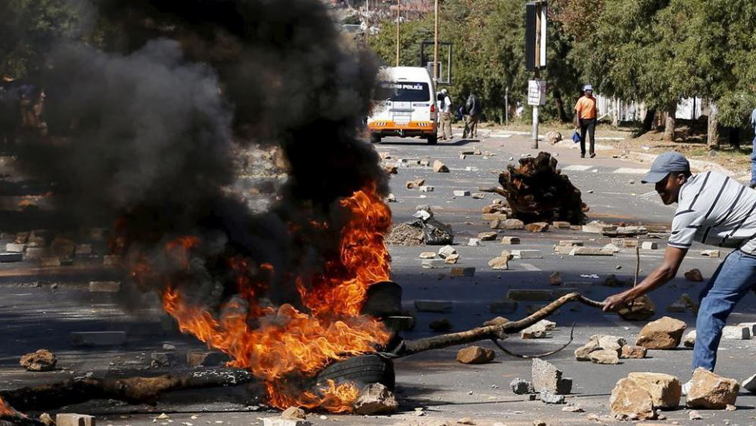
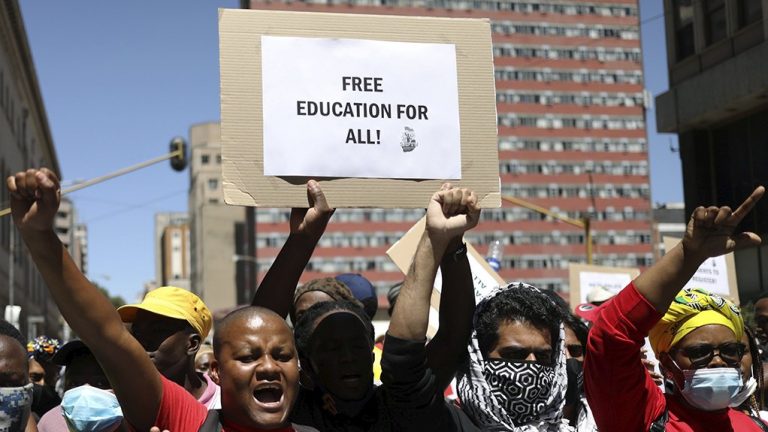
STUDENTS from various higher learning institutions in Bloemfontein have vowed to continue with their protest action until the national government agrees to their demand of making higher education accessible to all deserving students, SABC News reported on Monday.

Students from the University of the Free State, the Central University of Technology, and Motheo TVET College in Bloemfontein say they will continue to protest until all student issues are resolved.

Traffic came to a halt in the Bloemfontein CBD as Motheo TVET College students marched from the college premises to the premier’s office to hand over a list of demands. The students are accusing the college management of, among other things, not providing them with the necessary tools while they are expected to study from home.

The students also want the institutions to help speed-up the distribution of National Student Financial Aid Scheme (NSFAS) funds.

“We are gathered here as students to address the fact that the management is corrupt, they promised us laptops, results, and NSFAS money but we still have not gotten one of those. The problem is whenever we send our problems to them, to SRC or to the offices they are swept under the rug. They are not being adhered to; we have to adhere to COVID-19 measures. They promised us that we will use laptops and computers but there’s no space and we come from different backgrounds. These students don’t have enough money to buy accessories, data, and textbooks,” says one of the students.

The Students’ Representative Council (SRC) at the University of the Free State is calling for the resignation of the institution’s Vice-Chancellor and Rector Professor Francis Petersen.

SRC President, Katleho Lechoo, says they will deliver a memorandum of grievances to the university management. Lechoo says they will continue protesting until their demands for students to be registered and have their historical debt cleared, are addressed.

“Our issues are many,  number one is the arrogance that is portrayed by the management of the University of Free State Professor Francis Peterson included and of course we are fighting ranging issues as far as academic exclusion and financial exclusion, access to campus to enable our students to register because the online system has proven from time to time that is not working.  So, we are saying as the Student Representatives Council, it cannot be business as usual while the primary stakeholders of our institutions are suffering,” says Lechoo.

The SRC at the Central University of Technology says they will continue to try to engage with management amidst resistance. Interim SRC President Moses Ntonyane says they have sent an email to management last week to request to meet with them over issues affecting students.

“We have said imposing the upfront payment on students is an opportunity for criminals to take money from students, because the criminals would come to a student an say,’ give me a thousand rand, I will help you register for free. Give me four thousand I help you register for free’. With that being said we are saying as the call of SASCO national and EFF student command, we are going to comply with the call of the structures I’ve mentioned.”

The University of the Free State’s Vice-Chancellor, Professor Francis Petersen, says a permanent solution to student funding should be found in order to move forward.

“But one of the things that we should certainly bring across, I presume some other regions have, is to say how can we look at a sustainable student financial model. Because we can’t have every year the disruptions at higher education institutions and you can’t have somebody that is academically qualifying and they don’t have money to study and they’re not given the opportunity to study because that is not fair.”

Protests are expected to continue throughout the country.

OPINION| Sports Creates Equality And It Starts At School Level

JACOBINA TANGI UUSHONA

THE month of March is when celebrate International Women’s Day, frankly getting one day in March is not enough in my opinion.

We celebrate women in business, women in technology, women who work at home raising a family, women in politics and women in sports. It is the sporting aspects that I am interested in as I believe and I know it to be true for me; that sports is an enabler, equaliser and can drive you to achieve things you never thought possible.

We look at Serena Williams and marvel at her being the ‘Greatest of All Time’ (GOAT), not just in the female category. She’s arguably the ‘greatest’…full stop. Like so many other women, she inspires me and gives me a sense that I can achieve anything. Just because boys, men and even girls and women might laugh or make comments about my sporty clothes, my ‘unfeminine’ basketball shoes, doesn’t mean I should listen.

I also don’t have to rise above it and ignore them. That time has passed. I call them out on it and ask them why they act like that, the answers and replies that I get are never persuasive enough for me to hang up either my tracksuit or sneakers. They push me to achieve more.

I came to sports at a relatively young age and it was a perfect outlet for all the excess energy I had, having always been a bit like a dynamo, so much energy and nowhere to expend it. Basketball proved to be a great outlet, where I could learn and start to combine skills that I never knew I had. It gave me a sense of belonging, pride and a feeling of power.

After lots of hard work I was able to develop my ‘mad’ skills and become a starting player. This gave me so much confidence, not just as an athlete, I knew I could achieve things off the basketball court as well. It led to taking my academic career more seriously as well. It is true what they say; ‘healthy mind, healthy body.”

This is where we get to the point where I am saddened to not see other girls follow the path of growth through sports. Rather they hang around, saying they hate sports, or getting sweaty, don’t believe they have the skills or use a myriad of other excuses not to engage in sporting activities. There is a change coming, I see the eagerness with which girls participate in running drills, doing exercises and play basketball at Basketball Artists School.

The place that has nurtured and help me grow into the young confident, smart and athletic woman that I am today. However, this is not all, the Ministry of Sports and the Ministry of Youth and National Service are promoting physical education and school sports. They are drafting the Integrated Physical Education and School Sports (IPESS) policy right establishing a national framework on how PE and school sport should be implemented and have joined forces with the German Development Cooperation and even the private sector has got on board as sponsors. Green Enterprise Solutions is a major sponsor of this vital project to provide access to games and sports for all learners, irrespective of their level of ability or talent.

This includes young girls and women as well, no one gets left behind or gets to idly sit on the sideline. This programme will hopefully uplift, engage and motivate other young girls. Creating healthy, smart, sporty and well-educated women.

There will come a time when we celebrate and applaud women every month and every day and not just on 8 March. Until that day is here I will keep advocating for women and girls and promoting sports as the way to enhance their development.

  • Namibia Economist

SASSETA Grants Universities South Africa R10m To Clear Away Tuition Fees Debt Of Senior Students

0

THE Safety and Security Sector Education and Training Authority (SASSETA) has made a grant of R10 million to Universities South Africa (USAf) as a contribution to clearing off student debt that could otherwise prohibit some underprivileged students from graduating in 2021.

Thamsanqa Mdontswa, the Chief Executive Officer of SASSETA, said the R10m will be disbursed through USAf, the representative body of public universities.

USAF will, in turn, consult with its member institutions to identify the beneficiaries among academically performing but financially challenged students.

Thereafter, USAF will, together with SASSETA, distribute the bursaries to the most deserving of these identified students.

“Depending on the size of the outstanding debt we estimate that we would be able to assist approximately 200 students to graduate and become economically active citizens,” said Mdontswa.

Commenting on this grant, USAf’s CEO, Professor Ahmed Bawa, said students’ struggle with tuition fees is a perennial problem.

While assistance would ordinarily have gone a long way, SASSETA’s intervention now could not have been timelier, considering the devastation that CoVID-19 has brought to the economy, people’s livelihoods and families’ disposable income.

“Words can therefore not describe our gratitude and appreciation for this generosity and act of compassion,” said Professor Bawa.

“Every individual student freed from unnecessary worry is enabled to focus on learning, which is the primary purpose of being at a university. We therefore appeal to similar organisations and corporate entities to come to the aid of our students in these difficult times. Our young people need society’s intervention now, more than ever.”

According to Dr Linda Meyer, Director: Operations and Sector Support at USAf, who is leading USAf’s fundraising drive in support of universities, her department will begin to liaise with Financial Aid Offices at USAf’s member institutions, shortly, to identify the R10m beneficiaries. In addition to the hard grants disbursed, SASSETA will, starting in 2021, also sponsor up to 50 fresh LLB graduates’ practical vocational training within universities’ Legal Aid centres.

SASSETA’s support, a pilot project for 24 months, will be limited to the graduates’ stipends for the duration of the practical vocational training period.

The outcomes of this project will enable SASSETA to determine the way forward beyond 2022.

SASSETA and USAf have previously partnered in aid of especially students who lie outside of the NSFAS threshold in annual family income of R350 000.

In June, 2020, 77 students pursuing degrees in the fields of Law, Psychology and Social Work received much-needed relief when SASSETA paid up their tuition fees for the 2020 academic year.

In 2020 alone, SASSETA awarded USAf R4,9m, R5,4m and R1,9m in grants and bursaries.

The R10m just secured brings SASSETA’s total contribution to the plight of university students to R 22,2m in nine months.

  • USAF

Wits Protest: Amnesty International SA Calls For Ban On Use Of Rubber Bullets

0
AMNESTY International South Africa has called for the banning of rubber bullets. This comes after 35-year-old Mthokozisi Ntumba died during Wednesday’s Wits protest.

Police are alleged to have shot the victim with rubber bullets meant for protesting students.

Previously, Amnesty International said in its report about the FeesMustFall protests that while some of the protesters were not peaceful, the police at times responded with excessive use of force, including firing rubber bullets at close range at students and supporters when force was neither necessary nor proportionate.

“In Johannesburg a student leader who had tried to speak to the police, but whom they turned away and who then turned to walk back to join her colleagues, was shot in the back 13 times with rubber bullets, and a student who tried to help her was also hit by rubber bullets,” said Amnesty International SA.

“In Durban another student was shot in the leg by a rubber bullet after she filmed a police officer assaulting a student.”

Meanwhile, President Cyril Ramaphosa said the events that took place at a student protest outside Wits University are deeply disturbing.

He has condemned the killing of Ntumba during the protest.

“As a country, we are today mourning the tragic death of Mr Mthokozisi Ntumba during the course of the protests. We extend our sympathies to his family and his friends. The circumstances that led to Mr Ntumba’s death must be thoroughly investigated and the law must take its course. All people in this country have a right to peaceful protest, and it is the responsibility of this government to ensure that this right is protected,” said Ramaphosa during the debate in the National House of Traditional Leaders in Parliament, Cape Town.

“As a government we have made significant progress in ensuring that young people from poor households – in urban and rural areas – have access to higher education. We are keenly aware of the challenges facing students across the country and are hard at work to find sustainable solutions. Through engagement and dialogue, I am certain that we will be able to take forward the work that has already been done to open the doors of learning to all.”

Higher Education Minister, Dr Blade Nzimande, said his department has requested an explanation regarding the death of Ntumba.

  • Inside Education

OPINION: Six Moves To Unmask Basic Education In South Africa

ROUAAN MAARMAN

WE should congratulate the disenfranchised families, learners and school communities who had to face the daunting challenges of 2020 without access to the internet and devices, challenging living and schooling conditions, uncertainty and realities most of us don’t even know about.

At the same time, we have to spare a thought for those learners who had dropped out of school amid their current challenges. 

Although the National Senior Certificate (NSC) results are the barometer for success at the end of Grade 12, it can be misleading to use it as a yardstick for the overall state of the schooling system. It is but one indicator.

Despite the acceptable achievements, we however, have the responsibility to remain critical towards the Department of Basic Education (DBE) and government in general for lacking strategic vision for the schooling system as Covid-19 cannot be blamed for all challenges and the drop in pass rates for Grade 12. Some provinces experienced an almost 10% drop in the pass rate. 

Many problems existed long before the pandemic and resultant lockdowns. For example, the throughput rate of the 2020 class is only 44,1%, meaning that of those learners starting school in 2008, this small percentage passed matric in 2020. 

The reality is there are many obtrusive and persisting challenges in the basic education system. Although well documented, these challenges are being marginalised by the DBE in the quality education discourse in South Africa. 

In the same way, for instance, the pre-COVID challenges remain, and the performance contours still favour the privileged of our society, as an analysis of the 2020 NSC results will demonstrate. 

This is where I believe the ‘masking’ of basic education is taking place. The pandemic should not distract from the progressive thought to restructure the basic education system towards life-worthiness, nor can it be purported as an excuse not to attend to the challenges facing us.

Metaphorically it is time to ‘unmask’ this convenient masking and grab the opportunity to reimagine a schooling system to really change learners’ lives when in school and after completion of Grade 12. 

I suggest six immediate moves, underpinned by research done over the last 10 years across the schooling sector, through the lens of real freedoms (capability approach). These moves will imply that we keep the good practices, stop the debilitating practices and start new practices:

• A revisit of the policy, administration, teaching structure and support services of the education system is well overdue. This exercise should direct and, where necessary, redirect the overall movement of the schooling system. As an example, I doubt if the 23 mission statements of the education system are all still valid. With due respect and admiration to our political and educational thinkers of the 1990’s, society has changed in ways we could not have imagined 25 years ago. There are too many vague aspirations encapsulated in these mission statements, too little connection with the current realities of school communities and a lack of a functional machinery to implement and drive it efficiently. Such a review has big implications for the stakeholders as it must pervade the total education system and can be time consuming. 

However, best practice indicates that such a review should be done once every decade.

  • We are faced with the conundrum of the quality education rhetoric in the schooling system. Without a shared understanding of what we regard as quality education in the schooling system, I believe that quality education will keep evading us on a basic level. To my knowledge, there is no shared understanding of quality education, and therefore, we are experiencing schooling in different worlds in the same public system. Such a shared understanding should first be conceptualised nationally, and the consultation process should be cascaded down into the provinces, regions, districts, circuits and schools. Vertical and horizontal consultations must characterise the conceptualisation, and indicators to underscore this understanding should be framed in a way to support progressive teaching and learning and not morph into a measuring exercise only. 
  • Striking a healthy balance between tried and tested best practices in education and educational advancement should be encouraged in the schooling system. For example, the most advanced calculations still require a basic understanding of related concepts and formulas. In the same vein, teaching methodologies move and vary on the continuum of avoidance-containment-and risk-taking. Teachers understand this reality very well and must be given the freedom to move around this continuum to foster the best possible learning experience for learners, expanding on freedoms that are contextual, but aligned to the healthy balance and praxis we are pursuing. 
  • A deep analysis of the schooling system indicates a lack of authentic innovation in the leadership and management of the system on various levels. If the systemic assessments we participated in for the last 10 odd years indicated that learners in smaller classrooms perform better across the spectrum of contexts, why are we keeping foundation and intermediate phase classrooms so big? Some calculations indicate that if we appoint two more foundation phase teachers, one language teacher and one mathematics teacher in the intermediate phase of large primary schools, we can bring down these classes to under 30 learners per class. Using the ‘masking’ excuse of resources is not holding anymore, and a country serious about improving these three key performance areas should do what is necessary to ensure improvement. All other efforts over the last 25 years had very little impact. Time to innovate smartly. 
  • Stopping the obtrusive debilitating practices that emanate from outdated policy directives should start (with immediate effect). We cannot allow more learners in our system to be subjected to such practices. Global research in language development clearly shows that learners should switch to a second (foreign) language for teaching much later than Grade 4. Moving into Grade 4 is such a sensitive experience – as learners move from the foundation phase to the intermediate phase, new school subjects are introduced, the time-table changes dramatically and pedagogical expectations are high, even for the Grade 4 teachers. Expecting almost 80% of our Grade 3 learners to switch has proven not to serve them well at all. Many assessments conducted, provincially, nationally and internationally, indicated that this practice haunts our learners for the rest of their schooling years and, I would argue, even beyond Grade 12. I am using this example as it pervades the vast majority of our schools. Many more come to mind, e.g. the progressing policy, appointment of teachers, lack of transformation, the worthiness of the curriculum, the articulation of subjects, the target-setting exercise to assessments, the two schooling systems within one public system, etc.
  • Lastly, the pandemic has shown that science and research should lead the way forward. The DBE needs to strengthen all its national and provincial directorates to lead the schooling system into the future. All the research being done in faculties of education should be available to the DBE, and a nexus should be established to inform provincial and national leadership. Research advisory bodies (RABs) in each province might be a good way for researchers to stay independent and serve the country in a structured way. The configuration of these RABs must be led by joint teams of the DBE and research entities and higher education faculties.

In conclusion, we have to realise that the pandemic provided us with immense opportunities to respond intellectually to our temporal and spatial realities. Meaningful engagements should guide the schooling system to generate political will, and recognise and exploit the importance of creativity, re-imagination, self-regulation, reflection and selflessness. Our moral consciousness must underscore our efforts to become trusted partners in sense-making for our youth’s future, and I believe these six moves will start to reshape the destinies of our learners and their families.

ABOUT AUTHOR|

Professor Rouaan Maarman is the Deputy Dean for Research and Postgraduate Studies at the University of the Western Cape’s (UWC) Education Faculty.

Nzimande Slammed For Saying Zuma’s Announcement Of Free Higher Education Caused Problems For NSFAS

0

THE remarks made by Higher Education Minister Dr Blade Nzimande that “free education is a Zuma thing” were roundly rejected with contempt by the radical economic transformation forces, ANC leader Carl Niehaus said on Thursday.

Niehaus was speaking at a media briefing of the Radical Economic Transformation (RET) national operations committee following its strategic meeting on student funding and protests at Wits University and other campuses throughout the country.

This comes after Nzimande accused Zuma of undermining the findings of the Heher Commission which found that SA cannot afford free tertiary education.

Nzimande was responding to questions from members of the Standing Committee on Public Accounts (SCOPA) regarding the poor performance of NSFAS which received an audit disclaimer from the Auditor-General.

“That announcement to say we are moving to a new scheme 14 days before it had to be implemented messed NSFAS big time, exposed the extent to which NSFAS didn’t have a system,” Nzimande told Parliament.  

“It increased the number of NSFAS beneficiaries and what was worse with that decision, it ignored the work that was done by the Heher Commission and the transitional measures. That’s why we have agreed with the Treasury now that it will go back to the Heher Commission.”

Zuma made the surprise announcement in December 2017 on the eve of the watershed 54th African National Congress elective conference.

The Heher commission was established in January 2016 and released its findings in November 2017. 

Nzimande said Zuma’s actions had undermined the recommendations of a commission appointed to look into funding for higher education which had found that the country had no capacity to fund free tertiary education.

Meanwhile, Niehaus said the meeting received a briefing from a delegation of the students involved in the #FeesMustFallCampaign organizers about their demands and the repressive abusive action by the SAPS.”

“This is now enough; we call on Police Minister to accept responsibility for the continuing police brutality. We demand that Minister Cele should resign forthwith,” said Niehaus.

“The RET National Operations Committee noted the NWC of the ANC has intervened with government to find the resources to meet the demands of the students.”

  • Inside Politics

Free Higher Education For All Is ANC Policy, Magashule Tells Protesting Wits Students

0

FREE higher education has always been ANC policy because it is crucial to the expansion of access to economic opportunities for those students coming from poor and working class backgrounds, ANC Secretary General Ace Magashule said on Thursday.

Magashule was speaking in Johannesburg after receiving a memorandum of demands from Wits University students who protested outside the ANC’s headquarters on Thursday.

Wits University students are demanding that historical debt be erased and that all students be permitted to register and continue with their studies.

“Free higher education has always been the policy of the ANC, and any person who tells you it’s not, is not a member of the ANC. Education is a top priority of the ANC and government. On Wednesday the ANC’s national working committee (NWC) discussed the issue of funding for students and agreed this has to be prioritised,” said Magashule.

“Your struggle is our struggle. This is not the struggle for the EFF Student Command or SASCO. If you are an SRC leader, you are not leading the struggle for your party. You are leading the struggle for all students. The struggle for free education is a struggle for all university students across the country.”

Access to tertiary education remains an emotive issue in South Africa since the end of apartheid rule more than two decades ago, with children from mainly poor black households struggling to access limited funding for tuition through programmes such as the National Students Financial Aid Scheme (NSFAS

  • Inside Education