Home Blog Page 346

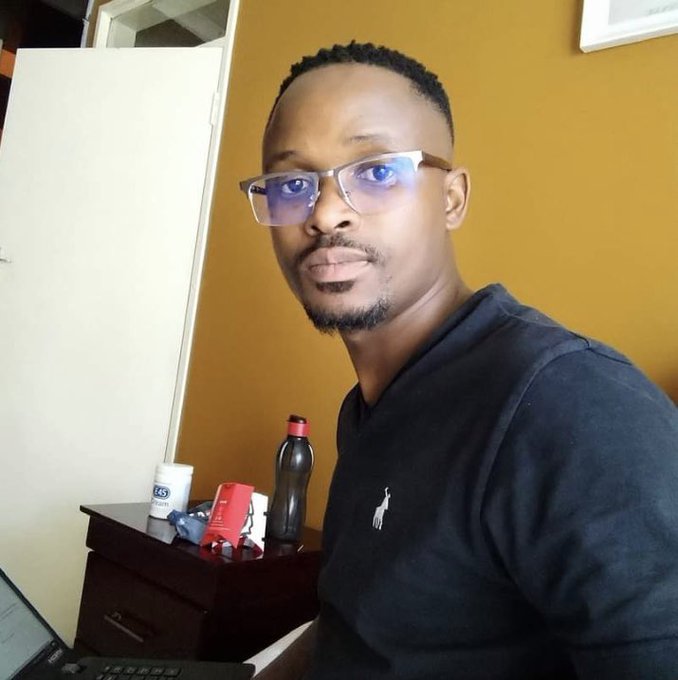
WITS: IPID Identifies Man Shot And Killed By Police As Mthokozisi Ntumba, Father Of Two

0

STAFF REPORTER|

THE Independent Police Investigative Directorate (IPID) has identified the man shot and killed by the police on Wednesday during Wits University students protest as Edwin Mthokozi Ntumba.

Ntumba, 35, was an employee of the Department of Housing and a recent Master’s graduate.  

Ntumba, the father of two, was coming from a doctor’s consultation in Braamfontein where he had just been treated when he was shot several times by the police.

Political parties, trade unions and various students’ organizations have strongly condemned the killing of Ntumba during the violent clashes between the police and students.  

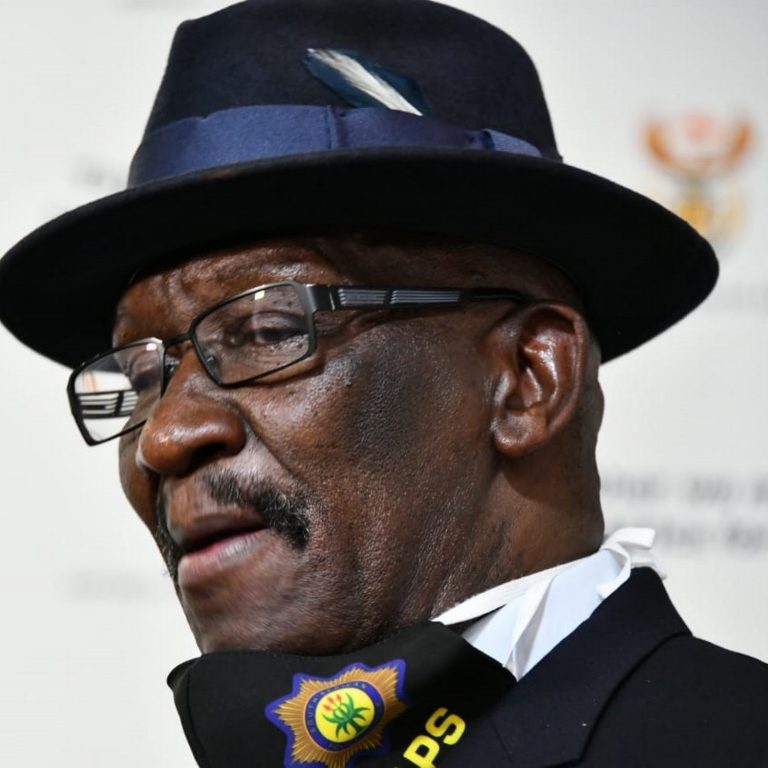
The Minister of Police Bheki Cele is currently visiting the family of Ntumba in Kempton Park, Ekurhuleni.

“This is something it has no grain of explanation of defence on it. Somebody went crazy. We need to leave it to IPID to find the facts on what happened,” said Cele.

“Action must be taken. The action is normally taken by the police against members. The IPID gives me a long list of SAPS members that have been taken on criminal charges and disciplinary processes.”

  • Inside Politics

OUTRAGE! Political Parties Condemn Police Killing Of An Innocent Bystander During Violent Clashes With Wits University Students

0

NYAKALLO TEFU| Education reporter

POLITICAL parties have strongly condemned the police shooting and killing of an innocent person during the Wits University protest over financial exclusion on Wednesday.

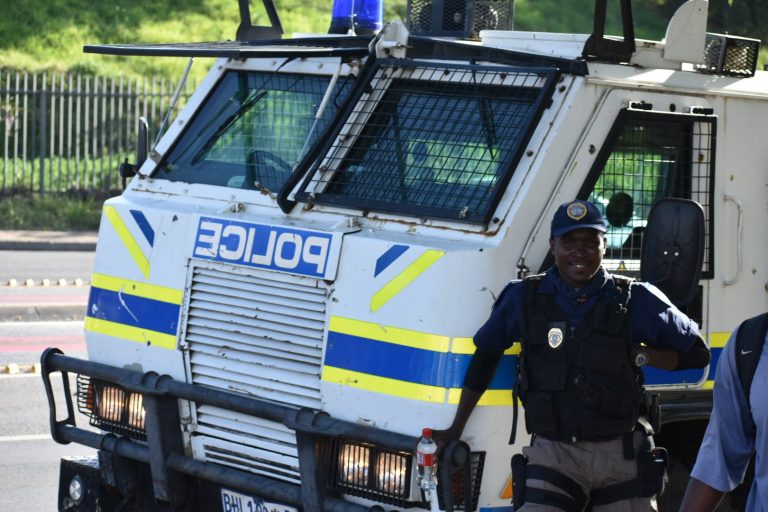
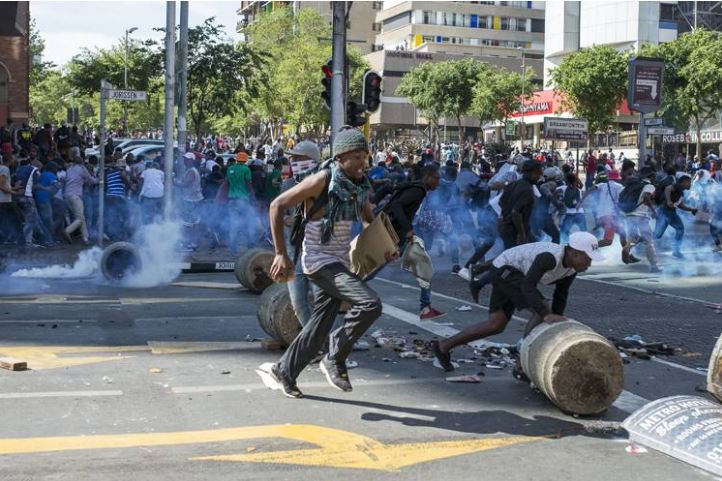
This comes after police fired rubber bullets to disperse a group of protesters outside the Wits university campus in Johannesburg.

The students are demanding that those who owe the university up to R150 000 in fees still be allowed to register for the new academic year.

The South African Communist Party (SACP) strongly condemns the killing of a member of the public at the Wits university campus.

The SACP also called for an urgent investigation by the Independent Police Investigative Directorate (IPID).

“We convey our heartfelt message of condolences to the family of the deceased,” the party’s spokesperson, Dr Alex Mashilo, said in a statement.

Mashilo lambasted Finance Minister Tito Mboweni for introducing austerity measures during his budget speech last month.

“Austerity is the key public finance management problem depriving students from poor and working-class families that cannot afford student fees of access,” said Mashilo.

“For instance, the budget delivered last month to Parliament by the Minister of Finance Tito Mboweni cut allocations to higher education institutions by 1.712 billion rand in 2021/2022, 2.250 billion rand in 2022/2023, and approximately 4.1 billion rand in 2023/2024. In total, the cuts (‘fiscal consolidation’) to funding support affecting higher education institutions amount to 8.043 billion rand in the medium-term expenditure framework (2021/2022 to 2023/2024).”

Democratic Alliance leader John Steenhuisen also condemned police brutality during the student protest.

“The loss of innocent lives at the hands of law enforcement officials must not become our new normal. We are not a military state, agencies like the SAPS must be professionalised to avoid the unnecessary loss of lives. The IPID must act swiftly on the #WitsProtest incident,” said Steenhuisen.


Economic Freedom Fighters (EFF) leader Julius Malema also condemned the police killing of the bystander, saying South African Police Service were presided over by the ANC government, which has left the apartheid Policing system intact and never tempered with.

“The police we have today are blood thirsty, the same way apartheid police were,” said Malema.

“The EFF is sending condolences to the family of the deceased civilian reportedly killed by the SAPS at Wits protest.”

He said the EFF will get justice for the family, adding that the police officer responsible must be held accountable.

The National Education, Health and Allied Workers’ Union (Nehawu) said it condemned the use of brute force by the SAPS members against protesting students from the University of Wits.

“As NEHAWU, we find it abhorrent that in this day of our democracy we still have police that treat peaceful marchers like it is still the dark days of apartheid,” said Nehawu in a statement.  

“The use of brutal force more especially against unarmed and harmless children should be condemned in the strongest possible terms.”

The education and health workers union said it will write to the Minister of Police Bheki Cele to demand answers.

“Many sectors of our society have been calling for the training of police officers to receive intensive training on crowd control,’ said Nehawu.

“We will demand to know from the Minister if such training did indeed take place and what is the impact thereof. We call on the Independent Police Investigative Directorate (IPID) to move with speed in finding the police responsible for the loss of life and he must face punitive measures.”

  • Inside Politics

One Person Killed As Police, Students Clash At South Africa’s Wits University

0

ONE person was killed on Wednesday after police fired rubber bullets to disperse a group of protesters at the University of the Witwatersrand (Wits) in Johannesburg, a student leader said.

The students are demanding that those who owe the university up to 150,000 rand ($9,850) in fees still be allowed to register for the new academic year.

The cost of university education, prohibitive for many Black students, has become a symbol of the inequalities that endure in South Africa more than two decades after the end of apartheid.

Wits student representative council president Mpendulo Mfeka said the person shot was not believed to be a student. Reuters could not immediately confirm the details of the deceased.

The Independent Police Investigative Directorate (IPID) said it was looking into the incident.

“The Directorate has dispatched four investigation officers to probe the allegations, the team will also cordon the crime scene and conduct the investigation including locating the person with the video footage, identify eye witnesses etc,” it said in a statement.

“IPID will ensure the body is protected and carried safe to the mortuary.”

Most students in South Africa are caught up in a group widely called the “missing middle”, those who are not poor enough to qualify for government financial aid but not wealthy enough to pay.

Protesting students took to the streets of Braamfontein district, where the university is located.

“They (police) threw stun grenades to try and disperse the protest but we didn’t run away, so they started firing rubber bullets,” said Mfeka. “The person who was shot was shot directly in the head.”

A Wits spokeswoman said the university would issue a statement later.

In 2016, widespread student protests for free higher education forced temporary closures at a number of South African universities.

  • Reuters

Violence Erupts At Wits University Over Student Fees, NSFAS Budget Cuts

NYAKALLO TEFU

VIOLENT clashes between students and riot police broke out at Wits University on Tuesday as various student groupings protested against financial exclusion.

The student groupings are calling for the university to allow students to register for the 2021 academic year despite budget cuts and financial constraints experienced by the National Student Financial Aid Scheme (NSFAS). 

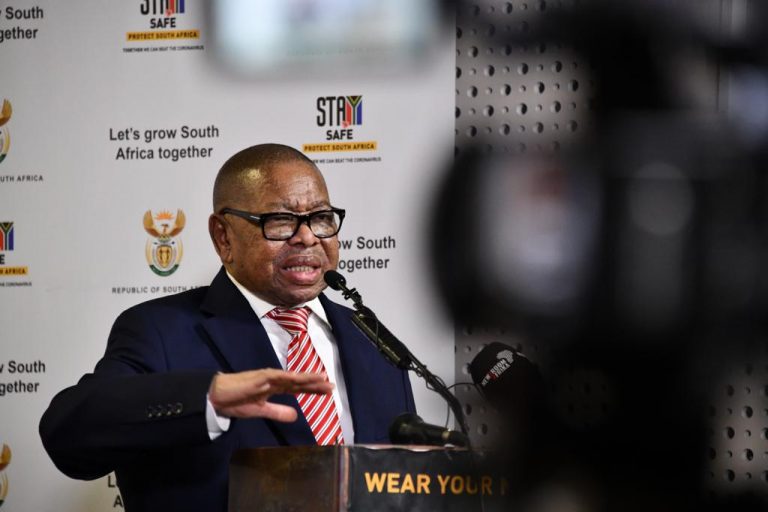
Higher education minister Blade Nzimande said on Monday that all existing students in Higher Education Institutions (HIEs) from previous years will have their tuition fees paid by NFSAS, despite shortfall revenues.

But on Tuesday morning, students blocked Empire Road with boulders and rubbish bins, causing traffic chaos.  

“The Student Representative Council (SRC) is going to mobilize more students and if need be we are going to mobilize other universities because this is a shared struggle to ensure that the University puts learning on hold,” said Wits SRC President, Mpendulo Mfeka.

Hours after the violence broke out, the university management responded to the media regarding the protests outside the school, saying registration is continuing despite the protests. 

“95% of registration is complete. We have registered over 35500 of 37500 students. The remaining 2000 are likely postgrads who will register in July and September,” said Wits spokesperson Shirona Patel. 

Patel said all registration was online. However, if students required personal assistance, the university has staff on site to help with the registration process.

“We cannot afford to start the academic year with the problems we are currently facing not only at Wits but other universities too,” said Mfeka.

The SRC said most students have not received data or laptops to continue with online learning despite denials by the university. 

Patel explained: “Wits commenced with the academic programme online yesterday. About 95% of Wits’ 37 500 students have already registered and 25 000 participated in online classes yesterday. Students have a new learning management system and have been given data (30GB per month) and laptops to study.”

(SOURCE: INSIDE EDUCATION)

Nzimande: NSFAS Facing Funding Shortfall For New Students Due To COVID, Budget Cuts

NYAKALLO TEFU

THE National Student Financial Aid Scheme (NSFAS) has been unable to finalise funding for new university students after the scheme faced a funding shortfall for 2021.

This is according to the higher education minister Blade Nzimande, speaking on Monday during a media briefing in Pretoria.

Nzimande said that budget cuts and the COVID-19 pandemic were to blame for the shortfall in NSFAS funding.

Nzimande said that due to COVID-19, NSFAS had to continue paying allowances to students, even at the time when universities were closed, to give students access to multimodal learning and teaching.

“This means we had an extended academic year, for which we did not allocate additional money,” Nzimande.

Another reason for the shortfall, Nzimande said, was due to budget cuts across government departments, as well as the deteriorating economic situation.

NSFAS had a budget of nearly R35bn in 2020, up from R32bn in the previous year. It funded 700,000 students in 2020. Nzimande was unable to confirm if it would fund more or fewer students this year.

Nzimande said many applicants, who previously did not meet the funding requirements for NSFAS, now do, as the majority of their parents lost their jobs due to COVID-19.

“Of cause not all these shortfalls are due to COVID-19 alone. The deteriorating situation associated with budget cuts started a long time ago before COVID-19. In terms of the laws and policies regulating public finances for departments and entities, including the Public Finance Management Act (PFMA), NSFAS is not able to commit to funding students without the requisite budget available to support this commitment,” Nzimande said.

Nzimande said the department has made an agreement with all public universities to extend the registration period for first time entering students for two weeks, so that students are not disadvantaged by the delay in the finalisation of NSFAS funding.

The minister said NSFAS is going to fund all returning NSFAS beneficiaries who meet the academic and other relevant criteria for continuing their studies.

In this regard, he said, the usual processes will apply, whereby institutions share the relevant registration data and information with NSFAS, which is then able to confirm the funded lists of students with institutions.

During the Budget Vote Speech on 24 February 2021, Finance Minister Tito Mboweni said government remains committed to ensuring that deserving students are supported.

In line with this commitment, Mboweni directed the Department of Higher Education and Training to work with National Treasury to identify policy and funding options to be detailed in the Medium-Term Budget Policy Statement (MTBPS).

Nzimande confirmed that this work is underway, and options will be presented to Cabinet on Wednesday for consideration.

“The student funding policy is the responsibility of government as a whole, and as the Minister responsible for higher education and training, I have to get concurrence and approval by Cabinet. We are doing everything possible to resolve this issue as a matter of extreme urgency,” Nzimande said.

Nzimande said the funding guidelines for universities for 2021 will be finalised as soon as Cabinet makes a determination in this regard.

(SOURCE: INSIDE EDUCATION & Agencies)

STEM: Dubai Girl’s Global Non-profit Teaches Underprivileged Children In Africa And India

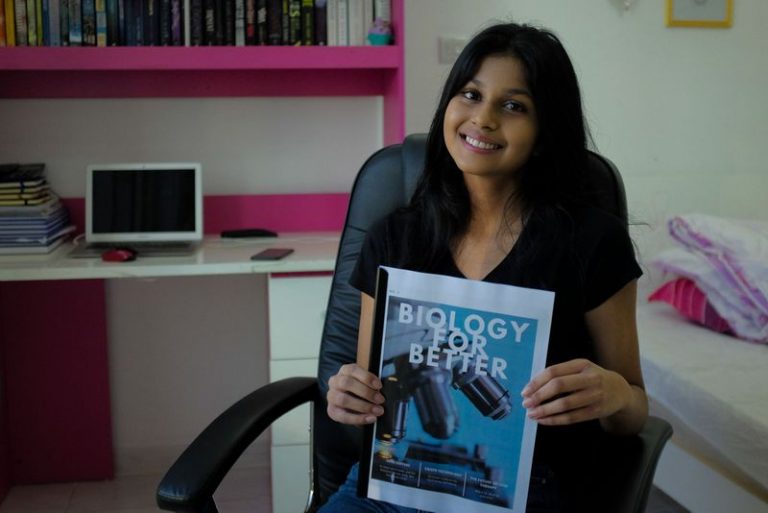
IN 2020, when many students across the world were attending classes from home due to the COVID-19 pandemic, a grade 11 student in Dubai chose to support those with no access to remote learning. Today, her initiative to promote STEM (Science, Technology, Engineering and Mathematics) education and nurture love for biology — Biology for Better — is a fiscally sponsored nonprofit organisation with 20 global chapters, 200 members and a seven-member board of students working tirelessly for the cause.

Meet Riya Manas Sharma, a grade 11 student in GEMS Modern Academy and the founder and CEO of Biology for Better (BFB), who is making a difference to the lives of poor children with no access to education during the COVID-19 pandemic. It was in the summer of 2020 that Riya read a Unicef report that said at least a third of the world’s schoolchildren were unable to access remote learning during school closures, or even education, she told Gulf News in an interview.

Research sparks passion

While doing research for one of her Model United Nations conferences in August, she read that millions of students were out of school worldwide. She found it very disheartening and that motivated her to do whatever she could to help those students in any way possible. “Quickly diving in head-first was the need of the hour,” said the 16-year-old. It only took a couple of days for Riya to start planning and put the ideas together about how she would want the basic structure of an organisation, guided by the sole objective to educate and empower the underprivileged children by providing easier access to STEM education.

Passionate about biology and community service, Riya hoped to combine the two through the ‘Biology for Better’ (BFB) initiative. “I first spoke to my parents, who were not only fully supportive but helped me fine-tune my plan. Due to my love for biology, I wanted to incorporate some elements of that as well, which is why our ancillary aim was to help inculcate a love for biology amongst the youth.”

Sustainability ambassador

Also, being a sustainability ambassador for the Youth4Sustainability programme by Masdar on Sustainable Development Goal 4 (SDG-4 is ensuring inclusive and equitable quality education), Riya, who scored 98 per cent in her class 10 exam of Indian Certificate of Secondary Education (ICSE) examinations in July, wanted to blend her passion for biology and education into the initiative.

As part of a mentoring activity, she was already teaching ballet to children and had initiated a French mentoring programme in her school. “Due to the amazing support received for the initiatives there, I was able to plan and organise how our educational aids programme would work, particularly during the pandemic situation.”

Additionally, other school activities such as the ecological magazine and regular webinars helped her plan magazines and webinars along similar lines. “So, it came from past exposures since I truly wanted BFB to reach out to as many people as possible in as many ways across and in as many geographies. The pandemic has proved that online platforms barely demand high resource commitments. If one has the passion, the resources come in easily,” the youngster said, sharing what she learned from her experience.

How did the project take off?

Initially, she said, the ideas were shared via online student platforms. “It was a delight to see the large number of students who were interested in this unique initiative. Then a form to be filled in was uploaded and based on the responses and further discussions, the board members were finalised. All the board members had the same amount of belief in our mission and would be just as dedicated and passionate to our common goal.”

Currently the board consists of members across continents: Cheryl Tang is the COO from San Ramon, United States, Nathan Nguyen is director of technology from Brisbane, Australia, Glenn Carvalho is the director of logistics from Dubai, UAE, Angel is director of outreach from New York, US, Cavelle Simpson is editor-in-chief from Shirley, US, Sajia Athai is director of marketing from New York, US, and Esther Kear is director of Education from Beijing, China.

How were the sponsors roped in?

“We came across our sponsors after speaking to and collaborating with some other student initiatives that are dedicated to the same goal. We try to frequently collaborate with them since we believe it is best to support and uplift each other the best way we can as although we may operate based on different niches or structures, we are working towards a common goal.”

BFB’s sponsor is an organisation called Hack+, a nonprofit that helps students launch unique ventures. “They are supporting us by providing us with fantastic resources such as a professional online events platform (which we used for our webinar) and organisation management software.

Being sponsored by Hack+ means that their 501 (c) (3) non-profit status, which is the status for a legally registered non-profit organisation in the US, gets extended to us due to a contract we signed with them. This works since several of our global chapters are in the US such as BFB New York, BFB Dearborn and BFB North California.”

How were other like-minded students for global chapters connected?

“After the board was finalised, we all brainstormed ideas on what we could do and how we could add more to the plan, which is where the idea for a podcast came in, where we speak with biologists to learn more about their specific fields.”

Using other online student platforms, the BFB website, and its social media handles and by word of mouth, students from across the world became part of the project.

How do students run the campaign?

“After interviewing students that sign up and are interested in the project, we send them our handbook and other promotional resources to form a local chapter. After it is formed, they gain access to our Slack, which we use as our main communication platform and they get monthly tasks for the creation of STEM worksheets or videos or writing for the magazine and or blog. Some of them also choose to have their own social media accounts to help promote our aim.”

“The volunteers from our various chapters prepare worksheets and videos and we send them to the targeted children via collaborations with nonprofits that work on site with rural schools.”

As of now, the BFB team is not directly interacting with the students.

“However, we do receive monthly feedback from our partners regarding how the children have benefitted from our educational aids. We are currently setting up a programme with them for children to come into specific local computer labs for direct online sessions. We had our first session last week with students in Karnataka in India.”

How does the partnership work in India and Africa?

“We have non-profit partnerships with EVidyaloka and Sukrupa in India and Village Schools, Africa. That helps us in providing direct educational aid to children living in rural areas in India and Africa. They let us know where exactly they need help, with which topics for any particular grade and then we pass those information to the volunteers from our chapters who then prepare the necessary material after additional guidance from us.”

Riya added: “Usually, each chapter gets one or two topics each month in addition to writing articles for the magazine and blog, attending webinars, the podcast, etc. We also have several meetings with our partners, discussing the ways in which we can make our resources better and we then relay this to our volunteers. We are currently discussing and have had meetings with nonprofits, even rural schools, regarding virtual classes. However, the limited availability of internet connection and screens in these schools poses a hindrance.”

How can other students/schools be part of the initiative?

“We’d highly encourage other students to be a part of this initiative by forming a Biology for Better chapter or club in their own school. By creating a chapter, they would be providing educational aids to children in rural schools, writing articles and blog posts on the latest biological research, tuning into our podcast and most importantly, being a part of a community of students from all around the world that are just as passionate as they are.”

“Usually, a student would have to fill in an application form, after which we interview them to see whether they would be a good fit for the position, following which they receive our chapter handbook, promotional material and other necessary details to form a chapter.

What is the future for BFB?

“Currently, Biology for Better has about 20 global chapters set up all around the world in places like New York, Beijing, Brisbane, Bangalore and Manchester and has about 200 like-minded students who are passionate for the cause and growing daily. In the future, we would definitely like to expand to even more places and open up more chapters, strengthening our community,” Riya said.

“We plan to keep continuing our social media campaigns and collaborations to reach more people and spread our goal, in line with UN SDG 4. We will continue to have faith that these small steps taken by the youth may one day lead to a huge change,” she added.

(SOURCE: GULFNEWS)

Classroom Management: Seven Tips To Support Your Learners In 2021

1. Line up learning resources

Having a library of educational resources at hand is the most effective strategy any teacher can adopt into their teaching process and in their classroom.

Habiel Adams, a business studies teacher at Christel House, noted how important planning is for teachers during uncertain times. “As cliché as it seems, effective planning is at the core of adequate curriculum management. Keep abreast of curriculum changes and familiarise yourself with the content of the exam guidelines and SBA requirements for your subject,” said Adams.

2. Draw up a plan for 2021

In uncertain times like these, staying on top of what you can control will settle the nerves and put you in good stead for a successful year, whether in the classroom or online. Teachers may not have control over where their learners are, but they do have control over how learners access all the relevant information needed to complete the curriculum.

Jenny Campbell, mathematics author and publisher at TAS, suggested that each teacher “start by listing [their] teaching goals and objectives. These might be personal and will differ from teacher to teacher and from subject to subject.” By taking the time to map out the year and set short- and long-term personal milestones, teachers can create a sense of control over the outcomes of the year ahead.

Put together an emergency plan to manage situations that are uncertain at this stage, like how to prepare learners for online learning, an action plan for staggered school days, or completing outstanding work from last year.

3. Embrace the power of empathy

By living with the pandemic, everyone has realised that empathy and human kindness are essential to deal with the social effects of lockdowns. Conceptualise a classroom management plan that will foster a supportive, caring atmosphere in the classroom.

Discuss the plan with your students and brainstorm ways to build a learning environment based on support. Encourage learners to share their experiences of lockdowns thus far and facilitate a group feedback session to discuss key takeaways and learnings.

Lead by example and treat learners with respect and kindness. Be aware of behavioural changes and social cues that may indicate that a learner is struggling with anxiety or emotional setbacks.

4. Be flexible – you never know what is coming your way!

The 2021 school year is unlikely to follow a typical curriculum structure and mixed learning approaches will continue to be utilised.

Ensure that you stay prepared for unplanned changes to the school year or curriculum plan. Teachers will continue, as always, to play an integral role in the success of their learners’ school careers.

Having a collection of resources to draw from in uncertain times and creating a sense of routine with lesson plans, will allow teachers to motivate learners to take responsibility for their studies.

5. Lean on colleagues

Your colleagues understand more than anyone the daily challenges and setbacks that come with teaching during Covid-19. There is strength in numbers, so lean on your colleagues and form a support system.

Just as you would in the classroom by following a classroom management plan, discuss possible scenarios and solutions with your support group.

Adams suggested forming communities of collaborative learning best practices, “where collective SBAs can be created, shared and disseminated between participating neighbouring schools or schools in your district. In this way, the workload can be reduced significantly and insight can be gained into how different colleagues create assessment material.”

6. Be confident

Show up every day for your learners and cultivate a learning environment that is based on positivity, energy and confidence. In times of uncertainty, learners will look to their teachers for guidance and assurance.

Be honest and upfront with your learners about the unfolding situation and offer possible solutions that your learners can be involved in, such as running a morning routine of check-in calls with small groups and setting daily priorities. Lead by example – and lead with confidence.

7. Be kind to yourself

Uncertainty is overwhelming and even though teachers soldier on for the sake of their learners, you are not immune to burnout and anxiety.

To ensure you function at your best during school hours as well as after school, book time in your calendar to relax, get exercise and look after yourself. Tune out of school mode for a few hours a day by setting boundaries and making time for activities you enjoy beyond the classroom.

“With the first term kicking off, we recommend a learning strategy to set up for a successful year, no matter how the learning process takes shape. Take a deep breath and remember, if you can’t control the current of the river, you might as well go with the flow,” concluded Eadie.

About The Answer Series:

In 1975, Anne Eadie, a brilliant young maths teacher, poured all of her knowledge into the very first Answer Series study guide. Since then, The Answer Series has continued to create up-to-date, comprehensive study guides and now covers all major subjects from grade eight to 12.

They are written and frequently updated by teachers, examiners and subject specialists. Each of The Answer Series study guides includes stimulating exercises and easy-to-understand explanatory notes and can be used either independently by learners, or by teachers in the classroom.

(SOURCE: THE LOWVELDER)

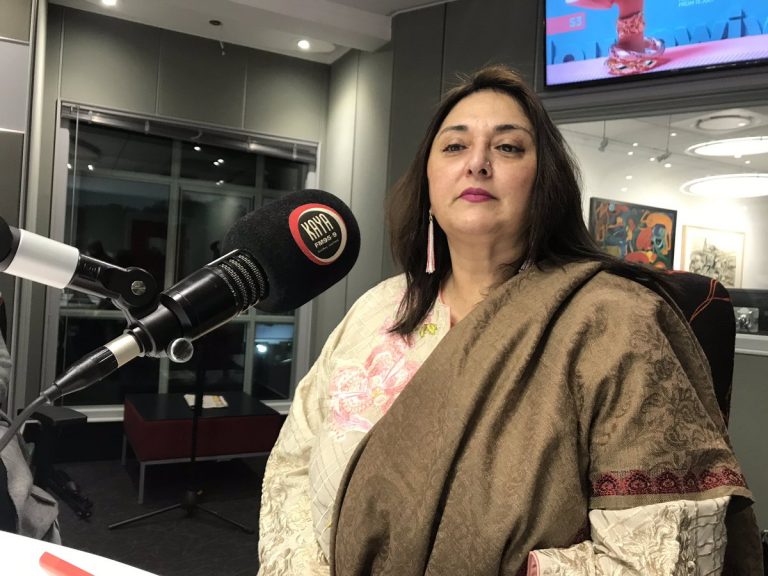
“I Want To Lead A University That Honours And Humanises People,” Says Unisa’s Vice Chancellor, Professor Puleng LenkaBula

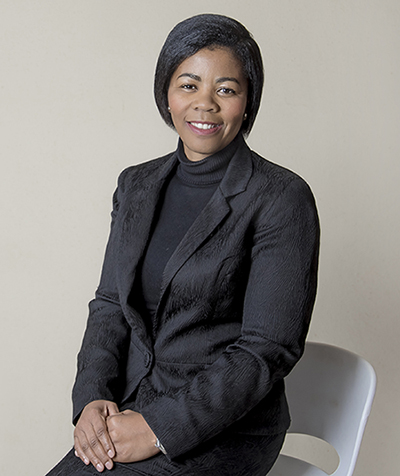
THE new Principal and Vice-Chancellor (VC) of Unisa, Professor Puleng LenkaBula, is hitting the ground running. She sat down with a Unisa journalist for an exclusive one-on-one interview about being the first black woman to steer Unisa in the institution’s 148 years of existence.

HERstorical moment

Sharing her sentiments about this moment in the history of the institution, LenkaBula says: “I’m appreciative of being appointed as the third Vice-Chancellor of Unisa post-1994 and the dawn of democracy of South Africa. I think it is an important HERstorical moment, not a HIStorical moment.” She chuckles as she makes the emphasis. She adds that this is particularly so because universities in South Africa have not had many women academics leading them. “The normative practice has often been finding leadership from male leaders,” she explains. “There is nothing wrong with men leading institutions, but there’s something wrong if the leadership is fully and wholly masculine. The diversities of leadership are always important as they enable institutions to focus on various issues and to attend to both curriculum and co-curricular issues.”

LenkaBula emphasises that she appreciates being the first black woman appointed as VC at such an august institution as Unisa. “The global knowledge arena does not have many women,” she says, “let alone black women in leading positions. For me, this appointment validates the sentiments of black girls and black boys who might not have had the confidence that they could be able to assume leadership positions in different sectors. They might be inspired to know that it is possible to become the leader of a university of our size and impact.”


Training and career highlights

LenkaBula brings with her the competencies of an ethicist who is trained in a multidisciplinary discipline that engages the multiplicities of knowledge systems as well as the multiplicities of professions. While she demonstrates leadership in the knowledge of ethics as a discipline, she has full recognition of how disciplines, faculties, colleges and knowledge systems intersect in the local, continental and global arena.

Her extensive managerial experience includes, among other positions, serving as Vice-Rector of Institutional Change, Student Affairs, and Community Engagement at the University of the Free State (UFS). Prior to joining UFS, she was the Executive Dean of Student Affairs at the University of the Witwatersrand.

The VC has also been invited to multiple international academic platforms to deliver presentations. Key among these are the World Council of Churches Central Committee, the European Commission Diaspora, and the UN Commission on the Status of Women.


Our humanity is what brings us together

Explaining her vision as VC, LenkaBula says she intends to ensure that Unisa does not only become a centre of excellence, success and opportunities for the marginalised, but also a lever of optimum participation in the global knowledge arena with impact. “This impact,” she says, “should spread to the local context and the continent, allowing the country and Africa to, without hesitation, become competitive in the global landscape. But this is just the first of my commitments. The second is that I want to lead a university that honours and humanises people, and prioritises human dignity as an imperative. It should be a university that recognises that although we are human and we have varied phenotypes, heights, bodies, textures of abilities and disabilities and more, our humanity is what brings us together.”

The VC says that questions of social cohesion, social capital and social justice should be based on these values. “This means, for example, that students, staff, or stakeholders who live with disabilities must find presence, resonance, and support so that they can optimise their talent and succeed.”

She adds: “It also means that we have to be sensitive to the fact that there are people who don’t conform to traditional genders. These non-conforming individuals, like gays, lesbians, and bisexual and asexual people, live sexualities that may not be in the mainstream. This means that even our language must be inclusive and honour their humanity because we have learned from our birthdate that to debase each other’s humanity is to undermine the integrity of life, and that is something I am not apologetic about.”


Unisa reimagined

LenkaBula comes in at a time when Unisa is going through a review instituted by the Minister of Higher Education, Science and Innovation, Dr Blade Nzimande. Mindful of the task ahead, she is confident that Unisa and its staff have the capacity to reclaim the institution as an innovative leader in distance and open education. “However,” she says, “if we are going to succeed, students, staff and stakeholders must become partners in the reimagination of Unisa as a leader in ODeL.”

“My vision of Unisa is a very unique set that contributes to the development of South Africa by aligning ourselves with some of the aspirations of the National Development Plan (NDP), but not only the NDP,” she says. “When you live in a country where youth and young adults might fall through the cracks because of their economic condition, we must invest in solutions to these critical or grand challenges of our times.”

The VC underscores the urgent need to become student-centric. “We must be attentive to the kind of students we should be producing,” she says, “particularly in the aftermath of Covid-19, as well as the changes that the fourth industrial revolution is imposing on systems, organisations and higher education. My vision is to ensure that we have a socially just university that considers issues of profitability and also of responsibility, issues of ethics, and moral agency and initiative. We should therefore be a university that is at the centre of solutions to problems, whatever solutions it may be, whether it is of the pandemic, whether it’s of economic systems or whether those of climatic changes or ecological degradation.”

At a time of unprecedented transition in academia, just as in any industry because of the pandemic, institutions of higher education have been faced with a number of challenges that call for a shift in the manner in which they conduct their business. Asked how she plans to address some of these systematic challenges, LenkaBula stresses that universities must be centres of solutions because they have society’s best minds. “But if the best minds are not for a cause, then they are rendered marginal,” she says.


Reinvent, reshape, regenerate

The pandemic has caused a shift that will soon see Unisa having to reclaim space in academia, and the ODeL space specifically. Traditional universities have begun introducing online degrees, and this calls for an urgent shift in the manner that Unisa staff perform their duties. “It can no longer be business as usual,” LenkaBula says. “My priority is for Unisa to recognise that it’s no longer the only player in this arena. The first thing I said when I met the vice-principals and deans was that we should not be complacent because complacency has led to multiplicities of businesses folding. We as Unisa have to reinvent, reshape and regenerate ourselves.”

LenkaBula explains further that the threats were already evident, but that Covid-19 accelerated competition. “Therefore,” she says, “Unisa needs to identify its areas of excellence and project them more. It is going to be important that staff take their work seriously and respond to their obligations. If they don’t, opportunities to look elsewhere are available for them to release themselves from their responsibilities.”


The work begins

LenkaBula says that Unisa is the cradle of the higher education system in South Africa. “Therefore, the idea of being an innovative institution is something that we have to embrace,” she concludes. “We need to reignite our commitment to ensure that Unisa reclaims its place at the top tier of tertiary education institutions in South Africa – and on the continent

(SOURCE: Unisa)

Northern Cape Needs About R600 Million To Rebuild Infrastructure After Recent Flood Havoc

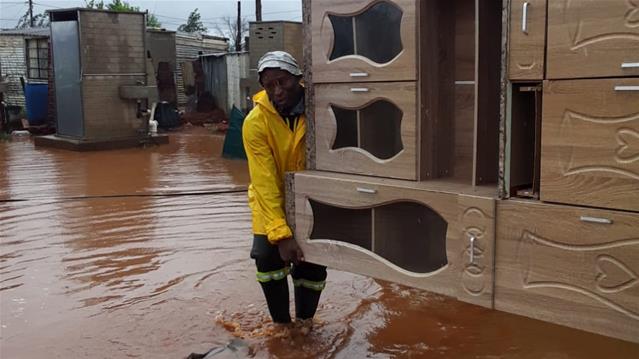
THE Northern Cape government requires at least R600 million for social relief and infrastructure repairs after recent heavy rains and flooding wreaked havoc in parts of the province, according to local authorities.

Weeks of persistent rain and flooding have left nearly 500 homes ruined, 27 schools either inaccessible or damaged.

Infrastructure was also damaged.

Service delivery has also been affected in parts of the province.

Provincial Cooperative Governance, Human Settlements and Traditional Affairs MEC, Bentley Vass, said as a result – the entire province has been declared a state of disaster.

“Key areas that have been severely affected in the province are education, human settlements, and agriculture which impacts directly on the citizens in these areas. We requested the national government to give the province the necessary support. If the national government comes in, it will put us in a better space as a provincial government to respond more speedily to the issues and to the challenges facing the province. We are calling on the private sector to come on board and assist with the relief of the affected communities,” said Vass.

Vass added that the flooding has caused more than half a billion rand in damage to roads.

“The department of roads and public works is currently in a process of assessing the extent of damages to the roads in the province. In some instances, they are waiting for the water to subside for proper evaluation. Currently, the rough estimate cost for the flood damage to roads in the province amounts to R682-million,” Vaas explained.

(SOURCE: AGENCIES)

South Africa: COVID-19 Pushes Inequality In Schools To Crippling New Level, Risks A Lost Generation Of Learners

THE COVID-19 pandemic has plunged South Africa’s schools further into crisis, exposing how the country’s education system continues to be shaped by the legacy of apartheid, Amnesty International said today.

A child’s experience of education in South Africa is still dependent on where they are born, how wealthy they are, and the colour of their skin

Shenilla Mohamed, Executive Director of Amnesty International South Africa

In a new report, Failing to learn lessons: The impact of COVID-19 on a broken and unequal education system, the organization highlights how students from poorer communities have been cut off from education during extended school closures, in a country where just 10 percent of households have an internet connection.

Meanwhile historic underinvestment and the government’s failure to address existing inequalities has resulted in many schools not having running water or proper toilets whilst struggling with overcrowded classrooms, meaning they cannot provide a safe learning environment amid the pandemic.

“A child’s experience of education in South Africa is still dependent on where they are born, how wealthy they are, and the colour of their skin. The COVID-19 pandemic has made a broken and unequal system even worse, putting students from poorer communities at a huge disadvantage. Remote learning is not an option for the vast majority,” said Shenilla Mohamed, Executive Director of Amnesty International South Africa.

“South Africa’s schooling system is so under-equipped that the pandemic has all but ended education for many students, especially those from already disadvantaged communities. Unless urgent access is taken, the future livelihoods of an entire generation will be at risk.”

Disturbing picture

Amnesty International’s report is based on extensive desk research, including analysis of statistical data and institutional studies and surveys, between March 2020 and February 2021.

The education system in South Africa continues to be shaped by the legacy of apartheid. Previous research by Amnesty International showed how many communities continue to live with the consequences of political and economic decisions made during the apartheid era where people were segregated according to their skin colour, with schools serving white communities much better resourced.

When schools first closed in March, for almost three months, the widespread lack of internet access needed for remote study was laid bare. Nationally, only 22% of households have a computer and 10% an internet connection.

In North West and Limpopo provinces, only 3.6% and 1.6% respectively have access to the internet at home.

By contrast, students from wealthier communities with computer access have been able to continue their education particularly through remote learning provided by better resourced schools.

Further school shutdowns came in July 2020 and January 2021. The closures not only interrupted learning, but also severely affected access to food for around nine million students who depend on school meals for their daily nutrition. The situation became so bad that NGOs were forced to go to court to compel the government to resume the National School Nutrition Programme.

Hazardous and unhygienic

When schools have been open, hazardous and unhygienic conditions have prevented them from meeting basic COVID-safe requirements. Thousands of schools in South Africa have no running water – more than half of schools in some regions.

Social distancing is also impossible in many schools.

One study by Stellenbosch University found that at least half of South African learners would not be able to comply with distancing rules due to overcrowded classrooms.

The government has failed to ensure that schools in poorer communities have the additional resources they need to provide a secure learning environment. As a result, many have had to shut down repeatedly due to high COIVD-19 infection rates.

The toll on staff needs also to be recognised. By the beginning of 2021 it was estimated that up to 1,700 teachers have lost their lives to COVID-19, more than 300 alone during the recent school holidays.

Drastic budget cuts are not the solution

Despite the clear evidence that school infrastructure and equipment can play a key role in ensuring safer learning environments, in June the government announced that it was planning to divert over R2 billion (US$ 0.13 billion) from the provincial education infrastructure grant. The recent medium-term budget statement revealed that, adjusted for inflation, the education budget will be reduced over the next three years with a cut of over 4% for this financial year.

Amnesty International is calling on the South African authorities to reverse that decision, and commit sufficient funds to address longstanding and ongoing infrastructure failings. These have not just been documented by Amnesty and other organisations but are also confirmed by the government’s own statistics. In March 2020, just before COVID-19 struck, it was reported that only 266 out of 3,988 schools that needed it had benefitted from the President’s own 2018 Sanitation Appropriate for Education (SAFE) campaign to address inadequate sanitation.

56% of South African head teachers reported in a survey conducted by the OECD in 2018 that a shortage of physical infrastructure is hindering their school’s capacity to provide quality instruction.

Many of the deficiencies are in breach of the government’s own Minimum Norms and Standards for educational facilities.

Amnesty International acknowledges that guaranteeing access to education during a pandemic is not easy.

It also acknowledges that the government has both put various procedures in place and taken action to seek to ensure both some limited access to remote learning during lockdown and to protect the safety of learners and teachers when schools have reopened.

However, the government needs to do more from exploring further innovative ways to provide access to education for as many students as possible where schools are partially or totally closed due to the pandemic, to  ensuring that all schools have sufficient supplies of personal protective equipment such as masks and hand sanitizer, as well as clean water facilities.

Above all it must commit sufficient resources to address the infrastructure crisis in schools which is continuing to undermine the goal of safe learning spaces for all young people.

In certain key areas, the government has failed to meet its obligation to provide equal and accessible education to ALL learners.

The Constitutional and international human right to quality education includes access to safe, clean and adequate school facilities.

“The Constitutional and international human right to quality education includes access to safe, clean and adequate school facilities,” said Shenilla Mohammed.

“However, this right is clearly being denied to too many learners across the country. Schooling in South Africa has operated on a two-tier system for far too long. Now is the time to take concrete action to ensure that every child in South Africa has equal access to education, during and after the pandemic.”

(SOURCE: Amnesty.org)