Home Blog Page 347

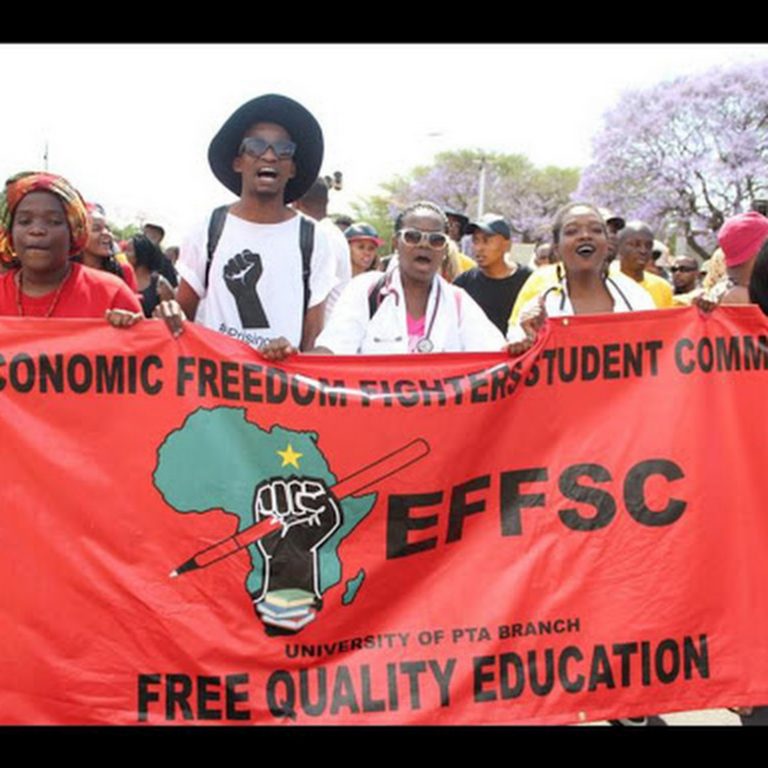
EFF Student Command Threatens To Shut Down UNISA Over Limit Of 20 000 First-time Students

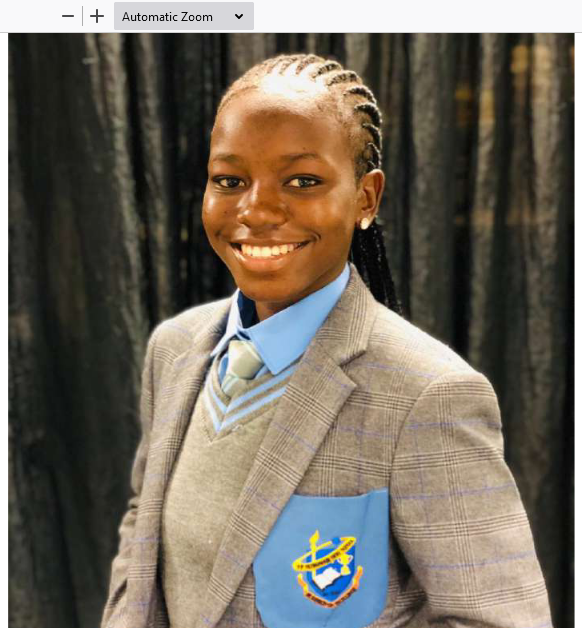
UNISA students are ready to shut all campuses of the university down and render them ungovernable if the Gauteng High Court, Pretoria, does not reverse Minister of Higher Education Dr Blade Nzimande’s decision to limit first-time students by 20 000 this year.

President of the School Governing Body Wadzanai Mazhetese and chairperson of the EFF Student Command Thabo Maake vowed that Unisa will not proceed with the academic year if the judgment reserved by the court turns out to be unacceptable to them.

EFF students, adorned in their red gear last week, protested outside the high court in Madiba Street and marched along the street, bringing traffic to a standstill, under the watchful eye of a police nyala deployed to monitor the situation while the application was being heard.

Nzimande’s decision came as a measure to help deal with the amount of funding needed from the National Student Financial Aid Scheme, but it was seen as anti-revolutionary by students.

Maake said students were also upset that Nzimande also took a decision to defund some qualifications like education and nursing, which frustrates students because those students also need the National Student Financial Aid Scheme.

He said other bursaries available for such students could not cope with the high number of students needing help.

“We are also fighting Unisa’s decision to usher in a super semester that requires students to register both semesters now and then pay a higher registration fee. This will have complications because students will need a lot of leave to write all exams at the end of both semesters, and it will just be too much and there will not be enough time to study,” said Maake.

Unisa has, however, stated that a lot of modules will have more assignments and no need to write exams at the end of the academic calendar. Regarding the trimming of students, it said the decision was made by the minister and is now in the hands of the court.

Spokesperson for the Department of Higher Education, Science and Technology Ishmael Mnisi said the department was defending its decision in court and would wait for the outcome of the court.

Meanwhile, former public protector Thuli Madonsela has pleaded with President Cyril Ramaphosa and higher education minister Blade Nzimande to withdraw the order that the University of SA (Unisa) should reduce its number of first-time students this year by 20,000.

Madonsela’s plea comes after Nzimande, last month ordered Unisa to reduce its intake of first-time students, saying it had over-enrolled by about 20,000 last year.

Madonsela said the move to deregister students could lead to disruptions by “angry students”.

“Please withdraw the order to Unisa to deregister 20,000 first-year students this year. As unemployment and poverty explode, we do not want angry young people seething over stolen dreams,” said Madonsela.

(SOURCE: Agencies)

NSFAS Should Publish Qualifications It No Longer Funds – Education Activist

EDUCATION activist Hendrick Makaneta has called on the National Student Financial Aid Scheme (NSFAS) to publish all qualifications that will not be funded on its website.

Makaneta says this will make it easier for students to know whether they will receive funding or not.

He says that it’s disturbing that institutions of higher learning continue to register students in programmes that the scheme will not fund, without informing them of the consequences of such enrolments.

“There’s no doubt that currently there is a lot of confusion because the majority of students do not have information about courses that will not be funded. NSFAS seems to be communicating with institutions about decisions that affect the future of students, yet students are not brought on board.  It is understandable that as we progress into the fourth industrial revolution, some qualifications may have to be phased out in order to prepare students for the new world economy that will require different skills.”

Higher Education Minister Dr Blade Nzimande said the National Student Aid Financial Scheme (NSFAS)  has received more than 650 000 applications for the 2021 academic year.

Nzimande has attributed the increase to the impact of COVID-19 on jobs.

“We expect this number to increase quite substantially as past experience has shown that it is in the last two weeks of the application cycle when some students tend to apply in greater numbers. Rough estimates suggest that there will be over 800 000 new applications for the 2021 application cycle by the closing date at the end of November 2020. This increase also is as a result of retrenchments and loss of jobs or income due to COVID-19.”

Most of these applications are from KwaZulu-Natal, Gauteng and Limpopo and social grant beneficiaries.

skillsportal.co.za reports NSFAS CEO, Andile Nongogo, sent out a circular to universities, explaining that the scheme was in the process of reviewing the current qualifications that are being funded. 

A decision was then made to no longer fund qualifications with the word “national” in the title. This decision will affect first time enrolling students studying the following qualifications:

  • BTECH qualifications
  • Legacy 2-year diplomas
  • Legacy two-year diplomas
  • Legacy NQF Level 8 qualifications
  • Bridging programmes
  • Bachelor of Education (BEd)
  • Bachelor of Nursing Science (BCur) qualifications

However, those courses are all being phased out so students are not able to start studying those courses. Those who have already started on those courses can complete them and will still be funded by NSFAS if they were supported up until now. 

NSFAS confirmed in a statement that those wishing to study teaching could still register for the new version of the BEd degree that will be offered at National Qualifications Framework Level 7. (The previous degree was at level 8). The B Cur (nursing) qualification has been replaced by a new Bachelor of Nursing degree which is eligible for NSFAS funding.

Funding for postgraduate qualifications has also been put under review as NSFAS considers if these qualifications will be funded. 

The decision to review funding came after cuts were made to the national budget, as R1.1 billion of the Higher Education budget was allocated to the South African Airways (SAA) rescue plan. 

The Higher Education sector has been advocating for students to study qualifications that are less concentrated. 

In 2020, Higher Education, Science and Innovation Minister, Blade Nzimande released the National List of Occupations in High Demand (OIHD). 

“This list is updated every two years, and marks an important step towards helping us understand better the needs of the labour market, and signals opportunities where our students and graduates are likely to stand a better chance of finding employment,” said Nzimande. 

The Minister said students should use this list as a guide for the qualifications they should study towards. 

“Too many students rush into courses or programmes that we’re not short of in South Africa and are oversubscribed, which is breeding unemployment.” 

“This is just breeding unemployment and we are still spending a good percentage of NSFAS money to support students who are not going to get jobs at the end of the day because they are in areas that are not in high demand… so students also need to look at this list,” said Nzimande.

Students still interested in studying teaching can apply for the Funza Lushaka Bursary Scheme. The bursary gives support to students pursuing undergraduate and postgraduate teaching qualifications. 

The Department of Health will continue to provide nursing bursaries to students in need, however, this will not be enough to cover all students that will be affected by the NSFAS budget cut. 

More bursary opportunities for students studying a wide range of qualifications can also be found on the Bursaries Portal

(SOURCE: SABC NEWS)

Meet Zinhle Ndawonde, The Rugby Playing Firefighter

ZINHLE Ndawonde not only plays international women’s rugby for South Africa but she combines that with working as a firefighter at the Durban International Airport.

The 31-year-old has been doing both since 2013 but admits that it was not a job that she had ever imagined doing.

“It wasn’t my ideal job honestly but I needed money to take care of the family,” she told BBC Sport Africa.

“Being the first born at home and having to look after my mum and my sister, I realised I needed a job because obviously, as much as I was playing rugby, I needed an income.

“That’s when I saw firefighter post at Durban International Airport so I applied and then passed.”

While rugby is her first passion and she plays at the highest level the women’s game in South Africa is semi-professional and so they are unable to reap the financial rewards on offer to their male counterparts.

“It’s one of the problems that we face as women, we find that you play a sport but you do not have a contract or you can’t make a living out of it, hence why I personally have a job,” Ndawonde continued.

The fact that she is able to combine two such physically demanding things has led to her rugby teammates joking about her having superpowers. Ndawonde has taken this online on her social media pages telling her followers, “I am a firefighter, what is your superpower?”

“Firefighting it’s one of the scariest things because you leave home in the morning, you are not sure what’s going to happen, during the day, it’s a higher risk job where anything could happen,” she explained.

An escape

While getting into firefighting was a means to financial sustenance, rugby, which she took up in school was an escape.

Ndawonde was raised in Inanda township, in the coastal province of KwaZulu-Natal in South Africa and her surroundings posed challenges growing up.

“In the area where we were staying a lot of young girls were getting pregnant, getting raped and taking drugs, rugby then for me became an escape route,” she continued.

“I, looked at myself looked at where I was, where I wanted to be and then I took rugby as an escape.”

Ndawonde credits her mother for as well for the path she took in life and the ability to rise above life’s challenges.

“Growing up and looking at her being that strong woman, in those difficult times, with the little money that she had it gives me the strength,” she added.

She is now determined to try and inspire others and she has added being a youth coach to her list of jobs.

“One of the biggest dreams that I have as a woman or rather as an athlete is to play sports but you use sport as a tool to inspire, especially young girls and women that thought that they cannot be anybody,” Ndawonde told BBC Sport Africa.

More immediately Ndawonde is looking forward to being part of South Africa’s team at the delayed World Cup in New Zealand next year.

“Since 2014 we haven’t been (to the Women’s Rugby World Cup) and we not only go there to just play but to perform,” she insisted.

“To put it out there to say in South Africa, there’s a woman rugby team there’s talent and we get younger girls getting contract overseas and playing out of the country.”

In the meantime, she continues to find balance between two passions she says complement each other.

“At first it was difficult for my employers to actually accept that I had to leave for up to a month (to play at events),” she added.

“Obviously I cannot get paid if I’m not at work but after the World Cup in San Francisco they then realised this is something big and that I am not playing for myself or my family but the nation as a whole.

“So, since then they’ve been supporting me the whole time. For me balancing is easy because the two things require the same sentiments – I need to be fit physically and emotionally.”

(SOURCE: BBC NEWS)

Wits University Kicks Off The 2021 Academic Year

NYAKALLO TEFU|

WITS University has announced the start of the 2021 academic year on Monday for over 35 000 registered students.

The university also said that the first semester is to take place online due to the coronavirus pandemic and safety concerns on campus.

“The academic programme will take place online for the first semester for the most part, with only a fraction of the students returning to campus at the invitation of facilities in a staggered way,” said the university’s spokesperson, Shirona Patel.

Patel said the university received over 70 000 applications from first-year prospective applicants, however, only 5 000 spaces were available.

“A limited number of students are allowed to return to campus. These include students who are required to conduct experiments in laboratories, to participate in studio work or to work on the frontline in hospitals and clinics,” said Patel.

The university said it would still allow late applications.

 It said undergraduates would be allowed to register until 19 March and postgraduates until 12 March.

Wits University’s decision to go back to campus, however, has been slammed by the Student Representative Council (SRC).

“The university is not ready to start the academic year, first years don’t have laptops, they have not registered, some don’t know where they will be staying,” said the SRC in a statement.

The student council said it preferred the academic year to start on 30 March.

“The academic year is only going to start on 30 March, not only at Wits but other institutions too,” added the SRC.

Universities South Africa said based on the lessons learnt from the COVID-19 pandemic, institutions of higher learning are better prepared for the 2021 academic year.

(SOURCE: INSIDE EDUCATION)

International Women’s Day: Ramaphosa Pays Tribute To Women Frontline Workers During COVID-19 Pandemic

CYRIL RAMAPHOSA|

TODAY is International Women’s Day. For more than a century, this day has been celebrated across the world as part of the struggle to realise women’s rights in the social, political, legal, reproductive, health and other spheres.
 
The Women’s Charter, which was drawn up in 1994, notes that at the heart of women’s marginalisation in South Africa are the attitudes and practices that “confine women to the domestic arena, and reserve for men the arena where political power and authority reside”.
 
There can be no meaningful progress for women if our society continues to relegate women to ‘traditional’ professions, occupations or roles, while it is mainly men who sit on decision-making structures.
 
Fittingly, the theme of this year’s International Women’s Day is women’s leadership and achieving an equal future in a COVID-19 world.
 
Since the coronavirus pandemic reached South Africa a year ago, the women of South Africa have played a pivotal role in the country’s response.
 
We salute the resilience and bravery of women frontline workers, who worked to fight the pandemic as nurses, doctors, emergency personnel, police and soldiers.
 
These include the tragic stories of women like Nurse Petronella Benjamin from Eerste River in the Western Cape, who lost her life to COVID-19 just days before she was due to retire after 25 years as a nurse.
 
Our efforts to contain the pandemic have been greatly boosted by the thousands of fieldworkers like Azalet Dube from Doctors without Borders, who went into communities to raise awareness about the disease, who worked in health facilities as contract tracers, and who provided psycho-social support to families and individuals in distress.
 
The dedication of the nation’s educators has ensured that our young people were able to receive an education despite the disruption caused by the pandemic. We owe a debt of gratitude to the many women who have worked as teachers, principals, lecturers and as administrators at institutions of higher learning.
 
We thank the women leading civil society organisations who worked and continue to work with the Ministerial Advisory Committee in driving a holistic approach to managing the pandemic.
 
We salute women like Nandi Msezane, who helped raise funds for food support in affected communities, and helped to provide access to mental health support for the LGBTQI+ community during the lockdown.
 
Vulnerable women and children affected by violence during the lockdown were helped thanks to the efforts of numerous non-governmental organisations (NGOs) led by and staffed by women.
 
This includes women like Fazila Gany, a longstanding member of the National Shelter Movement who also sadly passed away from COVID-19.

The Movement has been critical in ensuring women and children at risk received support and access to services during the pandemic.
 
Women doctors, researchers and scientists have played and continue to play an important role in our epidemiological response. One of the COVID-19 vaccine clinical trials conducted last year, the Ensemble trial, was led by two female scientists, Prof Glenda Gray of the South African Medical Research Council and Prof Linda-Gail Bekker of the Desmond Tutu HIV Centre.
 
Research performed by academics on economic vulnerability and poverty trends in South Africa helped drive an informed relief response. Last year we lost one of the country’s foremost experts on rural poverty, Dr Vuyo Mahlati. At the time she was studying the impact of the pandemic on food security in vulnerable communities, especially small scale farmers.
 
In the private sector, women business leaders have been visible in mobilising financial resources to support government’s efforts.
 
The Solidarity Fund, which has played such a key role in this regard, is chaired by one of South Africa’s most prominent businesswomen, Gloria Serobe. Women CEOs, board members and fund managers continue to play a leading role in pushing for their companies to support government’s Economic Reconstruction and Recovery Plan.
 
No such tribute on this day would be complete without recognising the role of the women of this administration, whose efforts often go unacknowledged. It is women who lead the many government departments at the forefront of the national relief response.
 
I wish all the women of South Africa well on this day.
 
Our experience of this pandemic has once more demonstrated women’s capacity to organise, collaborate, lead and achieve. Through their actions, they have demonstrated there is no such thing as ‘a woman’s place’.
 
The women of our country still face many challenges.
 
They are still under-represented in the boardrooms and corridors of power. They are still more likely to be poor and unemployed than their male counterparts. They are still vulnerable to gender-based violence and femicide.
 
But on this day, let us acknowledge how far we have come as a society thanks to the role of women leaders, particularly in helping the nation through this pandemic.
 
As we have struggled against this disease, women have been present and prominent in almost every arena of life.
 
This has set a standard for the kind of society we continue to build.
 
It has inspired and encouraged us to build an equal future.

(FROM THE DESKOF THE PRESIDENT)

More Than 24 Million Schoolchildren Around the World Face a Steep Uphill Battle

WHEN the twins Esther and Deborah Pereira still hadn’t heard anything from their school by early February, despite months of waiting, they turned to books to satisfy their longing. Their father scraped together his savings to buy them: “The Wonderful Wizard of Oz,” “Pinocchio” and “Diary of a Wimpy Kid.”

“We want to become dentists,” they say after they hold up the colorful books, one after the other, in front of a smartphone camera.

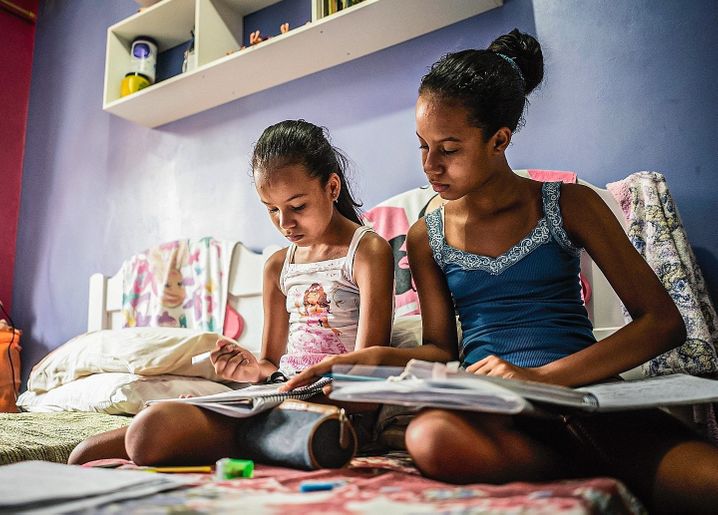
Esther and Deborah are 11 years old, two bright girls who live with their parents in a rundown house in Maré, one of the largest favelas in Rio de Janeiro. Since their father lost his job at a construction company, the family’s food has come from an aid organization.

The twins are in the sixth grade – theoretically, at least. Because in contrast to the private schools, most public schools in Brazil are still closed. And nobody knows when they might reopen their doors again.

When their school went into lockdown almost a year ago, their mother approached the teachers personally and was given a few exercises that she could do with the twins. But the material became increasingly difficult over time and the corrections came back less and less often. At some point in the middle of the year, contact with the school broke off completely.

So they played, watched television and, without really noticing, grew further and further away each month from their dream of attending university one day. Esther and Deborah are falling behind – as are millions of children around the world. And they are losing more than just an affiliation with their school or a year of instruction.

In countries like Brazil, India, Kenya and South Africa, the future of an entire generation is at stake. Life paths are changing direction because homeschooling in city quarters with inadequate internet access is little more than an illusion. Children are unable to continue their schooling because there is no money for private tutors – or perhaps not even a desk or a room where the children can concentrate on their work. Doors are closing forever because parents have lost their jobs during the crisis and the children must now contribute to the family’s survival. Or because girls have become pregnant.

Schools closed last year in more than 180 countries around the world. Some only closed for a few weeks, but in many places, they still haven’t reopened. Because of the hundreds of millions of schoolchildren who are still unable to return to the classroom, the United Nations has warned of a “global education emergency.” Experts see it as the deepest education crisis of the last 100 years. “What we are experiencing is an historical double-shock,” says former Peruvian Education Minister Jaime Saavedra, who now leads the World Bank’s Education Global Practice program. “Never has the economy suffered so much. Never have schools been closed for this long.”

The Inequality Virus

In a report called “The Inequality Virus,” the organization Oxfam notes that the coronavirus has torpedoed efforts to reduce educational disparities. Because development aid budgets have been cut and money has been flowing from the education sector into health care around the world, the disparities are now growing rather than shrinking. Whereas children in Europe have missed 10 weeks of schooling on average, the total is as much as 200 days in large parts of South America, Africa and Southeast Asia.  

The consequences are vast. The United Nations believes that more than 24 million children will never again return to school. World Bank expert Saavedra estimates that 72 million children of Esther’s and Deborah’s age are sliding below the “learning poverty line,” which doesn’t just mean not having the ability to read understand a simple text, but also that the obstacles on the path out of poverty are greater.

The development of many countries could stagnate if children are unable to reach their potential. The World Bank has calculated that today’s schoolchildren will lose out on $10 trillion in future earnings – a total that is growing with each day that schools remain closed.

But that’s not all.

Children like Esther and Deborah are the ones that will ultimately have to pay back the debts their governments are currently incurring in the battle against the coronavirus. It is this generation’s fate: The worst is yet to come.

The two girls are still too young to understand all that, but they can sense that things aren’t going well. They are eager to learn, says their father, who is frequently unable to help with homework because he only went to school for a short time. But they will have to redouble their efforts if they don’t want to lose sight of their dream.

In a certain sense, their father believes, they’ve been lucky. At the beginning of last year, the two had registered for a course that was to prepare them for acceptance to a better school. There were a few meetings in the library before the arrival of the virus. But in contrast to their school, which closed down entirely, the teacher of the preparatory course continued to send them exercises via WhatsApp. Later, they were loaned a tablet computer, enabling them to take part in instruction three times a week.

Trend Reversal

“Math, Portuguese, environmental science,” says course coordinator Aline Ádria, who works for Redes da Maré, a civil society organization. Even if they only managed to make it through a fraction of the planned curriculum, Ádria says, the lessons were valuable because for many students, they managed to slow the process of alienation from schooling.

https://interactive.spiegel.de/gra/ai2html/ausland/2021/0921-entwicklungspolitik/0921-entwicklungspolitik-EN.html Ten of 25 children dropped out of the course in the last several months – because, for example, they no longer had access to a smartphone when their mothers went back to work. “Only 10,” Ádria says. She still sees it as a success.

The Maré is a vast jungle of brick houses surrounded by highways, a place in which drug gangs control the lives of more than 100,000 people. There are 50 public schools in the favela, and even if many people living in the quarter don’t even have running water, progress has been made in recent years. As in many regions of Brazil, the number of children who can read and write has risen. More children are staying in school for longer.

But such trends are now stalling. Around 4 million Brazilian schoolchildren and university students, according to surveys, have dropped out during this pandemic year, the equivalent of one in 12. Furthermore, there is a worrisome pattern: Those who have dropped out tend to be just entering puberty, have darker skin and come from challenging socioeconomic backgrounds.

Several countries are essentially starting over again, says Shelby Carvalho, who works for the Washington-based think tank Center for Global Development and is researching the consequences the pandemic has had for education. There is a risk of progress being reversed in the school system, she explains. “Schools are in crisis management mode, trying to just do what they can to make sure that students actually come back to school,” she says.

Carvalho believes that many countries are now paying the price for never really taking “pre-existing conditions” within their educations systems seriously enough. Even before the pandemic, economic crises around the world had resulted in shrinking education budgets. Globally, teachers are poorly paid or have been laid off and there has been, she adds, a shortage of investment in technological infrastructure for schools, a failure that the pandemic has exposed, despite hurriedly developed radio or TV learning programs.

On top of that, many countries have entrusted the education of their citizens to private school operators. Now that many families are facing a decision between spending their money on food or education, such tuition-financed models are proving inadequate. In Rio de Janeiro alone, some 150 private schools have closed down since the beginning of the pandemic. In India, where many parents send their children to private schools, many of which only cost a few euros per month, an entire system is at risk of collapsing.

The Learning Poor

It is possible that public schools, which are already overcrowded, will be further stretched, believes education expert Bikkrama Daulet Singh, who works for the Indian education NGO Central Square Foundation. Around half of all 10-year-olds in the country, Singh says, already belonged to the “learning poor” before the pandemic, a label that applies to children who have a hard time reading with comprehension. There are now studies indicating that this number has risen substantially as a result of the coronavirus lockdown. Children who were able to read a year ago are now having difficulties.The problem, Singh says, is that these children are destined to fall even further behind. Once they reach a certain age, he says, learning is primarily based on reading comprehension, making it extremely difficult for those who cannot do so to catch up. It is just a matter of time before they drop out of the system entirely.

The Tumkur district near Bangalore is one of those places where the damage done over the course of the last year is visible. As in some other areas, schooling recently resumed here. Girls with braids and boys with neatly parted hair, all in grades six through 12, are walking with their backpacks along quiet roads on a recent February morning. Salman Pasha would be among them but for the fact that he has been working as a mechanic for the last several months.

Salman’s smile is a bit forced as he bends over a motorcycle in a corrugated tin hut situated along the dusty main road through his village. When India shut down in March, both of his parents lost their jobs as day laborers and their savings evaporated quickly. Salman says he sat around at home for months, wasting his days until the lockdown was lifted and his parents heard that a repair shop owner was looking for a cheap assistant. They told him that he would at least learn a vocation if he took the job and could finally use his time more productively.

“I Don’t Want to Be a Mechanic”

Since then, Salman has been changing out batteries, fixing flat tires, going out to buy chai and delivering repaired mopeds to the shop’s customers. He earns the equivalent of 1.70 euros per day. His hands have become dark with oil. Salman seems as though he doesn’t fully understand what has become of his life.

Mechanic Salman Pasha in India: “My parents always told me: If you work hard, you’ll get somewhere.” “I miss school,” he complains. “My parents always told me: If you work hard, you’ll get somewhere.”

And now?

He furrows his brow. “I don’t know what I want to do,” he says. “But I do know one thing: I don’t want to be a mechanic.”

If you ask Salman how old he is, he looks distrustful before answering. Fifteen, he says, which could be true. But it’s the same thing that all boys say in the villages. Fifteen, says a lanky boy with peach fuzz on his upper lip, bragging that he can balance heavy sacks of cement on his head and that he earns 7 euros a day in construction. The boys who labor away at the mango farm? They also all say they are 15.

Fourteen, after all, is the legal working age in India. If they were younger, it would be considered child labor. Another common story told by younger boys to avoid suspicions of child labor is that they are just helping out in the stores or workshops of a relative and aren’t being paid. It is the same thing that many teachers heard when they came to the villages and threatened to turn the girls and boys in to the police if they didn’t return to school.

Many parents are fully aware that having their children work is wrong, but their immediate needs are often more pressing, and education only pays off in the long term.The dire consequences of the school closures affect 60 percent of all schoolchildren in developing countries. Already, an additional 150 million children have fallen back into poverty as a result of the pandemic, and for many of them, schools aren’t just places where they learn something. They are places to socialize and where they develop as citizens. They are safe there from domestic violence and some even get medical care at school. And for millions of children from the slums of Kenya, for example, school was the place where they ate their main meal of the day.

A Full Meal

Since the beginning of the lockdown, 39 billion school meals have been missed, according to the UN. “School closure is a multi-dimensional loss,” says World Bank researcher Saavedra.

The effects can also be seen on a visit to one of the dismal townships on the outskirts of Cape Town, South Africa, where almost every sixth child suffered from hunger during the lockdown. On a recent afternoon, Xanda Booysen is standing in the sun in front of a small, wooden shack held together by rusty nails where she lives with her family. Xanda’s dark eyes shine bright when she says: “I can hardly wait for Wednesday.”

That is the day that her school reopens. And she will once again be able to eat a full school meal.Xanda is a quiet 15-year-old who is in the ninth grade at Lavender Hill High School. In three years, as she says, her diploma should open the world to her. She wants to go to the U.S. to study acting. It’s such dreams that help her endure the day-to-day in the township.

Her school was closed from March to September. It then opened for a brief time and closed again in December. Politicians called it a “phased reopening.” Xanda, though, calls it “not enough schooling.”

To avoid falling behind, she would lie down in the double bunk bed she shares with her three younger siblings to read and do math problems. But she had a hard time concentrating. Xanda grew angry and irate more often, without knowing why. Outside, gunfire would reverberate through the township as the gangs battled. Inside her head, she says, the reverberations were the word “hunger, hunger, hunger, like an echo.”

(SOURCE: DER SPIEGEL)

Basic Education Committee Commends Department and Students of 2020 for a Job Well Done

ANALYSIS done by the Department of Basic Education (DBE) indicates that, under normal circumstances, the class of 2020 would have outperformed the previous year. This is what the Portfolio Committee on Basic Education heard from the department during a briefing yesterday on the outcomes of the 2020 National Senior Certificate exams.

The analysis looked at the results of Grade 10 and 11 exams for both cohorts. The DBE told the meeting that the class of 2020 will be known for its resilience and utter determination to achieve. The matric class of 2020 outperformed the 2019 year in subjects such as home language, accounting, physical science, geography, history, tourism, life sciences, mathematical literacy and mathematics.

Referring to the disruptions to the academic year caused by Covid-19, the committee Chairperson Ms Bongiwe Mbinqo-Gigaba said: “This is truly a case of quality in the midst of adversity”. The DBE said it attempted to protect Grade 12 learners as much as possible during the year, which produced such encouraging outcomes, however the teaching and learning lost will never be fully recovered.

A total of 1 054 321 candidates registered for the 2020 NSC examinations, making it the largest the country has ever undertaken. This comes as the class of 2020 received an overall National Senior Certificate (NSC) pass rate of 76.2%, a drop of 5.1% from 2019. The number of university-entry passes was slightly down for the 2020 cohort, at 36.4% compared to 2019 at 36.9%. Despite these decreases, the class of 2020 exceeded expectations.

Several committee members asked about the retention and drop-out rates of learners. Committee Member Ms Marie Sukers said although she had some concerns, she commended the DBE for the hard work achieved in a difficult year.

“We must congratulate you for the hard work you put in to ensure that our learners are able to start tertiary education this year.” This message was echoed by Ms Nombuyiselo Adoons, who said the DBE “pulled through under extraordinary circumstances”.

“We are grateful that the DBE, the provincial education departments, our learners and the sector as a whole, who pulled through under difficult circumstances,” Ms Mbinqo-Gigaba concluded.

(SOURCE: PARLIAMENTNEWS)

ANALYSIS: How The Class of 2020 Defied COVID-19 Odds To Shine

THEBE MABANGA|

THE unveiling of the National Senior Certi­ficate results this week, which showed that the class of 2020 attained 76, 2% pass rate down from last year’s record 81,3%, should be viewed as a signi­ficant development milestone for South Africa.

To administer an examination for 1 million candidates, including the May/June candidates and progressed learners with the backdrop of the coronavirus pandemic, is nothing short of remarkable.

The Independent Examination Board (IEB), which caters mostly for private schools had to cater for 12 000 candidates throughout Southern Africa with immense dedicated resources.

Announcing the results on Monday, Basic Education Minis-ter Angie Motshekga started off by restating South Africa’s goal in education as stated in the National Development Plan: “by 2030, South Africans should have access to education and training of the highest quality, leading to signi­ficantly improved learner outcomes,” the minister said “The performance of South African learners in international standardised tests, should be comparable to the performance of learners from countries at a similar level of development and with similar levels of access”.

Since the introduction of the National Senior Certi­ficate in 2008, this year’s pass rate is nowhere near the lowest as feared.

The nadir was reached in 2009, the second year of the NSC, when the rate was 60,6%.

From there, the pass rate rose- only to dip slightly in 2015 before going on an upward climb to last year’s record before being pegged back by COVID-19.

Motshekga offered evidence of South Africa’s improved performance in international bench-marks such as Trends in International Mathematics and Science Study (TIMSS).

“The latest release of the TIMSS 2019, explained that in the context of many forms of inequalities, the education system continues to improve on its achievements, and continues to bridge gaps on disciplinary knowledge and educational outcomes.”

The minister noted: “From 2003 to 2019, the Mathematics and Science achievements, increased by 104 points and 102 points, respectively.”

The Free State and Gauteng remained the country’s leading provinces on matric pass rates at above 80%, although both had experienced declines of 3,2% and 3,5% respectively.

A closer scrutiny of the performance from the Department’s School Report and School Subject Report in other key subjects and indicators shows, at best, a mixed bag of results.

An analysis of the 11 most popular subjects in the ­five year between 2016 and 2020 shows a combination of steady upward progress, stagnation and slight regression in others, even before taking coronavirus into account.

Accounting for example had a pass rate of 69.5% in 2016, followed by a slight dip to 66,1% before increasing over 70% in the last three years with this year’s 75,5%- a 3-percentage point fall from last year’s 78,4 %.

Business studies started at 73,4 % in 2016, before dipping to reach 64,9% in 2018 before climbing to 71% in 2019 and reaching a notable 77.9 % last year.

Maths and Science, two subjects that threatened to taint the 2020 exam and had to be settled through a court challenge, saw a fall in pass rates, supporting the quality assurance body Umalusi’s view that there were no widespread irregularities in the exam.

The Maths pass rate stood at 53.8%, down from 54.6% in 2019, while the pass rate for physical science stood at 65.8%, a decline from the 75.5% in 2019.

Over the fi­ve-year period, the maths pass rate was highest in 2018 at 58% while physical science was also the highest in that same year, at 74%.  

COVID-19 exposed the Fault lines that in South Africa and many developing countries, schools are more than just channels to deliver education they also play the role of childcare for younger learners, delivery of nutrition programmes and offering learners social interaction they would otherwise be deprived of.

This raises the question of how much and how quickly the country should invest in online learning resources to attach for virtual learning which would impose increased cost of child-care and feeding cost on parents.

Motshekga pointed out a range of interventions that were out in place to support the class of 2020. These include supplementary study materials, extra classes on Saturdays and holidays as well as radio broadcast, including the private sector driven National Education Collaborative Trust NECT).

The reality is that these interventions, like the COVID-19 Relief R350 grant, will need to be kept in pace for longer if not permanently.

Motshekga expressed relief that Umalusi approved the exam, following the department’s failure to enforce a rewrite of leaked Maths and Science papers.

“Having noted with concern the serious irregularities regarding the leakage of Mathematics Paper 2 and Physical Sciences Paper 2, [Umalusi] is satisfi­ed that there were no systemic irregularities reported, which might have compromised the overall credibility and integrity of the November 2020 NSC examinations, administered by the DBE,” the quality checking body has said.

Failure by Umalusi to recognise this year’s certifi­cates containing Maths and Science would have been disastrous for the department.

It now remains to be seen how universities will treat this year’s Maths and Science pass at admission stage. A key feature of the public education system is progressed learners, those who are promoted to Grade 12 even though they may not be fully ready.

The private education does not worry about these and, although some grab the opportunity and achieve a bachelor pass, over all progressed learners drag down the national average.

This year, there were 70 565 progressed learners enrolling for the exams. 65 499 of these candidates, wrote the requisite seven subjects during the 2020 NSC examinations, with 3016 obtaining bachelor passes.

“The signi­ficance of these achievements is that the 24 244 progressed learners, who passed were there would-be-high-school repeaters and dropouts, who have a golden opportunity to access either higher education institutions, TVET Colleges, and other skills development institutions.”

Motshekga said without progressed learners, this year’s pass rate would have been 81%.

The minister also highlighted the improved performance of “no fee’s school, which continue to receive an increased proportion of government resources.

She said in 2005, 60% of the Bachelor passes, came from the best performing 20% schools in the country. In 2015, “no fee” schools produced 51% of the Bachelor passes, which increased to 58% in 2020.

“Therefore, the signifi­cance of this, is that the gap between the Bachelor passes produced by “no fee” schools versus those produced by fee paying schools has signifi­cantly and progressively increased from 2% in 2015, to 13% in 2020 – a 3% improvement from 2019” Motshekga said.

Yet challenges remain with no fee schools and a [province like Mpumalanga illustrates these. While Mpumalanga fee paying schools are among the top three performers in the country, the province’s no fee schools rank seventh, illustrating gaps in quality.

South Africa now joins countries like India in having girls outnumber boys at various stages of the education system.

There were 72 000 more girls who enrolled for the exams than boys and 66 000 wrote. This trend is likely to feed through to degrees and higher quali­fications.

This is viewed as a positive development indicator, as women tend to be primary care givers and better education given women choice and mobility which allows to free them-selves of abusive relationships and thus reduce the scourge of gender-based violence.

(SOURCE: INSIDE EDUCATION)

Halala! Diverse, Bright Starlets Put Gauteng On The Map

THEBE MABANGA|

A HEALTHY diet and balanced lifestyle, a commitment to your vision coupled with constant prayer and sheer hard work and study, that is what some of Gauteng’s top learners recommend to their peers and contemporaries as a recipe for success.

The bright youngsters were rewarded with prizes including bursaries, laptops and cash at the Gauteng government’s matric results announcement and prize giving ceremony held in Johannesburg on Wednesday.

One of the star pupils Zamahlangu Mahlangu, had to put her appearance at these awards by a year while coming to terms with a debilitating loss.

She was named as the top achiever from a township school and a top achiever from a Secondary School Intervention Programme (SSIP).

The star pupil from Emadwaleni High School in Johannesburg West obtained seven distinctions and is preparing to study bio medical technology at Wits University.

Mahlangu stays with her mother Thoko and brother in Meadowlands, Soweto.

Her mother describes her as a self-starter and straight A student.

Mahlangu was supposed to write her matric in 2019 but lost a grand-father and an uncle in a space of two months which affected her focus to a point where she sat out her matric exams, arguing that she would not give her best.

When she returned last year, the outbreak of COVID-19 caused her mother anxiety as she feared that she may lose a second year of study.

“When COVID-19 happened last year, I was not sure if I will write my exam, but I kept preparing in the hope that we would,” she says.

Asked what her secret is, she notes “there is no secret, it’s just hard work and study.

”The award for a top learner with a disability went to Omphile Makhanya of Prinshofskool in Tshwane West.

Makhanya obtained distinctions in English Home language, Afrikaans, Music and Business studies.

The visually impaired youngster speaks with a confi­dent disposition that betrays her disability, which is impossible to detect through normal interaction. Ahead of receiving her award she told the story of how after attending a mainstream creche, her mother, former journalist Ke­loe Makhanya, felt that her intelligence gift would not be fully realized.

Through parental and schooling support, she simply took a conscious decision not to let her disability limit her.

Her study option includes ­lm and video production and communication science at the University of Johannesburg/ Noelle Vann Der Walt of Hoerskool Menlo Park in Tshwane South came third overall best student in the province.

She says the secret to her success is to lead a balanced and healthy life that was not only focused on academics. This included an almost daily exercise routine. This is why the lockdown proved frustrating for her.

“The early part of the lockdown was frustrating because in the afternoon I would be sitting in my room instead of exercising, which I need to keep my brain fresh and focused.”

Van der Walt said she started exercising as soon as restrictions lifted, which often meant jogging on her own or with her sister. She is now preparing to further her studies at Stellenbosch University, partly aided by a bursary from the Gauteng government.

Blessing Mlambo of the IR Lesolang secondary School in Winterveldt is another star performer under the SSIP programme.

The programme offered extra lessons of normal school hours and when Covid19 struck to make up for lost time the lessons would be offered on Sundays, something which Mlambo complied with without complaining.

“When the lock-down happened, I kept myself motivated through prayer and revisiting my vision board to remind myself what I want to achieve in life” says Mlambo who encourages the class of 2021 to “have dreams, and believe in them”

At the ceremony there were also prizes for the three top schools which went to Hoerskool Menlo Park, Hoerskool Garsfontein and Hoerskool Waterkloof.

(SOURCE: INSIDE EDUCATION)

Limpopo’s Village Girl, Pearl Khosa, Glitters To The Top Of Her Matric Class

LUCAS LEDWABA

WHEN Limpopo youngster, Pearl Khosa, took her place among the country’s top performing matriculants this week, she was still wondering how she had managed to end up there given her tough circumstances.

Pearl would always be exhausted every morning when she reached school after a 45-minute walk from her home village of Shibangwa in the Collins Chabane municipality.

In the afternoon she would walk the same distance back home after a long day of lessons in an overcrowded classroom.

Her home is in the far north east of Limpopo where in the summer months temperatures often soar into the high 30s during the day.

Her school, PP Hlungwani High, is in the Quintile – 1 group in the Malamulele south circuit.

Quintile -1 is the group of schools catering for the poorest 20% of learners.

Pearl earned a total of 1 667 marks to become number 1 achiever in Quintile 1 in Limpopo.

She also scored eight distinctions.

To qualify for the category, a learner must have achieved the highest total of the six best subjects excluding Life Orientation and a minimum of 60% in each of the subjects considered.

She was also one of four recipients of the MEC Special Award.

Limpopo education MEC, Polly Boshielo, said the award was in recognition of those learners from quintile 1, 2,3 and special schools “who have prevailed against all material learning conditions.”

The national lockdown brought about by the outbreak of the COVID-19 pandemic complicated matters even worse for many learners including Pearl.

“I’m not used to studying by myself. We always studied in a group. When the lockdown was announced it made things very dicult for me,” she said about the lengthy period learners were forced to stay at home due to the lockdown.

Pearl said even when they returned to class life wasn’t easy.

“It was difficult. Our school is overcrowded. We had to wear masks and all that,” she said.

Boshielo underlined the tough conditions brought about by the outbreak of the virus.

“We cannot even begin to describe how Covid-19 has unsettled our candidates, teachers, parents and officials, and the challenges they had to go through for us to be here today. It has been a whirlwind journey and suffice to say that all the anxieties will today be a thing of the past,” she said.

Pearl was fortunate to have the support of her parents who ensured that during the lockdown she had enough data to access study material on a laptop she won previously as part of her academic achievements.

Her proud father, Bumani Khosa, said they supported her by also not burdening her with too many household chores.

“At the beginning of the year the school laid down some rules. They told us to reduce the amount of household chores we gave the learners, that we should support them in their school work and not stress them with chores,” he said.

He said although his daughter had excelled previously, they were not expecting she would do this well given the impact of the corona virus lockdown.

“We were not expecting much. It came as a complete surprise and we are grateful. We are very happy,” he said.

Pearl said her proud parents sacrifi­ced a sheep in celebration on Tuesday.

“I’m over the moon. It’s all thanks to the Lord,” she said.

The mathpile is now bound for the University of Cape Town to study actuarial science, a course she learnt about from her teacher while doing grade 10. In announcing the well-spoken youth as a top achiever on Tuesday, provincial MEC Boshielo said: “Pearl, we are proud of you!”

(SOURCE: INSIDE EDUCATION)