Home Blog Page 349

Matric Results: Ramaphosa Congratulates Class Of 2020 For Making It Against All Odds

0

PRESIDENT Cyril Ramaphosa has congratulated matriculants who sat for the National Senior Certificate examinations in 2020, saying they were scholars of courage.

The overall pass rate for the class of 2020 is 76.2 percent, a drop from 2019.
 
“In the face of great difficulties brought about by the COVID-19 pandemic, our learners have been resilient; they have done themselves, their families and their country proud,” President Ramaphosa said.
 
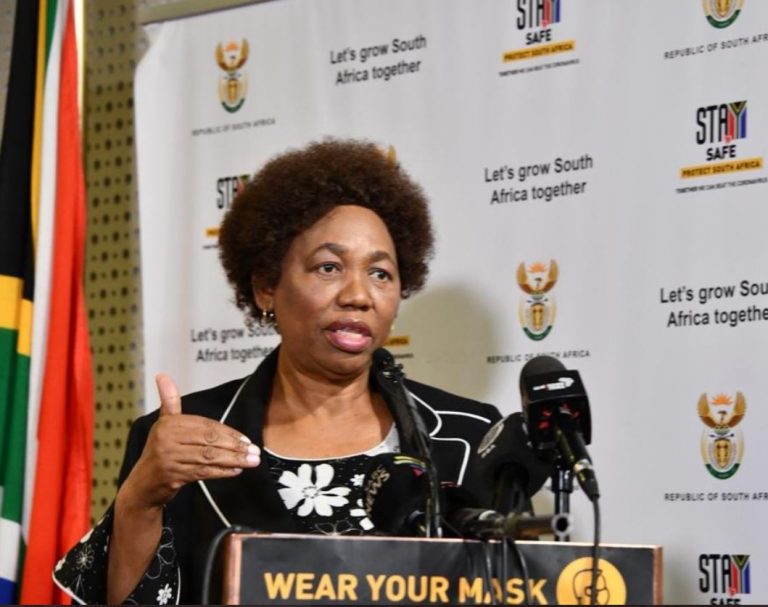
The 2020 matric results were announced on Monday by the Minister of Basic Education, Angie Motshekga, who said had it not been for the COVID pandemic, the class of 2020 could have produced even better results..

Ramaphosa said last year’s matriculants had to prepare for the crucial exam under challenging and highly pressured conditions, necessitating adjustment to the lockdown restrictions as well as extra work and effort.
 
The president thanked the country’s educators, teacher’s unions, school staff and parents for their support to the matriculants throughout the school year.
 
“This support our young people received made all the difference, making it possible for the crucial final year of schooling to be salvaged,” President Ramaphosa said.

He further applauded the 75.8 per cent pass rate among female matriculants, as this lays an important foundation for the empowerment of young women in the country.

He added that the matriculants who sat the exam in 2020 were inheritors of the mantle of the brave generation of 1976.


In a statement issued by the Presidency, Ramaphosa recalled Tebogo ‘Tsietsi’ Mashinini, who at a meeting in Soweto just days before the fateful protest in 1976 delivered a speech to reassure the anxious students.
 
“Against the greatest of odds our matriculants persevered to write their exams last year; as Tsietsi said that day, let us indeed honour the charge they made,” Ramaphosa said.
 
Ramaphosa called on matriculants who did not pass the exam to take advantage of supplementary exams, the DBE’s Second Chance programme and other support mechanisms.

(Source: INSIDE EDUCATION)

MTN Foundation SA: Using Technology To Overcome Covid-related Barriers In Education

THEBE MABANGA|

WHEN South Africa entered the global mainstream of the Covid 19 pandemic with the confirmation of the first positive case in March last year, education was among the earliest casualties as the declaration of the National Disaster, even before the Nation Lock down led to a closure of schools. This has forced entities like the MTN SA Foundation to rethink their approach to supporting education.

“MTN believes in the use of technology to enhance teaching and learning” says Angie Maloka, a senior manager at the MTN SA Foundation.

A key feature of this support is partnership with the department of Basic Education, Department of Social Development, NGOs who provide specialised education as well as technology partners who provide equipment.

Maloka says the MTN Foundation’ strategy is revised every three years and the biggest challenges that the organisation is currently grappling with is Covid19, but also theft and vandalism at schools supported by the company.

MTN’s flagship education programme has been the construction of 350 media centres since 2014, which Maloka points out are more than computer laboratories as they consist of smart boards, printers, data to access the internet as well as off-line content.  

Fourty-five of these are at schools for learners with special needs including those who are deaf and blind, dyslexic and have physical disabilities.

Ten are community-based centres aimed at helping community members, including victims of Gender Based Violence, unemployed women and the youth to access computer training and information related to job or business opportunities.

Last year, the Foundation opened a media centre at the University of Zululand, to help first year students adapt to the use of computers at university.

The bulk of the centres are in primary and secondary schools, which are also loaded with digital content. MTN spent the past three years digitising all language and numeracy content for primary schools and developing content for Computer Applied Technology (CAT)for high school. For high schools, this included developing textbooks for the subjects enabling some schools to offer CAT and IT as formal subjects for the first time.

Teachers remain a vital component of the multi-media centres as they still play a facilitating role even in a digital or virtual environment. For every school that receives a multi-media centre, a minimum of 20 teachers are trained to use the equipment, with a coordinator training more teachers if required.

“And then Covid happened,” Maloka says of the predicament the company faced as its multi-media centres could no longer be accessed.

MTN has since partnered with Siyavula Foundation, an NGO academy that offers digital maths and science content. MTN has zero rated the website so learners can access it for free.

The company has now gone a step further and paid R 3 million a year to have the subscription based content made available for free. The subscription has since been renewed for a further two years, a period which Maloka forecasts Covid will cast a shadow over the education system.

A huge setback on for the MTN programme has been theft, vandalism and break-ins at the schools that have sophisticated equipment.  Last year, the Department of Basic Education reported that 1,577 schools suffered vandalism and theft during the lockdown, with computer particularly targeted.

“it’s heart-breaking, its painful” says Maloka, who was personally informed of a school that suffered a break in at the Vaal area on New Year’s Day. Maloka say such incidents disrupts the lives of learner who have CAT as a matric subject and have gone through Grade 10 and 11 but will now have no access to computers for their matric year.

It also disrupts the lives of teachers who used the labs for research as well as for lesson plans preparation. Finally, the community members who used the centres to prepare CVs and search for jobs have an important resource taken away.

MTN is now developing a fully fledged portal, which will have content, be interactive and have assessment capabilities so learners can be tested online. This will be accessible virtually to far more learners and will be rolled out in the next three years.

To complement the portal, learners will require suitable equipment. To prepare for this phase, last year, MTN piloted the distribution of 800 tablets nationally together with device manufacturer Huawei.

This year, MTN will distribute a similar number and schools are expected to manage these the same way they manage textbooks and loan them to learners.

Maloka acknowledges that the number is not sufficient, but says they hope to partner with other equipment providers to scale up the distribution in the years ahead.

This model will allow for greater access virtually in the event of disruptions like that caused by Covid19 and eliminates the threat of vandalism.

“Technology is a great equaliser” says Maloka of South Africa’s successful embrace of the Fourth Industrial Revolution,” It enables a child in Lusikisiki and one sitting in Sandton or Florida in the United Sates to access the same information when they do research on, say, photosynthesis.” 

Maloka notes that South Africa’s challenge is relatively low penetration of high-speed networks with some rural areas still on 2G network, unable to access advanced functionality.

“This requires government to speed up the process of opening up the digital spectrum, and there will be willing corporates and other partners who will take up the challenge of improving access” concludes Maloka.

(Source: INSIDE EDUCATION)

Egerton Ryerson: Racist Philosophy Of Residential Schools Also Shaped Public Education

0

Conservative leader Erin O’Toole issued a public apology in December: “I said that the residential school system was intended to try and ‘provide education.’ It was not. The system was intended to remove children from the influence of their homes, families, traditions and cultures.” He was referring to comments he made in a meeting with a Conservative club at Ryerson University, where he defended Egerton Ryerson in response to substantial debate and protest surrounding Ryerson’s legacy.

O’Toole’s apology gives us an opportunity to think about Ryerson’s understanding of education and the purposes of schooling in a settler colonial society. As critics rightly noted, it is true that the primary objectives of residential schools were not to educate children. It is also true that these institutions were part of Ryerson’s broader conception of schooling as key to what he foresaw as the evolution of Canada into a “civilized” white and culturally British nation.

Ryerson designed a model for residential schools that was influential in shaping a system that amounted to cultural genocide. He is also credited for founding public schooling in Ontario.

These developments were not contradictory. As writer and cultural theorist Sylvia Wynter notes, western educational systems are inextricable from colonialism. The development of both residential schools and public schooling are the organic outcome of Ryerson’s educational philosophy.

See what others are saying about this article on twitter.

Dramatic social shift

Schooling existed in a variety of forms in what would become Ontario before the middle of the 19th century, but the rise of mass public education in the latter half of the century marked a dramatic social shift.

As chief superintendent of schools in Canada West starting in 1844, Ryerson presided over this shift. He either wrote or directed many foundational educational laws over the next 30 years.

Ryerson promoted the development of mass public education by saying state-run schools were where every child belonged. The Common Schools Act, with the term “common” supposedly meaning universal, was passed in 1846. But the movement of “universal” education did not give rise to equality of opportunity in schooling.

What followed were proposals or legislation pertaining to the exclusion of at least four constructed categories of children.

In 1847, the Department of Indian Affairs asked for Ryerson’s suggestions for a model for industrial schools for Indigenous children. His recommendations would influence the development of residential schools throughout Canada.

In 1850, under the same act that established separate schools for Catholics and Protestants, he legislated separate schools for Black children. Black families were soon forced into separate schools even when they wished to attend common schools.

His plans describe many of the characteristics of what later developed as industrial schools, designed to divert working class children from an imagined future as criminals.

In 1868, he published a report on recommendations for schools for deaf or blind children.

These separate schooling systems had a long-reaching legacy. The last residential school in Canada was open until 1996. Segregated schools for Black students existed in Ontario until 1965. Industrial schools were phased out in the 1930s.

Today, racism in mainstream schooling is an ongoing urgent problem as is school equity or inclusion for Black, Indigenous, low-income and disabled people.

Project of national development

Before he passed any major legislation, Ryerson’s first initiative in his tenure was a report that served as a basis for the Common Schools Act of 1846. It illuminates the philosophy behind Ryerson’s vision.

Ryerson set up the project of schooling as one of national development. This vision was understood in deeply colonial, racialized and hierarchical terms. He wrote:

“We should judge, not by what has been, or is, but what ought to be, and what must be, if we are not to be distanced by other countries in the race of civilization.”

Public schooling was understood as a venue through which children could do necessary work for their country’s “forward development.”

The framework for development here was as an extension of Enlightenment European philosophies of the world and humanity, which were posited as universal while being structured by ideologies of pseudo-scientific racism and evolutionary thought. As Wynter explains, these philosophies emerged amidst efforts to rationalize and justify colonial practices and transatlantic slavery.

Through this lens, advocates of colonial expansion argued that individual humans and races of people progressively develop from irrational, malleable subjects towards higher rationality and advanced scientific capabilities. As such, the state is an ultimate reflection of how advanced, or “civilized,” its people are. In this pseudo-scientific evolutionary philosophy, the “rational, advanced, civilized” subjects who deserve more power — and are justified in inflicting colonial rule, violence and genocide on others — are white European men.

Justifying colonial violence, hierarchies

For Ryerson, creating a framework for public schooling and also for residential schools was part of the same project of furthering Canada’s development. The differentiated schooling he proposed was intended to serve those explicit aims, and the contrast in schooling methods and what Ryerson advocated (or did not advocate) for is stark.

Ryerson described education in common schools as a “charming passage,” in which students were inspired towards lifelong learning and growth.

In contrast, for industrial schools for Indigenous children, the model which the residential school system emerged from, Ryerson argued that “a state of civilization” could only be achieved with eight to 12 hours a day of heavy agricultural labour, starting at the age of four. He mused there would likely be little time for academics.

For deaf and/or blind children, he believed that only an intensive focus on manual trades would be able to combat what he saw as their natural idleness.

For segregated schools for Black students, he refused to support Black parents and advocates when school boards (that answered to him) denied them adequate funds, arguing he had no power to help.

And he suggested that industrial schools for “vagrant and neglected children” be structured similarly to prisons.

Ryerson’s legacy is rightly criticized for his role in creating the model for residential schools. How Canadians choose to memorialize him and understand the systems he developed has wide-ranging implications.

Let’s not ignore how the same racist and colonial philosophy behind residential schools was also foundational to mainstream public education.

(Source: The Conversation)

Class of 2020: Matric Pass Rate Drops By 5.1 Percentage Points, Mainly Due To COVID-19

0

NYAKALLO TEFU

BASIC Education Minister Angie Motshekga has announced the matric results for the 2020 cohort, with the group achieving a pass rate of 76.2%.

This is a drop of 5.1 percentage points compared to the 2019 matric pass rate (81.3%). A total of 607,226 candidates entered for the November 2020 NSC examination, while a total of 578,468 students sat and wrote the exams.

“The overall pass rate, including progressed learners, is at 76.2%, which is a drop of 5.1%. As much as we have a drop, I am really grateful to all South Africans for helping us because I was expecting a blood bath,” said Motshekga, congratulating the ‘astonishing’ matric performance despite the devastation brought on the world by the novel COVID-19 pandemic.

“We also wish to commend all learners, teachers, Senior Management Teams, support staff, parents and our officials for the resilience they have shown in braving the novel COVID-19 pandemic, with a single goal of ensuring that the Class of 2020 receives optimum, but indispensable support.”

She said for the past ten years, basic education department has noted that the NSC pass rates have consistently been improving from 60% in 2009 to above 70% in recent years. 

“The Class of 2020 must be commended for maintaining this trend.  The 2020 NSC overall pass rate, with the progressed learners included, stands at 76.2% – a decline of 5.1% from the record pass of 81.3% achieved by the Class of 2019,” said Motshekga.

“This represents a record of four hundred and forty thousand, and seven hundred and two (440 702) passes – an increase of 7.5% in the number of passes from 2019.  Without the progressed learners, the overall pass rate stands at 81.2% – a 1.1% decline from 2019.”

Motshekga said the high quality passes achieved this year, especially the number of Bachelor and Diploma passes, the overall pass mark, and the passes with distinctions, even in critical subjects, are the hallmarks of the performance of the ‘Class of 2020’. 

“We are of the strong view that, had it not been for the novel COVID-19 pandemic, the Class of 2020 could have been the best performers, since the inception of the National Senior Certificate,” said Motshekga.  

“We are indeed proud of the Class of 2020, which persevered against such monumental challenges that our system was never exposed to in the past.  This Class, has characterised the resilience of the system, which withstood an unprecedented test of administering an examination of the largest number of candidates; faced by the worst pandemic in human history.”

Meanwhile, the South African Democratic Teachers’ Union (SADTU) welcomed the 2020 National Senior Certificate (Matric) results. 

The teachers’ union said the decline in the pass rate, compared to the 2019’s 81,3%, does not come as a surprise following the disruptions experienced in 2020 due to the COVID-19 pandemic.

“The 2020 Class deserves our outmost praise for enduring the most challenging year. SADTU commends all the stakeholders, more especially the teachers and learners who gave their all to prepare and write this crucial examination under difficult conditions,” said Sadtu in a statement.

“We are however aware that some learners withdrew from their studies and therefore did not write the examination due COVID-19 fears. More praise goes to the rural, township and no-fee paying schools for attaining the most quality passes – a continuing trend. These schools who suffer due to lack of resources were the hardest hit by COVID-19 as they had little or no access to blended learning opportunities and therefore could not continue learning from home during lockdown. When schools eventually opened, learners from these schools could not easily adjust to the new COVID-19 environment as their schools could not meet all the COVID-19 protocols.”

Sadtu said as it commended the continuous improvement of results in these schools, we are fully aware of the fact that this has come at a huge prize.

Teachers had to conduct catch up lessons over weekends, holidays, early mornings and late afternoons to teach and prepare the matric class for these examinations.

However, Sadtu said, going an extra mile has become a norm for teachers and learners in these schools as they have to compensate for the inadequate resources they have. 

“The current post provisioning model puts learners in poorer communities at a disadvantage. We therefore call for an equitable funding formula so that we can see poorer schools receiving more resources. Individual school needs should be taken into account when budgeting,” the teachers’ union said.

“As we commend the results, we are however concerned with the continuous decline in the number of learners who take critical subjects like Mathematics, Physical Science and Life Sciences. As numbers decrease, we are equally disappointed with the low pass rate in these subjects. We believe this situation could be turned around if the department increased investment in the foundation phase and early childhood development phases. The Trends in International Mathematics and Science Study (TIMMS) 2019 conducted at the Grade 5 level showed that 37% of learners demonstrated that they acquired basic mathematic knowledge and 28% demonstrated that they acquired basic science knowledge.”

The achievements by province, including the progressed learners, are as follows –

  • The Free State is the leading province at 85.1%, a decline of 3.2% from 2019;
  • Gauteng achieved at 83.8%, a 3.5% decline from 2019;
  • Western Cape achieved 79,9%, a decline of 2.4% improvement from 2019;
  • KwaZulu-Natal achieved at 77.6%, a decline of 3.7% from 2019;
  • North West achieved at 76.2%, a decline of 10.6% from 20219;
  • Mpumalanga achieved at 73.7%, a 6.6% decline from 2019;
  • Limpopo achieved at 68.2%, a 5.0% decline from 2019;
  • Eastern Cape achieved at 68.1%, a decline of 8.3% from 2019; and
  • Northern Cape achieved at 66.0%, a 10.5% decline from 2019.

In the 2020 NSC exams, the top ten (10) districts in the country are:

  • First, is Tshwane South from Gauteng with 89.6%;
  • Second, is Johannesburg West in Gauteng, with 88.1%;
  • Third, is Gauteng North in Gauteng with 87.0%;
  • Fourth, is Johannesburg North in Gauteng with 86.9%;
  • Fifth, is Sedibeng East in Gauteng, with 86.8%;
  • Sixth, is Fezile Dabi in the Free State, with 86.5%;
  • Seventh, is Thabo Mofutsanyana in the Free State, with 85.8%;
  • Tied at eighth, are Metro North in the Western Cape and Ekurhuleni South in Gauteng, with 85.4%;
  • Tenth, is Motheo in the Free State, with 85.2%;

(Source: Inside Education)

Positive Outlook, A Balanced Lifestyle Propelled Western Cape’s Daniel Gouws To Greater Heights

0

WESTERN Cape Education MEC Debbie Schäfer says she’s pleased with the overall performance of the province following the release of the 2020 matric results.

The Department of Basic Education (DBE) announced the 2020 NSC results and top learners on Monday afternoon.

Nationally, the matric class of 2020 has achieved a pass rate of 76.2% compared with 81.3% in 2019 and 78.2% in 2018.

In the Western Cape, MEC Schäfer celebrated with the top achievers in the province.

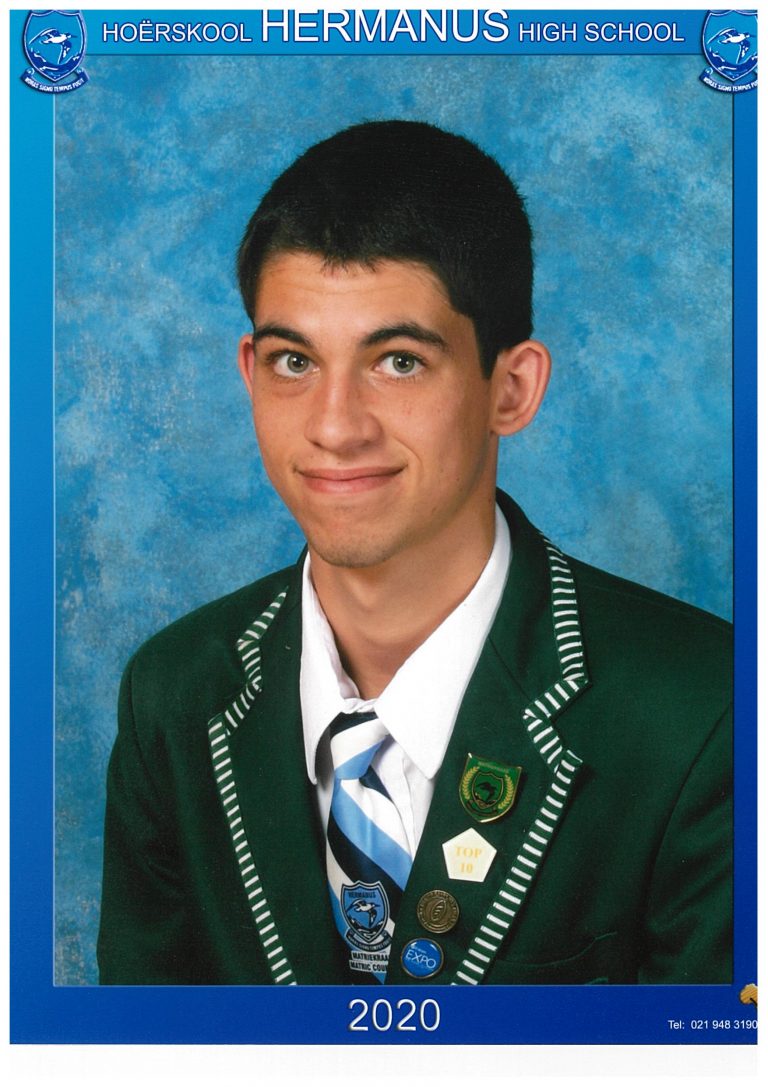
The top two Mathematics boffins come from the Western Cape. They are Daniel Gouws from Hermanus High School (first place) and Veren Naidoo from Rondebosch Boys High School (second place).

DANIEL GOUWS IN HIS OWN WORDS|

“I’m very excited about my results. I am thankful and relieved. Before and during the announcement, I was very nervous as we had no idea what to expect, but now I am very happy.” 

“We had good and dedicated teachers who made sure that we had access to the content for online lessons and ensured it was readily and easily available. More than that, I managed to stay dedicated but as time went on it became very difficult to keep going and staying on track.  Along with a positive outlook and a balanced lifestyle, I am glad I got through it.”

“My parents are quite excited. They congratulated me and my grandmother called me and she is very excited for me. I will be studying electrical and electronic engineering at the University of Stellenbosch this year.”

(Source: INSIDE EDUCATION)

The Free State Had The Highest Matric Pass Rate At 85.1 Percent

0

THE Free State produced the highest pass rate with 85.1%, a decline of 3.2% from last year, Basic Education Minister said on Monday.

Motshekga announced the 2020 Matric results on Monday afternoon, along with the Deputy Minister, Reginah Mhaule.

Over 29 300 Grade 12 learners in the Free State province sat for the 2020 National Senior Certificate (NSC) exams. 

“I’m very happy that indeed in the midst of all the difficulties, we’re able to say 76.2% with more quality passes this year. Once again, the Free State tops the list at 91.6%,” said Motshekga.

“It is interesting to note from the analyses of the performance of the Class of 200 by fee-paying status, that the Free State is ranked first in all its fee-paying, “no fee”, and Government subsidised schools that write the NSC exams; while Mpumalanga’s fee-paying schools are ranked second; but their “no fee” and Government subsidised schools are ranked fifth and sixth, respectively; and Limpopo’s fee-paying schools are ranked third; while their “no fee” and Government subsidised schools are ranked seventh and fourth, respectively.  It is for this reason that we are consolidating our work on an inclusive basket of criteria, which will use other critical variables, over and above overall pass numbers and percentages.”

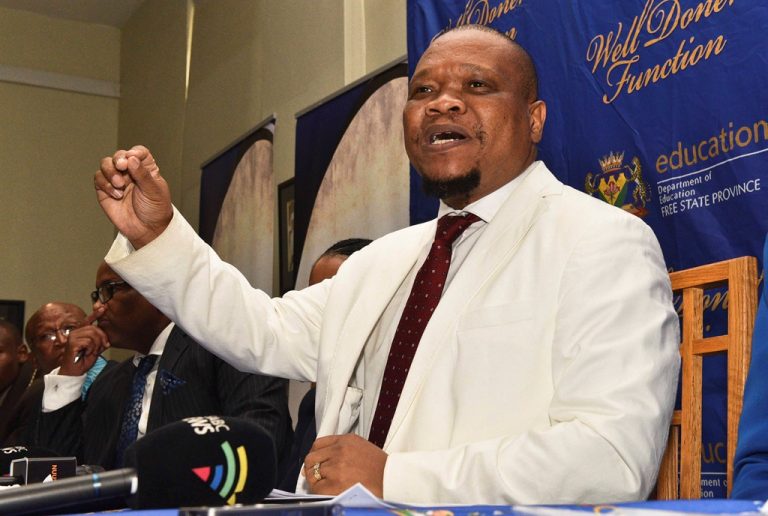
Last year, Free State MEC of Education Tate Makgoe declared that his province’s target for 2020 was to exceed 90% pass rate in matric results but his strategic plans were disrupted by the outbreak of the COVID-19 pandemic.

Makgoe said he was pleased that schools in the Free State continued to perform well under the “new normal” presented by the COVID-19 pandemic and that he is confident teachers and learners will during the 2021 academic year raise the bar. 

Gauteng got a 83.8% pass rate, with a decline of 3.5% from 2019.

Western Cape achieved a pass rate of 79.9%.

Kwazulu-Natal has the most learners in the country and came fourth in provincial pass rates with a pass rate of 77.6%, a decline of 3.7% from 2019.

The Matric Class of 2020 produced a pass rate of 76.2% which shows a decline of 5.1% when compared to last year’s pass rate.

The overall pass mark has improved this year, as well as the passes of distinctions, said Motshekga.

The Class of 2020 is said to have given the best academic performance in the system.

Of the passes, 36.4% were Bachelors passes, 26% were Diploma passes, 13.7% were Higher Certificate passes and only 0.01% were NSC passes.

Out of the top ten districts in South Africa, six are from Gauteng, and three are from the Free State; and one from the Western Cape.

“I am looking forward to our next district meeting sessions, where we share experiences and best practices.  I also wish to actually thank all District Directors for their hard work.  You are the people at the last mile towards the centrepiece of our Sector – our schools, and our children in particular,” said Motshekga.

(Source: INSIDE EDUCATION)

Matric Results: MTN Awards SA’s Top 183 Matriculants With Laptops, Computers

0

NYAKALLO TEFU

MTN SA has awarded the top 183 matriculants with laptops and computers following the announcement of matric results on Monday by the Department of Basic Education.

“As a reward for their efforts and stellar results, MTN Foundation is handing over laptop computers to the top 33 achievers nationally, as well as providing laptops to the top 15 achievers in each province,” MTN said in a statement. 

MTN added that the top 15 learners in the ICT (CAT and IT subjects) and special needs category, nationally, will also receive laptops. 

“Each of the 183 achievers will also receive an MTN backpack filled with stationery,” said the network operator.

MTN SA Foundation’s general manager, Kusile Mtunzi-Hairwadzi, said the past year has tested the mettle of the matriculants, with leaners facing unprecedented challenges ahead of the biggest exams of their school careers. 

“We congratulate them on achieving an outstanding national result despite the challenges,” added Mtunzi-Hairwadzi.

(Source: INSIDE EDUCATION)

University Of Fort Hare Fire: Campus Building Cordoned Off

0

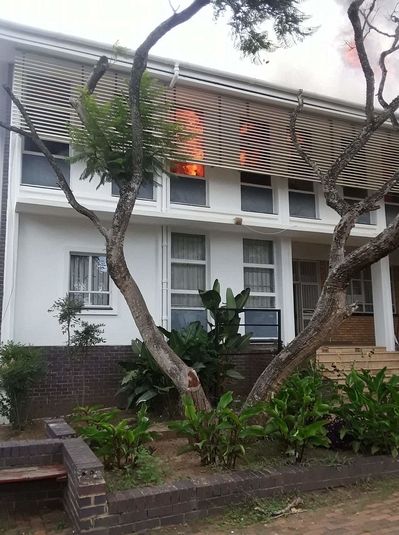
POLICE have cordoned off the Economic Sciences building of the University Fort Hare’s Alice Campus.

A fire broke out on the top floor of the building on Sunday which is situated on the Eastern Side of the campus.

There were no students or staff inside the building and it took several hours to put out the blaze.

The cause of the fire is unknown at this stage and will form part of an investigation.

The Vice-Chancellor Prof Sakhela Buhlungu says the fire destroyed mostly offices and lecture halls on the top floor where the entire roof caved in.

He says staff and security on the scene, used fire hydrants to fight the fire and by the time the Fire Department from Fort Beaufort arrived on the scene, it was already contained.

Professor Bhulungu says the fire broke out at a time when the university was in the middle of engaging the Health and Safety Department on tightening safety measures which will now have to be accelerated.

(Source: Algoa FM)

Teacher Turns Walk To School Into Fun Reading Experience

AN elementary school teacher has come up with a way to encourage reading, outdoor exercise and family time, all done in a manner that keeps everyone safe during the coronavirus pandemic.

In September, when teaching and learning were only taking place virtually in the Tustin Unified School District, Jesse Holmes, a fourth-grade teacher at Hicks Canyon Elementary School in Irvine, devised the Storybook Walk.

Jesse Holmes and some of her fourth graders hols their favorite pages from The Bad Seed, part of her the Storybook Walk she created at Hicks Canyon Elementary School in Irvine, CA, on Thursday, February 11, 2021. Holmes said she wanted to find a way to promote reading, outdoor exercise, and family time, while also providing it at a safe social distance. A new book will be available every two months. Set up along a pathway in front of the school, the Storybook Walk features pages from an entire book spaced out on walls and fences paralleling the walkway.

Students start at one end of the path, read a page aloud and continue along the walkway until the entire book is read.

Holmes said she wanted to offer a way to read that didn’t involve a tablet or computer monitor.

“This is a pathway that a lot of kids use to walk home because they live locally, so they can walk and read it and head home,” Holmes said.

They also can come to campus after school and read aloud with their families to get out of the house, the teacher said.

Her fourth-graders voted on what books they wanted to read, Holmes said.

Currently, they are reading the “The Bad Seed.” Previously, students read “Good Morning Yoga,” which also showed them how to do yoga positions.

The pages of a new book are posted about every two months, Holmes said.

Books to be displayed in future include “You Matter,” “The Day You Begin,” and “Saturday.”

To fund the Storybook Walk, Holmes applied for and received a grant from Donors Choose, a fundraising platform for the educational community comparable to GoFundMe.

Holmes raised funding for 10 projects throughout the school year, including a virtual book club, a campaign which help raise money to buy equipment used for live streaming and virtual recording.

Holmes also used Donors Choose to raise money for fitness equipment and games.

“She has received so many grants for the school,” Hicks Canyon Principal Deena Vela said. “She does all these amazing things. The kids love it.”

(Source: OCRegister)

African Schools Football Competition To Kick Off In DR Congo

0

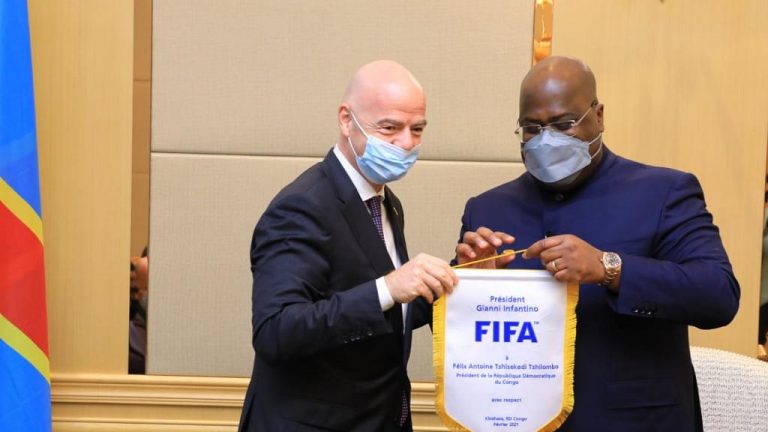
FIFA and the African Union have agreed to launch a schools football competition following a meeting in Kinshasa between FIFA President Gianni Infantino and the President of the Democratic Republic of Congo (DRC), Félix Tshisekedi, who is also the current Chairperson of the African Union (AU).

The two presidents, who had initiated discussions last week by videoconference, met at the Palais de la Nation in the DRC’s capital to further their productive talks of the previous days, and central to their exchange was the need to use the power of football to improve lives and to harness the possibilities it offers to instil positive values in young people.

On this subject, both the FIFA President and the AU Chairperson agreed to use the framework of the existing Memorandum of Understanding (MoU) between the African Union, FIFA and CAF, to organise schools football competition across Africa, which will kick off in the DRC. To initiate the project, a protocol was signed this afternoon between FIFA and the Ministry of Sports and Leisure of the DRC.

“President Tshisekedi is passionate about football, and I’m delighted that we can work together to give hope to all children across Africa thanks to football,” the FIFA President said at the conclusion of the meeting. “Together, FIFA, AU, CAF and our member associations will develop competitions and training for the youth through football, because football is more than a sport, it is a school of life. Through football, you can teach respect for adversaries and rules, learning how to play as a team, how to win and lose. With this schools championship we plan to make these values, which are already strong in Africa, even stronger.”

Subsequently, the FIFA President also had the opportunity to visit the offices of the Congo DR Football Association (FECOFA) and to meet with FECOFA President Constant Omari, the FECOFA executive committee and several representatives of the football community of Congo DR.

(Source: Africanews)