Home Blog Page 353

United States: Pressure Builds On Schools To Reopen During Pandemic

0

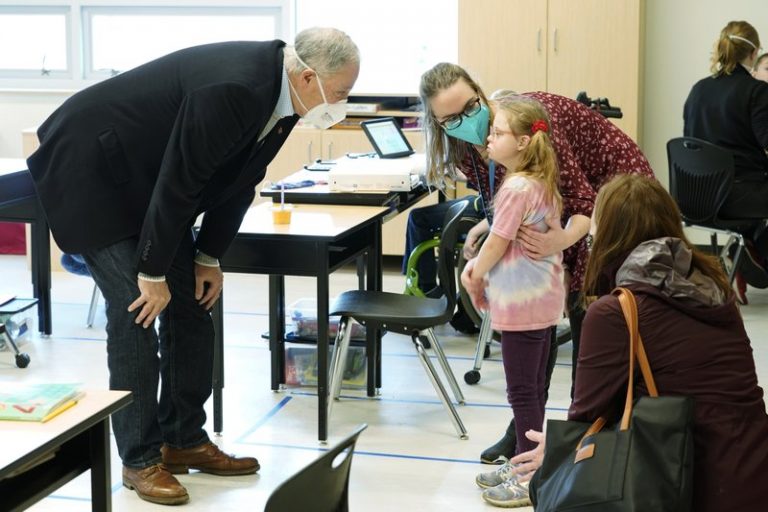
PRESSURE is building on school systems around the U.S. to reopen classrooms to students who have been learning online for nearly a year, pitting politicians against teachers who have yet to be vaccinated against COVID-19.

In Chicago, the rancor is so great that teachers are on the brink of striking. In California, a frustrated Gov. Gavin Newsom implored schools to find a way to reopen. In Cincinnati, some students returned to classrooms Tuesday after a judge threw out a teachers union lawsuit over safety concerns.

While some communities maintain that online classes remain the safest option for everyone, some parents, with backing from politicians and administrators, have complained that their children’s education is suffering from sitting at home in front of their computers and that the isolation is damaging them emotionally.

In Nashua, New Hampshire, the school board voted to stick with remote learning for most students until the city meets certain targets on infections, hospitalizations and tests coming back positive for the coronavirus.

Alicia Houston, whose sons are in sixth and 10th grade, said her biggest frustration is “not being able to help my children effectively,” even though she has quit her job to attempt just that.

“Watching them become a little bit darker,” she said last week. “Watching them fall apart. The emotional and mental health piece is one of the most important pieces. A trauma like this is not something they’re necessarily going to recover from right away.”

Some families and their supporters have argued, too, that reopening schools would enable parents to go back to work instead of staying home to oversee their children’s education.

The U.S. Centers for Disease Control and Prevention said in a recent study that there is little evidence of the virus spreading at schools when precautions are taken, such as masks, distancing and proper ventilation.

But many teachers have balked at returning without getting vaccinated first against the scourge that has killed over 440,000 Americans.

Kathryn Person, a high school teacher in Chicago, wants to continue teaching remotely so she doesn’t risk the health of her 91-year-old grandmother and an aunt battling lung cancer. Person said she trusts the union will fight school officials if they try to punish teachers who won’t go back.

“If they try to retaliate, when that happens we will go on strike,” she said.

In California, with 6 million public school students, teachers unions say they won’t send their members into an unsafe situation.

Newsom, a Democrat, has said he will not force schools to reopen but instead wants to give them an incentive and has proposed a $2 billion plan that has met with criticism from superintendents, unions and lawmakers. It would give schools extra funding for COVID-19 testing and other safety measures if they resume in-person classes. Schools that reopen sooner would get more money.

Newsom told educators that he is willing to negotiate but that certain demands, including the call by unions to have all teachers vaccinated before school starts, are unrealistic given the shortage of shots.

“If everybody has to be vaccinated, we might as well just tell people the truth: There will be no in-person instruction in the state of California,” he said.

The biggest districts, including Los Angeles, San Diego and San Francisco, say the plan sets unrealistic rules and timelines.

“The virus is in charge right now and it does not own a calendar,” the 300,000-member California Teachers Association warned in a letter. “We cannot just pick an artificial calendar date and expect to flip a switch on reopening every school for in-person instruction.”

President Joe Biden’s administration and Republican senators have dueling proposals for stimulus packages that would distribute billions of dollars to help schools get children back into classrooms.

About 10,000 Chicago teachers and staff and 62,000 students in kindergarten through eighth grade were supposed to return to school Monday for the first time since last March. But the Chicago school system extended remote learning for two more days and called for a cooling-off period in negotiations with the teachers union.

Districtwide efforts to vaccinate Chicago’s teachers won’t begin until the middle of February.

In several states, lawmakers are advancing legislation to require more in-person learning.

An Iowa law, signed on Friday by Republican Gov. Kim Reynolds, requires districts to offer full-time in-class instruction to parents who request it. Despite concerns that teachers still haven’t been vaccinated, they are set to return this month.

In North Carolina, Democratic Gov. Roy Cooper faces pressure from GOP lawmakers to reopen more schools. In South Carolina, a bipartisan push to get students back in class five days a week is underway.

“After this pandemic is over, I hope to never do another Zoom call,” said House Minority Leader Todd Rutherford, a Democrat. “I hate it. I can’t stand them. I can’t imagine being in third or fourth grade and having to stare at a screen in order to learn.”

In Utah, the Salt Lake City school system announced plans to resume in-person learning for at least two days per week under pressure from lawmakers who threatened to cut funding.

The schools chief in Washington state is pushing for teachers to get vaccinated when it’s their turn but also insisting they get back to classrooms immediately, shot or not.

“The bottom line is a vaccine is a tremendous safety net, but it is never the thing that is going to create the perfect scenario,” said Chris Reykdal, superintendent of public instruction.

Emily VanDerhoff, a first-grade teacher in Fairfax County, Virginia, and a union official, was scheduled to be vaccinated last Friday. But she and others saw their appointments canceled when the vaccine supply ran low.

The Fairfax County superintendent has unveiled a tentative plan for students to start returning on Feb. 16, but the union says less than 10% of teachers feel it is safe to return.

“Even once we’re all vaccinated, it’s still going to take having lower community spread for people to feel safe and for it to be safer to have students in the schools,” VanDerhoff said.

(SOURCE: AP)
DA Says Gauteng Department of Education Incurred R1bn On Irregular Expenditure In The 2019-2020 Financial Year

0

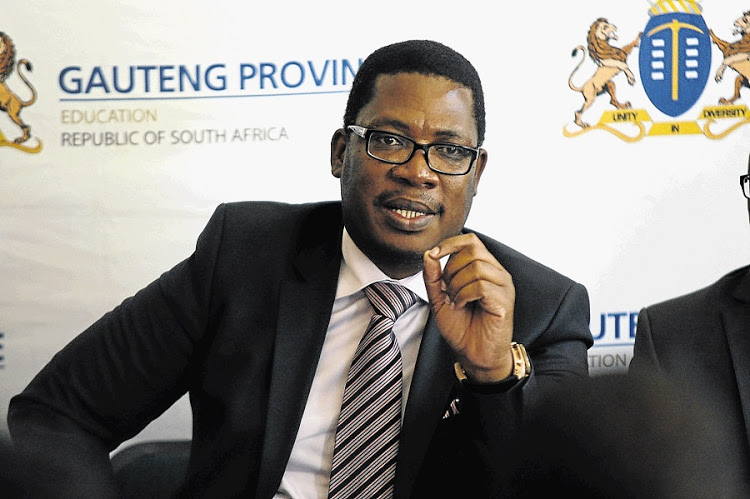
THE GAUTENG education department has incurred an amount of more than R1bn on irregular expenditures for the 2019/20 financial year, according to the Democratic Alliance in Gauteng.

This information was revealed in the department’s 2019/20 annual report, the party’s shadow MEC for education, Khume Ramulifho, said on Wednesday.

“According to the Auditor-General, effective steps were not taken to prevent irregular expenditure amounting to more than R1 billion. This irregular expenditure is as a result of non-compliance in respect of procurement and contract management,” said Ramulifho.

“The reports of more than R 431 million in irregular expenditure purported to be used to decontaminate schools last year clearly confirms that the department is disregarding the Public Finance Management Act (PFMA).”

He said senior management have failed to adequately review and monitor compliance with the PFMA and treasury regulations.

“There are number of allegations of procurement irregularities, financial misconduct, fraud, and theft relating to prior years,” he said.

“The DA has tabled written questions to the Gauteng MEC for Education, Panyaza Lesufi in the Gauteng Provincial Legislature (GPL) to establish the status of investigations into these allegations.”

However, the Gauteng department of education has fired back at the DA after the opposition party claimed R1 billion in irregular expenditure was incurred by the department in the last financial year.

According to department spokesperson Steve Mabona, the party misread the recently released financial report, stating the department only incurred R14 million in irregular expenditure for the 2019-2020 year as disclosed in its financial statements.

Mabona went on to dispute a previous claim that the R431 million the department spent on cleaning and decontaminating schools last year was irregular.

This was because the 2020-2021 financial statements had not yet been audited.

Mabona added that an investigation was underway into the massive cleaning bill.

(SOURCE: INSIDE EDUCATION)

Actress Nomzamo Mbatha Donates Over R1 Million to Help South Africa’s School Pupils

0
ACTRESS and United Nations High Commissioner for Refugees (UNHCR) Goodwill Ambassador, Nomzamo Mbatha, is doing her part in helping ensure that South Africa’s children receive a quality education despite COVID-19. 

Through her foundation, the Nomzamo Mbatha Lighthouse Foundation, the actress has put R1 million towards sending children to school and helping them access school supplies. The foundation teamed up with betting company, Hollywood Bets, to help vulnerable students pay for their school fees and other education-related expenses.

In January 2020, when the partnership began, the foundation was able to donate R500,000 worth of bursaries to tertiary students across the country — and this year they have doubled the commitment. 

The actress took to Twitter earlier this week to share how her foundation plans to help South Africa’s school children this year. 

“In the beginning of the year… we announced that we… are going to be giving away R1 million worth of bursaries to individuals who have outstanding fees, individuals that need registration money, or whatever the need may be,” she said.

The pandemic’s socio-economic impacts have affected school attendance and access to education in South Africa. 

In November 2020 the Department of Education confirmed that more than 300,000 primary school children had dropped out of school possibly due to being unable to afford tuition fees and school supplies.

As 2.2 million adults lost their jobs last year due to the pandemic, a loss of household income could have a direct impact on school fee affordability. 

Furthermore, children living in poverty may have also fallen far behind in class last year and are the least likely to catch up as many schools turned to online learning during the national lockdown, despite a large number of South African households being unable to afford computers or internet access.

Mbatha explained that the entries to apply for a bursary had since closed, however, the foundation is planning to continue its support of South Africa’s school children by donating school supplies for those in need. 

“Together with Unilever as well as our friends at Cotton On Foundation and Cotton On, we as the Lighthouse Foundation will be gifting primary schools in KZN [KwaZulu-Natal], Polokwane, Gauteng, and the Western Cape with jerseys, school shoes, and goodies from Cotton On as well as Unilever,” the actress announced. 

She also said that the foundation would be supporting the Grade 10 learners of a selected high school in the Eastern Cape.

Mbatha then called on South Africans to put forward the names of primary schools and high schools in the announced provinces that may be in need of support so that they can benefit from the foundation. 

 “Please, if you are an educator, or even if you are a neighbour, or even if you are a local, if you know that that school is deserving, send an email to info@nomzamolighthouse.org and tell us about the school and why it deserves for us to support it.” 

She ended the video with a thank you to her followers for believing in the foundation.

She said: “Thank you so much for believing in this foundation and of course, the work that I do, which is, as our motto says, to stand in the gap of society’s most marginalised and society’s most vulnerable.”

(SOURCE: GLOBAL CITIZEN)

Space Science Boost As MeerKAT Leads To Two New Galaxies

WACHIRA KIGOTHO

AFRICA’s space science may not be ready to send a manned craft to the moon, but the recent discoveries of two new giant radio galaxies using South Africa’s powerful MeerKAT telescope have served as a reminder of the continent’s growing space scientific capacity – and the potential of the field to contribute to economic growth, environmental safety and food security.

In the Monthly Notices of the Royal Astronomical Society, on 14 December 2020, Dr Jacinta Delhaize, a postdoctoral research fellow at the University of Cape Town, and her associates reported that giant radio galaxies were spotted in new radio maps of the sky that were created by the International Gigahertz Tiered Extragalactic Exploration (MIGHTEE) survey.

The survey team used the MeerKAT radio telescope that consists of 64 antennas and dishes that are located in the Northern Cape province of South Africa.

Highlighting the importance of the discovery in an article in The Conversation, Delhaize, a physicist and a radio astronomer specialising in galaxy evolution, said the discovery offers fresh insights into the universe.

“Our discovery gives clues about how galaxies have changed and evolved throughout cosmic history,” she said.

The MeerKAT radio telescope is more or less a big eye, allowing African astronomers and their associates to scan the distant galactic universe.

According to Delhaize, based on what is currently known, the probability of detecting giant radio galaxies is negligible – about 0.0003%.

What that means is that, although hundreds of thousands of radio galaxies have been discovered over time, only about 800 have radio jets bigger than 700 kiloparsecs in size. A kiloparsec (kpc) is a measurement of distance equal to 1,000 parsecs or 3,260 light years.

But according to Delhaize, their new discoveries are more significant in that the two giant radio galaxies are each about two megaparsecs (mpc) across, which is about 6.5 million light years. One megaparsec is a unit of measure for distances in intergalactic space equal to one million parsecs.

In comparison, each one of those two giant radio galaxies is about 62 times the size of the Milky Way, the galaxy that contains the solar system, noted Delhaize.

According to the National Aeronautics and Space Administration, a galaxy is a huge collection of gas, dust, and billions of stars and their solar systems, all held together by gravity.

The exciting discoveries were made because MeerKAT is currently one of the best telescopes being used by astronomers to explore the outer universe. Expectations are high that more secrets in the sky will be revealed when MeerKAT will be connected to the Square Kilometre Array, a transcontinental telescope system that will be built between 2021 and 2027 and will be hosted by South African and Australia.

According to a briefing from the Square Kilometre Array project, on completion, the network will eventually use thousands of dishes and up to a million antennas will enable astronomers to monitor and survey the entire sky much faster than any system currently being used.

In this regard, South Africa will host the core of the high- and mid-frequency dishes, ultimately extending over the African continent, while Australia will host the low-frequency antennas.

Improve economic growth

But, while Africa seems to make significant progress in space technology, space science is not limited to peering into the skies in search of galaxies and other extraterrestrial bodies. Versatile satellite technology could be used to improve the continent’s economic growth.

Amid efforts to train future African experts in space sciences, the African Union has assigned the Cape Peninsula University of Technology (CPUT) in South Africa to host the Pan African Institute of Space Sciences, which is one of the five nodes of the Pan African University, a post-graduate education, training and research network supported by the continental body.

Cape Peninsula will work in collaboration with seven other South African universities: Stellenbosch University, the University of Cape Town, North-West University, Durban University of Technology, the University of KwaZulu-Natal, the University of Fort Hare and the University of Pretoria.

The consortium will bring together expertise in satellite engineering, space physics, satellite communications, space navigation, astronomy and Earth observations.

The choice of CPUT to coordinate the PAU’s academic and research programmes in space sciences stems from the university’s successful space education projects in the past decade, having launched several CubeSats, or nanosatellites, into space.

Unlike elsewhere in Africa, South Africa’s involvement in space science can be traced back to amateur rocket launch activities in the 1950s.

Three years ago, the Cape Peninsula University of Technology launched a nanosatellite code-named ZA-Cube-2, a move that, in 2019, attracted R27 million (about US$2 million) in funding from the South African government, for the university to build three more nanosatellites for ocean monitoring and environmental fire detection.

“We will be working with Cape Peninsula to develop their next generation of nanosatellites,” said Dr Phil Mjwara, the director general of South Africa’s Department of Science and Technology.

Early warning systems

Whereas South African universities are highly developed in teaching and undertaking research in a wide range of space-related sciences in comparison to counterparts elsewhere in the continent, space science programmes have started emerging in other African universities, mostly at club level.

In Kenya, eight universities, have space science programmes, mostly in geospatial, atmospheric and Earth observation sciences. Similarly, in Nigeria, six public universities have developed space science courses related to Earth observation sciences and technologies.

Outside South Africa, most of the space science in Africa is geared towards Earth observations to collect early warning data on natural and human-made disasters that would impact on development.

Towards this goal, African space researchers have great interest in remote sensing satellites for the monitoring of climate change, destruction of the environment through forest fires, illegal logging and mining, wildlife management, the spread of pollution and other environmental damage.

According to Professor Sarah Anyang Agbor, the commissioner for human resources, science and technology at the African Union Commission, there is an urgent need to demystify space sciences by popularising it through teaching and research at the universities.

“Space science-based solutions are necessary for the effective management of resources,” Agbor pointed out.

Africa Space Week

But, beyond the long-range sustainable development agenda, the African Union is viewing immediate economic benefits that could be accrued from a rejuvenated African space industry.

For instance, during the first Africa Space Week that will be organised by the African Union Commission in Nairobi, from 20-26 March, space industry stakeholders, decision-makers and solutions and services providers as well as end-users will come together to map out strategies for growing the niche industry.

One of the objectives of the Nairobi forum will be to build a community of space actors that will continuously engage and raise awareness on the importance of the space science industry in the continent.

The event will also provide a platform for strengthening intra-Africa and international collaborations on space activities, as well as identifying capacity development opportunities to nurture nascent competencies of African space managers, experts, researchers and professionals.

Currently, Africa’s space industry is now estimated to be generating more than US$7 billion annually and this is expected to exceed US$10 billion by 2024.

According to Temidayo Oniosun, the founder of Space in Africa, Africa’s space industry is currently undergoing a renaissance.

“In Mali, satellites are helping nomadic herdsmen find water for their cattle; in Angola and Rwanda, satellites are used to connect rural classrooms to the internet, while the industry is entertaining millions with profitable TV programmes across Africa,” said Oniosun.

Estimates indicate more than 8,500 people are currently employed in the African space industry and the industry’s growth is being driven by private economies and international partnerships.

For instance, in December last year, the European Union announced a grant of €82.5 million, an equivalent of US$100 million, for the support of various digital and space technology projects in Africa.

According to Jutta Urpilainen, the European commissioner for international partnerships, the funds will be used to strengthen satellite technology in the monitoring of food security, governance of natural resources and modernisation of air navigation systems.

As the organisers of Africa Space Week pointed out, African decision-makers have realised the potential use of space science and the pressing need for capacity-building in the sector.

One way of hastening the progress is for the African space science community to build on the success stories, such as the new discovery of the two giant radio galaxies, using the South African MeerKAT.

(SOURCE: UNIVERSITYWORLDNEWS)

Want To Study In America? Applications For EducationSA Opportunity Funds Program Now OPen

0

APPLICATIONS are now available for talented South African learners and students from low-income backgrounds interested in studying in the United States are encouraged to apply for the EducationUSA Opportunity Funds Program (OFP). 

OFP supports learners and students to apply for scholarships and admission to colleges and universities in the United States. 

Over the last eight years, the dedicated EducationUSA team has helped more than 2, 200 exceptional South African students make their dream of studying in the United States come true. 

Learners and students with a strong academic record, robust participation in extracurricular activities, involvement in leadership roles, and an excellent community service record are encouraged to apply to the program.

OFP finances the cost of the application process, including registration fees for the required standardized examinations. 

This free of charge EducationUSA Program includes seminars and meetings that prepare South African citizens or permanent residents to apply for and pursue undergraduate or graduate studies in America.  

“My journey was far from linear, it took twists and turns but it ultimately led me to a place where I am living out my dreams,” said Luka Radosavljevic, a South African student currently studying materials science and engineering at Cornell University.

“In 2016, I was working with EducationUSA on my applications to universities in the U.S. My immense financial need only made my chances slimmer but one of the EducationUSA advisers connected me with community colleges and I eventually received a full tuition scholarship,” he said.

Through hard work at community college and perseverance, Luka managed to transfer to Cornell and is on track to complete his studies. 

The OFP undergraduate program is open to current matriculants and gap year students only. Students who wish to pursue postgraduate studies in the United States are requested to complete the graduate application form. 

Successful applicants will work with a team of EducationUSA advisers from April 2021 to August 2022 to try to secure places and financial assistance to begin study in the U.S. in August 2022.  

 Applications close on March 14, 2021. 

(SOURCE: INSIDE EDUCATION)

OPINION| Transitioning To Online Learning: Let’s Not Forget The Perspective Of The Post-graduate Learner

0

BY CECILE GERWEL PROCHES, UPASANA SINGH, CRISTY LEASK, CRAIG BLEWETT and SIMON TAYLOR|

THE year 2020 saw major disruption as a result of the diverse impacts of the global pandemic, COVID-19. Many countries, including South Africa, implemented lockdown measures, which resulted in citizens having to “stay at home”.

This had a severe impact on education, especially for Higher Educational Institutions (HEIs) in South Africa, which resulted in learners suddenly having to depart their institutions of learning.

During this crisis, online learning was considered the best way to support the academic program in most HEIs.

Many students and HEI staff were confronted with the harsh reality of how online learning is impacted by data costs, Internet access, connectivity, technological capabilities, and having a conducive space to work from home.

While much of the emphasis has been on the plight of undergraduate learners in the South African context, our research explored the attitudes of postgraduate students in a South African university, who had to suddenly transition from traditional face-to-face to online learning in the midst of the global COVID-19 pandemic.

Postgraduate learners are typically more mature, tend to have higher levels of motivation, and may also be in full-time employment.

Classes are smaller, and learning is often group and project-based, emphasising high levels of engagement.

Networking is also important, especially for working postgraduate students, who are often taught with adult learning theories in mind.

The emphasis is on trying to make theory as practical as possible, especially for those who work.

Working postgraduate learners also appreciate going to a campus to study in order to have time away from the demands of work and home.

Those who work may be funded by their employers and may have access to a computer/laptop and Internet connection. So it may be assumed that this cohort of students should, in theory, be in a better position to transition to online learning.

Our study has shed light on the diverse experiences of the postgraduate students in the COVID-19 era, and how multiple demands on their time impact their ability to fully engage and embrace the online learning experience.

Our research revealed that postgraduate learners have to balance multiple responsibilities relating to work, family, and studies.

The results highlighted how mature adult postgraduate learners had to sometimes share devices in the home with children and/or a spouse/partner during the COVID-19 pandemic.

Some of those who did not work were concerned about future employment and personal financial worries.

Our research revealed, as depicted in Figure 1 below, how the critical elements of continued support from lecturers as well as the support from course administrators were in facilitating learning.

Some learners also had to assist school children with their own online learning, which was related to schools being closed for a few months during the lockdown period in South Africa.

Figure 1: The Emergency Online Learning Model (EOL) for Commerce Coursework Postgraduate students at a
South African University

Postgraduate learners may require more support from their lecturers, given their multiple demands. Having a private space to study at home is important, as well as being technologically competent to master online learning, more so, for those who are older.

Some students also valued networking with study peers and studying together, which largely disappeared during online learning.

The impact of COVID-19 on their studies led to some experiencing difficulties communicating with other students, no access to the library, increased work pressure, anxiety in respect of the disease, an uncertain future, reduced salary, and for some, complete upheaval in respect of the plans that they had pre-COVID. 

The transition to online learning did however have benefits, with some postgraduate students enjoying having to travel less, saving petrol money, and the ease with which they can log in from anywhere at any time, and access recorded lectures.

It is also clear that there are differences between postgraduate learners who are based in campus residences versus those who are off-campus. Some thus highlighted that while it was difficult to initially transition to online learning, that they were not comfortable in this mode.

Our research emphasised the need for postgraduate learners to be adaptable and engage a new mindset to ensure survival in the era of online learning. Postgraduate learners need to be equipped to become technologically competent and able to balance the multiple aspects of their lives, given that online learning may increasingly become part of the ‘new norm’. 

Our study has led to a few recommendations to facilitate online learning for postgraduate learners:

●     Postgraduate learners require a dedicated laptop, reliable internet connection ideally with uncapped data, and conducive working space. They also require relevant training to assist with transitioning to online learning. It is important that learners are flexible, adaptable, self-motivated, and willing to embrace change, specifically in a crisis.

●     Adult learners need to be disciplined and able to manage their time, given that some may have children and/or are in relationships, and/or have to care for elderly family members and an extended family, which is often congruent with the nature of the collectivist culture that many find themselves in. If online learning continues, then HEIs will need to explore ways to provide support, given the changing context.

●    The timing of the live online lessons with postgraduate learners needs to be carefully considered, given their work and family commitments. This also points to the need for a shift of approach from teaching towards learning where content pacing and engagement are more learner-controlled than lecturer-controlled. 

●     A more personal level of timely contact appears to be the preferred mode of communication when assisting postgraduate learners, rather than generic institution-wide broadcasts. This is both because it enables the addressing of unique needs within a school as well as providing a level of personal contact that is missing in online teaching and learning.

●     Possible future plans regarding the adoption of online learning in HEIs should further explore and incorporate the diverse, lived experiences of postgraduate adult learners, and how best to make online learning work, given the challenging situation that many are in with respect to their time. Postgraduate learners are generally more driven, motivated, and desire self-actualization, but may now perhaps find themselves having to reassess personal goals, with the pandemic having negatively affected many personal objectives and ambitions.

Understanding the diverse perspectives of postgraduate learners can assist HEIs in making adjustments to curricula and teaching pedagogies, to ensure better learner outcomes for both future online learning and planned online learning scenarios.

The perspective of 100% research postgraduate students deserves attention as well. This research also illustrates to policymakers and leadership that a one-size-fits-all approach has limitations.

Emergency measures called for rapid action to be taken; however, moving forward, more attention needs to be paid to the multiple differences in the study body. The Department of Education has called for increased postgraduate enrolments and for South Africa to be a knowledge economy. Given our challenging circumstances, how do we make this happen at our HEIs, in light of online learning?

This research expands the horizon into the implementation of online learning for postgraduate learners during rapid change, characterized by high levels of complexity, to allow continued access to quality Higher Education.

Students are regarded as a key stakeholder or even as a “customer” in some instances in HEIs. As such, understanding their perspective of the transition to online learning is imperative. 

Our research also poses questions for further consideration. Students with disabilities could become invisible online. This means that more care and thought needs to be put into employing in developing online learning material. 

How can networking, peer support, social interaction, and group engagement best be achieved for postgraduate learners in the online environment? Now that online teaching and learning may be here to stay, how do the key stakeholders, including academics, support staff, and parents, actually feel?

We also need to remember that academics themselves faced major transitions, such as remote working and decreased support, so how do academics in particular, who are often the only face the students may see, best serve postgraduate students in the new norm?

  • This article was written by Cecile Gerwel Proches, Upasana Singh, Cristy Leask, Craig Blewett and Simon Taylor from University of KwaZulu-Natal, Durban, South Africa

Prolonged Closure Of Schools In Africa Sparks Fear Of Setbacks

0

IN a setback that may have long-term consequences, the prolonged closure of schools in Africa due to virus-related restrictions has hampered children’s learning, according to a UN official.

Speaking to Anadolu Agency, Rajat Madhok, the chief of communication advocacy and partnerships at the UNICEF office in Rwanda, said there are fears that schools’ prolonged closure due to coronavirus may lead students to drop out of school.

He added: “Without the safety net that schools often provide, students are more vulnerable to abuse, including child labor and sexual violence.”

Saying that it is unfortunate that children in Kigali, Rwanda’s capital, are once again missing schools, Madhok added that he is glad that educational institutions were not closed nationwide.

“We hope this is a temporary closure and the schools will be prioritized for reopening when the next review is done,” he said.

The second wave of the virus led schools that opened briefly to again close their doors, triggering further concerns.

In the Democratic Republic of Congo, all educational institutions from primary to university were recently closed. In Rwanda, schools in the capital Kigali were suspended. The Southeastern African country of Malawi also announced the closure of schools for another three weeks, and many other countries followed suit.

In 2014, when schools were closed in West Africa due to the Ebola outbreak, pregnancy rates among teenagers in Sierra Leone reportedly doubled, and many girls were unable to return to school after they reopened.

According to the World Bank, school closures in sub-Saharan Africa led to lifetime income losses of $4,500 per child – a huge sum for most people in the region.

This may also be compounded by the reduced income of the parents forced to stay at home to take care of the children, especially in households that cannot afford childcare services.

“Whenever possible, schools should remain open, especially primary and pre-primary schools, because the risk of transmission in these settings is lowest,” added Madhok.

Online education

Former Rwanda Education Minister Silas Lwakabamba said based on national statistics, countries should generally elect to use remote learning.

“The world is now headed towards using online learning; there is no other choice. While the internet may not be affordable to all, some technologies are affordable. Students can follow lessons on radio and television,” he said.

Children at different levels in Rwanda took recourse to remote learning since the outbreak of the COVID-19 pandemic. After schools reopened for a brief period, the government once again advised schools to go back to remote learning.

Matshidiso Moeti, the World Health Organization (WHO) regional director for Africa, believes that schools have paved the way to success for many Africans, providing a safe environment for many children in challenging circumstances.

“We must not be blindsided by our efforts to contain COVID-19 and end up with a lost generation,” she urged.

“Just as countries are opening businesses safely, we can reopen schools. This decision must be guided by a thorough risk analysis to ensure the safety of children, teachers, and parents and with key measures like physical distancing put in place.”

She said this is not the first African countries have faced a pandemic, referring to the outbreak of Ebola and other diseases.

Lack of access to hygiene

Guidelines by the WHO and UNICEF to stem the spread of COVID-19 in schools call for maintaining physical distancing, suspending school events to avoid crowding, spacing desks wherever possible, installing handwashing facilities, wearing masks, discouraging unnecessary touching, and keeping sick students and teachers at home.

But experts say most of the schools on the continent lack sufficient water, sanitation, and hygiene infrastructure.

In sub-Saharan Africa, only a quarter of schools have access to basic hygiene. Just 44% have access to basic drinking water and 47% have basic sanitation services, according to a WHO and UNICEF report.

With over 3.3 million confirmed COVID-19 cases and a death toll of nearly 81,000 as of Jan. 21, infections are still rising in the African continent, where most countries decided to reopen schools in early January. But then many of them decided to postpone the reopening and continue with online learning.

(SOURCE: ANADOLU AGENCY)

Light In The Darkness: How South African Schools Should Cut Their Electricity Costs

0

JASON AVRON SAMUELS, LESLIE VAN ROOI, MJ (THINUS) BOOYSEN and SARA GROBBELAAR

DESPITE financial constraints, high costs and the best efforts of principals, electricity usage in South Africa’s schools remains largely unchecked, as schools focus on educational outcomes. The country’s 23,471 public schools use an estimated 3.5 TWh of energy a year.

This is about a quarter of Koeberg nuclear power station’s production and it costs about R5 billion ($330 million).

In a recent study we analysed the energy usage of 13 schools in Stellenbosch, a town in South Africa’s Western Cape province. The sample included poor and affluent schools. We then compared it with what schools use in other countries. This comparison makes it possible to estimate energy efficiency and see where money can be saved.

Although there are large variations, we found that the average school in our sample set uses 450 kWh (“units”) at a cost of more than R865 ($57) per school day. With just over 1,600 schools in the Western Cape province, the collective daily cost for electricity is about R1,385,000 ($92,000). This is an equivalent daily carbon footprint of more than 500 flights from South Africa to London in the UK. It represents a massive impact on the country’s fragile national grid and increases the need for scheduled power cuts – commonly referred to as load shedding.

Each school that we analysed draws at least 35kW from the grid load in the middle of the school day, with most drawing well over 52kW. When extrapolated, the combined load from all of the country’s schools is close to 3.5% of the total load. It can make the difference between one stage of load shedding or another.

The research

From our study we observed that South African schools are lower consumers than their international counterparts, especially those in developed countries. Usage by our sample of Stellenbosch schools ranged from 5% to 10% of North American schools’ usage, and from 19% to 46% of European schools’ usage. This large difference exists in all climates, so we deduced that it’s not due to temperature differences only.

We suggest it indicates inadequate investment in infrastructure in South African schools rather than impressive energy efficiency. Schools tend not to have climate control (for heating or cooling, or both). More importantly, they don’t have enough information technology equipment, mainly computers, especially in the poorer schools.

We also observed a large difference between the daily electricity usage (kWh) profiles of poor and affluent schools in our sample. The median affluent school used 393 kWh/day in term time, about as much as 15 households, and the median poor school a mere 140 kWh, less than half as much.

Based on our study, we see this gap as the result of constrained infrastructure investment at poor schools. We expect it to exist nationally too, as shown in a 2018 Amnesty International survey. Of the 23,471 public schools in the survey, 20,071 had no laboratory (or a computer lab), 18,019 no library, 16,897 no internet and 9,956 no sports facilities.

We identified lighting as a major user of energy in schools – up to 57%.

Cutting energy usage and costs

Generally speaking, energy expenses can be reduced in three ways: by using renewable sources, changing behaviour and improving efficiency. We therefore conducted three studies to explore the potential impact of these measures in South African schools.

Renewable sources of electricity have become very popular, and rightly so. But we have shown that the payback periods for investment in solar photovoltaics (PV) at schools are in excess of five years, despite hours of school usage closely matching the hours of solar generation.

Following success with saving water at schools during a recent drought in South Africa, we performed a similar smaller behavioural experiment on electricity usage. We converted actual usage data from existing electricity meters into easy-to-understand reports expressed in terms of energy, cost and resulting emissions. Compared to the control schools, the schools that received our information reduced their usage and carbon footprint by between 11% and 14%, resulting in average monthly savings of about R4,000.

Lastly, with support from Stellenbosch University’s Division for Social Impact as well as government and private sector partners, we ran a separate energy efficiency campaign at most schools in and around Stellenbosch.

We tested eight different LED lights and found usage could be reduced by 68% per light. We then developed a model to establish how much and when electricity was being used by lighting and how much could be saved. We found that the current lighting accounted for between 31% and 57% of our schools’ electricity expenditure, compared to 14%-25% in developed countries. This means that between 3% and 18% of the schools’ government financial allocation – meant to be a lifeline to schools – was wasted on inefficient lighting.

We found that schools’ annual electricity costs can be reduced by 21%-39% merely by replacing fluorescent lights with the most efficient LED lighting option available. The payback period for LED light replacements is about two years. That’s a good deal quicker than any solar PV investment at this time.

The future

Much can be done to improve electricity efficiency in schools so they can spend more on feeding schemes, human resources, investment in infrastructure, maintenance and after-school programmes.

The use of solar PV at schools is viable and worthwhile, as is changing consumer behaviour and raising awareness. But improving efficiency through light replacements makes for a substantially better investment.

  • August Engelbrecht, Principal Administrative Officer at the Stellenbosch University Engineering Department, also contributed to this article.

COSAS Threatens To Close Private Schools In Gauteng

0

STAFF REPORTER|

CONGRESS of South African Students has threatened to shut down private schools in Gauteng, citing safety concerns in the wake of rising COVID-19 infections.

Members of COSAS protested outside a private school in Roodepoort on Tuesday.

Private schools are not allowed to operate before Monday next week, while public schools are scheduled to open on 15 February.

COSAS spokesperson Douglas Ngobeni said the pandemic affects everyone, including teachers and pupils at private schools, and therefore they were not isolated and immune from danger of contracting the virus amid the second wave of coronavirus.

The education department’s Steve Mabona has encouraged schools to comply with the law.

“We find ourselves in this situation because of some of the behaviour of our colleagues in the private and independent school sector. Before the gazette was publicised, some of these schools were operating. We were receiving information from parents to say some of the schools are in operation,” Mabona told eNCA.

“We said to them, in a communique coming from the HoD, you are encouraged to delay because the infections were increasing at the time.”

(SOURCE: INSIDE EDUCATION)

Mali’s Newly Reopened Schools Struggle to Keep Students COVID-19-Free

0

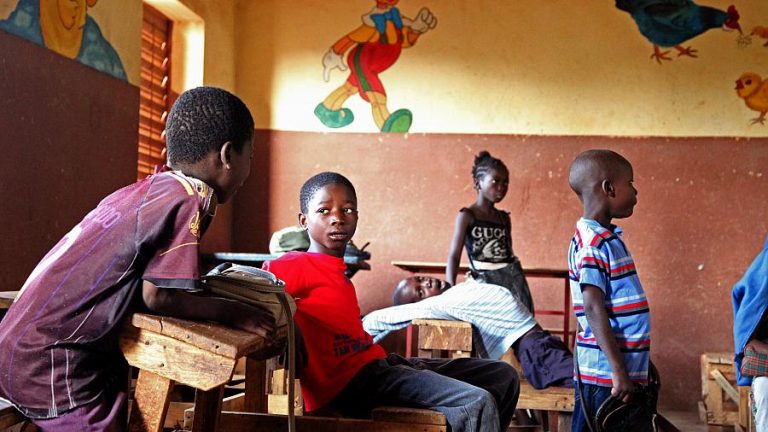
STUDENTS went back to school on Monday in Mali after the government officially authorised their reopening and the resumption of classes — which saw several delays due to the COVID-19 pandemic.

However, not everyone sees the move in a positive light — as although the government has provided masks for the students, some teachers deplore a lack of disinfectant products and soap for hand washing.

Many others doubt the ability to uphold social distancing guidelines in crowded classrooms.

Daouda Mécoba, an educational advisor, shares the recent series of events.

“Since yesterday, the day before yesterday, we’ve been distributing masks because the State has sent us a large number of masks for each child, not only in public schools, even private schools have received them.”

Norama Diabaté, a teacher at the Lassa Basic School, First Cycle, is very adamant about keeping all players informed and accountable.

“We have talked a lot about the coronavirus, we’re trying to get them to understand the dangers and especially the measures that need to be taken.”

The Pandemic Continues and Life Goes On

Mali has officially registered some 8,000 cases of Covid-19 and more than 320 deaths. Many parents and school staff are concerned about these figures rising.

Hamidou Coulibaly, Treasurer of the School Management Committee (CGS) of the Lassa Basic School, appears a bit frustrated with the situation.

“We know that social distancing is not easy at all, because here we have only one public school, and as you can see, there are too many students, it’s hard to manage classes. We need more classrooms, we need more space.”

Malian authorities also announced the resumption of “cultural, artistic and tourist activities” from Tuesday as well as the “reopening of cultural infrastructure and places of recreation.”

(SOURCE: AFRICANEWS)