Home Blog Page 355

Ten SA Boarding Schools Now Charge More Than R270 000 Per Year

0

SOUTH Africa’s most expensive boarding school costs over R330,000 per year – and all of the top ten schools cost above R271,000.

Hilton College is, once again, comfortably the most expensive school in South Africa – and after a R9,660, or 3% increase, for 2021, its R331,550 annual fees are almost R20,000 per year more expensive than its nearest fee “rival”, Michaelhouse.

This fee covers tuition and full boarding – but parents are required to pay some additional expenses like a “consolidated fee” of R450 per term, and undisclosed amounts for pupils who participate in golf, rowing, or canoeing.

For new entrants, as with most elite schools, there’s also a non-refundable acceptance fee – in the case of Hilton College, this is R82,887.50 that “must be paid to the school as a contribution to the school’s development programme”.

For the first time, there are now three South African boarding schools that cost in excess of R300,000 per year – Hilton College, Michaelhouse, and St Andrew’s College, Grahamstown.

In most instances, boarding schools charge a flat rate for both tuition and lodging – but in cases where schools also offer places to day pupils, Business Insider combined the two totals for Grade 12 pupils boarding on a per-term basis, and took the best case scenario of an upfront annual payment to determine the final costs.

Those that do stipulate boarding fees as separate line items in their fee schedules tend to charge between R115,000 and R125,000 per year for the ability to live and eat on campus. 

By way of comparison, a private room in first tier accommodation at the University of Cape Town, with three catered meals per day, costs about R95,000. A typical undergraduate degree at the same institution costs between R60,000 and R70,000 per year, which when combined with the residence fees is in some cases is about half the cost of South Africa’s high-end boarding schools.

Although the top three most expensive schools now all cost in excess of R300,000 per year, the remaining elite boarding schools aren’t far behind.

Roedean School and St John’s College are now charging above R290,000 per annum for the first time. And the remaining five schools in the top 10 cost between R271,000 and R290,000.

Subdued price hikes

Like the country’s most expensive day schools, South African boarding schools have trimmed their year-on-year increases in 2021. 

St Andrew’s College Grahamstown and Kingswood College (a new entrant into the top 10) saw the biggest hikes – both increased their annual fees by around 5%, around R14,550 and R12,960 per year respectively.

Kearsney College, the country’s most expensive day school, hiked its fees by about R12,430, or 4.5%.

The rest of the country’s boarding schools chose somewhat more modest fee increases for 2021 – most stuck to increases around the 3% mark. Just one, Bishops Diocesan College, chose not to increase fees at all for the 2021 school year.

These increases are roughly half those of 2020s – for that school year, the majority of pricey boarding schools saw it fit to increase their fees by 7%.

(SOURCE: BUSINESS INSIDER SA)

Gauteng Government Unveils A Multi-Million Rand Smart School In Katlehong Township

0

THEBE MABANGA

NOMALUNGELO Mthiyane, a resident of Moleleki section in Katlehong township could not hide her excitement when Gauteng Education MEC Panyaza Lesufi and Premier David Makhura handed the state-of-the-art smart school to the community on Monday.

She had attended the school a few years ago and now has her own child about to complete Grade 7 at the school.

She recalls how during her time at the school, it could not accommodate its entire student body.

She and her peers had to be accommodated at a nearby school.

“I am now happy that our children have a beautiful school of their own” said Mthiyane. 

There was a buzz around the opening of the school attended by dignitaries including Makhura, Lesufi and Ekurhuleni executive mayor Mzwandile Masina, among others.

The opening of the school was attended by dignitaries including Gauteng premier David Makhura, Panyaza Lesufi and Ekurhuleni executive mayor Mzwandile Masina, among others. PHOTO: Eddie Mtsweni

Lesufi told community members who attended the event on Monday that the Gauteng government was slowly reversing the legacy of apartheid education by getting children from townships to attend quality schools in their areas, rather than commute to formerly white suburbs to access quality education.

“Our mission is to reverse the Henrik Verwoed legacy of education” said Lesufi, in reference to the former Apartheid prime minister who deemed African children to be deserving of poor education in inferior facilities.

Lesufi said the province is steadily making gains in improving the quality of education although there are still challenges.

Lesufi noted that the province is expecting 120 000 new learners in public schools this week, while next week, Makhura will be exiting 104 000 matriculants from the system.

Lesufi said this shows that the system now retains learners throughout the school career, with falling drop-out rates.

Lesufi however noted that last year about 3000 learners did not come back to school in August after the first wave of the COVID-19 pandemic as learners dropped out while other were kept at home by anxious parents.

Lesufi said his department has now dispatched teams to look for the learner and urged parents to release learners back to school.

Makhura welcomed back 2 million learners to Gauteng schools and paid tribute to teachers who helped ensure that the 2020 academic year was completed under difficult conditions.

“We were anxious about the academic year, as we were anxious about the provision of housing healthcare and other services” Makhura said.

Makhura urged the community of Katlehong to look after the property as government will not have capacity to repair the school if it is vandalized.

He said this is because the government faces pressure to provide housing healthcare and other services due to inward migration that Gauteng experiences.

He cited the example of Menzi Primary School, a smart school unveiled in Langaville, Kwa Thema also in Ekurhuleni, in 2018.

The school was opened in January and within a month of its opening was burgled and vandalized, with some of the equipment stolen.

Makhura cited former President’s Nelson Mandela, who observed that through education the child of a mineworker can become a head of the mine, and former ANC President Oliver Tambo who noted that a nation that neglects its youth, neglects its own future.

He noted that the Gauteng government is building smart schools as part of an investment in youth development.

Tasneem Motara, the MEC for Infrastructure Development in the province officially handed over the school to Lesufi.

Motara said the facility, located on 1,1 hectares of land in Moleleki section, Katlehong, took 78 weeks to complete, slightly longer than planned due to challenges such as Covid and stoppages over local participation.

The school represents an investment of R77 million, with 46% spending on local contractors. This is more than the 30% required to be spent on local enterprises

The school was established in 1994 and is named after youth activist Abram Vusimuzi “Buddy” Hlophe.

Hlophe grew up in Katlehong was active in its youth structures such as the Katlehong Student Congress.

He was involved in underground political activities in the 80s and self-defense units in the early 90s and had a strong Leftist-leaning.

He was killed in 1992, at the age of the 23, in the political violence that gripped the area at the time.

Speaking during the unveiling on Monday, his father Jeremiah thanked the Gauteng government for the construction of the school and naming it in his son’s honour.

He said he hopes the school inspires a generation of young people to be inspired to follow their dreams through education.

Makhura and Lesufi expressed confidence ahead of the release of matric results next week, with Lesufi stating that “majority” of Gauteng’s matriculants had passed while Makhura said he expects that Gauteng will be among the top performing provinces.

Makhura said government wants to see bachelor passes and distinctions produced by township schools.

(SOURCE: INSIDE EDUCATION)

OPINION: Joburg Entrepreneur Keith Michael Offers Three Strategies Towards Bridging The Online Learning Gap In South Africa

0

KEITH MICHAEL|

COVID-19 has presented new challenges and demands on the education system. It has shown that technology is no longer a luxury but an essential component of the education process. 

It has also exposed the historical inequalities in which many disadvantaged families do not have access to the internet at any given moment.

According to StatsSA, South Africa has more than 58 million people, but only 31 million have access to the internet. Mobile phones are the most popular and basic form of access to the internet that most South Africans have. While South Africa has the largest number of active connections, less than 3% of all households have (FTTH) Fibre to the Home connections and only 10% have home Internet access. 

This lack of access has certainly contributed to learners who were not able to learn from home, creating a major gap in their academics.  The challenge South Africa has remains bridging the digital divide that deprives people access to the digital world, which comes with much possibility.

E-Learning provides access – which many children, under “normal” circumstances would not be afforded. Rural areas are highly affected as they continue to lag in internet quality. 

In working towards tackling this issue, there are approaches that government and the private sector can adopt to ensure access for learners across the country.

First Strategy: Creating policies to complement the existing system of education

At least 9 000 schools in South Africa do not have access to the internet and more than 11 000 schools do not have internet labs. According to the department of education, an estimated amount of R16 billion is required to provide computer labs with connectivity.

With the right support and training, digital teaching and learning can become ubiquitous even in resource-strapped environments. Poorer schools should not be disadvantaged because of connectivity and lack of funding in the Information and communications technology (ICT) space.

Government should focus on policies that will integrate traditional and digital learning which has proven to not only be a trend that is being adopted all over the world but an effective way to ensure uninterrupted learning during the pandemic.

A few countries in the world have started to implement the strategy of creating platforms for students to access education while at home. Countries such as Afghanistan, China, Brazil, Argentina, and many others are finding ways to supplement learning for students without access to technology or connectivity. 

These countries have adopted effective digital programmes and are finding ways to deliver digital educational materials and learning resources to the homes of learners. 

Some countries also rely heavily on educational television as a learning resource to ensure that school closure does not exacerbate inequity in access to these learning resources. 

Second Strategy: The intentional and proactive raising of funds

The department of education in South Africa still has a long way in creating access for all learners. It has previously attempted to bridge the digital divide gap by providing learners with tablets, however many challenges arose including lack of funding in the ICT space and the lack of security of the tablets and devices amongst other things. 

Gauteng MEC for Education Panyaza Lesufi previously expressed commitment to providing every child in the region access to education via a tablet or computer – which proves to be a complex task. He also added that the plan was not just to allow children access to tablets in schools, but that pupils would be able to take their tablets home to continue with learning.

The department should focus extensively on working towards solving issues such as lack of funding and theft of tablets in schools. For this financial year, the government put aside over R30 billion to build new schools and maintain schooling infrastructure to improve the education system. Additionally, it had planned to allocate R23 billion towards the national school nutrition programme grant, in which 9 million learners in over 20 000 schools would receive meals daily. 

As many disadvantaged learners remain home, it is a great opportunity to reallocate the funds. Some of the funds should still go towards the nutrition of the learners, through giving them food parcels however a small portion can be invested in strategies towards online learning access.

Many learners in disadvantaged communities understand the importance of education and as such would opt for a chance to be able to continue with their studies uninterrupted. By modifying the education sector, we can open the window of opportunities to those students who would otherwise be affected the most by this shift.

Third Strategy: Creating an integrated Public-Private Partnership approach aided by the telecom sector

There is saying, it takes a village to raise a child. South African children cannot be starved and deprived of getting access to online learning when we have a healthy Telecoms Sector. 

Our government should seek the buy in of parents and private companies to invest heavily in the online learning space.

It will take enormous collaboration and energy from all sectors of society to engage government and the private sector to change the future of our learners with mentorship programmes- sponsorships- job shadowing and guidance on skill shortage starting with Grade R to Matric.

It is great to see that there are companies involved in creating e-learning applications to help the students and these companies are also advocating the free use of their products to aid students in times of distress.

Ed-tech solutions providers, school management services, education boards, ICT companies and education entrepreneurs can pull together and work to solve the issue of access. Identifying gaps and filling them is how every company with resources should conduct itself.

At Lebone one of the main priorities for each year is to find schools that are in need and look at ways to solve their problems. In the past year, Lebone invested more R100 000 towards assisting schools in disadvantaged areas to continue to assist learners by providing stationery and other requirements.

The major Telecom service providers should also be involved through giving free access to internet connectivity service for online education, especially in remote and disadvantaged areas. They can also upgrade the bandwidth of major online education service platforms. Teachers also require guidance on e-learning teaching methodologies and there should be an effort to strengthen online security. 

To reinforce the foundational imperative of online learning and create an effective outcome, excellent retired teachers must be part of the strategy. By uniting towards the same goal, funds can be available to ensure that our learners enjoy learning effectively and can focus solely on gaining the skill sets needed to grow and compete in the South African job market.

  • Keith Michael is CEO of Lebone Litho Printers.

(SOURCE: INSIDE EDUCATION)

SA Reopens Schools Amid Concerns Over Placements, Storm-damaged Schools Ahead Of New Academic Year

0

NYAKALLO TEFU

MILLIONS of learners across South Africa returned back to their classrooms on Monday to mark the beginning of the new academic year, following a two week delay due to the coronavirus pandemic. 

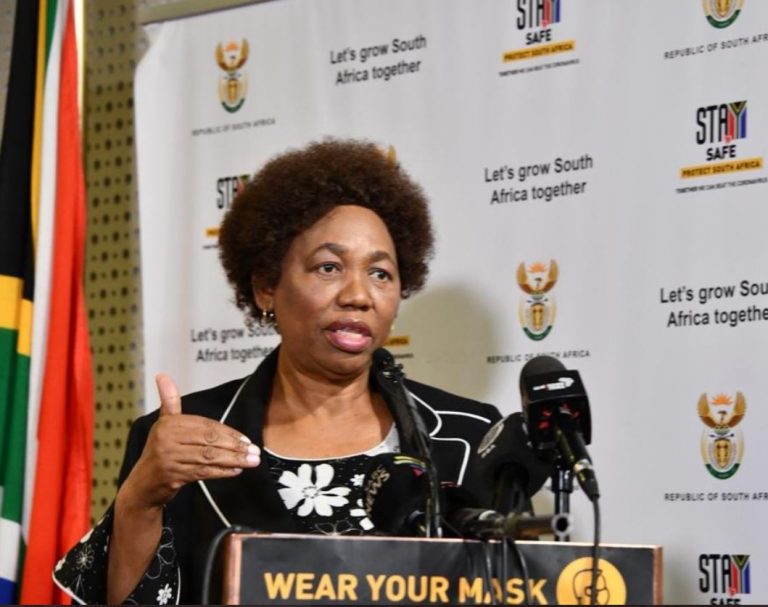
Briefing the media on Sunday, Basic Education Minister Angie Motshekga said it’s all systems go despite the COVID-19 disruptions, delays in school admissions and delivery of textbooks at certain schools.

 “It has been three weeks since we started phasing-in the reopening of schools for the year 2021. School Management Teams returned on 25 January and teachers have been back at work for two weeks now, since 1 February 2021,” said Motshekga. 

She said the health and safety of teachers and learners will be prioritized following concerns raised by parents and teacher unions. 

“We will continue to maintain the delicate balance between health and safety in schools on the one hand, while on the other, we deal with the curriculum gaps, identified during the 2020 academic year,” said Motshekga.

She said according to the latest available figures, 1 169 educators have passed away, as a direct result of COVID-19. 

“This year alone, up to Friday, 12 February, the number of deceased educators stands at 159; while for non-teaching staff we have recorded 63 deaths.  This is really heart-breaking, and we convey our sincere condolences to the affected families,” said Motshekga.

On Monday, various MECs of Education from the nine provinces visited a number of schools to monitor school readiness. 

 In Gauteng Province, MEC Panyaza Lesufi visited the newly built Abram Hlope Primary School in Katlehong, east of Johannesburg.

The Gauteng department of education said the state-of-the-art equipment will benefit hundreds of disadvantaged children in the sprawling township of Katlehong.

Lesufi was joined by Gauteng premier David Makhura, education officials and other dignitaries to handover the school on Monday morning. 

In KwaZulu-Natal, MEC of Education Kwazi Mshengu handed over a R255 million state-of-the-art school – the Anton Lembede Mathematics, Sciences and Technology Academy. 

The KZN department of education said the  academy will put special focus on the Fourth Industrial Revolution and prioritize subjects like Maths, Sciences and Technology. 

The school is in La Mercy has 20 classrooms that will have a capacity of 600 learners. 

The department said Anton Lembede Mathematics, Science and Technology academy has one specialist classroom, a library, three computer labs and three science labs.

In the Western Cape, MEC of Education Debbie Schafer visited Aloe Junior School and various other schools in Mitchell’s Plain to see if they were adhering to COVID-19 protocols and were ready to receive learners. 

“Welcome back to a new school year! After last year’s disruptions, it will be important to focus on working really hard when you are at school. Teachers have been preparing for you to get stuck in straight away,” said Schafer. 

In Mpumalanga, MEC of Education Bonakele Majuba visited the Mkhulu Combined School in the Steve Tshwete Local Municipality together with Deputy Minister of the Department of Basic Education, Dr Reginah Mhaule.

“We are pleased with the safe return of learners in this adjusted opening of schools for 2021, post the Covid19 second wave peak. Much appreciation to Mpumalanga MEC for Education, Mr Bonakele Majuba for ensuring readiness,” said Dr Mhaule.

 Eighteen schools in Mpumalanga are not open due to the inaccessibility of roads at Bohlabela and Ehlanzeni Districts due to the Tropical Cyclone storms. 

Meanwhile, two schools in the Eastern Cape failed to reopen after they were several damaged by tropical storms.

(SOURCE: INSIDE EDUCATION)

Parents Urged To Continue Paying School Fees During COVID-19

0

BASIC Education Minister Angie Motshekga has urged parents to continue paying school fees during the COVID-19 pandemic.

Speaking at a briefing on an array of issues, she said there are two types of public schools in the country, the fee-paying and no-fee paying schools.

She explained that fee-paying schools are allowed to charge school fees as determined at the annual general meeting of the School Governing Body (SGB).

“Therefore, the payment of school fees in such schools is mandatory,” she said at Sunday’s briefing.

She also cited the South African Schools Act (SASA) of 1996, which states that SGBs of fee-paying schools have the powers to enforce parents to pay school fees through legal means.

“The liability of parents is determined through an affordability formula, which can be used to determine whether a parent can be exempted partially or fully from paying school fees.”

Meanwhile, she also raised concerns about schools that are charging registration deposits and exorbitant amounts to pay staff the Section 42 bonuses.

This was despite the moratorium placed on the public service salary bill.

“We must advise schools to avoid such temptations, as the first is illegal. Secondly, it is completely unreasonable especially as it is done and enforced under the devastation caused by the COVID-19 pandemic.”

Basic Education Employment Initiative (BEEI)

The Minister announced that 290 000 young people have been employed on contract as education assistants and general school assistants in the response to President Cyril Ramaphosa’s Fiscal Stimulus Package announced in April 2020.

The aim of the initiative is to address COVID-19 related academic disruptions by providing assistance in dealing with lingering systemic challenges and support to workers directly impacted by the pandemic.

In addition, the portion of the R7 billion allocated for the BEEI is targeted at saving SGB funded posts in public and government subsidised independent schools.

“We are working hard to ensure that the delayed payments of some of these young people are addressed immediately.”

NSC exam results

The Minister confirmed that the 2020 National Senior Certificate exam results will be released on 22 February 2021.02.15

Candidates who sat for the exams can expect to receive their statements on 23 February 2021 from their schools.

Motshekga said the pandemic requires the entire nation to support its children, and indeed cooperate and support schools on a sustainable basis.

“I urge every one of us, to play our part in keeping our communities safe and healthy,” she said.

(SOURCE: DEVDISCOURSE)

School Reopening: More Than 16,000 Learners Still To Be Placed In Schools, Says Angie Motshekga

0

BASIC Education Minister Angie Motshekga says the reopening of schools was on track despite 16 117 learners still waiting for their admissions to be confirmed.

Briefing the media on the state of readiness of schools on Sunday, Motshekga said all provinces were experiencing a high demand for space in schools, especially in Grades 1 and 8.  

“The Council of Education Ministers (CEM) met yesterday and the matter of school admission, was identified as critical, because the system cannot afford to see any learners being left behind. It was agreed that provinces would work with speed to place all the learners in the next week,” said Motshekga.  

“CEM appeals to parents and guardians to cooperate with officials at the District level, in order to accelerate the placement process.”

Motshekga also gave an update on the 2020 matric examinations, saying for the first time in history of the National Senior Certificate exams in South Africa, the department had to administer combined exams involving more than 1 million candidates.

“We must say, that the exams were administered well, barring a few glitches there and there,” said Motshekga.

“I must report that we are on schedule for the release of the 2020 NSC exam results on 22 February 2021; and candidates should get their statements of results, on 23 February 2021 from their schools.”

Motshekga also gave an update on the impact of the coronavirus on the basic education sector.

She said the latest available figures indicate that 1 169 educators have passed away as a direct result of COVID-19.

“This year alone, up to Friday, 12 February, the number of deceased educators stands at 159; while for non-teaching staff we have recorded 63 deaths. This is really heart-breaking, and we convey our sincere condolences to the affected families,” said Motshekga.

(SOURCE: INSIDE POLITICS)

Umalusi Approves 2020 Matric Results Despite Leaked Exam Papers

0

NYAKALLO TEFU|

UMALUSI, the quality council for general and further education and training, has approved the release of the 2020 national examination results, stating there were no systematic irregularities despite the two leaked examination papers. 

This comes after two matric examination papers – Mathematics and Physical Science – were leaked during exams. 

The leakage of the two exam papers led the Department of Basic Education to announce the rewrite of the two papers as instructed by the quality assurer, Umalusi. 

“Umalusi has taken note of the evidence-based reports on interventions and improvement strategies implemented by all assessment bodies including the Department of Basic Education and the positive impact of these on the overall assessment systems as well as on teaching and learning,” said CEO Dr Mafu Rakometsi. 

The final decision was that learners will not rewrite following complaints from teacher unions, parents and society at large. 

Umalusi said the investigation into the leakage of Mathematics and Physical Science papers is not yet complete and is continuing.

“This means that Umalusi can still nullify the certificates of candidates who are found guilty of leaking the two papers even after receiving results,” said Dr Rakometsi. 

The Department of Basic Education will, according to its plans, release the examination results on 22 February 2021.

“About the case presented to the Pretoria High Court in December 2020 regarding the rewrite of examinations, Council has reiterated the statement issued in December last year that even though it was disappointed by the outcome of the case it respects the decision taken by the court,” added Dr Rakometsi. 

(SOURCE: INSIDE EDUCATION)

Classroom Management: The Do’s & Don’ts of Hybrid Teaching

LARRY FERLAZZO| 

What are the do’s and don’ts of hybrid teaching?

The odds are that, at one point or another, all of us teachers are going to end up teaching in some version of a “hybrid” environment this school year.

That could mean teaching some groups of students two days each week in the classroom, while they spend the rest of the time doing asynchronous online work. Worst of all, it could mean teaching students simultaneously online and face to face.

This series will share the experiences of educators who have already begun teaching in this kind of situation.

Who would be better people to learn from?

Today, Amber Chandler, Tara C. Dale, and Holly Spinelli offer their hard-won experiences…

You might also be interested in School Closures & the Coronavirus Crisis, which lists over 60 previous posts. However, it does not include columns that have appeared over the past six weeks…

Making connections is key

Amber Chandler is the author of The Flexible SEL Classroom and a contributor to many education blogs. She teaches 8th grade ELA in Hamburg, N.Y. Amber is the president of her union of 400 teachers. Follow her @MsAmberChandler and check out her website:

Let me preface this post by saying this: If you ask me next week what the Do’s and Don’ts of Hybrid Teaching are, the answer very well may have changed. My middle school has adopted a hybrid model where I see Cohort A on Monday and Thursday, Cohort B on Tuesday and Friday, and everyone is virtual on Wednesday. Wednesdays are for asynchronous work, and teachers hold office hours for students who need additional support or just to check in. While students are at home, they are completing activities that are extensions of the work we did together, but new content is being pushed out via videos, projects, and assignments. As I said, these Do’s and Don’ts are a very preliminary look at the hybrid model, but I will share what I’ve learned so far.

DON’Ts

I wouldn’t typically start with the negative, but in times such as these, warnings are at least as important as the “what works.” The number one piece of advice that I have is counterintuitive, at least for me. Plan one, maybe two, weeks out at a time. I created digital notebooks for my students that take us through the first quarter. If I could do it again, I would definitely not. Why? Somehow, while planning for the looming “new normal,” I completely forgot just how many disruptions to best-laid plans happen during a regular school year, never considering just how many changes would be happening during a pandemic. So far, Chromebook distribution, school pictures, and just this week two days of benchmark testing have thrown me off my well-laid plans.

The second big Don’t that I’m going to suggest is also a bit counterintuitive. As an ELA teacher, I wanted to jump right into a novel to kind of “get us on our way” toward normal and routine. Not the best idea I’ve ever had, to be honest. I really hadn’t imagined that there was so much time in between seeing students in person, but when you think about it, Thursday to Tuesday is an entire mini-vacation, and no matter what, students are not accustomed to outside of school time being a school day! We’re doing well, and getting things established, and I’m pretty sure that any first unit would be bumpy, but if I were to advise, I’d say maybe this year we take things in smaller chunks.

DO’s

Even though it is going to take longer, and even though we feel we are already running behind, get to know your students. It’s a nearly impossible task, frankly. In my district, kiddos are six feet apart, wearing a mask. I’m having a hard time trying to even know names and their half-visible faces. I use a survey to find out their perceived strengths and weaknesses, their likes and dislikes, and provide a section where they can tell me anything I might not have asked but need to know. This year, so many answers broke my heart, but I need to know this information! For example, “I don’t feel like I fit in anywhere” and “My parents are very worried about COVID, so I haven’t been allowed to do anything with friends since this all started.”

The other tip is to help kiddos make connections. In my district, the hybrid model is by last name. I’ve had a number of students tell me that their friends aren’t in school with them, and they are nervous. They’ve been out of school a long time, and though we’ve been dying to start teaching, they just want to reconnect. My co-teacher and I had students create digital lockers and share them with the class. Then, after everyone shared them, we would ask, “Tell us about Jeremy” and have the class remember what was in his virtual locker. It was heartwarming to see kiddos connect over Harry Potter, sports, and in one class, two girls who were obsessed with mermaids.

Now, more than ever, we need to help students with the social and emotional while also slowly wading into the shallow end with academics. Once we are in a better groove, we can all push students out to swim, but for me at least, the key to a successful hybrid model is going to be the same as any other year: relationships and flexibility!

“It.Is.Possible”

Tara C. Dale is a national-board-certified high school science teacher in Gilbert, Ariz. She is the co-author of The Science Teacher’s Toolbox. Tara was a finalist for Arizona State Teacher of the Year in 2014 and has since traveled the country advocating critical thinking, creative problem solving, and effective communication to be taught in every classroom:

It’s possible. I had to teach in a hybrid setting for two weeks. It. Is. Possible. It’s possible to be successful as a teacher and a learner.

For the first five weeks of school, we were online full time. Teachers were strongly encouraged to report to the building, but students were not on campus. Then for two weeks, we followed a hybrid model. Half of my students attended school except on Wednesdays, when everyone was online.

If we return to a hybrid model, there are some things I will do the same and other things I will do differently.

DO THE SAME

I flipped my classroom. Students were expected to read an article or watch a video on the day they remained home so that they could complete an activity when they returned to the classroom the following day.

At first, I was nervous about a flipped classroom because I know not every student will arrive having read the article or watched the video. But I quickly realized that it was OK because those students who did the preparation work were happy and willing to help those who did not. And because there were so few students in my classroom, I could easily support those students who didn’t have the necessary background knowledge.

Flipping my classroom allowed me to spend more time interacting with my students in a meaningful way. I was able to check in on each student personally to ensure they were learning. It’s the greatest benefit of a smaller class size! Not one student fell through the cracks because I was there to fill those cracks. And because of the social-distancing requirements, students could work in small groups, collaboratively solving problems and analyzing data.

DO DIFFERENTLY

I attempted to give each class its own due date. This was a logistical nightmare! It was difficult for me to effectively communicate to parents and students when work was due and then it was difficult to track whose work was turned in on time and whose work was late. If we return to hybrid learning, I will assign everyone the same due date for the same work.

DO THE SAME

I spent a lot of my planning time differentiating. Students were coming to school in very small groups (I had only nine in one of my classes!). This meant that during the class period, I differentiated for students who needed extra support, such as those who are learning English or have a disability. The work for each student was personalized, and I immediately noticed they were more engaged and their grades steadily improved from when we were online full time.

DO DIFFERENTLY

I found that not many students attended the mandatory online Wednesday classes. For various reasons, only 3-5 students in each of my classes attended online after the hybrid model was initiated. Knowing this now, if we return to a hybrid model, I will not plan to teach new material on Wednesdays but instead will use it as a study hall and tutoring time. This time is better spent in intervention than in enrichment.

DO THE SAME

I was hesitant to have students work in small groups. When I spoke with my administration, they approved collaborative work as long as my students were wearing their masks and not sharing materials. I had students perform labs, solve problems, and participate in engineering challenges (can you build the strongest boat?). There were times I had to get creative with the materials. For example, I had gloves available when students were working together and I was sure to have a CLEAN materials section and a DIRTY materials section on opposite sides of my room so that students only interacted with materials that I had sanitized.

Reflecting on my hybrid teaching experience, I rather enjoyed it. It was great to get to know my students on a personal level since that was a difficult endeavor when we were online. I reveled in the opportunity to provide immediate feedback to my students as they worked and in the ability to give them the chance to correct their work on the spot. It was fun doing activities instead of lecturing, which unfortunately had been the majority of what online learning looked like. I felt like a teacher again. I felt like a successful teacher again.

It. Is. Possible. It is possible to teach in a hybrid model and to learn in a hybrid model. My students reported that they enjoyed the collaborative time with their peers and the deeper learning they experienced while performing classroom activities. It was fun and it was meaningful, for both of us!”… the most difficult circumstances under which I have ever taught …”

Holly Spinelliis a students’ rights activist with specific focuses in alternative, strengths-based pedagogies where students’ voices are the catalyst for their education. She is a New York public high school teacher, an adjunct instructor at SUNY Orange County Community College, and an active member of the NCTE’s Committee Against Racism and Bias in the Teaching of English:

School districts across the country are navigating their buildings’ reopening since the COVID crisis shutdown in March. The hybrid teaching model—a compromise that attempts to find middle ground among groups who want in-person instruction and those who want remote instruction—is a popular reopening strategy. As an educator whose daily schedule includes both hybrid and fully remote course sections, I can unequivocally say that the hybrid model does, at times, present some of the most difficult circumstances under which I have ever taught, but I continue to learn and I remain hopeful as each day passes.

My district is slowly phasing students back into the buildings after a fully remote reopening. The students are divided into four cohorts that can enter the building one day a week for in-person instruction. The other cohorts currently stream into their classes on the days their cohorts are not physically in school, and the fully remote students stream into the classroom for live instruction, too. My mind still spins when I think of the schedule’s rotation.

This is my 14th year as a full-time teacher, and the hybrid model has me feeling like a first-year educator all over again. No matter how upbeat I try to be, I cannot shake the notion that even if the camera is perfectly angled and the streaming-caption function is engaged, I’m not providing either student group—in-person or remote—with the best possible instruction. The first week of hybrid teaching left me physically and emotionally drained. Most days, I felt like I was teaching two classes at once. Thankfully, I have supportive colleagues from near and far with whom I can collaborate and share best practices to minimize the difficulties we face in the hybrid classroom model. We turn to social media and group texts to help one another do our best in our less-than-ideal teaching situations. Here are some of the Do’s and Don’ts that may help others who, like me, struggle with trying to balance it all in the hybrid teaching model:

Do: Take the time to get to know your students and to build community. Just like any other classroom experience, the students and the educators deserve to learn together in a space that is welcoming and inviting for all participants. One strategy to try is doing a brief check-in with students in the beginning of class. Taking an interest in their health and well-being goes a long way to open dialogue that creates empathy and builds trust among everyone.

Don’t: Assume that students already feel comfortable with one another because they once attended classes together in the same building. No matter how “close” a school community may seem, not all students are comfortable around their peers.

Do: Be honest with your students. If you are trying something new or if you aren’t sure how something works, tell them. This is a moment where students can showcase their talents with a tech feature or offer an idea that may work better for their classmates and for you! Trust me, I’ve had students share alternative ways to approach classroom activities, and the lessons turned out better than I could have ever expected.

Don’t: Pretend to know it all. Arrogance has no place in a classroom, especially in a hybrid classroom. Know your limits but don’t be afraid to let colleagues or your students know that you don’t have all the answers. You may be surprised by the amount of grace and understanding that they will offer to you if they see your sincerity and your vulnerability.

Do: Allow students to show their participation beyond turning on the camera or talking on screen. Offer students alternative means for participating. Using a chat feature, crafting group-discussion questions, or other nonverbal activities can keep students engaged in ways that do not require speaking or appearing on camera.

Don’t: Force students to “participate” in ways that suit your preferred style of communication, especially with the “cameras on” rule. Participation can and should be differentiated to help ease students into this new learning environment. If students are streaming into an online platform, they may not feel comfortable sharing their home environments with their classmates or their educators. Furthermore, students may not be in their own homes or they may have to travel elsewhere for reliable internet access, so mandating children to keep their cameras on can cause a student to feel anxious or stressed, which may result in a student choosing not to attend class altogether. Think beyond the typical “classroom” and ask yourself if the camera is on to meet the students’ needs or your own. Students can engage in meaningful learning without appearing on camera.

Do: Ask for student input. They will help you navigate the kinds of activities and strategies that work best for them in the hybrid platform. If we are sincere when we say that students are the center of our classroom communities, then their voices and ideas should be part of their new educational experience.

Don’t: Make assumptions about students’ familiarity with technology. Not all students “know” how to use technology for educational purposes. Some students have limited access to technology, and they may be embarrassed to share this information with others. Avoid phrases like, “You know this already,” and “You’re young and you use apps all the time.” Not all technological experiences are equal.

Do: Be patient with yourself and your students. This is new for everyone, and we cannot expect teaching and learning to exist as they did in a pre-COVID setting. Focus on what you can manage and ask for help if you need it.

Don’t: Expect everything to go smoothly, because it won’t, and that’s OK. Learning is part of this hybrid process. Stick with what works best for you and slowly add new things at a pace that makes sense for you and your students.

(SOURCE: EDWEEK)

Women Take Longer To Finish Their PhD Studies, Publish Less

0

WOMEN need an additional six months to finish their PhDs and have one less paper accepted for publication during their doctoral studies, compared with their male counterparts, according to the findings of a peer-reviewed paper published in the open access journal PLOS ONE.

As in other regions, women’s representation in science, technology, engineering and mathematics (STEM) has grown over time in Africa.

Still, only 30% of STEM researchers in Africa are women, which is roughly the same as the global average of 28%.

The paper, “Making it to the PhD: Gender and student performance in Sub-Saharan Africa”, was based on a study by four researchers, including Monica Fisher, Moses Osiru and Violet Nyabaro at the International Centre of Insect Physiology and Ecology, Nairobi, Kenya.

The other contributor was Ruth Mendum from Pennsylvania State University in the US.

The study was prepared to inform the preparation of a gender strategy for the Regional Scholarship and Innovation Fund (RSIF), a Pan African science, technology and innovation initiative owned and led by African governments in partnership with the World Bank and the government of Korea through the Partnership for Skills in Applied Sciences, Engineering and Technology.

One of RSIF’s major objectives is to correct imbalances in the number of women and disadvantaged groups in the fields of applied sciences, engineering and technology in Africa.

RSIF also aims to build African university capacity to provide relevant training in these fields and to ensure continued investment in the scaling up of the education and workforce in applied sciences, engineering and technology.

The study was conducted among 227 alumni of major STEM PhD programmes in 17 African countries: Benin, Botswana, Cameroon, Côte d’Ivoire, Ethiopia, Ghana, Kenya, Madagascar, Malawi, Mali, Nigeria, Senegal, South Africa, Sudan, Tanzania, Uganda, and Zimbabwe.

In this study, STEM includes formal and natural sciences and the social sciences, specifically economics and psychology, both of which are critical to understanding applied issues such as food and nutritional security.

The factors positively associated with the publication output of women and men include having an excellent research opportunity (working on cutting-edge research or with a prestigious faculty member), having a PhD supervisor who provided regular professional guidance and was supportive of one’s goals, participating in a scientific writing course, and completing the PhD in Southern Africa compared to East and West Africa.

The study findings suggest that having a female supervisor, attending an institution with gender policies in place, and pursuing the PhD in a department in which sexual harassment by faculty is perceived as uncommon are enabling factors for women’s timely completion of their doctoral studies.

Juggling work and home

According to the paper, women who pursue careers and embark on PhD training face consequences for their work productivity when they get married and have children.

These life events associate to fewer publications and slow the completion rate of their studies – something that does not equally apply to men.

This is unsurprising, given that women often assume greater household and child-rearing responsibilities.

The report acknowledges that it is difficult to have a career in science without regularly publishing. So, if marriage lowers women’s ability to publish during their PhD studies, there is no reason to think that would change upon graduation.

“This means that, if getting married reduces a woman’s tendency to publish, that challenge is ongoing and likely has long-term implications for a woman’s career in STEM.

“Of course, women can have it all, but having a STEM career and being a wife and mother is challenging,” said Fisher, one of the researchers.

The role of supervision

A puzzling result is that excellent supervision, which was defined as having a supervisor who provided regular professional guidance and moral support, had a stronger impact for men than for women.

Specifically, having an excellent supervisor “associated to a 200% increase in men’s publication output but had a negligible (6%) impact on women’s publication output”.

“It may be the case that PhD supervisors push men students harder than women students to publish if they subscribe to the gender stereotype that women are less capable than men in scientific fields,” says the report.

Osiru, another of the study’s researchers, said that, at present, most supervisors are men, which implies that, if more women pursue careers in science, it will grow the number of female supervisors, further benefiting other women in future.

Having a woman supervisor reduced the time to PhD completion by 18% for sampled women alumni.

Female supervisors can serve as important role models for women students, help counteract negative gender stereotypes that are pervasive in STEM, and provide students with a more favourable mentoring experience.

Self-efficacy in STEM

The authors pointed to empirical studies suggesting gender differences in thoroughness, cautiousness, and self-efficacy, and hypothesised that these attributes might partly explain why the impact of good supervision on publication output is less felt by women than men.

Self-efficacy is the belief in one’s capability to succeed in a domain.

The study measured self-efficacy by first asking the survey respondents how much the following factors mattered to the success of a PhD student in their discipline: intelligence or talent, educational preparation, hard work, networks (who you know or work with), and luck (for instance, landing opportunities simply by being in the right place at the right time).

Respondents were then asked to indicate on a five-point Likert scale the degree to which they had what it takes to be successful.

Among the sample of PhD alumni studied, 100% of men agreed or strongly agreed that they had what it took to be successful, compared with only 40% of women.

The authors posited that lower self-efficacy may, in turn, make women more hesitant than men to submit their papers for evaluation.

Testing this hypothesis was not part of this study but was suggested by the authors for future research.

Recommendations

Two priority interventions emerge from the findings: family-friendly policies and facilities that are supportive of women’s roles as wives and mothers; and fostering broader linkages and networks for women in STEM, including ensuring mentoring and supervisory support tailored to their specific needs and circumstances.

For example, the Consortium for Advanced Research Training in Africa covers the full costs of women doctoral fellows who are breastfeeding mothers to bring their child and a babysitter along for a month-long residential training seminar.

The programme also allows fellows to stop the funding clock during their maternity leave, if they request it, with funding resuming upon their return to doctoral studies.

Also, in Senegal, a national programme “Case des Tout-Petits” helps to ensure affordable and adequate childcare for children aged 0-6 years.

These community-managed childcare facilities originally targeted rural localities and lower-income populations but have expanded to include universities, among others.

The University of Gaston Berger in St Louis, Senegal, one of the institutions included in the study, has a childcare facility on campus.

“Facilitating an environment for women to expand their networks and engage with women role models or mentors can greatly increase women’s sense of belonging and their interest to continue their education and career transition in STEM fields, which are largely male-dominated,” says the article.

There is a need to make women’s contributions more visible and normalise diversity in science, for example, by sponsoring women doctoral candidates to attend and present at conferences where women in science are key speakers.

The report also recommends a diversity of role models for women with STEM careers, which is important because scientific careers are demanding and the choice to reduce one’s family obligations in order to focus on one’s primary interest should at least be part of the conversation about women’s lives.

(SOURCE: UNIVERSITY WORLD NEWS)

Cricket: SA U19 2021 Squad Selected

0

DANIEL Smith from SA College High School as been named the captain of the 15-man South Africa U19 squad after the conclusion of the Cricket South Africa (CSA) U19 Franchise Cubs Week.

Smith enjoyed a productive campaign amassing 301 runs in his four matches with Jordan Hermann ending up as the leading run scorer with 364 runs at an average of 91.00.

Caleb Seleka from Potch Gym spun his way to 9 wickets at just shy of 3 runs per over and the paceman from Parkland College, Darian Naidoo also snatched 9 wickets.

The SA U19 squad will now feature at the 16th team in the CSA 3 Day Provincial Cup and One Day Challenge scheduled to start in March, 2021.

Western Province’s Smith, who less than 24-hours earlier led the Six Gun Grill Cape Cobras to the Cubs Week title, has been named the captain of the junior Proteas.

The left-hander enjoyed a prolific campaign with the bat as he recorded 301 runs across four appearances for the Cobras and finished second on the run charts behind Jordan Hermann from Northerns (Titans).

Opening batsman Hermann amassed 364 runs at the tournament for the Titans at a staggering average of 91.00, including the highest individual score of the week of 139 against the Knights in the opening round of matches.

He is one of the three Titans players who were included in the national u.19 squad. The other two are Dewald Brevis and Jan Hendrik Coetzer.

In addition to the 15-man squad, five players have been included as part of an extended training squad. Among those five is Selo (Valentine) Kitime, who also represented the Titans at the tournament.

Shukri Conrad will again be the coach of the team and the SA u.19 squad will feature as the 16th team in the CSA 3-Day Provincial Cup and Provincial One-Day Challenge, scheduled to start next month.

The 15 players in the main squad were capped during a closing ceremony on Sunday night. The five additional players will travel with the core squad and will receive their caps if they are selected to compete in the Senior Provincial tournaments.

“This is the first of many steps as we build towards next year’s ICC Under 19 World Cup, in the West Indies. It is a long way to go and other players will have the opportunity to make their way into the squad,” said Conrad after the capping ceremony for his new team.

(SOURCE: SA SCHOOL SPORTS)