Home Blog Page 355

90% Of Matric Examination Papers Have Been Marked – Basic Education Department

0

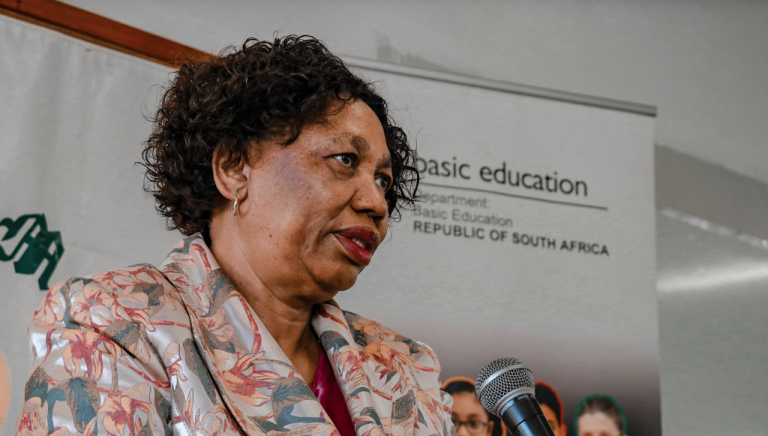
The Department of Basic Education says 90% of the marking of matric exams has been completed, four days before the scheduled cut-off date.

Briefing the media on Wednesday, Basic Education Department’s Director-General Mathanzima Mweli said the marking of matric examinations was almost complete. 

Marking started on 6 January this year, with over 45 000 markers appointed to complete the task. 

Director of National Assessment and Public Examinations, Priscilla Ogunbanjo, said a number of provinces have completed marking ahead of schedule, and these included Gauteng, KwaZulu Natal and Limpopo.

Ogunbanjo said the department has appointed 611 capturers who have already started with mark-capturing, hoping to complete this by 25 January 2021. 

“Most marking centers across the country are rounding up today and tomorrow, most of the provinces are left with one subject to mark,” said Ogunbanjo. 

The department said since the start of marking, over 315 matric exam makers across the country have tested positive for COVID-19, 168 of them tested at the gate and were not allowed to enter the marking centers. 

“The department managed to replace 70% of the markers who were not able to make it after their appointment,” added Ogunbanjo. 

The department has thanked markers who worked tirelessly to complete the marking of the matric examinations. 

(SOURCE: INSIDE EDUCATION)

Opinion: Why Does Grammar Matter?

0

AFTER 20 years of teaching academic writing to both native speakers and English language learners, I can attest that at some point, just about everyone asks me why, or even whether, grammar matters.

There is more than one way to define grammar. Linguists – the people who study language – define “grammar” as a description of how a language operates. Though some people use it to bully people for making mistakes, grammar is not a way to decide if language is right or wrong. Everyone makes mistakes, and the English language is amazingly flexible in how its pieces can be put together and understood.

That’s because English is a “living” language, actively spoken by people worldwide. It grows and changes, picking up new words and new ways of constructing meaning all the time.

All kinds of factors influence the way people talk, including regional variations, age, ethnicity, education level and technology. People from Indianapolis use English differently than people from Alaska or Georgia. And American English sounds and works differently than the English spoken in England, Jamaica or India. But they are all still considered English.

Through reading, writing and speaking, you have already learned quite a bit about how English works. You began your education in grammar when you first started using simple sentences. For example, my son had to learn to say “carry me,” not “carry you,” when he wanted to be picked up. That’s grammar, even though you didn’t always call it that.

The school subject we call grammar is the next step. It establishes some ground rules that attempt to define what can be considered a more uniform, established version of English. There is a complicated history of how those rules were created and who benefits from them. The end result is that schools teach the kind of English students in their country will be expected to use in public, at work and in formal writing.

An outdoor classroom set up in New Delhi, India, for the pandemic. Indian children learn a different kind of formal English than American children do.

Writing exists to be read. So the reader must be considered when you construct sentences. You write differently for your friends, your parents and your teacher. The grammar you learn in school helps you meet the expectations of the reader. They also learned a similar grammar in school.

Wait, did I just make a grammar mistake using “they” – plural – to refer to a singular “reader”?

Well, maybe not. Remember how I said English is a living language? The use of “their” as a singular, nongendered pronoun is one example of how the language is changing. Traditionally, I would have written “he,” because for so long male was the default gender. As the social thinking about gender changed, people began to write “he or she” to be more inclusive. Now we can use “they,” which is all-encompassing.

That shift will continue to be debated, as will starting a sentence with a conjunction like “but” or “and,” which used to be discouraged. But I think I get why these changes are happening: They mimic speech.

Studying grammar helps make communication between people clearer. Once you understand your own language and appreciate its patterns and varieties, you can more easily understand how other languages are constructed, making them easier to learn. Being able to understand across languages allows you to share your ideas and the ideas of others more broadly.

Grammar matters a lot – just maybe not for the reasons you thought.

  • Laurie Ann Britt-Smith is the Director of the Center for Writing, College of the Holy Cross.

(SOURCE: THE CONVERSATION)

Gauteng Schools Should Refrain From Opening Until February 15 – Lesufi

0

NYAKALLO TEFU|

GAUTENG Education MEC Panyaza Lesufi has issued an ultimatum to both public and top private schools, saying they should refrain from opening their classrooms until February 15.

This follows last week’s decision by the Department of Basic Education to delay reopening of schools by another two weeks due to a spike in COVID-19 cases.

Until recently, it was believed globally that children were by and large mildly affected by COVID-19 and that their role in the transmission was limited. But now, that perception is changing with new emerging research – conducted by the US Centers for Disease Control and Prevention (CDC) – proving the point that children did indeed contract the virus and transmit it to others.

Lesufi was speaking during a school visit to Helpmekaar College in Braamfontein, Johannesburg, on Monday after the school sent newsletters to parents in the last few days, informing them that 1 200 boys must return to school despite government’s decision to delay reopening of schools by another two weeks.

“No school should be allowed to operate in Gauteng until February 15. Any other school, public, private or independent that is operating in Gauteng, are in defiance of the State. We will persuade them to a certain limit. If not, we will act and we will do it within the confines of the law,” said Lesufi. 

Lesufi visited the school to find out why it was letting learners return after government instructed schools not to reopen until February due to growing concerns over the increasing COVID-19 infections. 

“This decision to delay the reopening of schools by two weeks needs to be gazetted so that we have a leg to stand on,” Lesufi added. 

Lesufi said his department expected all schools to be closed until February 15.

Department of Basic Education announced on Monday that learners will only return to school on February 15 while staff will return on February 1 and School Management Teams (SMT) on January 25.  

“The people who advised us to close are now complaining but the fact of the matter is that we listened to health officials when making such decisions,” said Lesufi. 

Commenting on the COVID-19 vaccines, Lesufi said school children needed to be prioritized as well.

“I really believe we must protect the future and give the vaccine to the children. In the list of people who will be vaccinated, include the children. They are our future,” said Lesufi. 

(SOURCE: INSIDE EDUCATION)

2021 Tertiary Academic Year To Begin In March – Nzimande

NYAKALLO TEFU

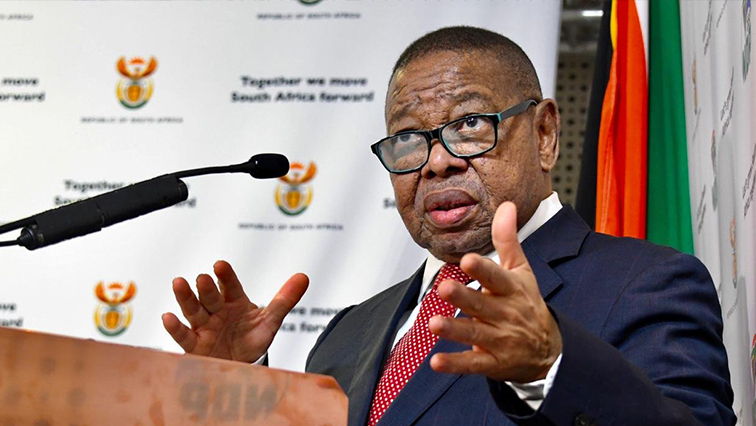
Minister of Higher Education, Science, and Technology, Blade Nzimande, says universities will open for first year applications between March and April.

Nzimande briefed the media on Monday on his department’s plan for higher institutions of learning following the decision by Basic Education Department to delay the reopening of schools by two weeks. 

“Universities will only open at the end of March and beginning of April to accommodate first year students. However, some returning students may be called to return earlier by their respective institutions.” 

He said all universities have agreed to open in line with the release of the matric results in February 26.

“We have given instruction for now that institutions should open between March and April 2021,” said Nzimande. 

Meanwhile, the minister said the National School Financial Aid Scheme (NSFAS) has received 750 000 applications for the 2021 academic year. 

“This is a 25% increase from the previous year. We had 185 000 more applications and 61% of them are SASSA beneficiaries,” said Nzimande. 

Nzimande said DHET has been getting requests to extend applications for NSFAS for 2021. 

“We are not going to reopen NSFAS applications. We gave people four months last year to apply. We will certainly not reopen applications for 2021,” added Nzimande.

He also touched on the issue at the University of South Africa (UNISA), where it is being reported that first-time applications will be cut by 20 000.

“Enrolment planning is very important. Universities give the department its enrolment plans. However, UNISA did not do this and so we had to assist. We found that they are admitting more than the university can accommodate,” said Nzimande. 

(SOURCE: INSIDE EDUCATION)

Amid COVID-19 Surge, South Africa Delays Reopening Schools

MOGOMOTSI MAGOME

FACED with a rapid resurgence of COVID-19 overwhelming the country’s hospitals and driven by a more infectious variant of the virus, South Africa has delayed reopening its schools.

The variant is having far-reaching consequences for Africa’s most developed nation as several countries trying to prevent its spread have stopped or reduced flights with South Africa.

South Africa has the highest prevalence of COVID-19 in Africa with a cumulative total of more than 1.3 million confirmed cases, including 36,851 deaths.

In the last 24 hours, the country has recorded 13,973 new infections and 348 deaths.

South Africa’s 7-day rolling average of daily new cases has risen over the past two weeks from 22 new cases per 100,000 people on Jan. 2 to 26 new cases per 100,000 people on Jan. 16. according to Johns Hopkins University.

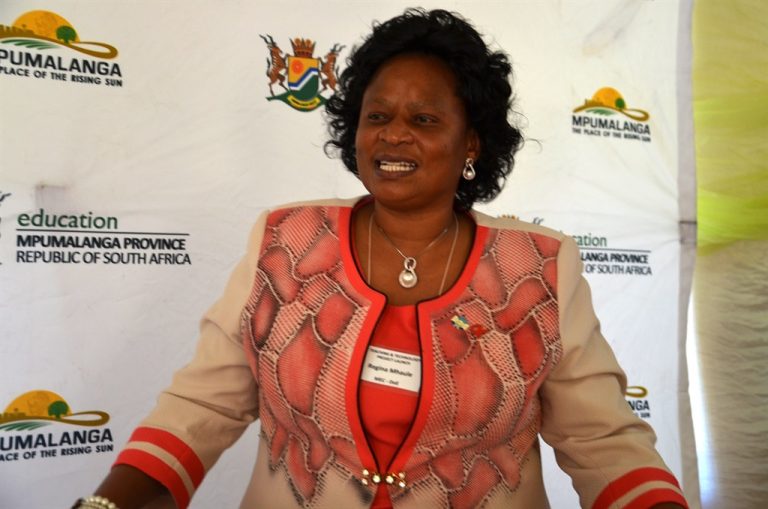
“Given the pressure experienced by the health system in the past few weeks, occasioned by increased COVID-19 infections which has led to the second wave, the council of education ministers in conjunction with the national coronavirus command council and Cabinet has taken the decision to delay the reopening of both public and private schools,” said basic education deputy minister Reginah Mhaule.

The department has not released statistics of how many teachers or students have succumbed to COVID-19, two teachers are confirmed to have died recently during the marking of last year’s examination.

“Some of our markers have passed away, while others withdrew from marking due to fear and anxiety, but also because some of their own family members have tested positive,” said Mhaule.

South Africa’s education officials are on Monday expected to announce plans for universities and colleges, which closed last year as part of restrictions.

Several international airlines have stopped or reduced their flights to South Africa to curb the spread of the new variant.

The Dubai-based airline Emirates has suspended all scheduled flights to South Africa until Jan. 28 “due to operational reasons,” it said in a statement.

It joins a growing list of foreign airlines from countries including the United Kingdom, Germany and Switzerland, which have tightened restrictions for travel to and from South Africa since the emergence of the new variant.

South Africa itself has closed 20 land borders with the neighbouring countries of Zimbabwe, Lesotho and Mozambique as part of its efforts to curb the spread of the virus during its second wave.

South Africa has also reintroduced a night-time curfew, banned the sale of all alcoholic beverages and prohibited large gatherings.

(SOURCE: AP)

Coronavirus: Rwanda and Malawi Shut Schools As Cases Surge

0

RWANDAN and Malawian authorities shut nurseries and schools on Monday as coronavirus cases surge.

Rwanda closed schools just in the capital Kigali but the education minister said schools in other regions would also shut if more cases are confirmed there.

It comes after schools reopened in November after eight months of being closed.

The country has reported more than 11,000 cases and 142 deaths since the outbreak.

Malawi said it would shut schools for at least 15 days and announced all bars will also close at 8 pm.

After reporting no positive cases for almost two months, the country has seen a sudden resurgence.

Malawi reported over 12,000 cases and some 300 deaths since the pandemic started last year.

Authorities said a third of those deaths were reported in the past 16 days.

The president said the government was allocating a further $2m to provide healthcare staff and equipment.

Africa has reported over 3.1 million cases and more than 76,000 deaths.

The millions of coronavirus vaccine doses secured by the African Union are unlikely to emerge on the continent before April.

(SOURCE: AFRICANEWS)

Family Of Murdered 19-Year-Old DUT Student Thabiso Mhlongo Wants Justice

0

THE family of a murdered DUT student has called for justice and wants police to intensify their search for her son’s killer.

19-year-old Thabiso Mhlongo was stabbed to death last Thursday, allegedly by another student, after a fight broke out at a university residence in the Durban CBD.

His mother, Thandeka Mhlongo says her son was pursuing a better future and didn’t deserve to die in the manner he did.

She says her family is still traumatised by what happened. 

“Our family is not coping and everyone is struggling to come to terms with what has happened. We haven’t heard from the police and despite everything that is happening, we have to prepare for the funeral. Thabiso will be laid to rest at his home in Mtunzini. 

KwaZulu Natal police are still on the hunt for the known suspect.

(SOURCE: EASTCOASTRADIO)

Stellenbosch University Mourns Passing Of Professor Mohammad Karaan

0

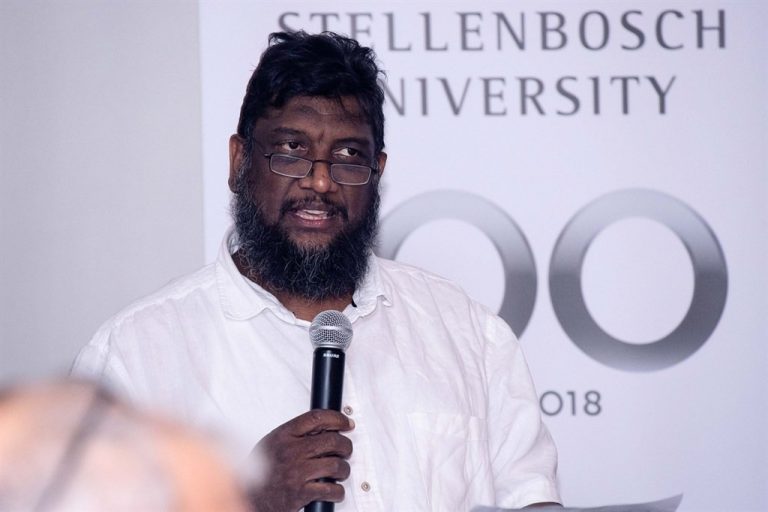
STELLENBOSCH University (SU) has learnt with sadness of the passing of Prof Mohammad Karaan (52), a former Dean of the Faculty of AgriSciences who also served as acting Vice-Rector: Community Interaction and Personnel at one point.

At the time of his death on 13 January 2021, he was Professor in Agricultural Economics at SU, and President of the Maties Rugby Club.

“It’s really shocking to hear of Professor Karaan’s untimely death. He was a particularly valued and beloved colleague who made his mark – at SU, but also nationally and internationally,” SU Rector and Vice-Chancellor Prof Wim de Villiers said.

Prof Karaan helped write South Africa’s National Development Plan (NDP) in the two terms that he served on the National Planning Commission (NPC).

Faculty of AgriSciences

“We will remember him as a remarkable leader, conciliator, true influencer in agricultural circles and a friend,” Prof Danie Brink, current Dean of the Faculty of AgriSciences, said.

“His death is a huge loss to the South African agricultural sector at large, and in particular also to our faculty. He was a special man who had the ability to bring people from different spheres together. His heart was in agriculture, and he believed in strengthening it.”

Prof Brink says the Faculty will remember Prof Karaan for his empathy towards others, the way in which he recognised and supported colleagues and others, for his insight and ability to unravel complex issues.

“He has had a lasting impact on the vision of the faculty, the University, on agriculture and South Africa.”

During his career, Prof Karaan served as chairperson of, among others, the National Agricultural Marketing Council, the Ministerial Committee on Agricultural Marketing in South Africa, and the Ministerial Committee investigating the SA Wine Industry Trust. He was also as an advisor to the Parliamentary Portfolio Committee on Agriculture.

Maties Sport

“We will miss his leadership, patience and absolute amazing listening skills. He was a voice of reason who would allow us to think differently and move us forward during difficult conversations,” Ms Ilhaam Groenewald, Chief Director: Maties Sport, said.

“He had big dreams for our Maties Rugby Club, especially the role of SU in developing the game through a major focus on coaching education and community development.”

“It really is a big loss , and our hearts go out to his family in this very sad time,” Prof Wim de Villiers said.

Prof Karaan is survived by his wife, Basheerah, and children, Zayne, Kamilah, Tauriq, Burhan and Adam.

More about Prof Karaan

Prof Karaan received all of his qualifications from Stellenbosch University: a BSc (Agric) degree in 1990, an MSc (Agric) in 1994 and a PhD (Agric) in 2006.

He started his career as an economist at the Development Bank of Southern Africa, before returning to Stellenbosch as head of research of the then Rural Foundation.

In 1996, he began lecturing in agricultural economics at SU. In 2008, he was appointed Dean of the Faculty of AgriSciences, and in 2013, he was appointed for a second term. In 2014/5, he served as acting Vice-Rector: Community Interaction and Personnel, as this Rectorate portfolio was known then.

Since 2010, he served two terms as member for agricultural affairs on the NPC. He was instrumental in writing a chapter in the NDP – Vision 2030 on shaping an integrated and inclusive rural economy for South Africa.

Before his passing, he was also a member of the presidential inter-ministerial commission on land reform, and his term as management committee member of the Bureau for Economic Research was extended.

Through the years he was honoured for his leadership role by, among others, Agbiz, Agri SA and Agricultural Writers SA.​

(SOURCE: STELLENBOSCHUNIVERSITY)
Official: Schools To Reopen On February 15 As Country Fights Second Wave Of COVID-19, Basic Education Confirms

0

NYAKALLO TEFU

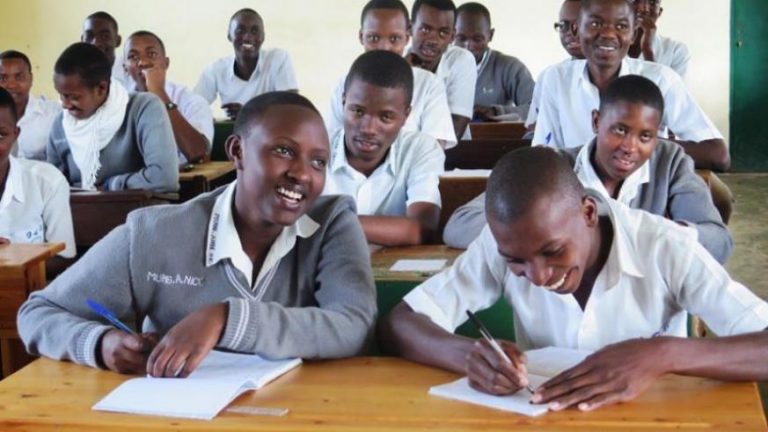
THE Department of Basic Education has delayed the reopening of public and private schools until February 15 as the country fights a second wave of COVID-19.

Deputy Basic Education Minister Reginah Mhaule said the decision to delay the opening of schools was taken by the Council of Education Ministers (CEM) in conjunction with the National Coronavirus Command Council (NCCC) and the Cabinet.

School management teams, made up of senior teachers and principals, will begin work on January 25.

Other teachers will report for duty on February 1.

“We have consulted with all education stakeholders and have agreed to delay the reopening of schools. Given the pressure experienced by the health system in the past few weeks, occasioned by increased COVID-19 infections which has led to the second wave, the Council of Education Ministers (CEM) in conjunction with the National Coronavirus Command Council (NCCC) and Cabinet, has taken the decision to delay the reopening of both public and private schools with two weeks,” said Mhaule.  

“This includes private schools that have reopened already. They will need to postpone their reopening to a later date. This is done to provide relief to the health system which is already struggling to cope with the current demands. The new dates for the reopening of private schools will vary depending on the calendar that they follow.”

Mhaule has also called on all private schools that have already reopened this week to close until February 15 due to the spike in COVID-19 cases.

“We are all affected by the virus, including private schools. We therefore urge everyone to adhere to the call for the reopening of schools to be delayed,” said Mhaule.

Private schools that have already reopened will have to postpone their reopening to a later date.

She said while government cannot force private schools to suspend classes until February 15, it urged them to nonetheless heed the call in the interest of learners and teachers.

“We decided that this will also help ease the country’s healthcare system because learners will not be exposed to the virus in large numbers at school,” said Mhaule.

Elleck Nchabeleng, the Chairperson of the Select Committee on Education, Technology, Sports, Arts and Culture, has welcomed the announcement that the reopening of schools will be delayed by two weeks. 

Nchabeleng called on the Department of Basic Education to take its cue from the National Coronavirus Command Council on the reopening of schools.

“Government’s voice is the only credible one for guidance on matters of education and COVID-19,” said Nchabeleng.

“Other voices on the matter have the potential to sow confusion and indecisiveness as they are not based on expert advice but populism. The disruptive effect of COVID-19 on schools demands that we listen to credible and knowledgeable voices.”
Nchabeleng said the Department of Basic education needs to build on experiences from last year.

“We have experience on this matter. Let us use that to better prepare and implement plans,” he said.  

“The Department should facilitate online learning where it is possible to do so. Class rotation systems should be enhanced, and schools need to ensure that sufficient teaching occurs.”

Nchabeleng called on the Department of Basic Education to ensure that all required materials like personal protective equipment, sanitisers and adequate water provisions were available in every school ahead of reopening and that all safety measures are adhered to at all times.

(SOURCE: INSIDE EDUCATION)

EFF Asks Government To Delay Reopening of Schools Until COVID-19 Storm Is Over

0

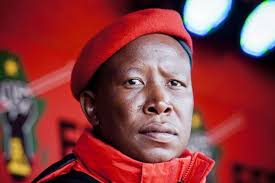
THE Economic Freedom Fighters (EFF) has called on government to delay the reopening of schools, scheduled for 27 January, until the COVID-19 storm is over.  

The party’s leader Julius Malema appealed to government to avoid risking the lives of children amid the coronavirus pandemic during the party’s first media briefing on Thursday.

The Department of Basic Education is under pressure to halt the reopening of schooling from trade unions, pressure groups and NGOs.

“We further call for the postponement of the reopening of all schools in light of the spike in new COVID-19 infections and uncontrollable rate of COVID-19 related deaths,” said Malema.

“All of civil society, trade unions, school principals and parents must unite and call for the postponement of the resuming of schooling activities, until such a point where it is safe to send children to classrooms.”

Malema said the country will be confronted by unprecedented levels of depression and sorrow, should children begin dying in their numbers at the hands of this virus.

“We do not want to be in a position where we tell this government we told you so, when the lives of children are lost to COVID-19,” said Malema.

“Our country will be confronted by unprecedented levels of depression and sorrow, should children begin dying in their numbers at the hands of this virus.”

“As the EFF, we oppose the gambling of the lives of children, to a virus that all of humanity is yet to properly understand. It will be extremely painful when. Families start losing their children because as leaders we failed to respect the situation we find ourselves and preserve the future of our nation.”

(SOURCE: INSIDE EDUCATION)