Home Blog Page 356

Cricket: SA U19 2021 Squad Selected

0

DANIEL Smith from SA College High School as been named the captain of the 15-man South Africa U19 squad after the conclusion of the Cricket South Africa (CSA) U19 Franchise Cubs Week.

Smith enjoyed a productive campaign amassing 301 runs in his four matches with Jordan Hermann ending up as the leading run scorer with 364 runs at an average of 91.00.

Caleb Seleka from Potch Gym spun his way to 9 wickets at just shy of 3 runs per over and the paceman from Parkland College, Darian Naidoo also snatched 9 wickets.

The SA U19 squad will now feature at the 16th team in the CSA 3 Day Provincial Cup and One Day Challenge scheduled to start in March, 2021.

Western Province’s Smith, who less than 24-hours earlier led the Six Gun Grill Cape Cobras to the Cubs Week title, has been named the captain of the junior Proteas.

The left-hander enjoyed a prolific campaign with the bat as he recorded 301 runs across four appearances for the Cobras and finished second on the run charts behind Jordan Hermann from Northerns (Titans).

Opening batsman Hermann amassed 364 runs at the tournament for the Titans at a staggering average of 91.00, including the highest individual score of the week of 139 against the Knights in the opening round of matches.

He is one of the three Titans players who were included in the national u.19 squad. The other two are Dewald Brevis and Jan Hendrik Coetzer.

In addition to the 15-man squad, five players have been included as part of an extended training squad. Among those five is Selo (Valentine) Kitime, who also represented the Titans at the tournament.

Shukri Conrad will again be the coach of the team and the SA u.19 squad will feature as the 16th team in the CSA 3-Day Provincial Cup and Provincial One-Day Challenge, scheduled to start next month.

The 15 players in the main squad were capped during a closing ceremony on Sunday night. The five additional players will travel with the core squad and will receive their caps if they are selected to compete in the Senior Provincial tournaments.

“This is the first of many steps as we build towards next year’s ICC Under 19 World Cup, in the West Indies. It is a long way to go and other players will have the opportunity to make their way into the squad,” said Conrad after the capping ceremony for his new team.

(SOURCE: SA SCHOOL SPORTS)

African Children Without Internet Faced Devastating Loss Of Education Amid COVID-19 Pandemic: Graça Machel

0

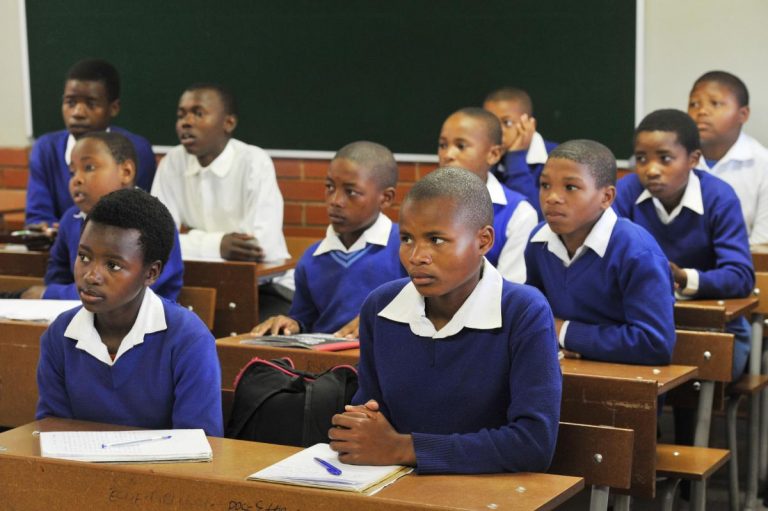
THE COVID-19 pandemic has had a far-reaching impact on students everywhere, perhaps nowhere more than the continent of Africa where a majority of children have no internet to make up for closed classrooms.

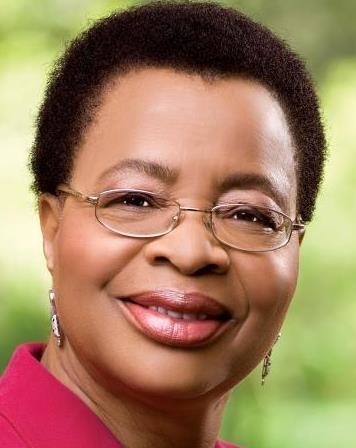
In a new conversation with CTV National News’ London Bureau Chief Paul Workman, Graça Machel, the award-winning humanitarian and widow of South African president Nelson Mandela, spoke about barriers to education and empowerment in Africa and how the pandemic may have exacerbated the situation.

“The whole year of 2020 — for hundreds of millions of African children — was simply lost,” she said.

The continent that had initially appeared relatively spared from the worst of the COVID-19 pandemic has now seen the appearance of a more volatile variant of the coronavirus, resulting in more than three million recorded infections and widespread school closures.

For some African children, lessons moved online like much of the world. But for too many others, it has meant a devastating loss of already scant education resources

“Some schools had conditions to put programs online,” said Machel. “But the huge majority of children on this continent, they live in houses where there is no electricity let alone internet.”

On Wednesday, Machel’s organization, the Graça Machel Trust, co-hosted a virtual panel with Children Believe, a Canadian organization that works globally to help children overcome barriers to education.

The panel, which featured both African and Canadian perspectives, focused on “overcoming barriers to education for girls in Sub-Saharan Africa in a COVID-19 world” as part of International Development Week 2021.

“The COVID-19 pandemic has reinforced and deepened structural inequalities across every sphere — from education and health to the economy and social protection for children,” Children Believe and the Graça Machel Trust said in a news release. “Adolescent girls have disproportionately felt the impacts of the pandemic with far reaching consequences on their life trajectories.”

According to The United Nations Educational, Scientific and Cultural Organization, as many as 80 per cent of African households have radio, but just 34 per cent have the internet. Girls are disproportionately affected by the resource deficit, said UNESCO.

There is now concern that the lost year could have ripple effects that result in even emptier classrooms after the pandemic eases up. Impoverished African countries already face a lack of funding for schools as well as “social norms and attitudes” that put children — particularly girls — at a disadvantage, said Machel. The implications of the pandemic on these pre-existing limitations are still unfolding, she added, but the focus should remain on primary and secondary education and adolescence.

“Before children complete the secondary [education], they do not have the knowledge and skills to walk on their own without regressing in whatever they have learned,” said Machel, adding that she is launching a new initiative focused on inspiring adolescents in Africa.

“We are working together not only to bring all children into the system, but to improve the way we empower adolescence to […] break the cycle of poverty in Africa.”

(SOURCE: CTVNEWS)

University Of Cape Town: UCT GSB’s MBA Programme Flies The Flag For Africa In Top Global Ranking

0

THE University of Cape Town Graduate School of Business (UCT GSB) remains the only school on the continent to make the prestigious Financial Times 2021 ranking of full-time MBA programmes.

The UCT GSB’s MBA has again been ranked one of the best programmes in the world by the Financial Times (FT) in its 2021 list of the top 100 Global MBAs.

The school, a global leader in innovative thinking in complex environments, saw its full-time MBA rank 5th in the world for value, 12th for corporate social responsibility, 14th for international course experience and 94th overall.

The MBA programme is the only African one to make the list, which was topped by INSEAD (France/Singapore) and the London Business School (UK). This marks the 13th time that the FT has ranked the UCT GSB’s MBA as one of the best in the world.

“This ranking reflects the exceptional quality of our MBA programme.”

“This ranking reflects the exceptional quality of our MBA programme, the global contribution made by our faculty and the value of the school’s unique expertise and approach to management education,” said the director of the UCT GSB, Dr Catherine Duggan.

“Our programme brings together some of the world’s best MBA students who are looking to combine cutting-edge business and leadership skills with new ideas, innovative approaches and creative thinking about real challenges in a way that has a broad, positive impact on business and society.”

Benchmark

The FT rankings are globally recognised as the pre-eminent benchmark for business schools and are determined according to performance in 20 areas, including the average income of graduates three years after graduation compared with pre-MBA salary, value for money, the number of international faculty members, research performance and corporate social responsibility.

This ranking comes hard on the heels of other achievements.

In 2020 a team of UCT MBA students became the first from an African school to win the prestigious John Molson MBA International Case Competition, and for two years in a row UCT MBAs have been honoured by the Association of MBAs (AMBA) in its global Excellence Awards, which recognise the most accomplished MBAs from around the world.

With this latest ranking, the UCT GSB becomes the only business school on the continent ranked in the top 100 in three of the FT’s premier rankings: the full-time Global MBA; Executive MBA (where the UCT GSB ranked 56th in 2020) and Executive Education – Customised (where the UCT GSB also ranked 56th in 2020). The school is one of just over 100 worldwide to have a “triple-crown” accreditation, meaning that it is accredited by all three of the world’s leading business school quality assurance bodies: AMBA, EQUIS and the Association to Advance Collegiate Schools of Business.

A testament to drive and passion

Associate Professor Kutlwano Ramaboa, the deputy director of the UCT GSB, said that the ranking is a testament to the drive and passion of the school’s faculty, staff, students, alumni and corporate partners.

“The ranking reflects our continued investments in expanding our faculty and supporting world-class research, as well as our commitment to teaching that is rigorous, innovative, research-driven and relevant.”

She noted that the school has continued to make investments to keep the MBA engaging and up to date during the COVID-19 pandemic.

“The faculty and MBA team have been working hard to make the MBA more flexible, more innovative and more relevant than ever.”

Dr Duggan added: “As a global business school with a broad international reach and a distinctly African identity, our students explore the lessons of developed markets and the fast-paced innovations of emerging ones. This unique approach gives our MBAs new insights into opportunities in Africa and beyond.

“Our graduates join a network of extraordinary alumni around the world whose success is a testament to the value of this approach, and whose enduring support for the UCT GSB is a testament to the transformative nature of our MBA.”

(Source: INSIDE EDUCATION)

US President Joe Biden Says Closed Schools And Loss Of Women In Workforce Is A ‘National Emergency’

0

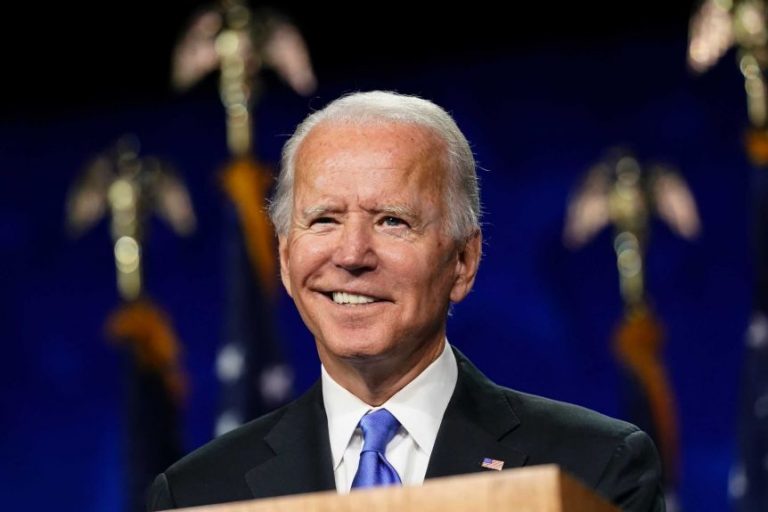
PRESIDENT Joe Biden said in an interview aired Sunday it was a “national emergency” that many students have been kept out of classrooms and that there has been a staggering loss of women in the workforce because of the coronavirus pandemic.

Biden told “CBS Evening News with Norah O’Donnell” that he believed it was “time for schools to reopen safely,” ahead of the expected release this week of the US Centers for Disease Control and Prevention’s guide to reopening schools.

“I think they’re going through a lot, these kids,” Biden said.

The President’s comments come amid a national debate about when and how to get students back in classrooms safely, as the pandemic continues to devastate the nation and has forced many classes completely online. They also come as women, particularly Black and Latina women, suffer steep job losses as they disproportionately work in some of the hardest-hit sectors in the pandemic, including education.

Biden, who has said he wants most K-12 schools to reopen before his first 100 days in office, emphasized in the interview the need for schools to implement stringent safety requirements to keep those in the classroom safe.

“About 20 million American children have not been in the classroom for nearly a year. There’s a mental health crisis happening,” O’Donnell said.

“There really is,” Biden said, nodding.

“Women are dropping out of the workforce,” O’Donnell continued. “Is this a national emergency?”

“It is a national emergency,” Biden responded. “It genuinely is a national emergency.”

“I think it’s time for schools to reopen safely. Safely,” the President said. He pointed to lowering the number of people allowed in each classroom and proper ventilation systems as examples of necessary protocols.

Biden said US Centers for Disease Control and Prevention Director Dr. Rochelle Walensky would be coming out with the guidance, which he described as “science-based judgment,” as early as Wednesday.

“I think about the price, so many of my grandkids and your kids are going to pay for not having had the chance to finish whatever it was. That graduation where you didn’t get to walk across the stage,” Biden said.

Walensky said Monday that the best way to get schools to reopen safely “is to decrease the community spread,” and to keep up mitigation measures such as masking and social distancing.

“The data from schools suggest that there is very little transmission that is happening within the schools, especially when there’s masking and distancing occurring. And that when there are transmissions in the schools, it is because they’ve been brought in from the community and because there are breaches in masking and distancing,” Walensky said during a White House briefing.

Last week, Walensky suggested that schools could reopen without teachers getting Covid-19 vaccines. White House press secretary Jen Psaki initially said Walensky was speaking “in her personal capacity” and said that though Walensky was the head of the CDC, her comments were not the same as official CDC guidance. But Psaki later appeared to agree with Walensky, saying vaccinations were only part of several mitigating factors that will help schools reopen safely, including wearing masks and social distancing.

Part of the $1.9 trillion Covid-19 relief package Biden has proposed to Congress includes additional funding for schools to operate safely in person. Biden has also signed several executive actions to help support reopening schools and establish a national strategy to get the pandemic under control.

Dr. Anthony Fauci, the nation’s top infectious disease expert, recently cautioned that reopening most schools within 100 days “may not happen,” as the US continues to grapple with high Covid-19 transmission. The coronavirus pandemic has killed more than 463,500 Americans as of Monday morning.

(Source: CNN)

DA, EFF Overwhelmingly Opposed To Reopening Of Schools Amid Virus Surge, Absence Of PPE

0

NYAKALLO TEFU|

THE Economic Freedom Fighters (EFF) and the Democratic Alliance (DA) are calling for the delay of the reopening of schools in South Africa, saying they were not convinced that all schools in Gauteng, KwaZulu-Natal and the Eastern Cape are ready to commence with the new academic year.  

Oversight visits to several provinces by political parties and other interested parties have shown that many schools were not ready and posed danger to everyone because there are still shortages of personal protective equipment (PPE), including poor sanitation and access to clean water.

Last week, the portfolio committee on basic education also visited schools in Gauteng, KwaZulu Natal and Eastern Cape, to assess the state of readiness for the reopening of schools, and raised concerns about the state of readiness, urging the national Department of Basic Education to redouble its efforts to ensure that everything was in place for the start of the year.

EFF KwaZulu-Natal chairperson Vusi Khoza said since last year the province has been experiencing challenges with the provision of PPEs in many rural schools, and the situation has not changed. 

“To date some rural schools in KwaZulu-Natal have been without enough PPE since last year and yet they are expected to be fully operational when schools reopen next week,” said Khoza. 

Khoza said the provincial department of education has not dealt with the readiness of schools in rural areas and this could expose many learners and teachers to various dangers, including contracting the deadly COVID-19 virus.

“We can never deny the fact that 70% of the province’s schools are situated in rural areas where having enough clean water and proper sanitation facilities is a luxury,” said Khoza. 

The EFF leader added that schools cannot be reopened because several teachers who died from COVID-19 complications have not yet been replaced in parts of the province.

Last week, Chairperson of the Portfolio Committee on Basic Education, Bongiwe Mbinqo-Gigaba said before schools reopen, the department needs to act urgently on issues relating to providing learner transport, provision of water and filling vacant positions.

The EFF said many teachers who died from COVID-19 in KwaZulu-Natal have not yet been replaced.

“The government has not even replaced teachers who lost their lives to Covid-19 and that could take more than six months, so a two to three month delay in the reopening of schools would be okay at this point,” said Khoza. 

DA spokesperson on basic education Baxolile Nodada said in KwaZulu-Natal, 120,000 pupils who are eligible for pupil transport do not have access to the state-funded transportation.

He said it was time for the basic education department to get its house in order to ensure schools can safely reopen on February 15.

“Many schools do not have proper or any access to clean water and sanitation. That this should still be a concern in 2021 is simply shocking. The world is suffering at the hands of a pandemic, the main defence against which is cleanliness,” he said.  

“Pupils and personnel do not have access to a basic human right that is their first line of defence against Covid-19. This is beyond shameful.”

He said infrastructure development in some schools in the Eastern Cape, Gauteng and KwaZulu-Natal was woefully inadequate, with many classrooms built with dangerous materials like asbestos.

Some schools had been closed after they were deemed unsafe for pupils. There were also not enough classrooms in some schools, making social distancing impossible. Some schools were vandalised by communities.

The basic education department has denied it was not ready for reopening next week.

Spokesperson Elijah Mhlanga told TimesLive that while things may not be perfect due to inequalities in the country, this didn’t mean schools were not ready to reopen.

“Last June, the DA sang the same chorus that schools were not ready, but when schools reopened everything was in place. Not one pupil or teacher died after contracting Covid-19 at school. Those who did were mostly infected in communities. There is no crisis,” said Mhlanga.

(Source: INSIDE EDUCATION)

Umalusi To Report On Credibility, Fairness Of Matric Results Amid Doubts Over Leaked Exam Papers

0

NYAKALLO TEFU

SOUTH African parents are waiting nervously and impatiently for Umalusi’s report on the credibility of the 2020 matric results.  

The quality assurance body is expected to announce this week whether the matric exams were credible or not, this after two papers were leaked last year, creating panic and deep concerns among parents, teacher unions, civil society organisations and the Department of Basic Education.

Matric results are expected to be announced on February 22.

 For the first time in history, the release of the matric exams results was delayed due to the unexpected coronavirus pandemic.

Two papers – Mathematics and Physical Sciences – were leaked during the exams, prompting a court action against the Department of Basic Education after it tried to force learners to rewrite.

The court ruled that the quality of the examinations was not compromised, and therefore there was no need for learners to rewrite the two papers. 

 “In terms of the GENFETQA Act of 2001, Umalusi is required to approve the release of results once it is satisfied that the examinations have been conducted in a credible manner,” the quality assurance body has said.. 

Umalusi said gaining the approval of its council for the release of its results was a complex process of which standardization is one of the last steps. 

“Standardization is a process used to mitigate the effect of factors other than learners’ knowledge and aptitude on the learners’ performance,” added Umalusi.

(Source: Inside Education)

Cyber Heroines: Changing The Future For African Girls

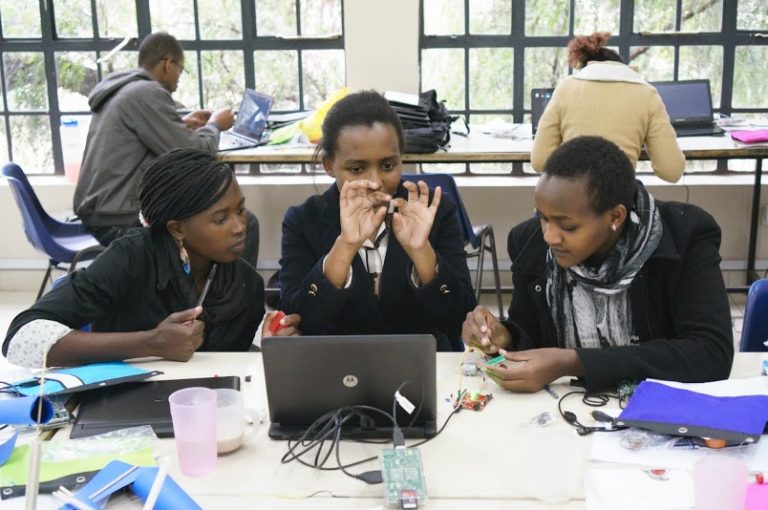
THE 2021 Tomorrow’s Cyber Heroines study undertaken by CyberHeroines, KnowBe4 Africa and Infosphere Limited surveyed more than 445 teachers across 14 African countries to unpack the complexities that face African girls in the technology landscape.

With Africa’s future reliant on its ability to adapt to digital transformation and the Fourth Industrial Revolution (4IR), levelling the playing field for women has become critical.

It has never been more important to change the cyber security workforce gender statistics than it is today.

“We have to give girls more opportunities, inspire them to get involved in technology and the cybersecurity field, and to remove the preconceived and socialised ideas that prevent women from pursuing careers in technology,” says Anna Collard, SVP of Content Strategy and Evangelist KnowBe4 Africa.

“The world is digitising rapidly and women are at risk of being left behind. We have to change the dialogue around technology and make it more inclusive for women and girls.”

Women are already at a disadvantage. 

A recent study by the Association for Progressive Communications underscored the reality of the gender digital divide. In Africa women have less access to internet-based technologies than men, they have fewer opportunities, they are even more limited in their ability to move out from under poverty.

As the world continues to move into automation, women will be the most affected as their roles are replaced by machines.

Change has to start now, it has to start at home, and it has to be carried through into education.

“We want African women to participate in the digital age – we cannot leave them behind,” says Aprielle Oichoe, Managing Director of InfoSphere. “We must empower girls to go into technology and this starts at a young age. We need to make a conscious decision to change the way we treat young girls. The dialogue needs to focus on making technology interesting for girls, not just something that they should ‘leave to their brother.”

The study found that a lack of education, limited guidance, minimal role models and societal preconceptions are having a serious, long-term impact on women’s careers and futures. With cybersecurity and technology struggling to find skilled people, the market is wide open for those with the talent and the training to build sustainable and successful futures. In addition to thriving careers, training and education in technology and cybersecurity is essential for the wellbeing of young girls and women in Africa.

“According to research, women of colour are 34% more likely to be targeted by online hate speech than their white counterparts, and a huge percentage of African girls are concerned about their online safety,” says Collard. “We must give them the tools, training and confidence they need to prepare for this online vitriol, and protect themselves.”

The key factors inhibiting women’s entry to the worlds of technology and cybersecurity include: negative stereotypes, lack of role models or mentors, low self-confidence, and competing in a male-dominated industry. Women are generally discouraged from careers in STEM and steered towards traditionally female roles instead.

“There is no such thing as a female role, not anymore,” says Oichoe. “Now there is just opportunity. We just have to make sure that this opportunity is given to everyone.”

The report unpacks the findings, the insights, and the solutions put forward by educators and experts across Africa. It examines the education curriculum, the challenges facing young African girls today, and it looks at suggested initiatives that can be implemented to shift perceptions and transform the future for the women of Africa.

(Source: APOGROUP)

Thousands Of Northern Cape Learners Still Waiting To Be Placed At Schools

0

THE Department of Education in the Northern Cape has promised that all learners will be placed before schools reopen on February 15, SABC NEWS reported this week.

At least 11 000 learners in the Northern Cape are still awaiting placement at schools, two weeks before the start of the school academic year. The learners include late applicants and those awaiting outcomes of appeals of unsuccessful placement at schools of their choice. 

At least 3 600 placement offers are also yet to be accepted by parents.  

A further 5 250 learners are awaiting the outcome of placement appeals from the office of the provincial Education MEC.  

The Department of Education has promised that all learners will be placed before schools reopen on February 15.  

Public schools reopening delayed  

Last month, the Department of Basic Education delayed the reopening of 2021 academic school year to February.

The move was due to a surge in COVID-19 infections in the country.

Ghana’s 2020 Best Teacher, Eric Asomani, Launches Maiden ICT Fun Club

Eric Asomani Asante, the winner of the 2020 Best Teacher Annual Awards has launched his maiden ICT Fun Club in Tema, south eastern Ghana, over the weekend.

Mr. Asomani Asante explained that, his main motive for the club is to train four students and a teacher selected from each school among eight selected schools.

He added, these four students and a teacher selected would serve as master trainers who are required to act as ambassadors to train their peers in their respective schools.

The actual training for the master trainers according to Mr. Asomani Asante starts on the 12th of February, 2021 at the Naylor SDA School Computer Lab located at Tema Community Six. He added, the training will be on every Friday between 2pm and 3pm.

The 2020 Best Teacher added that, he intends to expand the activities of the Club to Akoase and its environs since he received his basic and secondary education from that district.

According to him, technology would be the driver of the world going forward and this is his contribution towards making more students have access to ICT education and become technologically inclined.

He stated further that, his gesture was to ensure fair usage of technological tools in education in this digital age.

The program hosted important dignitaries such as the Tema Metro Director of Education, Mrs. Bernice Ofori, Hon. Nii Noi, Tema Cental Member of Parliament, headteachers, officers from the Metro Education Directorate and participants from the selected schools.

(Source: Modern Ghana)

School Sport: Egoli Squash Rerouting Former Colonial Sport

0

LEONARD SOLMS|

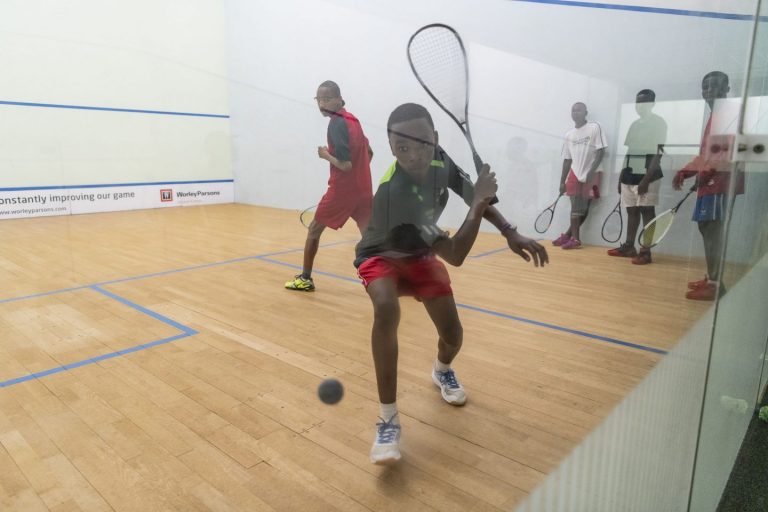
HAVING been brought to South Africa in the early 20th century by the British military, squash began as an elitist sport in private schools. As is the case in any sport with such a history, transformation requires a deliberate effort to make the game more inclusive. 

That’s where Egoli Squash comes into the picture. After years of persisting in its efforts to change the lives of its athletes off the court, the non-profit organisation is beginning to reap the rewards.

In a decade of existence, the brains behind Egoli Squash have sought to grow the game in disadvantaged areas where children would previously not have been exposed to the sport.

The organisation’s focus is on Soweto and the Johannesburg inner city.

“Basically, what prevented most people from knowing the game of squash was [a lack of] facilities and equipment,” said Egoli Squash co-ordinator Sharon Sibanda.

“You will find most of the squash courts are located in suburbs. For other players who aren’t players in suburbs, they are not able to get a taxi and go to practice sessions. We’ve seen that with our players. Whenever they go for tournaments, we have to transport them from Hillbrow, Berea and Soweto areas to play at Wanderers and all the other different places.

“I’d say that is a challenge. Also, the other challenge for the game of squash is it has been perceived as a Cinderella sport – a sport for the privileged. That is not the case. It’s basically that it hasn’t gained much traction in the media.”

Egoli Squash has taken on the task of raising awareness of the sport. “Most of the schools we work with do not have sporting facilities,” said Sibanda. “It doesn’t matter whether it’s squash facilities – any sporting facilities [are lacking]. 

“Take, for instance, the inner city. Most of the schools are within flat buildings, so they do not have enough space in the schools to set up any sporting facilities. What they do is they actually source sporting facilities outside – it might be municipal sport and recreation facilities – just so they are able to get their learners to participate in a sport. 

“So, for us, what we do is we basically approach the schools through what we call road shows. A road show is a 15-minute presentation where we go to the schools and introduce the game during assembly time. We show them a bit of racquet skills to get learners interested in the game. At times, we also carry our mobile squash court to the schools. “Afterwards, the learners and sports coordinators would register. We not only introduce the sport to the learners, we also introduce the sport to the sport coordinators. When they come for the sessions, it’s not only about them accompanying the learners to the squash court. They also get to train and assist our senior coaches as well.

“The schools do not pay any amount to be part of the programme. For us, basically, it’s all about changing lives and grooming youths to become responsible adults. That’s the passion that keeps us going – and getting as many learners as possible to participate in the game of squash.”

Development on and off the court 

Sibanda explains that the organisation’s recruitment of schoolchildren is done with an eye to potentially producing top competitors. However, rather than scouting and grooming already established squash players, it has to start from scratch, teaching the basics of the game and encouraging youngsters to get involved. Aside from its ambitions on the court, Egoli Squash hopes to achieve plenty off it too.

“Basically, our programme is focused [mostly] on promoting the game – also with the vision of producing elite players who not only represent our province, but can also get to play and compete for national rankings. Also, we want to empower them not only from a squash perspective [but] in life skills, and to develop them into responsible young adults,” explained Sibanda.

“We do have players who have evolved from just being grassroots junior players, who came into the programme without even having an idea of what squash is.

“I remember some of the players, when we introduced the game to their schools, were saying: ‘Oh, squash? Is it some form of juice, or what is it?’ Squash, basically, in the inner-city and Soweto schools, does not exist. They do not have the facilities and the sports coordinators also do not know about the game of squash,” said Sibanda.

“We had to start from scratch and build up from there – introducing the game and promoting it to the players who had never heard of squash in their lives. After introducing the game, we saw that our players thrived.

“We decided to filter them into our Colts Future Champions programme. Basically, it’s our high-performance programme. Once we have identified the players, we groom them using all the different high-performance techniques. We partnered with the UJ [University of Johannesburg] Sports Sciences Institution. They [help us] equip these players to be elite players.”

Preparing young athletes for life both on the court and off it is easier said than done, as many in South African sport have discovered. Fortunately for Sibanda, she is able to combine her training as a psychologist with her squash coaching qualifications.

“I have a background in psycho-social support for players. That was how I got involved [in] the programme. I did basic level one coaching. It’s just that if I am to interrupt the kids, I have to know more about the game. This will ensure that I can easily relate to the kids and whatever day-to-day issues they face, at least in the programme,” she said.

Egoli starlets going for gold

The investments Egoli Squash have made into its top athletes are beginning to pay off. Muzi Buthelezi was the top-ranked Central Gauteng Under-16 squash player in 2019, also ranking fourth in South Africa in his age category. His father passed on when he was 10 years old, but Egoli Squash ensured that he remained cared for, helping him secure a bursary at King Edward VII School. Buthelezi aims to become a professional squash player.

“I didn’t really know what squash was, but at my old school I wanted to try something new, because I was playing soccer and tennis before squash. When I went to squash, I didn’t really know that you were using a racquet like tennis,” said Buthelezi. 

“What the Egoli Squash programme did was they went to each and every school. That’s where they started introducing squash and they told us more about squash, which I started liking. I obviously went to the organisation and then I started playing. The coaches really helped me to improve my squash and everything has been great since then.

“In the next two to four years, I want to be in the South African national team. If not, I want to be in the top 20 in South Africa. After that, I want to be a professional squash player and get SA colours, and to qualify into the Professional Squash Association and be in the top 50.”

It is inevitable that not every squash player will achieve the ambitious targets that Buthelezi has set. Fortunately for its players who fall short, Egoli Squash’s support is not wholly dependent on success on the court. 

One of the programme’s stalwarts, Clinton Ndebele, who joined in 2011 and learned the game from scratch, has played squash at junior and senior provincial level but decided to pursue a career in education. Egoli Squash used his skills off the court to its advantage, bringing him in as a facilitator. By his own admission, Ndebele was not as talented as Buthelezi is, but Egoli Squash still covered his high school fees.

“Coach Lawrence [Dlamini] and Coach Sharon were like mother and father figures to me. Being with a single mother, Lawrence was the one guy who was literally our father. He coached us and disciplined us and all of these things. Even Sharon was like a mother,” Ndebele said.

“I think when I pursued teaching, the programme saw someone [who could] elevate the homework support side of things.The programme paid for my entire high school. My mother was struggling with the school fees.”

Sharon, on one of the days, said: ‘Show me your report and I’ll see what I can do.’ That took me all the way from grade 9 to matric. This, I guess, is my way of giving back to a programme that has done so much for me.”

Ndebele is a prime example of what Egoli Squash’s off-court endeavours aim to achieve. The Covid-19 pandemic also affected the organisation, which adapted by devising both short-term and long-term strategies to combat food shortages.

Egoli Squash sought to address its members’ immediate needs by initiating the Ubuntu Drive, seeking donations for food parcels along with sanitary and cleaning products. In the long run, it aims to promote food sustainability to avoid an overreliance on donors.

“We are growing it [the Ubuntu Drive] into a long-term programme. Our long-term programme will be implementing urban farming. Most of our players, especially in the inner city, stay in flats. They do not have areas to cultivate any plants where they stay because they do not have enough space,” Sibanda said.

“We’ve already set up our strategic plan and everything. We’ll be rolling out the urban farming project hopefully next year… We want to set up a sustainability plan. What if the donors are no longer able to fund our Ubuntu Drive? Would that mean that we were not going to continue feeding our players and families? That’s why we are coming up with this long-term strategy.”

The seeds of change have been planted in communities which may otherwise never have learnt about the game of squash. Whether or not they will spread quite enough to become endemic across Johannesburg’s race and class divides remains to be seen.

(Source: NewFrame)