Home Blog Page 357

Fear As More Matric Exam Markers Test Positive in Eastern Cape, Gauteng

0

NYAKALLO TEFU

DOUBTS were raised on Wednesday whether the marking of matric exams would be completed as the Second Wave of COVID-19 gets out of control countrywide.

At least 70 matric exam markers tested positive for COVID-19 in the Eastern Cape this week, just two days after the commencement of the marking of exam papers.

In Gauteng, a total of 850 teachers have withdrawn from marking the National Senior Certificate examinations due to fears of COVID-19 pandemic.

The Eastern Cape Department of Education has hired a total of 5 323 makers to mark papers at 24 centers.  

45 000 markers across the country will undergo tests on a daily basis while they are at the marking facilities for the 18-day marking period.

“The health department is working closely with the education department to deal with the rising infections and we will continue with the screening and testing,” said Premier Oscar Mabuyane.

The Department of Education in Gauteng said the withdrawal of markers in the province came after several markers or their close relatives contracted the coronavirus.

“Some have tested positive for the virus. Some say they are afraid of the virus and others say they were in contact with someone who tested positive. These are some of the reasons we have received,” said GDE spokesperson Steve Mabona.

 “We are happy that we have started, and we have managed to replace those that didn’t not come, we haven’t had any major issues since then,” added Mabona.

Marking in the country officially kicked off on Monday and results are expected to be released on 22 February 2021.

The Department of Basic Education said for the safety of all markers, it has appointed medical professionals who are on standby at marking centers.

(SOURCE: INSIDE EDUCATION)

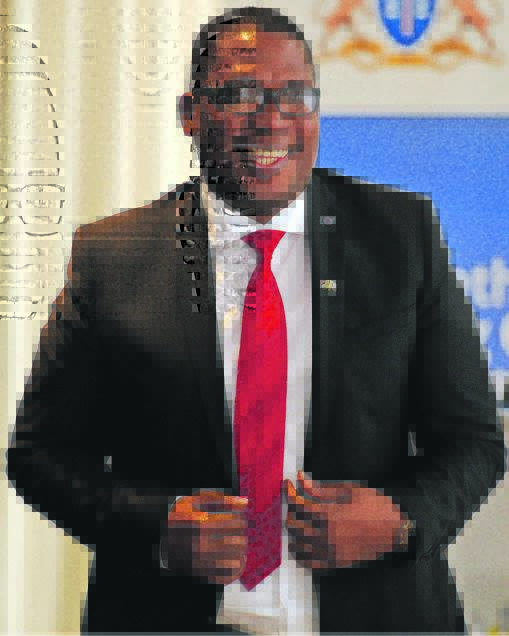
IEB Hits Back At Gauteng MEC Panyaza Lesufi’s Claims ‘It’s Being Subsidized By The Poor’

0

NYAKALLO TEFU

THE Independent Examinations Board (IEB) has hit back at Gauteng MEC Panyaza Lesufi’s claims that it wants to force the poor to carry its financial burden.

This comes after Lesufi claimed that the IEB approached the courts arguing it could not afford to pay for the assessment services offered by Umalusi.

Lesufi said he was surprised by the IEB’s attempts to “force the poor to carry their financial burden” and said that independent schools body needed to find other ways of funding their activities or they must cease to exist.

But in a statement, the IEB said this is untrue.

“It is unfortunate that the Gauteng Member of the Executive Council, MEC Lesufi, has chosen to place this matter in the public domain at a time when it is before the High Court,” the IEB said in a statement.

The IEB said the matter concerns what it has experienced as improper charging of fees going back to 2016.

“The IEB wishes to reiterate that it has consistently and timeously paid for all valid and legitimate charges levied by Umalusi that are in accordance with its policy that is implemented in accordance with its own dictums and in accordance with well-established principles of the law. The matter concerns what the IEB has experienced as improper charging of fees going back to 2016,” the board said in a statement.

The board further said it was currently awaiting the judgment on the 2016 issue and address the matter after the judgment was delivered.

“The IEB will address the inaccuracies and unfounded accusations of this report once the court has given its judgement and believes that the court is best placed to make a fair and impartial judgement with regard to this matter.”

Lesufi said the IEB approached the courts, saying it could not afford to pay for the assessment services offered by Umalusi.

“The IEB must withdraw its court case. This case exposes that they have been having freebies for quite some time, that the poor have been subsidizing their activities,” said Lesufi.

Lesufi said he was also alarmed by the failure of the IEB to publicly publicize their financial records and their business operation.

Lesufi said that the independent schools body needed to find other ways of funding their activities or they must cease to exist.

“We want to warn IEB not to expose themselves that poor children have been subsidising them for ages without them paying for UMALUSI’s assessment services. For years, the state, through an annual grant to UMALUSI have been bankrolling the certification of the rich.

IEB has a mere 12 000 matric learners compared to the more than 1 million matric learners in the public education sector,” said Lesufi.

“So the IEB and other bodies have been  getting ‘freebies’ from a public institution and now they want the courts to legitimise it. When exposed they rush to court to request the court to endorse their free ride. What an arrogant and silly way to resolve matters.”

(SOURCE: Inside Education) 

Kenya: Students Return To Schools After 9 Months

0

MARCHING to their schools wearing colorful uniforms nearly after nine months, streets in the East African country of Kenya were swarmed with students on Monday morning.

Anxious parents, who were seen accompanying their children were still worried about their safety as the country continues to report COVID-19 infections.

Schools across the capital Nairobi were seen putting up safety measures, checking the temperatures of students at the entrance.

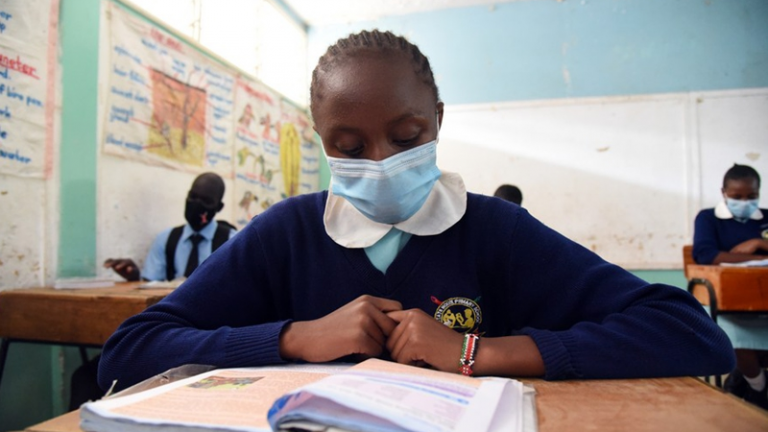
After visiting a few schools, Anadolu Agency found that school authorities had put up sanitizing machines, clean water, and made facemasks mandatory for entering into the premises. Teachers and students have been asked to wear facemasks all the time.

The classrooms were also looking different, with spaces between the desks to ensure social distancing, besides ensuring aeration in classrooms. The school vehicles carrying students were operating at half capacity as per the Health Ministry regulations.

The schools have been asked to desist arranging any extracurricular activity involving sports, music, or any other gathering involving more than one school for the next 90 days.

Speaking to Anadolu Agency, Cecilia Mwangi, a mother said the government should not have reopened the schools.

“We have suffered as parents have no money to buy books, bear bus fare, cost of masks, and sanitizers. We are not sure of the safety of our kids in schools. I am worried but I have to obey the government and take my child to school,” she said.

As many people in the country are complaining about job losses due to pandemics and restrictions, many parents told Anadolu Agency that they are unable to afford school expenses and new school uniforms and fees.

“We have not worked for a year. We were confined to our homes. How are we to support our children to go back to school,” said Joan Kerubo, a parent.

Children excited

But the children were excited to return to school. Mwangi’s 14-year old son Chrispus Mwangi, studying in Moi Avenue Primary school said staying at home had been too boring.

“I missed my friends and teacher and I am happy to be going back to schools,” he said.

School authorities were also complaining that COVID-19 related guidelines are too ambitious to follow.

At a mixed school in Kiambaa, teachers had put up classrooms under the trees and in corridors, as adequate rooms are not available on the premises. Parents and teachers were demanding the construction of additional classrooms, so they can enforce social distancing norms.

Education Minister George Magoha has assured that authorities will provide 500,000 desks and ensure three million children possess masks.

“Social distancing will remain a challenge but it will not stop us from opening schools. Every open space in schools can be used as classrooms, learning under a tree is extremely healthy, “he said.

Lack of water, power, and ablution facilities is haunting most schools in the Kenyan capital. Parents complained that there is unpreparedness on the part of the government and it has put their children at risk.

(SOURCE: Anadolu)

National Teachers Union President, Allen Thompson, Dies After Contracting COVID-19

0

NYAKALLO TEFU

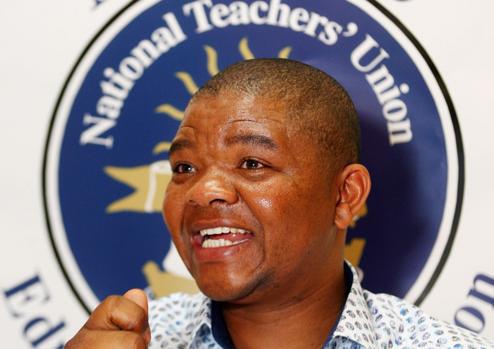
President of the National Teachers Union, Allen Thompson, has died after contracting COVID-19.

The teacher union’s Secretary General Cynthia Barnes confirmed the death of Thompson on Monday.

“We are heading to the family in Newcastle to get more details on the president’s death and will communicate further,” said Barnes. 

In 2018, Thompson was shot at on the shoulder, surviving an assassination by armed men in Durban, KwaZulu-Natal. 

After he was shot, he was able to get to uMhlanga Hospital for urgent treatment.

He was elected president of the union in 2018 after serving as the deputy President. 

The Department of Basic Education’s spokesperson Elijah Mhlanga said he was shocked to learn of Thompson’s death.  

“We worked very well with Natu as a union and with Thompson, he was a good leader,” said Mhlanga.

(SOURCE: Inside Education)

Outdoor Education At Universities Can Be A Positive Legacy Of COVID-19

JEAN-PHILLIPE AYOTTE-BEAUDET

Universities have faced major planning challenges due to Covid-19. While there has been significant media coverage about universities offering students online learning, what has been less discussed is how some activities have continued in face-to-face settings.

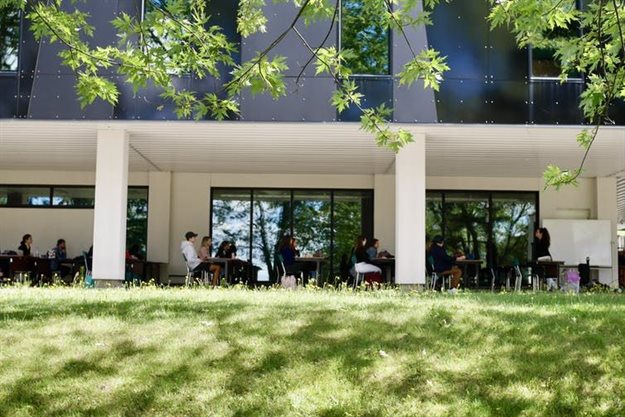
My research is concerned with outdoor science education so I have long been engaged in studying outdoor learning. At the Université de Sherbrooke, among our measures to promote student and staff safety during the pandemic was setting up outdoor sheltered and ampitheatre-style learning environments.

Since the university was already planning to develop outdoor spaces that could be used for teaching, the pandemic provided an opportunity for pilot testing.

To develop our outdoor learning environments, we appointed a committee with diverse expertise in learning and teaching, health and safety and a variety of logistical and technical considerations such as managing audiovisual resources. Together, we created a guide to support outdoor education in higher education in Canada during the context of Covid-19.

Teaching and learning considerations
In times of pandemic, outdoor classes allow students to meet their professor or classmates in person, when they would not otherwise have had the chance to do so. However, even during regular non-pandemic times, outdoor classes may also allow professors to incorporate outdoor education into their lessons directly on campus.

Outdoor learning environments should be used only when activities have an added value. In other words, not all courses have to be held there. They can be used in a complementary manner with indoor or online learning when they support the learning objectives.

In a university context, outdoor education can have several benefits. It provides the opportunity to draw on the environment to explore different disciplinary knowledge. For example, students might engage with the outdoor environment to learn more about social behaviours on campus; they might explore natural phenomena or examine technical phenomena such as building construction.

Open spaces can also encourage teachers to combine physical activity with educational content. Activities that put students physically in action are associated with the potential to increase academic achievement.

In the university context, where appropriate student accommodations can be made when necessary, this could include field activities with classmates or a guided walk with the teacher to explore the surrounding area.

Some research suggests that for people without attention deficit hyperactivity disorder (ADHD) “inattention and impulsivity are reduced after exposure to natural views and settings,” but it is unclear what these findings could mean for students with ADHD. It is important to consider accessibility when planning to create an inclusive gathering space for all students.

Student and faculty experiences


This fall, a total of 57 teachers made 137 reservations in the 10 outdoor classrooms. Of the 1,275 students who had at least one outdoor activity, 94% were at the undergraduate level. 57% of them were entering their first year at the university. These outdoor activities allowed them to experience the campus during this time of physical distancing.

The faculty of education and the faculty of arts and humanities were the most represented. Instructors led courses in a wide variety of fields, such as primary science education, drama and film writing, physical activity anatomy, psychology and research methodology.

We conducted a survey to better understand the students’ experience. Most striking was the potentially positive and negative effects of outdoor learning environments on concentration.

While some students mentioned that the outdoors allowed them to be more focused, others mentioned the opposite. These insights highlight the importance of selecting locations that enhance positive stimuli (for example, feeling the warmth of the sun or being surrounded by nature) while reducing nuisance stimuli such as passers-by and ambient noise.

These preliminary observations will lead to first adjustments when our outdoor learning environments reopen in May 2021.

Looking forward
While education at all levels has been shaken over the past months, the pandemic is an opportunity to think about new learning environments. Outdoor settings were an opportunity for students to discover the campus, meet their teacher and develop relationships with new fellow students. Paradoxically, the current context does not allow teachers to fully benefit from one of the important principles of outdoor education: active teaching methods.

Since teachers in higher education institutions are generally not familiar with teaching outdoors, it is essential to develop training or offer a community of practice within the institution to support them. This process must be embedded in a broader change from a paradigm centred on teaching to one centred on student learning.

Much research is being conducted to better understand the effects of experiences with nature on cognitive, physical, mental and educational components for students between kindergarten to Grade 12. In higher education, we still need to develop a co-ordinated research agenda to answer important questions. How can outdoor learning promote inclusiveness in higher education? What teaching methods are most conducive to outdoor learning in higher education?

At Université de Sherbrooke, outdoor learning environments will be a legacy of the pandemic, in terms of both infrastructure and pedagogical practices. I invite all those interested to join us in these new avenues of research.

  • This article is republished from The Conversation.

Matric Exams Marking To Get Underway On Monday – Motshekga

Marking of the 2020 National Senior Certificate (NSC) exams will get underway on 4 January 2021.

The nationwide exams concluded on 15 December 2020.

“Marking will commence in earnest on 4 January 2021.  On 12 February 2021, the DBE will present an irregularities report to UmaIusi, and thereafter wait for the quality assurance agency to make an announcement on the integrity, credibility and fairness of the 2020 NSC examinations,” said Basic Education Minster Angie Motshekga.

Results are set to be released on 22 February 2021 and candidates should get their statement of results on 23 February 2021.

The Minister detailed plans for the marking of matric examination scripts during a media briefing last Thursday.

The combined exam, which involved full-time and part-time candidates, started on 5 November, with more than one million candidates writing together at the same time.  

The exams took place at 8 200 exam centres in all provinces, with 80 000 invigilators. Two hundred and sixteen question papers were written, with more than 10 million scripts printed. The sector appointed 45 000 markers at 180 marking centres.  

The size of the 2020 National Senior Certificate (NSC) examination was unprecedented and as a result, the capacity of the system was increased to accommodate the record high numbers.

Despite the leaking of the Mathematics Paper 2 and Physical Sciences Paper 2 exams, the department said the exam proceeded well.

To ensure the integrity of the exams, the department declared a national rewrite, which the North Gauteng High Court overturned following a challenge brought by teacher union SADTU, civil rights organisation AfriForum and other interested parties.

Speaking at the briefing on Thursday, Motshekga said the department still strongly believes that the court’s ruling did not deal with the credibility, integrity and fairness of the 2020 NSC examination resulting from the leaks.  

“We must say that some of the findings of the High Court are discordant with the applicable basic education legislative provisions, and some findings were made against the department on issues that were not even raised in the court papers. 

“The legal team is exploring avenues that are to be used to address some of the errors we have picked up in the judgment,” said the Minister.

The DBE said it will approach the courts to challenge aspects of the judgment handed down by Judge Norman Davis, which set aside the matric national rewrite. – SAnews.gov.za

My Life in Tech: Boye Oshinaga’s Journey To Building An Investable Edtech Startup For Nigerian Schools

FOR Boye Oshinaga, the ability to create and hold alternate realities not just in the novels he read extensively or the ones he wrote but also in the video games that he occupied himself with as a teenager, was one of a few things that sparked his interest in the field of science and technology. 

There was also the smart classmate in his JSS1 class who often told his peers that they could stuff academic work into their brains through a robot to get grades as excellent as he did. And so when the time came to pick an undergraduate course of choice, his mind had already been made years earlier: Computer Science (combined with an Economics degree programme) at the Obafemi Awolowo University in Ile-Ife, western Nigeria.  

Oshinaga was also interested in business and ran a book leasing/sales service while in secondary school (later auctioning off the entire library after school), and putting the proceeds towards an undergraduate wardrobe makeover when the admission came. 

“And then I had a passion for education,” Oshinaga says when he talks about trying to streamline the things that gave him a sense of purpose. Business, technology and writing were the other three. 

The interest in education was borne out of personal observation. In some Nigerian secondary schools, an academic  classification system employed by some schools groups students into classes based on their academic performances. 

So, one class often ended up with the worst performers and the other, with the best performers in a given set of students. His school had somewhat of this practice in place. And although he excelled in Literature and English, he “usually ended up struggling to make the top ten, fifteen spots” under the new arrangement in his senior year. 

“In my former class, I was coming in first place, and then I was coming in 11th,” Oshinaga recalls. 

In trying to figure out why certain students performed better than others, he realised that students had academic strengths and weaknesses and there was always little competition in a student’s area of strengths. 

Desirous of continuing a business as an undergraduate, Oshinaga decided he wanted to teach. But not within the walls of a classroom, and in a manner that could scale.  

“I did not know the word scale at the time but I kind of figured that that’s not a very good way to spend 20 years,” he says.

With the thought of reaching a wider target audience, Oshinaga founded a company which he called Youngsoul which was an online learning and community platform for students from across Africa. 

This was in 2012 and he had raised ₦350,000 (US$895.02) to start by pitching to about 50 friends and classmates raising ₦340,000 (US$870.00)  from more than 30 of them in addition to a ₦10,000 (US$26.00)  sum from his own pocket.

The platform grew quite popular in Ife and even more so when he took the business to the Nigerian adaptation of online reality television show Dragon’s Den in a bid to raise more funds to sustain its growth. 

The only thing at the time was that I hadn’t figured out what the business model for my company was. So my company started looking like a [social] club.” 

Although Youngsoul did not receive any investment from Dragon’s Den, the exercise caused him to think more deeply about the business and what it was missing. 

While he figured that out, he began taking part in more tech-centered, writing and business competitions representing the school at events like Microsoft’s Imagine Cup. 

After school, at Techstars’ Startup Weekend accelerator program, he ended up meeting Bunmi Akinyemiju, MD and CEO of Venture Garden Group who took interest in what he wanted to do after school and ended up offering him a position with Venture Garden Group as a consultant for Edutech, its subsidiary that was created to take on-campus university courses online. 

“We [alongside co-founder Seyi Adelaju] were earning a salary and helping with the business in Ife. We were actually saving up half of all our monies to fund the company.

Finding a viable business model and scaling it remained an issue they had still to solve. 

After a year at VGG, and after analysing the potential of the web given constraints like low mobile phone penetration and internet access/affordability in the early 2010s, Oshinaga and his co-founder decided to try another way to disseminate educational content in mass that did not require these infrastructure: DVDs.

“I printed a thousand copies of CDs’ and we were trying to find the right price for them.”

They sold alright, after a lot of hard work, but the profit margins were negligible. External costs asides the direct costs of producing the CDs had not been factored into the ₦250 (US$0.64) sum they asked of the students who the CDs were made for. 

“I think that taught me a sober lesson in business about distribution and the cost of selling a product,” he says. 

In the midst of all this came another opportunity. Schools were creating computer science subjects and building computer labs and needed content to teach. They pivoted. 

“We built out a whole digital curriculum and started selling it to schools. Our only execution flaw was that we didn’t do it fast enough and because we were slow, we still couldn’t make enough money,” Oshinaga says.

Seeing that the company could possibly keep its payroll but not grow beyond the little successes it had recorded thus far, Oshinaga disbanded, fixing his team into new jobs and returned to VGG to head the Edutech team which by the time, had obtained the license to provide online learning for the Ahmadu Bello University (ABU) in Zaria, northern Nigeria. The team went on to launch the country’s first online MBA programme with ABU, registering 1,000 students in the first tranche.

After a brief venture into the fintech space  and still bent on proving that scale and profitability were possible in the edtech space, Oshinaga proceeded to back an edtech company called SchoolsCompass and ended up helping the company scale their presence from 300 to 3,000 in under a year. 

“I think that process taught me again that there was hope in this edtech space.”

This realisation led him to Gradely which he currently runs as co-founder and Chief Executive Officer.

At Gradely, Oshinaga is putting to practice all those years of observing how individuality can be a strong determinant in educational outcomes. Gradely prides itself as a tailored learning platform using artificial intelligence technology to create learning modules and quizzes specific to each learner. The platform also curates practice questions and produces video lessons for continental and international certificate examinations. 

In April, early-stage investors Microtraction made a US$25, 000  investment in the company. 

“Gradely launches at a time when most schools are looking to explore digital learning for the first time,” the Microtraction team said. 

“Gradely’s laser focus on getting intelligible insights from the student’s work is what truly differentiates them and underscores their desire to make an impact in the collective growth and educational journey of each student in Sub-Saharan Africa.”

So far, over 80 schools have been signed onto the platform. 

It is blooming season, as it were, for many edtech startups in the country given the realities of the coronavirus pandemic and the uncertainty of school reopenings. 

According to Oshinaga, Gradely’s traffic increased tenfold between the end of March and April  and even investors are making contact which wasn’t happening in the past.  

But there are questions about whether these changes are more lasting than is being let on, or a temporary fix for both parents and the sector which he says is certainly not well prepared for the current situation. 

Ultimately, Oshinaga is in no doubt that the length of time the lockdown lasts will make an indelible impression on the use of technology in education in the country and even if things return to normal and schools begin to re-open, the impact of the edtech sector in changing the way students learn will remain. 

“Even when things go back to normal, the schools will remember, the parents will remember, the children will remember,” Oshinaga says adding that he’s had parents call to ask questions like; what if we made school partly online? Why do we have to sit in traffic everyday to pick the kids? Why don’t they come back home at 11am, 12noon and continue online?

We are creatures of habit. The people [edtech startups] who enable schools to build new habits are the ones that have won. Because habit forming is real.”

Oshinaga believes that anyone can learn anything if education and teaching is more individualized rather than pursued as a group activity irregardless of the class size. 

‘Practice makes perfect’ is also a tenet that they hold on to tightly and encourage by the design of the platform especially in the way that difficulty levels are alternated in quizzes or mock tests in line with the student’s performance. 

“I think that the teachers and data are very critical to the transformation of the [education] sector,” Oshinaga says. Teachers who are dedicated enough to not only want to but personalise their classes to suit the varying degrees of academic strengths that are often mixed in a class. Data is critical, so as to find out quantitatively how to encourage high performing schools or principals or teachers and discourage those who fall by the wayside. 

Over the years, if there’s one thing Oshinaga has had to learn in the course of his work trying to scale and build a sustainable edtech business, it is that knowledge can come from anywhere. And you have to be open to be receptive to it. 

“It’s something I personally had to learn, a shift in mindset..”

Of course, the other, particularly of value to new founders, is to make sure a business model works on paper, to make sure that there is indeed a business model before running around investing time and resources into an idea. 

(SOURCE: TechCabal)

2021 Solidarity Message: AASU Calls On Governments To Secure The Education Of 11 Million Girls Across Africa

THE education of over 11 million young girls hang in the balance as they are likely to remain home during the 2021 academic year as a result of the covid-19 pandemic.

To this end, the General Secretary of All-Africa Students Union (AASU), Mr. Peter Kwasi Kodjie is urging governments across the continent to take drastic measures to ensure the education of these vulnerable girls is not truncated.

In his solidarity message for 2021 to African governments and students on the continent, the Secretary-General of the largest student organization in Africa outlined several challenges impeding education in Africa, prominent amongst them being child labour.

Calling on governments to deal with the canker which is on the increase because of the pandemic, he said; “We also know that a lot of children are being forced into child labour due to pressures on their families to survive on account of the hardships inflicted by this pandemic. At this rate, all the gains we have made in the fights against child labour will be rolled back”.

After commending the United Nations General Assembly for adopting of 2021 as the international year for the Elimination of Child Labour, H. E. Peter Kodjie also called on all stakeholders to solidly stand together in 2021 to demand accountability from their respective governments and to ensure that they prioritize education and its related matters in Africa.

Mr. Kodjie further added that, AASU will commit to seven main objectives for the year, aimed at improving the educational sector in Africa.

Below is the full statement

2021 MESSAGE FROM THE AASU SECRETARY GENERAL

LET US JOIN HANDS TO BUILD BACK BETTER AND EQUAL

On the back of what has been a difficult year as a result of the COVID-19 pandemic, 2020 witnessed global school closures for the most part, with an estimated 1.3 billion learners compelled to study at home where possible.

We look ahead to 2021 with concern, knowing that around 11 Million young girls will potentially not return to the classroom as schools prepare to reopen, unless drastic measures are taken to ensure their education is not cut short.

We also know that a lot of children are being forced into child labour due to pressures on their families to survive on account of the hardships inflicted by this pandemic. At this rate, all the gains we have made in the fights against child labour will be rolled back.

The combined impact of COVID-19 on the education of girls and marginalized children pushes the world to the brink of losing an entire generation.

It is commendable that the United Nations General Assembly (UNGA) has unanimously adopted a resolution declaring 2021 as the International Year for the Elimination of Child Labour. We will be joining hands with the 100 Million Campaign and Children’s Rights Champion, Nobel Peace Prize Laureate Kailash Satyarthi to fulfill the mission of ensuring all children are FREE, SAFE and EDUCATED.

In a sense, I believe we will look back one day and be grateful that the stark vulnerabilities and inequities in our education and social systems have been brutally exposed by the constraints imposed by COVID-19.

But it did not have to take the COVID-19 to bring world leaders to see this obvious truth.

Last year, through the power of solidarity, we worked together with our colleagues from other Continents under the coordination of the 100 Million Campaign to demand that a fair share of the COVID-19 recovery funds be allocated to those left furthest behind, and those truly in need of the funds.

In 2021, under the auspices of the Global Student Forum (GSF), we will stand together with our compatriots from all over the world to demand accountability from our governments on various issues. We have come to realize the issues that confront us are common, regardless of our geographical differences.

I want to use this opportunity to express my heartfelt gratitude to all our national student unions for the direct interventions they have contributed to their governments’ efforts to tackle the COVID-19 pandemic. In 2021, we will continue to stand with you in solidarity.

It is equally important to acknowledge that some African Governments took extra-ordinary measures to alleviate the impact of the pandemic on the poor and the marginalized. We remember fondly the decision of His Majesty Mohammed VI, King of the Kingdom of Morocco, to give active and essential COVID-related health assistance to other African countries to aid the Continental efforts to address the pandemic. We commend these efforts and ask others to follow this example.

Last year, we stood against dictatorial and authoritarian tendencies in Nigeria, Zimbabwe, Ethiopia, China, amongst others, and we demanded the release of our colleague, Patrick Zaki, who is still being unlawfully detained by the Government of Egypt for his Human Rights activities.

Our history as the All-Africa Students Union is rich with several instances where we have stood united to oppose authoritarian regimes.

We fiercely fought the apartheid regime together with our colleagues in South Africa,

We stood with our colleagues in the Soweto Uprising and consequently named June 16 as African Student’s Day.

In 2021, as far as students’ rights and human rights in general are concerned, we will continue to relentlessly defend those rights at all times.

I am happy to announce the decision of the Government of Cape Verde to reduce tuition fees by 50% for the 2021 academic year following demands by our fellow students in Cape Verde with our support. We will be keen to see other African Governments follow this example.

We commit to do the following in 2021;

  1. Engage productively with governments to increase spending on education to ensure that no group is disproportionately affected by the impacts of the pandemic;
  2. Continue to work with UNESCO and other global partners through the Global Education Coalition launched by UNESCO to ensure learning never stops;
  3. Continue to work with the 100 Million Campaign and other partners to ensure that marginalized children get their fair share of the COVID-19 recovery funds;
  4. Continue to work to ensure that governments, key institutions, and key actors become more responsive and conscious of the needs of students, young people, and marginalized groups amid the pandemic;
  5. Continue to forge stronger partnerships and solidarity among young people to build broad coalitions to demand a robust COVID-19 recovery strategy that leaves no one behind;
  6. Continue to promote a sense of urgency in our constituents to act to hold their governments accountable to save the loss of a generation;
  7. Continue with the campaign for girls to return to school through UNESCO’s Gender Flagship Programme.

Last year, we challenged our leaders on several forums and at every opportunity, and we did so together! We did so on the sidelines of the G20 Summit, the 2020 UNGA and other key events.

Together, we achieved much more than going at it alone. As we plan to build back better, we must do so together in solidarity. If anything, we have seen that our problems are common, and they befit a common response.

As we start this year (2021), the All-Africa Students Union wishes all students of the African Continent nothing short of happiness and peace, in what we expect to be an impact-filled year.

Happy New Year!

Signed,

Peter Kwasi KODJIE

Secretary-General

Zimbabwe Postpones School Reopening Due To COVID-19 And Impending Cyclone

0

ZIMBABWE has postponed the reopening of schools planned for next week, the government said on Wednesday, due to a surge in coronavirus infections and a tropical storm sweeping through the region.

The government had set January 4 as the date to reopen primary and secondary schools, after many students missed class for much of 2019 as the country tried to curb the spread of COVID-19.

Zimbabwe has recorded more than 13,000 cases of COVID-19 and 359 deaths. Daily cases have averaged more than 100 this week, compared to less than 50 last month.

A teachers’ union earlier petitioned the courts to stop the reopening of schools, saying it was not safe for students to return to class.

Tumisang Thabela, secretary for the ministry of primary and secondary education, said the surge in infections and the threat from tropical storm Chalane, expected to hit Zimbabwe from Mozambique, had forced the postponement of the new term.

“The date for the commencement of the 2021 school calendar for all primary and secondary schools will be announced in due course as the government monitors the situation,” Thabela said in a statement.

Since March, pupils have only had a few weeks of classes, if any, as schools offered a staggered reopening from September, with students studying for public exams a priority.

With internet access limited, online learning is confined only to the richest families.

(SOURCE: Reuters)

Education Group: Automation Means Workers Need New Skills

0

AUTOMATION could displace thousands of workers in Mississippi and other parts of the South unless they learn new skills, according to a report from the Southern Regional Education Board.

Thousands of jobs were already on track to be automated by 2030. The coronavirus pandemic has forced companies to speed up automation development, said Stephen Pruitt, the board president.

The board estimates that 589,000 workers in Mississippi could be at risk of replacement by 2025.

“I’ve been saying these changes were already on the horizon, but now they’re the next exit off the highway,” Pruitt said a statement to the Clarion Ledger.

Amazon announced on Nov. 12 that its fulfillment facility being built in Canton will bring 1,000 new jobs to central Mississippi, but will also be the first to feature its advanced robotics systems. Employees will work with those robots to pick, pack and ship items.

“We’re experiencing the fourth Industrial Revolution,” Pruitt said. “Computers and robots work with us rather than for us.”

Pruitt said people in the South aren’t prepared for the changes and many aren’t aware they’re going to happen. Workers in traditionally low-paying jobs, such as food service and retail, are among the most at-risk because some companies are already moving toward more automation, he said.

Pruitt said schools and colleges need to expand learning opportunities.

“Education can’t focus only on math and reading, but also science, critical thinking skills and how those skills translate into careers,” he said.

In August, Republican Gov. Tate Reeves announced the creation of the ReSkill Mississippi initiative, funded by a federal coronavirus relief package. The program pairs workers left unemployed by the pandemic with employers willing to teach them the skills to fill open positions.

(SOURCE: AP)