Home Blog Page 359

Light In The Darkness: How South African Schools Should Cut Their Electricity Costs

0

JASON AVRON SAMUELS, LESLIE VAN ROOI, MJ (THINUS) BOOYSEN and SARA GROBBELAAR

DESPITE financial constraints, high costs and the best efforts of principals, electricity usage in South Africa’s schools remains largely unchecked, as schools focus on educational outcomes. The country’s 23,471 public schools use an estimated 3.5 TWh of energy a year.

This is about a quarter of Koeberg nuclear power station’s production and it costs about R5 billion ($330 million).

In a recent study we analysed the energy usage of 13 schools in Stellenbosch, a town in South Africa’s Western Cape province. The sample included poor and affluent schools. We then compared it with what schools use in other countries. This comparison makes it possible to estimate energy efficiency and see where money can be saved.

Although there are large variations, we found that the average school in our sample set uses 450 kWh (“units”) at a cost of more than R865 ($57) per school day. With just over 1,600 schools in the Western Cape province, the collective daily cost for electricity is about R1,385,000 ($92,000). This is an equivalent daily carbon footprint of more than 500 flights from South Africa to London in the UK. It represents a massive impact on the country’s fragile national grid and increases the need for scheduled power cuts – commonly referred to as load shedding.

Each school that we analysed draws at least 35kW from the grid load in the middle of the school day, with most drawing well over 52kW. When extrapolated, the combined load from all of the country’s schools is close to 3.5% of the total load. It can make the difference between one stage of load shedding or another.

The research

From our study we observed that South African schools are lower consumers than their international counterparts, especially those in developed countries. Usage by our sample of Stellenbosch schools ranged from 5% to 10% of North American schools’ usage, and from 19% to 46% of European schools’ usage. This large difference exists in all climates, so we deduced that it’s not due to temperature differences only.

We suggest it indicates inadequate investment in infrastructure in South African schools rather than impressive energy efficiency. Schools tend not to have climate control (for heating or cooling, or both). More importantly, they don’t have enough information technology equipment, mainly computers, especially in the poorer schools.

We also observed a large difference between the daily electricity usage (kWh) profiles of poor and affluent schools in our sample. The median affluent school used 393 kWh/day in term time, about as much as 15 households, and the median poor school a mere 140 kWh, less than half as much.

Based on our study, we see this gap as the result of constrained infrastructure investment at poor schools. We expect it to exist nationally too, as shown in a 2018 Amnesty International survey. Of the 23,471 public schools in the survey, 20,071 had no laboratory (or a computer lab), 18,019 no library, 16,897 no internet and 9,956 no sports facilities.

We identified lighting as a major user of energy in schools – up to 57%.

Cutting energy usage and costs

Generally speaking, energy expenses can be reduced in three ways: by using renewable sources, changing behaviour and improving efficiency. We therefore conducted three studies to explore the potential impact of these measures in South African schools.

Renewable sources of electricity have become very popular, and rightly so. But we have shown that the payback periods for investment in solar photovoltaics (PV) at schools are in excess of five years, despite hours of school usage closely matching the hours of solar generation.

Following success with saving water at schools during a recent drought in South Africa, we performed a similar smaller behavioural experiment on electricity usage. We converted actual usage data from existing electricity meters into easy-to-understand reports expressed in terms of energy, cost and resulting emissions. Compared to the control schools, the schools that received our information reduced their usage and carbon footprint by between 11% and 14%, resulting in average monthly savings of about R4,000.

Lastly, with support from Stellenbosch University’s Division for Social Impact as well as government and private sector partners, we ran a separate energy efficiency campaign at most schools in and around Stellenbosch.

We tested eight different LED lights and found usage could be reduced by 68% per light. We then developed a model to establish how much and when electricity was being used by lighting and how much could be saved. We found that the current lighting accounted for between 31% and 57% of our schools’ electricity expenditure, compared to 14%-25% in developed countries. This means that between 3% and 18% of the schools’ government financial allocation – meant to be a lifeline to schools – was wasted on inefficient lighting.

We found that schools’ annual electricity costs can be reduced by 21%-39% merely by replacing fluorescent lights with the most efficient LED lighting option available. The payback period for LED light replacements is about two years. That’s a good deal quicker than any solar PV investment at this time.

The future

Much can be done to improve electricity efficiency in schools so they can spend more on feeding schemes, human resources, investment in infrastructure, maintenance and after-school programmes.

The use of solar PV at schools is viable and worthwhile, as is changing consumer behaviour and raising awareness. But improving efficiency through light replacements makes for a substantially better investment.

  • August Engelbrecht, Principal Administrative Officer at the Stellenbosch University Engineering Department, also contributed to this article.
COSAS Threatens To Close Private Schools In Gauteng

0

STAFF REPORTER|

CONGRESS of South African Students has threatened to shut down private schools in Gauteng, citing safety concerns in the wake of rising COVID-19 infections.

Members of COSAS protested outside a private school in Roodepoort on Tuesday.

Private schools are not allowed to operate before Monday next week, while public schools are scheduled to open on 15 February.

COSAS spokesperson Douglas Ngobeni said the pandemic affects everyone, including teachers and pupils at private schools, and therefore they were not isolated and immune from danger of contracting the virus amid the second wave of coronavirus.

The education department’s Steve Mabona has encouraged schools to comply with the law.

“We find ourselves in this situation because of some of the behaviour of our colleagues in the private and independent school sector. Before the gazette was publicised, some of these schools were operating. We were receiving information from parents to say some of the schools are in operation,” Mabona told eNCA.

“We said to them, in a communique coming from the HoD, you are encouraged to delay because the infections were increasing at the time.”

(SOURCE: INSIDE EDUCATION)

Mali’s Newly Reopened Schools Struggle to Keep Students COVID-19-Free

0

STUDENTS went back to school on Monday in Mali after the government officially authorised their reopening and the resumption of classes — which saw several delays due to the COVID-19 pandemic.

However, not everyone sees the move in a positive light — as although the government has provided masks for the students, some teachers deplore a lack of disinfectant products and soap for hand washing.

Many others doubt the ability to uphold social distancing guidelines in crowded classrooms.

Daouda Mécoba, an educational advisor, shares the recent series of events.

“Since yesterday, the day before yesterday, we’ve been distributing masks because the State has sent us a large number of masks for each child, not only in public schools, even private schools have received them.”

Norama Diabaté, a teacher at the Lassa Basic School, First Cycle, is very adamant about keeping all players informed and accountable.

“We have talked a lot about the coronavirus, we’re trying to get them to understand the dangers and especially the measures that need to be taken.”

The Pandemic Continues and Life Goes On

Mali has officially registered some 8,000 cases of Covid-19 and more than 320 deaths. Many parents and school staff are concerned about these figures rising.

Hamidou Coulibaly, Treasurer of the School Management Committee (CGS) of the Lassa Basic School, appears a bit frustrated with the situation.

“We know that social distancing is not easy at all, because here we have only one public school, and as you can see, there are too many students, it’s hard to manage classes. We need more classrooms, we need more space.”

Malian authorities also announced the resumption of “cultural, artistic and tourist activities” from Tuesday as well as the “reopening of cultural infrastructure and places of recreation.”

(SOURCE: AFRICANEWS)

Panyaza Lesufi Shocked By R431m Spent On Deep Cleaning, Disinfection And Decontamination Of Schools In Gauteng

0

NYAKALLO TEFU|

GAUTENG MEC for Health, Panyaza Lesufi, has expressed shock after receiving a report from his department’s chief financial officer and Head of Department (HOD) stating that over R431 million was used on the decontamination, disinfection and sanitisation of schools in the province.

Lesufi confirmed on Tuesday that he has launched a full-scale investigation to probe how the amount spent on decontaminating, disinfecting and sanitizing was procured and used.  

Lesufi said the department was consulting with relevant law enforcement agencies, including the Office of the Auditor General, to undertake these investigations. 

“I will be requesting the Auditor General to check and verify if there was value for money used,” said Lesufi. 

“I wish to reaffirm my commitment to leave no stone unturned on this including holding all those who procured these services accountable.”

The Gauteng Department of Education (GDE) has 1 396 primary schools, 616 secondary schools, 65 combined schools and 128 special schools. 

Private companies in the province were given the task to decontaminate, disinfect and sanitize all schools in the provinces before learners and staff returned to complete the 2020 academic year.

“The process was aimed at limiting the survival of Coronavirus and minimizing the transmission in Gauteng Education facilities,” the department’s HOD and CFO said in the report. 

(SOURCE: INSIDE EDUCATION)

School Management Teams To Report For Duty This Week, Basic Education Confirms

0

NYAKALLO TEFU|

SCHOOL Management Teams (SMT) across South Africa will resume their duties this week in preparation for reopening of schools in February.

SMTs include the principals, education assistants, general assistants and non-teaching staff. 

This comes after the Department of Basic Education delayed the reopening of schools by another two in the wake of the second wave of coronavirus.

The department said it was helping ease pressure on the healthcare system in the country as the number of cases was increasing rapidly.

Last week, the education department released Departmental Circular 01 of 2021titled: “The return of educators and school support staff to schools for the 2021 academic year amidst covid-19 pandemic”.

The circular states that teachers will return to school on February 01 and all learners on February 15 February. 

“Educators and/or support staff who fail to report for duty as stipulated without a valid and approved reason subject themselves to disciplinary action being taken against them,” said the department in a statement.

The circular has also put a stop to private schools that insisted on opening on an earlier date, saying the instruction from the department has not been yet gazetted. 

After issuing the circular, the department said any school that is found to be operating will face the full might of the law. 

The department added that the health and safety of both staff and learners remained a priority even when they returned to school during the second wave of the coronavirus. 

“The department would also like to appeal to all staff members to please ensure that we all continue to adhere to all the health and safety measures that have been communicated to you and your staff,” it said. 

The department further said that it needs to ensure that schools are safe working environments and those individuals that are not adhering to the measures need to change their attitude for the benefit of all.

The decision by the department to return SMTs back to schools has been slammed by the South Africa Principals Association, saying they are worried about the earlier return of SMTs while the numbers of COVID-19 infections are increasing each day.

The association said they are busy trying to engage the department to revise the dates for return of SMTs and teachers.

(SOURCE: INSIDE EDUCATION)

University Social Responsibility Summit 2021: The Changing Mission Of Higher Education

0

CHRIS BRINK|

A PROFOUND change is taking place in our understanding of the mission of higher education. Increasingly, we have realised that academic freedom must be accompanied by the exercise of academic responsibility, in the sense of making a contribution to civil society.

Actively responding to societal challenges is one way of doing so – as many universities have demonstrated in the case of COVID-19.

It is by now a commonplace remark that the COVID-19 pandemic has changed everything, everywhere. We should all prepare for a ‘new normal’.

This is true, in particular, for residential universities, whose beautiful and comfortable campuses, in which they have invested so much care and money, were suddenly swept clean of students and professors in early 2020.

Since then, there has been a tsunami of changes: among them, an immediate pivot to online teaching and learning; rapid rethinking of pedagogy, assessment and curricula; emergency investment in digital infrastructure; re-evaluation of real estate; a blockage in the flow of international mobility; and behavioural changes among students and staff.

Underneath these surface phenomena, however, there is another and deeper change that has slowly been unfolding for some time – a shift in the tectonic plates of academia. A profound change is taking place in our understanding of the mission of higher education.

The changing mission of higher education is best understood at a conceptual level.

To explain what I mean, let me begin with our most fundamental tenet: the idea of academic freedom. There are many formulations, but essentially they all say that academic freedom is the right to create and disseminate knowledge on any topic we want, as we want, when we want, without external compulsion or constraint.

Such constraints, as there may be, are all situated within the academy, and exercised through the judgment of our peers; these include scholarly norms like originality, significance and rigour. It is external compulsion or constraint that we insist on being free from.

For academics of my generation (I’m 70), the emphasis on academic freedom created a space in which we could produce and disseminate knowledge without concerning ourselves very much with what happened to that knowledge.

In the knowledge economy, we operated very much on the supply side, secure in our conviction that an invisible hand would, in the fullness of time, deliver to society the benefits of knowledge, and thus satisfy demand. Excellence, we thought, would suffice.

Excellence is not sufficient

Increasingly, however, it became evident that, while this elegant argument might be true, it cannot be the whole truth, and, while excellence is necessary, it cannot be sufficient. The benefits of the invisible hand are slow in coming and unpredictable in nature.

While we may argue that, in the long term, it brings many unforeseen advantages, we must also admit that, in the short term, it fails to address many palpable needs. From the point of view of societal need, the invisible hand argument looks uncomfortably like an abdication of social and moral responsibility.

It should not have surprised us, then, that over the past few decades there has been an increasing impatience in civil society with the supply-side model of academia. There has been a shift in societal expectations of higher education, demanding more than just a supply of knowledge.

While no doubt delighted to hear that we have clever professors who write clever papers which are cited by other clever professors, society no longer considers that to be enough justification for our existence. No longer content to hear only about what we are good at, society wants to know in addition what we are good for.

Academic responsibility

Given the urgency and importance of many global challenges (and their local variations), it is a fair question to ask of academia whether and how we are responding to these challenges. In other words, more is expected of us on the demand side of the knowledge economy.

While very practised at responding to the ‘good at’ question, we are much less fluent in responding to the ‘good for’ question – in fact, it often still seems to catch us by surprise. There is something lacking in our conceptual framework, and in the absence of that something, we have difficulty in offering a concise, coherent and convincing response to the question about our role in society.

To look for what is lacking, here is a question. Academic freedom is clearly a supply-side concept. Is there a corresponding and equally fundamental concept on the demand side of knowledge production and dissemination which will augment our academic endeavour and allow us to respond adequately to the question of our role in society?

Yes, there is. It is the concept of academic responsibility.

No freedom can exist without responsibility, because freedom unrestrained by a self-imposed sense of responsibility becomes self-destructive. We saw this on 6 January 2021 on Capitol Hill in Washington DC, and history has shown us similar examples many times before. In principle and in practice, freedom without responsibility undermines its own foundations.

Why should we think that academic freedom is any different?

This is what the changing mission of higher education is about. It is an increasing realisation that, without relinquishing any of our cherished convictions regarding academic freedom, we should add to them in equal measure a sense of academic responsibility, and act accordingly.

Such a process of change has been unfolding for some time, manifesting itself in various ways and in different domains of discourse.

University Social Responsibility Network

Consider, for example, the work of the international University Social Responsibility Network (USRN).

Since 2015, this excellent organisation has been practising and preaching its belief that universities have a responsibility to work together to address the economic, social, cultural and environmental challenges in the world and to find solutions so as to make society more just, inclusive, peaceful and sustainable.

Their forthcoming summit, hosted as a virtual event by the University of Pretoria from 3-5 February 2021, will be considering priorities for the next decade, and inputs are welcome from any reader of this article (which also serves as a preview of my keynote address to be delivered at that event).

Nor is the USRN the only organisation working in the arena of academic responsibility. A broadly similar agenda is espoused, to mention only a few more examples, by the Civic University Network in the UK, the International Consortium for Higher Education, Civic Responsibility and Democracy, and the Talloires Network of Engaged Universities.

These organisations operate in what might broadly be called engagement mode, reflecting a good idea with an unfortunate nomenclature, the so-called ‘third mission’ of universities.

Challenge-led research

But the idea of academic responsibility is also manifesting itself more broadly, as an integral part of the academic endeavour. A good example is the increasing insistence that universities should be able to demonstrate the societal impact of their research.

This was affirmed, for example, by the Global Research Council, in its 2019 Statement of Principles titled “Addressing Expectations of Societal and Economic Impact”. As will be familiar to academics in the UK, Australia, Hong Kong and some other jurisdictions, ‘research impact’ is not about citations or journal impact factors.

It is rather a particular version of the ‘good for’ question: Universities are asked to provide evidence of how their research has changed people’s lives for the better.

Moreover, this is not only about societal impact that came about by happenstance, through the workings of the invisible hand. It is also about research consciously responding to societal challenges.

More and more we hear of challenge-led research, as a counterpart of traditional curiosity-driven research. A frequent example is research conducted in response to the United Nations Sustainable Development Goals, but the same impulse is evident in many countries at national level and in many cities at regional level.

Challenge-led research is, by definition and by intention, responsive to societal need, in a way that classic curiosity-driven research is not. It, therefore, operates within the context of academic responsibility, whereas curiosity-driven research operates in the context of academic freedom, the two modes of operation complementing each other.

At a conceptual level, responsiveness is not a synonym for responsibility, but at a practical level it serves as a more than satisfactory proxy. Responsiveness to the needs and demands of society is, therefore, both a moral imperative and a strategy with much to commend it, as I and others argue in a forthcoming book, The Responsive University and the Crisis in South Africa.

COVID-19 has shown the way

For a final example of the exercise of academic responsibility, I return to where I started: the COVID-19 pandemic. It is generally agreed that universities responded to the crisis very well, implementing almost overnight an online presentation of their teaching and learning portfolios.

But that is not all. Academics and universities also put their expertise to work to help understand, model, combat and ultimately prevent the spread of the virus. Hardly ever has the saying ‘from each according to their ability’ been more vividly demonstrated.

Universities with medical schools joined the urgent search for a vaccine, or contributed testing labs, or made available health sciences staff.

Other universities contributed epidemiological modelling, or statistical analyses, or data scientists. Engineering labs helped to produce urgently needed medical equipment.

Social scientists analysed the effect of the lockdown measures on local communities. Economists and philosophers considered the difficult moral issue of lockdown measures introduced to save lives but which also exacerbated poverty and inequality.

It is gratifying to think that all of this was done in the first instance from no other motive than a sense of responsibility.

If we have the will and the energy, our response to the COVID-19 pandemic could yet prove to be not only an example of academic responsibility, but an inflection point in the changing mission of higher education.

In the case of COVID-19, we rose to the occasion. But there are other pandemics: poverty, hunger, inequality, the climate emergency, dirty energy … Will we devote the same attention to these as we did to a virus? Without relinquishing our cherished idea of academic freedom, academic responsibility should compel us towards this end.

The author of the commentary, Chris Brink, is emeritus vice-chancellor of Newcastle University in the United Kingdom and former rector of Stellenbosch University in South Africa. He is the author of The Soul of a University: Why excellence is not enough, and the editor of a forthcoming volume, The Responsive University and the Crisis in South Africa. He will be a keynote speaker at the virtual conference titled “University Social Responsibility: Priorities for the Next Decade”, which will be hosted from 3-5 February by the University of Pretoria and the University Social Responsibility Network.

STEM Education Must Be Reformed To Engage Indigenous Youth

JANE COOPER|

IT’S MORE important than ever that indigenous children in elementary and secondary schools study science, technology, engineering, and math (STEM).

STEM fields are critical to the future of work in Canada. Studies show there’s high demand for jobs requiring expertise in STEM areas. In fact, they’re growing by 4.6 per cent a year in Canada, compared to the 1.8 per cent annual growth of the job market as a whole.

The demand will only rise further, and many students are gearing their studies to meet it: Nearly a quarter of Canada’s university and college graduates got their degrees in one or more STEM subjects, according to the most recent Statistics Canada data.

Yet Indigenous people remain under-represented in skilled, well-paid STEM jobs. This is a problem, since STEM occupations are critical to Indigenous self-determination, economic growth, and reconciliation. The National Indigenous Economic Development Board has estimated that, due to Indigenous people’s missed opportunities, Canada loses nearly $30 billion a year in lost wages and productivity. 

Research by the Conference Board of Canada has found that a big part of the problem is our education system. In most jurisdictions across the country, Indigenous students study science, math, and technology from a largely Western perspective; Indigenous cultures and ways of understanding STEM subjects are not represented in curriculums. As a result, many Indigenous students feel alienated, and opt out of science and math classes once they reach high school.

Provincial and territorial governments recognize Indigenous students’ lack of participation in STEM education. But efforts to reform curriculums to make them more culturally relevant have been hit and miss, and they’re undermined by a lack of cohesive, broad-based reforms at provincial and territorial levels.

Curriculum reform is crucial to improving the educational outcomes of Indigenous students. But training teachers to accommodate Indigenous cultural perspectives and learning styles in the classroom is equally important; curriculum reform needs to address and incorporate the role of teachers to ensure the benefits are maximized. Currently, only a few faculties of education in Canada teach how to incorporate Indigenous perspectives into math, science, and technology learning. School districts must fill the gaps.

Moreover, school boards and ministries of education need to partner with local communities to ensure that Indigenous perspectives used in the classroom are relevant. Context and culture vary across the country, and curriculums and teaching approaches should reflect this. Given the fact that adapting to the local context will challenge provinces and territories, collaborating with Indigenous youth and local leaders is important to ensure STEM education is relevant to all participants.

Indigenous sciences often use a qualitative, integrated approach that results in a holistic understanding of how to live in harmony with nature. Research shows that Indigenous students perform better when educators provide a culturally responsive curriculum that combines Indigenous ways of knowing nature with Western scientific knowledge. Indigenous educators refer to this as “Two-Eyed Seeing” — a way of learning that leverages the strengths, perspectives, and knowledge of both cultures.   

As school districts consider ways to improve education in order to produce graduates who can compete in today’s economy, it’s important to consider how STEM learning can be reformed to make that education both appealing and accessible to Indigenous students, thus ensuring they benefit from the growing opportunities in STEM fields. 

Jane Cooper is a senior research associate with Indigenous and Northern Communities at the Conference Board of Canada. Her latest research paper is called “Indigenous STEM Access Programs: Leading Post-Secondary Inclusion.”

(SOURCE: INSIDE EDUCATION)

Opinion| Why Are Public Schools Footing The Bill For Substandard Cyber-Charter Education?

0

ART LEVINOWITZ|

WHEN the COVID-19 pandemic hit the United States, school districts across the nation saw a  huge increase in cyber- charter school enrollment, including right here in Pennsylvania where cyber charter school  enrollment is up by 63 percent to 62,000 students as of October 1, 2020.

This trend should have Pennsylvania parents and taxpayers extremely concerned because of the immediate as well as long-lasting financial and academic implications this enrollment increase will have on school districts and their students.

Looking first at the financial concern; school districts can expect as much as a $350 million increase in their cyber- charter tuition bills this year alone, due to the pandemic-generated cyber charter school enrollment increases.

It’s important to keep in mind that this massive sum is only part of the overall $475 million overall charter school tuition increase for this school year that school districts are facing in addition to navigating through a global pandemic.

The $475 million increase in charter school tuition this school year effectively nullifies the majority of the federal funds public schools received under the CARES Act. This means most of those funds will not have their intended impact – to aid our public schools in a time of crisis.

Moreover, for many districts, their Act 1 index rate will not allow for them to increase property taxes to cover the gap in increased charter school payments, leaving hopelessly unbalanced budgets.

In the Upper Dublin School District, the costs for charter schools have been relatively low compared to our neighbors.

Each regular education student costs the district $17,750 and each special education student costs the district $38,000. We have seen a significant increase in enrollment and costs this year compared to last year.

Our overall costs for last school year were $365,250 with only 13 students attending a charter school.

This year our costs are projected to be $968,250 or an increase of $603,000 with 42 charter school students. The $603,000 results in a .8 percent tax increase to offset the additional cost.

Financial implications aside, there is the notable record of dismal academic performance of Pennsylvania’s cyber charter school community, which is one of the largest in the country and well-established before the pandemic hit.

Cyber-charter school proficiency rates on the most recent state assessments were on average more than 24 percent lower; and 4-year graduation rates were more than 33 percent lower than traditional public schools. As a result of this performance issues, every cyber charter school currently operating has been identified by the Pennsylvania Department of Education as needing support and improvement.

What is the root of the problem? Let’s look at Pennsylvania’s charter school law which is undeniably outdated, ineffective, and damaging to our school districts.

In order to right the ship, comprehensive charter-school reform is essential. We know that the current charter funding mechanism forces school districts to overpay cyber-charter schools and overpay for charter special education costs by hundreds of millions of dollars each school year. Until there is a change to the underlying policy, school districts and taxpayers will continue to ultimately foot the bill no matter how you slice it.

Many people in Pennsylvania are rightfully disappointed with the poor quality of cyber-charter schools and how they are disproportionally funded at the expense of school districts.

Given the circumstances created by the COVID-19 pandemic, it is especially frustrating since so many more families turned to these virtual operators in desperation. Simply put, Pennsylvania policymakers need to drop the politics and put kids first. Level the playing field for school districts by reforming the charter school law’s antiquated provisions related to cyber charter authorizing and funding.

It is my hope that many of the families that left our district for a charter school will reconsider their decision and return to Upper Dublin next year for the superior education available in the district.

  • Art Levinowitz is president of the Pennsylvania School Board Association and a school director in the Upper Dublin School District in Montgomery County.

(SOURCE: PENNCAPITAL)

Opinion: Why Literature Curriculum Must Join The 21st Century

0


GODWIN SIUNDU|

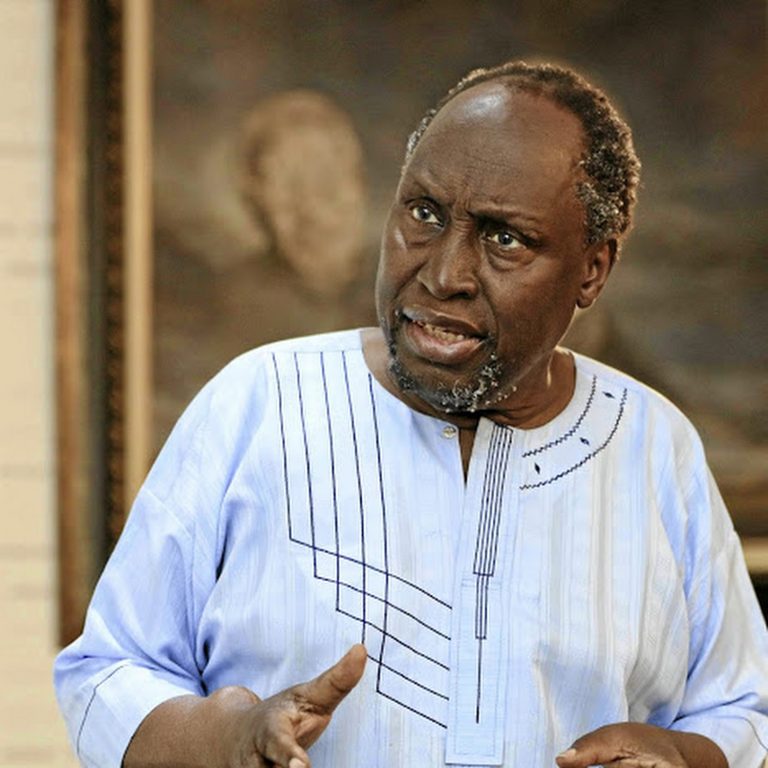
As I suggested last week, the world of letters widely recognises, rightly in my view, that Ngũgĩ wa Thiong’o, in partnership with Owuor Anyumba and Taban Lo Liyong, initiated and oversaw an important revolution in how the teaching of literature in universities in Africa should be structured, if the curriculum is to mediate communication between the people and their immediate or broader environment.

Not only did the three destabilise the intellectual platform on which the colonial project had been mounted, thus, the indoctrination on the nature of knowledge and civilisation, and their manifestation as and in literature, they also introduced an important trope by which later debates on the thought patterns of continental and diasporic Africans could be held.

The trope of decolonisation, which was popularised by Ngũgĩ’s 1986 essays, continues to capture the imagination of many scholars who view the legacies of colonial domination as largely responsible for the continued inequalities that damn some people to lives of misery while rigging opportunities in favour of a small elite.

In all these, the grammar of decolonisation, which animated the Ngũgĩ-Anyumba-Taban initiative, finds relevance among those of us who still think that despite the initial triumphs of anti-colonial initiatives, classical colonialism only retreated to repackage, and is now back in other equally vicious but relatively subtle forms that rely on what appear fair and objective forms.

I am talking about the seemingly universal acquiescence to the force of neoliberal market machinations to extend racialised and gendered inequalities – leave room for a few exceptions – while propping up many unhelpful myths, such as that hard work is a precondition for material success. We now know that this is hogwash, because generally people inherit the blessings of privilege or the curses of poverty and, however far they may run, they never quite break off the chains.

Sisyphean struggles

Part of these Sisyphean struggles by human beings to find their level at the market place have seen humanity become more reckless in their dealings with the earth, for example, leading to wanton extraction that has led to the unfortunate and now undeniable tragedy of global warming, whose ramifications we are yet to understand fully.

As Cameroonian philosopher Achille Mbembe noted in a recent lecture, the earth is hurting and in dire need for repair. To Mbembe, significant changes beneath the surface of the earth are diminishing its capacity to carry us on its shoulders, and soon we shall be unable to pin it beneath our feet.

 If one needed more evidence of this, they only need to look at the plight of our compatriots in Baringo, who have to leave their earthly achievements to flee uphill from raging water levels.

So, what has the revolution of literature curriculums at the university level got to do with all these? One, the current trajectory and underpinning philosophies of literature have a narrower scope and vision that tend to prioritise rather dated concerns. For example, the overarching ideological frame of the 1960s when the Ngũgĩ-Anyumba-Taban partnership inaugurated the curriculum decolonisation agenda was largely predicated on a biological fiction of race that was measured, almost exclusively, using phenotypic indicators of the colour of one’s skin, eyes, or hair.

What happens now, given that race and racism have been relocated beneath the skin, when pretensions of post-racialism go hand in hand with racial profiling in transit points such as airports?

 What kind of literature should we teach that adequately prepares our students to appreciate and push back against normalised forms of exclusion and marginalisation?

These and related questions demand that we look at the literature curriculum more closely to imagine possibilities of centering new genres of literature that allow our students to enjoy the magic of literary creativity while learning how technology has been appropriated to extend racial and other inequalities. So, for instance, where we had the African Novel as the ultimate literary unit at college, how about a unit in Sci-Fi?

After all, the biosphere that was the reason colonialism was attractive to Europe, and what informed the hunger for European imperialism generally, was the desire to ‘own’ and control part of a biosphere that has now been so ravaged by industrial capitalism to the extent that not much of the earth is now habitable without modification.

The daily fog of India’s and China’s cities attest to this. Clearly, we need to focus on a literature that appreciates historical concerns but also prepares our learners to ask the right questions to fit meaningfully in the current world of technology, travel, and reconfigured value systems. This way, it should be possible for us to mount literature units that illuminate ecological and other concerns aimed at ensuring sustainable existence in the biosphere.

Reading literature

Second, the need to revolutionise the literature curriculum is informed by the concerns with the value of the discipline in the prevailing circumstances where people pursue education for utilitarian purposes, primarily for employment. Why should a student spend years reading literature from Classical Greek days to current urban legends when all they really want is to meet credit requirements for a BA, after which they proceed to be bank tellers, among other openings? Shouldn’t it be possible to tailor units such as Literature for Engineering? Or Literature and Legal Reasoning?

I have it said by many colleagues that literature is useful in equipping learners with critical thinking skills. This is definitely true, but how do we proceed in an era when algorithmic and other forms of artificial intelligence are becoming increasingly available and affordable?

It is clear to me that literature is an important subject that, if I had my way, every professional would be required study. But I also think it should not be curated in a rigid or one-size-fits-all approach. Instead, the curriculum could be rejigged to accommodate different interest groups; those who have a passing interest in it need not be taken through the whole nine yards just.

Indeed, given the reality that most people in the world have bought into the trap of neoliberal economics – in which STEM is touted as the panacea to all problems of underdevelopment and personal achievement, it is time we thought of packaging literature in ways that meet our and ‘their’ needs. That is the only way that we can alter the pro-market thinking that privileges STEM and business courses at the expense of the humanities, including literature.

That is the only way that we can complete the project of decolonisation that Ngũgĩ-Anyumba-Taban crew initiated. At the core of this strand of decolonisation is the idea that we need a radical openness of discipline, as opposed to the implied insulation that made literature attractive to the ideologues of yore and dreadful to repressive regimes of the 60s and 70s.

That double attribute, of attraction to progressive minds and repulsive to reactionary ones, is what ultimately made it marginal in the preeminent neoliberal world of thought. It is what, logically, complete decolonization can cure.

(SOURCE: NATION.AFRICA)

Reopening Of Schools Delayed Due To COVID-19 Concerns From The Department of Health, Education Portfolio Committee Hears

0

DEPARTMENT of Basic Education has briefed Parliament that the decision to delay the reopening schools in 2021 was based on a request from the Ministry of Health.

During a briefing from the Department of Basic Education, the portfolio committee on basic education heard that the request to delay the reopening of schools came because hospitals and other health institutions were overstretched due to the ‘Second Wave” of the COVID-19 pandemic.

The portfolio committee chairperson, Bongiwe Mbinqo-Gigaba, said the update from basic education provided a better understanding of the reason behind the delay in the reopening of schools.

“In understanding the challenges and constraints in the health system, the decision to delay the reopening of schools for the start of the academic year was the correct one,” said Mbinqo-Gigaba.  

“The reality is that Covid-19 is around. It has dealt with our families and friends. If delaying the restart of schools means that we can save family and friends, then we are in favour of this.”

Department Of Basic Education further told Parliament that the school management teams (SMTs) will start work on Monday, January 25, to prepare for the year ahead.

The department also told the committee that the rate of hospitalisations has risen with the ‘Second Wave’ of the COVID-19 pandemic.

Hospitalisations for children remains low, at around 25 hospitalisations per week for those aged 5 to 14, Parliament heard.  

However, there has been an increase in infection in older children and young adults, as shown by research globally.  

As for educators, 16 495 have been infected with 409 fatalities since March 2020, Parliament heard.
 
The department also told Parliament that marking for the 2020 National Senior Certificate (NSC) examinations occurred in all provinces in 177 marking centres.

Marks should be finalised on Friday, 22 January, as the majority of provinces have already completed marking, with only two provinces still marking some papers. However, this work will be completed timeously.
 
The 2020 exam scripts were marked by 45 272 markers, of which 1 738 had to be substituted by others due to infection or fear of infection.

The department had planned for this eventuality and had 10-15% addition markers in reserve.
 
The capturing of marks is being done by 611 employees at 34 capturing centres across all nine provinces, each managed by a system administrator.

Safety and security protocols are in place.

“The committee has planned to receive a further update in about three weeks on the readiness to release matric results,” said Mbinqo-Gigaba.
Some general and educator assistants were not paid stipends in December, the department informed the committee, as money transfers to schools occurred after some schools had closed for the year. However, all payments should be up to date by the end of next week.

(SOURCE: INSIDE EDUCATION)