Home Blog Page 360

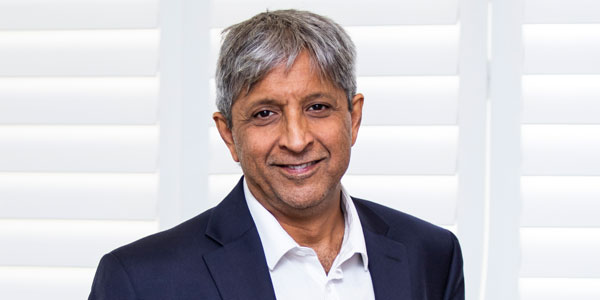
Wits Staff, Academics and Students Bid Farewell To Professor Adam Habib

ACADEMICS, students and members of staff have bid farewell to Vice-Chancellor and Principal, Professor Adam Habib, who will leave Wits University at the end of December.

“It has been an honour and a pleasure to serve at the helm of this great institution for the past eight years. I have great faith in the collective Wits community – during difficult times you have always made the right decision and empowered me to act in the best interests of Wits University. I thank you for your support and your trust,” says Habib.

Habib is leaving the University after eight years and will join the School of Oriental and African Studies (SOAS) based in London. Top nuclear physicist Professor Zeblon Vilakazi will succeed Habib as the Vice-Chancellor and Principal of Wits from 1 January 2021.

Tributes have been pouring in for Habib from academics, employees, students, staff, alumni, donors, ministers and fellow vice-chancellors from within and beyond South Africa’s borders, some of which are reflected hereunder.

The Chairperson of Council, Mr Isaac Shongwe says: “Adam has been one of the most vociferous leaders of this great University, and indeed the entire higher education sector. He is a courageous leader who speaks truth to power, who holds the state to account, and who calls out threats to society when others are afraid to do so. We will miss his leadership and all that he has done for Wits and our country.”

During Habib’s tenure the University has recorded significant achievements. Wits’ research output has increased, it has expanded its footprint in international journals and throughput rates are steadily rising. Wits’ finances are stable and it has strong, independent governance structures in place.

Minister of Higher Education, Science and Innovation, Dr Blade Nzimande thanks Habib for his contribution to the higher education sector and describes him as a “fiery character who is not afraid to enter the fray not just as an academic, but also as a political commentator and an intellectual activist”.

(SOURCE: Wits University)

Motshekga Thanks Parents for Trusting Basic Education, Mourns Teachers Who Died of COVID-19

0

NYAKALLO TEFU

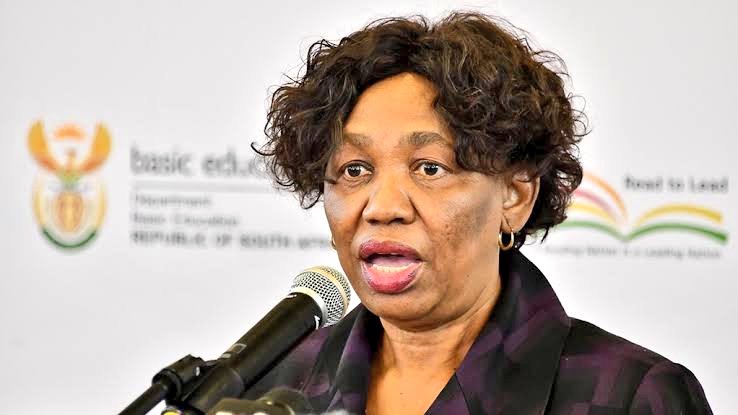
AT least 1 493 teachers have died as a result of the COVID-19 pandemic and other conditions in the year 2020, according to Basic Education Minister Angie Motshekga.

The number includes workers at various schools and officials in circuits, district offices and provincial departments.

Motshekga briefed the media on Thursday morning on the state of readiness for the 2021 academic year.

“Let us pause and thank our teachers, who worked tirelessly; some of them for 7 days, sacrificing their precious time to ensure that teaching and learning continues, even under trying circumstances.  Thank you, and thank you again,” said Motshekga.

The minister said schools officially closed on 15 December, adding that learners from Grade R to 1 are to receive their end of the year reporters by end of the year.

“I wish to stress that schools are not allowed by law, to withhold reports for whatever reason.  We continue to receive complaints from parents, whose children have not been given reports,” said Motshekga.

Motshekga has announced that all systems go for the year 2021.

She said schools will reopen on January 25 for teachers and learners are expected back in classroom by January 27.

“All provinces have finalised admission processes. District offices will be available to assist parents where the need arises,” said Motshekga.

Motshekga added that in the year 2021, her department is set to maintain the delicate balance of health and safety in schools and also ensure that they plug on gaps for curriculum recovery which they have been able to successfully during the 2020 academic year.

(SOURCE: INSIDE POLITICS)

Basic Education Concerned About ‘Credibility’ of Leaked Exam Papers Following High Court Ruling

0

NYAKALLO TEFU

THE Department of Basic Education has expressed concern about the credibility of the matric examinations after the High Court in Pretoria declared its decision to force matric exams rewrite as irregular and unlawful.

The high court ruled that the Department’s decision to order the rewrite was unlawful and irregular following an urgent court application by Afriforum, the South African Democratic Teachers’ Union (Sadtu), and other concerned parties.

Both Mathematics and Physical Science papers were leaked on the day of the examinations, prompting an investigation by the Department of Basic Education and the Hawks.

“After a meeting with Ministers and MEC’s on Saturday, the Director General has been advised not to challenge the court’s judgement, that matriculants should not re-write the two leaked papers,” said basic education’s spokesperson Elijah Mhlanga.
Mhlanga confirmed that there would be no re-write of the two leaked exam papers, adding that this was a difficult decision for the court to make.

Teachers’ unions and civil organizations argued that it was not fair for all learners to be punished for what some of the learners did.

“The difficulty about the judgement is that it has plunged the Basic Education sector and to some extentthe education and training system in South Africa into an unprecedented crisis,” said Mhlanga.

Afriforum, Sadtu and others argued in court that the Department had not completed the investigation and said this deemed the conclusion as illegal.

“As indicated in our answering document, we could not determine the extent of the leak and that makes it difficult to even anticipate to what the statement of Umalusi is going to be in this regard,” added Mhlanga.
Mhlanga said if the extent of the leak is unknown, then a re-write is the next best decision.

(SOURCE: INSIDE EDUCATION)

22-year-old Sekedi Mabatha Makes History As University of Limpopo’s First Female Chairperson

SEKEDI Mabatha was inaugurated during a recent virtual ceremony by the office of the Vice-Chancellor and Principal, Professor Mahlo Mokgalong.

The historic milestone came after the scheduled 2020/21 SRC elections could not take place, leading into a vigorous process of consultations and nominations by students and student structures for membership to the TSRC.

Born in Mohlaletse, the 22-year-old agricultural management student was more than ecstatic to hear of her election. “It’s such an honour and it’s very overwhelming to have been chosen, but I’m eager to learn leadership skills which will enhance my capabilities as chairperson.

“My responsibilities on campus will be the strong bridge between management and the students, meaning that we will be taking students grievances to management and helping find a solution,” Sekedi said.

Sekedi explains that as an TSRC member, she is considered to be a statutory structure as provided for in the Higher Education Act. She offers a variety of services to individual students and different student groups and, in offering these services, she exercises political, economic and administrative authority in order to manage the activities of student life.

As such, the TSRC is the highest decision-making structure of student governance within their campus. She tells BONUS that the new TSRC is ready to overcome any challenges and work to the best of their abilities to ensure that students’ needs are met and says they are mindful of the depth of the challenges that confront them.

“The road ahead will be difficult and hard, but we will have to use our courage, wisdom and resolve to attain the dreams we have for the UL’s student community,” she said.

She advised her peers that good working relations and respect with colleagues will do their dreams justice. “Have passion to work for people and assist them,” she said.

She adds that their priority involves transforming the institution to adapt to the new normal and advance the development of online learning, while ensuring that students remain protected from the virus through the supply of personal protective equipment (PPE) and equipping laboratories for smooth practical sessions.

“I am very grateful to be the first female leader in 61 years of the institution’s existence. It shows that times are changing, and that the oppression of women is gradually becoming a thing of the past,” she said.

(SOURCE: REVIEW ONLINE)

Opinion: Higher Education, Unfinished Business Of Transformation

0

UNIVERSITY of Zululand’s Vice Chancellor for Research and Innovation, Professor Mashupye Ratale Kgaphola, shares his views on transformation in South Africa’s higher education.

The Minister of Higher Education, Science and Innovation recently released a report of a ministerial task team, whose core mandate was to investigate the paucity and marginalisation of South African black academics in our universities.

The investigation has laid bare the harsh realities and the systemic barriers that are still faced by black students and academics across the system. Indeed, much of what has been exposed has been the cry of many in the post-1994 era, but which was so often muffled under the pretext of ‘transformation plans’.

Arguably, the report raises not only educational transformation issues, but fundamentally suggests some discomforting political and sociological questions.

One of these questions relates to the extent to which black academics and education activists may have, perhaps unwittingly, demobilised in relation to the transformation agenda.

Taking account of only permanent South African staff, and using the comparative figures of 2007 and 2017, a number of broad trends emerge from the report.

Black academics across the university system increased from 39% in 2007 to 53% in 2017, while white academics decreased from 61% to 47% during the same period. But the bigger story lies beneath the aggregated figures.

In general, historically disadvantaged institutions (HDIs) carry the highest proportion of black academics, while historically advantaged institutions have the lowest percentage of blacks.

The latter group varies from 5.1% at Stellenbosch University to 32% at the University of Johannesburg in terms of black academics. Male staff overall held a greater proportion of doctoral degrees than female staff.

Consequently, male staff dominated the senior positions while females dominate the junior levels. In terms of South African staff, 52.6% of white staff held doctorates.

African, Coloured and Indian staff with doctorates comprised 30%, 38.1% and 41% of their respective groups. Trends with regard to postgraduate enrolment are not encouraging.

A 2015 study on the retention, completion and progress rates of SA postgraduate students shows that the postgraduate pipeline in South Africa decreases substantially as students progress from undergraduate to postgraduate studies.

The majority of students who did doctoral study did so part-time, resulting in the completion time averages of five years instead of the regular three years.

African and Coloured students have the lowest completion rates, followed by Indians, while white students have the highest throughput rates.

Overall, there has been a growth in absolute numbers of doctoral graduates across all fields of study in the country during the period 2000–2017.

That said, there is however a serious and urgent concern in that the proportion of South Africans as a percentage of the total doctoral graduates has decreased drastically in this period from 81% to 57%.

Worse, it has been projected that, on the current trend, the number of international doctoral graduates will surpass the number of their South African peers by 2021.

The challenge now is for the university sector to do an introspection and ask how we can improve our performance for the long-term benefit of our nation and our very institutions.

Surely history has taught us enough to know that any institutional stability that is imbedded on an injustice is akin to a house built on sand.  

(SOURCE:  ZululandObserver)

Former SA Schools Captain Reported Missing

0

FORMER SA Schools captain and Jeppe High School head boy Muzi Manyike is still reportedly missing.

Manyike’s agents, In Touch Sports, announced on 8 September that the youngster was set to join the South African Sevens Academy. He was also invited to a Junior Springboks training camp in February, but had to withdraw due to injury.

His contract with the Lions concluded on 31 October, but an early release was granted at the player’s request.

Manyike is understood to have last been seen in Pretoria North on 18 November.

‘I’ve been in consistent contact with Muzi’s parents over the past few days,’ Manyike’s agent Kobus Porter told Sport24. ‘They became very concerned by the end of last week about his continued absence and got in contact with us. We’re all extremely concerned and his family, who’ll receive all our support, is in everyone’s thoughts.’

Previously, Manyike represented the Golden Lions at U12, U13, U16 and U18 levels, captaining the U16 team in 2016. He was elected as head boy of Jeppe High in 2018, when he played for the Lions’ Craven Week squad for a second time and earned a place as vice-captain of SA Schools, leading the team against Wales.

The 20-year-old utility back, who played most of his schoolboy rugby at centre, also represented South Africa’s U17 and U18 sevens team, winning the Capricorn sevens tournament in Windhoek in 2016.

A missing person’s report was reportedly filed for Manyike on 10 November at the Randfontein SAPS.

Anyone with any information on Manyike’s whereabouts is encouraged to contact the authorities immediately or can contact Douglas at 071 334 7531.

(SOURCE: SARUGBYMAG)

Three North West Matric Pupils Die In Crash On School Trip

0

NORTH West Education MEC Mmaphefo Matsemela has set up a team to probe whether a school trip that claimed the lives of three Grade 12 learners was authorised, she said on Saturday.

“I have set up a team that is going to do the investigations that will take into consideration the question that the trip was sanctioned because there are directives that we have sent to schools since the beginning of the [Covid-19] pandemic,” she said after visiting the families of the learners.

“And some of the directives include sport activities, the extra mural activities that take into considerations the school trips.”

Three Grade 12 learners at Rethusegile High School in Lethabong north-east of Rustenburg died on Friday night when their minbus taxi overturned on the R511 road about 25km from Lethabong.

Matsemela said all school trips must be authorised by the head of department.

A group of 42 learners travelling in three minibus taxis attended the matric farewell function in Brits.

On their way back home, one of the drivers lost control of the minibus taxi and it rolled, claiming the lives of Ikageng Nkosi, 18, Tshepiso Moagi, 21, and Amogelang Diphoko, 20.

Eleven others were injured and admitted to the Brits District Hospital, where they were reported to be in a stable condition. One of the pupils have been discharged.

“We have lost as a department of education in the North West province,” Matsemela said.

“We did not expect any learner after this critical year to die at this stage, after writing the examination all of us understand that this year it has been difficult at the Grade 12…and instead of them reaping the fruits of their efforts we found today that they are no more.”

Matsemela also visited the injured learners in hospital.

According to the learners’ family they were all happy and looking forward to celebrating their last year at high school.

Joseph Nkosi, 54, describe the death of his son Ikageng, as a great lost.

“He was an obedient child, and was accepted to study at the University of Johannesburg. He wanted to be a teacher,” he said of his last born child.

Tshepiso Moagi’s sister Boitumelo Moagi said she was reluctant to allow her younger brother to attend the function.

“I did not want him to go to the function but, he told us it is the last chance for him to bid his friends and schoolmates a ‘final good bye’. He was in a jovial mood when he left,” she said.

Amogelang Diphoko was excited to be part of the trip, his sister Neo Sekano said.

“He was excited about the trip, financial challenges nearly derailed his trip but, he insisted in going whether he did not have all that was wanted for the trip. He wanted to attend at all cost,” she said.

(SOURCE: OGENEAFRICASA)

Racial Microaggressions Contribute To Disparities In STEM Education

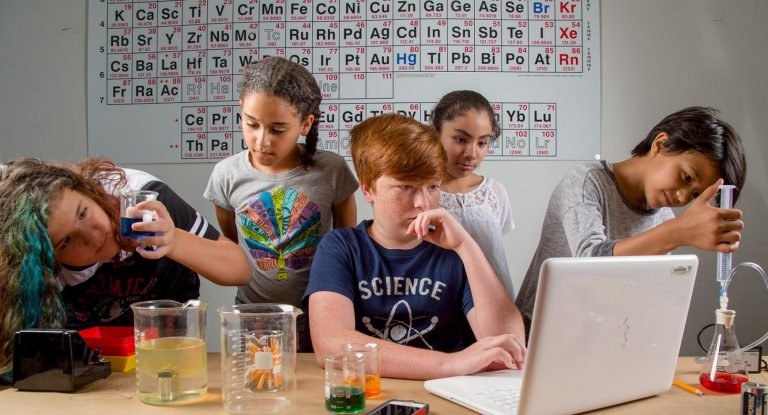
CAREERS in science, technology, engineering, and mathematics (STEM) are one of the fastest-growing areas of work in the United States, yet racial and gender disparities remain in STEM occupations.

A recent study from University of Illinois researchers examining reasons for such disparities shows the overall racial climate on a college campus–informed by experiences of racial micro-aggressions–is a contributing factor in the lack of representation of students of color in STEM education programs.

In other words, the study found when students of color in STEM majors felt excluded, invisible, or isolated on their college campus because of their race, sometimes combined with discouraging experiences in academic settings, they were less likely to continue in STEM.

“Racial microaggressions are subtle, as opposed to overt, behaviors or remarks that can serve to demean, degrade, invalidate, or otherwise make a person take a step back to try to figure out, ‘was that because of my race?’ That’s the difficult thing about racial microaggressions, they can catch you off guard to a point where, in the moment, you may not necessarily know how to react,” explains Jasmine Collins, assistant professor of organizational and community leadership in the Agricultural Leadership, Education and Communications program at Illinois and co-author of the study.

For the study, Collins and colleagues from disciplines including sociology and African American studies analyzed the experiences of students of color in STEM majors who reported experiencing racial microaggressions across three levels: on campus (characterized by students’ general feelings about being a student of color on their university campus); in academic settings (e.g., classrooms or exchanges with instructors or academic advisers); and with peers (e.g.. interpersonal interactions with other students).

Using data collected from more than 4,800 students of color at a large, public university in the United States, the study also found Black students in STEM majors are more likely to experience racial microaggressions than other students of color in STEM, with Black women reporting the highest rates.

Black men and women, Latina women, Asian women, and Indigenous women in the study, in particular, reported experiencing racial microaggressions more frequently at the campus level than in classrooms or between peers.

The researchers hope the findings from the study, published in the International Journal of STEM Education, will encourage STEM-related academic programs to address the larger campus culture in their classrooms and other academic settings. “The aim is not to call attention to a particular campus, but we do make the connection to the broader national context. Colleges and universities play an important role in the STEM pipeline,” Collins says.

Survey participants responded to questions asking, for example, if they have had their contributions minimized in classrooms because of their race; experienced negative and insulting comments because of their race; or felt invisible or unwelcome on their campus because of their race.

Some students reported dropping out of STEM majors because of these experiences or having been encouraged by advisers or instructors to change to a non-STEM major.

As one respondent in the study, a Latina woman who changed from a STEM to a non-STEM major, noted, “I changed my desired major from Engineering to Latin American Studies because of my race and sadly encountered others like myself within the humanities who had to change their major because of their race. If you aren’t White, and you aren’t Asian, and you aren’t ‘Indian,’ you aren’t an engineer.”

One Black woman who is a STEM student noted, “A lot of people automatically assume that since I’m a Black female that I should be a [non-STEM] major. Every time I walk into a lab, I always get looks. I’m not sure if it’s because I don’t ‘look’ like a [STEM] major in general or if it’s because I’m Black.”

Others described eagerness to meet new people at the beginning of the school year, but experienced rejection when they tried to make friends.

A significant contribution of this study, Collins explains, is the layering of different levels at which students encountered microaggressions. “We introduce this framework of the campus racial climate to show how, for students of color in STEM who experience racial microaggressions, they not only receive messages in their classrooms, but it’s part of the institutional fabric. It’s the culture of the institution that tends to reinforce these messages.”

Collins says universities must find ways to create more welcoming and supportive environments for students of color, for all majors, and employ a level of accountability at the campus and departmental level.

“In order to educate our workforce, students have to come through our doors and if these are the kinds of experiences [students of color] are facing–the campus signals to them they don’t belong in STEM, their peers in class don’t want to work with them because they think they’re incompetent, or their adviser recommends they switch majors because this might be too hard for them–if it’s just message after message saying, ‘you don’t belong here, you’re not smart enough, you’re not skilled enough to have this kind of job,’ then we’re losing a lot of talent in the pipeline,” Collins says.

“It’s one of the reasons why we see such stark racial and gender disparities in the STEM workforce. And it really is a pipeline issue.”

Collins hopes to see a shift in research that focuses a little less on confirming that these things happen and focuses more on solutions. “I find it to be quite taxing as a scholar, and even personally as someone who also faces racial microaggressions, reading through the data in the midst of a global pandemic, in the midst of racial protests, and seeing that not a lot has changed,” she says. “I think we have enough evidence that these things occur.

“If we can find those ways to reenergize ourselves toward solutions and toward working collaboratively to find solutions, that’s where I would love to see future research in this field go.”

Funding was provided in part by grants from the Center on Democracy in a Multiracial Society, Campus Research Board (including the Multiracial Democracy Initiative), Graduate College Focal Point, and University Housing at the University of Illinois, Urbana-Champaign.

Agricultural Leadership, Education, and Communications is housed in the College of Agricultural, Consumer and Environmental Sciences at University of Illinois Urbana-Champaign.

(SOURCE: Eurekalert)

Ramaphosa Praises #ImStaying Facebook Page, Encourages Unity, Reconciliation in South Africa

CYRIL RAMAPHOSA

I WAS recently sent a photo that featured on the popular #ImStaying Facebook thread. Two women are seated side by side at a bus stop somewhere in Cape Town. One is white, elderly and frail, and rests her head on the shoulder of the younger black woman.
 
This simple image, of these two women sitting there with their hands locked tightly, resonated deeply with me as we approach Reconciliation Day on 16 December.
 
It brought to mind the powerful words of Steve Bantu Biko that captured our aspirations for a new country: “In time we shall be in a position to bestow on South Africa the greatest possible gift – a more human face.”
 
Such a scene, of kindness and compassion, and of two people simply being human, would have been unthinkable in South Africa just over three decades ago.
 
Under that most insidious manifestation of petty apartheid, the Reservation of Separate Amenities Act, only the white woman would have been allowed to sit at that bus-stop, or travel on the bus. A black woman holding a white woman’s hand would have been met with disapproval from the city’s white residents.
 
It is often difficult to explain to the younger generation of South Africans, who were born to freedom, that apartheid was both brutal and extraordinarily petty. It is difficult to explain the lengths to which the regime would go to keep the races apart, from banning interracial relationships, to creating separate bus stops, entrances to buildings, public toilets, to even segregating beaches.
 
On Reconciliation Day each year, we reflect on how far we have come in advancing national reconciliation. It is important that we deal decisively with the obstacles to reconciliation, among them the high levels of inequality in our country and the persistence of racist attitudes and practices.
 
But it is equally important to acknowledge just how vastly different our country is today to what it was 26 years ago. For every negative story of racism that makes the news, there are countless other positive stories of racial integration, communities living in harmony and social cohesion that do not generate headlines.
 
Many of these can be found on the same #ImStaying thread. They are simple, everyday stories of South Africans living and working alongside each other, being friends, and helping each other.
 
We know that divisions of race and class remain very real in South Africa, but these stories do show that race relations in our country are not as toxic as we are often led to believe.
 
Last year’s National Reconciliation Barometer, which is published by the Institute for Justice and Reconciliation, noted that the optimism of respondents regarding racial unity was the highest since the inception of the study.
 
It also found that the majority of respondents believed race relations have improved since 1994.
 
It is noteworthy that most South Africans report they would like to interact more often with people from other race groups but cite language and confidence as the two greatest barriers.
 
This is ahead of other perceived factors such as lack of common ground, anxiety, or negative prior experiences.
 
It is obvious that true reconciliation is impossible unless we overcome the social and economic inequalities that persist in our society. It is only when the playing fields of opportunity are levelled and the lives of all South Africans improve that social cohesion will be strengthened.
 
But we should at the same time not discount the important gestures in our everyday interactions that demonstrate our commitment to reconciliation between the races; and breaking language barriers is perhaps among the most important of them.
 
Reconciliation is a weighty concept, and there may be many who are unsure as to what they can actually do to advance racial reconciliation. We may feel reticent to take the first step or to reach out, for fear of being judged or even rejected.
 
On this Reconciliation Day, I call on each of our citizens to think of the simple things they could do to reach out across the racial divide in their everyday lives. One way of doing this is to learn another South African language.
 
By trying to learn the language of your friend, your colleague, your neighbour or the people you interact with daily in public places, you go beyond just demonstrating cross-cultural understanding. You open up the space for real communication.
 
We need to find ways to reach beyond our social and professional circles, to appreciate other people’s points of view. Through sporting, cultural and religious activities, we can find ways to interact with fellow South Africans from a diversity of backgrounds.
 
We should recognise that in addition to the fundamental changes we need to make in the structure of our economy and society, reconciliation can be built through our every-day activities. Madiba saw this in sport, for example, and demonstrated its great potential for nation-building. He said: “Sport has the power to change the world. It has the power to unite in a way that little else does.”
 
Our response to the coronavirus pandemic has shown that we are at our best when we extend hands of solidarity and compassion to one another.
 
Now, as we rebuild our society, let us place this spirit of generosity at the centre of our national character.
 
I wish you all a joyful and a meaningful Reconciliation Day.

(SOURCE: FROM THE DESK OF THE PRESIDENT)

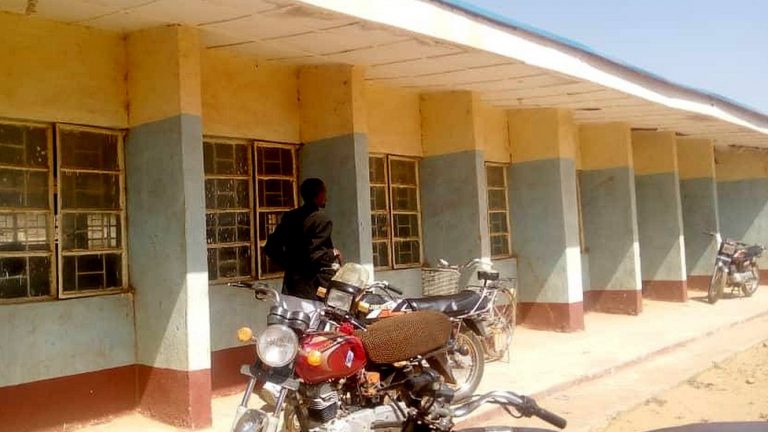
Nigeria School Attack: 800 Pupils Missing After Gunmen’s Raid

0

THE Nigerian military had located and exchanged fire with gunmen who kidnapped scores of secondary school students in northwestern Katsina State, according to a statement from the country’s president on Saturday.

The gunmen stormed the Government Science secondary school in Kankara district at about 9:40 p.m. local time on Friday, police and locals said.

A parent and school employee told Reuters that roughly half of the school’s 800 students were missing.

President Muhammadu Buhari said in a statement that the military had located the kidnappers in a forest and was exchanging fire with them, aided by air support. In the statement, Buhari condemned the attack in his home state.

Police and the military were still working to determine how many were kidnapped and missing.

Police at the scene on Friday exchanged fire with the attackers, allowing some students to run for safety, police spokesperson Gambo Isah said in a statement.

Police said they would deploy additional forces to support the search and rescue operation.

One officer was shot and wounded in the exchange of fire with the gang, they said.

Katsina is plagued by violence the government attributes to bandits — a loose term for gangs of outlaws who attack locals and kidnap for ransom. Attacks by Islamist militants are common in northeastern parts of the country.

Violence and insecurity across Nigeria have enraged citizens, particularly after scores of farmers were killed, some beheaded, by Islamist militants in northeast Borno state late last month.

Buhari, who arrived on Friday for a week in his home village some 200 kilometres from Kankara, was scheduled to brief the country’s National Assembly on the security situation last week but cancelled the appearance without official explanation.

(SOURCE: CBC)