Home Blog Page 363

Charles Darwin Notebooks ‘Stolen’ From Cambridge University

0

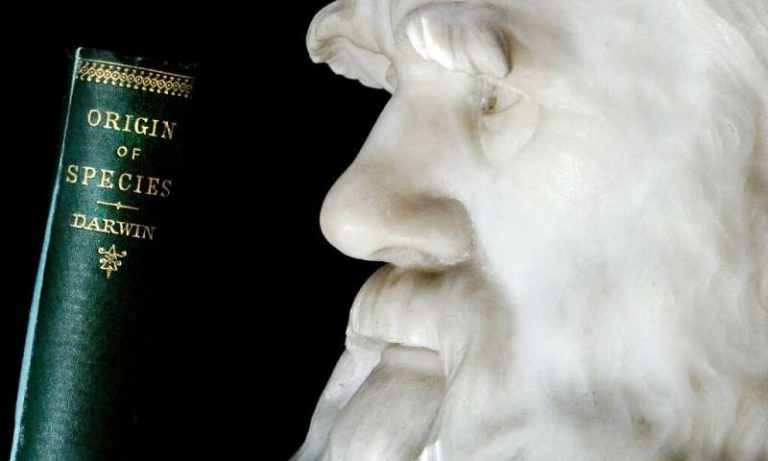
TWO of Charles Darwin’s notebooks containing his pioneering ideas on evolution and his famous “Tree of Life” sketch are missing, believed stolen, the Cambridge University Library said on Tuesday. The British scientist filled the leather notebooks in 1837 after returning from his voyage on the HMS Beagle. The library said they were worth millions of pounds.

In one book, he drew a diagram showing several possibilities for the evolution of a species and later published a more developed illustration in his 1859 book “On the Origin of Species”.

The University of Cambridge’s vast library first listed the notebooks as missing in 2001 after they were moved out of the Special Collections Strong Rooms for photography to be carried out there.

They were long believed to have been incorrectly filed within the building, which contains around 10 million books, maps and manuscripts and has one of the world’s most significant Darwin archives.

However a major search this year—the largest in the library’s history—failed to turn up the notebooks.

“Curators have concluded the notebooks… have likely been stolen,” the library said in a statement.

It said it had informed local police and the books had been listed on Interpol’s database of stolen artworks, called Psyche.

The University Librarian, Jessica Gardner, released a video statement appealing to the public to help.

“It is deeply regretful to me that these notebooks remain missing despite numerous wide-scale searches over the last 20 years,” she said, adding that the library has since massively improved its security systems.

The librarian suggested that former or current library staff, those working in the book trade or researchers could have information.

“I would ask anyone who thinks they know of the notebooks’ whereabouts to get in touch. Please help,” she said.

The appeal was launched on November 24, known as Evolution Day since it marks the date of the publication of “On the Origin of Species”.

(SOURCE: PHYS.ORG)

Deputy President David Mabuza To Address The World AIDS Day Commemoration in Soweto

0

DEPUTY President David Mabuza, in his capacity as Chairperson of the South African National AIDS Council (SANAC), will deliver a keynote address during the World AIDS Day commemoration event on Tuesday in Soweto, Gauteng. 

The 2020 World Aids Day will be commemorated under the theme “We’re in this together – Cheka Impilo”, a clarion call to every South African to make the right health choices and ensure that they know their health status. 

The theme is aligned to the global theme for World AIDS Day which is “Global Solidarity, Shared Responsibility”.

Mabuza will use this opportunity to provide an update on the country’s progress against 90-90-90 targets, and also share preliminary findings on the impact of COVID-19 on HIV and TB services. 

The Deputy President will be joined by amongst others, SANAC Deputy Chair Ms Steve Letsike, Minister of Health Dr Zweli Mkhize and Gauteng Premier Mr David Makhura, including representatives from development partners and leaders of civil society organisations. 

(SOURCE: INSIDE POLITICS)

North West To Build R68 Million State-Of-The-Art School in Ikageng, Tlokwe, To Deal With ‘Overcrowding’ Challenges

0

NYAKALLO TEFU

THE North West Department of Education has announced the erection of a new state-of-the-art school in Ikageng township in Tlokwe valued at R68 million.

According to the department, the new school is expected to constitute 10 blocks of classrooms, a library, computer room and a multipurpose centre.

The Department of Education MEC Mmaphefo Matsemela said that government is providing an infrastructure which is “beyond sanitation”.

“We aware of the overcrowding problem normally experienced in this area of Tlokwe. As a department this came to our attention and now we are responding to the demand by building a new school. The schools that we currently building are infrastructure beyond sanitation. Our aim is to make our communities proud and give them back their dignity,” said Matsemela.

“The schools that we are building, are having sporting fields, curriculum activities are the enablers of the curriculum. An active mind is very important because it allows the mind to accept the lesson with ease. Education remains a societal matter, we depend on our communities in ensuring that they own schools and protect them.”

Matsemela said the persistent challenge of overcrowding always experienced at the beginning of the year in schools within the Tlokwe area will soon belong to the past.

She said the department is fast-tracking the building of new schools across the province in order to deal with the problem of overcrowding in different areas.

With the massive migration of communities to cities pressure for schooling is always visible. The demand for schooling is always growing and the department headed to the call of the communities.

The Acting Mayor for the JB Marks Local Municipality, Councillor Kevin Johnson expressed that communities should ‘jealously guard’ their schools.

“We are duty bound to emplore our community to jealously guard the successful completion of this project and relentlessly defend it against any and all attempts to disrupt or subvert our investment in the future of our children”, said Johnson.

(SOURCE: INSIDE EDUCATION)

CYRIL RAMAPHOSA: Achieving 75% Reduction In HIV Infections Likely To End AIDS As A Public Health Threat by 2030

0

CYRIL RAMAPHOSA

AS WE continue our efforts to manage the devastating coronavirus pandemic, we cannot ignore the other public health challenges that our country faces.
 
For more than three decades, our country has been engaged in an ongoing struggle against HIV and AIDS, which has cost many lives and caused great hardship and suffering.
 
Tomorrow, we will join people across the globe in marking World AIDS Day. As the Chair of the South African National AIDS Council, Deputy President David Mabuza will lead the national commemoration with an address on progress in the country’s response.
 
This year, World AIDS Day is taking place under difficult conditions.
 
Since the outbreak of COVID-19 in the country, with the nation-wide lockdown and the pressure on our health facilities, many HIV, AIDS and tuberculosis services have suffered. This has posed a challenge for people testing and starting antiretroviral treatment. Many people found it difficult to collect their medicines and fewer people accessed other services, such as voluntary male medical circumcision.
 
At the same time, there are many lessons that have been learnt from our public health response to the coronavirus pandemic that can strengthen our fight against HIV and TB.
 
South Africa continues to have the largest number of people living with HIV in the world. It is encouraging, however, that over the last decade we made progress in reducing the number of new HIV infections in the population by nearly 60%.
 
It is also encouraging that HIV infections in adolescent girls and young women have significantly declined in the last decade. This is a crucial group because they are much more likely to be at risk of getting HIV.
 
Our treatment programme has contributed to a reduction in the number of deaths due to AIDS by 60%. There has been a greater reduction in HIV-related deaths among young people.
 
It was possible to reduce the number of deaths because we, together with our partners, have rolled out an extensive antiretroviral programme reaching millions of people living with the disease.
 
At the beginning of the decade, our programme to prevent mother to child transmission (PMTCT) of HIV had very low coverage. Now we have one of the highest rates of coverage of PMTCT in Southern Africa, which has substantially reduced rates of infection among children.
 
While we have reduced deaths and new infections, we still are far from reaching the goal we committed ourselves in 2016 of achieving a 75% reduction in HIV infections by 2020. If we succeed in doing so, we are likely to end AIDS as a public health threat by 2030.
 
Unfortunately, we are not there yet. We have to do far more to ensure that young people are empowered to prevent infections, including through changing behaviour, accessing condoms and testing regularly. We need to make sure that everyone who is infected has access to treatment and care.
 
We need to work harder on HIV prevention among key populations, including sex workers, men who have sex with men, and people who inject drugs. We must end the stigma and discrimination towards these populations. We cannot hope to end HIV if we ignore the needs, concerns and rights of any part of our population.
 
South Africa needs to increase efforts to medically circumcise young men to reduce their risk of acquiring HIV. Unsafe circumcision should not leave young men with lifelong health problems, and no one should die from circumcision. We must make sure that young men have safe circumcision.
 
We are encouraged by findings of a recent study on pre-exposure prophylaxis (PrEP). Unlike antiretroviral treatment that is given to people who are HIV positive, PrEP involves the regular use of antiretroviral drugs by HIV negative people to prevention infection. The study, conducted by scientists from the HIV Prevention Trials Network, found that long-acting injections once every eight weeks was better than the daily tablet used for HIV prevention. These findings have the potential to significantly strengthen our response to the epidemic.
 
If we are to succeed in ending AIDS as a public health threat within the next decade, we need to combine these medical breakthroughs with fundamental changes in behaviour. We also need to tackle the economic and social conditions that contribute to high rates of infection.
 
One of our central tasks is to empower adolescent girls and young women, educationally, economically and socially. They need to be able to make their own decisions about every aspect of their lives, including their sexuality and sexual behaviour.

As the country marks 16 Days of Activism for No Violence Against Women and Children, we need to work even harder to address the unequal relations between men and women – which contribute both to gender-based violence and to the spread of HIV.
 
Ultimately, we will achieve the end of AIDS through the empowerment of young people, women and other people at risk. This includes empowerment through access to information, advice and support. It includes access to education and economic opportunities, especially for young women. Empowerment also means that every person must have access to testing, treatment and other health services.
 
The people of South Africa have come so far, endured so much and made such great progress in the fight against HIV, AIDS and Tuberculosis.
 
On this World AIDS Day, which is taking place in the shadow of another devastating pandemic, let us intensify both our resolve and our actions to confront and overcome AIDS once and for all.

(FROM THE DESK OF THE PRESIDENT)

Study: No Link Between High School Sports And COVID-19 Transmission

0

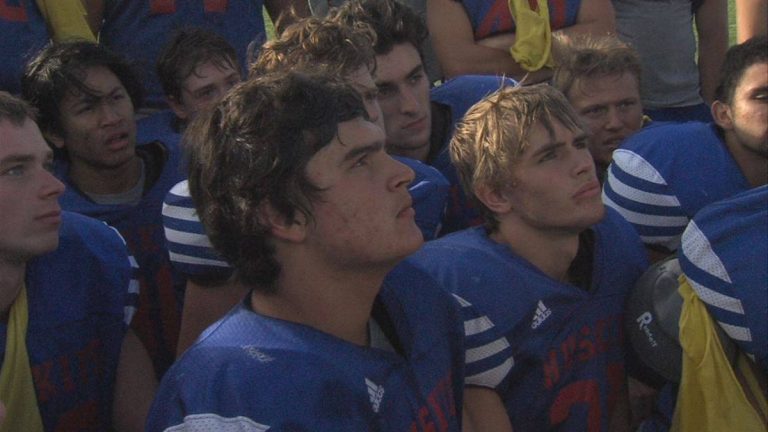
A NEW study suggests taking part in high school sports is not linked to an increased risk of COVID-19.

Researchers at the University of Wisconsin School of Medicine and Public Health tracked coronavirus cases at 207 schools that had restarted athletics.

More than 30,000 student-athletes were tracked in September and October. They took part in 16,000 practices and 4,000 competitive events.

Results showed players had a lower rate of infection than teenagers overall. The study also found none of the sports studied had a higher rate of transmission than the overall teenage population.

The most common source of infection for players was in their own home where 55% of all infections occurred. 40.7% of cases resulted from community contact not associated with school or school activities.

The dean of the medical school, Dr. Robert N. Golden, says he doesn’t think the results of the study are accurate. In a statement he said: “Dr. Watson is entitled to express his views regarding the safety of high school sports during the COVID-19 epidemic in Wisconsin.

However, his views do not represent the opinions of UW–Madison, UW School of Medicine and Public Health, or UW Health.

The study released by the Wisconsin Interscholastic Athletic Association involves a survey that collected data on student athlete COVID-19 cases as reported by high school athletic departments.

The study design has limitations, and the work has not undergone peer review or acceptance for publication in a scientific journal.

High schools across the country are working to make the best decisions they can regarding the health and safety of their athletes, and we do not believe this report should play a major role in shaping their decisions.”

(SOURCE: KOLOTV)

Maths and Science Tutor Gives Hope To Students In Soshanguve

A 52-year-old man has not only been the talk of every maths and science student in Soshanguve, he has also been the pride of his friends and family.

Johannes Mathenje, born in Soshanguve, gives maths and science tutoring classes at his home due to Covid-19.

Before the pandemic, Mathenje gave classes in schools around Soshanguve. He said he has always loved science.

Mathenje said his dream was to become a dentist or an engineer, but little did he know he was destined to do more for his community.

Before he started the tutoring programme, he said he worked at an IT company with his late brother.

After the company collapsed in 2011, he decided to start a community project. The main focus of the project was on mathematics and physics.

This project was inspired by another project that he was a part of when he was still studying at the Medical University of South Africa (Medunsa), now known as Sefako Makgatho Health Sciences University (SMU).

“I started the programme in 2012 with two of my other colleagues after we saw that we could make a positive contribution to our community,” Mathenje elaborated.

“We have reached out to various areas in Soshanguve and we plan to go to more high schools.”

He said the MRM-Scientific programme has reached out to many schools around Soshanguve, including block L, block F and block B.

They also had classes at Soshanguve Technical High School and some at the Tshwane University of Technology.

Mathenje has had help from the lecturers from the University of Pretoria (UP).

He preferred working with teachers/lecturers only because he knows they have an advanced level of education and would be able to provide in-depth information for maths and engineering.

He said this also reassures his students and their parents that they get only the best form of education and training.

Steven Aphane and his wife, Refilwe, who have been friends with Mathenje for over a decade said that he has always given hope to the children in Soshanguve.

“He has always been great in maths and science and he has a great passion for teaching,” said Steven.

“His learners always come back with great matric results and to thank him for the work he has done. He truly has found his purpose,” Refilwe added.

Today, Mathenje has a BSC Honours degree in mathematical and statistics (Medunsa), a diploma in application development (IBM Advanced Career Education), two certificates in programming and one in networking (Unisa).

He wants to reach out to more areas in Soshanguve in the near future.

He has plans to collaborate with local businesses to help with his science projects with his students.

He also wishes to work with more science students from the University of Pretoria to encourage community contribution and also encourage his students.

(SOURCE: REKORDEAST)

Obasanjo Laments Nigeria’s 14 Million Out Of School Children

0

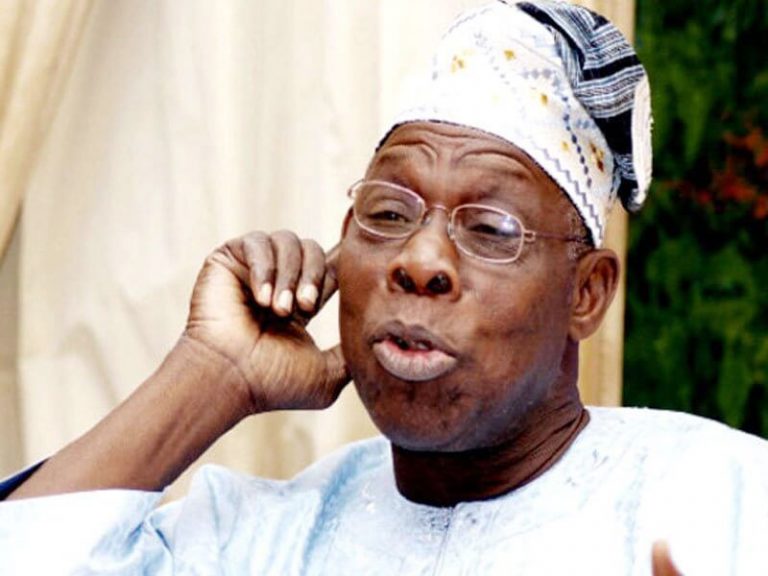
FORMER President of Nigeria, Chief Olusegun Obasanjo has lamented the fate of over 14 million out of school children in Nigeria, saying that lack of formal education and stagnated development are some of the biggest problems confronting the country.

Obasanjo said this while speaking as the Chairman of the second convocation ceremony of Chrisland University, Abeokuta.

The former President disclosed that about 14million children who ought to be in school are out on the streets, stressing that this should be a source of worry to whoever wanted the best for the country and Africa as a whole.

He said, “We have 14million children that should be in school and are not in school that’s more than the population of many African countries”.

He then urged the graduating students to remain focused in spite of the difficulties in Nigeria, adding that, there are still opportunities out there that they could make good use of to be great in life.

On his part, Ogun State Governor, Prince Dapo Abiodun represented by the Commissioner for Education, Prof Abayomi Arigbabu, commended the institution for its commitment to qualitative education, which he said was needed to produce manpower to address some of the country’s challenges.

Speaking at the ceremony, the Vice-Chancellor of the institution, Prof Chinedum Peace Babalola congratulated the 28 graduating students being awarded Bachelor degrees and professional certificates in entrepreneurship, saying that their training in the university had also equipped them with skills for self-employment.

Prof Babalola said that among the 28 graduates, five of them who are all females made First Class while Folashade Kikelomo Mary with 4.80CGPA from the College of Natural and Applied Sciences emerged as the overall best graduating students. She said the university had instilled in the student’s entrepreneurial skills that would turn them into job creators and not job seekers.

She, however, added that the university management was proud of the number of graduates who have been part of the university’s history. The guest speaker at the convocation ceremony, Commissioner for Human Resources, Science and Technology, African Union, Prof Sarah Anyang Agbor charged African leaders to have a strong political will to ensure sustainable growth and impact the people for good. Delivering the convocation lecture with the theme

“Leadership, Sustainable Growth, and National Building in Africa: A Reflective Perspective.”

Prof. Sarah Agbor explained that among the critical issues Africa faces today, is the bludgeoning youth population and with it, the challenge of youth unemployment saying that data from the National Bureau of Statistics here in Nigeria revealed that unemployment rate as at the second quarter of 2020 was 27.1%.

She said, “For us to achieve AU Vision 2063, change the glooming narrative of the African youth, the leaders must invest in good governance to achieve the goal. Good governance is a reflection of effective leadership and vice versa”.

“Show me a leader with a penchant to serve his people, meet the needs and aspirations of his citizens, and achieve collective growth for the populace and I will show you a leader who is result/performance-oriented and implements good governance.”

(SOURCE: Vanguard News Nigeria)

Andile Nongogo Appointed New NSFAS CEO

NYAKALLO TEFU

THE National Student Financial Aid Scheme (NSFAS) has appointed Andile Nongogo as its new chief executive officer for the next five years.

Nongogo is the former Chief Financial Officer (CFO) of the Services Sector Education and Training Authority (Services SETA).

Higher Education Minister Blade Nzimande made the announcement on Thursday, also announcing the appointment of 13 new board members.  

“Ernest Khosa has been appointed as the board chair. The new board members include Yonke Twan, Bamanye Matiwane, Jullie Beya, Cyril Madiba, Reshma Mathura, Max Fuzani, Richard Msweli, Pumela Msweli, Sanele Zondi, Lindiwe Matlali and Pretty Makukule,” said Nzimande. 

Nongogo takes over from Dr Randall Carolissen he was accused of maladministration. 

“The state in which NSAFS was 29 months ago is so vastly different to where NSFAS is now. I want to say that without any contradiction. People with different views can hold them. As minister responsible for NSFAS, it’s a sea change,” added Nzimande. 

Nongogo will serve as CEO of NSFAS for a period of five years.

“I will be requesting the Board to co-opt two more members because as it stands the Board is not fully balanced. There is a need to bring individuals with actuarial and social dialogue skills and experience. They will be announced later whilst I completed engagements with the Board,” said Nzimande.

Nzimande thanked Dr Carolissen, whose term comes to an end in December, saying he did a great job in turning the organisation around over the past two and a half years. 

“Let me take this opportunity to congratulate all those who have been appointed in various positions in our sector. I wish you all the best in your responsibilities,” added Nzimande. 

(SOURCE: INSIDE EDUCATION)

Opinion: DUT Vice-chancellor, Principal Professor Thandwa Mthembu Talks About The Kind Of Leadership Required To Reform The Country

PROFESSOR THANDWA MTHEMBU

I have been asked to share some reflections on the topic: What kind of leadership is required to reform our country? At this juncture of South Africa’s trajectory, I am not sure whether the objective should be reforming or transforming the country, rather. I will steer clear of seductive words like ‘radical’ or ‘revolution’ given the destructive connotations they carry in this country.

Let’s talk briefly about reform versus transform. Reform suggests minor improvements that are likely to leave the form, nature and appearance intact.

Although this word’s meaning has been bastardised, to transform is to: ‘make a marked change in the form, nature or appearance of’ somethingSo, I think unadulterated transformation is what this country needs.

Literature on leadership is replete with many theories and approaches that categorise leadership styles; as if the world out there were one dimensional. Literature also presents individuals who are identified as exemplars of ideal leadership; ass if world problems were on a dart board ready to be pierced out of existence by such a leadership dart.

Sadly, literature sometimes de-emphasises what I think are the most important constitutive elements: the right multi-dimensional and multi-disciplinary leadership, fit for the right environment, and performing its role right.

More appropriately, we should ask: Leadership for what?

To expatiate on this question through some sub-questions: what is the problem or the challenge we face and seek to tackle; what is the history thereof; what is the current environment within which we have to solve the problem; what is the ultimate agenda or objective of the country; and, how fit for the purpose the desired leadership is?

Once we have some answers to these questions, it is only then that we could discuss innovations and solutions that are appropriate, including getting answers to: who has the skillset and track record to lead all and sundry to tackle our challenges and problems?

Many of have us have been aware of the trends in South Africa since at least about 2005-2007. The dominant feature/practice/culture has been replacement of reason, facts and substance with unreason, fallacy and populism. This has resulted in major calamities in our body politic and in our socio-economy. We will reel under debilitating consequences for many years to come.

Some social policy scholars suggest South Africa is in political, economic and social chaos. As early as 2002, some suggested that we were at a crossroads. Recent data on unemployment, in part exacerbated by Covid-19, have some suggest we are headed towards becoming a failed state. Indeed, there will not be consensus on these analyses. Be that as it may, we have a sense of what has been happening; not least, through following some shocking revelations coming out at the Zondo Commission.

With these minimal observations, I think it is our responsibility, especially that of our young people to determine if South Africa, and perhaps the world, needs reform or transformation. Sadly, the older generation has, through convoluted values and principles, brazen ideology and policies that defy pragmatism hollowed out all value and capital our country had and could potentially have, and bequeathed to our young people and those yet unborn a shadow of a once promising country.

We have been a fully democratic country for 26 years. Nothing that once worked seems to work. Public schools, even those in the rural areas that produced me, are not functioning. Clinics, once lodestars of our primary healthcare, are failing. Hospitals are a mess. Municipalities are known more for corruption and dysfunctionality than delivery of basic services. The annual reports of the Auditor General paint an institutionalised picture of a lack of accountability at all levels. Once shining examples of the world, our parastatals  – ESKOM, SAA, Transnet, SAA, Denel, etc – are now examples of bad governance and are badly deformed shadows of their former selves.

These painful experiences suggest our country needs a total overhaul, ptransformation of our political, economic and social make-up? Why is it that democracies in Africa tend to be meaningless in as far as lifting the wellbeing of our citizens? There is, thus, a need for a complete transformation, a revolution even, on all aspects of our lives as South Africans.

I think I have in a way suggested an answer to my first question: leadership for what and even some of the sub-questions.

We have a sense of how we allowed the country to slide into an abyss. We edited efficiency out of our lexicon. We cared less about sustainability, defined by World Bank as the ability to meet development “needs of the present without compromising the ability of future generations to meet their own needs”.

My sense is that our country lacks strategic, frugal and future-oriented management of our collective resources. We think and act in the interests of the here and the now. We are a consumptive, a retrogressive and a degenerative lot. We are not generative. We do not spend time finding ways of building capital; but consuming the little we have; sharing crumbs that are themselves crumbling to dust. Be it in electricity generation. Be it in water resources. Be it in our social services. Be it in capital formation. Be it in relation to economic growth.

The governance of public entities collapsed mainly because of ideology, politics, deployment of whoever is in next rung of the political ladder to eat at the trough. This has led to unbridled corruption in that some assumed those positions to eat at the trough, in the first place. In these entities and many others, we need systems and processes that ensure that we appoint knowledgeable, skilled, qualified, experienced into positions of responsibility. Anything other than these prerequisites is fronting, or is what an old friend of mine calls promoting competent people into incompetence. There is no need for day to day political interference in spaces where things must be run professionally and profitably, too.

Firstly, we must rekindle our values, principles and general ethics in our society. There are instances where well-qualified and competent people are appointed, but they are found wanting on values, principles and ethics. This explains the preponderance of corruption in both the public and the private sectors.

Secondly, we must change all the hackneyed ideologies that led to paradigms and frameworks that have made us a mediocre country, a country in chaos, and, arguably, a failing state. We must keep in mind that a number of successful economies in the world, including China, have not been built purely on ideology; but, on a variety of pragmatic approaches drawn even from erstwhile enemies, and oppressors, even.

Thirdly, we must focus on generating capital and resources instead of consuming the little crumbs we have that are now turning into dust because we are trying to divide them up among ourselves over and over.

Fourthly, we need to think ‘sustainable development’ at all times and in pragmatic ways. What shall we bequeath to generations to come; even to those yet unborn?

Fifthly, and all in all, we must realise it is people who are behind all the problems I have highlighted. But, more importantly, it is also people who will make things right. At DUT, borrowing from Jim Collins, we say: it is not just people who will make things right; but, the Right people, in their Right seats, playing their roles Right.

These are the one who know what it takes to innovate solutions that will put our country into its deserved development trajectory. At DUT we also draw heavily on Pascal Finette who correctly propounds that people are not a resource as we often say in HR terms; as if they are inanimate and actually part of the machinery. For him, people are the source of everything that is humanly possible in the world.

I believe there is a leader out there ready to rekindle our values, principles and ethics; a leader ready to ditch those old and hackneyed ideologies that are not taking us anywhere; one who will wake up, smell the coffee and be pragmatic; a leader ready to shun consumptive approaches and policies, and rather focus unwaveringly on generating value and capital for the country and its people; the one who will not feed us the crumbs that are now turning into dust and nothingness; a leader whose unstinting focus will be on our country’s ‘sustainable development’ in a way that assures future generations – the yet unborn – that they will meet their needs, too; a leader who will focus on well-qualified and experienced people: the right people, in the right seats, playing their roles right; the one who will not interfere with well-managed and professional spaces they know very little about, if anything.

That’s the leader who will not reform this country; but transform it to realise its coveted destiny in the world.

As I end, on the occasion of my inauguration as DUT’s Vice-Chancellor and Principal, I said the following, which I think is relevant especially to our young leaders:

“It’s time our young people find a new legacy. That legacy should not just be a shadow of past legacies of struggle, past chants, past songs, past dances. It should be a fresh and bright new light that shines on all of South Africa. This legacy should be like a ripened fruit for all of us to enjoy. It should not be like a wormed fruit that will make us spit and puke. Neither should that legacy be akin to birds pooping on South Africa and its democracy whilst South Africa expects a comfortable shade under the tree; a shade that our young people should really be to South Africa.

It’s time, without apportioning blame and without being degenerative and retrogressive, our young people focus hawk-like on how to extricate this socio-economy from the doldrums it is in. It’s not about who sunk our socio-economy that will make us prosper; but, who lifted it up from the doldrums. That would be a better legacy.

So, I hope, although our young people may be enraged, they will also remain engaged with change and remain enthralled in building this new legacy of advancing our dear nation socio-economically and otherwise.”

(VICE-CHANCELLOR AND PRINCIPAL PROFESSOR THANDWA MTHEMBU WAS SPEAKING AT THE WORLDWIDE INSTITUTE OF LEADERSHIP AND DEVELOPMENT)

Basic Education Launches A Full-Scale Investigation After Another Question Paper Leak Rocks Final Matric Exams

0

BASIC Education Minister Angie Motshekga has condemned in the strongest terms the leaking of Physical Sciences Paper 2 exam, which was written on Monday morning.

This comes after the Mathematics Paper 2 was leaked last Monday and circulated among learners in at least eight provinces.

The department said a full scale audit of the exam administration system was underway.

“We condemn in the strongest terms the conduct of persons who undermine the integrity of the examination because it causes untold stress on the learners,” said Motshekga.

Despite the Hawks being called in to investigate the leak of the Mathematics Paper 2 last week, the Physical Sciences Paper 2 was also leaked and circulated before the exam started on Monday morning.

The Council of Education Ministers (CEM) held an urgent meeting this afternoon to consider the implications of the latest developments.

“The reported leak of Physics 2 come after the department asked the Directorate for Priority Crime Investigations, better known as the Hawks, to investigate an earlier incident involving Maths last week, the Department of Basic Education said in a statement on Monday night.

“The investigations are at an advanced stage and details on the progress of the probe will be made public at the right time while areas of possible weakness have been identified. In addition to this the department has also dispatched teams to provinces to re-check the security systems. The CEM expressed concern that the leaks were causing disruptions to a system which already experienced challenges due to COVID-19.”

“It is unfortunate that people continue to be involved in something like this even though the consequences can be dire. We condemn in the strongest terms the conduct of persons who undermine the integrity of the examination because it causes untold stress on the learners who are looking forward to exiting the schooling system with a pass from an honest examination, not one associated with cheating,” said Motshekga.

CEM considered several options that are meant to further protect the exams but for security reasons these would not be divulged, the statement said.

“We want to reassure the public that we are hard at work to ensure that we protect the examinations. The Hawks have been helpful in working with us and there are encouraging developments coming from their side,” said Motshekga.

“The DBE and provinces are continuing to work around the clock to implement the new measures that have been activated to protect the on-going examinations and also to hunt down the culprits.”

Last week, a Mathematics Paper 2 was shared on electronic messaging platforms by learners in Gauteng and Limpopo.

The Department of Basic Education said it was investigating the origins of the leak of the Mathematics Paper 2 exam.

The paper was allegedly leaked in the early hours of Monday before Grade 12 learners could sit for the exam.

It is understood that the leaked material was shared on electronic messaging platforms by learners in Gauteng and Limpopo.

Basic Education Department Spokesperson, Elijah Mhlanga, said it was unclear which province the paper leaked from.

“It looks like someone had a hardcopy and took images, very clear images and it was then shared from there, other people received via Whatsapp and it was shared amongst learners who are in Gauteng and it is clear that the other learners were in Limpopo. This does not mean though it leaked from Limpopo or from Gauteng, that is what we are trying to establish,” said Mhlanga.

(SOURCE: INSIDE EDUCATION)