Home Blog Page 364

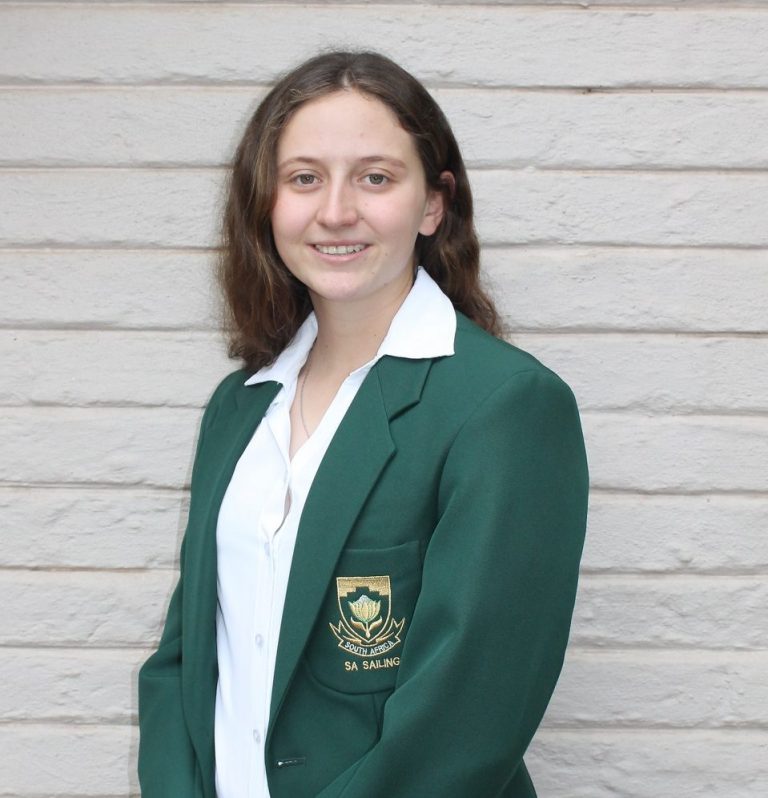
Michaela Robinson Wins Big At Wits University’s Annual Sports Awards

THE future of sailing is clearly in good hands – judging by the recipients at the annual Wits Sports Awards. The sport celebrated several major accolades, including Michaela Robinson being named as the university’s Sports Woman of the Year.

Adding to that massive achievement, the Wits Yacht Club walked away with the Social Media Award while five sailors were awarded Full-Blue Cum Laude colours usually reserved for student athletes who have achieved senior national colours.

These sailors were Emma Clark, Hearn Johnson, Tawanda Chikasha and Michaela and her brother Ryan Robinson. They made up the JM BUSHA 54 Peace team that successfully competed in the Cape to Rio Yacht race earlier this year.

‘Our club have often been overlooked so winning prizes at this year’s Wits Sports Awards meant a lot to me personally and to the club because it’s almost as if we’re finally being taken seriously as a competitive club,’ explained Michaela Robinson. ‘Lots of work has been put into getting to that stage – USSA training camps, team racing regattas, little inter-varsity events, and sail training at Emmarentia Dam every second week.

‘I think Cape to Rio was just what the doctor ordered with regards to being noticed and being taken seriously, so that was very cool – and the fact that each of us individually got recognised and got rewarded for the part we each played in the success of the campaign was very special.

‘That being said, none of us would have come out with Full-Blue Cum Laude colours if it weren’t for JM BUSHA 54, our families, friends and if it weren’t for Wits Yacht Club and Wits Sports so we always need to be thankful to all stakeholders and all the people that played a part in our successes.’

Robinson was the first sailor to claim the top women’s accolade in the history of the Wits Sports Awards. The 20-year-old accounting student still can’t quite get her head around it all.

‘I still haven’t quite come to terms with how prestigious the award is and that I’ve actually won it. From a SA Sailing and university sailing perspective – the sport is being recognised. And by it being recognised and getting all this publicity, it’ll get people interested in the sport and will get them to go to their nearest club and try it out.

‘I was really shocked when I heard my name – it was mind-blowing. I was extremely stoked. But I don’t think it’s really my achievement. It wouldn’t have been possible without the crew – Jonathan, Emma, Hearn, Tawanda and Ryan.

‘I need to do a special shout out to my family because without the input that they’ve had, into what I’ve learned and just supporting me in basically everything I do and always pushing me to learn as much as I can, I definitely wouldn’t have come anywhere near getting this award.

‘Special mention to Ryan because without his presence and support and just being there it wouldn’t be possible. We make a very good team – all my major accomplishments have been with him, we just have this synergy that’s just worked. As much as I’m super honoured and chuffed to be awarded Sports Woman of the Year, I don’t think it is my prize – I think it’s shared among so many people, but specifically with Ryan.’

Speaking about the exceptional achievement, General Manager of SA Sailing Lucy da Freitas added: ‘Congratulations to Michaela and all the other sailors who have been recognised for their awesome achievements. 2020 has been such a strange year for us all so we are thrilled to be able to celebrate our fantastic young sailors. It just goes to show that the future of the sport is in very good hand.’

(SOURCE: TEAMSA)

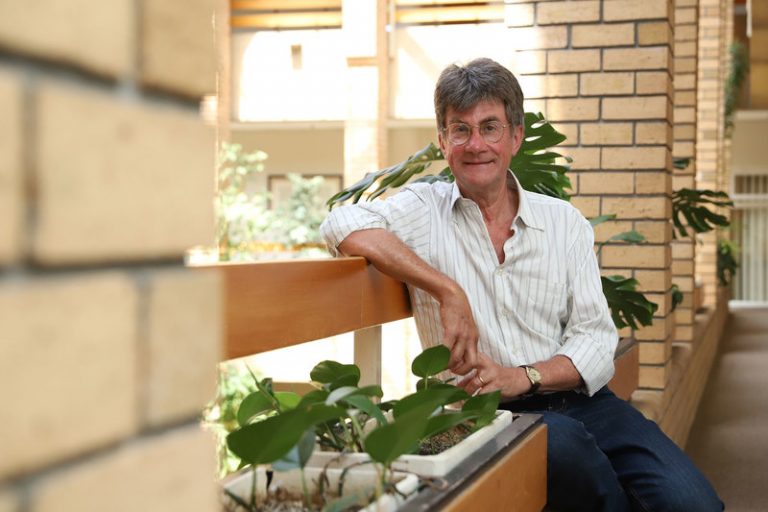
Classroom Corner: Hugh Corder, A Man For All Seasons

VETERAN law scholar and activist Professor Hugh Corder well remembers his BCom LLB graduation at the University of Cape Town (UCT). It was 16 June 1976. Afterwards, he travelled north to what is now Mpumalanga, passing Soweto. The smoke was still rising.

In December 2019, more than 43 years later, Professor Corder was at another graduation. This time he was honouring his Zimbabwean PhD student, Dr Musa Kika.

It was a moment to reflect, he said.

Corder’s association with UCT as a student, an alumnus and an academic has spanned every decade since the 70s. The changes evident in 2019 were perceptible in the doctoral celebrants – black PhDs from South Africa, the Cameroon, Tanzania, Kenya and Zimbabwe – a collective in vivid red. Impossible in 1976.

Steadying the ship

That ceremony was meant to conclude his long and venerable career with tours of duty in various departments and faculties and in the executive. Instead, in January 2020, he stepped in as interim director of the UCT Graduate School of Business until the new director joined in September.

He has been acting dean of Law (in 2018, having served as dean from 1999 to 2008), the ‘guinea-pig’ director of Postgraduate Studies (2012) and served two stints as acting deputy vice-chancellor between 2016 and 2018 during the turmoil of the Must Fall campaigns. His versatility, institutional insights, commitment and contributions to his alma mater are inestimable.

Now, he has started a year-long post-retirement contract as a professor of law, to supervise his 11 doctoral students and to make up for lost ground on his research.

“From a professional viewpoint, he could have died a happy man right then.”

It has been a marathon haul, with many rewards, he said. The “absolute highlight” beyond the university was when Corder brought his skills as a law scholar to the drafting of South Africa’s interim and final Constitutions. From a professional viewpoint, he could have died a happy man right then, he said.

Early politicisation

Corder was politicised much earlier. He was a student volunteer for the Border Council of Churches (BCC) in mid-1974. The BCC was assisting black communities who’d been forcibly removed from “black spots” in white rural areas and resettled in Dimbaza in the former Ciskei. He boarded with a local priest in King William’s Town, where the BCC had an office.

“That’s where Steve Biko, Mamphela Ramphele, Malusi Mpumlwana and a lot of really radical South African Students’ Organisation people were. They’d all been banished to that area.”

Meeting Biko changed his life, he said.

“We agitated for labour law as an optional course. And we achieved that in 1977.”

He’d also joined the National Union of South African Students (NUSAS), a “radical” anti-apartheid movement. In 1978 he ran a NUSAS campaign on legal education and legal aid. At UCT he was on the RAG exco and president of the Law Students’ Council.

“In the mid-1970s UCT law students were demanding relevance in their legal education,” he recalled. “We agitated for labour law as an optional course. And we achieved that in 1977.”

Studies abroad

After graduating with a BCom LLB, Corder returned as a tutor in 1978. He then won a Kramer Grant to the University of Cambridge where he did a postgraduate degree by coursework.

In 1979 he took up a Rhodes Scholarship at the University of Oxford to pursue doctoral research on the role and attitudes of South Africa’s appellate judiciary, 1910 to 1950. After he returned home in 1982, his research was published as a book titled Judges at Work. It was politically risky but avoided banning.

Hoping for a post at UCT, Corder was instead scouted by Stellenbosch University where he enjoyed “four incredible years”. It was his close relationship with several top Afrikaans academics that later proved pivotal.

Chair in Public Law

At the end of 1986, UCT advertised the Chair in Public Law, and Corder was offered the job from mid-1987.

Along with that came membership of Senate, his 33 years of meetings charting highs and lows of a university wrestling with transformation. Three meetings stand out: the first when Irish academic Conor Cruise O’Brien broke the academic boycott of South Africa in 1987, calling it a “Mickey Mouse affair”. UCT withdrew its invitation for him to speak.

“He was being deliberately provocative,” said Corder. UCT later asked Ismail Mahomed and Arthur Chaskalson, both of whom became chief justices, to chair an inquiry – their report was tabled at Senate in August 1987.

“It was a very divisive issue, and I had the complete chutzpah to speak at my very first Senate meeting in favour of the Chaskalson/Mahomed Report, which found [that] UCT had acted correctly in the circumstances, to prevent O’Brien from speaking.”

But Corder said there’s a deep irony because on 22 November 2019, at his last Senate meeting (the second big meeting he referred to), the Israeli academic boycott motion (passed in March) was rescinded. And he’d moved to rescind the motion.

“I did so for a range of complex reasons. Among these were the damaging effects of the academic boycott among progressive academics in the 1980s.”

“I think probably the majority of members who attended initially thought, ‘Not over our dead bodies is that statue going to move.’ ”

Third, and perhaps the most significant Senate meeting, was the one to discuss whether Senate should support the removal of the Cecil John Rhodes statue from upper campus.

“I think probably the majority of members who attended initially thought, ‘Not over our dead bodies is that statue going to move.’ But a robust and frank debate in which, to their enormous credit, the students resorted to rational argument rather than threats and rhetoric, just swayed everybody.”

In the end, there were 182 votes for and only one against.

Drafting a Constitution

One of his most important achievements followed from a 1991 sabbatical.

Corder researched and published about administrative law, judicial selection and Parliament’s role in overseeing the Cabinet and executive. Following the Convention for a Democratic South Africa (CODESA) in 1991 and 1992, the multiparty negotiating process started at the World Trade Centre in Kempton Park in 1993. Partly as the result of his research, but also because of several meetings with the ANC in exile in 1988/9, Corder was asked to join the technical committee that drafted the first Bill of Rights.

“So, I was the only one on the committee of four that had ever really grappled with how to draft a bill of rights.”

“The year before, in 1992, a group of eight academics and practitioners from the Western Cape had drafted our own proposal for a bill of rights called A Charter for Social Justice. So, I was the only one on the committee of four that had ever really grappled with how to draft a bill of rights.”

The model adopted in their proposal was followed in the constitutions. It was his close friend Edwin Cameron who quickly persuaded him that sexual orientation should not be grounds for discrimination in the Constitution.

“And it wasnʼt actually very difficult to persuade my colleagues.”

Moves and revolts

Corder has also seen many changes at UCT. During Dr Mamphela Ramphele’s vice-chancellorship, UCT shifted to an executive leadership model from the beginning of 1999. The faculties were reduced from 11 to six.

“Law fought really hard to retain our faculty status. And we did.”

During his deanships, the faculty faced two major challenges. First, the move to their own building on middle campus. Corder had to allay the fears of those reluctant to leave upper campus. Second, the need for alumni engagement and the establishment of an endowment were high priorities. Both these objectives were achieved by the end of 2008.

Having declined an invitation to apply for a deputy vice-chancellorship during Dr Max Price’s tenure as vice-chancellor, Corder returned to scholarship and teaching. But from 2016 to 2018 he twice served as an acting deputy vice-chancellor.

It was a time of disruption on campus through the Must Fall campaigns, which took their toll. It was perhaps the lowest point of Corder’s career. He emphasised that he could have achieved nothing without his wife, Catherine, and their five children. The massive impact of those years on his family is what caused most distress.

His eldest son, Daniel, commented one day on his father’s long stints in emergency sessions, putting out fires (some literal) on campus. He pinpointed the cause of his father’s anguish and growing distraction.

“Dad, you’re heartbroken.”

“I’ve learned a lot, and we’ve gradually begun to restore a degree of civility and respect for human dignity.”

He was right, Corder said. “I’d just never seen it that way. I think the thing that upset most people was, for understandable reasons, the sometimes completely confrontational, disrespectful and non-collegial behaviour among staff and students.

“It was a great wake-up call. I’ve learned a lot, and we’ve gradually begun to restore a degree of civility and respect for human dignity.”

Transformation in the Law faculty

What would he have done differently?

“Nothing!”

He added: “We’ve had outstanding students in the law faculty from the beginning. We’ve become the continent’s pre-eminent faculty … So, we can attract brilliant students from very diverse backgrounds in this country and the rest of Africa.”

As a result, the faculty has changed. In 1977 there were three white women and two people of colour in his LLB class; there were no female lecturers.

“Now the final-year class is completely different in terms of demographics. About two thirds of academic staff are women, and we’ve had two women deans in a row.

One thing hasn’t changed. Corder has given the same last lecture to the final-year LLB students since 1987, using the same texts to inspire the vision of law as a service to humanity. And he always sings the chorus from Tracey Chapman’s “All you have is your soul”.

“Don’t be tempted by the shiny apple
Don’t you eat of a bitter fruit
Hunger only for a taste of justice
Hunger only for a world of truth
’Cause all that you have is your soul.”

It’s this ‘soul’ that Vice-Chancellor Professor Mamokgethi Phakeng referred to when she reflected on Corder’s manifold contributions to UCT.

“Hugh is the epitome of a mensch,” she said. “We have needed and benefitted from his ability to be deeply analytical but deeply human and deeply caring, particularly during the very demanding years from 2015 to 2017.

“First as a deputy vice-chancellor at UCT and later vice-chancellor, I came to admire Hugh’s pragmatic style, his conscientiousness and his meticulously fair way of dealing with people and situations. It was at times easy to forget his contributions to the scholarly enterprise at UCT and his influence on many top law scholars who took their lead from his example. We shall miss his wisdom enormously and thank him for so many contributions to this university. From all of us at UCT, hamba kakuhle, Tata uHugh. Syabulela.”

(SOURCE: UFS)

Western Cape Rethinks Matric Rage As COVID-19 Cases Rise

0

THE Western Cape government is closely monitoring events like Matric Rage, traditionally held on the Garden Route, as the numbers of COVID-19 cases continue to peak in the region.  

Premier Alan Winde said the province is worried about the rising number of infections, hospitalisations, with deaths now starting to show early signs of an increase.

According to Winde, cases have increased especially in George, Knysna, Thembalethu, Plettenberg Bay, Pacaltsdorp and Mossel Bay.

“There are currently 159 people hospitalised in the region in both private and public care, and 26 in critical care,” he said.

He said he was deeply concerned that over 760 people in the province are now hospitalised with COVID-19, having reached a low of under 500 in September. 

According to the Western Cape Department of Health, 77% of the people who tested positive for Coronavirus did not know where they got it.

However, of the 23% who did, the majority (42%) said they had contracted it at a social event or from a friend, while 35% said they contracted it at home or from a family member.

“This points to the fact that social gatherings are the most likely cause of infection,” Winde said.

With the festive season drawing closer, Winde called on people to make safe choices that will protect themselves and their families.

“We know that over the next few weeks, people will be moving around more – travelling across the province and between provinces for the festive season, holding year-end parties, spending time with family over Christmas, and celebrating the New Year,” Winde said.

The Garden Route is a major drawcard for thousands of matrics looking to celebrate the end of their school career. 

The Premier said the province’s hotspot team and the Department of Health will ensure that events are compliant with regulations and safety protocols.

He said the teams in the Garden Route are working hard to manage the outbreak through community screening, increased testing, contact tracing and communication campaigns.

“While the Garden Route is a provincial hotspot right now, we are seeing small increases in cases in other areas across the province as well and we should all be taking precautions.”

As of Thursday, the Western Cape had 123 573 reported COVID-19 cases, 112 920 recoveries, 6 151 active cases and 4 502 deaths.

“Last month, I asked the people of this province to commit to a deal. The provincial government will continue to work hard on our recovery plan and to win back those jobs that have been lost. In return, we ask only that our citizens stay safe and flatten the curve,” said Winde. – SAnews.gov.za

South Africa Adopts Innovative Policy Framework For Internationalisation Of Higher Education

DR NICO JOOSTE and CORNELIUS HAGENMEIER

ON 6 November, the South African Policy Framework for Internationalisation of Higher Education was promulgated and became legally binding (Government Gazette no 43872). The innovative Policy is a milestone for South African higher education.

It becomes effective at a time when rethinking internationalisation in the wake of the outbreak of COVID-19 is a high priority.

The Policy is conceptually on the cutting edge of the internationalisation discourse. It integrates the thinking of several leading experts and has the potential to elevate South Africa’s higher education system to a globally leading position. Besides, it could become a blueprint for advancing higher education internationalisation in the developing world.

The new policy encourages higher education institutions to develop models for institutional internationalisation which ensure that every student has an international experience. Central is that curriculum internationalisation, which must be advanced in tandem with other curriculum transformation imperatives, becomes mandatory.

Thus, the Policy will assist in ensuring that South African tertiary graduates will become equipped to navigate unknown spaces and empowered to be globally competent citizens.

Comprehensive internationalisation

The Policy commits South African higher education to comprehensive internationalisation, which means that internationalisation should permeate all aspects of their core business.

It requires academic leaders to embrace scientific diplomacy, which is described as the ‘art and skill of managing good relations with all international organisations and institutions’.

This novel concept aptly reflects the role of academic leadership in advancing international external relations. Scientific diplomacy should form the foundation of scientific cooperation in achieving the Sustainable Development Goals.

Constitutionally entrenched academic freedom is affirmed and contextualised. Institutions are imbued with the responsibility to structure internationalisation for their context through internationalisation policies and strategies. It is required that appropriate measurable indicators of internationalisation are developed.

Institutions are further required to report back on the achievement of their internationalisation targets annually. The role of government in the internationalisation process will be enabling and facilitating rather than describing a direct steer. 

South African higher education stakeholders must mitigate risks associated with internationalisation, such as brain drain. They are obliged to safeguard the rights and interests of both incoming and outgoing international students. The Policy provides a space to innovate and integrate digital mobility and traditional mobility practices at all levels. 

Knowledge co-creation is prioritised

Knowledge co-creation through international research collaboration is prioritised, and institutions are provided with substantive guidance on fostering it. Collaborative qualifications are regulated, and the existing practice of awarding postgraduate joint degrees at some South African higher education institutions is generally confirmed. Besides, the new regulatory framework encourages the award of co-badged and consecutive qualifications; however, double degrees remain prohibited.

The framework which the 1997 SADC Protocol on Education and Training created for higher education collaboration in the region is reiterated and affirmed, including the obligation to ‘reserve at least 5% of admissions for students coming from SADC nations other than their own’.

Through the Policy, the South African government commits itself to ensure inter-governmental integration and cooperation for the benefit of internationalisation. This inter-governmental cooperation should, in the future, ensure that challenges regarding internationalisation will be avoided.

The policy has the potential to achieve its rationales

Overall, the new policy has the potential to achieve its rationales, which include the positioning of the South African higher education system to be competitive in a globalised world as well as advancing the quality of education. Other stated aims are enhancing intellectual diversity in higher education, furthering the public good and contributing to resolving global challenges. 

The South African higher education sector has been actively lobbying for this Policy for a long time. In 2000 the South African Council on Higher Education posed a challenge to the system when it stated that: “An appropriate framework and infrastructure that draws in various relevant government departments should be created for this purpose and internationalisation should be promoted.” The process which now came to fruition was initiated by the Department of Higher Education and Training in 2015 and included robust stakeholder engagement.

South African higher education institutions should immediately prepare themselves for the positive challenge which the Policy sets them concerning strengthening support and creating stable management structures for internationalisation. Collaboration is vital, and it is also of critical importance that each institution develops a specific funding model as internationalisation is required to be funded internally. The policy allows for innovative funding opportunities that will enable institutions to generate additional income that should be applied in the furthering of their internationalisation activities.

Support for institutions

Institutions, particularly those which are historically disadvantaged, need to be supported to develop capacity, to implement the policy but also to further develop their levels of internationalisation. A spirit of inter-institutional collaboration for advancing internationalisation and embedding the principles of the Policy framework is essential for success. Besides, it will be critically important to guide institutions as to the sequence in which they should tackle the new obligations arising in terms of the Policy framework.

In conclusion, the South African system can heave a sigh of relief that the Policy is now available. It should be used to assist the university sector in mitigating the negative impact of the COVID-19 pandemic through the development of clear strategies. The focus on digital mobility, enhanced by responses to the pandemic, will also allow for more inclusive participation in internationalisation activities.

(SOURCE: UFS)

Zimbabwe State Universities’ Workers Down Tools Monday Over Poor Salaries

0

MBEKEZELI NCUBE

THE Zimbabwe State Universities Union members have vowed to down tools at all government-run varsities from next Monday citing poor working conditions and salaries.

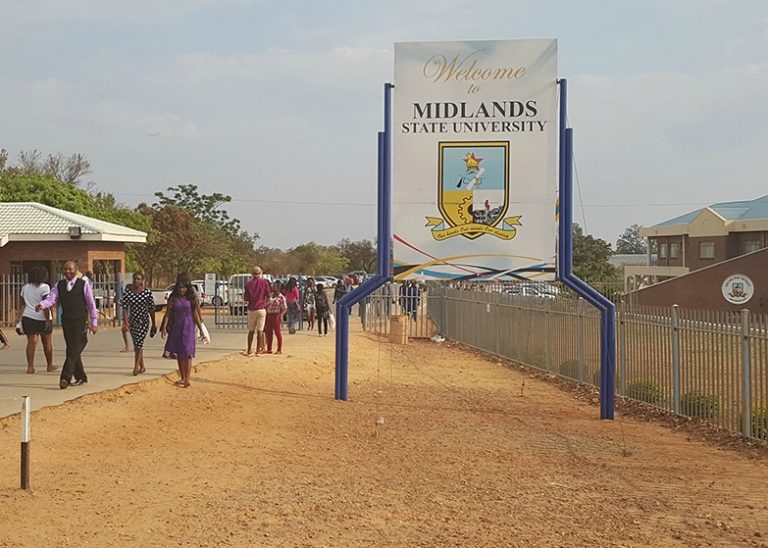
Zimbabwe has 12 state universities including; University of Zimbabwe, National University of Science and Technology, Midlands State University, Great Zimbabwe University, Gwanda State University, and Lupane State University.

In a letter to universities councils, and copied to the ministry of higher education secretary Fanuel Tagwira, vice-chancellors, registrars, and chairpersons of workers’ committees, the workers complained over the poor salaries they are receiving.

“The state universities’ salaries have lost value and have been eroded whilst services, utilities, and basic commodities are quoted in United States dollars or other foreign currency,” the letter reads.

“The employer has neglected the agreement to meet the (SADC) regional parity level salaries for state universities. The state universities employees have been denied to exercise their right to negotiate as enshrined in the Labour Act,” reads part of the letter.

The workers are also demanding the purchasing power of state universities employees’ salaries be retained to the level of their July 2018 salaries.

“The employees demand that the employer makes urgent steps to attain the regional level salary scales as per the agreement of 2010. The employer must urgently redress the salary disparity created in October 2019.

“We are, therefore, giving notice to engage in a collective job action. The notice to strike is with effect from 23 November 2020.

(SOURCE: NEWZIMBABWE)

Q&A: Artificial Intelligence And The Classroom Of The Future

TESSA VENELL

IMAGINE a classroom in the future where teachers are working alongside artificial intelligence partners to ensure no student gets left behind.

The AI partner’s careful monitoring picks up on a student in the back who has been quiet and still for the whole class and the AI partner prompts the teacher to engage the student. When called on, the student asks a question. The teacher clarifies the material that has been presented and every student comes away with a better understanding of the lesson.

This is part of a larger vision of future classrooms where human instruction and AI technology interact to improve educational environments and the learning experience.

James Pustejovsky, the TJX Feldberg Professor of Computer Science, is working towards that vision with a team led by the University of Colorado Boulder, as part of the new $20 million National Science Foundation-funded AI Institute for Student-AI Teaming.

The research will play a critical role in helping ensure the AI agent is a natural partner in the classroom, with language and vision capabilities, allowing it to not only hear what the teacher and each student is saying, but also notice gestures (pointing, shrugs, shaking a head), eye gaze, and facial expressions (student attitudes and emotions).

Pustejovsky took some time to answer questions from BrandeisNOW about his research.

How does your research help build this classroom of the future?

For the past five years, we have been working to create a multimodal embodied avatar system, called “Diana,” that interacts with a human to perform various tasks. She can talk, listen, see, and respond to language and gesture from her human partner, and then perform actions in a 3-D simulation environment called VoxWorld. This is work we have been conducting with our collaborators at Colorado State University, led by Ross Beveridge in their vision lab. We are working together again (CSU and Brandeis) to help bring this kind of “embodied human computer interaction” into the classroom. Nikhil Krishnaswamy, my former Ph.D. student and co-developer of Diana, has joined CSU as part of their team.

How does it work in the context of a classroom setting?

At first it’s disembodied, a virtual presence on an iPad, for example, where it is able to recognize the voices of different students. So imagine a classroom: Six to 10 children in grade school. The initial goal in the first year is to have the AI partner passively following the different students, in the way they’re talking and interacting, and then eventually the partner will learn to intervene to make sure that everyone is equitably represented and participating in the classroom.

Are there other settings that Diana would be useful in besides a classroom?

Let’s say I’ve got a Julia Child app on my iPad and I want her to help me make bread. If I start the program on the iPad, the Julia Child avatar would be able to understand my speech. If I have my camera set up, the program allows me to be completely embedded and embodied in a virtual space with her so that she can help me.

How does she help you?

She would look at my table and say, “Okay, do you have everything you need.” And then I’d say, “I think so.” So the camera will be on, and if you had all your baking materials laid out on your table, she would scan the table. She’d say, I see flour, yeast, salt, and water, but I don’t see any utensils: you’re going to need a cup, you’re going to need a teaspoon. After you had everything you needed, she would tell you to put the flour in “that bowl over there.” And then she’d show you how to mix it.

Is that where Diana comes in?

Yes, Diana is basically becoming an “embodied presence” in the human-computer interaction: she can see what you’re doing, you can see what she’s doing. In a classroom interaction, Diana could help with guiding students through lesson plans, through dialog and gesture, while also monitoring the students’ progress, mood, and levels of satisfaction or frustration.

Does Diana have any uses in virtual learning in education?

Using an AI partner for virtual learning could be a fairly natural interaction. In fact, with a platform such as Zoom, many of the computational issues are actually easier since voice and video tracks of different speakers have already been segmented and identified. Furthermore, in a Hollywood Squares display of all the students, a virtual AI partner may not seem as unnatural, and Diana might more easily integrate with the students online.

What stage is the research at now?

Within the context of the CU Boulder-led AI Institute, the research has just started. It’s a five-year project, and it’s getting off the ground. This is exciting new research that is starting to answer questions about using our avatar and agent technology with students in the classroom.

(SOURCE: TECHXPLORE)

Adjaye Associates Reveals The New Thabo Mbeki Presidential Library In Johannesburg

ADJAYE Associates, the eponymous practice of RIBA Gold Medal-winning Ghanaian–British architect Sir David Adjaye, has unveiled its design for the Thabo Mbeki Presidential Library, a rammed earth structure with granary influences set to include a museum, research center, and more in honor of the second post-apartheid President of South Africa.

Born in 1942, Thabo Mbeki served as president from 1999 until his resignation in September 2008, nine months before the conclusion of his second term.

Described by the firm, which maintains offices in New York City, London, and the Ghanaian capital of Accra, as “a space of excellence, learning, research, discourse and cultural exchange predicated on the African perspective,” the presidential library is planned for Riviera, a suburb of Johannesburg.

Flanked by a public plaza, the interconnected cylindrical forms—eight in total—that top the long, tilted base of the building are meant to evoke grain storage structures in a metaphorical nod to the library’s function as a place to seek “knowledge-based nourishment.”

Spread out across just over 52,000 square feet, the library will serve up quite the feast. In addition to the aforementioned museum and research center, the facility will also house an exhibition space, a women’s empowerment center, auditorium, cafe, seminar facilities, administrative offices, “digital experience space,” reading rooms, and an archival hub that will hold artifacts and key documents of Mbeki as well as other significant African historical figures.

“Providing infrastructure for the preservation and distribution of African history and knowledge, the library will become a new anchor point and campus for local and international scholars,” explained the firm in its project narrative.

The program will be dispersed throughout the lower level of the library and the eight cylindrical structures that rest squarely atop it.

Renderings depict the library’s main reading room and research center, for example, as being located in two of the granary-inspired domed forms.

Each dome features an aperture—all a different shape, size, and orientation—that will create a controlled natural light source for each individual chamber.

A photovoltaic panel-topped interstitial space—a nucleus of sorts or “indoor den” per Adjaye Associates—will run the length of the eight-barreled structure and connect each of the domed chambers.

This area will be accessible via a grand interior staircase (also situated in one of the cylindrical forms) leading up from the lower level to the ground-level plaza, which can be accessed via steps on the high end of the sloping base structure and a ramp at its low end.

In addition to the compressed mud that will comprise the facade of the Library, both the wood cladding and stone used in the terrazzo flooring will also be locally sourced in an effort to reduce the building’s overall carbon footprint.

The aforementioned rooftop solar panels, geothermal heating system, and the high thermal mass of rammed earth, which absorbs heat during the day and release it at night, will help passively regulate the building’s temperature while reducing its dependence on mechanical cooling and heating.

“The Thabo Mbeki Centre presents an opportunity to realize the ambition of the dreams of President Thabo Mbeki to advance and empower an African renaissance,” said Adjaye in a statement.

“The architecture of the Library taps into the collective memory of the continent through the establishment of a new historical centre for African consciousness in which knowledge, education and sustenance are nurtured in the representation and intelligence of the continent.”

Johannesburg-based MMA Design Studio is acting as the local architect for the library, which was officially unveiled during a conversation between Adjaye and Mbeki on Thursday in Johannesburg.

As of this writing, a construction timeline and anticipated completion date for the project has not been announced.

(SOURCE: ARCHPAPER.COM)

Millions Of People Are On Treatment For HIV: Why Are So Many Still Dying?

0

TWENTY years ago, treatment for HIV was a rare luxury in South Africa. Exorbitant costs and President Thabo Mbeki’s government’s fierce opposition to providing antiretroviral treatment (ART) kept it out of the public sector.

They were terrible days. Many lives were lost.

The environment has changed remarkably since then. The turning point came in 2004 when, after four years of struggle, led by the Treatment Action Campaign, the government begrudgingly agreed to start providing ART.

Antiretroviral coverage of people with HIV in South Africa has increased from 0% in 2000 to 71% in 2019. The South African antiretroviral program is now the largest in the world, with more than five million people on treatment, and increasing. HIV-linked deaths decreased from 150,000 in 2000 – peaking at around 300,000 in 2006—to 72,000 in 2019.

But deaths have not decreased as much as was hoped. HIV remains a leading cause of death in South Africa. Many people still present to health facilities with advanced HIV disease. And AIDS remains a major contributor to hospitalisations and deaths in Africa.

Globally, 690,000 people died from HIV in 2019.

Doctors Without Borders (MSF) supports hospitals in South Africa, Guinea, the Democratic Republic of Congo (DRC), Malawi and the Central African Republic that continue to treat large numbers of people with AIDS. Because people present with very advanced HIV disease, up to one in three dies during their hospital stay.

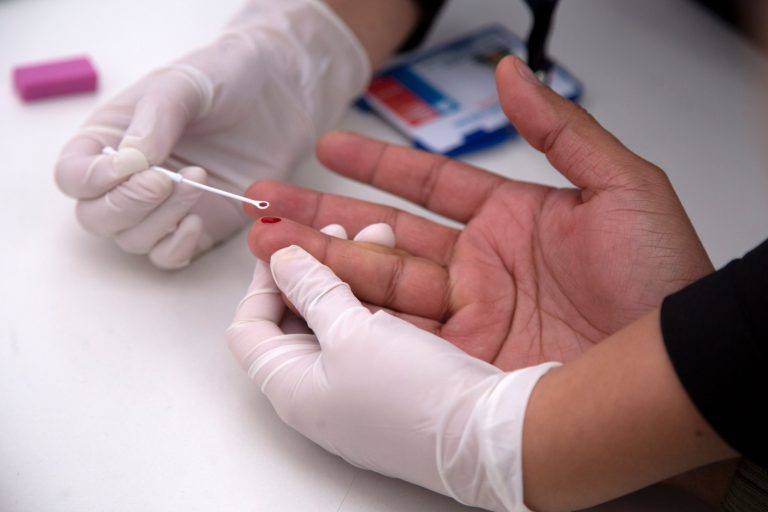
One of the main challenges remains that diagnostics and drugs aren’t readily available for people suffering from advanced HIV. This group of people is very vulnerable to deadly opportunistic infections such as tuberculosis (TB), meningitis and severe bacterial infections.

This all goes to show the world is very far from the end of AIDS.

Gaps

In the last ten years the focus has been on diagnosing people with HIV and starting them on treatment. Efforts around the test-and-treat approach have been mobilized around the UNAIDS 90-90-90 targets: 90% of people with HIV to know their status; 90% of those whose status is known to be on antiretroviral therapy; and 90% of those on antiretrovirals to have an undetectable viral load.

This is necessary but it is not enough to address HIV-related mortality. Life-long treatment requires life-long support. Some people will interrupt treatment; some will struggle to take their tablets every day, risking developing drug resistance and treatment failure.

Today, most people with advanced HIV either are failing or have interrupted treatment. In two MSF-supported studies in the DRC and Kenya, only 20%-35% of inpatients with advanced HIV were ART-naïve (had never accessed treatment) and over half of those on ART had treatment failure.

The reality of treatment interruption and treatment failure requires a new approach.

This is why MSF piloted Welcome Back Services in Khayelitsha, Cape Town. The services focus on the needs of patients returning to care and those failing treatment. Stigmatization and blaming patients for interrupting or failing treatment is common. This leads to delays in seeking care, and patients presenting as false-naïve—patients retesting for HIV and hiding the fact that they were previously on treatment.

This in turn leads to patients presenting in more advanced stages of the disease or on inadequate treatment.

This is one of the reasons why HIV still claims too many lives. Patients who present very late often have severe immune suppression, multiple concurrent life-threatening illnesses and significant organ damage due to HIV itself. Treatment is complicated by the need for many different medicines, with a higher risk of drug interactions and severe side effects. Even with intensive care, unavailable in most settings, many patients die.

TB is the leading cause of death among people with HIV in resource-limited settings. It is estimated that TB is responsible for around 50% of deaths. Two other leading causes are cryptococcal meningitis, which is responsible for one in five HIV deaths, and severe bacterial infections.

Together, these infectious diseases cause more than two thirds of HIV-related deaths. All three are preventable and treatable—if detected early enough.

No time to lose

There are immediate steps that can be taken.

There are more options than ever to prevent TB disease. New evidence shows that shorter regimens of rifapentine and isoniazid, weekly for three months or daily for one month, are equally effective at treating latent TB and decreasing deaths compared to the older regimen of isoniazid for six to 36 months. And a recent trial demonstrated that a four-month treatment with a new regimen was as efficacious as the current six-month regimen to treat active TB disease.

When left untreated, the odds of surviving cryptococcal meningitis are zero. But cryptococcal meningitis can be prevented and there have been advances in treatment. Daily fluconazole is recommended in some countries for prevention of a first episode, and everywhere as secondary prophylaxis to prevent recurrent disease. Treatment with flucytosine and amphotericin B reduces mortality by 40%. Yet these medicines are still missing in many—if not most—health structures in Africa.

Steps can be taken to prevent death from advanced HIV. These include earlier detection at the primary care level—before patients develop disease so severe that they seek hospital admission. The longer the delay to diagnosis and treatment, the lower the chances of survival.

This is where CD4 tests and rapid tests for TB and cryptococcal meningitis are life-saving.

What is needed urgently to save lives is accelerated access to a package of care for the prevention, diagnosis and treatment of advanced HIV at the primary care and hospital level, along with strategies with clear targets to decrease AIDS mortality.

(SOURCE: The Conversation)

Chaos Erupt At Brackenfell High School During EFF Protest Against Racism

0

NYAKALLO TEFU

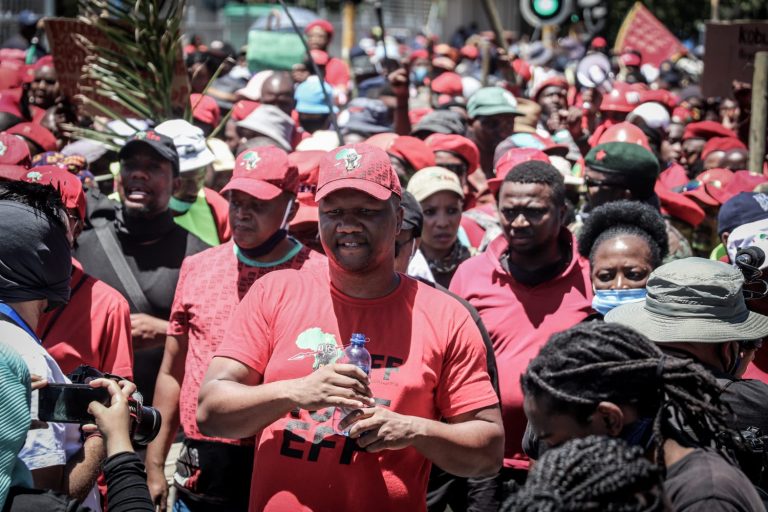
THE Economic Freedom Fighters (EFF) has given Brackenfell High School seven days to remove teachers and the school governing body members who organized the ‘whites only’ matric dance that excluded black learners.

This follows a violent protest at Brackenfell High School in Cape Town after members of the EFF took to the streets to voice their outrage against the ‘private’ matric dance.

“We are giving the school 7 days to remove the teachers and SGB members who organized the matric dance or else this school will become the permanent residence of the EFF,” said EFF’s Secretary General, Marshal Dlamini.

Addressing the media, Dlamini said the party will not tolerate racism in South Africa.

“If they thought we brought flowers, they are wrong. We are not going to negotiate peace with racists,” said Dlamini.

Police fired stun grenades, teargas and water cannons at protestors on Friday after EFF members failed to comply with the number of people allowed to protest.

“We are not going to be told when to leave this place, we will decide when its time,” said Dlamini.

Initially, only 100 people were allowed to protest outside the school under strict conditions, but the EFF then negotiated for 500.

However, the party still failed to comply, when more than 500 members took part in the protest, which led to heavy police presence.

“We are not going anywhere; we are looking for those people who say this is their town. The EFF doesn’t tolerate racism, we came here peacefully, but racists decided to attack fighters saying they were protecting the school, there is no difference between those ones here and the ones in Senekal,” added Dlamini.

“Fighters we know our enemies. Racists are our enemies. Fighters, if the enemy fights you, fight back. When they give us fire, we give them fire. We are not the children of Nelson Mandela.”

(SOURCE: INSIDE EDUCATION) 

New York City Schools To Temporarily Close Due To Rising COVID-19 Rates

0

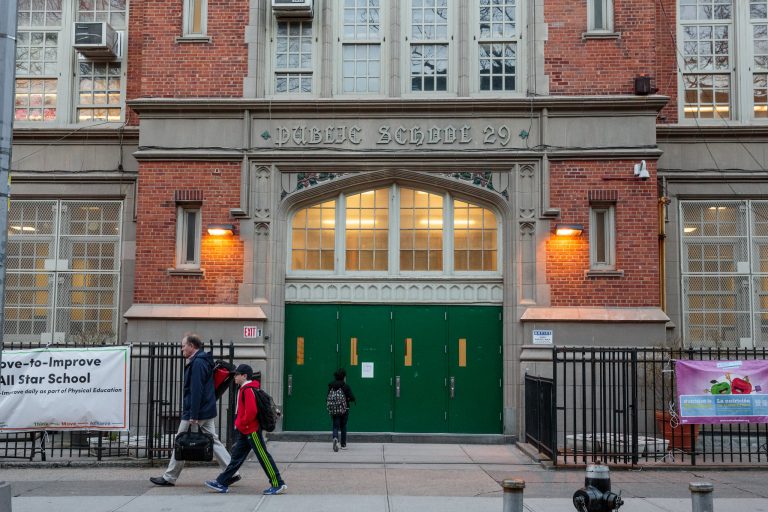
NEW York City public schools will shut down temporarily starting Thursday because of surging coronavirus cases, top city officials revealed Wednesday.

Schools Chancellor Richard Carranza said the closure would be “temporary” in an email to staffers Wednesday afternoon, but did not signal when schools would reopen.

Mayor de Blasio confirmed the closures on Twitter minutes later after delaying his morning press briefing by at least five hours and counting.

“New York City has reached the 3% testing positivity 7-day average threshold,” he wrote. “Unfortunately, this means public school buildings will be closed as of tomorrow, Thursday Nov. 19, out an abundance of caution. We must fight back the second wave of COVID-19.”

The percentage of new COVID-19 cases has hovered near the 3% weekly average threshold the city uses to close schools for more than a week now, forcing parents to wait with bated breath for days for any indication that would force them into having to adjust their childcare arrangements to the new reality.

Meelai Chow, a teacher at Yung Wing School P.S. 124 teaches students attending class in person on Oct. 1, in New York City. (Michael Loccisano/Getty Images)

Gov. Cuomo and others have suggested that de Blasio could change the threshold used to close schools, but such a shift would almost inevitably lead to push back from the United Federation of Teachers, the union that represents most educators in the city.

During a combative press conference in Albany, Gov. Cuomo suggested that schools would close regardless if the state designates the city as an “orange zone” micro-cluster, a move that would also shutter gyms and bring an end to indoor dining.

“(The law) always said that, if, by the state’s numbers, you hit 3%, the schools close,” Cuomo said in reference to the state’s micro-cluster strategy, which has primarily targeted much smaller geographic areas.

The governor snapped at reporters who asked about the confusion caused by a difference in state and city COVID-19 numbers and how that impacts whether classrooms would remain open.

Per the state strategy, schools within an “orange zone” could reopen if they drastically increase coronavirus testing, but Cuomo admitted that would be a huge lift for the city.

“Any school district in a microcluster, the schools can remain open in an orange zone but they have to do additional testing,” he said.

Front page of the New York Daily News on November 14, 2020: COVID spike moves N.Y. schools, courts closer to shutting down – once again.

De Blasio was scheduled to hold a press conference at 10 a.m. Wednesday, but at 2:45 p.m. it still had not begun.

De Blasio has stuck to his guns on the rule that all city schools will close if citywide test positivity rate reaches 3% over a seven-day average in order to “keep faith” with educators and families. But he’s suggested in recent days that the city could adopt a new standard moving forward.

Hizzoner said he would work with the Education Department and educator unions “to figure out what’s the quickest way back and the best standards for that quick turnaround.”

A closure would affect roughly 300,000 students who have been attending some in-person school under the hybrid reopening plan, including many with disabilities who depend on in-person supports and therapy.

(SOURCE: NYDAILYNEWS)