Home Blog Page 366

Tuks Rowing Coach On Why He Loves The Colour Of Gold

0

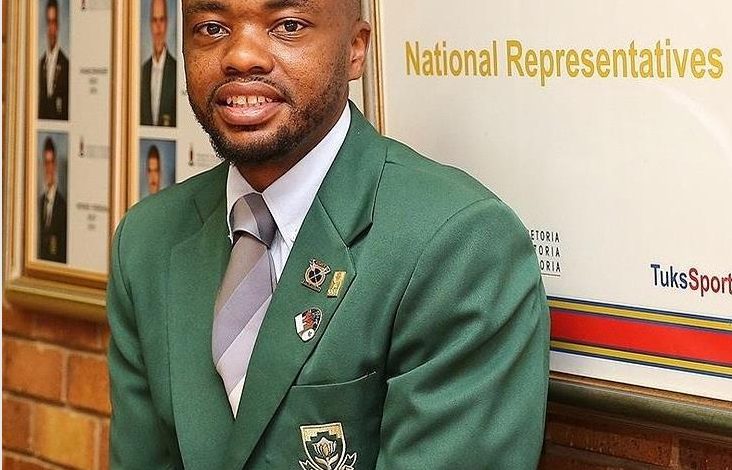
HEAD Coach of Tuks Rowing (TuksSport) Mpumi Geza recently touched on his love for winning and also the love for the colour gold.

In 2018, Geza was crowned as Coach of the Year in the individual sports category at the TuksSport Colours and Awards.

Before he came to UP-Tuks in 2014, he was a head rowing coach at Holy Rosary school from 2012 to 2014. At a point, he also served as a coach for South Africa at the u.23 level.

“Before I joined TuksSport in 2014, I was a head rowing coach at the Holy Rosary school for girls in Johannesburg, where I was also active as a junior national assistant coach for two years and a South African schools development coach for three years,” he said.

Geza said winning bronze with the Tuks team back in 2018 in China was one of his many highlights.

“Almost every year at Tuks has been a highlight. We have grown from strength to strength as a club reaching the very top of the senior club scene, but if I have to narrow it down to a few specific ones it would have to be Student World Championships in Shanghai 2018.”

“We won two bronze medals with Tuks rowers in the lightweight 2x (Ryan Delaney and Chris Mittendorf) and the heavyweight 2x (Bradley Betts and Mzwandile Sotsaka). That year was a testament to the quality TuksRowing is producing,” he said.

Geza said his ability to want to win comes from SA rowing champions of Sizwe Ndlovu, John Smith, Matthew Brittain and James Thompson.

The four won gold at the London Olympics in 2012.

“They put us on the map and inspired us to believe that winning gold is possible. And, that it can be done from right here in Pretoria,” Geza added.

“That culture and mentality are what Roger Barrow [national rowing head coach] drives with his team. I have been fortunate to spend time with him and the national team, learning and instilling that same culture and belief into the TuksRowing Club over the years.”

He said high school rowers who are keen on joining the TuksRowing Club next year should have big ambitions and, most importantly, be patient.

“The young bucks always roll in here with stars in their eyes and big ambitions, which is good. But they need to understand it takes time to become a champion. Invest the time into settling into varsity and build yourself up. Tuks has all the tools to get you there. You just need patience and persistence, and believe it will happen,” said Geza.

(SOURCE: REKORD)

Youths In Africa Empowered By STEM Education

SARAH UDDIN

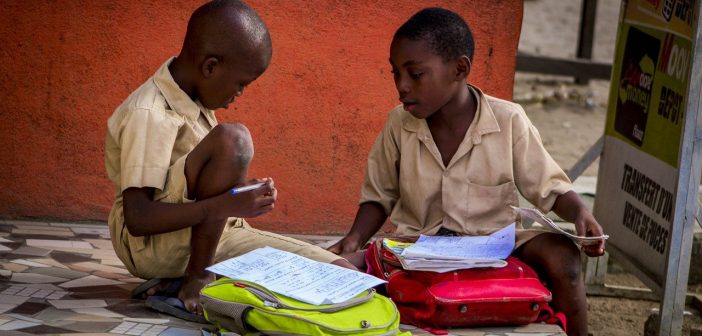
AFRICA has a young population. The continent is home to more than 60% of people under the age of 25, signaling a future workforce boom. Projections show that by 2035, the working population of sub-Saharan Africa will surpass that of the rest of the world.

The implications of this demographic advantage are far-reaching. While the rest of the world will contend with an aging workforce, Africa’s will be young. Thus the region has great potential to improve its national and global economies if it can produce a generation of young, creative, motivated professionals. Many of these professionals would likely find jobs in the STEM field, boosting Africa’s already growing technological prowess and subsequently furthering the continent’s development.

Empowering the Youth

Much of this visionary success comes from the youths in Africa having a willingness to engage in STEM education. The promotion of STEM is important for encouraging a versatile skill set that is essential for students worldwide.

GoLab Goes Africa is an initiative aiming to improve the learning outcomes of STEM education by creating enriching educational environments via digital content, such as virtual labs and experiments. The initiative encourages young people to engage in science, acquire scientific inquiry skills and actively undertake guided experimentation. It also provides both teachers and students greater access to a variety of labs and learning spaces.

The initiative is empowering both youths in Africa and teachers alike. It allows them to acquire specific competencies needed to break into the STEM world and perform professional scientific research.

Social, Political and Infrastructural Development

A workforce with the necessary innovative, collaborative and critical thinking skills is necessary for every nation in order to reach sustainable development goals. Africa’s long-term development challenges include the necessity to improve agriculture, manage contagious and deadly diseases and promote economic development.

To achieve these aims, it is necessary to improve the quality of STEM education. A first step launched by the UN in September 2012—the Global Education First Initiative (GEFI)—increases the political profile of education to improve access to and quality of learning. The initiative aims to make the quality and practicality of education a top priority. The UN has funded this initiative through global advocacy efforts.

By 2030, GEFI hopes to accomplish a broader and more ambitious vision for education. They also hope to expand the engagement of global citizenship education, placing an emphasis on sustainable development, learning and teaching.

Vision 2030

Kenya’s Vision 2030 holds GEFI at the heart of this plan. Vision 2030 aims to turn Kenya into a middle-income country with a high quality of life and a clean, secure environment. Under Vision 2030, suppliers have taken up programs to equip 94 public healthcare facilities countrywide with modern diagnostic equipment. A National Referral Strategy has been developed and implemented, with more successful ventures contributing as well.

The first step to achieving these successes was the educational foundation of the Kenyan people. Their commitment to learning how to use STEM education in a sustainable way is what is pushing them to ensure the further development of their nation.

Looking to the Future

African nations are improving their social, economic and political agendas. Simultaneously, youths in Africa are rising up to learn how exactly they can contribute to their communities and further development.

Successful implementation of STEM education to improve key socioeconomic, health and accessibility issues depends greatly on various education and economic policies. Untapping African countries’ great potentials within their younger population is the key to the sustainable growth of the world for years to come.

(SOURCE: BORGEN)

How School Maths Could Better Prepare South Africans For The World Of Work

0

BY PROFESSOR CYRIL JULIE

IN the modern world of work, most computations are done using technology. In contrast, in South Africa, school maths computations and other kinds of mathematical work such as graph sketching and construction of geometric figures are done with pencil and paper despite the availability of computer software to perform these tasks.

What’s taught in schools – and how it’s taught – is at odds with equipping pupils with skills needed in the post-school world.

Our research explored what maths education should aim for in preparing students for the digital age, given that maths’ role in society is increasingly done by machines.

Establishing this will have an impact on future job requirements and the mathematics people will need to understand their world.

Teaching maths is dominated by a focus on development of computational fluency. This is at the expense of the developing competencies such as posing and solving problems, mathematical argumentation, reasoning and creativity. These competencies are stated as goals in the school mathematics curriculum.

But examinations such as the National Senior Certificate – the national exam pupils write in their final year of schooling – give priority to the computational aspects of mathematics.

The mathematics curriculum shows that only 16.25% of the combined school-based mark and the final maths exam focuses on these skills and competencies for the world of today.

Based on our research, we recommend that pen-and-paper calculations be minimised.

This would open the way for introducing more relevant topics in the maths curriculum.

Relevant topics include but are not limited to the distribution of resources, decision making maths, complexity theory, risk analysis and cryptology.

Although these can be done with pencil and paper, available computer software offers an opportunity for deeper exploration of these topics.

It’s thus not an issue whether machines can or can’t deal with these topics. The issue is about the maths curriculum dealing with topics relevant for today’s world and teaching the competencies that cannot be done by technology.

What pupils need is critical thinking and a grasp of the key ideas underlying the mathematics that computers use.

Making maths education relevant

Mathematical modelling and the applications of mathematics should also receive more attention in the school curriculum. Applications should steer clear of the popular “word problems” which dress up mathematical manipulations in story formats. This is not to suggest that problems shouldn’t be presented in story formats. Rather, “word problems” that merely require learners to identify which mathematical operation to use should be minimised.

An example is: “A school organises a visit to a museum for 208 learners. The learners will be transported by bus. How many buses must they order if a bus takes 52 learners?”

Modelling should ideally deal with authentic phenomena such as the accumulation of plastic bags against a school fence over time.

The descriptive, predictive and prescriptive purposes of mathematical models should be made clear. An example of the descriptive purpose of a mathematical model is the depiction of the shape of a leaf of a plant as triangular.

Weather forecasting is an example of the use of mathematical models for predictive purposes.

The prescriptive purpose of mathematical models is their use for decision-making for certain actions to be taken.

For example, an automatic teller machine needs to identify whether a personal identification number is the correct one to proceed with performing a transaction.

The modelling done with COVID-19 data provides a sense of the interplay of the descriptive, predictive and prescriptive purposes and how it was used to determine lockdown levels.

Free software is available for mathematical model development. Through mathematical modelling learners can build various simulations of a situation and make decisions based on different scenarios.

A way forward

Mathematical terminology and constructs are used to convey information about the COVID-19 pandemic.

Models, curve flattening, moving averages, rate of infection, forms of growth (doubling and exponential) and various forms of graphical and pictorial representations are just some of these terms and concepts.

The calculations performed with the data are done with software, not pen and paper.

The mathematical techniques are fairly general and some of them are part of the school curriculum. But we suggest a shift away from competencies that compete with what computers can do towards competencies that complement computers.

(Cyril Julie is NRF/FrF Professor of Mathematics, University of the Western Cape)

(SOURCE: THE CONVERSATION)

Ramaphosa Calls For Restraint At Brackenfell High School After Violent Clashes Between Parents and EFF Members

0

NYAKALLO TEFU

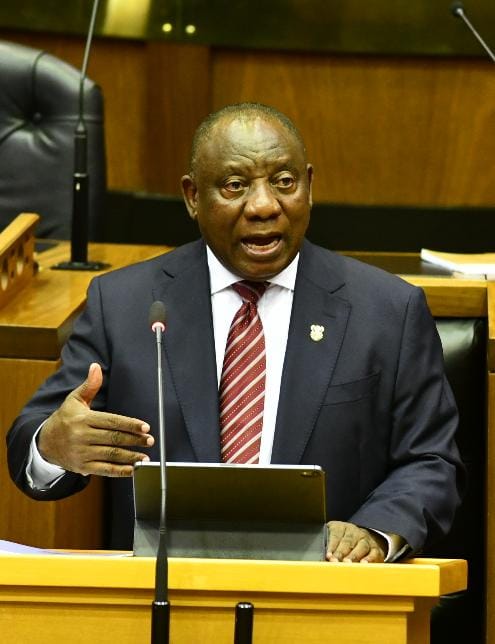
PRESIDENT Cyril Ramaphosa has called for calm and restraint at the Brackenfell High School in Cape Town following a violent confrontation between a group of parents and members of the Economic Freedom Fighters (EFF) on Monday. 

The EFF members were protesting against alleged racism after a group of students organized a ‘whites only’ matric dance party at the school.

“At this most important and difficult time for matriculants not only at Brackenfell High School but around the country, the spectacle of parents and protestors coming to blows at the school gate is deeply unfortunate,” said Ramaphosa on Tuesday.

“It is the right of every South African to engage in peaceful protest, and any actions to suppress the right to freedom of expression, particularly through violence and intimidation, must be roundly condemned. What happened today brings back hurtful memories of a past we should never seek to return to.”

Several videos surfaced on social media on Monday when the violence broke out between the EFF members and parents.

Ramaphosa described the confrontation outside the school as deeply regrettable.

“At this most important and difficult time for matriculants not only at Brackenfell High School but around the country, the spectacle of parents and protestors coming to blows at the school gate is deeply unfortunate,” added Ramaphosa.

The school has come out to say this was a private event and it was not involved as the department has cancelled all matric dances this year due to the coronavirus pandemic.

“We should be ever mindful of the extent to which our actions, both publicly and in private, undermine the cherished principle of non-racialism upon which our democracy was founded,” said Ramaphosa.

Ramaphosa said that the country should not allow what has transpired at Brackenfell High School to be used by any groupings who want to cause racial polarisation. 

The EFF, however, has argued that the learners approached the party after allegation of racism surfaced at the school.

(SOURCE: INSIDE POLITICS)

Pressure Mounts for NSFAS Administrator To Resign Amid ‘Jobs-For-Pals’ Scandal

NYAKALLO TEFU

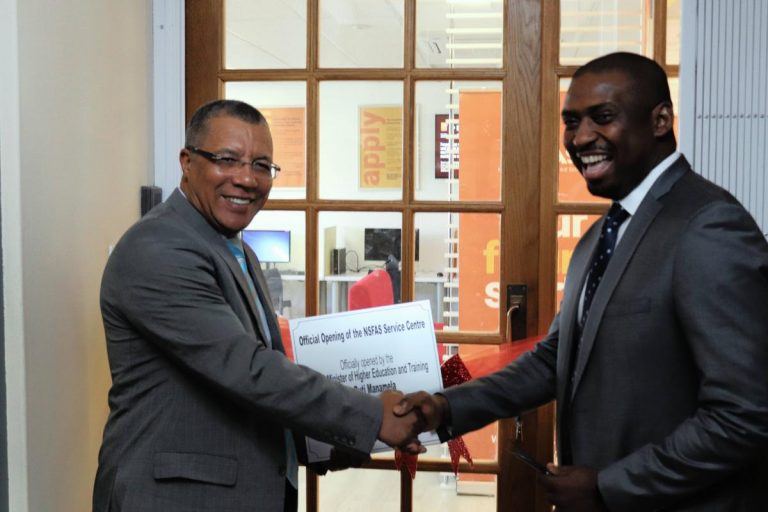
THE National Student Financial Scheme (NSFAS) administrator Randall Carolissen is under mounting to pressure to resign amid allegations of corruption and abuse of power.

The Economic Freedom Fighters (EFF) has now joined the National Education Health and Allied Workers’ Union (Nehawu) in calling for the resignation Carolissen, accusing him of mismanaging the NSFAS, a R35 billion state-funded loan programme for tertiary students who can’t afford fees.

Carolissen stands accused of hiring friends and acquaintances without following proper processes. 

Carolissen recently admitted he had forwarded some CVs to NSFAS’s human resources department but denied that he was directly involved in the appointment processes that followed.

Nehawu told Parliament recently that under Carolissen’s leadership at NSFAS, several issues were experienced, including the issuing of an irregular R3.75 billion laptop tender, which has since been cancelled.

Nehawu also told MPs that under Carolissen’s leadership at NSFAS, several issues have been experienced, including the issuing of an irregular R3.75 billion laptop tender, which has since been cancelled.

The EFF turned the pressure on Monday, saying that Carolissen has turned NSFAS into a ‘Mafia’ operation, enriching people close to him while intimidating stuff and subjecting them into a hostile working environment.

“We demand the immediate resignation of Randall Carolissen for crippling an entity that is the custodian of the developmental prospects of South Africa in terms of higher education,” the party said in a statement on Sunday.

On Saturday, the Portfolio Committee on Higher Education, Science and Technology took a unanimous decision during its meeting held Friday to conduct an oversight Inquiry into the administration and management of the NSFAS.

This was after the committee held a follow-up meeting with Carolissen regarding allegations of maladministration and corruption that were brought to the committee by Nehawu.

The committee also received testimonies under oath from senior employees of NSFAS.

The committee said it was shocked by what appeared to be a complete disregard for normal recruitment policies and procedures guiding the recruitment of staff at NSFAS.

The committee said it was informed by NSFAS employees who appeared before it that the Administrator facilitated the employment of his friends and acquaintances at the entity without following due process.

The Administrator admitted that he did pass the CVs (curricula vitae) of some of the implicated persons over to Human Resources, who were later appointed, but denied that he was responsible for their appointment.

Of the long list of irregular appointments, nine of the people alleged to have been appointed irregularly were the Administrator’s former schoolmate, former university mate, a friend of the Administrator’s brother, the daughter of the Administrator’s friend, a friend of the wife of the Administrator, and a nephew of the Administrator’s friend.

“Of grave concern to the committee was the admission by the Administrator that he passed on the CVs of some of the persons to Human Resources,” portfolio committee chairperson Philly Mapulane.

 “We do take note of the denial by the Administrator that he was not personally involved in the appointment of some of his acquaintances and friends, however, when you pass on the CV as the Administrator to your subordinate, the subliminal message to the person receiving the CV is that you must appoint this person.”

He added: “You may not have said it in your own words, but the message is loud and clear to your subordinate receiving a CV from you of what your intention is. Ultimately it is the Administrator who is finally the authority responsible for the employment of staff at the agency.”

The committee further resolved that allegations received in the past regarding alleged irregularities in the procurement of laptops by NSFAS as part of saving the 2020 academic year, will be interrogated as part of this oversight inquiry.

Employees further testified to other issues of alleged maladministration at NSFAS, which the committee will look at.

The committee condemned the alleged action of attempting to charge an employee for appearing before the committee of Parliament.

“We wish to remind NSFAS that witnesses appearing before Parliament are protected in terms of section 16 of the Powers, Privileges and Immunities of Parliament and Provincial Legislatures Act, 2004. Anybody who attempts to subvert the oversight work of Parliament by intimidating witnesses invited by it will not be left unattended,” said Mapulane.

(SOURCE: INSIDE EDUCATION)

Teacher Unions, Basic Education Butt Heads Over COVID-19 Protocols During Matric Exams

0

NYAKALLO TEFU

TEACHERS’ union SADTU has condemned the decision by the Department of Basic education and the Department of Health to allow learners who might have tested positive during exams to write in isolation but in the same schools or examination centres where other learners are writing.

SADTU argued on Monday that schools and exam centres were not quarantine sites.

The union said the decision by Department of Basic Education and the Department of Health was not in line with safety guidelines.

Over one million matrics are sitting for their final Grade 12 exams, which started last Thursday.

“The unfortunate and unilateral decision is in violation of the isolation protocols of the Department of Health which state that once tested positive, an individual must isolate. The isolation means not to move from an area to the other until the end of the prescribed duration,” SADTU said in a statement.

 Last week, Department of Basic Education announced that it would allow learners who might have tested positive during the writing of examinations to write in isolation but in the same schools or examination centres where other learners are writing.

On Monday, the teacher’s union called on the Department of Basic Education and Department of Health to convene an urgent meeting on what it claims is the unilateral decision that violates the isolation protocols during the writing of final exams.

“SADTU, as a stakeholder in education was not consulted about this decision which violates the COVID 19 Standard Operating Procedures. We therefore call upon the DBE and DOH to convene an urgent meeting to address this matter as it affects both external and internal examinations”, the teacher union said.

The union has also called on Department of Basic Education not to force teachers to invigilate in facilities where learners may have tested positive, but to use health professionals.

“We fully understand that isolation can increase anxiety levels amongst learners and we therefore call on the department to ensure the provision of psychosocial services and health facilities to these learners,” according to SADTU.

(SOURCE: INSIDE EDUCATION)

EFF Members, Parents Clash Outside Brackenfell High School Amid Racial Tensions Over Alleged ‘Whites Only’ Matric Dance

0

NYAKALLO TEFU

“Wait until we respond, all fools will have an opinion,” EFF leader Julius Malema ominously tweeted on Monday night after his party’s protest outside Brackenfell High School turned violent when demonstrators clashed with a group of residents.

This comes after various videos posted online by reporters and residents showed fighting and chaos outside the school.

Public order police units tried to calm tensions in the area, firing stun grenades in an attempt to separate the groups.

At the weekend, EFF protested outside Brackenfell High School, which came under heavy criticism on social media after it emerged that white parents of students at the school allegedly hosted a high school matric dance without inviting black students.

A group of EFF supporters gathered outside the school and were met by a contingent of parents, armed security and police.

Veronica Mente, the Chairperson of the EFF in the Cape Town metro area, entered the school in order to talk to the principal of the school and has called for the firing of the two teachers who attended the event.

While the principal and Mente held their meeting, there were heated confrontations outside the school when EFF members started singing “Kill the Boer, kill the farmer” which is classed as hate speech in South Africa.

The EFF provincial leadership in the Western Cape said the party will immediately write to the Department of Basic Education to investigate racism at Brackenfell High School, according to EFF’s Western Cape’s Deputy Chairperson Nosipho Makamba-Botya.

“We received complaints from some parents of learners at the school about an organized matric dance which only included white students,” said Makamba-Botya.

According to various eye witness accounts, parents organized a matric dance, which is not allowed after the Western Cape Education Department announced that no matric dance or balls should take place at schools this year due to the COVID-19 pandemic.  

“The parents said they wanted us to intervene in the matter because they failed to understand why their children were excluded and so we went there on Friday first and to our surprise it was revealed that two other teachers from the school were involved in the event,” said Makamba-Botya.

Makamba-Botya said when they visited the school on Friday they were only allowed to speak to a school governing body’s chairperson because the principal was nowhere to be found.

“On Monday, we wanted to speak directly to the principal. However, we were received by a mob of white people carrying heavy guns with a lot of private security and the police who attacked us on our way there,” said Makamba-Botya.

Videos have surfaced on social media where parents and EFF members can be seen throwing punches at each other and running amok.

“Four of our fighters were injured during the clashes and on Friday. One of the EFF’s cars was damaged,” added Makamba-Botya.

Western Cape Education Department Minister Debbie Schäfer has condemned the chaos outside Brackenfell High School, saying the behaviour of the EFF and some parents was unacceptable.

“I strongly condemn both the actions of the EFF members and those parents outside the school, who used violence to address their concerns. Violent attacks are simply not acceptable and will in no way benefit our learners. Violence is also not the solution to solving disagreements,” said Schäfer.

The violent clashes come as learners are currently writing their exams and Schäfer said this will disturb the learners.

“Our learners are currently writing matric exams after a stressful and difficult year, and the EFF knows full well that this kind of confrontation will disrupt learning and cause unnecessary distress to our learners,” added Schäfer.

Schäfer has urged all parties to engage with one another in a responsible and adult manner and for SAPS to ensure that learners are protected from violence.

The EFF is calling for the suspension of the two teachers who attended the private matric dance party.

“We will write to the DBE to suspend the two teachers and the principal, we will also go back to the school,” added Makamba-Botya.

The South African Human Rights Commission spokesperson Gushwell Brooks the SAHRC condemned the scenes of violence that erupted outside of Brackenfell High School, in the Western Cape on Monday.

“We have seen on news media the eruption of a violent confrontation between people said to be parents of learners at the school and members of the Economic Freedom Fighters (EFF) outside the school premises. These unfortunate events follow reports that two teachers from the school attended a private matric function, which only included white learners and their parents,” said Brooks.

“The Commission is deeply disappointed by the violence as well as the allegations that preceded it. The SAHRC is shocked to learn that in this day and age a racially segregated private event was held for matric learners from the school. More disappointingly, is the fact that this event was attended by their parents and two teachers from the school.”

The commission said the alleged holding of a “whites only” event, if true, is also strongly condemned.

“No one should be allowed to bring back racial segregation to this country,” said Brooks.

“The deep racial divisions of South Africa’s apartheid and colonial past cannot be healed whilst children are socialised separately on the basis of race and thus, as a nation, we will never be able to forge a South Africa where all are equal, free and are treated with dignity.”

He added: “The conduct seen on television of one of the men repeatedly beating with a stick a Black woman in EFF uniform, is beyond shocking and we urge the police to trace the man and charge him, among others, with assault.”

(SOURCE: INSIDE EDUCATION)

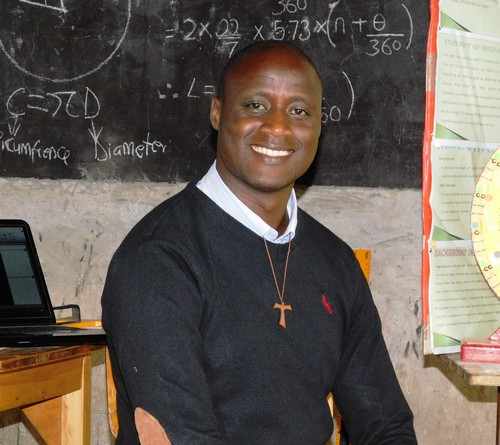
Global Teacher Prize Winner Peter Tabichi Among Newly Sworn Heroes Council Members

FORMER Supreme Council of Kenya Muslims(SUPKEM) Adan Wachu was on Monday sworn in as the Chairperson of the Heroes Council in a ceremony Presided over by Chief Justice David Maraga.

Wachu was sworn in together with 5 other members of the council including Global Teacher Prize Winner Peter Tabichi and Marathon World Record Holder Eliud Kipchoge.

Others who were sworn in include Principal Secretary Josephta Mukobe, Mau Mau veteran Gitu Wa Kahengeri and Christine Omwakwe.

The functions of the council include formulating and implementing a policy relating to national heroes, identifying, and recommending national heroes and enforcing sanctions and penalties in respect of disgraced national heroes.

The law provides that in the exercise of its functions, the Council shall have regard to patriotism, national unity, the rule of law, sharing and devolution of power as well as human dignity, equity, social justice, and inclusiveness.

Earlier this year, Tabichi., the Maths and Physical Science teacher from an impoverished school in Kenya’s Rift Valley, won the one million dollar Global Teacher Prize, becoming the first teacher from Africa to clinch the prize established to honour the profession.

Tabichi (36) emerged the winner from a top list of 10 nominees from Brazil, Georgia, Netherlands, United Kingdom, India, United States, Argentina, Australia and Japan.

“I cannot believe it,” Tabichi, told IPS at a press conference after he was named winner.

“This is a motivation for teachers in Kenya, Africa and the world. It affirms that teaching is the best profession and I will continue to make a change by teaching.”

The Global Teacher Prize is the largest prize of its kind that recognises an exceptional teacher who has made an outstanding contribution to the profession but also to highlight the important role of teachers in society.

Actor Hugh Jackman announced Tabichi’s name at a glittering ceremony that sent the packed hall into thunderous applause.

Tabichi was recognised for his dedication, hard work and passionate belief in his students’ talent.

Thanks to his efforts the poorly resourced Keriko Mixed Day Secondary School in Nakuru County, in remote rural Kenya, has emerged victorious after taking on the country’s best schools in national science competitions.

Citing his father as his inspiration for becoming a teacher, Tabichi, a member of the Franciscan Brotherhood, gives away 80 percent of his monthly income to help the poor students in his school, many of whom come from poor families–almost a third are orphans or have only one parent–with many going without food at home.

The students have difficult experiences ranging from drug abuse, teenage pregnancies, early school dropout, young marriages and there have been cases of suicide.

The school itself has only one computer, a poor internet connection, and a student-teacher ratio of 58:1.

“Every day in Africa we turn a new page and a new chapter,” said Tabichi. “This prize does not recognise me but recognises the continent’s young people…as a teacher working on the frontline I have seen the promise of its young people—their curiosity, talent, their intelligence and their belief.”

Kenya’s President Uhuru Kenyatta, congratulated Tabichi on winning the award in a special video message broadcast at the ceremony in which he described Tabichi as a shining example of what the human spirit can achieve, not just for Kenya and Africa, but also for the rest of the world.

“Peter your story is the story of Africa, a young continent bursting with talent,” Kenyatta said. “Your students have shown that they can compete among the best in the world in science, technology and all fields of human endeavour. All we need is to give them the right support.”

The Global Teacher Prize, open to all working teachers, is part of the Varkey Foundation’s commitment to improving the status of teachers across the world.

In their Global Teacher Status Index in November 2013—the first attempt to compare attitudes towards teachers in 21 countries—the study found that between a third and half of the parents surveyed would ‘probably’ or ‘definitely not’ encourage their children to enter the teaching profession.

The Global Teacher Status index in 2018 showed for the first time a direct link between teacher status and pupil performance as measured by PISA scores.

“I want to congratulate Peter Tabichi for winning the Global Teacher Prize 2019. I hope Peter’s story will encourage others to enter the teaching profession and shine a spotlight on the truly inspiring work teachers do to make tomorrow brighter than today,” said Sunny Varkey, founder of the Varkey Foundation.

In an earlier interview with IPS Tabichi said if he won he would use the prize money strengthen the Talent Nurturing Club, the Science Club and inter-school science project competitions at the school.

He also planned to “invest in a school computer lab with better internet connectivity.” And said that he would also promote kitchen gardening and production of drought tolerant crops in the community at large.

(SOURCE: AGENCIES)

Technology: Nangyang University Scientists Develop Energy-Saving ‘Liquid Window’

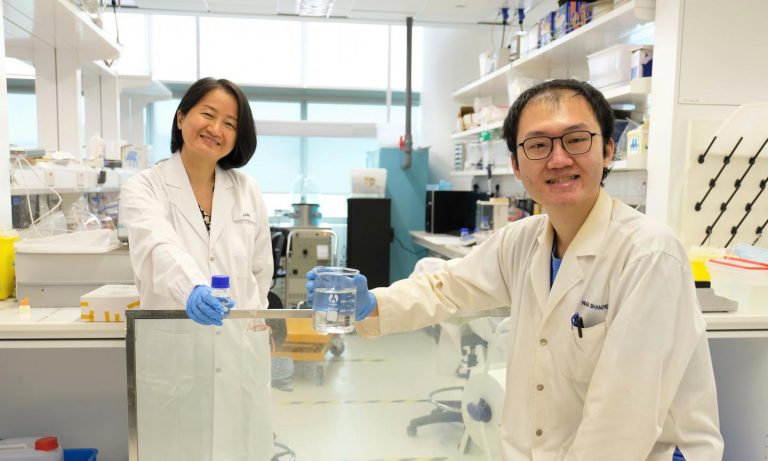
SCIENTISTS at the Nanyang Technological University, Singapore (NTU Singapore) have developed a liquid window panel that can simultaneously block the sun to regulate solar transmission, while trapping thermal heat that can be released through the day and night, helping to reduce energy consumption in buildings.

The NTU researchers developed their ‘smart window’ by placing hydrogel-based liquid within glass panels and found that it can reduce up to 45 per cent of heating, ventilation, and air-conditioning energy consumption in buildings in simulations, compared to traditional glass windows.

It is also around 30 per cent more energy efficient than commercially available low-emissivity (energy-efficient) glass, while being cheaper to make.

The ‘smart window’ is the first reported instance in a scientific journal of energy-saving smart windows made using liquid, and supports the NTU Smart Campus vision which aims to develop technologically advanced solutions for a sustainable future.

Windows are a key component in a building’s design, but they are also the least energy-efficient part. Due to the ease with which heat can transfer through glass, windows have a significant impact on heating and cooling costs of a building. According to a 2009 report by the United Nations, buildings account for 40 per cent of global energy usage, and windows are responsible for half of that energy consumption.

Conventional energy-saving low-emissivity windows are made with expensive coatings that cut down infrared light passing into or out of a building, thus helping to reduce demand for heating and cooling. However, they do not regulate visible light, which is a major component of sunlight that causes buildings to heat up.

To develop a window to overcome these limitations, the NTU researchers turned to water, which absorbs a high amount of heat before it begins to get hot – a phenomenon known as high specific heat capacity.

They created a mixture of micro-hydrogel, water and a stabiliser, and found through experiments and simulations that it can effectively reduce energy consumption in a variety of climates, due to its ability to respond to a change in temperature.

Thanks to the hydrogel, the liquid mixture turns opaque when exposed to heat, thus blocking sunlight, and, when cool, returns to its original ‘clear’ state.

‘Liquid window’ most suitable for office buildings

At the same time, the high heat capacity of water allows a large amount of thermal energy to be stored instead of getting transferred through the glass and into the building during the hot daytime.

The heat will then be gradually cooled and released at night.

Dr Long Yi, lead author of the research study published in the journal Joule, and Senior Lecturer at the School of Materials Science & Engineering said, “Our innovation combines the unique properties of both types of materials – hydrogel and water. By using a hydrogel-based liquid we simplify the fabrication process to pouring the mixture between two glass panels. This gives the window a unique advantage of high uniformity, which means the window can be created in any shape and size.”

As a result of these features, the NTU research team believes that their innovation is best suited for use in office buildings, where operating hours are mostly in the day.

As a proof of concept, the scientists conducted outdoor tests in hot (Singapore, Guangzhou) and cold (Beijing) environments.

The Singapore test revealed that the smart liquid window had a lower temperature (50°C) during the hottest time of the day (noon) compared to a normal glass window (84°C).

The Beijing tests showed that the room using the smart liquid window consumed 11 per cent less energy to maintain the same temperature compared to the room with a normal glass window.

Smart window shifts electricity load peak, blocks noise

The scientists also measured when the highest value of stored thermal energy of the day occurred.

This ‘temperature peak’ in the normal glass window was 12pm, and in the smart liquid window was shifted to 2 pm. If this temperature peak shift is translated to a shift in the time that a building needs to draw on electrical power to cool or warm the building, it should result in lower energy tariff charges for users.

Simulations using an actual building model and weather data of four cities (Shanghai, Las Vegas, Riyadh, and Singapore) showed that the smart liquid window had the best energy-saving performance in all four cities when compared to regular glass windows and low emissivity windows.

Soundproof tests also suggested that the smart liquid window reduces noise 15 per cent more effectively than double-glazed windows.

First author of the study Wang Shancheng, who is Project Officer at the School of Materials Science & Engineering said, “Sound-blocking double glazed windows are made with two pieces of glass which are separated by an air gap. Our window is designed similarly, but in place of air, we fill the gap with the hydrogel-based liquid, which increases the sound insulation between the glass panels, thereby offering additional benefit not commonly found in current energy-saving windows.”

The other first author, Dr Zhou Yang was a PhD student in NTU and is currently an Associate Professor at China University of Petroleum-Beijing (CUPB).

Providing an independent view, Professor Ronggui Yang, of the Huazhong University of Science and Technology, China, a recipient of the 2020 Nukiyama Memorial Award in Thermal Science and Engineering and an expert in thermal and energy systems said, “This is the first instance of a hydrogel-based liquid smart window, and it takes us far from a conventional glass design. The disruptive innovation leads to solar regulation and heat storage, which together render outstanding energy-saving performance.”

The research team is now looking to collaborate with industry partners to commercialise the smart window.

(SOURCE: EUREKALERT)

Global School Sports Equipment Market Research Report Covers COVID-19 Analysis, Industry Research, Drivers, Top Trends And Forecast to 2027

0

THE School Sports Equipment market report contains wide-running factual data for School Sports Equipment, which engages the customer to separate the future intrigue and anticipate right execution.

The advancement rate is assessed dependent on academic examination that gives the bona fide information on the worldwide School Sports Equipment market. The requirements and improvement points are assembled after a significant comprehension of the advancement of School Sports Equipment market.

The report is all around made by considering its fundamental information in the overall School Sports Equipment market, the essential components responsible for its items and administrations. Our top experts have surveyed the School Sports Equipment market report with the reference of inventories and data given by the key players Adidas, Reebok, Nike, BSN SPORTS, Carlton Sports, Under Armour, ESPN, Gatorade, EA Sports, Brine, Bauer Hockey, Burton Snowboards, Cascade, CCM Hockey, Coleman Company, discretionary sources and files that help to upgrade perception of the related methodological conditions.

Major highlights of the School Sports Equipment market report:

•    The detailing of company profile and regions with better School Sports Equipment markets scope
•    Analysis of complete market, pricing, growth influencers, import/export, technological advancements, future trends, and growth rate
•    Comprehensive analysis of historical, current, and future market growth rate
•    Impact of specific growth drivers on the market expansion
•    Study includes accurate data to gain better insight of the global School Sports Equipment market

The School Sports Equipment market report displays a point by point categorization { (Football Equipment, Rugby Equipment, Hockey Equipment, Tennis Equipment, Netball Equipment/Basketball Equipment/Table Tennis Equipment/Badminton Equipment), }; { (Primary School, Secondary School, Colleges, , ), } of the overall market subject to development, product type, application, and diverse methods and systems. The step by step elucidation of the School Sports Equipment market’s assembling strategy, the usage of advancement, outcomes of the international market contenders, dealers and traders’ classification, and what’s more the particular business data and their advance plans would assist our customers for future courses of action and movement expected to get by in the School Sports Equipment market.

The School Sports Equipment market report includes the new mechanical developments and new releases to engage our customers to configuration, settle on business decisions, and complete their future required executions.

The School Sports Equipment market report moreover focuses more on present business, future methodology modifications, and open doors for the School Sports Equipment market.

Nearby headway frameworks and projections are one of the important parts that illuminate overall execution and incorporate key regional analysis North America (the U.S., Canada, and Mexico), South America (Brazil, Argentina, Chile, Colombia), Europe (Spain, Russia, Germany, Italy, France, and UK), Asia-Pacific (Japan, Korea, India, China, Australia, and South-east Asia), The Middle East and Africa (Egypt, South Africa, GCC Countries).

The accurate graphical depiction and figures of the School Sports Equipment market are shown in a delineated system. Reports help to see reliable potential traders.

(SOURCE: EUROWIRE)