Home Blog Page 367

Ramaphosa: A Second Wave Of The COVID-19 Could Devastate The Recovering Economy, Risk Lives

0

CYRIL RAMAPHOSA

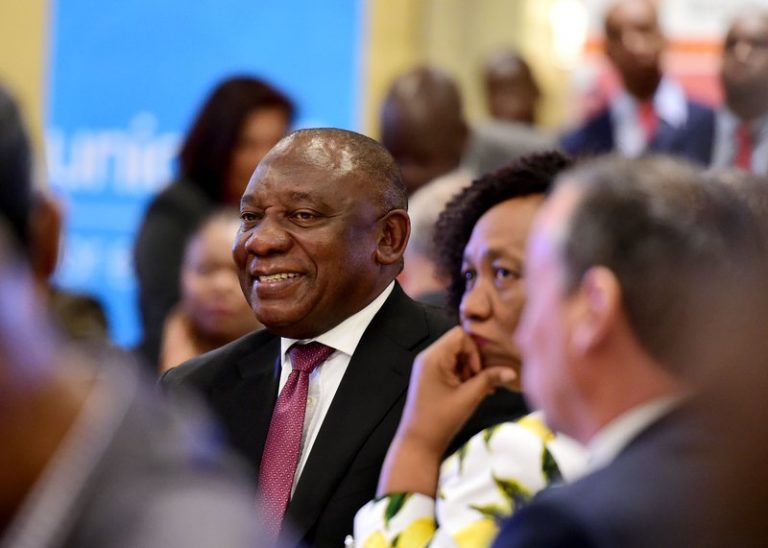
THE jacaranda trees are in full bloom across the nation’s capital, heralding the start of summer. After a long and difficult winter, the beginning of a new season should fill us with optimism.
 
When the National State of Disaster was declared in March, our immediate priority was to contain the spread of the virus and provide emergency relief to citizens, communities, workers and businesses.
 
Over the course of eight months and with the support of our social partners, we rolled out a comprehensive set of measures to limit the social and economic impact of the pandemic.
 
We massively expanded social protection on a scale that has never been attempted before in this country. We are one of the few countries in the world where the right of access to social security is enshrined in the Constitution, and we can be proud that during this grave crisis we gave practical expression to this right in many ways.
 
In addition to our existing social grants, which reach more than 17 million people every month, we topped-up the Old Age, Disability and Child Support Grants.

We rolled out a Special COVID-19 Social Relief of Distress Grant, which has reached some 6 million people to date. This was done within weeks of the National State of Disaster being declared.
 
The scale of such an undertaking cannot be understated. To bring this system online there was extensive collaboration between the South African Social Security Agency, the South African Revenue Service, Home Affairs and many others.
 
We set up a fully automated application and disbursement process, and integrated multiple databases, including the National Population Register and the Unemployment Insurance Fund database.

We set up new application channels like WhatsApp and USSD, and created systems with the commercial banks to enable banking detail verification. This is a remarkable achievement in a very short space of time.
 
Alongside the measures we took to protect and sustain livelihoods, we also supported ailing businesses. We provided relief to small businesses in the form of debt relief, finance, tax payment deferrals and other instruments.
 
We implemented a COVID-19 Loan Guarantee Scheme to enable businesses to meet their operational expenses during the lockdown, and are currently looking at how this scheme can reach more companies in need.
 
We provided income protection to workers and relief to business owners through the Temporary Employer Relief Scheme administered by the Unemployment Insurance Fund.
 
These were all in direct response to an emergency and were by nature temporary. Some are now coming to an end, while others have been extended as the labour market recovers.
 
The measures we implemented went a long way towards protecting our society from the harsh winds of COVID-19. The additional grants helped to prevent millions of people from falling below the food poverty line.
 
Had we not intervened to secure livelihoods and save businesses, the living conditions of our people and the circumstances of thousands of businesses would have been considerably worse.
 
Now we are in a transition from relief to recovery.
 
The emergency measures we put in place have laid a firm foundation on which to rebuild our economy. As our focus now shifts to the implementation of the Economic Reconstruction and Recovery Plan, our priority will be to stimulate growth and create jobs.
 
There has already been progress in a number of areas.
 
We are seeing new funding commitments for infrastructure development following an infrastructure project roundtable last week. A number of employment programmes under the Presidential Employment Stimulus have started. We are pushing ahead with economic reforms in areas such as energy and telecommunications.
 
Plans are being converted to action and commitments are being reflected in jobs and opportunities.
 
It is all the more critical at this time, more so with the festive season approaching, that we do not become the architects of our own undoing.
 
The greatest vigilance is required from us all to keep the virus at bay.
 
A resurgence at any scale will not just dramatically reverse our health gains. It will choke the green shoots of economic recovery that have emerged, and take us back from spring to winter.
 
To prevent a second wave of COVID-19 infections, we must observe the public health guidelines that remain in place.
 
When we fail to wear a mask at a social gathering, when we attend crowded events, we are not only putting ourselves and others at risk. We are also putting our economic recovery in jeopardy.
 
Let us all continue to play our part.
 
The positive actions of wearing a mask, of maintaining social distancing and of regular hand washing helped us overcome the worst effects of the pandemic. They are still our best defence.
 
Let us remember the sacrifices we all had to make to contain the spread of the virus in the early days.
 
Even as most social and economic activity has resumed, we must still observe all the health measures. This is absolutely necessary if we are to rebuild our economy and put this crisis behind us.

(FROM THE DESK OF THE PRESIDENT)
Amandla! UNISA Appoints Its First Female Principal and Vice-chancellor, Professor Puleng Lenkabula

NYAKALLO TEFU

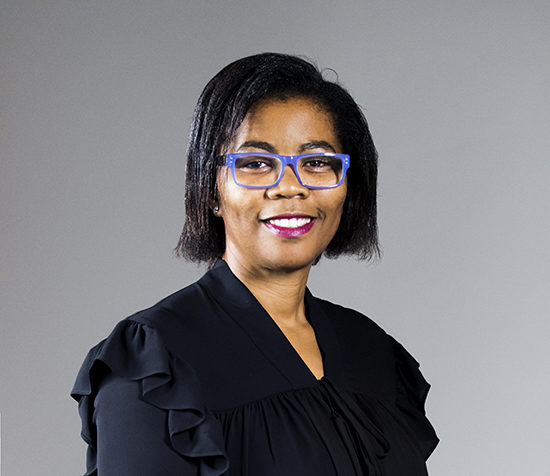
THE University of South Africa has appointed its new, first-ever female principal and vice-chancellor, Professor Puleng LenkaBula.

Lenkabula assumes her duties in January next year.

The term of office of the incumbent, Professor Mandla Makhanya, comes to an end in December this year.

“The Council of the University of South Africa (UNISA) is proud to announce that, in a move unprecedented since the establishment of the university 148 years ago, it will have its first female Principal and Vice Chancellor with effect from 01 January 2021,” Unisa announced in a statement on Friday.

LenkaBula is currently the Vice Rector: Institutional Change, Student Affairs and Community Engagement at the University of the Free State.

“Council is of the firm belief that this appointment bodes well for the future of our university, as we intensify our endeavour to move towards a fully-fledged Open Distance and eLearning dispensation and to solidify our stature as a truly African university in the service of humanity,” said chairperson of the UNISA Council, Sakhi Simelane.

Prior to occupying the Vice Rector position at the University of Free State, Lenkabula was the Dean of Students at WITS University, where she was a member of the Vice Chancellor’s Office (VCO) and the Senior Executive Team.

She holds a Doctorate (2006-20077) in Ethics (Theology and Philosophy) with specialisation in Ethics of the Economy, Ecology and Politics from the University of South Africa.

Her doctoral thesis deployed multi-disciplinary approaches, drawing from ethics, legal and economic questions. The title of her thesis was: Bioprospecting and Intellectual Property rights on African Plant Commons and Knowledge: A New form of Colonization viewed from an Ethical Perspective.
  
She gained a master’s degree (MTS) with specialisation in Social Ethics from St Andrew’s College at the University of Saskatchewan, Saskatoon, Canada, in 1995.

The masters’ dissertation undertook to study the ethical implications of multilateral finance and financing institutions on economies and economic policies in Africa.

Her thesis was titled, I am because we are: An African Womanist Reflection on the Structural Adjustment programs of the World Bank and the International Monetary Fund.

Her junior degree was a Bachelor of Education with three majors in English, Theology, and Education, conferred by the National University of Lesotho.

“In Professor LenkaBula, we have appointed the right caliber of leader; who is student-centred and shares our institutional vision on decoloniality and transformation, knowledge-production, innovation and advancing the socio-economic development of South Africa, Africa and the world, in particular for the benefit of Africa,” said Simelane.

Simelane added that the UNISA Council commits itself to providing her with the necessary support to ensure that she succeeds in taking the university’s vision of transformation and excellent service delivery to the next level. 

The Portfolio Committee on Higher Education, Science and Technology has welcomed the appointment of Lenkabula.

“We celebrate this milestone as it moves us closer towards addressing gender transformation in the higher education and training sector. Indeed, it took the university 148 years to appoint a female as the VC. This shows that the pace of transformation in the sector, especially at senior management level, is very slow,” said chairperson Philly Mapulane.

“Gender transformation is critical to the development of the country, the African continent and the global community in creating a sustainable world. We congratulate the Unisa Council for taking such a bold step in addressing the under-representation of women in the higher echelons of the university.”

“We urge the university council to further expedite transformation in other sectors of the university. Unisa plays a very important role in expanding access to education and training through distance learning to the majority of people on the African continent. Recently, the university has been ranked in international rankings.”

Mapulane added: “The committee looks forward to an engagement with Professor LenkaBula and her management team at its earliest convenience during its oversight responsibility over the university to ensure that the management, through her leadership, discharges its mandate in terms of section 27 of the Higher Education Act, 101 of 1997 as amended. We wish her the best in this formidable task and we urge all university stakeholders to work together with her to collectively take this African university to even greater heights.”

(SOURCE: INSIDE EDUCATION)

Matric Pupils Share Their Anxieties Ahead of NSC Final Exams

0

NYAKALLO TEFU

TODAY marks Day 1 of the National Senior Certificate examinations across the country with over one million matric learners expected to sit for their finals this year.

A record total of 1,058,699 candidates are expected to sit for their examinations from November 5 to December 15.  

Basic Education Minister Angie Motshekga was in Soweto on Thursday to monitor the start of the Grade 12 final examinations.

Inside Education spoke to three matrics about their anxieties with matric exams.

THATO BAME, West Ridge High School

Today is the first day of finals. How are you feeling?

To be honest I’m very nervous and my anxiety level is at its peak because I have a lot of unanswered questions.

Do you think you are fully prepared for your finals?

No, I’m not fully satisfied but I trust that me being scared will help me become fully prepared, hopefully.

What has been the hardest part in terms of academics this year?

• Having to stay home and understand parts of the syllabus that needed explanation from teachers and also having to do many things in a short space of time. Prelims as well were very very hard. I saw it with my marks because I dropped so I’m hoping during these finals I’ll pick up my socks and work extra hard just to get a bachelors pass next year when I receive my results.

Will you be attending extra lessons as you write or are you done for the year?

So far, I think we’re done for the year because there isn’t a timetable for any extra classes being released which is kind of a relief because I hardly got any help when I went so I wasted some of my time investing in long hours in a classroom and not understanding a teacher when I could’ve been at home and done things at my own pace and understood better.

What’s your goal for your finals? Distinctions?

I’m willing to work for a bachelor’s pass. I have faith and will try my level best. So, I will focus on what I can control and let God handle the rest. Definitely planning to come for at least 3 or 4 distinctions.


KHUMO PUSO, Florida Park High School

Today is the first day of finals. How are you feeling?

I am feeling a bit anxious but I am really excited to start the journey.

Do you think you are fully prepared for your finals?

Yes, I do feel that I am fully prepared. I had come to the realisation that even though COVID-19 interfered with our academic year, we still had to carry on with the syllabus and write finals within 2020.

What has been the hardest part in terms of academics this year?

The hardest part was having to return to school with my schooling hours being extended by 90 minutes and loads of homework on things that were never thoroughly taught.

Will you be attending extra lessons as you write or are you done for the year?

I will be attending extra lessons for subjects that need to be polished.

What’s your goal for your finals? Distinctions?

My goals are to achieve a minimum of three distinctions for my finals and keep the rest of my marks above 65%.

KEKETSO GWABE, St Barnabas School
Today is the first day of finals. How are you feeling?

I don’t know how to feel about it. I’m stressed and very anxious about how it is going to turn out.

Do you think you are fully prepared for your finals?

I tried studying for paper 1 to be honest I hardly study for paper 1 but this time I did so I will see.

What has been the hardest part in terms of academics this year?

The hardest part has been studying for an exam and not getting the marks I anticipated. I am so anxious about the end, I don’t know how those are going to turn out but I am trying my hardest to work and to basically make myself proud.

Will you be attending extra lessons as you write or are you done for the year?

I will be going to VTS for Maths and Life Sciences but right now it is just me and studying.

What’s your goal for your finals? Distinctions?

A maximum of two distinctions because I want to be realistic with myself by looking at my marks for the past few years.

(SOURCE: INSIDE EDUCATION)

NSFAS Receives Just Over 500 000 Applications For 2021 Academic Year – Nzimande

NYAKALLO TEFU

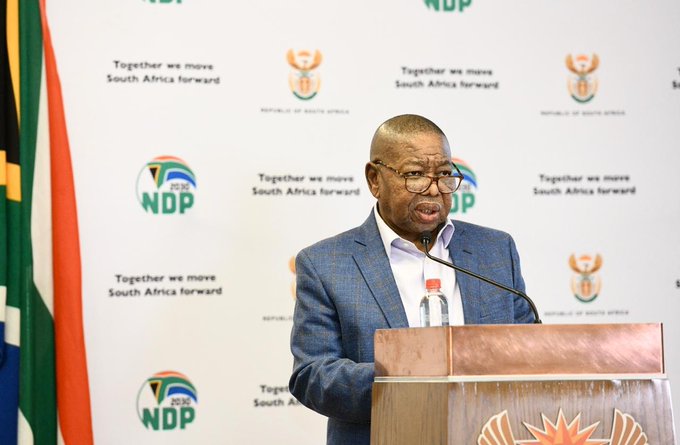
HIGHER Education Minister Dr Blade Nzimande has congratulated the National Student Financial Aid Scheme 2021 application cycle, saying the number of applicants has doubled from the previous year at this time.

Over 493 904 applications have been received thus far, compared to 2019 where only 287 769 applications had been received by this time.

“These latest statistics are encouraging and give an indication that NSFAS’s efforts in providing easy access through partnerships are yielding positive results,” said Nzimande.

This is despite the 2020 academic year being disrupted by the novel coronavirus pandemic.

The minister said for the past three years NSFAS has seen more female applicants than males.

“Female applicants account for 68 percent (338 324) of the total, while male applicants only account for 32 percent (155 543). This trend has been continuing in this trajectory for the past three years,” said Nzimande.

It has been reported that KwaZulu Natal remains the highest province with applications, accounting for 26% of the overall application’s statistics, followed by Gauteng with 21% and Limpopo with 17%, respectively. 

“There have been major improvements from provinces which were extremely low in the past two years with the Eastern Cape, Mpumalanga, Free State and North West, having doubled their previous year’s statistics,” added Nzimande.

Applications for funding will close on November 30.

Meanwhile, the Portfolio Committee on Higher Education, Science and Technology has voiced its concerns regarding the delays in the finalisation of the audit of the NSFAS.

The committee was today briefed by the Auditor-General on the audit outcomes of the Department of Higher Education and Training and all entities falling within its portfolio.

The committee was informed by the AG that there is a delay in finalising the audit of NSFAS.

One of the reasons given by the AG in finalising the audit is the unnecessarily long turnaround time by NSFAS in providing the required information to the auditors.

Committee Chairperson, Philly Mapulane, said it was disappointing that this is the second year in a row that the audit of the financial statements of NSFAS is delayed mainly as a result of the inefficiencies within the entity.

“What is of serious concern is the fact that all these inefficiencies and failures to comply with the requirements of the AG in completing the audit happen during the period when the entity has been placed under administration. It does not engender public confidence that the situation seems to deteriorate under the watch of the Administrator who was brought in to salvage the fortunes of the entity and to turn it around,” said Mapulane.

The committee has requested the AG to expedite the audit and have it finalised before the end of the month.

The committee is calling upon the Administrator of NSFAS to pull up his socks and ensure that all the required information relevant to the audit is supplied to the auditors timeously.

The committee was further briefed by the AG on the audit results of the higher education portfolio for the financial year 2019.

The committee was dissatisfied with the overall audit, although it said there are flashes of excellence in the portfolio preparing financial statements remained a challenge for most entities, especially in the TVET colleges sector.

Mapulane said TVET colleges needed to be assisted with preparing financial statements, and generally financial reporting.

“Financial management is an area that the government, and specifically our portfolio, cannot fail in monitoring. There has to be improvements all round and that regression in audits should be dealt with decisively.”

It was also revealed that Pretty Makukule is acting in place of Theuns Tredoux, who has since left the department, whilst she is simultaneously CFO for the Department of Science and Technology.

Although the committee is satisfied with the good work that Makukule is doing at DSI, which led the department receiving three consecutive clean audits, however, it is of the view that occupying two positions in different departments may not only be irregular but may compromise her.

A proper guidance should be sought from the Department of Public Service and Administration on the matter.

Mapulane called on the department to provide an update on the programme that has since stalled, where the department, in an arrangement with SAICA (South African Institution of Chartered Accountants), allocated financially qualified CFOs at colleges to assist with the financial management function.

(SOURCE: INSIDE POLITICS)


Afghanistan Declares National Day Of Mourning After 22 Students Killed In Terrorist Attack In Kabul University

0

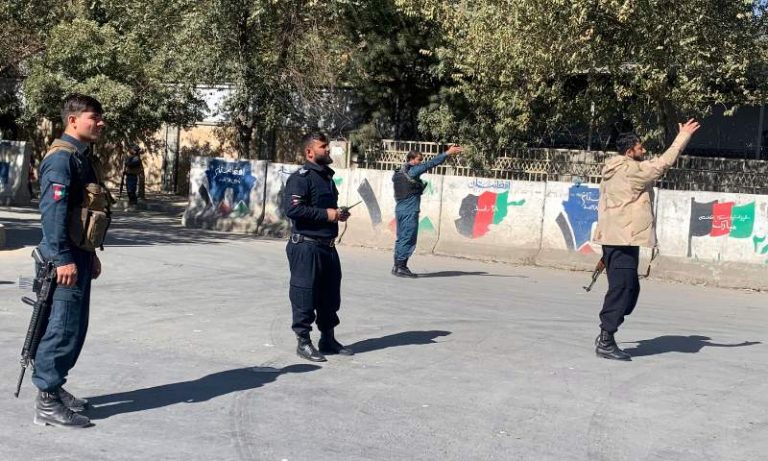
AFGHANISTAN declared a national day of mourning Tuesday to honor the 22 mostly students killed in a horrific attack a day earlier on Kabul University, claimed by the Islamic State group. Another 22 people were injured, some of them critically.

Monday’s brutal, hours-long assault was the second attack on an educational institution in the Afghan capital in as many weeks amid a soaring rise in violence and chaos across Afghanistan, even as Taliban insurgents and government negotiators hold peace talks in the Gulf state of Qatar.

The Islamic State affiliate also claimed the earlier attack on Oct. 24 that killed 24 young students. The attack occurred in the mostly Shiite neighborhood of Dasht-e-Barchi.

The IS affiliate has declared war on the country’s minority Shiites and has claimed a number of vicious attacks since emerging in eastern Afghanistan in 2014. Outside Kabul University Tuesday a small group of demonstrators gathered demanding a cease-fire and urging the government to withdraw from the peace talks until a permanent end to hostilities is declared. Some held signs reading ‘why are you killing us?’ The Islamic State is not part of peace talks and despite their claims of responsibility, the government has blamed Taliban for the attacks.

Taliban, like the Afghan security forces, are fighting the Islamic State and under an agreement signed with the US, the Taliban have committed to fighting terrorism, specifically the Islamic State. The Taliban, which condemned the attack on the university and denied involvement within hours of its start, have refused to declare a cease-fire saying it would be part of the negotiations. But if not a cease-fire, then a significant reduction in violence has taken on increasing importance as Washington’s peace envoy Zalmay Khalilzad on Monday made a surprise visit to Pakistan urging Islamabad to urge the insurgent movement to reduce violence.

Pakistan has been critical in pushing Taliban into talks. Even as the Islamic insurgent group ousted by the US -led coalition in 2001 maintains its political office in Doha, where talks are being held, its leadership councils are located in Pakistan. Khalilzad brokered a peace pact with the Taliban that was signed in February and seen at the time as the country’s best chance at peace in more than 40 years of war.

The peace agreement which is to allow US and NATO troops withdraw from Afghanistan after 19 years, it also paved the way for the peace talks currently underway. In a series of tweets Tuesday Khalilzad condemned the attack but also warned this barbaric attack is NOT an opportunity for the government and the Taliban to score points against each other.

There is a common enemy here. Family members of the victims mourned their loved ones on local TV and called for the government to investigate security lapses.

(SOURCE: EDEXLIVE)

‘Matrics Who Test Positive for COVID-19 Will Not Be Allowed To Write Exams This Year’ – Basic Education Department

0

NYAKALLO TEFU

MATRICS who contract coronavirus during the Grade 12 final exams will not be allowed to continue writing, according to the Department of Basic Education.

 “If you test positive for COVID-19 before the examination you will not be allowed to write. If you test positive during the examination you will not be allowed to finish writing,” said basic education in a statement on Wednesday.

Matrics will site for their exams on Thursday.

This year’s exams are the largest ever, with over one million candidates set to sit to write after education authorities combined the exams due to disruptions caused by the coronavirus pandemic.

The department said the May and June exams will be open for anyone to write selected subjects or all subjects.

“If you cannot write or complete your 2020 examinations because of a positive COVID-19 diagnosis you have an opportunity to write in May and June 2021,” said the department.

The government is concerned about the possibility of a second wave of COVID cases and a rise in infections.

“It is a learner’s responsibility to report concerning symptoms to the school authorities in time and to present themselves for testing. Failure to report a positive COVID-19 diagnosis to the school while writing exams is an offence that carries legal consequences,” added the department.

(SOURCE: INSIDE EDUCATION)

Ramaphosa, Motshekga Wish Matrics Good Luck Ahead Of ‘Largest Public Exam Ever’ On Thursday

0

CHARLES MOLELE and NYAKALLO TEFU

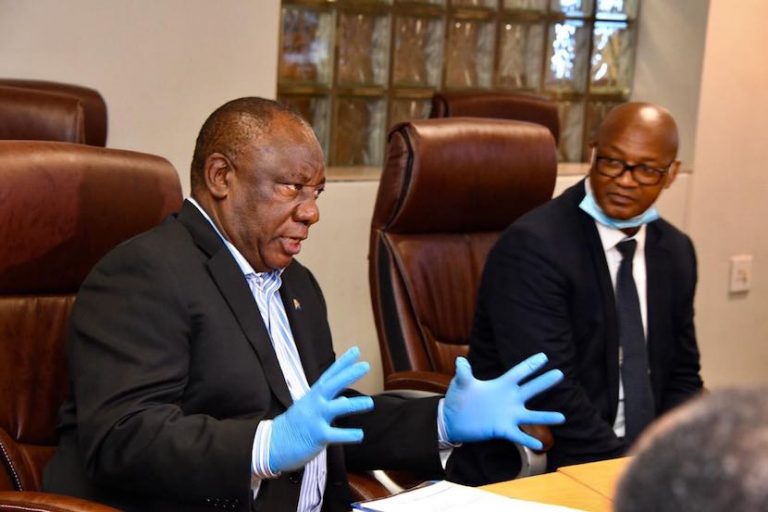
PRESIDENT Cyril Ramaphosa has extolled Grade 12 learners for their determination and sheer hard work despite insurmountable challenges brought about by the coronavirus pandemic.

Writing in his weekly letter, the president wished the matrics well in their final exams, saying this was a culmination of 12 years of schooling and a gruelling final year of preparation.

“The Class of 2020 has had to endure conditions their predecessors never had to confront,” said Ramaphosa.  

“They had to adapt in real time not just to finish the curriculum but to catch up with the learning hours lost.”

Despite the COVID-19 disruptions, Umalusi has assured the portfolio committee on basic education that the class of 2020 will be assessed on the same standards of previous years.

The organization said matrics will be the only grade not writing ‘trimmed’ exams.

Umalusi stated that these exams, which were set over a year ago, will not be altered.

This is because if matrics are not taught part of their work, they will not be prepared for tertiary education. 

Matrics, however, will be the only grade not writing ‘trimmed’ exams.

Umalusi stated that these exams, which were set over a year ago, will not be altered. This is because if matrics are not taught part of their work, they will not be prepared for tertiary education. 

It noted that the matric curriculum began in earnest in Grade 11, with only the first three months of the matric year is dedicated to new material.

The rest of the year is spent on revision, a stage most schools are expected to reach by the time preliminary exams start in September.

However, the June supplementary exams had to be combined with the final exams, making it the largest group ever that had to sit for the exams since 1994 with an estimated 1 million candidates registered to write.

On Monday, Basic Education Minister Angie Motshekga urged all South Africans to rally behind the matric class of 2020 ahead of the start if the final Grade 12 exams this week.

The combined examination for senior certificate and National Senior Certificate candidates makes this the largest cohort of 1, 058 699 candidates, expected to sit for their examination from 5 November to 15 December 2020.

The department said while significant efforts have been made to recover the academic year and provide extraordinary support to the learners, the total impact of the abnormal educational context remains an unknown and therefore a concern.

“The Department has commended all learners, teachers and SMTs for the resilience they have shown in braving the pandemic with a single goal of ensuring the Class of 2020 receives optimum support,” the ministry said in a statement.

“The Department has extended sincere gratitude to provinces, partners, educational stakeholders, parents and civil society for going beyond the call of duty to assist and support Grade 12 learners.”

Last Tuesday, Basic Education department and the Council for Quality Assurance in General and Further Education and Training (Umalusi) briefed the portfolio committee on basic education on preparations for matric exams.

According to education officials, most provincial education departments (PEDs) have already employed additional markers and invigilators and acquired extra marking centres in an attempt to cope with the higher number of candidates sitting for the examinations.

The department has combined the June and November exams, given the coronavirus and the subsequent lockdown.

The officials said that despite the pandemic, learners will write under the most conducive conditions possible.


Umalusi also informed the meeting that it has evaluated the department’s and PEDs’ states of readiness and was satisfied with preparations.


“We are ready to pull off a successful examination,” said basic education department’s Dr R Poliar.

“Despite the disadvantages and anxiety, they will write under most conducive conditions … It is unfortunate for this class to look forward and write under difficult conditions.’’

A total of 1 058 999 learners have been registered to write the exams this year. 

The total number of full-time candidates is 616 021; November part-time candidates 113 846; June senior certificates candidates 167 733; June full-time 155 935 and June part-time, 5 164. 

The department also confirmed that a total of 45 809 markers have been recruited.

They will be working at 180 centres across the country.

The exams are set to finish on December 15.

“All exam centres and storage points and nodal points have been audited. Invigilator training has been completed,” the department stated.

“Provincial education departments will extend the number of days needed for marking to accommodate the marker shortages or use a staggered marking approach.”

“Training of invigilators is conducted based on national manuals and training is conducted by competent provincial and district teams. Invigilator training across provincial education departments was conducted mostly virtually and in some cases face to face.”

Poliar told MPs that the registration of matric candidates has been completed with 1 058 999 confirmed to sit for the exams.

The total number of full-time candidates is 616 021; November part-time candidates 113 846; June senior certificates candidates 167 733; June full-time 155 935 and June part-time, 5 164.

He added that all questions papers have been set and approved by Umalusi.

Bongiwe Mbinqo-Gigaba, chairperson of the education committee, said a lot of work was done in the background to ensure Grade 12 are ready to sit for the final exams.

“We further note that 1 058 699 candidates have registered for the exams,” said Mbinqo-Gigaba.

“This includes full-time and part-time candidates, as well as those candidates who were supposed to have written examinations in June this year, which were cancelled due to the outbreak of Covid-19. This is a mammoth task.”

Mbinqo-Gigaba said the committee will closely monitor the examinations.

“We cannot but comment the DBE, PEDs and the education sector for the hard work they have done during extremely difficult times,” she said.

The committee has however raised concerns regarding the dwindling number of candidates registering for mathematics, opting instead for mathematical literacy.

Basic Education, however, said that the introduction of technical mathematics and technical physical science has contributed to lower registration rates for pure mathematics.

The ANC’s Study Group on Basic Education wished the Class of 2020 well as the National Senior Certificate exams begin across the country on Thursday.

“We call on parents and guardians to encourage learners during this difficult time to study hard and stay focused and to give them as much support as possible. We believe that the department will closely monitor the examination processes to ensure that the integrity and credibility of this final examination is upheld,” said ANC chief whip Pemmy Majodina.

“We trust that this year’s matric results will surpass that of 2019. We would like to wish the class of 2020 best of luck and trust that they will go on to fulfil all their future endeavours.”

Majodina said the ANC’s Study Group also welcomed the protocols put in place to ensure compliance with COVID-19 rules by the department and circulated to guide the invigilators and officials involved in the management of the conduct and administration of the examination.

The results of the final exams will be released on February 23.

DBE has assured all matriculants that the late release of the results will not jeopardise their admission to Higher Education Institutions.

(COMPILED BY INSIDE EDUCATION STAFF)

The Cause: Dr Shini Somara Is Shaking Up STEM Education

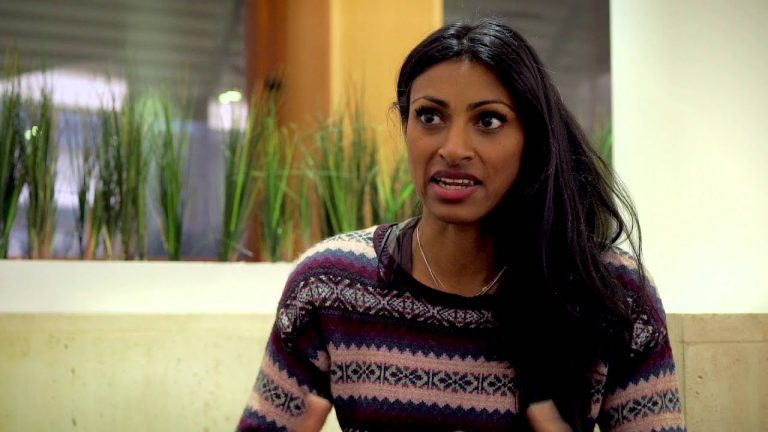
BACK when mechanical engineer and fluid dynamicist Dr Shini Somara was at secondary school in north London, she submitted A-level coursework that was awarded a zero-per-cent grade because her teacher thought it was too good to have been done by her.

Telling the story now, she simply shrugs.

“I’ve had so many experiences where I didn’t stand up for myself,” she says. “But failure is so important for growth and development. I think often that’s not taught in schools. I’d love it if there were more engineering clubs where kids could just test things to destruction!”

Somara didn’t only pass those exams, she went on to complete a doctorate in engineering.

Today, she presents TV shows for the BBC and Al Jazeera on science and technology; has launched her own podcast, Innervation, which gives a platform to women in the male-dominated world of STEM (science, technology, engineering and mathematics); and has, most recently, authored a children’s book, An Engineer Like Me, to encourage young readers to think creatively about engineering.

I’d love to see more clubs where kids can test things to destruction Hers was an upbringing where logic and curiosity were actively encouraged; an interest in engineering was nurtured from a young age.

Somara’s Sri Lankan father was a mechanical engineer and all three daughters gravitated towards the sciences.

“It’s cool when you go to my parents’ house,” she says, recalling the DIY they all did, “there are so many Heath Robinson solutions to things.”

It’s this passion that she is keen to pass on to children today.

“Learning about how our world works and trying to find solutions that fit in with these universal laws is an amazing thing. That’s why I encourage people to study STEM – it gives you tools you wouldn’t gain anywhere else.”

Somara’s children’s book Somara’s children’s book An Engineer Like Me is the beginning of a series of four books – a scientist, a coder and a mathematician star in the next three. In this first story, the relentless questions of a young girl are met by the wise responses of an informed, engineer-minded grandma.

Though the book is by no means autobiographical, the sense of adventure mirrors Somara’s career trajectory from PhD student to LA TV presenter. Seven and a half years studying mechanical engineering at Brunel University in London left her in a place where she felt she needed help to come out of her shell, and she used acting classes and lectures to build her confidence.

It was at one of these lectures that she met the mathematician and former BBC producer Simon Singh, who offered to lend Somara his Enigma machine – an encryption device used by the Germans in the second world war – to tour schools with.

Soon she found herself with another offer: to present a technology programme on Al Jazeera America. “I’ve always wanted to communicate science and tech, to meet other people in the STEM world, and this was my chance.”

She remembers being unperturbed by her agent’s concerns that things might be difficult given that she was a person of colour, with a British accent. “Everyone was thinking I couldn’t do something, but I did it anyway,” she says.

“I’m a person fighting to do the things I want, regardless.” Her confidence is hard-won: despite years in the engineering world, feeling different made her “too nervous and shy to elbow my way around”, she admits.

The hope is for her book to foster the confidence in children to be different. It’s a mission that sits in good company: Democratic vice presidential nominee Kamala Harris’s book Superheroes are Everywhere, which inspires children to be the best they can be, made it onto The New York Times Best Seller list when it was released last year.

 “I’m juggling quite a few projects at the moment,” says Somara, whose busy agenda includes a handbook for teenage girls.

“I’m keen to give young people a sense of what the world has to offer. I don’t want anyone – whether they’re male or female, whether they’re of colour or not – to feel like they can’t flourish.”

(SOURCE: THE FINANCIAL TIMES)

Provinces Say They Are Ready For 2020 Matric Exams

0

NYAKALLO TEFU

With just three days and counting before matriculants can write their final year exams, the departments of education in the Western Cape, Limpopo, Eastern Cape, Gauteng and Mpumalanga say they are ready to administer the 2020 final examinations.

WESTERN CAPE

Western Cape Education MEC Debbie Schafer says her department has done all it can to prepare matric learners for their final examinations.

The MEC spoke to Inside Education in an exclusive interview on the province’s readiness for the 2020 matric exams.

“From June, when learners returned to school, Grade 12’s have had the most classes since then, and have been in class every day,” said Schafer.

The MEC said her department has made available more resources to matric learners to ensure that they are ready.

“Matrics have received an examination support booklet, which provides advice on the exams and bursary options,” added Schafer.

The province has maintained an 80% pass rate for the past two years, and the MEC said she is confident that matriculants this year will do well, despite how the pandemic changed things for them.

“I am hopeful and obviously it has been a very difficult year but we will see,” said Schafer.

EASTERN CAPE

Eastern Cape Education MEC Fundile Gade says he is confident that the class of 2020 will achieve an 80% pass rate.

“We are confident that we will get it, I have also looked at some of the trial papers and so far, we are doing well and when you speak about quality on the output, you are speaking about us, particularly on mathematics and science in the country,” said Gade.

The MEC spoke to Inside Education on the province’s state of readiness for the final matric examinations.

“We have gone a bit far because we have prepared ourselves for the rest of the year, we have also ensured that the centres preparing the learners in the province are on the final stage of the last push programme which is meant to finalize the revision for all subjects,” said Gade.

The MEC says his province has for the past three years been the most improving in terms of the matric pass rate and is very confident that this will continue.

GAUTENG

IT is all systems go for the Grade 12 exams, starting on 5 November 2020.

This year, Gauteng will have the largest number of candidates sitting for the examination, with 235 975.

1866 centres are ready to host the exams and 13 789 invigilators have been trained and appointed.

LIMPOPO

Limpopo Education MEC confident that matriculants in the province will do well in final exams.

With pressure mounting for matriculants across the country as final examinations take place in less than 3 weeks, Limpopo Education MEC Polly Boshielo says in terms of the results for 2020, she is aiming for quality.

The MEC said this during an exclusive interview with Inside Education when asked about her expectations for the matric pass rate for the 2020 academic year.

“We cannot compare the number of learners in Limpopo as we have more than provinces like the Free State, the percentage is an issue, but when you look deeper into the results Limpopo has always topped in terms of mathematics, physical science and other subjects”, said Boshielo.

“For me it’s always quality rather than competing over percentages, added Boshielo.

The Province has for the past 5 years improved its pass rate however, remains the lowest province in terms of the pass rate percentage

“If you read things in percentage, they give you a different perspective, Limpopo has always had many bachelors, even in the top 30, Limpopo had 9 and those who were number 1 had nothing in the top 30”, said Boshielo.

MPUMALANGA 

The Department of Education in Mpumalanga says more than 57 000 full time candidates and more than 6 000 part-time will be writing this year’s National Senior Certificate examinations.

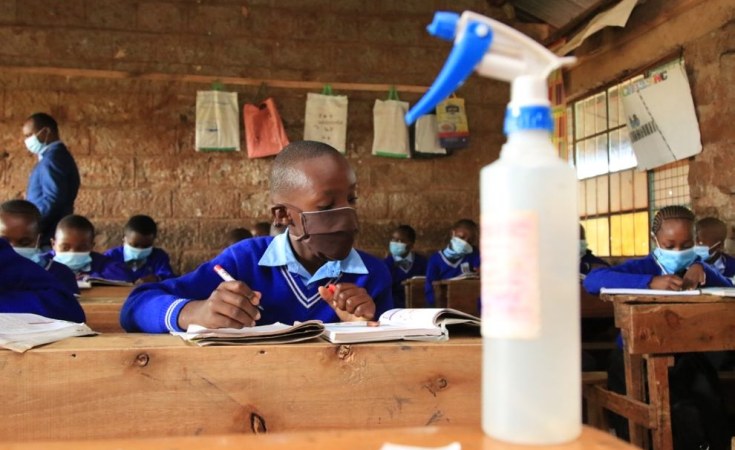
The department said to comply with health protocols all candidates and invigilators will wear face masks at all times.

The Department says it is optimistic that it will manage incident-free examinations as it happened in the past eleven years.

(COMPILED BY INSIDE EDUCATION STAFF)

General Tips On How To Master Your Matric Exams

0

NYAKALLO TEFU

At the beginning of October, Basic Education Minister Angie Motshekga announced an official government countdown to the matric exams for the Class of 2020.

This will mark the largest matric exams in post-apartheid South Africa with an estimated total of 1 058 699 learners registered to sit for the exams. 

We are now three days away.

Inside Education, with the assistance of the Western Cape provincial government has prepared general tips on how to prepare for the matric exams.

General tips:

TIME MANAGEMENT|

  • Draw up a special study schedule
  • 50-minute study blocks and 10-minute breaks work well. Select fixed study-times for every day including a time slot over weekends;
  • Use the school holidays wisely.
  • Study for at least 3 hours a day during the holidays;
  • Study skills and strategies become study habits only if they are practised regularly;
  • Break up topics into manageable sections.
  • Estimate the time needed, and then double it!

HOW TO STUDY|

– Decide when you work best, e.g. early morning, afternoons, evenings;

– Where do you like to work, at Home? Library? School?

– Where can you work undisturbed? Set up a place for your studying – table, chair, uncluttered workspace, good lighting;

– Do you work well with others? Do you have a friend who could be your study buddy?

– How do you best remember information? Seeing? Hearing? Through action?

– Have different preferred learning styles, but use them all;

– Make your studying active by using study methods, writing, drawing, summarizing, chanting or teaching your study buddy;

– Concentrate fully and try not to allow your mind to wander. This improves with practice

– Avoid last-minute cramming.

EFFECTIVE EXAMINATION WRITING TECHNIQUES|

Arrive early and ready to begin;

– Read and understand the instructions;

– Preview the question paper and allocate your writing time appropriately;

– Tackle each question systematically;

– Write down something for every question;

– Set out your answers clearly;

– If you feel you are unable to answer a question, don’t panic and allow anxiety to affect how you are going to fare in the exam;

– Review and make corrections;

– Stay until the end.

RESOURCES FOR MATRICS|

(COMPILED BY INSIDE EDUCATION STAFF)