Home Blog Page 368

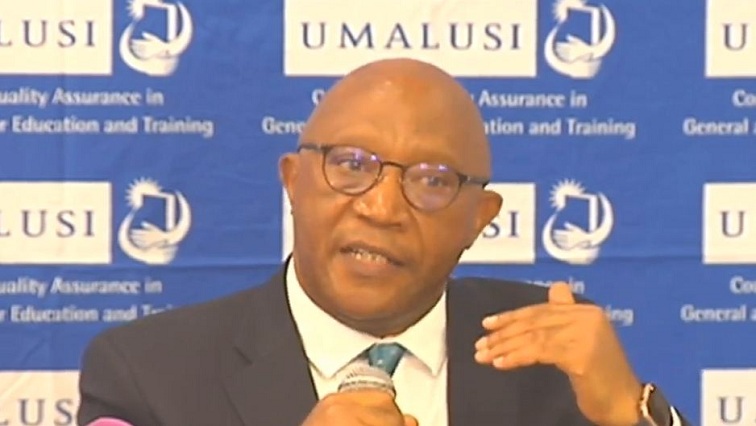
Umalusi Gives Greenlight To The 2020 Matric Exams

NYAKALLO TEFU

THE Education Quality Assurance Council, Umalusi, has granted assessment bodies the green-light to administer the Grade 12 final exams.

 “We are ready to quality assure the 2020 examinations with the constraints that have been presented by the coronavirus pandemic,” said Umalusi CEO Dr Mafu Rakometsi.

Over one million learners are expected to write combined matric exams on Thursday due as a result of the disruptions caused by the COVID-19 pandemic.

“We are in unfamiliar terrain, but we are ready and agile in terms of trusting our systems to ensure that we meet our obligations despite challenges presented by Covdi-19,” said Rakometsi.

With over a million learners expected to sit for the final exams, the Department of Basic Education (DBE) has had to appoint more markers in order to ensure that papers are marked on time for the release of the results.

Over 44 500 markers have been appointed countrywide, with some provinces still having a shortage of markers in various subjects.

Traditionally, those eligible for the appointment to mark matric papers were usually Grade 12 teachers with two years’ experience on the subject or language they applied to mark.

“It is the responsibility of the different assessment bodies to appoint the markers, we do the monitoring of the appointments of the markers,” said Rakometsi.

Rakometsi said Umalusi was happy that assessment bodies have complied with policies put in place to conduct the final examinations.

Umalusi has made available over 100 marking centres countrywide.

In 2019, Basic Education Minister Angie Motshekga announced that there would be tighter security for the matric exam papers due to reports of them being leaked in the previous years.

“We are not the custodians of the papers. We therefore hold assessment bodies accountable for ensuring that they put measures in place to ensure that they conduct examinations that are credible and temper proof in compliance with the policies put in place,” said Rakometsi.

Rakometsi said the assessment bodies are the ones who keep the papers and Umalusi was the oversight structure that checks that they have the right systems in place to oblige to the policies.

COVID-19 has disrupted the academic year, however matric learners were prioritised, provincial education departments provided learners with various learning support options such as television, radio and online lessons and learning material hosted on 330 zero-rated websites.

Rakometsi said protocols have been put in place by assessment bodies to ensure that COVID-19 health and safety regulations are followed during the final examinations.

“Umalusi expects assessment bodies to come up with ways in which they will deal with any learner that contracts the coronavirus during examinations, this includes advising learners to go into self-isolation should they contract the virus,” said Rakometsi.

 Rakometsi said it will be up to each assessment body on how they decide to deal with those that contract the coronavirus and Umalusi will respect and make sure they follow through with those rules for every learner.

In line with the COVID-19 regulations, all examination centres across assessment bodies are required to comply with State of Disaster Regulations as announced by the President of the Republic of South Africa.

Umalusi officials will be deployed to monitor the conduct of examinations and marking of scripts to ensure strict adherence to health and safety protocols for COVID-19.

On 25 September, the Basic Education Department’s issued a protocol on the writing of the exams in compliance with the COVID-19 requirements.

According to the protocol, candidates who miss the writing of certain papers due to testing positive for COVID-19, should automatically be registered for the subjects that they have missed, to write during the May/June 2021 examinations.

Candidates who tested positive for COVID-19, and have recovered as confirmed by a COVID-19 test report, may continue with the writing of the remaining subjects on the timetable.

However, candidates who decide not to continue with the writing of the remaining subjects should be accommodated in the May/June 2021 examinations.

(COMPILED BY INSIDE EDUCATION STAFF)

How Georgia Adhiambo Is Living Her Dream In Rwanda As Kenyan Basketball League Struggles

0

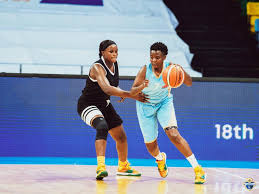
IF lexicographers were to search for an image to help describe meekness, then Kenya basketball star Georgia Adhiambo’s face would be a near-perfect description.

Women’s national team captain and former United States International University of Africa (USIU-A) player Hilda Indasi says Adhiambo’s character is worthy of admiration by all because even when the situation calls for retaliation, she turns the other cheek.

“She (Adhiambo) is one of a kind; her meekness is out of this world, I have seen situations where I would have had my claws out but she has always walked away,” Indasi said.

Her meek nature blended with talent, hard work and discipline have seen her make a name for herself locally and internationally, eventually joining paid ranks as one of the few Kenyans who play professionally.

Born and bred in Nairobi, Adhiambo says she owes her success to her mother who raised and supported her after her father’s death.

“My mother has been very supportive and walked this journey with me. My father died when I was five years old so she has always urged me to keep pushing even when it seemed like all odds were against me,” Adhiambo said.

She is currently playing for Ubumwe Basketball Club, in the six-team Rwanda Basketball Federation women’s league.

“The management and organisation of sports here (Rwanda) is top notch, they have ensured that we play and remain safe while at it. It is very exciting to be in a bubble.”

She traces her journey back to Kariokor Flats where began playing basketball at her home court when she was 12.  

“There was a court where we stayed so I developed interest in the sport. I preferred learning how to play basketball rather than other games that interested children of my age at the time,” she added.

Adhiambo who admits that football was her first love says that she is thankful to Harrison Klaudia who she fondly refers to as coach Harry who taught her the basics of the game.

“I’m very grateful to coach Harry because he gave me my first basketball lessons and nurtured me to the point that I could get noticed by other coaches. He was very patient and would encourage me as well as my friends to put in more effort so we could improve and become better players.”

She later joined Form One at Hospital Hill School where she played football and handball. As fate would have it, former United States International University of Africa (USIU-A) basketball coach George Mayienga had seen her potential.

Mayienga realised high school was the best place to develop Adhiambo’s talent failure to which to would have gone to waste. He ensured Adhiambo’s basketball talent was saved by securing her transfer to city basketball powerhouse and reigning national secondary schools champions Buruburu Girls.

“Coach Mayienga had seen me in training and believed that I had potential to succeed in basketball. Even then Buruburu Girls was a big name in basketball and so he secured my transfer to the school and I got a chance to compete in school games.”

In 2010 and 2011, Adhiambo led Buruburu to third place finish at the national school games earning her side a ticket to the East Africa secondary schools extravaganza under coaches Julius Otieno and Mike Oluoch.

“Competing at the national and East Africa games helped shape the player I am today. Despite being very competitive, the games were very exciting and even though we never won a trophy, I learned valuable lessons.”

Her preference for basketball over football and handball bore instant fruit after she secured a sports’ scholarship at USIU-A in 2012 having done her form four exams in 2011.

 “Looking back I’m happy with the choice I made because basketball paid for my university education. I pursued a degree in Tourism Management and now I have something to fall back on when I’m done playing,” Adhiambo who also aspires to venture into coaching said.

Adhiambo’s star continued to shine as USIU-A Flames dominated the Kenya Universities Sports Association (KUSA) games winning back to back titles from 2013 to 2016. She says that as a student athlete, 2014 was her best year after they won both the KBF league title and the FIBA Zone Five trophy.

“It was a very good year, we were not only unstoppable but were determined to win both trophies. The teamwork was great; we played every match as if it was a final.”

Following a successful five-year stint with Flames, it was time to move on from the varsity side and her next stop was at the Coast where signed for KPA in 2017.

She triumphed with the Dockers bagging the league and Zone V gongs. Her prowess did not go unnoticed at the regional championship held in Kampala and Ugandan side A1 Challenge Club Ladies Basketball Club sought her services.

She sealed her first professional deal in 2018 with A1 Challenge and turned out for the side in the Uganda women’s league for two seasons reaching the semi-final play-offs.

Her club lost to JKL Dolphins in 2018 and Uganda Christian University in 2019. This year she signed for the Rwandan outfit, but before she settled Covid-19 pandemic forced her to shelve her ambitions.

“It feels good earning from what I love and enjoy doing, basketball pays my bills. I hope that players back home can also get a chance to make a living from their talents, they play for the love of the game but most clubs can’t even afford match allowances let alone salaries,” Adhiambo said.

She adds that what puts Rwanda above her East Africa geighbours is good management and commitment from federation officials and all basketball stakeholders.

“Rwandese have a passion for basketball and everyone involved makes sure they give their best. From the federation, clubs and individuals all work together for the good of the game. The league is sponsored by Bank of Kigali and individuals are also keen to contribute to the development of the sport by sponsoring some clubs that are yet to find corporate funding.”

For instance Ubumwe can afford Adhiambo’s services thanks to a group of individuals who sponsor the club.

She adds that Kenyans must invest in basketball and the national body should also enhance the efforts of securing a sponsor for the league.

Clubs on the other hand should capitalise of social media platforms like Facebook, twitter and Instagram to grow their fanbase so as to attract sponsors.

Sports runs in her family as her aunt Caroline Kola, the best female heptathlete in Kenya so far.

She holds the Kenyan heptathlon record of 5407 points set during the 1994 Common Wealth Games held in Victoria, Canada.

Her brother Cerry Otieno had a successful handball career with Cereals Board and also represented Kenya in a number of international assignments.  

Adhiambo made her senior national team debut in 2014 and has since been a regular in the Kenya Lionesses squad with her recent assignment being the 2019 women’s AfroBasket contest held in Dakar, Senegal.

Prior she played for Kenya in the 2010 under-18 competition in Egypt. “I always wanted to play for Kenya and when I got my first call up I never looked back, I worked very hard to secure my place in the final 12 that played in Kampala and I have since improved my skills to ensure that I retain my place in the team.”

On her work ethic Indasi says that Adhiambo is a charismatic team player who everyone would desire to have on their team.

She is very passionate about the game, charismatic and she always puts others needs ahead of hers. She is also a team player on and off and can easily fit anywhere. She respects everyone and strives to make life easier those around her,” Indasi said.

Adhiambo who idolises Los Angeles Sparks star Candace Parker and Kevin Durant urges upcoming players to maintain high levels of discipline, work hard and make use of technology to improve their skills and prowess in the game.

“Discipline, hard work and determination will take you places. Talent alone is not enough to make one successful. They must also take advantage of technology and platforms like YouTube and apps that show live games to improve their skills because no matter how good a player is there is always something you can learn by watching others,” Adhiambo continued.

She has set her eyes on succeeding as a coach with the aim of helping upcoming players excel.

I have interest in coach and my goal is to see the players I train succeed on and off pitch. I want them to excel beyond basketball, get scholarship opportunities and accomplish something in their lives. To see them doing well I must say will be my biggest achievement.”

(SOURCE: THE STANDARD)

Cyril Ramaphosa: To the Class Of 2020, I Wish You The Very Best

0

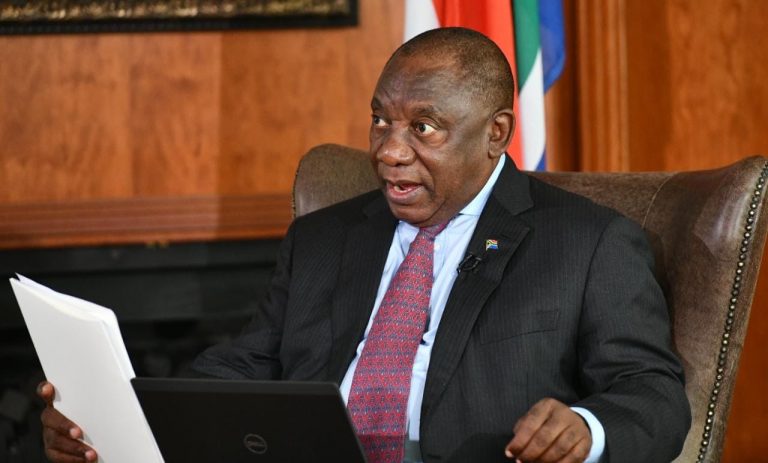
IN THREE days’ time the matric class of 2020 will sit for the National Senior Certificate examinations. It is the culmination of twelve years of schooling and a gruelling final year of preparation.

For many this is an exciting moment, but one that is also fraught with anxiety.

This year’s exam will be written under unprecedented conditions.

We are in the midst of a global pandemic.

The nationwide lockdown we had to impose in March to contain the spread of the coronavirus caused immense disruption to everyday life and cost valuable hours of learning and study.

To accommodate the disruptions the June Senior Certificate exams were postponed and will now be written together with the National Senior Certificate.

More than a million candidates will sit for the examinations starting on Thursday.

This makes this combined examination the largest public exam ever administered in South Africa.

The provincial and national Departments of Basic Education are to be congratulated for their sterling preparation to ensure things proceed smoothly.

These include the independent and public auditing of examination centres, finding extra venues to accommodate the large number of candidates, and the development of protocols to ensure compliance by candidates and officials with COVID-19 regulations.

The Class of 2020 has had to endure conditions their predecessors never had to confront.

They had to adapt in real time not just to finish the curriculum but to catch up with the learning hours lost.

Though some had access to online learning platforms and other resources, many had to struggle with access to learning material and teaching.

They had to endure the mental strain of social isolation, and for many months were cut off from friends and their teachers.

They were not able to participate in sporting, recreational and leisure activities that are so essential to a well-rounded life and that relieve the stresses of prolonged study.

Yet, despite having the odds stacked against them, our learners are determined to present for this exam that is the pinnacle of their schooling.

It has been equally difficult for our educators.

Despite the risk posed by the virus and resource challenges inside our schools, the majority of our teachers heeded the call to return to school to salvage what was left of the academic year.

They presented for work every day to support our matriculants.

They put in the extra hours to get our learners over the finish line, making the most of the resources they had to ensure learning continued.

I salute our educators who have been there for their students when they were needed most.

They have given so much, personally and professionally.

They put our learners first and in doing so affirmed once more that our teachers are among our finest public servants.

This pandemic has brought our nation together in ways not experienced before, and this was demonstrated in the matriculation examination preparations.

Many businesses played a supportive role, assisting with the provision of technology like tablets to schools and assisting to resource school multimedia centres.

Mobile network operators established e-school platforms during the lockdown carrying free learning content, including subject content for matriculants.

University graduates set up tutoring platforms online, making much needed supplementary learning support available for free.

The SABC and other TV providers have carried catch-up lessons for matric learners through the Department of Basic Education’s Woza Matrics Programme, enabling learners to prepare for the examinations.

There is the heart-warming story of Dendron Secondary School in Limpopo, where a group of dedicated teachers opened their own homes to their students.

During the early days of the lockdown, they provided food and accommodation to small groups of matriculants, and supervised their studies.

There are no doubt many such stories in other parts of our country; of educators convening home-study groups with their students and of parents providing food, learning space and other resources to their children’s friends.

Without the support of parents, families and communities, our young people’s path to the matric exam would have been considerably harder. We thank them for their support.

Despite all the challenges this year has brought, I call on the Class of 2020 to summon their great reserves of courage and strength in this, the final push.

To the Class of 2020, I wish you the very best.

You have overcome difficulties that would test the resolve of even the most experienced and hardened adults.

At your tender age, there are so many demands upon you.

There are the pressures of rigorous study, the pressure to excel and to achieve the results you need to study further. And yet you have come this far.

When you enter the exam room in the days ahead, you will be carrying not just your own hopes for success and those of your families.

You will also carry the hopes of us, the South African people.

We are immensely proud of you and wish you the very best of luck.

(FROM THE DESK OF THE PRESIDENT)

No New Money For Schools, But SAA’s Rescue Plan Equals Almost A Year’s Worth Of School infrastructure Funding

0

Finance Minister Tito Mboweni’s Medium-Term Budget Policy Statement (MTBPS), delivered on Wednesday,  is devastating for many social services including basic education. The MTBPS says that government will reduce basic education funding every year for the next three years, leading to less money being spent per learner.

 Despite the impact of the Covid-19 pandemic on lives and livelihoods, government will spend money on paying debt, including at mismanaged State-owned enterprises like South African Airways (SAA) and Eskom. 

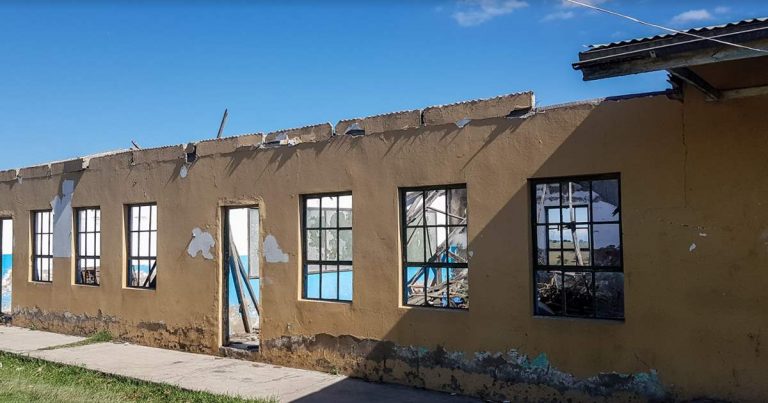
While learners sit in overcrowded classrooms and use unsafe toilets, and school taps run dry, Minister Mboweni has chosen to sacrifice education funding:

  • The total basic education sector budget will not increase at all between this year and next year. When inflation1 is taken into account, the education budget will shrink every year for the next three years.
  • The Minister did not reverse the R2.2 billion cuts he made to the provincial education  infrastructure grant (EIG) in June’s  special Covid-19 budget. These cuts have resulted in  1 938  essential school construction projects – paid for through the EIG – being stopped or delayed! 
  • While R475 million has been rolled over from last year to the national school infrastructure backlogs grant (SIBG) to pay for toilets in Limpopo and KwaZulu-Natal, money was cut elsewhere in the same budget, including in funding for the Eastern Cape, resulting in the national grant increasing by only R139 million.
  • Budget cuts to programmes aimed at improving maths, science and technology in schools and preventing HIV and AIDS, amounting to R128 million, were not reversed.
  • R10.5 billion was allocated from across the budget to rescuing SAA. This amount is almost equal to South Africa’s entire school infrastructure budget for this year. R276 million was taken from the Department of Basic Education’s budget to help pay off SAA’s debt!
  • No new money was given to the National School Nutrition Programme (NSNP). This is worrying because a few months ago the DBE said in court papers that it might struggle to pay for food parcels in November and December.

Pattern of shrinking education spending

For many years, the education budget has been growing very slowly, hardly keeping up with inflation. But when the national budget was delivered in February this year, it showed, for the first time in recent years, a decrease in the total basic education budget – when inflation is taken into account. This budget reflects the entire pot of money that is given to national and provincial education departments. Worryingly, yesterday’s MTBPS revealed that this pot of money will continue to shrink over the next three years.2When inflation is not taken into account, the basic education sector will receive exactly the same amount of money next year as it received this year – a 0% increase! However, as the graph above shows, when we take inflation into account, the basic education sector’s budget will decrease by four percentage points between now and the next financial year.

School infrastructure

Safe and sufficient school infrastructure is crucial to creating environments that enable quality teaching and learning. Yet thousands of South African schools still do not meet the minimum standards for infrastructure that the law demands. The Covid-19 pandemic has painfully highlighted how not having  proper toilets or water threatens learners’ health and how not having enough classroom space can interrupt learning time. Moreover, had sufficient investment been made to addressing the apartheid backlog in school infrastructure since 1994 to ensure the safety and dignity of learners and teachers, less money would have had to be spent on temporary structures such as mobile toilets and classrooms and water tanks during the pandemic.

Despite this, cuts were announced to infrastructure budgets in June’s special Covid-19 budget. Schools are being forced to use their already overstretched budgets to provide Covid-19 essentials such as sanitiser and masks. Government has put in place expensive and temporary solutions, such as mobile classrooms, to try and solve old problems like overcrowding. However, these temporary fixes will affect government’s ability to make sure schools have permanent solutions to infrastructure challenges. 

The MTBPS promises that over the next three years, there will be a focus on “ensuring that planned infrastructure projects in basic education… are delivered on time and within the available budget.”3 But the DBE and provincial education departments have a terrible track record when it comes to meeting their own, legally binding deadlines for resolving school infrastructure problems. 

“The [budget] cuts affect me negatively, because at our school, we don’t attend classes every week and only come to school on some days and this affects our education. We don’t learn well at all. Our toilets also don’t work… we don’t have proper sanitation.”

– Bali Nkosi, Gauteng Equaliser (EE member), Grade 11

Unless there are meaningful increases to the basic education budget over the next three years, government will probably break its promises to fix our schools.

National School Nutrition Programme

When schools closed on 18 March 2020, the National School Nutrition Programme (NSNP), which millions of learners rely on for a daily meal, was suddenly stopped. This was devastating because it came at a time when many families were facing job losses and struggling to put food on the table. On 17 July 2020, the North Gauteng High Court ordered government to reopen the NSNP to learners who qualify, whether or not they were back at school. While the conditional grant that pays for the  NSNP was not cut in the special Covid-19 budget or the MTBPS, R50 million that was not used because of school closures, was reprioritised to pay for Covid-19 essentials.4 

Government did not add any money to the NSNP budget, despite the DBE saying that providing food for learners at home can be more expensive than providing meals at school. If learners continue to only go to school on some days, or if schools are closed again, government may not be able to afford providing all learners with meals. For the many learners who rely on the NSNP for their only meal of the day, this would be a crisis.

“The budget cuts haven’t sat well with us, and they affect us, especially around food. Food is important. Food is essential for children. If you haven’t eaten you can’t concentrate in class. But if the budget goes up then maybe we’d get enough food so that we can concentrate in class and pass…”

– Mahlaba Matlou, Limpopo Equaliser (EE member), Grade 10  

National Treasury’s failure to consider a basic income grant or to continue to top up  the Child Support Grant (CSG), which reaches 12 million children in South Africa, contributes to increases in  hunger, poverty and inequality right now, which has knock-on effects on schooling. Over the years, research has shown that there is a strong relationship between learner achievement and socio-economic status.5

Failing to protect social spending

The pattern of the cuts to basic education funding mirrors other trends in the MTBPS. This mini-budget cements government’s commitment to austerity budgeting, which means cutting government spending to reduce debt. Funding to health services, housing and social development has also been cut, instead of finding ways to raise more income from those who can afford to pay. The weight of budget cuts is largely going to be carried by teachers, healthcare workers and police. By 2024, salaries for teachers and other employees in ‘learning and culture’ departments are expected to decline by R114 billion – the largest decrease in wages across government.6

Conclusion

South Africa’s courts have said that the right to basic education includes certain core elements such as safe and sufficient infrastructure, scholar transport, textbooks, teachers, desks and chairs. The country’s Constitution also contains a right to basic education which is immediately realisable — this means that the government must do everything possible, including planning and budgeting, to make sure every learner has access to quality education. 

Government’s ability to fulfil this responsibility is now being limited by anti-poor budget decisions as well as economic pressures caused by corruption – made worse by Covid-19. Minister Mboweni must urgently reconsider his priorities in the MTBPS and put children at the centre of next year’s budget, by reversing cuts to education budgets.

(SOURCE: The authors of this analysis are Roné McFarlane, Julia Chaskalson, Jane Borman and Hopolang Selebalo.)

Thokozane Ngcongwane: My Roller-coaster Ride Of Mental Health

0

THOKOZANE NGCONGWANE

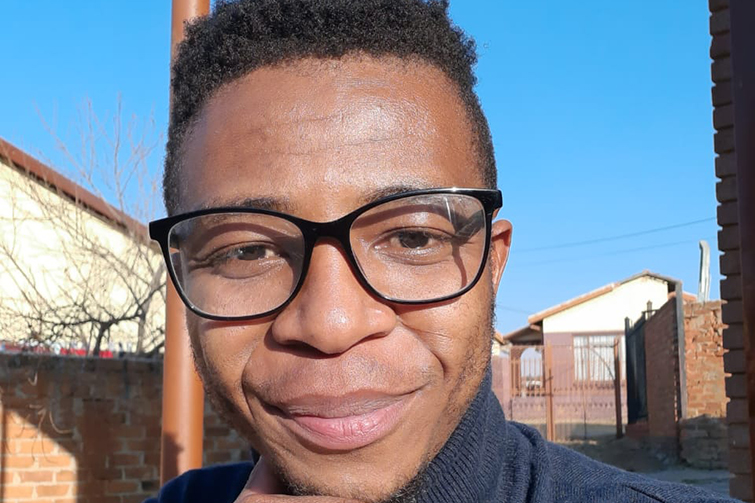
My name is Thokozane Ngcongwane. I coordinate the UFSS1504 module in the Centre for Teaching and Learning (CTL). The journey of struggles and triumphs against mental illness has often peppered my life more than I thought.

Having grown up in rural Free State, it was hard for my parents, as well as those around me, to believe that things such as mental illness exist – let alone their own son! 

I grew up with attention-deficit / hyperactivity disorder (ADHD) and was admitted numerous times as the illness was misdiagnosed and untreated. This laid the foundation for a childhood filled with amazing feats of energetic activity, but also had the downside of being misunderstood, or ill-treated due to this illness. Before I knew about this illness, I believed that because of my height (I have been given the names ‘Napoleon’ and ‘Goliath’ by various people, throughout) and stature. I was a prime target for bullying. 

Fast forward to university, and with the world as my oyster, I believed I would do well, graduate, and become the scientist I have always dreamed of becoming. Nothing could prepare me for the roller-coaster ride that, even to this day, has taught me highly valuable life lessons that I would never have received anywhere else. I started a degree in Chemistry (Extended) and was doing well in the first year. I was even fortunate enough to be selected for the F1 Leadership for Change exchange programme that took me to the USA. That was an incredible experience. Fast forward to my third year, and things took a turn for the worse. 

By 2013, I started getting panic and anxiety attacks, the origin of which was quite unknown to me at the time. I thought that I was starting to go insane and this caused a huge drop in my academics, as well as distorting my overall view on life. I started refusing to see friends and family and even shunned myself from engaging in academics. This was the start of my battles and little prepared me for the fight ahead. I took a trip outside of my surroundings and became aware of how the people I avoided cared for me, and the result was that I overcame anxiety for that period. Family, friends, and lecturers were supportive and encouraged me to do my best amid this unknown period in my life. My academics improved and I became social again. 

When I thought the worst was behind me, I was diagnosed with generalised anxiety disorder (GAD). I contacted Student Counselling and Development and received professional assistance. I started feeling better again and was on my way to graduating, albeit the journey was fraught with anxious moments. My graduation was delayed due to a credit shortfall, and this threw me in the deep end once again. This time, I dealt with it better by engaging myself in my passions – sports and the outdoors. I graduated in May 2016 and secured a temporary job as a Science teacher.

I returned home to the Qwaqwa Campus, where I became an intern in CTL. My troubles reached a boiling point in 2019, and I contacted Careways on recommendation of my head of department. It is now 2020, the year of global anxieties. I have learnt that institutions such as the South African Depression and Anxiety Group (SADAG) are available to help. Higher Health is also available to deal with issues around stigmatisation. In short, seek help and never abandon your support structures. Your mental health matters.

(SOURCE: UFS)

Thousands Of Teachers Call For Schools To Close In Row Over Second Lockdown

0

Thousands of teachers have backed a call to close schools when England enters a national lockdown next week.

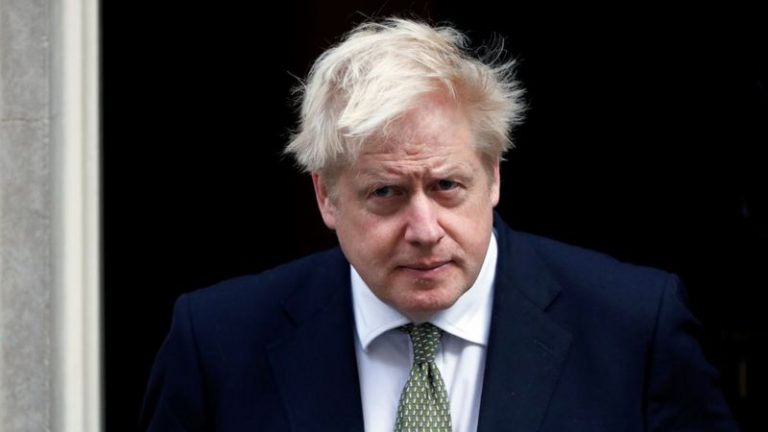
Boris Johnson confirmed at Saturday evening’s Downing Street press conference that schools, universities and colleges would remain open when the month-long nationwide lockdown begins on Thursday.

The PM said the country could not afford to allow the virus to ‘damage our children’s futures even more than it has already’.

Earlier, the National Education Union’s (NEU) Joint General Secretary Kevin Courtney insisted ONS data showed schools ‘are an engine for virus transmission’.

Demanding classrooms are shut Mr Courtney said: ‘It would be self-defeating for the Government to impose a national lockdown, whilst ignoring the role of schools as a major contributor to the spread of the virus. 

‘The Government should include all schools in proposals for an immediate national lockdown.’

The ONS said on Friday that older teenagers and young adults ‘continue to have the highest positivity rates, while rates appear to be steeply increasing among secondary school children’.

Mr Courtney said that NEU’s own analysis of ONS figures shows that virus levels are now nine times higher amongst primary pupils and 50 times higher amongst secondary pupils since the start of term.

He made the statement ahead of Saturday’s delayed briefing, after news schools would stay open was leaked to the media.

However it made no impact on the Government’s decision.

Justifying his approach Mr Johnson said: ‘My priority – our priority – remains keeping people in education.

‘So childcare, early years settings, schools, colleges and universities will all remain open. 

‘Our senior clinicians still advise that school is the best place for children to be. 

‘We cannot let this virus damage our children’s futures even more than it has already and I urge parents to continue taking their children to school. 

‘I’m extremely grateful to teachers across the country for their dedication in enabling schools to remain open.’

The National Education Union (NEU), which represents the majority of teachers and education professionals in the UK, said 60,000 teachers and support staff have backed their call to #CloseTheSchools, which began trending on Twitter shortly after the PM’s announcement.

The union wants schools to remain open only to children of key workers and vulnerable children and argues not closing them will result in a longer lockdown.

The row comes after figures showed more than half of secondary schools in England sent home at least one pupil due to coronavirus last week.

However there is conflicting data on the matter, with scientists saying the role of transmission in children is not yet fully understood.

Earlier this month, a report by the World Health Organisation said schools being open did not lead to rise in community spread where infection was low. It said preventative measures alongside schools reopening – such as contact tracing -averted larger outbreaks.

It also warned of the damaging impact being out of school has on children and said school closures should only be considered ‘as a last resort’.

Anne Longfield, the Children’s Commissioner for England, said it is ‘very welcome’ that schools would remain open and added it would have been a ‘disaster’ if they were to close. 

The National Association of Head Teachers’ Associations (NAHT) said that it was was ‘right to prioritise keeping pupils in schools’.

But it said pupils who need to self-isolate need more support in catching up with their studies.

Nick Brook, Deputy General Secretary of NAHT, said: ‘Children learn best when in school. At a time when we should be talking about how best to support pupils to catch-up lost learning, we are instead faced with the challenge of ensuring that they do not fall even further behind.

‘Government now need to accept that reliance upon a summer series of exams in 2021 is a wholly inadequate solution.

‘We must be confident that the continued disruption to education this year does not result in the award of grades that do not fairly reflect students true ability. Future opportunities and life-chances of 16 and 18 year olds must not be limited as a result of government dithering.’

(SOURCE: METROUK)

University Named After Former President Thomas Sankara

0

THE naming ceremony of a university for revolutionary leader and former president of Burkina Faso Thomas Sankara, assassinated in 1987, has taken place.

Previously known as the University Ouaga II, the University Thomas Sankara (UTS) is situated on a 1,890 hectare campus at Gonsin, about three kilometres from the capital Ouagadougou.

It was renamed on 15 October under the patronage of prime minister Christophe Joseph Marie Dabiré, reported Sidwaya.

For the 2020-21 university year it will cater for about 27,000 students, 176 lecturers and researchers and 180 administrative staff, at a cost of nearly XOF30 billion (just over US$54 million), reported Sidwaya.

UTS President Professor Adjima Thiombiano said the university had great ambitions. “Our ideals are so great and so ambitious, we are merging hopes of a renaissance of the nation’s strengths through this campus. Science and integrity will be the foundation from where we will launch the whole of society to sustainable and harmonious development.”

‘Be a model of integrity’

Dabiré said Thomas Sankara’s name, embodying his values, was a symbolic choice for the future commitment of the university community. “Expectations are enormous, of Burkinabés, Africans and even other citizens of the world who recognise the man’s ideals, the road to total liberation, and self-development of so-called developing countries,” Sidwaya reported him as saying.

Professor Alkassoum Maïga, the minister for higher education, scientific research and innovation, called on the university’s personnel to be a model of integrity, while Sankaro’s sister, Blandine, hoped the university would take account of the hopes of the young people of the country, and those of the African continent.

Sankara has been described as a Marxist revolutionary, pan-Africanist theorist and president of Burkina Faso from 1983-87, who was “commonly referred to as ‘Africa’s Che Guevara’”, and who renamed the former French colony Upper Volta.

As well as his priority for fighting corruption, he reportedly carried out many educational, health, environmental and other social policies. He was killed in a coup d’état organised by Blaise Compaoré.

(Compiled by Jane Marshall| University World News)

SADTU Slams Mboweni, Says Basic Education Department’s Budget Cuts ‘Scandalous’

0

NYAKALLO TEFU

THE South African Democratic Teachers Union (SADTU) says Finance Minister Tito Mboweni’s Medium-Term Budget Policy Statement is a slap in the face to public servants, including educators.

On Wednesday, the minister announced during the presentation of the mid-term budget policy statement that the wage bill would be the biggest contributor to the R300 billion savings they want to accumulate to address the budget deficit.

Mboweni said that government will put a wage freeze for the next three years, among other options.

“The Medium-Term Budget Policy Statement delivered by Finance Minister Tito Mboweni has left us with no joy. It is a slap in the face to hard working educators and public servants,” said SADTU in a statement.

“The Statement has clearly shown the unpreparedness of the Treasury to honour the last leg of Collective Agreement 1 2018 which would have ensured salary increments for public sector employees including educators.”

This comes after public sector unions took to the Labour Court over government’s decision not to honour the last year of a multi-year wage agreement.

SADTU said the statement by the minister made a mockery of the call to build a capable, effective and efficient development state.

The teachers union said there is no way in which anyone can achieve such a state with public servants who are hungry and can’t afford even a meal, nor to feed their families.

“Such unhappy, overworked, demoralised workers will never be in a position to deliver the quality service which the President of the country always speaks about,” added SADTU.

Mboweni announced that Treasury is proposing a public service wage bill that will grow by 1.8% in 2020 and by an average 0.8% over the next three years.

He said this was essential for fiscal sustainability.

“With no increases in the horizon, teachers’ plight will worsen and will retire more poor as they will have to rely on their retirement even before they retire because government will now present legislation next year to allow for limited pre-retirement withdrawals under certain circumstances. Teachers will be forced to rely on these to send their children to tertiary education and housing and to make ends meet. The future is bleak,” said SADTU.

“Public servants, in fact, are going to be trapped in a vicious cycle of debt and vulnerable to loan sharks in order to make ends meet,” said SADTU.

 “People lost their lives fighting for bargaining processes and structures to be put in place so that there could be labour peace. These processes and structures should be respected and protected to the letter,” added SADTU.

SADTU’s general secretary Mugwena Maluleke described the budget Statement as ‘scandalous’.

“This budget is scandalous. It is a declaration of a strike. There will be no money to train teachers on how to approach the new normal,’ said Maluleke.

“This changes everything. We are going to mobilize our members and society to engage with government to understand the importance of education. When there is a declaration of a strike you can only strike back.”

(COMPILED BY INSIDE POLITICS STAFF)

Education Is Both The Victim And The Best Weapon In Central Sahel Conflict

0

SOUTH Africa’s first democratically elected president, Nelson Mandela, captured the value of education when he said, “Education is the most powerful weapon which you can use to change the world.”

This is why quality education is one of the 17 sustainable development goals “to transform our world” of the United Nations (UN). It’s also why protecting education from attack during armed conflict and in insecure spaces is so important.

The UN has had the protection and provision of education during armed conflict on its agenda since 2010. This was when the General Assembly adopted a resolution on the right to education in emergency situations. On 9 September 2020, the UN commemorated the first International Day to Protect Education from Attack, specifically in the context of armed conflict.

The purpose is “to raise awareness of the plight of millions of children living in countries affected by conflict”. The General Assembly’s decision to commemorate this day coincided with the fifth anniversary of the international Safe Schools Declaration.

The attack on education by armed groups fuels a vicious cycle of underdevelopment and insecurity, causing more violence. Some have described such attacks as a “perceptible shift in modern terror tactics”.

Africa features prominently in a 2020 report published by the Global Coalition to Protect Education from Attack. It lists Sudan, Cameroon and the Democratic Republic of Congo as “very heavily affected” countries.

Another region of high concern is the Central Sahel, which includes Burkina Faso, Mali and Niger. A Human Rights Watch news report published in early September claims that attacks on education in this region have been surging.

Between 2014 and 2019, the Central Sahel experienced a significant increase in “security incidents”. These include battles, explosions or remote violence and violence against civilians. One feature of this violence is how perpetrators have targeted school infrastructure, staff and students.

Violence caused a six-fold increase in school closures across the Central Sahel between early 2017 and end 2019. Prior to COVID-19 lockdowns, and in 2020 alone, 4,000 schools in the Central Sahel closed because of insecurity, affecting 650,000 students.

A key feature of the attack on education is the way children are made victims of killing, sexual violence, maiming and abduction, and are recruited and used by armed groups.

What drives attacks on education?

Civilians across the Central Sahel have endured attacks from Islamic militant groups, state security forces and ethnic or religiously based militias. While state security forces use schools for military purposes, Islamic armed groups have deliberately targeted education facilities.

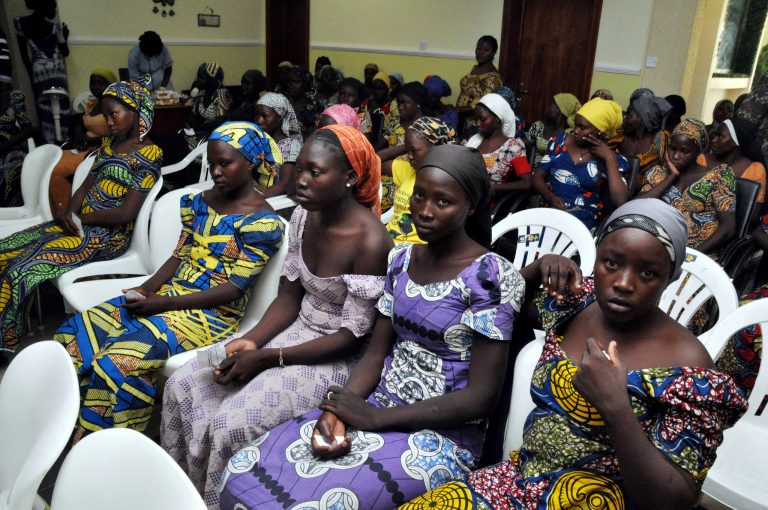
One highly publicised incident just beyond the borders of the Central Sahel was the 2014 kidnapping of the Chibok schoolgirls by the militant group Boko Haram.

The reasons terrorist groups or other armed actors attack education institutions are varied. A school is a “relatively unguarded site where people congregate, normally in large numbers, thus offering the potential for mass casualties”.

They’re ideal targets for terrorist groups who aim to portray a government as incapable of protecting its most vulnerable citizens.

Islamic militants, specifically, attack schools perceived to be Western or modern, as part of their strategy against Western civilisation. And where there’s prolonged intra-state conflict, schools can become centres for recruiting child soldiers.

Attacks on schools and children evoke a strong emotional response, which is a definitive goal of terrorist groups. This was evident following the kidnapping of the Chibok girls. Its also helps explain the impetus behind the Global Coalition to Protect Education from Attack and the recently held High-Level Humanitarian Event on the Central Sahel.

Another reason for targeting schools is the intensive media coverage that follows. Media coverage provides terrorist groups with a platform.

Political will

What can be done to fix the problem?

There’s no straightforward answer to this question. The attack on education is one element of the broader challenge of armed conflict and insecurity. The causes reside not so much with religious fundamentalism, Islamic or otherwise, as they do with poor governance.

It’s worth noting that Burkina Faso, Mali and Niger each perform poorly on freedom, human development and corruption indices – all measures of good governance.

It’s questionable whether political leaders in the Central Sahel have the will to follow recommendations that emphasise the role of the state in protecting education from attack. Governments that are self-serving and don’t really want to promote freedom don’t have an interest in education.

The ability of communities to hold their governments accountable becomes restricted in countries where governments are oppressive and devalue education. This gives impetus to the involvement of foreign actors in the Central Sahel.

Militarised partnerships

Western states have been among the more prominent foreign actors in Africa’s security landscape. They have resources and concerns over migration and fundamentalism.

On occasion they have held African governments accountable on matters of governance. But they have also shown a willingness to collaborate with authoritarian regimes in the fight against terrorism.

The relations between Western governments and the governments of the Central Sahel are a case in point. The militarised partnerships worsen the underlying causes of violent extremism, including attacks on education.

I cautioned in 2017 that if emphasis on military solutions to the Sahel’s security challenges persisted, countries were likely to experience an increase in extremism. Since then, the foreign military presence in Africa and in the Sahel region has increased. The increase in attacks on education in the Central Sahel suggest that violent extremism has followed the same trajectory.

The militarised partnerships pursued by Western administrations have proven counter-productive to education.

Perhaps the victims of attacks on education in the Central Sahel can rely on democratically inclined constituencies elsewhere for assistance. These could pressure their governments to hold their African allies in the war on terror to account.

For these constituencies to do so effectively, however, they will need knowledge and motivation.

This will require education.

(SOURCE: THE CONVERSATION)

UCT The Only Financial Times Ranked MBA School In Africa

THE University of Cape Town Graduate School of Business (UCT GSB) is the only business school in Africa to feature in the prestigious Financial Times rankings for its ground-breaking Executive MBA programme.

The UCT GSB has retained its position as the number one business school in Africa in the 2020 Executive MBA (EMBA) Financial Times (FT) rankings, which were announced on 26 October 2020. Ranked 56th in the world, the UCT GSB is the only business school on the continent to make the top 100 this year.

“We are excited to be the best in Africa,” said Dr Catherine Duggan, the director of the UCT GSB.

“We are proud that the GSB continues to represent the African continent among this elite group of truly global business schools. It is vital for business leaders to be able to navigate an increasingly complex world – especially in Africa and emerging markets – and that is exactly our focus at the UCT GSB. Our students graduate with a powerful set of tools for leading through uncertainty and change – and this ranking reflects that.”

The UCT GSB MBA attracts senior professionals and executives from a spectrum of sectors and industries. According to Associate Professor Kosheek Sewchurran, the director of the EMBA, the programme is tailored for leaders who want to take their careers to the next level and who already have some experience in the field of business and leadership.

“We have refined the programme to ensure that it draws executives who are serious about character development and who want to shift their intelligence as well as their orientation to find new ways of leading.”

The FT rankings are recognised as the most rigorous of the various global rankings of MBA programmes.

Strict guidelines include: The programme must be accredited by either the United States’ Association to Advance Collegiate Schools of Business or the European Foundation for Management Development; it must be cohort-based, with students enrolling and graduating together; and it must have at least 30 graduates each year. The programme must also teach in the medium of English.

Schools are assessed in 19 categories measuring career progress of graduates, the diversity of the school and its research and corporate social responsibility (CSR) activities.

In 2020 the UCT GSB ranked 11th in the world for CSR and 11th for its percentage of international students.

“We have a distinct philosophical approach and practice of teaching that focuses on practice and lived experience to drive learning.”

“This is a big achievement,” said Dr Kutlwano Ramaboa, the deputy director of the UCT GSB. 

“Our school is very small by international standards, and smaller schools are often not able to compete because they do not have the resources to do so or they don’t meet the basic criteria.” 

Associate Professor Sewchurran added that the school is managing to strike the right balance by meeting international quality standards on the one hand while also evolving a distinctive programme that is fit for purpose in an African context.

“We have a distinct philosophical approach and practice of teaching that focuses on practice and lived experience to drive learning, and a uniquely African orientation,” he said.

“In every design consideration of the programme we consider how we are evolving the skill and competence of executives, enabling them to draw on their lived experience to strategise, innovate their business models and inhabit their leadership practice with more skill and wisdom.

“This has proven to be extraordinarily effective in the lives of the leaders who pass through our programme and it is very gratifying that we are achieving international recognition for this approach.”

(SOURCE: UCT)