Home Blog Page 369

All 26 SA Universities Aim To Complete Academic Year In 2021 – Higher Education Ministry

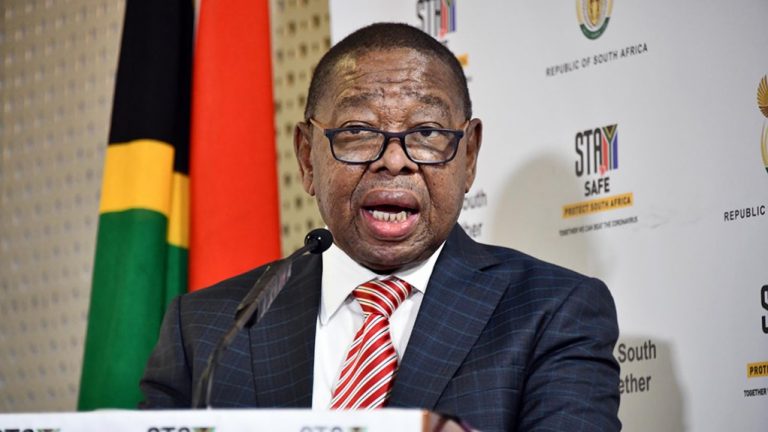
OUT of 26 universities in South Africa, 19 were at low risk and seven at medium risk when the report was compiled in September, the Department’s deputy director-general for higher education, Diane Parker, told parliament’s portfolio committee on higher education, science and technology during a briefing on the 2020 academic year in the Post School Education and Training System.

The higher education, science and technology minister Dr Blade Nzimande was also present at the briefing.

“Universities that had already developed online teaching and learning capacity were able to transition to an online modality more rapidly. Universities have extended teaching and learning time to more effectively support students who could not be fully engaged during the lockdown,” Parker told the portfolio committee on higher education.

Parker said 68% of university students already have access to devices.

“Some universities have indicated that devices are available, but students are not taking them up. The universities where device availability is low at present are participating in the NSFAS-led process,” she said.

She also said around 94% of students were being provided with mobile data.

The 10 universities that are expected to complete the academic year in 2020 include the Cape Peninsula University of Technology, the University of Cape Town, the University of the Free State and the University of Johannesburg.

The Durban University of Technology, North West University, Rhodes University and the University of Mpumalanga are some that are planning to end the second semester in January 2021.

Universities planning for a February completion include, among others, the Central University of Technology, Mangosuthu University of Technology in Durban, Nelson Mandela University and University of KwaZulu-Natal.

Nzimande said that he is unhappy when it comes to the procurement of laptops for students, now run by the National Student Financial Aid Scheme.

The Department is now questioning whether the process of procuring laptops for students is still needed.

“I want to make this clear. The laptop process was driven by NSFAS which means the accounting officer and the accounting authority for NSFAS, which is Dr Carolissen, is the one who was responsible for the entire process,” said Nzimande.

“I tried single-sourcing and failed. I am open about that. I was concerned that these laptops must come sooner rather than later.”

A fortnight ago, Nzimande released the latest protocols from Higher Health for the 2020/21 examination period in the Post-Schooling Education and Training (PSET) sector.

The protocols are set to guide 26 universities, 50 Technical and Vocational Education and Training (TVET) colleges and other post-schooling institutions on how to conduct invigilated examinations during the COVID-19 pandemic.

“The Protocol on Invigilation of Tests and Examinations during COVID-19 within PSET institutions was developed by the PSET health and wellness agency, Higher Health, which has been assisting institutions in managing COVID-19 since the outbreak,” said Nzimande.

(COMPILED BY INSIDE EDUCATION STAFF)
Class of 2020 Ready For Exams, Says Western Cape Education MEC

0

NYAKALLO TEFU

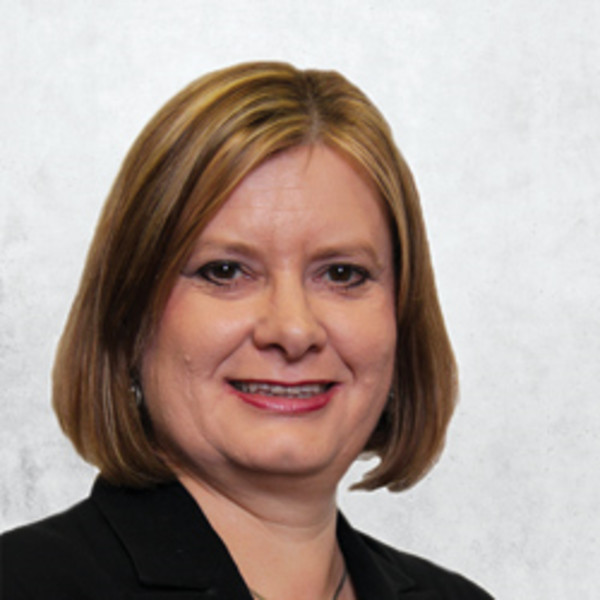
WESTERN Cape Education MEC Debbie Schafer says preparations are complete and it’s all systems go for the final Grade 12 exams in her province.

Schafer was speaking to Inside Education on her province’s state of readiness for the 2020 matric exams, starting in the first week of November.

“From June, when learners returned to school, Grade 12s have had the most classes since then and have been in class every day,” said Schafer.

Schafer said her department has made available additional resources to matric learners to ensure that they are ready to write.

“Matrics have received an examination support booklet, which provides advice on the exams and bursary options,” added Schafer.

The province has maintained an 80% pass rate for the past 2 years.

The MEC says she is confident that matriculants this year will do well, despite disruptions by COVID-19 pandemic.

“I am hopeful and obviously it has been a very difficult year but we will see,” said Schafer.

Keeping learners at school during the pandemic has proven to be difficult for the Department of Basic Education after Minister Angie Motshekga announced that learners have been dropping out in the past few months.

“At this point we would like to keep as many learners as possible at school so they do not drop out,” said Schafer.

However, the MEC says learners have been told that they cannot miss an exam no matter what the circumstances are, as they will not get an opportunity to rewrite this year.

“Any learner who misses an exam will have to rewrite it next year in May or June which means it will delay them in terms of higher education,” said Schafer.

Meanwhile, Schäfer has called on COSATU and its partners to denounce defunding of education by the national government.

“I note COSATU’s announcement that they will be holding a press conference regarding the challenges facing the WCED.  I am pleased that COSATU and its associated organisations understand that there are challenges facing us.  The most profound of these challenges – and indeed the one that underpins almost all others – is the continuous defunding of education in the Western Cape by the national government,” said Schafer.

“Once again, severe budget cuts threaten to wipe out many of our projects and programmes. A third of our infrastructure budget this year has been wiped out as a result of cuts to the Education Infrastructure Grant and expenditure on Covid-19 compliance measures, for which we have received no compensation from National Treasury.  The cuts being demanded by the National Treasury for the next three years are nothing short of devastating.”

(COMPILED BY INSIDE EDUCATION STAFF)

Eastern Cape Plans To Shut Down More Than 1 000 Small, Unviable Schools, Says MEC Gade

0

NYAKALLO TEFU

EASTERN Cape Education MEC Fundile Gade has vowed to shut down just over 1 000 small, unviable schools and the reallocation of learners to larger, better resourced schools in an attempt to improve the quality of education in the province.

Most of the unviable schools are mainly in the Eastern Cape, KwaZulu Natal and Limpopo, and are responsible for producing the lowest pass rates during the National Senior Certificate exams.  

The need to rationalise schools in the Eastern Cape is pressing, according to Gade.

The Eastern Cape not only inherited a large number of very small schools from the Transkei era, but out-migration to urban centres both within and outside of the province has also made many schools unviable.

Data from 2016, when the (Government Technical Advisory Centre) GTAC project began, shows that close to 50% of schools have fewer than 250 learners, and another 17% have fewer than 100 learners.

“Unviable, small and dysfunctional schools are a threat in the context of quality public education,” said Gade.

Gade spoke to Inside Educationduring an exclusive interview on how his department is using the R700 million that has been allocated to deal with schools with pit latrines and lack of proper sanitation.

“We have exceeded 50 percent of the target that we were allocated, despite the fact that we had a challenge of the lockdown at the beginning of the year, which put the construction on hold,” said Gade.

The MEC said the solution is to build bigger schools in order to get rid of the small ones where learners will be able to get sufficient maintenance and resources.

“Our strategy is that, let’s build bigger schools and reduce the numbers figuratively of schools in the province so that they can get as much resources as possible and utilise them optimally,” said Gade.

The National Education Policy Act Guidelines stipulate a minimum school size of 135 learners at primary level, and 200 learners at secondary school level. If a school has fewer learners than the set minimums, the provincial department may begin to make the case for closing down the school.

In 2018, Basic Education Minister Angie Motshekga said her department needed at least R10 billion to deal with sanitation at schools across the country. In 2019, it was reported that over 1 600 schools in the Eastern Cape needed toilets.

“The department of health has approved 268 schools that must undergo the programme to stabilise infrastructure in the province,” said Gade.

Less than 1 600 of the 5,400 Eastern Cape schools have been red-flagged as having inadequate pit latrine and sanitation structures.

“We are currently in the process of dealing with stabilizing the infrastructure backlogs in the province,” said Gade.

(COMPILED BY INSIDE EDUCATION STAFF)
Mcebo Dlamini: Should We Tell Matriculants The Truth About Tertiary Education?

0

IN A taxi on the freeway, windows are sweating and people are squeezed inside almost to a point of suffocating. A red Porsche passes our taxi. We all follow the roaring sound of the car as it shuffles through the traffic. The licence plate at the back of the Porsche reads “NO DEGREE”. A subtle, nuanced but loud statement is made by this licence plate.

The driver is simply saying that he bought the car without having a tertiary institution degree. The implication is that it is highly possible to make it financially without education. A radical interpretation of this statement is that education is useless.

Considering all these ideas, what then do we say to matriculants who are commencing with their exams? Do we encourage them to study? Or do we tell them the gruesome truth about the problematics of tertiary education in this country?

Each and every year we bid good luck to matriculants and engage in all sorts motivational escapades to stress the importance of going to tertiary institutions, whether they be universities or colleges. We do this ritual without mentioning the problems that are presented by what we call the tertiary education.

When we remind black matriculants to work hard, we do not tell them that no matter how hard they work, they will be alientated when they get to university. We do not tell them that the colour of their skin will become a barrier to a number of opportunities.

Some of them will learn what being black means when they get to university. And I think they should know that these universities are mostly concerned with teaching them how to be workers and functionaries, not owners.

These universities will disconnect them from their societies, leaving them with a double consciousness. As Thebe Kgositsile states, these universities will leave them “too white for the black kids and too black for the white kids”.

Unemployment among graduates continues to increase. Although attending university might increase one’s chances of getting employed, the reality is that it is not guaranteed. What is guaranteed is a lifetime debt for students who take loans to study at tertiary level. Where graduates do get employed, they will spend the rest of their days running the affairs of white people (the bosses). It is at this point that I say universities teach us how to be sophisticated slaves.

Of course, there are exceptions. But the truth is that South African universities have not done enough to transform or change the condition of our people. It has failed to provide its students with knowledge that will solve the problems of society. It should not be exonerated. All institutions have a role to play and universities in South Africa have not been made to account.

So the driver of the red Porsche knows something – the question is whether or not we want to hear it. Our education system is broken because we do not learn what will make our society better in the future. If we have been, black people would not be dealing with same problems that they had dealt with during apartheid. If this had been improved, we would not have so many graduates who are sitting in townships doing nothing.

It cannot be that a person who has worked hard to study, accumulated debt and almost suffocated by an alienating environment has to go back to rot in the township. Something has to be done. We can no longer act oblivious by encouraging matriculants to go to university when we know that there are problems where they are going.

The only way we are going to be able to solve some of these problems is to acknowledge that they are there. We must stop portraying the university as a perfect place. We must tell the children the truth. That way they go there knowing into what kind of environment they are entering. They attend it knowing that there are structural challenges that might defer their dreams. Awareness is important, as it prevents them from becoming depressed when what is promised is not given.

We need to think critically about education and its value in society, and assess whether or not our education system has any tangible value. The matriculants must fight, here and beyond, but victory is still not guaranteed.

(This article originally appeared on EWN)

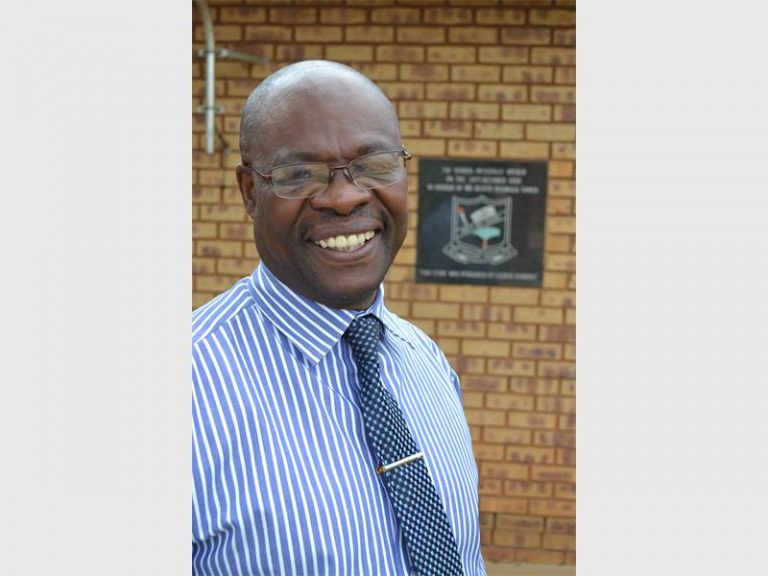
Teacher Wandile Makhubu Started One Of The Best-performing High Schools In Gauteng

WANDILE James Makhubu from Unity Secondary School has reflected on his 36 years in the profession.

He said he had always known he wanted to be a teacher as he was passionate about serving his community.

Makhubu founded Unity Secondary School in 1992 in Daveyton.

The school is known as one of the best performing high schools in Gauteng. He started his career as a mathematics teacher, but circumstances led him to establish a school.

The Crystal Park resident said during his schooling career he was taught by teachers who were highly dedicated and who were role models.

“Those teachers influenced us to become teachers later in life. One thing that was unique about them is that they had minimum qualifications,” said Makhubu.

“They had what was called a Primary Teacher Certificate (PTC) and the highest qualification one could have was the Junior Teacher Certificate.”

In 1992 when Makhubu founded the school, he was the only teacher, and the school accepted a group of learners who were known as “learners at risk”.

“Some of these learners were from exile and rural areas and needed to be educated. At the time, the government didn’t want to give us the school.

“Some of these learners were even older than me and it was challenging because the government didn’t want the school as when you were over 18 you would be kicked out of school.

“The community of Daveyton got many high-profile people involved to help us as there was a high demand for the school.”

The Local principal reminisces on teaching career said. “I taught my peers mathematics because I love it. I used to assist a lot of people from my community even before I went to further my studies and that is how I gained more and more interest in the career.”

Makhubu was unapologetic about his commitment to children and said he is proud that some of those learners are now well-known lawyers, doctors, nurses, and teachers.

He hopes that other teachers use this motivation to help their learners as well.

The 62 year old completed his undergraduate studies at the University of the North (now merged with the University of Limpopo) and his BA Honours at the University of the Witwatersrand.

From 1994 to 1995 he completed his master’s degree at the Northern Illinois University in the USA. He then returned to the school in 1996 and became the principal at the age of 32.

Makhubu said one of the most important things teachers can do is unlock a learner’s potential because every child has it and they should not waste their talents.

“However, things are different nowadays, as learners would rather have fun than making their education a priority.
“During our time, we were addicted to reading. There was less entertainment and the only electronic thing we had was a radio.

“We never involved ourselves in drugs and alcohol as school children because our families and teachers were strict and we considered every elderly person as our parent.”

The principal said he loves children and wants them to achieve as much as they can. “When a child misbehaves, I visit their family to find out what the problem is.

“Sometimes children are just trying to get attention because they need help.”

When the City Times asked if there is any hope for today’s youth, he said he has mixed feelings.

“Covid-19 has changed things a bit; we are in a new norm now. I can’t just drive to a tavern to collect learners to come and write their exams. Before the pandemic, there were situations where schools were disrupted by violence as learners would start fights so that their videos can trend on social media.

“Then there is poverty and there are still some learners who have low self-esteem.

“We also have parents who don’t motivate their children to unleash their potential. If we can fix that, the future our country will be in good hands,” said Makhubu.

He added that the pandemic can be used to the advantage of parents and schools to encourage learners who prefer going to social events, to stay at home and study instead.

“There is still hope and if we can guide the new crop of teachers, we can believe that our learners’ future will be safe.”

Lastly, he said he wouldn’t have been able to do what he has done without his family – they have supported him immensely as it hasn’t been easy to build the school.

(SOURCE: BENONITIMES)

Some Sports To Resume In SA schools

0

A recently published Government Gazette will allow for the resumption of some sports  in South African schools.

The Gazette was approved and published by the Minister of Basic Education, Angie Motshekga.

According to the directive, the following sports will be allowed to resume and will be subject to strict social distancing and health protocols:

– Non-contact sport training

– Inter-school non-contact sport matches

– Non-contact sport-related activities

– Arts and culture school-based activities in schools

The number of spectators at sporting events, change rooms and training areas may not exceed a 50% capacity, and strict social distancing must be adhered to. Schools will also be limited in their inter-school capacities in the following ways:

– 250 persons or fewer, in the case of an indoor activity; and

– 500 or fewer, in the case of an outdoor activity;

– Provided that no more than 50% of the capacity of the venue is used with persons observing the social distancing requirements.

Other regulations that must be followed include the wearing of masks except when playing sports, and the provision of hand sanitisers.

There should also be a register of all spectators.

(SOURCE: CAPETOWNETC)

Billionaire Robert F. Smith Donates $50 Million To HBCU STEM Education Initiative

FROM eliminating the student loan debt for Morehouse College’s 2019 graduating class to launching an internship program for students of color, billionaire Robert F. Smith has been dedicated to empowering the next generation of leaders.

His latest effort is focused on providing HBCU students with the support needed to pursue careers in STEM fields, HBCU Connect reported.

Smith recently donated $50 million to The Student Freedom Initiative. The nonprofit organization is centered on addressing the disparities surrounding student loan debt pertaining to students from disenfranchised communities.

The nonprofit not only provides students of color from low-income households with financial support, but it also aligns them with paid internships, tutoring and mentorships.

Juniors and seniors who are pursuing STEM-related degrees at historically Black colleges and universities will be eligible to receive support through the initiative over the next five years. Participating HBCUs will be unveiled in November.

“Each year, thousands of Black graduates from HBCUs across America enter the workforce with a crushing debt burden that stunts future decisions and prevents opportunities and choices,” said Smith, who serves as Board Chair of the organization.

“A college education should empower and prepare our next generation for a limitless future. The initiative is purposefully built to redress historic economic and social inequities and to offer a sustainable, scalable platform to invest in the education of future Black leaders. I urge others to join this important cause so that together we can liberate the human spirit.”

Smith’s generous donation comes after the nonprofit received $50 million in June from the Fund II Foundation.

Many efforts are being led to support the financial futures of HBCU students as well as the financial stability of HBCU institutions. The Alpha Kappa Alpha Sorority recently raised over $1 million to donate to historically Black colleges and universities.

(SOURCE: NEWSONE)

Gunmen Storm School In Cameroon, Killing At Least 7 Learners

0

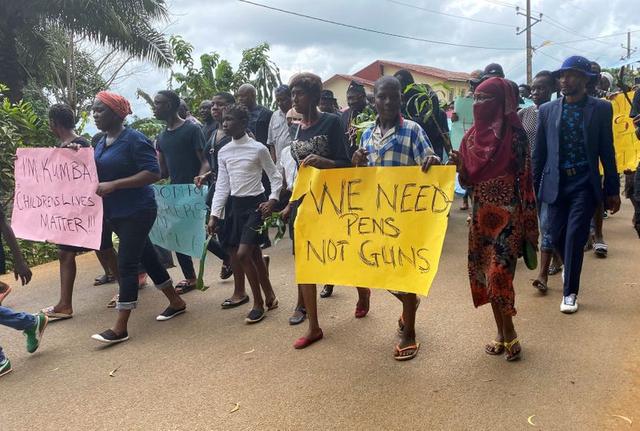
GUNMEN stormed a school in Cameroon on Saturday and opened fire indiscriminately, killing at least six children and wounding about eight more in a region where separatist insurgents operate, officials and parents said.

Arriving on motorcycles and in civilian clothes, the attackers hit the school around midday in the city of Kumba in South West Region, according to the accounts, including from one parent outside the school at the time.

Some children were injured jumping from second storey windows.

It was unclear if the attack was linked to an ongoing struggle between the army and groups seeking to form a breakaway state called Ambazonia in the English-speaking west.

But it was a grim new low in a region that since 2017 has seen hundreds die and thousands displaced because of the conflict, with many children unable to attend school.

 “They found the children in class and they opened fire on them,” city sub-prefect Ali Anougou told Reuters.

Isabel Dione ran into the school to search for her 12-year-old daughter when she heard about the shooting. She found her on the floor of a classroom, bleeding from the stomach.

“She was helpless and she was shouting ‘mum please help me’, and I told her ‘only your God can save you now’,” Dione told Reuters.

The girl was rushed to hospital where she is undergoing treatment for a gunshot wound.

The United Nations’ Office for the Coordination of Humanitarian Affairs said eight children were killed, some by machete, and that 12 were wounded.

Videos circulating on social media filmed by local journalists showed adults rushing from the school with children in their arms, surrounded by wailing onlookers.

One photo verified by Reuters showed the inside of a classroom, where dried blood had pooled on the floor near some scattered flip-flops.

Local education official Ahhim Abanaw Obase confirmed six deaths of children aged between 12 and 14, and added that another eight had been taken to hospital.

Anougou and another official blamed the attack on the secessionists, but did not offer evidence.

Prominent separatist leader Ayuk Tabe described the attack as “inhumane” in a Twitter post and said “anyone responsible for these atrocities must be brought to book.”

Still, many armed splinter groups have emerged from inside the separatist movement since 2017, and one voice rarely speaks for all.

Anglophone secessionists have imposed curfews and closed schools as part of their protest against President Paul Biya’s French-speaking government and its perceived marginalisation of the English-speaking minority. Rights groups have documented abuses on civilians from both sides.

Last year, officials blamed separatists for kidnapping dozens of schoolchildren, which separatist leaders denied.

(SOURCE: REUTERS)

EC MEC Fundile Gade Lambasts SITA For Taking R528m Matric Tablet Contract To Court

0

NYAKALLO TEFU

THE Eastern Cape Education MEC Fundile Gade slammed the State Information Technology Agency (SITA) for questioning the department’s decision to proceed with e-learning in the province.

This comes after the provincial education department’s decision to go it alone by providing matric learners with tablets as part of its broader strategy to introduce e-learning in the province.

SITA, which falls under the Communications Minister Stella Ndabeni-Abrahams’ department, argues that every department in South Africa must procure all information technology goods or services through state agency.

SITA also argues that allowing the Eastern Cape department of education (DoE) to continue implementing the suspended e-learning tablets project will give EC matriculants a “perverse” advantage over matriculants from other provinces in forthcoming examinations.

SITA has since taken the R528 matric tablet contract between the Eastern Cape Education Department, Sizwe Africa IT Group and MTN on review.

But in an exclusive interview with Inside Education, MEC Gade said they were going to court with SITA on the basis of the regulation that his department should have bought the tablets via SITA, in terms of the Section 7 regulation.

The department lodged the papers with the court on Tuesday to argue that SITA is incapable of delivering the matric tablets.

“Our argument is very strong because we are saying that SITA indicated its inability to serve the people of the country, and wrote two circulars in 2018 and 2019 that it is incapable of carrying out the mandate designated to them,” said Gade.

The MEC added that after the circulars from SITA, they have not received anything that indicated that they were now ready, hence its decision to get procure tablets elsewhere.

Reports had indicated that 55 000 learners were supposed to receive tablets from the Eastern Cape Education Department.

The MEC says only 6 of them have not been delivered to learners.

“We have delivered almost all the 55 000 of the tablets to all the schools that have been designated to receive them. The only tablets that in our records have not been delivered are just 6 of them, due to them not having the correct information installed in them,” said Gade.

“We feel very strongly that there are learners from disadvantaged communities, which should have been taken care of by the government and leave out the fact that they are learning in established communities.”

(COMPILED BY INSIDE EDUCATION STAFF)

Limpopo Education MEC Polly Boshielo Defends Centralization of PPE Contracts

0

NYAKALLO TEFU

LIMPOPO MEC for Education MEC Polly Boshielo has defended her department’s decision to centralize personal protective equipment (PPE) contracts.

This follows a furore by some principals and school governing bodies (SGBS) in Limpopo who lodged complaints with the Office of the Public Protector about being excluded from procurement of PPEs.

The Public Protector is currently investigating allegations of PPE corruption, including how certain provinces procured multimillion-rand contracts at inflated prices.

The investigations by the Public Protector come after the Special Investigating Unit (SIU) launched a separate probe into tenders for PPE in Gauteng, the country’s economic heartland.

This after politically connected individuals, including former presidential spokesperson Khusela Diko, illegally benefited from government contracts for the supply of PPEs to contain the spread of Covid-19.

In an exclusive interview with Inside Education, Boshielo said she had already met with the Public Protector Busisiwe Mkhwebane over the procurement of PPE saga in her department.

Boshielo said she was satisfied that all PPE contracts given by her department were above board, and most importantly, benefitted the majority of local businessmen in Limpopo.

“We don’t have any problems with PPE in Limpopo. We don’t have any complaints as a department. The question was how do you do procurement at more than 3 000 points or schools,” said Boshielo.

“I am proud that the tenders of PPE benefitted local businesses. It would have been a recipe for disaster [had we not centralized procurement]. There are SGBS and principals who complained but we have taken them to court and dismissed some of them because they didn’t follow processes, including norms and standards.”

Last month, the Sunday Independent reported that a businessman has taken the Limpopo Department of Education to court after it cancelled his R6.7m personal protective equipment (PPE) contract, allegedly because MEC Polly Boshielo was “angry” over the one-hour delivery deadline miss.

Delton Makubane claimed the department terminated the contract awarded to his company, Mhlekazi Group of Companies, even though he had informed relevant officials about possible late delivery every step of the way.

Makubane said his company was initially given 24 hours to supply more than 7 000 digital thermometers before the LDOE withdrew the appointment letter long after the PPE had arrived at the warehouse in Seshego near Polokwane.

(COMPILED BY INSIDE EDUCATION STAFF)