Home Blog Page 371

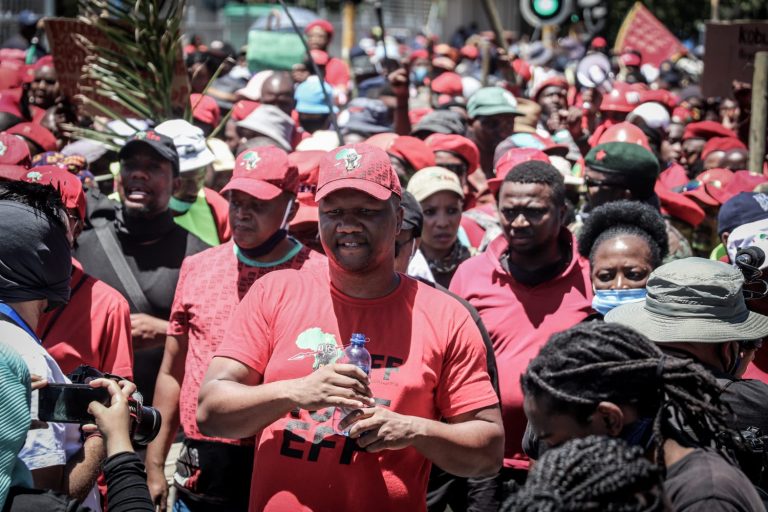
Chaos Erupt At Brackenfell High School During EFF Protest Against Racism

0

NYAKALLO TEFU

THE Economic Freedom Fighters (EFF) has given Brackenfell High School seven days to remove teachers and the school governing body members who organized the ‘whites only’ matric dance that excluded black learners.

This follows a violent protest at Brackenfell High School in Cape Town after members of the EFF took to the streets to voice their outrage against the ‘private’ matric dance.

“We are giving the school 7 days to remove the teachers and SGB members who organized the matric dance or else this school will become the permanent residence of the EFF,” said EFF’s Secretary General, Marshal Dlamini.

Addressing the media, Dlamini said the party will not tolerate racism in South Africa.

“If they thought we brought flowers, they are wrong. We are not going to negotiate peace with racists,” said Dlamini.

Police fired stun grenades, teargas and water cannons at protestors on Friday after EFF members failed to comply with the number of people allowed to protest.

“We are not going to be told when to leave this place, we will decide when its time,” said Dlamini.

Initially, only 100 people were allowed to protest outside the school under strict conditions, but the EFF then negotiated for 500.

However, the party still failed to comply, when more than 500 members took part in the protest, which led to heavy police presence.

“We are not going anywhere; we are looking for those people who say this is their town. The EFF doesn’t tolerate racism, we came here peacefully, but racists decided to attack fighters saying they were protecting the school, there is no difference between those ones here and the ones in Senekal,” added Dlamini.

“Fighters we know our enemies. Racists are our enemies. Fighters, if the enemy fights you, fight back. When they give us fire, we give them fire. We are not the children of Nelson Mandela.”

(SOURCE: INSIDE EDUCATION) 

New York City Schools To Temporarily Close Due To Rising COVID-19 Rates

0

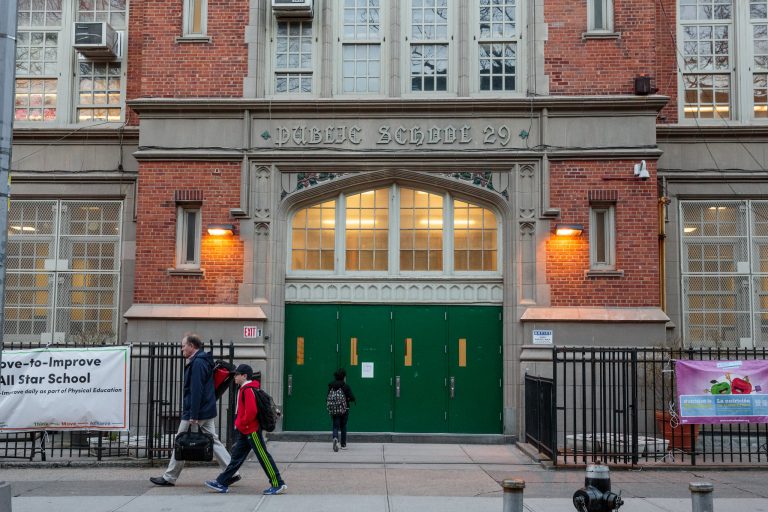
NEW York City public schools will shut down temporarily starting Thursday because of surging coronavirus cases, top city officials revealed Wednesday.

Schools Chancellor Richard Carranza said the closure would be “temporary” in an email to staffers Wednesday afternoon, but did not signal when schools would reopen.

Mayor de Blasio confirmed the closures on Twitter minutes later after delaying his morning press briefing by at least five hours and counting.

“New York City has reached the 3% testing positivity 7-day average threshold,” he wrote. “Unfortunately, this means public school buildings will be closed as of tomorrow, Thursday Nov. 19, out an abundance of caution. We must fight back the second wave of COVID-19.”

The percentage of new COVID-19 cases has hovered near the 3% weekly average threshold the city uses to close schools for more than a week now, forcing parents to wait with bated breath for days for any indication that would force them into having to adjust their childcare arrangements to the new reality.

Meelai Chow, a teacher at Yung Wing School P.S. 124 teaches students attending class in person on Oct. 1, in New York City. (Michael Loccisano/Getty Images)

Gov. Cuomo and others have suggested that de Blasio could change the threshold used to close schools, but such a shift would almost inevitably lead to push back from the United Federation of Teachers, the union that represents most educators in the city.

During a combative press conference in Albany, Gov. Cuomo suggested that schools would close regardless if the state designates the city as an “orange zone” micro-cluster, a move that would also shutter gyms and bring an end to indoor dining.

“(The law) always said that, if, by the state’s numbers, you hit 3%, the schools close,” Cuomo said in reference to the state’s micro-cluster strategy, which has primarily targeted much smaller geographic areas.

The governor snapped at reporters who asked about the confusion caused by a difference in state and city COVID-19 numbers and how that impacts whether classrooms would remain open.

Per the state strategy, schools within an “orange zone” could reopen if they drastically increase coronavirus testing, but Cuomo admitted that would be a huge lift for the city.

“Any school district in a microcluster, the schools can remain open in an orange zone but they have to do additional testing,” he said.

Front page of the New York Daily News on November 14, 2020: COVID spike moves N.Y. schools, courts closer to shutting down – once again.

De Blasio was scheduled to hold a press conference at 10 a.m. Wednesday, but at 2:45 p.m. it still had not begun.

De Blasio has stuck to his guns on the rule that all city schools will close if citywide test positivity rate reaches 3% over a seven-day average in order to “keep faith” with educators and families. But he’s suggested in recent days that the city could adopt a new standard moving forward.

Hizzoner said he would work with the Education Department and educator unions “to figure out what’s the quickest way back and the best standards for that quick turnaround.”

A closure would affect roughly 300,000 students who have been attending some in-person school under the hybrid reopening plan, including many with disabilities who depend on in-person supports and therapy.

(SOURCE: NYDAILYNEWS)

Leaked Mathematics Paper Circulated Among Learners In At Least Eight Provinces – Motshekga

0

NYAKALLO TEFU

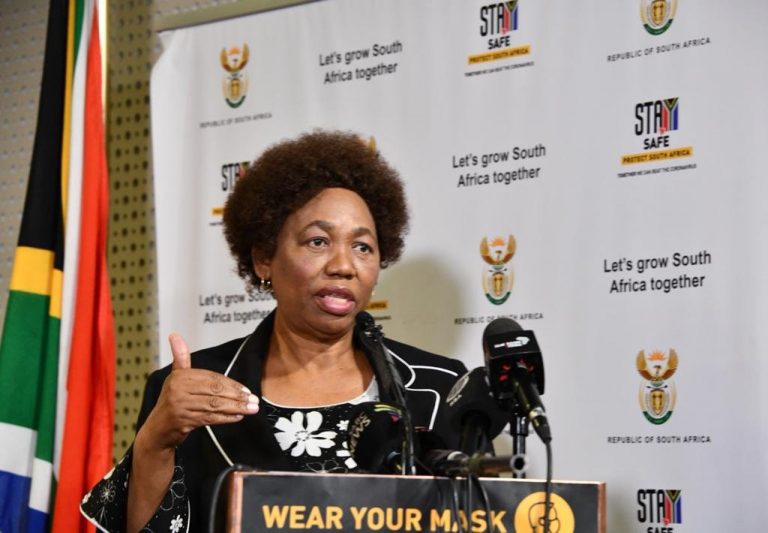
BASIC Education Minister Angie Motshekga says the leaked matric mathematics paper reached learners in at least eight provinces.

Motshekga briefed the media on Wednesday afternoon following her meeting with the Council of Education Minister (CEM) on the progress of the National Senior Certificate examinations (NSC).

“We are however very disappointed that a question paper has been leaked and some learners appear to have had access to it before it was written,” said Motshekga.

She said the department and the CEM have appointed a team to investigate the origins of the leak of the paper, saying those implicated will be dealt with harshly.

“The penalty for offences related to examinations are very serious. As a learner you can be banned for up to 3 years from writing the NSC exam and if you are an employee in the system you could be jailed,” said Motshekga.

On Monday, the department announced that the Mathematics paper 2 had been leaked, compromising 8 of the 9 provinces.

“The MEC in the Free State says they have not received any reports of learners having seen the leaked paper which leaves 8 of the 9 provinces affected by this leak,” said Motshekga.

The minister and her team table their plan of action for the leakage of the paper.

“We are asking candidates who saw the paper before writing to come forward and provide their details to their respective principal,” added Motshekga.

The department has also appointed investigative auditors for marking in order to identify patterns which may lead them to know who saw the paper prior.

“Re-writing of the paper will be our last resort, the only time learners will have to re-write is if we see that the quality of the examination has been compromised,” said Motshekga.

Meanwhile, Motshekga said the matric results for the class of 2020 will only be released on 22 February 2021.  

(SOURCE: INSIDE EDUCATION)

Post COVID-19: Opportunity For Universities To Have A Rethink

TAWANA KUPE and GERALD WANGENGE-OUMA

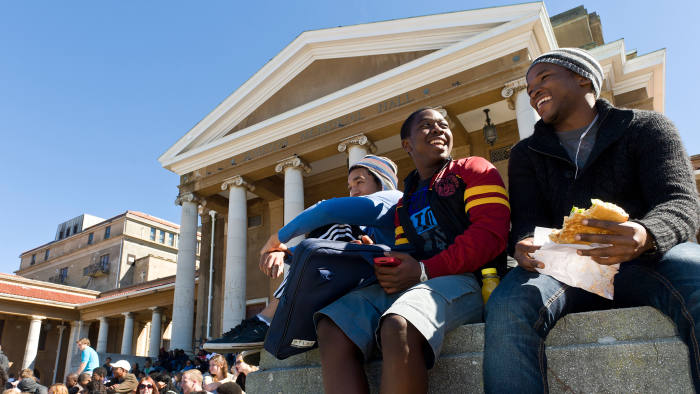
UNIVERSITIES have a long history of operating in environments that are unstable, disruptive and unpredictable. They’ve endured political upheavals, financial crises and disruptive trends such as digital transformation and globalisation.

They’ve had to respond to demands for greater access, life-long learning and multiple competing demands from students, society, the state, industry and local communities.

But the COVID-19 pandemic is unprecedented and a more formidable challenge. The scope and scale of its challenges have multiple dimensions. In the South African context, these are interwoven into existing socioeconomic conditions. These include poverty and deep, unsustainable inequalities.

The pandemic is cause for pause.

We have to make sense of its impact. More importantly, we have to seize the moment to be innovative, proactive and adapt for a post-COVID-19 world. Higher education has to re-think what its future would look like and take steps towards this.

This is no easy task considering that the exact parameters of a post-COVID-19 future remain unknown. What’s clear is that many aspects of the pre-COVID-19 reality will change. The pandemic has, for example, intensified existing disruptive trends and crises. These include digital transformation and financial crises.

Futuristic trends are already emerging, having been accelerated by the pandemic. They include online teaching and learning and the need for up-skilling. Remote working, adoption of 3-D printing, artificial intelligence and robotics have also been accelerated by the pandemic.

The pandemic has also challenged the suitability, viability and sustainability of university operating models, practices and systems. If they are to survive and thrive after the pandemic, universities must reassess and adapt their strategies.

COVID-19 has many negative implications for higher education. These include the disruption of academic programmes and research, financial challenges, and health and wellbeing of staff and students. Graduates also face a constrained labour market due to the poorly performing economy that has been aggravated by the pandemic. These will reverberate long after the pandemic has been contained.

Fault lines

The migration by universities to emergency remote learning has sharpened the existing socio-economic fault lines in higher education and society at large. This is mainly due to varying institutional resources and students’ socio-economic circumstances. These hamper students’ experience of the benefits of online education.

A number of universities are struggling with this transition. This is mainly due to inadequate information technology infrastructure, limited expertise for online teaching and learning methods and the the inability of institutions to provide computers and data to students.

Notwithstanding these challenges, the pandemic has highlighted the need for a hybrid or blended education strategy that’s aligned with the country’s reality.

The idea isn’t to pursue online education as an alternative to contact higher education. Nor is online education an antidote to the sector’s resource challenges. It’s to optimise multiple delivery modes and embrace creativity and innovation in teaching and learning.

This can be achieved through blending teaching and learning methods to improve learning outcomes. This would also improve graduate readiness for an evolving and unpredictable employment landscape.

COVID-19 is thus an opportunity for higher education to develop online education further. It’s also an opportunity to embrace online education as a delivery mode, using it to expand access and strengthen excellence in teaching and learning.

The financial outlook of universities has been generally negative. Over the past several years state funding hasn’t matched the increasing costs of providing higher education and rising student numbers. The outlook has been worsened by COVID-19.

In South Africa, this challenge has been worsened in three main ways. First, by a plummeting economy and, second, reduced allocations in the 2020 special adjustment budget. Third, by unplanned expenses by universities in response to COVID-19.

This context means that universities must contend with a variety of changes to traditional revenue sources. They must also navigate fragmented funding streams and weather economic fluctuations.

As the sector contemplates the future of higher education, its priority has to be the emergence of a university system that’s appropriately funded to engender excellence, affordability, equitable access and sustainability.

The silver lining

The pandemic has silver linings. It can serve as a springboard for re-thinking the future of higher education. It can also help spur the strengthening of the pact between universities, the state, business, society and communities.

Many universities are involved in COVID-19 research. This includes vaccine and drug development, epidemiology and the socio-economic impact of the disease.

This research presents universities with an opportunity to restore and strengthen trust in their research capabilities and expertise. It can also help universities mobilise research funding, which has been declining.

By pursuing research that can make an impact on areas of great societal need, universities can also demonstrate that they’re interconnected with society. COVID-19 research can demonstrate that universities can contribute to the wellbeing and advancement of South Africa, Africa and the world.

Overall, re-thinking South Africa’s university system should be about creating a future-oriented system.

The pandemic is an inflection point. It behoves universities to re-imagine new teaching and learning possibilities. It calls for universities to re-examine the way they do research and pursue collaborations. It calls for the sector to re-examine how it works. Higher education must re-define the rigid bureaucracies that characterise the system.

Universities must also pursue bold responses to enhance their sustainability, relevance and contribution to the country’s socio-economic advancement. Effective institutional leadership is critical for realising the envisaged future-oriented university system.

(Tawana Kupe is Vice-Chancellor and Principal of the University, University of Pretoria, and Gerald Wangenge-Ouma is Director of Institutional Planning, University of Pretoria)

(SOURCE: THE CONVERSATION)

100 Matrics in SA To Write Final Exams Under Quarantine After Testing Positive For COVID-19

0

NYAKALLO TEFU

BARELY a week after sitting for Grade 12 final exams, almost 100 learners were forced to write their exams under strict protocols after they tested positive.

Department of Basic Education has confirmed that several learners from four provinces, Eastern Cape, Gauteng, Free State and the Western Cape will now write exams in isolation facilities after testing positive.

The hardest hit province is the Eastern Cape, which has recorded 53 learners who have to isolate and write their exams.

Last week during his live address to the nation, Ramaphosa warned that Eastern Cape was showing signs of a resurgence in COVID-19 infections.


He said in the past two weeks, the number of new cases in the province was 50% higher than the week before.

These increases were being driven by massive spikes in the Nelson Mandela Metro and the Sarah Baartman District in particular.

The Eastern Cape is followed is followed by the Free State with 23 learners who were infected with COVID-19.

They are followed by Gauteng and the Western Cape with ten infections each.

The department, together with the Department of Health, agreed on Wednesday night that any learners who test positive for Covid-19 would still be able to write their final matric exams. 

It was previously said that learners who have COVID-19 would not be allowed to enter the exam area.

But after parents and learners requested that the protocols be reviewed, a few adjustments were made. 

Candidates who test positive and are deemed fit to write their exams will be allowed to write, but must do so at a different venue and under secure conditions in compliance with exam regulation

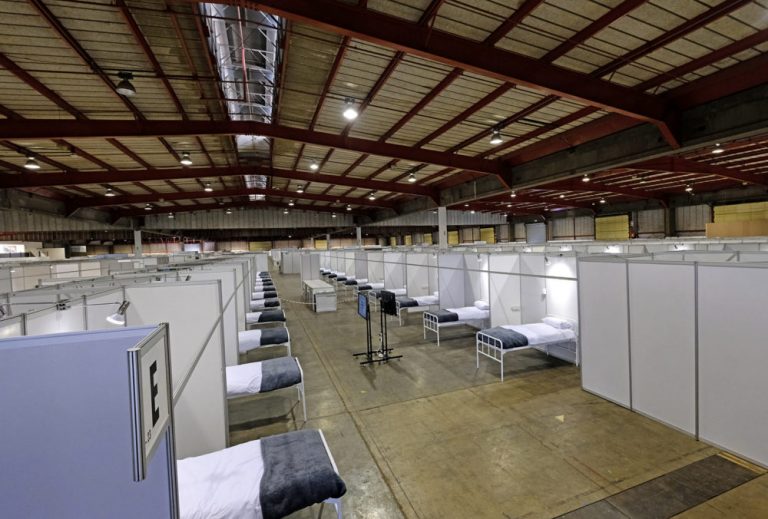
On Sunday, Gauteng Education Department unveiled the Nasrec Field Hospital to assist matriculants who test positive for COVID-19 during their Grade 12 final exams.

Provincial education spokesperson Steve Mabona said the COVID-19 field hospital was officially opened on Sunday to ensure learners are able to complete their exams.

On Tuesday, a joint meeting in Parliament of the Portfolio Committee on Basic Education and the Select Committee on Education and Technology, Sports, Arts and Culture is expected to discuss the impact of COVID-19 lockdown on schooling.

“An exam centre has already been prepared for infected learners. They will be spending about 10 days depending on how they do. We might extend their stay or they will go home,” said Mabona.

Mabona said they were monitoring two learners who were still awaiting their results but so far of the learners at the hospital two were from Tshwane South with one from Sedibeng West.

Bronagh Hammond, a spokesperson for the Western Cape Education Department said it has received 10 requests for assistance for learners that are COVID-19 positive across the province.

“The WCED has arranged for isolated venues in buildings outside of schools. No COVID-19 positive candidate can write at a school, therefore alternative venues have been sought across the Province so that these learners can be assisted,” said Hammond.

Free State education spokesperson Howard Ndaba said each district in the province had its own quarantine sites to deal with the COVID-19 infected learners.

They include Motheo, Xhariep, and Lejweleputsa districts.

“However, it must be noted that not all learners are writing at the quarantine sites. Some are writing at their schools in isolation rooms,” said Ndaba.

Eastern Cape education spokesperson said Vuyiseka Mboxela  the learners who tested positive were from various schools across the province.

“Some of the learners are able to self-isolate and so far. We are not in a position to know or be at a point where there are requests for people who want to be quarantined in government facilities because most of the learners were detected through private means, like people who went to private hospitals,” said Mboxela.

“In the case of a bigger number of learners infected by COVID-19, let’s say 3 000, the province will be able to handle this because it has field hospitals across the province. Above everything else as the department of education we are working together with the department of health and we have identified community halls where the 53 learners infected will write. When the learners are done writing they will be sent back to isolation.”

Matriculants are currently in the third week of their final National Senior Certificate (NSC) examinations.

The Department of Basic Education (DBE) said it has partnered with the Department of Health to ensure learners write their exams despite the coronavirus pandemic.

“We are prepared and working very closely with the Department of Health and we are sure that we will manage,” added Mabona.

Basic Education said each province has space available where they learners can write in quarantine.

“The DBE has been monitoring the Matric examinations across the country as candidates write under COVID-19 conditions with revised safety protocols,” Basic Education Department said in a statement.

(SOURCE: INSIDE EDUCATION)

Department Of Basic Education To Probe ‘Outrageous’ Leak Of Matric Maths Exam Paper

0

NYAKALLO TEFU

THE Department of Basic Education and quality assurer, Umalusi have launched an urgent investigation after a Mathematics Paper Two was leaked on Monday just hours before it was set to be written.

The mathematics paper is reported to have been leaked in Gauteng and Limpopo.  

“The DBE is investigating the matter to establish the extent of the leak. Early sources point to the confinement of the leakage to a few learners located in these two provinces,” Basic Education said in a statement.

“The investigating team is gathering evidence and a report will be submitted shortly. The Department will enlist the support of the Law Enforcement Agencies to assist with the investigation.”

Umalusi said: “This is a very disappointing incident that has the potential to undermine the integrity of the writing of National Senior Certificate examinations in the affected provinces.”

“In situations like these, Umalusi’s mandate is to collaborate with the relevant assessment body (DBE) and law enforcement agencies in investigating the extent of the leak to make determinations about the appropriate course of action.”

The quality assurer said affected schools may be required to write another paper.

“Depending on the outcome of the investigation, affected schools may be required to write another paper on a date that will be determined by DBE and Umalusi.”

Umalusi CEO Mafu Rakometsi said the quality assurer was working with the Department of Basic Education to bring the perpetrators to book.

“We take this matter seriously and will do everything in our power to collaborate with the Department of Basic education, law enforcement agencies and all stakeholders, to ensure that the perpetrators of this heinous act are brought to book,” said Rakometsi.

“We remain committed to ensuring that the integrity of this examination is protected and that the National Senior Certificate examinations conducted by the Basic Education Department remain valid and credible.”  

The Department of Basic Education has made an appeal to candidates to remain focused on the examination papers that are still to be written and be assured that the culprits that are at the centre of this despicable act will be dealt with harshly.  

(SOURCE: INSIDE EDUCATION)

Conservation Of SA’s Biodiversity Key To Protection of Jobs Post-pandemic – Barbara Creecy

0

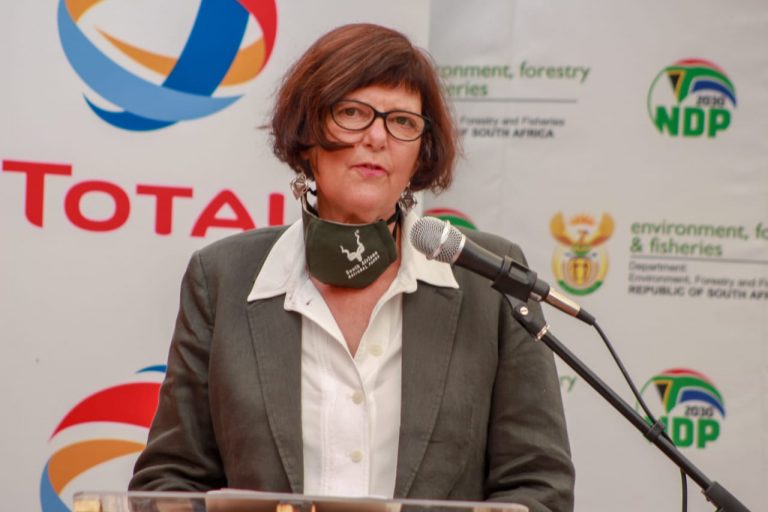
MINISTER of Environment, Forestry and Fisheries Barbara Creecy says the on-going conservation of South Africa’s biodiversity is essential for the protection of over 400 000 jobs.

The tourism sector, which was one of the hardest hit by the COVID-19 pandemic, benefits from the creation of more than 88 000 jobs through nature-based travel.

“Our unique biodiversity status means we have a significant economy which creates jobs in parts of our country where there are few other opportunities,” Creecy said.

“In addition, biodiversity or nature-based tourism generates a direct spend of approximately R31 billion in the economy annually”.

Creecy was speaking at the launch of the South African National Parks Week in the Western Cape, which is hosted under the theme “Know Your National Parks”.

As part of week-long initiative, national parks will be accessible to South Africans at no charge between Monday, 16 November and Friday 20 November. Social distancing protocol will be followed to adhere to COVID-19 restrictions.

The week is intended to shed light on the importance of national parks on not only the country’s biodiversity, but also communities that live on the surrounds of these parks and benefit economically from their activity.

This is also an attempt to boost an ailing tourism sector by showcasing national parks as affordable local holiday destinations.

South African National Parks CEO Fundisile Mketeni said expanding access to national parks placed the body in a position to support rural economies.

“SANParks is perfectly positioned to contribute towards addressing pressing developmental objectives such as socio-economic development, through the provision of employment to rural communities living adjacent to National Parks and support to small, medium and micro enterprises,” Mketeni said.

With South Africa’s long history of land dispossessions, numerous national parks remain the subjects of emotional land redistribution claims by surrounding communities.

SANParks said it was aware of South Africa’s “painful past” and would use its initiatives as a way to make contributions towards these communities.

Creecy said government was working with the Commission on the Restitution of Land Rights to finalize outstanding land claims affecting protected areas.

(SOURCE: INSIDE EDUCATION)

World Diabetes Day: University of Pretoria Insulin Project Acknowledges Crucial Role Of Nurses In Managing The Disease

0

Dr PATRICK NGASSA PIOTIE

DIABETES is a chronic disease that occurs either when the pancreas does not produce enough insulin or when the body cannot effectively use the insulin it produces.

In 2019, the International Diabetes Federation (IDF) reported a diabetes prevalence of 12.8% in South African adults (20-79 years), but cautioned that this estimate is less likely to be a true reflection of the reality because diabetes in Africa remains largely undiagnosed.

The growing diabetes epidemic in South Africa, especially of type 2 diabetes, is related to an increasing urbanisation and rising behavioural risk factors such as unhealthy diet and physical inactivity.

South Africa has the highest levels of diabetes-related mortality on the African continent. In 2019, 89 800 of the 366 200 diabetes-related deaths in Africa occurred in South Africa. Most of these deaths (73.1%) occurred in the economically productive age group, i.e. people under 60 years old.

World Diabetes Day (WDD) was created in 1991 by the IDF and the World Health Organization (WHO) in response to growing concerns about the escalating health threat posed by diabetes. In 2006, WDD became an official United Nations Day.

It is marked every year on 14 November, the birthday of Sir Frederick Banting, who co-discovered insulin along with Charles Best in 1922.

WDD is a large diabetes awareness campaign reaching a global audience of over 1 billion people in more than 160 countries.

The campaign draws attention to issues of importance related to diabetes and keeps diabetes firmly in the public and political spotlight. The campaign is represented by a blue circle logo that was adopted in 2007.

Every year, the World Diabetes Day campaign focuses on a dedicated theme that runs for one or more years. The theme for World Diabetes Day 2020 is The Nurse and Diabetes.

The aim of the campaign is to raise awareness around the crucial role that nurses play in supporting people living with diabetes. As the number of people with diabetes continues to rise globally, the role of nurses and other health professional support staff (such as community health workers and health promoters) becomes increasingly important in managing the impact of the condition.

Traditionally, nurses play a key role in (1) diagnosing diabetes early to ensure prompt treatment; (2) providing self-management training and psychological support for people with diabetes to help prevent complications; (3) tackling the risk factors for type 2 diabetes to help prevent the condition.

The IDF argues that with the right expertise, nurses can make the difference for people affected with diabetes.

In South Africa, the overwhelming majority of patients are seen by nurses, especially in primary care. Nurses are often the first and sometimes only health professional that a person living with diabetes interacts with.

At the University of Pretoria, the crucial role of nurses in combatting the diabetes epidemic is already acknowledged.

In 2018, the Faculty of Health Sciences launched the Tshwane Insulin Project (TIP), a 5-year translational research programme sponsored by the Lilly Global Health Partnership that brought together the School of Medicine (Internal Medicine, Family Medicine, and Physiology), the School of Health Systems and Public Health (SHSPH), the Schools of Health Care Sciences (Nursing Science, Human Nutrition).

UP researchers, led by Professor Paul Rheeder, developed and piloted a model of care adapted to the local environment to address the challenges of insulin initiation and titration in primary care for people with type 2 diabetes.

Nurses were empowered to play a prominent role in identifying uncontrolled patients with type 2 diabetes who were already on maximum oral therapy; to counsel those patients for insulin therapy, to liaise with family physicians through a mobile app called Vula and to initiate those patients on insulin. In the pilot project, through mentoring, including simplified protocols and training, nurses in ten primary care facilities developed the skills and knowledge to identify patients with type 2 diabetes who need insulin, counsel those patients and initiate insulin therapy with the support of a doctor or family physician through a mobile app.

The success of the pilot demonstrated that nurses in South Africa are ready, able and willing to once again make a difference in the lives of persons with diabetes under their care.

Two years into the implementation of TIP, UP researchers have identified various challenges in diabetes management as well as opportunities to improve the lives of people affected by diabetes in South Africa.

Consequently, the University of Pretoria Diabetes Research Centre was created to find innovative solutions to those challenges through cutting-edge research, as well as transdisciplinary and interfaculty efforts.

The vision of the Centre is to be a nationally and internationally recognised leader in diabetes translational research, ultimately aspiring to better the lives of people living with diabetes in South Africa and on the African continent.

Dr Patrick Ngassa Piotie is  Project Manager of the Tshwane Insulin Projectand PhD Candidate at the School of Health Systems and Public Health.

(SOURCE: UP)

University of Fort Hare’s R400 Million Student Village Residence Project To Be Completed in December 2020

CONSTRUCTION of the biggest student residence in South African history, Student Village on the Alice campus of the University of Fort Hare is nearing completion. To mark this significant milestone, the university, together with the project developers, hosted a roof wetting ceremony on 5 November.

The ceremony was held to acknowledge work done at the newly built student centre which is part of the bigger project worth R400m. This student housing development is a lead project in the Department of Higher Education and Training’s (DHET) Student Housing Infrastructure Programme (SHIP), which aims to significantly improve the number of beds and quality of student housing on both rural and urban campuses country-wide. 

The project is being developed by student accommodation group, STAG African. Once completed, it will boast 2047 student beds, an addition to the 4800 beds that the university currently provides to students. The newly-built student centre will house a number of different outlets including a cinema.

Despite delays caused by the Covid-19 lockdown, the project is well on track and expected to be completed by the end of this year and fully functional by the beginning of next year (2021).

Gracing this momentous event was Vice-Chancellor, Prof Sakhela Buhlungu, MEC members, contributing SMMEs from the local community and members of the business community in Alice. Also in attendance was the Senior Princess Nomarharhabe Sandile, daughter to the recently departed Queen of Amarharhabe, Noloyiso Sandile.

Speaking during the ceremony. Prof Buhlungu said the project is the biggest development to be undertaken in Alice to date. “It has created jobs for locals and created economic participation to sub-contractors in the region. Most importantly, it has created spaces of dignity.”

“The 2020 to 2030 decade has been dubbed a decade of renewal for the university entirely and students should feel they are part of it. This student residence is a vote of confidence in the main (Alice) campus. We are putting our roots down in Alice, we anchor it,” said the VC.

Prince Zolile Burns Ncamashe who spoke on behalf of the developers took the opportunity to praise the university and the project it has undertaken. “In this place lies great people who have departed. But when they look at the University today, it is with great sense of happiness that their vision has come to fruition”.

He urged the VC to ensure that during his tenure, Alice town is developed into a university town.

“We would like to see Alice being developed into a university town akin to Stellenbosch and Grahamstown (Makhanda).  It should be a university town that will draw the distinction and keep the posture of world-class structures. We are proud of you (VC) for bringing back Fort Hare to Alice, where it belongs,” he concluded.

(SOURCE: SUPPLIED/UFH)

Millions of Students Have Limited Contact With Teachers

0

MILLIONS of schoolchildren in the United States remain in virtual-only school, and some 5.5 million of them have limited contact with a live teacher – even online.

According to a report by USAFacts, about 65% of households with children used online learning during the pandemic, and about the same percentage have contact with a teacher at least four days per week. But 11% of households with children, approximately 5.5 million children, had no contact with a teacher in the last week, as opposed to the five days of in-person classes they would receive during a normal school year.

While the majority of households learning remotely use online resources, about 14% of households with children use paper materials at home, and 8% reported sometimes, rarely, or never having access to a computer for educational purposes.

The report, derived from U.S. Census Bureau data, illustrates a trend of children in households being more likely to receive online instruction as their household income increased. Additionally, 23% of households with children have had classes canceled this year due to the pandemic, and low-income households were more likely to have classes canceled.

Learning environments differ from state to state as well, with about 85% of households with children in Washington learning remotely, while only 25% used online learning in Wyoming. These varying rates are a result of both infection rates, which vary significantly state to state, and also the varying public health measures in each state.

(SOURCE: USNEWS.COM)