Home Blog Page 371

Uganda’s Student Leaders Seek Parliament Intervention In Re-opening Of Universities

0

STUDENT leaders from public and private universities have called on government to reconsider the decision to re-open academic institutions for only finalists.

The guild student leaders from Makerere University, Kyambogo University and Uganda Christian University who presented a joint petition to Speaker Rebecca Kadaga on 14th October 2020, argued that the decision to re-open institutions of higher learning to only finalists disadvantages continuing students.

The Information and Senate Representative from Makerere University, Joshua Muhwezi Lawel said government’s proposal to make it compulsory for continuing students to adapt to online learning is not feasible since internet penetration is still very low.

“This model discriminates students with disabilities especially those with visual and auditory impairments,” he said adding that, “online learning model is still affected by number of challenges which include bandwidth limitation, high costs of internet subscription, unreliable internet and infrastructure limited to only urban areas.”

Muhwezi added that online learning does not favour courses that require practical engagement especially science courses like human and veterinary medicine and engineering.

“We propose that online learning is suspended because it is discriminatory and inefficient,” he said.

Muhwezi called on government to make arrangements for continuing students to attend classes physically arguing that the Standard Operating Procedures to curb the spread of the coronavirus are easily observed in gazetted areas.

“Students doing practical courses should be allowed to come back and access accommodation in their respective halls of residence and hostels since online studies are not feasible,” said Muhwezi.

The Guild President of Uganda Christian University, Timothy Kadaga called on government to suspend taxes on private universities since they have been closed for the past six months and yet their operations largely depend on tuition fees from students.

“The tax suspension will give these universities time to recover from the six months of inactivity,” he said.

Timothy Kadaga also urged institutions of higher learning to exercise lenience in tuition fees payments saying that parents cannot afford the 100 per cent fees.

“Parents have been affected financially; we therefore, ask that institutions of higher learning should allow students to pay 60 per cent of the tuition fees as opposed to the required 100 per cent,” he said.

Speaker Kadaga said she will convene a meeting between the student leadership and the Ministers of Education, Health and Finance to find a way forward.

“We need to find a solution on whether continuing students should study online or not,” she said.

The Speaker added that attempts by legislators to move a motion to suspend taxes on private universities were futile.

“We tried to move a motion on taxes on private universities but the Minister vehemently opposed it,” Kadaga said.

The Ministry of Education and Sports announced that academic institutions will re-open on 15 October 2020 for finalist students at all levels following a six months’ closure due to the Covid-19 pandemic.

(SOURCE: EAGLEONLINE)
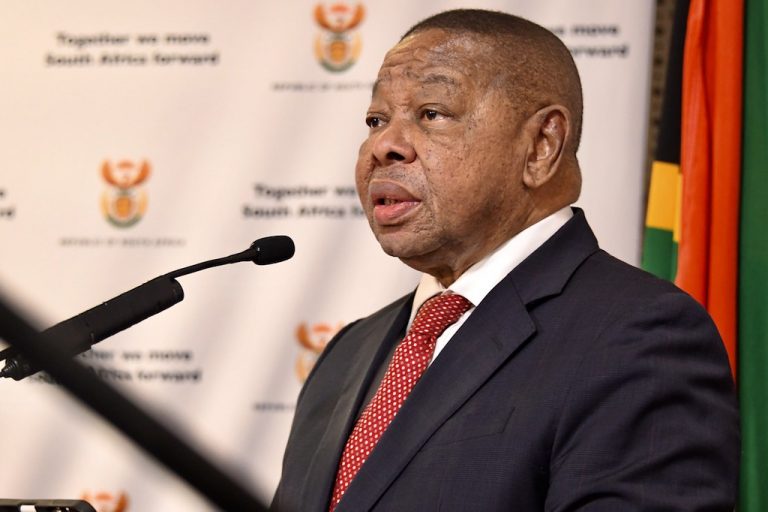
Nzimande Condemns Torching Of UKZN’s Student Residence

0

NYAKALLO TEFU

HIGHER Education Minister Dr Blade Nzimande has asked the management of the University of KwaZulu-Natal to tighten up security at its campuses.

This follows the torching of a student residence – The Oval – at UKNZ’s Westville campus this week.

“The destruction of university property is a criminal offence and all those engaging in such acts must be arrested and face the full might of the law,” said Nzimande.

Nzimande has urged university management, working together with law enforcement agencies, to swiftly bring those responsible for ‘this shameful’ and ‘outrageous act’ to book.

Higher Education spokesperson, Ishmael Mnisi said: “The Minister Nzimande further calls upon the university community – both students and staff – to isolate, identify and expose these criminals who continue to vandalise the university property. 

“The minister further said that these criminals must be totally removed from our institutions as they do not deserve to be within our institutions, but belong to jail.”

Details of why the building was set alight are not yet clear. 

(COMPILED BY INSIDE EDUCATION STAFF)

Ramaphosa Vows To Create 300 000 Teaching Posts To Help Young Jobless People

CHARLES MOLELE

PRESIDENT Cyril Ramaphosa has vowed to create more than 800 000 jobs in the next three years using the government’s R100bn war chest

These will include 300 000 contract-based teaching jobs for unemployed youth.

He said the education and school assistants – who will be paid a stipend of R3 500 per month with 1% contributed towards UIF – will be employed at the country’s 23,093 schools.

Outlining his much-anticipated Economic Recovery Plan in Parliament on Thursday, Ramaphosa said government has committed R100 billion over the next three years to create jobs through public and social employment.

“We are going to create 300,000 opportunities for young people to be engaged as education and school assistants at schools throughout the country, to help teachers with basic and routine work so that more time is spent on teaching and enabling learners to catch up from time lost because of COVID,” said Ramaphosa.

He added: “The employment stimulus is focused on those interventions that can be rolled out most quickly and have the greatest impact on economic recovery.”

“At the heart of the employment stimulus is a new, innovative approach to public employment which harnesses the energies and capabilities of the wider society.”

(COMPILED BY INSIDE EDUCATION STAFF) 

What South Africa’s Teachers Brought To The Virtual Classroom During COVID-19

0

MMAKI JANTJIES

WHILE celebrating this year’s World Teachers Day, we should recognise how the COVID-19 pandemic has amplified the key role that teachers already play in South Africa’s schools.

Before the pandemic, many teachers in the country had not received substantive formal technology training, either to support blended teaching and learning or to fully apply online learning. The decision by the Ministry of Basic Education to shut down schools in response to the pandemic forced teachers to adapt and innovate to ensure that learning continued despite the challenges faced.

South African schools are clustered into quintiles ranging from one to five. This was done to ensure an equal and fair distribution of resources across schools. Schools in the lower quintiles are often based in under-served communities where resources are limited, while quintile five schools are well resourced. This approach was introduced to address past inequities which affected schools. Regional variances, therefore, exist in terms of access to computer labs and related computing resources.

Although many rural and peri-urban schools have some form of computing or information technology resources, some have none at all.

The Basic Education Department created a COVID-19 guide for teachers addressing aspects of health as well as potential resources that they could use when teaching from home. This is how teachers across South African schools have responded to COVID-19:

  • Having little to no previous experience, they have had to adapt to online learning platforms while learning how to use learning management systems during the pandemic.
  • To keep supporting learners, the teachers used online teaching resources and conducted one-on-one consultations using platforms like Zoom, WhatsApp and Google messaging services that allow video calls.
  • The WhatsApp messaging service has been repurposed for learning. Schools have created WhatsApp learning groups to take pictures of book pages and send them to parents, while learners receiving teaching material through their smartphone apps have enabled classes to continue. The Department of Basic Education also launched a complementary WhatsApp portal to provide teachers with information about COVID-19 and educational material.
  • In some instances, teachers pasted pieces of paper on the wall and used them as “whiteboards”, then recorded themselves on their phones to teach learners from these whiteboards. They shared the videos with parents via the WhatsApp groups. Schools have also used platforms such as Facebook to share information and send learning material to parents.

Radio and television have also been used by teachers to supplement learning. Prior to the pandemic, these had lost popularity as key learning media. But, teachers now recognise that since most learners have access to them, they should be incorporated into remote learning material. The Basic Education Department also recognised that pupils were more likely to be able to access radio and television compared to any other technological medium of learning.

While South Africa’s focus prior to the pandemic was on digital transformation in the fourth industrial revolution, teachers have emerged as key players in digital skills development and sustainability.

Going forward

Beyond COVID-19, a lesson for South Africa and many other countries is the role that teachers play in co-creating a digital learning environment. For technology to be adopted in schools, the school leadership and teachers play an important role in the sustainable use of any educational technology.

Indeed, teachers are best placed to adapt lesson plans to suit the child’s home environment. For some, online devices may be readily accessible, while others will need to receive printed materials or tune into radio or TV lessons. Having a range of options is critical in a country like South Africa, where there are enormous variations in income and access to resources.

How technology is introduced also makes a difference. I’ve been working with a number of schools to help provide digital skills that can be used in science, technology, engineering and maths lessons. What we have found is that giving teachers and school principals ownership of the process is vital in the technology adoption process.

To this end, teachers should be encouraged to support each other through the learning journey. Champions of technology in schools need to be recognised and rewarded in order that technology adoption is not seen as just an additional task or burden for teachers.

The education system needs to build e-learning ecosystems involving national and provincial governments, schools, teachers, parents, telecommunications companies, NGOs and the private sector. Most importantly, teachers need to be supported and trained in digital education. These interventions should look beyond the pandemic as critical components enabling learning with technology in and beyond the classroom.

Education professionals and researchers should listen to teachers, work with them and reward them for innovating with technology in schools. Teachers still hold the key to children’s learning and no keyboard or screen can replace their role.

(Mmaki Jantjies is Associate professor in Information Systems, University of the Western Cape)

(SOURCE: THE CONVERSATION)

Lesufi: Grade 2 Learner Allegedly Found Raped And Murdered In Katlehong

0

NYAKALLO TEFU

A GRADE 2 girl learner from Sekgutlong Primary School in Katlehong on the East Rand, who went missing this past weekend, has been found dead.

The learner was allegedly raped and murdered, and was found in one of the neighbours’ backyard.

Gauteng Education MEC Panyaza Lesufi said he was appalled by the death of the Grade 2 learner.

“She was allegedly raped and murdered, and was found in one of the neighbours’ backyards,” said Lesufi.

It is alleged that the learner had gone missing from her home on Sunday, October 11 October.

“We rebuke the horrifying acts of the perpetrators involved in the death of this learner, and we wish for the uncompromised safety of all our learners,” said MEC Lesufi.

The provincial education department said according to information from the local police, a suspect has been apprehended in connection with the girl’s death.

Lesufi said the department has sent a Psycho-Social Unit to the school to provide the necessary counselling to those who have been affected by the incident.

“It is with great sorrow to hear about the disheartening passing of one of our youngest learners at Sekgutlong Primary School,” said Lesufi. 

(COMPILED BY INSIDE EDUCATION STAFF)

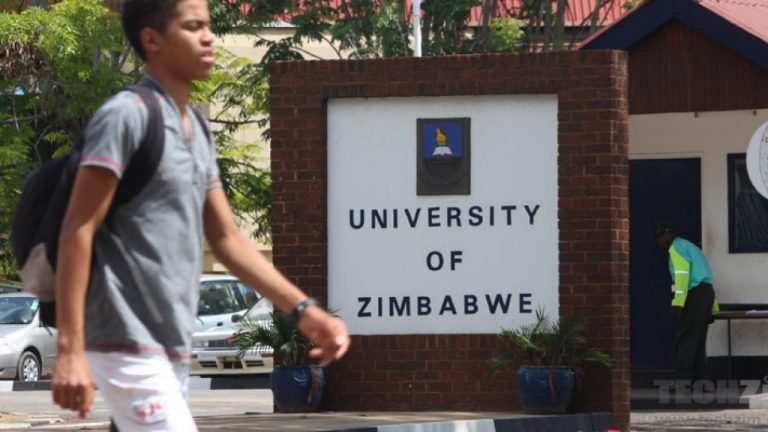
Zimbabwe Universities Missing From Africa’s Top 60

0

ZIMBABWE’s top universities have not made it onto Africa’s top 60 higher learning institutions in what could be a hint the country’s education standards may be lagging behind compared to those on other countries on the continent.

Zimbabwe’s education was once rated highly during the 1980s and 1990s period and revered as one of the best on the continent.

But the recent 2020 African University Ranking (UniRank) index only included three of the country’s universities on its list.

UniRank is the leading international higher education directory and search engine featuring reviews and rankings of over 13 000 universities and colleges in 200 countries.

The University of Zimbabwe, which is the country’s leading institution, was placed on position 62 out of 200 in Africa.

It was followed by Midlands State University, ranked 82 and Africa University at position 91.

“The selection criteria included being chartered, licensed and/or accredited by the appropriate higher education-related organization in each country, offering at least four-year undergraduate degrees and postgraduate degrees,” UniRank 2020 reported.

The rankings also considered delivering courses predominantly in a traditional, face-to-face, non-distance education format.

South Africa’s top universities dominated the list and were ranked as the top six in Africa.

These included University of Pretoria, University of Cape Town, University of the Witwatersrand, University of Johannesburg, University of KwaZulu-Natal and Universiteit Stellenbosch.

“Our aim is to provide a non-academic League Table of the top Universities in Africa based on valid, unbiased and non-influenceable web metrics provided by independent web intelligence sources rather than data submitted by the Universities themselves,” added UniRank.

(SOURCE: NEWZIMBABWE)

Nehawu Alleges Corrupt Relationship Between Blade Nzimande And NSFAS Administrator

NYAKALLO TEFU

THE National Education and Health Allied Workers’ Union (Nehawu) has submitted a presentation to a parliamentary portfolio panel on multiple allegations of maladministration at the National Student Financial Aid Scheme. 

The union claims that since administrator Dr Randall Carolissen’s arrival, he has, among others, appointed his close friends and associates to senior positions without following proper recruitment procedures.

The union said Carolissen was also engaged in a reign of terror at the entity, as he victimised and purged targeted employees, especially those who refused to participate in his unlawful activities, and that there was non-compliance with statutory requirements.

NSFAS is a R35 billion state-funded loan programme for tertiary students who can’t afford fees

Nehawu’s Western Cape provincial secretary Eric Kweleta told Inside Education that the appointment of Carolissen as NSFAS administrator did not solve their challenges at the institution as earlier reported.  

He said the union’s main concern was the ‘questionable’ relationship between the Minister of Higher Education Blade Nzimande and Carolissen.  

“The minister did not consult stakeholders regarding the appointment of the NSFAS administrator. He unilaterally decided to appoint the administrator,” said Kweleta.

“There are appointments of other staff which in our view are irregular. No due processes were followed in terms of appointing Dr Randall Carolissen as an advisor. We also wanted to know if he consulted with the Minister of Finance because he was supposed to do that to get authorization.”

He added: “Minister Blade Nzimande extended the term of the administration for four months from September to December 2020. This was done silently, without the Government Gazette or consultation with stakeholders. The minister did not consult key stakeholders before the extension. Nehawu and Sasco were not consulted.”

Kweleta said there are also advisors at the cash-strapped NSFAS earning almost R2 million per annum for doing consulting work.

“These people are also in the circle of the administrator. Either they went to the same school or they are close friend or family friends. These are the same advisors living lavishly, having unlimited flights, having accommodation at the V&A Waterfront,” said Kweleta.

“With regards to tenders; there is a R3.2 billion tender that NSFAS is currently engaged with for procuring laptops. We have it on good authority that the bid committee was unilaterally changed, including the adjudication committee by the administrator.”

Kweleta said Nehawu has reported the matter to the Special Investigating Unit and the Public Protector to investigate.

We have as early as last year engaged with the SIU on investigating the conduct of the corruption. We have also referred the matter to the Public Protector. Last week Friday we had a session with the Portfolio Committee on Higher Education and Training where the administrator was present and we agreed on a process for 14 days, so that the necessary people mentioned in the report can be consulted and given the opportunity to give their side of the story,” said Kweleta.

Higher Education spokesperson Ishmael Mnisi declined to comment and referred all queries to NSFAS administrator.

Carolissen was unavailable for comment at the time of going to press.

(COMPILED BY INSIDE EDUCATION STAFF)

Over 2 Million Learners Still Not Receiving Food From Basic Education Department, Says Equal Education

0

NYAKALLO TEFU

Equal Education (EE), Equal Education Law Centre (EELC) and SECTION27 say according to the latest court-ordered progress report from the Department of Basic Education (DBE), over two million learners are still not receiving food despite a high court order.

This comes after the NGOs took Basic education Department to court regarding the National School Nutrition Programme (NSNP) after 9.2 million learners were not fed during the lockdown.

“Most provinces have not made plans to ensure that the right of learners to basic nutrition is upheld for all, including for learners who are at home because of the rotating timetables or who are not returning to school for medical reasons,” said the NGOs in a statement.

“While the latest court-ordered progress reports are far clearer and more detailed than the reports that we received in July, SECTION27 and EELC have written to Basic Education Minister Angie Motshekga and the Education MECs, to highlight problems with the reports.”

Equal Education said it conducted a survey of Equalisers across five provinces in mid-September which shows that of the Equalisers who said they are only attending school on some days,  96 out of 125, or 76%, said they didn’t get a meal on the days when not at school.

“66 Equalisers (52.8%) said they know of other learners in their community who are not getting food from their schools on days when they are at home,” said Equal Education.

The NGOS said they were extremely worried that the National School Nutrition Programme is still not reaching learners on the days when they are at home, because of rotating timetables.

The NGOs also said most provinces have not made plans to ensure that the right of learners to basic nutrition was upheld for all. 

The NGOs added that about 98 out of 125 Equalisers said their school did not provide transport for learners who stay far and need to collect food from school.

Some of the findings of the survey of Equalisers, per province: 

  • Eastern Cape: Of the six Equalisers who said they are only in the classroom on some days, five don’t receive a meal on the days when not at school (83%). All nine Equalisers who participated in the survey said their school does not provide transport for learners to collect food at school.
  • Gauteng: 47 out of 62 Equalisers (75%) only attend school on some days, and 31 of these 47 Equalisers (75%) do not receive a meal on the days when not at school. 
  • KwaZulu-Natal: Nine out of 11 Equalisers are only attending school on some days, and said they do not receive a meal on days when not at school (81%). Some learners said there isn’t scholar transport to collect meals.
  • Limpopo: 13 out of the 15 Equalisers who participated in the survey are only attending school on some days. Of the 13, four (30%) said they don’t receive a meal on the days when not at school and nine collect a meal at school on the days when home. Six of the 15 Equalisers (40%) know of other learners in their communities who are not getting food from their schools on days when they are at home. 
  • Western Cape: 20 out of the 28 Equalisers are only attending school on some days, and 19 out of 20 (95%) do not receive a meal on days they don’t have to be at school. Eight of the 28 Equalisers (28%) know of learners in their communities who are not getting food from their schools on days when they are at home.

(COMPILED BY INSIDE EDUCATION STAFF)

Rhodes University: Former Deputy Minister of Finance Mcebisi Jonas Speaks Value-Based Leadership At The 6th Archbishop Thabo Makgoba Annual Lecture

0

RHODES University Business School held its 6th annual Archbishop Thabo Makgoba Annual Lecture this week and due to COVID-19 protocols, this prestigious event was held virtually. Former Deputy Minister of Finance, Mr Mcebisi Jonas, was the guest speaker. This event is held in collaboration between the Archbishop Thabo Makgoba Foundation, Rhodes Business School and Rhodes University.

As a values-based leader, Mr Jonas played a critical role during the anti-apartheid years, as he led a number of political activities both within South Africa and in exile. He played a key part in the establishment of the United Democratic Front (UDF) in the Eastern Cape. Upon his return from exile in the 1990s, he also became a important figure in establishing the ruling African National Congress (ANC) structures in the Eastern Cape.

Amongst other provincial ministerial positions, he served as a Chief Executive Officer in the Eastern Cape Socio-Economic Consultative Council between 1997 and 1999. He served as the Chief Executive Officer for the Investment Marketing of the Eastern Cape, which resulted in the establishment of the Eastern Cape Development Corporation (ECDC), Coega Industrial Development Zone and the East London Development Zone, between 1999 and 2000.

He was the Chairperson of the Portfolio Committee for Human Settlement in the Eastern Cape Provincial Legislature between 2007 and 2009; before he was appointed Member of Executive Committee (MEC) for Finance between 2009 and 2010.

He was later given the mammoth task of being the MEC for Economic Development, Environmental Affairs and Tourism until 2014, when he was appointed as the Deputy Minister of Finance. He resigned as a Deputy Minister and Member of Parliament in April 2017 and wrote a book about corruption titled After Dawn: Hope after state capture. 

His Grace, Archbishop Makgoba opened the event by inviting the divine intervention of the Lord.

During his welcome remarks, Rhodes University Vice Chancellor, Dr Sizwe Mabizela said it was appropriate and befitting to ask Mr Jonas to address the annual lecture, as he is a leader who has lived and continues to live the ethos of values based leadership.

“Twenty-six years into our democratic dispensation, our nation finds itself lurching from one crisis to the next. There is disillusionment and disenchantment with the social, economic and political states of our nation. There is growing and intolerable corruption, a failing public school system, and poverty while other flaunt their ill-gotten wealth. These individuals are placed in positions of responsibility, yet they undermine and discredit the institutions created to strengthen, consolidate and defend the constitutional order. The looting of funds intended to address the challenges of COVID 19 pandemic took corruption in this country to a different level,” he explained.

In his presentation, Mr Jonas said things were likely to get worse before they get better for the country. He called on all activists, leaders and citizens globally to work towards ensuring that the country gets through the transitional period with its core values intact.

“We need to combat the politics of fear and destruction that thrives in periods of turbulence. We need new politics built around authenticity, a new moral code and the belief that a better world is possible. We need leaders rooted in an unshakable ethical foundation to steer us through the COVID-19 pandemic, global attack on democracy and climate change,” he said.

The former Deputy Minister said effective leaders needed a combination of attributes that include ethics and authenticity as a prerequisite and that leaders without these are dangerous. He stated South Africa needs a new vision development model. He said the current model, which is built around free market growth and expansive fiscal redistribution programmes of social grant, free basic services, housing and access to free basic education and healthcare is no longer delivering outcomes required for social progress and institutional stability.

Mr Jonas also acknowledged President Cyril Ramaphosa’s stance in rebuilding the South African Revenue Service (SARS), the National Prosecuting Authority and Transnet. He vehemently rebuked government officials who were stealing money from government and those involved in the COVID-19 corruption.

He said corruption had the ability to compromise the legacy that was built since the dawn of democracy. He said social media is playing a huge role in making active leaders today. “We must continue to seek new ways to hold elected leaders to account, build a robust civil society and invest young value-based leaders to reverse the damage inflicted by this generation,” he said.

When he was asked what prompted him to write his book, he said the debate in South Africa has become narrow and there were no big ideas coming from political parties. He wanted to take a different look and generate debate on the bigger issues.

Since the inception of the lecture, speakers have included: former Public Protector, Professor Thuli Madonsela; former President Kgalema Motlante; former First Lady Graca Machel; former Member of Parliament, Dr Makhosi Khoza; and Gift of the Givers founder, Dr Imtiaz Sooliman.

(SOURCE: RHODES UNIVERSITY)

US: Samantha Kemp Selected As Jasper County Teacher Of The Year

0

Samantha Kemp has two children at home and about 50 others in her classes whom she treats like they were her own.

Kemp was recently selected as the 2020-21 Jasper County School District Teacher of the Year. She was previously named Hardeeville Elementary’s teacher of the year. 

Kemp is married to Vernon Kemp and they have two sons: Kevin, 8, and Tyler, 3. 

“This is a great milestone for me,” Kemp said. “It makes me feel like I have come full circle after teaching for 20 years. I want to make a difference in the lives of the kids and I treat them like my own.”

Kemp’s motto is “every student can learn when given nothing but the absolute best” and she said she works each day to fulfill it.

A Beaufort native, Kemp has taught second and third grades during her career. She currently teaches online third-grade classes amid the coronavirus pandemic.

“It’s a learning experience and I am learning right along with my kids,” she said of teaching remotely.

Kemp said her days consist of teaching about 50 third-graders on different schedules Monday through Thursday. Professional development days are Fridays and students have their own exercises to complete.

“I’m the virtual teacher for the third-graders and we all had to learn which systems we would be using, including Microsoft Teams,” she said.

The school district said, “Mrs. Kemp’s compassion, love and enthusiasm with her students and colleagues is an art and she is highly respected and truly appreciated.”

“Consistent excellence is a hallmark of Mrs. Kemp’s work,” Hardeeville Elementary principal Bryan Jefferson said in a news release. “Even during distance learning, she has not skipped a beat. She is truly deserving of this honor.”

Over the summer, teachers voted to select school-level teachers of the year. A committee of three community members and one instructional staff member interviewed each winner and then selected the District Teacher of the Year.

“Representing the district as a whole makes me feel like a role model,” Kemp said. “It helps others to see where I came from and they can see what I have done. I think about all of the past leadership on the district and school level who have helped me get to where I am and I will truly do my best to represent the Jasper County School District staff and faculty.”

(SOURCE: BLUFFTONTODAY)