Home Blog Page 372

US: Samantha Kemp Selected As Jasper County Teacher Of The Year

0

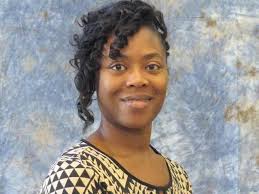
Samantha Kemp has two children at home and about 50 others in her classes whom she treats like they were her own.

Kemp was recently selected as the 2020-21 Jasper County School District Teacher of the Year. She was previously named Hardeeville Elementary’s teacher of the year. 

Kemp is married to Vernon Kemp and they have two sons: Kevin, 8, and Tyler, 3. 

“This is a great milestone for me,” Kemp said. “It makes me feel like I have come full circle after teaching for 20 years. I want to make a difference in the lives of the kids and I treat them like my own.”

Kemp’s motto is “every student can learn when given nothing but the absolute best” and she said she works each day to fulfill it.

A Beaufort native, Kemp has taught second and third grades during her career. She currently teaches online third-grade classes amid the coronavirus pandemic.

“It’s a learning experience and I am learning right along with my kids,” she said of teaching remotely.

Kemp said her days consist of teaching about 50 third-graders on different schedules Monday through Thursday. Professional development days are Fridays and students have their own exercises to complete.

“I’m the virtual teacher for the third-graders and we all had to learn which systems we would be using, including Microsoft Teams,” she said.

The school district said, “Mrs. Kemp’s compassion, love and enthusiasm with her students and colleagues is an art and she is highly respected and truly appreciated.”

“Consistent excellence is a hallmark of Mrs. Kemp’s work,” Hardeeville Elementary principal Bryan Jefferson said in a news release. “Even during distance learning, she has not skipped a beat. She is truly deserving of this honor.”

Over the summer, teachers voted to select school-level teachers of the year. A committee of three community members and one instructional staff member interviewed each winner and then selected the District Teacher of the Year.

“Representing the district as a whole makes me feel like a role model,” Kemp said. “It helps others to see where I came from and they can see what I have done. I think about all of the past leadership on the district and school level who have helped me get to where I am and I will truly do my best to represent the Jasper County School District staff and faculty.”

(SOURCE: BLUFFTONTODAY)

STEM Learning Should Engage Students’ Minds, Hands and Hearts

THESE unprecedented times are a reminder to all of us about the importance of science and its impact on society. Citizens face significant cognitive demands in evaluating scientific evidence, models and explanations presented online or in media reports about both our ongoing climate change crisis and COVID-19.

In formal school settings, the important competencies to assess and evaluate science are learned primarily in science classes and connected disciplines under the moniker of STEM education. Science classes are a powerful place to foster these important competencies with elementary, secondary and post-secondary students.

But our educational systems should be doing more to ensure that STEM classrooms are places where relevant inquiry and analysis pertaining to real-life issues thrives. That can’t be done without changing the nature of student testing.

Squeezing out vital inquiry

Most student classroom activities align with what the teachers assess — including through standardized tests, such as those offered in grades 3, 6 and 9 in Ontario, or high school tests such as British Columbia’s Grade 12 graduate requirement.

When teachers largely assess students’ learning through easy-to-manage quizzes and tests or don’t dedicate suitable time to teaching science because of standardized tests, they squeeze out vital opportunities to immerse children and youth in scientific inquiry. The latter is particularly the case in countries such as Canada that typically focus their external (standardized) testing in language and mathematics.

For instance, science teachers could ask students to work in collaborative groups where they engage with questions related to critical topics such as health and well-being, energy and pollution — as well as climate change, food security and biodiversity. Teachers can create such projects as ways to assess students as they engage in scientific inquiry, using what’s called “performance-based assessment.”

Students could be involved with projects like evaluating the environmental quality of their school premises. They could be tasked with assessing biodiversity and air quality using established scientific protocols and materials and conducting research.

They can present their findings to teachers, peers and the broader school community highlighting issues and recommendations that school administration and staff may wish to consider to improve their school environment.  

Standards-based curriculum

While not a new approach, performance-based assessment has fallen to the wayside in many educational systems because of narrow standards-based curriculum and high-stakes assessment policies.

Cross-cultural research strongly underscores the importance of providing greater synergy between what is valued by policy-makers through assessment and what educators want to teach and assess in schools. Building capacity for more authentic and innovative assessment requires system-wide commitments.

In Canada, performance-based assessment for science used to have a more prominent place in standardized assessments before 2004 (in the Pan-Canadian Assessment Program (PCAP). The Council of Ministers of Education notes in a 2004 report that:

“Unfortunately, fiscal and other constraints prohibited the administration of this ‘practical science’ component ….”

Policy-makers have never reinstated the performance component of this test, even though it showed how students were gaining competencies in scientifically inquiring into questions and solving problems. Ironically, these are the competencies we now find essential in our society.

Student-led investigations

In a recent study of how Canadian Grade 8 science students are assessed, educational researcher Man-Wai Chu and psychometrician Karen Fang reported, not surprisingly, that teachers used mostly classroom tests and quizzes.

Chu and Fang discovered that while teachers infrequently used some performance-based assessments, these didn’t tend to look like open-inquiry tasks where students generate questions, design investigations and come up with solutions. Instead, it looked more like teachers directing the tasks.

Authentic and meaningful performance-based tasks look like a synergy of a student’s minds, hands and hearts. Such tasks pertaining to scientific inquiry are essential if students are to effectively demonstrate competencies related to questioning, procedure and model generation, critical analysis of data collected, model and data assessment and communication of results to audiences that can evaluate their processes and products.

This process is far from linear, and requires students to think critically, be creative and adaptable, and work collaboratively — hallmarks of the scientific enterprise.

Meaningful STEM learning

The good news is that there are useful examples within our education systems that endorse a shift toward authentic and meaningful performance-based science assessment.

For example, the ASPIRE project is an elementary science program that links students to scientists in their communities using inquiry and project-based tasks.

A more robust interdisciplinary program is the newly created secondary school I-STEM program, which incorporates global competencies (C21 Canada), STEM learning outcomes, community connections and Sustainable Development Goals promoted by the United Nations.

The common thread in both programs is that they both demand classroom assessments that go beyond tests and quizzes, and require students and teachers to be involved in more authentic assessment tasks that facilitate real-world applications. For instance, in I-STEM students work in collaborative groups to solve a local community concern about stream erosion.

Students in these programs are assessed using performance tasks that require critical thinking, communication and problem-solving competencies, and that simultaneously immerse them into the productive yet non-linear practices of science.

Changing classroom assessment and large-scale assessments that include authentic and meaningful performance-based science tasks and prioritize relevant topics will help drive educational innovation in the classroom. Such forms of testing will contribute to educating students and citizens who can capably address global challenges for our common good.

(SOURCE: THE CONVERSATION)

Televising School Sport Could Put Too Much Focus On Performance, A Price Too High For Young Athletes

0

A NEW deal to televise and live stream more secondary school sports in New Zealand has attracted significant attention and debate.

First XV secondary school rugby in New Zealand has been televised for some time on Sky Sport. The attraction of new revenue for broadcasters and other sporting organisations is clear, but what might the cost be for young athletes?

The new broadcast deal is a collaboration between the New Zealand Sport Collective (created by former Olympic rowing champion Rob Waddell and representing more than 50 sports) and Sky Sport Next, a YouTube channel run by Sky TV.

The deal evolved after consultation with several bodies including the New Zealand Secondary School Sports Council (NZSSSC), which coordinates secondary school sport.

It is easy to understand why some school students would like to be on television. But there are moral and ethical issues that need to be considered by those charged with governing school sport.

Some principals claim the partnership was not discussed with them in advance.

The increased television exposure adds to concerns of an overly professionalised, “win at all costs” culture that already exists in some school sport.

In response to these concerns, the NZSSSC set up a broadcasting charter in an attempt to protect the health and well-being of students and allow those who do not want to be televised to opt out.

But in reality, the power imbalances at play and other influences mean the charter is unlikely to be effective in many situations. For example, rather than opting out, some schools may feel pressure on them to stay in, to please players and parents.

Health vs performance

Adult high-performance sport must constantly balance health and performance, but secondary school sport must prioritise health.

Evidence suggests professional, high-performance athletes are at increased risk of a “high athlete identity”. This is the degree to which someone defines themself based on their athletic role, and looks to others for confirmation based on that role. This can have both positive and negative consequences.

A performance culture in school sport increases the likelihood of students developing a high athlete identity and this has been linked to dropout from sport.

Given only a very small number of students will become professional athletes (possibly less than 2%) the potentially negative consequences on mental health are a major concern.

Research in adults and US college athletes shows greater difficulty adjusting to a lack of sporting success and more frequent psychological issues in people with higher levels of athletic identity.

A recent secondary school rugby study in New Zealand found high performance expectations often led to a fear of failure. The expected commitment was too much alongside academic workloads.

On the physical side, there is real concern about attitudes to injury. The under-reporting of concussion in rugby is associated with the perceived importance of a match. More than 50% of players across multiple secondary school sports say they’ve seen a player play on when they thought they were concussed.

Beyond concussion, 80% of secondary school netball and football players say they have played while injured, and 50% report being pressured to do so. Increased intensity, driven by a performance culture, has also contributed to increased injuries at even earlier ages in intermediate school sport (ages 12 and 13).

Recent data from the Accident Compensation Corporation (ACC) and Netball NZ reveal a rise in injuries in the 10–14 age group over the past ten years.

Protecting young athletes

In response to concerns, Sport New Zealand recently launched its Balance is Better initiative, which promotes an evidence-based, developmental approach to youth sport.

We’re all about competition, but …

This philosophy does not seem to align with increased television exposure for school sport. It led to questions being asked about the mixed messages emanating from our government agency and their lack of leadership on this issue.

In New Zealand we appear to be at a crossroads in relation to youth sport. As researchers concerned about some of the costs associated with the increasing professionalisation of youth sport, the Balance is Better philosophy suggests we were moving in the right direction.

But increased exposure on television risks extending the high-performance culture in which success is measured solely by the scoreboard. This is increasingly irreconcilable with a culture in which healthy competition contributes to positive youth development.

School sport for all

At a time when the current culture of youth sport is a concern in many countries, is validating participation through the televising of youth sport the direction we want to go?

School sport should be an inclusive form of physical activity. It should be strategically aligned with health and developmental benefits for all students. It should engage as many students as possible, for as long as possible.

A performance-driven culture in school sport, fuelled by television exposure, promotes an inefficient and ineffective way to identify and develop talent. There is little evidence success in school sport predicts future adult sporting success.

The priority for schools should be to develop healthy, high-performing people, not high-performing athletes. School sport can (and should) be a highlight in the educational experience of youth, potentially enhancing physical, social and cultural development.

(SOURCE: THE CONVERSATION)

DUT Donates 500 Face Masks To Various Schools In KwaZulu-Natal And Eastern Cape

0

SIMANGELE ZUMA

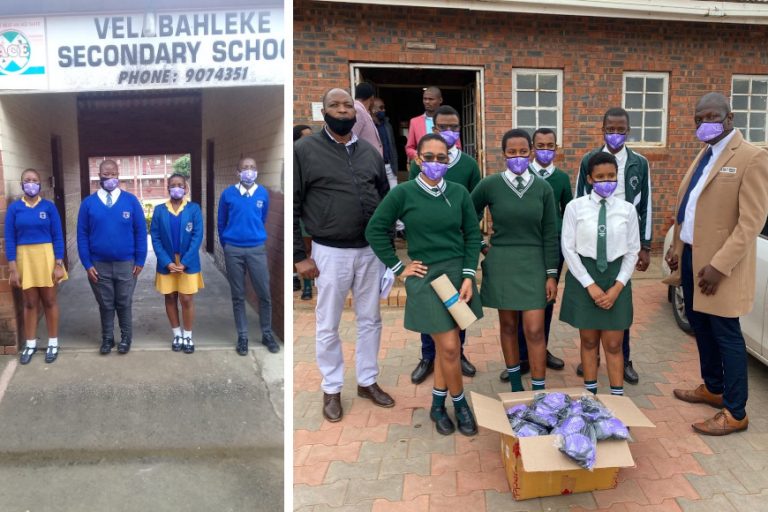
TO provide support to the learners during the tough times of the Coronavirus pandemic, the Department of Student Recruitment at the Durban University of Technology (DUT) recently donated 5000 face masks to 12 high schools in KwaZulu-Natal and the Eastern Cape.

In KwaZulu-Natal the department made this generous donation to five schools which are the top five feeder schools in DUT’s 2020 enrolment. These top five feeder schools that received the face masks are: JG Zuma High School at Bester area in Inanda, Velabahleke High School in Umlazi, Sinethezekile Combined School in Jozini, Sithengile Secondary School in Clermont and Sibusisiwe High School in Umbumbulu.

In the Eastern Cape the schools that have thus far received the face masks are: Gobizizwe Agricultural High School, Ngubesizwe High School, Umtata International School, Sea View Secondary, Holy Cross High School, Zamukulunga High School and Zimele High School.

The Department of Student Recruitment Manager at DUT, Alex Mdletshe said as a caring university, this gesture is to help in the fight against COVID-19 and to ensure the safety of learners and teachers against the virus.

Mdletshe added that this is DUT’s way to offer a helping hand and to provide support to the learners studying during the COVID-19 pandemic.

“We also donated masks to the various schools in the Eastern Cape, during our school visits. The total number of masks donated to all schools is 5000. We hope that this will strengthen relationships with our feeder schools. Our aim is to reach as many learners as possible across South Africa and promote DUT as the university of choice. We are proud to recruit more learners to join DUT as we were recently listed as one of the top five universities in South Africa. This is part of DUT’s Envision 2030 which is improving lives and livelihoods,” said Mdletshe.

To date DUT has been at the forefront of helping the government fight the spread of COVID-19. About 6000 face shields designed and manufactured at the university’s Luban Workshop at the Ritson Campus in Durban have been donated to the KwaZulu-Natal community.

(SOURCE: DUT)

When Education Is Neglected, There Can Be No Progress

0

WHEN we take a brief look at the history of education, we know that it did not evolve as an end in itself, but as a means to addressing some societal problems such as illiteracy. Our forefathers and foremothers had the wisdom to recognise that when people are empowered through education, society will begin to witness a new dawn, and, inevitably, see immense growth. As the United Nations Development Programme (UNDP) states, education is a “critical invasive instrument for bringing about social, economic, and political inclusion of people”.

This is because education provides a foundation for development in any nation. It lays the foundation that serves as a springboard from which a nation can build its economic and social wellbeing. Education has an impact on all aspects of life and gives a clear sense of purpose and meaning to the world. Hence, social development is predicated on access to education and until we achieve universal access to education, social development cannot be fully achieved.


Taking ownership

Over the years, in our eagerness to educate the future generations, I believe we have neglected certain aspects of the education system in South Africa. As civil society, we have surrendered the responsibility of education wholly to the government. While it is the role of government to create an enabling environment for education to thrive, the responsibility does not lie solely with them. It also lies with the private sector and society at large.

The tragedy in the failures of the education sector is partly because as communities and civil society, we have chosen to absolve ourselves of the responsibility of being custodians over our young people’s education. We have outsourced our own responsibilities and have taken the decision not to take ownership of the education and the investment into our young people. I believe that we need to wake up to the fact that government cannot be expected to operate in a silo.

A unified civil society working hand in hand with government can transform the education sector significantly. Government already has a litany of demands to service with a limited fiscus and this necessitates collaboration with communities and the private sector. Partnership is truly the new necessity for education and the only way to accelerate progress and make an impact. The education sector only can succeed if we all work together, take ownership, and invest in the education of future generations.


Back to basics

When I look at our society’s older generations, I am reminded that many did not have the opportunity to receive formal education or have a career. However, despite these challenges, they attached so much value in the importance of education to a point where the next generations reaped the benefits. Today, many first-generation scholars will tell you that their parents, despite not having the opportunity to study, instilled in them an appreciation for the value of education, and this helped them immensely. I believe that as a nation, we need to get back to the basics of understanding and appreciating the value that education brings. We need to reassess our systems and begin to plug those gaps as civil society.


Producing complete and adaptable graduates

At Unisa, our mission is to produce complete and adaptable graduates who are grounded and exceptional in what they do. In our academic programmes, we ensure that our courses respond to the developmental trajectory of this nation and our continent.

We also offer courses that have sustainable development at their core to assist students to prioritise the advancement of society. We want our students to contribute meaningfully to their communities and the economy at large. Our end goal is that our graduates are first in line in getting opportunities as a result of the education that they have acquired at Unisa. The nature of our teaching and upskilling produces graduates who are resilient, proactive, independent, competitive, and most importantly, problem-solving critical thinkers.

This is to enable them to have access to unique opportunities that showcase their resilience while fuelling economic growth. There is no doubt that education plays a major role in the economic development of any country, whether it is a developing or developed nation. Furthermore, no country can achieve sustainable economic development without substantial investment in human capital.

Today, I am certain that if we ensure that young people understand that the development trajectory of the country is dependent on their efforts to get educated and grow, we will achieve sustainable development as guided by the National Development Plan (NDP).

After all, education is the weapon that enriches people’s understanding of themselves and the world and beyond that, leads to massive societal benefits.

As a sector, I believe that we should prioritise innovation, research, and learning, and provide lasting solutions that serve our communities and move the needle on social issues. This should be our mandate because when education is neglected, there can be no progress.

(By Mandla S Makhanya, Principal and Vice-Chancellor, Unisa)

New NMU Deputy Vice-Chancellor: Engagement And Transformation

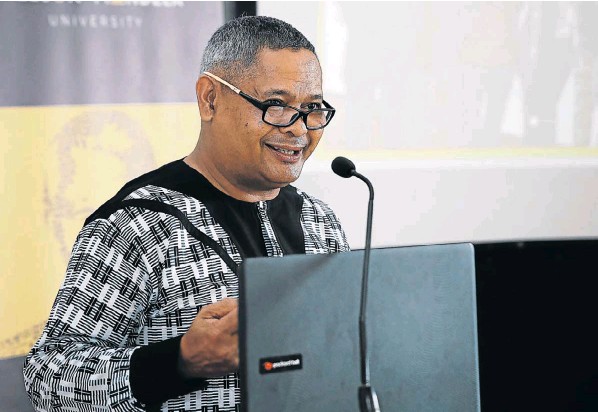
NELSON Mandela University has appointed human rights activist and eminent scholar, Professor André Keet, as its new Deputy Vice-Chancellor: Engagement and Transformation.

Prof Keet has been acting in this role since the University approved the creation of this new post as part of the 2019 institution-wide Organisational Redesign project undertaken last year to further align its structures and processes with its strategic priorities. The University’s focus on Engagement and transformation have become a key focus of the University, as it further advances its key character as a university in service of society.

As the University’s first Chair: Critical Studies in Higher Education Transformation (CriSHET) and with a wealth of practical and scholarly experience in the field, Prof Keet is eminently qualified to drive the new portfolio, as one of four Deputy Vice-Chancellors.

“As reaffirmed by the implications of COVID-19, engagement at our University and across the national and global higher education system, needs to be re-imagined within the context of a responsive, responsible and transformative university.

“Such re-invention requires us to be courageous in perpetually undoing and reconstituting ourselves along social justice lines for the transformative/responsive university to take shape,” says Prof Keet.

“It is to the University’s credit that we, with renewed energy, have been working at it for the past two years, steered by a collective vision under the leadership of the Vice-Chancellor Professor Sibongile Muthwa and the Council.

“I am grateful to be part of this and am particularly encouraged by the way that the entire university community has responded to these strategic redirections.”

Prof Keet has made a hugely positive impact in the three short years since joining the University; with the establishment of the Hubs of Convergence, the Transdisciplinary Institute for Mandela Studies (TIMS), and offering guidance during the development of the Centre for Women and Gender Studies. All these are anchored in the institution’s resolve towards meaningfully grappling with the complex societal challenges of our time, while also working to foster an inclusive, transformative institutional culture that promotes social solidarity and cohesion.

Prof Keet has had an exemplary career in both the public and higher education sectors.

He is a former Visiting Professor at the Centre for Race, Education and Decoloniality, Carnegie School of Education, Leeds Beckett University, United Kingdom and the 2018 Marsha Lilien Gladstein Visiting Professor of Human Rights at the University of Connecticut. He completed two terms on the Ministerial Oversight Committee on Transformation in the South African Public Universities, one as its Chairperson. He currently serves as a member of the Ministerial Panel that is conducting an independent strategic evaluation of the National Institute for the Humanities and Social Sciences (NIHSS).

Prof Keet joined and assisted in setting up the South African Human Rights Commission (SAHRC) in post-Apartheid South Africa in 1996. He later became the Deputy Chief Executive Officer of the SAHRC; and on a unanimous recommendation from Parliament, he was appointed to the Commission for Gender Equality in 2008. His vocation, during this time, was deepening democracy, the advancement of social justice and the promotion and protection of human rights; whilst teaching part-time and by invitation at universities across the country.

Following his career in the public sector, Prof Keet entered higher education on a full-time basis in October 2008 when he became the Director of the Transdisciplinary Programme at the University of Fort Hare.

His first professorial appointment was as an adjunct-professor at the University of Pretoria in 2009; followed by professorial assignments at the University of Fort Hare in 2010 and the University of the Free State (UFS) in 2011.

He joined Nelson Mandela University in October 2017, and was awarded full professorship the following year, during which he delivered his inaugural on university transformation.

In addition to serving as Director of the Institute for Reconciliation and Social Justice (IRSJ) in 2011-2017) at the UFS, Prof Keet was also appointed as advisor to the Rectorate and acted as the institution’s Vice-Rector: Student Affairs and External Relations.

He is a productive scholar and academic citizen. His outputs range from articles and chapters, to journal and book editorships.  He is a frequently requested speaker, nationally and internationally. His past and present postgraduate and research programmes focus on human rights, higher education transformation, and critical university studies. 

He recently teamed up with Michael Cross from the Ali Mazrui Centre for Higher Education at the University of Johannesburg as joint commissioning editors of two book series on higher education transformation.

(SOURCE: NMU)

OPINION| An Equal Byte Of The Apple – Women In 4IR

DR SHIRLEY MAHLASE

 THE previous three industrial revolutions leave behind intergenerational, socio-political, economic, environmental, technological legacies in their structures, upon which the Fourth Industrial Revolution (4IR) is premised.  In considering the potential risks and benefits of the 4IR, we have to critically consider who were included and excluded in the previous revolutions, how the power-relations in these revolutions were gendered and raced and how the benefits, inequalities and legacies of these generations were shared.
Worldwide, and specifically in the South African context, women participated and often led technological development during these three revolutions as mothers and as workers and their reproductive labour has gone unnoticed.  Not least, the benefits of these revolutions were not equally shared.

Though the United Nations had declared internet access as a basic human right in 2016, research shows that while two-thirds of the population worldwide have access to the internet, fewer do in Africa and South Asia.

Access to the internet and to smartphones are furthermore gendered with females often excluded, or sharing devices (Pew Research Center, 2016).

While not everyone is connected, everyone is affected (World Bank, 2016; Castells, 2008). In 20 nations, men are more likely than women to use the internet (Poushter, 2016).

In South Africa 51% of the population is female and 49% male. The statistics on internet penetration usage suggests that out of an estimated population of 58.93 million, 56.3 % of the South African population are internet users in 2020 and that this share is projected to grow to 62.3 % in 2025 (Clement, 2020).

However, the statistics are not disaggregated by gender and the urban-rural dichotomy is missing. Thus far technology is benefitting the rich and a few middle class women across the racial divide whilst the majority of women in rural and marginalized communities are left behind.

There is a plethora of reasons for the lack of access to internet by women including, for example, poor infrastructure, poverty (exacerbated by covid-19), high levels of corruption, expensive data, the lack of smart phones and the lack of computer skills amongst women and marginalized groups.

There is, however, no legitimate reason why women should remain excluded from the 4IR, or take the lead in ensuring that the benefits of the 4IR accrue to all.

In considering the potential risks and challenges inherent in the 4IR, it is crucial that those who were and continue to be marginalised by technological development take the lead in framing the narratives and imaginaries informing the 4IR in the Global South.

A strong ethical framework is needed in order to restore human dignity and address the existing digital inequality in order to transform the lives of women and marginalized communities.  This revolution has to be different. This revolution has to leave a different legacy than the preceding ones.

(This article was written by Dr. Shirley Mahlase, Ph.D (University of Cambridge, UK) M.Ed (University of Birmingham, UK). University of the North (B.A. Paed & B.Ed). Managing Director: Mmakete Consultancy (Pty) Ltd.)

(SOURCE: University of Johannesburg)

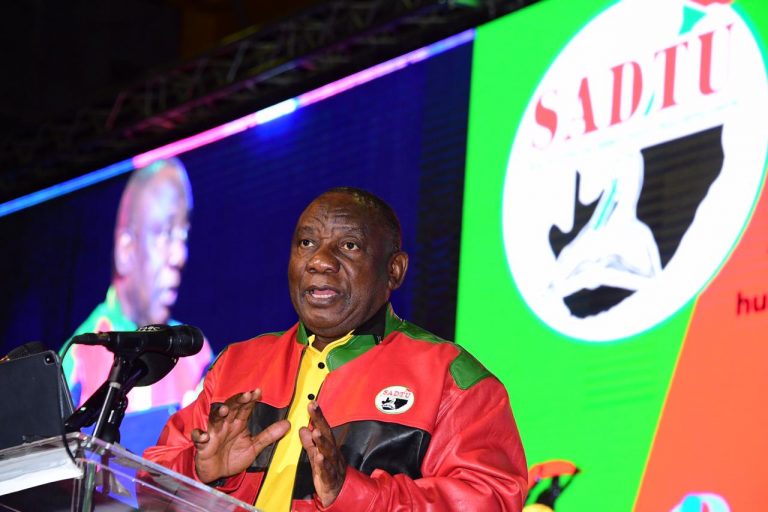
Ramaphosa Pays Tribute To Resilient SA Teachers At SADTU’s 30th Anniversary Celebrations

PRESIDENT Cyril Ramaphosa says government was working tirelessly to resolve infrastructure problems at South African schools such as sanitation, water, electricity, proper and safe classrooms, as well as access to adequate learning materials.

Ramaphosa was speaking at the 30th anniversary of the South African Democratic Teachers’ Union on Tuesday night.

“These great challenges, which we are determined to resolve, continue to be a stain on our collective conscience. SADTU has been very vocal about the urgent need to resolve them, and we thank you for that, and the role the organization can play in doing so,” said Ramaphosa.

“This is consistent with your role as our partner in transforming our education system and eradicating the inequalities that exist within it. I also urge you to lend your full support to another challenge that threatens to reverse the gains of our hard won democracy, and that is the scourge of corruption.”

He added that government was committed to the safety of all educators and learners, as well as of all the support staff. 

He urged SADTU to work together with government to rid schools of violence that threatens the safety, not only of learners, but also of teachers. 

“Many of them have been subjected to violence, learners have also been subjected to violence and we must work together to eradicate violence in our schools,” said Ramaphosa.

“Schools are meant to be places where young people learn, happy places, places where they must go in with a smile and leave with a smile that is underpinned by knowledge.”

Ramaphosa also paid tribute to the country’s teachers for the role they played during the COVID-19 pandemic, saying they were true nation-builders.  

“Your dedication to the success of our children and the future of our country has been proven time and again, but more so during the COVID-19 pandemic. For the sake our children and their academic progress, you braved the dangers and risks posed by COVID-19 and returned to the classroom when asked to do so,” said Ramaphosa.

“I appreciate that some may have been understandably and justifiably reluctant to return. Nonetheless you did so, because your passion for education triumphed over fear and anxiety.  We remember and pay tribute to those teachers who have succumbed to the virus and those who are still not well. I also wish those who are currently infected a speedy recovery so they are able to return to work to do what they love most, namely teaching our children and nurturing them to be future builders of our country.”

(COMPILED BY INSIDE EDUCATION STAFF)

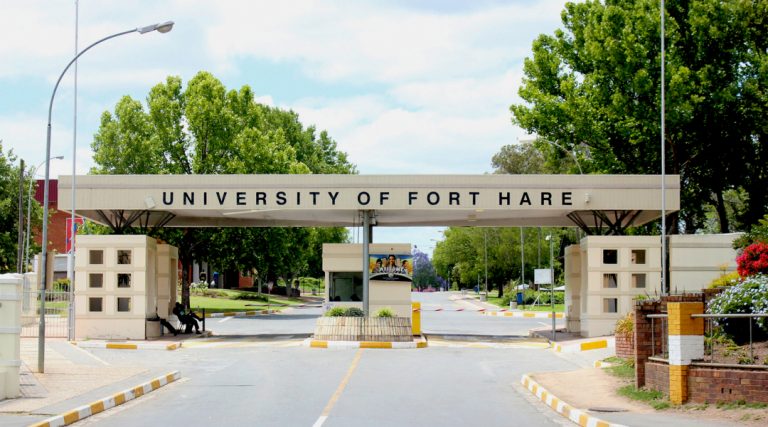
Fort Hare’s SRC President Siphiwo Ngcenge Calls On Students To Pull Together To Make The “New Norm” A Success

ARETHA LINDEN

AS the university gets ready to welcome all students back on campus under the level 1 Risk Alert, the Interim Student Representative Council (SRC) President, Mr Siphiwo Ngcenge is calling on students to pull together and make this year a success.

In an interview with This Week@FortHare, Ngcenge gave assurance that the SRC would continue working tirelessly with the university management to ensure no student is left behind.

“There is no doubt that we are all anxious as we enter unchartered grounds. We have never been here before and no one has.  All of this is new.  But with a positive mindset and sheer determination, we can finish this year under the ‘new norm’ said Ngcenge.

“We have agreed with the Office of the Deputy Vice-Chancellor: Academic Affairs that priority must be given to first-years.  Based on the fact that most of them come from rural backgrounds, they will need additional support to be fully integrated into the university community.  The support offered to first-years will range from extensive tutoring to ongoing consultations, on and off campus.”

He said while delays in the allocation of data and laptop distribution continue to exist due to circumstances beyond the control of the university, progress is being made.  

“About 93% of students are now receiving their data.  Our aim is to ensure all students receive their data.  In terms of laptops, there is a huge backlog but we are confident that all students will receive their laptops soon,” he said.

Ngcenge cited four key elements that he believes would make the adjustment to the ‘new norm’ achievable:

1.       Proper consultation

2.       Communication

3.       Adequate staff, and

4.       Positive attitudes

“If we could have these key elements in place, adjusting to the new norm will be easy,” he said.

Ngcenge said the SRC’s priority now is to get the catch-up plan finalized.  “We have applied pressure and we hope the plan will be available by the end of this week.”  

He advised students to use their time wisely and to focus on their studies.

“Time is limited, but if used wisely, it is doable.  And should you get stuck, the Student Counselling Unit is available for counselling support.  For academic support, we have our Peer Educators who are on standby to assist.”

The President also indicated that the SRC’s Academic Officers from all three campuses (East London, Alice and Bisho) were in the process of identifying suitable spaces to set up consultation offices.

“We are working with the Covid-19 Task Team to ensure these consultation offices will be safe and compliant with Covid-19 health and safety regulations.”

To fellow students and the entire university community, Ngcenge conveyed a heartfelt motivational message: “We need to join hands and pull through this year, together.”

(SOURCE: UFH)

Even In The Virtual Classroom, Teachers Remain The Heartbeat Of Any Serious Basic Education Department, Says Motshekga

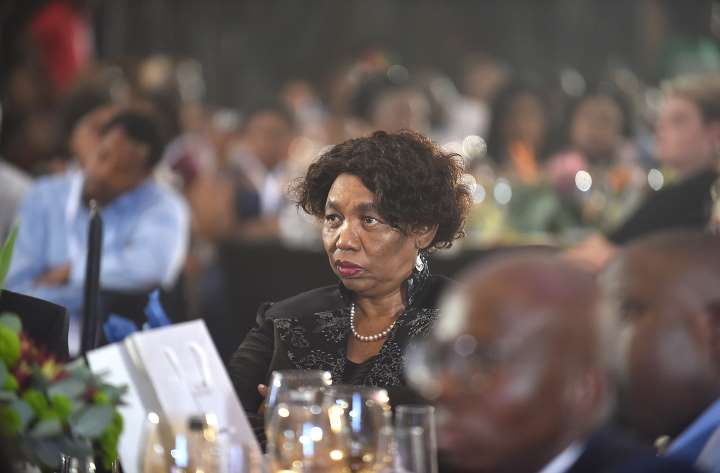
BASIC Education Minister Angie Motshekga has paid has paid tribute to the country’s 400 000 teachers as the country joined the rest of the world in celebrating World Teachers’ Day.

Motshekga described teachers as a national treasure and said they were indispensable and critical in government’s efforts to steer the country back into the critical growth path after years of inertia, State Capture and general malfeasance.

Motshekga celebrated World Teachers’ Day at the Mamelodi Teachers’ Centre in Pretoria.

This year, the Department of Basic Education’s theme for the occasion is: ‘Teachers: Leading in crisis, re-imagining the future’.

“Without the over 400 000 teachers on the payroll of the State servicing over 12 million children, the system will collapse,” said Motshekga.

Motshekga also paid tribute to teachers and school staff who died from the coronavirus.

On June 8, the country began the gradual reopening of schools, having been closed since March, after the first case of COVID-19 was reported in the country.

At least 11 teachers succumbed to the deadly virus while a total of 2 740 out of total workforce of 400 000 were infected.

“I am happy to announce that all our teachers heeded the call to return to school since the lapse of working from the home arrangement as part of the country’s measures to combat the spread of the virus,” said Motshekga.

“Sadly, some teachers have succumbed to the virus and other ailments. We send our deepest condolences to the bereaved families. Your loss cuts deep into our souls. Be comforted that your loved ones have run their race. Ours is to pick up the spear and soldier on. The dearly departed will continue to live amongst us in our hearts. You will surely be missed.”

Motshekga also dismissed the perception that South African teachers were not qualified, saying this was nothing but a tissue of lies.

She said the country has greatly improved the quality of teachers.

“Only 54 percent of teachers were qualified in 1994, but today out of over 400 000 teachers, only a statistically insignificant number is still completing their qualifications,” said Motshekga.

She said according to the Centre for Development & Enterprise (CDE) latest (March 2015) report, ‘it produced some noteworthy and surprising findings of the current teaching force.’

The CDE used data based on over 400, 000 teachers, who were South African citizens between the ages of 22 and 65, from the Annual School Survey (ASS) data, it produced the following profile of the South African teaching force:

  • Eighty-one per cent qualified: 66 per cent had an M+3 qualification, and 15 per cent had an M+4.
  • Nineteen per cent unqualified: In education terminology, an unqualified teacher is a person who doesn’t have an initial teacher training or postgraduate teaching certificate, yet they have the necessary three-year diploma/degree in a subject they teach.
  • In 2013, we had 10 per cent of teachers who had the equivalent of an M+3 qualification, but no professional teaching qualification, and about another 10 per cent had an M+2 or lower.

She added: “Just to show that our teachers are life-long learners between 2012 and 2013, 31 per cent of teachers upgraded from unqualified to qualified while in employment, this exceeded the 22 per cent of new teacher graduates who entered the profession for the first time in 2013. This trend has continued over the years.”

“This suggests that the majority of teachers build up their qualifications on the job, often over many years. In fact, by 2017, the number of unqualified teachers was less than 5000, including the underqualified teacher cohort.”

(COMPILED BY INSIDE EDUCATION STAFF)