Home Blog Page 373

Global Teacher Prize Winner Peter Tabichi Among Newly Sworn Heroes Council Members

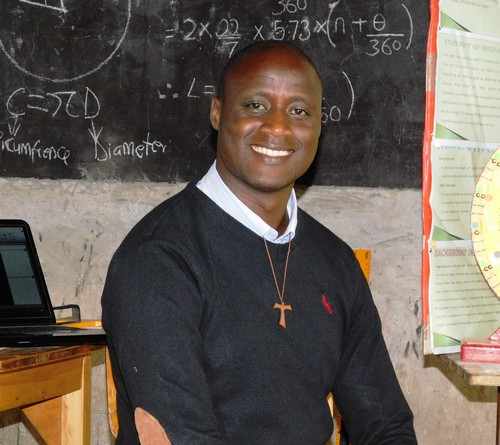
FORMER Supreme Council of Kenya Muslims(SUPKEM) Adan Wachu was on Monday sworn in as the Chairperson of the Heroes Council in a ceremony Presided over by Chief Justice David Maraga.

Wachu was sworn in together with 5 other members of the council including Global Teacher Prize Winner Peter Tabichi and Marathon World Record Holder Eliud Kipchoge.

Others who were sworn in include Principal Secretary Josephta Mukobe, Mau Mau veteran Gitu Wa Kahengeri and Christine Omwakwe.

The functions of the council include formulating and implementing a policy relating to national heroes, identifying, and recommending national heroes and enforcing sanctions and penalties in respect of disgraced national heroes.

The law provides that in the exercise of its functions, the Council shall have regard to patriotism, national unity, the rule of law, sharing and devolution of power as well as human dignity, equity, social justice, and inclusiveness.

Earlier this year, Tabichi., the Maths and Physical Science teacher from an impoverished school in Kenya’s Rift Valley, won the one million dollar Global Teacher Prize, becoming the first teacher from Africa to clinch the prize established to honour the profession.

Tabichi (36) emerged the winner from a top list of 10 nominees from Brazil, Georgia, Netherlands, United Kingdom, India, United States, Argentina, Australia and Japan.

“I cannot believe it,” Tabichi, told IPS at a press conference after he was named winner.

“This is a motivation for teachers in Kenya, Africa and the world. It affirms that teaching is the best profession and I will continue to make a change by teaching.”

The Global Teacher Prize is the largest prize of its kind that recognises an exceptional teacher who has made an outstanding contribution to the profession but also to highlight the important role of teachers in society.

Actor Hugh Jackman announced Tabichi’s name at a glittering ceremony that sent the packed hall into thunderous applause.

Tabichi was recognised for his dedication, hard work and passionate belief in his students’ talent.

Thanks to his efforts the poorly resourced Keriko Mixed Day Secondary School in Nakuru County, in remote rural Kenya, has emerged victorious after taking on the country’s best schools in national science competitions.

Citing his father as his inspiration for becoming a teacher, Tabichi, a member of the Franciscan Brotherhood, gives away 80 percent of his monthly income to help the poor students in his school, many of whom come from poor families–almost a third are orphans or have only one parent–with many going without food at home.

The students have difficult experiences ranging from drug abuse, teenage pregnancies, early school dropout, young marriages and there have been cases of suicide.

The school itself has only one computer, a poor internet connection, and a student-teacher ratio of 58:1.

“Every day in Africa we turn a new page and a new chapter,” said Tabichi. “This prize does not recognise me but recognises the continent’s young people…as a teacher working on the frontline I have seen the promise of its young people—their curiosity, talent, their intelligence and their belief.”

Kenya’s President Uhuru Kenyatta, congratulated Tabichi on winning the award in a special video message broadcast at the ceremony in which he described Tabichi as a shining example of what the human spirit can achieve, not just for Kenya and Africa, but also for the rest of the world.

“Peter your story is the story of Africa, a young continent bursting with talent,” Kenyatta said. “Your students have shown that they can compete among the best in the world in science, technology and all fields of human endeavour. All we need is to give them the right support.”

The Global Teacher Prize, open to all working teachers, is part of the Varkey Foundation’s commitment to improving the status of teachers across the world.

In their Global Teacher Status Index in November 2013—the first attempt to compare attitudes towards teachers in 21 countries—the study found that between a third and half of the parents surveyed would ‘probably’ or ‘definitely not’ encourage their children to enter the teaching profession.

The Global Teacher Status index in 2018 showed for the first time a direct link between teacher status and pupil performance as measured by PISA scores.

“I want to congratulate Peter Tabichi for winning the Global Teacher Prize 2019. I hope Peter’s story will encourage others to enter the teaching profession and shine a spotlight on the truly inspiring work teachers do to make tomorrow brighter than today,” said Sunny Varkey, founder of the Varkey Foundation.

In an earlier interview with IPS Tabichi said if he won he would use the prize money strengthen the Talent Nurturing Club, the Science Club and inter-school science project competitions at the school.

He also planned to “invest in a school computer lab with better internet connectivity.” And said that he would also promote kitchen gardening and production of drought tolerant crops in the community at large.

(SOURCE: AGENCIES)
Technology: Nangyang University Scientists Develop Energy-Saving ‘Liquid Window’

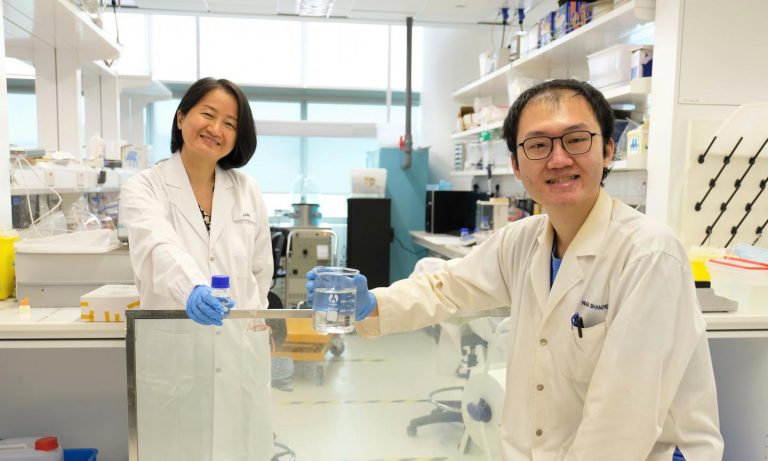
SCIENTISTS at the Nanyang Technological University, Singapore (NTU Singapore) have developed a liquid window panel that can simultaneously block the sun to regulate solar transmission, while trapping thermal heat that can be released through the day and night, helping to reduce energy consumption in buildings.

The NTU researchers developed their ‘smart window’ by placing hydrogel-based liquid within glass panels and found that it can reduce up to 45 per cent of heating, ventilation, and air-conditioning energy consumption in buildings in simulations, compared to traditional glass windows.

It is also around 30 per cent more energy efficient than commercially available low-emissivity (energy-efficient) glass, while being cheaper to make.

The ‘smart window’ is the first reported instance in a scientific journal of energy-saving smart windows made using liquid, and supports the NTU Smart Campus vision which aims to develop technologically advanced solutions for a sustainable future.

Windows are a key component in a building’s design, but they are also the least energy-efficient part. Due to the ease with which heat can transfer through glass, windows have a significant impact on heating and cooling costs of a building. According to a 2009 report by the United Nations, buildings account for 40 per cent of global energy usage, and windows are responsible for half of that energy consumption.

Conventional energy-saving low-emissivity windows are made with expensive coatings that cut down infrared light passing into or out of a building, thus helping to reduce demand for heating and cooling. However, they do not regulate visible light, which is a major component of sunlight that causes buildings to heat up.

To develop a window to overcome these limitations, the NTU researchers turned to water, which absorbs a high amount of heat before it begins to get hot – a phenomenon known as high specific heat capacity.

They created a mixture of micro-hydrogel, water and a stabiliser, and found through experiments and simulations that it can effectively reduce energy consumption in a variety of climates, due to its ability to respond to a change in temperature.

Thanks to the hydrogel, the liquid mixture turns opaque when exposed to heat, thus blocking sunlight, and, when cool, returns to its original ‘clear’ state.

‘Liquid window’ most suitable for office buildings

At the same time, the high heat capacity of water allows a large amount of thermal energy to be stored instead of getting transferred through the glass and into the building during the hot daytime.

The heat will then be gradually cooled and released at night.

Dr Long Yi, lead author of the research study published in the journal Joule, and Senior Lecturer at the School of Materials Science & Engineering said, “Our innovation combines the unique properties of both types of materials – hydrogel and water. By using a hydrogel-based liquid we simplify the fabrication process to pouring the mixture between two glass panels. This gives the window a unique advantage of high uniformity, which means the window can be created in any shape and size.”

As a result of these features, the NTU research team believes that their innovation is best suited for use in office buildings, where operating hours are mostly in the day.

As a proof of concept, the scientists conducted outdoor tests in hot (Singapore, Guangzhou) and cold (Beijing) environments.

The Singapore test revealed that the smart liquid window had a lower temperature (50°C) during the hottest time of the day (noon) compared to a normal glass window (84°C).

The Beijing tests showed that the room using the smart liquid window consumed 11 per cent less energy to maintain the same temperature compared to the room with a normal glass window.

Smart window shifts electricity load peak, blocks noise

The scientists also measured when the highest value of stored thermal energy of the day occurred.

This ‘temperature peak’ in the normal glass window was 12pm, and in the smart liquid window was shifted to 2 pm. If this temperature peak shift is translated to a shift in the time that a building needs to draw on electrical power to cool or warm the building, it should result in lower energy tariff charges for users.

Simulations using an actual building model and weather data of four cities (Shanghai, Las Vegas, Riyadh, and Singapore) showed that the smart liquid window had the best energy-saving performance in all four cities when compared to regular glass windows and low emissivity windows.

Soundproof tests also suggested that the smart liquid window reduces noise 15 per cent more effectively than double-glazed windows.

First author of the study Wang Shancheng, who is Project Officer at the School of Materials Science & Engineering said, “Sound-blocking double glazed windows are made with two pieces of glass which are separated by an air gap. Our window is designed similarly, but in place of air, we fill the gap with the hydrogel-based liquid, which increases the sound insulation between the glass panels, thereby offering additional benefit not commonly found in current energy-saving windows.”

The other first author, Dr Zhou Yang was a PhD student in NTU and is currently an Associate Professor at China University of Petroleum-Beijing (CUPB).

Providing an independent view, Professor Ronggui Yang, of the Huazhong University of Science and Technology, China, a recipient of the 2020 Nukiyama Memorial Award in Thermal Science and Engineering and an expert in thermal and energy systems said, “This is the first instance of a hydrogel-based liquid smart window, and it takes us far from a conventional glass design. The disruptive innovation leads to solar regulation and heat storage, which together render outstanding energy-saving performance.”

The research team is now looking to collaborate with industry partners to commercialise the smart window.

(SOURCE: EUREKALERT)

Global School Sports Equipment Market Research Report Covers COVID-19 Analysis, Industry Research, Drivers, Top Trends And Forecast to 2027

0

THE School Sports Equipment market report contains wide-running factual data for School Sports Equipment, which engages the customer to separate the future intrigue and anticipate right execution.

The advancement rate is assessed dependent on academic examination that gives the bona fide information on the worldwide School Sports Equipment market. The requirements and improvement points are assembled after a significant comprehension of the advancement of School Sports Equipment market.

The report is all around made by considering its fundamental information in the overall School Sports Equipment market, the essential components responsible for its items and administrations. Our top experts have surveyed the School Sports Equipment market report with the reference of inventories and data given by the key players Adidas, Reebok, Nike, BSN SPORTS, Carlton Sports, Under Armour, ESPN, Gatorade, EA Sports, Brine, Bauer Hockey, Burton Snowboards, Cascade, CCM Hockey, Coleman Company, discretionary sources and files that help to upgrade perception of the related methodological conditions.

Major highlights of the School Sports Equipment market report:

•    The detailing of company profile and regions with better School Sports Equipment markets scope
•    Analysis of complete market, pricing, growth influencers, import/export, technological advancements, future trends, and growth rate
•    Comprehensive analysis of historical, current, and future market growth rate
•    Impact of specific growth drivers on the market expansion
•    Study includes accurate data to gain better insight of the global School Sports Equipment market

The School Sports Equipment market report displays a point by point categorization { (Football Equipment, Rugby Equipment, Hockey Equipment, Tennis Equipment, Netball Equipment/Basketball Equipment/Table Tennis Equipment/Badminton Equipment), }; { (Primary School, Secondary School, Colleges, , ), } of the overall market subject to development, product type, application, and diverse methods and systems. The step by step elucidation of the School Sports Equipment market’s assembling strategy, the usage of advancement, outcomes of the international market contenders, dealers and traders’ classification, and what’s more the particular business data and their advance plans would assist our customers for future courses of action and movement expected to get by in the School Sports Equipment market.

The School Sports Equipment market report includes the new mechanical developments and new releases to engage our customers to configuration, settle on business decisions, and complete their future required executions.

The School Sports Equipment market report moreover focuses more on present business, future methodology modifications, and open doors for the School Sports Equipment market.

Nearby headway frameworks and projections are one of the important parts that illuminate overall execution and incorporate key regional analysis North America (the U.S., Canada, and Mexico), South America (Brazil, Argentina, Chile, Colombia), Europe (Spain, Russia, Germany, Italy, France, and UK), Asia-Pacific (Japan, Korea, India, China, Australia, and South-east Asia), The Middle East and Africa (Egypt, South Africa, GCC Countries).

The accurate graphical depiction and figures of the School Sports Equipment market are shown in a delineated system. Reports help to see reliable potential traders.

(SOURCE: EUROWIRE)

Ramaphosa: A Second Wave Of The COVID-19 Could Devastate The Recovering Economy, Risk Lives

0

CYRIL RAMAPHOSA

THE jacaranda trees are in full bloom across the nation’s capital, heralding the start of summer. After a long and difficult winter, the beginning of a new season should fill us with optimism.
 
When the National State of Disaster was declared in March, our immediate priority was to contain the spread of the virus and provide emergency relief to citizens, communities, workers and businesses.
 
Over the course of eight months and with the support of our social partners, we rolled out a comprehensive set of measures to limit the social and economic impact of the pandemic.
 
We massively expanded social protection on a scale that has never been attempted before in this country. We are one of the few countries in the world where the right of access to social security is enshrined in the Constitution, and we can be proud that during this grave crisis we gave practical expression to this right in many ways.
 
In addition to our existing social grants, which reach more than 17 million people every month, we topped-up the Old Age, Disability and Child Support Grants.

We rolled out a Special COVID-19 Social Relief of Distress Grant, which has reached some 6 million people to date. This was done within weeks of the National State of Disaster being declared.
 
The scale of such an undertaking cannot be understated. To bring this system online there was extensive collaboration between the South African Social Security Agency, the South African Revenue Service, Home Affairs and many others.
 
We set up a fully automated application and disbursement process, and integrated multiple databases, including the National Population Register and the Unemployment Insurance Fund database.

We set up new application channels like WhatsApp and USSD, and created systems with the commercial banks to enable banking detail verification. This is a remarkable achievement in a very short space of time.
 
Alongside the measures we took to protect and sustain livelihoods, we also supported ailing businesses. We provided relief to small businesses in the form of debt relief, finance, tax payment deferrals and other instruments.
 
We implemented a COVID-19 Loan Guarantee Scheme to enable businesses to meet their operational expenses during the lockdown, and are currently looking at how this scheme can reach more companies in need.
 
We provided income protection to workers and relief to business owners through the Temporary Employer Relief Scheme administered by the Unemployment Insurance Fund.
 
These were all in direct response to an emergency and were by nature temporary. Some are now coming to an end, while others have been extended as the labour market recovers.
 
The measures we implemented went a long way towards protecting our society from the harsh winds of COVID-19. The additional grants helped to prevent millions of people from falling below the food poverty line.
 
Had we not intervened to secure livelihoods and save businesses, the living conditions of our people and the circumstances of thousands of businesses would have been considerably worse.
 
Now we are in a transition from relief to recovery.
 
The emergency measures we put in place have laid a firm foundation on which to rebuild our economy. As our focus now shifts to the implementation of the Economic Reconstruction and Recovery Plan, our priority will be to stimulate growth and create jobs.
 
There has already been progress in a number of areas.
 
We are seeing new funding commitments for infrastructure development following an infrastructure project roundtable last week. A number of employment programmes under the Presidential Employment Stimulus have started. We are pushing ahead with economic reforms in areas such as energy and telecommunications.
 
Plans are being converted to action and commitments are being reflected in jobs and opportunities.
 
It is all the more critical at this time, more so with the festive season approaching, that we do not become the architects of our own undoing.
 
The greatest vigilance is required from us all to keep the virus at bay.
 
A resurgence at any scale will not just dramatically reverse our health gains. It will choke the green shoots of economic recovery that have emerged, and take us back from spring to winter.
 
To prevent a second wave of COVID-19 infections, we must observe the public health guidelines that remain in place.
 
When we fail to wear a mask at a social gathering, when we attend crowded events, we are not only putting ourselves and others at risk. We are also putting our economic recovery in jeopardy.
 
Let us all continue to play our part.
 
The positive actions of wearing a mask, of maintaining social distancing and of regular hand washing helped us overcome the worst effects of the pandemic. They are still our best defence.
 
Let us remember the sacrifices we all had to make to contain the spread of the virus in the early days.
 
Even as most social and economic activity has resumed, we must still observe all the health measures. This is absolutely necessary if we are to rebuild our economy and put this crisis behind us.

(FROM THE DESK OF THE PRESIDENT)

Amandla! UNISA Appoints Its First Female Principal and Vice-chancellor, Professor Puleng Lenkabula

NYAKALLO TEFU

THE University of South Africa has appointed its new, first-ever female principal and vice-chancellor, Professor Puleng LenkaBula.

Lenkabula assumes her duties in January next year.

The term of office of the incumbent, Professor Mandla Makhanya, comes to an end in December this year.

“The Council of the University of South Africa (UNISA) is proud to announce that, in a move unprecedented since the establishment of the university 148 years ago, it will have its first female Principal and Vice Chancellor with effect from 01 January 2021,” Unisa announced in a statement on Friday.

LenkaBula is currently the Vice Rector: Institutional Change, Student Affairs and Community Engagement at the University of the Free State.

“Council is of the firm belief that this appointment bodes well for the future of our university, as we intensify our endeavour to move towards a fully-fledged Open Distance and eLearning dispensation and to solidify our stature as a truly African university in the service of humanity,” said chairperson of the UNISA Council, Sakhi Simelane.

Prior to occupying the Vice Rector position at the University of Free State, Lenkabula was the Dean of Students at WITS University, where she was a member of the Vice Chancellor’s Office (VCO) and the Senior Executive Team.

She holds a Doctorate (2006-20077) in Ethics (Theology and Philosophy) with specialisation in Ethics of the Economy, Ecology and Politics from the University of South Africa.

Her doctoral thesis deployed multi-disciplinary approaches, drawing from ethics, legal and economic questions. The title of her thesis was: Bioprospecting and Intellectual Property rights on African Plant Commons and Knowledge: A New form of Colonization viewed from an Ethical Perspective.
  
She gained a master’s degree (MTS) with specialisation in Social Ethics from St Andrew’s College at the University of Saskatchewan, Saskatoon, Canada, in 1995.

The masters’ dissertation undertook to study the ethical implications of multilateral finance and financing institutions on economies and economic policies in Africa.

Her thesis was titled, I am because we are: An African Womanist Reflection on the Structural Adjustment programs of the World Bank and the International Monetary Fund.

Her junior degree was a Bachelor of Education with three majors in English, Theology, and Education, conferred by the National University of Lesotho.

“In Professor LenkaBula, we have appointed the right caliber of leader; who is student-centred and shares our institutional vision on decoloniality and transformation, knowledge-production, innovation and advancing the socio-economic development of South Africa, Africa and the world, in particular for the benefit of Africa,” said Simelane.

Simelane added that the UNISA Council commits itself to providing her with the necessary support to ensure that she succeeds in taking the university’s vision of transformation and excellent service delivery to the next level. 

The Portfolio Committee on Higher Education, Science and Technology has welcomed the appointment of Lenkabula.

“We celebrate this milestone as it moves us closer towards addressing gender transformation in the higher education and training sector. Indeed, it took the university 148 years to appoint a female as the VC. This shows that the pace of transformation in the sector, especially at senior management level, is very slow,” said chairperson Philly Mapulane.

“Gender transformation is critical to the development of the country, the African continent and the global community in creating a sustainable world. We congratulate the Unisa Council for taking such a bold step in addressing the under-representation of women in the higher echelons of the university.”

“We urge the university council to further expedite transformation in other sectors of the university. Unisa plays a very important role in expanding access to education and training through distance learning to the majority of people on the African continent. Recently, the university has been ranked in international rankings.”

Mapulane added: “The committee looks forward to an engagement with Professor LenkaBula and her management team at its earliest convenience during its oversight responsibility over the university to ensure that the management, through her leadership, discharges its mandate in terms of section 27 of the Higher Education Act, 101 of 1997 as amended. We wish her the best in this formidable task and we urge all university stakeholders to work together with her to collectively take this African university to even greater heights.”

(SOURCE: INSIDE EDUCATION)

Matric Pupils Share Their Anxieties Ahead of NSC Final Exams

0

NYAKALLO TEFU

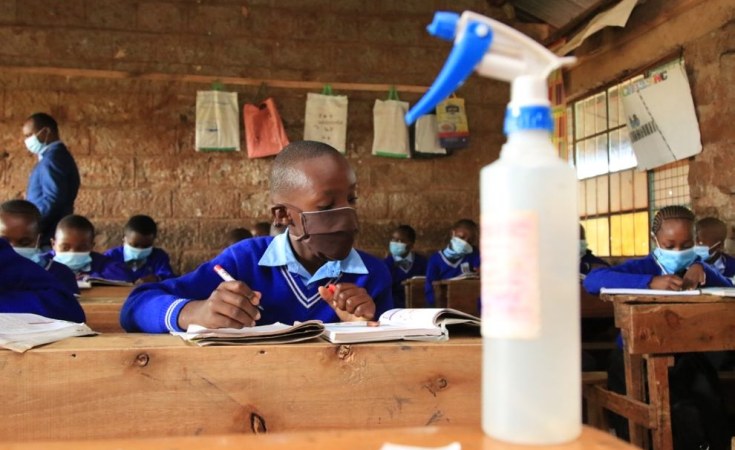
TODAY marks Day 1 of the National Senior Certificate examinations across the country with over one million matric learners expected to sit for their finals this year.

A record total of 1,058,699 candidates are expected to sit for their examinations from November 5 to December 15.  

Basic Education Minister Angie Motshekga was in Soweto on Thursday to monitor the start of the Grade 12 final examinations.

Inside Education spoke to three matrics about their anxieties with matric exams.

THATO BAME, West Ridge High School

Today is the first day of finals. How are you feeling?

To be honest I’m very nervous and my anxiety level is at its peak because I have a lot of unanswered questions.

Do you think you are fully prepared for your finals?

No, I’m not fully satisfied but I trust that me being scared will help me become fully prepared, hopefully.

What has been the hardest part in terms of academics this year?

• Having to stay home and understand parts of the syllabus that needed explanation from teachers and also having to do many things in a short space of time. Prelims as well were very very hard. I saw it with my marks because I dropped so I’m hoping during these finals I’ll pick up my socks and work extra hard just to get a bachelors pass next year when I receive my results.

Will you be attending extra lessons as you write or are you done for the year?

So far, I think we’re done for the year because there isn’t a timetable for any extra classes being released which is kind of a relief because I hardly got any help when I went so I wasted some of my time investing in long hours in a classroom and not understanding a teacher when I could’ve been at home and done things at my own pace and understood better.

What’s your goal for your finals? Distinctions?

I’m willing to work for a bachelor’s pass. I have faith and will try my level best. So, I will focus on what I can control and let God handle the rest. Definitely planning to come for at least 3 or 4 distinctions.


KHUMO PUSO, Florida Park High School

Today is the first day of finals. How are you feeling?

I am feeling a bit anxious but I am really excited to start the journey.

Do you think you are fully prepared for your finals?

Yes, I do feel that I am fully prepared. I had come to the realisation that even though COVID-19 interfered with our academic year, we still had to carry on with the syllabus and write finals within 2020.

What has been the hardest part in terms of academics this year?

The hardest part was having to return to school with my schooling hours being extended by 90 minutes and loads of homework on things that were never thoroughly taught.

Will you be attending extra lessons as you write or are you done for the year?

I will be attending extra lessons for subjects that need to be polished.

What’s your goal for your finals? Distinctions?

My goals are to achieve a minimum of three distinctions for my finals and keep the rest of my marks above 65%.

KEKETSO GWABE, St Barnabas School
Today is the first day of finals. How are you feeling?

I don’t know how to feel about it. I’m stressed and very anxious about how it is going to turn out.

Do you think you are fully prepared for your finals?

I tried studying for paper 1 to be honest I hardly study for paper 1 but this time I did so I will see.

What has been the hardest part in terms of academics this year?

The hardest part has been studying for an exam and not getting the marks I anticipated. I am so anxious about the end, I don’t know how those are going to turn out but I am trying my hardest to work and to basically make myself proud.

Will you be attending extra lessons as you write or are you done for the year?

I will be going to VTS for Maths and Life Sciences but right now it is just me and studying.

What’s your goal for your finals? Distinctions?

A maximum of two distinctions because I want to be realistic with myself by looking at my marks for the past few years.

(SOURCE: INSIDE EDUCATION)

NSFAS Receives Just Over 500 000 Applications For 2021 Academic Year – Nzimande

NYAKALLO TEFU

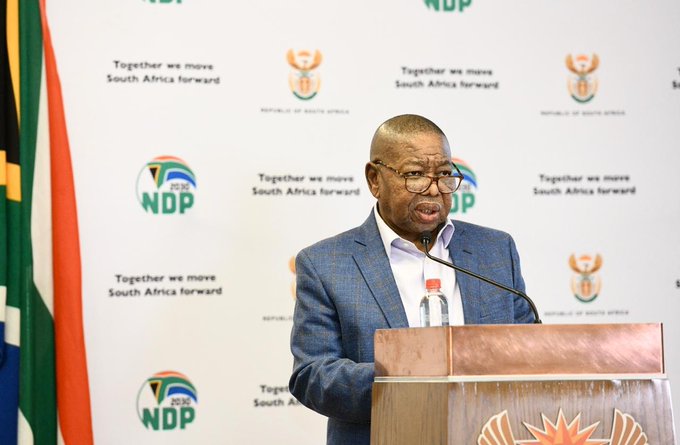
HIGHER Education Minister Dr Blade Nzimande has congratulated the National Student Financial Aid Scheme 2021 application cycle, saying the number of applicants has doubled from the previous year at this time.

Over 493 904 applications have been received thus far, compared to 2019 where only 287 769 applications had been received by this time.

“These latest statistics are encouraging and give an indication that NSFAS’s efforts in providing easy access through partnerships are yielding positive results,” said Nzimande.

This is despite the 2020 academic year being disrupted by the novel coronavirus pandemic.

The minister said for the past three years NSFAS has seen more female applicants than males.

“Female applicants account for 68 percent (338 324) of the total, while male applicants only account for 32 percent (155 543). This trend has been continuing in this trajectory for the past three years,” said Nzimande.

It has been reported that KwaZulu Natal remains the highest province with applications, accounting for 26% of the overall application’s statistics, followed by Gauteng with 21% and Limpopo with 17%, respectively. 

“There have been major improvements from provinces which were extremely low in the past two years with the Eastern Cape, Mpumalanga, Free State and North West, having doubled their previous year’s statistics,” added Nzimande.

Applications for funding will close on November 30.

Meanwhile, the Portfolio Committee on Higher Education, Science and Technology has voiced its concerns regarding the delays in the finalisation of the audit of the NSFAS.

The committee was today briefed by the Auditor-General on the audit outcomes of the Department of Higher Education and Training and all entities falling within its portfolio.

The committee was informed by the AG that there is a delay in finalising the audit of NSFAS.

One of the reasons given by the AG in finalising the audit is the unnecessarily long turnaround time by NSFAS in providing the required information to the auditors.

Committee Chairperson, Philly Mapulane, said it was disappointing that this is the second year in a row that the audit of the financial statements of NSFAS is delayed mainly as a result of the inefficiencies within the entity.

“What is of serious concern is the fact that all these inefficiencies and failures to comply with the requirements of the AG in completing the audit happen during the period when the entity has been placed under administration. It does not engender public confidence that the situation seems to deteriorate under the watch of the Administrator who was brought in to salvage the fortunes of the entity and to turn it around,” said Mapulane.

The committee has requested the AG to expedite the audit and have it finalised before the end of the month.

The committee is calling upon the Administrator of NSFAS to pull up his socks and ensure that all the required information relevant to the audit is supplied to the auditors timeously.

The committee was further briefed by the AG on the audit results of the higher education portfolio for the financial year 2019.

The committee was dissatisfied with the overall audit, although it said there are flashes of excellence in the portfolio preparing financial statements remained a challenge for most entities, especially in the TVET colleges sector.

Mapulane said TVET colleges needed to be assisted with preparing financial statements, and generally financial reporting.

“Financial management is an area that the government, and specifically our portfolio, cannot fail in monitoring. There has to be improvements all round and that regression in audits should be dealt with decisively.”

It was also revealed that Pretty Makukule is acting in place of Theuns Tredoux, who has since left the department, whilst she is simultaneously CFO for the Department of Science and Technology.

Although the committee is satisfied with the good work that Makukule is doing at DSI, which led the department receiving three consecutive clean audits, however, it is of the view that occupying two positions in different departments may not only be irregular but may compromise her.

A proper guidance should be sought from the Department of Public Service and Administration on the matter.

Mapulane called on the department to provide an update on the programme that has since stalled, where the department, in an arrangement with SAICA (South African Institution of Chartered Accountants), allocated financially qualified CFOs at colleges to assist with the financial management function.

(SOURCE: INSIDE POLITICS)


Afghanistan Declares National Day Of Mourning After 22 Students Killed In Terrorist Attack In Kabul University

0

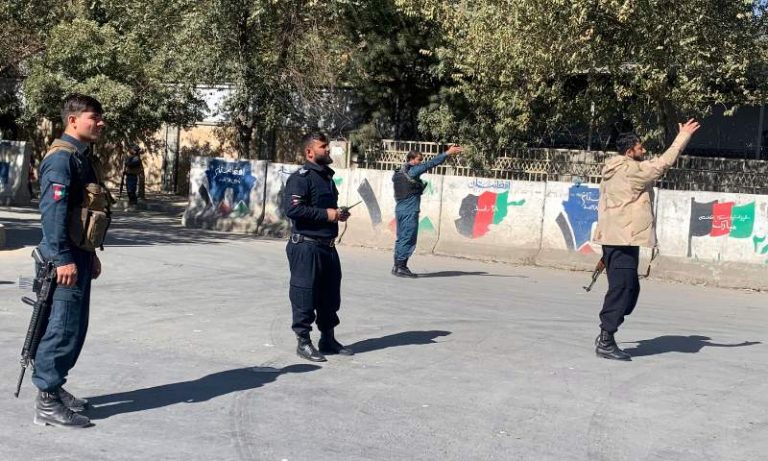
AFGHANISTAN declared a national day of mourning Tuesday to honor the 22 mostly students killed in a horrific attack a day earlier on Kabul University, claimed by the Islamic State group. Another 22 people were injured, some of them critically.

Monday’s brutal, hours-long assault was the second attack on an educational institution in the Afghan capital in as many weeks amid a soaring rise in violence and chaos across Afghanistan, even as Taliban insurgents and government negotiators hold peace talks in the Gulf state of Qatar.

The Islamic State affiliate also claimed the earlier attack on Oct. 24 that killed 24 young students. The attack occurred in the mostly Shiite neighborhood of Dasht-e-Barchi.

The IS affiliate has declared war on the country’s minority Shiites and has claimed a number of vicious attacks since emerging in eastern Afghanistan in 2014. Outside Kabul University Tuesday a small group of demonstrators gathered demanding a cease-fire and urging the government to withdraw from the peace talks until a permanent end to hostilities is declared. Some held signs reading ‘why are you killing us?’ The Islamic State is not part of peace talks and despite their claims of responsibility, the government has blamed Taliban for the attacks.

Taliban, like the Afghan security forces, are fighting the Islamic State and under an agreement signed with the US, the Taliban have committed to fighting terrorism, specifically the Islamic State. The Taliban, which condemned the attack on the university and denied involvement within hours of its start, have refused to declare a cease-fire saying it would be part of the negotiations. But if not a cease-fire, then a significant reduction in violence has taken on increasing importance as Washington’s peace envoy Zalmay Khalilzad on Monday made a surprise visit to Pakistan urging Islamabad to urge the insurgent movement to reduce violence.

Pakistan has been critical in pushing Taliban into talks. Even as the Islamic insurgent group ousted by the US -led coalition in 2001 maintains its political office in Doha, where talks are being held, its leadership councils are located in Pakistan. Khalilzad brokered a peace pact with the Taliban that was signed in February and seen at the time as the country’s best chance at peace in more than 40 years of war.

The peace agreement which is to allow US and NATO troops withdraw from Afghanistan after 19 years, it also paved the way for the peace talks currently underway. In a series of tweets Tuesday Khalilzad condemned the attack but also warned this barbaric attack is NOT an opportunity for the government and the Taliban to score points against each other.

There is a common enemy here. Family members of the victims mourned their loved ones on local TV and called for the government to investigate security lapses.

(SOURCE: EDEXLIVE)

‘Matrics Who Test Positive for COVID-19 Will Not Be Allowed To Write Exams This Year’ – Basic Education Department

0

NYAKALLO TEFU

MATRICS who contract coronavirus during the Grade 12 final exams will not be allowed to continue writing, according to the Department of Basic Education.

 “If you test positive for COVID-19 before the examination you will not be allowed to write. If you test positive during the examination you will not be allowed to finish writing,” said basic education in a statement on Wednesday.

Matrics will site for their exams on Thursday.

This year’s exams are the largest ever, with over one million candidates set to sit to write after education authorities combined the exams due to disruptions caused by the coronavirus pandemic.

The department said the May and June exams will be open for anyone to write selected subjects or all subjects.

“If you cannot write or complete your 2020 examinations because of a positive COVID-19 diagnosis you have an opportunity to write in May and June 2021,” said the department.

The government is concerned about the possibility of a second wave of COVID cases and a rise in infections.

“It is a learner’s responsibility to report concerning symptoms to the school authorities in time and to present themselves for testing. Failure to report a positive COVID-19 diagnosis to the school while writing exams is an offence that carries legal consequences,” added the department.

(SOURCE: INSIDE EDUCATION)

Ramaphosa, Motshekga Wish Matrics Good Luck Ahead Of ‘Largest Public Exam Ever’ On Thursday

0

CHARLES MOLELE and NYAKALLO TEFU

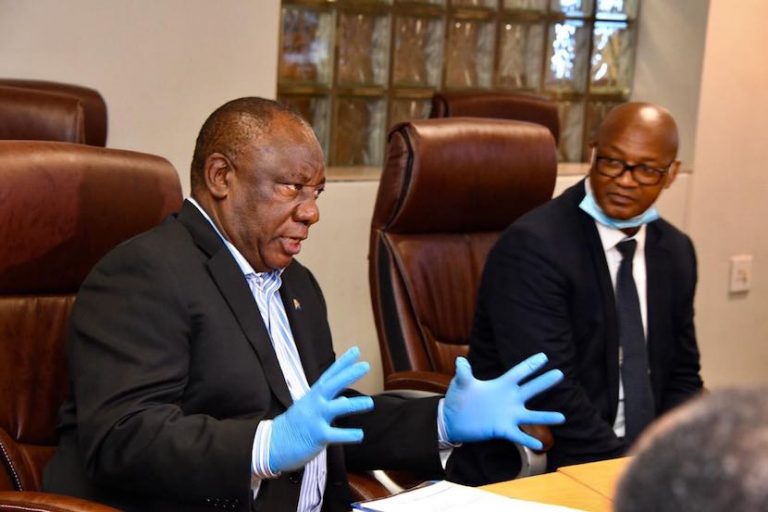
PRESIDENT Cyril Ramaphosa has extolled Grade 12 learners for their determination and sheer hard work despite insurmountable challenges brought about by the coronavirus pandemic.

Writing in his weekly letter, the president wished the matrics well in their final exams, saying this was a culmination of 12 years of schooling and a gruelling final year of preparation.

“The Class of 2020 has had to endure conditions their predecessors never had to confront,” said Ramaphosa.  

“They had to adapt in real time not just to finish the curriculum but to catch up with the learning hours lost.”

Despite the COVID-19 disruptions, Umalusi has assured the portfolio committee on basic education that the class of 2020 will be assessed on the same standards of previous years.

The organization said matrics will be the only grade not writing ‘trimmed’ exams.

Umalusi stated that these exams, which were set over a year ago, will not be altered.

This is because if matrics are not taught part of their work, they will not be prepared for tertiary education. 

Matrics, however, will be the only grade not writing ‘trimmed’ exams.

Umalusi stated that these exams, which were set over a year ago, will not be altered. This is because if matrics are not taught part of their work, they will not be prepared for tertiary education. 

It noted that the matric curriculum began in earnest in Grade 11, with only the first three months of the matric year is dedicated to new material.

The rest of the year is spent on revision, a stage most schools are expected to reach by the time preliminary exams start in September.

However, the June supplementary exams had to be combined with the final exams, making it the largest group ever that had to sit for the exams since 1994 with an estimated 1 million candidates registered to write.

On Monday, Basic Education Minister Angie Motshekga urged all South Africans to rally behind the matric class of 2020 ahead of the start if the final Grade 12 exams this week.

The combined examination for senior certificate and National Senior Certificate candidates makes this the largest cohort of 1, 058 699 candidates, expected to sit for their examination from 5 November to 15 December 2020.

The department said while significant efforts have been made to recover the academic year and provide extraordinary support to the learners, the total impact of the abnormal educational context remains an unknown and therefore a concern.

“The Department has commended all learners, teachers and SMTs for the resilience they have shown in braving the pandemic with a single goal of ensuring the Class of 2020 receives optimum support,” the ministry said in a statement.

“The Department has extended sincere gratitude to provinces, partners, educational stakeholders, parents and civil society for going beyond the call of duty to assist and support Grade 12 learners.”

Last Tuesday, Basic Education department and the Council for Quality Assurance in General and Further Education and Training (Umalusi) briefed the portfolio committee on basic education on preparations for matric exams.

According to education officials, most provincial education departments (PEDs) have already employed additional markers and invigilators and acquired extra marking centres in an attempt to cope with the higher number of candidates sitting for the examinations.

The department has combined the June and November exams, given the coronavirus and the subsequent lockdown.

The officials said that despite the pandemic, learners will write under the most conducive conditions possible.


Umalusi also informed the meeting that it has evaluated the department’s and PEDs’ states of readiness and was satisfied with preparations.


“We are ready to pull off a successful examination,” said basic education department’s Dr R Poliar.

“Despite the disadvantages and anxiety, they will write under most conducive conditions … It is unfortunate for this class to look forward and write under difficult conditions.’’

A total of 1 058 999 learners have been registered to write the exams this year. 

The total number of full-time candidates is 616 021; November part-time candidates 113 846; June senior certificates candidates 167 733; June full-time 155 935 and June part-time, 5 164. 

The department also confirmed that a total of 45 809 markers have been recruited.

They will be working at 180 centres across the country.

The exams are set to finish on December 15.

“All exam centres and storage points and nodal points have been audited. Invigilator training has been completed,” the department stated.

“Provincial education departments will extend the number of days needed for marking to accommodate the marker shortages or use a staggered marking approach.”

“Training of invigilators is conducted based on national manuals and training is conducted by competent provincial and district teams. Invigilator training across provincial education departments was conducted mostly virtually and in some cases face to face.”

Poliar told MPs that the registration of matric candidates has been completed with 1 058 999 confirmed to sit for the exams.

The total number of full-time candidates is 616 021; November part-time candidates 113 846; June senior certificates candidates 167 733; June full-time 155 935 and June part-time, 5 164.

He added that all questions papers have been set and approved by Umalusi.

Bongiwe Mbinqo-Gigaba, chairperson of the education committee, said a lot of work was done in the background to ensure Grade 12 are ready to sit for the final exams.

“We further note that 1 058 699 candidates have registered for the exams,” said Mbinqo-Gigaba.

“This includes full-time and part-time candidates, as well as those candidates who were supposed to have written examinations in June this year, which were cancelled due to the outbreak of Covid-19. This is a mammoth task.”

Mbinqo-Gigaba said the committee will closely monitor the examinations.

“We cannot but comment the DBE, PEDs and the education sector for the hard work they have done during extremely difficult times,” she said.

The committee has however raised concerns regarding the dwindling number of candidates registering for mathematics, opting instead for mathematical literacy.

Basic Education, however, said that the introduction of technical mathematics and technical physical science has contributed to lower registration rates for pure mathematics.

The ANC’s Study Group on Basic Education wished the Class of 2020 well as the National Senior Certificate exams begin across the country on Thursday.

“We call on parents and guardians to encourage learners during this difficult time to study hard and stay focused and to give them as much support as possible. We believe that the department will closely monitor the examination processes to ensure that the integrity and credibility of this final examination is upheld,” said ANC chief whip Pemmy Majodina.

“We trust that this year’s matric results will surpass that of 2019. We would like to wish the class of 2020 best of luck and trust that they will go on to fulfil all their future endeavours.”

Majodina said the ANC’s Study Group also welcomed the protocols put in place to ensure compliance with COVID-19 rules by the department and circulated to guide the invigilators and officials involved in the management of the conduct and administration of the examination.

The results of the final exams will be released on February 23.

DBE has assured all matriculants that the late release of the results will not jeopardise their admission to Higher Education Institutions.

(COMPILED BY INSIDE EDUCATION STAFF)