Home Blog Page 373

World Teachers’ Day: A Celebration Of My Mother, My teacher

0

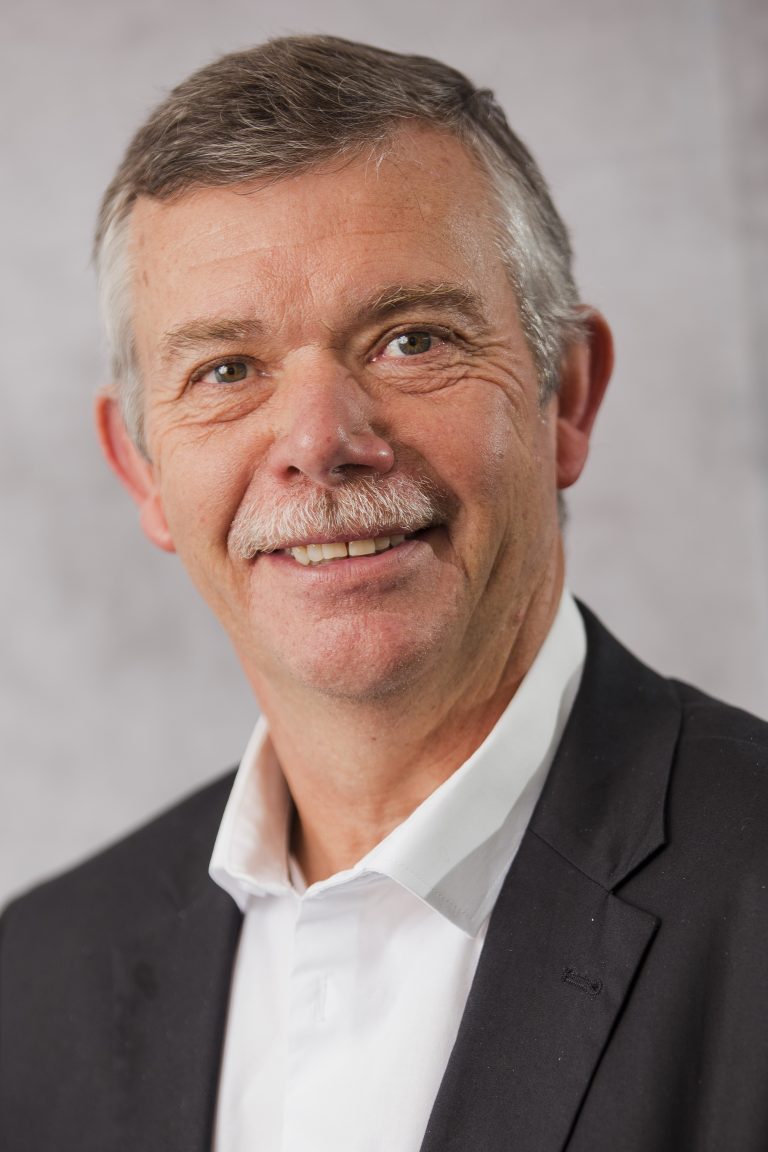
PROFESSOR CHIKA SEHOOLE

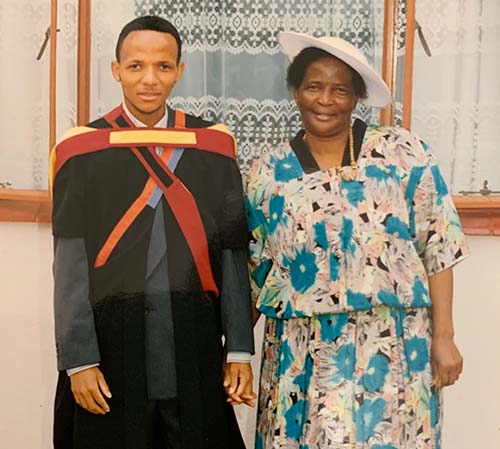
TEACHERS are like second parents, they shape the life of the children under their care, writes Jemi Sudhakar. But parents who are teachers, I believe, are more than second teachers. Today, on this World Teacher’s Day, I want to pay tribute to teacher Mapodi Sehoole who played the dual role of being my teacher at school and a teacher at home as a mother.

Having a parent as a teacher was a privilege but also brought certain pressures which can be daunting, but can also pay dividends if taken to heart.

Her route to becoming a teacher was characterised by many detours.  After completing her form three, now grade 10, in 1957, her parents wanted her to become a teacher, but she ignored the advice as she had set her sights on becoming a nurse.

Her ambitions of becoming a nurse were not successful and she found herself working as a domestic worker in the suburbs of Pretoria.

Having passed grade 10 in the 1950s meant one was very educated by the standards of the time. Her “madam” quickly noticed her talent and advised her to consider going back to school as she did not belong in the “kitchens”. This followed frequent verbal exchanges and disagreements between them.

After much struggle she managed to get an opportunity to train as a nurse in 1968, however, she was unsuccessful and ended up unemployed. Given her level of education, she managed to find private teaching appointments in the local schools in Marapyane and the neighbouring villages. Seventeen years after turning down her parents’ advice to consider teaching as her profession, she got a one-year teacher-training stint with the then Bophuthatswana territorial government which was offered to people who were teaching without formal qualifications.

This opportunity meant that she would have to leave her children for an entire year to train in Hammanskraal while working as a private teacher. The year was 1974, I was nine years old, and for the first time I tasted the realities and hardships of living in a child-headed family and the mischief that can be the result.  

Substance abuse formed part of occasional recreational activities. School absenteeism, which included times when I would be looking for part-time work in order to earn an income to sustain myself, also became part of that reality. There were times when there would be no food and I had to improvise. I also learnt how to cook at the age of nine.

I was nearly a victim of the migrant labour system. A system that breeds child-headed families and school drop-outs who then became the source of cheap labour for the apartheid economy.

Things changed suddenly when my mother qualified as a teacher at the end of 1974. At the beginning of 1975 she got a post at a local primary school. This brought about stability, certainty and hope for the future. For the first time since I was born, I had a parent who was a professional and earned a salary. I also had constant parental supervision. I was assured a decent meal every day.               

The following year I transferred to the school where she was a teacher, which meant I had not only the eyes of my class teacher on me, but also those of other teachers at the school by virtue of being a teacher’s son.

This does not only give children of teachers an unfair advantage over other learners in terms of expectations for them to perform, but that pressure gets carried over to the home. Starting from 1975, it was ingrained in me that I needed to perform well at school: my books were checked on a regular basis, my dress code was monitored on a daily basis.

There was even an attempt to teach me how to write, as my handwriting was regarded as not up to scratch.  

Upon qualifying as a teacher, she started studying for her matric through correspondence and we both obtained our matric qualification in 1983. A year before that, she had planted the idea in me to consider going to university, which came as a shock as no one in our family had ever been to university. That is when I started experiencing her as a mother, teacher, mentor and visionary. She would always admonish us: “I don’t want you to waste your time like I did.”

I registered for my first degree at the University of the North (now Limpopo) in 1984 and upon completing it in 1987, she urged me to register for an honours, much to my surprise, given the need for me to start helping to pay for the education of my siblings and building a decent home for the family.

When I completed my BEd Honours at the University of the Witwatersrand in 1988, she advised me to continue with my master’s degree studies.

When I protested, saying it’s enough, I needed to help her with some of the responsibilities at home, she said, “My son, I am still strong and can provide, please further your studies as far as you can.” She showed me the unselfishness of a mother and a teacher. She knew better.

All that advice and admonition stood me in good stead because when I started working in 1991 with a master’s degree and could not fit into the teacher training college culture as a 26-year-old, it was easy for me to apply for and secure a scholarship to study overseas. This would not have been possible without the good and solid foundation I’d had. Six years later this helped me return to university to study for a PhD, which I completed in 2002.

This would not have been possible without my loving, caring, inspirational, visionary mother and teacher, Mapodi Sehoole. Her leadership and mentorship provided me with the cultural capital and capability to navigate constraints and gain access to academic life. They also laid a solid foundation for the subsequent accolades I acquired as a Rockefeller Postdoctoral Fellow and a Fulbright Fellow in the US; and currently as Dean of the Faculty of Education at the University of Pretoria (UP).

She went on to obtain a Senior Education Diploma with Vista University in 1997 at the age of 60 and retired five years later as a deputy principal after serving at the same school for 27 years. She is now 83 years old, growing frail, but still leading a self-sufficient life in retirement.

On this World Teachers’ Day I want to celebrate you, Mapodi Sehoole, as an unsung heroine. You have proven that not only can teachers be parents at school, but parents can be teachers at home. Your love and guidance of your children are of benefit to the nation.

My sister (Malebo) is serving as a nursing sister with a BCur degree in Mahikeng, my brother (John) is a small-scale farmer in Marapyane with a BSc in Agriculture from North-West University and an Honours in Land Development from UP. Your labour, visionary leadership and sacrifices are not in vain. You are indeed a world-class teacher. Happy Teachers’ Day, Mapodi’a bo Kote!

(Professor Chika Sehoole is Dean of the Faculty of Education at the University of Pretoria. World Teachers’ Day is commemorated annually on 5 October.)
Egypt’s University Students Will Have Reduced Weekly Attendance: Higher Education Minister

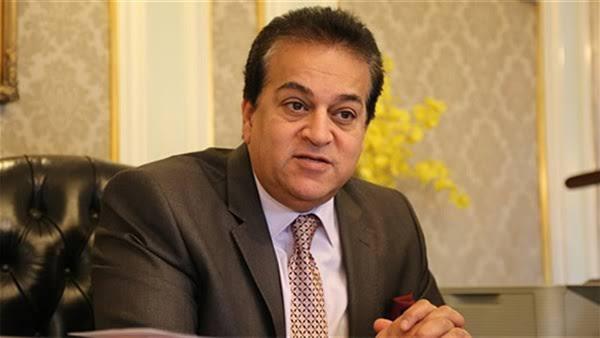
STUDENTS at Egyptian universities will not physically attend lectures at faculties on a daily basis, according to Minister of Higher Education and Scientific Research, Khaled Abdel Ghaffar.

As part of the precautionary measures for the upcoming academic year, students at theory-based faculties will attend classes for two or three days weekly while students at practical colleges will attend for three or four days weekly.

During a televised interview on Saturday, Abdel Ghaffar revealed the measures taken to implement a hybrid education system for the new 2020-2021 academic year. He said that his ministry has taken all precautionary measures in order to curb the spread of the novel coronavirus (COVID-19) pandemic.

The hybrid system, which merges face-to-face and distance education systems, will oblige students to also attend weekly virtual classes in addition to those that they physically attend.

As students will go into faculties for no more than four days a week, the universities will be able to divide students into smaller groups in order to reduce student density in classes.

Despite the lower in-person attendance, Abdel Ghaffar said that student will be able to access the knowledge aspect from attending actual classes, in addition to some other skills through distance education.

The minister indicated that the hybrid system’s aim is to reduce student density, especially given that there are now as many as 3 million students and academic staff across the country.

He added that university lecture halls will apply all the required precautionary measures, including sterilisation and disinfection of different areas and laboratories before a laboratory or practical classes, as well as sports activities and tests.

Abdel Ghaffar said that higher education differs from school level education, with every university having its own system. He also said that the number of students at theoretical facilities is twice that of students in practical colleges.

He stressed that the universities will enforce the wearing of face masks for students and academic staff before entering facilities.

The minister explained that each faculty will shortly announce guidelines set by the Ministry of Health and the World Health Organization (WHO) regarding preventive measures to be taken by students and staff.

(SOURCE: DAILYNEWSEGYPT)

A Day In The Life Of A COVID-19 Essential Worker At The University Of Free State

VALENTINO NDABA

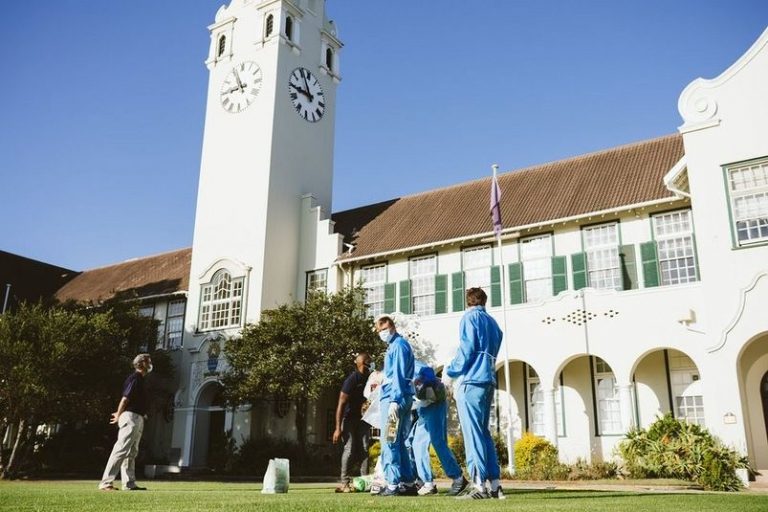
RIA Deysel, Director of Facilities Management in University Estates, is one of a small group of staff members who have been on campus since the start of the national lockdown, ensuring that all the University of the Free State (UFS) campuses are COVID-19-proof and ready for the return of staff and students.

Deysel’s day started with a routine check of the University Estates screening forms.

Thereafter, she had to ensure that social distancing was followed in service areas and in offices.

Confirming that cleaning and garden programmes were being followed as implemented by the heads of the Cleaning and Garden Divisions in order to avoid large groups in the workplace, was also one of Deysel’s specialisation areas during the lockdown.

This also extended to working during weekends whenever her team’s services were required, whether putting up 7 000 posters in strategic areas in one day, installing or refilling sanitisers, or decontaminating buildings.

Making certain that the necessary supplies were distributed to the workers, including personal protection equipment (PPE), and that workers adhered to the regulations regarding PPE, was also part of Deysel’s daily responsibilities.

Her office received approximately 20 cleaning and sanitising enquiries on a daily basis, which needed to be answered or acted upon.

Deysel chaired a minimum of six virtual meetings per day.

Some of these were staff meetings held to discuss compliance and protocols.

Others formed part of the regular consultations with Kovsie Health as well as Occupational Health and Safety to ensure that buildings complied with COVID-19 requirements regarding hygiene and cleaning.

Since Deysel is based in the Bloemfontein Campus, her to-do list also involved constantly updating the South and Qwaqwa Campuses regarding new and ongoing arrangements.

Part of her everyday schedule was to check the status of supplies to ablution facilities, cleaning, and sanitisers at building entrances.

All temporary washbasins on the grounds required regular inspections, in addition to the refilling of sanitiser and soap.

Deysel took care of this when checking that all contaminated boxes on campus were emptied. These were some of the many duties that Deysel fulfilled as a standard part of her day.

Deysel said she enjoys her work and making a contribution to keeping both staff and students safe on campus in this way. “It is important for me to improve the quality and productivity in the Hygiene and Cleaning Division to ensure a safe and comfortable work environment for UFS staff, students, and clients.”

She concluded: “I have a passion for working with people and I enjoy the fact that my position enables me to excel together with my staff.”

(SOURCE: UFSNEWS)

Donkey Dies, Leaving Primary School Boy To Walk 120km A Month To School

The 100km challenge is a gruelling exercise for social media users attempting to run, walk or jog 100km every month. For 15-year-old Faranani Rambuwani and the other children of Muremelani village in Venda, Limpopo it is the price of an education.

The children as young as 5-years-old are racking up 120km a month just walking to and from school.

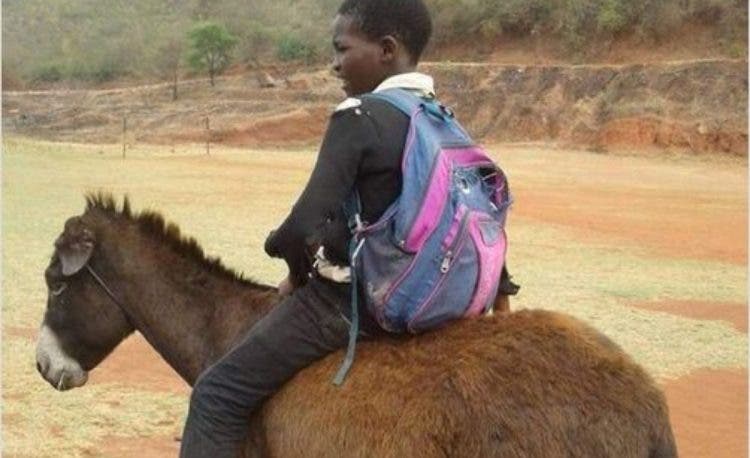
Faranani had enjoyed a short reprieve from the tiresome walks to and from school, riding his donkey to school where he would tie it to a tree until it was time to ride back home.

The recent death of his donkey has dealt Faranani and his family a heavy blow. The long distance he has to walk daily threatens his academic career.

Although Faranani is 15 years old, he is only in Grade 6 and struggles to keep up with his schoolwork because he is tired and distracted at school.

Forgotten by time and the Department of Education

Children growing up in cities and suburbs grow up rolling their eyes at stories their grandparents walking many kilometres to school.

 For the children of Muremelani village, and other similar villages in South Africa, it is a reality as it was for their parent and their parents before them.

“Faranani started school at Tshiheni Primary school when he was 6; he did his Grade R there and was very young. He walked to school early in the morning with other children and walked back with them again in the afternoon,” says Faranani’s older brother Mpho.

Although long walks to and from school have been the unfortunate situation for the children of Muremelani, there was hope that the situation would change however the community of the small village has been left disappointed and forgotten by The Department of Education.

“Many years ago we were told that there was an arrangement between the government and the school to have safe transport for the children, but it did not happen. The children are tired by the time they get to school, they sleep, they cannot learn and in the afternoon when they get back they are too tired to do homework or study. The children don’t learn as they should.

It’s a hard life for Faranani

There are many children like Faranani growing up in villages across South Africa. If it had not been for a Facebook user pleading for help on behalf of Faranani and his family, we may not have heard of his plight at all.

Faranani lives with his elderly aunt Selinah, who is also unemployed. They survive on social grants and the inconsistent income of his older brother Mpho.

“I do piece-jobs. It isn’t easy, it isn’t stable, but I do what I can to put food on the table,” says Mpho.

 Faranani’s father passed away in 2008 followed by his mother in 2011, leaving Faranani an orphan.

“Having parents made things better for Faranani, but life has always been hard, we have always been poor,” says Mpho.

An outpouring of love

Since a photo of Faranani on his donkey was first published on Facebook on the 30th of September, South African’s have shared their heartbreak over Franani’s situation across social media, many have vowed to help the young man with donations of school uniform, food and money, however, there still is no lasting solution to Faranani’s problems.

(This article first appeared in ALL4WOMEN)

Teacher Of The Week: ‘Techno Granny’ Phuti Ragophala Changing Lives Through Digital Resources

CLASSROOM CORNER|

TEACHER: Phuti Ragophala

PROVINCE: LIMPOPO

EVEN with the best equipped schools or the best textbooks, without teachers, children won’t be able to learn and progress. This has never been more evident than during the pandemic, where many parents were forced by necessity to implement home-schooling and recognized just what a mammoth task teaching truly is.

“Nevertheless, teachers are often the unsung heroes of education, who often deal with adversity daily”, said Malcolm Mooi, founder of online professional learning community Zibuza.net. “World Teacher’s Day on October 5, is a rare opportunity to celebrate these essential members of our communities.”

 A good teacher has the potential to improve the lives of their students. A great teacher has the potential to change their lives.

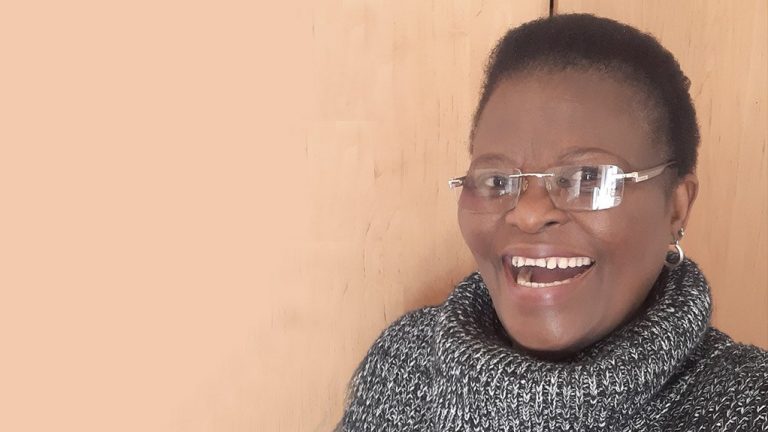
Phuti Ragophala – also known as ‘Techno Granny’ – is one such great teacher. Although she grew up in difficult circumstances, Phuti’s parents saw leadership and teaching talents within her and encouraged her to try to become a teacher.

Today, she is a Microsoft Innovator Educator Expert, the retired principal of a well-respected Limpopo school, and the recipient of the first-ever Zibuza.net Lifetime Achievement Award.

This award recognizes a single teacher whose vision, dedication, and commitment to teaching have made an extraordinary difference to their community.

 The nickname ‘Techno Granny’ was given to Phuti by her colleagues as an acknowledgment of her passion and skills for using digital resources in teaching and learning, despite being part of the ‘Born Before Technology’ generation. 

Her passion was sparked by the learning potential of using technology in the classroom.

“Skills like communication, creativity, problem-solving, collaboration and critical thinking are easily realized when using technology tools,” she explained.

Although her education was very traditional (essentially using just blackboard and chalk), Phuti has undertaken several initiatives to widen the education available to her students, that go beyond just the harnessing of technological tools. Phuti and her colleagues have also developed a permaculture garden to grow vegetables and herbs for the benefit of the poor in the community.

“This helps students acquire the desire to become scientists, farmers, and pharmacists when they see the application of what is grown in the garden and gives them access to opportunities they might not be exposed to,” said Phuti.

In her time as a principal working in a semi-rural area, most of her learners were orphans, or from families where parents are poor or ill.

Instead of turning children away if their parents are unable to pay for classes, she had managed to empower parents by employing them in the running of the school, giving their children opportunities they would not have otherwise had.

As a result of parental involvement in the school, pupil attendance was and continues to be high.

Phuti’s advice for teachers just starting out in the field:

  •  Embrace technology in the classroom. “Students who have been exposed to technology in the teaching process gain additional skills that help with both learning and future employment.”
  • Become a teacher for the right reasons. “Teaching is not a career to escape poverty. It’s a calling. Once you are in, focus on your learners and draw your strength from them”
  • Treat all your students equally but pay special attention to those with less economic advantages. “Go an extra mile to lift them up because it’s often out of the most difficult circumstances that real educated learners emerge”
  • out of those poor families that’s where real educated leaders emerge.
  • Recognise the privilege of your position. “Teaching allows you to groom future leaders through education. Don’t waste it.”

“Teaching gave me the chance to channel my students’ minds and talents towards a better and brighter future. I truly believe that education is a tool to fight poverty and restore dignity, and I’m grateful to Zibuza.net for their recognition of my contributions and all that they do to empower South African teachers,” Phuti concluded.

(SOURCE: WITBANKNEWS)

After COVID-19: Developing Teachers To Address Unequal Access To Education

Monday, 5 October 2020 marks the annual United Nations’ (UN) World Teachers’ Day to celebrate one of the world’s most essential professions, teaching. UNESCO’s theme for the 2020 commemoration naturally links to the current education climate, as a result of COVID-19, “Teachers: leading in crisis, reimagining the future”.

There isn’t a teacher or academic in the country who hasn’t been affected by the COVID-19 pandemic. We are already grappling with the “new normal”, and by now we all realise that the future will bring with it several complex challenges, particularly as far as teaching is concerned.

The period during lockdown highlighted ‒ and even intensified ‒ inequalities in access to education, but we also have a unique opportunity now to reshape schooling, schools and teacher education institutions.

During the pandemic, the importance of the teaching profession was foregrounded, and the challenges facing teachers in the context of a diverse and unequal sector were highlighted. However, we have also seen that meaningful education can happen outside the four walls of a classroom, and beyond a rigid curriculum.

Our next step must be to foster more teachers who are critical, creative, and flexible thinkers to shape our current education system to be more inclusive in its accessibility and relevance.

In addition, the reliance on a singular mode of curriculum delivery will need to be looked at critically by problematising the teacher’s lesson in the classroom as the learning encounter.

First and foremost, we will need to equip student and beginner teachers with the necessary skills and competence to use a variety of learning platforms.

The “new normal” has given us the opportunity to assess the level of preparedness of pre-service teachers for the adoption and adaptation of technology in teaching and learning.

We also need to emphasise situational learning and a blended teaching approach, in which student teachers acquire the competence to apply their educational training skills to different contexts and environments.

Post-COVID-19, co-morbidities and infections could reduce student teachers’ access to schooling, and they will need to be more prepared and empowered to cope with change and uncertainty. Student teachers must experience and understand the variations in organisational and pedagogical practices in diverse schooling contexts, which can be achieved through experience in traditional classrooms, virtual classrooms and reflective tasks.

Amid all of this, however, we must always remember that context is key. The vast majority of South African classrooms do not have access to alternative methods of teaching outside of the traditional approaches.

And if they do, internet connectivity is too costly, or unavailable in certain areas. In addition, contrary to the assumption that present-day learners are tech-savvy and hence can cope with hybrid-innovative learning, the learners’ under-developed formal computer literacy competences and easy access to devices are areas that will need to be addressed nationally.    

At STADIO Faculty of Education, we feel that what we need, is flexibility in the way we deliver teacher education, so that we accommodate the diverse and evolving needs of our student teachers. This is currently being achieved through a flexible-hybrid model that was developed and implemented prior to the pandemic. 

The model is premised on the following principles: i) that each student teacher has his/her own laptop with internet access; ii) intermediary level computer literacy competences are established through additional training, iii) work integrated learning (teaching practice) takes place in varying contexts, and iv) flexible-hybrid learning events that allow the student to choose how he/she wants to participate in the delivery of the teacher education curriculum.  

Similarly, we need to find innovative, cost-effective and easily accessible ways to deliver the school curriculum to all of South Africa’s learners, so that every child gets the education they deserve, and no child is left behind.

(This article was written by Professor Patrick Bean, Executive Dean of STADIO Faculty of Education in Johannesburg, South Africa)

Grey High School In Port Elizabeth Named Sports School Of The Decade

SA SCHOOL Sports Magazine has named Grey High School in Port Elizabeth as the top-performing boy’s sports school of the decade.

It announced on Monday this week that it had taken the rankings of the four sporting codes of Rugby, Cricket, Water Polo and Hockey into consideration in determining the winner.

Grey High School came out tops on 99 points with Grey College from Bloemfontein second on 95.64 points.

Rondebosch Boys High in Cape Town were third on 90.38 points.

The top ten list includes two other Eastern Cape Schools.

Selborne College from East London was 5th on 85.11 points and St Andrews College from Makhanda was 8th on 83.09 points.

Grey High director of sport Neil Bielby said it was a huge honour for the school and everyone involved in making the school a success over the years.

“We are certainly very proud of the achievement and it is certainly a wonderful achievement for the whole Grey community. It is particularly pleasing to get recognition for four different sporting codes. We try our best to always keep a balance between our sports,” he said.

“We always encourage, where ever possible for a boy to participate in both a summer and a winter sport, which allows them to have a very balanced approach to their sport. A large portion of our teaching staff are involved with our extramural programme and this forms the backbone of our sport at the school. We also have specialist coaches in the various sports and they along with our academic staff put in many hours of effort and practice to make a success of Grey sport.”

Springbok World Cup-winning captain Siya Kolisi,  SA water polo player Jason Everzard and more recently, SA under-19 cricketers Luke Beaufort and Tiaan van Vuuren are just some of the many names to have attended the school.

The Top 10 Sporting  Schools of the Decade:

1. Grey High School    99 points

2. Grey College            95.64

3. Rondebosch             90.38

4. Glenwood                 86.19

5. Selborne College      85.11

6. Paul Roos Gym        84.62

7. Affies                         83.58

8. St Andrews College .83.09

9 .Hilton College           81.32

10 .Sacs                        80.76    

(SOURCE: AGENCIES)

Cameroon: Students Return To School After Seven Months

0

STREETS in the Central African country of Cameroon were full of children on Monday morning, marching towards their schools, seven months after they were closed due to restrictions aimed at to stem the spread of COVID-19.

Wearing masks and carrying backpacks full of books and stationery, nursery, primary and secondary school students were full of excitement to revisit schools and meet their friends after a long hiatus.

Cameroon announced the reopening of schools after seven months under strict guidelines, prepared by an expert committee.

The Central African country has recorded 20,924 coronavirus cases, with 19,764 recoveries and 420 deaths, according to Africa Centres for Disease Control and Prevention

At a media briefing last week, the government said it was well-equipped for the upcoming school year. But asked parents to be responsible and help children to abide by strict guidelines to keep the pandemic away.

The higher education institutions will also open in the country on Oct. 15, according to Communication Minister Rene Emmanuel Sadi.

Speaking to Anadolu Agency, Ntiabang K. Lerato,10, a sixth-grade student said she was excited to return to school after staying at home for over the past seven months.

‘’I have my mask and I will respect the school guidelines against the virus. It is a good thing to go back to school because I want to study and become a doctor. I hope the virus will be over soon so that everything should be normal again,’’ she said.

Her mother, Ntiabang Shaitou said she is also happy at the resumption of classes.

‘’The holidays were too long and uneventful. It seems like nothing was happening at all. It was hard to put up a learning program for the kids and then make them stick to it,” she said.

Government addresses Parents ‘concern

Parents across had expressed concern about the safety measures. But with the strict guidelines in place, they feel satisfied.

Shaitou said she was initially worried and was apprehended about the safety of kids.

“But I am thankful that in my country the situation is not as alarming as in some countries in Europe. Our children have done their COVID-19 test and it is negative,” she added.

The mother of two kids said schools have taken steps to ensure everyone starts school with a negative COVID-19 test. She, however, said parents are anxious to see what the coming weeks will look like.

Minister of Secondary Education Nalova Lyonga has assured that the government has taken enough measures to fight against the spread of the pandemic. She said students will be imparted lessons every day on the pandemic and guidelines to ensure they abide by measures like wearing the face mask and other preventive measures.

“We are preparing for the new school year now following the instructions of the hierarchy. We have cleaned up the whole campus, we are going to respect the rule of 50 students per class,’‘said Bayiha Mahop Joshua, principal of the Oyack High School in the commercial city of Douala.

He said they have also arranged to take temperatures of students and teachers at the entrance of the school. Also, instructions have been given to test all teachers.

In August, the World Health Organization (WHO) and United Nations Children’s Fund (UNICEF) urged African governments to promote the safe reopening of schools while taking measures to limit the spread of the virus.

“Schools have paved the way to success for many Africans. They also provide a haven for many children in challenging circumstances to develop and thrive,” Matshidiso Moeti, WHO regional director for Africa said.

A secondary school teacher in a remote area of Nikolagoung Foe Nicole Peagie said despite lack of manpower, his community will respect the barriers and will do everything possible to keep the pandemic away while performing his duties.

“I don’t think there is any particular danger, because a lot of measures are being taken to ensure that the new school year takes off under the best possible conditions. I think it will be safe,” said Ines Mekawe another teacher.

(SOURCE: ANADOLU)

South Africa’s First STEM Digital School

THIS year, computer science and non-profit organisation, Africa Teen Geeks launched their STEM (science, technology, engineering, and math) digital school to help learners continue their computer science education.

The digital school launched at the end of March this year to comply with social distancing measures and ensure the safety of their learners

The organisation’s classes were at 12pm exclusively for matrics and classes for the other grades were held from 8am to 5pm.

The organisation has partnered with the Department of Basic Education and the SASOL Foundation to ensure that the digital school remained free of charge for learners.  

Anacletta Koloko Program Practitioner, Corporate Affairs, Sasol Foundation, stated that free digital learning and online textbooks have become important for their existing efforts to support STEM education in South Africa.

“During this time of crisis, these resources are becoming even more relevant in ensuring that our children’s development continues to be supported,” said Koloko.

Providing IT training to lower-income communities

Africa Teen Geeks was founded in 2014 and has since become the largest computer science non-profit organisation (NPO) in Africa. 

The organisation has worked to provide education and training to learners who want to pursue a STEM career. Along with the STEM digital school, the NPO has also provided Saturday coding classes and a Girl Geek Summit.

There is a growing to teach children in lower-income communities as there are very few qualified computer science teachers in these communities, according to Africa Teen Geek. As a result, children fall behind in their computer science studies. The NPO aims to address this by training young individuals in computer science and sending them to teach at different schools in these areas.

Partnership with UNISA

The NPO has also partnered with the University of South Africa (UNISA) and in 2015, they were able to host their first computer science week. More than 12 000 children from impoverished communities attended and were able to learn about computer science at UNISA’s labs.

Many of the learners who attended had never touched a computer before but then end of the first day, they were able to write their first code.

It is through these Africa Teen Geek’s efforts such as computer science week and with the effort of more than 1000 volunteers that they have helped almost 50 000 children.

(SOURCE: VENTUREBURN)

Official Countdown Has Begun To The Largest Matric Exams Ever In SA History – Motshekga

NYAKALLO TEFU

MORE than 1 million matriculants across the country are expected to sit down for their final exams from November 5.

The combined examination makes this the largest public examination that has ever been administered in South Africa. 

Basic Education Minister Angie Motshekga announced this during an update on the COVID-plagued academic year in Pretoria on Thursday morning.

“So today, we launch the official countdown to the examinations. It is now 34 days to the start of the NSC examinations for the matric class of 2020,” she said.  

“We therefore appeal to parents, guardians, and communities to rally behind all the candidates who will be writing their final exams this year.  It is an extraordinary time for them and all of us, but they need the support more.”

Motshekga said the advent of COVID-19, has necessitated the need to reschedule the 2020 National Senior Certificate examinations, to accommodate the disruptions caused by the pandemic. 

“As we had already announced before, the June Senior Certificate (SC) examination was postponed, and will now be written together with the National Senior Certificate (NSC) examination in November 2020,” said Motshekga.

“The examination timetable for the combined June and November examination, had to be amended; so that this examination commences in November, instead of October 2020, as was initially planned.  The late start of the examination, is intended to allow as much time as possible to cover critical curriculum content, and to ensure that all examination processes are appropriately managed.

Motshekga said all examination centres, both public and independent, have been audited, in preparation for the 2020 combined examination. 

She added that a protocol, to ensure compliance with COVID-19 protocols, has been developed and distributed, to guide all the Chief Invigilators, Invigilators and all other officials involved in the management of the conduct and administration of the examination. 

All Provincial Education Departments have secured the extra rooms at existing examination centres that are needed for the writing of the combined 2020 November Grade 12 examinations.

(COMPILED BY INSIDE EDUCATION STAFF)