Home Blog Page 375

University Named After Former President Thomas Sankara

0

THE naming ceremony of a university for revolutionary leader and former president of Burkina Faso Thomas Sankara, assassinated in 1987, has taken place.

Previously known as the University Ouaga II, the University Thomas Sankara (UTS) is situated on a 1,890 hectare campus at Gonsin, about three kilometres from the capital Ouagadougou.

It was renamed on 15 October under the patronage of prime minister Christophe Joseph Marie Dabiré, reported Sidwaya.

For the 2020-21 university year it will cater for about 27,000 students, 176 lecturers and researchers and 180 administrative staff, at a cost of nearly XOF30 billion (just over US$54 million), reported Sidwaya.

UTS President Professor Adjima Thiombiano said the university had great ambitions. “Our ideals are so great and so ambitious, we are merging hopes of a renaissance of the nation’s strengths through this campus. Science and integrity will be the foundation from where we will launch the whole of society to sustainable and harmonious development.”

‘Be a model of integrity’

Dabiré said Thomas Sankara’s name, embodying his values, was a symbolic choice for the future commitment of the university community. “Expectations are enormous, of Burkinabés, Africans and even other citizens of the world who recognise the man’s ideals, the road to total liberation, and self-development of so-called developing countries,” Sidwaya reported him as saying.

Professor Alkassoum Maïga, the minister for higher education, scientific research and innovation, called on the university’s personnel to be a model of integrity, while Sankaro’s sister, Blandine, hoped the university would take account of the hopes of the young people of the country, and those of the African continent.

Sankara has been described as a Marxist revolutionary, pan-Africanist theorist and president of Burkina Faso from 1983-87, who was “commonly referred to as ‘Africa’s Che Guevara’”, and who renamed the former French colony Upper Volta.

As well as his priority for fighting corruption, he reportedly carried out many educational, health, environmental and other social policies. He was killed in a coup d’état organised by Blaise Compaoré.

(Compiled by Jane Marshall| University World News)

SADTU Slams Mboweni, Says Basic Education Department’s Budget Cuts ‘Scandalous’

0

NYAKALLO TEFU

THE South African Democratic Teachers Union (SADTU) says Finance Minister Tito Mboweni’s Medium-Term Budget Policy Statement is a slap in the face to public servants, including educators.

On Wednesday, the minister announced during the presentation of the mid-term budget policy statement that the wage bill would be the biggest contributor to the R300 billion savings they want to accumulate to address the budget deficit.

Mboweni said that government will put a wage freeze for the next three years, among other options.

“The Medium-Term Budget Policy Statement delivered by Finance Minister Tito Mboweni has left us with no joy. It is a slap in the face to hard working educators and public servants,” said SADTU in a statement.

“The Statement has clearly shown the unpreparedness of the Treasury to honour the last leg of Collective Agreement 1 2018 which would have ensured salary increments for public sector employees including educators.”

This comes after public sector unions took to the Labour Court over government’s decision not to honour the last year of a multi-year wage agreement.

SADTU said the statement by the minister made a mockery of the call to build a capable, effective and efficient development state.

The teachers union said there is no way in which anyone can achieve such a state with public servants who are hungry and can’t afford even a meal, nor to feed their families.

“Such unhappy, overworked, demoralised workers will never be in a position to deliver the quality service which the President of the country always speaks about,” added SADTU.

Mboweni announced that Treasury is proposing a public service wage bill that will grow by 1.8% in 2020 and by an average 0.8% over the next three years.

He said this was essential for fiscal sustainability.

“With no increases in the horizon, teachers’ plight will worsen and will retire more poor as they will have to rely on their retirement even before they retire because government will now present legislation next year to allow for limited pre-retirement withdrawals under certain circumstances. Teachers will be forced to rely on these to send their children to tertiary education and housing and to make ends meet. The future is bleak,” said SADTU.

“Public servants, in fact, are going to be trapped in a vicious cycle of debt and vulnerable to loan sharks in order to make ends meet,” said SADTU.

 “People lost their lives fighting for bargaining processes and structures to be put in place so that there could be labour peace. These processes and structures should be respected and protected to the letter,” added SADTU.

SADTU’s general secretary Mugwena Maluleke described the budget Statement as ‘scandalous’.

“This budget is scandalous. It is a declaration of a strike. There will be no money to train teachers on how to approach the new normal,’ said Maluleke.

“This changes everything. We are going to mobilize our members and society to engage with government to understand the importance of education. When there is a declaration of a strike you can only strike back.”

(COMPILED BY INSIDE POLITICS STAFF)

Education Is Both The Victim And The Best Weapon In Central Sahel Conflict

0

SOUTH Africa’s first democratically elected president, Nelson Mandela, captured the value of education when he said, “Education is the most powerful weapon which you can use to change the world.”

This is why quality education is one of the 17 sustainable development goals “to transform our world” of the United Nations (UN). It’s also why protecting education from attack during armed conflict and in insecure spaces is so important.

The UN has had the protection and provision of education during armed conflict on its agenda since 2010. This was when the General Assembly adopted a resolution on the right to education in emergency situations. On 9 September 2020, the UN commemorated the first International Day to Protect Education from Attack, specifically in the context of armed conflict.

The purpose is “to raise awareness of the plight of millions of children living in countries affected by conflict”. The General Assembly’s decision to commemorate this day coincided with the fifth anniversary of the international Safe Schools Declaration.

The attack on education by armed groups fuels a vicious cycle of underdevelopment and insecurity, causing more violence. Some have described such attacks as a “perceptible shift in modern terror tactics”.

Africa features prominently in a 2020 report published by the Global Coalition to Protect Education from Attack. It lists Sudan, Cameroon and the Democratic Republic of Congo as “very heavily affected” countries.

Another region of high concern is the Central Sahel, which includes Burkina Faso, Mali and Niger. A Human Rights Watch news report published in early September claims that attacks on education in this region have been surging.

Between 2014 and 2019, the Central Sahel experienced a significant increase in “security incidents”. These include battles, explosions or remote violence and violence against civilians. One feature of this violence is how perpetrators have targeted school infrastructure, staff and students.

Violence caused a six-fold increase in school closures across the Central Sahel between early 2017 and end 2019. Prior to COVID-19 lockdowns, and in 2020 alone, 4,000 schools in the Central Sahel closed because of insecurity, affecting 650,000 students.

A key feature of the attack on education is the way children are made victims of killing, sexual violence, maiming and abduction, and are recruited and used by armed groups.

What drives attacks on education?

Civilians across the Central Sahel have endured attacks from Islamic militant groups, state security forces and ethnic or religiously based militias. While state security forces use schools for military purposes, Islamic armed groups have deliberately targeted education facilities.

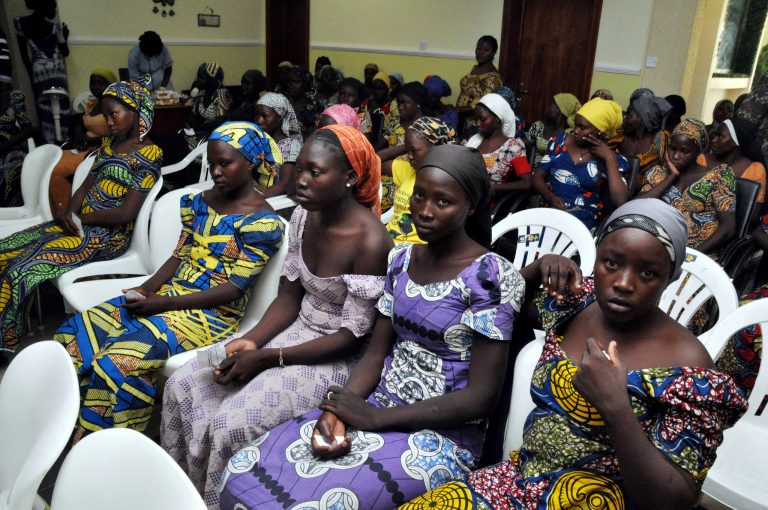
One highly publicised incident just beyond the borders of the Central Sahel was the 2014 kidnapping of the Chibok schoolgirls by the militant group Boko Haram.

The reasons terrorist groups or other armed actors attack education institutions are varied. A school is a “relatively unguarded site where people congregate, normally in large numbers, thus offering the potential for mass casualties”.

They’re ideal targets for terrorist groups who aim to portray a government as incapable of protecting its most vulnerable citizens.

Islamic militants, specifically, attack schools perceived to be Western or modern, as part of their strategy against Western civilisation. And where there’s prolonged intra-state conflict, schools can become centres for recruiting child soldiers.

Attacks on schools and children evoke a strong emotional response, which is a definitive goal of terrorist groups. This was evident following the kidnapping of the Chibok girls. Its also helps explain the impetus behind the Global Coalition to Protect Education from Attack and the recently held High-Level Humanitarian Event on the Central Sahel.

Another reason for targeting schools is the intensive media coverage that follows. Media coverage provides terrorist groups with a platform.

Political will

What can be done to fix the problem?

There’s no straightforward answer to this question. The attack on education is one element of the broader challenge of armed conflict and insecurity. The causes reside not so much with religious fundamentalism, Islamic or otherwise, as they do with poor governance.

It’s worth noting that Burkina Faso, Mali and Niger each perform poorly on freedom, human development and corruption indices – all measures of good governance.

It’s questionable whether political leaders in the Central Sahel have the will to follow recommendations that emphasise the role of the state in protecting education from attack. Governments that are self-serving and don’t really want to promote freedom don’t have an interest in education.

The ability of communities to hold their governments accountable becomes restricted in countries where governments are oppressive and devalue education. This gives impetus to the involvement of foreign actors in the Central Sahel.

Militarised partnerships

Western states have been among the more prominent foreign actors in Africa’s security landscape. They have resources and concerns over migration and fundamentalism.

On occasion they have held African governments accountable on matters of governance. But they have also shown a willingness to collaborate with authoritarian regimes in the fight against terrorism.

The relations between Western governments and the governments of the Central Sahel are a case in point. The militarised partnerships worsen the underlying causes of violent extremism, including attacks on education.

I cautioned in 2017 that if emphasis on military solutions to the Sahel’s security challenges persisted, countries were likely to experience an increase in extremism. Since then, the foreign military presence in Africa and in the Sahel region has increased. The increase in attacks on education in the Central Sahel suggest that violent extremism has followed the same trajectory.

The militarised partnerships pursued by Western administrations have proven counter-productive to education.

Perhaps the victims of attacks on education in the Central Sahel can rely on democratically inclined constituencies elsewhere for assistance. These could pressure their governments to hold their African allies in the war on terror to account.

For these constituencies to do so effectively, however, they will need knowledge and motivation.

This will require education.

(SOURCE: THE CONVERSATION)

UCT The Only Financial Times Ranked MBA School In Africa

THE University of Cape Town Graduate School of Business (UCT GSB) is the only business school in Africa to feature in the prestigious Financial Times rankings for its ground-breaking Executive MBA programme.

The UCT GSB has retained its position as the number one business school in Africa in the 2020 Executive MBA (EMBA) Financial Times (FT) rankings, which were announced on 26 October 2020. Ranked 56th in the world, the UCT GSB is the only business school on the continent to make the top 100 this year.

“We are excited to be the best in Africa,” said Dr Catherine Duggan, the director of the UCT GSB.

“We are proud that the GSB continues to represent the African continent among this elite group of truly global business schools. It is vital for business leaders to be able to navigate an increasingly complex world – especially in Africa and emerging markets – and that is exactly our focus at the UCT GSB. Our students graduate with a powerful set of tools for leading through uncertainty and change – and this ranking reflects that.”

The UCT GSB MBA attracts senior professionals and executives from a spectrum of sectors and industries. According to Associate Professor Kosheek Sewchurran, the director of the EMBA, the programme is tailored for leaders who want to take their careers to the next level and who already have some experience in the field of business and leadership.

“We have refined the programme to ensure that it draws executives who are serious about character development and who want to shift their intelligence as well as their orientation to find new ways of leading.”

The FT rankings are recognised as the most rigorous of the various global rankings of MBA programmes.

Strict guidelines include: The programme must be accredited by either the United States’ Association to Advance Collegiate Schools of Business or the European Foundation for Management Development; it must be cohort-based, with students enrolling and graduating together; and it must have at least 30 graduates each year. The programme must also teach in the medium of English.

Schools are assessed in 19 categories measuring career progress of graduates, the diversity of the school and its research and corporate social responsibility (CSR) activities.

In 2020 the UCT GSB ranked 11th in the world for CSR and 11th for its percentage of international students.

“We have a distinct philosophical approach and practice of teaching that focuses on practice and lived experience to drive learning.”

“This is a big achievement,” said Dr Kutlwano Ramaboa, the deputy director of the UCT GSB. 

“Our school is very small by international standards, and smaller schools are often not able to compete because they do not have the resources to do so or they don’t meet the basic criteria.” 

Associate Professor Sewchurran added that the school is managing to strike the right balance by meeting international quality standards on the one hand while also evolving a distinctive programme that is fit for purpose in an African context.

“We have a distinct philosophical approach and practice of teaching that focuses on practice and lived experience to drive learning, and a uniquely African orientation,” he said.

“In every design consideration of the programme we consider how we are evolving the skill and competence of executives, enabling them to draw on their lived experience to strategise, innovate their business models and inhabit their leadership practice with more skill and wisdom.

“This has proven to be extraordinarily effective in the lives of the leaders who pass through our programme and it is very gratifying that we are achieving international recognition for this approach.”

(SOURCE: UCT)

All 26 SA Universities Aim To Complete Academic Year In 2021 – Higher Education Ministry

OUT of 26 universities in South Africa, 19 were at low risk and seven at medium risk when the report was compiled in September, the Department’s deputy director-general for higher education, Diane Parker, told parliament’s portfolio committee on higher education, science and technology during a briefing on the 2020 academic year in the Post School Education and Training System.

The higher education, science and technology minister Dr Blade Nzimande was also present at the briefing.

“Universities that had already developed online teaching and learning capacity were able to transition to an online modality more rapidly. Universities have extended teaching and learning time to more effectively support students who could not be fully engaged during the lockdown,” Parker told the portfolio committee on higher education.

Parker said 68% of university students already have access to devices.

“Some universities have indicated that devices are available, but students are not taking them up. The universities where device availability is low at present are participating in the NSFAS-led process,” she said.

She also said around 94% of students were being provided with mobile data.

The 10 universities that are expected to complete the academic year in 2020 include the Cape Peninsula University of Technology, the University of Cape Town, the University of the Free State and the University of Johannesburg.

The Durban University of Technology, North West University, Rhodes University and the University of Mpumalanga are some that are planning to end the second semester in January 2021.

Universities planning for a February completion include, among others, the Central University of Technology, Mangosuthu University of Technology in Durban, Nelson Mandela University and University of KwaZulu-Natal.

Nzimande said that he is unhappy when it comes to the procurement of laptops for students, now run by the National Student Financial Aid Scheme.

The Department is now questioning whether the process of procuring laptops for students is still needed.

“I want to make this clear. The laptop process was driven by NSFAS which means the accounting officer and the accounting authority for NSFAS, which is Dr Carolissen, is the one who was responsible for the entire process,” said Nzimande.

“I tried single-sourcing and failed. I am open about that. I was concerned that these laptops must come sooner rather than later.”

A fortnight ago, Nzimande released the latest protocols from Higher Health for the 2020/21 examination period in the Post-Schooling Education and Training (PSET) sector.

The protocols are set to guide 26 universities, 50 Technical and Vocational Education and Training (TVET) colleges and other post-schooling institutions on how to conduct invigilated examinations during the COVID-19 pandemic.

“The Protocol on Invigilation of Tests and Examinations during COVID-19 within PSET institutions was developed by the PSET health and wellness agency, Higher Health, which has been assisting institutions in managing COVID-19 since the outbreak,” said Nzimande.

(COMPILED BY INSIDE EDUCATION STAFF)

Class of 2020 Ready For Exams, Says Western Cape Education MEC

0

NYAKALLO TEFU

WESTERN Cape Education MEC Debbie Schafer says preparations are complete and it’s all systems go for the final Grade 12 exams in her province.

Schafer was speaking to Inside Education on her province’s state of readiness for the 2020 matric exams, starting in the first week of November.

“From June, when learners returned to school, Grade 12s have had the most classes since then and have been in class every day,” said Schafer.

Schafer said her department has made available additional resources to matric learners to ensure that they are ready to write.

“Matrics have received an examination support booklet, which provides advice on the exams and bursary options,” added Schafer.

The province has maintained an 80% pass rate for the past 2 years.

The MEC says she is confident that matriculants this year will do well, despite disruptions by COVID-19 pandemic.

“I am hopeful and obviously it has been a very difficult year but we will see,” said Schafer.

Keeping learners at school during the pandemic has proven to be difficult for the Department of Basic Education after Minister Angie Motshekga announced that learners have been dropping out in the past few months.

“At this point we would like to keep as many learners as possible at school so they do not drop out,” said Schafer.

However, the MEC says learners have been told that they cannot miss an exam no matter what the circumstances are, as they will not get an opportunity to rewrite this year.

“Any learner who misses an exam will have to rewrite it next year in May or June which means it will delay them in terms of higher education,” said Schafer.

Meanwhile, Schäfer has called on COSATU and its partners to denounce defunding of education by the national government.

“I note COSATU’s announcement that they will be holding a press conference regarding the challenges facing the WCED.  I am pleased that COSATU and its associated organisations understand that there are challenges facing us.  The most profound of these challenges – and indeed the one that underpins almost all others – is the continuous defunding of education in the Western Cape by the national government,” said Schafer.

“Once again, severe budget cuts threaten to wipe out many of our projects and programmes. A third of our infrastructure budget this year has been wiped out as a result of cuts to the Education Infrastructure Grant and expenditure on Covid-19 compliance measures, for which we have received no compensation from National Treasury.  The cuts being demanded by the National Treasury for the next three years are nothing short of devastating.”

(COMPILED BY INSIDE EDUCATION STAFF)

Eastern Cape Plans To Shut Down More Than 1 000 Small, Unviable Schools, Says MEC Gade

0

NYAKALLO TEFU

EASTERN Cape Education MEC Fundile Gade has vowed to shut down just over 1 000 small, unviable schools and the reallocation of learners to larger, better resourced schools in an attempt to improve the quality of education in the province.

Most of the unviable schools are mainly in the Eastern Cape, KwaZulu Natal and Limpopo, and are responsible for producing the lowest pass rates during the National Senior Certificate exams.  

The need to rationalise schools in the Eastern Cape is pressing, according to Gade.

The Eastern Cape not only inherited a large number of very small schools from the Transkei era, but out-migration to urban centres both within and outside of the province has also made many schools unviable.

Data from 2016, when the (Government Technical Advisory Centre) GTAC project began, shows that close to 50% of schools have fewer than 250 learners, and another 17% have fewer than 100 learners.

“Unviable, small and dysfunctional schools are a threat in the context of quality public education,” said Gade.

Gade spoke to Inside Educationduring an exclusive interview on how his department is using the R700 million that has been allocated to deal with schools with pit latrines and lack of proper sanitation.

“We have exceeded 50 percent of the target that we were allocated, despite the fact that we had a challenge of the lockdown at the beginning of the year, which put the construction on hold,” said Gade.

The MEC said the solution is to build bigger schools in order to get rid of the small ones where learners will be able to get sufficient maintenance and resources.

“Our strategy is that, let’s build bigger schools and reduce the numbers figuratively of schools in the province so that they can get as much resources as possible and utilise them optimally,” said Gade.

The National Education Policy Act Guidelines stipulate a minimum school size of 135 learners at primary level, and 200 learners at secondary school level. If a school has fewer learners than the set minimums, the provincial department may begin to make the case for closing down the school.

In 2018, Basic Education Minister Angie Motshekga said her department needed at least R10 billion to deal with sanitation at schools across the country. In 2019, it was reported that over 1 600 schools in the Eastern Cape needed toilets.

“The department of health has approved 268 schools that must undergo the programme to stabilise infrastructure in the province,” said Gade.

Less than 1 600 of the 5,400 Eastern Cape schools have been red-flagged as having inadequate pit latrine and sanitation structures.

“We are currently in the process of dealing with stabilizing the infrastructure backlogs in the province,” said Gade.

(COMPILED BY INSIDE EDUCATION STAFF)

Mcebo Dlamini: Should We Tell Matriculants The Truth About Tertiary Education?

0

IN A taxi on the freeway, windows are sweating and people are squeezed inside almost to a point of suffocating. A red Porsche passes our taxi. We all follow the roaring sound of the car as it shuffles through the traffic. The licence plate at the back of the Porsche reads “NO DEGREE”. A subtle, nuanced but loud statement is made by this licence plate.

The driver is simply saying that he bought the car without having a tertiary institution degree. The implication is that it is highly possible to make it financially without education. A radical interpretation of this statement is that education is useless.

Considering all these ideas, what then do we say to matriculants who are commencing with their exams? Do we encourage them to study? Or do we tell them the gruesome truth about the problematics of tertiary education in this country?

Each and every year we bid good luck to matriculants and engage in all sorts motivational escapades to stress the importance of going to tertiary institutions, whether they be universities or colleges. We do this ritual without mentioning the problems that are presented by what we call the tertiary education.

When we remind black matriculants to work hard, we do not tell them that no matter how hard they work, they will be alientated when they get to university. We do not tell them that the colour of their skin will become a barrier to a number of opportunities.

Some of them will learn what being black means when they get to university. And I think they should know that these universities are mostly concerned with teaching them how to be workers and functionaries, not owners.

These universities will disconnect them from their societies, leaving them with a double consciousness. As Thebe Kgositsile states, these universities will leave them “too white for the black kids and too black for the white kids”.

Unemployment among graduates continues to increase. Although attending university might increase one’s chances of getting employed, the reality is that it is not guaranteed. What is guaranteed is a lifetime debt for students who take loans to study at tertiary level. Where graduates do get employed, they will spend the rest of their days running the affairs of white people (the bosses). It is at this point that I say universities teach us how to be sophisticated slaves.

Of course, there are exceptions. But the truth is that South African universities have not done enough to transform or change the condition of our people. It has failed to provide its students with knowledge that will solve the problems of society. It should not be exonerated. All institutions have a role to play and universities in South Africa have not been made to account.

So the driver of the red Porsche knows something – the question is whether or not we want to hear it. Our education system is broken because we do not learn what will make our society better in the future. If we have been, black people would not be dealing with same problems that they had dealt with during apartheid. If this had been improved, we would not have so many graduates who are sitting in townships doing nothing.

It cannot be that a person who has worked hard to study, accumulated debt and almost suffocated by an alienating environment has to go back to rot in the township. Something has to be done. We can no longer act oblivious by encouraging matriculants to go to university when we know that there are problems where they are going.

The only way we are going to be able to solve some of these problems is to acknowledge that they are there. We must stop portraying the university as a perfect place. We must tell the children the truth. That way they go there knowing into what kind of environment they are entering. They attend it knowing that there are structural challenges that might defer their dreams. Awareness is important, as it prevents them from becoming depressed when what is promised is not given.

We need to think critically about education and its value in society, and assess whether or not our education system has any tangible value. The matriculants must fight, here and beyond, but victory is still not guaranteed.

(This article originally appeared on EWN)

Teacher Wandile Makhubu Started One Of The Best-performing High Schools In Gauteng

WANDILE James Makhubu from Unity Secondary School has reflected on his 36 years in the profession.

He said he had always known he wanted to be a teacher as he was passionate about serving his community.

Makhubu founded Unity Secondary School in 1992 in Daveyton.

The school is known as one of the best performing high schools in Gauteng. He started his career as a mathematics teacher, but circumstances led him to establish a school.

The Crystal Park resident said during his schooling career he was taught by teachers who were highly dedicated and who were role models.

“Those teachers influenced us to become teachers later in life. One thing that was unique about them is that they had minimum qualifications,” said Makhubu.

“They had what was called a Primary Teacher Certificate (PTC) and the highest qualification one could have was the Junior Teacher Certificate.”

In 1992 when Makhubu founded the school, he was the only teacher, and the school accepted a group of learners who were known as “learners at risk”.

“Some of these learners were from exile and rural areas and needed to be educated. At the time, the government didn’t want to give us the school.

“Some of these learners were even older than me and it was challenging because the government didn’t want the school as when you were over 18 you would be kicked out of school.

“The community of Daveyton got many high-profile people involved to help us as there was a high demand for the school.”

The Local principal reminisces on teaching career said. “I taught my peers mathematics because I love it. I used to assist a lot of people from my community even before I went to further my studies and that is how I gained more and more interest in the career.”

Makhubu was unapologetic about his commitment to children and said he is proud that some of those learners are now well-known lawyers, doctors, nurses, and teachers.

He hopes that other teachers use this motivation to help their learners as well.

The 62 year old completed his undergraduate studies at the University of the North (now merged with the University of Limpopo) and his BA Honours at the University of the Witwatersrand.

From 1994 to 1995 he completed his master’s degree at the Northern Illinois University in the USA. He then returned to the school in 1996 and became the principal at the age of 32.

Makhubu said one of the most important things teachers can do is unlock a learner’s potential because every child has it and they should not waste their talents.

“However, things are different nowadays, as learners would rather have fun than making their education a priority.
“During our time, we were addicted to reading. There was less entertainment and the only electronic thing we had was a radio.

“We never involved ourselves in drugs and alcohol as school children because our families and teachers were strict and we considered every elderly person as our parent.”

The principal said he loves children and wants them to achieve as much as they can. “When a child misbehaves, I visit their family to find out what the problem is.

“Sometimes children are just trying to get attention because they need help.”

When the City Times asked if there is any hope for today’s youth, he said he has mixed feelings.

“Covid-19 has changed things a bit; we are in a new norm now. I can’t just drive to a tavern to collect learners to come and write their exams. Before the pandemic, there were situations where schools were disrupted by violence as learners would start fights so that their videos can trend on social media.

“Then there is poverty and there are still some learners who have low self-esteem.

“We also have parents who don’t motivate their children to unleash their potential. If we can fix that, the future our country will be in good hands,” said Makhubu.

He added that the pandemic can be used to the advantage of parents and schools to encourage learners who prefer going to social events, to stay at home and study instead.

“There is still hope and if we can guide the new crop of teachers, we can believe that our learners’ future will be safe.”

Lastly, he said he wouldn’t have been able to do what he has done without his family – they have supported him immensely as it hasn’t been easy to build the school.

(SOURCE: BENONITIMES)

Some Sports To Resume In SA schools

0

A recently published Government Gazette will allow for the resumption of some sports  in South African schools.

The Gazette was approved and published by the Minister of Basic Education, Angie Motshekga.

According to the directive, the following sports will be allowed to resume and will be subject to strict social distancing and health protocols:

– Non-contact sport training

– Inter-school non-contact sport matches

– Non-contact sport-related activities

– Arts and culture school-based activities in schools

The number of spectators at sporting events, change rooms and training areas may not exceed a 50% capacity, and strict social distancing must be adhered to. Schools will also be limited in their inter-school capacities in the following ways:

– 250 persons or fewer, in the case of an indoor activity; and

– 500 or fewer, in the case of an outdoor activity;

– Provided that no more than 50% of the capacity of the venue is used with persons observing the social distancing requirements.

Other regulations that must be followed include the wearing of masks except when playing sports, and the provision of hand sanitisers.

There should also be a register of all spectators.

(SOURCE: CAPETOWNETC)