Home Blog Page 375

COVID-19: School Closures In Eswatini Push Pupils To Grow Marijuana

0

MANZINI, ESWATINI: Phosho Mamba, 17, endures the spring’s baking sun as he works on his small dagga, or marijuana, field. He toils hard to put food on the table.

His parents are deceased and he was saddled with family responsibilities at a tender age.

The form-two pupil goes to a high school in Luve, a village town in the Manzini region. He last attended school in March when King Mswati III, Africa’s last absolute monarch, declared a state of emergency that abruptly closed schools in the southern African nation.

“With schools closed, I had to do something to make money rather than sit idle at home. I decided to try my luck in growing cannabis. I didn’t know where to start, but sought my friends help,” said Mamba.

In a few weeks he will be harvesting. He and his friends barely sleep at their homes. They spend nights manning the field to fight off those who might steal their hard labor. “I am about to harvest soon. I don’t want to commit a mistake in referees time, I just make sure that everything is in order,” he said. “With South Africa relaxing lockdown next week, I am positive prices will be good.”

Walter Magagula (17) is another pupil who has pulled a feat, cashing in during the lockdown. He is doing Form 5 at another high school at Luve and will be writing his final exams in October.

Like Mamba, he invested time in growing the cannabis plant, popularly known as “Swazi gold.” He recently bought a Nisan March, after a good harvest and the car is the first in his family’s history.

“My father doesn’t have a problem with the car. He knows that I respect him and it’s my contribution to the well-being of the family,” said Magagula. “This is not my car but a family car. We would not hire or bother other people in cases of emergency.”

Mamba and Magagula are among hundreds of Swazi rural school children who delved into illegal dagga farming immediately when schools were closed under a strict coronavirus lockdown.

Legalization of marijuana

Notably, Eswatini, formerly Swaziland, is one of the few southern African countries where cannabis is illegal.

But, in the present tenure of Prime Minister Ambrose Dlamini things might change.

Dlamini launched the Strategic Road Map 2018 to 2023 where he said the government would legalize dagga farming to revive the economy. The executive is currently consulting stakeholders on the Opium and Habit-Forming Drugs Bill.

Stem Holding, a giant American company specializing in cannabis and hemp-branded products, is one of the investors that have shown a keen interest in Swazi dagga. The cannabis market for Swazi illegal growers is South Africa and Europe.

However, the twist in the tale is that indigenous dagga growers are opposed to its legalization. “It will not be a good thing to have the herb legalized. The move will bring down black market prices,” said Mamba.

His sentiments were shared by Magagula who also was also reluctant. “I am not sure if we’ll continue to make money. I think it should remain illegal just as it is,” he said.

Afrobarometer, a non-partisan research network in Africa, highlights contesting views amongst the Swazi population on legalization.

It interviewed 1,200 adults in Swaziland and results suggest 57% “disagree” or “strongly disagree” with the idea of broadly legalizing the cultivation of cannabis to create economic opportunity.

Learners struggle to learn

On the hand, can the dagga-cum-students juggle school work and business without dropping either ball?

Celiwe Dlamini, a teacher at Lomahasha Central High School in the Lubombo region, said the behavior of students has left teachers frustrated.

Her school is located next to the Lomahasha border between Eswatini and Mozambique.

“The children have tasted money. Now it’s difficult to teach. They hardly concentrate. They don’t do school work and we can’t use corporal punishment, it’s really frustrating,” she said.

“It’s like COVID-19 flooded their minds with a barrage of business ideas. They started to plant dagga and smuggled it into Mozambique and in turn, smuggled Mozambican alcohol into Swaziland. It’s not easy to shape back their mindset to focus on school work again,” said Dlamini.

Nonkululeko Mdluli, the director of Fundza, an NGO that promotes the culture of reading books in schools, said COVID-19 has dented education in the country.

“I can’t lie. Our education sector has been hugely impacted by the coronavirus pandemic, it will take months to get our children back on track. COVID-19 came with a lot of innovations, some of which are detrimental to education” said Mdluli.

Modern parenting challenges exposed

Mbongwa Dlamini, head of the Swaziland National Teachers Association, said COVID-19 has exposed the fact that parents have abdicated their responsibilities to teachers because children spend most of the time at school.

“COVID-19 has exposed the state of parenting in Swaziland and the challenges facing Orphaned and Vulnerable Children (OVC) in our society. Now that children are not at school, parents fail to handle their own children. Statistics have shown an increase in the number of pregnancies amongst school youth during this COVID-19 break,” said Dlamini.

The UN Development Program (UNDP) reported that since schools closed because of the pandemic, the disruption affected 909 primary and secondary schools, 339,000 students and 15,945 teachers in Swaziland and closures have higher social and economic costs for communities, particularly to vulnerable boys, girls and their families

(SOURCE: ANADOLU NEWS)

Ghana Pledges Gender Parity To Promote Science And Technology Sustainably

0

GOVERNMENT is pledging inclusivity and gender parity in ongoing efforts to sustainably promote science, technology and innovation in all spheres of national development.

According to the Environment Ministry, a National Research Fund (into which money equivalent to at least 1% of Ghana’s Gross Domestic Product (GDP) will be invested) being established will also ensure the interest of women researchers is prioritised.

Currently, a bill to back the fund is in Parliament awaiting approval. The fund will be linked with the recently established Ghana Innovation and Research Commercialisation Centre (GIRC Centre) which will be driving call for proposals and shepherding of research funding initiatives.

Funding for the research that led to the setting up of the GIRC Center was provided by the Science Granting Councils Initiative (SGCI), a multi–funder Initiative aimed at strengthening the research capacities of 15 countries in Sub-Saharan Africa.

The model for the establishment of the National Research Fund was also based on that of an existing fund in South Africa which is one of the SGCI funding countries. 

Special advisor to Prof. Kwabena Frimpong Boateng who is the Minister for Environment, Science, Technology and Innovation, Oliver Boachie, says the government is committed to ensuring that when the Center and the fund are up and running, the list of beneficiaries is inclusive of all people including persons with disability and women.

“Everything that we do as a government, we have it on our mind to ensure our female colleagues are not left behind. Our focus is to ensure the involvement of all. Everything we do, we have in mind the inclusion of everybody. We are not leaving any one behind,” he said in an interview.

“Once the framework is fully developed, special dispensation that must be put to ensure gender equality and ensure access to people with disability,” he added.

As part of the Government’s broader agenda to address the bigger problem of gender disparity, a lot of the appointed top officials at the ministry are women. “If you look at appointments and putting people in responsible positions, this government has been very progressive. In this ministry, a lot of top people are women.

The chief director, the director for human resources, the director for policy planning, and until about three months ago, the director for Science, Technology and Innovation are all women,” Mr. Boachie explained.

He says the ministry is also vigorously working to ensure females benefit from various educational projects aimed at encouraging Science, Technology, Engineering and Mathematics (STEM) education.

“When I talked about STEM, I also talked about training our young women to be able to have the STI skills that will enable them to play an effective role in national development,” Mr Boachie said.

Deputy minister for Environment, Science, Technology and Innovation Madam Patricia Appiagyei recently assured women will be given increased priority when the fund and the center begin operating.

“The GIRC Center provides opportunity for female researchers and scientists to see their works commercialized and used by industry to enhance socio-economic development of the nation, thus taking their place and economic rights,” the Deputy Minister to said during the mark International during the Women’s Day.

“Knowledge and skills are important to include the gender perspective in policy, project and development plans pertaining to the field of renewable energy, energy efficiency, climate change, environmental protection and related Sustainable Development Goals (SDGs),” she added.

The Ministry of Environment, Science, Technology, and Innovation exists to promote sustainable environmental management and the adoption and application of STI for national development.

Mr. Boachie said efforts are being made to ensure sustainability in the technological innovations being promoted.

For example in the area of energy, there is an ongoing push to ensure there is less reliance on fossil fuels and increased attention on renewable forms of energy.

“Everything we do, whether its manufacturing, agro-processing, hospitals and schools, you need energy. Today, you can’t rely on fossil fuels because of the pollution that it causes and the environmental degradation that comes with it.

“And so renewable energy is one of the places that we are placing a lot of emphasis on,” Mr. Boachie explained.

“Solar, wind and even the conversion of waste into energy, all those are sources of energy that will help us save the environment and make us less dependent on fossil fuels,” he added.

(SOURCE: MYJOYONLINE)

Mbeki Concerned About African Universities’ Failure To Produce New And Relevant Knowledge

0

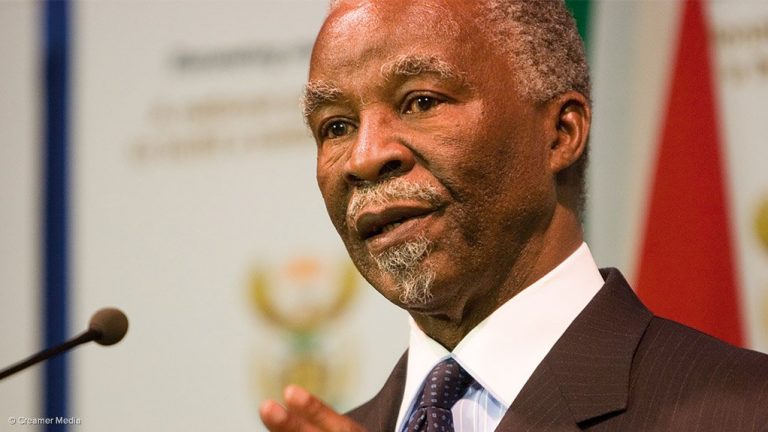
THABO MBEKI

FIRST of all I would like to congratulate UNISA, including its Council, Senate, the SRC and the Trade Unions for the bold step they have taken to establish the Thabo Mbeki African School on Public and International Affairs. Indeed I am humbled by the decision to attach my name to this important School.

A College Library at Dr es Salaam University has a number of Doctoral Theses and Master’s Dissertations produced by Tanzanian scholars. It is important to note that these scholars graduated at Universities in various countries including Tanzania, South Africa, China, Germany, the UK, the United States and so on.

Here are a few examples of these Theses and Dissertations:

  • one is about “Early Career Academics’ Professional Experiences within a Neoliberal Context: A Case of the University of Dar es Salaam”;
  • another concerns the “Employability of Higher Education Institutions Graduates: Exploring the Influence of Entrepreneurship Education and Employability Skills Development Program Activities in Tanzania”;
    yet another concerns “Perceptions of Climate Change, Environmental Variability and The Role of Agricultural Adaptation Strategies by Small-Scale Farmers in Africa…”
  •  another is a “Taxonomic Study of Selected Aloe species of Tanzania and the Associated Indigenous Knowledge”;
  • one is an “Analysis of the Factors in Soil Water Management Practices of Small Holder Farmers in (a District in Tanzania)”;
  • another concerns “Modelling Optimal Control of a Threatened Prey-Predator System: A Case of Wildebeest-Lion Prey-Predator Relationship in the Serengeti Ecosystem”;
  • yet another is an “Assessment of Concentrations of Trace and Toxic Heavy Metals in Soil and Vegetables Grown in the Vicinity of Manyoni Uranium Deposit in Tanzania”;
    and one is about “Mathematical Modeling and Optional Control of Malaria”.

I have cited these Doctoral Theses and Master’s Dissertations because over the years many of our educationists have expressed grave concerns about what they said was the failure of our Universities to produce new and relevant knowledge.

For instance in 2009 the Association of African Universities published the:

“Abuja Declaration on Sustainable Development in Africa: The Role of Higher Education”.

The Declaration acknowledged that:

“The real challenges for sustainable development in Africa are the promotion of economic and industrial development, the eradication of poverty, the resolution of conflicts, and the optimum use of its natural resources.

“The African Higher Education research agenda tends to focus on purely academic and scientific objectives in order to ensure publication in refereed journals, with little regard to developmental needs because of the “publish or perish” syndrome,

“Most of the research works in Africa are rarely relevant to the search for continental solutions to health, education, water, climate change, energy and food security – all sustainable development indices.

“Where research has been conducted in relevant areas, the findings have remained largely on shelves and unavailable to those who need to take action or implement the often useful recommendations…”

In 2011 the outstanding scholar, Goolam Mohamedbhai, former Secretary General of the Association of African Universities, former President of the International Association of Universities, and former Vice Chancellor of the University of Mauritius, wrote:

“Most faculty undertake research for personal gain, with the aim of publishing in internationally refereed journals for promotion purposes.

The chosen topic is often not appropriate to national development. Most faculty do their research as individuals; there is insufficient multidisciplinary research, essential for solving development problems. Much of the research is externally funded, and being determined by the funders, the topics may not be of direct relevance to national development. Research publication comprises another challenge. Most of the research results end up on university library shelves—in theses and dissertations or advanced research journals. They are, thus, not accessible to or understood by policymakers or communities.”

While I respect the comments by the Association of African Universities, Professor Mohamedbhai and others who have made similar observations, we must draw inspiration from the fact that nevertheless, as illustrated by the Doctoral Theses and Master’s Dissertations produced by Tanzanian scholars, new and relevant knowledge is being produced by African scholars.

However it will be vitally important that our African School on Public and International Affairs, the TM School, takes seriously the critical remarks made by African scholars about scholarship on our Continent, thus to avoid the negative tendencies that have been identified.

Yet another African scholar, Emeritus Professor Eldred Durosimi Jones of the University of Sierra Leone, has pointed to one of the challenges facing our Universities.

Writing in 2004 he said:

“On graduation…in most parts of Africa, our students are faced with unemployment. This is a social problem which has already resulted in a growing class of dissident disaffected citizens ripe for disruptive anti-social action. It is our business in our tertiary institutions to look into the causes of unemployment and see how we can counter them.”

It would seem obvious that in examining this matter as suggested by Professor Jones, the TM School would be well advised to look at experiences on this matter from elsewhere in the world.

Immediately I am thinking of comments made five years ago, in 2015, relating to the well-known Duke University in the United States of America.

These comments were made in an article by a US professional economist, Bryan Williams, who had studied at Duke. The article was headed: “Elite Universities Are Turning Our Kids Into Corporate Stooges!”

Mr Williams wrote:

“Duke is a business, as are all colleges, and everyone has their job. The professors cared more about their real job (publishing in academic journals) than teaching. The administrators were corporate types who spent most of their time fundraising…The students were taught, usually not very thoroughly and mostly by an overburdened set of graduate students and part-time instructors…And attached to it all was the basketball industrial complex, a multimillion dollar enterprise awkwardly selling itself as caring about the educational prospects of its athletes. It was a massive system built not around education, but status.

“Some university presidents are remarkably candid about how they’ve transformed their institutions to serve market imperatives. Stephen Joel Trachtenberg, the former president of George Washington University, acknowledges that he worked to transform the school into a luxury brand. “College is like vodka, he liked to explain,” the New York Times reported in February. “Vodka is by definition a flavorless beverage. It all tastes the same. But people will spend $30 for a bottle of Absolut because of the brand.” The implication: All higher education is the same. Some schools are just cooler than others.

“The [2008/2009] financial crisis confounded most neoliberal beliefs about how the world works…It should have provoked serious philosophical thought about our society’s value system, and the university should be the philosophical thought center of society. But elite universities still largely initiate elite students into the corporate ruling class, and themselves embody the competitiveness and preoccupation with status that vex larger society.

“…we are letting our most talented students, who could be the next generation of thinkers, be drawn into jobs where they devise new ways to separate workers from their salaries or to help millionaires avoid paying taxes. We’re allowing the big business of college to dominate the real purpose of education, which is to learn to question everything, not make sure you’re on time to your Bain Capital interview.”

As Professor Jones had said, we are indeed faced with the challenge to help answer the question – what should be done to avoid or minimise the problem of unemployed university graduates?

But surely the TM School will have to avoid the consequence so graphically described by Bryan Williams of Turning (Its Students) Into Corporate Stooges!

I believe that in this context the School should pay close attention to some particular observations made by Mr Williams. Here I refer to his remarks where he says:

“the university should be the philosophical thought centre of society…

“…we are letting our most talented students, who could be the next generation of thinkers, be drawn into jobs where they devise new ways to separate workers from their salaries or to help millionaires avoid paying taxes.

“We are allowing the big business of college to dominate the real purpose of education, which is to learn to question everything…”

Professor Jones, whom we have cited, commented on these issues when he spoke on:

“African Academics and African Universities in the Twenty-First Century: Needs and Responsibilities.”

Here is what he said:

“…our (African) societies have been more inclined to take for granted as most desirable models, the thoughts as well as the artefacts of the dominant colonial culture – artefacts indeed which we cannot now do without: electricity, cars, telephones, television, western music and literature etc. We can adopt all these but will be only mimics if we do not adopt them fully conscious of our own history, culture and traditions, our social institutions and our arts. We must adopt a critical attitude both to what we have and what has been brought to us.

This should be a guiding principle in the selection of what we teach and how we teach it. African writers, the creators of the new literature, give us a useful lead into this area of critical thinking. Our aim in teaching should be to produce men and women who are both critical and creative. Our students should be encouraged to be thinkers and doers rather than accumulators of facts and received knowledge. This must be so if they are to be instruments of change, working towards the realisation of a just and consequently, stable society.”

The Abuja Declaration of the Association of African Universities we cited earlier says, among others:

“The real challenges for sustainable development in Africa are the promotion of economic and industrial development, the eradication of poverty, the resolution of conflicts, and the optimum use of its natural resources.”

Though incomplete, this statement goes some way towards identifying Africa’s central challenges. Over the decades of independence our Continent has learnt some lessons as it has grappled with the task successfully to respond to the challenges stated by the Association of African Universities and other challenges it did not list.

One important lesson is and has been that for Africa to succeed it requires, especially, Quality Leadership! Here I would like to mention:

quality political leadership; and,
quality intellectual leadership!
It therefore stands to reason that, as clearly stated by the Association of African Universities, the African University must play a strategic role in helping our Continent successfully to respond to its major challenges by producing the men and women who will provide the required Intellectual Leadership!

I am convinced that the TM School must position itself as a Home of Excellence in this regard.

To respond to the challenges stated by Bryan Williams, Prof Durosimi Jones and others, the School must strive:

  • to serve as a philosophical thought centre of society;
  • to train the next generation of thinkers who would learn how to question everything, in order to create new knowledge – men and women who would be critical and creative;
  • to produce thinkers and doers at various levels of learning, rather than accumulators of facts and received knowledge;
  • to add to the number of scholars like the Tanzanian scholars who have produced the Theses and Dissertations we mentioned; and,
  • to ensure that the new knowledge does not, as the Association of African Universities said, “remain largely on shelves and unavailable to those who need to take action or implement the often useful recommendations.”

I therefore wish the UNISA TM School success as it establishes itself as a Centre of Excellence dedicated to the Pan-African task to produce some of the Intellectual Leadership Africa needs!

(This is the statement of the Patron of the TMF, Thabo Mbeki, at the Virtual Launch of the UNISA Thabo Mbeki African School of Public and International Affairs: 22 September, 2020.)


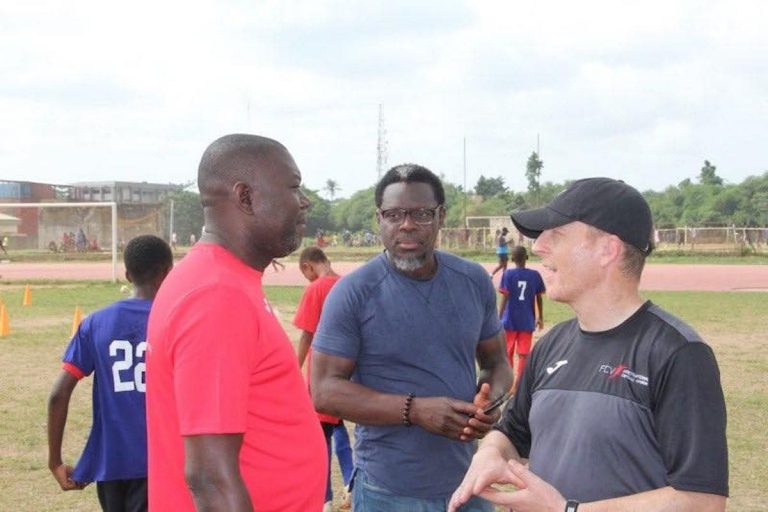
SPORT: Professional Coach Oluseyi Oyebode’s Passion for Schools AND Grassroots Sports

OLUSEYI Oyebode’s background in sports was inspired by the level of sporting activities and awareness in the eighties.

He recounts his early experiences and how he started thus: “I vividly recollect many football and athletics programme at the grassroots level which encouraged me into sports developments. I was in class three in 1983 when I started my coaching career as a coach player.

“I usually gather my classmates and junior students then for coaching before joining clubs for mentoring programmes and hence my decision to further seek more knowledge from the Department of Physical and Health Education, University of Lagos in 1994 and later became the University of Lagos student Union head of sports, which emerged as overall winner in the UNILAG NUGA 98.

Oyebode also lead as the director of sports Greensprings School with lots of achievements and participated in the 2003 All African Games as assistant manager in Gymnastics. He was also an alumnus International Olympic Committee, IOC advance sports management course before finally becoming grassroots sports development enthusiast.

On why he decided to embrace sports in school, he said, “I decided to embrace sports in school because of my passion for genuine sports development. Many years ago, I discovered that the bedrock of sports development lies in school sports.
“I discovered love for sports due to the structured events and activities with proper coaching put in place even from primary schools.
“I was fortunate to represent my Primary School then in the 70’s before playing for local clubs in the community. FIFA junior tournaments started in mid-80’s and late 90’s further propagate the interest in school sports because many of the talent discovered then came from the school sports programmes.”

Recounting his experience as a sports director in school, the Unilag graduate reacted thus:
“My experience as a school sports director was overwhelming. My involvement as exposes me to the global perspective of sports development, it enables me to interact with counterparts across the globe. It also gives me the opportunity to develop grassroots sports concept that is now beneficial to many federations and associations today.

One of the major challenge in his experience as a sports director in school was the difficulty at trying to encourage schools to use sports as a tool to develop students’ growth which later encourages parents to subscribe to his philosophy of sports and education.


Consequently, many students in public and private schools have benefited through scholarships and professional sports participation.


Oyebode also laments the fact that sports has not been given enough attention in schools in Nigeria, which he said was due to lack of focus in school sports administration, death of various association and bodies responsible for school sports growths, lack of good trained sports masters and coaches, schools focus on funds generations without actualising the purpose, lack of good structure to supports school sports developments, lack adequate facilities and play ground to engender development in schools and the overall economic situation that has affected every area of our daily lives.

Asked what ignited his interest in school cum grassroots sports, Oyebode said he was able to discover this challenge at the tender stage in his career, which really helped his focus.

“To be involved in school sports, you need to be rugged and dogged and also be resilient. You should be prepared to fail before success. All the above qualities eventually serve as my strength, hence my interest in school sports.”
Oyebode however admitted that in spite of his passion, there were many challenges confronting school sports in Nigeria, saying the challenges were enormous.

“Any nation that fails to invest in her youths will definitely have issues and will kill the morals and passion, not only in sports but in every sphere of life.
“Lack of school sports funding and corruption has become the major bane to school sports development in Nigeria. In addition, the problem with uncoordinated sports growth plans and maladministration. “

He however believes a good structure that encompasses coaching, teaching and administration with a well sorted policy can still change the situation.

“School sports can easily be revived through adequate coordinated plans and genuine efforts from the federal government that will trickle down to the lowest level of school sports organisation in Nigeria.

“There should be DNA of sports development that will engender all areas including teaching, coaching and administration which will lead to a sorted grassroots sports curriculum plans for the purpose. I have discovered over the years that we don’t develop from the root but pick any available grass to use “The greatest enemy of tomorrow’s success is today’s success” hence the need to refocus our sports plans as a nation.

“We need to stop recycling our sports administrator, hence we remain static, and our sports education programme curriculum in our tertiary institutions is not addressing today’s sports’ needs. There is a need for sports policy development that will meet global requirements. A good sports structure that can accommodate 18 months to 18 years will survive.”
For the Physical and Health education graduate, sports in Nigeria still remain below average.

“Though I am aware the current sports minister is doing his best to involve private participation, which to me is a good idea but the questions remains that trust as sustenance is still a great challenge. We need a system that sincerely encourages genuine sports development,” he noted.

(SOURCE: THISDAY)

Thumbs Up for Northern Cape Education – Deputy Minister Dr Reginah Mhaule

0

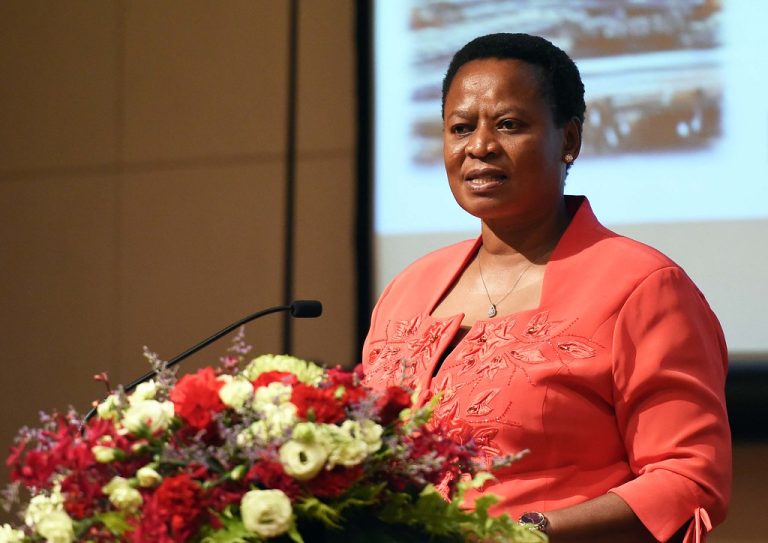
BASIC Education Deputy Minister Dr Reginah Mhaule has commended the Northern Cape Education Department for its commitment towards improving learning outcomes.

“Schools in the Northern Cape are working tirelessly to ensure desired curriculum coverage prior to the 2020 National Senior Certificate (NSC) examinations later this year,” Mhaule said.

Accompanied by Northern Cape MEC for Education Zolile Monakali, Mhaule undertook a two-day oversight visit programme to Kuruman and Kathu this week, to assess the status of school functionality since all learners returned to the classroom a month ago.

Among the schools visited by Mhaule were Galaletsang High School, Gaegake Primary School and Deben Primary School in the John Toalo Gaetsewe District.

She concluded her oversight programme at Kathu High School.

Mhaule said that schools and learners must be fully supported in order to improve the quality of passes and achieve a higher volume of bachelors this year.

She also encouraged the province to support primary schools with an attempt to lay a strong foundation for learners in General Education and Training (GET).

The Deputy Minister further acknowledged the efforts made by educators with comorbidities who reported for duty this week, after having been granted concessions to work from home due to their vulnerability.

She emphasised that although the teachers reported for duty, the Basic Education Department and provincial Education Departments will not terminate contracts of the substitute teachers in the sector.

“You may be well aware that due to social distancing phenomenon class sizes in several schools are undoubtedly cut down, leaving the sector in high need of additional teachers,” the Deputy Minister said.

Mhaule also called on educators, learners and members of the public to adhere to COVID-19 regulations and maintain social distancing, the wearing of face masks and hand sanitising at all times.

“As the basic education sector, we must take responsibility to prevent the spread of Coronavirus in our communities,” Mhaule said.

MEC Monakali pledged his unwavering support for all learners, especially Grade 12s.

He said that the provincial department has finalised the matric intervention programmes which will unfold in October 2020.

“These interventions include weekend lock-in sessions, Saturday classes and extended spring camps. We are targeting close to 8 000 Grade 12 learners which will benefit from our final push activities ahead of the 2020 NSC examinations,” Monakali said.

(Read the original article on SAnews.gov.za.)

Government And Nehawu Agree To Continue Engagement On Workplace Issues

0

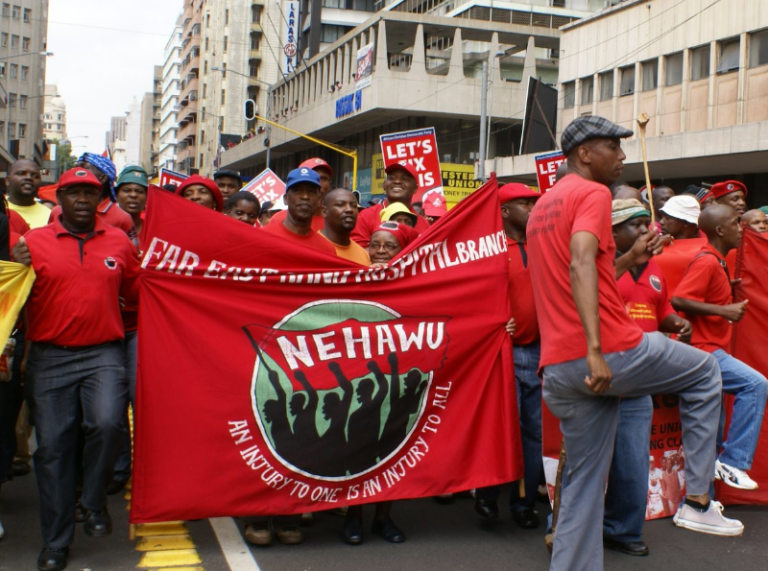
GOVERNMENT and the National Education, Health and Allied Workers Union (Nehawu) have agreed to continue engagement on issues concerning collective bargaining and workplace conditions in the public sector, particularly in the context of the COVID-19 pandemic.

The agreement follows a high-level meting between President Cyril Ramaphosa and the national office-bearers of the public-sector trade union, including the union’s President, Mzwandile Makwayiba, first Deputy President Mike Shingange, second Deputy President Nyameka Macanda, National Treasurer Kgomotso Makhupola and General Secretary Zola Saphetha.

This meeting followed the union’s submission of a memorandum to the President relating to, among others, improving occupational health and safety uniformly in the context of the COVID-19 pandemic, conditions of service more broadly and implementation of clause 3.3 of Public Service Coordinating Bargaining Council (PSCBC) Resolution 1 of 2018, which deals with salary adjustments for the 2020/21 financial year, and which is currently the subject of litigation, according to a statement issued by the Presidency.

The meeting agreed that government and Nehawu will continue work on the issues raised in the Nehawu memorandum that are currently being discussed by task teams comprising government and Nehawu.

“Reports of these task teams will be presented to a meeting of senior leadership of government and public sector unions who will meet again soon on a mutually convenient date to develop solutions in the interest of workers, the public sector and the nation and economy at large.”

Nehawu’s memorandum to Ramaphosa relates to improving occupational health and safety uniformly in the context of the COVID-19 pandemic.

Nehawu is also protesting against the salaries of public servants not being increased.

Among their demands are the following: 

  1. That COVID-19 not be used as an excuse to reverse the hard fought gains of workers;
  2. That government urgently take steps away from a “neoliberal economic policy paradigm”;
  3. Workplaces undergo risk assessments and infections control, and prevention measures are put in place, and the Occupational Health and Safety Act must be implemented in full to protect workers;
  4. Infected workers must return to work only when they complete the mandatory 10 days of self-isolation, have undergone a medical evaluation confirming fitness to work;
  5. Department of Health must review the process of reporting on COVID-19 fatalities in all institutions to ensure adherence with uniform standards as recommended by the WHO;
  6. Government urgently fill all vacant posts in the public healthcare sector and ensure that we start to build building blocks for the implementation of the National Health Insurance [NHI]. 

The issue of governmental wage increases is also likely to take centre stage in the coming months as restrictions around the coronavirus pandemic are eased.

Public wages are set through bargaining with unions and agreements stay in force for three years.

The current agreement is in place until March 2021.

In February government asked to review the last leg of a three-year pay agreement because it said it couldn’t afford it.

The coronavirus pandemic has further exacerbated the country’s financial problems with unions and government now set for a showdown.

National Treasury plans on cutting R160 billion from the public sector wage bill over the next three years – a position that has been met with opposition from public sector trade unions.

(COMPILED BY INSIDE EDUCATION STAFF)

Health Education Could Benefit Neurotic College Students

0

COLLEGE students are under a lot of stress, even more so lately due to the COVID-19 pandemic. Based on certain personality types, especially neurotic personalities, college health courses could help students develop a more positive stress mindset, according to research from faculty at Binghamton University, State University of New York.

A research team including Binghamton University Health and Wellness Studies Lecturer Jennifer Wegmann sought to evaluate the impact of health education on the change of stress mindset and also to explore the role of personality in the change of stress mindset when there is a specific focus on improving individual health and well-being.

Specifically, they sought to assess the relationship between each personality dimension (i.e., neuroticism, extraversion, openness, agreeableness and conscientiousness) and stress mindset change over time.

The findings surrounding specific personality dimensions were interesting. It appears that engaging in health education is beneficial in changing perceptions of stress for some students but not all — based on personality. For example, significant changes were elicited in students who scored high on the neuroticism scale but no significance was shown for students on the extroversion scale.

Neurotic students tend to be worriers with high anxiety. The findings of this research show how focusing on their health, in general, can change these typically high-stressed students’ beliefs about the stress they experience.”

The researchers conducted an online survey with a group of 423 students taking a college health education course. They asked students to rate the extent to which they agreed with a series of statements. Analyzing the data, the researchers found that students with specific personality types, especially neurotic students, were more likely to improve their stress mindset by engaging in health education.

Wegmann said the most interesting thing about these findings is that change in stress mindset was elicited not through focusing on stress and changing mindsets specifically, but rather by students focusing on their overall health and wellness. Colleges may not have the faculty, space or funding to provide stress-specific courses, but this research shows there is another avenue to help students navigate their stress, Wegmann said.

“This is important for several reasons,” said Wegmann. “First, helping students develop a more positive or enhancing stress mindset has been associated with improved mental health, increased performance and productivity. Second, general health education courses are available to large numbers of students. There typically are few, if any, stress-specific courses offered on college campuses,’ and if they are offered, many are limited in student capacity.”

Wegmann said that the next step is to work on discovering what approach will be helpful for all students.

“According to our research, this approach was not helpful for everyone,” said Wegmann.

“While these findings are providing novel and interesting information, as a stress researcher who works to help students become more productive and healthy, I want to know what other avenues will reach our students.”

“The findings surrounding specific personality dimensions were interesting. It appears that engaging in health education is beneficial in changing perceptions of stress for some students but not all — based on personality. For example, significant changes were elicited in students who scored high on the neuroticism scale but no significance was shown for students on the extroversion scale. Neurotic students tend to be worriers with high anxiety. The findings of this research show how focusing on their health, in general, can change these typically high-stressed students’ beliefs about the stress they experience,” said lecturer Jennifer Wegmann, Binghamton University.

(SOURCE: News Medical)

Case Law Suggests South Africa Must Do More About Disrupted Schooling

0

MARIETTE REYNEKE

SINCE the first case of COVID-19 was reported in South Africa, the question of how to manage the country’s schools has been top of mind. Schools were closed in March and, as part of a phased approach, began returning from June. The risks associated with the pandemic mean the situation could change at any moment.

There has been much debate about whether schools should be open at all. Some have pointed out that children’s rights – to dignity, life, equality and education, among other things – must be considered throughout. While this is correct, in the legal sense, the situation is slightly more complex.

This can be illustrated by at least two South African court judgments. Drawing from these findings, there are a few basic legal principles to consider when it comes to children’s rights.

First, whenever a decision needs to be taken that concerns children, as with the closure of schools, all relevant factors must be taken into account. The best possible decision needs to be taken for the specific circumstances.

Second, when children are affected by the decision, the decision maker needs to do a separate or additional investigation into the impact of the decision on the interests of the children concerned.

The decision-maker must then take all reasonable steps to minimise any negative impact on the best interests of children. This is of paramount importance in terms of the Constitution.

The national and provincial departments of education took the first step to take the most appropriate decision in the circumstance: to close the schools when it did. But the second step – thoroughly assessing the impact of closures – should have received more attention, especially when it came to how children were affected by the closure of school feeding schemes.

Education authorities knew that children would suffer without feeding schemes but said they did not have the capacity to keep the schemes running while schools were closed. Civil society groups urged the department to rethink its position; the matter eventually went to court.

It is clear that the department did not fulfil the second step: going the extra mile to mitigate the negative effects of school closures on children. And it dismally failed on step three by not taking all reasonable steps to minimise the impact of closing feeding schemes.

One would have expected a department responsible for 13 million children to prioritise those children’s best interests. But it seems as though the political will to comply with the constitutional obligation to optimise children’s best interests is lacking. This can also be seen in the general state of public schooling, from overcrowded classrooms to a lack of water and sanitation at many schools.

And yet the country’s Constitution, as well as several court rulings, offer clear guidelines for how children’s best interests should be managed and prioritised.

Case law

I base my arguments here on two important cases. In 2007 the Constitutional Court set a clear precedent in S v M on how to ensure that decision-makers give effect to children’s best interests.

The case dealt with the question of whether a single mother found guilty of fraud – and who had four children – should be sentenced to direct imprisonment or correctional supervision.

Courts normally consider a few factors in determining an appropriate sentence: the interests of the community, the offender’s personal circumstances (including whether or not they have dependants) and the gravity of the offence. The central question in this case was how to act in the best interests of the woman’s children – and, by association, the children of all offenders.

The court ruled that the children’s best interests tipped the scales in favour of correctional supervision. The offender was a single mother and there was nobody to take care of the children if she was jailed. Crucially, other factors were taken into account: the woman had already paid some of the money back to the people she defrauded, and she’d stolen a relatively small amount. This case permanently shifted the approach to sentencing when an offender has dependants. There must be an independent investigation into the impact of a sentencing decision on the interests of an offender’s children.

A second case, from the Supreme Court of Appeal, shows how crucial it is for the decision-maker to take as many steps as possible to mitigate the negative effects of any action on children.

The facts in Howells v S 2000 JOL 6577 (A) are similar to those in S v M: a single mother convicted of fraud, who had no-one to take care of her child.

In this instance, though, the offender was in a position of trust with her employer and defrauded him of a large amount of money. The severity of the crime meant direct imprisonment was the only acceptable sentence. However, it was clear that her child’s best interests would be affected as the child would need to go into foster care.

The child’s interest could not and should not change the court’s sentencing decision. In this instance the court’s separate investigation ended with several recommendations designed to do as little harm to the child as possible. These included ensuring that mother and child maintained contact so their relationship could develop and they could eventually be reunited. The court ruled that the Department of Correctional Services should ensure the mother and child had frequent contact and that the child could visit the mother. This was not part of the traditional approach to sentencing.

Considering COVID

These cases and others that form part of South Africa’s case law show that it’s not enough just to consider children’s best interests. Decision-makers also need to go a step or two further and optimise children’s circumstances as much as is possible.

There will no doubt be more tough decisions around COVID and schooling in the coming months, or even years. The department of education has to consider postponing exams, closing schools where there are COVID cases, and how to catch up on lost class time. In doing so, it must do everything possible to go the extra mile for pupils and minimise the impact of the pandemic. This may include, but not be limited to, making sure schools have access to clean water and proper sanitation and allowing schools to be flexible in managing the impact on the children at that particular school.

*Mariëtte Reyneke is Associate Professor in Education law, University of the Free State.

(SOURCE: THE CONVERSATION)

Teacher Of The Week: Limpopo’s Mokhudu Machaba Is Among 10 Finalists Vying For A U$1m Global Teacher Prize 2020

NYAKALLO TEFU

LIMPOPO Education MEC Polly Boshielo says she is elated after a teacher Mokhudu Machaba from Ngwanamago Primary School was selected as one of the top finalists for the Varkey Foundation  Global Teacher Prize 2020.

Mokhudu was chosen from more than 12,000 nominations from over 140 countries to continue in the running for this $1 million prize.

Now in its sixth year, the US$1 million award is the largest prize of its kind.

“I am thrilled to have one of our own recognised at a global scale for her determination to help our children rise above challenges presented to them,” said Boshielo.

Machaba joins among others US teacher Leah Juelke and South Korean teacher Yun Jeong-hyun vying for the top prize.

Machaba is recognized for her commitment to ensure the hardships she went through do not befall her students.

Starting with the use of a single cellphone for Internet access in class, she obtained laptops from the Internet Service Providers Association Super Teacher awards, Microsoft, and the South African government – all by showcasing her students’ activities.

She has now introduced her students to Coding Week, using Minecraft as an introduction, and students have also started talking with learners from other countries through the Microsoft Educator Platform and mystery Skypes.

In 2009, Mokhudu was the runner-up in the ISPA Super Teacher prize for ICT Integration in the classroom. In 2015 she was crowned Provincial winner of the National Teaching Award (Technology Enhanced Teaching category), and she has also been recognized as one of the 50 Inspiring Women in Tech for South Africa.

The department said Machaba started with just a single cell phone for internet access in class and went on to win prizes for integrating ICT in the classroom.

“We are proud of her for making it to the finals. We are behind her and rooting for the overall winner position”, said MEC Boshielo.

The awards are set to take place on December 03 2020.

Another finalist, Juelke, a Fargo native, graduated from the school where she now works.

However, her experience spans far beyond the Midwest.

“I’ve always kind of had a passion for learning about different cultures and traveling,” Juelke said.

“My first job was in Taiwan. I worked at a boarding school, and then I worked in Ecuador for three years at a private school as an English and social studies teacher.”

She is the 2018 North Dakota Teacher of the Year and holds certification in the world of English learners programs, formerly known as the English as a second language program, that accommodates students who don’t speak English as their first language to help them learn their curriculum with English.

Students in the English learner track at Fargo South attend their core classes with these accommodations and attend elective classes with the general population of the school.

(COMPILED BY INSIDE EDUCATION STAFF)

Zimbabwe Teachers Union Rejects UNICEF Push to Keep African Schools Open During Pandemic

0

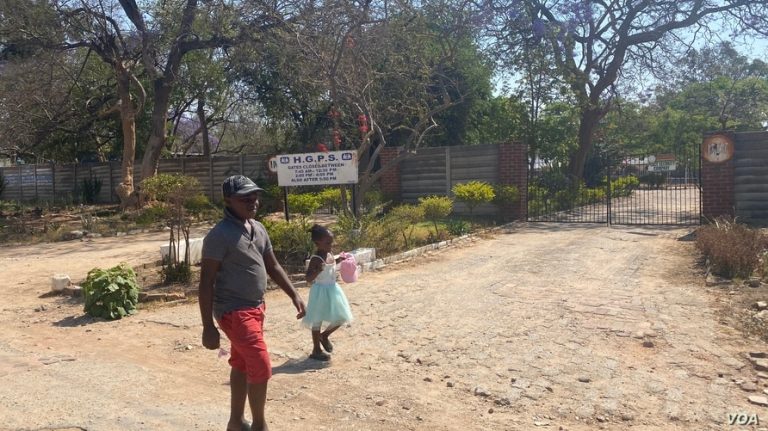
HARARE – Schools across Africa are slowly reopening after months of remote learning during the coronavirus pandemic. But Zimbabwe’s teachers union is resisting going back to the classroom and has rejected a call by the U.N. Children’s Fund (UNICEF) for governments to reopen schools.

On Tuesday, Mohamed Malick Fall, regional director for UNICEF in Eastern and Southern Africa, urged governments in the region to open schools closed earlier this year following an outbreak of coronavirus.

Fall said the pandemic has caused “an unprecedented education crisis” over the last seven months as radio and online learning methods are not reaching all the students. Some also lost the daily meals they were receiving at school.

And that’s not all, said Fall.

“Lost learning hurts children and community, teenage pregnancy and violence against children increase. Now we acknowledge the safe reopening of schools will not be easy. While evidence show that children are not the main driver of the pandemic, there will be cases of COVID-19 in school(s). It will not be a practice in perfection. But it can be done with community commitment, government leadership and investment,” he said.

South Africa, despite its large COVID-19 caseloads, reopened schools for all grades at the end of August.

UNICEF says most countries in eastern and southern Africa have seen a phased return to schools, starting with exam classes.

In Zimbabwe exam classes are scheduled to start next week. But that now hangs in balance after the country’s biggest teachers’ union called for a strike unless their concerns are addressed.

The teachers earn about $100 a month, including a $75 “COVID-19 allowance” introduced two months ago. They want an additional $500 to be above the poverty line.

Sifiso Ndlovu, the head of the Zimbabwe Teachers Association, said he is “worried” that UNICEF has not looked at his country’s lack of preparedness to reopen schools.

“The safety issues that we have been concerned about in the schools have not been met thoroughly as to guarantee safe and healthy reopening of schools without high incidents of COVID-19. Secondly, UNICEF seem to be oblivious that the learning conditions for students is also dependent on the working conditions of the teachers and above all it should be supported by budgetary support even from UNICEF,” he said.

Amon Murwira is Zimbabwe’s minister of higher and tertiary education. He said the government allocated about $60,000 to ensure that when schools reopen they are observing World Health Organization guidelines for COVID-19.

Neighboring Zambia opened schools Monday. Via WhatsApp, Christopher Yalukanda, from the Zambia National Union of Teachers said his organization is checking on the preparedness of schools after the over half-a-year-long closures.

“What we observed is that most of children came back equipped with masks, the schools have already acquired some face masks, sanitizers and they have set up some washing points within the school. In order to take care of social distancing schools have divided or staggering timetable, which means not all the learners will report to school the same day,” said Yalukanda.

He said it was too early to conclude that Zambia has successfully reopened schools and is following WHO guidelines to contain the coronavirus. He said the teachers union will go around the country to assess the situation.

(SOURCE: VOANEWS)