Home Blog Page 376

Eastern Cape: Isolation Sites Identified For Matriculants Who May Test Positive For COVID-19 During Trial Exams

0

THE Eastern Cape MEC for Education Fundile Gade says matriculants at the Ethembeni Secondary School who tests positive for COVID-19 will be able to continue with their trial exams.

This after 98 learners tested positive for coronavirus at the school, located in Burgersdorp within the Joe Gqabi District of the Eastern Cape.

The positive cases at the school come as matriculants are currently writing their trial examinations.

“The Department of Public Works (DPW) has indicated that these learners will be isolated in Aliwal North, in the Eastern Cape. In this centre, learners will be allowed to continue writing their Trial Exams,” said Gade.

He said public works will advise on the availability of sites during the process as more learners may need to be isolated.

“There are also isolation sites in Steynsburg which have been identified for Grade 12 learners should there be a need to quarantine those who tested negative, as they could be in the incubation phase,” said Gade.

He said a multi departmental team, which consists of the local municipality, officials from the departments of Health (DoH) and Public Works (DPW) and Education has been sent to the school to help contain the spread of the virus.

“The teams on the ground will assess the situation daily and advise should this outbreak require the activation of a multi departmental Disaster Management team,” said Gade.

Trial examinations began on 14 September and will end 14 October 2020.

Learners will kick off their final exams on 5 November 2020, ending 15 December. 

(COMPILED BY INSIDE EDUCATION STAFF)

Kenyan Teachers Ordered Back to School To Prepare For Reopening

0

NAIROBI: The Teachers Service Commission (TSC) on Monday ordered both primary and secondary school teachers to report back to learning institutions by September 28 ahead of the eventual reopening of schools.

TSC Chief Executive Officer Nancy Macharia said teachers are prepared to recover the time lost due to a nationwide coronavirus-triggered closure of schools in mid-March.

Macharia made the announcement after meeting with education stakeholders convened by Education Cabinet Secretary Prof George Magoha at the Kenya Institute of Curriculum Development (KICD).

“We ask our teachers to report to school on Monday, September 28 to prepare for the eventual opening of schools, so our teachers can report any day between now and Monday and start preparing schools,” said Macharia.

Magoha, who has cautiously evaded to publicly comment on the reopening of learning institutions said: “I think it’s about time to call our children back to school.”

Magoha however said they will issue dates for re-opening after ‘appropriate government machinery has gone through the plans.’

A ministerial forum to review the proposed school calendar is set to take place by Friday, September 25, bringing together CS Magoha, Interior’s Fred Matiangi and Mutahi Kagwe (Health).

The ministerial forum will precede a presidential address on the further re-opening of the economy which has slowed down since March, and the re-opening of schools.

CS Magoha had earlier on expressed fears that achieving social distancing in public schools will be a challenge.

He however noted that the government will attempt to provide masks to vulnerable and less fortunate school going children.

(SOURCE: CAPITALNEWS)

Student Entrepreneur’s Digital Library Helps Children To Read

COMPETING in the 2020 Entrepreneurship Intervarsity competition, University of Cape Town (UCT) student Qhawe Bula and his team have developed a unique digital library comprising a series of read-along children’s audiobooks written in South Africa’s 11 official languages. This in an effort to change the way young children view literature and language, and to encourage a culture of reading.

The novel idea topped the business ideas category at the regional round of the Entrepreneurship Intervarsity competition in July. The competition aims to identify top student entrepreneurs at South Africa’s public universities, showcase their businesses and attract investors to their enterprises.

South Africa faces enormous literacy challenges: 78% of grade 4 learners can’t read for meaning. But Bula’s digital library, TAQA, is paving the way for change in this area.

Research indicates that children are likely to learn a second language much faster if they have a firm grasp of their mother tongue. TAQA, Bula said, helps improve children’s ability to read in their mother tongue, which, in turn, helps them to learn how to read and understand a second language much easier.

“TAQA’s main aim is to protect and celebrate African cultures and identities. We believe that by leveraging language and technology we can go a long way towards achieving this goal,” Bula said.

The platform is aimed at children between the ages of two and nine.

Breaking barriers

According to Bula, a second-year Bachelor of Social Sciences student, TAQA helps children to read for meaning. And bringing children proudly South African stories that they can relate to, and in languages they understand, is one way of doing that. It teaches them the power of storytelling and nurtures a love for reading.

“With TAQA we really want to help grow a love and affinity for reading and improve children’s competencies in their mother tongue.”

“With TAQA we really want to help grow a love and affinity for reading and improve children’s competencies in their mother tongue,” he said.

“We want to break down language barriers. They still exist, and doing it will solve many of our problems.”

He continued: “We believe that it’s important for young South Africans to see themselves and their languages represented and celebrated in mainstream storytelling. We are committed to telling proudly South African stories.”

Bula said that TAQA believes in the importance of preserving indigenous languages.

(SOURCE: UCT NEWS)

24 million Students Could Drop Out Of School Due To The Coronavirus Pandemic, UN Says

0

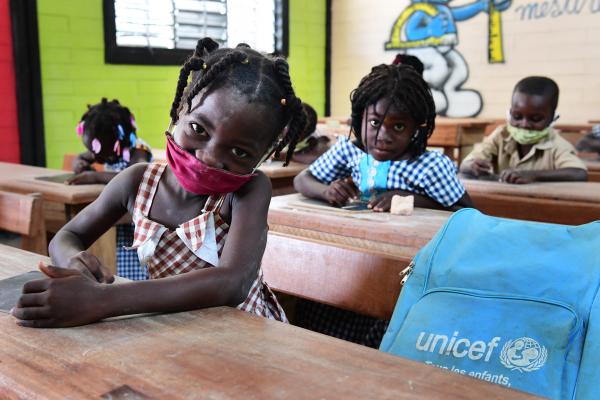
THE disruption to schools caused by the coronavirus pandemic constitutes a “global education emergency” that threatens to derail the education of at least 24 million students projected to drop out of school as a result, said Henrietta Fore, executive director of the United Nations Children’s Fund. 

“At the height of Covid-19,” 192 countries shuttered schools, leaving 1.6 billion students without in-person learning, Fore said on a press call hosted by the World Health Organization and the United Nations Educational, Scientific and Cultural Organization. She added that now, more than 870 million students, “or half the world’s student population in 51 countries,” are still unable to return to school. 

“The longer children remain out of school, the less likely they are to return,” she said. “That’s why we are urging governments to prioritize reopening schools when restrictions are lifted.”

She added that beyond education, schools around the world provide many students with a source of nutrition and immunizations.

“At least 24 million children are projected to drop out of school due to Covid-19,” she said. 

Many schools went online in the spring as the virus spread around the world, turning to virtual education to replace in-person learning. Education experts, however, have acknowledged the shortcomings of virtual learning, saying that it cannot replace in-person schooling. Fore said that more than 460 million students across the globe don’t have internet access, computers or mobile devices to participate in virtual learning while their schools are closed. 

“We know that closing schools for prolonged periods of time [has] devastating consequences for children,” she said. “They become more exposed to physical and emotional violence. Their mental health is affected. They are more vulnerable to child labor, sexual abuse, and are less likely to break out of the cycle of poverty.”

The reopening of schools has become a hot-button issue, particularly in the U.S., where President Donald Trump has pushed to reopen schools regardless of how widely the virus is spreading in the community. Public health officials have emphasized the importance of reopening schools for in-person learning but have acknowledged that the virus presents a risk for young people. While young people typically don’t become as sick due to Covid-19 as older people, the long-term health consequences of a Covid-19 infection in young people are still being researched, and some young people have died from the disease.

Public health specialists, including White House coronavirus advisor Dr. Anthony Fauci, have said the best way to reopen schools is to contain the virus in the community. UNESCO Director-General Audrey Azoulay said Tuesday that it’s possible to reopen schools safely with new protocols. She added that it will require “rethinking the role and training of teachers.”

UNESCO, UNICEF and the WHO jointly published Monday a 10-page document that outlines guidelines to reopen and operate schools during the pandemic. 

“It is of utmost importance that education and health work closely together to ensure that schools reopen safely as a matter of priority,” she said. “When we deal with education, the decision that we make today will impact tomorrow’s world.”

The United Nations agencies’ guidelines detail a number of measures that communities, schools, classrooms and individuals should weigh when deciding whether to reopen or attend school. Some of the policy measures include encouraging students to stay home if they believe they’ve been exposed to the virus and for schools to ensure adequate ventilation in indoor classrooms. 

WHO Director-General Tedros Adhanom Ghebreyesus said Tuesday that “many questions remain, but we’re starting to have a clearer picture” about how the virus affects children. He reiterated that the virus can kill children, though it’s rare, and that kids can become infected and spread the virus to others. Tedros added that more research is needed to learn what increases the risk of death in children as well as the potential long-term health complications from Covid-19.

Tedros said that the risk of reopening schools amid the pandemic will be determined by each community’s ability to bring the virus under control through proven public health measures, such as mask wearing, social distancing, testing, tracing and isolation. In places where there are no or only few new cases of the virus, “the decision to close schools should be a last resort.”

“Although children have largely been spared, many of the most serious health effects of the virus they have suffered in other ways,” he said. “Millions of children have missed out on months of schooling. We all want to see children back at school, and we all want to make sure the schools are the safe and supportive learning environments they should be.”

(SOURCE: CNBC AFRICA)

Old School Sports Gear To Aid Children In Khayelitsha Township, Cape Town

0

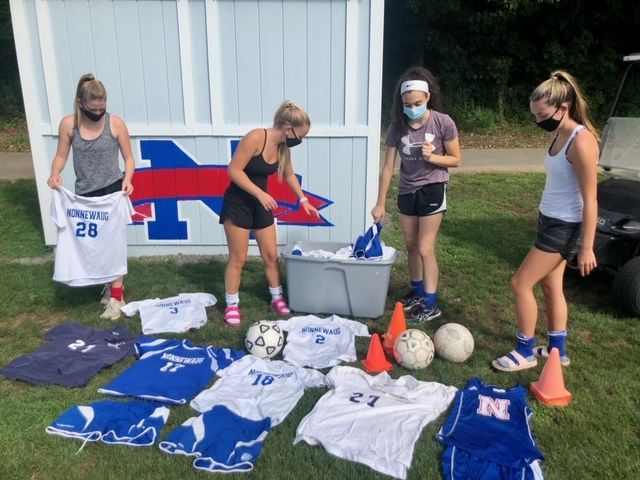
WOODBURY — Nonnewaug High School in Connecticut, US, is sending old sports equipment to an impoverished section of Cape Town, South Africa where it will be used by soccer-loving kids using sports as a path toward a better life.

Nonnewaug Athletic Director Declan Curtin said the first shipment to the African nation was sent out last week and includes soccer balls, cones and jerseys, items that have been sitting in storage for several years.

The town of Khayelitsha has a sports program but no money to purchase equipment.

“It’s the perfect opportunity to look in our closets and find things that we might not be using anymore that will be treasured in South Africa,” Curtin said.

Nonnewaug is looking for local sponsorships to help with postage costs and for future shipments, including cleats, which are in high demand as some kids in the South African program play barefoot.

The connection with Cape Town’s Khayelitsha township was made through Region 14 Superintendent Joseph Olzacki, who has connections on the African continent.

Before coming to Woodbury, Olzacki spent five years in Rwanda where he headed up a team of American teachers brought in by the African nation to elevate its educational system to American standards.

While there, Olzacki was at a United Nations conference when he met Cape Town native Abongile “Bongi” Quasana, who helped start a youth soccer program in 1998 to “get kids off the streets” and bring purpose to their lives.

Olzacki said the endeavor can also bring a sense of purpose and pride to Nonnewaug students.

“This is a way for kids to learn that they can effect change 10,000 miles away,” Olzacki said.

Curtin said he had been looking for a goodwill project for the school’s sports leadership council. A short conversation with Olzacki got the ball rolling.

Quasana expressed his joy during an interview with the Republican-American last week from Cape Town. He said children there live in harsh conditions, often without enough money for food. But sports, specifically soccer, has given them hope and inspiration.

“We are so happy for this. We are trying to make change in this country and we are doing it though soccer. People can change. I’ve seen it because of soccer,” Quasana said.

“We don’t want to win soccer games. We want to understand humanity.”

Last week, Nonnewaug athletes were pouring through the equipment and getting it ready for shipment.

“We’re just so grateful to be able to help out and maybe allow someone else to fulfill their dreams,” said senior soccer player Mia Higgins.

Curtin said the goodwill connection to Africa has been a fun project that involves leadership, teamwork and an understanding of things on a more global scale.

Quasana promised he would send pictures back to Woodbury, and offered thanks to the community for helping make a difference a world away, in a place most Americans will never see.

(SOURCE: The Republican-American)

Teacher of the Week: Table View Primary Celebrates Principal’s 50th Birthday With #JerusalemaChallenge

CLASSROOM CORNER|

TEACHER: WAJ GOUWS

SCHOOL: Table View Primary School, Western Cape

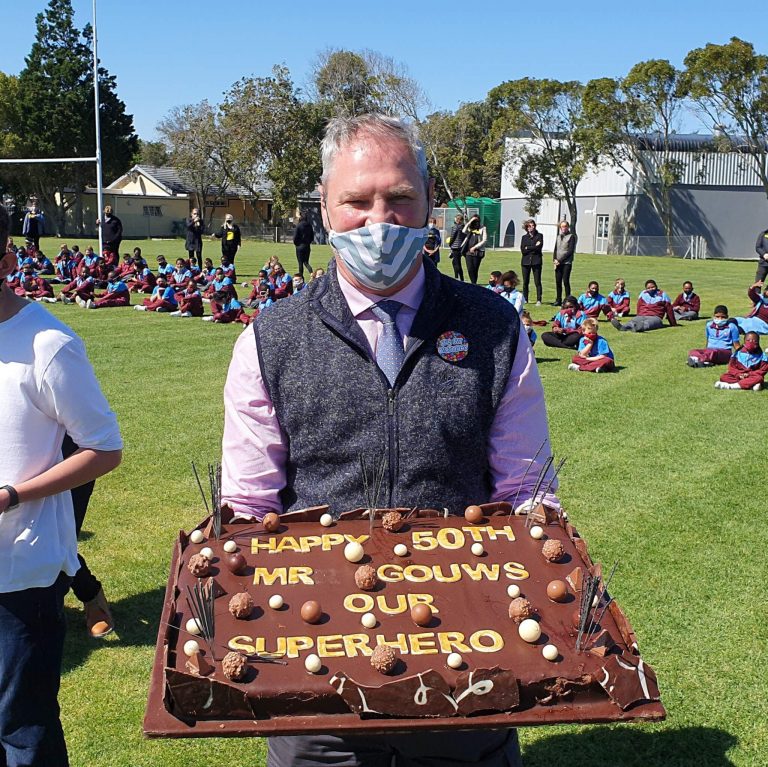
TABLE View Primary School was thrilled to celebrate their school principal, WAJ Gouws’, 50th birthday on September 10 2020.

The Grade 1-7 learners assembled on the field, socially distanced, and sang happy birthday to him.  

Another surprise followed.

The Grade 7 learners have been excited to take part in the Jerusalema Challenge and thought that Gouws’ 50th birthday would be the perfect opportunity to celebrate!

The song is “Jerusalema” – produced by South African DJ and artist, Master KG featuring Nomcebo Zikode – had the grade 7 teachers and learners from Table View Primary School join in on the vibrant global sensation.

“During these challenging times of Covid-19, our school has embraced the motto ‘Superheroes Wear Masks’ and Mr Gouws (aka Batman) has been our school’s superhero leading us through these times of uncertainty. All our learners and staff members were glad to have an opportunity to show him how much we appreciate his strength, humility and true superhero leadership,” said Bianca Akerman, the school’s marketer.

You can watch the Grade 7’s rise to the #JerusalemaChallenge on Table View Primary School’s YouTube channel https://youtu.be/bOxAFgEFlUY

(COMPILED BY INSIDE EDUCATION $ AWSUMNEWS)

Senegalese Scientist Launches Website To Spotlight Africans Working in STEM

0

NELLIE PEYTON

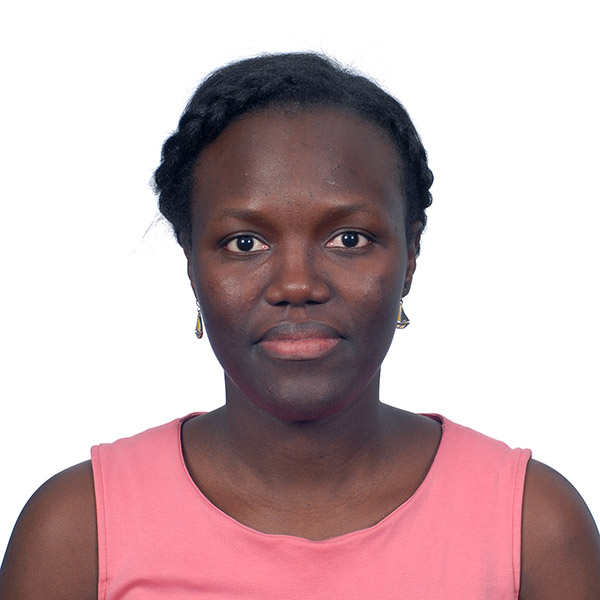
GROWING up in a trading town in Senegal, Adji Bousso Dieng loved school and had a particular talent for maths. But with a dearth of career role models, she had no idea which path to follow.

Some two decades later and a research scientist working on artificial intelligence at Google, Dieng wants to give young Africans the inspiring examples she missed out on.

Over 1 billion children are out of school due to the COVID-19 pandemic.

For the most vulnerable kids, this is only the latest blow — and could put an end to their education for good.

GPE and ECW are working to tackle this — but they urgently need more funding from governments. “I didn’t have a career role model to look up to and say, ‘oh I want to be this’,” said Dieng, who recently earned a PhD in statistics and will next year become the first Black female faculty member at Princeton University’s School of Engineering and Applied Science.

“It was not obvious to stay in school, in the context in Senegal where you’re supposed to get married,” she said.

This month, Dieng launched a website called “The Africa I Know”, which features profiles of successful African professionals working in fields such as science, technology, and engineering.

Speaking by phone from her home in New York, Dieng said her mother had taught her to value education. The family business was selling fabric, and neither of her parents finished school.

“My father was polygamous, and so he had three wives which is very common in Senegal,” Dieng told the Thomson Reuters Foundation. “My mom was the only one who sent her kids to school.”


Dieng went to the public school in Kaolack, a large town in the peanut-farming region of Senegal, where schools follow the French curriculum as a legacy of colonial rule.

Computer science, which Dieng will teach at Princeton, was not something she knew about as a teenager.

Her school had one room with old computers in it, and the instruction consisted of teachers saying “type this sentence” into Microsoft Word.

But the quality of education in other subjects was high, she said.

At the end of high school she was chosen to represent Senegal at an excellence camp for girls’ education in Burkina Faso, part of a programme founded by the Malian astrophysicist and former Prime Minister Cheick Modibo Diarra.

From there, she won a scholarship to attend engineering school in France.

“It was really exciting,” Dieng said. “I went from Kaolack to Paris.”

But her dream had always been to move to the United States, and after learning English she went on to pursue higher degrees at some of the top US universities — Cornell and then Columbia University in New York.

The idea for “The Africa I Know” took shape during the COVID-19 pandemic, Dieng said.

“Everyone was like, ‘it’s going to be very bad in Africa’. I’ve found myself educating people and saying this is not true, we are doing well, Africans are capable,” she said. “There’s this narrative that Africans need help. People don’t get to see everything that I see.”

The website, which launched on Sept. 1, is divided into three sections: inspire, inform, and educate.

Besides inspiring profiles of Africans working in STEM (science, technology, engineering, and mathematics), the site includes informative examples of Africans using technology to solve problems.

The third section is dedicated to highlighting positive aspects of African history that are often overlooked.

“I took inspiration from, when I was growing up, what I would have wanted to see,” Dieng said.

Now that she is setting precedents at Princeton — she will also be the first Black faculty member in the Computer Science Department — Dieng also hopes to encourage Black Americans and students of colour from any background in the field.

“I never had a Black lecturer since I left Senegal, so I really understand how they feel,” she said.

“I’ll be making sure that I admit students from everywhere, that they see representation.”

(SOURCE: REUTERS)

Over 22 500 Teachers Set To Return To Classroom Amid COVID-19 Safety Concerns

0

NYAKALLO TEFU

OVER 22 500 teachers are set to return to work amid COVID-19 safety concerns.

The Basic Education Department has instructed all teachers granted concessions to work from home during the nationwide lockdown to report back to school on Monday.

Teachers with co-morbidities were granted permission to work from home owing to the COVID-19 pandemic will this week return to school in accordance with the collective agreement 1 of 2020 aimed at providing concession for educators employed in terms of the Act No. 78 of 1998 of Employment of Educators Act (EEA), who were affected due to severe risk factors ofCOVID-19.

In July, the DBE called on all unemployed teachers to register on the National Recruitment Database (NRD) for temporary employment as substitute educators in a public school.

Last week, President Cyril Ramaphosa announced that the country would move from level 2 to level 1 lockdown, meaning concessions work ended on Sunday at midnight.

“The affected people will therefore have to report for duty from Monday, 21 September 2020. If, however, some individuals are still not well, they are advised to follow the normal sick leave protocols,” said Minister Angie Motshekga.

Motshekga has vowed to ensure that the contractual agreement between the department and the substitute educators is fulfilled.

“Schools should also consider ways in which they could best utilise the substitute educators with who they have contractual obligation,” said Motshekga.

The department has urged school principals to re-work timetables to accommodate all teachers returning to work this week. 

“We are expecting that 22,500 teachers who have been working from home under levels 4,3, and 2 will now have to work from the school where they have been employed,” said the department’s spokesperson Elijah Mhlanga.

“If they feel that they are not well, they are advised to apply for sick leave using the proper channels that they know.”

The SA Democratic Teachers Union said it cautiously welcomed the return of teachers to school.

“We are happy with the decision because we did sign a Collective Agreement for teachers with comorbidities to be given concession. We were fully aware that at Level 1 teachers would have to report for duty at school,” said SADTU spokesperson Nomusa Cembi.

“However, we are saying even though the collective agreement has come to an end, this is not the end of the employer’s obligation to the wellness of the employee. Those educators that are still not well can still take the normal route of taking sick leave.”

She added: “We are concerned that Basic Education Department has not handled the issue of teachers with comorbidities in some provinces. We have situations where some teachers who said they had comorbidities were asked to report for duty.”

(COMPILED BY INSIDE EDUCATION STAFF)

Department of Basic Education Scraps Final Exams For Grade 10 and 11

0

THE Department of Basic Education has scrapped this year’s exams for Grade 10 and 11 in favour of controlled tests.

In a circular, department said COVID-19 infections, the loss of teaching time and the closure of schools during lockdown has resulted in the non-completion of the curriculum.

DBE spokesperson Elijah Mhlanga said more teaching time will probably be allotted next year in order to allow learners to complete their syllabus.

“It’s a once-off measure that we’ve got installed position once we checked out the whole lot that affected training this year and we felt it will no longer be honest to have a full-scale exam when faculties have been closed and reopened. With the trimmed curriculum we realised that we aren’t going to complete the syllabus,” said Mhlanga.

“Grade 10s and 11s be informed the similar factor, it’s only the level of problem of what they’re finding out. It’s mainly one thing that’s not in reality new to them. So what we’re going to do is create extra time subsequent year to be sure that the entire paintings that was once no longer lined is roofed then.”

The department said it will instead replace the exams for Grade 10 and 11 with controlled tests.

The controlled test must cover a substantial portion of the curriculum taught, preferably work covered in all terms, wherever possible.

The test, it said, must be administered under controlled conditions. The document said that fundamental subjects like languages, maths and maths literacy will offer the required number of papers with a reduced duration.

(COMPILED BY INSIDE EDUCATION STAFF)

Gauteng Education Department Launches Investigation After School Allegedly Suspends Learner For Speaking Out Against Racism

0

THE Gauteng Education Department has launched an investigation into the suspension of a pupil following claims of racism.

The pupil from Roosevelt High School in Randburg, Johannesburg was suspended on 27 August and faced charges related to racism.

According to the pupil’s attorney, she spoke out against racism at the school when she was suspended.

The pupil, along with other pupils, had previously sent an email to the management of the school asking to have a sit down to address issues at the school which included racism.

The meeting happened and the grievances were noted.

Thereafter, the pupil took to Twitter.

“The disciplinary hearing that was supposed to take place on 15 September 2020 has been postponed indefinitely,” said education spokesperson Steve Mabona.

Mabona said senior officials from the department of education visited the school on Wednesday to get more details about this case as very little information has been shared thus far.  

(COMPILED BY INSIDE EDUCATION STAFF)